Ang iyong nararamdaman
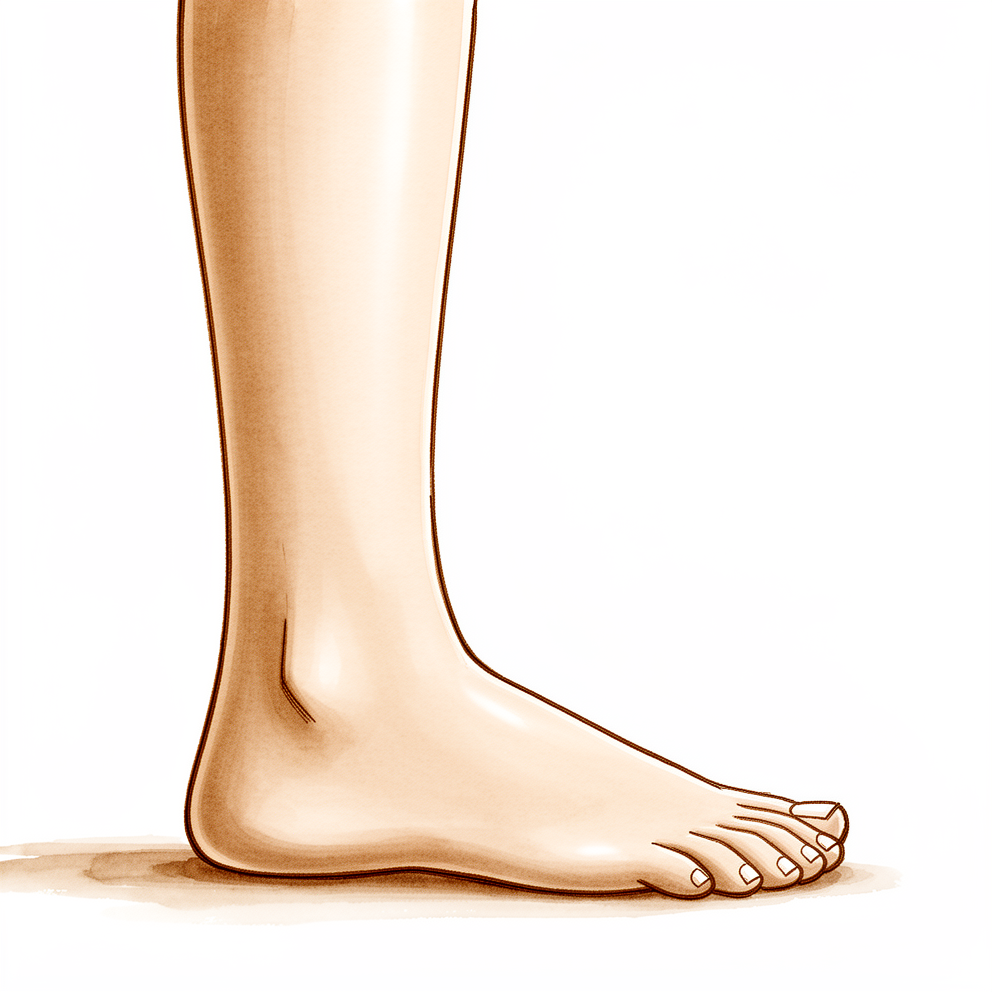
Ang pilon fracture ay isang bali sa ibabang dulo ng iyong shin bone (tibia), eksakto kung saan ito bumubuo ng ankle joint. Ang sakit ay nararamdaman nang malalim sa iyong bukung-bukong at ibabang bahagi ng binti, at karaniwang masakit sa magkabilang panig ng joint, hindi lamang sa isang spot. Dahil kasama ang mismong surface ng joint, ang kirot ay may tendensiyang kumalat sa buong bukung-bukong sa halip na manatili sa isang lugar.
Ang sakit ay karaniwang lumalala kapag ikaw ay nakatayo. Ang pagtayo, paglalakad, at pagtulak gamit ang paang iyon ay nagbibigay ng load sa napinsalang joint, kaya asahan na ang kirot ay tataas sa loob ng isang araw ng aktibidad. Karaniwan ang pamamaga sa paligid ng bukung-bukong, at maaari nitong gawing banat at sensitibo ang pakiramdam ng balat. Ang pagpapahinga nang nakataas ang paa ay madalas na nakakapagpababa ng mga sintomas. Maraming tao ang nakararanas na ang bukung-bukong ay matigas at masakit paggising, pagkatapos ay medyo lumuluwag habang sila ay gumagalaw.
Ang mga pang-araw-araw na gawain na nangangailangan ng matatag at walang sakit na bukung-bukong ay nagiging mahirap. Ang paglalakad papunta sa letterbox, pagtayo sa kitchen bench para magluto, pag-akyat sa hagdan, at pagpunta sa banyo nang walang suporta ay maaaring maging isang pakikibaka. Ang pagmamaneho ay maaaring hindi muna magawa sa loob ng ilang panahon kung ito ay ang iyong kanang bukung-bukong. Maging ang pagsusuot ng sapatos ay maaaring maging mahirap kapag ang bukung-bukong ay namamaga at matigas.
Ang pinsalang ito ay maaari ring magpahina sa iyo sa mga paraang hindi lamang pisikal. Ang sakit na naglilimita sa iyong pang-araw-araw na buhay sa loob ng maraming buwan, at ang problema sa pagtulog dahil sa bukung-bukong, ay maaaring makaapekto sa iyong mood at pangkalahatang wellbeing. Ito ay isang normal na tugon sa isang malalang pinsala, at mahalagang banggitin ito sa iyong care team kung nangyayari ito sa iyo.
Isang bagay pa na dapat malaman: ito ay isang pinsala kung saan mahalaga ang mga detalye. Ang posisyon ng mga nabaling piraso ng buto pagkatapos ng gamutan ay may tunay na epekto sa kung paano gagana ang bukung-bukong sa huli, at ang mga surgeon ay nagpaplano nang maigi tungkol sa soft tissue at pamamaga bago mag-opera. Tatalakayin ng iyong surgeon sa iyo ang plano para sa iyong partikular na fracture.
Ano ang aktwal na nangyayari
Ang iyong bukung-bukong ay isang mahigpit na socket na binuo ng tatlong buto: ang buto ng binti (shin bone) sa itaas, at dalawang mas maliliit na buto sa magkabilang panig na humahawak dito na parang isang clamp. Ang dulo ng buto ng binti na bumubuo sa bubong ng socket na iyon ay tinatawag na plafond. Sa isang pilon fracture, ang bubong na iyon ay nababali. Ang puwersa ay karaniwang nanggagaling nang diretso pababa sa pamamagitan ng paa, gaya ng sa pagkahulog mula sa mataas na lugar o sa banggaan ng kotse, at ang buto ng bukung-bukong (talus) ay tumutulak paitaas sa buto ng binti na parang isang martilyong nagpukpok ng pako sa isang piraso ng kahoy. Ang surface ng joint ay nadudurog sa maliliit na piraso.
Ang pinsala ay hindi lamang sa buto. Ang socket ay nababalutan ng makinis na cartilage, ang madulas na surface na nagpapahintulot sa joint na dumulas. Kapag ang bali ay dumaan sa surface na iyon, ang mga piraso ay maaaring maupo nang hindi pantay, at nawawala ang makinis na track ng bukung-bukong. Iyan ang dahilan kung bakit nangyayari ang pamamaga, ang malalim na kirot, at ang hirap sa pagtayo o paglakad (bearing weight) na kababasa mo lang: ang joint mismo ay sugatan, hindi lamang ang buto sa paligid nito.
Ang bukung-bukong ay mayroon ding malalakas na strap ng tissue na humahawak sa mga buto, kabilang ang isa sa panloob na bahagi na pumipigil sa joint na bumuka. Ang isang malakas na puwersa pababa ay maaari ring magdulot ng strain o pagkapunit sa mga ito. Sinusuri ng mga surgeon ang ilang bagay bago sabihing naka-align na muli ang bukung-bukong: ang dalawang buto sa gilid ay dapat bumalik sa kanilang buong haba, ang buto ng bukung-bukong (talus) ay dapat nakaupo nang square sa socket nang walang pagkiling (tilt), ang puwang sa panloob na bahagi ay dapat bumalik sa normal na lapad nito, at ang dalawang buto ng binti ay hindi dapat nahila nang magkahiwalay.
Mahalaga rin ang pamamaga rito. Maaari itong maging malala, at ang operasyon ay madalas na naghihintay ng 5 hanggang 14 na araw upang humupa ito nang sapat para ang balat ay ligtas na maisara pagkatapos. Ang pagmamadali sa pamamagitan ng namamagang balat na may mga paltos ay nagpapataas ng panganib ng problema sa sugat, kaya ang pagkaantala ay isang planadong bahagi ng paggamot, hindi isang pagkaantala lamang.
Ano ang maaari naming gawin tungkol dito
Ang unang hakbang ay madalas na isang temporary external frame. Ito ay isang scaffold sa labas ng iyong binti na humahawak sa buto upang manatiling steady habang humuhupa ang pamamaga. Pinoprotektahan nito ang napinsalang soft tissue, ang balat at kalamnan sa paligid ng bali, at nagbibigay ito ng oras bago ang anumang operasyon sa mismong buto. Ang paghihintay ng 5 hanggang 14 araw para humupa ang pamamaga ay isang planadong bahagi ng gamutan, hindi isang pagkaantala.
Ang mga scan ang humuhubog sa plano. Ang isang CT scan ay bumubuo ng detalyadong larawan ng mga nabaling piraso, at ang pagpaplano ng operasyon gamit ang mga imaheng iyon ay tumutulong upang maibalik ang joint surface at nagpapababa ng tsansa ng problema sa sugat. Kapag handa na ang balat, ang karaniwang operasyon ay open reduction and internal fixation. Sa simpleng pananalita, binubuksan namin ang bukung-bukong, muling binubuo ang nadurog na joint surface, at hinahawakan ang mga piraso gamit ang plate at mga screw. Ang approach na ginagamit namin ay depende sa kung nasaan ang iyong partikular na fracture, at ang ilang pattern ay naaabot sa pamamagitan ng mga incision sa likod o sa inner side ng bukung-bukong.
Para sa mga fracture kung saan ang buto ay nabali sa napakaraming piraso upang muling mabuo, o kung saan ang soft tissue ay hindi ligtas na papayagan ang mga plate, may iba pang mga opsyon. Ang isang external frame ay maaaring maging pangunahing gamutan sa halip na pansamantala lamang. Para sa isang maliit na grupo ng mga malalang pinsala, ang pag-fuse ng bukung-bukong, ang pagsasama ng buto ng binti (shin bone) at ng buto ng bukung-bukong (talus) sa isang solidong block, ay maaaring maging pagpipilian. Ang isang rod mula sa heel patungo sa shin ay isa pang opsyon para sa ilang pasyente, at maaari nitong payagan ang paglalagay ng weight sa paa agad pagkatapos ng operasyon.
Ang mga open fracture, kung saan ang buto ay bumabali sa pamamagitan ng balat, ay nangangailangan ng extra na pag-iingat. Nililinis namin nang mabuti ang sugat, gumagamit ng mga antibiotic, at madalas na nagsisimula sa isang external frame bago lumipat sa susunod na yugto. Ang mga early movement exercise pagkatapos ng operasyon ay tumutulong sa paggaling ng bukung-bukong at nagbabawas ng mga komplikasyon, at gagabayan ka namin sa mga ito pagdating ng panahon.
Ano ang dapat asahan
Ang pilon fracture ay isang malalang pinsala, at katotohanang maaaring maging mahaba ang proseso ng paggaling. Higit tatlong taon matapos ang pinsala, ang ilang mga tao ay nararamdaman pa rin ang mga epekto nito sa kanilang kalusugan at kagalingan. Ang iyong kalagayan ay nakadepende nang malaki sa kung gaano kalala ang pinsala sa buto at soft tissue noong una, at sa kung gaano kahusay na naibalik ang joint surface. Ang mga mas malalang pinsala ay may tendensiyang magkaroon ng mas hindi magandang resulta.
Naaapektuhan ng pinsalang ito ang kalidad ng buhay anuman ang gamiting gamutan, dahil ang pinsala mismo ay malala. Hindi ito dahilan upang mawalan ng pag-asa, ngunit mahalagang malaman ito nang maaga. Ang mga bagay na pinakamahalaga ay ang maingat na pagpaplano bago ang operasyon, maingat na teknik, at pagbibigay ng oras upang humupa ang pamamaga bago operahan. Kapag ang joint surface ay naibalik nang maayos, may patas na pagkakataon ang bukung-bukong (ankle) na magsilbi nang maayos sa iyo. Kapag ang mga piraso ay hindi pantay na nailagay, ang bukung-bukong ay may tendensiyang magbayad nito sa huli.
May mga tunay na panganib na dapat malaman. Ang malalim na impeksyon na nangangailangan ng karagdagang operasyon ay nangyayari sa maliit na bilang ng mga kaso, humigit-kumulang 6% kapag ang buto ay naayos nang maaga sa mga angkop na pasyente. Ang mga problema sa sugat ay ang komplikasyong kilala sa pinsalang ito, kaya naman ang iyong surgeon ay nagpaplano nang maingat at madalas na naghihintay na humupa ang pamamaga. Ang ilang mga tao ay nagkakaroon ng arthritis sa bukung-bukong sa paglipas ng panahon, at ang hardware na humahawak sa buto ay maaaring mabali o lumuwag paminsan-minsan. Kung mayroon kang ibang kondisyong pangkalusugan, gaya ng diabetes o mga problema sa mga nerve sa iyong mga paa, ang paggaling ay maaaring mas mabagal at ang mga resulta ay hindi gaanong predictable.
Ang pag-iwan sa isang displaced pilon fracture nang walang gamutan ay hindi isang mabuting opsyon. Ang joint surface ay mananatiling pira-piraso, at bilang resulta, mas mabilis na mapupudpod ang bukung-bukong. Kapag napamahalaan nang maayos, karamihan sa mga tao ay nakakabalik sa pang-araw-araw na buhay, bagaman ang ilan ay naiiwang may paninigas, pananakit tuwing malamig na panahon, o isang joint na hindi na kailanman mararamdamang katulad ng dati. Babantayan ka ng iyong care team sa loob ng hindi bababa sa isang taon, dahil ang mga impeksyon ay madalas na lumalabas sa panahong iyon. Magtanong sa anumang oras. Ang pag-alam sa kung ano ang naghihintay sa hinaharap ay nagpapadali sa pagdaan sa mga susunod na buwan.
Kailan dapat magpatingin
Ang pilon fracture ay isang emergency. Pumunta sa emergency department kung ikaw ay nahulog mula sa mataas na lugar o nakaranas ng iba pang mabigat na impact at ang iyong bukung-bukong ay sobrang sakit, namamagâ, o hindi mo kayang itukod. Ganoon din kung ang buto ay lumabas sa balat, o kung ang balat ay banat na banat at may mga paltos sa ibabaw ng sobrang namamagâ na bukung-bukong. Ang mga pinsalang ito ay nangangailangan ng agarang pagsusuri, hindi appointment sa GP.
Pagkatapos ng gamutan, magpatingin agad sa iyong GP kung mapansin ang kumakalat na pamumula, init, o paglabas ng likido mula sa sugat, o kung magkaroon ka ng lagnat. Ang malalim na impeksyon ay isang kilalang panganib sa pinsalang ito, at madalas itong lumalabas sa loob ng unang taon. Humingi ng pagsusuri ng espesyalista kung ang sakit at pamamaga ay hindi humuhupa ayon sa inaasahan, o kung ang iyong bukung-bukong ay hindi bumubuti sa mga buwan pagkatapos ng operasyon.
Evidence & references
This is the clinical evidence summary written for health professionals. It is technical, and it lists the research this page was built from. You do not need to read it to understand your treatment or to make a decision about it.
Anatomy & Pathophysiology
Bony Anatomy
- The ankle mortise is formed by the tibial plafond, medial malleolus, and lateral malleolus [3].
- The ankle mortise articulates with the dome of the talar body [3].
- The talar dome is wider anteriorly and narrower posteriorly [3].
- The ankle mortise widens 1 to 1.5 mm during motion from plantar flexion to dorsiflexion [3].
- Medial and superior clear spaces appear wider with the foot in plantar flexion [3].
- The distal fibula has a convex medial surface that articulates with the concave incisura fibularis of the distal lateral tibia [3].
- The fibula rotates approximately 2 degrees within the incisura during ankle motion and ambulation [3].
- Ankle dorsiflexion results in external rotation and proximal translation of the fibula [3].
- The primary functions of the foot and ankle are to provide weight-bearing support and forward ambulation [3].
Ligamentous Anatomy
- The lateral ankle ligaments function as restraints to varus and inversion forces at the ankle [3].
- The anterior talofibular ligament (ATFL) originates from the anteroinferior aspect of the lateral malleolus, 1 cm proximal to its tip, and extends to the lateral aspect of the talar neck [3].
- The calcaneofibular ligament (CFL) extends from the tip of the lateral malleolus to the lateral aspect of the calcaneus [3].
- The posterior talofibular ligament (PTFL) extends from the posterior lateral malleolus to the posterolateral talus [3].
- The ATFL is the weakest ankle ligament [3].
- The PTFL is the strongest ankle ligament [3].
- The distal tibiofibular joint (ankle syndesmosis) and fibula provide stability against lateral talar translation [3].
- The deltoid ligament complex is the primary ankle stabilizer during stance [3].
- The deep deltoid ligament extends from the apex of the medial malleolus to the medial talar body [3].
- The deep deltoid ligament functions primarily to resist lateral talar translation and external rotation [3].
- The posterior deep deltoid is the most important component of the deep deltoid ligament [3].
- The superficial deltoid ligament extends from the distal medial malleolus to the navicular bone, sustentaculum tali of calcaneus, medial talus, and spring ligament [3].
- The superficial deltoid ligament functions primarily to resist valgus and eversion ankle forces [3].
- The deltoid ligament consists of superficial and deep layers, with at most six bands, of which only the tibionavicular ligament, tibiospring ligament, and deep posterior tibiotalar ligament are constant [8].
- The tibiocalcaneal portion of the superficial deltoid ligament is the strongest component and resists eversion of the calcaneus [8].
- The deep portion of the deltoid ligament is organized into two short, thick, discrete bands: the anterior and posterior deep tibiotalar ligaments [8].
- The anterior and posterior deep tibiotalar ligaments are intra-articular but extrasynovial [8].
- The deep posterior band comprises the largest band of the deltoid complex [8].
- The deep deltoid ligament has the highest load to failure at 713.8 N ± 69.3 compared with the lateral collateral ligaments [8].
- The dominant mode of failure for the deep deltoid ligament is an intrasubstance rupture near its talar insertion [8].
- The dominant mode of failure for the superficial deltoid ligament is at its insertion on the anterior malleolus [8].
- Valgus tilting of the talus within the mortise requires complete rupture of both the superficial and deep deltoid ligaments [8].
Biomechanics & Motion
- The ankle joint is responsible for most sagittal plane motion of the foot and ankle [3].
- The range of motion for plantar flexion is 23 to 48 degrees [3].
- The range of motion for dorsiflexion is 10 to 23 degrees [3].
- The ankle joint also contributes to inversion, eversion, and rotation [3].
- A simplified model of the ankle joint has a horizontal axis from anteromedial to posterolateral [3].
- A simplified model of the ankle joint has a coronal axis from superomedial directed distally and laterally to the tip of the fibula [3].
Pathophysiology & Injury Patterns
- More than 75% of ankle ligament injuries involve the lateral ligament complex, particularly the ATFL and CFL [9].
- Medial ligament injuries are usually seen in association with a fracture or joint injury [9].
- Isolated rupture of the deltoid ligament without lateral ligamentous or fibular injury is rare [8].
- Syndesmotic injury, lateral ligamentous injury, and fibular fractures are common associated injuries with deltoid ligament injury [8].
- The Danis–Weber Type A classification describes a transverse fracture of the fibula below the tibiofibular syndesmosis, sometimes associated with an oblique or vertical fracture of the medial malleolus [7].
- The Danis–Weber Type B classification describes an oblique fracture of the fibula at the level of the syndesmosis, often accompanied by an avulsion injury on the medial side [7].
- The Danis–Weber Type C classification describes a fracture above the level of the syndesmosis, meaning the tibiofibular ligament and part of the interosseous membrane must have been torn [7].
- To achieve a reduced ankle, the fibula must be restored to its full length [7].
- To achieve a reduced ankle, the talus must sit squarely in the mortise with no tilt [7].
- To achieve a reduced ankle, the medial joint space must be restored to its normal width [7].
- To achieve a reduced ankle, there must be no tibiofibular diastasis [7].
- Syndesmotic malreduction risk is associated with incisura anatomy, where deep incisuras with the fibula not engaged are at risk of overcompression [11].
- Anteverted incisuras are at risk of anterior fibular translation in syndesmotic malreduction [11].
- Retroverted incisuras are at risk of posterior fibular translation in syndesmotic malreduction [11].
- Fixation of a syndesmotic injury with a single suture-button construct did not restore physiological fibular motion [11].
Investigations
Osteochondral Lesions
- Osteochondral lesions are seen in up to 70% of ankle sprains and 75% of ankle fractures [12, 13].
- The most common location for osteochondral lesions is the medial talar dome [12, 13].
- Modern data indicate that the most common location for medial talar dome lesions is central, contradicting historical beliefs that posterior locations were more common [12, 13].
- Medial talar dome lesions are larger and deeper than lateral lesions [12, 13].
- Lateral talar dome lesions are less common than medial lesions [12, 13].
- Lateral talar dome lesions are more often unstable, displaced, or symptomatic than medial lesions [12, 13].
- Lateral talar dome lesions are often refractory to conservative measures [12, 13].
- AP, mortise, and lateral weight-bearing ankle x-rays may not demonstrate subtle osteochondral lesions [12, 13].
- CT scans are helpful for determining the integrity of subchondral bone and identifying cysts in osteochondral lesions [12, 13].
- MRI is sensitive for all osteochondral lesions but the edema pattern frequently overestimates the severity of the injury [12, 13].
- Linear fluid signal deep to subchondral bone on MRI indicates an unstable osteochondral injury [12, 13].
- MRI has a sensitivity of 92% for predicting stable versus unstable osteochondral lesions [12, 13].
Ankle Fractures and Syndesmosis
- MRI lacks additional diagnostic value for stability assessment of the ankle mortise in supination-external rotation-type ankle fractures [16].
- Preoperative computed tomography scans play a role in operative planning for malleolar ankle fractures [16].
- Malreduction of the posterior malleolus is significantly more likely to lead to malreduction of the syndesmosis [16].
- Ultrasonographic examination can be used to evaluate the deltoid ligament in bimalleolar equivalent fractures [16].
General Imaging Principles
- Advanced imaging is often helpful in diagnosis when combined with a thorough clinical examination for foot and ankle injuries [15].
- MRI is used for the evaluation of anterolateral soft tissue impingement of the ankle [1, 17].
- MRI is used for the evaluation of osteochondral lesions of the talus [1].
- MRI is used for the pre-operative evaluation of the anterior talofibular ligament in chronic ankle instability [1].
- MRI is used for the diagnosis of plantar plate injury with reference to intraoperative findings [1].
- MRI is used for the evaluation of traumatic ligamentous injuries of the ankle and foot [1].
- CT and MR imaging are used for the evaluation of the postoperative ankle and foot [1].
- MRI is used for the evaluation of peroneal tendon abnormalities in routine foot and ankle imaging [14].
- MR imaging is used for the evaluation of entrapment neuropathies of the lower extremity, including the ankle and foot [18].
References
[1] Campbell S Operative Orthopaedics 4 Volume Set. REFERENCES > FOOT AND ANKLE.
[3] Miller S Review Of Orthopaedics. SECTION 16 PATELLAR TRACKING IN TOTAL KNEE ARTHROPLASTY > BIOMECHANICS OF THE FOOT AND ANKLE.
[7] Apley And Solomon S Concise System Of Orthopaedics And Trauma. Treatment.
[8] Orthopaedic Knowledge Update Sports Medicine 6. Ankle and Foot Injuries and Other Disorders > Ankle Sprains > Medial Ankle Injury.
[9] Apley And Solomon S Concise System Of Orthopaedics And Trauma. INJURIES OF THE ANKLE.
[11] Orthopaedic Knowledge Update 13 Ebook Without Multimedia. Foot and Ankle Anatomy and Biomechanics > Annotated References.
[12] Miller S Review Of Orthopaedics. SECTION 16 PATELLAR TRACKING IN TOTAL KNEE ARTHROPLASTY > OSTEOCHONDRAL LESIONS.
[13] Miller S Review Of Orthopaedics. OSTEOCHONDRAL LESIONS.
[14] Campbell S Operative Orthopaedics 4 Volume Set. MULTIPLE Z-PLASTY RELEASE OF A CONGENITAL RING > PERONEAL TENDONS.
[15] Orthopaedic Knowledge Update Sports Medicine 6. Ankle and Foot Injuries and Other Disorders > Summary.
[16] Orthopaedic Knowledge Update Trauma. Ankle Fractures > Annotated References.
[17] Campbell S Operative Orthopaedics 4 Volume Set. ARTHROSCOPIC EXAMINATION AND DEBRIDEMENT OF THE ANKLE JOINT > IMPINGEMENT.
[18] Campbell S Operative Orthopaedics 4 Volume Set. COMBINED HAMMER TOE AND MALLET TOE DEFORMITY WITH ASSOCIATED DOUBLE CORNS > REFERENCES > TARSAL TUNNEL SYNDROME.