Skip to content

Patients › Ankle

Pinsala sa syndesmosis

Updated Sep 2026
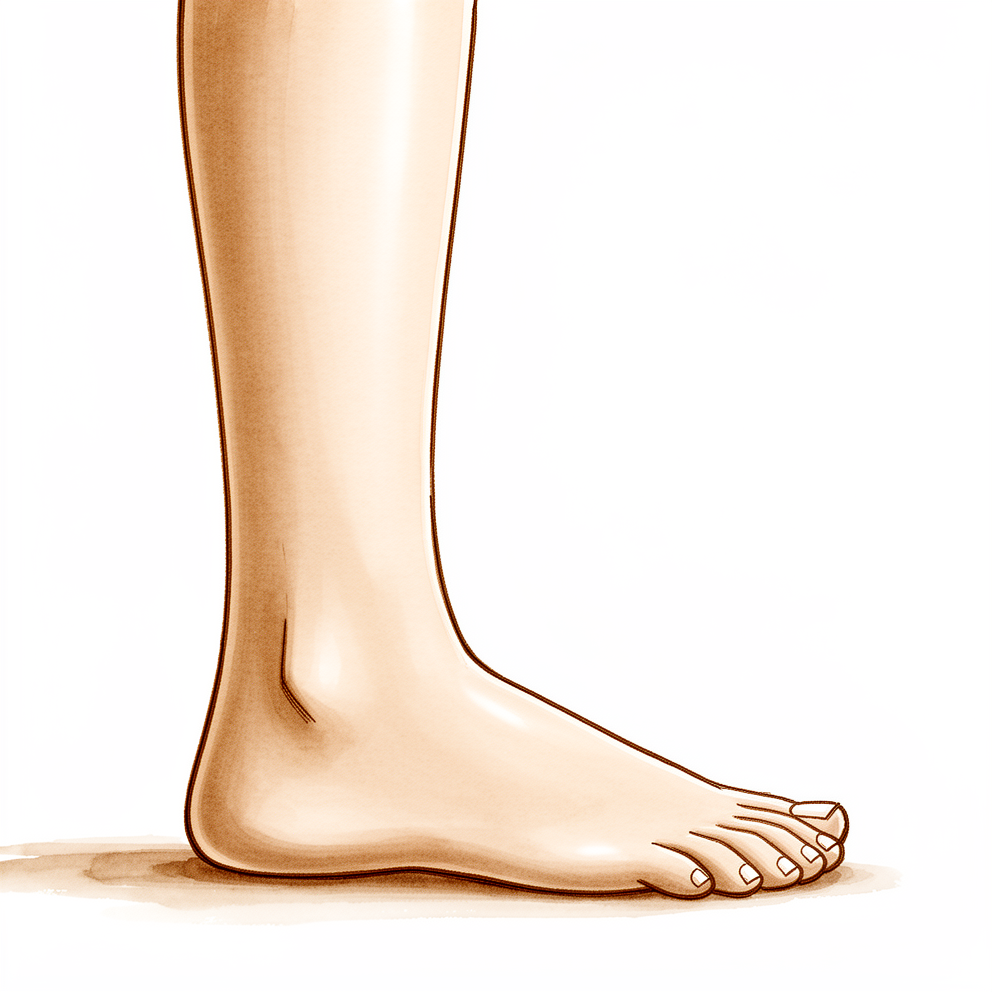
Illustration: ankle

Ang pahinang ito ay isinalin ng makina at hindi pa nasusuri ng isang doktor. Ang bersyong Ingles ang siyang opisyal.

Ang iyong nararamdaman

Ang syndesmotic injury ay nakakaapekto sa mga ligament na humahawak sa dalawang buto ng iyong ibabang binti nang magkasama sa itaas lang ng iyong bukung-bukong. Ang sakit ay karaniwang nakakalat sa paligid ng bukung-bukong sa halip na sa isang partikular na spot, at madalas itong nasa harap at panlabas na bahagi, sa itaas lang ng mga outer ankle ligament. Maaari ka ring makaramdam ng tenderness malapit sa panloob na bahagi ng bukung-bukong.

May mga partikular na paggalaw na nagpapalala rito. Ang paglalakad paakyat ng burol, pag-pivot o pag-twist, at pagtayo gamit ang ball ng isang paa ay karaniwang nagdudulot ng sakit. Ang pagpihit ng iyong paa palabas, o pagbaluktot nito pataas patungo sa iyong shin, ay maaari ring magdulot ng sakit. Karaniwan ang pamamaga at pasa, at ang pasa ay maaaring umabot nang mataas sa binti o tumawid sa panloob na bukung-bukong. Kung unstable ang bukung-bukong, ang paglalagay ng weight dito ay karaniwang masyadong masakit.

May ilang pattern ng flare-up na nagtuturo sa injury na ito sa halip na isang simpleng sprain. Ang sakit na nananatili sa kabila ng pahinga ay isang tipikal na senyales. Sa kabilang banda, ang sprain na ganap na humuhupa sa pagitan ng mga episode ay nagpapahiwatig ng ibang problema sa mga outer ankle ligament. Ang pamamaga at paninigas na nananatili, panghihina kapag nagtutulak gamit ang paa (pushing off), at pakiramdam na maaaring bumigay ang bukung-bukong ay maaaring magpatuloy nang matagal pagkatapos ng orihinal na injury, kahit na ang mga standard testing ay tila normal.

Ang mga pang-araw-araw na gawain ay maaaring maging mahirap. Ang pag-akyat ng hagdan o burol, pagbangon mula sa upuan, at pagtayo sa isang paa para magbihis ay maaaring lahat masakit. Maaaring mapansin mo na hindi ka makapagtulak nang maayos kapag naglalakad, kaya mas ginagamit mo ang kabilang binti.

May ilang maagang warning signs na mahalaga. Kung hindi ka talaga makapag-bear ng weight, kung ang pamamaga ay mabilis at matindi, o kung ang pasa ay malawak sa panloob o itaas na bahagi ng binti, mas malamang na involved ang syndesmosis. Ang mga injury na ito ay madaling makaligtaan, at kung minsan ay napagkakamalang isang straightforward sprain sa simula. Kung ang alinman dito ay katulad ng nararamdaman ng iyong bukung-bukong, mahalagang ma-assess ito nang maayos sa halip na hintayin itong humupa nang kusa.

Ano ang aktwal na nangyayari

Ang iyong ibabang binti ay may dalawang buto, ang tibia at ang fibula, na magkatabi sa itaas lang ng iyong bukung-bukong. Pinagsasama sila ng isang kumpol ng malalakas na ligament na tinatawag na syndesmosis. Isipin ito bilang isang matibay na strap na pumipigil sa dalawang buto na maghiwalay kapag ikaw ay naglalakad. Tumutulong din ito sa pagdadala ng bigat ng iyong katawan pababa sa binti, kaya mayroon itong mahalagang tungkulin sa tuwing ikaw ay nakatayo.

Nangyayari ang pinsala kapag ang iyong paa ay nakatiklop paitaas patungo sa iyong shin at sabay na pumipilipit palabas. Ang puwersa ng pagpilipit na iyon ay maaaring maghiwalay sa dalawang buto at pumunit sa strap. Kung malala ang pinsala, maaaring madamay din ang ibang istruktura, gaya ng ligament sa panloob na bahagi ng bukung-bukong o ang mismong buto ng fibula. Upang aktwal na maghiwalay ang mga buto, kailangang mapunit ang ilang malalakas na ligament at isang matigas na membrane sa pagitan nila.

Kapag napinsala ang strap, nawawala ang bahagi ng katatagan (stability) ng joint ng bukung-bukong. Ang maliit na buto sa ilalim ng iyong bukung-bukong, ang talus, ay maaaring bahagyang gumalaw mula sa tamang posisyon habang ikaw ay kumikilos. Ang paggalaw na iyon ang sanhi ng sakit, pamamaga, at pakiramdam ng pag-give-way na inilarawan sa itaas. Ang napunit na ligament ay maaari ring mamaga at magkaroon ng peklat, na maaaring kumurot sa mga tissue sa harap ng bukung-bukong at magpanatili sa sakit.

Kung mananatiling magkahiwalay ang mga buto at hindi ito magagamot, ang joint ay maaaring mapudpod nang hindi pantay sa paglipas ng panahon at magkaroon ng wear-and-tear arthritis. Ito ang dahilan kung bakit mahalaga ang tamang diagnosis. Ang ilang pinsala ay stable, ibig sabihin ay na-strain ang strap ngunit pinapanatili pa rin ang mga buto sa kanilang posisyon. Ang mga ito ay karaniwang gumagaling nang walang operasyon, sa pamamagitan ng protected weight bearing. Ang iba naman ay unstable, ibig sabihin ay maaaring maghiwalay ang mga buto, at ang mga ito ay nangangailangan ng operasyon upang pagdikitin sila habang gumagaling. Mahalagang maayos ito nang maaga, dahil ang mga pagkaantala na lampas anim na buwan ay nauugnay sa mas malalang function sa huli.

Ano ang maaari naming gawin tungkol dito

Dahil ang pinsalang ito ay maaaring hindi mapansin, gumagamit kami kung minsan ng mga scan na malinaw na nagpapakita ng mga ligament bago magpasya kung ano ang gagawin.

Kung ang iyong pinsala ay stable, ibig sabihin ay ang strap ng mga ligament ay strained ngunit pinapanatili pa rin ang mga buto sa kanilang posisyon, hindi kailangan ng operasyon. Pinoprotektahan namin ang bukung-bukong habang ito ay gumagaling at hinahayaan kang maglagay ng bigat dito nang unti-unti. Ang physiotherapy ay tumutulong sa iyo na maibalik ang paggalaw, lakas, at kumpyansa sa bukung-bukong. Para sa ilang tao, sapat na ang soft dressing bilang suporta sa simula, habang ang iba naman ay nangangailangan ng cast hanggang sa tatlong linggo. Ang tamang dami ng pahinga mula sa weight bearing ay nag-iiba-iba, at gagabayan ka namin dito.

Kung ang pinsala ay unstable, ibig sabihin ay maaaring maghiwalay ang mga buto, karaniwang inirerekomenda ang operasyon. Ang paghihintay ng higit sa anim na buwan ay nagpapalala sa resulta, kaya layunin naming ayusin ito nang maaga. Pinapanatili ng operasyon na magkasama ang dalawang buto habang gumagaling ang mga ligament. Maaari itong gawin gamit ang screw, isang matibay na tahi at isang maliit na button, o sa pamamagitan ng direktang pagkukumpuni ng mga napunit na ligament. Pag-uusapan namin kung aling opsyon ang angkop sa iyong pinsala at magkakasundo sa isang plano.

Pagkatapos ng operasyon, tumutulong ang physiotherapy upang pabilisin ang iyong paggaling. Karamihan sa mga tao ay bumabalik sa normal na aktibidad, kabilang ang sports, humigit-kumulang apat na buwan pagkatapos ng operasyon.

Ano ang dapat asahan

Ang outlook ay nakadepende kung ang iyong pinsala ay stable o unstable. Ang isang stable na pinsala, kung saan ang strap ng mga ligament ay humahawak pa rin sa mga buto sa kanilang posisyon, ay karaniwang gumagaling nang walang operasyon. Pinoprotektahan mo ang bukung-bukong, unti-unting nilalagyan ng bigat, at ibinabalik ang lakas sa pamamagitan ng physiotherapy. Ang mga taong ginamot sa paraang ito ay nag-uulat ng mabuting function sa katagalan, at kakaunti ang muling napipinsala ang bukung-bukong.

Ang isang unstable na pinsala ay nangangailangan ng operasyon upang pagdikitin ang mga buto habang gumagaling ang mga ligament. Kapag nagawa ito nang maayos, kung saan ang mga buto ay nakalinya nang tumpak at mahigpit na nahahawakan, karamihan sa mga tao ay nakakabalik sa normal na aktibidad. Humigit-kumulang apat na buwan pagkatapos ng operasyon, karamihan sa mga tao ay nakakabalik na sa kanilang mga nakasanayang aktibidad, kabilang ang sports. Maraming tao ang nananatiling may mabuting function ng bukung-bukong pagkalipas ng ilang dekada, kahit na kung minsan ay nagpapakita ang mga scan ng wear-and-tear arthritis sa joint. Sa isang long-term study, lahat ng mga sumailalim sa direktang pagkukumpuni ng mga ligament ay nagsabing gagawin nila itong muli kung kinakailangan.

Ang paggaling ay bihirang maging isang tuwid na linya. Sa simula, ang paglalagay ng bigat sa paa ang mahirap na bahagi, at ang muling pagpapagalaw ng bukung-bukong ay nangangailangan ng tuloy-tuloy na trabaho sa physiotherapy. Ang maagang pagsisimula ng weight bearing at paggalaw ay tumutulong upang mas gumana nang maayos ang iyong bukung-bukong sa mga unang linggo, bagaman hindi ito nangangahulugang mas mabilis kang makakabalik sa trabaho. Ang bilis ng pagbabalik ng mga tao sa aktibidad ay malaki ang pagkakaiba sa bawat tao, kaya sikaping huwag ikumpara ang iyong sarili sa iba.

Kung ang isang unstable na pinsala ay hahayaan lamang, ang mga problema ay may tendensiyang magpatuloy sa halip na gumaling. Ang mga buto ay maaaring maghiwalay, ang joint ay maaaring mapudpod nang hindi pantay, at ang long-term instability ay maaaring mag-iwan sa iyo ng patuloy na sakit at mas mahinang bukung-bukong. Ang paghihintay ng higit sa anim na buwan para sa operasyon ay nauugnay sa mas masamang function sa huli, kung kaya't mahalaga ang maagang assessment. Kung minsan, ang mga ligament ay gumagaling nang maluwag kahit pagkatapos ng gamutan, at ang isang maluwag o unstable na joint ay nauugnay sa mas mahinang resulta.

Ang ilang mga pinsala ay kinapapalooban din ng pinsala sa loob mismo ng ankle joint. Nangyayari ito sa hanggang kalahati ng mga unstable na pinsala, at nangangailangan ito ng karagdagang gamutan sa humigit-kumulang isa sa bawat limang kaso. Hahanapin ito ng iyong surgeon kapag pinaplano ang iyong pangangalaga.

Kailan dapat magpatingin

Ipa-assess agad ang iyong bukung-bukong kung hindi mo ito kayang tapakan kahit kaunti, kung mabilis at malala ang pamamaga, o kung malawak ang pasa sa panloob o itaas na bahagi ng binti. Ito ang mga maagang palatandaan na ang pinsalang ito ay higit pa sa isang simpleng sprain. Humingi ng pagsusuri ng isang espesyalista kung ang sakit ay nagpapatuloy sa kabila ng pahinga, kung pakiramdam mo ay hindi matatag o bumibigay ang bukung-bukong, o kung ang pamamaga at paninigas ay nananatili matapos ang pinsala. Madaling makaligtaan ang pinsalang ito, at kung minsan ay napagkakamalang isang simpleng sprain sa simula. Kung hahayaan itong masyadong matagal, ang paghihintay nang lampas anim na buwan bago ang operasyon ay nauugnay sa mas masamang function sa huli. Kung nasabihan ka na na ito ay isang sprain ngunit hindi gumagaling ang iyong bukung-bukong, mahalagang itanong kung nasuri na ang syndesmosis.


Evidence & references

This is the clinical evidence summary written for health professionals. It is technical, and it lists the research this page was built from. You do not need to read it to understand your treatment or to make a decision about it.

Anatomy & Pathophysiology

Ligamentous Anatomy

  • The ankle syndesmosis is composed of the anterior-inferior tibiofibular ligament, the posteroinferior tibiofibular ligament, and the interosseous membrane [2].
  • A separate anterior-inferior tibiofibular ligament fascicle, known as the Bassett ligament, may be present and contribute to syndesmotic impingement [2].
  • Approximately 20% of the syndesmotic ligament is intra-articular [2].
  • The interosseous membrane is important in weight transmission through the fibula [3].

Pathomechanics

  • Syndesmotic injuries result from a combination of dorsiflexion and external rotation forces [1].
  • Syndesmotic rupture can occur as a result of a torsional movement of the talus that forces the tibia and fibula apart [3].
  • Syndesmotic rupture can occur as a result of a severe abduction force [3].
  • Severe syndesmotic injuries are associated with deltoid ligament disruption and fibula fracture [1].
  • Syndesmotic instability results in lateral and rotatory displacement of the talus [1].

Radiographic Anatomy & Measurements

  • Normal tibiofibular clear space is less than 6 mm on either the AP or mortise ankle view [1].
  • Normal tibiofibular overlap is greater than 6 mm on the AP view and greater than 1 mm on the mortise view [1].
  • A tibiofibular clear space of greater than 5 mm on the AP view has been suggested to correlate with syndesmotic rupture [3].
  • A tibiofibular overlap of less than 5 mm on the AP view or less than 1 mm on the mortise view has been suggested to correlate with syndesmotic rupture [3].
  • The mean tibiofibular clear space in the normal population is 3.8 mm in females and 4.6 mm in males [3].
  • Some normal individuals have a shallow incisura resulting in no radiographic tibiofibular overlap [3].
  • CT studies show wide variation in the shape of the syndesmosis, including deep concave incisurae and limited curves [3].

Pathophysiological Consequences

  • Injury to the ankle syndesmosis can result in persistent pain and dysfunction secondary to syndesmotic impingement [2].
  • Syndesmotic impingement most often involves the anterior tibiofibular ligament, with resulting synovitis and scarring [2].
  • Untreated syndesmotic diastasis may result in persisting instability, pain, and progressive osteoarthritis [3].
  • Patients with radiographic evidence of syndesmosis widening demonstrated a poorer overall outcome at 5 years in a study of ankle fracture outcomes [3].

Clinical Presentation

History and Physical Examination

  • Acute syndesmotic injuries are typically associated with a twisting mechanism [1].
  • Patients with syndesmotic instability usually cannot bear weight [1].
  • Physical examination findings include tenderness near the syndesmosis and the deltoid ligament [1].
  • Pain is elicited by external rotation of the ankle [1].
  • A positive squeeze test is defined as pain at the syndesmosis when compressing the tibia and fibula at midcalf [1].
  • Swelling and ecchymosis are present in acute syndesmotic injuries [1].
  • Patients with syndesmotic impingement exhibit localized tenderness along the anterior syndesmosis [2].
  • Dorsiflexion and external rotation of the ankle increase symptoms in patients with syndesmotic impingement [2].
  • Tenderness during the squeeze test may be present in patients with syndesmotic impingement [2].

Imaging

  • The AP view of plain radiography shows decreased tibiofibular overlap in syndesmotic injury [1].
  • The mortise view of plain radiography shows increased tibiofibular clear space in syndesmotic injury [1].
  • Tibial radiographs should be obtained to rule out a proximal fibula fracture (Maisonneuve fracture) [1].
  • In subtle cases, the diagnosis is confirmed by weight-bearing radiographs and stress radiographs in eversion and external rotation, with comparison to the opposite side [1].
  • CT may help evaluate the syndesmotic space, especially in chronic cases [1].
  • MRI may show subtle syndesmotic ligament injury [1].

Investigations

Clinical Evaluation

  • Tenderness near the syndesmosis and deltoid ligament is a clinical sign of syndesmotic injury [1].
  • Pain with external rotation is a clinical sign of syndesmotic injury [1].

Plain Radiography

  • A tibiofibular clear space greater than 5 mm on the AP view has been suggested to correlate with syndesmotic rupture [3].
  • A tibiofibular overlap less than 5 mm on the AP view has been suggested to correlate with syndesmotic rupture [3].
  • A tibiofibular overlap less than 1 mm on the mortise view has been suggested to correlate with syndesmotic rupture [3].
  • The tibiofibular clear space is the most reliable parameter among plain radiographic measurements for syndesmotic rupture [3].
  • Cadaveric models have shown that no predictable increase in measurements on plain radiography can be found on sectioning of the syndesmotic ligaments [3].
  • An increase in the tibiofibular clear space in comparison to the contralateral ankle may be more accurate than absolute values [3].

Advanced Imaging

  • Axial imaging has been shown to demonstrate disruptions not evident on plain radiographs [3].
  • CT studies have shown wide variation in the shape of the syndesmosis, including a deep concave incisura in some and a limited curve in others [3].
  • MRI provides a more accurate assessment of syndesmotic injury than plain radiography [3].
  • MRI assessment of syndesmotic injury correlates well with direct arthroscopic assessment [3].
  • MR arthrography may add further accuracy to the assessment of syndesmotic injury [3].
  • The integrity of syndesmotic ligaments is rarely visualized on MRI and is surmised from radiographic diastasis [3].

Treatment

  • Anatomic ligament repairs are a described surgical technique for syndesmotic injuries [4].
  • An evidence-based approach to the treatment of acute traumatic syndesmosis (high ankle) sprains has been outlined [4].
  • Syndesmotic fixation and management is a current practice among orthopedic surgeons for ankle fractures [4].
  • Deltoid ligament repair is an alternative to syndesmotic fixation in bimalleolar equivalent ankle fractures [4].
  • Repair of acute superficial deltoid complex avulsion is performed during ankle fracture fixation in National Football League players [4].
  • Magnetic resonance imaging has been compared to physical examination for the diagnosis of syndesmotic injury after lateral ankle sprain [4].

References

[1] Aaos Comprehensive Orthopaedic Review 3. Acute and Chronic Injuries of the Ankle > IV. Syndesmotic Instability.

[2] Aaos Comprehensive Orthopaedic Review 3. Arthroscopy of the Ankle > IV. Syndesmotic Impingement.

[3] Rockwood And Green S Fractures In Adults. 59: Patellar Fractures and Dislocations and Extensor Mechanism Injuries > Syndesmotic Injuries.

[4] Campbell S Operative Orthopaedics 4 Volume Set. REPAIR OF ACUTE RUPTURE OF LATERAL LIGAMENTS > ACUTE ANKLE LIGAMENT INJURIES, CHRONIC ANKLE INSTABILITY.

Creative Commons BY-NC 4.0

CC Creative Commons licence
BY Attribution — you must credit the source
NC NonCommercial — not for commercial use

Attribution-NonCommercial 4.0 International


Creative Commons Corporation ("Creative Commons") is not a law firm and does not provide legal services or legal advice. Distribution of Creative Commons public licenses does not create a lawyer-client or other relationship. Creative Commons makes its licenses and related information available on an "as-is" basis. Creative Commons gives no warranties regarding its licenses, any material licensed under their terms and conditions, or any related information. Creative Commons disclaims all liability for damages resulting from their use to the fullest extent possible.

Using Creative Commons Public Licenses

Creative Commons public licenses provide a standard set of terms and conditions that creators and other rights holders may use to share original works of authorship and other material subject to copyright and certain other rights specified in the public license below. The following considerations are for informational purposes only, are not exhaustive, and do not form part of our licenses.

Considerations for licensors: Our public licenses are intended for use by those authorized to give the public permission to use material in ways otherwise restricted by copyright and certain other rights. Our licenses are irrevocable. Licensors should read and understand the terms and conditions of the license they choose before applying it. Licensors should also secure all rights necessary before applying our licenses so that the public can reuse the material as expected. Licensors should clearly mark any material not subject to the license. This includes other CC- licensed material, or material used under an exception or limitation to copyright. More considerations for licensors: wiki.creativecommons.org/Considerations_for_licensors

Considerations for the public: By using one of our public licenses, a licensor grants the public permission to use the licensed material under specified terms and conditions. If the licensor's permission is not necessary for any reason--for example, because of any applicable exception or limitation to copyright--then that use is not regulated by the license. Our licenses grant only permissions under copyright and certain other rights that a licensor has authority to grant. Use of the licensed material may still be restricted for other reasons, including because others have copyright or other rights in the material. A licensor may make special requests, such as asking that all changes be marked or described. Although not required by our licenses, you are encouraged to respect those requests where reasonable. More considerations for the public: wiki.creativecommons.org/Considerations_for_licensees


Creative Commons Attribution-NonCommercial 4.0 International Public License

By exercising the Licensed Rights (defined below), You accept and agree to be bound by the terms and conditions of this Creative Commons Attribution-NonCommercial 4.0 International Public License ("Public License"). To the extent this Public License may be interpreted as a contract, You are granted the Licensed Rights in consideration of Your acceptance of these terms and conditions, and the Licensor grants You such rights in consideration of benefits the Licensor receives from making the Licensed Material available under these terms and conditions.

Section 1 -- Definitions.

a. Adapted Material means material subject to Copyright and Similar Rights that is derived from or based upon the Licensed Material and in which the Licensed Material is translated, altered, arranged, transformed, or otherwise modified in a manner requiring permission under the Copyright and Similar Rights held by the Licensor. For purposes of this Public License, where the Licensed Material is a musical work, performance, or sound recording, Adapted Material is always produced where the Licensed Material is synched in timed relation with a moving image.

b. Adapter's License means the license You apply to Your Copyright and Similar Rights in Your contributions to Adapted Material in accordance with the terms and conditions of this Public License.

c. Copyright and Similar Rights means copyright and/or similar rights closely related to copyright including, without limitation, performance, broadcast, sound recording, and Sui Generis Database Rights, without regard to how the rights are labeled or categorized. For purposes of this Public License, the rights specified in Section 2(b)(1)-(2) are not Copyright and Similar Rights.

d. Effective Technological Measures means those measures that, in the absence of proper authority, may not be circumvented under laws fulfilling obligations under Article 11 of the WIPO Copyright Treaty adopted on December 20, 1996, and/or similar international agreements.

e. Exceptions and Limitations means fair use, fair dealing, and/or any other exception or limitation to Copyright and Similar Rights that applies to Your use of the Licensed Material.

f. Licensed Material means the artistic or literary work, database, or other material to which the Licensor applied this Public License.

g. Licensed Rights means the rights granted to You subject to the terms and conditions of this Public License, which are limited to all Copyright and Similar Rights that apply to Your use of the Licensed Material and that the Licensor has authority to license.

h. Licensor means the individual(s) or entity(ies) granting rights under this Public License.

i. NonCommercial means not primarily intended for or directed towards commercial advantage or monetary compensation. For purposes of this Public License, the exchange of the Licensed Material for other material subject to Copyright and Similar Rights by digital file-sharing or similar means is NonCommercial provided there is no payment of monetary compensation in connection with the exchange.

j. Share means to provide material to the public by any means or process that requires permission under the Licensed Rights, such as reproduction, public display, public performance, distribution, dissemination, communication, or importation, and to make material available to the public including in ways that members of the public may access the material from a place and at a time individually chosen by them.

k. Sui Generis Database Rights means rights other than copyright resulting from Directive 96/9/EC of the European Parliament and of the Council of 11 March 1996 on the legal protection of databases, as amended and/or succeeded, as well as other essentially equivalent rights anywhere in the world.

l. You means the individual or entity exercising the Licensed Rights under this Public License. Your has a corresponding meaning.

Section 2 -- Scope.

a. License grant.

1. Subject to the terms and conditions of this Public License, the Licensor hereby grants You a worldwide, royalty-free, non-sublicensable, non-exclusive, irrevocable license to exercise the Licensed Rights in the Licensed Material to:

a. reproduce and Share the Licensed Material, in whole or in part, for NonCommercial purposes only; and

b. produce, reproduce, and Share Adapted Material for NonCommercial purposes only.

2. Exceptions and Limitations. For the avoidance of doubt, where Exceptions and Limitations apply to Your use, this Public License does not apply, and You do not need to comply with its terms and conditions.

3. Term. The term of this Public License is specified in Section 6(a).

4. Media and formats; technical modifications allowed. The Licensor authorizes You to exercise the Licensed Rights in all media and formats whether now known or hereafter created, and to make technical modifications necessary to do so. The Licensor waives and/or agrees not to assert any right or authority to forbid You from making technical modifications necessary to exercise the Licensed Rights, including technical modifications necessary to circumvent Effective Technological Measures. For purposes of this Public License, simply making modifications authorized by this Section 2(a) (4) never produces Adapted Material.

5. Downstream recipients.

a. Offer from the Licensor -- Licensed Material. Every recipient of the Licensed Material automatically receives an offer from the Licensor to exercise the Licensed Rights under the terms and conditions of this Public License.

b. No downstream restrictions. You may not offer or impose any additional or different terms or conditions on, or apply any Effective Technological Measures to, the Licensed Material if doing so restricts exercise of the Licensed Rights by any recipient of the Licensed Material.

6. No endorsement. Nothing in this Public License constitutes or may be construed as permission to assert or imply that You are, or that Your use of the Licensed Material is, connected with, or sponsored, endorsed, or granted official status by, the Licensor or others designated to receive attribution as provided in Section 3(a)(1)(A)(i).

b. Other rights.

1. Moral rights, such as the right of integrity, are not licensed under this Public License, nor are publicity, privacy, and/or other similar personality rights; however, to the extent possible, the Licensor waives and/or agrees not to assert any such rights held by the Licensor to the limited extent necessary to allow You to exercise the Licensed Rights, but not otherwise.

2. Patent and trademark rights are not licensed under this Public License.

3. To the extent possible, the Licensor waives any right to collect royalties from You for the exercise of the Licensed Rights, whether directly or through a collecting society under any voluntary or waivable statutory or compulsory licensing scheme. In all other cases the Licensor expressly reserves any right to collect such royalties, including when the Licensed Material is used other than for NonCommercial purposes.

Section 3 -- License Conditions.

Your exercise of the Licensed Rights is expressly made subject to the following conditions.

a. Attribution.

1. If You Share the Licensed Material (including in modified form), You must:

a. retain the following if it is supplied by the Licensor with the Licensed Material:

i. identification of the creator(s) of the Licensed Material and any others designated to receive attribution, in any reasonable manner requested by the Licensor (including by pseudonym if designated);

ii. a copyright notice;

iii. a notice that refers to this Public License;

iv. a notice that refers to the disclaimer of warranties;

v. a URI or hyperlink to the Licensed Material to the extent reasonably practicable;

b. indicate if You modified the Licensed Material and retain an indication of any previous modifications; and

c. indicate the Licensed Material is licensed under this Public License, and include the text of, or the URI or hyperlink to, this Public License.

2. You may satisfy the conditions in Section 3(a)(1) in any reasonable manner based on the medium, means, and context in which You Share the Licensed Material. For example, it may be reasonable to satisfy the conditions by providing a URI or hyperlink to a resource that includes the required information.

3. If requested by the Licensor, You must remove any of the information required by Section 3(a)(1)(A) to the extent reasonably practicable.

4. If You Share Adapted Material You produce, the Adapter's License You apply must not prevent recipients of the Adapted Material from complying with this Public License.

Section 4 -- Sui Generis Database Rights.

Where the Licensed Rights include Sui Generis Database Rights that apply to Your use of the Licensed Material:

a. for the avoidance of doubt, Section 2(a)(1) grants You the right to extract, reuse, reproduce, and Share all or a substantial portion of the contents of the database for NonCommercial purposes only;

b. if You include all or a substantial portion of the database contents in a database in which You have Sui Generis Database Rights, then the database in which You have Sui Generis Database Rights (but not its individual contents) is Adapted Material; and

c. You must comply with the conditions in Section 3(a) if You Share all or a substantial portion of the contents of the database.

For the avoidance of doubt, this Section 4 supplements and does not replace Your obligations under this Public License where the Licensed Rights include other Copyright and Similar Rights.

Section 5 -- Disclaimer of Warranties and Limitation of Liability.

a. UNLESS OTHERWISE SEPARATELY UNDERTAKEN BY THE LICENSOR, TO THE EXTENT POSSIBLE, THE LICENSOR OFFERS THE LICENSED MATERIAL AS-IS AND AS-AVAILABLE, AND MAKES NO REPRESENTATIONS OR WARRANTIES OF ANY KIND CONCERNING THE LICENSED MATERIAL, WHETHER EXPRESS, IMPLIED, STATUTORY, OR OTHER. THIS INCLUDES, WITHOUT LIMITATION, WARRANTIES OF TITLE, MERCHANTABILITY, FITNESS FOR A PARTICULAR PURPOSE, NON-INFRINGEMENT, ABSENCE OF LATENT OR OTHER DEFECTS, ACCURACY, OR THE PRESENCE OR ABSENCE OF ERRORS, WHETHER OR NOT KNOWN OR DISCOVERABLE. WHERE DISCLAIMERS OF WARRANTIES ARE NOT ALLOWED IN FULL OR IN PART, THIS DISCLAIMER MAY NOT APPLY TO YOU.

b. TO THE EXTENT POSSIBLE, IN NO EVENT WILL THE LICENSOR BE LIABLE TO YOU ON ANY LEGAL THEORY (INCLUDING, WITHOUT LIMITATION, NEGLIGENCE) OR OTHERWISE FOR ANY DIRECT, SPECIAL, INDIRECT, INCIDENTAL, CONSEQUENTIAL, PUNITIVE, EXEMPLARY, OR OTHER LOSSES, COSTS, EXPENSES, OR DAMAGES ARISING OUT OF THIS PUBLIC LICENSE OR USE OF THE LICENSED MATERIAL, EVEN IF THE LICENSOR HAS BEEN ADVISED OF THE POSSIBILITY OF SUCH LOSSES, COSTS, EXPENSES, OR DAMAGES. WHERE A LIMITATION OF LIABILITY IS NOT ALLOWED IN FULL OR IN PART, THIS LIMITATION MAY NOT APPLY TO YOU.

c. The disclaimer of warranties and limitation of liability provided above shall be interpreted in a manner that, to the extent possible, most closely approximates an absolute disclaimer and waiver of all liability.

Section 6 -- Term and Termination.

a. This Public License applies for the term of the Copyright and Similar Rights licensed here. However, if You fail to comply with this Public License, then Your rights under this Public License terminate automatically.

b. Where Your right to use the Licensed Material has terminated under Section 6(a), it reinstates:

1. automatically as of the date the violation is cured, provided it is cured within 30 days of Your discovery of the violation; or

2. upon express reinstatement by the Licensor.

For the avoidance of doubt, this Section 6(b) does not affect any right the Licensor may have to seek remedies for Your violations of this Public License.

c. For the avoidance of doubt, the Licensor may also offer the Licensed Material under separate terms or conditions or stop distributing the Licensed Material at any time; however, doing so will not terminate this Public License.

d. Sections 1, 5, 6, 7, and 8 survive termination of this Public License.

Section 7 -- Other Terms and Conditions.

a. The Licensor shall not be bound by any additional or different terms or conditions communicated by You unless expressly agreed.

b. Any arrangements, understandings, or agreements regarding the Licensed Material not stated herein are separate from and independent of the terms and conditions of this Public License.

Section 8 -- Interpretation.

a. For the avoidance of doubt, this Public License does not, and shall not be interpreted to, reduce, limit, restrict, or impose conditions on any use of the Licensed Material that could lawfully be made without permission under this Public License.

b. To the extent possible, if any provision of this Public License is deemed unenforceable, it shall be automatically reformed to the minimum extent necessary to make it enforceable. If the provision cannot be reformed, it shall be severed from this Public License without affecting the enforceability of the remaining terms and conditions.

c. No term or condition of this Public License will be waived and no failure to comply consented to unless expressly agreed to by the Licensor.

d. Nothing in this Public License constitutes or may be interpreted as a limitation upon, or waiver of, any privileges and immunities that apply to the Licensor or You, including from the legal processes of any jurisdiction or authority.


Creative Commons is not a party to its public licenses. Notwithstanding, Creative Commons may elect to apply one of its public licenses to material it publishes and in those instances will be considered the “Licensor.” The text of the Creative Commons public licenses is dedicated to the public domain under the CC0 Public Domain Dedication. Except for the limited purpose of indicating that material is shared under a Creative Commons public license or as otherwise permitted by the Creative Commons policies published at creativecommons.org/policies, Creative Commons does not authorize the use of the trademark "Creative Commons" or any other trademark or logo of Creative Commons without its prior written consent including, without limitation, in connection with any unauthorized modifications to any of its public licenses or any other arrangements, understandings, or agreements concerning use of licensed material. For the avoidance of doubt, this paragraph does not form part of the public licenses.

Creative Commons may be contacted at creativecommons.org.