Bakit iminungkahi ang operasyong ito
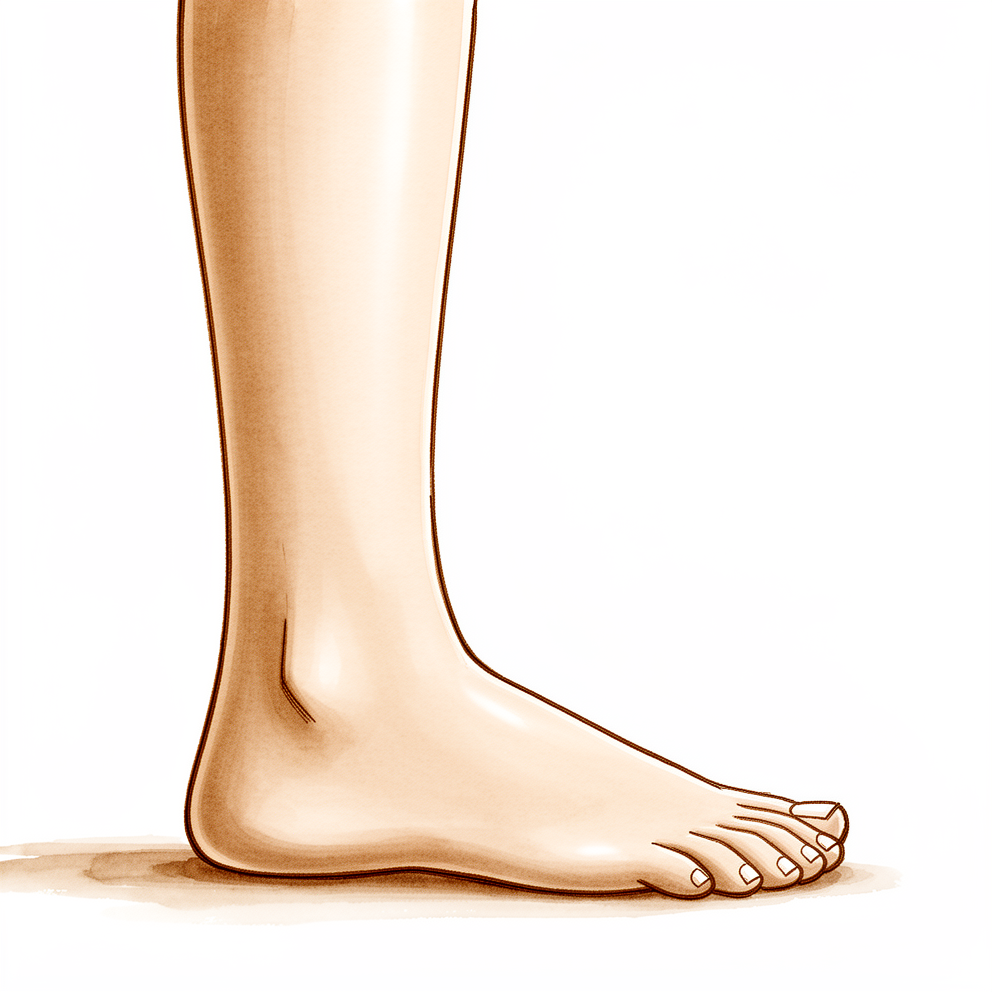
Ang operasyong ito ay muling binubuo ang mga ligament sa labas ng iyong bukung-bukong na pumipigil dito sa pag-give way. Karaniwan itong inaalok sa mga taong may chronic ankle instability, na nangangahulugang ang mga sintomas ay tumatagal ng hindi bababa sa 6 na buwan, kabilang ang paulit-ulit na sprains, pananakit, at pakiramdam na hindi matatag ang bukung-bukong habang nag-iisport. Karaniwan naming sinusubukan muna ang non-operative care, gaya ng pagbabago sa aktibidad at physiotherapy, at isinasaalang-alang ang surgery kapag hindi ito nagbigay ng sapat na pagbuti. Maaari ring imungkahi ang surgery kapag nagpapatuloy ang mga sintomas pagkatapos ng 3 hanggang 6 na buwan ng mga hakbang na ito. Layunin ng operasyon na bigyan ka ng matatag na bukung-bukong, na may mas kaunting sakit at mas mabuting function. Ang mga resulta ay mabuti o napakabuti sa pagitan ng 80 at 95% ng mga kaso.
Bago ang operasyon
Sa mga linggo bago ang operasyon, kinukumpirma namin ang plano gamit ang imaging. Maaaring kabilang dito ang X-ray, MRI scan (isang scan na nagpapakita ng mga soft tissue tulad ng mga ligament), o ultrasound. Ang mga larawang ito ay tumutulong sa amin na iplano ang operasyon at suriin kung may iba pang problema sa loob ng bukung-bukong, gaya ng pinsala sa cartilage.
Sa araw ng operasyon, itigil ang pagkain at pag-inom pitong oras bago ang nakatakdang oras. Humihingi kami ng pitong oras sa halip na mas maikling panahon upang maaaring isagawa nang mas maaga ang iyong operasyon kung maagang matapos ang listahan sa theatre. Sasabihin sa iyo ng iyong surgeon kung alin sa iyong mga regular na gamot ang dapat itigil at kailan. Magdala ng nakasulat na listahan ng lahat ng iyong iniinom, magsuot ng maluwag at komportableng damit, at mag-ayos ng taong maghahatid sa iyo pauwi pagkatapos. Kung mayroon kang iba pang kondisyong medikal, maaaring kailanganin mo rin ng mga blood test o pagsusuri kasama ang anaesthetist (ang espesyalista na nagpapatulog sa iyo).
Sa araw ng operasyon
Darating ka sa surgical admissions unit ng ospital, kung saan ka ire-rehistro at ihahanda para sa theatre. Pagkatapos ay makikipagkita ka sa anaesthetist, ang espesyalista na magpapatulog sa iyo. Ang operasyong ito ay ginagawa sa ilalim ng general anaesthetic. Minsan ay nagdaragdag ng regional nerve block para sa pagpapaginhawa ng sakit pagkatapos ng operasyon; tatalakayin ito ng anaesthetist sa iyo sa araw na iyon. Pagkatapos ay dadalhin ka sa operating theatre, kung saan isasagawa ang operasyon.
Kapag natapos na ang operasyon, magigising ka sa recovery area. Sasamahan ka ng mga nurse habang nawawala ang bisa ng anaesthetic at titiyaking komportable ka. Kapag stable ka na, maaaring ilipat ka sa ward o uuwi ka sa araw ring iyon, depende sa procedure at kung paano ang iyong paggaling. Ang sinumang magmamaneho para ihatid ka pauwi ay dapat handang sunduin ka kapag sinabi ng team na handa ka nang umalis.
Ano ang kinapapalooban ng operasyon
Mayroong dalawang pangunahing paraan upang muling mabuo ang mga panlabas na ligament ng iyong bukung-bukong. Kung ang sarili mong tissue ng ligament ay nasa makatwirang kondisyon pa, maaaring higpitan at muling ikabit ito ng iyong surgeon. Ginagawa ito sa pamamagitan ng isang kurbadong hiwa sa labas ng bukung-bukong, na karaniwang nakatagilig pasulong patungo sa gitna ng iyong paa. Ang napunit na ligament ay tinatahi pabalik sa maliit na buto ng panlabas na bukung-bukong (ang fibula) gamit ang maliliit na anchor o mga tahi na ipinapasa sa maliliit na tunnel sa buto. Ang kalapit na tissue ay maaaring itupi sa ibabaw ng pagkukumpuni upang patatagin ito. Ang mga maluwag na fragment ng buto o maliliit na sobrang buto na nagdudulot ng sakit ay tinatanggal kasabay nito.
Kung ang tissue ng iyong ligament ay masyadong gasgas o banat upang makahawak ng mga tahi, o kung ito ay isang pag-uulit ng operasyon, maaaring sa halip ay muling buuin ng iyong surgeon ang ligament gamit ang isang piraso ng tendon. Ang tendon graft na ito ay maaaring magmula sa iyong sariling katawan o mula sa donor tissue. Ang maliliit na tunnel ay binubutas sa mga buto ng iyong bukung-bukong at ang graft ay isinusuot at itinatali sa pwesto, na ginagaya ang landas ng orihinal na ligament.
Ang ilang mga pagkukumpuni ay ginagawa sa pamamagitan ng keyhole surgery sa halip. Ang surgeon ay gumagawa sa pamamagitan ng maliliit na hiwa gamit ang isang camera (isang arthroscope) at maaari ring suriin at gamutin ang pinsala sa loob ng joint ng bukung-bukong sa parehong oras, nang hindi binubuksan ang buong bahagi.
Anuman ang pamamaraang gamitin, ang hiwa ay isinasara gamit ang mga tahi at tinatakpan ng dressing. Maaari ring suriin ng iyong surgeon ang mga tendon na tumatakbo sa likod ng panlabas na buto ng bukung-bukong at kumpunihin ang mga ito kung ang mga ito ay may pinsala, dahil ang mga problema doon ay maaaring mangyari kasabay ng mga pinsala sa ligament.
Pagkatapos ng operasyon
Pagkagising mo, nasa recovery area ka, at sasamahan ka ng mga nurse habang nawawala ang bisa ng anaesthetic. Ang iyong bukung-bukong ay babalutin ng dressing, at pamamahalaan ng iyong team ang anumang sakit upang manatili kang komportable. Karaniwan ay maaari mo nang itukod ang iyong paa agad pagkatapos ng operasyon, bagaman maaari kang gumamit ng mga saklay sa simula upang matulungan kang kumilos nang ligtas. Dapat may kasama ka sa unang 24 oras pagkauwi mo sa bahay. Sasabihin sa iyo ng iyong team kung uuwi ka sa araw ring iyon o mananatili ng isang gabi sa ospital. Iniiwan namin ang dressing sa loob ng humigit-kumulang 10 araw; pakiusap huwag itong tatanggalin bago ang panahong iyon maliban kung sinabi namin sa iyo. Papalitan o tatanggalin namin ito kapag nakita ka na namin.
Paggaling
Sa unang ilang araw, ang iyong bukung-bukong ay magiging masakit at mamamaga. Ito ay normal at unti-unting huhupa. Ang pahinga, pagpapanatiling nakataas ng iyong paa, at ang pain relief na irereseta ng iyong team ay magpapagaan sa discomfort. Ang pamamaga ay pabalik-balik sa loob ng ilang panahon, at madalas na lumalala pagkatapos mong tumayo o lumakad.
Magsisimula kang gumalaw agad pagkatapos ng operasyon. Karamihan sa mga tao ay maaaring maglagay ng bigat (weight) sa paa nang maaga, gamit ang mga saklay sa simula upang makagalaw nang ligtas. Gagabayan ka ng iyong physiotherapist sa mga ehersisyo upang maibalik ang paggalaw at lakas, at unti-unting dadagdagan ang mga ito depende sa kakayahan ng iyong bukung-bukong. Isusuot mo ang dressing sa loob ng humigit-kumulang 10 araw, at susuriin namin ang sugat kapag nakita ka namin. Sa bahay, panatilihing tuyo ang dressing, maglakad nang maikli ayon sa payo, at iwasang mapilipit o ma-roll ang bukung-bukong.
Habang humuhupa ang pamamaga at bumabalik ang paggalaw, magiging mas madali ang mga pang-araw-araw na gawain. Magpoprogreso ka mula sa paggamit ng saklay patungo sa paglalakad sa sarili mong oras. Ang pagmamaneho ay maghihintay hanggang bigyan ka ng clearance ng iyong sariling surgeon: bawal magmaneho habang may cast, boot o brace sa inoperahang bukung-bukong, o habang hindi pa pinapatungan ng bigat ang paa, at kailangang hindi ka na umiinom ng matatapang na gamot sa sakit at kaya mo nang ilipat ang iyong paa sa pagitan ng mga pedal at magpreno nang malakas nang walang pag-aatubili. Ang boot ay hindi exemption, at ang pagtanggal ng cast o boot ay hindi nangangahulugan nang mag-isa na maaari ka nang magmaneho. Mahalaga kung aling bukung-bukong ang inoperahan, at gayundin kung automatic o manual ang sasakyan: sa automatic, ang kanang paa ang nagpepreno, habang sa manual, ang kaliwang paa ang gumagamit ng clutch. Ang pagbabalik sa sports ay dadaan sa mga yugto, magsisimula sa mga aktibidad na diretso ang lakad at unti-unting tutungo sa pagpilipit at pag-ikot na dating ginagawa ng iyong bukung-bukong. Sasabihin sa iyo ng iyong physiotherapist kung kailan ligtas ang bawat yugto.
Ang bawat tao ay gumagaling sa magkakaibang bilis, kaya ang iyong timeline ay maaaring naiiba sa iba. Gagabayan ka ng iyong surgeon at physiotherapist sa bawat pagbisita at ia-adjust ang plano habang ikaw ay nagpoprogreso.
Ano ang maaaring maging problema
Karamihan sa mga pasyente ay gumagaling nang maayos, ngunit paminsan-minsan ay maaaring magkaroon ng mga problema. Binabantayan kayo nang maigi ng inyong surgeon at ng team upang maagang matukoy ang anumang isyu.
Ang mga nerve malapit sa labas ng bukung-bukong (ankle) ay maaaring mairita habang nag-oopera. Kung mangyari ito, maaari kayong makaramdam ng pamamanhid, pangingilig, paghapdi, o isang matalas at tila kuryenteng pakiramdam sa itaas o sa outer edge ng inyong paa. Karamihan sa mga nerve irritation ay nawawala nang kusa sa loob ng ilang linggo hanggang buwan. Sabihan kami sa inyong susunod na review kung mapapansin ninyo ang alinman sa mga pakiramdam na ito.
Ang sugat ay maaari ring magdulot ng problema. Bantayan ang pamumula na kumakalat mula sa hiwa, pagtagas ng likido o nana mula rito, o balat na mukhang madilim o nasisira. Maaari kayong makaramdam ng malalim at tumitibok na sakit na hindi nawawala sa mga simpleng painkiller, o mapansin ang lagnat. Kung makakita kayo ng alinman sa mga senyales na ito, tumawag agad sa klinika. Ang ilang impeksyon sa sugat ay nangangailangan ng antibiotics o isang maliit na procedure upang ma-drain ang mga ito, kaya mahalaga ang maagang review.
Ang mga tahi o maliliit na anchor na ginamit upang hawakan ang repair ay maaaring paminsan-minsang kumiskis o pumuwersa sa ilalim ng balat. Pakiramdam nito ay isang sensitibong bahagi, isang bukol, o isang clicking sensation malapit sa isa sa mga maliliit na peklat. Karaniwan itong mild, ngunit kung ito ay nakakaabala sa inyo, banggitin ito sa inyong susunod na review. Isang simpleng procedure sa ilalim ng local anaesthetic ang maaaring magtanggal sa bahaging naiirita.
Ang na-repair na ligament ay bihirang mapunit muli o mabanat. Mapapansin ninyo na ang bukung-bukong ay muling nagiging hindi matatag, na may paulit-ulit na pag-roll o pagkapilay, pamamaga, at sakit sa harap ng bukung-bukong. Kung ang inyong bukung-bukong ay muling nagsisimulang bumigay pagkatapos ng isang panahon ng katatagan, makipag-ugnayan sa klinika upang masuri namin ito.
Ang ilang tao ay nakapapansin ng paninigas pagkatapos ng operasyon. Pakiramdam nito ay pagka-tight kapag itinitiklop ninyo ang inyong bukung-bukong paitaas o iniikot ang inyong paa papasok, at maaari nitong limitahan kung gaano kalayo ang galaw ng bukung-bukong. Karaniwang nakakatulong ang physiotherapy. Banggitin ito sa inyong review kung hindi bumubuti ang paggalaw.
Ang complications table sa pahinang ito ay naglilista ng mga tipikal na rate kung nais ninyo ang mga detalye.
Kailan dapat tumawag sa amin
Tumawag agad sa amin kung kayo ay may lagnat, o kung ang balat sa paligid ng inyong sugat ay lalong namumula, namamaga, o nagsisimulang maglabas ng likido. Pumunta sa emergency kung kayo ay may biglaang matinding sakit, pamamaga sa inyong binti (calf), o kahirapan sa paghinga. Ang mga ito ay maaaring mga palatandaan ng blood clot. Pumunta rin sa emergency kung mawalan kayo ng pakiramdam sa inyong paa o hindi ito maigalaw. Para sa pamamanhid, pangingilig, o paghapdi na unti-unting lumalabas, tumawag sa klinika upang masuri namin kayo.
Evidence & references
This is the clinical evidence summary written for health professionals. It is technical, and it lists the research this page was built from. You do not need to read it to understand your treatment or to make a decision about it.
Anatomy & Pathophysiology
Ligament Anatomy and Biomechanics
- The anterior talofibular ligament and calcaneofibular ligament are the primary lateral ankle structures identified radiographically [1].
- Sectioning of the deltoid ligament results in a 43% increase in tibiotalar contact area [7].
- Sectioning of the deltoid ligament results in a 30% increase in peak pressures [7].
- Sectioning of the deltoid ligament alone results in valgus tilt of the talus [7].
- Chronic instability resulting from deltoid ligament sectioning may lead to tibiotalar arthrosis [7].
- The deep deltoid ligament consists of short fibers [7].
- The Chrisman-Snook reconstruction resulted in a significantly more stable ankle joint complex than ankles with cut anterior talofibular ligaments [2].
- The Chrisman-Snook reconstruction resulted in ankles with significantly less motion than intact ankles [2].
- Transection and imbrication of the lateral ligaments results in improved mechanical stability in approximately 80% of patients [2].
Pathophysiology of Instability
- Chronic instability of the ankle from an earlier rupture of a ligament should first be treated conservatively if it is symptomatic [2].
- Mechanical instability is characterized by stress radiographs showing 8 to 10 degrees of increased tilt of the talus in the ankle mortise compared with the normal ankle [2].
- Functional instability is defined as the subjective feeling of ankle instability or recurrent ankle sprain caused by neuromuscular or proprioceptive deficits [2].
- Recurrent sprains are associated with a risk of associated injuries to other structures, such as osteochondral lesions [2].
- An acute lateral ankle sprain significantly decreases physical activity across the lifespan [1].
- Chronic medial instability often does not cause severe disability that cannot be treated conservatively [7].
- Patients with chronic medial ankle instability may give a history of a pronation-type injury but more often report having had multiple ankle sprains without clearly remembering the mechanism [7].
- The combination of posterior tibial insufficiency and deltoid incompetence is categorized by Myerson as a stage IV adult-acquired flatfoot [7].
- This combination of posterior tibial insufficiency and deltoid incompetence is most commonly seen in the older population [7].
- A symptomatic anterolateral exostosis at the insertion of the anterior talofibular ligament, described as an excentric lesion, is found by CT scan in patients with chronic ankle pain after an inversion injury [2].
- Physical examination and oblique radiographs were suggestive of the excentric lesion in most cases [2].
- Unsatisfactory results for lateral ligament shortening procedures may occur in patients with generalized joint hypermobility or long-standing ligamentous laxity [2].
- Unsatisfactory results for lateral ligament shortening procedures are frequent in patients with prior ankle surgery [2].
- Better functional results may be obtained with reconstruction of both lateral ligaments than with reconstruction of the anterior talofibular ligament alone, although the literature is inconclusive [2].
- Karlsson et al. recommended combined reconstruction if there is any doubt regarding the involvement of both ligaments [2].
- Primary repair of a chronic deltoid tear, either end-to-end, “vest-over-pants,” or advancement to bone, does not usually work [7].
- Anatomic primary repair of the chronically deficient deltoid ligament is less satisfactory than repair of the lateral ankle ligament due to the short fibers of the deep deltoid and increased tension placed on the medial aspect of the ankle [7].
- Medial ankle ligament reconstruction is indicated after failed conservative treatment in patients with chronic symptomatic mechanical instability [7].
- It is important to assess for incompetence of the medial tendons of the ankle, especially the posterior tibial tendon, in patients with chronic medial instability [7].
Investigations
- With mechanical instability, stress radiographs show 8 to 10 degrees of increased tilt of the talus in the ankle mortise compared with the normal ankle [2].
- If stress radiographs do not show increased talar tilt, other causes for the disability, such as a stress fracture, should be sought [2].
- A symptomatic anterolateral exostosis at the insertion of the anterior talofibular ligament, described as an excentric lesion, can be found by CT scan in patients with chronic ankle pain after an inversion injury [2].
- Bone scans reveal increased uptake in the middle third of the fibula, indicating a stress fracture in patients with chronic, recurrent pain over the distal third of the leg and ankle [2].
- MRI is used for ankle injuries [3].
- Stress views of the ankle mortise are utilized in evaluation [3].
Treatment
- The arthroscopic Broström technique is a described method for lateral ligament repair [1].
- Anatomic ligament repairs are performed for syndesmotic injuries [1].
- Medial ankle instability involves the deltoid ligament [1].
- An evidence-based approach exists for the treatment of acute traumatic syndesmosis (high ankle) sprains [1].
- Gravity stress radiographs are used to assess deltoid ligament integrity and medial clear space measurements [1].
- Subtalar instability is a condition with specific diagnosis and treatment protocols [1].
- Ankle fracture syndesmosis fixation and management is a current practice among orthopedic surgeons [1].
- The Broström procedure has been evaluated for long-term results in chronic lateral ankle instability [1].
- Combined medial and lateral anatomic ligament reconstruction is used for chronic rotational instability of the ankle [1].
- Outcome scales are used to assess lateral ankle ligament reconstruction [1].
- Predictors of peroneal pathology have been identified in Broström-Gould ankle ligament reconstruction for lateral ankle instability [1].
- Acute and chronic lateral ankle instability are conditions affecting athletes [1].
- Lateral ligament augmentation using suture-tape affects functional instability [1].
- A randomized comparison exists between lateral ligaments augmentation using suture-tape and modified Broström repair in young female patients with chronic ankle instability [1].
- A modified Broström procedure can be combined with arthroscopic debridement of medial gutter osteoarthritis in patients with chronic ankle instability [1].
- Ossicle resection is performed during lateral ligament repair for the treatment of chronic lateral ankle instability [1].
- Qualitative and quantitative anatomic investigations of the lateral ankle ligaments inform surgical reconstruction procedures [1].
- Deltoid ligament abnormalities are present in cases of chronic lateral ankle instability [1].
- Magnetic resonance imaging is compared to physical examination for diagnosing syndesmotic injury after lateral ankle sprain [1].
- Interventions for treating chronic ankle instability have been systematically reviewed [1].
- Open mosaicplasty is used for osteochondral lesions of the talus [1].
- Operative management of ankle instability includes reconstruction with open and percutaneous methods [1].
- Radiographic identification is used to identify primary lateral ankle structures [1].
- Acute superficial deltoid complex avulsion is repaired during ankle fracture fixation in National Football League players [1].
- Calcaneofibular ligament injury plays a role in ankle instability with implications for surgical management [1].
- Deltoid ligament repair is compared to syndesmotic fixation in bimalleolar equivalent ankle fractures [1].
- Anatomic reconstruction of the anterior talofibular and calcaneofibular ligaments can be performed using a semitendinosus tendon allograft and interference screws [1].
- Repair of only the anterior talofibular ligament resulted in similar outcomes to repair of both the anterior talofibular and calcaneofibular ligaments [1].
- Simultaneous ossicle resection and lateral ligament repair provide excellent clinical results with an early return to physical activity in pediatric and adolescent patients with chronic lateral ankle instability and os subfibulare [1].
- Morphological characteristics of os subfibulare are related to the failure of conservative treatment of chronic lateral ankle instability [1].
- The modified Broström procedure in patients with chronic ankle instability is superior to conservative treatment in terms of muscle endurance and postural stability [1].
References
[1] Campbell S Operative Orthopaedics 4 Volume Set. REPAIR OF ACUTE RUPTURE OF LATERAL LIGAMENTS > ACUTE ANKLE LIGAMENT INJURIES, CHRONIC ANKLE INSTABILITY.
[2] Campbell S Operative Orthopaedics 4 Volume Set. REPAIR OF ACUTE RUPTURE OF LATERAL LIGAMENTS > CHRONIC INSTABILITY AFTER INJURY.
[3] Campbell S Operative Orthopaedics 4 Volume Set. REPAIR OF ACUTE RUPTURE OF LATERAL LIGAMENTS > Anesthesia (Continued).
[7] Campbell S Operative Orthopaedics 4 Volume Set. REPAIR OF ACUTE RUPTURE OF LATERAL LIGAMENTS > MEDIAL REPAIR OF CHRONIC INSTABILITY.