Patients › Hand
Flexor Tendon Sheath Ganglion
A benign, fluid-filled cyst arising from the flexor tendon sheath – often painless, but can cause clicking or limited finger movement.
What you're feeling
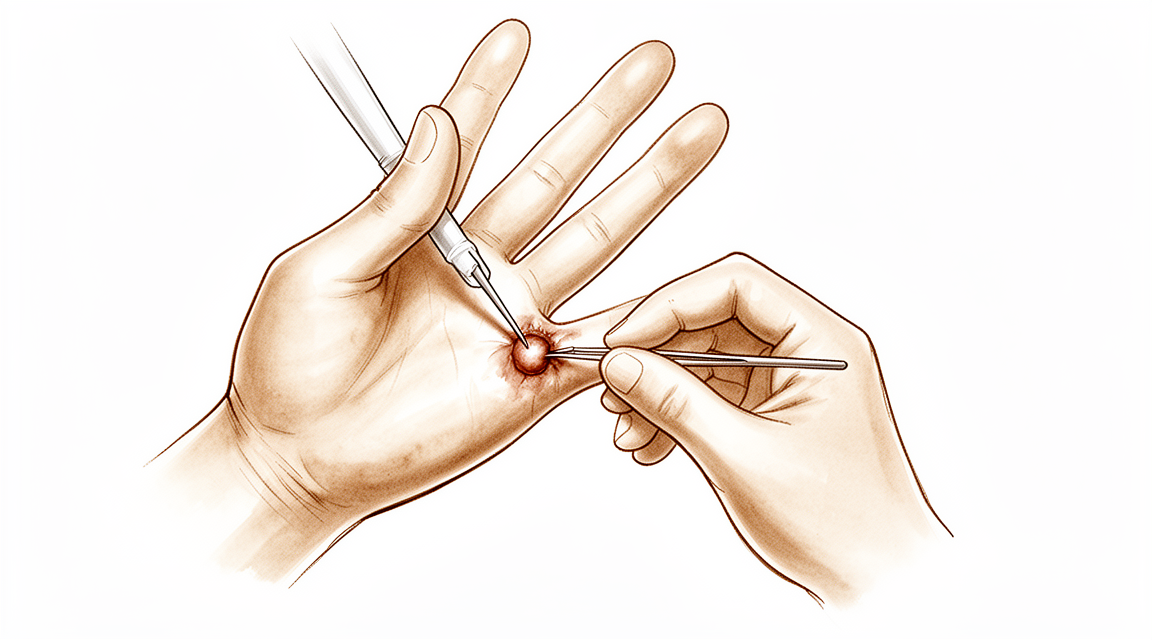
You have a small, firm lump in your palm, usually near the base of a finger. It sits over the tendon tunnel that bends the finger. The lump is a ganglion, a fluid-filled sac that has come from the lining of that tendon tunnel. It can feel like a pea under the skin.
The lump may ache, especially when you grip or squeeze. Pressing on it can be uncomfortable. Tasks that bend the finger hard against the lump can hurt, such as gripping a steering wheel, carrying shopping bags, or holding a tool. Some people find the lump is more noticeable after using the hand a lot.
A lump in this spot can be easy to mix up with other conditions. A trigger digit, where the finger catches or clicks as it bends, can feel similar. So can Dupuytren's disease, a condition where cords of tissue pull the fingers toward the palm. Your surgeon will examine the lump and work out which of these you have. Scans such as ultrasound can help confirm what the lump is.
Ganglions often change over time. Many shrink on their own, though this can take years. Some stay the same size or slowly grow. Fluid can be drawn out of the lump with a needle, which often settles it for a while, but the lump usually comes back. Surgery to remove the whole lump has a lower chance of it returning.
If the lump is painful or getting in the way, there are good options. Drawing the fluid out is often tried first. Removing the lump with surgery is also an effective choice when it keeps troubling you.
What's actually happening
Your finger bends because of a tendon, a strong cord that runs from your forearm along your palm and into the finger. That cord slides through a snug tunnel called the tendon sheath. The lining of this tunnel makes a small amount of fluid, which works like oil in a hinge, keeping the tendon gliding smoothly.
A ganglion starts when part of that lining balloons out and fills with thick, clear fluid. It is a bit like a small blister forming on the wall of the tunnel. The sac stays connected to the tunnel, which is why drawing the fluid out with a needle does not always fix it. As long as the connection remains, the sac can refill.
The lump itself is harmless, but it takes up space where there is not much to spare. That is why gripping or squeezing can ache: the swollen sac presses on the tissue around it. The same crowding explains why a lump here can sit close to the structures that make a finger click or catch, and why your surgeon checks carefully which condition you have.
Most of these lumps behave calmly over time. About 40% shrink within the first 6 years after they are assessed. Some people are simply more prone to them, and loose-jointed wrists seem to make ganglions more likely. If one is removed with surgery, there is about a 10% chance it grows back at the same spot.
The important thing to know is what this lump is not. It is not a cancer, and it does not spread to other parts of the body. It is a pocket of fluid from a lining that already exists in your hand. Understanding that can make the choices ahead feel less daunting: watch and wait, drain it, or remove it.
What we can do about it
Dr Kieran Hirpara, an upper-limb surgeon at Mater Private Hospital Rockhampton, starts with the least invasive options that suit your condition. Patients are generally referred to our clinic by their GP; if a physiotherapist has suggested you see us, you will still need a referral from your GP in order to be eligible for the Medicare rebate. At your first visit we take a careful history, examine the lump, and arrange a scan such as ultrasound if it helps confirm what it is.
Many of these lumps settle on their own, as you have read above. If yours is not painful and is not getting in the way, we may simply watch it. Changing how you grip or hold tools can take pressure off the lump. Hand therapy aims to keep the finger moving comfortably and settle the ache when you use your hand.
Drawing the fluid out with a needle is often tried first. The needle drains the thick fluid from the sac, which settles the lump for a while. The connection to the tendon tunnel usually stays open, so the lump often refills. We discuss this step with you before surgery because it can spare some people an operation.
If the lump keeps troubling you after these steps, we talk about removing it with surgery. The operation takes out the whole sac along with its connection to the tendon tunnel, which lowers the chance of it coming back. Any operation leaves a scar and carries some risk of complications, and we go through those with you. For some people, surgery does not relieve pain or improve how the hand works any more than leaving the lump alone, so we weigh that up together. If your work or hobbies need strong gripping with the wrist bent back, we will talk about the chance of ongoing pain and stiffness after surgery on the back of the wrist.
What to expect
Most of these lumps follow a calm course. Some stay the same size, and a few slowly grow. The ache often comes and goes with how much you use the hand.
If you leave the lump alone, there is a real chance it will settle by itself, though that can take years. Drawing the fluid out usually settles it for a while, but most ganglions come back after that. Removing the lump with surgery gives a lower chance of it returning, and people who have it done report better hand function and less pain within 6 weeks. Surgery is not a promise of a pain-free hand, and for some people it works no better than leaving the lump alone.
If the lump is removed and does not come back, most people get on with normal life. The scar settles over months. Some lumps do grow back at the same spot even after a careful removal, so we will check the area at your follow-up visits. If that happens, you and your surgeon can talk about what to do next.
When to see someone
Most lumps like this are harmless and can wait for a routine appointment. See your GP if the lump is painful, growing, or getting in the way of your grip or daily tasks. Ask for a specialist review if the finger catches or clicks as it bends, or if your fingers are being pulled toward the palm, as these can be signs of a different condition needing different treatment. Go to an emergency department if the hand becomes hot, red and swollen, or if you develop fever, because infection needs same-day care. Seek urgent review if you notice new numbness, pins and needles, or weakness in the thumb or fingers, as a lump pressing on a nerve can cause lasting problems if left too long.
In more depth
Advanced reading: the deeper science (optional)
This section goes further than you need for your own treatment decisions. A flexor tendon sheath ganglion is worth the extra reading because it is the smallest lump in hand surgery that reliably causes disproportionate symptoms, and because what it is attached to determines both why it hurts and why simple treatments fail.
A pea-sized lump that hurts out of proportion
These cysts, also called retinacular cysts, or volar retinacular ganglia, arise from the fibrous sheath that holds the flexor tendons against the finger bones [1]. They sit at the base of the finger in the palm, are typically only a few millimetres across, and are firm rather than soft.
The symptom is characteristic and explains itself once the anatomy is clear: pain on gripping something hard and narrow, a steering wheel, a golf club, a bicycle handlebar, a shopping bag handle. The cyst is trapped between the object and the underlying bone, and there is no soft tissue to cushion it because the sheath is bound directly to the phalanx.
That is why size correlates so poorly with symptoms. A large soft swelling on the back of the wrist may be painless while a lesion a fraction of its size at the base of a finger is genuinely limiting.
The same rule as every other ganglion
Its behaviour follows from what it is connected to. The cyst arises from the tendon sheath and is filled from it, which means the mechanics are those of the wrist ganglion and the mucous cyst: the sac is the visible end of the problem, not the source.
Consequently, puncturing or aspirating it addresses the swelling and not the leak. Recurrence after simple drainage is common, and definitive treatment means excising the cyst together with the affected portion of the sheath from which it arises.
Why the operation is smaller than it sounds but not trivial
Excision is a short procedure through a small incision at the base of the finger, and it is generally curative. Two anatomical facts make care worthwhile at that site.
The digital nerves run immediately beside the flexor sheath, one on each side, and at the base of the finger they are superficial and close to the midline structures being removed. A numb patch along one border of a finger is a recognised risk of a small operation in this location.
Second, only the redundant portion of the sheath can be removed. The pulleys that hold the tendons against the bone are load-bearing structures, and losing a critical one allows the tendon to bowstring away from the finger, which weakens grip. Excision is therefore deliberately limited to the segment of sheath that is not doing that job.
When to leave it alone
Because this lesion is benign and does not enlarge indefinitely, treatment is driven by symptoms alone. A cyst that is noticeable but not painful in daily grip needs nothing done. Where it is treated, it is because a specific and repeated activity is compromised, which is a clearer indication than most, since the provoking grip is usually easy for a person to identify.
The related cysts of the fingertip joint and the wrist are covered on their own pages; the shared principle across all three is that the stalk, not the sac, determines whether the problem returns.
References for the advanced reading
- Foret AL, Chhabra AB. Volar retinacular ganglions. J Hand Surg Am. 2012;37(3):566-7.
Evidence & references
This is the clinical evidence summary written for health professionals. It is technical, and it lists the research this page was built from. You do not need to read it to understand your treatment or to make a decision about it.
Overview
- Surgical excision is a simple, safe, and effective method for treating a painful ganglion of the digital flexor tendon sheath [1].
- Percutaneous puncture is a practical option for managing flexor tendon sheath ganglions given its low cost, lack of downtime, and low recurrence rate [2].
- No recurrences were observed after a second puncture in the cohort assessed for percutaneous puncture of flexor sheath ganglions [2].
- Endoscopic ganglionectomy via flexor carpi radialis tendoscopy is a minimally invasive approach that offers better cosmesis, less soft tissue trauma, and the ability to manage concomitant FCR tendon pathology [3].
- Endoscopic ganglionectomy via flexor carpi radialis tendoscopy carries risks of recurrence and nerve or vessel injury [3].
- Pediatric ganglions are more commonly found on the volar surface of the hand and wrist compared to adults [4].
- Pediatric ganglions more commonly have tendon sheath origin compared to adults [4].
- There is no consensus within the literature regarding the best management of pediatric wrist ganglia [9].
- No single treatment modality confers a particular advantage or disadvantage over another for pediatric wrist ganglia [9].
- Current best evidence suggests that about 40% of lesions decrease over the first 6 years after evaluation by a hand surgeon [18].
- Current best evidence suggests that most ganglions recur after aspiration [18].
- Current best evidence suggests that surgical intervention has about a 10% recurrence rate [18].
- Surgical intervention for ganglions leaves scars and has some risk for adverse events [18].
- Operation-related complications after arthroscopic volar wrist ganglionectomy are associated with anatomical location distal to the bifurcation of the radial artery and concurrently penetrated up to the superficial fascia layer [21].
Anatomy & Pathophysiology
Anatomical Location and Origin
- Volar wrist ganglia tend to arise in the interval between the first extensor compartment and the flexor carpi radialis (FCR) tendon sheath, just proximal to the wrist flexion crease [7].
- Approximately two thirds of anterior wrist ganglions reportedly arise from the radiocarpal joint [7].
- One third of anterior wrist ganglions reportedly arise from the scaphotrapezial joint [7].
- Ganglion cysts that arise from the FCR sheath are often located slightly more medially, either just radial or palmar to the sheath [7].
- Ganglions arising from the FCR sheath are typically less mobile than ganglions arising from the wrist joint [7].
- Ganglions arising from the first extensor compartment tend to adhere to the sheath (extensor retinaculum) and are less mobile [7].
- Ganglions are defined as cystic swellings closely connected to joints or tendon sheaths which contain mucinous material [64].
Clinical Presentation and Physical Characteristics
- Volar wrist ganglia typically appear to be 1 to 2 cm in size but may be significantly larger at the time of surgical dissection [7].
- Patients with volar wrist ganglions often present with a mass that has been present for a number of months or years and is typically asymptomatic [7].
- Patients with volar wrist ganglions often note discomfort when the mass is "bumped" [7].
- Clinically, volar wrist ganglia are compressible, slightly mobile, nontender, and visible when transilluminated [7].
- Volar wrist ganglia are nonpulsatile but are often intimate with the radial artery, which is palpable alongside the lesion [7].
- Most patients with intraneural ganglions are aged 30 to 50 years, though occurrence in children has also been reported [11].
- Most patients with intraneural ganglions present with a painless mass [11].
- Some patients with intraneural ganglions present with symptoms of nerve irritation or entrapment neuropathy [11].
Pathogenesis and Etiology
- The etiology of ganglions is unknown [64].
- Many hypotheses have been advanced for the pathogenesis of ganglions, including retention cyst, herniation of tendon or capsular synovia, bursal transformation, neoplasia, and mucinous degeneration of fibrous tissue [64].
- Carp and Stout reported that a ganglion does not initially connect with the joint and that communication occurs secondary to degeneration of the capsule which then ruptures [64].
- Injections of contrast material into ganglions usually fail to show a communication into the joint [64].
- Injections of contrast material into the wrists of patients have demonstrated communications into the ganglions [64].
- In forty of fifty-nine patients with ganglions in the study by Andrén and Eiken, contrast medium passed from the joint into the ganglion through a tortuous narrowed duct [64].
- The articular (synovial) theory has gained worldwide acceptance as a scientifically proven explanation for the formation of intraneural ganglions [11].
- The pathogenesis of intraneural ganglion cysts remains unclear, though trauma has been proposed as a possible reason [77].
- The theory of articular unification is mainly accepted as the cause for intraneural ganglion cysts [77].
Nerve Involvement
- Involvement of the peripheral nerves of the upper extremity by intraneural ganglion is rare [11].
- The ulnar nerve is the most commonly involved nerve in the upper extremity by intraneural ganglion [11].
- Almost any other nerve in the vicinity of a joint can be involved by intraneural ganglion [11].
- Intraneural ganglion cysts are benign, mucinous, non-neoplastic lesions of the peripheral nerves [77].
Classification
- Volar wrist ganglia tend to arise in the interval between the first extensor compartment and flexor carpi radialis (FCR) tendon sheath, just proximal to the wrist flexion crease [7].
- Ganglion cysts that arise from the FCR sheath are often in a slightly more medial location, either just radial or palmar to the sheath [7].
- Ganglions arising from the first extensor compartment tend to adhere to the sheath (extensor retinaculum) [7].
- Ganglions arising from the first extensor compartment tend to be quite firm and are less mobile [7].
- The proposed classification of ganglia helps minimize the area of resection required [50].
Clinical Presentation
General Characteristics
- Volar wrist ganglia are typically asymptomatic masses that have been present for months or years [7].
- Patients with volar wrist ganglions often report discomfort when the mass is bumped [7].
- Clinically, volar wrist ganglions are compressible, slightly mobile, nontender, and visible when transilluminated [7].
- Volar wrist ganglions are nonpulsatile but are often intimate with the radial artery, which is palpable alongside the lesion [7].
- Ganglion cysts arising from the flexor carpi radialis (FCR) sheath are often located slightly more medially, either just radial or palmar to the sheath [7].
- Ganglions arising from the first extensor compartment tend to adhere to the sheath, are quite firm, and are less mobile [7].
Epidemiology and Demographics
- Women are significantly more likely to be diagnosed with a volar wrist ganglion, regardless of age or military status [6].
- Pediatric ganglions more commonly have a tendon sheath origin compared to adults [4].
- In children aged less than 10 years, ganglion cysts present on the volar aspect of the wrist [15].
- In patients aged greater than 10 years, ganglions resemble those in the adult population and present on the dorsal aspect of the wrist [15].
- Ganglions in pediatric populations demonstrate a female predilection [26].
Imaging and Diagnosis
- Routine wrist radiography is not cost-effective in the evaluation of patients with a wrist ganglion due to a low prevalence of therapeutically significant findings [16].
- MRI provides relatively good reliability in establishing the diagnosis of an occult dorsal wrist ganglion, with a sensitivity of 83% when using intra-operative findings as the standard [27].
- MRI is an excellent diagnostic modality to evaluate rapidly growing upper extremity masses and distinguish ganglions from malignant processes [20].
- The 3-dimensional FSE extended echo train MRI sequence (cube) provides better visualization of intraneural ganglions and articular connections to the cyst [11].
Investigations
- Radiologists are less likely to identify occult dorsal ganglion cysts on MRI if the cyst is smaller or if the requisition form does not mention a cyst [63].
- Recent advances in MRI technology, specifically the 3-dimensional FSE extended echo train sequence called cube, have revolutionized the visualization of intraneural ganglions and the articular branches that connect them to the joint [11].
- High-resolution MRI techniques have the potential to improve patient outcomes by allowing better preoperative planning and more accurate surgical intervention [11].
- Routine wrist radiography is not cost-effective in the evaluation and treatment decision-making process for patients with a wrist ganglion due to a low prevalence of therapeutically significant findings [16].
- Sonography-guided wrist arthroscopy provides visualization of the ganglions and ganglion stalk, as well as of the arthroscopic shaver and adjacent structures such as nerves, vessels, and tendons [54].
- Sonography-assisted arthroscopic resection is a safer and more reliable method for treating volar wrist ganglia [30].
- A careful physical examination is essential to direct care and future testing if indicated, as diagnostic tests such as imaging can be expensive, time consuming, and often nonspecific [23].
Non-Operative Management
- Nonsurgical treatment is largely ineffective in treating ganglion cysts, though it may be considered for symptomatic relief in patients who do not want surgery [55].
- No recurrences were observed after a second puncture in the cohort assessed for percutaneous puncture of flexor tendon sheath ganglions [2].
- Most ganglions recur after aspiration [18].
- There is no consensus within the literature regarding the best management of pediatric wrist ganglia, and no single treatment modality confers a particular advantage or disadvantage over another [9].
Operative Management
- Open surgical excision offers significantly lower chance of recurrence compared with aspiration in the treatment of wrist ganglions [62].
- Surgical intervention has about a 10% recurrence rate, leaves scars, and has some risk for adverse events [18].
- Arthroscopy allows for the simultaneous treatment of ganglions and other pathologies [10].
- The outcomes, recurrence, and complications rates after 4 years of follow-up support the use of arthroscopy as a treatment for dorsal wrist ganglion [12].
- At 12 months follow-up, the rates of recurrence with arthroscopic dorsal ganglion excision are comparable with and not superior to those of open excision [17].
- Arthroscopic resection is an effective treatment strategy for intra-articular synovial ganglions refractory to conservative measures, providing complete resolution of symptoms and functional recovery with minimal soft tissue damage [51].
- Arthroscopic ganglionectomy through an intrafocal cystic portal is a safe and efficacious option for the treatment of painful wrist ganglia [52].
- Recurrent ganglion cysts originating from the midcarpal joint are not contraindications for arthroscopic resection [22].
- In patients with the clinical diagnosis of wrist ganglion cyst, the quality of care would not be compromised by abandoning the practice of routine submission of surgical specimens for pathological examination after excision of the ganglion cyst [13, 25].
Outcomes and Complications
- Recurrence of the wrist ganglion cyst occurred in five patients (9%) in a cohort of 53 patients undergoing arthroscopic resection [49].
- PRWE scores were significantly higher in patients with a recurrence (30 vs. 12, p = 0.002) following arthroscopic resection [49].
- Patients initially presenting with a new ganglion cyst had fewer recurrences at final follow-up compared with patients initially presenting with recurrence (4 vs. 15%, respectively) [49].
- Three of the 53 patients (6%) had a complication following arthroscopic resection of wrist ganglion cysts [49].
- One patient experienced neuropraxia of the radial superficial nerve, which resolved spontaneously [49].
- One patient developed extensor carpi ulnaris (ECU) tendinitis which was successfully treated with splinting [49].
- One patient experienced painful scar tissue, which was successfully removed surgically [49].
- Worse hand function was associated with recurrence following prior surgery, worse baseline hand function and lower treatment credibility [28].
Complications
- Surgical excision of flexor tendon sheath ganglions is considered a safe method with no specific complications reported in the cited study [1].
- Percutaneous puncture of flexor tendon sheath ganglions has a low recurrence rate, with no recurrences observed after a second puncture in the studied cohort [2].
- Volar wrist ganglions arising from the first extensor compartment or flexor carpi radialis (FCR) sheath may be difficult to distinguish from anterior wrist joint ganglions [7].
- Ganglion cysts arising from the FCR sheath are typically less mobile than ganglions arising from the wrist joint [7].
- Ganglions arising from the first extensor compartment tend to adhere to the sheath and are less mobile [7].
- Operation-related complications after arthroscopic volar wrist ganglionectomy are associated with the anatomical location of the cyst, specifically when it is distal to the bifurcation of the radial artery and concurrently penetrated up to the superficial fascia layer [21].
- Surgical intervention for wrist ganglions has a recurrence rate of approximately 10% [18].
- Surgical intervention for wrist ganglions leaves scars and carries some risk for adverse events [18].
- Open dorsal wrist ganglion excision in patients whose occupation or activities require forceful wrist extension is associated with a considerable risk of residual pain and functional limitations [70].
- Arthroscopic resection of dorsal wrist ganglions has recurrence and complication rates that support its use as a treatment option [12].
Recovery
- Surgical excision of a painful ganglion of the digital flexor tendon sheath is a simple, safe, and effective method [1].
- Percutaneous puncture for flexor tendon sheath ganglions has a low recurrence rate, with no recurrences observed after a second puncture in the studied cohort [2].
- Endoscopic ganglionectomy via flexor carpi radialis tendoscopy offers better cosmesis and less soft tissue trauma compared to other approaches [3].
- In children with a wrist ganglion, if the cyst resolves spontaneously, it usually does so within 18 months [14].
- In children aged <10 years, volar wrist ganglions are generally amenable to observation with spontaneous regression [15].
- Open surgical excision for pediatric wrist ganglions demonstrates a relatively low recurrence rate with minimal complications [15].
- Approximately 40% of wrist ganglion lesions decrease over the first 6 years after evaluation by a hand surgeon [18].
- Surgical intervention for wrist ganglions has about a 10% recurrence rate [18].
- Surgical intervention for wrist ganglions leaves scars and has some risk for adverse events [18].
- Routine midcarpal joint exploration during arthroscopic excision of dorsal wrist ganglions appeared to reduce recurrence at 1 year without negatively impacting patient outcomes [29].
- Complete resection of the ganglion stem and complete closure of the joint capsule is the most important step to avoid recurrences [71].
Key Evidence
- [L4] Surgical excision is a simple, safe, and effective method for treating a painful ganglion of the digital flexor tendon sheath. [1] (10.1007/s11552-007-9028-4)
- [L4] Percutaneous puncture is a practical option for managing flexor tendon sheath ganglions given its low cost, lack of downtime, and low recurrence rate, with no recurrences observed after a second puncture in this cohort. [2] (10.1177/17531934221115983)
- [Paper] Endoscopic ganglionectomy via flexor carpi radialis tendoscopy is a minimally invasive approach that offers better cosmesis, less soft tissue trauma, and the ability to manage concomitant FCR tendon pathology, though it carries risks of recurrence and nerve or vessel injury. [3] (10.1016/j.eats.2017.06.002)
- [L4] Pediatric ganglions are more commonly found on the volar surface of the hand and wrist and more commonly have tendon sheath origin compared to adults. [4] (10.1007/s11552-008-9122-2)
- [L3] Women are significantly more likely to be diagnosed with a volar wrist ganglion, regardless of age or military status. [6] (10.1016/j.jhsa.2016.08.008)
- [L5] [7] (10.1016/j.hcl.2004.03.015)
- [L4] There is no consensus within the literature regarding the best management of pediatric wrist ganglia, and no single treatment modality confers a particular advantage or disadvantage over another. [9] (10.1177/1558944720966716)
- [L4] Arthroscopy allows for the simultaneous treatment of ganglions and other pathologies. [10] (10.1016/j.jhsa.2012.04.042)
- [L4] [11] (10.1016/j.jhsa.2015.05.025)
- [L4] The outcomes, recurrence, and complications rates after 4 years of follow-up presented in this study support the use of arthroscopy as a treatment for dorsal wrist ganglion. [12] (10.1177/1558944717743601)
- [L4] In patients with the clinical diagnosis of wrist ganglion cyst, the quality of care would not be compromised by abandoning the practice of routine submission of surgical specimens for pathological examination after excision of the ganglion cyst. [13] (10.1016/s0363-5023(10)60107-4)
- [L4] In a child with a wrist ganglion, if the cyst ultimately resolved, it usually did so within 18 months. [14] (10.1016/j.jhsa.2019.10.032)
- [L4] [15] (10.1016/j.jhsa.2021.12.015)
- [L4] The study concludes that routinely performing wrist radiography is not cost-effective in the evaluation and treatment decision-making process for patients with a wrist ganglion due to a low prevalence of therapeutically significant findings. [16] (10.1007/s11552-007-9032-8)
- [L1] At 12 months follow-up, the rates of recurrence with arthroscopic dorsal ganglion excision are comparable with and not superior to those of open excision. [17] (10.1016/j.jhsa.2008.01.009)
- [L5] Current best evidence suggests that about 40% of lesions decrease over the first 6 years after evaluation by a hand surgeon, that most ganglions recur after aspiration, and that surgical intervention has about a 10% recurrence rate, leaves scars, and has some risk for adverse events. [18] (10.1016/j.jhsa.2010.11.048)
- [L4] MRI is an excellent diagnostic modality to evaluate rapidly growing upper extremity masses and distinguish ganglions from malignant processes. [20] (10.1007/s11552-007-9083-x)
- [L3] The operation-related complications after arthroscopic volar wrist ganglionectomy are associated with its anatomical location: distal to the bifurcation of the radial artery and concurrently penetrated up to the superficial fascia layer. [21] (10.1186/s12891-025-08766-x)
- [L4] Ganglion cysts also have a high association with certain interosseous laxities, and recurrent ganglion cysts originating from the midcarpal joint are not contraindications for arthroscopic resection. [22] (10.1016/j.jhsa.2008.11.025)
- [L3] This study suggests that, in patients with the clinical diagnosis of wrist ganglion cyst, quality of care would not be compromised by abandoning the practice of routinely submitting surgical specimens for pathological examination after excision of the ganglion cyst. [25] (10.1016/j.jhsa.2010.03.021)
- [L2] Ganglions in pediatric populations, which most commonly affect the dorsal wrist, demonstrate a female predilection. [26] (10.1016/j.jhsa.2021.02.026)
- [L3] MRI scans provide relatively good reliability in establishing the diagnosis of an occult dorsal wrist ganglion, with a sensitivity of 83% when using intra-operative findings as the standard. [27] (10.1177/1753193408092041)
- [L2] Worse hand function was associated with recurrence following prior surgery, worse baseline hand function and lower treatment credibility. [28] (10.1177/17531934231153029)
- [L3] Routine midcarpal joint exploration during arthroscopic excision of dorsal wrist ganglions appeared to reduce recurrence at 1 year without negatively impacting patient outcomes. [29] (10.1177/17531934251405730)
- [Paper] This method is safer and more reliable for treating volar wrist ganglia. [30] (10.1016/j.eats.2011.12.007)
- [L4] [49] (10.1055/s-0040-1716509)
- [L4] The proposed classification of ganglia helps minimize the area of resection required. [50] (10.1054/jhsb.2001.0620)
- [L4] Arthroscopic resection is an effective treatment strategy for intra-articular synovial ganglions refractory to conservative measures, providing complete resolution of symptoms and functional recovery with minimal soft tissue damage. [51] (10.1016/j.jhsg.2024.05.007)
- [L4] Arthroscopic ganglionectomy through an intrafocal cystic portal is a safe and efficacious option for the treatment of painful wrist ganglia. [52] (10.1016/j.arthro.2009.08.021)
- [L4] Sonography-guided wrist arthroscopy provides several advantages for surgeons, including visualization of the ganglions and ganglion stalk, as well as of the arthroscopic shaver and adjacent structures such as nerves, vessels, and tendons to perform surgery safely. [54] (10.1016/j.jhsa.2012.04.012)
- [L4] Nonsurgical treatment is largely ineffective in treating ganglion cysts, though it may be considered for symptomatic relief in patients who do not want surgery. [55] (10.1155/2013/940615)
- [L1] Open surgical excision offers significantly lower chance of recurrence compared with aspiration in the treatment of wrist ganglions. [62] (10.1016/j.jhsa.2014.12.014)
- [L3] Radiologists are less likely to identify occult dorsal ganglion cysts on MRI if the cyst is smaller or if the requisition form does not mention a cyst. [63] (10.1055/s-0039-1683847)
- [L4] [64] (10.2106/00004623-197254070-00009)
- [L4] Patients whose occupation or activities require forceful wrist extension should be counseled on the considerable risk of residual pain and functional limitations that may occur after open dorsal wrist ganglion excision. [70] (10.1016/j.jhsa.2015.05.030)
- [L4] Complete resection of the ganglion stem and complete closure of the joint capsule is the most important step to avoid recurrences. [71] (10.1007/s001670050073)
- [L5] [77] (10.1186/s12883-018-1229-7)
References
[1] Flexor Tendon Sheath Ganglions: Results of Surgical Excision. HAND. 2007. DOI: 10.1007/s11552-007-9028-4
[2] Percutaneous puncture of flexor sheath ganglions: an assessment of recurrence. Journal of Hand Surgery (European Volume). 2022. DOI: 10.1177/17531934221115983
[3] Endoscopic Ganglionectomy of Palmar Ganglion via Flexor Carpi Radialis Tendoscopy. Arthroscopy Techniques. 2017. DOI: 10.1016/j.eats.2017.06.002
[4] Pediatric Ganglion Cysts of the Hand and Wrist: An Epidemiologic Analysis. HAND. 2008. DOI: 10.1007/s11552-008-9122-2
[6] Incidence and Risk Factors for Volar Wrist Ganglia in the U.S. Military and Civilian Populations. The Journal of Hand Surgery. 2016. DOI: 10.1016/j.jhsa.2016.08.008
[7] Ganglion cysts and other tumor related conditions of the hand and wrist. Hand Clinics. 2004. DOI: 10.1016/j.hcl.2004.03.015
[9] Wrist Ganglion Cysts in Children: An Update and Review of the Literature. HAND. 2020. DOI: 10.1177/1558944720966716
[10] Ganglions of the Wrist and Associated Triangular Fibrocartilage Lesions: A Prospective Study in Arthroscopically-treated Patients. The Journal of Hand Surgery. 2012. DOI: 10.1016/j.jhsa.2012.04.042
[11] Intraneural Ganglions of the Hand and Wrist. The Journal of Hand Surgery. 2015. DOI: 10.1016/j.jhsa.2015.05.025
[12] Arthroscopic Resection of Dorsal Wrist Ganglion: Results and Rate of Recurrence Over a Minimum Follow-up of 4 Years. HAND. 2017. DOI: 10.1177/1558944717743601
[13] Necessity of Routine Pathological Examination following Surgical Excision of Wrist Ganglions. The Journal of Hand Surgery. 2010. DOI: 10.1016/s0363-5023(10)60107-4
[14] Wrist Ganglia in Children: Nonsurgical Versus Surgical Treatment. The Journal of Hand Surgery. 2020. DOI: 10.1016/j.jhsa.2019.10.032
[15] Pediatric Ganglions of the Hand and Wrist: A Review of Current Literature. The Journal of Hand Surgery. 2022. DOI: 10.1016/j.jhsa.2021.12.015
[16] The Use of Routine Wrist Radiography is Not Useful in the Evaluation of Patients with a Ganglion Cyst of the Wrist. HAND. 2007. DOI: 10.1007/s11552-007-9032-8
[17] Arthroscopic Versus Open Dorsal Ganglion Excision: A Prospective, Randomized Comparison of Rates of Recurrence and of Residual Pain. The Journal of Hand Surgery. 2008. DOI: 10.1016/j.jhsa.2008.01.009
[18] Wrist Ganglions. The Journal of Hand Surgery. 2011. DOI: 10.1016/j.jhsa.2010.11.048
[20] Compression Neuropathy of the Radial Nerve Due to Ganglion Cysts. HAND. 2008. DOI: 10.1007/s11552-007-9083-x
[21] Anatomical location of volar wrist ganglion in preoperative MRI is a risk factor for operation-related complications after arthroscopic ganglionectomy. BMC Musculoskeletal Disorders. 2025. DOI: 10.1186/s12891-025-08766-x
[22] Prospective Outcomes and Associations of Wrist Ganglion Cysts Resected Arthroscopically. The Journal of Hand Surgery. 2009. DOI: 10.1016/j.jhsa.2008.11.025
[23] Orthopaedic Knowledge Update 13 Ebook Without Multimedia. Anatomy, Evaluation, Clinical Examination, and Imaging > Evaluation and Clinical Examination: Current Concepts.
[25] Necessity of Routine Pathological Examination After Surgical Excision of Wrist Ganglions. The Journal of Hand Surgery. 2010. DOI: 10.1016/j.jhsa.2010.03.021
[26] Clinical Presentation and Characteristics of Hand and Wrist Ganglion Cysts in Children. The Journal of Hand Surgery. 2021. DOI: 10.1016/j.jhsa.2021.02.026
[27] Magnetic Resonance Imaging in the Diagnosis of Occult Dorsal Wrist Ganglions. Journal of Hand Surgery (European Volume). 2008. DOI: 10.1177/1753193408092041
[28] Factors associated with self-reported pain and hand function following dorsal wrist ganglion excision. Journal of Hand Surgery (European Volume). 2023. DOI: 10.1177/17531934231153029
[29] Arthroscopic resection of dorsal wrist ganglions with or without midcarpal exploration. Journal of Hand Surgery (European Volume). 2025. DOI: 10.1177/17531934251405730
[30] Sonography‐Assisted Arthroscopic Resection of Volar Wrist Ganglia: A New Technique. Arthroscopy Techniques. 2012. DOI: 10.1016/j.eats.2011.12.007
[49] Patient-Related Outcomes of Arthroscopic Resection of Ganglion Cysts of the Wrist. Journal of Wrist Surgery. 2020. DOI: 10.1055/s-0040-1716509
[50] Arthroscopic Diagnosis and Treatment of Dorsal Wrist Ganglion. Journal of Hand Surgery. 2001. DOI: 10.1054/jhsb.2001.0620
[51] Intra-articular Synovial Ganglion of the Wrist. Journal of Hand Surgery Global Online. 2024. DOI: 10.1016/j.jhsg.2024.05.007
[52] Arthroscopic Ganglionectomy Through an Intrafocal Cystic Portal for Wrist Ganglia. Arthroscopy. 2010. DOI: 10.1016/j.arthro.2009.08.021
[54] Sonography-guided Arthroscopy for Wrist Ganglion. The Journal of Hand Surgery. 2012. DOI: 10.1016/j.jhsa.2012.04.012
[55] Treatment of Ganglion Cysts. ISRN Orthopedics. 2013. DOI: 10.1155/2013/940615
[62] Wrist Ganglion Treatment: Systematic Review and Meta-Analysis. The Journal of Hand Surgery. 2015. DOI: 10.1016/j.jhsa.2014.12.014
[63] Radiologist Identification of Occult Dorsal Wrist Ganglion Cysts on MRI. Journal of Wrist Surgery. 2019. DOI: 10.1055/s-0039-1683847
[64] Ganglions of the Wrist and Hand. The Journal of Bone & Joint Surgery. 1972. DOI: 10.2106/00004623-197254070-00009
[70] Outcomes of Open Dorsal Wrist Ganglion Excision in Active-Duty Military Personnel. The Journal of Hand Surgery. 2015. DOI: 10.1016/j.jhsa.2015.05.030
[71] A ganglion of the superior tibiofibular joint as a mucoid‐cystic degeneration of unusual localization. Knee Surgery, Sports Traumatology, Arthroscopy. 1998. DOI: 10.1007/s001670050073
[77] The cubital tunnel syndrome caused by intraneural ganglion cyst of the ulnar nerve at the elbow: a case report. BMC Neurology. 2018. DOI: 10.1186/s12883-018-1229-7