Lý do phẫu thuật này được đề xuất
Bác sĩ Kieran Hirpara, bác sĩ phẫu thuật chi trên tại Bệnh viện tư nhân Mater Rockhampton, sẽ lựa chọn phương pháp điều trị phù hợp với chấn thương cụ thể của bạn. Thông thường, bệnh nhân được bác sĩ đa khoa giới thiệu đến phòng khám của chúng tôi; nếu vật lý trị liệu viên khuyên bạn nên đến gặp chúng tôi, bạn vẫn cần có giấy giới thiệu từ bác sĩ đa khoa để được hưởng mức hoàn trả chi phí từ Medicare. Trong buổi khám, chúng tôi sẽ hỏi bệnh sử, khám tay bạn và chỉ định chụp hình ảnh nếu cần thiết để xác định tình trạng chấn thương.
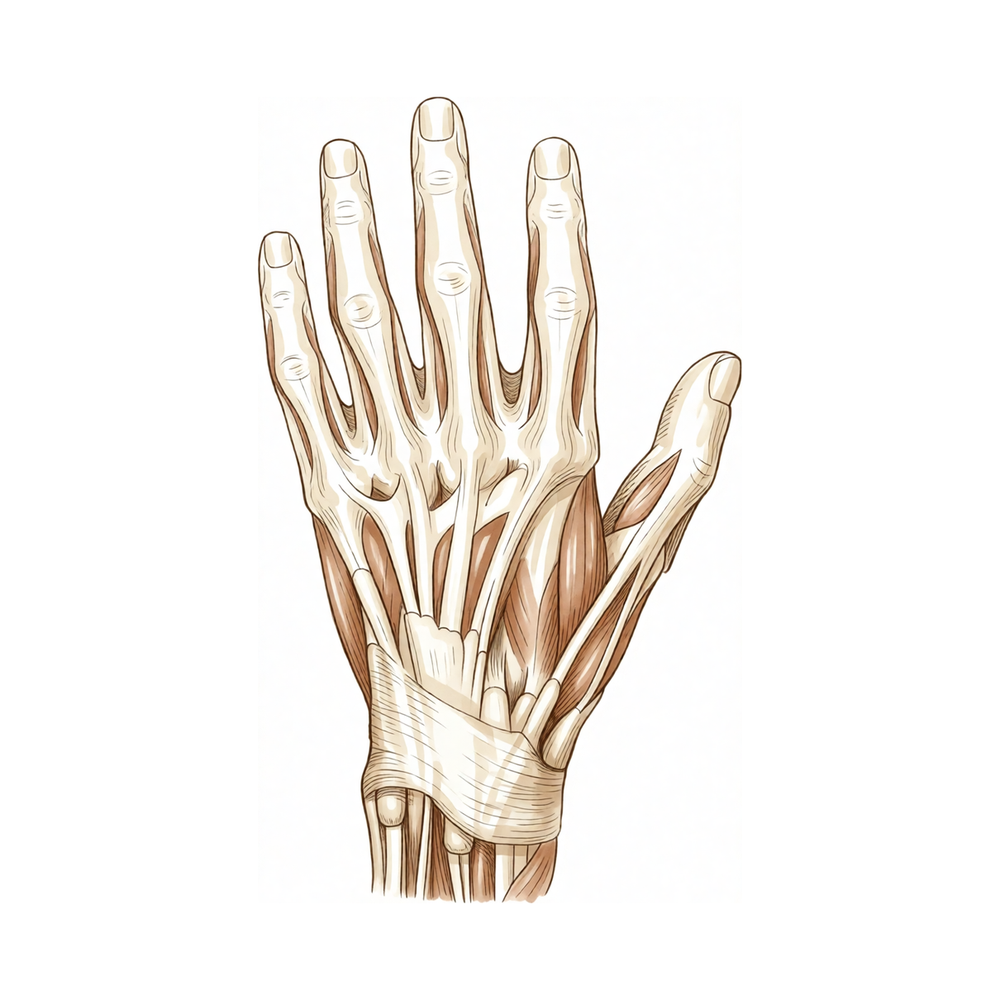
Gân duỗi là những sợi gân nằm ở mặt sau bàn tay và các ngón tay, có chức năng giúp chúng duỗi thẳng. Chúng có thể bị đứt do vết cắt, rách do chấn thương do va đập hoặc chấn thương thể thao, hoặc đứt sau khi bị gãy xương. Nhiều chấn thương như tình trạng ngón tay cong không duỗi thẳng được điều trị không cần phẫu thuật bằng cách sử dụng nẹp. Tuy nhiên, một số trường hợp khác cần phải phẫu thuật, đặc biệt là những vết cắt hở, tình trạng rách gân kéo dài hoặc chấn thương khiến gân bị tổn thương nghiêm trọng. Chúng tôi chỉ chỉ định phẫu thuật khi việc đeo nẹp không mang lại hiệu quả đủ tốt, hoặc ngay lập tức trong các trường hợp chấn thương cấp tính mà gân không thể tự lành. Mục tiêu của phẫu thuật là khôi phục chiều dài và sức mạnh của gân, giúp ngón tay hoặc ngón cái của bạn có thể duỗi thẳng trở lại, từ đó bạn sẽ có bàn tay hoạt động tốt và không còn đau đớn.
Trước khi phẫu thuật
Sau khi lịch phẫu thuật của bạn được xác nhận, chúng tôi sẽ cung cấp những hướng dẫn cụ thể mà bạn cần tuân thủ trong những ngày trước khi đến bệnh viện. Bạn phải ngừng ăn và uống 7 giờ trước khi phẫu thuật. Chúng tôi yêu cầu thời gian 7 giờ này để có thể sắp xếp ca phẫu thuật sớm hơn nếu danh sách các ca mổ được hoàn thành sớm. Bác sĩ phẫu thuật sẽ chỉ định những loại thuốc mà bạn đang dùng cần ngừng và những loại vẫn tiếp tục sử dụng; vì vậy hãy mang theo danh sách viết tay ghi rõ tất cả các loại thuốc, kể cả các thuốc chống đông máu. Hãy sắp xếp người đưa đón về nhà sau phẫu thuật vì bạn sẽ không được phép tự lái xe. Hãy mặc quần áo rộng rãi, thoải mái và có tay áo dễ cởi ra. Hầu hết các bệnh nhân không cần chuẩn bị thêm gì nữa. Nếu bạn mắc các bệnh lý khác, có thể bạn sẽ cần làm xét nghiệm máu hoặc được bác sĩ gây mê – người chuyên trách về việc gây mê – khám lại.
Vào ngày phẫu thuật
Bạn sẽ đến khu vực tiếp nhận bệnh nhân phẫu thuật của bệnh viện, nơi bạn sẽ được làm thủ tục nhập viện và chuẩn bị cho ca mổ. Tại đây, bạn sẽ gặp bác sĩ gây mê. Ca phẫu thuật này được thực hiện dưới gây mê toàn thân. Đôi khi người ta sẽ tiêm thuốc gây tê vùng để giảm đau sau phẫu thuật; bác sĩ gây mê sẽ trao đổi với bạn về vấn đề này vào ngày hôm đó. Sau đó, bạn sẽ được đưa vào phòng mổ để tiến hành ca phẫu thuật. Sau khi mổ xong, bạn sẽ tỉnh dậy tại khu vực hồi sức, nơi các điều dưỡng sẽ theo dõi tình trạng của bạn cho đến khi tác dụng của thuốc mê hết. Khi sức khỏe ổn định, bạn sẽ được chuyển về phòng bệnh hoặc về nhà, tùy thuộc vào loại phẫu thuật và tình trạng hồi phục của bạn.
Quy trình phẫu thuật
Các bước thực hiện cụ thể phụ thuộc vào vị trí và mức độ rách của gân. Các gân duỗi nằm ngay dưới da ở mặt sau bàn tay và các ngón tay; vì vậy bác sĩ phẫu thuật thường có thể tiếp cận vùng tổn thương thông qua một đường rạch trên mặt sau ngón tay hoặc bàn tay bị ảnh hưởng. Nếu da ở vùng đó cũng bị tổn thương, người ta sẽ loại bỏ mô bị hư hỏng trước, sau đó dùng da lành để che phủ vùng đó.
Khi đã tìm thấy hai đầu gân bị rách, bác sĩ sẽ khâu chúng lại với nhau. Mũi khâu được thực hiện sao cho đủ chắc chắn để chịu được các chuyển động ban đầu của bàn tay sau phẫu thuật. Nếu một đoạn gân bị mất hoặc hư hỏng quá nặng không thể khâu được, người ta có thể dùng phương pháp nối gân. Cách này có thể thực hiện bằng cách lấy một mảnh gân từ ngón tay không thể cứu chữa, dùng mảnh ghép gân, hoặc di chuyển một gân lân cận để đảm nhiệm chức năng của gân bị rách. Mục tiêu của bác sĩ là khôi phục lại chiều dài tự nhiên của gân; nếu gân quá lỏng hoặc quá căng thì ngón tay sẽ không thể duỗi thẳng được.
Sau đó, vết mổ được khâu lại bằng chỉ khâu và băng vết thương được đặt lên trên. Bạn sẽ được về nhà cùng với hướng dẫn bằng văn bản về cách chăm sóc bàn tay.
Những bước chăm sóc sau phẫu thuật cũng quan trọng không kém việc khâu nối gân. Một số ca phẫu thuật yêu cầu dùng nẹp để giữ ngón tay cố định; trong khi những ca khác lại cho phép vận động nhẹ nhàng, có kiểm soát ngay trong những tuần đầu. Có phương pháp cho phép thực hiện các chuyển động chủ động với biên độ 30 độ trong hai tuần đầu, sau đó tăng lên 40 độ ở tuần thứ ba và 50 độ ở tuần thứ tư. Bác sĩ phẫu thuật sẽ xác định phương pháp phù hợp với tình trạng chấn thương của bạn và hướng dẫn cụ thể những gì bạn được và không được làm.
Sau khi phẫu thuật
Bạn sẽ tỉnh dậy tại khu vực hồi sức, nơi các điều dưỡng sẽ theo dõi tình trạng của bạn khi thuốc mê dần hết tác dụng. Bàn tay của bạn sẽ được băng bó; tùy vào mức độ chấn thương mà có thể được đặt trong nẹp cố định. Chúng tôi sẽ cho bạn dùng thuốc giảm đau trước khi bạn rời khỏi phòng mổ; nếu cảm thấy đau, bạn có thể thông báo ngay cho các điều dưỡng. Trong 24 giờ đầu, nên có người ở bên cạnh bạn. Hầu hết mọi người có thể vận động bình thường ngay sau khi tỉnh dậy; phẫu thuật chỉ được thực hiện trên tay chứ không phải chân. Đội ngũ y tế sẽ thông báo cho bạn biết là bạn có thể về nhà ngay hay phải ở lại bệnh viện qua đêm. Chúng tôi sẽ giữ băng gạc trên vết thương khoảng 10 ngày; xin đừng tự ý tháo băng ra trước thời hạn đó trừ khi có chỉ định từ chúng tôi. Chúng tôi sẽ thay hoặc gỡ băng khi khám lại cho bạn.
Quá trình hồi phục
Trong những ngày và tuần đầu sau phẫu thuật, tay bạn sẽ bị đau và sưng. Điều này là bình thường. Việc nâng tay lên cao, kê trên gối ngay cả khi ngủ sẽ giúp giảm sưng. Việc dùng các loại thuốc giảm đau theo chỉ dẫn của bác sĩ thường giúp làm dịu cơn đau.
Băng gạc sẽ được giữ nguyên trên vết thương khoảng 10 ngày. Tùy vào mức độ chấn thương, bạn có thể phải đeo nẹp để giữ ngón tay cố định, hoặc được hướng dẫn thực hiện các động tác vận động nhẹ ngay từ sớm. Nếu việc vận động sớm là một phần trong kế hoạch điều trị, bạn sẽ được hướng dẫn cụ thể mức độ gập duỗi ngón tay và tần suất thực hiện. Ban đầu các động tác chỉ ở mức độ nhỏ, sau đó sẽ tăng dần khi vết thương lành lại. Việc phục hồi chức năng sẽ do Ruby Doolan – chuyên viên trị liệu tay tại Extend Rehabilitation – đảm nhiệm. Cô ấy sẽ hướng dẫn các bài tập và chế tạo nẹp nếu cần thiết.
Tại nhà, bạn có thể thực hiện hầu hết các hoạt động sinh hoạt hàng ngày không gây áp lực lên tay. Tuy nhiên, bạn cần tránh nâng vật nặng, nắm chặt tay và mọi hành động có thể làm ảnh hưởng đến vết phẫu thuật cho đến khi được chuyên viên trị liệu cho phép. Hãy giữ tay sạch sẽ và khô ráo cho đến khi chúng tôi kiểm tra vết thương. Khi sưng giảm và khả năng vận động cải thiện, các bài tập sẽ dễ dàng hơn và ngón tay cũng dần duỗi thẳng ra.
Quá trình hồi phục phụ thuộc vào từng người. Thời gian phục hồi của bạn có thể khác đi; bác sĩ phẫu thuật và chuyên viên trị liệu tay sẽ hướng dẫn bạn trong từng giai đoạn.
Những biến chứng có thể xảy ra
Hầu hết bệnh nhân đều hồi phục tốt, nhưng đôi khi vẫn có thể gặp phải các vấn đề. Bác sĩ phẫu thuật và đội ngũ y tế sẽ theo dõi sát sao để phát hiện sớm bất kỳ dấu hiệu bất thường nào.
Biến chứng phổ biến nhất sau phẫu thuật này là tình trạng cứng khớp. Ngón tay có thể không duỗi thẳng hết mức hoặc không gập lại thành nắm tay hoàn toàn; sức nắm cũng có thể yếu hơn so với trước đó. Tình trạng này xảy ra khi gân bị sẹo dính vào các mô xung quanh trong lúc bàn tay được giữ yên. Nhà trị liệu sẽ theo dõi điều này trong mỗi buổi tập và điều chỉnh các bài tập cho phù hợp. Nếu thấy chuyển động bị chậm lại hoặc ngón tay ngày càng cứng, hãy báo ngay cho bác sĩ trong lần tái khám tiếp theo thay vì chờ đợi.
Đôi khi, dù mọi thứ diễn ra tốt đẹp, người bệnh vẫn mất đi một chút khả năng duỗi thẳng ngón tay. Bạn có thể nhận thấy ngón tay hơi thấp hơn so với các ngón còn lại khi cố gắng duỗi thẳng, hoặc không thể gập hết vào lòng bàn tay. Hiện tượng này gọi là trễ duỗi thẳng (extensor lag). Bạn nên biết rằng điều này có thể xảy ra, đặc biệt nếu chấn thương đã tồn tại từ lâu trước khi được điều trị. Hãy nói với bác sĩ trị liệu về vấn đề này để họ có thể can thiệp kịp thời.
Việc khâu nối gân cũng có thể thất bại. Nếu cảm thấy có tiếng “pop” đột ngột hoặc ngón tay vốn đã duỗi thẳng lại bắt đầu cong xuống, hãy liên hệ ngay với phòng khám. Đừng chờ đến lần hẹn tiếp theo.
Nhiễm trùng là tình trạng hiếm gặp nhưng cần được xử lý nhanh chóng. Hãy chú ý nếu thấy cơn đau ngày càng tăng thay vì giảm, vùng da quanh vết mổ đỏ rộng ra, sưng nề ngày càng nhiều hoặc có dịch rỉ ra từ vết khâu. Sốt kèm theo bàn tay đau cũng là dấu hiệu cảnh báo. Nếu gặp bất kỳ triệu chứng nào, hãy gọi ngay cho phòng khám trong ngày hoặc đến phòng cấp cứu nếu đã ngoài giờ làm việc.
Nếu sau này cần phẫu thuật để tách gân bị sẹo dính, thủ thuật này gọi là giải phóng gân (tenolysis). Đây không nằm trong kế hoạch điều trị ban đầu, nhưng là phương án được cân nhắc nếu các bài tập trị liệu không mang lại hiệu quả. Bác sĩ phẫu thuật chỉ đề cập đến phương pháp này nếu khả năng vận động của bạn không tiến triển thêm.
Bảng các biến chứng dưới đây liệt kê tỷ lệ xảy ra của từng tình trạng nếu bạn muốn biết thông tin cụ thể.
Khi nào nên liên hệ với chúng tôi
Các vấn đề sẽ dễ khắc phục hơn nếu được phát hiện sớm. Hãy gọi cho chúng tôi nếu cơn đau ngày càng tăng thay vì giảm dần; hoặc nếu vùng da quanh vết thương trở nên đỏ hơn, nóng hơn hoặc có dịch tiết ra. Hãy gọi cho chúng tôi nếu bạn bị sốt, các ngón tay hoặc bàn tay bị tê, hoặc nếu bạn không thể cử động ngón tay được nữa. Nếu bạn nhận thấy vùng bắp chân đột nhiên sưng và đau, hoặc bạn thấy khó thở, hãy đến phòng cấp cứu ngay lập tức. Nếu ngón tay vốn đang duỗi thẳng bỗng dưng bị gập xuống, hoặc bạn nghe thấy tiếng “pop”, hãy gọi cho chúng tôi ngay lập tức.
Evidence & references
This is the clinical evidence summary written for health professionals. It is technical, and it lists the research this page was built from. You do not need to read it to understand your treatment or to make a decision about it.
Anatomy & Pathophysiology
General Hand Architecture
- The hand is composed of 19 bones, 17 articulations, and 19 muscles situated entirely within the hand [2].
- Approximately the same number of tendons activated by forearm muscles are present in the hand [2].
- The hand functions efficiently only if the proximal joints of the limb are stable and yet mobile [2].
- The dorsal aspect of the hand is convex, while the anterior, palmar, or volar aspect is concave [2].
- The palmar surface is the functional surface of the hand, while the dorsal surface is usually visible and aesthetically important [2].
- The thumb has a more proximal and lateral position than the four fingers, allowing movement inward and outward from the palm [2].
- When fingers are extended and separated, their tips lie on the circumference of a circle whose center is the head of the third metacarpal [2].
Metacarpal and Longitudinal Arch Anatomy
- The metacarpal arch possesses adaptability due to the mobility of the peripheral metacarpals [7].
- The index metacarpal is the most firmly fixed of the metacarpals [7].
- The ring metacarpal has approximately 10 degrees of mobility in flexion and extension [7].
- The fifth metacarpal has a range of flexion–extension of approximately 20 degrees [7].
- The second to fifth metacarpals are bound together by the deep transverse intermetacarpal ligament, also known as the interglenoid ligament [7].
- The interglenoid ligament ties together the anterior glenoid ligaments of the metacarpophalangeal articulations, known as volar plates [7].
- The metacarpophalangeal joints serve as the keystones of the longitudinal arches of the hand [7].
- The volar plates prevent hyperextension at the metacarpophalangeal joints [7].
- The sagittal bands of the extensor apparatus insert onto the volar plate [7].
- The first annular segment of the pulley of the flexor tendons inserts onto the volar plate [7].
Extensor Tendon and Intrinsic Muscle Anatomy
- There are seven interosseous muscles in the hand, consisting of four dorsal and three volar muscles [4].
- The dorsal interossei are abductors, while the volar interossei are adductors [4].
- The middle finger has two dorsal interossei and no volar interossei because the central axis of the hand lies within it [4].
- Each dorsal interosseous muscle, with the exception of the third, has two muscle heads: a superficial head and a deep head [4].
- The superficial head of the dorsal interosseous muscles abducts and weakly flexes the proximal phalanx [4].
- The deep head of the dorsal interosseous muscles forms the lateral band at the level of the metacarpophalangeal joint [4].
- The deep head of the dorsal interosseous muscles flexes and weakly abducts the proximal phalanx while extending the middle and distal phalanges [4].
- Transverse fibers arch dorsally from each lateral band to join over the dorsum of the finger, flexing the proximal phalanx [4].
- Oblique or spiral fibers from the lateral bands insert onto the lateral tubercles at the base of the middle phalanx to extend the middle phalanx [4].
- The lateral bands are joined by the lateral slips of the extensor tendon to form the conjoined lateral band [4].
- The two conjoined lateral bands unite at the distal third of the middle phalanx to form the terminal tendon [4].
- The terminal tendon inserts at the base of the distal phalanx to extend it [4].
- The volar interossei have only one muscle head and do not insert onto the proximal phalanx [4].
- The flexor digiti quinti brevis forms the ulnar lateral band of the little finger [4].
Cutaneous and Vascular Anatomy
- The dorsal cutaneous unit extends from the wrist to the proximal interphalangeal joints of the fingers and the interphalangeal joint of the thumb [3].
- The dorsal covering of the interphalangeal articulations forms a unique cutaneous unit characterized by considerable excess of skin when digits are in extension [3].
- The palmar integument is subdivided into two zones by the oppositional crease of the thumb [3].
- The skin of the radial portion of the palm covers the thenar eminence and is relatively well vascularized and mobile [3].
- The skin of the ulnar and distal portion of the palm covers the hypothenar eminence and has poor mobility [3].
- The central triangular part of the palm has fixed, poorly vascularized skin that covers the superficial palmar aponeurosis [3].
- Incisions made along the sides of the diamond-shaped cutaneous contact zones in flexed digits present a minimal chance of retraction [3].
- The princeps pollicis artery is the terminal branch of the radial artery that crosses the first intermetacarpal space [8].
- The princeps pollicis artery runs along the ulnar side of the first metacarpal bone and along the volar surface of the adductor muscle [8].
- The princeps pollicis artery divides into two terminal rami, the collateral palmar arteries of the thumb, at the level of the metacarpophalangeal joint flexion crease [8].
- Only 15% of anatomical dissections of the palmar arteries of the thumb fall into the classical "typical" category [8].
- In the second segment of the thumb, the ulnar collateral artery is often easier to dissect than the radial collateral artery [8].
- A subtendinous anastomosis at the level of the neck of the first phalanx acts as a moderator between the two collateral arteries [8].
- The dorsal arteries of the thumb originate from palmar arteries at the level of the first metacarpal and head distally on the side of the two distal phalanges [8].
Investigations
- Clinical evaluation of the injured or dysfunctional hand and wrist requires combining patient history with a careful physical examination to pinpoint or narrow the scope of possible pathologic processes [1].
- Diagnostic tests such as imaging and serum laboratory studies are useful in determining pathology but can be expensive, time consuming, and often nonspecific [1].
- A careful physical examination is essential to direct care and future testing if indicated [1].
- A systematic method to approaching the physical examination of the hand and wrist is essential due to the number of structures in a small space [1].
- An 8-MHz Doppler tone assessment may be used to identify superficially displaced neurovascular bundles when Dupuytren cords lie beneath soft fleshy prominences [11].
- False-negatives are possible with 8-MHz Doppler tone assessment for identifying neurovascular bundles [11].
- Doppler imaging is a promising improvement for identifying structures, but higher resolution imaging technology is needed [11].
- MR assessment of Dupuytren’s disease is hindered by the resolution of current equipment, orientation issues due to multiplanar deformities of the fingers, and lack of intraoperative availability [11].
- MRI is probably most useful in identifying additional pathology such as flexor tendon bowstringing [11].
- MRI may be helpful in providing a quantitative noninvasive measure of cellularity of affected areas, which is an index of biologic activity [11].
- The potential staging tool of MRI for measuring cellularity has not been investigated yet on a large scale [11].
References
[1] Orthopaedic Knowledge Update 13 Ebook Without Multimedia. Anatomy, Evaluation, Clinical Examination, and Imaging > Evaluation and Clinical Examination: Current Concepts.
[2] Exam Of The Hand Wrist 2Ed. INTRODUCTION.
[3] Exam Of The Hand Wrist 2Ed. Functional cutaneous units.
[4] Green S Operative Hand Surgery. Interosseous and Hypothenar Muscles.
[7] Exam Of The Hand Wrist 2Ed. The arches of the hand > The metacarpal arch.
[8] Exam Of The Hand Wrist 2Ed. Techniques of investigation of the arterial supply by J P Melki > Vascularization of the thumb > Palmar aspect.
[11] Dupuytren S Disease And Related Hyperproliferative Disorders. 54. The Future of Dupuytren’s Research and Treatment > 54.4 Mechanical Measurements and Procedures > 54.4.4 Imaging.