Qué está sintiendo
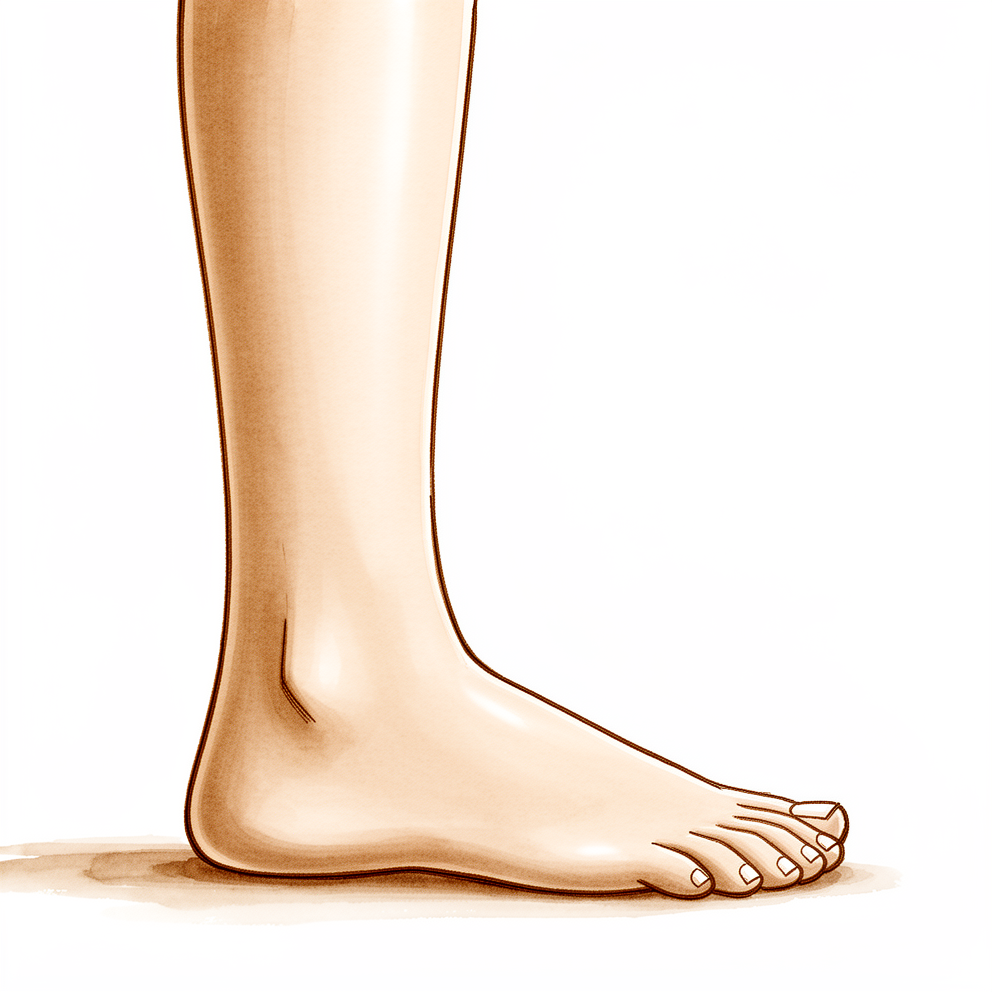
El principal signo de inestabilidad crónica del tobillo es la sensación de que el tobillo podría “ceder” en cualquier momento. Esto suele ocurrir al caminar sobre terreno irregular o al practicar deporte. Muchas personas con este problema también sufren repetidos esguinces del tobillo hacia adentro.
El dolor se localiza en la parte externa del tobillo, a lo largo del borde óseo situado debajo del maléolo. Tiende a intensificarse al caminar por pendientes, grava o césped, o al cambiar de dirección rápidamente durante la actividad física. El tobillo puede presentar cierta hinchazón alrededor de la línea articular, aunque no se trata de un hematoma o edema grave, ya que se trata de un problema crónico y no de una lesión reciente. Algunas personas notan una ligera hinchazón que persiste tras el ejercicio.
Con el tiempo, los repetidos esguinces pueden afectar la capacidad de percibir la posición del pie. Esto hace que el tobillo parezca menos estable al subir escaleras, al trepar por escaleras de mano o al bajar del bordillo de la acera sin mirar hacia abajo. Tareas sencillas se vuelven más difíciles: permanecer de pie junto a la encimera para cocinar, pasear al perro por un sendero natural o moverse por un centro comercial sin prestar atención a cada paso. Para personas activas y atletas esto supone una gran limitación; para otros, sigue siendo un obstáculo en la vida cotidiana.
Estos síntomas suelen aparecer tras un esguince de tobillo que nunca se curó por completo. Aproximadamente una de cada tres personas sigue presentando síntomas en el tobillo tras un esguince grave, y muchas experimentan cambios duraderos en la articulación. También es posible que note que la rodilla del mismo lado se siente menos sana, ya que ambas articulaciones trabajan en conjunto durante el movimiento.
Si algo de esto le resulta familiar, merece la pena que le examinen el tobillo. Su cirujano podrá revisar la zona externa del tobillo y analizar las imágenes médicas para determinar qué ligamentos están relajados y si hay alguna otra alteración dentro de la articulación.
¿Qué está ocurriendo realmente?
La articulación del tobillo está unida por fuertes bandas llamadas ligamentos. En la parte externa del tobillo hay tres de ellos, y evitan que la articulación se incline hacia adentro. El que se encuentra en la parte delantera es el más débil de los tres; por eso es el que se desgarra con mayor frecuencia cuando se produce un esguince.
Cuando se sufre un esguince por primera vez, uno o más de estos ligamentos se estiran o desgarran. En la mayoría de las personas, estos vuelven a sanar y se tensan de nuevo. Sin embargo, en aproximadamente una de cada tres personas permanecen flojos. Un ligamento flojo no puede mantener la articulación firmemente en su lugar, por lo que el tobillo sigue inclinándose hacia adentro durante la actividad física. Eso es lo que se percibe como una pérdida de estabilidad.
Existe otro factor en este problema: el tobillo también depende de los nervios para detectar la posición del pie y reaccionar rápidamente si comienza a inclinarse. Tras sufrir varios esguinces, este sistema de detección se debilita, de modo que los músculos no se contraen a tiempo para estabilizar la articulación. Ambos problemas se retroalimentan: una articulación floja confunde a los nervios, y las reacciones lentas permiten que la articulación se incline de nuevo.
El resultado es un ciclo: cada nueva inclinación estira un poco más los ligamentos y debilita aún más el sistema de detección. Con el tiempo, el tobillo también puede volverse rígido o presentar alteraciones en la alineación del talón y el mediopié, lo cual facilita aún más que se produzcan nuevas inclinaciones.
Por eso los síntomas mencionados anteriormente se repiten constantemente. La flacidez ligamentosa provoca las inclinaciones, y la disminución de la sensibilidad nerviosa explica por qué el tobillo parece inestable al subir escaleras o caminar sobre terrenos irregulares, incluso cuando no se produce una pérdida de estabilidad evidente. Algunas personas también notan hinchazón persistente, ya que las superficies articulares sufren estrés cada vez que el tobillo se inclina.
La buena noticia es que ambos aspectos del problema pueden abordarse. Los ejercicios pueden reentrenar el sistema sensorial y fortalecer los músculos que estabilizan la articulación. Si, a pesar de ello, los ligamentos siguen siendo demasiado flojos, la cirugía puede tensarlos de nuevo.
Qué podemos hacer al respecto
Dado que se trata de un problema crónico, normalmente iniciamos con tratamiento no quirúrgico. La fisioterapia es el pilar fundamental: fortalece los músculos del lado externo del tobillo y reentrena el equilibrio, de modo que el pie reaccione más rápidamente cuando el tobillo empieza a girar. También podemos añadir un tobillero o vendaje para mantener el tobillo estable durante la actividad, así como una plantilla con una cuña en el borde externo si su talón se inclina hacia adentro. Pruebe este tratamiento durante un tiempo razonable antes de considerar la cirugía, pues se requieren semanas de ejercicios constantes para modificar el comportamiento de su tobillo.
Cuando estas medidas no logran mejorar la situación, la cirugía podría ser el siguiente paso. La intervención habitual consiste en tensar los ligamentos estirados del lado externo del tobillo y reforzarlos con tejido cercano, de modo que la articulación vuelva a quedar bien sujeta. Si el propio tejido ligamentoso está demasiado deteriorado, se puede utilizar un injerto tendinoso para reconstruirlo. Algunas de estas reparaciones se realizan mediante pequeñas incisiones y el uso de una cámara dentro de la articulación, lo que también nos permite detectar y tratar otros problemas del tobillo en la misma sesión. Analizaremos juntos qué opción se adapta a su tobillo, a la calidad de su tejido y a sus objetivos de actividad, y decidiremos si la cirugía es adecuada para usted.
Qué esperar
La inestabilidad crónica del tobillo rara vez mejora por sí sola. La laxitud ligamentosa y la disminución de la sensibilidad que hacen que el tobillo ceda tienden a persistir; los síntomas suelen aparecer y desaparecer según la actividad, pero no desaparecen por completo. Hay personas cuyo tobillo aguanta durante meses, pero luego vuelve a torcerse en terrenos irregulares o durante la práctica deportiva. Sin tratamiento, este ciclo de torceduras y nuevas lesiones puede continuar, y el estrés repetido sobre la articulación puede generar cambios duraderos con el tiempo.
Con el cuidado adecuado, la mayoría de las personas experimentan una mejora real. Los ejercicios que fortalecen el tobillo y reeducan el equilibrio pueden aliviar los síntomas en muchas personas, sobre todo si se inician a tiempo y se realizan de forma constante. Si estas medidas no son suficientes, la cirugía puede tensar los ligamentos laxos y restaurar la estabilidad. Quienes se someten a esta intervención suelen recuperar un tobillo estable y sin dolor, capaz de soportar tanto la actividad diaria como el deporte; además, los ligamentos reparados protegen la articulación de un desgaste posterior en los años siguientes.
La recuperación requiere paciencia. Ya sea que el tratamiento consista en ejercicios o cirugía, el tobillo necesita varias semanas de entrenamiento constante para recuperar fuerza y estabilidad. Algunas personas notan que su tobillo se vuelve más fiable en cuestión de meses; otras, en cambio, necesitan más tiempo para confiar en él al subir escaleras, caminar por pendientes o en terrenos irregulares. El programa de rehabilitación es tan importante como el tratamiento en sí; por eso, vale la pena completarlo íntegramente en lugar de interrumpirlo una vez que el tobillo parezca mejorar.
También es justo reconocer que no todos los tobillos vuelven a su estado previo a la primera torcedura. Algunas personas siguen presentando síntomas leves incluso tras el tratamiento, y un pequeño número continúa percibiendo su tobillo menos estable de lo deseado. En general, el pronóstico es mejor cuando se aborda el problema a tiempo, en lugar de esperar años de repetidas torceduras. Si sus síntomas persisten más de unos meses a pesar de realizar los ejercicios adecuados y recibir el soporte necesario, merece la pena conversar con su cirujano para decidir cuál es el mejor camino según su tobillo y sus objetivos de actividad.
¿Cuándo consultar a un especialista?
Acuda a su médico de cabecera si su tobillo sigue cediendo o girando hacia adentro, especialmente en terrenos irregulares o durante la práctica deportiva, y si no mejora tras varios meses de ejercicios adecuados y uso de soporte. Solicite una valoración especializada si el lado externo del tobillo permanece dolorido o hinchado, si sigue sufriendo esguinces repetidos en el mismo tobillo, o si la articulación le parece inestable al subir escaleras, caminar por pendientes o bajar de bordillos, incluso cuando no está girando activamente. Estos son indicios de que los ligamentos podrían seguir flojos y merecen ser evaluados antes de que nuevas torceduras desgasten la articulación. No se trata de una emergencia, pero cuanto antes se revise el tobillo, más opciones tendrá para su tratamiento.
Evidence & references
This is the clinical evidence summary written for health professionals. It is technical, and it lists the research this page was built from. You do not need to read it to understand your treatment or to make a decision about it.
Anatomy & Pathophysiology
Bony Anatomy
- The ankle mortise is formed by the tibial plafond, medial malleolus, and lateral malleolus [18].
- The ankle mortise articulates with the dome of the talar body [18].
- The talar dome is wider anteriorly and narrower posteriorly [18].
- The ankle mortise widens 1 to 1.5 mm during motion from plantar flexion to dorsiflexion [18].
- Medial and superior clear spaces appear wider with the foot in plantar flexion [18].
- The distal fibula has a convex medial surface that articulates with the concave incisura fibularis of the distal lateral tibia [18].
- The fibula rotates approximately 2 degrees within the incisura during ankle motion and ambulation [18].
- Ankle dorsiflexion results in external rotation and proximal translation of the fibula [18].
- The ankle joint is responsible for 23 to 48 degrees of plantar flexion [18].
- The ankle joint is responsible for 10 to 23 degrees of dorsiflexion [18].
- The distal tibiofibular joint and fibula provide stability against lateral talar translation [18].
Ligamentous Anatomy
- The lateral ankle ligaments function as restraints to varus and inversion forces at the ankle [18].
- The anterior talofibular ligament (ATFL) originates from the anteroinferior aspect of the lateral malleolus, 1 cm proximal to its tip [18].
- The ATFL extends to the lateral aspect of the talar neck [18].
- The calcaneofibular ligament (CFL) extends from the tip of the lateral malleolus to the lateral aspect of the calcaneus [18].
- The CFL can lead to avulsion injuries of the distal tip of the fibula [18].
- The posterior talofibular ligament (PTFL) extends from the posterior lateral malleolus to the posterolateral talus [18].
- The ATFL is the weakest ankle ligament [18].
- The PTFL is the strongest ankle ligament [18].
- The deltoid ligament complex is the primary ankle stabilizer during stance [18].
- The deep deltoid ligament extends from the apex of the medial malleolus to the medial talar body [18].
- The deep deltoid ligament functions primarily to resist lateral talar translation and external rotation [18].
- The posterior deep deltoid is the most important component of the deep deltoid ligament [18].
- The superficial deltoid ligament extends from the distal medial malleolus to the navicular bone, sustentaculum tali of the calcaneus, medial talus, and spring ligament [18].
- The superficial deltoid ligament functions primarily to resist valgus and eversion ankle forces [18].
- The deltoid ligament consists of superficial and deep layers, with at most six bands of which only three are constant: the tibionavicular ligament, tibiospring ligament, and deep posterior tibiotalar ligament [21].
- The tibiocalcaneal portion of the superficial deltoid ligament is the strongest component and resists eversion of the calcaneus [21].
- The deep portion of the deltoid ligament is organized into two short, thick, discrete bands: the anterior and posterior deep tibiotalar ligaments [21].
- The anterior and posterior deep tibiotalar ligaments are intra-articular but extrasynovial [21].
- The deep posterior band comprises the largest band of the deltoid complex [21].
- The deep deltoid ligament has the highest load to failure at 713.8 N ± 69.3 compared with the lateral collateral ligaments [21].
- The dominant mode of failure for the deep deltoid ligament is an intrasubstance rupture near its talar insertion [21].
- The failure of the superficial deltoid ligament is most commonly at its insertion on the anterior malleolus [21].
- The ankle syndesmosis is composed of the anterior-inferior tibiofibular ligament, the posteroinferior tibiofibular ligament, and the interosseous membrane [40].
Pathophysiology of Chronic Ankle Instability
- Lateral ankle sprains occur with an inversion force to the ankle and result in partial or complete tearing of the lateral ankle ligaments [3].
- The ATFL is most commonly involved in isolation in lateral ankle sprains [3].
- Combined injury to the ATFL and CFL is the second most common pattern in lateral ankle sprains [3].
- 10% to 20% of patients with lateral ankle sprains go on to have chronic ankle instability [3].
- The development of chronic lateral ankle instability is multifactorial and can involve abnormal neuromuscular response and proprioception [3].
- Abnormal gait mechanics can contribute to the development of chronic lateral ankle instability [3].
- Global ligamentous laxity can contribute to the development of chronic lateral ankle instability [3].
- Increased body weight can contribute to the development of chronic lateral ankle instability [3].
- Cavus alignment and hindfoot stiffness are anatomic features that can contribute to chronic lateral ankle instability [3].
- Chronic ankle instability is defined by repetitive episodes of giving way with persistence of symptoms and a limitation on self-reported function that persist for greater than 1 year [36].
- The pathomechanics of chronic ankle instability are caused by mechanical instability due to ligamentous laxity and functional instability due to deficits in proprioceptive control [36].
- Excessive inversion of the plantarflexed foot leads to injury to the ATFL [10].
- Excessive inversion of the dorsiflexed foot causes injury to the CFL and, less commonly, the PTFL [10].
- An increased propensity for inversion injuries occurs in conjunction with obvious cavovarus foot deformity [10].
- An increased propensity for inversion injuries occurs in conjunction with subtle cavovarus foot deformity [10].
- Subtalar instability is difficult to directly differentiate from ankle instability because the CFL contributes to both ankle and subtalar stability [13].
- Subtalar instability may coexist with ankle instability [13].
- The peroneal tendons are perched along the distal fibula at 15° to 25° of plantar flexion, making them susceptible to inversion injury at this position [32].
- Peroneal tendon injury occurs when there is rapid dorsiflexion of the inverted foot [32].
- Rapid dorsiflexion of the inverted foot causes reflexive contraction of the peroneus brevis and longus, which can lead to frank tendon injury or injury to the superior peroneal retinaculum [32].
- Chronic symptoms of peroneal tendon pathology develop when the tendons are not anatomically located in their retromalleolar position and subsequently subluxate abnormally with ankle motion [32].
- Disruption of the superior peroneal retinaculum leads to repeated subluxation of the peroneal tendons, which often leads to longitudinal tears, most frequently in the peroneus brevis [32].
- The superior peroneal retinaculum runs from the posterolateral ridge of the fibula to the lateral calcaneus and functions as the primary restraint to peroneal tendon subluxation within the retromalleolar sulcus [32].
- Injury to the ankle syndesmosis can result in persistent pain and dysfunction secondary to syndesmotic impingement [40].
- Syndesmotic impingement most often involves the anterior tibiofibular ligament, with resulting synovitis and scarring along this ligament [40].
- The presence of a separate anterior-inferior tibiofibular ligament fascicle, known as the Bassett ligament, may contribute to syndesmotic impingement [40].
Clinical Presentation
History and Symptoms
- Chronic lateral ankle instability occurs in 10% to 20% of patients following lateral ankle sprains [3].
- Patients present with a sensation of instability, often accompanied by recurrent and frequent inversion injuries [3].
- Symptoms typically occur when walking on uneven ground or participating in athletic activity [3].
- Ankle sprains represent the most common reason for missed athletic participation in adolescent athletes [10].
- Patients with chronic ankle instability may report persistent anterolateral ankle pain with activity [37].
- Mechanical symptoms such as locking or catching may indicate a loose body or osteochondral injury [14, 15].
- Numbness over the dorsal midfoot may occur due to injury to branches of the superficial peroneal nerve from the twisting mechanism [14, 15].
Physical Examination
- An ankle effusion may be present due to chronic instability, synovitis, an associated osteochondral lesion, or a loose body [3].
- Anterior drawer testing is performed to evaluate the competency of the anterior talofibular ligament (ATFL) [3].
- Talar tilt stress is performed to evaluate the competency of the calcaneofibular ligament (CFL) [3].
- Plantar flexion of the ankle isolates the anterior talofibular ligament during anterior drawer testing [38].
- Neutral plantar and dorsiflexion of the ankle isolates the calcaneofibular ligament during stress testing [38].
- Patients should be assessed for evidence of global ligamentous laxity [3].
- Weight-bearing hindfoot alignment should be assessed during examination [3].
- Evaluation for hindfoot varus is required when assessing for recurrent instability [14, 15].
- A physical examination test for anterolateral soft-tissue impingement involves reproduction of pain with plantar flexion, thumb pressure at the anterolateral ankle joint, and dorsiflexion [37].
- Localized tenderness at the anterolateral ankle joint is noted in patients with anterolateral soft-tissue impingement [37].
- Focal tenderness to palpation over the involved lateral ankle ligamentous structures is characteristic of low ankle sprains [10].
- Pain with resisted eversion of the foot may indicate peroneal tendon injury [10].
Imaging
- AP, mortise, and lateral weight-bearing radiographs of the ankle are performed for evaluation [3].
- Stress radiographs can be used to confirm instability [3].
- A lateral stress radiograph is obtained while performing the anterior drawer test [3].
- A mortise stress radiograph is obtained while performing the talar tilt test [3].
- A positive talar tilt test on stress radiographs is defined as more than 3° of tilt compared with the opposite side or 10° of tilt overall [38].
- A positive anterior drawer test on stress radiographs is defined as 3 mm greater translation compared with the opposite side, or an absolute value of 10 mm [38].
- MRI is useful for evaluating associated pathology to the peroneal tendons or talar articular surface [3].
- MRI may confirm the abnormal appearance of affected ligaments, which may be thickened or indistinct [3].
- MRI does not help determine functional instability [3].
- MRI and magnetic resonance arthrography provide no distinct advantage over physical examination for showing ligamentous disruption or attenuation [38].
- MRI is most useful when investigating other pathology such as peroneal tears, occult fractures, osteochondral lesions of the talus, bone bruising, tarsal coalition, or impingement lesions [38].
- MRI should be considered if pain persists for 8 weeks following an ankle sprain [38].
- Conventional MRI has a reported sensitivity and specificity of less than 50% for anterolateral soft-tissue impingement of the ankle [37].
- Clinical examination has a reported sensitivity of 94% and specificity of 75% for anterolateral soft-tissue impingement [37].
- CT scanning is considered for the evaluation of a suspected or identified lateral process fracture [14, 15].
- Radiographs should be evaluated for lateral process of the talus fracture, anterior process fracture, osteochondral defects, and mortise or syndesmosis instability [14, 15].
- Foot x-rays should be obtained for any pain on examination, especially at the base of the fifth metatarsal or anterior process of calcaneus, to rule out fracture [14, 15].
- The presence of lateral or medial osteophytes on radiographs suggests chronic recurrent laxity [38].
Associated Pathology
- Osteochondritis dissecans lesions are associated with acute lateral ankle instability in 15% to 25% of cases [38].
- Loose bodies are associated with acute lateral ankle instability in 20% of cases [38].
- Peroneal pathology is associated with acute lateral ankle instability in less than 25% of cases [38].
- Anterolateral soft-tissue impingement is characterized by hypertrophic synovium, inflamed or enlarged capsular tissues, and scarring [37].
- Anterolateral soft-tissue impingement occurs primarily at the superior portion of the anterior talofibular ligament [37].
- Anterolateral soft-tissue impingement also occurs along the distal portion of the anterior-inferior tibiofibular ligament [37].
- Chondromalacia of the talus is sometimes noted in long-standing anterolateral soft-tissue impingement lesions [37].
Investigations
Clinical Examination
- Patients with chronic lateral ankle instability present with a sensation of instability, often accompanied by recurrent and frequent inversion injuries [3].
- Symptoms of chronic lateral ankle instability occur with walking on uneven ground or participating in athletic activity [3].
- An ankle effusion may be present in patients with chronic instability due to synovitis or an associated osteochondral lesion or loose body [3].
- Patients should be assessed for evidence of global ligamentous laxity and weight-bearing hindfoot alignment during examination [3].
Radiographic Imaging
- AP, mortise, and lateral weight-bearing radiographs of the ankle are performed for the evaluation of chronic lateral ankle instability [3].
- Stress radiographs can be used to confirm instability in chronic lateral ankle instability [3].
- A lateral stress radiograph is obtained while performing the anterior drawer test to confirm instability [3].
- A mortise stress radiograph is obtained while performing the talar tilt test to confirm instability [3].
Advanced Imaging (MRI)
- MRI is useful in evaluating for associated pathology to the peroneal tendons or talar articular surface in chronic lateral ankle instability [3].
- MRI will confirm the abnormal appearance of affected ligaments, which may be thickened or indistinct, but does not help determine functional instability [3].
- MRI can show osteophytes in anterior ankle impingement but is not very sensitive for soft-tissue impingement [28].
- MR arthrography or contrast-enhanced, fat-suppressed, three-dimensional (3D), fast-gradient recalled acquisition in the steady state with radiofrequency spoiling (CE 3D-FSPGR) MRI is more sensitive and specific for soft-tissue impingement than standard MRI but is less practical [28].
- In one study regarding anterior ankle impingement, 58% of patients had an associated diagnosis on MRI, which changed the surgical plan in 33% of cases [28].
- Careful physical examination and diagnostic injection can help to pinpoint the diagnosis of anterior ankle impingement [28].
- The use of intraarticular injections for diagnosis has been questioned due to potential cytotoxicity to chondrocytes, although these concerns are based on in-vitro studies with no substantiating clinical evidence [28].
Arthroscopic Evaluation
- Arthroscopy allows for concomitant evaluation of the ankle to assess for impingement and osteochondral lesions of the talus during minimally invasive ligament repair [3].
- Arthroscopic findings in chronic lateral ankle instability include focal chondral lesions, which may influence the results of ligament reconstruction [4].
- Arthroscopy is used to diagnose full-thickness talar cartilage lesions in the setting of acute ankle fractures [27].
- Arthroscopy can be used for the diagnosis of distal tibiofibular syndesmosis disruption in acute ankle fracture [4, 27].
- Arthroscopy is utilized for the diagnosis of anterolateral ankle impingement, with comparisons made between MRI and clinical examination [4, 27].
- Arthroscopy is used to evaluate anterolateral soft tissue impingement of the ankle [2, 6].
- Arthroscopy is used for the diagnosis of a tear of the tibiofibular syndesmosis [4].
- Arthroscopy is used to assess occult intra-articular injury in acute ankle fractures [4].
- Arthroscopy is used to evaluate combined intra-articular disorders in acute distal fibular fractures [4].
- Arthroscopy is used to diagnose articular lesions in ankles with lateral ligament injury [4].
- Arthroscopy is used to evaluate the unstable ankle [4].
- Arthroscopy is used to assess findings in ankle ligament reconstruction [4].
- Arthroscopy is used to diagnose posterior ankle impingement syndrome [6, 27].
- Arthroscopy is used to diagnose anterior ankle impingement [6, 27].
- Arthroscopy is used to diagnose anteromedial impingement in the ankle joint [6].
- Arthroscopy is used to diagnose synovial impingement in the ankle [27].
- Arthroscopy is used to evaluate syndesmotic instability in a cadaveric model [27].
- Arthroscopy is used to evaluate the effect of sequential sectioning of ligaments on syndesmotic instability in the coronal plane [27].
Treatment
Non-Operative
- Conservative treatment for chronic ankle instability focuses on functional rehabilitation with peroneal strengthening and proprioceptive training [3].
- Bracing treatment is an additional modality for conservative management of chronic ankle instability [3].
- An orthotic with a lateral based wedge is considered in the presence of hindfoot varus foot alignment [3].
- Neuromuscular (proprioceptive) training paired with functional bracing reduces the risk of recurrence of low ankle sprains more than neuromuscular training alone [14, 15].
- Physical therapy for balance, proprioception, and peroneal strengthening is associated with a decreased rate of reinjury [14, 15].
- High-velocity low-amplitude (HVLA) thrust techniques in individuals with chronic ankle instability have been found to result in a reduction in pain and improvement in performance on functional tests [30].
- Malalignment associated with chronic lateral ankle instability must be corrected when considering a lateral ligament stabilization [13].
Operative
- Surgical treatment for chronic ankle instability involves reconstruction of the lateral ligaments using anatomic or nonanatomic techniques [3].
- Anatomic procedures involve the repair or reconstruction of the anterior talofibular ligament (ATFL) and calcaneofibular ligament (CFL) [3].
- Nonanatomic procedures most commonly involve the rerouting of part or all of the peroneus brevis through bone tunnels in the fibula [3].
- Anatomic procedures have the advantage of more closely recreating native anatomy and preserving motion at the ankle and subtalar joints [3].
- Nonanatomic tenodesis procedures may provide additional stability in patients at high risk of failure, such as those with ligamentous laxity, obesity, or prior stabilization procedures [3].
- The Gould modification of the Broström repair is the most commonly used anatomic repair technique [3].
- The Gould modification involves imbrication of the ATFL and CFL ligaments with additional reinforcement using the lateral talocalcaneal ligament and inferior extensor retinaculum [3].
- Numerous studies have reported greater than 85% excellent results using anatomic repairs at short-, intermediate-, and long-term follow-up [3].
- Arthroscopic adaptation of the Broström technique may reduce postoperative pain and swelling and allow for concomitant arthroscopic evaluation of the ankle [3].
- Supplementing the ligament repair with suture tape affixed to the fibula and talus with knotless anchors provides increased stability in patients with poor native tissue or other risk factors for failure [3].
- Suture tape supplementation may allow for a more rapid and aggressive rehabilitation protocol [3].
- A tendon graft should be considered to supplement repair in patients whose prior surgery failed, and those with generalized ligamentous laxity and high functional demands [13].
- Synthetic suture is now commonly utilized to decrease the rate of recurrent instability [14, 15].
- Nonanatomic peroneal tendon procedures (Evans procedure, Chrisman-Snook) or allograft procedures are reserved for recurrent instability after initial operative treatment [14, 15].
- Subtalar stiffness is a common complication after tendon rerouting reconstruction for chronic ankle instability [13].
- Surgical treatment with the Chrisman-Snook or modified Broström procedure is used for subtalar instability because these repairs cross the subtalar joint [13].
- Operative treatment is reserved for patients with recurrent and symptomatic instability with excessive and asymmetric talar tilt and positive anterior drawer test, or symptomatic osteochondral defects [14, 15].
- Instability can occur without ligamentous issues, such as peroneal tendinopathy, osteochondral defects, fracture nonunion, or anterior ankle impingement [14, 15].
- Ankle arthrodesis can be considered for patients with arthritis from chronic instability of the ankle in whom conservative measures have failed [12].
Complications
Arthroscopic Ligament Repair and Reconstruction
- Neurologic complications occurred in 10% of patients undergoing arthroscopic ligament repair or reconstruction for chronic ankle instability [33].
- Cutaneous complications and infection occurred in 4.2% of patients undergoing arthroscopic ligament repair or reconstruction for chronic ankle instability, requiring surgical revision [33].
- The rate of cutaneous complications in arthroscopic ligament repair was at least half that of open surgery [33].
- Complication rates for arthroscopic repair of the talofibular ligament ranged between 11.5% and 18% [33].
- Two-stage arthroscopy was associated with significantly higher complication rates compared with single-stage arthroscopy [33].
- Suture anchor fixation was associated with a 29% complication rate compared with 9% for suture fixation in arthroscopic ligament repair [33].
- A systematic review of level IV studies reported a 17% complication rate for arthroscopic Broström techniques [33].
- Entrapment of the peroneus tertius, extensor tendons, and the superficial peroneal nerve can occur when tying sutures for the anterior talofibular ligament during arthroscopic repair [33].
- Ankle arthroscopy performed with lateral ligament reconstruction was associated with a lower rate of ankle arthrodesis as a second procedure and lower complications compared to reconstruction without arthroscopy [33].
- Ankle arthroscopy did not decrease the rate of reoperations required after lateral ligament reconstruction [33].
Total Ankle Arthroplasty
- The overall complication rate for total ankle arthroplasty was 1.4%, with a rate of less than 0.5% after 2007 [42].
- The readmission rate following total ankle arthroplasty was 3% [42].
- Complication rates for mobile-bearing total ankle arthroplasty ranged from 2% to 15% [42].
- Secondary surgery was required in 12% of patients and arthrodesis in 6% of patients following mobile-bearing total ankle arthroplasty [42].
- Deep infection rates for total ankle arthroplasty ranged from 0% to 5% [42].
- A complication rate of 12% was reported in a study of 106 patients undergoing total ankle arthroplasty with the Mobility implant [42].
- In a study of 67 patients with the Salto Talaris implant, 15 patients (22%) experienced 23 complications [42].
- In a study of 59 patients with the INBONE implant, 14 patients (2%) required reoperation because of a complication [42].
- Osteolysis was identified in 24 ankles (48%) in a study of 50 patients with the HINTEGRA implant [42].
- Ankle impingement syndrome was significantly more common with the HINTEGRA implant compared to the MOBILITY implant [42].
- Intraoperative malleolar fracture occurred only with the MOBILITY implant in a comparative study of HINTEGRA and MOBILITY implants [42].
- Revision rates for total ankle arthroplasty were approximately 10% for the Agility implant [42].
- The 5-year prosthesis survival rate for the STAR implant was 90% in one study and 96% in another [42].
- The 10-year prosthesis survival rate for the STAR implant was 71% in one study and 90% in another [42].
- The 10-year prosthesis survival rate for the Salto implant was 65% when fusion or revision of any component was used as the criterion for failure [42].
- The 5-year prosthesis survival rate for the HINTEGRA implant was 94% [42].
- The 3-year cumulative survival rate for the MOBILITY implant was 90% [42].
- The overall implant survival rate for the INBONE implant was 89% [42].
- The overall survivorship for STAR, HINTEGRA, and TNK implants was 89% at 10 years [42].
- The revision rate for mobile-bearing Salto implants was 4% compared with 2.4% for fixed-bearing designs [42].
- The overall failure rate for total ankle arthroplasty at 10 years was 10% [42].
- The 5-year implant survival rate for total ankle arthroplasty was 78% in a systematic review comparing mobile and fixed bearing designs [42].
- The revision rate for total ankle arthroplasty was 7% in a systematic review comparing mobile and fixed bearing designs [42].
- Excellent or good results were achieved in approximately 70% of patients in a systematic review of total ankle arthroplasty [42].
- Heterotopic ossification is a reported complication following total ankle arthroplasty [41].
- Periprosthetic joint infection is a reported complication following total ankle arthroplasty [41].
- Soft tissue reconstruction may be required after total ankle arthroplasty [41].
- Operative wound complications are a reported outcome following total ankle arthroplasty [41].
- Bone cysts after total ankle arthroplasty may require bone grafting [41].
- Secondary arthrodesis is a reported salvage procedure after total ankle arthroplasty [41].
- Supramalleolar osteotomy is used for tibial component malposition in total ankle replacement [41].
- Periprosthetic fractures are a reported complication in total ankle replacement [41].
- Delayed onset medial malleolar pain is a reported complication following total ankle arthroplasty [41].
- Blood transfusion during total ankle arthroplasty is associated with increased in-hospital complications and cost [41].
- Cigarette use is associated with complication rates and outcomes following total ankle arthroplasty [41].
- Association of short-term complications with procedures through separate incisions during total ankle replacement has been studied [41].
- Risk factors for symptomatic deep-vein thrombosis in patients after total ankle replacement who received routine chemical thromboprophylaxis have been analyzed [41].
- Low incidence of symptomatic thromboembolic events has been reported after total ankle arthroplasty without routine use of chemoprophylaxis [41].
- Patient-related risk factors for periprosthetic joint infection have been analyzed in 6977 total ankle arthroplasties [41].
- Revision of failed total ankle arthroplasty to a hindfoot fusion is a described salvage procedure [41].
- Salvage of failed total ankle arthroplasty with fusion using structural allograft and internal fixation is a described procedure [41].
- Management of failures of total ankle replacement with the Agility total ankle arthroplasty has been described [41].
- Assessment of a three-grade classification of complications in total ankle replacement has been performed [41].
- Impact of complications in total ankle replacement and ankle arthrodesis analyzed with a validated outcome measurement has been studied [41].
- Revision rates after total ankle arthroplasty in sample-based clinical studies and national registries have been reported [41].
- Outcomes of acute hematogenous periprosthetic joint infection in total ankle arthroplasty treated with irrigation, debridement, and polyethylene exchange have been reported [41].
- The efficacy of platelet-rich plasma for incision healing after total ankle replacement using the Agility total ankle replacement system has been studied [41].
- Computed tomography adds information on radiographic analysis in detecting periprosthetic osteolysis after total ankle arthroplasty [41].
- Anterior heterotopic ossification at the talar neck after total ankle arthroplasty has been reported [41].
- Outcome after salvage arthrodesis for failed total ankle replacement has been reported [41].
- Short-term perioperative complications and mortality after total ankle arthroplasty in the United States have been reported [41].
- Evaluation and management of the painful total ankle arthroplasty has been described [41].
- Association of ankle arthritis score with need for revision surgery has been studied [41].
- Patient risk factors do not impact 90-day readmission and emergency department visitation after total ankle arthroplasty [41].
- Clinical evaluation and radiographic assessment of bone lysis of the AES total ankle replacement has been reported [41].
- Total ankle arthroplasty risks have been reviewed [41].
- Comparison of perioperative outcomes when total ankle arthroplasty is performed at an orthopaedic specialty hospital versus an academic teaching hospital has been conducted [41].
- How to diagnose and treat infection in total ankle arthroplasty has been described [41].
- Arthroscopic debridement after total ankle arthroplasty has been reported [41].
- Hindfoot arthritis progression and arthrodesis risk after total ankle replacement have been studied [41].
- Severe periprosthetic osteolytic lesions after Ankle Evolutive System total ankle replacement have been reported [16].
- Inconsistency in the reporting of adverse events in total ankle arthroplasty has been identified in a systematic review [11].
- The effect of obesity on functional outcomes and complications in total ankle arthroplasty has been studied [16].
- The effect of diabetes mellitus on perioperative complications and hospital outcomes after ankle arthrodesis and total ankle arthroplasty has been studied [16].
- The impact of diabetes on the short- to mid-term outcome of total ankle replacement has been studied [16].
- The impact of diabetes on outcome of total ankle replacement has been studied [16].
- Total ankle replacement in obese patients: component stability, weight change, and functional outcome have been studied [16].
- Total ankle replacement in patients with gouty arthritis has been studied [16].
- The impact of age on the outcome of total ankle replacement has been studied [16].
- Effect of age on outcomes in total ankle arthroplasty has been studied [16].
- Long-term follow-up of mobile-bearing total ankle replacement in patients with inflammatory joint disease has been reported [16].
- Outcome of total ankle arthroplasty in patients with rheumatoid arthritis and noninflammatory arthritis has been compared [16].
- Correction of moderate to severe coronal plane deformity with the STAR ankle prosthesis has been studied [16].
- Surgical strategies for the management of varus ankle deformity with joint replacement have been described [16].
- Effect of obesity on total ankle arthroplasty outcomes has been studied [16].
- Short-term results of total ankle arthroplasty for end-stage ankle arthritis with severe varus deformity have been reported [16].
- Planning correction of the varus ankle deformity with ankle replacement has been described [16].
- Outcomes of ankle arthroplasty with preoperative coronal-plane varus deformity of 10° or greater have been reported [16].
- Total ankle replacement in patients with significant preoperative deformity of the hindfoot has been studied [16].
- Total ankle replacement in moderate to severe varus deformity of the ankle has been studied [16].
- Medial malleolar osteotomy for the correction of varus deformity of total ankle arthroplasty has been reported [16].
- Total ankle arthroplasty in inflammatory joint disease with use of two mobile-bearing designs has been studied [16].
- Conversion of painful ankle arthrodesis to total ankle arthroplasty has been reported [16].
- The Agility total ankle arthroplasty: seven to sixteen-year follow-up has been reported [16].
- Intermediate and long-term outcomes of total ankle arthroplasty and ankle arthrodesis have been systematically reviewed [16].
- The Swedish ankle arthroplasty register: an analysis of 531 arthroplasties between 1993 and 2005 has been reported [16].
- History and evolution in total ankle arthroplasty has been reviewed [16].
- Current concepts review: total ankle arthroplasty has been provided [16].
- Evidence-based classification of complications in total ankle arthroplasty has been described [16].
- Osteoarthritis of the ankle: the role of arthroplasty has been reviewed [16].
- Intermediate term outcome of the Agility total ankle arthroplasty has been reported [16].
- Accurate measurement of ankle range of motion after total ankle arthroplasty has been studied [16].
- Proprioception after total ankle arthroplasty has been studied [16].
- Ankle function and sports activity after total ankle arthroplasty has been reported [16].
- Postoperative imaging of the total ankle arthroplasty has been reviewed [16].
- Total ankle arthroplasty in France has been reported [11].
- Total ankle arthroplasty outcome comparison for post-traumatic and primary osteoarthritis has been studied [11].
- Postoperative range of motion trends following total ankle arthroplasty have been studied [11].
- Results of total ankle arthroplasty have been reported [11].
- How successful are current ankle replacements? a systematic review of the literature has been conducted [11].
- 10-year survival of total ankle arthroplasties: a report on 780 cases from the Swedish ankle register has been reported [11].
- Outcome after total ankle arthroplasty—results and findings from worldwide arthroplasty registers have been reported [11].
- Trends in total ankle arthroplasty and revisions in the Medicare database have been analyzed [11].
- Leonard Goldner Award 2011: changes in pain, function, and gait mechanics two years following total ankle arthroplasty performed with two modern fixed-bearing prostheses has been reported [11].
- Trends in treatment of advanced ankle arthropathy by total ankle replacement or ankle fusion have been analyzed [11].
- Assessing the utilization of total ankle replacement in the United States has been conducted [11].
- Total ankle replacement: a population-based study of 515 cases from the Finnish arthroplasty registry has been reported [11].
- Comparison of practice patterns in total ankle replacement and ankle fusion in the United States has been conducted [11].
- Patient and practice trends in total ankle replacement and ankle arthrodesis in the United States from 2007 to 2013 have been analyzed [11].
- Total ankle replacement: evolution of the technology and future applications has been reviewed [11].
- Trends in the use of total ankle replacement and ankle arthrodesis in the United States Medicare population have been analyzed [11].
Ankle Arthrodesis
- Incidence of nonunion after isolated arthroscopic ankle arthrodesis has been reported [7].
- Arthroscopic ankle arthrodesis in hemophilic arthropathy has been reported [7].
- Arthroscopic ankle arthrodesis: a review has been provided [7].
- Arthroscopic ankle arthrodesis: are results reproducible irrespective or pre-operative deformity? has been studied [7].
- Factors affecting the outcomes of uncomplicated primary open ankle arthrodesis have been studied [7].
- The anatomic compression arthrodesis technique with anterior plate augmentation for ankle arthrodesis has been described [7].
- Togenous bone graft harvest using reamer irrigator aspirator (RIA) technique for tibiotalocalcaneal arthrodesis has been reported [7].
- Comparison of quality of life following total ankle arthroplasty and ankle arthrodesis: retrospective study of 54 cases has been conducted [7].
- Prospective controlled trial of hindfoot and ankle fusions treated with rhPDGF-BB in combination with a β-TCP-collagen matrix has been conducted [7].
- Intermediate term results of total ankle replacement and ankle arthrodesis: a COFAS multicenter study has been reported [7].
- Intra-articular injection of hyaluronic acid is not superior to saline solution injection for ankle arthritis: a randomized double-blind, placebo-controlled study has been conducted [7].
- Arthrodesis after failed total ankle replacement has been reported [7].
- Posterior approach using anterior ankle arthrodesis locking plate for tibiotalocalcaneal arthrodesis has been described [7].
- Prospective, randomized, multi-center feasibility trial of rhPDGH-BB versus autologous bone graft in a foot and ankle fusion model has been conducted [7].
- Recombinant human platelet-derived growth-bb and beta-tricalcium phosphate (rhPDGF-BB/β-TCP): an alternative to autogenous bone graft has been studied [7].
- The importance of sufficient graft material in achieving foot or ankle fusion has been studied [7].
- Salvage arthrodesis for failed total ankle arthroplasty has been reported [7].
- Surgical treatment of the arthritic varus ankle has been described [7].
- Arthrodesis of the ankle joint by Ilizarov external fixator in patients with infection or poor bone stock has been reported [7].
- Bone grafting in surgery about the foot and ankle: indications and techniques has been reviewed [7].
- Recombinant human BMP-2 increases the incidence and rate of healing in complex ankle arthrodesis [7].
- Complex ankle arthrodesis using the Ilizarov method yields high rate of fusion [7].
- Clinical outcome and gait analysis of ankle arthrodesis has been reported [7].
- End-stage ankle arthritis: magnitude of the problem and solutions has been reviewed [7].
- Ankle arthrodesis after failed total ankle replacement:
References
[2] Campbell S Operative Orthopaedics 4 Volume Set. REFERENCES > FOOT AND ANKLE.
[3] Orthopaedic Knowledge Update 13 Ebook Without Multimedia. Foot and Ankle Reconstruction > Chronic Ankle Instability.
[4] Campbell S Operative Orthopaedics 4 Volume Set. ARTHROSCOPIC EXAMINATION AND DEBRIDEMENT OF THE ANKLE JOINT > ANKLE ARTHROSCOPY.
[6] Campbell S Operative Orthopaedics 4 Volume Set. ARTHROSCOPIC EXAMINATION AND DEBRIDEMENT OF THE ANKLE JOINT > IMPINGEMENT.
[7] Campbell S Operative Orthopaedics 4 Volume Set. Reported Outcomes of Ankle Arthroplasty Compared With Ankle Arthrodesis > ADJACENT JOINT PAIN AND ARTHRITIS > REFERENCES.
[10] Orthopaedic Knowledge Update. Ankle Injuries* > Low Ankle Sprain.
[11] Campbell S Operative Orthopaedics 4 Volume Set. Reported Outcomes of Ankle Arthroplasty Compared With Ankle Arthrodesis > REFERENCES.
[12] Campbell S Operative Orthopaedics 4 Volume Set. Reported Outcomes of Ankle Arthroplasty Compared With Ankle Arthrodesis > INDICATIONS FOR ANKLE ARTHRODESIS.
[13] Aaos Comprehensive Orthopaedic Review 3. Acute and Chronic Injuries of the Ankle > VII. Subtalar Instability.
[14] Miller S Review Of Orthopaedics. SECTION 16 PATELLAR TRACKING IN TOTAL KNEE ARTHROPLASTY > ANKLE SPRAINS.
[15] Miller S Review Of Orthopaedics. ANKLE SPRAINS.
[16] Campbell S Operative Orthopaedics 4 Volume Set. Reported Outcomes of Ankle Arthroplasty Compared With Ankle Arthrodesis > COMORBIDITIES.
[18] Miller S Review Of Orthopaedics. BIOMECHANICS OF THE FOOT AND ANKLE.
[21] Orthopaedic Knowledge Update Sports Medicine 6. Ankle and Foot Injuries and Other Disorders > Ankle Sprains > Medial Ankle Injury.
[27] Aaos Comprehensive Orthopaedic Review 3. Arthroscopy of the Ankle > VII. Acute Traumatic Ankle Injuries > Bibliography.
[28] Campbell S Operative Orthopaedics 4 Volume Set. ARTHROSCOPIC EXAMINATION AND DEBRIDEMENT OF THE ANKLE JOINT > ANKLE IMPINGEMENT SYNDROMES.
[30] Orthopaedic Knowledge Update Sports Medicine 6. Foot and Ankle Rehabilitation > Ankle Sprain > Manual Therapy.
[32] Orthopaedic Knowledge Update. Ankle Injuries* > Peroneal Tendon Injuries.
[33] Campbell S Operative Orthopaedics 4 Volume Set. ARTHROSCOPIC EXAMINATION AND DEBRIDEMENT OF THE ANKLE JOINT > ANKLE INSTABILITY.
[36] Orthopaedic Knowledge Update Sports Medicine 6. Foot and Ankle Rehabilitation > Ankle Sprain.
[37] Aaos Comprehensive Orthopaedic Review 3. Arthroscopy of the Ankle > III. Anterolateral Soft-Tissue Impingement.
[38] Aaos Comprehensive Orthopaedic Review 3. Acute and Chronic Injuries of the Ankle > II. Acute Lateral Ankle Instability.
[40] Aaos Comprehensive Orthopaedic Review 3. Arthroscopy of the Ankle > IV. Syndesmotic Impingement.
[41] Campbell S Operative Orthopaedics 4 Volume Set. Reported Outcomes of Ankle Arthroplasty Compared With Ankle Arthrodesis > COMPLICATIONS AND REVISION.
[42] Campbell S Operative Orthopaedics 4 Volume Set. Reported Outcomes of Ankle Arthroplasty Compared With Ankle Arthrodesis > TABLE 10.3.