Skip to content

Patients › Hand

Deformidad en forma de cuello de cisne del dedo

PDF

A finger that hyperextends at the middle joint and bends at the tip — why it happens and how splints or surgery can correct it.
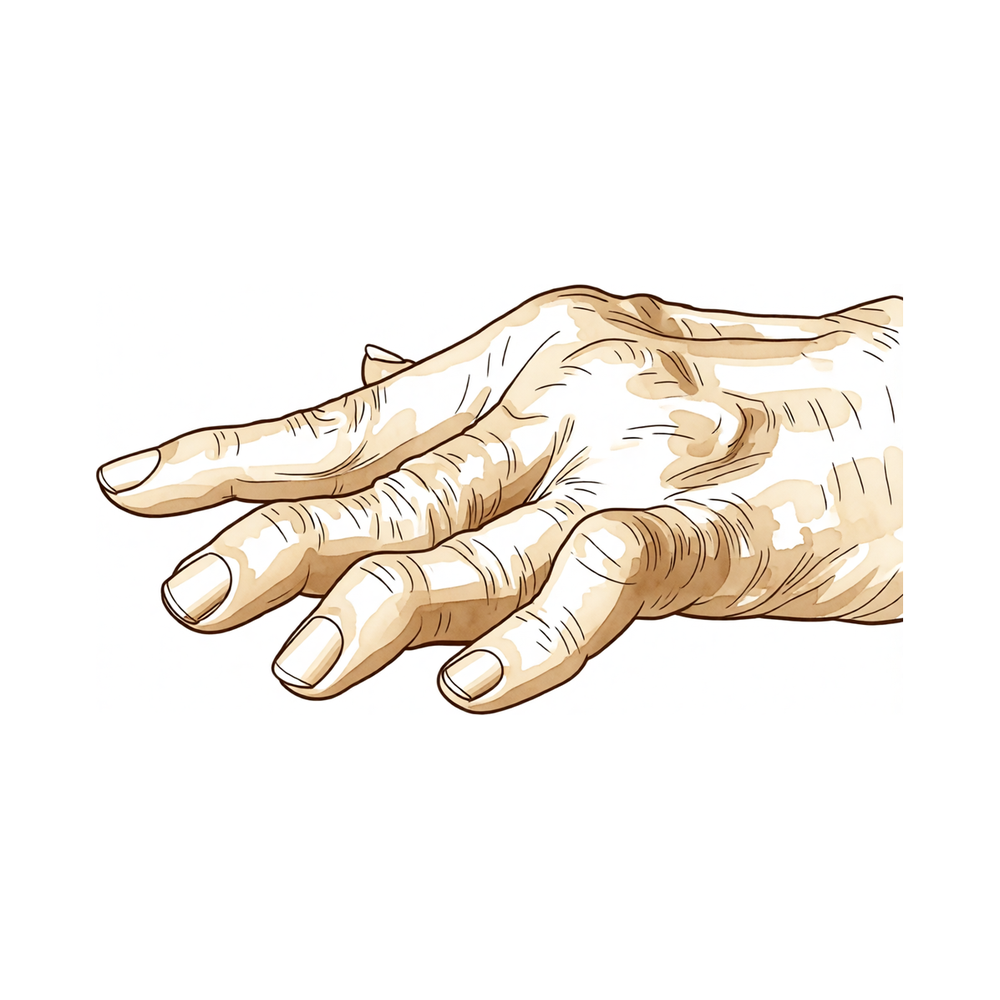
Una mano que muestra la postura en forma de cuello de cisne: la articulación del dedo medio está doblada hacia atrás y la punta del dedo hacia abajo.
Deformidad en forma de cuello de cisne: la articulación media (PIP) se hiperextiende, mientras que la punta del dedo (DIP) se dobla hacia abajo, confiriendo al dedo su forma característica de cuello de cisne. Abdulaziz Alkanderi / Wikimedia Commons, CC BY-SA 3.0

Esta página se tradujo automáticamente y todavía no la ha revisado un médico. La versión en inglés es la versión oficial.

Qué está sintiendo

Probablemente haya notado que uno o más de sus dedos han adoptado una forma extraña. La articulación central del dedo (la articulación grande que está en el medio, no la que se encuentra en la base) se dobla hacia atrás, de modo que el dedo parece ligeramente arqueado o “en forma de cisne”; al mismo tiempo, la articulación más cercana a la uña se inclina hacia adelante. Visto de perfil, el dedo presenta una ligera forma de zigzag.

En las primeras fases, esto suele ser más una molestia que un dolor: el dedo parece “quedarse atascado” o “travarse” al intentar doblarlo, y resulta difícil formar un puño suave o agarrar objetos pequeños. Con el tiempo, el dedo deja de estirarse o doblarse como antes, y las tareas cotidianas (abrochar botones, recoger monedas, sujetar un bolígrafo) se vuelven complicadas y agotadoras. Algunas personas se percatan de ello simplemente porque el dedo se engancha al meter la mano en el bolsillo o en un guante.

¿Qué está ocurriendo realmente?

El dedo está equilibrado gracias a un sistema ingenioso de tendones y pequeños ligamentos que recorren la parte superior, inferior y lateral de cada articulación. Normalmente, la articulación media (la articulación PIP) no puede doblarse hacia atrás gracias a un pequeño ligamento resistente en la cara palmar llamado placa volar, así como a bandas tendinosas situadas a los lados del dedo.

En la deformidad en forma de cuello de cisne, ese equilibrio se pierde. Si la placa volar se vuelve floja, o si los tendones laterales (las bandas laterales) se desplazan hacia la parte superior de la articulación, esta última se extiende excesivamente hacia atrás; y como todos los tendones están conectados, la punta del dedo queda inclinada hacia abajo. Ambos fenómenos ocurren simultáneamente.

Existen varias causas por las que este equilibrio se rompe. A veces comienza en la punta del dedo: un dedo en martillo no tratado (una posición anormal de la punta del dedo tras una lesión tendinosa) altera la tracción de los tendones y, poco a poco, hace que la articulación media se incline hacia atrás. Con frecuencia, la causa es la artritis inflamatoria, especialmente la artritis reumatoide, que estira y debilita los ligamentos. También puede deberse a laxitud articular, lesiones previas o a enfermedades que aumentan la rigidez muscular. Sea cual sea el desencadenante, el resultado final es esa forma característica y reconocible.

¿Qué podemos hacer al respecto?

El Dr. Kieran Hirpara dirige nuestro servicio de cirugía de extremidades superiores en el Mater Private Hospital Rockhampton, donde guiamos a los pacientes desde la derivación inicial hasta la elaboración de un plan de tratamiento claro. Su proceso comienza con una evaluación clínica exhaustiva para confirmar el diagnóstico y comprender cómo se mueve su dedo. Por lo general, iniciamos con tratamientos no quirúrgicos para problemas crónicos y solo consideramos la cirugía cuando este enfoque no brinda suficiente alivio.

El tratamiento adecuado depende de cuán flexible siga siendo el dedo y de cuál sea la causa del problema; por eso, el primer paso siempre es una evaluación adecuada de la mano y el tratamiento de cualquier artritis subyacente.

Si el dedo sigue siendo flexible y la articulación puede estirarse y doblarse libremente, a menudo comenzamos sin cirugía. Se utiliza una pequeña férula personalizada en forma de 8 (a veces una férula elegante con anillo plateado) que se coloca sobre la articulación media; esta impide el movimiento hacia atrás sin impedir el movimiento normal del dedo. Muchas personas logran buenos resultados con este método, y la terapia ocupacional ayuda a mantener la movilidad de las articulaciones.

Si el uso de férulas no es suficiente, o si el dedo empieza a quedarse rígido, la cirugía puede restablecer su equilibrio. Existen varias opciones bien establecidas, elegidas según las características de su dedo: volver a fijar la articulación media mediante un fragmento de uno de sus propios tendones para evitar que se doble hacia atrás (tenodesis); tensar el ligamento flojo del lado palmar; o recolocar los tendones desplazados en su posición correcta. Si la superficie articular está desgastada y rígida (lo cual es frecuente en casos crónicos de artritis), podríamos fusionar la articulación en una posición funcional o, en casos seleccionados, realizar un reemplazo articular.

Qué esperar

Si se detecta a tiempo, mientras el dedo aún conserva flexibilidad, el pronóstico es bueno: un yeso o una intervención quirúrgica de reequilibrio pueden devolverle al dedo una movilidad mucho más útil y natural. Cuanto más rígida y artrítica se vuelva la articulación, más limitadas serán las opciones de tratamiento; por eso es fundamental acudir al especialista antes de que el dedo quede fijo en una sola posición.

En caso de cirugía, deberá llevar un yeso durante un tiempo y posteriormente seguir un programa de terapia de la mano para reentrenar el dedo y proteger la reparación realizada. Esta rehabilitación es parte esencial del resultado final, no un complemento opcional. Cuando la causa es una artritis subyacente, mantenerla bien controlada con la ayuda de su equipo reumatológico ayuda a evitar que otros dedos presenten el mismo problema.

Cuándo consultar a un especialista

  • Una punta del dedo que cae y no se endereza por completo tras un golpe o una lesión por atrapamiento (dedo en martillo); el tratamiento temprano puede prevenir la aparición posterior de una deformidad en forma de cuello de cisne.
  • Un dedo que comienza a curvarse hacia atrás en la articulación media, o que se atasca, cruje o se bloquea al doblarse.
  • Rigidez creciente, o un dedo que ya no permite formar un puño de manera fluida.
  • Artritis reumatoide o inflamatoria conocida, acompañada de cambios en la forma de los dedos: vale la pena realizar una evaluación antes de que la deformidad se vuelva permanente.

En mayor profundidad

Esta sección profundiza más de lo necesario para que usted tome sus propias decisiones de tratamiento. La deformidad en forma de cuello de cisne merece una lectura adicional, pues no se trata de una sola condición: la misma forma del dedo puede surgir de varios tipos distintos de fallas, tanto en la base como en la punta del dedo; el tratamiento adecuado depende por completo de cuál de ellas haya sido la causa inicial.

Una misma forma, varias causas

La deformidad en forma de cuello de cisne provoca hiperextensión en la articulación media del dedo, mientras que la punta del dedo queda en flexión. Esta postura es el resultado final de un desequilibrio en un sistema interconectado; la causa inicial puede encontrarse en cualquiera de los extremos.

Desde la punta del dedo. Una lesión no tratada del extensor deja el mecanismo extensor desprendido distalmente [1]. La fuerza extensora que ya no se transmite a la punta del dedo pasa en cambio a la articulación media, la cual se va hiperextendiendo progresivamente. Por ello, la deformidad en cuello de cisne puede ser una consecuencia tardía de una lesión ocurrida semanas o meses antes, que aparentemente afectó únicamente a la punta del dedo.

Desde la articulación media. Si el ligamento volar, ese ligamento grueso que impide la hiperextensión de la articulación media, se estira o desgarra, la articulación se desplaza hacia atrás. Las bandas laterales del tendón extensor quedan entonces por encima del eje articular, reforzando la extensión; en cambio, el tendón flexor profundo queda flojo, lo que provoca la flexión de la punta del dedo.

Por laxitud generalizada o enfermedad inflamatoria. En casos de hipermovilidad, el ligamento volar es intrínsecamente laxo en lugar de estar lesionado. En la artritis reumatoide, la sinovitis debilita con el tiempo los elementos de contención; esta deformidad suele formar parte de un patrón más amplio que afecta a varios dedos [3].

Por qué esta distinción determina el tratamiento

El objetivo del tratamiento es impedir la hiperextensión de la articulación media; el nivel en el que se corrige debe coincidir con el nivel de la anomalía.

Cuando la deformidad se origina en la punta del dedo, corregir únicamente la articulación media no soluciona el desequilibrio que la provoca. En casos en que la placa volar ha fallado, se puede realizar una tenodesis utilizando un fragmento del tendón flexor superficial para limitar la hiperextensión [2]. Si la causa es inflamatoria, la enfermedad subyacente determinará si cualquier reconstrucción será eficaz; los procedimientos sobre los tejidos blandos en una mano con inflamación activa suelen dilatarse con el tiempo.

Con frecuencia, se emplea primero una férula en forma de anillo plateado o en forma de ocho, que impide los últimos grados de hiperextensión mientras permite el flexado del dedo. Esta férula resulta más eficaz de lo que parece, pues al impedir ese pequeño rango de movimiento se interrumpe el mecanismo que genera la deformidad.

¿Flexible o fija? Esa es la otra cuestión decisiva

La segunda cuestión es si el dedo aún puede estirarse pasivamente. Una deformidad flexible —que se puede corregir manualmente— podría responder al uso de férulas o a procedimientos de reequilibrio de los tejidos blandos. En cambio, una deformidad fija, en la que la articulación ya no alcanza su rango de movimiento, implica una contractura articular establecida; por ello, los procedimientos sobre los tejidos blandos por sí solos no la corregirán [4].

La implicación práctica es la misma que en el caso de la deformidad en “botón de abotonadura”; por eso ambas merecen ser evaluadas tempranamente: se trata de deformidades progresivas y que se autoperpetúan. El período durante el cual una férula puede mantener recto un dedo con deformidad flexible es considerablemente más amplio que el período en el que la cirugía puede corregir una deformidad fija.

Nota sobre la deformidad relacionada

La deformidad en forma de botón, en cierto modo, es la imagen reflejada: la articulación media se dobla y la punta del dedo se hiperextiende. Se produce por una falla en la porción central del tendón extensor, y no por una falla en la lámina volar. Ambas deformidades se describen por separado; confundirlas es importante, ya que las posiciones de inmovilización mediante férulas son opuestas.

Referencias

[1] McKeon KE, Lee DH. Deformidades postraumáticas tipo “boutonnière” y “cuello de cisne”. J Am Acad Orthop Surg. 2015;23(10):623-32. https://doi.org/10.5435/JAAOS-D-14-00272

[2] Wei DH, Terrono AL. Uso del “sling” del flexor digital superficial (tenodesis del flexor digitorum superficialis) para la reconstrucción del cuello de cisne. J Hand Surg Am. 2015;40(10):2068-74. https://doi.org/10.1016/j.jhsa.2015.07.018

[3] Smith GC, Amirfeyz R. La deformidad flexible tipo “cuello de cisne” en la artritis reumatoide. J Hand Surg Am. 2013;38(7):1405-7. https://doi.org/10.1016/j.jhsa.2013.01.002

[4] Fox PM, Chang J. Tratamiento de la articulación interfalángica proximal en deformidades tipo “cuello de cisne” y “boutonnière”. Hand Clin. 2018;34(2):167-76. https://doi.org/10.1016/j.hcl.2017.12.006


Creative Commons BY-NC 4.0

CC Creative Commons licence
BY Attribution — you must credit the source
NC NonCommercial — not for commercial use

Attribution-NonCommercial 4.0 International


Creative Commons Corporation ("Creative Commons") is not a law firm and does not provide legal services or legal advice. Distribution of Creative Commons public licenses does not create a lawyer-client or other relationship. Creative Commons makes its licenses and related information available on an "as-is" basis. Creative Commons gives no warranties regarding its licenses, any material licensed under their terms and conditions, or any related information. Creative Commons disclaims all liability for damages resulting from their use to the fullest extent possible.

Using Creative Commons Public Licenses

Creative Commons public licenses provide a standard set of terms and conditions that creators and other rights holders may use to share original works of authorship and other material subject to copyright and certain other rights specified in the public license below. The following considerations are for informational purposes only, are not exhaustive, and do not form part of our licenses.

Considerations for licensors: Our public licenses are intended for use by those authorized to give the public permission to use material in ways otherwise restricted by copyright and certain other rights. Our licenses are irrevocable. Licensors should read and understand the terms and conditions of the license they choose before applying it. Licensors should also secure all rights necessary before applying our licenses so that the public can reuse the material as expected. Licensors should clearly mark any material not subject to the license. This includes other CC- licensed material, or material used under an exception or limitation to copyright. More considerations for licensors: wiki.creativecommons.org/Considerations_for_licensors

Considerations for the public: By using one of our public licenses, a licensor grants the public permission to use the licensed material under specified terms and conditions. If the licensor's permission is not necessary for any reason--for example, because of any applicable exception or limitation to copyright--then that use is not regulated by the license. Our licenses grant only permissions under copyright and certain other rights that a licensor has authority to grant. Use of the licensed material may still be restricted for other reasons, including because others have copyright or other rights in the material. A licensor may make special requests, such as asking that all changes be marked or described. Although not required by our licenses, you are encouraged to respect those requests where reasonable. More considerations for the public: wiki.creativecommons.org/Considerations_for_licensees


Creative Commons Attribution-NonCommercial 4.0 International Public License

By exercising the Licensed Rights (defined below), You accept and agree to be bound by the terms and conditions of this Creative Commons Attribution-NonCommercial 4.0 International Public License ("Public License"). To the extent this Public License may be interpreted as a contract, You are granted the Licensed Rights in consideration of Your acceptance of these terms and conditions, and the Licensor grants You such rights in consideration of benefits the Licensor receives from making the Licensed Material available under these terms and conditions.

Section 1 -- Definitions.

a. Adapted Material means material subject to Copyright and Similar Rights that is derived from or based upon the Licensed Material and in which the Licensed Material is translated, altered, arranged, transformed, or otherwise modified in a manner requiring permission under the Copyright and Similar Rights held by the Licensor. For purposes of this Public License, where the Licensed Material is a musical work, performance, or sound recording, Adapted Material is always produced where the Licensed Material is synched in timed relation with a moving image.

b. Adapter's License means the license You apply to Your Copyright and Similar Rights in Your contributions to Adapted Material in accordance with the terms and conditions of this Public License.

c. Copyright and Similar Rights means copyright and/or similar rights closely related to copyright including, without limitation, performance, broadcast, sound recording, and Sui Generis Database Rights, without regard to how the rights are labeled or categorized. For purposes of this Public License, the rights specified in Section 2(b)(1)-(2) are not Copyright and Similar Rights.

d. Effective Technological Measures means those measures that, in the absence of proper authority, may not be circumvented under laws fulfilling obligations under Article 11 of the WIPO Copyright Treaty adopted on December 20, 1996, and/or similar international agreements.

e. Exceptions and Limitations means fair use, fair dealing, and/or any other exception or limitation to Copyright and Similar Rights that applies to Your use of the Licensed Material.

f. Licensed Material means the artistic or literary work, database, or other material to which the Licensor applied this Public License.

g. Licensed Rights means the rights granted to You subject to the terms and conditions of this Public License, which are limited to all Copyright and Similar Rights that apply to Your use of the Licensed Material and that the Licensor has authority to license.

h. Licensor means the individual(s) or entity(ies) granting rights under this Public License.

i. NonCommercial means not primarily intended for or directed towards commercial advantage or monetary compensation. For purposes of this Public License, the exchange of the Licensed Material for other material subject to Copyright and Similar Rights by digital file-sharing or similar means is NonCommercial provided there is no payment of monetary compensation in connection with the exchange.

j. Share means to provide material to the public by any means or process that requires permission under the Licensed Rights, such as reproduction, public display, public performance, distribution, dissemination, communication, or importation, and to make material available to the public including in ways that members of the public may access the material from a place and at a time individually chosen by them.

k. Sui Generis Database Rights means rights other than copyright resulting from Directive 96/9/EC of the European Parliament and of the Council of 11 March 1996 on the legal protection of databases, as amended and/or succeeded, as well as other essentially equivalent rights anywhere in the world.

l. You means the individual or entity exercising the Licensed Rights under this Public License. Your has a corresponding meaning.

Section 2 -- Scope.

a. License grant.

1. Subject to the terms and conditions of this Public License, the Licensor hereby grants You a worldwide, royalty-free, non-sublicensable, non-exclusive, irrevocable license to exercise the Licensed Rights in the Licensed Material to:

a. reproduce and Share the Licensed Material, in whole or in part, for NonCommercial purposes only; and

b. produce, reproduce, and Share Adapted Material for NonCommercial purposes only.

2. Exceptions and Limitations. For the avoidance of doubt, where Exceptions and Limitations apply to Your use, this Public License does not apply, and You do not need to comply with its terms and conditions.

3. Term. The term of this Public License is specified in Section 6(a).

4. Media and formats; technical modifications allowed. The Licensor authorizes You to exercise the Licensed Rights in all media and formats whether now known or hereafter created, and to make technical modifications necessary to do so. The Licensor waives and/or agrees not to assert any right or authority to forbid You from making technical modifications necessary to exercise the Licensed Rights, including technical modifications necessary to circumvent Effective Technological Measures. For purposes of this Public License, simply making modifications authorized by this Section 2(a) (4) never produces Adapted Material.

5. Downstream recipients.

a. Offer from the Licensor -- Licensed Material. Every recipient of the Licensed Material automatically receives an offer from the Licensor to exercise the Licensed Rights under the terms and conditions of this Public License.

b. No downstream restrictions. You may not offer or impose any additional or different terms or conditions on, or apply any Effective Technological Measures to, the Licensed Material if doing so restricts exercise of the Licensed Rights by any recipient of the Licensed Material.

6. No endorsement. Nothing in this Public License constitutes or may be construed as permission to assert or imply that You are, or that Your use of the Licensed Material is, connected with, or sponsored, endorsed, or granted official status by, the Licensor or others designated to receive attribution as provided in Section 3(a)(1)(A)(i).

b. Other rights.

1. Moral rights, such as the right of integrity, are not licensed under this Public License, nor are publicity, privacy, and/or other similar personality rights; however, to the extent possible, the Licensor waives and/or agrees not to assert any such rights held by the Licensor to the limited extent necessary to allow You to exercise the Licensed Rights, but not otherwise.

2. Patent and trademark rights are not licensed under this Public License.

3. To the extent possible, the Licensor waives any right to collect royalties from You for the exercise of the Licensed Rights, whether directly or through a collecting society under any voluntary or waivable statutory or compulsory licensing scheme. In all other cases the Licensor expressly reserves any right to collect such royalties, including when the Licensed Material is used other than for NonCommercial purposes.

Section 3 -- License Conditions.

Your exercise of the Licensed Rights is expressly made subject to the following conditions.

a. Attribution.

1. If You Share the Licensed Material (including in modified form), You must:

a. retain the following if it is supplied by the Licensor with the Licensed Material:

i. identification of the creator(s) of the Licensed Material and any others designated to receive attribution, in any reasonable manner requested by the Licensor (including by pseudonym if designated);

ii. a copyright notice;

iii. a notice that refers to this Public License;

iv. a notice that refers to the disclaimer of warranties;

v. a URI or hyperlink to the Licensed Material to the extent reasonably practicable;

b. indicate if You modified the Licensed Material and retain an indication of any previous modifications; and

c. indicate the Licensed Material is licensed under this Public License, and include the text of, or the URI or hyperlink to, this Public License.

2. You may satisfy the conditions in Section 3(a)(1) in any reasonable manner based on the medium, means, and context in which You Share the Licensed Material. For example, it may be reasonable to satisfy the conditions by providing a URI or hyperlink to a resource that includes the required information.

3. If requested by the Licensor, You must remove any of the information required by Section 3(a)(1)(A) to the extent reasonably practicable.

4. If You Share Adapted Material You produce, the Adapter's License You apply must not prevent recipients of the Adapted Material from complying with this Public License.

Section 4 -- Sui Generis Database Rights.

Where the Licensed Rights include Sui Generis Database Rights that apply to Your use of the Licensed Material:

a. for the avoidance of doubt, Section 2(a)(1) grants You the right to extract, reuse, reproduce, and Share all or a substantial portion of the contents of the database for NonCommercial purposes only;

b. if You include all or a substantial portion of the database contents in a database in which You have Sui Generis Database Rights, then the database in which You have Sui Generis Database Rights (but not its individual contents) is Adapted Material; and

c. You must comply with the conditions in Section 3(a) if You Share all or a substantial portion of the contents of the database.

For the avoidance of doubt, this Section 4 supplements and does not replace Your obligations under this Public License where the Licensed Rights include other Copyright and Similar Rights.

Section 5 -- Disclaimer of Warranties and Limitation of Liability.

a. UNLESS OTHERWISE SEPARATELY UNDERTAKEN BY THE LICENSOR, TO THE EXTENT POSSIBLE, THE LICENSOR OFFERS THE LICENSED MATERIAL AS-IS AND AS-AVAILABLE, AND MAKES NO REPRESENTATIONS OR WARRANTIES OF ANY KIND CONCERNING THE LICENSED MATERIAL, WHETHER EXPRESS, IMPLIED, STATUTORY, OR OTHER. THIS INCLUDES, WITHOUT LIMITATION, WARRANTIES OF TITLE, MERCHANTABILITY, FITNESS FOR A PARTICULAR PURPOSE, NON-INFRINGEMENT, ABSENCE OF LATENT OR OTHER DEFECTS, ACCURACY, OR THE PRESENCE OR ABSENCE OF ERRORS, WHETHER OR NOT KNOWN OR DISCOVERABLE. WHERE DISCLAIMERS OF WARRANTIES ARE NOT ALLOWED IN FULL OR IN PART, THIS DISCLAIMER MAY NOT APPLY TO YOU.

b. TO THE EXTENT POSSIBLE, IN NO EVENT WILL THE LICENSOR BE LIABLE TO YOU ON ANY LEGAL THEORY (INCLUDING, WITHOUT LIMITATION, NEGLIGENCE) OR OTHERWISE FOR ANY DIRECT, SPECIAL, INDIRECT, INCIDENTAL, CONSEQUENTIAL, PUNITIVE, EXEMPLARY, OR OTHER LOSSES, COSTS, EXPENSES, OR DAMAGES ARISING OUT OF THIS PUBLIC LICENSE OR USE OF THE LICENSED MATERIAL, EVEN IF THE LICENSOR HAS BEEN ADVISED OF THE POSSIBILITY OF SUCH LOSSES, COSTS, EXPENSES, OR DAMAGES. WHERE A LIMITATION OF LIABILITY IS NOT ALLOWED IN FULL OR IN PART, THIS LIMITATION MAY NOT APPLY TO YOU.

c. The disclaimer of warranties and limitation of liability provided above shall be interpreted in a manner that, to the extent possible, most closely approximates an absolute disclaimer and waiver of all liability.

Section 6 -- Term and Termination.

a. This Public License applies for the term of the Copyright and Similar Rights licensed here. However, if You fail to comply with this Public License, then Your rights under this Public License terminate automatically.

b. Where Your right to use the Licensed Material has terminated under Section 6(a), it reinstates:

1. automatically as of the date the violation is cured, provided it is cured within 30 days of Your discovery of the violation; or

2. upon express reinstatement by the Licensor.

For the avoidance of doubt, this Section 6(b) does not affect any right the Licensor may have to seek remedies for Your violations of this Public License.

c. For the avoidance of doubt, the Licensor may also offer the Licensed Material under separate terms or conditions or stop distributing the Licensed Material at any time; however, doing so will not terminate this Public License.

d. Sections 1, 5, 6, 7, and 8 survive termination of this Public License.

Section 7 -- Other Terms and Conditions.

a. The Licensor shall not be bound by any additional or different terms or conditions communicated by You unless expressly agreed.

b. Any arrangements, understandings, or agreements regarding the Licensed Material not stated herein are separate from and independent of the terms and conditions of this Public License.

Section 8 -- Interpretation.

a. For the avoidance of doubt, this Public License does not, and shall not be interpreted to, reduce, limit, restrict, or impose conditions on any use of the Licensed Material that could lawfully be made without permission under this Public License.

b. To the extent possible, if any provision of this Public License is deemed unenforceable, it shall be automatically reformed to the minimum extent necessary to make it enforceable. If the provision cannot be reformed, it shall be severed from this Public License without affecting the enforceability of the remaining terms and conditions.

c. No term or condition of this Public License will be waived and no failure to comply consented to unless expressly agreed to by the Licensor.

d. Nothing in this Public License constitutes or may be interpreted as a limitation upon, or waiver of, any privileges and immunities that apply to the Licensor or You, including from the legal processes of any jurisdiction or authority.


Creative Commons is not a party to its public licenses. Notwithstanding, Creative Commons may elect to apply one of its public licenses to material it publishes and in those instances will be considered the “Licensor.” The text of the Creative Commons public licenses is dedicated to the public domain under the CC0 Public Domain Dedication. Except for the limited purpose of indicating that material is shared under a Creative Commons public license or as otherwise permitted by the Creative Commons policies published at creativecommons.org/policies, Creative Commons does not authorize the use of the trademark "Creative Commons" or any other trademark or logo of Creative Commons without its prior written consent including, without limitation, in connection with any unauthorized modifications to any of its public licenses or any other arrangements, understandings, or agreements concerning use of licensed material. For the avoidance of doubt, this paragraph does not form part of the public licenses.

Creative Commons may be contacted at creativecommons.org.