Skip to content

Patients › General-Health

Medicamentos para el dolor nervioso (Gabapentina y Pregabalina)

PDF

How medicines like gabapentin and pregabalin settle nerve pain, why they are built up slowly, their side effects, and using them safely.
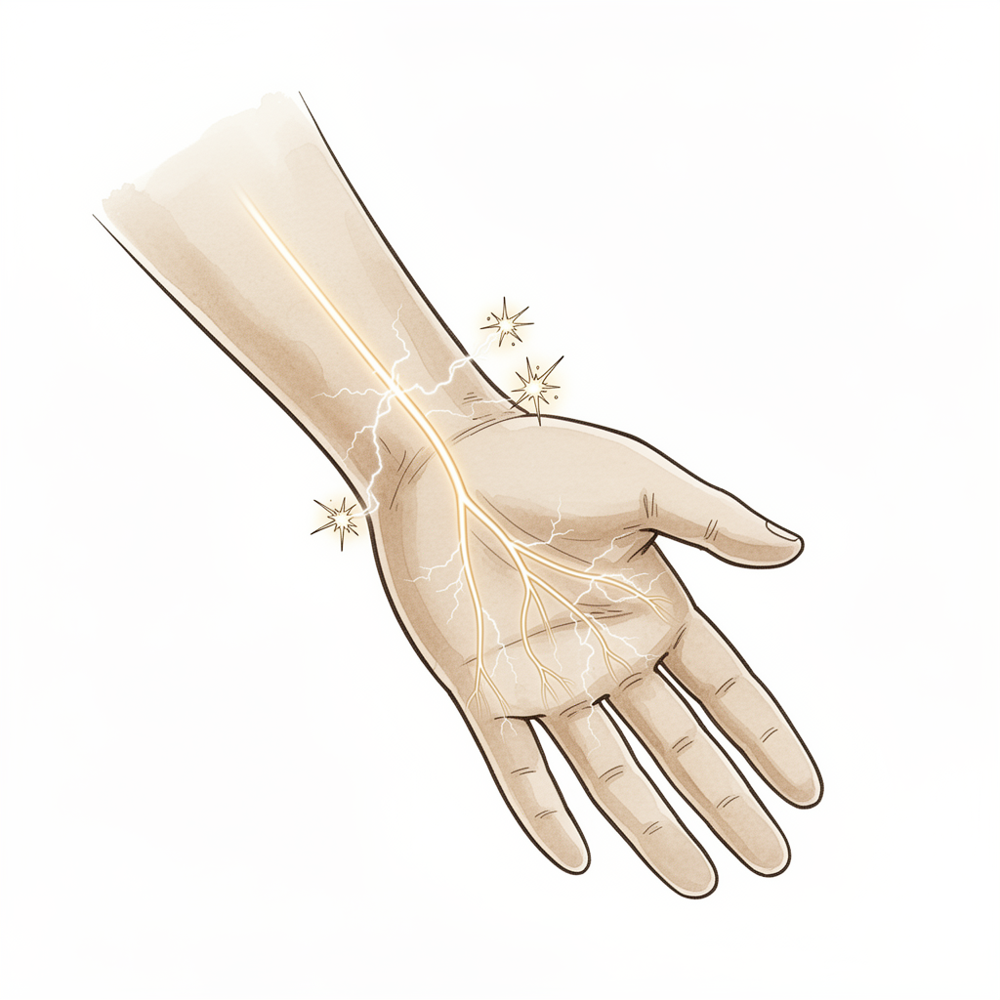
Un antebrazo con un nervio trazado a lo largo de él y pequeñas chispas de hormigueo.
El dolor nervioso se percibe como una sensación de ardor, descargas eléctricas o hormigueo; estos medicamentos ayudan a calmar las señales nerviosas excesivamente activas que lo provocan. Kieran Hirpara 4.0

Esta página se tradujo automáticamente y todavía no la ha revisado un médico. La versión en inglés es la versión oficial.

Si le han recetado gabapentina, pregabalina, amitriptilina o duloxetina, es posible que se sorprenda: no se trata de los analgésicos que la mayoría de las personas suelen tomar. Y hay una buena razón para ello. El tipo de dolor que tratan, el dolor neuropático, se comporta de manera distinta al dolor común, por lo que requiere un tipo diferente de medicamento para controlarse. Si se utilizan correctamente, estos fármacos constituyen una opción valiosa y no opioide para aliviar el dolor neuropático.

¿Qué es el dolor neuropático?

La mayoría del dolor es una señal útil: te golpeas la mano, el tejido se magulla y la zona duele hasta que sana. El dolor nervioso (los médicos lo denominan dolor neuropático) es diferente. En este caso, el problema radica en el propio nervio: un nervio irritado, comprimido o dañado comienza a enviar señales de dolor por sí solo, incluso cuando la piel o el tejido al que “informa” están prácticamente indemnes. En esencia, la señal de alarma se vuelve defectuosa y sigue activándose.

El dolor nervioso suele tener características particulares. Las personas lo describen como:

  • Ardor o sensación de calor
  • Dolor punzante o similar a una descarga eléctrica, que a menudo se extiende a lo largo de una línea determinada
  • Hormigueo, cosquilleo o sensación de “crawling”
  • Una zona que se siente adormecida pero dolorosa al mismo tiempo
  • Piel tan sensible que incluso un roce leve o el contacto con la sábana resulta doloroso

Puede originarse por un nervio comprimido, como en el síndrome del túnel carpiano, por una lesión nerviosa o tras ciertas intervenciones quirúrgicas; también puede deberse a afecciones como el herpes zóster o la diabetes, así como a un trastorno llamado CRPS (síndrome de dolor regional complejo), en el cual una extremidad se vuelve dolorosa e hipersensible después de una lesión.

¿Por qué los analgésicos comunes suelen ser poco efectivos?

Esto es lo que más sorprende a la gente. El paracetamol, el ibuprofeno y otros antiinflamatorios actúan principalmente sobre la inflamación y el daño tisular (una distensión, un hematoma, el sitio de una operación). El dolor neuropático, en cambio, no es realmente un problema inflamatorio; se trata de un exceso de actividad y de señales erróneas por parte de los nervios. Por eso, los analgésicos habituales, e incluso los opioides potentes, suelen tener escaso efecto sobre este tipo de dolor.

Por ello recurrimos a otro grupo de medicamentos. En lugar de calmar el tejido inflamado, actúan directamente sobre el sistema nervioso, reduciendo la intensidad de las señales dolorosas excesivas. Estos fármacos se desarrollaron inicialmente para otros fines (algunos para la epilepsia, otros para la depresión); con el tiempo se descubrió que son muy eficaces para regular las señales nerviosas anómalas. El hecho de que se le recete uno de estos medicamentos no significa que consideremos que su dolor es imaginario ni que padezca epilepsia o depresión; simplemente significa que lo estamos utilizando para la función para la que es más adecuado.

Gabapentina y pregabalina (Lyrica)

Estos dos fármacos constituyen el pilar del tratamiento del dolor neuropático y están estrechamente relacionados.
La pregabalina se comercializa bajo el nombre comercial Lyrica; la gabapentina también se vende como Neurontin.

Su mecanismo de acción consiste en calmar la señalización nerviosa excesiva. Un nervio irritado genera impulsos nerviosos al permitir que el calcio entre en él a través de pequeñas vías denominadas canales de calcio; la gabapentina y la pregabalina atenúan dichos canales, de modo que el nervio genera impulsos con menor facilidad y se transmiten menos señales de dolor. No son antiinflamatorios ni opioides; simplemente “calman” el nervio en lugar de adormecer los tejidos.

Una advertencia realista: estos medicamentos resultan más útiles para el dolor neuropático cuando realmente existe un nervio disfuncional que genera impulsos excesivos. No son una buena opción para tratar dolores comunes o la molestia habitual tras una operación; tampoco se recomienda tomarlos de forma rutinaria “por si acaso” antes o después de una cirugía, pues en esos casos añaden efectos secundarios sin aportar mucho alivio. Su verdadera utilidad se manifiesta cuando el dolor neuropático es el problema principal.

Amitriptilina y duloxetina: las alternativas

Si la gabapentina o la pregabalina no le convienen, o no logran controlar el dolor, existen otros dos medicamentos que abordan el mismo problema desde una perspectiva distinta.

  • La amitriptilina es un antidepresivo de uso tradicional; en este caso se administra en una dosis mucho más baja que la empleada para tratar la depresión. A estas dosis reducidas, ayuda a potenciar las vías naturales del cuerpo encargadas de atenuar el dolor en la médula espinal y el cerebro. La dosis inicial suele ser muy baja y se toma por la noche, en parte porque favorece el sueño, lo cual resulta útil cuando el dolor neuropático le impide dormir.
  • La duloxetina es un ISRSN (un tipo más reciente de antidepresivo) que, al igual que la amitriptilina, refuerza las señales naturales del sistema nervioso encargadas de controlar el dolor. Es una opción especialmente frecuente para el dolor neuropático asociado a la diabetes.

Al igual que con la gabapentina y la pregabalina, el uso de cualquiera de estos medicamentos se orienta a regular la vía del dolor, no a tratar su estado de ánimo.

Cómo se usan estos medicamentos — qué esperar

Existen algunos aspectos prácticos que aplican a todos estos medicamentos; conocerlos de antemano hará que el proceso sea mucho más sencillo.

Se empieza con dosis bajas y se aumentan poco a poco. Por lo general, se inicia con una dosis pequeña y se incrementa gradualmente a lo largo de días o semanas. Esto no es una medida de precaución gratuita: hacerlo así permite que el cuerpo se acostumbre al fármaco y que los efectos secundarios iniciales disminuyan, de modo que al final se logra tolerar una dosis eficaz que, de haberse tomado desde el principio, habría resultado insoportable.

Tardan en hacer efecto; no actúan de inmediato. A diferencia del paracetamol, no se toma una pastilla y se siente alivio en media hora. Estos medicamentos desarrollan su efecto a lo largo de días o incluso semanas; en el caso de la amitriptilina y la duloxetina, puede ser necesario tomar una dosis adecuada durante varias semanas para poder evaluar su eficacia. La razón más frecuente por la que muchas personas no obtienen beneficios de un medicamento que les habría ayudado es porque lo abandonan demasiado pronto. Si aún no se nota efecto, lo más probable es que necesite más tiempo o una dosis mayor, no que haya fallado.

Atenúan el dolor, pero rara vez lo eliminan por completo. Es útil saber qué se considera un buen resultado: para la mayoría de las personas, significa que el dolor se vuelve más leve y manejable (por ejemplo, pasa de ser intenso a moderado, o permite dormir), en lugar de desaparecer del todo. Algunas personas experimentan mucho alivio, otras un poco, y hay quienes no notan ningún efecto con un determinado fármaco; por eso a menudo es necesario probar uno y, si es preciso, cambiar a otro. Combinar el medicamento con el resto del tratamiento (mantener el movimiento de la mano, terapia ocupacional, tratar la causa subyacente cuando sea posible) suele ser más eficaz que tomar solo la pastilla.

Efectos secundarios comunes. Los más habituales son somnolencia, mareos y boca seca; algunas personas notan aumento de peso o ligera hinchazón en los tobillos. Por lo general, estos efectos son más intensos al principio y tienden a disminuir a medida que el cuerpo se adapta, motivo por el cual aumentamos la dosis de forma gradual. Infórmenos si le resultan molestos; reducir el ritmo de aumento o ajustar la dosis suele solucionarlo.

Conducción y consumo de alcohol durante la fase de adaptación. Dado que estos medicamentos pueden causar somnolencia o mareos, tenga cuidado al conducir o manejar maquinaria hasta saber cómo le afectan, especialmente en los primeros días y después de cada aumento de dosis. También debe limitar el consumo de alcohol, pues este potencia la somnolencia.

No interrumpa el tratamiento de forma brusca. Cuando llegue el momento de dejar de tomar alguno de estos medicamentos, la dosis debe reducirse gradualmente (en forma de tapering) y no suspenderse de un día para otro. Interrumpirlo abruptamente puede provocar efectos de abstinencia molestos. Siempre debe hacerlo bajo supervisión médica, nunca por su cuenta.

Nota sobre la gabapentina y la pregabalina como medicamentos controlados

La gabapentina y la pregabalina ahora se clasifican como medicamentos controlados. Existen dos razones para ello. En primer lugar, presentan un riesgo de uso indebido y dependencia en ciertas personas. En segundo lugar, y esto es lo más importante desde el punto de vista de la seguridad, pueden ser peligrosas cuando se combinan con opioides u otros sedantes (incluidos los somníferos potentes y el alcohol en grandes cantidades), ya que conjuntamente pueden ralentizar la respiración.

En la práctica, esto significa: tómelas exactamente según lo prescrito, no las comparta con nadie, no tome dosis adicionales, y asegúrese de que todos los profesionales que le atienden sepan que está tomando alguna de estas medicaciones, especialmente si alguno de ellos está considerando recetarle analgésicos opioides o sedantes. Disponemos de páginas separadas sobre el manejo del dolor postoperatorio y sobre el cannabis y el CBD para el dolor si esto le resulta relevante.

Nada de lo anterior debe desanimarle. Para la gran mayoría de las personas, estas medicaciones son seguras, eficaces y constituyen una opción no opioide verdaderamente útil para controlar el dolor neuropático. El hecho de que sean medicamentos controlados simplemente implica que deben emplearse con prudencia y únicamente según lo indicado por el médico.

Busque ayuda si

Comuníquese con nosotros, con su médico de cabecera o acuda a urgencias si observa:

  • Somnolencia intensa o confusión, o si no puede despertarse fácilmente
  • Cambios de humor o cualquier pensamiento de autolesionarse: infórmelo a alguien de inmediato
  • Problemas respiratorios o respiración inusualmente lenta o superficial, especialmente si también está tomando opioides o sedantes (llame a los servicios de emergencia)
  • Signos de reacción alérgica: erupción cutánea, hinchazón en la cara, los labios o la lengua, o dificultad para respirar (esto es una emergencia)

También no dude en contactarnos si el medicamento simplemente no surte efecto después de un período de prueba razonable, o si los efectos secundarios son difíciles de tolerar; existen varias opciones, y por lo general se trata de encontrar la que mejor se adapte a usted.


Creative Commons BY-NC 4.0

CC Creative Commons licence
BY Attribution — you must credit the source
NC NonCommercial — not for commercial use

Attribution-NonCommercial 4.0 International


Creative Commons Corporation ("Creative Commons") is not a law firm and does not provide legal services or legal advice. Distribution of Creative Commons public licenses does not create a lawyer-client or other relationship. Creative Commons makes its licenses and related information available on an "as-is" basis. Creative Commons gives no warranties regarding its licenses, any material licensed under their terms and conditions, or any related information. Creative Commons disclaims all liability for damages resulting from their use to the fullest extent possible.

Using Creative Commons Public Licenses

Creative Commons public licenses provide a standard set of terms and conditions that creators and other rights holders may use to share original works of authorship and other material subject to copyright and certain other rights specified in the public license below. The following considerations are for informational purposes only, are not exhaustive, and do not form part of our licenses.

Considerations for licensors: Our public licenses are intended for use by those authorized to give the public permission to use material in ways otherwise restricted by copyright and certain other rights. Our licenses are irrevocable. Licensors should read and understand the terms and conditions of the license they choose before applying it. Licensors should also secure all rights necessary before applying our licenses so that the public can reuse the material as expected. Licensors should clearly mark any material not subject to the license. This includes other CC- licensed material, or material used under an exception or limitation to copyright. More considerations for licensors: wiki.creativecommons.org/Considerations_for_licensors

Considerations for the public: By using one of our public licenses, a licensor grants the public permission to use the licensed material under specified terms and conditions. If the licensor's permission is not necessary for any reason--for example, because of any applicable exception or limitation to copyright--then that use is not regulated by the license. Our licenses grant only permissions under copyright and certain other rights that a licensor has authority to grant. Use of the licensed material may still be restricted for other reasons, including because others have copyright or other rights in the material. A licensor may make special requests, such as asking that all changes be marked or described. Although not required by our licenses, you are encouraged to respect those requests where reasonable. More considerations for the public: wiki.creativecommons.org/Considerations_for_licensees


Creative Commons Attribution-NonCommercial 4.0 International Public License

By exercising the Licensed Rights (defined below), You accept and agree to be bound by the terms and conditions of this Creative Commons Attribution-NonCommercial 4.0 International Public License ("Public License"). To the extent this Public License may be interpreted as a contract, You are granted the Licensed Rights in consideration of Your acceptance of these terms and conditions, and the Licensor grants You such rights in consideration of benefits the Licensor receives from making the Licensed Material available under these terms and conditions.

Section 1 -- Definitions.

a. Adapted Material means material subject to Copyright and Similar Rights that is derived from or based upon the Licensed Material and in which the Licensed Material is translated, altered, arranged, transformed, or otherwise modified in a manner requiring permission under the Copyright and Similar Rights held by the Licensor. For purposes of this Public License, where the Licensed Material is a musical work, performance, or sound recording, Adapted Material is always produced where the Licensed Material is synched in timed relation with a moving image.

b. Adapter's License means the license You apply to Your Copyright and Similar Rights in Your contributions to Adapted Material in accordance with the terms and conditions of this Public License.

c. Copyright and Similar Rights means copyright and/or similar rights closely related to copyright including, without limitation, performance, broadcast, sound recording, and Sui Generis Database Rights, without regard to how the rights are labeled or categorized. For purposes of this Public License, the rights specified in Section 2(b)(1)-(2) are not Copyright and Similar Rights.

d. Effective Technological Measures means those measures that, in the absence of proper authority, may not be circumvented under laws fulfilling obligations under Article 11 of the WIPO Copyright Treaty adopted on December 20, 1996, and/or similar international agreements.

e. Exceptions and Limitations means fair use, fair dealing, and/or any other exception or limitation to Copyright and Similar Rights that applies to Your use of the Licensed Material.

f. Licensed Material means the artistic or literary work, database, or other material to which the Licensor applied this Public License.

g. Licensed Rights means the rights granted to You subject to the terms and conditions of this Public License, which are limited to all Copyright and Similar Rights that apply to Your use of the Licensed Material and that the Licensor has authority to license.

h. Licensor means the individual(s) or entity(ies) granting rights under this Public License.

i. NonCommercial means not primarily intended for or directed towards commercial advantage or monetary compensation. For purposes of this Public License, the exchange of the Licensed Material for other material subject to Copyright and Similar Rights by digital file-sharing or similar means is NonCommercial provided there is no payment of monetary compensation in connection with the exchange.

j. Share means to provide material to the public by any means or process that requires permission under the Licensed Rights, such as reproduction, public display, public performance, distribution, dissemination, communication, or importation, and to make material available to the public including in ways that members of the public may access the material from a place and at a time individually chosen by them.

k. Sui Generis Database Rights means rights other than copyright resulting from Directive 96/9/EC of the European Parliament and of the Council of 11 March 1996 on the legal protection of databases, as amended and/or succeeded, as well as other essentially equivalent rights anywhere in the world.

l. You means the individual or entity exercising the Licensed Rights under this Public License. Your has a corresponding meaning.

Section 2 -- Scope.

a. License grant.

1. Subject to the terms and conditions of this Public License, the Licensor hereby grants You a worldwide, royalty-free, non-sublicensable, non-exclusive, irrevocable license to exercise the Licensed Rights in the Licensed Material to:

a. reproduce and Share the Licensed Material, in whole or in part, for NonCommercial purposes only; and

b. produce, reproduce, and Share Adapted Material for NonCommercial purposes only.

2. Exceptions and Limitations. For the avoidance of doubt, where Exceptions and Limitations apply to Your use, this Public License does not apply, and You do not need to comply with its terms and conditions.

3. Term. The term of this Public License is specified in Section 6(a).

4. Media and formats; technical modifications allowed. The Licensor authorizes You to exercise the Licensed Rights in all media and formats whether now known or hereafter created, and to make technical modifications necessary to do so. The Licensor waives and/or agrees not to assert any right or authority to forbid You from making technical modifications necessary to exercise the Licensed Rights, including technical modifications necessary to circumvent Effective Technological Measures. For purposes of this Public License, simply making modifications authorized by this Section 2(a) (4) never produces Adapted Material.

5. Downstream recipients.

a. Offer from the Licensor -- Licensed Material. Every recipient of the Licensed Material automatically receives an offer from the Licensor to exercise the Licensed Rights under the terms and conditions of this Public License.

b. No downstream restrictions. You may not offer or impose any additional or different terms or conditions on, or apply any Effective Technological Measures to, the Licensed Material if doing so restricts exercise of the Licensed Rights by any recipient of the Licensed Material.

6. No endorsement. Nothing in this Public License constitutes or may be construed as permission to assert or imply that You are, or that Your use of the Licensed Material is, connected with, or sponsored, endorsed, or granted official status by, the Licensor or others designated to receive attribution as provided in Section 3(a)(1)(A)(i).

b. Other rights.

1. Moral rights, such as the right of integrity, are not licensed under this Public License, nor are publicity, privacy, and/or other similar personality rights; however, to the extent possible, the Licensor waives and/or agrees not to assert any such rights held by the Licensor to the limited extent necessary to allow You to exercise the Licensed Rights, but not otherwise.

2. Patent and trademark rights are not licensed under this Public License.

3. To the extent possible, the Licensor waives any right to collect royalties from You for the exercise of the Licensed Rights, whether directly or through a collecting society under any voluntary or waivable statutory or compulsory licensing scheme. In all other cases the Licensor expressly reserves any right to collect such royalties, including when the Licensed Material is used other than for NonCommercial purposes.

Section 3 -- License Conditions.

Your exercise of the Licensed Rights is expressly made subject to the following conditions.

a. Attribution.

1. If You Share the Licensed Material (including in modified form), You must:

a. retain the following if it is supplied by the Licensor with the Licensed Material:

i. identification of the creator(s) of the Licensed Material and any others designated to receive attribution, in any reasonable manner requested by the Licensor (including by pseudonym if designated);

ii. a copyright notice;

iii. a notice that refers to this Public License;

iv. a notice that refers to the disclaimer of warranties;

v. a URI or hyperlink to the Licensed Material to the extent reasonably practicable;

b. indicate if You modified the Licensed Material and retain an indication of any previous modifications; and

c. indicate the Licensed Material is licensed under this Public License, and include the text of, or the URI or hyperlink to, this Public License.

2. You may satisfy the conditions in Section 3(a)(1) in any reasonable manner based on the medium, means, and context in which You Share the Licensed Material. For example, it may be reasonable to satisfy the conditions by providing a URI or hyperlink to a resource that includes the required information.

3. If requested by the Licensor, You must remove any of the information required by Section 3(a)(1)(A) to the extent reasonably practicable.

4. If You Share Adapted Material You produce, the Adapter's License You apply must not prevent recipients of the Adapted Material from complying with this Public License.

Section 4 -- Sui Generis Database Rights.

Where the Licensed Rights include Sui Generis Database Rights that apply to Your use of the Licensed Material:

a. for the avoidance of doubt, Section 2(a)(1) grants You the right to extract, reuse, reproduce, and Share all or a substantial portion of the contents of the database for NonCommercial purposes only;

b. if You include all or a substantial portion of the database contents in a database in which You have Sui Generis Database Rights, then the database in which You have Sui Generis Database Rights (but not its individual contents) is Adapted Material; and

c. You must comply with the conditions in Section 3(a) if You Share all or a substantial portion of the contents of the database.

For the avoidance of doubt, this Section 4 supplements and does not replace Your obligations under this Public License where the Licensed Rights include other Copyright and Similar Rights.

Section 5 -- Disclaimer of Warranties and Limitation of Liability.

a. UNLESS OTHERWISE SEPARATELY UNDERTAKEN BY THE LICENSOR, TO THE EXTENT POSSIBLE, THE LICENSOR OFFERS THE LICENSED MATERIAL AS-IS AND AS-AVAILABLE, AND MAKES NO REPRESENTATIONS OR WARRANTIES OF ANY KIND CONCERNING THE LICENSED MATERIAL, WHETHER EXPRESS, IMPLIED, STATUTORY, OR OTHER. THIS INCLUDES, WITHOUT LIMITATION, WARRANTIES OF TITLE, MERCHANTABILITY, FITNESS FOR A PARTICULAR PURPOSE, NON-INFRINGEMENT, ABSENCE OF LATENT OR OTHER DEFECTS, ACCURACY, OR THE PRESENCE OR ABSENCE OF ERRORS, WHETHER OR NOT KNOWN OR DISCOVERABLE. WHERE DISCLAIMERS OF WARRANTIES ARE NOT ALLOWED IN FULL OR IN PART, THIS DISCLAIMER MAY NOT APPLY TO YOU.

b. TO THE EXTENT POSSIBLE, IN NO EVENT WILL THE LICENSOR BE LIABLE TO YOU ON ANY LEGAL THEORY (INCLUDING, WITHOUT LIMITATION, NEGLIGENCE) OR OTHERWISE FOR ANY DIRECT, SPECIAL, INDIRECT, INCIDENTAL, CONSEQUENTIAL, PUNITIVE, EXEMPLARY, OR OTHER LOSSES, COSTS, EXPENSES, OR DAMAGES ARISING OUT OF THIS PUBLIC LICENSE OR USE OF THE LICENSED MATERIAL, EVEN IF THE LICENSOR HAS BEEN ADVISED OF THE POSSIBILITY OF SUCH LOSSES, COSTS, EXPENSES, OR DAMAGES. WHERE A LIMITATION OF LIABILITY IS NOT ALLOWED IN FULL OR IN PART, THIS LIMITATION MAY NOT APPLY TO YOU.

c. The disclaimer of warranties and limitation of liability provided above shall be interpreted in a manner that, to the extent possible, most closely approximates an absolute disclaimer and waiver of all liability.

Section 6 -- Term and Termination.

a. This Public License applies for the term of the Copyright and Similar Rights licensed here. However, if You fail to comply with this Public License, then Your rights under this Public License terminate automatically.

b. Where Your right to use the Licensed Material has terminated under Section 6(a), it reinstates:

1. automatically as of the date the violation is cured, provided it is cured within 30 days of Your discovery of the violation; or

2. upon express reinstatement by the Licensor.

For the avoidance of doubt, this Section 6(b) does not affect any right the Licensor may have to seek remedies for Your violations of this Public License.

c. For the avoidance of doubt, the Licensor may also offer the Licensed Material under separate terms or conditions or stop distributing the Licensed Material at any time; however, doing so will not terminate this Public License.

d. Sections 1, 5, 6, 7, and 8 survive termination of this Public License.

Section 7 -- Other Terms and Conditions.

a. The Licensor shall not be bound by any additional or different terms or conditions communicated by You unless expressly agreed.

b. Any arrangements, understandings, or agreements regarding the Licensed Material not stated herein are separate from and independent of the terms and conditions of this Public License.

Section 8 -- Interpretation.

a. For the avoidance of doubt, this Public License does not, and shall not be interpreted to, reduce, limit, restrict, or impose conditions on any use of the Licensed Material that could lawfully be made without permission under this Public License.

b. To the extent possible, if any provision of this Public License is deemed unenforceable, it shall be automatically reformed to the minimum extent necessary to make it enforceable. If the provision cannot be reformed, it shall be severed from this Public License without affecting the enforceability of the remaining terms and conditions.

c. No term or condition of this Public License will be waived and no failure to comply consented to unless expressly agreed to by the Licensor.

d. Nothing in this Public License constitutes or may be interpreted as a limitation upon, or waiver of, any privileges and immunities that apply to the Licensor or You, including from the legal processes of any jurisdiction or authority.


Creative Commons is not a party to its public licenses. Notwithstanding, Creative Commons may elect to apply one of its public licenses to material it publishes and in those instances will be considered the “Licensor.” The text of the Creative Commons public licenses is dedicated to the public domain under the CC0 Public Domain Dedication. Except for the limited purpose of indicating that material is shared under a Creative Commons public license or as otherwise permitted by the Creative Commons policies published at creativecommons.org/policies, Creative Commons does not authorize the use of the trademark "Creative Commons" or any other trademark or logo of Creative Commons without its prior written consent including, without limitation, in connection with any unauthorized modifications to any of its public licenses or any other arrangements, understandings, or agreements concerning use of licensed material. For the avoidance of doubt, this paragraph does not form part of the public licenses.

Creative Commons may be contacted at creativecommons.org.