Patients › Rehabilitation
Liberación del túnel carpiano
Post-operative exercises and precautions after carpal tunnel release, including tendon and nerve glides.
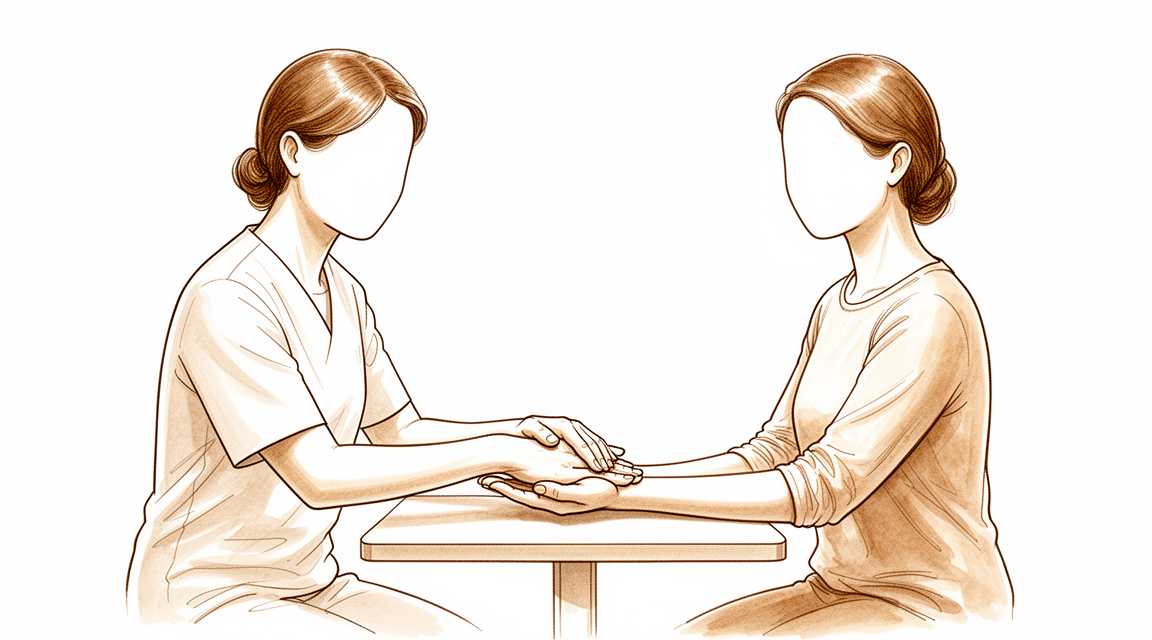
Este protocolo le servirá de guía durante su recuperación tras la liberación del túnel carpiano realizada por el Dr. Kieran Hirpara en el Mater Private Hospital Rockhampton. Explica qué puede esperar mientras cicatriza la herida, las precauciones que debe tomar durante las primeras semanas y el programa de ejercicios destinado a mantener el correcto deslizamiento de los nervios y tendones mientras todo se normaliza. Lleve esta página o su versión en PDF a su fisioterapeuta o terapeuta de mano para garantizar una rehabilitación coordinada.
Si tiene alguna duda respecto a la herida después de la cirugía, no dude en contactar con nuestra consulta. A menudo resulta útil tomar una fotografía de la herida y enviarla por correo electrónico para su revisión.
Qué esperar
El cuidado de la herida se explica en la guía de cuidado de heridas de la consulta. En la muñeca, el nervio y los tendones discurren muy cerca unos de otros, justo en la zona donde se produce la cicatrización; por eso los ejercicios de esta página son fundamentales: mantener el deslizamiento del nervio y los tendones evita que se adhieran al tejido en proceso de curación.
Los bordes de la zona donde se liberó el ligamento permanecen sensibles durante al menos cuatro a seis semanas. También es común sentir sensibilidad a ambos lados de la palma (donde el ligamento se inserta en los huesos); esto se conoce como “dolor de pilares” y desaparece gradualmente. En realidad, el ligamento no debe volver a unirse: el tejido cicatricial forma un “pseudoligamento” que cumple la misma función; por eso la liberación del ligamento permite descomprimir el nervio sin dejar la muñeca inestable.
Los estudios realizados con pacientes tras la liberación del túnel carpiano muestran cómo disminuye esta sensibilidad de forma predecible: aproximadamente cuatro de cada diez personas aún experimentan molestias tipo “dolor de pilares” un mes después de la cirugía; alrededor de una de cada cuatro, a los tres meses; y a los doce meses, prácticamente todas las manos ya no presentan este síntoma (Povlsen & Tegnell, 1996). Por lo tanto, si aún siente sensibilidad en los laterales de la palma unas semanas después de la operación, se trata de un proceso normal de curación, no de una complicación.
La recuperación de la fuerza de la mano sigue una curva bien documentada. En un estudio muy citado, la fuerza de agarre era aproximadamente un 25 % del nivel preoperatorio a las tres semanas de la cirugía; a las seis semanas, alcanzaba el 75 %; a los tres meses volvía al nivel previo y, a los seis meses, incluso lo superaba. La fuerza de pinza se recupera antes, llegando casi al nivel preoperatorio a las seis semanas (Gellman et al., 1989). Por eso es normal observar una disminución temporal de la fuerza de agarre en las primeras semanas; esto se debe al proceso de cicatrización del ligamento y de la palma, no a ningún problema quirúrgico; la fuerza se recupera a medida que disminuye el dolor de pilares.
El movimiento temprano es una estrategia deliberada y está respaldada por la evidencia científica. Las guías clínicas actuales indican que, tras la liberación del túnel carpiano, no es necesario mantener la muñeca inmovilizada con férula de forma rutinaria (AAOS, 2024); los protocolos de los centros de mano recomiendan iniciar de inmediato movimientos activos de dedos, pulgar y muñeca para favorecer el deslizamiento de tendones y nervio mediano mientras cicatriza la herida. Una revisión Cochrane sobre la rehabilitación post‑cirugía de túnel carpiano concluyó que la recuperación suele ser sencilla y que no existe un tratamiento complementario con evidencia sólida; por eso este programa de ejercicios es sencillo, y su terapeuta lo adaptará según la evolución de su propia mano (Peters et al., 2016).
Durante la primera semana, mantenga la mano elevada por encima del nivel del corazón siempre que sea posible; menos hinchazón significa menos dolor y un mejor deslizamiento del nervio. Su terapeuta también podría aplicar vendajes compresivos o cintas adhesivas (Coban, Tubigrip o cinta kinesiológica) para controlar la inflamación y sostener el arco de la palma.
Una vez que la herida haya cicatrizado, aplique calor a la mano durante 20 minutos antes de realizar estos ejercicios; después de terminarlos, puede aplicar hielo para prevenir inflamación.
En ocasiones la mano o la zona de la herida se vuelven sensibles; esto es normal y se puede prevenir o aliviar mediante una desensibilización diaria: toque y masaje suave sobre la herida (o el vendaje) y la palma, empezando inmediatamente después de la cirugía. Esta “retroalimentación sensorial” ayuda al nervio a volver a interpretar el tacto y la textura de forma normal. Las sesiones cortas y frecuentes son las más eficaces (por ejemplo, 2–3 minutos cada hora); su terapeuta le proporcionará una almohadilla de silicona o un guante para favorecer la curación de la cicatriz y reducir la sensibilidad.
Una vez que la herida esté completamente curada, comience el masaje de la cicatriz: realice círculos firmes sobre la incisión. En la página de cuidado de heridas encontrará más información sobre el manejo de cicatrices.
Volver al trabajo y a las actividades cotidianas
La mayoría de las personas regresan al trabajo unas pocas semanas después de la liberación del túnel carpiano; el momento exacto depende principalmente de las exigencias laborales que requieran el uso de la mano. Una revisión sistemática de 56 estudios reveló que quienes desempeñan labores de oficina o no manuales volvieron al trabajo en un promedio de tres semanas tras la cirugía (el rango reportado fue de una a seis semanas); en cambio, quienes realizan trabajos manuales lo hicieron en un promedio de unas cinco semanas y media (el rango reportado fue de tres a catorce semanas). Muchos volvieron antes, asumiendo tareas modificadas o menos exigentes, antes de retomar sus funciones habituales (Newington et al., 2018). Considere estas cifras como una guía, no como un plazo fijo: el momento adecuado para usted dependerá de la evolución de su herida, su comodidad y las precauciones que se detallan a continuación.
Como guía práctica, normalmente estará listo para retomar una tarea específica cuando:
- la herida haya cicatrizado y soporte la presión o el contacto que dicha tarea implica;
- pueda utilizar la mano cómodamente para cumplir con los requisitos de la tarea, respetando las precauciones indicadas; y
- cualquier actividad que requiera agarre fuerte, levantamiento de pesos o exposición a vibraciones se posponga hasta que se levanten dichas precauciones.
Si su trabajo es físicamente exigente, repetitivo o implica el uso de herramientas vibratorias, coméntelo durante su revisión postoperatoria para que se pueda planificar una fecha de retorno y, si es necesario, tareas modificadas en el ínterin, en coordinación con su empleador.
Precauciones y limitaciones
Se recomienda un uso funcional moderado de la mano para tareas cotidianas como el aseo personal, la alimentación, el vestirse, la escritura y el mecanografiado. Más allá de eso, durante las primeras semanas se aplican las siguientes limitaciones:
- No se permite levantar objetos, realizar agarres, soportar peso ni utilizar maquinaria vibratoria (por ejemplo, herramientas eléctricas o cortadoras de césped) durante las primeras 6 semanas tras la cirugía.
- La conducción está restringida durante las primeras 1–2 semanas, o hasta que pueda cerrar el puño por completo.
Para su fisioterapeuta:
Manejo
- Cuidado de la herida según las pautas de cuidado de heridas del consultorio.
- Elevar la mano por encima del nivel del corazón tanto como sea posible durante la primera semana; usar vendajes compresivos o cintas adhesivas (Coban, Tubigrip, cinta kinesiológica) para controlar la hinchazón y brindar soporte al arco carpiano según sea necesario.
- Realizar ejercicios de deslizamiento tendinoso y del nervio mediano según las fichas de ejercicios siguientes, para prevenir adherencias del nervio y los tendones durante la cicatrización.
- Una vez cicatrizada la herida: aplicar calor en la mano durante 20 minutos antes de los ejercicios; aplicar hielo después de los ejercicios para evitar la inflamación.
- Desensibilización diaria a partir del día posterior a la cirugía: golpeteo o frotamiento suave sobre la herida (vendaje) y la palma, para ayudar al nervio a normalizar su respuesta al tacto y a las texturas.
- Masaje de la cicatriz (círculos firmes sobre la incisión) una vez que la herida esté totalmente curada.
Precauciones
- Se recomienda un uso funcional moderado de la mano para actividades de la vida diaria (aseo personal, alimentación, vestirse, escritura, mecanografiado).
- No se permite levantar objetos, realizar agarres, soportar peso ni utilizar maquinaria vibratoria (p. ej., herramientas eléctricas, cortadoras de césped) durante las primeras 6 semanas tras la cirugía.
- La conducción está restringida durante las primeras 1–2 semanas, o hasta que pueda cerrar el puño por completo.
Notas basadas en evidencia
- Inmovilización: existe evidencia moderada en contra del uso rutinario de férulas postoperatorias tras la liberación del túnel carpiano (AAOS CPG, 2024); el movimiento activo temprano según las fichas de ejercicios es el enfoque recomendado.
- Adyuvantes de rehabilitación: la revisión Cochrane halló evidencia limitada y de baja certeza respecto a tratamientos de rehabilitación individuales tras la liberación del túnel carpiano (Peters et al., 2016); se debe adaptar el programa a cada paciente en lugar de seguir protocolos fijos.
- Recuperación de la fuerza: se espera que la fuerza de agarre alcance aproximadamente el 28 % del nivel preoperatorio a las 3 semanas y el 73 % a las 6 semanas; volverá al nivel previo a los 3 meses y superará dicho nivel a los 6 meses; la fuerza de pinza se recupera más rápido (≈96 % a las 6 semanas) (Gellman et al., 1989).
- Regreso al trabajo: el tiempo promedio es de 21 días para trabajos no manuales (rango 7–41) frente a 39 días para trabajos manuales (rango 18–101); las tareas modificadas pueden iniciarse antes (Newington et al., 2018).
- Dolor en la zona de los pilares: se reporta en aproximadamente el 41 % a los 1 mes, el 25 % a los 3 meses y el 6 % a los 12 meses tras la liberación abierta del túnel carpiano (Povlsen & Tegnell, 1996).
Estos son los ejercicios descritos en su folleto; deben realizarse tal como se indica en cada ficha. Este programa de ejercicios se elaboró en colaboración con Sarah Farrell, BOccThy AHT (terapeuta ocupacional y terapeuta de mano acreditada), con orientación postoperatoria adicional de Ruby Doolan, Terapeuta de Mano Acreditada, Extend Rehabilitation.
Sus ejercicios
Kieran Hirpara 4.0
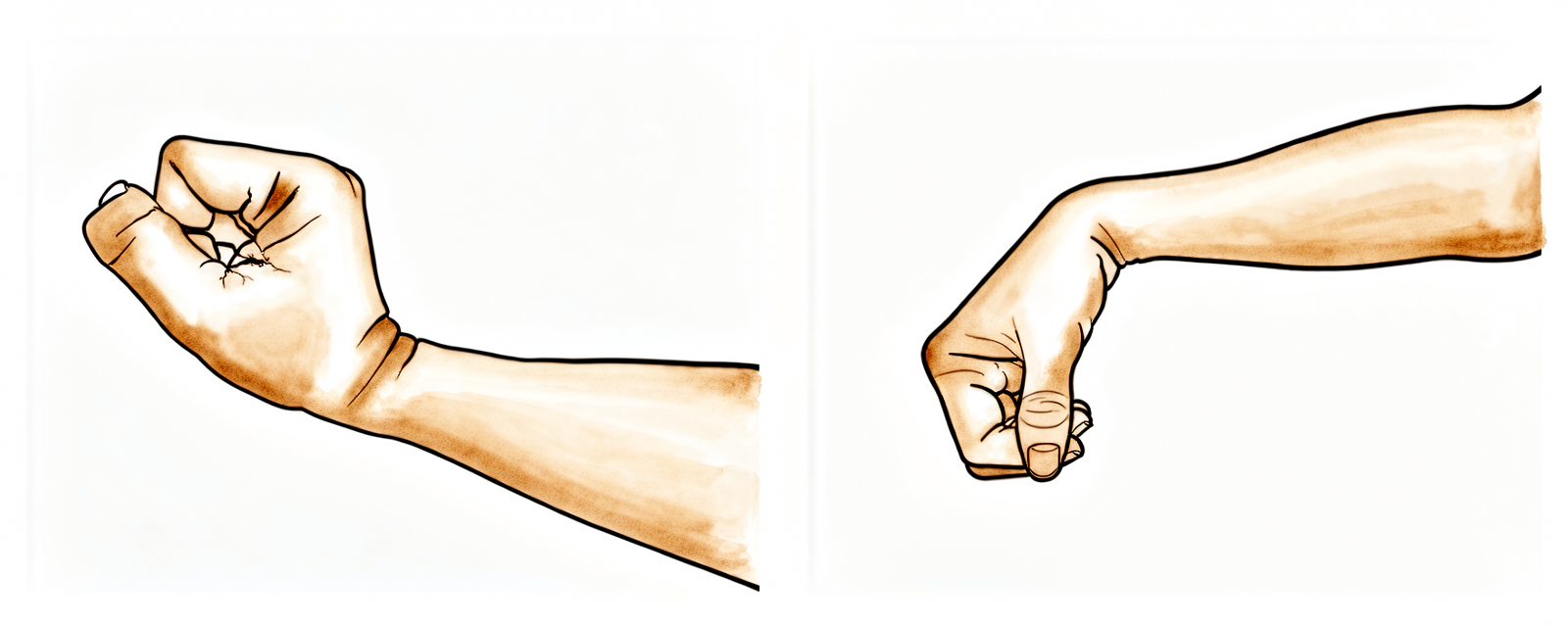
Estiramiento para flexión/extensión de la muñeca
Apoye el codo sobre una mesa (o la muñeca en el borde de una mesa o sillón) y mueva suavemente la muñeca hacia atrás y hacia adelante. Cuando se sienta más cómodo, tome la palma de la mano con la otra mano y empuje la muñeca hacia atrás (con los dedos relajados, apuntando al techo); mantenga esa posición 15 segundos; luego haga lo mismo en la dirección opuesta (con los dedos relajados, apuntando al suelo); mantenga 15 segundos. Repita el ejercicio 5 veces en cada dirección.
10 repeticiones (5 en cada dirección, manteniendo la posición 15 segundos), 4–5 veces al día.
Kieran Hirpara 4.0
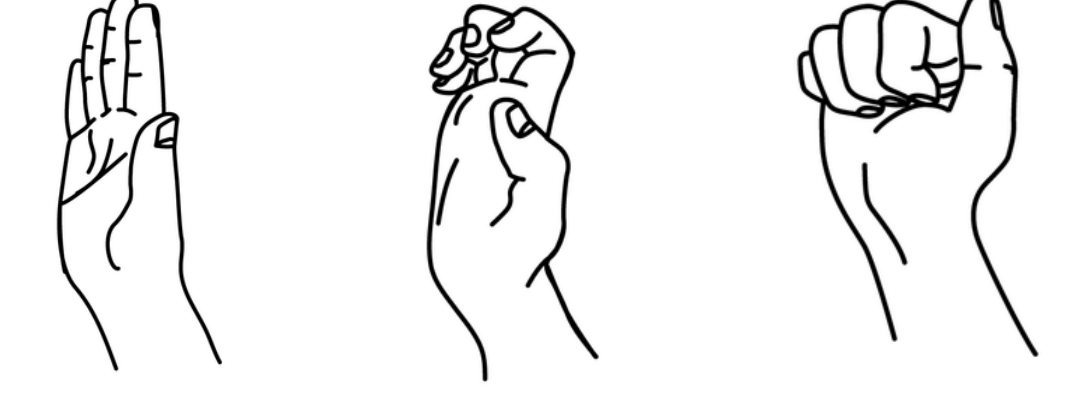
Deslizamiento tendinoso — Serie A
Con la mano frente a usted y la muñeca recta, estire por completo todos los dedos (1). Doble las puntas de los dedos hasta formar una posición de “gancho”, con los nudillos apuntando hacia arriba (2). Cierre el puño firmemente, colocando el pulgar sobre los demás dedos (3).
5–10 repeticiones, 2–3 veces al día
Kieran Hirpara 4.0
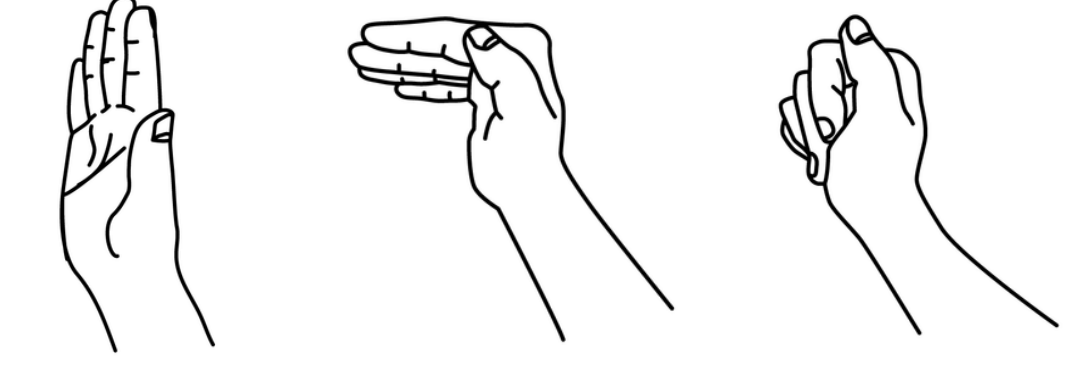
Deslizamiento tendinoso — Serie B
Con la mano frente a usted y la muñeca recta, estire por completo todos los dedos (1). Forme una “mesa” con los dedos doblándolos por los nudillos de la base y manteniendo los dedos rectos; asegúrese de que la muñeca no se incline hacia adelante (2). Doble los dedos en la articulación media, tocando la palma de la mano con los dedos (3).
5–10 repeticiones, 2–3 veces al día
Kieran Hirpara 4.0
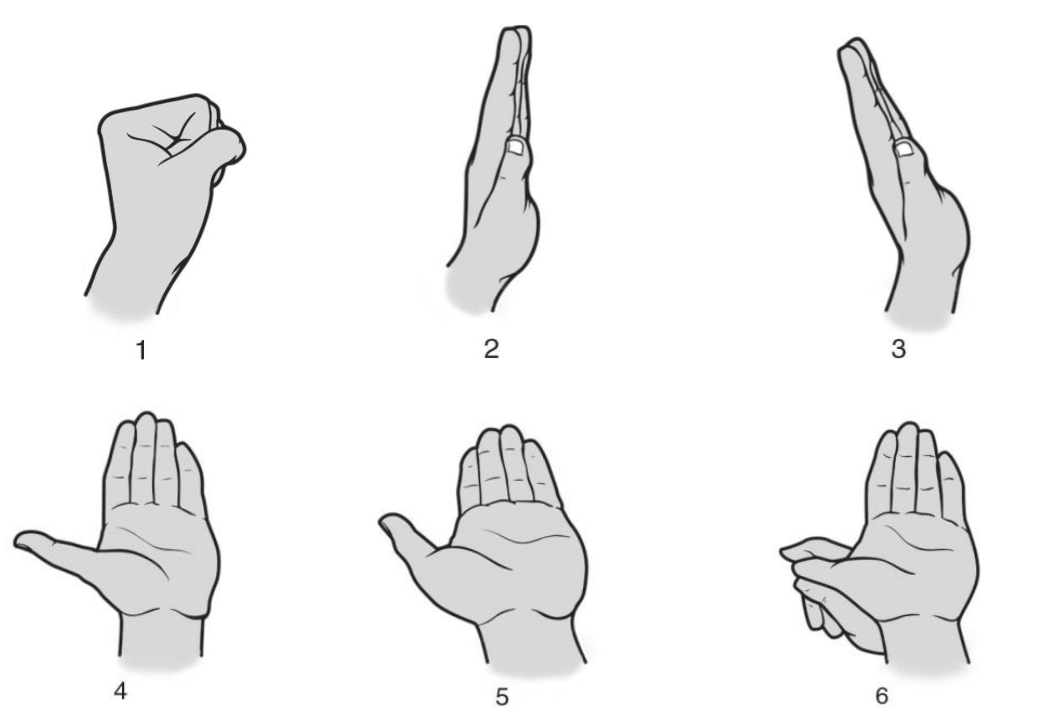
Deslizamientos del nervio mediano
Mueva la mano a través de las seis posiciones que se muestran, manteniendo cada posición durante 3–7 segundos. No ejerza demasiada presión sobre el pulgar en la posición 6. Después, añada el estiramiento del nervio: estire el brazo frente a usted con la palma hacia arriba y doble la muñeca hacia atrás de modo que los dedos apunten hacia abajo. Con la otra mano, lleve suavemente los dedos hacia atrás hasta notar un estiramiento leve en la cara palmar del antebrazo. Mantenga 15 segundos y repita 5 veces. Hágalo con suavidad: afloje si aumenta el hormigueo.
10–15 repeticiones al día, manteniendo cada posición durante 3–7 segundos
Kieran Hirpara 4.0
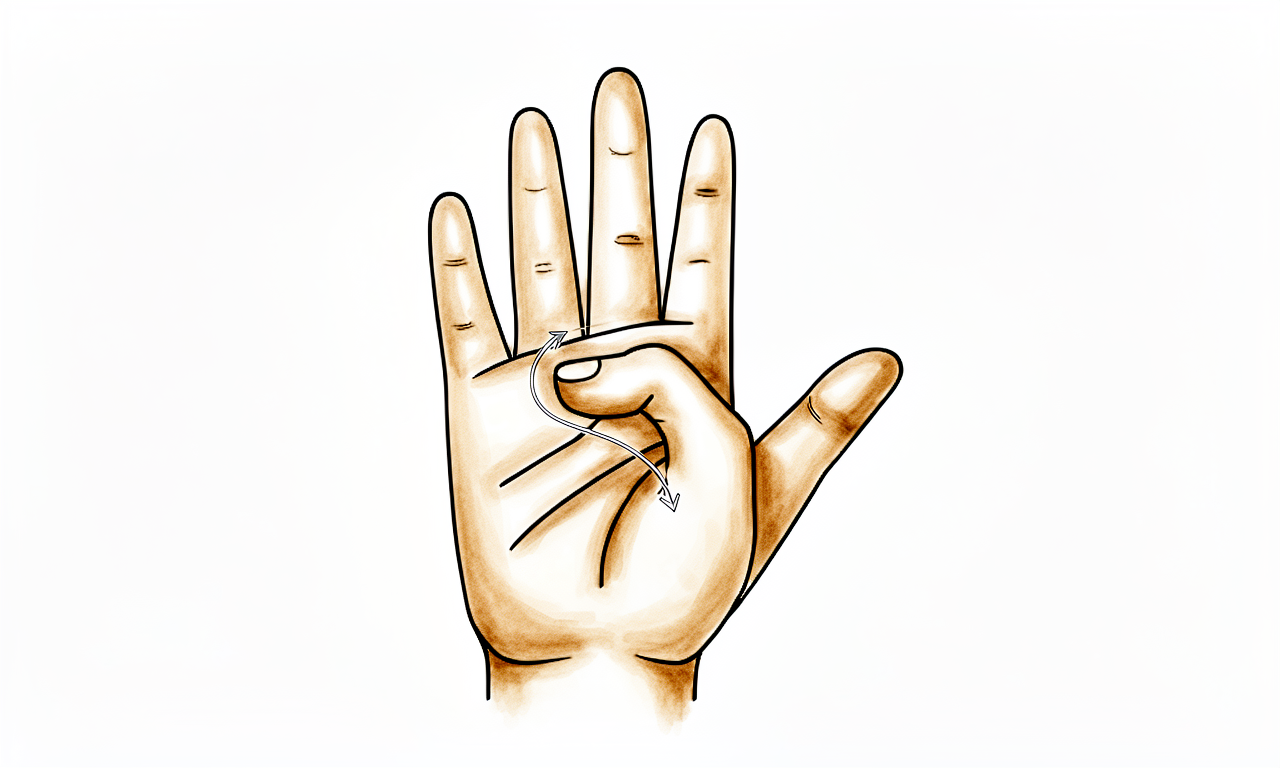
Oposición del pulgar
Mueva el pulgar a través de la palma hacia la base del meñique, y luego estírelo de nuevo.
5–10 repeticiones, 2–3 veces al día, a diario.
Comience los ejercicios que se indican a continuación únicamente bajo la guía del Dr. Hirpara y de su terapeuta especializado en mano, respetando siempre los rangos y límites que le hayan indicado. El estiramiento de la muñeca y las dos series de deslizamientos tendinosos ayudan a mantener los tendones y el nervio liberado en movimiento, evitando que se adhieran a la cicatriz en proceso de curación; estos ejercicios se inician tempranamente, siempre dentro de lo cómodo para usted. Los deslizamientos del nervio mediano se añaden para que el nervio siga deslizándose en lugar de quedar adherido, mientras que la oposición del pulgar recupera la capacidad de pinzar, que suele estar debilitada previamente. Es normal sentir sensibilidad directamente sobre la cicatriz en la palma durante algunas semanas. Interrumpa cualquier ejercicio que provoque dolor agudo o una sensación eléctrica en los dedos.
Después de seguir este protocolo
Este protocolo complementa las recomendaciones generales de recuperación de la clínica: consulte control del dolor postoperatorio, cuidado de la herida y conceptos básicos de la terapia de la mano. En cuanto a la intervención quirúrgica en sí, consulte liberación del túnel carpiano.
Referencias
[1] Peters S, Page MJ, Coppieters MW, Ross M, Johnston V. Rehabilitación tras la liberación del túnel carpiano. Cochrane Database of Systematic Reviews. 2016;2:CD004158. https://pubmed.ncbi.nlm.nih.gov/26884379/ [2] Academia Estadounidense de Cirujanos Ortopédicos. Manejo del síndrome del túnel carpiano: guía de práctica clínica basada en evidencia. Actualización de 2024. https://www.aaos.org/quality/quality-programs/upper-extremity-programs/carpal-tunnel-syndrome/ [3] Newington L, Stevens M, Warwick D, Adams J, Walker-Bone K. Ausencia laboral tras la liberación del túnel carpiano: revisión sistemática de la literatura. Scand J Work Environ Health. 2018;44(6):557–567. https://pmc.ncbi.nlm.nih.gov/articles/PMC6215485/ [4] Gellman H, Kan D, Gee V, Kuschner SH, Botte MJ. Análisis de la fuerza de pinza y de agarre después de la liberación del túnel carpiano. J Hand Surg Am. 1989;14(5):863–864. https://pubmed.ncbi.nlm.nih.gov/2794407/ [5] Departamento de Servicios de Rehabilitación del Brigham and Women’s Hospital. Estándar de atención: liberación del túnel carpiano. 2007 (datos sobre la evolución natural del dolor según Povlsen & Tegnell, 1996). https://www.brighamandwomens.org/assets/BWH/patients-and-families/rehabilitation-services/pdfs/wrist-carpal-tunnel-release-pt.pdf
Evidence & references
This is the clinical evidence summary written for health professionals. It is technical, and it lists the research this page was built from. You do not need to read it to understand your treatment or to make a decision about it.
Carpal Tunnel Release — Procedure Outcomes & Post-operative Rehabilitation (Open / Endoscopic Decompression)
Topic scope: post-operative rehabilitation after surgical decompression of the median nerve at the wrist by division of the transverse carpal ligament — open or endoscopic carpal tunnel release. This is a decompression, not a reconstruction: nothing is repaired or tightened, so the rehab is an early-motion pathway built around oedema control, scar/desensitisation work, and tendon + median-nerve gliding rather than months of protected healing.
Defining principle of the rehab here: carpal tunnel release relieves nerve compression and does not create a construct that needs protection. The divided ligament is meant to stay divided — a scar "pseudo-ligament" reconstitutes the carpal arch without re-tethering the nerve. So (unlike a tendon or ligament repair) immediate, unrestricted light use is the default, and the only deliberate restraint is a short window of heavy-load/grip/vibration avoidance while the palm and ligament edges heal. The therapy programme exists to keep the median nerve and flexor tendons gliding through the healing surgical bed so they do not adhere — not to immobilise. The single branch point is whether a concurrent procedure (e.g. flexor tenosynovectomy, revision with a fat-pad flap) was performed, which can extend the protected/oedema phase.
A. PROCEDURE OUTCOMES (open vs endoscopic)
Carpal tunnel release is one of the most reliable operations in upper-limb surgery: the great majority of patients obtain durable symptom relief, and the principal debate is over access (open vs endoscopic), not whether to decompress.
- Both open and endoscopic release give equivalent long-term outcomes. Randomised comparisons and meta-analyses find no meaningful difference in symptom relief, function or patient satisfaction at long-term follow-up between open and single- or dual-portal endoscopic release. Endoscopic release offers a modestly faster early recovery and earlier return to work at the cost of a small increase in transient nerve-related events; by 5 years the two converge [HAND meta-analysis 2022; J Hand Surg 5-year RCT 2009; J Bone Joint Surg RCT 1994]. Strong (RCTs/SR).
- Symptom relief is high and durable. Night symptoms and paraesthesiae typically resolve early; numbness and thenar weakness recover more slowly and may be incomplete where compression was long-standing. Five-year and elderly-cohort series confirm sustained benefit, including in patients over 65 [J Hand Surg 5-yr follow-up; elderly cohorts]. Moderate–strong.
- Division of the transverse carpal ligament alters carpal-tunnel biomechanics (canal volume increases; the flexor tendons shift volarly), which is the anatomical basis for pillar pain and the transient grip-strength dip — both expected, self-limiting consequences of the decompression rather than complications [Clinical Biomechanics 2003]. Mechanistic.
B. REHABILITATION / THERAPY EVIDENCE
The central rehab questions are (1) should the wrist be immobilised afterwards, and (2) does routine formal hand therapy change the outcome. The evidence answers no to routine splinting and no to mandatory protocolised therapy — while supporting a simple, early-motion, glide-based home programme.
- Routine post-operative splinting is NOT recommended. Moderate-quality evidence (AAOS 2024 CPG; supporting systematic reviews) finds wrist immobilisation by sling/orthosis after release does not improve pain, grip or function and may delay recovery. Early active motion is the intended default. Moderate (CPG + SR).
- No single rehab adjunct has strong supporting evidence. The Cochrane review of rehabilitation following carpal tunnel release found only limited, low-certainty evidence for any individual add-on — orthoses, dressings, exercise, cold/ice, multimodal hand therapy, laser, electrotherapy, scar desensitisation or arnica. Recovery is usually straightforward; the implication is to keep the programme simple and individualise it rather than protocolise adjuncts [Peters et al., Cochrane 2016]. Moderate (Cochrane SR — of low-certainty primary evidence).
- Tendon- and nerve-gliding exercises are biologically and clinically rationalised. The rationale is that wrist/digit motion produces longitudinal excursion of the median nerve through the surgical bed, preventing adhesion of nerve to flexor tendons; ultrasound studies confirm measurable nerve excursion during gliding exercises, and comparative-effectiveness work supports tendon/nerve gliding and neural mobilisation as low-risk adjuncts [Am J Phys Med Rehabil 2011; J Hand Therapy 2008 (excursion; neural mobilisation)]. The benefit is modest and the adhesion-prevention purpose is mechanistic/consensus rather than proven by hard outcome trials. Weak–moderate (mechanism strong, outcome modest).
- Supervised therapy is not required for most patients. Outcome series using a standard protocol with a single hand-therapy visit and a home programme report good patient-reported outcomes, supporting selective rather than universal formal therapy. Moderate (cohort).
Recovery trajectory (expected, evidence-anchored)
| Phase | Window | Restraint | Hand use / therapy focus | Strength / load | Notes |
|---|---|---|---|---|---|
| I — Early motion & oedema control | Week 0–1 | None routine (no splint) | Elevate above heart level; immediate active finger/thumb/wrist motion; tendon + median-nerve glides; desensitisation from day 1; compressive dressing/taping for swelling | Light functional use only | Less swelling → freer nerve. Grip is expected to be low |
| II — Wound & ligament healing | Week 1–6 | Heavy-load avoidance | Continue glides; add scar massage once wound healed; heat before / ice after exercises | No lifting, gripping, weight-bearing or vibrating-tool use up to 6 weeks; driving from ~1–2 weeks (once a full fist is achievable) | Pillar tenderness peaks then settles; grip ≈¼ pre-op at 3 wk, ≈¾ by 6 wk |
| III — Return to load & work | Week 6–12+ | Restrictions lifted | Progress gripping, lifting and task-specific loading | Grip back to pre-op by ~3 months, exceeding it by ~6 months; pinch recovers sooner (≈ pre-op by 6 wk) | Non-manual work median ~3 wk; manual work median ~5–6 wk, earlier on modified duties |
(Phase windows mirror the precautions and recovery-curve figures in the patient protocol; they are typical guides, not trial-derived deadlines.)
C. KEY CONTROVERSIES / EVIDENCE QUALITY
- Open vs endoscopic. Equivalent long-term outcomes; endoscopic buys a faster early recovery for a small transient-complication trade-off. Choice is largely surgeon/patient preference and cost. Strong evidence of equivalence.
- To splint or not. Older practice favoured post-operative wrist splinting; current moderate-quality evidence and the AAOS 2024 CPG advise against routine immobilisation. This page's no-splint, early-motion default reflects the current guideline. Moderate.
- Does formal therapy change outcomes? No rehab adjunct has high-certainty benefit (Cochrane). Gliding exercises rest on a sound mechanistic (adhesion-prevention, nerve-excursion) rationale but modest outcome data. The defensible position is a simple home programme + selective therapy, not universal supervised rehab. Weak–moderate.
- Pillar pain & grip dip are expected, not failure. Both follow predictably from dividing the transverse carpal ligament and resolve on a well-described curve; mislabelling them as complications drives unnecessary anxiety. Strong natural-history data.
- Recurrence/revision is uncommon but real; persistent symptoms warrant assessment for incomplete release, the wrong diagnosis, or a second compression site rather than more of the same therapy [JAAOS recalcitrant-CTS review; revision-rate series]. Moderate.
D. EVIDENCE STRENGTH FLAGS (summary)
- STRONG (RCT / SR): equivalence of open vs endoscopic release at long-term follow-up (faster early recovery with endoscopic); high, durable symptom relief from decompression.
- MODERATE: AAOS 2024 CPG against routine post-operative splinting; Cochrane review (limited, low-certainty evidence for any single rehab adjunct → keep it simple); biomechanical basis of pillar pain / grip dip; uncommon but defined revision rate.
- WEAK / CONSENSUS: the specific early-motion, glide-based therapy programme (mechanistically rationalised, outcome benefit modest; surgeon/hand-therapist protocols); exact phase timings (typical, not trial-derived).
CITATIONS
RAG corpus (180,000+ Orthopaedic articles)
- Open versus single- or dual-portal endoscopic carpal tunnel release: a meta-analysis of randomized controlled trials. HAND. 2022. DOI: 10.1177/15589447221075665
- Open compared with 2-portal endoscopic carpal tunnel release: a 5-year follow-up of a randomized controlled trial. J Hand Surg Am. 2009. DOI: 10.1016/j.jhsa.2008.10.026
- Carpal tunnel release: a randomized comparison of three surgical methods. J Hand Surg (Eur Vol). 2013. DOI: 10.1177/1753193412475247
- Carpal tunnel release. A prospective, randomised assessment of open and endoscopic methods. J Bone Joint Surg. 1994. DOI: 10.2106/00004623-199408000-00020
- Five-year follow-up of carpal tunnel release in patients over age 65. J Hand Surg Am. 2010. DOI: 10.1016/j.jhsa.2009.10.020
- Carpal tunnel syndrome (clinical review). BMJ. 2014. DOI: 10.1136/bmj.g6437
- Biomechanical and anatomical consequences of carpal tunnel release. Clin Biomech. 2003. DOI: 10.1016/s0268-0033(03)00052-4
- The comparative effectiveness of tendon and nerve gliding exercises in patients with carpal tunnel syndrome. Am J Phys Med Rehabil. 2011. DOI: 10.1097/phm.0b013e318214eaaf
- The effects of neural mobilization in addition to standard care in persons with carpal tunnel syndrome. J Hand Ther. 2008. DOI: 10.1197/j.jht.2007.12.001
- The excursion of the median nerve during nerve gliding exercise: an observation with high-resolution ultrasonography. J Hand Ther. 2008. DOI: 10.1197/j.jht.2007.11.001
- Effective self-stretching of carpal ligament for the treatment of carpal tunnel syndrome: a double-blinded randomized controlled study. J Hand Ther. 2020. DOI: 10.1016/j.jht.2019.12.002
- Use of conservative therapy before and after surgery for carpal tunnel syndrome. BMC Musculoskelet Disord. 2021. DOI: 10.1186/s12891-021-04378-3
- Power grip, pinch grip, manual muscle testing or thenar atrophy — which should be assessed as a motor outcome after carpal tunnel decompression? A systematic review. BMC Musculoskelet Disord. 2007. DOI: 10.1186/1471-2474-8-114
- Management of recalcitrant carpal tunnel syndrome. J Am Acad Orthop Surg. 2019. DOI: 10.5435/jaaos-d-18-00004
- The rate and timing of revision carpal tunnel release with long-term follow-up. J Hand Surg Am. 2026. DOI: 10.1016/j.jhsa.2026.02.006
- Does aging matter? The efficacy of carpal tunnel release in the elderly. Arch Plast Surg. 2015. DOI: 10.5999/aps.2015.42.3.278
Carpal tunnel rehabilitation literature (URLs)
- Peters S, et al. Rehabilitation following carpal tunnel release. Cochrane Database Syst Rev. 2016;2:CD004158. https://www.cochranelibrary.com/cdsr/doi/10.1002/14651858.CD004158.pub3/full
- O'Connor D, et al. Rehabilitation treatments following carpal tunnel surgery (original Cochrane review). 2003. https://www.cochranelibrary.com/cdsr/doi/10.1002/14651858.CD004158/full
- American Academy of Orthopaedic Surgeons. Management of Carpal Tunnel Syndrome — Evidence-Based Clinical Practice Guideline (2024 update; moderate evidence against routine post-operative immobilisation). https://www.aaos.org/quality/quality-programs/upper-extremity-programs/carpal-tunnel-syndrome/
- Wrist immobilization after surgical decompression of the median nerve in carpal tunnel syndrome: a systematic review. PMC. 2024. https://www.ncbi.nlm.nih.gov/pmc/articles/PMC11374399/
- Sensory nerve conduction velocity predicts improvement of hand function with nerve gliding exercise following carpal tunnel release surgery. PMC. https://www.ncbi.nlm.nih.gov/pmc/articles/PMC8470096/
- Patient-reported outcomes after open carpal tunnel release using a standard protocol with 1 hand therapy visit. J Hand Ther / ScienceDirect. https://www.sciencedirect.com/science/article/abs/pii/S089411301630031X
Published rehab protocols (patient-guidance — basis for the early-motion phase structure)
- Bakker — Carpal Tunnel Release Post-op Protocol (Twin Cities Orthopedics). https://tcomn.com/wp-content/uploads/2017/11/Carpal-tunnel-release-protocol.pdf
- University of Virginia — Carpal Tunnel Release Open Protocol and Home Exercise Program. https://med.virginia.edu/orthopaedic-surgery/wp-content/uploads/sites/242/2015/11/copy_of_CTROPENProtocolandHEP.pdf
- Brigham and Women's Hospital, Department of Rehabilitation Services. Standard of Care: Carpal Tunnel Release (pillar-pain natural history after Povlsen & Tegnell 1996; grip-recovery after Gellman 1989). https://www.brighamandwomens.org/assets/BWH/patients-and-families/rehabilitation-services/pdfs/wrist-carpal-tunnel-release-pt.pdf