Skip to content

Patients › Elbow

Extirpación de la bursa olecraniana (bursectomía)

PDF

What olecranon bursectomy involves, why it is a last resort, and the honest wound-healing and recurrence picture.
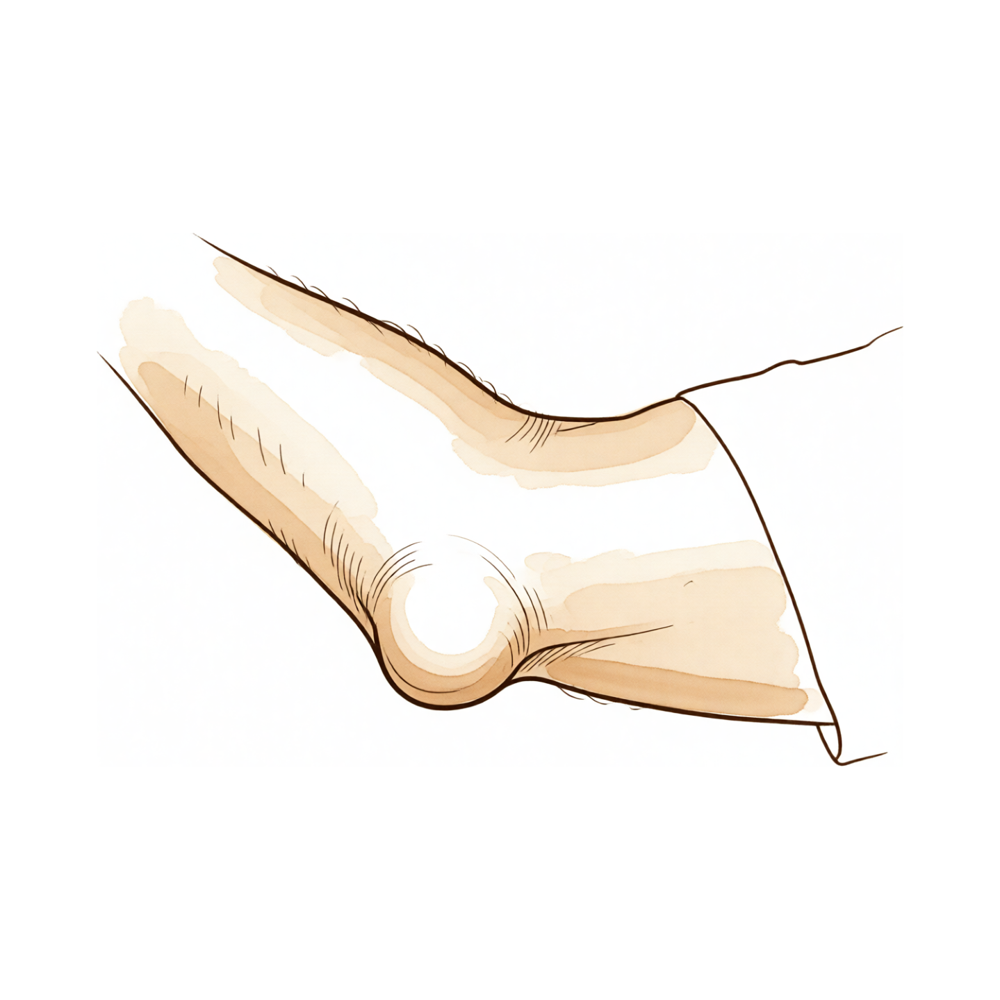
Ilustración de un codo doblado, con una bolsa sinovial hinchada y llena de líquido en la punta del codo.
Bursitis olecraniana: la bolsa sinovial inflamada y llena de líquido que se encuentra en la punta del codo y que se extirpa mediante una bursectomía. Kieran Hirpara 4.0

Esta página se tradujo automáticamente y todavía no la ha revisado un médico. La versión en inglés es la versión oficial.

La bursa olecraniana es una pequeña bolsa llena de líquido y de superficie resbaladiza que se encuentra justo sobre la punta ósea del codo. Su función es permitir que la piel se deslice suavemente sobre el hueso al doblar y estirar el brazo. Cuando esta bolsa se inflama (por un golpe, por años de apoyar el codo, por gota o artritis reumatoide, o por una infección), puede llenarse de líquido y engrosarse, formando un bulto sensible y a veces de aspecto preocupante en la zona del codo. Esto se conoce como bursitis olecraniana, y es muy frecuente.

Lo más importante que debe saber desde el principio es que la mayoría de los casos de bursitis se resuelven por sí solos o con medidas sencillas; la cirugía es realmente un último recurso. Solo consideramos la extirpación de la bursa cuando el problema persiste obstinadamente a pesar de haber intentado todo lo demás. En esta página se explica en qué consiste dicha operación, cómo será su recuperación y, lo más importante, una descripción sincera de por qué este procedimiento conlleva más dificultades de curación y mayor riesgo de recurrencia de lo que la gente suele esperar.

¿Por qué se extirpa la bursa?

En nuestra clínica, el Dr. Kieran Hirpara guía a los pacientes mediante una evaluación cuidadosa para confirmar el diagnóstico y explorar primero opciones no quirúrgicas. Por lo general, recomendamos la cirugía únicamente cuando los tratamientos conservadores no hayan proporcionado suficiente alivio en problemas de larga duración.

El tratamiento de primera línea para una bursa inflamada es casi siempre no quirúrgico: reposo del codo, evitar apoyarse en él, tomar antiinflamatorios y, en ocasiones, drenar el líquido mediante una aguja (aspiración), a veces seguido de una inyección de esteroides. Un análisis de la evidencia publicada demostró que el manejo no quirúrgico genera una mayor tasa de resolución del problema y menos complicaciones que recurrir directamente a la cirugía; por eso optamos primero por esas vías.

Solo consideramos la extirpación de la bursa (una “bursectomía”) en los siguientes casos:

  • La bursitis es crónica o se repite a pesar del reposo, cambios en las actividades, aspiración y/o inyección de esteroides durante varios meses, y realmente le causa molestias.
  • Existe una infección recurrente o establecida (bursa séptica) que no ha desaparecido con antibióticos y drenaje. Incluso en estos casos, los cirujanos suelen intentar primero el drenaje y los antibióticos; los estudios indican que la cirugía no garantiza mejores resultados a largo plazo en infecciones, por lo que se reserva para casos que no mejoran, cuando hay pus espeso imposible de drenar con una aguja, o un absceso puntiforme [1].
  • Un espolón óseo en la punta del codo irrita repetidamente la bursa; en tal situación, se puede resecar ese espolón al mismo tiempo.

En resumen: esta operación está indicada para una minoría de bursas que simplemente no responden a otros tratamientos. Si su hinchazón es reciente, indolora y no está infectada, es muy poco probable que la cirugía sea la solución adecuada.

Qué implica la operación

Por lo general, se trata de una intervención ambulatoria, por lo que puede volver a casa el mismo día; aunque en ocasiones los pacientes permanecen ingresados una noche. Se realiza como cirugía abierta: se hace una pequeña incisión en la punta del codo, mediante la cual se extrae cuidadosamente toda la bursa inflamada; posteriormente se cierra la piel. Si debajo de la bursa hay un espolón óseo, también se puede alisar en el mismo procedimiento.

El tipo de anestesia suele ser anestesia general (el paciente queda completamente dormido) o bloqueo regional (el brazo queda adormecido mientras el paciente permanece despierto o ligeramente sedado); a veces se combinan ambos. El anestesista le explicará cuál es la mejor opción para usted el día de la intervención.

Se trata de una operación relativamente rápida; sin embargo, la habilidad requerida no radica tanto en la extracción en sí, sino en manipular con delicadeza la piel y cerrarla adecuadamente. Como se describe a continuación, precisamente la piel es la parte que suele presentar complicaciones.

La parte honesta: cicatrización y recurrencia

Este es el apartado que merece ser leído dos veces, pues constituye la razón principal por la que somos cautelosos con esta operación.

La piel situada en la punta del codo es delgada, móvil y cuenta con un aporte sanguíneo relativamente escaso. Además, es una zona que recibe presión constante cada vez que apoyamos el brazo sobre una mesa, una silla o la puerta de un coche. Esta combinación implica que los problemas de cicatrización y la reaparición de la bursa son los dos problemas más probables, más que en la mayoría de las operaciones de similar envergadura. No se trata de que la cirugía sea difícil; simplemente el codo es una zona poco tolerante a cualquier herida.

¿Qué dicen realmente las evidencias científicas? Hay que ser honestos: la mayoría de los estudios publicados son series de casos de tamaño reducido, por lo que las cifras varían [1]. Una revisión importante de pacientes sometidos a bursectomía indicó que aproximadamente uno de cada nueve necesitó una operación de revisión; además, quienes padecían artritis reumatoide, diabetes o bursitis en ambos codos presentaban mayor riesgo de precisar cirugía adicional. En particular, los pacientes con artritis reumatoide tenían más probabilidades de necesitar un colgajo cutáneo para lograr la cicatrización. Los estudios registran una tasa considerable de complicaciones como cicatrización retardada, dehiscencia de la herida, acumulación de líquido (seroma) e infección [2, 3]. Lo importante no es conocer un porcentaje exacto, sino entender el patrón: esta operación conlleva una probabilidad superior a lo habitual de que la cicatrización sea lenta o problemática, así como una posibilidad real de que la hinchazón reaparezca.

Hacemos varias cosas para inclinar las probabilidades a su favor; su participación es tan importante como la nuestra:

  • Manejo delicado y cierre cuidadoso durante la cirugía; cuando procede, evitamos realizar incisiones justo en la punta del codo.
  • Después de la operación, aplicamos un vendaje de compresión firme para impedir la acumulación de líquido; a veces también utilizamos una férula para mantener el codo inmóvil mientras la piel cicatriza.
  • Lo más importante: no apoyar el codo. La presión sobre un codo en proceso de cicatrización es el factor principal tanto para la dehiscencia de la herida como para la reaparición de la bursa. Evitar cargar peso sobre él durante varias semanas influye de manera decisiva en el resultado final.

Nada de esto pretende asustarle. El objetivo es asegurarnos de que, si decidimos operar, usted vaya al quirófano con plena conciencia de la situación, y de que comprenda que las instrucciones de recuperación no son meras formalidades, sino medidas esenciales para garantizar el éxito del tratamiento.

Su recuperación

Cada persona sana a su propio ritmo; las instrucciones específicas de su cirujano tienen siempre prioridad, pero a continuación se describen los pasos generales del proceso.

La primera o segunda semana. Tendrá un vendaje de compresión firme y acolchado sobre el codo, a menudo acompañado de una férula. Mantenga el vendaje limpio y seco, eleve el brazo cuando pueda para reducir la hinchazón, y tome analgésicos simples según las indicaciones. Lo más importante que puede hacer en estas primeras semanas es mantener el codo inmóvil y no ejercer ninguna presión sobre su parte posterior: no apoye su peso en él, ni se apoye en mesas o apoyabrazos. Los movimientos suaves de dedos, muñeca y hombro suelen ser adecuados y ayudan a prevenir la rigidez.

Puntos de sutura y vendajes. Por lo general, el vendaje de compresión se deja puesto durante varios días; muchos cirujanos recomiendan seguir usando un vendaje compresivo ligero (tipo ACE) en el codo durante algunas semanas para evitar que vuelva a acumularse líquido. Los puntos se retiran habitualmente entre los 7 y 10 días en la consulta, una vez que la piel ha tenido tiempo de cerrarse. En esa visita examinaremos la herida con cuidado, pues la cicatrización en el codo suele ser lenta.

Reanudación de la actividad. Una vez que la herida esté estabilizada y se hayan retirado los puntos, irá volviendo gradualmente al uso normal del brazo. En la mayoría de los casos se permite retomar la mayoría de las actividades cotidianas y el uso completo del codo en un plazo de tres a seis semanas; la hinchazón suele desaparecer por completo alrededor de la sexta semana. Su cirujano podría imponer temporalmente límites respecto al levantamiento de pesas mientras la piel sigue madurando.

Conducir es viable una vez que pueda mover el codo sin dificultad, haya dejado de tomar analgésicos fuertes y sea capaz de controlar el vehículo y frenar de emergencia con seguridad. Para muchas personas esto ocurre al cabo de un par de semanas, aunque depende de qué brazo sea y de cómo evolucione la recuperación; por ello, consulte con nosotros antes.

El regreso al trabajo depende íntegramente de su profesión. Los trabajos de oficina suelen ser posibles en una o dos semanas (cuidando de no apoyarse en el codo). En cambio, aquellos que implican levantar pesas, arrodillarse sobre el codo o cualquier actividad que ejerza presión o tensión sobre el codo requieren más tiempo (varias semanas) y, en ocasiones, una reincorporación gradual. Indíquenos cuáles son sus funciones laborales y le daremos consejos personalizados.

En todo momento, recuerde este principio fundamental: proteger la punta del codo. Todas las indicaciones de recuperación tienen como fin brindar a esa piel delgada y sometida a mucho esfuerzo la mejor oportunidad para cicatrizar correctamente y permanecer sana.

Cuándo buscar ayuda

Es normal experimentar algo de hinchazón, hematomas y molestias después de esta operación. No obstante, comuníquese de inmediato con su cirujano, su médico de cabecera o una clínica de urgencias si observa cualquier señal de que la herida no está cicatrizando bien o se está infectando, como:

  • Enrojecimiento que se extiende, calor creciente o dolor que empeora alrededor de la herida después de los primeros días.
  • La herida se abre, segrega líquido o pus, o desprende un olor desagradable.
  • Fiebre, sensación general de malestar o escalofríos.
  • El codo vuelve a hincharse considerablemente: esto podría indicar que se está acumulando líquido de nuevo.

Además, como ocurre en cualquier intervención quirúrgica, la formación de coágulos sanguíneos es un riesgo raro pero grave. Acuda de inmediato a urgencias (o llame al servicio de emergencias) si presenta una pantorrilla dolorosa, hinchada y caliente; o, con mayor urgencia aún, si experimenta dificultad para respirar, dolor en el pecho o tos con sangre. Estos síntomas pueden ser indicativos de un coágulo en la pierna o en los pulmones y requieren evaluación inmediata.

Si en algún momento duda de si algo es normal, siempre es mejor preguntar. Preferimos examinar una herida a tiempo y tranquilizarle antes de que un problema menor se convierta en uno mayor, especialmente en el codo, donde una atención temprana a una herida problemática marca una gran diferencia.

Referencias

[1] Del Buono A, Franceschi F, Palumbo A, Denaro V, Maffulli N. Diagnóstico y tratamiento de la bursitis olecraniana. Surgeon. 2012;10(5):297-300. https://doi.org/10.1016/j.surge.2012.02.002

[2] Germawi L, Westenberg RF, Wang F, Schep NW, Chen NC, Eberlin KR. Factores asociados a la cirugía de revisión por bursitis olecraniana tras la bursectomía. J Shoulder Elbow Surg. 2021;30(5):1135-41. https://doi.org/10.1016/j.jse.2020.09.033

[3] Complicaciones tras la resección de la bursa olecraniana. Acta Orthop Belg. 2006.

¿Dónde leer más sobre esta afección?

Esta página trata sobre la operación en sí. La afección que se trata con ella, incluyendo lo que demuestran las evidencias sobre cuándo la cirugía es útil y cuándo no, se explica con mayor detalle en la página Bursitis olecraniana.


Creative Commons BY-NC 4.0

CC Creative Commons licence
BY Attribution — you must credit the source
NC NonCommercial — not for commercial use

Attribution-NonCommercial 4.0 International


Creative Commons Corporation ("Creative Commons") is not a law firm and does not provide legal services or legal advice. Distribution of Creative Commons public licenses does not create a lawyer-client or other relationship. Creative Commons makes its licenses and related information available on an "as-is" basis. Creative Commons gives no warranties regarding its licenses, any material licensed under their terms and conditions, or any related information. Creative Commons disclaims all liability for damages resulting from their use to the fullest extent possible.

Using Creative Commons Public Licenses

Creative Commons public licenses provide a standard set of terms and conditions that creators and other rights holders may use to share original works of authorship and other material subject to copyright and certain other rights specified in the public license below. The following considerations are for informational purposes only, are not exhaustive, and do not form part of our licenses.

Considerations for licensors: Our public licenses are intended for use by those authorized to give the public permission to use material in ways otherwise restricted by copyright and certain other rights. Our licenses are irrevocable. Licensors should read and understand the terms and conditions of the license they choose before applying it. Licensors should also secure all rights necessary before applying our licenses so that the public can reuse the material as expected. Licensors should clearly mark any material not subject to the license. This includes other CC- licensed material, or material used under an exception or limitation to copyright. More considerations for licensors: wiki.creativecommons.org/Considerations_for_licensors

Considerations for the public: By using one of our public licenses, a licensor grants the public permission to use the licensed material under specified terms and conditions. If the licensor's permission is not necessary for any reason--for example, because of any applicable exception or limitation to copyright--then that use is not regulated by the license. Our licenses grant only permissions under copyright and certain other rights that a licensor has authority to grant. Use of the licensed material may still be restricted for other reasons, including because others have copyright or other rights in the material. A licensor may make special requests, such as asking that all changes be marked or described. Although not required by our licenses, you are encouraged to respect those requests where reasonable. More considerations for the public: wiki.creativecommons.org/Considerations_for_licensees


Creative Commons Attribution-NonCommercial 4.0 International Public License

By exercising the Licensed Rights (defined below), You accept and agree to be bound by the terms and conditions of this Creative Commons Attribution-NonCommercial 4.0 International Public License ("Public License"). To the extent this Public License may be interpreted as a contract, You are granted the Licensed Rights in consideration of Your acceptance of these terms and conditions, and the Licensor grants You such rights in consideration of benefits the Licensor receives from making the Licensed Material available under these terms and conditions.

Section 1 -- Definitions.

a. Adapted Material means material subject to Copyright and Similar Rights that is derived from or based upon the Licensed Material and in which the Licensed Material is translated, altered, arranged, transformed, or otherwise modified in a manner requiring permission under the Copyright and Similar Rights held by the Licensor. For purposes of this Public License, where the Licensed Material is a musical work, performance, or sound recording, Adapted Material is always produced where the Licensed Material is synched in timed relation with a moving image.

b. Adapter's License means the license You apply to Your Copyright and Similar Rights in Your contributions to Adapted Material in accordance with the terms and conditions of this Public License.

c. Copyright and Similar Rights means copyright and/or similar rights closely related to copyright including, without limitation, performance, broadcast, sound recording, and Sui Generis Database Rights, without regard to how the rights are labeled or categorized. For purposes of this Public License, the rights specified in Section 2(b)(1)-(2) are not Copyright and Similar Rights.

d. Effective Technological Measures means those measures that, in the absence of proper authority, may not be circumvented under laws fulfilling obligations under Article 11 of the WIPO Copyright Treaty adopted on December 20, 1996, and/or similar international agreements.

e. Exceptions and Limitations means fair use, fair dealing, and/or any other exception or limitation to Copyright and Similar Rights that applies to Your use of the Licensed Material.

f. Licensed Material means the artistic or literary work, database, or other material to which the Licensor applied this Public License.

g. Licensed Rights means the rights granted to You subject to the terms and conditions of this Public License, which are limited to all Copyright and Similar Rights that apply to Your use of the Licensed Material and that the Licensor has authority to license.

h. Licensor means the individual(s) or entity(ies) granting rights under this Public License.

i. NonCommercial means not primarily intended for or directed towards commercial advantage or monetary compensation. For purposes of this Public License, the exchange of the Licensed Material for other material subject to Copyright and Similar Rights by digital file-sharing or similar means is NonCommercial provided there is no payment of monetary compensation in connection with the exchange.

j. Share means to provide material to the public by any means or process that requires permission under the Licensed Rights, such as reproduction, public display, public performance, distribution, dissemination, communication, or importation, and to make material available to the public including in ways that members of the public may access the material from a place and at a time individually chosen by them.

k. Sui Generis Database Rights means rights other than copyright resulting from Directive 96/9/EC of the European Parliament and of the Council of 11 March 1996 on the legal protection of databases, as amended and/or succeeded, as well as other essentially equivalent rights anywhere in the world.

l. You means the individual or entity exercising the Licensed Rights under this Public License. Your has a corresponding meaning.

Section 2 -- Scope.

a. License grant.

1. Subject to the terms and conditions of this Public License, the Licensor hereby grants You a worldwide, royalty-free, non-sublicensable, non-exclusive, irrevocable license to exercise the Licensed Rights in the Licensed Material to:

a. reproduce and Share the Licensed Material, in whole or in part, for NonCommercial purposes only; and

b. produce, reproduce, and Share Adapted Material for NonCommercial purposes only.

2. Exceptions and Limitations. For the avoidance of doubt, where Exceptions and Limitations apply to Your use, this Public License does not apply, and You do not need to comply with its terms and conditions.

3. Term. The term of this Public License is specified in Section 6(a).

4. Media and formats; technical modifications allowed. The Licensor authorizes You to exercise the Licensed Rights in all media and formats whether now known or hereafter created, and to make technical modifications necessary to do so. The Licensor waives and/or agrees not to assert any right or authority to forbid You from making technical modifications necessary to exercise the Licensed Rights, including technical modifications necessary to circumvent Effective Technological Measures. For purposes of this Public License, simply making modifications authorized by this Section 2(a) (4) never produces Adapted Material.

5. Downstream recipients.

a. Offer from the Licensor -- Licensed Material. Every recipient of the Licensed Material automatically receives an offer from the Licensor to exercise the Licensed Rights under the terms and conditions of this Public License.

b. No downstream restrictions. You may not offer or impose any additional or different terms or conditions on, or apply any Effective Technological Measures to, the Licensed Material if doing so restricts exercise of the Licensed Rights by any recipient of the Licensed Material.

6. No endorsement. Nothing in this Public License constitutes or may be construed as permission to assert or imply that You are, or that Your use of the Licensed Material is, connected with, or sponsored, endorsed, or granted official status by, the Licensor or others designated to receive attribution as provided in Section 3(a)(1)(A)(i).

b. Other rights.

1. Moral rights, such as the right of integrity, are not licensed under this Public License, nor are publicity, privacy, and/or other similar personality rights; however, to the extent possible, the Licensor waives and/or agrees not to assert any such rights held by the Licensor to the limited extent necessary to allow You to exercise the Licensed Rights, but not otherwise.

2. Patent and trademark rights are not licensed under this Public License.

3. To the extent possible, the Licensor waives any right to collect royalties from You for the exercise of the Licensed Rights, whether directly or through a collecting society under any voluntary or waivable statutory or compulsory licensing scheme. In all other cases the Licensor expressly reserves any right to collect such royalties, including when the Licensed Material is used other than for NonCommercial purposes.

Section 3 -- License Conditions.

Your exercise of the Licensed Rights is expressly made subject to the following conditions.

a. Attribution.

1. If You Share the Licensed Material (including in modified form), You must:

a. retain the following if it is supplied by the Licensor with the Licensed Material:

i. identification of the creator(s) of the Licensed Material and any others designated to receive attribution, in any reasonable manner requested by the Licensor (including by pseudonym if designated);

ii. a copyright notice;

iii. a notice that refers to this Public License;

iv. a notice that refers to the disclaimer of warranties;

v. a URI or hyperlink to the Licensed Material to the extent reasonably practicable;

b. indicate if You modified the Licensed Material and retain an indication of any previous modifications; and

c. indicate the Licensed Material is licensed under this Public License, and include the text of, or the URI or hyperlink to, this Public License.

2. You may satisfy the conditions in Section 3(a)(1) in any reasonable manner based on the medium, means, and context in which You Share the Licensed Material. For example, it may be reasonable to satisfy the conditions by providing a URI or hyperlink to a resource that includes the required information.

3. If requested by the Licensor, You must remove any of the information required by Section 3(a)(1)(A) to the extent reasonably practicable.

4. If You Share Adapted Material You produce, the Adapter's License You apply must not prevent recipients of the Adapted Material from complying with this Public License.

Section 4 -- Sui Generis Database Rights.

Where the Licensed Rights include Sui Generis Database Rights that apply to Your use of the Licensed Material:

a. for the avoidance of doubt, Section 2(a)(1) grants You the right to extract, reuse, reproduce, and Share all or a substantial portion of the contents of the database for NonCommercial purposes only;

b. if You include all or a substantial portion of the database contents in a database in which You have Sui Generis Database Rights, then the database in which You have Sui Generis Database Rights (but not its individual contents) is Adapted Material; and

c. You must comply with the conditions in Section 3(a) if You Share all or a substantial portion of the contents of the database.

For the avoidance of doubt, this Section 4 supplements and does not replace Your obligations under this Public License where the Licensed Rights include other Copyright and Similar Rights.

Section 5 -- Disclaimer of Warranties and Limitation of Liability.

a. UNLESS OTHERWISE SEPARATELY UNDERTAKEN BY THE LICENSOR, TO THE EXTENT POSSIBLE, THE LICENSOR OFFERS THE LICENSED MATERIAL AS-IS AND AS-AVAILABLE, AND MAKES NO REPRESENTATIONS OR WARRANTIES OF ANY KIND CONCERNING THE LICENSED MATERIAL, WHETHER EXPRESS, IMPLIED, STATUTORY, OR OTHER. THIS INCLUDES, WITHOUT LIMITATION, WARRANTIES OF TITLE, MERCHANTABILITY, FITNESS FOR A PARTICULAR PURPOSE, NON-INFRINGEMENT, ABSENCE OF LATENT OR OTHER DEFECTS, ACCURACY, OR THE PRESENCE OR ABSENCE OF ERRORS, WHETHER OR NOT KNOWN OR DISCOVERABLE. WHERE DISCLAIMERS OF WARRANTIES ARE NOT ALLOWED IN FULL OR IN PART, THIS DISCLAIMER MAY NOT APPLY TO YOU.

b. TO THE EXTENT POSSIBLE, IN NO EVENT WILL THE LICENSOR BE LIABLE TO YOU ON ANY LEGAL THEORY (INCLUDING, WITHOUT LIMITATION, NEGLIGENCE) OR OTHERWISE FOR ANY DIRECT, SPECIAL, INDIRECT, INCIDENTAL, CONSEQUENTIAL, PUNITIVE, EXEMPLARY, OR OTHER LOSSES, COSTS, EXPENSES, OR DAMAGES ARISING OUT OF THIS PUBLIC LICENSE OR USE OF THE LICENSED MATERIAL, EVEN IF THE LICENSOR HAS BEEN ADVISED OF THE POSSIBILITY OF SUCH LOSSES, COSTS, EXPENSES, OR DAMAGES. WHERE A LIMITATION OF LIABILITY IS NOT ALLOWED IN FULL OR IN PART, THIS LIMITATION MAY NOT APPLY TO YOU.

c. The disclaimer of warranties and limitation of liability provided above shall be interpreted in a manner that, to the extent possible, most closely approximates an absolute disclaimer and waiver of all liability.

Section 6 -- Term and Termination.

a. This Public License applies for the term of the Copyright and Similar Rights licensed here. However, if You fail to comply with this Public License, then Your rights under this Public License terminate automatically.

b. Where Your right to use the Licensed Material has terminated under Section 6(a), it reinstates:

1. automatically as of the date the violation is cured, provided it is cured within 30 days of Your discovery of the violation; or

2. upon express reinstatement by the Licensor.

For the avoidance of doubt, this Section 6(b) does not affect any right the Licensor may have to seek remedies for Your violations of this Public License.

c. For the avoidance of doubt, the Licensor may also offer the Licensed Material under separate terms or conditions or stop distributing the Licensed Material at any time; however, doing so will not terminate this Public License.

d. Sections 1, 5, 6, 7, and 8 survive termination of this Public License.

Section 7 -- Other Terms and Conditions.

a. The Licensor shall not be bound by any additional or different terms or conditions communicated by You unless expressly agreed.

b. Any arrangements, understandings, or agreements regarding the Licensed Material not stated herein are separate from and independent of the terms and conditions of this Public License.

Section 8 -- Interpretation.

a. For the avoidance of doubt, this Public License does not, and shall not be interpreted to, reduce, limit, restrict, or impose conditions on any use of the Licensed Material that could lawfully be made without permission under this Public License.

b. To the extent possible, if any provision of this Public License is deemed unenforceable, it shall be automatically reformed to the minimum extent necessary to make it enforceable. If the provision cannot be reformed, it shall be severed from this Public License without affecting the enforceability of the remaining terms and conditions.

c. No term or condition of this Public License will be waived and no failure to comply consented to unless expressly agreed to by the Licensor.

d. Nothing in this Public License constitutes or may be interpreted as a limitation upon, or waiver of, any privileges and immunities that apply to the Licensor or You, including from the legal processes of any jurisdiction or authority.


Creative Commons is not a party to its public licenses. Notwithstanding, Creative Commons may elect to apply one of its public licenses to material it publishes and in those instances will be considered the “Licensor.” The text of the Creative Commons public licenses is dedicated to the public domain under the CC0 Public Domain Dedication. Except for the limited purpose of indicating that material is shared under a Creative Commons public license or as otherwise permitted by the Creative Commons policies published at creativecommons.org/policies, Creative Commons does not authorize the use of the trademark "Creative Commons" or any other trademark or logo of Creative Commons without its prior written consent including, without limitation, in connection with any unauthorized modifications to any of its public licenses or any other arrangements, understandings, or agreements concerning use of licensed material. For the avoidance of doubt, this paragraph does not form part of the public licenses.

Creative Commons may be contacted at creativecommons.org.