Patients › Rehabilitation
Reemplazo de la articulación de la base del pulgar (Touch)
Un plan de recuperación por etapas tras un reemplazo articular total de doble movilidad en la base del pulgar afectada por artritis (el implante Touch): en un primer momento se protege la nueva articulación mediante una férula para el pulgar; posteriormente se restaura la oposición y el movimiento; y finalmente se desarrolla la fuerza de pinza y de agarre.
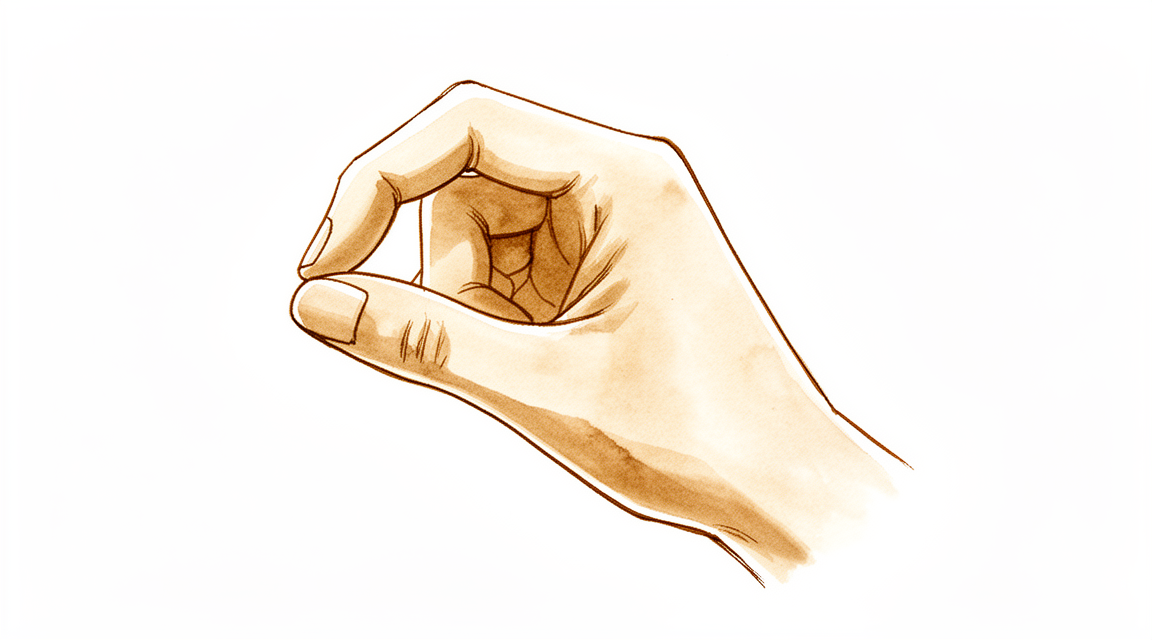
Este protocolo le servirá de guía para su recuperación tras un reemplazo de la articulación de la base del pulgar (un reemplazo articular total de doble movilidad, el implante Touch) por artritis en dicha zona, bajo la supervisión del Dr. Kieran Hirpara en el Mater Private Hospital Rockhampton. Comienza con un programa de ejercicios para realizar en casa, seguido del protocolo clínico estructurado destinado a su terapeuta de mano; lleve esta página o su versión en PDF a su primera sesión de terapia para garantizar que la rehabilitación se lleve a cabo de manera coordinada. Su terapeuta de mano podrá modificar el plan según el progreso de su recuperación. Toda su recuperación se realizará bajo la supervisión de terapia de mano especializada.
Si tiene alguna duda o inquietud respecto a la herida quirúrgica, no dude en contactar con el consultorio. A menudo resulta útil tomar una fotografía de la herida y enviarla por correo electrónico para su evaluación.
Qué esperar
La articulación situada en la base del pulgar (la articulación trapecio-metacarpiana o CMC) es el punto donde el pulgar se une a la muñeca; es una zona muy propensa a desarrollar artritis. En esta intervención, se eliminan las superficies articulares desgastadas y se sustituyen por una pequeña articulación artificial: un implante de doble movilidad, una diminuta estructura esférica con una superficie adicional que garantiza estabilidad y un movimiento fluido. Se conserva el hueso trapecio y la longitud del pulgar, por lo que la recuperación suele ser más rápida que en la trapeziectomía (el procedimiento anterior, que implica la extirpación del hueso y la formación de tejido cicatricial durante varios meses).
Un implante correctamente colocado es estable y puede soportar cargas de inmediato; por ello, el pulgar solo necesita protección durante un breve periodo, en lugar de permanecer inmovilizado durante semanas. El objetivo es permitir que los tejidos blandos se asienten, para luego recuperar rápidamente la capacidad de oponer el pulgar (tocar los demás dedos) y moverlo, y posteriormente ganar fuerza.
La recuperación se divide en tres fases:
- Primero, protección (aproximadamente las primeras 2–3 semanas). Durante la primera semana se coloca un vendaje grueso y blando; después se utiliza una férula para el pulgar para mantener la nueva articulación en reposo mientras cicatrizan la herida y los tejidos blandos. Se permite mover los dedos, la muñeca y el resto de la mano.
- Luego, movilización (desde aproximadamente la semana 2–3 hasta la semana 6). Una vez retirada la férula diurna, se inician movimientos activos suaves (oposición del pulgar, levantamiento del mismo, apertura del espacio interdigital y movimientos circulares), además de realizar tareas cotidianas ligeras con la mano.
- Finalmente, fortalecimiento (a partir de la semana 6). Una vez que el implante se ha integrado al hueso, se comienza a fortalecer la capacidad de pinzar y agarrar, aumentando progresivamente la intensidad del ejercicio. La fuerza seguirá mejorando durante los siguientes 6 a 12 meses.
Lo más importante a tener en cuenta al inicio es que la nueva articulación podría dislocarse si se fuerza a adoptar posiciones extremas antes de que los tejidos circundantes hayan sanado. Este tipo de incidentes son poco frecuentes; por ello, el plan inicial consiste simplemente en evitar forzar el pulgar mientras se produce su estabilización.
Precauciones y limitaciones
- Use su férula para el pulgar según las indicaciones (una férula diurna durante las primeras 2–3 semanas, y luego una férula nocturna hasta la semana 6); mantenga la férula puesta como protección hasta que su terapeuta de mano le autorice a quitársela.
- NO fuerce el pulgar a adoptar posiciones extremas, y evite movimientos bruscos o agarres incómodos durante las primeras semanas; la nueva articulación podría dislocarse si se somete a un estrés excesivo antes de estabilizarse. Limítese a movimientos dentro de lo que resulte cómodo.
- NO realice movimientos de pellizco fuerte, agarre, torsión (como abrir tapas de frascos, usar llaves o grifos) ni levantamiento de pesos hasta aproximadamente la semana 6; el fortalecimiento muscular solo comenzará cuando su terapeuta de mano lo indique.
- Desde el inicio, mantenga en movimiento los dedos, la muñeca y el resto de la mano; además, eleve la mano al principio para reducir la hinchazón.
- NO conduzca hasta pasadas unas cuatro a seis semanas, una vez que haya retirado la férula y pueda sujetar el volante de forma cómoda y sin dolor.
Para el cuidado de la herida, la hinchazón y las cicatrices, consulte las pautas de cuidado de heridas de nuestra consulta.
Sus ejercicios
Kieran Hirpara 4.0
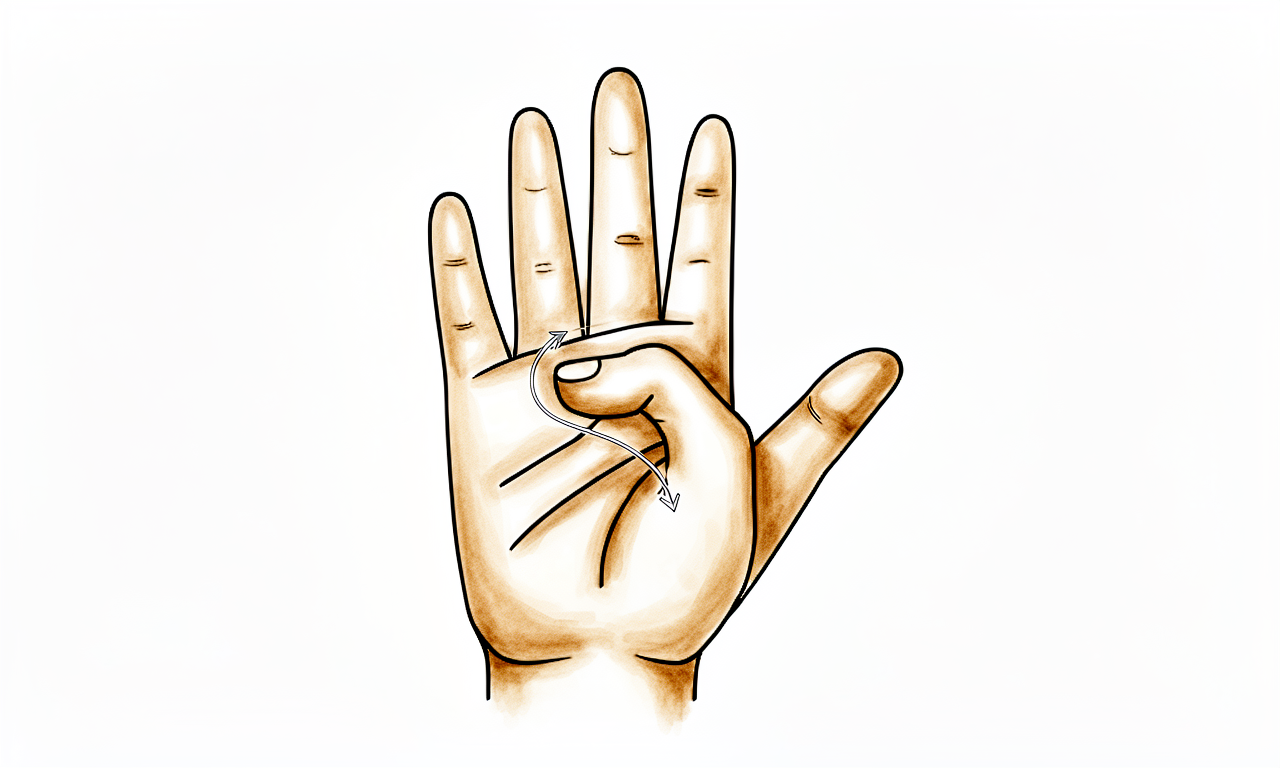
Oposición del pulgar (escalera de Kapandji)
Toque lentamente la punta de su pulgar contra el lateral de su dedo índice, luego contra la punta de cada uno de los demás dedos, y después deslícelo por el meñique hasta su base; así irá “subiendo la escalera” poco a poco a medida que se vaya relajando. Mueva la mano solo hasta donde le resulte cómodo. Este es el movimiento clave para recuperarse tras una artroplastia de la base del pulgar; se inicia con suavidad una vez que se retire la férula diurna (aproximadamente a las dos o tres semanas).
Realice el ejercicio de la escalera 5–10 veces, 2–3 veces al día, respetando sus límites de confort.
Kieran Hirpara 4.0
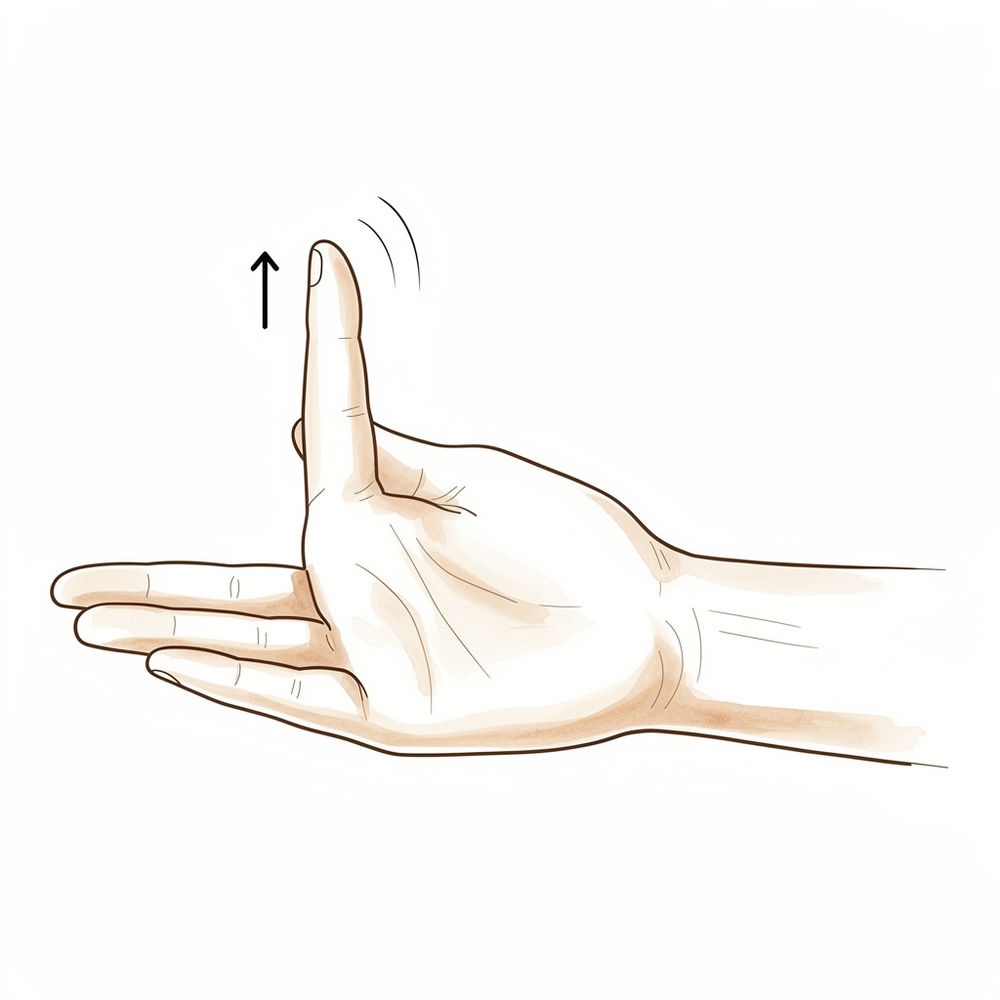
Abducción palmar (elevar el pulgar fuera de la palma)
Coloque la mano plana, con la palma hacia arriba. Manteniendo el pulgar recto, levántelo alejándolo de la palma hacia el techo, como si fuera a abrir la mano para sostener una lata; luego bájelo de nuevo. Esto abre el espacio interdigital y restaura el rango de movimiento del pulgar. Realice el movimiento con suavidad y sin forzar; durante las primeras semanas, no intente llevar el movimiento hasta su límite.
10 veces, 2–3 veces al día, manteniendo la comodidad.
Kieran Hirpara 4.0
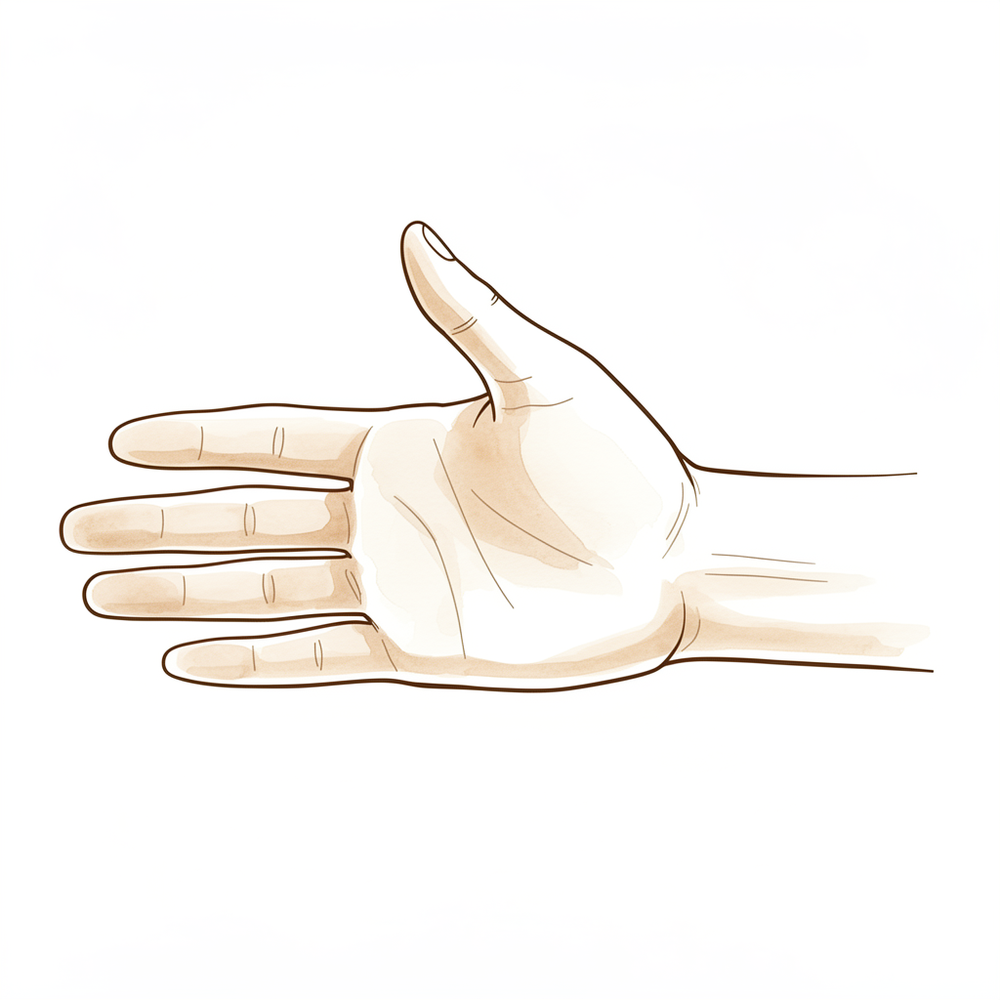
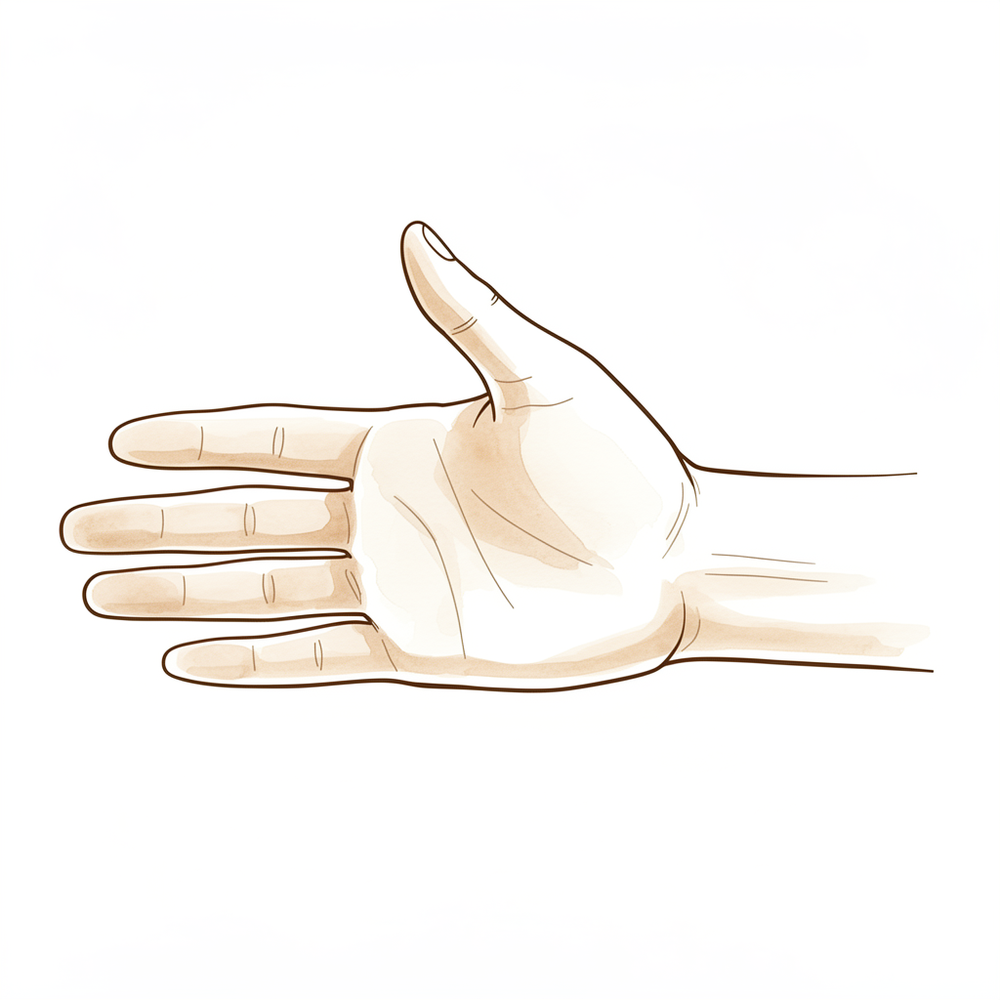
Abducción radial (el pulgar se mueve hacia el lateral)
Coloque la mano extendida con la palma hacia abajo. Deslice el pulgar hacia un lado, alejándolo del dedo índice, manteniéndolo en el mismo plano que la palma — como si formara una letra “L” — y luego regréselo a su posición original. Esto recupera el movimiento lateral del pulgar. Realice el movimiento lentamente y deténgase antes de sentir cualquier tensión.
10 veces, 2–3 veces al día, manteniendo la comodidad.
Kieran Hirpara 4.0
Estiramiento de la primera comisura (espacio entre pulgar e índice)
Abra el espacio entre el pulgar y el índice tanto como le resulte cómodo, sintiendo un suave estiramiento en la piel que los une. Puede apoyar la mano sobre una mesa y dejar que el pulgar se abra gradualmente, o rodear con él un objeto redondeado. Mantenga esa posición abierta por unos instantes y luego relájese. Esto evita que ese espacio se vuelva más estrecho durante el proceso de curación; haga el ejercicio con suavidad, sin forzarlo en ningún momento.
Mantenga la posición durante ~5 segundos, 5–10 veces, 2–3 veces al día.
Kieran Hirpara 4.0
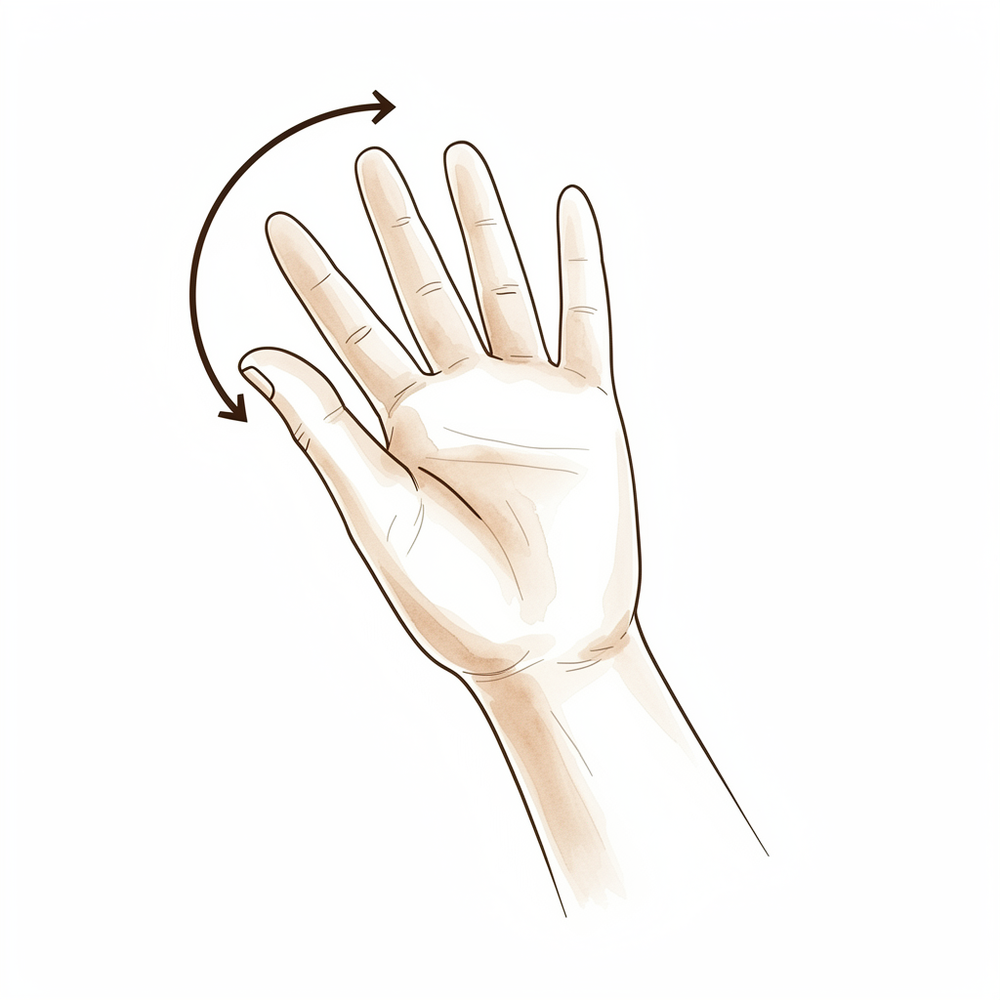
Circumducción del pulgar
Con la mano relajada, trace círculos lentos y suaves con el pulgar, moviéndolo suavemente a través de todo su rango de movimiento en ambas direcciones; como si estuviera revolviendo un recipiente pequeño. Mantenga los círculos sencillos y dentro de los límites de la comodidad. Esto restaura el movimiento rotatorio combinado de la nueva articulación, y se inicia con suavidad una vez que se haya retirado la férula diurna.
5–10 círculos en cada dirección, 2–3 veces al día
Kieran Hirpara 4.0
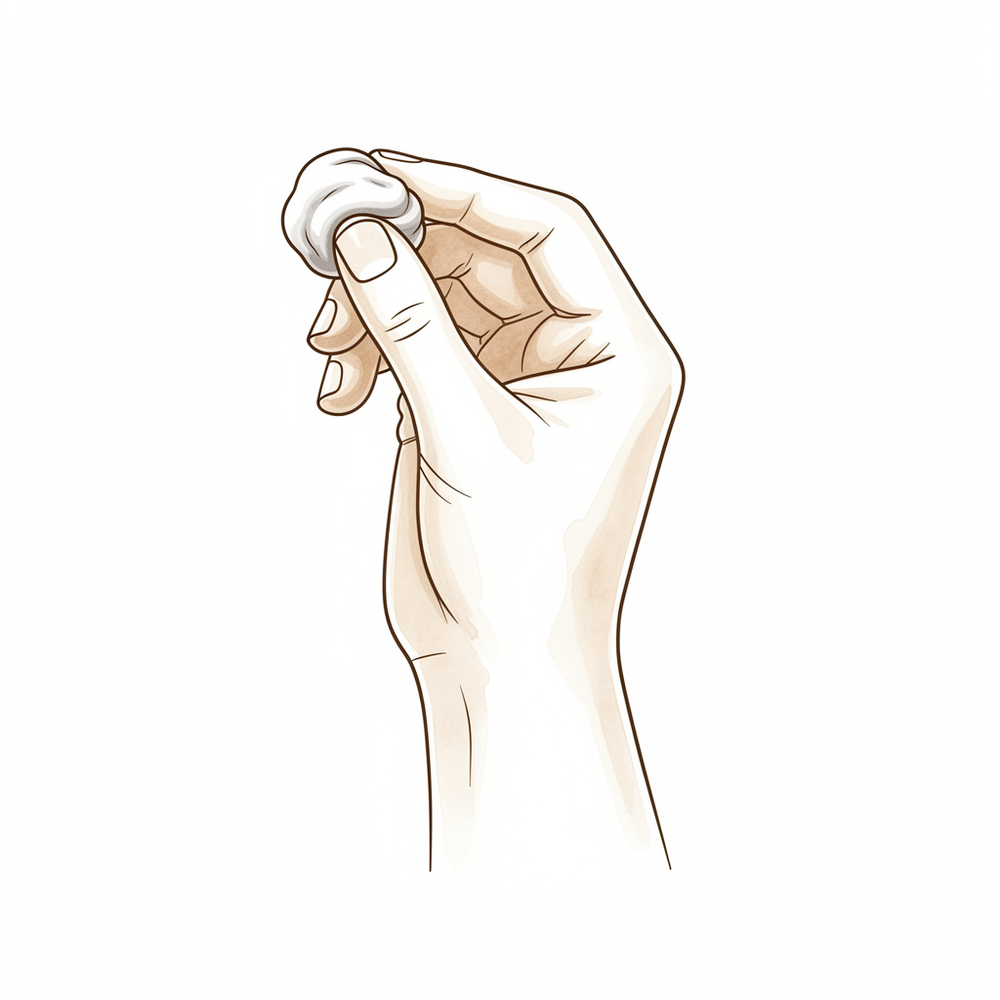
Masilla / pinza lateral tipo llave (a partir de la semana 6)
Un ejercicio posterior: solo a partir de las seis semanas, una vez que el terapeuta de mano comience con el fortalecimiento. Apriete un trozo de plastilina terapéutica entre el pulgar y el lateral del dedo índice (un “apretón tipo llave”), y luego presione la punta del pulgar contra las puntas de los demás dedos (un “apretón de puntas”). Vaya aumentando gradualmente la intensidad durante las siguientes semanas y meses. No realice apretones fuertes ni agarres antes de las seis semanas: la nueva articulación necesita ese tiempo para asentarse y unirse al hueso.
Siguiendo las indicaciones de su terapeuta de mano (a partir de unas 6 semanas), progresando de forma gradual.
Estos son los ejercicios que aparecen en su folleto. Comience a realizarlos únicamente bajo la guía del Dr. Hirpara y de su terapeuta de mano, respetando siempre el rango de movimiento y las limitaciones que le hayan indicado. Los ejercicios iniciales (oposición, levantamiento del pulgar, movimiento lateral, estiramiento del espacio interdigital y círculos suaves) ayudan a recuperar el movimiento del pulgar sin ejercer carga sobre la nueva articulación; pueden iniciarse una vez que haya retirado la férula diurna. El ejercicio de apretar plastilina y pellizcar con una llave es un ejercicio de fortalecimiento que se realiza más tarde, y no debe comenzarse hasta aproximadamente las seis semanas, cuando su terapeuta de mano lo indique. Durante las primeras semanas, realice todos los movimientos con suavidad y sin forzar; interrumpa cualquier ejercicio que provoque dolor intenso en la base del pulgar.
Su protocolo clínico
El resto de esta página describe el protocolo clínico por etapas para la rehabilitación tras un reemplazo articular total trapeciometacarpiano de doble movilidad (Touch). Esta sección debe entregarse a su terapeuta de mano; cada fase comienza con una explicación sencilla en lenguaje coloquial sobre lo que ocurre. A diferencia de la trapeziectomía, el implante es estable de inmediato y comparte la carga, por lo que la inmovilización es mínima y la oposición activa se restablece tempranamente. El riesgo temprano específico del implante es la dislocación si se fuerza a alcanzar rangos de movimiento extremos; por eso, durante las primeras semanas se evitan posiciones forzadas o en extremos de rango para luego progresar a ejercicios de fortalecimiento con carga una vez que se logre la osteointegración.
Antes de iniciar el tratamiento, revise el informe quirúrgico del paciente y su historial médico; además, consulte con el cirujano tratante respecto a la correcta colocación y estabilidad del implante, así como cualquier complicación intraoperatoria. El régimen indicado por el Dr. Hirpara consiste en un vendaje grueso y suave durante 7–10 días, luego una férula DIURNA tipo “spica” para el pulgar durante 2–3 semanas, seguida de una férula NOCTURNA hasta la semana 6 (muñeca en posición neutra, pulgar en abducción palmar media y articulaciones interfalángicas libres). En este procedimiento se conserva el trapecio y se mantiene la longitud del pulgar.
Fase I — protección (semana 0 hasta aproximadamente 2–3)
Durante las primeras semanas se estabilizan los tejidos blandos y se protege la nueva articulación. El pulgar permanece cubierto con un vendaje grueso y blando, y posteriormente con una férula diurna tipo “spica” para el pulgar, mientras que los dedos, la muñeca y el resto de la mano siguen moviéndose. No se permite realizar esfuerzos con el pulgar ni adoptar posiciones extremas o forzadas (el riesgo temprano específico del implante es la dislocación).
Para su terapeuta de mano:
Educación y precauciones - Inmovilizar la base del pulgar: vendaje grueso y blando durante 7–10 días → férula diurna tipo “spica” para el pulgar durante unas 2–3 semanas (muñeca en posición neutra, pulgar en abducción palmar media, articulación interfalángica libre) - Evitar posiciones extremas o forzadas del pulgar y agarres bruscos: la dislocación es el riesgo temprano específico del implante - No realizar esfuerzos con el pulgar (ni pellizcos, ni agarres, ni torsiones ni levantamientos) - Mantener el implante sin carga; solo se permite un uso suave y sin carga de la mano
Manejo - Herida: aplicar los vendajes quirúrgicos según indicaciones; vigilar posibles signos de infección - Edema: elevar la mano, realizar movimientos de bombeo suaves y aplicar hielo según sea necesario - Ejercicios: realizar movimientos activos de articulación interfalángica del pulgar, de los dedos y de la muñeca; mantener la movilidad de toda la mano; aún no se permiten movimientos activos en la articulación carpometacarpiana ni en la oposición, ni carga alguna
Criterios para avanzar - La herida se ha estabilizado; el paciente se siente cómodo; alrededor de la semana 2–3 se retira la férula diurna para iniciar movimientos activos
Fase II: Movimiento activo con férula nocturna (semana ~2–3 a 6)
A partir de las dos o tres semanas, se retira la férula diurna y se inicia un movimiento activo y suave del pulgar: oposición (según la progresión de Kapandji), abducción palmar y radial, circunducción suave y movilización del espacio interdigital. La férula nocturna se mantiene hasta la semana 6. Se recomienda un uso cotidiano moderado; sin embargo, se deben evitar el agarre fuerte y la pinza hasta ese momento.
Para su terapeuta de mano:
Evaluaciones - Oposición activa del pulgar (puntuación de Kapandji), abducción palmar/radial, ancho del espacio interdigital; dolor e hinchazón; evaluación de la herida y la cicatriz
Educación y precauciones - Se retira la férula diurna; continúe usando la férula NOCTURNA hasta la semana 6 - Solo se permite movimiento activo sin resistencia del pulgar: no se debe realizar agarre fuerte ni pinza antes de la semana 6 - Mantenga los movimientos dentro de los límites de confort; evite forzar el rango articular
Manejo - Ejercicios: oposición activa sin resistencia (progresión de Kapandji), abducción palmar y radial, circunducción suave, movilización del espacio interdigital; uso funcional cotidiano moderado de la mano; iniciar masaje de la cicatriz una vez que la herida haya sanado
Criterios para avanzar - Buena recuperación de la oposición activa; herida completamente cicatrizada; movimiento sin resistencia y sin dolor alrededor de la semana 6
Fase III — carga y fortalecimiento (a partir de la semana 6)
A partir de las seis semanas, el implante ya está osteointegrado y puede soportar carga. Se inicia el fortalecimiento de la pinza y la prensión (pinza con plastilina, pinza con dedos índice y pulgar, fortalecimiento de la oposición), progresando gradualmente. La fuerza muscular seguirá mejorando durante los siguientes 6 a 12 meses.
Para su terapeuta de mano:
Evaluaciones - Fuerza de pinza y prensión con dedos índice y pulgar, comparada con el lado contralateral; capacidad de oposición; respuesta al dolor o hinchazón tras la carga; pruebas funcionales y específicas para el trabajo, según corresponda.
Educación y precauciones - Iniciar el fortalecimiento progresivo de la pinza y la prensión a partir de las 6 semanas; aumentar la carga de forma gradual. - Esperar que la fuerza muscular mejore durante 6–12 meses; aconsejar paciencia al aplicar cargas más elevadas.
Manejo - Ejercicios: pinza con plastilina, pinza con dedos índice y pulgar, fortalecimiento de la oposición, resistencia progresiva; fortalecimiento de la prensión; continuar con ejercicios para mantener la movilidad residual y el trabajo cicatricial. - Considerar el alta terapéutica una vez que la fuerza sea funcional y se haya logrado una recuperación adecuada de la función. - Considerar derivar nuevamente al médico tratante si la recuperación se estanca o si el resultado es insatisfactorio.
Criterios para el alta - Pinza y prensión funcionales, casi simétricas; uso cotidiano y laboral sin dolor.
Retorno al trabajo y a las actividades cotidianas
Se recomienda realizar actividades cotidianas ligeras con la mano (comer, escribir, cuidados personales básicos) desde el principio, siempre que se haga con comodidad y sin forzar el pulgar ni realizar pinzamientos o agarres fuertes. Dado que no debe conducir hasta que se retire el yeso y pueda agarrar el volante sin dificultad, planifique contar con ayuda para el transporte durante las primeras semanas. Por lo general, se puede volver a conducir al cabo de cuatro a seis semanas, una vez que pueda agarrar el volante sin dolor, según lo confirma el Dr. Hirpara.
El trabajo de oficina y las tareas ligeras suelen ser posibles entre dos y cuatro semanas; en cambio, el trabajo manual o más pesado debe esperar hasta las seis semanas, iniciándose entonces de forma gradual, ya que solo a partir de esa fecha se permite realizar pinzamientos y agarres fuertes. La fuerza de la mano seguirá mejorando durante 6 a 12 meses; por ello, las tareas más pesadas y exigentes se retomarán progresivamente, no de golpe, evaluando la respuesta del pulgar junto con el Dr. Hirpara y su terapeuta de mano, y no únicamente en función del calendario.
Después de seguir este protocolo
Este protocolo se complementa con las recomendaciones generales de recuperación que brinda la clínica; consulte control del dolor postoperatorio, cuidado de la herida y manejo de las cicatrices. El plan por fases descrito anteriormente se basa en las guías de rehabilitación publicadas tras el reemplazo de la articulación de la base del pulgar con sistema de doble movilidad; su recuperación continua será supervisada individualmente por el Dr. Hirpara y su terapeuta de mano, según la evolución de su pulgar.
Evidence & references
This is the clinical evidence summary written for health professionals. It is technical, and it lists the research this page was built from. You do not need to read it to understand your treatment or to make a decision about it.
Thumb Base Joint Replacement (Touch) — Procedure Outcomes & Post-operative Rehabilitation (Dual-mobility TMC/CMC Total Joint Arthroplasty)
Topic scope: post-operative rehabilitation after a dual-mobility total joint replacement of the trapeziometacarpal (thumb base / CMC) joint for advanced thumb base osteoarthritis — the Touch implant. Unlike trapeziectomy, the trapezium is retained and thumb length preserved, and a correctly seated dual-mobility implant is immediately stable and load-sharing. The rehab is therefore a minimal-immobilisation, early-motion pathway: protect briefly against the implant-specific early dislocation risk, restore opposition within the first month, then load.
Defining principle of the rehab here: a trapeziectomy relies on a scar/haematoma "spacer" forming where the bone was removed, which takes roughly 12 months to mature — so rehab is slow by necessity. A dual-mobility thumb base replacement instead provides an immediately stable, load-sharing artificial joint, so immobilisation can be minimal, opposition is restored within the first month, and recovery is faster than trapeziectomy. The dual-mobility cup specifically reduces the early dislocation risk that drove longer immobilisation with older single-mobility implants. The one deliberate early restraint is therefore avoidance of forced/extreme thumb positions (the implant-specific dislocation risk) for the first few weeks, after which loaded pinch/grip strengthening begins. This is a newer implant: the evidence base is short-to-mid-term and low-to-moderate level, and rehab regimens are under-reported and not standardised.
A. PROCEDURE OUTCOMES (dual-mobility Touch TMC arthroplasty)
Dual-mobility total joint replacement of the thumb base is a comparatively new alternative to trapeziectomy for advanced trapeziometacarpal osteoarthritis. Early- to mid-term series report high implant survival and good restoration of pinch and function, with the principal trade-off being a higher complication/revision profile than the well-established trapeziectomy — though the dual-mobility design improves on the dislocation rate of earlier single-mobility implants.
- High short-to-mid-term implant survival and good function. A Touch-specific series reported 96% implant survival at 2 years with high key-pinch strength; the main adverse events were soft-tissue complications (de Quervain-type tenosynovitis, trigger digit) rather than implant failure [Herren 2023]. A 150-patient dual-mobility cohort similarly reports early normalisation of function. Moderate (case series / retrospective cohort).
- Faster recovery than trapeziectomy because the joint is immediately stable. Because the implant is load-sharing from the outset, the thumb is only briefly immobilised, patients return to near-normal activity early, and formal therapy may not always be required — contrasting with the ~12-month maturation of a trapeziectomy spacer [Duerinckx & Verstreken 2022]. Moderate (narrative review / cohort).
- Opposition and pinch/grip recover well. Using the MOOVIS dual-mobility implant, the Kapandji opposition score improved from 7 to 10 with improved pinch and grip [Dreant 2018]. Moderate (cohort).
- The dual-mobility design reduces dislocation. The extra articulation lowers the early dislocation risk that limited older single-mobility prostheses, supporting earlier mobilisation [Tchurukdichian 2019; Martins 2020]. Moderate (cohort / mechanistic).
- Lower reoperation than ball-and-socket designs; persistent revision risk overall. A network meta-analysis found dual-mobility implants had lower reoperation than ball-and-socket designs, with TOUCH reoperation around 1.0% [Burnett 2026 NMA]. Reported outcomes continue to evolve in ongoing reviews [Tosti & Duerinckx 2026]. Moderate (NMA of mostly observational data).
- Registry-level work-absence benchmark. Swedish registry data give a sense of real-world recovery: sick leave of roughly 94 days for men and 109 days for women — a benchmark to set realistic return-to-work expectations rather than a target. Moderate (registry).
B. REHABILITATION / THERAPY EVIDENCE
The central rehab questions are (1) how long to immobilise, and (2) when to start motion and loading. Because the implant is immediately stable, the modern answer is minimal immobilisation with early active opposition — but the literature is explicit that there is no consensus and wide variation between centres, and that rehab protocols are under-reported.
- Minimal immobilisation is justified by immediate stability. A correctly seated dual-mobility implant is stable and load-sharing, so prolonged casting is unnecessary; the thumb is briefly protected, then mobilised early, with opposition typically back within the first month [Duerinckx & Verstreken 2022]. Moderate (review).
- No standardised regimen — wide variation in immobilisation and motion timing. A dedicated review of immobilisation and rehabilitation after thumb-base arthroplasty found reported immobilisation ranging from 2 to 12 weeks and active range-of-motion commencing anywhere from 1 to 6 weeks, with no consensus across studies [Barrett 2022]. This is the key caveat for any protocol: the timings are a defensible, surgeon-confirmed plan, not a trial-derived standard. Moderate (systematic review of heterogeneous protocols).
- Early opposition recovery is achievable and is the functional priority. Improvement of the Kapandji opposition score (7→10) demonstrates that active opposition is the early rehab target and is realistically attainable in the first weeks-to-months [Dreant 2018]. Moderate (cohort).
- The early restraint is dislocation avoidance, not protected healing. The dual-mobility design reduces but does not abolish early dislocation; the practical implication is to avoid forced/extreme thumb positions in the first weeks rather than to immobilise for prolonged periods [Tchurukdichian 2019; Martins 2020]. Moderate / mechanistic.
Recovery trajectory (expected, evidence-anchored)
| Phase | Window | Restraint | Hand use / therapy focus | Strength / load | Notes |
|---|---|---|---|---|---|
| I — Protect | Week 0 to ~2–3 | Soft bulky dressing 7–10 d → thumb spica DAY splint | Keep IP/MCP/digits/wrist moving; oedema control; avoid forced/extreme thumb positions | No resisted thumb work | Early dislocation is the implant-specific risk; minimal immobilisation because the implant is immediately stable |
| II — Active motion | Week ~2–3 to 6 | NIGHT splint to 6 wk | Out of day splint; active unresisted opposition (Kapandji), palmar + radial abduction, gentle circumduction, web-space work; light everyday use; scar massage once healed | Still no heavy grip/pinch | Opposition typically restored within the first month; faster than trapeziectomy |
| III — Load / strengthen | Week 6+ | Restrictions lifted | Progress pinch/grip-specific loading and task use | Pinch + grip strengthening from 6 wk (putty, key/tip pinch); full weight-bearing ~6 wk | Strength matures over 6–12 months; return to heavy/manual work staged across this window |
(Phase windows reflect KH-confirmed parameters and are consistent with the wide ranges reported in the literature; they are typical guides, not trial-derived deadlines — see Barrett 2022.)
C. KEY CONTROVERSIES / EVIDENCE QUALITY
- Replacement vs trapeziectomy. Dual-mobility replacement restores the joint and gives a faster functional return (immediate stability, opposition back within a month) versus the ~12-month maturation of a trapeziectomy spacer, but at the cost of a higher complication and revision rate and a shorter evidence track record. Trapeziectomy remains the well-established, lower-risk benchmark. Moderate; trade-off, not a clear winner.
- How long to immobilise / when to start motion. No consensus — reported immobilisation spans 2–12 weeks and AROM start 1–6 weeks [Barrett 2022]. This page's day-splint-2–3-weeks → night-splint-to-6-weeks → strengthen-from-6-weeks plan is a defensible, surgeon-confirmed regimen within that reported range, not a proven standard. Weak–moderate.
- Dislocation risk. The dual-mobility cup reduces the early dislocation that limited older single-mobility implants, but the risk is not zero in the first weeks — hence the early forced/extreme-position restraint [Tchurukdichian 2019; Martins 2020]. Moderate / mechanistic.
- Complication profile. Soft-tissue complications (de Quervain-type tenosynovitis, trigger digit) are the commonest early issues rather than implant failure [Herren 2023]; reoperation is low for dual-mobility (TOUCH ~1.0%) and lower than ball-and-socket designs [Burnett 2026 NMA]. Moderate.
- Maturity of the evidence. This is a newer implant: outcomes are short-to-mid-term, evidence is low-to-moderate level (case series, retrospective cohorts, registry and NMA of mostly observational data), and rehabilitation is under-reported and not standardised. Tone should be appropriately cautious. Evidence base still maturing.
D. EVIDENCE STRENGTH FLAGS (summary)
- MODERATE (cohort / registry / NMA of observational data): high short-to-mid-term implant survival (96% at 2 yr, Touch) with good key-pinch; Kapandji opposition 7→10; dual-mobility lower reoperation than ball-and-socket (TOUCH ~1.0%); registry sick-leave benchmark (~94 d men / 109 d women); faster functional return than trapeziectomy.
- MODERATE (systematic review of heterogeneous protocols): no consensus on rehab — immobilisation 2–12 weeks, AROM start 1–6 weeks (Barrett 2022).
- WEAK / CONSENSUS: the specific immobilisation-then-early-opposition-then-strengthen phase timings (surgeon-confirmed, within the reported range; not trial-derived); the dislocation-avoidance rationale (mechanistic).
- CAVEAT: newer implant — short-to-mid-term, low-to-moderate-level evidence; higher complication/revision rates than trapeziectomy persist; rehab under-reported.
CITATIONS
RAG corpus (180,000+ Orthopaedic articles)
- Duerinckx J, Verstreken F. Dual mobility prosthesis for trapeziometacarpal joint arthritis. EFORT Open Rev. 2022. DOI: 10.1530/eor-22-0027
- Herren DB, et al. Trapeziometacarpal joint replacement with the Touch prosthesis: two-year results. J Hand Surg (Eur Vol). 2023. DOI: 10.1177/17531934231179581
- Dreant N, et al. Trapeziometacarpal arthroplasty with the dual-mobility MOOVIS prosthesis. Hand (NY). 2018. DOI: 10.1177/1558944718797341
- Tchurukdichian A, et al. Dual-mobility implant reduces the dislocation risk in trapeziometacarpal arthroplasty. Hand (NY). 2019. DOI: 10.1177/1558944719855690
- Martins A, et al. Dual-mobility trapeziometacarpal prosthesis. J Hand Surg (Eur Vol). 2020. DOI: 10.1177/1753193420901435
- Barrett H, et al. Immobilization and rehabilitation after trapeziometacarpal joint arthroplasty: a review. J Hand Surg Glob Online. 2022. DOI: 10.1016/j.jhsg.2022.05.011
- Tosti R, Duerinckx J. Trapeziometacarpal total joint arthroplasty: current concepts. J Hand Surg Am. 2026. DOI: 10.1016/j.jhsa.2026.01.003
- Burnett K, et al. Implant designs for trapeziometacarpal arthroplasty: a network meta-analysis of reoperation. J Hand Surg Am. 2026. DOI: 10.1016/j.jhsa.2025.12.011
Thumb base arthroplasty literature (URLs)
- Herren DB, et al. TOUCH trapeziometacarpal prosthesis — two-year results. PMC. https://pmc.ncbi.nlm.nih.gov/articles/PMC12098211/
- Dual-mobility trapeziometacarpal arthroplasty — 150-patient cohort. PMC. https://pmc.ncbi.nlm.nih.gov/articles/PMC12662895/
- TOUCH prosthesis case series. PMC. https://pmc.ncbi.nlm.nih.gov/articles/PMC8470025/
- KeriMedical — TOUCH thumb base prosthesis patient information. https://www.kerimedical.com/en/patients/