Patients › Shoulder
Artroplastia inversa de hombro
Reverse shoulder replacement for severe rotator cuff tears and arthritis—when a traditional replacement isn’t ideal.
¿Por qué se ha sugerido esta operación?
El Dr. Kieran Hirpara, cirujano de extremidad superior en el Mater Private Hospital Rockhampton, comienza por considerar las opciones menos invasivas que se adapten a su condición. Por lo general, los pacientes son derivados a nuestra clínica por su médico de cabecera; si un fisioterapeuta le ha recomendado consultarnos, igualmente necesitará una derivación de su médico de cabecera para poder acceder al reembolso de Medicare. Evaluamos a cada paciente analizando su historial clínico, examinando su hombro y, cuando es necesario, solicitando estudios de imagen.
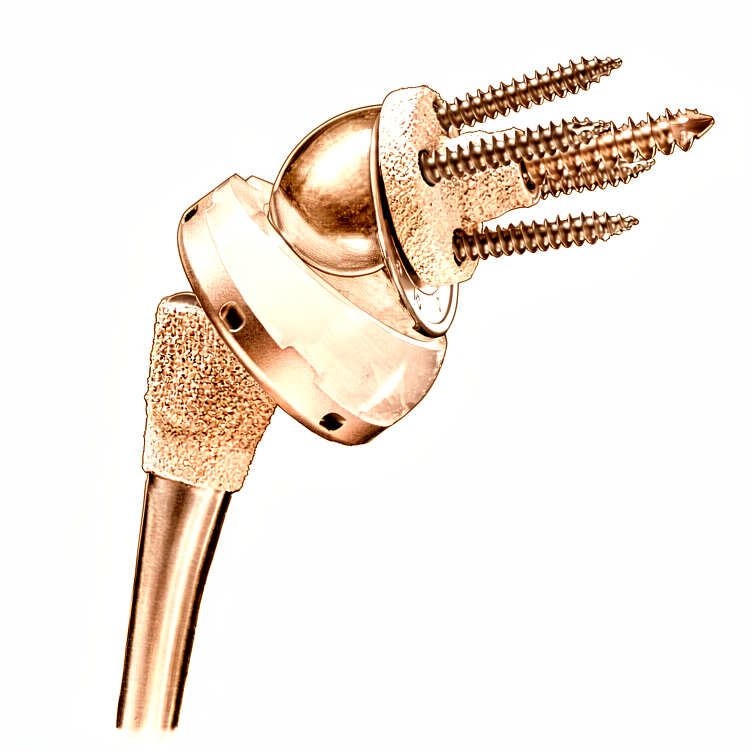
El reemplazo articular inverso de hombro es un procedimiento en el que se invierte la disposición habitual de la articulación: la “bola” queda donde antes estaba el “encaje” y el “encaje” queda donde antes estaba la “bola”. Generalmente lo recomendamos cuando el manguito rotador —el conjunto de tendones que estabilizan el hombro— está muy desgastado o desgarrado, o cuando otros problemas del hombro no han mejorado con tratamientos no quirúrgicos como cambios en las actividades, fisioterapia, uso de férulas o inyecciones. En ciertas lesiones, la cirugía puede ser recomendada de inmediato. El objetivo de la operación es aliviar el dolor y mejorar el movimiento y la funcionalidad del hombro. Los beneficios clínicos se mantienen hasta 10 años después de la intervención. Con usted analizaremos los beneficios y riesgos; la decisión final la tomarán usted y nosotros en conjunto.
Antes de la operación
Una vez que usted y su cirujano hayan acordado realizar un reemplazo invertido de hombro, organizaremos las pruebas necesarias para planificar la intervención. Por lo general, esto implica realizar radiografías del hombro; en algunos casos, también una tomografía computarizada, que es un estudio detallado que genera una imagen tridimensional del hueso. Estas imágenes nos ayudan a planificar la ubicación de las nuevas piezas articulares y a medir cuidadosamente su hombro antes del día de la cirugía. También le preguntaremos sobre su estado de salud general, incluyendo cualquier operación previa en el hombro, medicamentos como los esteroides, y enfermedades como la osteoporosis, que consiste en el debilitamiento de los huesos. Por favor, lleve a la consulta una lista de los medicamentos que está tomando actualmente. Si toma ciertos fármacos, es posible que su cirujano le pida suspenderlos temporalmente antes de la operación. Deberá ayunar durante siete horas antes del procedimiento; pedimos un tiempo un poco mayor de lo habitual para poder adelantar su turno si la lista de cirugías avanza antes de lo previsto. Organice que alguien lo lleve a casa después de la operación, y use ropa holgada y cómoda. Si padece otras enfermedades, es posible que necesite análisis de sangre o una evaluación con el anestesista, el médico encargado de administrar la anestesia.
El día de la cirugía
El día de la operación, acude a la unidad de admisiones quirúrgicas del hospital. Allí se le registrará y se le preparará para el quirófano. No irá primero a una sala de hospitalización.
Esta operación se realiza bajo anestesia general combinada con un bloqueo nervioso regional. El anestesista se reunirá con usted antes de la intervención y le explicará ambos procedimientos.
Posteriormente, será llevado al quirófano, donde se realiza la operación. Una vez finalizada, despertará en la sala de recuperación. Allí, las enfermeras lo vigilarán mientras la anestesia va desapareciendo. Cuando su estado sea estable, será trasladado a una sala de hospitalización.
Qué implica la operación
El cirujano realiza una única incisión en la zona a operar para acceder a la articulación del hombro. Se retiran las superficies articulares desgastadas y se sustituyen por nuevas piezas de metal y plástico. La disposición habitual de “bola y cavidad” se invierte: la bola queda donde antes estaba la cavidad, y la cavidad queda donde antes estaba la bola. Esto es lo que da lugar a la denominación de “prótesis inversa”. Las nuevas piezas están diseñadas de modo que el fuerte músculo del hombro, el deltoides, pueda levantar el brazo, en lugar de los tendones del manguito rotador, que están desgastados o rotos.
Durante la intervención, el cirujano trabaja con cuidado alrededor de los tendones y otros tejidos blandos del hombro. Si algunos de estos tejidos se encuentran en buen estado, se suturan nuevamente al nuevo implante una vez este queda colocado. El posicionamiento y el tamaño de las nuevas piezas se determinan según el plan elaborado a partir de sus radiografías y escáneres previos a la cirugía.
Una vez colocada la nueva articulación, se cierra la herida. Primero se coloca sobre ella una malla autoadhesiva fina que mantiene unidos los bordes de la piel; posteriormente se aplica un adhesivo cutáneo líquido sobre dicha malla, el cual se solidifica para sellar por completo la zona. Este material permanece en su sitio durante aproximadamente una o dos semanas y luego se desprende por sí solo, sin necesidad de retirarlo.
Después de la operación
Despertará en la sala de recuperación y, una vez que se estabilice, será trasladado a una habitación de hospital. Allí, las enfermeras lo revisarán y le administrarán medicamentos para que se sienta cómodo. Su brazo descansará en un cabestrillo sencillo para brindarle soporte; este se retira durante los ejercicios y para lavarse. La mayoría de los pacientes permanecen una o dos noches en el hospital tras esta operación. Dejamos el vendaje puesto durante unos 10 días; por favor, no lo retire antes de ese plazo a menos que se lo indiquemos. Lo cambiaremos o lo quitaremos cuando vengamos a verlo. Por lo general, un fisioterapeuta lo atenderá antes de que regrese a casa para iniciar movimientos suaves. Por favor, asegúrese de que alguien lo acompañe durante las primeras 24 horas después de llegar a casa.
Recuperación
Los primeros días en casa consisten en descanso y comodidad. El hombro estará adolorido e hinchado; el cabestrillo sirve para sostener el brazo entre las sesiones de ejercicios. Los analgésicos sencillos, tomados según las indicaciones, suelen mantener este malestar bajo control. Con el paso de las semanas, la molestia tiende a disminuir gradualmente; en la mayoría de los casos, la hinchazón desaparece antes que la rigidez.
Su fisioterapeuta le guiará en los ejercicios, comenzando con movimientos suaves y aumentando la intensidad según lo permita su hombro. Durante estas sesiones y al lavarse, se quita el cabestrillo. Podrá realizar tareas ligeras en casa con la otra mano mientras el brazo operado se recupera. Al principio, dormir puede resultar incómodo; muchas personas encuentran más fácil descansar apoyadas en una silla o con almohadas hasta que volver a acostarse resulte cómodo.
Los hitos de recuperación se manifiestan como acontecimientos, no como fechas concretas. Una vez que su cirujano le autorice a conducir, generalmente en la revisión a las seis semanas, podrá volver a manejar; nuestra guía específica aborda el tema de conducir tras una cirugía de miembro superior. A medida que recupera el movimiento, tareas cotidianas como vestirse o alcanzar objetos se vuelven más fáciles. Cuando el fisioterapeuta considere que su fuerza es adecuada, podrá retomar las actividades que disfrutaba antes; la mayoría de quienes eran activos antes de la operación vuelven a hacerlas después.
La recuperación varía de una persona a otra. Su cronograma personal podría diferir; su cirujano y fisioterapeuta le guiarán durante todo el proceso.
Qué puede salir mal
La mayoría de los pacientes evolucionan bien, pero en ocasiones pueden surgir problemas. Su cirujano y el equipo lo vigilarán de cerca para detectar cualquier anomalía a tiempo.
En algunos casos, la nueva articulación puede dislocarse. Es posible que sienta un chasquido repentino, seguido de dolor y de una incapacidad para mover el hombro con normalidad. Si esto ocurre, comuníquese de inmediato con la clínica o acuda a urgencias.
Puede producirse una infección alrededor de la nueva articulación. Esté atento a un dolor profundo y pulsátil que no ceda con analgésicos comunes, a enrojecimiento que se extienda desde la herida o a fiebre. Informe a la clínica de inmediato si observa alguno de estos signos. El tratamiento de la infección se realiza en etapas; la mayoría de las infecciones tras una prótesis de hombro se pueden erradicar mediante este método.
Con el tiempo, las piezas nuevas pueden aflojarse. Esto suele manifestarse como un regreso o empeoramiento del dolor, a veces acompañado de un sonido de chasquido o fricción. Comente este hecho en su próxima revisión para que se realicen radiografías de control.
Los nervios pasan muy cerca del hombro y pueden resultar contusionados o irritados durante la cirugía. Es posible que note entumecimiento, hormigueo o debilidad en el brazo. Con frecuencia esto mejora por sí solo, pero mencione el hecho en su revisión para que se haga un seguimiento.
Pueden producirse pequeñas fracturas en el hueso alrededor de la nueva articulación o en el extremo óseo superior del hombro. Sentirá un dolor agudo, a menudo tras una caída o un empujón fuerte. Si esto ocurre, contacte a la clínica.
Tras una cirugía de hombro, ocasionalmente se puede formar un coágulo sanguíneo, que suele provocar hinchazón y sensibilidad repentinas en la pantorrilla. Si nota esto, busque atención médica de inmediato.
Algunos factores aumentan el riesgo de complicaciones. Los hombres tienen mayor probabilidad de presentar complicaciones tras esta operación por fractura de brazo. Haberse sometido previamente a una reparación del manguito rotador también incrementa el riesgo de infección alrededor de la nueva articulación. Si se ha aplicado una inyección de esteroides en el hombro, es necesario esperar al menos 4 semanas antes de la cirugía; nos adaptaremos a ello en la planificación.
En la tabla de complicaciones de esta página se detallan las tasas típicas, por si desea conocer los datos específicos.
¿Cuándo deben llamarnos?
La mayoría de los problemas posteriores a esta operación presentan señales de alerta que se pueden detectar en casa. Llámenos si observan fiebre, mayor enrojecimiento o secreción alrededor de la herida, o dolor que empeora en lugar de mejorar. Acudan a urgencias si experimentan dolor intenso y repentino, si el hombro parece deformado o si no pueden mover el brazo. La hinchazón y sensibilidad en la pantorrilla, así como la dificultad para respirar, requieren atención médica de urgencia de inmediato. También llámenos si pierden la sensibilidad en el brazo o la mano, o si notan entumecimiento y hormigueo nuevos que no desaparecen.
En mayor profundidad
Advanced reading: the deeper science (optional)
Esta sección profundiza más de lo necesario para que usted tome sus propias decisiones de tratamiento. Vale la pena leer más sobre la artroplastia invertida de hombro, ya que es la intervención que resolvió un problema antes considerado irresoluble: un hombro sin funcionalidad del manguito rotador. Además, su complicación característica es algo de lo que la mayoría de los pacientes nunca han oído hablar.
¿Por qué funciona la prótesis inversa?
En un hombro normal, la cabeza del húmero actúa como una “pelota” y la cavidad glenoidea de la escápula como “socket”; además, el manguito rotador mantiene la cabeza del húmero centrada mientras el deltoides realiza el levantamiento. Cuando el manguito rotador se ha perdido, una prótesis convencional carece de elementos estabilizadores, por lo que la cabeza del húmero simplemente se desplaza hacia arriba.
El diseño inverso invierte esta configuración: la “pelota” se fija a la escápula y el “socket” al brazo. De este modo, el centro de rotación se desplaza hacia el interior y hacia abajo, lo que alarga el brazo de palanca del deltoides y le permite levantar el brazo por sí solo. Se trata de una solución mecánica, no biológica; no repara nada, sino que hace que los músculos restantes sean suficientes para la función.
Esto también explica qué funciones se recuperan con esta prótesis. Por lo general, la elevación del brazo por encima de la cabeza vuelve a ser posible. En cambio, la rotación depende de músculos que la cirugía no reemplaza; por ello, el alcance del brazo hacia la espalda suele seguir siendo limitado. Este hecho debe incluirse en las expectativas previas a la intervención, para evitar decepciones posteriores.
En qué casos ha reemplazado a procedimientos anteriores
En el caso de las fracturas, este cambio ha sido decisivo. Al analizar los datos de 228,523 pacientes, se observó que la artroplastia total invertida del hombro arrojó mejores resultados funcionales y tasas de complicaciones que la hemiartroplastia; además, presentó un perfil de revisiones quirúrgicas más favorable que la fijación con placas en pacientes de edad avanzada con fracturas del húmero proximal [1].
Un detalle sobre los implantes que vale la pena conocer, ya que con frecuencia surge en las consultas: al comparar componentes estándar con componentes diseñados específicamente para fracturas en procedimientos de reemplazo invertido en 436 pacientes, no se hallaron diferencias significativas en los resultados clínicos ni en las tasas de complicaciones [2].
La complicación que hay que conocer
La que resulta relevante aquí es la fractura por estrés acromial o escapular, es decir, la rotura del hueso situado por encima de la articulación debido al aumento de la tensión del deltoides que el diseño del procedimiento genera intencionadamente. Se trata de la consecuencia directa del mecanismo que hace que la operación sea efectiva.
Un metaanálisis identificó los factores de riesgo: los pacientes que sufrieron estas fracturas eran de mayor edad y con un IMC más bajo; otros factores de riesgo incluyen osteoporosis, artritis inflamatoria, sexo femenino y cirugía previa de reparación del manguito rotador [3]. Otro estudio señaló que en la literatura médica estas fracturas se describen de forma inconsistente, existiendo diferencias significativas en su definición, diagnóstico y conteo [4]; por ello, las tasas reportadas deben interpretarse con cautela.
No obstante, el panorama a corto plazo resulta tranquilizador: las tasas generales de mortalidad y de complicaciones médicas o quirúrgicas son bajas durante los primeros 90 días, y solo el 6 % de los pacientes requiere reingreso hospitalario [5].
Dos cosas que la evidencia no respalda
Que el subescapular debe repararse obligatoriamente. En 267 pacientes, no se observaron diferencias en la fuerza de abducción, rotación interna o rotación externa tras la artroplastia inversa, con o sin reparación del subescapular; no obstante, los autores señalan que la literatura sobre los resultados de fuerza es limitada [6].
Que la indicación clínica no influye en el resultado. Sí influye. A los dos años o más, las puntuaciones en la escala de Constant fueron significativamente más altas en pacientes sometidos a artroplastia inversa por artrosis primaria con un manguito del rotador íntegro, en comparación con quienes padecían artrosis primaria con desgarros del manguito o artrosis secundaria [7]. La misma intervención arroja resultados distintos según el motivo por el cual se realiza; esto es importante tenerlo en cuenta al conocer el promedio de resultados.
Referencias
[1] Mekhail J, Mullan R, Cross JL, Jahagirdar O, Luo X, Salameh M. Resultados de la artroplastia total invertida del hombro frente a otros métodos de fijación quirúrgica para fracturas del húmero proximal: una revisión sistemática y metaanálisis. JSES Rev Rep Tech. 2026;6(2):100644. https://doi.org/10.1016/j.xrrt.2025.100644
[2] Apivatgaroon A, Kongmalai T, Kongmalai P. Componentes estándar frente a componentes específicos para fracturas en la artroplastia invertida del hombro para fracturas del húmero proximal: una revisión sistemática y metaanálisis. Bone Joint J. 2025;107-B(9):931-41. https://doi.org/10.1302/0301-620X.107B9.BJJ-2024-1508.R2
[3] Elmenawi KA, Sperling JW, Sanchez-Sotelo J, Barlow JD. Factores de riesgo para fracturas acromiales y escapulares tras la artroplastia invertida del hombro: un metaanálisis. JSES Rev Rep Tech. 2026;6(1):100578. https://doi.org/10.1016/j.xrrt.2025.08.015
[4] Davie RA, Nathan K, Persaud SG, Oladeji LO, Taylor SA, Dines JS, et al. Información inconsistente sobre los factores de riesgo para fracturas por estrés acromiales tras la artroplastia total invertida del hombro: una revisión sistemática. J Shoulder Elbow Surg. 2025;34(11):e975-e984. https://doi.org/10.1016/j.jse.2025.02.032
[5] Kent LM, Hurley ET, Davey MS, Klifto CS, Mullett H. Baja tasa de complicaciones tras la artroplastia total invertida del hombro a los 90 días de seguimiento: una revisión sistemática. J ISAKOS. 2024;9(2):205-10. https://doi.org/10.1016/j.jisako.2023.11.006
[6] Preuss FR, Eble SK, Peebles AM, Osuna-Garcia A, Provencher CMT. Resultados en cuanto a la fuerza del hombro tras la artroplastia total invertida del hombro: una revisión sistemática. JSES Rev Rep Tech. 2022;2(2):131-4. https://doi.org/10.1016/j.xrrt.2021.11.004
[7] Nové-Josserand L, Nerot C, Colotte P, Guery J, van Rooij F, Hibon A, et al. Artroplastia invertida del hombro para la artrosis glenohumeral primaria: características y resultados significativamente diferentes en hombros con manguito rotador intacto frente a aquellos con manguito desgarrado. J Shoulder Elbow Surg. 2024;33(4):850-62. https://doi.org/10.1016/j.jse.2023.07.027
Evidence & references
This is the clinical evidence summary written for health professionals. It is technical, and it lists the research this page was built from. You do not need to read it to understand your treatment or to make a decision about it.
Anatomy & Pathophysiology
Glenoid and Scapular Anatomy
- The glenoid is suspended from the body of the scapula by the neck and fixed to the clavicle by the acromioclavicular and coracoclavicular ligaments [3].
- As the face of the glenoid transitions into the neck, the glenoid vault narrows [3].
- The scapular spine is subcutaneous posteriorly and widens gradually as it transitions into the base of the acromion laterally [3].
- The acromion curves anteriorly and meets the clavicle at the acromioclavicular joint and the coracoid via the coracoacromial ligament, which originates under the anterior margin of the acromion [3].
- The suprascapular nerve arises from the C4–C5 nerve roots off of the supraclavicular brachial plexus at “Erb’s point” [3].
- The suprascapular nerve runs just medial to the base of the coracoid, under the transverse scapular ligament within the suprascapular notch, and gives off branches to the supraspinatus within 1 cm of the notch [3].
- The suprascapular nerve continues through the supraspinatus fossa heading laterally and distally on the under surface of the supraspinatus [3].
- The suprascapular nerve runs under the ill-defined spinoglenoid ligament around the lateral base of the scapula within spinoglenoid notch before terminating in posterior capsular sensory branches heading laterally and an infraspinatus motor branch heading medially within 1 cm of the lateral margin of the scapular spine [3].
- Cadaver studies show the suprascapular nerve is present 29 mm (23 to 35 mm) from the superior rim of the glenoid at the suprascapular notch [3].
- Cadaver studies show the suprascapular nerve is present 18 mm (14 to 24 mm) from the posterior rim at the spinoglenoid notch [3].
- Injury to the suprascapular nerve can cause pain and denervation of the supraspinatus and infraspinatus [3].
Biomechanics and Pathophysiology
- Anatomic total shoulder arthroplasties and hemiarthroplasties are dependent on the rotator cuff to center the head in the glenoid and to optimize larger periscapular muscle function [7].
- In the absence of a functional rotator cuff, the deltoid pulls the humerus proximally, shearing along the glenoid and resulting in eccentric glenoid wear, acetabularization of the acromion, and pseudoparalysis [7].
- The reverse shoulder arthroplasty does not require the rotator cuff for function but is dependent on an intact deltoid neuromuscular unit [7].
- The semiconstrained nature of the reverse prosthesis provides a stable fulcrum that allows the deltoid to elevate the shoulder even in the absence of a functional rotator cuff [4].
- In the Grammont reverse prosthesis, the center of rotation is medial to the glenoid component–bone interface to decrease shear stress and provide compressive stress, aiming to decrease the chances of glenoid loosening [4].
- The humeral component in the Grammont design is inset, resting almost completely inside the proximal humerus metaphysis [4].
- The opening angle of the polyethylene in the Grammont design is relatively horizontal at 155 degrees compared with conventional arthroplasty [4].
- Once articulated, the humerus is more medial and more distal than preoperatively, providing a mechanical advantage to the deltoid for active elevation in the absence of a rotator cuff [4].
- The traditional Grammont style decreases shear forces seen by the glenoid and lowers baseplate failure by medializing the center of rotation, but this is associated with the risk of inferior scapular notching in adduction [7].
- Distalization doubles the lever arm of the deltoid and optimizes the length–tension curve of its sarcomeres, increasing its efficiency by 30% at the cost of rotational strength [7].
- Lateralized glenosphere and lateralized humerus designs have gained popularity to improve the rotational profile, deltoid function, implant stability, and decrease impingement such as scapular notching [7].
- Early reverse designs had a high failure rate due to the profound lever arm on the glenoid and baseplate bone [7].
- Recent reverse designs have a better track record but increased forces are seen by the scapula and acromion [7].
Periprosthetic Scapular Fracture Pathophysiology
- Periprosthetic scapular fractures are universally associated with stable glenoid implants [2].
- Fracture is unlikely in the face of dislocation, glenosphere dissociation, or baseplate pullout at the bone–baseplate interface [2].
- Periprosthetic scapular fracture has been noted to result in new glenohumeral instability due to the change of the orientation of the glenosphere and loss of deltoid tension [2].
- Postoperative periprosthetic scapular fracture is a challenge unique to reverse shoulder arthroplasty and occurs more commonly than humeral fractures [7].
- Postoperative periprosthetic scapular fractures are an effect of nonphysiologic forces transferred from the implant to the scapula, often in a suboptimal host [7].
- Fatigue fracture has been found to occur through already weakened acromiums or those with preexisting lesions [7].
- Acromial thinning and eventual fragmentation occur at the final stages of rotator cuff-tear arthropathy as the humeral head acetabularizes [7].
Clinical Presentation
Periprosthetic Scapular Fractures
- The weak point in periprosthetic scapular fracture injuries is the scapular bone [2].
- Periprosthetic scapular fractures are unlikely in the presence of dislocation, glenosphere dissociation, or baseplate pullout at the bone–baseplate interface [2].
- Periprosthetic scapular fractures have been noted to rarely result in new glenohumeral instability [2].
- New glenohumeral instability following periprosthetic scapular fracture is due to a change in the orientation of the glenosphere and loss of deltoid tension [2].
- Diagnosis of periprosthetic fractures is often subtle and requires a high index of suspicion [2].
- Workup for periprosthetic fractures should begin with a complete history and examination [2].
- Past medical history should elucidate the underlying diagnosis for the index surgery and subsequent surgeries [2].
- Complications including infection should be accounted for in the past medical history [2].
- The examiner should understand the patient's shoulder function and level of disability before surgery, after surgery, and at present [2].
- The examiner should understand the time course of changes in shoulder function and disability [2].
- In the case of a stress reaction, new pain at the base of the acromion may be the only finding [2].
- New pain at the base of the acromion in a stress reaction should raise suspicion and spark further imaging or a period of rest [2].
- Stress fractures can be more painful than after they propagate into a displaced fracture [2].
- Patients typically present around their 8th decade of life after a sudden increase in pain or loss of function [2].
- Patients typically present after a sudden increase in pain or loss of function in an otherwise smooth postoperative course [2].
- Presentation for periprosthetic scapular fracture is generally within 1 year but up to 2 years from surgery [2].
- Patients who go on to have periprosthetic scapular fractures initially outperform those who do not [2].
- Past medical history must identify risk factors including a history of steroid use, osteoporosis, subacromial decompression, or rotator cuff tear arthropathy [2].
- Previous operative reports, clinic notes, and imaging can help provide a thorough understanding of any previous surgeries on the shoulder or history of radiation [2].
- Physical examination starts with inspection [2].
- Deformity is concerning for dislocation, hematoma, or displaced fracture [2].
- Erythema or incisional dehiscence is concerning for infection [2].
- Tenderness along the acromion or scapular spine raises suspicion for fracture which should be confirmed with imaging [2].
- A complete neurovascular examination is performed as part of the physical examination [2].
- Assessment of active and passive motion is performed as part of the physical examination [2].
- Fracture can result in motion limited by pain, new weakness, or loss of function [2].
- Infection should be investigated with laboratory tests [2].
- A sudden loss of function or increase in pain is consistent with both scapular fracture and infection [2].
- A sudden loss of function or increase in pain should trigger further workup [2].
Investigations
Periprosthetic Scapular Fracture Diagnosis and Workup
- Diagnosis of periprosthetic scapular fractures is often subtle and requires a high index of suspicion [2].
- The workup for periprosthetic scapular fractures should begin with a complete history and examination [2].
- The examiner should understand the patient's shoulder function and level of disability before surgery, after surgery, and at present, as well as the time course of these changes [2].
- New pain at the base of the acromion may be the only finding in a stress reaction and should raise suspicion for further imaging or a period of rest [2].
- Patients with periprosthetic scapular fractures typically present around their 8th decade of life after a sudden increase in pain or loss of function in an otherwise smooth postoperative course [2].
- Periprosthetic scapular fractures generally occur within 1 year but up to 2 years from surgery [2].
- Inspection for deformity is concerning for dislocation, hematoma, or displaced fracture [2].
- A complete neurovascular examination is performed as well as assessment of active and passive motion [2].
- A sudden loss of function or increase in pain is consistent with both scapular fracture and infection and should trigger further workup [2].
Preoperative Imaging and Planning
- Careful assessment of the preoperative radiographs and CT with three-dimensional reconstruction is extremely useful in preparation for surgery [5].
- The main goals of preoperative imaging include understanding the fracture pattern and anticipating the ideal height of stem implantation [5].
- Radiographs of both humeri (affected and unaffected) with magnifier markers may be used to understand where the stem should be positioned in reference to the fracture line on the humeral shaft [5].
- The glenoid should be assessed in radiographs and CT to plan for component positioning, version, inclination, and rotation, as well as anticipated screw length [5].
- Associated fractures of the rim of the glenoid in anterior or posterior fracture-dislocations are rare [5].
- Most of the times, the size of the fractured glenoid rim is small enough not to interfere with secure baseplate placement [5].
- If the size of the fractured glenoid rim is large enough to interfere with the stability of the glenoid baseplate, fixation with small fragment screws may be performed [5].
- The glenoid should be assessed on CT for glenoid component implantation [5].
- Most surgeons do not use fluoroscopy for this procedure [5].
Treatment
Indications and Rationale
- Reverse shoulder arthroplasty is the replacement procedure of choice when arthroplasty is considered for proximal humeral fractures [4].
- Tuberosity and rotator cuff-related complications are the main reason for poor functional outcome when a humeral head replacement is implanted for management of a proximal humeral fracture [4].
- Shoulder arthroplasty is considered for proximal humeral nonunion in the presence of severe cavitation and bone loss at the humeral head and metaphysis or collapse and degenerative change of the humeral articular surface [6].
- Severe tuberosity malunion in the setting of a proximal humeral nonunion is more reliably compensated for with reverse arthroplasty than with osteotomy and internal fixation [6].
- Reverse shoulder arthroplasty may improve shoulder function in patients with nonunions associated with severe tuberosity malunions [6].
Prosthesis Design and Biomechanics
- The Grammont reverse prosthesis features an articulating glenoid component shaped as a third of a sphere [4].
- In the Grammont design, the center of rotation is medial to the glenoid component–bone interface to decrease shear stress and provide compressive stress, aiming to decrease the chances of glenoid loosening [4].
- The opening angle of the polyethylene in the Grammont design is 155 degrees [4].
- Articulation of the Grammont implants results in the humerus being more medial and more distal than preoperatively, providing a mechanical advantage to the deltoid for active elevation [4].
- The 155-degree opening angle in the Grammont design was selected to decrease the chances of dislocation [4].
- The humeral component in the Grammont design was recommended to be implanted in more anteversion (0 to 10 degrees of retroversion) than conventional arthroplasty [4].
- Subsequent reverse designs with a larger portion of a sphere place the center of rotation more lateral than the Grammont prosthesis [4].
- Subsequent reverse designs with a larger portion of a sphere utilize an opening angle of 135 degrees for the humeral component [4].
- Later reverse designs introduced onlay humeral bearings that lateralize the position of the humerus without changing the center of rotation [4].
- Later reverse designs with onlay humeral bearings utilize a 145-degree opening angle for the bearing [4].
- There is very little published on reverse arthroplasty biomechanics in the setting of a proximal humeral fracture [4].
Surgical Technique and Tuberosity Management
- Some surgeons initially elected to implant a reverse arthroplasty in proximal humeral fractures without repair, or sometimes with excision, of the greater tuberosity and/or lesser tuberosity [4].
- Healing of at least the greater tuberosity in good position provides a higher chance of restoration of active external rotation [4].
- Not performing a tuberosity repair at the time of reverse arthroplasty for proximal humeral nonunion has been correlated with a higher rate of dislocation [4].
- Technical principles for reverse arthroplasty in fracture may need to be modified to enhance tuberosity healing by avoiding translating the humeral shaft too lateral or too distal, allowing the tuberosities to overlap a few millimeters with the shaft [4].
- Use of a stem with fracture-dedicated features, such as a proximal ingrowth surface, small cross section, and holes for suture fixation, may be beneficial [4].
Comparison with Hemiarthroplasty
- Hemiarthroplasty is less commonly considered than reverse arthroplasty for proximal humeral nonunion [6].
- The functional outcome of hemiarthroplasty for nonunion is particularly concerning when tuberosity osteotomies need to be added [6].
- Studies reporting on hemiarthroplasty for nonunion suggest the procedure may be effective in reducing or eliminating pain but is associated with a high rate of complications that often require further surgery and disappointing functional recovery [6].
Complications
- Scapular notching is a complication of reverse shoulder arthroplasty [1].
- The clinical impact of scapular notching on outcomes after reverse total shoulder arthroplasty has been analyzed in a study of 476 shoulders [1].
- Humeral version in reverse shoulder arthroplasty affects impingement during activities of daily living [1].
- Subscapularis tendon integrity impacts shoulder function after reverse shoulder arthroplasty [1].
- Component positioning affects the intrinsic stability of the reverse shoulder arthroplasty [1].
- Humeral component lateralization in reverse shoulder arthroplasty affects rotator cuff torque [1].
References
[1] Campbell S Operative Orthopaedics 4 Volume Set. RECONSTRUCTIVE PROCEDURES OF THE SHOULDER AND ELBOW IN ADULTS > REVERSE SHOULDER ARTHROPLASTY.
[2] Rockwood And Green S Fractures In Adults. 29: Principles of Nonunion and Bone Defect Treatment > Injuries Associated with Periprosthetic Scapular Fractures About Reverse Shoulder Arthroplasty.
[3] Rockwood And Green S Fractures In Adults. 29: Principles of Nonunion and Bone Defect Treatment > Pathoanatomy and Applied Anatomy Related to Periprosthetic Scapular Fractures About Reverse Shoulder Arthroplasty.
[4] Rockwood And Green S Fractures In Adults. 29: Principles of Nonunion and Bone Defect Treatment > Reverse Shoulder Arthroplasty.
[5] Rockwood And Green S Fractures In Adults. 29: Principles of Nonunion and Bone Defect Treatment > Preoperative Planning > Reverse Shoulder Arthroplasty for Fracture: Preoperative Planning Checklist.
[6] Rockwood And Green S Fractures In Adults. 29: Principles of Nonunion and Bone Defect Treatment > Reverse Shoulder Arthroplasty and Hemiarthroplasty.
[7] Rockwood And Green S Fractures In Adults. 29: Principles of Nonunion and Bone Defect Treatment > Periprosthetic Scapular Fractures About Reverse Shoulder Arthroplasty.