Skip to content

Patients › Shoulder

Lesión de la articulación acromioclavicular (separación del hombro)

PDF

A shoulder separation from a fall on the point of the shoulder — grading, the bump that may remain, and when surgery is needed.
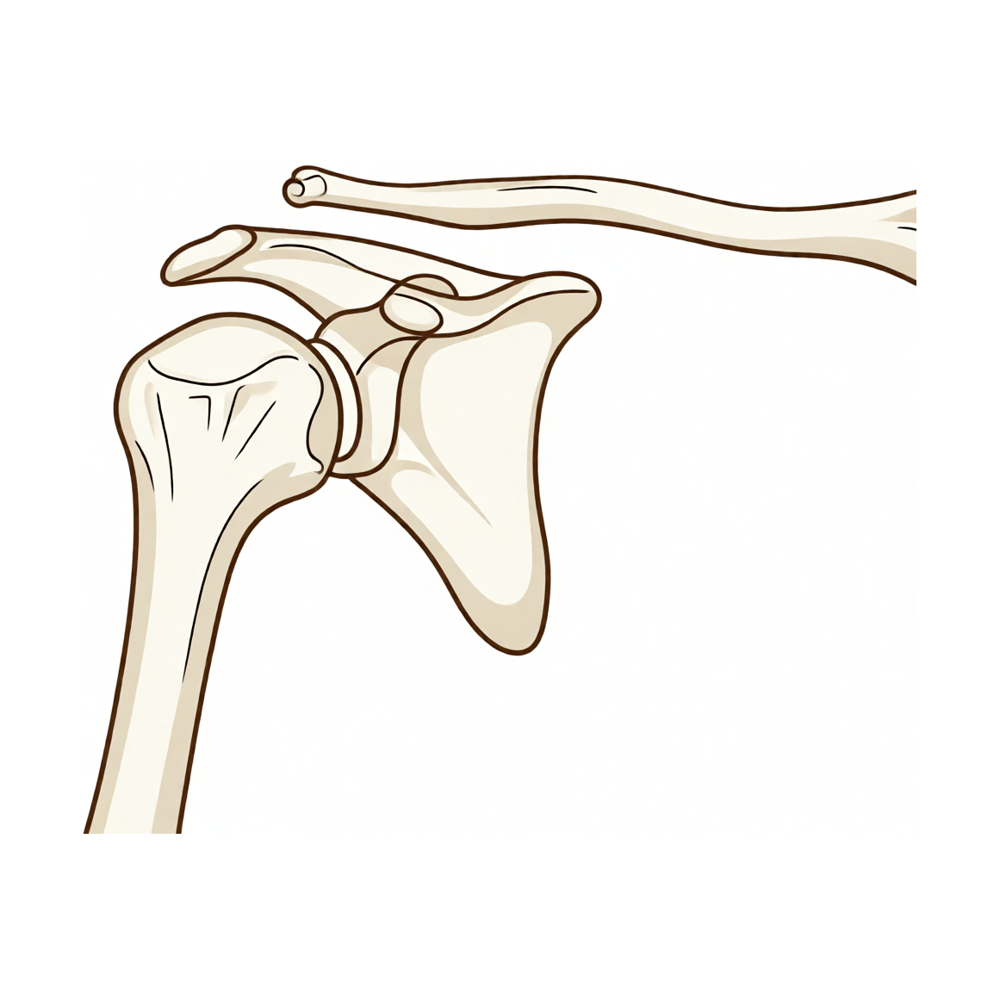
Ilustración de una separación de la articulación acromioclavicular; la parte externa de la clavícula se encuentra desplazada hacia arriba.
Una lesión de la articulación acromioclavicular (dislocación del hombro): el extremo externo de la clavícula se separa de la escápula. Root4(one) / Wikimedia Commons, CC BY 2.5

Esta página se tradujo automáticamente y todavía no la ha revisado un médico. La versión en inglés es la versión oficial.

Qué está sintiendo

Esta lesión casi siempre se produce tras una caída directa sobre la punta del hombro: al caerse de una bicicleta, tras un placaje o un contacto fuerte en el deporte, o simplemente al tropezar sobre una superficie dura. De inmediato, la parte superior del hombro duele, y durante el día o dos siguientes suele aparecer un bulto sensible o una protuberancia justo en la punta, donde la clavícula se une al hombro.

Esa zona duele al tacto y al levantar el brazo; además, estirar el brazo hacia el lado opuesto del cuerpo o por encima de la cabeza resulta especialmente incómodo. Al presionar ese bulto, se siente elástico, como si se estuviera presionando el extremo de la clavícula y esta volviera a recuperar su posición, algo similar a pulsar una tecla de piano. Muchas personas, instintivamente, sostienen el brazo con la mano, pues dejarlo colgar provoca tirantez en la articulación dolorida. A esto es a lo que se refieren cuando hablan de una “dislocación de hombro”, aunque no es lo mismo que una luxación, en la cual la cabeza del hueso del hombro sale de su cavidad articular.

¿Qué está ocurriendo realmente?

En la parte superior del hombro existe una pequeña articulación donde el extremo externo de la clavícula se une a una protuberancia ósea del omóplato llamada acromion. Esta es la articulación acromioclavicular (AC). Queda unida gracias a ligamentos: tanto los que rodean la propia articulación como un conjunto de ligamentos fuertes situados un poco más abajo (los ligamentos coraco-claviculares, o CC) que actúan como amarras que sujetan la clavícula.

Al caerse sobre el punto del hombro, el omóplato se desplaza hacia abajo mientras la clavícula permanece en su sitio, estiraban o desgarran esos ligamentos. Cuando solo se distienden los ligamentos propios de la articulación, la clavícula se mantiene más o menos en su posición. Si además se rompen esos ligamentos más fuertes, la clavícula deja de estar sujeta y asciende, lo que genera el bulto y el desnivel visibles.

Los cirujanos clasifican estas lesiones según el grado de daño mediante una escala llamada clasificación de Rockwood, del I al VI. Los grados I y II corresponden a distensiones con poco o ningún desplazamiento; el grado III se sitúa a medio camino, con un bulto perceptible pero el hombro aún funciona razonablemente bien; y los grados IV a VI representan lesiones de alto grado, en las que la clavícula queda muy desplazada. Cabe señalar que este problema es distinto tanto de una articulación AC desgastada y artrósica (por el desgaste acumulado a lo largo de los años) como de una fractura de clavícula (ambos temas los abordamos por separado).

¿Qué podemos hacer al respecto?

En nuestra clínica, el Dr. Kieran Hirpara aborda esta lesión confirmando primero el diagnóstico mediante una evaluación exhaustiva e imágenes. Por lo general, iniciamos con tratamiento no quirúrgico en casos crónicos y solo consideramos la cirugía si este enfoque no brinda suficiente alivio.

La buena noticia es que la mayoría de las lesiones de la articulación AC no requieren cirugía.

Las lesiones de grado bajo (grados I, II y la mayoría del grado III) se tratan de forma sencilla. Un cabestrillo para mayor comodidad, usado durante un par de semanas, reduce la carga sobre la articulación y permite que la irritación disminuya. Una vez que el dolor inicial disminuye, la fisioterapia restaura el movimiento y fortalece los músculos alrededor del omóplato y el hombro. En general, los pacientes recuperan una buena, a menudo total, funcionalidad y vuelven a sus actividades laborales y deportivas. La única advertencia es de tipo estético: incluso tras la curación completa, el bulto en la parte superior del hombro suele permanecer para siempre. Aunque se ve distinto al otro lado, normalmente no impide el correcto funcionamiento del hombro.

La cirugía se reserva para las lesiones que realmente la necesitan. Es decir, para las lesiones de grado alto (grados IV, V y VI), donde la clavícula está muy desplazada, y para un grupo menor de lesiones de grado bajo que siguen siendo dolorosas, débiles o inestables a pesar de un rehabilitación adecuada; especialmente en personas que realizan trabajos manuales pesados o actividades por encima de la cabeza, así como en atletas de alto nivel. La operación reconstruye los ligamentos desgarrados para volver a colocar la clavícula en su posición correcta y mantenerla allí mientras cicatriza. Hablamos de este procedimiento por separado en la sección sobre estabilización de la articulación AC.

Qué esperar

En la gran mayoría de los pacientes con lesiones de bajo grado, el pronóstico es favorable. El dolor agudo desaparece en unas pocas semanas y, con fisioterapia, el hombro recupera progresivamente su fuerza y amplitud de movimiento. La mayoría vuelve a sus actividades y deportes habituales, aceptando que el bulto que queda puede ser un recordatorio permanente de la lesión, sin que ello limite la funcionalidad del hombro. Incluso algunas lesiones de grado III, que a primera vista parecen graves, evolucionan bien sin necesidad de cirugía.

Las lesiones que requieren más tiempo para curarse son las de alto grado, así como aquellas de bajo grado que simplemente no mejoran. En estos casos, la cuestión clave es si la reconstrucción permitirá obtener un hombro más estable, fuerte y menos doloroso para soportar las exigencias de su vida diaria. La respuesta depende en gran medida de su trabajo, de su deporte y de cómo se comporte el hombro durante las primeras semanas. Existen pruebas suficientes de que esta decisión debe tomarse con calma, dándole al hombro una oportunidad de mejorar antes de optar por la cirugía, pero sin dejar una lesión de alto grado y claramente inestable sin tratamiento durante tiempo prolongado.

Cuándo consultar a un especialista

  • Una caída sobre la punta del hombro que provoca dolor, además de una protuberancia o abultamiento sensible en la parte superior; merece ser evaluada, tanto para determinar el grado de la lesión como para descartar una fractura de clavícula.
  • Un bulto evidente y prominente, acompañado de la sensación de que el brazo “se arrastra” hacia abajo: esto indica una lesión de mayor grado que requiere una evaluación adecuada.
  • Dolor o debilidad que no mejora tras varias semanas de uso de cabestrillo y fisioterapia, especialmente si realiza trabajos pesados, levanta objetos por encima de la cabeza o practica deportes.
  • Piel tensa sobre el bulto, cambios en el color de la piel en esa zona, o cualquier sensación de que el hueso presiona fuertemente contra la piel: es necesario acudir a un especialista lo antes posible.

En mayor profundidad

Esta sección profundiza más de lo necesario para que usted tome sus propias decisiones de tratamiento. Una lesión de la articulación acromioclavicular merece ser leída con más detenimiento, debido a una discrepancia que subyace en toda decisión al respecto: la cirugía corrige de manera fiable lo que muestra la radiografía, pero no modifica de forma fiable el funcionamiento final del hombro.

La cirugía corrige la imagen, no el resultado funcional

Las separaciones de alto grado se ven alarmantes en las radiografías: la clavícula queda claramente desplazada respecto al omóplato, y parece lógico pensar que volverla a su posición original sería beneficioso. Sin embargo, al analizar 954 pacientes con dislocaciones agudas de alto grado, no se observó diferencia clínica alguna en las puntuaciones de resultado funcional entre quienes recibieron tratamiento quirúrgico y quienes no. Las diferencias que sí existieron fueron en ambos sentidos: el grupo sin cirugía regresó al trabajo más rápidamente, aunque aceptó un resultado estético peor; en cambio, la cirugía logró una mejor reducción radiográfica [1].

Al limitarnos al tipo III según la clasificación de Rockwood —el grado en el que el debate sigue vigente—, un estudio de 2025 con 397 pacientes no halló diferencias significativas ni en la función objetiva ni en la percibida por los pacientes. La cirugía sí mejoró la reducción articular, pero conllevó un riesgo mayor de complicaciones quirúrgicas [2]. Un estudio previo con 646 hombros llegó a la misma conclusión desde otro enfoque: no hubo diferencias significativas en cuanto a aparición posterior de artritis o dolor persistente; sin embargo, la tasa de recurrencia en el grupo quirúrgico fue del 14% [3].

Tres conjuntos de evidencias independientes, una sola conclusión: la deformidad es real y permanente sin intervención quirúrgica; no obstante, corregirla no modifica de manera significativa la funcionalidad del hombro.

Por lo tanto, la decisión se basa en el bulto, no en la función

Esa redefinición es el valor práctico de la evidencia científica. Si la pregunta es “¿La cirugía hará que mi hombro funcione mejor?”, la respuesta honesta es que no se ha demostrado que así sea. Si la pregunta es “¿La cirugía eliminará esa protuberancia en mi clavícula?”, la respuesta suele ser sí; para algunas personas, en ciertas profesiones y deportes, eso por sí solo es suficiente motivo para operarse.

Es una razón válida para someterse a una cirugía. Simplemente se trata de un motivo distinto al que la mayoría de las personas supone que les está siendo ofrecido.

Ninguna técnica se ha impuesto, y una resulta claramente peor

Una vez tomada la decisión de operar, la elección del método de fijación genera mucha atención, pero poca diferenciación entre opciones. En 939 pacientes, los resultados subjetivos tras el tratamiento quirúrgico fueron similares en todas las modalidades; sin embargo, la fijación con placa de gancho y con agujas K presentaron las tasas de complicaciones más altas, mientras que la técnica modificada de Weaver-Dunn mostró la mayor tasa de reoperaciones no planificadas [4]. Al comparar las dos técnicas más empleadas en la actualidad en 399 pacientes, el uso de botones de sutura arrojó mejores puntuaciones funcionales y menor dolor que la placa de gancho, sin diferencias significativas en el tiempo quirúrgico, complicaciones o pérdida de reducción [5].

Los estudios de reconstrucción apuntan en la misma dirección. En 4,473 pacientes, las reconstrucciones biológicas y sintéticas obtuvieron mejores puntuaciones funcionales que la osteosíntesis [6]; además, en 1,020 pacientes las reconstrucciones anatómicas rindieron mejor, siendo las técnicas artroscópicas superiores a las abiertas [7].

En general, las reconstrucciones anatómicas modernas se agrupan en un mismo rango de resultados, mientras que los implantes rígidos más antiguos quedan por debajo. Dentro del grupo moderno, las diferencias son lo suficientemente pequeñas como para que la familiaridad del cirujano sea un criterio razonable a la hora de elegir.

Uno de cada cinco pacientes presenta otra lesión dentro de la articulación

Este hallazgo es importante saberlo, ya que dichas lesiones no se observan en las radiografías que sirven para el diagnóstico.
Al analizar a 860 pacientes con dislocaciones agudas de la articulación acromioclavicular tratadas quirúrgicamente, aproximadamente uno de cada cinco presentaba una lesión intraarticular asociada que requería intervención adicional; en la mayoría de los casos se trataba de patología del labrum o del manguito rotador. Por ello, los autores abogan por realizar una inspección artroscópica de la articulación, incluso cuando la propia reconstrucción se realiza mediante cirugía abierta [8].

Esto también explica por qué, en una minoría de casos, el hombro sigue doliendo tras una reconstrucción realizada correctamente: es posible que el paciente haya sufrido otra lesión desde el principio.

Referencias

[1] Chang N, Furey A, Kurdin A. Tratamiento quirúrgico frente a no quirúrgico de las dislocaciones agudas de grado alto del complejo acromioclavicular: una revisión sistemática y metaanálisis. J Orthop Trauma. 2018;32(1):1-9. https://doi.org/10.1097/BOT.0000000000001004

[2] Bianco Prevot L, Accetta R, Fozzato S, Moroder P, Basile G. Cirugía versus tratamiento conservador: ¿cuál es el mejor tratamiento para la dislocación aguda del complejo acromioclavicular de tipo III según Rockwood? EFORT Open Rev. 2025;10(3):141-50. https://doi.org/10.1530/EOR-2024-0077

[3] Longo UG, Ciuffreda M, Rizzello G, Mannering N, Maffulli N, Denaro V. Tratamiento quirúrgico frente a conservador de la dislocación del complejo acromioclavicular de tipo III: una revisión sistemática. Br Med Bull. 2017;122(1):31-49. https://doi.org/10.1093/bmb/ldx003

[4] Moatshe G, Kruckeberg BM, Chahla J, Godin JA, Cinque ME, Provencher MT, et al. Reconstrucción de los ligamentos acromioclavicular y coracoclavicular en casos de inestabilidad del complejo acromioclavicular: una revisión sistemática de los resultados clínicos y radiográficos. Arthroscopy. 2018;34(6):1979-95. https://doi.org/10.1016/j.arthro.2018.01.016

[5] Wang C, Meng J, Zhang Y, Shi M. Botón de sutura frente a placa con gancho para la dislocación aguda e inestable del complejo acromioclavicular: un metaanálisis. Am J Sports Med. 2019;48(4):1023-30. https://doi.org/10.1177/0363546519858745

[6] Saccomanno MF, Sircana G, Cardona V, Vismara V, Scaini A, Salvi AG, et al. Las reconstrucciones ligamentosas biológicas y sintéticas logran mejores resultados funcionales en comparación con la osteosíntesis en el tratamiento de la dislocación aguda del complejo acromioclavicular. Knee Surg Sports Traumatol Arthrosc. 2020;29(7):2175-93. https://doi.org/10.1007/s00167-020-06217-9

[7] Sircana G, Saccomanno MF, Mocini F, Campana V, Messinese P, Monteleone A, et al. La reconstrucción anatómica del complejo acromioclavicular proporciona los mejores resultados funcionales en el tratamiento de la inestabilidad crónica. Knee Surg Sports Traumatol Arthrosc. 2020;29(7):2237-48. https://doi.org/10.1007/s00167-020-06059-5

[8] Ruiz Ibán MA, Moreno Romero MS, Diaz Heredia J, Ruiz Díaz R, Muriel A, López-Alcalde J. La prevalencia de lesiones intraarticulares asociadas tras lesiones agudas del complejo acromioclavicular es del 20%. Una revisión sistemática y metaanálisis. Knee Surg Sports Traumatol Arthrosc. 2020;29(7):2024-38. https://doi.org/10.1007/s00167-020-05917-6


Creative Commons BY-NC 4.0

CC Creative Commons licence
BY Attribution — you must credit the source
NC NonCommercial — not for commercial use

Attribution-NonCommercial 4.0 International


Creative Commons Corporation ("Creative Commons") is not a law firm and does not provide legal services or legal advice. Distribution of Creative Commons public licenses does not create a lawyer-client or other relationship. Creative Commons makes its licenses and related information available on an "as-is" basis. Creative Commons gives no warranties regarding its licenses, any material licensed under their terms and conditions, or any related information. Creative Commons disclaims all liability for damages resulting from their use to the fullest extent possible.

Using Creative Commons Public Licenses

Creative Commons public licenses provide a standard set of terms and conditions that creators and other rights holders may use to share original works of authorship and other material subject to copyright and certain other rights specified in the public license below. The following considerations are for informational purposes only, are not exhaustive, and do not form part of our licenses.

Considerations for licensors: Our public licenses are intended for use by those authorized to give the public permission to use material in ways otherwise restricted by copyright and certain other rights. Our licenses are irrevocable. Licensors should read and understand the terms and conditions of the license they choose before applying it. Licensors should also secure all rights necessary before applying our licenses so that the public can reuse the material as expected. Licensors should clearly mark any material not subject to the license. This includes other CC- licensed material, or material used under an exception or limitation to copyright. More considerations for licensors: wiki.creativecommons.org/Considerations_for_licensors

Considerations for the public: By using one of our public licenses, a licensor grants the public permission to use the licensed material under specified terms and conditions. If the licensor's permission is not necessary for any reason--for example, because of any applicable exception or limitation to copyright--then that use is not regulated by the license. Our licenses grant only permissions under copyright and certain other rights that a licensor has authority to grant. Use of the licensed material may still be restricted for other reasons, including because others have copyright or other rights in the material. A licensor may make special requests, such as asking that all changes be marked or described. Although not required by our licenses, you are encouraged to respect those requests where reasonable. More considerations for the public: wiki.creativecommons.org/Considerations_for_licensees


Creative Commons Attribution-NonCommercial 4.0 International Public License

By exercising the Licensed Rights (defined below), You accept and agree to be bound by the terms and conditions of this Creative Commons Attribution-NonCommercial 4.0 International Public License ("Public License"). To the extent this Public License may be interpreted as a contract, You are granted the Licensed Rights in consideration of Your acceptance of these terms and conditions, and the Licensor grants You such rights in consideration of benefits the Licensor receives from making the Licensed Material available under these terms and conditions.

Section 1 -- Definitions.

a. Adapted Material means material subject to Copyright and Similar Rights that is derived from or based upon the Licensed Material and in which the Licensed Material is translated, altered, arranged, transformed, or otherwise modified in a manner requiring permission under the Copyright and Similar Rights held by the Licensor. For purposes of this Public License, where the Licensed Material is a musical work, performance, or sound recording, Adapted Material is always produced where the Licensed Material is synched in timed relation with a moving image.

b. Adapter's License means the license You apply to Your Copyright and Similar Rights in Your contributions to Adapted Material in accordance with the terms and conditions of this Public License.

c. Copyright and Similar Rights means copyright and/or similar rights closely related to copyright including, without limitation, performance, broadcast, sound recording, and Sui Generis Database Rights, without regard to how the rights are labeled or categorized. For purposes of this Public License, the rights specified in Section 2(b)(1)-(2) are not Copyright and Similar Rights.

d. Effective Technological Measures means those measures that, in the absence of proper authority, may not be circumvented under laws fulfilling obligations under Article 11 of the WIPO Copyright Treaty adopted on December 20, 1996, and/or similar international agreements.

e. Exceptions and Limitations means fair use, fair dealing, and/or any other exception or limitation to Copyright and Similar Rights that applies to Your use of the Licensed Material.

f. Licensed Material means the artistic or literary work, database, or other material to which the Licensor applied this Public License.

g. Licensed Rights means the rights granted to You subject to the terms and conditions of this Public License, which are limited to all Copyright and Similar Rights that apply to Your use of the Licensed Material and that the Licensor has authority to license.

h. Licensor means the individual(s) or entity(ies) granting rights under this Public License.

i. NonCommercial means not primarily intended for or directed towards commercial advantage or monetary compensation. For purposes of this Public License, the exchange of the Licensed Material for other material subject to Copyright and Similar Rights by digital file-sharing or similar means is NonCommercial provided there is no payment of monetary compensation in connection with the exchange.

j. Share means to provide material to the public by any means or process that requires permission under the Licensed Rights, such as reproduction, public display, public performance, distribution, dissemination, communication, or importation, and to make material available to the public including in ways that members of the public may access the material from a place and at a time individually chosen by them.

k. Sui Generis Database Rights means rights other than copyright resulting from Directive 96/9/EC of the European Parliament and of the Council of 11 March 1996 on the legal protection of databases, as amended and/or succeeded, as well as other essentially equivalent rights anywhere in the world.

l. You means the individual or entity exercising the Licensed Rights under this Public License. Your has a corresponding meaning.

Section 2 -- Scope.

a. License grant.

1. Subject to the terms and conditions of this Public License, the Licensor hereby grants You a worldwide, royalty-free, non-sublicensable, non-exclusive, irrevocable license to exercise the Licensed Rights in the Licensed Material to:

a. reproduce and Share the Licensed Material, in whole or in part, for NonCommercial purposes only; and

b. produce, reproduce, and Share Adapted Material for NonCommercial purposes only.

2. Exceptions and Limitations. For the avoidance of doubt, where Exceptions and Limitations apply to Your use, this Public License does not apply, and You do not need to comply with its terms and conditions.

3. Term. The term of this Public License is specified in Section 6(a).

4. Media and formats; technical modifications allowed. The Licensor authorizes You to exercise the Licensed Rights in all media and formats whether now known or hereafter created, and to make technical modifications necessary to do so. The Licensor waives and/or agrees not to assert any right or authority to forbid You from making technical modifications necessary to exercise the Licensed Rights, including technical modifications necessary to circumvent Effective Technological Measures. For purposes of this Public License, simply making modifications authorized by this Section 2(a) (4) never produces Adapted Material.

5. Downstream recipients.

a. Offer from the Licensor -- Licensed Material. Every recipient of the Licensed Material automatically receives an offer from the Licensor to exercise the Licensed Rights under the terms and conditions of this Public License.

b. No downstream restrictions. You may not offer or impose any additional or different terms or conditions on, or apply any Effective Technological Measures to, the Licensed Material if doing so restricts exercise of the Licensed Rights by any recipient of the Licensed Material.

6. No endorsement. Nothing in this Public License constitutes or may be construed as permission to assert or imply that You are, or that Your use of the Licensed Material is, connected with, or sponsored, endorsed, or granted official status by, the Licensor or others designated to receive attribution as provided in Section 3(a)(1)(A)(i).

b. Other rights.

1. Moral rights, such as the right of integrity, are not licensed under this Public License, nor are publicity, privacy, and/or other similar personality rights; however, to the extent possible, the Licensor waives and/or agrees not to assert any such rights held by the Licensor to the limited extent necessary to allow You to exercise the Licensed Rights, but not otherwise.

2. Patent and trademark rights are not licensed under this Public License.

3. To the extent possible, the Licensor waives any right to collect royalties from You for the exercise of the Licensed Rights, whether directly or through a collecting society under any voluntary or waivable statutory or compulsory licensing scheme. In all other cases the Licensor expressly reserves any right to collect such royalties, including when the Licensed Material is used other than for NonCommercial purposes.

Section 3 -- License Conditions.

Your exercise of the Licensed Rights is expressly made subject to the following conditions.

a. Attribution.

1. If You Share the Licensed Material (including in modified form), You must:

a. retain the following if it is supplied by the Licensor with the Licensed Material:

i. identification of the creator(s) of the Licensed Material and any others designated to receive attribution, in any reasonable manner requested by the Licensor (including by pseudonym if designated);

ii. a copyright notice;

iii. a notice that refers to this Public License;

iv. a notice that refers to the disclaimer of warranties;

v. a URI or hyperlink to the Licensed Material to the extent reasonably practicable;

b. indicate if You modified the Licensed Material and retain an indication of any previous modifications; and

c. indicate the Licensed Material is licensed under this Public License, and include the text of, or the URI or hyperlink to, this Public License.

2. You may satisfy the conditions in Section 3(a)(1) in any reasonable manner based on the medium, means, and context in which You Share the Licensed Material. For example, it may be reasonable to satisfy the conditions by providing a URI or hyperlink to a resource that includes the required information.

3. If requested by the Licensor, You must remove any of the information required by Section 3(a)(1)(A) to the extent reasonably practicable.

4. If You Share Adapted Material You produce, the Adapter's License You apply must not prevent recipients of the Adapted Material from complying with this Public License.

Section 4 -- Sui Generis Database Rights.

Where the Licensed Rights include Sui Generis Database Rights that apply to Your use of the Licensed Material:

a. for the avoidance of doubt, Section 2(a)(1) grants You the right to extract, reuse, reproduce, and Share all or a substantial portion of the contents of the database for NonCommercial purposes only;

b. if You include all or a substantial portion of the database contents in a database in which You have Sui Generis Database Rights, then the database in which You have Sui Generis Database Rights (but not its individual contents) is Adapted Material; and

c. You must comply with the conditions in Section 3(a) if You Share all or a substantial portion of the contents of the database.

For the avoidance of doubt, this Section 4 supplements and does not replace Your obligations under this Public License where the Licensed Rights include other Copyright and Similar Rights.

Section 5 -- Disclaimer of Warranties and Limitation of Liability.

a. UNLESS OTHERWISE SEPARATELY UNDERTAKEN BY THE LICENSOR, TO THE EXTENT POSSIBLE, THE LICENSOR OFFERS THE LICENSED MATERIAL AS-IS AND AS-AVAILABLE, AND MAKES NO REPRESENTATIONS OR WARRANTIES OF ANY KIND CONCERNING THE LICENSED MATERIAL, WHETHER EXPRESS, IMPLIED, STATUTORY, OR OTHER. THIS INCLUDES, WITHOUT LIMITATION, WARRANTIES OF TITLE, MERCHANTABILITY, FITNESS FOR A PARTICULAR PURPOSE, NON-INFRINGEMENT, ABSENCE OF LATENT OR OTHER DEFECTS, ACCURACY, OR THE PRESENCE OR ABSENCE OF ERRORS, WHETHER OR NOT KNOWN OR DISCOVERABLE. WHERE DISCLAIMERS OF WARRANTIES ARE NOT ALLOWED IN FULL OR IN PART, THIS DISCLAIMER MAY NOT APPLY TO YOU.

b. TO THE EXTENT POSSIBLE, IN NO EVENT WILL THE LICENSOR BE LIABLE TO YOU ON ANY LEGAL THEORY (INCLUDING, WITHOUT LIMITATION, NEGLIGENCE) OR OTHERWISE FOR ANY DIRECT, SPECIAL, INDIRECT, INCIDENTAL, CONSEQUENTIAL, PUNITIVE, EXEMPLARY, OR OTHER LOSSES, COSTS, EXPENSES, OR DAMAGES ARISING OUT OF THIS PUBLIC LICENSE OR USE OF THE LICENSED MATERIAL, EVEN IF THE LICENSOR HAS BEEN ADVISED OF THE POSSIBILITY OF SUCH LOSSES, COSTS, EXPENSES, OR DAMAGES. WHERE A LIMITATION OF LIABILITY IS NOT ALLOWED IN FULL OR IN PART, THIS LIMITATION MAY NOT APPLY TO YOU.

c. The disclaimer of warranties and limitation of liability provided above shall be interpreted in a manner that, to the extent possible, most closely approximates an absolute disclaimer and waiver of all liability.

Section 6 -- Term and Termination.

a. This Public License applies for the term of the Copyright and Similar Rights licensed here. However, if You fail to comply with this Public License, then Your rights under this Public License terminate automatically.

b. Where Your right to use the Licensed Material has terminated under Section 6(a), it reinstates:

1. automatically as of the date the violation is cured, provided it is cured within 30 days of Your discovery of the violation; or

2. upon express reinstatement by the Licensor.

For the avoidance of doubt, this Section 6(b) does not affect any right the Licensor may have to seek remedies for Your violations of this Public License.

c. For the avoidance of doubt, the Licensor may also offer the Licensed Material under separate terms or conditions or stop distributing the Licensed Material at any time; however, doing so will not terminate this Public License.

d. Sections 1, 5, 6, 7, and 8 survive termination of this Public License.

Section 7 -- Other Terms and Conditions.

a. The Licensor shall not be bound by any additional or different terms or conditions communicated by You unless expressly agreed.

b. Any arrangements, understandings, or agreements regarding the Licensed Material not stated herein are separate from and independent of the terms and conditions of this Public License.

Section 8 -- Interpretation.

a. For the avoidance of doubt, this Public License does not, and shall not be interpreted to, reduce, limit, restrict, or impose conditions on any use of the Licensed Material that could lawfully be made without permission under this Public License.

b. To the extent possible, if any provision of this Public License is deemed unenforceable, it shall be automatically reformed to the minimum extent necessary to make it enforceable. If the provision cannot be reformed, it shall be severed from this Public License without affecting the enforceability of the remaining terms and conditions.

c. No term or condition of this Public License will be waived and no failure to comply consented to unless expressly agreed to by the Licensor.

d. Nothing in this Public License constitutes or may be interpreted as a limitation upon, or waiver of, any privileges and immunities that apply to the Licensor or You, including from the legal processes of any jurisdiction or authority.


Creative Commons is not a party to its public licenses. Notwithstanding, Creative Commons may elect to apply one of its public licenses to material it publishes and in those instances will be considered the “Licensor.” The text of the Creative Commons public licenses is dedicated to the public domain under the CC0 Public Domain Dedication. Except for the limited purpose of indicating that material is shared under a Creative Commons public license or as otherwise permitted by the Creative Commons policies published at creativecommons.org/policies, Creative Commons does not authorize the use of the trademark "Creative Commons" or any other trademark or logo of Creative Commons without its prior written consent including, without limitation, in connection with any unauthorized modifications to any of its public licenses or any other arrangements, understandings, or agreements concerning use of licensed material. For the avoidance of doubt, this paragraph does not form part of the public licenses.

Creative Commons may be contacted at creativecommons.org.