Patients › Recovery
Preparación para la cirugía
Qué debe organizar en las semanas y días previos a una operación de extremidad superior: el correo electrónico con los detalles de la cirugía que le enviamos, el proceso de admisión en línea en el hospital, qué medicamentos debe suspender y cuáles debe seguir tomando, cómo preparar su cuerpo y su hogar, así como los factores que con mayor frecuencia provocan el aplazamiento de una operación.
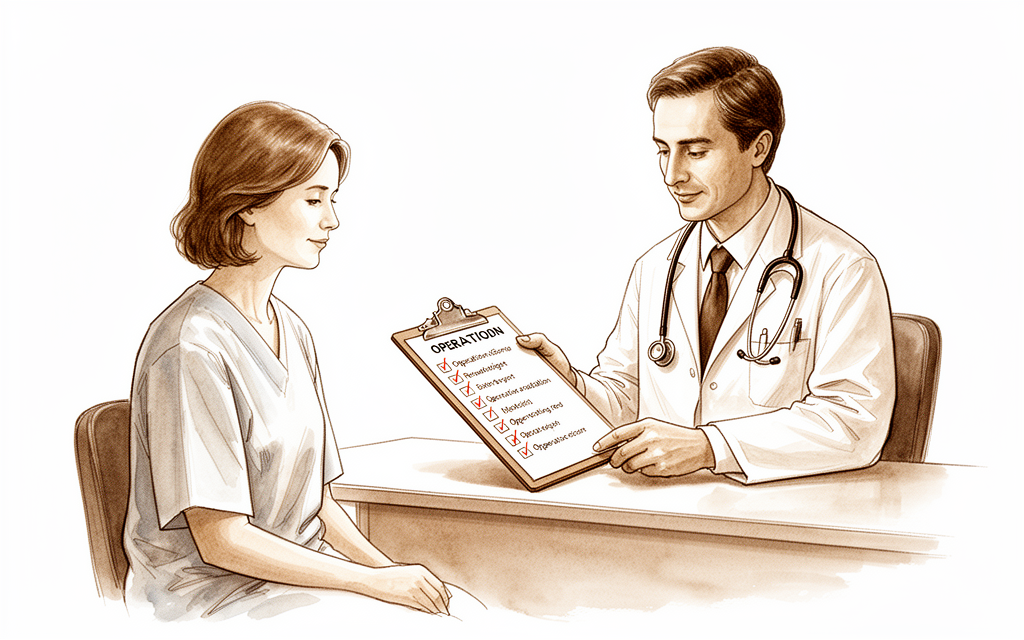
La mayor parte de los factores que determinan el buen desarrollo de una operación se deciden antes de que usted llegue al hospital. Esta página aborda las semanas y días previos a su cirugía: lo que le enviamos, lo que necesitamos de usted, qué puede hacer por sí mismo y qué debe tener preparado en casa. El propio día de la intervención, desde el ingreso hasta el regreso a casa, se describe en la página El día de su cirugía.
Su cita preoperatoria
Antes de la cirugía, nos verá en el consultorio para repasar el plan de tratamiento. Es el mejor momento para hacer preguntas, así que anótelas de antemano. Algunas preguntas útiles son: ¿qué se hará exactamente?, ¿cuáles son las alternativas?, ¿cómo será la recuperación semana a semana?, ¿cuándo podrá conducir y volver al trabajo?, y ¿qué complicaciones podrían surgir?
Lleve consigo:
- Una lista exacta de todos los medicamentos y suplementos que toma, con sus dosis: fármacos recetados, medicamentos de venta libre, inhaladores, cremas, vitaminas, aceite de pescado, cúrcuma y cualquier otro suplemento. Anótelo o lleve los envases originales.
- Cualquier estudio de imagen, radiografía o resultado de análisis de sangre reciente que haya recibido.
- Datos de otros médicos que participen en su tratamiento, en especial del cardiólogo o del especialista en diabetes.
- Los datos de su seguro médico y, si lo desea, una persona de apoyo.
También se le pedirá que firme un formulario de consentimiento. El consentimiento es un diálogo, no meramente una firma. Si algo no le queda claro, dígalo; preferimos explicarlo dos veces antes de que firme algo sobre lo que tenga dudas.
El correo electrónico que le enviamos
Una vez que se haya programado su operación, nuestra clínica le enviará por correo electrónico los detalles de la cirugía. Este es el documento más importante que recibirá, así que léalo detenidamente y guárdelo. En él se indica:
- El hospital, el día y la hora de ingreso, así como el lugar exacto del hospital al que debe dirigirse al llegar.
- El horario de ayuno: el momento a partir del cual no debe ingerir nada, ni siquiera agua. Si su procedimiento solo requiere anestesia local, el correo indicará que no es necesario ayunar.
- El nombre de su anestesista y cómo ponerse en contacto con él si tiene alguna pregunta sobre la anestesia o sobre los medicamentos que toma; para pacientes privados, también se indica cómo consultar sobre el costo de la anestesia.
- Si permanecerá en el hospital durante la noche o si podrá volver a casa el mismo día; en este último caso, necesitará a alguien que lo lleve y lo traiga de regreso.
- Cualquier tarifa que deba abonar a la clínica, así como las instrucciones para realizar el pago.
- Instrucciones específicas sobre medicamentos que le apliquen, si nos ha informado que toma medicamentos para diluir la sangre, medicamentos para la diabetes, insulina o fármacos inyectables para la diabetes o para perder peso.
El correo también incluye instrucciones para el proceso de ingreso en línea del hospital. El hospital no se pondrá en contacto con usted para solicitar sus datos; usted mismo deberá completar el formulario de ingreso en línea. Las instrucciones que adjuntamos le guiarán paso a paso, indicándole incluso los códigos correspondientes a su procedimiento que se solicitan en el formulario. Le rogamos que lo haga tan pronto como reciba el correo, no la noche anterior a la cirugía. En el formulario se preguntan aspectos relacionados con su salud general; es fundamental responder a todas las preguntas. En particular, indique lo siguiente:
- Apnea del sueño o ronquidos fuertes acompañados de somnolencia diurna (véase Sueño, dolor y recuperación).
- Presencia de marcapasos, stents cardíacos o cualquier enfermedad cardíaca o pulmonar.
- Alergias, ya sean a medicamentos, vendajes, cinta adhesiva o látex; asimismo, si porta un EpiPen.
- Cualquier problema que usted o algún familiar haya tenido con la anestesia.
- Dientes sueltos, coronas dentales o prótesis dentales.
- La posibilidad de estar embarazada.
Si ha transcurrido una semana desde su cita y aún no ha recibido los detalles de la cirugía, o si tiene dificultades para completar el proceso de ingreso en línea, llame a la clínica.
Medicamentos: qué debe suspenderse y qué debe seguir tomando
La mayoría de los medicamentos se toman con normalidad hasta la mañana de la cirugía, acompañados de un pequeño sorbo de agua. Sin embargo, algunos requieren una decisión, y dicha decisión depende de el tipo de operación y de usted; por eso nunca debe suspender ni modificar ningún medicamento por su cuenta. Las instrucciones aplicables a usted se encuentran en el correo con los detalles de su cirugía; si no están allí y usted cree que deberían estarlo, avísenos.
- Medicamentos para diluir la sangre. La aspirina y el clopidogrel (Plavix, así como los comprimidos combinados como DuoCover) se siguen tomando; infórmenos de que los toma para que el equipo médico esté al tanto. Los anticoagulantes como la warfarina, Xarelto, Eliquis y Pradaxa se suspenden 48 horas antes, y en su correo se indica el día y la hora de su última dosis. Siga esas indicaciones al pie de la letra; el momento elegido es crucial tanto para evitar sangrados durante la cirugía como para prevenir coágulos si se suspenden demasiado pronto. La página Medicamentos para diluir la sangre antes y después de la cirugía explica cómo actúan estos medicamentos y por qué el momento de la suspensión es tan importante. También consulte antes de reiniciar su toma.
- Medicamentos para la diabetes. No se deben tomar la mañana de la cirugía. Los fármacos más recientes conocidos como inhibidores de SGLT2 (Forxiga, Jardiance, Steglatro) se suspenden tres días antes, ya que pueden provocar una acumulación peligrosa de ácido en la sangre durante el ayuno.
- Insulina. Tome su insulina de acción prolongada habitual la noche anterior, como de costumbre. La mañana de la cirugía, tome la mitad de su dosis matutina habitual, o ajuste la cantidad según su nivel de glucosa. Nunca suspenda la insulina por completo, y lleve consigo a hospital la insulina y el medidor de glucosa.
- Medicamentos inyectables para la diabetes y la pérdida de peso, como Ozempic, Wegovy, Mounjaro, Trulicity y Byetta, se siguen tomando normalmente; no los suspenda. Lo que cambia es el período de ayuno: estos fármacos ralentizan el vaciado gástrico, por lo que el tiempo habitual de ayuno no basta para garantizar la seguridad bajo anestesia; por eso le pedimos que ayune 24 horas antes de la hora programada para la cirugía. En su correo se indicará el momento exacto. Consulte Medicamentos GLP-1 y cirugía ortopédica.
- Tabletas antiinflamatorias y algunos suplementos. El ibuprofeno, el naproxeno, el aceite de pescado, la cúrcuma, el ginkgo y las dosis altas de vitamina E pueden aumentar ligeramente el riesgo de sangrado durante la cirugía. Le indicaremos si debe suspenderlos y cuándo hacerlo.
- Medicamentos habituales para la presión arterial, el corazón, la tiroides, la epilepsia y el reflujo se toman como de costumbre la mañana de la cirugía, a menos que se le indique lo contrario.
- Antidepresivos y ansiolíticos deben continuarse tomándose. Dejarlos de repente dificulta, en lugar de facilitar, el período previo a la cirugía.
Si tiene alguna duda respecto a esta lista, llame a la consulta o póngase en contacto con su anestesista usando los datos que figuran en su correo. Es mucho más fácil resolver esas dudas por teléfono una semana antes que en el mostrador de admisiones el mismo día de la cirugía.
Preparación del cuerpo para la cirugía
Unas pocas semanas son suficientes para marcar una verdadera diferencia en la recuperación.
- Deje de fumar y de usar cigarrillos electrónicos. La nicotina estrecha los pequeños vasos sanguíneos de los que dependen la piel, los tendones y los huesos para sanar; además, aumenta el riesgo de complicaciones en la herida y de una cicatrización lenta. Cuanto antes lo haga, mejor; sin embargo, incluso dejarlo en las últimas semanas resulta útil. Consulte El tabaquismo y la cicatrización musculoesquelética.
- Controle su nivel de azúcar en sangre si padece diabetes. Niveles elevados de glucosa en las semanas previas a la cirugía incrementan el riesgo de infección de la herida. Si sus valores se han desviado, acuda a su médico de cabecera ahora mismo, no después.
- Aliméntese bien. La cicatrización depende de las proteínas; muchas personas llegan a la cirugía consumiendo menos de lo que necesitan. En la página Alimentación adecuada para la cicatrización encontrará objetivos prácticos.
- Reduzca el consumo de alcohol en la semana previa y no beba nada la noche anterior. El alcohol interfiere con la anestesia, el alivio del dolor y el sueño.
- Manténgase activo. Camine y mantenga en movimiento las articulaciones que no se van a operar. Estar en buena forma física general hace que la anestesia sea más segura y facilita las primeras semanas de recuperación.
Cuide la piel del brazo que se va a operar:
- No se afeite el brazo en la semana previa a la cirugía. Las hojas de afeitar dejan pequeños cortes por donde pueden introducirse bacterias. Si es necesario eliminar el vello, se recortará en el quirófano.
- Infórmenos de cualquier corte, arañazo, erupción, espinilla o infección en ese brazo, por pequeños que sean. Operar sobre piel infectada o dañada no es seguro; este es uno de los motivos más frecuentes por los que se debe posponer una intervención.
- Quítese el esmalte de uñas y las uñas postizas de la mano que se va a operar. Estos productos ocultan el lecho ungueal, que el equipo médico utiliza para evaluar su circulación sanguínea.
- Mantenga la piel limpia e hidratada; además, evite hacerse tatuajes o piercings en ese brazo durante el mes previo a la cirugía.
Preparación del hogar
Después de una cirugía de extremidad superior, durante un tiempo tendrá que hacerlo todo con una sola mano, a menudo con el brazo en cabestrillo, escayola o férula. Preparar la casa con antelación evitará muchas frustraciones después.
- Consiga a alguien que lo lleve al hospital, lo traiga de vuelta a casa y se quede con usted la primera noche. Esto no es opcional. No puede conducir tras la anestesia, y no debe quedarse solo durante la noche.
- Planifique cómo se desplazará. No puede conducir el día de la cirugía, ni tampoco mientras el brazo esté en cabestrillo, escayola o férula. En el caso de cirugía de hombro, esto implica al menos seis semanas, sea cual sea el brazo afectado. En la página Conducción tras cirugía de hombro y brazo encontrará los plazos según el tipo de operación. Organice transporte o planee un período sin coche antes de la fecha de la intervención.
- Organice su trabajo. El tiempo que necesite de baja depende tanto de su profesión como de la cirugía. Hable con su empleador con antelación; la página Volver al trabajo le ayudará a planificar esa conversación.
- Haga provisiones y prepárese. Cocine y congele algunas comidas. Coloque los objetos que usa a diario, en la cocina y el baño, a la altura de la cintura, para no tener que estirarse ni agacharse con un solo brazo. Compre champú y jabón en envases con dosificador, y una esponja de mango largo si va a someterse a cirugía de hombro.
- Ropa. Camisetas holgadas con abertura frontal y zapatos fáciles de poner. Practique ponerse y quitarse una camisa con una sola mano antes de que sea necesario hacerlo con el brazo en cabestrillo.
- Sueño. Tras una cirugía de hombro, la mayoría de las personas duermen con el torso elevado durante las primeras semanas. Vale la pena preparar con antelación un sillón reclinable o varias almohadas en forma de cuña. Consulte Uso y sueño con cabestrillo.
- Niños, mascotas y levantamiento de objetos. Consiga ayuda para cualquier tarea que requiera dos manos o mucha fuerza durante las primeras dos semanas: cuidar a niños pequeños, manejar perros grandes, hacer la compra, vaciar los contenedores de basura, etc.
- Alivio del dolor. Reponga sus recetas antes del día de la cirugía para tener los medicamentos en casa al regresar. La página Control del dolor tras la cirugía explica cómo utilizarlos correctamente.
Las páginas prácticas sobre Vida cotidiana tras cirugía de mano, muñeca o codo y Vida cotidiana tras cirugía de hombro merecen ser leídas antes de la operación, no después.
Ayuno
El correo electrónico con los detalles de su cirugía le indica a qué hora debe dejar de comer y beber. Siga estrictamente ese horario; se ha calculado en función de la hora de ingreso y de los medicamentos que usted toma. El ayuno es un requisito de seguridad para la anestesia, no una mera formalidad; incumplirlo es otra de las causas frecuentes por las que se pospone una operación el mismo día. La página Ayuno antes de la cirugía explica por qué es tan importante tener el estómago vacío bajo los efectos de la anestesia.
La semana previa: lista de verificación
- Se recibió el correo con los detalles de la cirugía; lo leyó y lo guardó en un lugar donde pueda encontrarlo.
- Se completó el proceso de admisión en línea en el hospital; se ingresaron los números de los artículos correspondientes.
- Se anotó la lista de medicamentos; sabe cuáles debe suspender y cuándo hacerlo.
- Si toma warfarina, Xarelto, Eliquis o Pradaxa: la fecha de la última dosis indicada en el correo ya está anotada en el calendario.
- Ya se ha organizado que alguien lo lleve al hospital, lo conduzca a casa y se quede con usted la primera noche.
- Su trabajo conoce las fechas de la intervención; se han dispuesto ayudas para cuando no pueda conducir.
- Las recetas ya se han surtido, las comidas están en el congelador y la casa se ha adaptado para usar solo una mano.
- La piel del brazo está intacta; no se ha afeitado y no lleva esmalte de uñas.
- El tiempo de ayuno indicado en el correo se ha anotado en un lugar donde lo verá la noche anterior a la cirugía.
- Si padece diabetes: la insulina y el glucómetro ya están empacados. Si lleva un EpiPen: también está empacado, para entregárselo al personal de enfermería.
Llámenos antes del día de la cirugía si:
- No ha recibido el correo con los detalles de la cirugía, o no puede completar el proceso de admisión en línea.
- Se siente mal en los días previos a la cirugía: resfriado, tos, fiebre o malestar estomacal.
- Hay un corte, erupción, mancha o cualquier señal de infección en el brazo que vamos a operar.
- No está seguro de si debe tomar o suspender algún medicamento.
- Ha ingerido alimentos o bebidas por error durante el período de ayuno.
- Algo relacionado con su salud ha cambiado desde la última vez que nos vimos.
- Simplemente ha cambiado de opinión o desea volver a hablar sobre la decisión.
Ninguna de estas situaciones supone una molestia. Preferimos mucho más recibir su llamada el día anterior a tener que enviarlo a casa sin operarlo por la mañana.
En profundidad
Advanced reading: the deeper science (optional)
Esta sección está dirigida a aquellos lectores que desean saber qué aspectos de la preparación para la cirugía realmente generan una diferencia medible. La mayor parte de la investigación aquí presentada proviene de reemplazos de cadera y rodilla, donde el gran número de pacientes facilita el estudio de este tema; las conclusiones son aplicables a la cirugía de miembro superior, pero no debe asumirse que los valores numéricos sean los mismos.
La conversación es más importante que el formato
El hallazgo más relevante es muy sencillo: lo que se espera de una operación puede modificarse mediante una conversación previa, y esas expectativas determinan el grado de satisfacción posterior. Ensayos aleatorizados sobre sesiones preoperatorias para pacientes sometidos a prótesis de cadera y rodilla demostraron que una sesión estructurada modificaba las expectativas de recuperación de los pacientes [1]. Asimismo, un programa formal de educación previo a la artroplastia se asoció con una estancia hospitalaria más corta [2].
También es importante el contenido de la conversación. Un ensayo aleatorizado que utilizó un breve video preoperatorio sobre los analgésicos opioides reveló que los pacientes que lo vieron consumieron significativamente menos medicación opiácea durante la primera semana tras la prótesis de rodilla [3]. Se trata de un efecto notable derivado de una intervención mínima; por eso dedicamos tiempo antes de su operación a explicarle cómo utilizar los analgésicos, no solo a describir el procedimiento quirúrgico. En el caso específico de la cirugía de mano, una revisión sistemática indica que la educación preoperatoria sobre opioides podría ser beneficiosa; sin embargo, se señala que existen pocos estudios y que su calidad es limitada [4].
Más tecnología no equivale a mayor comprensión
Dos estudios ponen freno al entusiasmo generado por estas innovaciones. En pacientes sometidos a artroscopia de cadera, la orientación mediante un modelo 3D impreso específico para cada paciente no mejoró ni la comprensión ni la satisfacción en comparación con el uso exclusivo de las imágenes de escaneo estándar [5]. Asimismo, una clase preoperatoria impartida durante una misión quirúrgica logró incrementar solo de forma moderada el conocimiento de los pacientes sobre el reemplazo articular [6]. La conclusión práctica es que lo que realmente importa es una explicación clara y pausada, permitiendo que los pacientes formulen preguntas; los recursos tecnológicos son opcionales.
Tenga cuidado con las fuentes que consulta
Muchas personas se preparan buscando información en línea; sin embargo, la calidad de dicha información es variable. Un análisis de videos de YouTube sobre tratamientos de inyección ortopédica reveló que el contenido era inconsistente, y que la mayoría provenía de usuarios independientes y no de organizaciones sanitarias [7]. Este wiki existe, en parte, por esa razón. Si encuentra información en otros sitios que contradiga lo que le hayan explicado en la consulta, tráigala con usted y la revisaremos juntos.
Referencias
[1] Mancuso CA, Graziano S, Briskie LM, Peterson MGE, Pellicci PM, Salvati EA, et al. Ensayos aleatorizados para modificar las expectativas preoperatorias de los pacientes respecto a las artroplastias de cadera y rodilla. Clin Orthop Relat Res. 2008;466(2):424-31. https://doi.org/10.1007/s11999-007-0052-z
[2] Yoon RS, Nellans KW, Geller JA, Kim AD, Jacobs MR, Macaulay W. La educación del paciente antes de la artroplastia de cadera o rodilla reduce la duración de la hospitalización. J Arthroplasty. 2010;25(4):547-51. https://doi.org/10.1016/j.arth.2009.03.012
[3] Maheu AR, Hohmann AL, Cozzarelli NF, Khan IA, Hozack WJ, Ilyas AM, et al. Eficacia del asesoramiento preoperatorio sobre opioides mediante videos en el consumo postoperatorio de opioides tras la artroplastia total de rodilla: un ensayo controlado aleatorizado prospectivo. J Arthroplasty. 2024;39(8):S143-7. https://doi.org/10.1016/j.arth.2024.02.027
[4] Babiker-Moore T, Clark CJ, Kavanagh E, Crook TB. Efecto de las intervenciones preoperatorias en los resultados postoperatorios tras cirugía electiva de mano: una revisión sistemática. Hand Therapy. 2024;30(1):19-33. https://doi.org/10.1177/17589983241301449
[5] Childs S, McVicker Z, Trombetta R, Awad H, Elfar J, Giordano B. Modelado tridimensional específico para cada paciente y su uso en el asesoramiento preoperatorio de pacientes sometidos a artroscopia de cadera. Orthop J Sports Med. 2018;6(9). https://doi.org/10.1177/2325967118794645
[6] Solano MA, Ramcharran KK, Jones LC, Sterling RS, Samaroo DR, Khanuja HS. Clases de educación preoperatoria para pacientes durante un viaje médico ortopédico: efectos en el conocimiento, la ansiedad y el consentimiento informado. J Arthroplasty. 2020;35(9):2410-7. https://doi.org/10.1016/j.arth.2020.04.084
[7] Sachs JP, Weissman AC, Wagner KR, Joyce KM, Pickens T, Bi AS, et al. YouTube no es una fuente fiable de información sobre ortobiológicos: implicaciones para la calidad, fiabilidad y exhaustividad del contenido, así como para la toma de decisiones del paciente. Arthroscopy. 2025;41(10):4225-34. https://doi.org/10.1016/j.arthro.2025.03.062
Evidence & references
This is the clinical evidence summary written for health professionals. It is technical, and it lists the research this page was built from. You do not need to read it to understand your treatment or to make a decision about it.
Overview
- Preoperative opioid education shows some indication of favourable outcomes following elective hand surgery, though the number of studies were small, evidence quality was poor, and data were limited [1].
- A formal preoperative educational program can help to lower a patient's length of stay following hip or knee arthroplasty [2].
- Enhanced office and staff protocols that are proactive rather than reactive can provide a safe and successful outpatient experience by anticipating potential postoperative pitfalls associated with same-day discharge [3].
- Patients' preoperative expectations of their recovery from total hip arthroplasty (THA) or total knee arthroplasty (TKA) can be modified by preoperative educational classes [4].
- Maximizing opportunities to improve communication, learning from others, and treating patients as more than their radiographic findings can help improve patient outcomes and trust [5].
- Underserved patients' knowledge about total joint arthroplasty increased only modestly after taking a preoperative class during a surgical mission trip [6].
- A pilot randomized controlled trial will evaluate the feasibility and satisfaction of the PREPS program for individuals undergoing a shoulder replacement [7].
- Preoperative counseling with haptic 3D hip models does not appear to favorably affect patient-reported understanding or satisfaction with regard to femoroacetabular impingement (FAI) when compared with the use of CT imaging alone [8].
Anatomy & Pathophysiology
- Enhanced office and staff protocols that are proactive rather than reactive can provide a safe and successful outpatient experience by anticipating potential postoperative pitfalls associated with the unique 'ripple effects' of same-day discharge [3].
- Preoperative video counseling significantly decreased opioid consumption within the first week after total knee arthroplasty [9].
Investigations
- A pilot randomized controlled trial is evaluating the feasibility and satisfaction of the PREPS program for individuals undergoing a shoulder replacement [7].
Complications
- Preoperative opioid education showed some indication of favourable outcomes, though the number of studies was small, evidence quality was poor, and data were limited [1].
- A formal preoperative educational program can help lower a patient's length of stay following hip or knee arthroplasty [2].
- Patients' preoperative expectations of recovery from total hip arthroplasty (THA) or total knee arthroplasty (TKA) can be modified by preoperative educational classes [4].
- A pilot randomized controlled trial is evaluating the feasibility and satisfaction of the PREPS program for individuals undergoing shoulder replacement [7].
- Preoperative counseling with haptic 3D hip models does not appear to favorably affect patient-reported understanding or satisfaction regarding femoroacetabular impingement (FAI) when compared with the use of CT imaging alone [8].
Recovery
- Preoperative opioid education shows some indication of favourable outcomes following elective hand surgery, though the number of studies was small, evidence quality was poor, and data were limited [1].
Key Evidence
- [L1] There was some indication of favourable outcomes following preoperative opioid education; however, the number of studies were small, the evidence quality was poor, and data were limited. [1] (10.1177/17589983241301449)
- [L3] A formal preoperative educational program can indeed help to lower a patient's length of stay. [2] (10.1016/j.arth.2009.03.012)
- [L5] Enhanced office and staff protocols that are proactive rather than reactive can provide a safe and successful outpatient experience by anticipating potential postoperative pitfalls associated with the unique 'ripple effects' of same-day discharge. [3] (10.1016/j.arth.2019.01.001)
- [L1] Patients' preoperative expectations of their recovery from THA or TKA can be modified by preoperative educational classes. [4] (10.1007/s11999-007-0052-z)
- [L5] The author emphasizes that maximizing opportunities to improve communication, learning from others, and treating patients as more than their radiographic findings can help improve patient outcomes and trust. [5] (10.2106/jbjs.24.01274)
- [L4] On this surgical mission trip, underserved patients' knowledge about total joint arthroplasty increased only modestly after taking a preoperative class. [6] (10.1016/j.arth.2020.04.084)
- [L2] This pilot randomized controlled trial will evaluate the feasibility and satisfaction of the PREPS program for individuals undergoing a shoulder replacement. [7] (10.1177/17589983251345393)
- [L2] Preoperative counseling with haptic 3D hip models does not appear to favorably affect patient-reported understanding or satisfaction with regard to FAI when compared with the use of CT imaging alone. [8] (10.1177/2325967118794645)
- [L1] This study found significantly decreased opioid consumption within the first week after TKA in patients who received preoperative video counseling. [9] (10.1016/j.arth.2024.02.027)
References
[1] The effect of preoperative interventions on postoperative outcomes following elective hand surgery: A systematic review. Hand Therapy. 2024. DOI: 10.1177/17589983241301449
[2] Patient Education Before Hip or Knee Arthroplasty Lowers Length of Stay. The Journal of Arthroplasty. 2010. DOI: 10.1016/j.arth.2009.03.012
[3] Considerations for Office and Staff Protocols for Outpatient Joint Replacement. The Journal of Arthroplasty. 2019. DOI: 10.1016/j.arth.2019.01.001
[4] Randomized Trials to Modify Patients' Preoperative Expectations of Hip and Knee Arthroplasties. Clinical Orthopaedics & Related Research. 2008. DOI: 10.1007/s11999-007-0052-z
[5] What’s Important: Treat the Patient Instead of the Disease. Journal of Bone and Joint Surgery. 2025. DOI: 10.2106/jbjs.24.01274
[6] Preoperative Patient Education Class During an Orthopedic Mission Trip: Effects on Knowledge, Anxiety, and Informed Consent. The Journal of Arthroplasty. 2020. DOI: 10.1016/j.arth.2020.04.084
[7] Preoperative rehabilitation and education program for surgery (PREPS): A pilot randomized control trial protocol. Hand Therapy. 2025. DOI: 10.1177/17589983251345393
[8] Patient-Specific 3-Dimensional Modeling and Its Use for Preoperative Counseling of Patients Undergoing Hip Arthroscopy. Orthopaedic Journal of Sports Medicine. 2018. DOI: 10.1177/2325967118794645
[9] The Efficacy of Preoperative Video-Based Opioid Counseling on Postoperative Opioid Consumption After Total Knee Arthroplasty: A Prospective Randomized Controlled Trial. The Journal of Arthroplasty. 2024. DOI: 10.1016/j.arth.2024.02.027