Skip to content

Patients › Elbow

Síndromes del nervio pronador, del lacerto y del interóseo anterior

PDF

Median nerve trouble high in the forearm — forearm aching with hand tingling (pronator) or weakness pinching the thumb and index (AIN), and how each is treated.
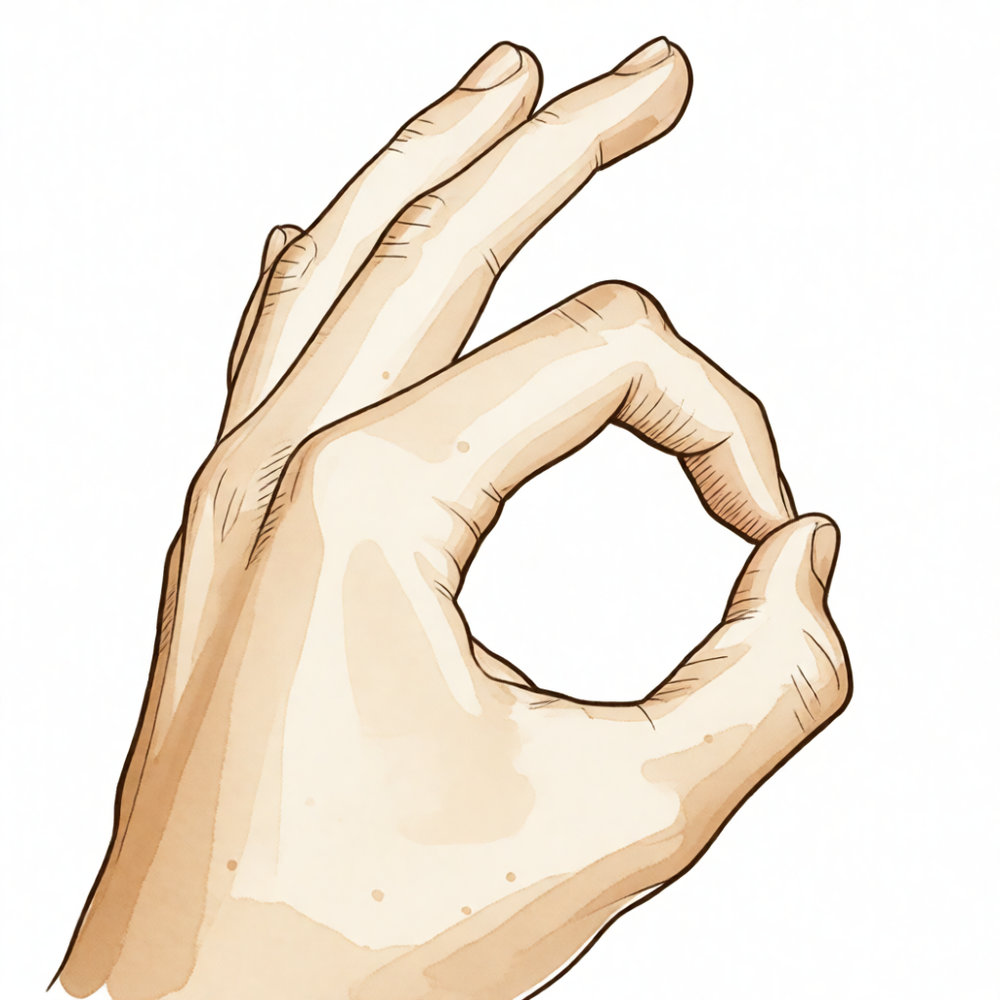
Una mano que intenta formar el signo de “OK”: esta es la prueba utilizada para detectar debilidad del nervio interóseo anterior.
La prueba de la “señal de OK”: en caso de parálisis del nervio interóseo anterior, el pulgar y el dedo índice no pueden formar un círculo completo; en su lugar, se cierran de forma plana. Wikimedia Commons ('OK Sign'), CC BY 2.5

Esta página se tradujo automáticamente y todavía no la ha revisado un médico. La versión en inglés es la versión oficial.

Qué está sintiendo

Todas estas afecciones se deben a que el nervio mediano queda comprimido en una zona alta, alrededor del codo y en la parte superior del antebrazo, en lugar de en la muñeca, donde es más conocida la compresión (síndrome del túnel carpiano). Cada una de ellas produce sensaciones bastante distintas.

El síndrome del pronador suele provocar un dolor profundo, sordo y cansado en la parte frontal del antebrazo; este dolor empeora con movimientos repetidos de torsión del antebrazo (girar un destornillador o una llave, retorcer un paño) o con un agarre fuerte. También puede sentir pins y agujas o entumecimiento en el pulgar, el índice y el dedo medio, así como en la palma y en la base carnosa del pulgar. A diferencia del síndrome del túnel carpiano, normalmente no le despierta por la noche, y la molestia se percibe más en el antebrazo que en la mano.

El síndrome del lacertus es un término más reciente que se utiliza para referirse a una variante específica de esta compresión alta; en este caso, el responsable es una banda fibrosa firme situada en el pliegue del codo, llamada lacertus fibrosus. Lo típico es que la mano se canse rápidamente y el agarre resulte torpe: escribir, teclear o usar herramientas se vuelve difícil; además aparece dolor en el antebrazo y una marcada sensibilidad justo debajo del pliegue del codo. Este síndrome también es una de las posibilidades que consideramos cuando la cirugía del túnel carpiano no mejora los síntomas esperados.

El síndrome del nervio interóseo anterior (NIA) es distinto también. Por lo general, causa poco o ningún entumecimiento. En cambio, se trata de un problema de debilidad: los músculos que flexionan la punta del pulgar y del índice dejan de funcionar adecuadamente. El signo clásico es la incapacidad de formar el gesto redondo de “OK”: al intentar acercar la punta del pulgar a la punta del índice, el gesto se convierte en una forma plana o triangular. Algunas personas notan primero un breve período de dolor en el brazo o el hombro, y después aparece la debilidad.

¿Qué está ocurriendo realmente?

Un único nervio grande, el nervio mediano, se extiende desde el cuello, baja por el brazo, cruza la parte frontal del codo y llega a la mano. Este nervio transmite tanto la sensibilidad (para parte de la mano) como la fuerza (a varios músculos).

En el síndrome del pronador, el nervio sufre compresión o irritación al atravesar el espacio estrecho que hay en el codo y en la parte superior del antebrazo. Puede quedar comprimido por una banda de tejido tensa cerca del pliegue del codo (el lacertus fibrosus; cuando esta banda es la causa, la afección se denomina cada vez más síndrome del lacertus), o al pasar entre o debajo de los músculos que giran la palma de la mano hacia abajo. Dado que la compresión ocurre en una zona alta (por encima de la muñeca), los síntomas afectan a la palma y a la base del pulgar; este es el principal indicio que lo diferencia del síndrome del túnel carpiano.

En el síndrome del AIN, el problema afecta a una rama profunda del nervio mediano que transmite únicamente fuerza, sin sensibilidad; por eso se observa debilidad pero no entumecimiento. En muchas personas este trastorno no se debe a una simple compresión, sino más bien a una irritación o inflamación del nervio (a veces tras una enfermedad viral o sin causa aparente); esto explica por qué suele recuperarse por sí solo.

¿Qué podemos hacer al respecto?

En el Mater Private Hospital Rockhampton, el Dr. Kieran Hirpara dirige a nuestro equipo especializado en el miembro superior para evaluar estas afecciones mediante una historia clínica detallada y un examen físico. Por lo general, comenzamos con tratamientos no quirúrgicos, reservando la cirugía únicamente si sus síntomas persisten a pesar del reposo y los cambios en sus actividades.

En todos estos casos, el primer paso casi siempre es el tratamiento no quirúrgico; en el caso específico del síndrome de AIN, la paciencia suele dar sus frutos.

Calmar la situación. Esto implica modificar aquellas actividades que empeoran los síntomas (reducir los movimientos de torsión repetitivos y el agarre de objetos pesados), a veces usar una férula para mantener el brazo en reposo, y darle tiempo al nervio para recuperarse. Las medidas simples para aliviar el dolor también resultan útiles.

Observación vigilante. La debilidad causada por el síndrome de AIN suele mejorar por sí sola en el transcurso de varios meses; por eso, lo habitual es observar y esperar, generalmente entre tres y seis meses, antes de considerar cualquier otra intervención. Muchas personas recuperan su fuerza en ese plazo sin necesidad de cirugía. A lo largo de este proceso, pueden realizarse estudios nerviosos o exploraciones de imagen para confirmar el diagnóstico y seguir la evolución.

La cirugía se reserva para aquellos pocos pacientes que no mejoran: cuando el síndrome del pronador sigue causando dolor a pesar de un período adecuado de reposo y cambios en las actividades, o cuando la debilidad por síndrome de AIN no muestra señales de recuperación tras la observación. La operación consiste en liberar las estructuras que ejercen presión sobre el nervio para permitir su recuperación. Cuando la compresión se produce específicamente en la banda lacertus, a menudo se puede realizar la intervención mediante una incisión breve bajo anestesia local mientras el paciente permanece despierto; esto permite comprobar de inmediato la fuerza muscular afectada, y la recuperación suele ser rápida.

Qué esperar

En general, estos trastornos tienen un buen pronóstico. El síndrome del nervio interósseo anterior, en particular, tiende a mejorar por sí solo; por eso no nos apresuramos a realizar una cirugía. La recuperación es gradual y se mide en meses en lugar de semanas, por lo que se requiere cierta paciencia; además, evaluaremos su progreso a lo largo del tiempo.

Cuando el tratamiento no quirúrgico no resulta suficiente y es necesaria una operación, la liberación del nervio suele aliviar el dolor en el síndrome del pronador y brinda la mejor posibilidad de recuperación de la fuerza en el síndrome del nervio interósseo anterior. No obstante, los nervios se recuperan lentamente, y la mejora continúa progresando durante muchos meses después de la cirugía.

Cuándo consultar a un especialista

  • Dolor sordo en el antebrazo acompañado de entumecimiento u hormigueo en el pulgar, el índice y el dedo medio, especialmente si también se siente en la palma y en la base del pulgar; este dolor empeora al girar el brazo o al agarrar objetos.
  • Dificultad repentina para formar el gesto habitual de “OK”, o debilidad al intentar juntar la punta del pulgar con la punta del dedo índice.
  • Síntomas en el antebrazo o la mano que no mejoran con reposo o cambios en las actividades, o debilidad que no se recupera tras varios meses.
  • Un episodio breve de dolor en el hombro o el brazo seguido de debilidad en la mano; merece ser evaluado, ya que este patrón puede indicar un problema nervioso que es beneficioso identificar a tiempo.

En mayor profundidad

Esta sección profundiza más de lo necesario para que usted tome sus propias decisiones terapéuticas. Estos síndromes merecen una lectura adicional debido a dos debates actuales que influyen en el tratamiento: un diagnóstico recientemente popular (síndrome del lacertus) cuyas pruebas de respaldo son realmente impresionantes, aunque escasas; y el problema del nervio interóseo anterior, que cada vez se considera que no se trata de una compresión en absoluto, lo cual implica que la descompresión probablemente no sea la solución.

La afección que probablemente no se deba a compresión

El síndrome del nervio interóseo anterior produce una debilidad característica: la incapacidad de flexionar la punta del pulgar y el dedo índice, de modo que la señal de “OK” se transforma en una pinza; no hay entumecimiento, ya que esta rama nerviosa solo inerva músculos.

Durante mucho tiempo se creyó que se trataba de un nervio atrapado por una banda fibrosa, y se trató en consecuencia. La visión actual es distinta: cada vez se considera más que se trata de una neuritis que, con frecuencia, se resuelve espontáneamente tras una observación prolongada [1]. La evolución natural de la enfermedad casi siempre conduce a una recuperación completa o casi completa, y no existen pruebas fiables de que la cirugía pueda modificar dicha evolución natural; por ello, debe evitarse el tratamiento quirúrgico apresurado hasta que estudios de calidad demuestren que la intervención temprana mejora o acelera la recuperación [2].

Esta redefinición es importante, pues ambos modelos implican acciones opuestas. Si una banda fibrosa está comprimiendo el nervio, toda demora genera daño permanente y la liberación temprana resulta urgente. Si el nervio está inflamado, la cirugía añade una herida a un proceso que de por sí se recuperaría; la recuperación nerviosa se mide en meses, tiempo suficiente para que una intervención realizada al sexto mes parezca haber tenido éxito.

Las recomendaciones prácticas reflejan dicha incertidumbre en lugar de resolverla: la descompresión quirúrgica está indicada cuando los síntomas persisten más de 6 meses en el síndrome del pronador, o al menos 12 meses en el síndrome del nervio interóseo anterior [1].

El síndrome del pronador es un diagnóstico controvertido

El síndrome del pronador consiste en la compresión del nervio mediano en una zona más proximal, alrededor del codo, lo que provoca dolor en el antebrazo y entumecimiento en los dedos inervados por dicho nervio. Dado que estos síntomas sensoriales coinciden casi por completo con los del síndrome del túnel carpiano —mucho más frecuente y fácilmente confirmable mediante estudios de conducción nerviosa—, resulta difícil diferenciar ambos cuadros.

En la literatura médica se describe como un diagnóstico controvertido, siendo habitual el tratamiento no quirúrgico durante un período prolongado de aproximadamente 12 meses [1]. Los signos que sugieren una afectación proximal en lugar de distal incluyen el entumecimiento en la palma, en la base del pulgar; este área es inervada por una rama que se separa del nervio antes de llegar al túnel carpiano, por lo que no se ve afectada en el síndrome del túnel carpiano. Además, se observa sensibilidad en el antebrazo y síntomas que aparecen al realizar rotaciones resistidas del antebrazo, en lugar de al mantener la muñeca en cierta posición durante la noche [3] [5].

Síndrome del lacertus: el nombre más reciente para una estructura conocida desde hace tiempo

El lacertus fibrosus, una lámina fibrosa que se extiende desde el tendón del bíceps hasta la parte anterior del codo, siempre ha formado parte de la lista de estructuras capaces de comprimir el nervio mediano. Lo que ha cambiado recientemente es la afirmación de que merece ocupar un lugar destacado en dicha lista. Un grupo liderado por la cirujana de mano sueca Elisabet Hagert sostiene que muchas personas diagnosticadas con fatiga no específica en el antebrazo, “torpeza manual” o cuyo tratamiento mediante liberación del túnel carpiano no surtió efecto, en realidad presentan compresión del nervio justo en este punto; este cuadro se conoce ahora ampliamente como síndrome del lacertus [6].

El diagnóstico es puramente clínico, ya que los estudios electrofisiológicos suelen ser normales en casos de compresión proximal del nervio mediano: se observa debilidad en tres músculos específicos inervados por dicho nervio (los flexores de la punta del pulgar y del dedo índice, así como un flexor de la muñeca), acompañada de sensibilidad al tacto directamente sobre el lacertus fibrosus [6]. El tratamiento propuesto consiste en una liberación quirúrgica breve bajo anestesia local, con el paciente plenamente consciente, de modo que se pueda volver a evaluar la fuerza muscular minutos después de seccionar la banda fibrosa. Los resultados reportados son sorprendentes: en la serie más grande publicada, 93 pacientes pasaron de una puntuación media de discapacidad (según la escala QuickDASH) de 53 antes de la cirugía a 8 inmediatamente después; la fuerza de agarre aumentó de 16 a 24 kg, y los trabajadores de oficina solían volver a sus labores en cuestión de días [7].

Estos resultados notables merecen ser analizados críticamente, y el escepticismo al respecto también ha sido documentado. Se ha observado que la sensibilidad al tacto sobre el lacertus fibrosus es frecuente incluso en personas completamente sanas: un estudio detectó este signo en 14 de 72 brazos sin síntomas (aproximadamente uno de cada cinco), lo cual resta valor diagnóstico a la sensibilidad por sí sola y hace que la comparación con el otro brazo resulte poco fiable [8]. Otros investigadores señalan que actualmente el término “síndrome del lacertus” se emplea para describir dos problemas distintos: la verdadera compresión nerviosa y un patrón de sobreuso muscular en la misma zona; por ello, este único nombre podría estar siendo utilizado de forma excesiva para abarcar ambos cuadros [9]. No existen ensayos aleatorizados, el seguimiento clínico en las series publicadas es breve, y un trastorno diagnosticado sin pruebas objetivas y tratado mediante una cirugía con retroalimentación inmediata es precisamente el escenario en el que los efectos de selección y placebo pueden distorsionar los resultados.

La postura equilibrada, que ya se refleja en esta página, es la siguiente: el lacertus fibrosus es una estructura real capaz de comprimir el nervio mediano; cuando se presenta el patrón específico de debilidad muscular y sensibilidad al tacto, una liberación quirúrgica dirigida constituye una intervención menor con una recuperación rápida. Tanto el entusiasmo como la duda forman parte de la literatura médica actual.

¿Por qué la paciencia está justificada y no es simplemente una medida de precaución?

En ambas afecciones, el procedimiento recomendado es una observación prolongada, algo difícil de aceptar mientras persisten los síntomas. Hay dos razones que lo justifican.

La primera es la evolución natural de la enfermedad: en el síndrome del nervio interóseo anterior, la recuperación es el desenlace esperado sin necesidad de intervención [2]. La segunda es que el diagnóstico alternativo en casos de parálisis dolorosa de aparición súbita es la amiotrofia neuralgica, conocida como síndrome de Parsonage-Turner; se trata de una afección inflamatoria de los nervios que, por lo general, comienza con un dolor intenso en el hombro o el brazo que dura días o semanas, seguido de debilidad muscular a medida que el dolor disminuye [4]. Es una patología médica, no mecánica, y ninguna descompresión resulta eficaz para tratarla.

Por consiguiente, la aparición repentina de dolor intenso antes de la debilidad muscular es el rasgo más importante que debe describirse con precisión, pues desvía el diagnóstico probable del ámbito de la compresión nerviosa.

Referencias

[1] Rodner CM, Tinsley BA, O'Malley MP. Síndrome del pronador y síndrome del nervio interóseo anterior. J Am Acad Orthop Surg. 2013;21(5):268-75. https://doi.org/10.5435/JAAOS-21-05-268

[2] Nzeako OJ, Tahmassebi R. Disfunción idiopática del nervio interóseo anterior. J Hand Surg Am. 2015;40(11):2277-8. https://doi.org/10.1016/j.jhsa.2015.07.021

[3] Balcerzak AA, Ruzik K, Tubbs RS, Konschake M, Podgórski M, Borowski A, et al. Cómo diferenciar el síndrome del pronador del síndrome del túnel carpiano: una comparación clínica exhaustiva. Diagnostics (Basel). 2022;12(10):2433. https://doi.org/10.3390/diagnostics12102433

[4] Stutz CM. Amiotrofia neuralgica: síndrome de Parsonage-Turner. J Hand Surg Am. 2010;35(12):2104-6. https://doi.org/10.1016/j.jhsa.2010.09.010

[5] Presciutti S, Rodner CM. Síndrome del pronador. J Hand Surg Am. 2011;36(5):907-9. https://doi.org/10.1016/j.jhsa.2011.02.014

[6] Hagert E. Diagnóstico clínico y tratamiento quirúrgico con anestesia local del atrapamiento del nervio mediano proximal en el codo: un estudio prospectivo. Hand (N Y). 2013;8(1):41-6. https://doi.org/10.1007/s11552-012-9483-4

[7] Ahmad AA, Abdullah S, Thavamany AS, Tong CY, Ganapathy SS. Síndrome del lacertus: análisis de resultados tras la liberación del lacertus. J Hand Surg Glob Online. 2023;5(4):498-502. https://doi.org/10.1016/j.jhsg.2023.03.001

[8] Fang J, Zhang LQ, Tang JB. Incidencia de sensibilidad local en el lacertus fibrosus en personas sanas. J Hand Surg Eur Vol. 2025;51(1):107-8. https://doi.org/10.1177/17531934251346595

[9] Berezin PA, Zolotov AS. Síndrome del lacertus: un mismo término para dos patologías distintas. J Hand Surg Eur Vol. 2023;48(8):825-6. https://doi.org/10.1177/17531934231170347


Creative Commons BY-NC 4.0

CC Creative Commons licence
BY Attribution — you must credit the source
NC NonCommercial — not for commercial use

Attribution-NonCommercial 4.0 International


Creative Commons Corporation ("Creative Commons") is not a law firm and does not provide legal services or legal advice. Distribution of Creative Commons public licenses does not create a lawyer-client or other relationship. Creative Commons makes its licenses and related information available on an "as-is" basis. Creative Commons gives no warranties regarding its licenses, any material licensed under their terms and conditions, or any related information. Creative Commons disclaims all liability for damages resulting from their use to the fullest extent possible.

Using Creative Commons Public Licenses

Creative Commons public licenses provide a standard set of terms and conditions that creators and other rights holders may use to share original works of authorship and other material subject to copyright and certain other rights specified in the public license below. The following considerations are for informational purposes only, are not exhaustive, and do not form part of our licenses.

Considerations for licensors: Our public licenses are intended for use by those authorized to give the public permission to use material in ways otherwise restricted by copyright and certain other rights. Our licenses are irrevocable. Licensors should read and understand the terms and conditions of the license they choose before applying it. Licensors should also secure all rights necessary before applying our licenses so that the public can reuse the material as expected. Licensors should clearly mark any material not subject to the license. This includes other CC- licensed material, or material used under an exception or limitation to copyright. More considerations for licensors: wiki.creativecommons.org/Considerations_for_licensors

Considerations for the public: By using one of our public licenses, a licensor grants the public permission to use the licensed material under specified terms and conditions. If the licensor's permission is not necessary for any reason--for example, because of any applicable exception or limitation to copyright--then that use is not regulated by the license. Our licenses grant only permissions under copyright and certain other rights that a licensor has authority to grant. Use of the licensed material may still be restricted for other reasons, including because others have copyright or other rights in the material. A licensor may make special requests, such as asking that all changes be marked or described. Although not required by our licenses, you are encouraged to respect those requests where reasonable. More considerations for the public: wiki.creativecommons.org/Considerations_for_licensees


Creative Commons Attribution-NonCommercial 4.0 International Public License

By exercising the Licensed Rights (defined below), You accept and agree to be bound by the terms and conditions of this Creative Commons Attribution-NonCommercial 4.0 International Public License ("Public License"). To the extent this Public License may be interpreted as a contract, You are granted the Licensed Rights in consideration of Your acceptance of these terms and conditions, and the Licensor grants You such rights in consideration of benefits the Licensor receives from making the Licensed Material available under these terms and conditions.

Section 1 -- Definitions.

a. Adapted Material means material subject to Copyright and Similar Rights that is derived from or based upon the Licensed Material and in which the Licensed Material is translated, altered, arranged, transformed, or otherwise modified in a manner requiring permission under the Copyright and Similar Rights held by the Licensor. For purposes of this Public License, where the Licensed Material is a musical work, performance, or sound recording, Adapted Material is always produced where the Licensed Material is synched in timed relation with a moving image.

b. Adapter's License means the license You apply to Your Copyright and Similar Rights in Your contributions to Adapted Material in accordance with the terms and conditions of this Public License.

c. Copyright and Similar Rights means copyright and/or similar rights closely related to copyright including, without limitation, performance, broadcast, sound recording, and Sui Generis Database Rights, without regard to how the rights are labeled or categorized. For purposes of this Public License, the rights specified in Section 2(b)(1)-(2) are not Copyright and Similar Rights.

d. Effective Technological Measures means those measures that, in the absence of proper authority, may not be circumvented under laws fulfilling obligations under Article 11 of the WIPO Copyright Treaty adopted on December 20, 1996, and/or similar international agreements.

e. Exceptions and Limitations means fair use, fair dealing, and/or any other exception or limitation to Copyright and Similar Rights that applies to Your use of the Licensed Material.

f. Licensed Material means the artistic or literary work, database, or other material to which the Licensor applied this Public License.

g. Licensed Rights means the rights granted to You subject to the terms and conditions of this Public License, which are limited to all Copyright and Similar Rights that apply to Your use of the Licensed Material and that the Licensor has authority to license.

h. Licensor means the individual(s) or entity(ies) granting rights under this Public License.

i. NonCommercial means not primarily intended for or directed towards commercial advantage or monetary compensation. For purposes of this Public License, the exchange of the Licensed Material for other material subject to Copyright and Similar Rights by digital file-sharing or similar means is NonCommercial provided there is no payment of monetary compensation in connection with the exchange.

j. Share means to provide material to the public by any means or process that requires permission under the Licensed Rights, such as reproduction, public display, public performance, distribution, dissemination, communication, or importation, and to make material available to the public including in ways that members of the public may access the material from a place and at a time individually chosen by them.

k. Sui Generis Database Rights means rights other than copyright resulting from Directive 96/9/EC of the European Parliament and of the Council of 11 March 1996 on the legal protection of databases, as amended and/or succeeded, as well as other essentially equivalent rights anywhere in the world.

l. You means the individual or entity exercising the Licensed Rights under this Public License. Your has a corresponding meaning.

Section 2 -- Scope.

a. License grant.

1. Subject to the terms and conditions of this Public License, the Licensor hereby grants You a worldwide, royalty-free, non-sublicensable, non-exclusive, irrevocable license to exercise the Licensed Rights in the Licensed Material to:

a. reproduce and Share the Licensed Material, in whole or in part, for NonCommercial purposes only; and

b. produce, reproduce, and Share Adapted Material for NonCommercial purposes only.

2. Exceptions and Limitations. For the avoidance of doubt, where Exceptions and Limitations apply to Your use, this Public License does not apply, and You do not need to comply with its terms and conditions.

3. Term. The term of this Public License is specified in Section 6(a).

4. Media and formats; technical modifications allowed. The Licensor authorizes You to exercise the Licensed Rights in all media and formats whether now known or hereafter created, and to make technical modifications necessary to do so. The Licensor waives and/or agrees not to assert any right or authority to forbid You from making technical modifications necessary to exercise the Licensed Rights, including technical modifications necessary to circumvent Effective Technological Measures. For purposes of this Public License, simply making modifications authorized by this Section 2(a) (4) never produces Adapted Material.

5. Downstream recipients.

a. Offer from the Licensor -- Licensed Material. Every recipient of the Licensed Material automatically receives an offer from the Licensor to exercise the Licensed Rights under the terms and conditions of this Public License.

b. No downstream restrictions. You may not offer or impose any additional or different terms or conditions on, or apply any Effective Technological Measures to, the Licensed Material if doing so restricts exercise of the Licensed Rights by any recipient of the Licensed Material.

6. No endorsement. Nothing in this Public License constitutes or may be construed as permission to assert or imply that You are, or that Your use of the Licensed Material is, connected with, or sponsored, endorsed, or granted official status by, the Licensor or others designated to receive attribution as provided in Section 3(a)(1)(A)(i).

b. Other rights.

1. Moral rights, such as the right of integrity, are not licensed under this Public License, nor are publicity, privacy, and/or other similar personality rights; however, to the extent possible, the Licensor waives and/or agrees not to assert any such rights held by the Licensor to the limited extent necessary to allow You to exercise the Licensed Rights, but not otherwise.

2. Patent and trademark rights are not licensed under this Public License.

3. To the extent possible, the Licensor waives any right to collect royalties from You for the exercise of the Licensed Rights, whether directly or through a collecting society under any voluntary or waivable statutory or compulsory licensing scheme. In all other cases the Licensor expressly reserves any right to collect such royalties, including when the Licensed Material is used other than for NonCommercial purposes.

Section 3 -- License Conditions.

Your exercise of the Licensed Rights is expressly made subject to the following conditions.

a. Attribution.

1. If You Share the Licensed Material (including in modified form), You must:

a. retain the following if it is supplied by the Licensor with the Licensed Material:

i. identification of the creator(s) of the Licensed Material and any others designated to receive attribution, in any reasonable manner requested by the Licensor (including by pseudonym if designated);

ii. a copyright notice;

iii. a notice that refers to this Public License;

iv. a notice that refers to the disclaimer of warranties;

v. a URI or hyperlink to the Licensed Material to the extent reasonably practicable;

b. indicate if You modified the Licensed Material and retain an indication of any previous modifications; and

c. indicate the Licensed Material is licensed under this Public License, and include the text of, or the URI or hyperlink to, this Public License.

2. You may satisfy the conditions in Section 3(a)(1) in any reasonable manner based on the medium, means, and context in which You Share the Licensed Material. For example, it may be reasonable to satisfy the conditions by providing a URI or hyperlink to a resource that includes the required information.

3. If requested by the Licensor, You must remove any of the information required by Section 3(a)(1)(A) to the extent reasonably practicable.

4. If You Share Adapted Material You produce, the Adapter's License You apply must not prevent recipients of the Adapted Material from complying with this Public License.

Section 4 -- Sui Generis Database Rights.

Where the Licensed Rights include Sui Generis Database Rights that apply to Your use of the Licensed Material:

a. for the avoidance of doubt, Section 2(a)(1) grants You the right to extract, reuse, reproduce, and Share all or a substantial portion of the contents of the database for NonCommercial purposes only;

b. if You include all or a substantial portion of the database contents in a database in which You have Sui Generis Database Rights, then the database in which You have Sui Generis Database Rights (but not its individual contents) is Adapted Material; and

c. You must comply with the conditions in Section 3(a) if You Share all or a substantial portion of the contents of the database.

For the avoidance of doubt, this Section 4 supplements and does not replace Your obligations under this Public License where the Licensed Rights include other Copyright and Similar Rights.

Section 5 -- Disclaimer of Warranties and Limitation of Liability.

a. UNLESS OTHERWISE SEPARATELY UNDERTAKEN BY THE LICENSOR, TO THE EXTENT POSSIBLE, THE LICENSOR OFFERS THE LICENSED MATERIAL AS-IS AND AS-AVAILABLE, AND MAKES NO REPRESENTATIONS OR WARRANTIES OF ANY KIND CONCERNING THE LICENSED MATERIAL, WHETHER EXPRESS, IMPLIED, STATUTORY, OR OTHER. THIS INCLUDES, WITHOUT LIMITATION, WARRANTIES OF TITLE, MERCHANTABILITY, FITNESS FOR A PARTICULAR PURPOSE, NON-INFRINGEMENT, ABSENCE OF LATENT OR OTHER DEFECTS, ACCURACY, OR THE PRESENCE OR ABSENCE OF ERRORS, WHETHER OR NOT KNOWN OR DISCOVERABLE. WHERE DISCLAIMERS OF WARRANTIES ARE NOT ALLOWED IN FULL OR IN PART, THIS DISCLAIMER MAY NOT APPLY TO YOU.

b. TO THE EXTENT POSSIBLE, IN NO EVENT WILL THE LICENSOR BE LIABLE TO YOU ON ANY LEGAL THEORY (INCLUDING, WITHOUT LIMITATION, NEGLIGENCE) OR OTHERWISE FOR ANY DIRECT, SPECIAL, INDIRECT, INCIDENTAL, CONSEQUENTIAL, PUNITIVE, EXEMPLARY, OR OTHER LOSSES, COSTS, EXPENSES, OR DAMAGES ARISING OUT OF THIS PUBLIC LICENSE OR USE OF THE LICENSED MATERIAL, EVEN IF THE LICENSOR HAS BEEN ADVISED OF THE POSSIBILITY OF SUCH LOSSES, COSTS, EXPENSES, OR DAMAGES. WHERE A LIMITATION OF LIABILITY IS NOT ALLOWED IN FULL OR IN PART, THIS LIMITATION MAY NOT APPLY TO YOU.

c. The disclaimer of warranties and limitation of liability provided above shall be interpreted in a manner that, to the extent possible, most closely approximates an absolute disclaimer and waiver of all liability.

Section 6 -- Term and Termination.

a. This Public License applies for the term of the Copyright and Similar Rights licensed here. However, if You fail to comply with this Public License, then Your rights under this Public License terminate automatically.

b. Where Your right to use the Licensed Material has terminated under Section 6(a), it reinstates:

1. automatically as of the date the violation is cured, provided it is cured within 30 days of Your discovery of the violation; or

2. upon express reinstatement by the Licensor.

For the avoidance of doubt, this Section 6(b) does not affect any right the Licensor may have to seek remedies for Your violations of this Public License.

c. For the avoidance of doubt, the Licensor may also offer the Licensed Material under separate terms or conditions or stop distributing the Licensed Material at any time; however, doing so will not terminate this Public License.

d. Sections 1, 5, 6, 7, and 8 survive termination of this Public License.

Section 7 -- Other Terms and Conditions.

a. The Licensor shall not be bound by any additional or different terms or conditions communicated by You unless expressly agreed.

b. Any arrangements, understandings, or agreements regarding the Licensed Material not stated herein are separate from and independent of the terms and conditions of this Public License.

Section 8 -- Interpretation.

a. For the avoidance of doubt, this Public License does not, and shall not be interpreted to, reduce, limit, restrict, or impose conditions on any use of the Licensed Material that could lawfully be made without permission under this Public License.

b. To the extent possible, if any provision of this Public License is deemed unenforceable, it shall be automatically reformed to the minimum extent necessary to make it enforceable. If the provision cannot be reformed, it shall be severed from this Public License without affecting the enforceability of the remaining terms and conditions.

c. No term or condition of this Public License will be waived and no failure to comply consented to unless expressly agreed to by the Licensor.

d. Nothing in this Public License constitutes or may be interpreted as a limitation upon, or waiver of, any privileges and immunities that apply to the Licensor or You, including from the legal processes of any jurisdiction or authority.


Creative Commons is not a party to its public licenses. Notwithstanding, Creative Commons may elect to apply one of its public licenses to material it publishes and in those instances will be considered the “Licensor.” The text of the Creative Commons public licenses is dedicated to the public domain under the CC0 Public Domain Dedication. Except for the limited purpose of indicating that material is shared under a Creative Commons public license or as otherwise permitted by the Creative Commons policies published at creativecommons.org/policies, Creative Commons does not authorize the use of the trademark "Creative Commons" or any other trademark or logo of Creative Commons without its prior written consent including, without limitation, in connection with any unauthorized modifications to any of its public licenses or any other arrangements, understandings, or agreements concerning use of licensed material. For the avoidance of doubt, this paragraph does not form part of the public licenses.

Creative Commons may be contacted at creativecommons.org.