¿Por qué se ha recomendado esta operación?
El reemplazo de disco cervical consiste en sustituir un disco desgastado en el cuello por uno artificial que mantiene su movilidad. Se trata de una alternativa aprobada a la cirugía de fusión, en la cual se extirpa el disco y se unen sólidamente los huesos cervicales. Normalmente lo recomendamos para la enfermedad degenerativa (por desgaste) en uno o dos niveles discales del cuello. La razón principal por la que podríamos sugerírselo es que mantener el movimiento en el nivel tratado reduce la probabilidad de que surjan problemas en los discos adyacentes. En estudios realizados, más de uno de cada cuatro pacientes necesitaron una cirugía adicional dentro de los diez años posteriores a una fusión, debido a complicaciones en niveles cercanos. Esta operación tiene como objetivo aliviar su dolor en el brazo y el cuello, además de ayudarle a recuperar su funcionalidad normal.
Antes de la operación
Una vez programada la cirugía, le daremos instrucciones claras para que el día transcurra sin contratiempos. Deberá abstenerse de comer y beber durante siete horas antes del procedimiento. Solicitamos esas siete horas en lugar de las seis habituales para poder adelantar su operación si la lista de quirófano avanza antes de lo previsto. Es posible que deba suspender algunos medicamentos antes de la cirugía; le indicaremos cuáles y cuándo hacerlo. Lleve consigo una lista por escrito de todos los fármacos que toma, incluyendo pastillas, gotas y remedios naturales. Organice que alguien lo lleve a casa después de la operación, ya que no podrá conducir por sí mismo. Use ropa holgada y cómoda que sea fácil de quitarse. Las imágenes diagnósticas, como radiografías o resonancias magnéticas, nos ayudan a planificar la operación; normalmente ya contamos con ellas de sus visitas anteriores. Si padece otras enfermedades, es posible que necesite análisis de sangre o una evaluación con el anestesista antes del día de la cirugía.
El día de la intervención
Llega usted a la unidad de admisiones quirúrgicas del hospital, donde se le registra y se le prepara para la cirugía. Conocerá al anestesista, el médico encargado de dormirle para la operación y de cuidarle durante el procedimiento. Esta operación se realiza bajo anestesia general. En ocasiones, se añade un bloqueo nervioso regional para aliviar el dolor postoperatorio; el anestesista hablará con usted al respecto ese mismo día. A continuación, se le lleva al quirófano, donde se lleva a cabo la intervención.
Una vez finalizada, despierta usted en la sala de recuperación. Allí, las enfermeras le vigilan mientras la anestesia va desapareciendo. Cuando su estado sea estable, será trasladado a una planta de hospital o se le dará el alta para volver a casa, según el tipo de intervención y cómo evolucione su recuperación. Si le dan el alta el mismo día, la persona que haya organizado para llevarle a casa le llevará.
Qué implica la operación
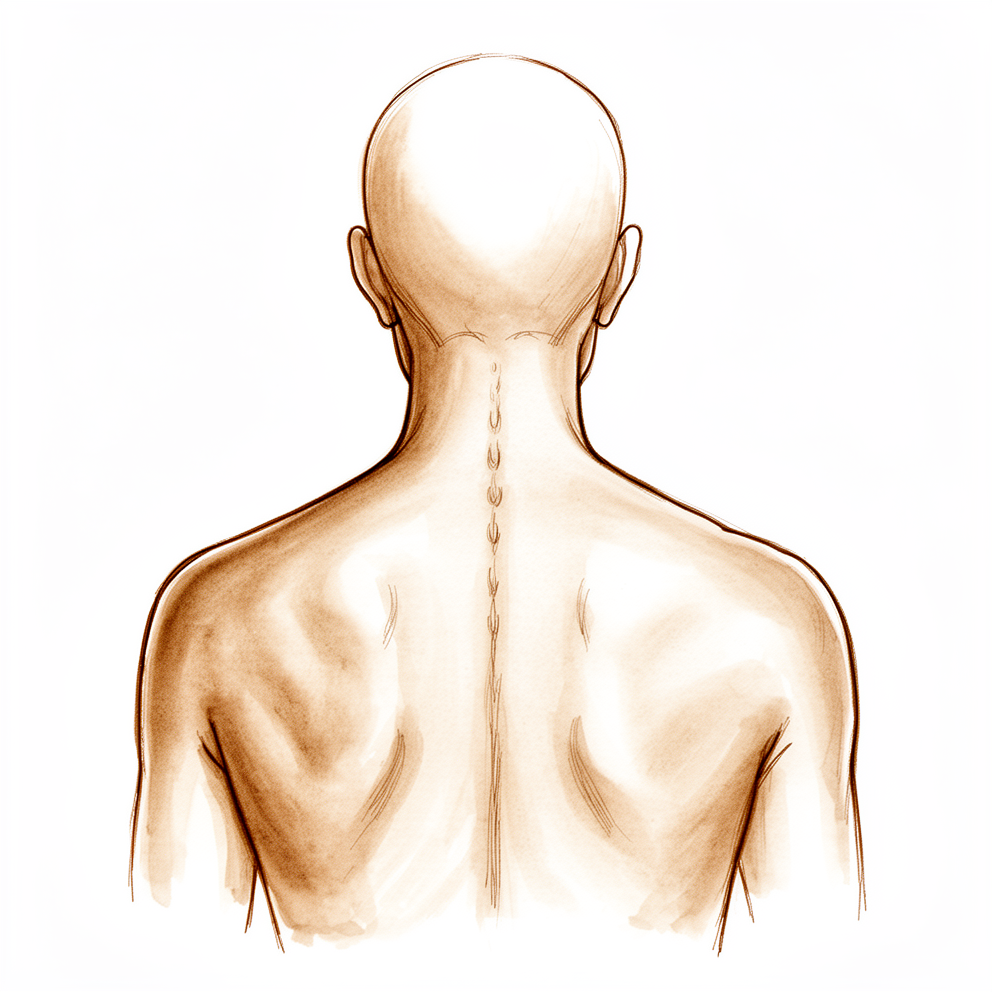
El reemplazo de disco cervical se realiza por la parte frontal del cuello. El cirujano hace una pequeña incisión en ese lugar y separa los tejidos blandos para acceder a la columna vertebral. Se extrae el disco dañado y se coloca en su lugar un disco artificial que conserva la movilidad. Finalmente, se cierra la incisión.
El objetivo es aliviar la presión sobre los nervios del cuello, manteniendo la movilidad de esa zona, en lugar de unir los huesos de forma rígida, como se hace en la cirugía de fusión.
Después de la operación
Despertará en la sala de recuperación, donde las enfermeras lo vigilarán mientras el efecto de la anestesia desaparece. Es posible que sienta molestias en el cuello y que la deglución le resulte un poco extraña al principio; esto se normalizará con el tiempo. El control del dolor se planifica antes de que se vaya, y su equipo médico le explicará qué debe tomar. Por lo general, podrá levantarse y caminar unas pocas horas después, aunque al principio necesitará ayuda. Su equipo le indicará si podrá volver a casa el mismo día o si deberá permanecer una noche en el hospital. Alguien debe acompañarlo durante las primeras 24 horas después de regresar a casa. Dejaremos el vendaje puesto durante unos 10 días; por favor, no lo retire antes de ese plazo a menos que se lo indiquemos. Lo cambiaremos o lo quitaremos cuando le veamos en consulta.
Recuperación
Durante los primeros días, sentirá molestias y rigidez en el cuello; además, tragar podría resultar un poco extraño. Esto es normal y desaparecerá a medida que disminuya la hinchazón. Siga tomando los analgésicos que su equipo médico le haya indicado, y muévase con suavidad en lugar de permanecer inmóvil en la cama.
Para esta intervención no se utiliza collarín. Su cuello podrá moverse libremente, y ese movimiento forma parte del funcionamiento previsto del disco artificial. Su fisioterapeuta le guiará en ejercicios sencillos a medida que avance la recuperación. Se recomienda caminar desde el principio, aumentando progresivamente la distancia según su propio ritmo. Evite levantar objetos pesados o realizar cualquier movimiento brusco o de torsión del cuello hasta que su cirujano le autorice a hacerlo.
A medida que disminuyan las molestias, notará que la sensibilidad en el brazo y el cuello mejora. Cuando pueda girar la cabeza lo suficiente para revisar los espejos y los ángulos muertos, frenar con fuerza sin vacilar y ya no tome analgésicos fuertes, podrá plantearse volver a conducir. Si le han indicado un collarín, consulte a su propio cirujano sobre conducir con él y deje que sea él quien decida el momento. El regreso al trabajo dependerá de las características de su puesto; normalmente se retoma el trabajo de oficina antes que las tareas más exigentes físicamente.
La recuperación varía de una persona a otra. Su cronograma puede diferir del de otros pacientes; su cirujano y fisioterapeuta le guiarán en cada revisión.
Qué puede salir mal
La mayoría de los pacientes evolucionan bien, pero en ocasiones pueden surgir problemas. Su cirujano y el equipo lo vigilarán de cerca para detectar cualquier incidencia a tiempo.
Una de las razones por las que se elige esta operación en lugar de una cirugía de fusión es que puede reducir la probabilidad de que se presenten problemas en los discos adyacentes. No obstante, esto no es seguro; algunas personas aún necesitan otra cirugía posterior debido a un desgaste discal en un nivel cercano. Si aparece nuevo dolor en el brazo o el cuello meses o años después de la operación, infórmenos en su próxima revisión para que podamos examinar los niveles superior e inferior.
Como esta operación se realiza por la parte frontal del cuello, los nervios de la laringe se encuentran cerca de la zona quirúrgica. Algunas personas notan que su voz se vuelve ronca o más débil, o que se cansa con facilidad durante las primeras semanas. La mayoría de estos cambios desaparecen con el tiempo. Si su voz no vuelve a la normalidad después de unas semanas, mencione este punto en la revisión para que podamos brindarle la atención adecuada.
Las infecciones son poco frecuentes, pero pueden ocurrir alrededor de la herida o en zonas más profundas del cuello. Esté atento a un dolor profundo y palpitante que no mejore con analgésicos comunes, enrojecimiento que se extienda desde la incisión, secreción, fiebre o escalofríos. También podría sentirse malestar general o notar hinchazón en el cuello que dificulte la deglución. Si observa alguno de estos signos, llame a la clínica ese mismo día. Si fuera del horario de atención presenta fiebre y malestar general, acuda al servicio de urgencias.
Es normal sentir ansiedad antes de la cirugía, pero esto influye en la recuperación. La ansiedad previa a la operación se relaciona con más problemas posteriores, incluidas complicaciones y visitas no planificadas al hospital. Comuníquele a su cirujano cómo se siente para que podamos brindarle apoyo antes del procedimiento.
El consumo de nicotina, incluso mediante vapeo, aumenta el riesgo de complicaciones tras una cirugía cervical. Si consume nicotina, informe a su equipo con antelación para que le ayudemos a dejarla antes de la operación.
Someterse a una segunda cirugía en el cuello implica un riesgo mayor que la primera. Si en algún momento se plantea realizar otra intervención, se lo explicaremos detalladamente.
En la tabla de complicaciones de esta página se detallan las tasas habituales, por si desea conocer los datos específicos.
¿Cuándo deben llamarnos?
La mayoría de los problemas aparecen en las primeras semanas, por lo que es útil saber a qué hay que prestar atención. Llámenos si tiene fiebre, o si la piel alrededor de la incisión se vuelve más roja, hinchada o comienza a supurar. Llámenos si el dolor empeora repentinamente, o si el dolor nuevo no mejora con los analgésicos que suele tomar. Acuda a urgencias si presenta hinchazón o dolor en la pantorrilla, o dificultad para respirar, ya que estos pueden ser signos de un coágulo sanguíneo. Acuda a urgencias de inmediato si pierde la sensibilidad en el brazo o la mano, o si no puede moverlos. Si no está seguro de si un síntoma es grave, llame a la clínica y le ayudaremos a decidir qué hacer a continuación.
Evidence & references
This is the clinical evidence summary written for health professionals. It is technical, and it lists the research this page was built from. You do not need to read it to understand your treatment or to make a decision about it.
Anatomy & Pathophysiology
Bony Anatomy
- The bony anatomy of the spine consists of 7 cervical vertebrae, 12 thoracic vertebrae, 5 lumbar vertebrae, 5 fused sacral vertebrae, and 4 or 5 fused coccygeal vertebrae [3].
- The vertebral body consists of a fairly cylindrical mass of bone connected by the pedicles to the posterior arch, which consists of the lamina and spinous process [3].
- The vertebral bodies function primarily to bear weight and transfer forces to the pelvis and hips, while the posterior elements provide protection to neural structures and function as a tension band [3].
- The cervical spine is composed of seven vertebrae and assumes a lordotic curvature [8].
- Each vertebra is composed of an anterior portion (vertebral body) and a posterior arch formed by the pedicle, facet, lamina, and spinous process [8].
- The vertebral body is composed of an inner region of cancellous bone surrounded by a thin shell of cortical bone [8].
- The cervical vertebral body is an oblong structure with a coronal diameter larger than its sagittal diameter [20].
- Cervical endplates have a cup-in-saucer configuration, distinct from the normally flat endplates of the thoracic and lumbar vertebrae [20].
- The posterior aspect of the cervical transverse process guides the cervical spinal nerves as they exit the spinal canal, with the spinal nerves lying posterior to the vertebral artery [20].
- The transverse process forms a half-pipe configuration that cradles the exiting spinal nerve as it projects in an anteroinferior direction [20].
Intervertebral Disc Anatomy
- The intervertebral disc (IVD) separates each successive vertebral body except between the atlas (C1) and the axis (C2) [8].
- The IVD is composed of an inner nucleus pulposus (NP) and an outer ring termed the anulus fibrosus (AF) [8].
- The nucleus pulposus serves as an osmotic pump to attract water and generate hydraulic pressure when subjected to significant loads [8].
- The anulus fibrosus encapsulates the gelatinous nucleus pulposus and provides mechanical support to contain NP pressure and constrain intervertebral rotations [8].
- The outer anulus fibrosus is integrated with the vertebral rim via a fibrocartilage enthesis that consists of a thin layer of calcified cartilage, or "tidemark" [8].
- The end plate is a bilayer of cartilage and bone that separates the disk from adjacent vertebrae [8].
- The cartilage end plate integrates with the inner anulus fibrosus to fully encapsulate the nucleus pulposus [8].
- The end plate must be strong and thick to resist significant loads but also permeable to favor chemical transport and disk cellular vitality [8].
Ligaments and Soft Tissue
- Each successive vertebra is connected anteriorly via the IVD and posteriorly via the facet joints [8].
- Passive support for the spinal column is provided by the anterior longitudinal ligament, posterior longitudinal ligament, ligamentum flavum, facet joint capsule, interspinous ligament, and supraspinous ligaments [8].
- The erector spinae muscle runs longitudinally on the dorsal surface of the spinal column and functions to extend the spine [8].
- The psoas muscle runs longitudinally on the ventrolateral surface of the spinal column and serves to flex the hip or laterally bend the trunk [8].
- The multifidus muscle connects intersegmentally to stabilize the spine by acting like a bowstring to maintain lordosis [8].
Vascular Anatomy
- The cervical spine derives its circulation primarily from the vertebral arteries [12].
- The vertebral arteries arise from the subclavian arteries and typically enter the transverse foramen at the C6 level [12].
- The vertebral arteries run proximally through the transverse foramina to C1, then course posteriorly over the superior aspect of the C1 ring before entering the foramen magnum [12].
- Segmental branches to each cervical vertebra arise from the vertebral artery and the deep cervical branch of the costocervical trunk [12].
- There is significant variability in vertebral artery anatomy, including entry through the C7 transverse foramen or anomalous courses looping through a cervical vertebral body [12].
- The vascular supply of the spinal cord is primarily from the medullary branches of the segmental spinal arteries [12].
- The anterior spinal artery is responsible for supplying approximately 80% of the vascular supply to the spinal cord [12].
- Three anterior medullary arteries typically supply the cervical region of the spinal cord [12].
Biomechanics and Alignment
- Normal cervical alignment is approximately 15° of lordosis [7].
- The curvatures of the spine function to keep the head balanced over the pelvis and to transmit axial forces through the spine to the pelvis [7].
- The lordotic curvatures of the cervical and lumbar spine develop secondarily later in life to allow the growing child to develop an upright posture [7].
- The functional spinal unit consists of two vertebrae, the disk between them, and the facet joints (and their capsules) [7].
- The functional spinal unit serves to limit motion of the spine within the confines of protecting the neural structures contained therein [7].
- Vertebral bodies bear 70% to 90% of the static axial load of the spine [7].
- The facet joints support 10% to 20% of axial load in a standing, neutral alignment [7].
- In extension, the facet joints may bear up to 30% of the axial load [7].
- In flexion, the facet joints may be burdened with up to 50% of the anterior shear load [7].
- As compressive forces are applied to the disk, the nucleus pulposus deforms, redistributing axial forces radially [7].
- The radial pressure generated by the nucleus pulposus is resisted by the tensile properties of the alternating bands of fibers within the anulus fibrosus [7].
Pathophysiology of Degeneration
- Cervical degenerative disc disease (DDD) is a pathophysiologic process that incorporates a spectrum of disease states ranging from neck pain and headache to cervical radiculopathy and/or myelopathy [30].
- Disc degeneration does not always cause pain, but it can lead to internal disc derangement or disc herniation [30].
- The degenerative process of the spine has been divided into three stages: dysfunction, instability, and stabilization [28].
- The dysfunction stage of spinal degeneration is seen in individuals 15 to 45 years old and is characterized by circumferential and radial tears in the disc anulus and localized synovitis of the facet joints [28].
- The instability stage of spinal degeneration is found in 35- to 70-year-old patients and is characterized by internal disruption of the disc, progressive disc resorption, degeneration of the facet joints with capsular laxity, subluxation, and joint erosion [28].
- The stabilization stage of spinal degeneration is present in patients older than 60 years and is characterized by progressive development of hypertrophic bone around the disc and facet joints leading to segmental stiffening or frank ankylosis [28].
- Disc herniation is considered a complication of disc degeneration in the dysfunction and instability stages [28].
- Spinal stenosis from degenerative arthritis is a complication of bony overgrowth compromising neural tissue in the late instability and early stabilization stages [28].
- Degenerative cervical myelopathy results from static compression, spinal malalignment leading to altered cord tension and vascular supply, and dynamic injury mechanisms [27].
- The cascade of events after compression of the spinal cord in degenerative cervical myelopathy includes ischemia, destruction of the blood–spinal cord barrier, demyelination, and neuronal apoptosis [27].
- Potential genetic factors for degenerative disc disease include those related to MMP-2 and collagen IX [27].
- Potential genetic factors for ossification of the posterior longitudinal ligament include collagen VI and XI [27].
- Congenital anomalies including spinal stenosis, Down syndrome, and Klippel-Feil syndrome may predispose to the development of cervical disc degeneration [27].
- The incidence of significant abnormalities shown by imaging studies in asymptomatic matched controls is 76% [30].
- Approximately 80% of individuals are affected by nonspecific axial pain at some time in their lives [30].
Investigations
Magnetic Resonance Imaging (MRI)
- MRI is the standard for advanced imaging of the spine and is superior to CT in most circumstances, particularly for identifying infections, tumors, and degenerative changes within the discs [23].
- MRI is superior to CT for imaging the disc and directly imaging neural structures [23].
- MRI typically shows the entire region of the spine (cervical, thoracic, or lumbar) [23].
- MRI allows for imaging of the nerve root in the foramen, which is difficult with postmyelography CT because the subarachnoid space and contrast agent do not extend fully through the foramen [23].
- MRI evidence of disc degeneration has been reported in the cervical spine in 25% of patients younger than 40 years [23].
- MRI evidence of disc degeneration has been reported in the cervical spine in 60% of patients 60 years and older [23].
- The most common indication for MRI of the spine is evaluation of intervertebral disc disease [22].
- After routine radiography, MRI is the procedure of choice for screening patients with low back or sciatic pain [22].
- In the lumbar and thoracic spine, MRI has supplanted CT myelography because it is noninvasive and less expensive [22].
- The combination of high soft-tissue contrast and high resolution in MRI allows ideal evaluation of the intervertebral discs, nerve roots, posterior longitudinal ligament, and intervertebral foramen [22].
- MRI provides excellent assessment of the spinal cord [22].
- Sagittal images provide an initial evaluation of the intervertebral discs and posterior longitudinal ligament [22].
- A normal disc exhibits signal hyperintensity on T2-weighted images due to its high water content [22].
- The aging process results in gradual desiccation of the disc material and loss of T2-weighted signal hyperintensity [22].
- Disc herniations or extrusions appear as convex or polypoid masses extending posteriorly into the ventral epidural space, frequently maintaining a signal intensity similar to that of the disc of origin [22].
- Sagittal T2-weighted or gradient-echo images create a “myelographic” effect useful for evaluating compromise of the subarachnoid space [22].
- Sagittal T1-weighted images should be closely examined to identify narrowing of the neuroforamina [22].
- Normal T1-weighted hyperintense perineural fat in the foramina provides excellent contrast to darker displaced disc material [22].
- Far lateral disc herniations are best seen on selected axial images localized through disc levels [22].
- Free disc fragments appear discontinuous with the intervertebral disc, usually of intermediate T1-weighted signal in contrast to the hypointense cerebrospinal fluid [22].
- MRI can detect significant spinal cord compromise in the cervical and thoracic spine [22].
- Edema within the spinal cord is readily demonstrated as hyperintensity with T2 weighting [22].
- A bulge is defined as a circumferential, symmetric extension of the disc beyond the interspace around the endplates [22].
- A protrusion is defined as a focal or asymmetric extension of the disc beyond the interspace, with the base against the disc of origin broader than any other dimension of the protrusion [22].
- An extrusion is defined as a more extreme extension of the disc beyond the interspace, with the base against the disc of origin narrower than the diameter of the extruding material itself or with no connection between the material and the disc of origin [22].
- A sequestration specifically refers to a disc fragment that has completely separated from the disc of origin [22].
- Diffusion tensor imaging is an MRI technique based on the diffusion rate of water in tissue that has been reported to demonstrate spinal cord impairment in patients with early stage cervical spondylosis before it is visible on plain MRI scans [26].
- Information from diffusion tensor imaging can be helpful in early identification of patients in whom operative treatment is indicated [26].
Computed Tomography (CT)
- CT has largely supplanted plain radiographs as the initial screening study of choice due to its combination of high sensitivity and specificity [24].
- CT of the spine should be obtained in the setting of a high-risk mechanism, in the presence of acute thoracic or lumbar pain after a trauma, when fractures have been identified on plain radiographs, and in situations where there are other reasons to suspect a spine injury such as the presence of a neurologic deficit [24].
- A dedicated spine CT consists of 2- to 3-mm wide axial slices of the thoracic and lumbar spine, typically reformatted into sagittal and coronal images [24].
- Compared to plain radiographs, CT allows for identification of subtler fractures that might have remained undiagnosed on plain radiographs [24].
- CT provides additional three-dimensional detail, even for more severe and easily recognized injuries, such as the degree of canal compromise and the amount of fracture comminution [24].
- CT is particularly useful in differentiating compression fractures from burst fractures [24].
- CT is useful in identifying subtle yet important features of an injury such as the presence of facet widening [24].
- CT evaluation is essential in determining the stability of thoracic and lumbar spine fractures [24].
- The primary disadvantage of CT imaging in comparison to magnetic resonance imaging (MRI) is that it does not provide as good a visualization of the soft tissues [24].
- CT myelography is invasive and more costly than MRI and is reserved for patients who have contraindications to MRI or who have equivocal MRI examinations [22].
Clinical Correlation and Interpretation
- One of the difficulties with MRI is showing anatomy that is abnormal but may be asymptomatic [23].
- MRI findings must be carefully correlated with the clinical impression [23].
- The best way to obtain meaningful clinical information from MRI is to have a specific question before the study derived from the patient’s history and careful physical examination [23].
- The specific question for MRI interpretation is posed using the parameters of (1) neural compression, (2) instability, and (3) deformity [23].
- In each case, the specific location of the abnormality should be suspected before MRI and confirmed with the study [23].
- Only abnormalities in one or a combination of the categories of neural compression, instability, and deformity are important because operative techniques can treat only these problems [23].
- Failure to interpret an imaging study in this way, especially MRI, would inevitably lead to poor clinical choices and outcomes [23].
- Ideally, an advanced imaging study should be used for confirmation, not reevaluation [26].
References
[3] Orthopaedic Knowledge Update 13 Ebook Without Multimedia. Spinal Anatomy > Osseous Anatomy.
[7] Orthopaedic Knowledge Update 13 Ebook Without Multimedia. Spinal Anatomy > Biomechanics.
[8] Orthopaedic Basic Science Fifth Edition Print Ebook. Biology and Mechanics of the Skeletal Extracellular Matrix > Anatomy.
[12] Orthopaedic Knowledge Update 13 Ebook Without Multimedia. Spinal Anatomy > Vascular Anatomy.
[20] Rockwood And Green S Fractures In Adults. Imaging of Cervical Spine Fractures and Dislocations > Lower Cervical Spine (C3–C7).
[22] Campbell S Operative Orthopaedics 4 Volume Set. INTERVERTEBRAL DISC DISEASE.
[23] Campbell S Operative Orthopaedics 4 Volume Set. OVERVIEW OF LUMBAR AND THORACIC DISC DEGENERATION AND HERNIATION > MAGNETIC RESONANCE IMAGING.
[24] Rockwood And Green S Fractures In Adults. Imaging of Cervical Spine Fractures and Dislocations > Computed Tomography.
[26] Campbell S Operative Orthopaedics 4 Volume Set. POSTERIOR APPROACH TO THE LUMBAR SPINE, L1 TO L5 > MAGNETIC RESONANCE IMAGING.
[27] Orthopaedic Knowledge Update 13 Ebook Without Multimedia. Cervical Degenerative Conditions > Annotated References.
[28] Campbell S Operative Orthopaedics 4 Volume Set. POSTERIOR APPROACH TO THE LUMBAR SPINE, L1 TO L5 > NATURAL HISTORY OF DISC DISEASE.
[30] Campbell S Operative Orthopaedics 4 Volume Set. POSTERIOR APPROACH TO THE LUMBAR SPINE, L1 TO L5 > OVERVIEW OF DISC DEGENERATION AND HERNIATION IN THE CERVICAL SPINE.