Skip to content

Patients › Shoulder

Ruptura del pectoral mayor

PDF

A chest-muscle tear, classically during a heavy bench press — how to recognise it and why complete tears are usually repaired early.
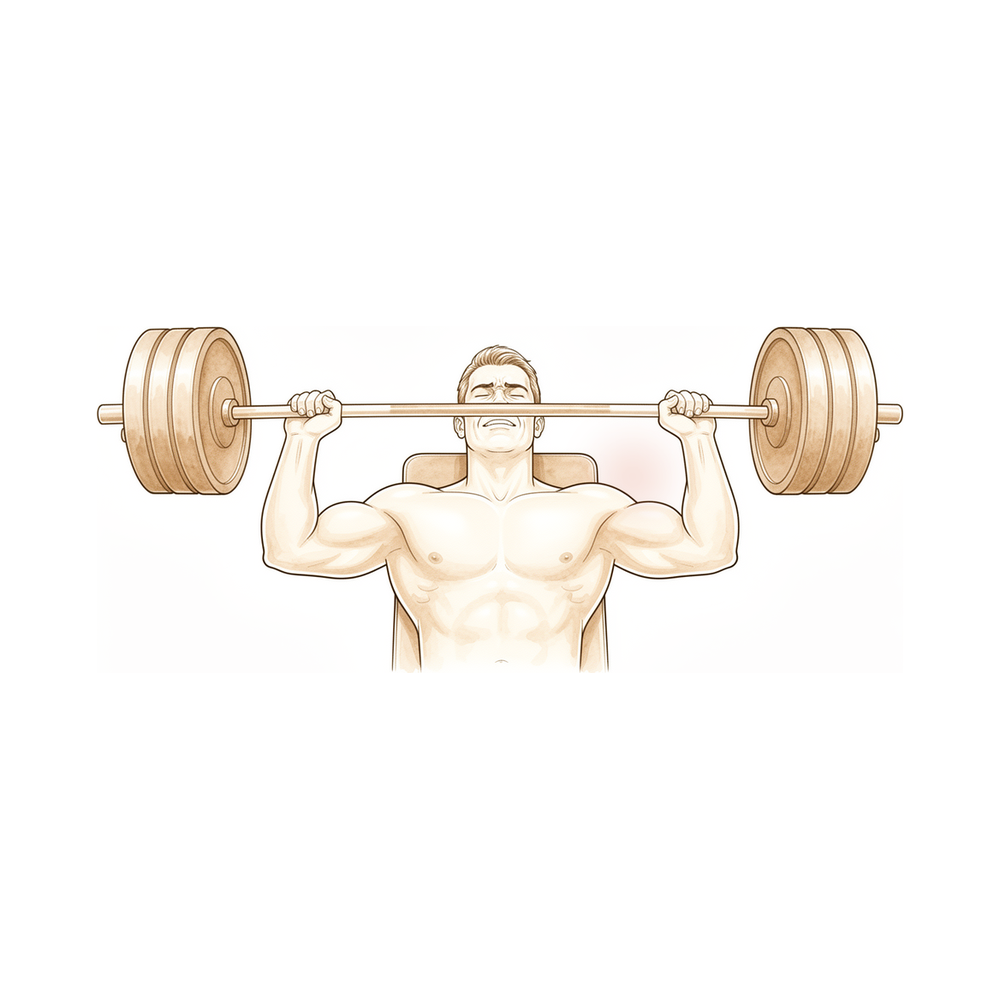
Un levantador de pesas realiza el ejercicio de press de banca; se señala el dolor en la parte anterior de la axila, donde se inserta el músculo pectoral.
Ruptura del pectoral mayor: el músculo del pecho se desgarra cerca del punto donde se inserta en el brazo, típicamente durante una flexión de pecho con mucho peso. Kieran Hirpara 4.0

Esta página se tradujo automáticamente y todavía no la ha revisado un médico. La versión en inglés es la versión oficial.

Qué está sintiendo

La mayoría de las personas recuerdan el momento exacto en que ocurrió. Con frecuencia sucede durante una serie de press de banca con mucho peso, justo cuando la barra se baja hacia el pecho; entonces se percibe un sonido de “pop” o una sensación de desgarro en la parte frontal del hombro, acompañada de un dolor intenso. En uno o dos días, aparecen moretones en la parte delantera del brazo y en el pecho, además de hinchazón en esa zona.

A medida que la hinchazón disminuye, es posible notar que la forma del pecho ha cambiado. El pliegue firme que normalmente se observa en la parte delantera de la axila puede aplanarse o desaparecer; el músculo en sí mismo puede agruparse hacia el esternón, presentando un aspecto y una textura distintos al lado opuesto. Los movimientos de empuje se vuelven débiles: cerrar una puerta pesada, levantarse de una silla o cruzar el brazo sobre el cuerpo para abrazar ya no se realizan con la misma fuerza habitual. Parte de esa debilidad inicial se debe simplemente al dolor, pero una verdadera pérdida de fuerza para empujar suele persistir.

¿Qué está ocurriendo realmente?

El pectoral mayor es el músculo grande y en forma de abanico que se encuentra en el pecho. Este músculo permite mover el brazo de tres maneras principales: empujar objetos lejos del cuerpo, abrazar el brazo contra el torso y rotar el brazo hacia adentro. El músculo se estrecha hasta formar un tendón fuerte que se fija al hueso del brazo (el húmero), cerca del hombro.

Una ruptura consiste en el desgarro de esa unidad músculo-tendinosa; con frecuencia ocurre justo en el punto donde el tendón se une al hueso o en sus inmediaciones. La causa habitual es un estiramiento brusco y fuerte mientras el músculo está contraído intensamente (exactamente lo que sucede al bajar la barra en un ejercicio de press de banca). Este tipo de lesión es mucho más común en hombres, especialmente en quienes practican levantamiento de pesas de forma regular; el uso de esteroides anabólicos es un factor de riesgo reconocido, ya que pueden debilitar el tendón.

Existen distintos grados de desgarro. Un desgarro completo separa totalmente el tendón del hueso, lo que provoca un cambio evidente en la forma del pecho y una pérdida considerable de fuerza. En cambio, un desgarro parcial, o aquel que ocurre dentro del propio músculo y no en el tendón, deja gran parte de la unión intacta. El tipo de desgarro que se presente es fundamental para determinar cuál es el mejor tratamiento.

¿Qué podemos hacer al respecto?

En nuestra clínica, el Dr. Kieran Hirpara dirige la evaluación de esta lesión, comenzando con una historia clínica detallada y un examen físico para confirmar el diagnóstico. Por lo general, para problemas de larga duración optamos primero por tratamientos no quirúrgicos; la cirugía se considera únicamente si este enfoque no proporciona suficiente alivio.

El primer paso es determinar exactamente qué estructura se ha desgarrado y dónde. Esto se logra mediante un examen del hombro y la confirmación mediante una resonancia magnética, que indica si el desgarro es parcial o completo y si el tendón se ha desprendido del hueso o se ha roto dentro del músculo.

En personas activas con un desgarro completo del tendón, normalmente se recomienda una cirugía para volver a fijar el tendón al hueso. La reparación restaura la fuerza para empujar y recupera el contorno normal del pecho; además, la evidencia demuestra que los tendones reparados recuperan más fuerza que aquellos que se dejan sanar por sí solos. El factor más importante aquí es el tiempo: los resultados son mejores cuando la reparación se realiza a tiempo, idealmente en las primeras semanas, mientras el tendón sigue sano y no ha desarrollado cicatrices ni se ha retraído. Este es el motivo principal por el cual vale la pena realizarse una evaluación de inmediato, en lugar de esperar a ver cómo evoluciona la lesión.

Los desgarros parciales, los desgarros dentro del vientre muscular, así como las personas mayores o con menor demanda física, suelen responder muy bien a tratamientos sin cirugía: un período de reposo seguido de un programa de rehabilitación gradual para recuperar el movimiento y la fuerza. Este enfoque permite recuperar una buena funcionalidad diaria, aunque normalmente deja cierta pérdida de la fuerza máxima para empujar en comparación con una reparación de desgarro completo. Aún es posible realizar reparaciones en casos de desgarros completos detectados tarde, pero son más complejas y los resultados son menos predecibles; por eso la evaluación temprana es tan importante.

Qué esperar

En caso de cirugía, la recuperación se mide en meses, no en semanas. En primer lugar, la zona operada se protege, normalmente mediante un sujetador de brazo durante unas seis semanas, y solo se permiten movimientos suaves y guiados, para que el tendón se adhiera firmemente al hueso. Posteriormente, el fortalecimiento se introduce de forma gradual; se evitan deliberadamente cargas más intensas: los ejercicios de empuje y el press de banca suelen estar prohibidos durante seis a nueve meses. La mayoría de las personas vuelven a sus actividades cotidianas alrededor de las seis semanas, y a prácticas deportivas o entrenamientos más intensos entre los cuatro y seis meses; la fuerza continúa mejorando hasta un año después de la intervención.

La recompensa por esa paciencia es notable: la mayoría de quienes se someten a una reparación temprana recuperan una gran fuerza de empuje, recuperan la forma normal del pecho y vuelven a realizar las actividades que les importan. Aquellos a quienes no se les practica cirugía también logran una función cotidiana adecuada, aunque con una fuerza máxima ligeramente menor. Seguir el programa de rehabilitación y no apresurarse a realizar ejercicios de carga intensa es lo que garantiza un buen resultado en cualquier caso.

Cuándo consultar a un especialista

  • Un “chasquido” repentino o sensación de desgarro en el pecho o parte frontal del hombro durante un levantamiento o esfuerzo intenso: debe ser evaluado de inmediato, ya que los mejores resultados quirúrgicos se obtienen con una reparación temprana.
  • Presencia de moretones que se extienden por el brazo o el pecho, hinchazón notable, o cambios visibles en la forma del pecho o en el pliegue frontal de la axila.
  • Debilidad persistente al empujar o al cruzar el brazo frente al cuerpo, una vez que el dolor inicial haya disminuido.
  • Cualquier lesión por desgarro de la que no esté seguro de su gravedad: una resonancia magnética temprana permite distinguir entre un desgarro parcial y uno completo; esta determinación es crucial y depende del tiempo.

En mayor profundidad

Esta sección profundiza más de lo necesario para que usted tome sus propias decisiones de tratamiento. La rotura del pectoral mayor merece una lectura adicional, ya que es uno de los casos más claros en este sitio web en los que la cirugía supera al tratamiento no quirúrgico; además, su tasa de complicaciones es lo suficientemente alta como para mencionarse junto a dicho beneficio, y no después de él.

La reparación quirúrgica supera al tratamiento no quirúrgico

En un total de 664 pacientes, la reparación del tendón del pectoral mayor arrojó resultados significativamente mejores en comparación con el tratamiento no quirúrgico, con mejoras estadísticamente significativas en el resultado funcional, la fuerza isocinética y la fuerza isométrica; además, la tasa de complicaciones asociada fue del 14,21% [1].

Ambas partes deben considerarse como una sola oración. Esta reparación quirúrgica restaura una fuerza mensurable que el tratamiento no quirúrgico no logra; además, aproximadamente uno de cada siete pacientes presenta alguna complicación. En la mayoría de las lesiones tendinosas en esta zona, la ventaja quirúrgica es menor y la tasa de complicaciones más baja; sin embargo, en este caso ambos valores son más elevados.

El déficit de fuerza es relevante debido a la función de este músculo: el pectoral mayor es responsable de la aducción horizontal y la rotación interna, así como de los movimientos de empuje y de cruzar el brazo sobre el cuerpo. Una ruptura no reparada suele generar una deformidad visible y una pérdida concreta de la capacidad de empuje; por ello, esta lesión afecta principalmente a personas que realizan actividades de levantamiento de pesas.

La ubicación del desgarro determina qué se puede hacer

No todas las rupturas del pectoral constituyen la misma lesión. Una clasificación actual incorpora el momento de la lesión, su ubicación y una terminología estandarizada para describir la extensión del desgarro, propuesta específicamente para reflejar la anatomía musculotendinosa y orientar mejor el tratamiento quirúrgico [2].

La distinción práctica radica en si el desgarro se produce en el punto de inserción del tendón en el húmero, caso en el cual se puede reparar fácilmente volviendo a fijarlo al hueso; o si ocurre dentro del propio vientre muscular, donde no existe tendón al que anclar la reparación, por lo que generalmente se opta por un tratamiento no quirúrgico. Entre ambos casos se encuentra la unión musculotendinosa, que representa el grupo más complejo de lesiones.

El momento de la lesión es relevante por la misma razón que en otras patologías: el tendón desgarrado se retrae y forma cicatriz, de modo que una ruptura crónica puede requerir el uso de injertos en lugar de una reparación directa.

¿Por qué no se realiza el diagnóstico a tiempo?

Inmediatamente después de la lesión, el aspecto clínico está dominado por hematomas e hinchazón en el tórax y el brazo, lo cual oculta cualquier cambio en el contorno. Los signos característicos —la desaparición del pliegue axilar anterior, la asimetría muscular al realizar contracciones resistidas y la presencia de un defecto palpable— se vuelven más evidentes a medida que disminuye la hinchazón; para entonces, la lesión suele haber sido catalogada como una distensión muscular.

Dado que la reparación quirúrgica resulta más sencilla en las primeras fases, cualquier “chasquido” perceptible durante un esfuerzo intenso seguido de la aparición de hematomas justifica realizar estudios de imagen en lugar de limitarse a la observación clínica.

Referencias

[1] Bodendorfer BM, McCormick BP, Wang DX, Looney AM, Conroy CM, Fryar CM, et al. Tratamiento de los desgarros del tendón del pectoral mayor: revisión sistemática y metaanálisis sobre el momento óptimo para la reparación y los métodos de fijación. Orthop J Sports Med. 2020;8(2). https://doi.org/10.1177/2325967119900813

[2] ElMaraghy AW, Devereaux MW. Revisión sistemática y clasificación exhaustiva de los desgarros del pectoral mayor. J Shoulder Elbow Surg. 2012;21(3):412-22. https://doi.org/10.1016/j.jse.2011.04.035


Creative Commons BY-NC 4.0

CC Creative Commons licence
BY Attribution — you must credit the source
NC NonCommercial — not for commercial use

Attribution-NonCommercial 4.0 International


Creative Commons Corporation ("Creative Commons") is not a law firm and does not provide legal services or legal advice. Distribution of Creative Commons public licenses does not create a lawyer-client or other relationship. Creative Commons makes its licenses and related information available on an "as-is" basis. Creative Commons gives no warranties regarding its licenses, any material licensed under their terms and conditions, or any related information. Creative Commons disclaims all liability for damages resulting from their use to the fullest extent possible.

Using Creative Commons Public Licenses

Creative Commons public licenses provide a standard set of terms and conditions that creators and other rights holders may use to share original works of authorship and other material subject to copyright and certain other rights specified in the public license below. The following considerations are for informational purposes only, are not exhaustive, and do not form part of our licenses.

Considerations for licensors: Our public licenses are intended for use by those authorized to give the public permission to use material in ways otherwise restricted by copyright and certain other rights. Our licenses are irrevocable. Licensors should read and understand the terms and conditions of the license they choose before applying it. Licensors should also secure all rights necessary before applying our licenses so that the public can reuse the material as expected. Licensors should clearly mark any material not subject to the license. This includes other CC- licensed material, or material used under an exception or limitation to copyright. More considerations for licensors: wiki.creativecommons.org/Considerations_for_licensors

Considerations for the public: By using one of our public licenses, a licensor grants the public permission to use the licensed material under specified terms and conditions. If the licensor's permission is not necessary for any reason--for example, because of any applicable exception or limitation to copyright--then that use is not regulated by the license. Our licenses grant only permissions under copyright and certain other rights that a licensor has authority to grant. Use of the licensed material may still be restricted for other reasons, including because others have copyright or other rights in the material. A licensor may make special requests, such as asking that all changes be marked or described. Although not required by our licenses, you are encouraged to respect those requests where reasonable. More considerations for the public: wiki.creativecommons.org/Considerations_for_licensees


Creative Commons Attribution-NonCommercial 4.0 International Public License

By exercising the Licensed Rights (defined below), You accept and agree to be bound by the terms and conditions of this Creative Commons Attribution-NonCommercial 4.0 International Public License ("Public License"). To the extent this Public License may be interpreted as a contract, You are granted the Licensed Rights in consideration of Your acceptance of these terms and conditions, and the Licensor grants You such rights in consideration of benefits the Licensor receives from making the Licensed Material available under these terms and conditions.

Section 1 -- Definitions.

a. Adapted Material means material subject to Copyright and Similar Rights that is derived from or based upon the Licensed Material and in which the Licensed Material is translated, altered, arranged, transformed, or otherwise modified in a manner requiring permission under the Copyright and Similar Rights held by the Licensor. For purposes of this Public License, where the Licensed Material is a musical work, performance, or sound recording, Adapted Material is always produced where the Licensed Material is synched in timed relation with a moving image.

b. Adapter's License means the license You apply to Your Copyright and Similar Rights in Your contributions to Adapted Material in accordance with the terms and conditions of this Public License.

c. Copyright and Similar Rights means copyright and/or similar rights closely related to copyright including, without limitation, performance, broadcast, sound recording, and Sui Generis Database Rights, without regard to how the rights are labeled or categorized. For purposes of this Public License, the rights specified in Section 2(b)(1)-(2) are not Copyright and Similar Rights.

d. Effective Technological Measures means those measures that, in the absence of proper authority, may not be circumvented under laws fulfilling obligations under Article 11 of the WIPO Copyright Treaty adopted on December 20, 1996, and/or similar international agreements.

e. Exceptions and Limitations means fair use, fair dealing, and/or any other exception or limitation to Copyright and Similar Rights that applies to Your use of the Licensed Material.

f. Licensed Material means the artistic or literary work, database, or other material to which the Licensor applied this Public License.

g. Licensed Rights means the rights granted to You subject to the terms and conditions of this Public License, which are limited to all Copyright and Similar Rights that apply to Your use of the Licensed Material and that the Licensor has authority to license.

h. Licensor means the individual(s) or entity(ies) granting rights under this Public License.

i. NonCommercial means not primarily intended for or directed towards commercial advantage or monetary compensation. For purposes of this Public License, the exchange of the Licensed Material for other material subject to Copyright and Similar Rights by digital file-sharing or similar means is NonCommercial provided there is no payment of monetary compensation in connection with the exchange.

j. Share means to provide material to the public by any means or process that requires permission under the Licensed Rights, such as reproduction, public display, public performance, distribution, dissemination, communication, or importation, and to make material available to the public including in ways that members of the public may access the material from a place and at a time individually chosen by them.

k. Sui Generis Database Rights means rights other than copyright resulting from Directive 96/9/EC of the European Parliament and of the Council of 11 March 1996 on the legal protection of databases, as amended and/or succeeded, as well as other essentially equivalent rights anywhere in the world.

l. You means the individual or entity exercising the Licensed Rights under this Public License. Your has a corresponding meaning.

Section 2 -- Scope.

a. License grant.

1. Subject to the terms and conditions of this Public License, the Licensor hereby grants You a worldwide, royalty-free, non-sublicensable, non-exclusive, irrevocable license to exercise the Licensed Rights in the Licensed Material to:

a. reproduce and Share the Licensed Material, in whole or in part, for NonCommercial purposes only; and

b. produce, reproduce, and Share Adapted Material for NonCommercial purposes only.

2. Exceptions and Limitations. For the avoidance of doubt, where Exceptions and Limitations apply to Your use, this Public License does not apply, and You do not need to comply with its terms and conditions.

3. Term. The term of this Public License is specified in Section 6(a).

4. Media and formats; technical modifications allowed. The Licensor authorizes You to exercise the Licensed Rights in all media and formats whether now known or hereafter created, and to make technical modifications necessary to do so. The Licensor waives and/or agrees not to assert any right or authority to forbid You from making technical modifications necessary to exercise the Licensed Rights, including technical modifications necessary to circumvent Effective Technological Measures. For purposes of this Public License, simply making modifications authorized by this Section 2(a) (4) never produces Adapted Material.

5. Downstream recipients.

a. Offer from the Licensor -- Licensed Material. Every recipient of the Licensed Material automatically receives an offer from the Licensor to exercise the Licensed Rights under the terms and conditions of this Public License.

b. No downstream restrictions. You may not offer or impose any additional or different terms or conditions on, or apply any Effective Technological Measures to, the Licensed Material if doing so restricts exercise of the Licensed Rights by any recipient of the Licensed Material.

6. No endorsement. Nothing in this Public License constitutes or may be construed as permission to assert or imply that You are, or that Your use of the Licensed Material is, connected with, or sponsored, endorsed, or granted official status by, the Licensor or others designated to receive attribution as provided in Section 3(a)(1)(A)(i).

b. Other rights.

1. Moral rights, such as the right of integrity, are not licensed under this Public License, nor are publicity, privacy, and/or other similar personality rights; however, to the extent possible, the Licensor waives and/or agrees not to assert any such rights held by the Licensor to the limited extent necessary to allow You to exercise the Licensed Rights, but not otherwise.

2. Patent and trademark rights are not licensed under this Public License.

3. To the extent possible, the Licensor waives any right to collect royalties from You for the exercise of the Licensed Rights, whether directly or through a collecting society under any voluntary or waivable statutory or compulsory licensing scheme. In all other cases the Licensor expressly reserves any right to collect such royalties, including when the Licensed Material is used other than for NonCommercial purposes.

Section 3 -- License Conditions.

Your exercise of the Licensed Rights is expressly made subject to the following conditions.

a. Attribution.

1. If You Share the Licensed Material (including in modified form), You must:

a. retain the following if it is supplied by the Licensor with the Licensed Material:

i. identification of the creator(s) of the Licensed Material and any others designated to receive attribution, in any reasonable manner requested by the Licensor (including by pseudonym if designated);

ii. a copyright notice;

iii. a notice that refers to this Public License;

iv. a notice that refers to the disclaimer of warranties;

v. a URI or hyperlink to the Licensed Material to the extent reasonably practicable;

b. indicate if You modified the Licensed Material and retain an indication of any previous modifications; and

c. indicate the Licensed Material is licensed under this Public License, and include the text of, or the URI or hyperlink to, this Public License.

2. You may satisfy the conditions in Section 3(a)(1) in any reasonable manner based on the medium, means, and context in which You Share the Licensed Material. For example, it may be reasonable to satisfy the conditions by providing a URI or hyperlink to a resource that includes the required information.

3. If requested by the Licensor, You must remove any of the information required by Section 3(a)(1)(A) to the extent reasonably practicable.

4. If You Share Adapted Material You produce, the Adapter's License You apply must not prevent recipients of the Adapted Material from complying with this Public License.

Section 4 -- Sui Generis Database Rights.

Where the Licensed Rights include Sui Generis Database Rights that apply to Your use of the Licensed Material:

a. for the avoidance of doubt, Section 2(a)(1) grants You the right to extract, reuse, reproduce, and Share all or a substantial portion of the contents of the database for NonCommercial purposes only;

b. if You include all or a substantial portion of the database contents in a database in which You have Sui Generis Database Rights, then the database in which You have Sui Generis Database Rights (but not its individual contents) is Adapted Material; and

c. You must comply with the conditions in Section 3(a) if You Share all or a substantial portion of the contents of the database.

For the avoidance of doubt, this Section 4 supplements and does not replace Your obligations under this Public License where the Licensed Rights include other Copyright and Similar Rights.

Section 5 -- Disclaimer of Warranties and Limitation of Liability.

a. UNLESS OTHERWISE SEPARATELY UNDERTAKEN BY THE LICENSOR, TO THE EXTENT POSSIBLE, THE LICENSOR OFFERS THE LICENSED MATERIAL AS-IS AND AS-AVAILABLE, AND MAKES NO REPRESENTATIONS OR WARRANTIES OF ANY KIND CONCERNING THE LICENSED MATERIAL, WHETHER EXPRESS, IMPLIED, STATUTORY, OR OTHER. THIS INCLUDES, WITHOUT LIMITATION, WARRANTIES OF TITLE, MERCHANTABILITY, FITNESS FOR A PARTICULAR PURPOSE, NON-INFRINGEMENT, ABSENCE OF LATENT OR OTHER DEFECTS, ACCURACY, OR THE PRESENCE OR ABSENCE OF ERRORS, WHETHER OR NOT KNOWN OR DISCOVERABLE. WHERE DISCLAIMERS OF WARRANTIES ARE NOT ALLOWED IN FULL OR IN PART, THIS DISCLAIMER MAY NOT APPLY TO YOU.

b. TO THE EXTENT POSSIBLE, IN NO EVENT WILL THE LICENSOR BE LIABLE TO YOU ON ANY LEGAL THEORY (INCLUDING, WITHOUT LIMITATION, NEGLIGENCE) OR OTHERWISE FOR ANY DIRECT, SPECIAL, INDIRECT, INCIDENTAL, CONSEQUENTIAL, PUNITIVE, EXEMPLARY, OR OTHER LOSSES, COSTS, EXPENSES, OR DAMAGES ARISING OUT OF THIS PUBLIC LICENSE OR USE OF THE LICENSED MATERIAL, EVEN IF THE LICENSOR HAS BEEN ADVISED OF THE POSSIBILITY OF SUCH LOSSES, COSTS, EXPENSES, OR DAMAGES. WHERE A LIMITATION OF LIABILITY IS NOT ALLOWED IN FULL OR IN PART, THIS LIMITATION MAY NOT APPLY TO YOU.

c. The disclaimer of warranties and limitation of liability provided above shall be interpreted in a manner that, to the extent possible, most closely approximates an absolute disclaimer and waiver of all liability.

Section 6 -- Term and Termination.

a. This Public License applies for the term of the Copyright and Similar Rights licensed here. However, if You fail to comply with this Public License, then Your rights under this Public License terminate automatically.

b. Where Your right to use the Licensed Material has terminated under Section 6(a), it reinstates:

1. automatically as of the date the violation is cured, provided it is cured within 30 days of Your discovery of the violation; or

2. upon express reinstatement by the Licensor.

For the avoidance of doubt, this Section 6(b) does not affect any right the Licensor may have to seek remedies for Your violations of this Public License.

c. For the avoidance of doubt, the Licensor may also offer the Licensed Material under separate terms or conditions or stop distributing the Licensed Material at any time; however, doing so will not terminate this Public License.

d. Sections 1, 5, 6, 7, and 8 survive termination of this Public License.

Section 7 -- Other Terms and Conditions.

a. The Licensor shall not be bound by any additional or different terms or conditions communicated by You unless expressly agreed.

b. Any arrangements, understandings, or agreements regarding the Licensed Material not stated herein are separate from and independent of the terms and conditions of this Public License.

Section 8 -- Interpretation.

a. For the avoidance of doubt, this Public License does not, and shall not be interpreted to, reduce, limit, restrict, or impose conditions on any use of the Licensed Material that could lawfully be made without permission under this Public License.

b. To the extent possible, if any provision of this Public License is deemed unenforceable, it shall be automatically reformed to the minimum extent necessary to make it enforceable. If the provision cannot be reformed, it shall be severed from this Public License without affecting the enforceability of the remaining terms and conditions.

c. No term or condition of this Public License will be waived and no failure to comply consented to unless expressly agreed to by the Licensor.

d. Nothing in this Public License constitutes or may be interpreted as a limitation upon, or waiver of, any privileges and immunities that apply to the Licensor or You, including from the legal processes of any jurisdiction or authority.


Creative Commons is not a party to its public licenses. Notwithstanding, Creative Commons may elect to apply one of its public licenses to material it publishes and in those instances will be considered the “Licensor.” The text of the Creative Commons public licenses is dedicated to the public domain under the CC0 Public Domain Dedication. Except for the limited purpose of indicating that material is shared under a Creative Commons public license or as otherwise permitted by the Creative Commons policies published at creativecommons.org/policies, Creative Commons does not authorize the use of the trademark "Creative Commons" or any other trademark or logo of Creative Commons without its prior written consent including, without limitation, in connection with any unauthorized modifications to any of its public licenses or any other arrangements, understandings, or agreements concerning use of licensed material. For the avoidance of doubt, this paragraph does not form part of the public licenses.

Creative Commons may be contacted at creativecommons.org.