Patients › Rehabilitation
Reparación del tendón distal del tríceps
Un plan de recuperación protegido tras la reparación del tendón distal del tríceps en el codo: se mantiene el brazo en un cabestrillo sencillo a 90 grados permitiendo la movilidad; posteriormente se procede a la extensión activa y, finalmente, al fortalecimiento en etapas cuidadosas.
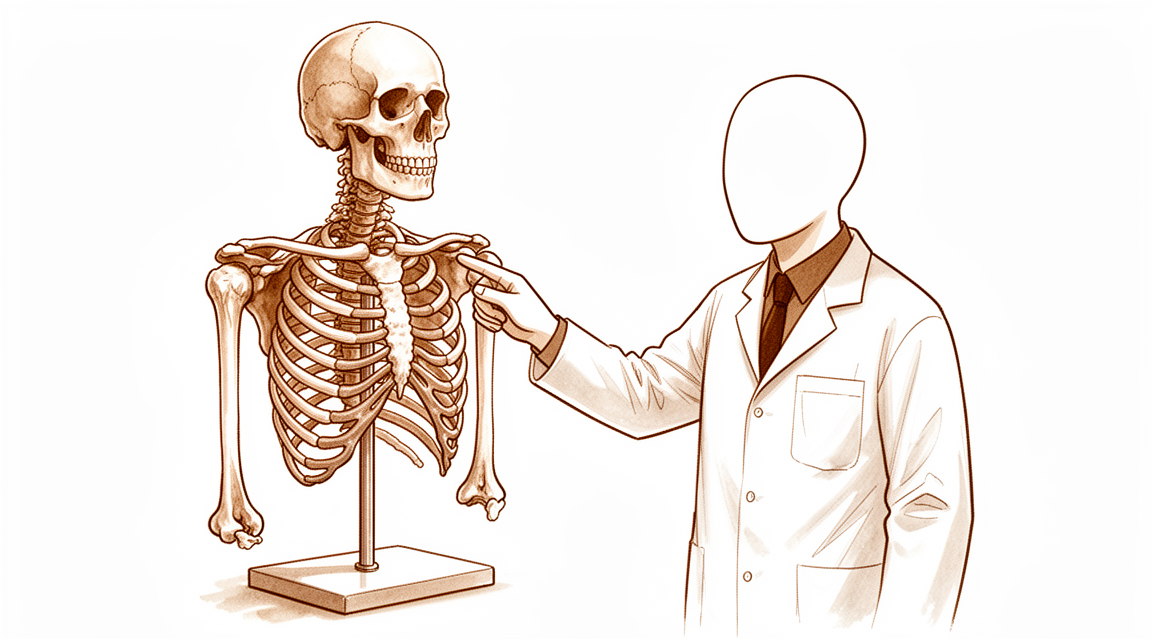
Este protocolo le servirá de guía para su recuperación tras la reparación quirúrgica del tendón distal del tríceps (el tendón que une el músculo tríceps —encargado de estirar el codo— con la punta del codo), bajo la supervisión del Dr. Kieran Hirpara en el Mater Private Hospital Rockhampton. Comienza con un programa de ejercicios para realizar en casa; posteriormente, siga el protocolo clínico estructurado redactado para su fisioterapeuta o terapeuta de mano. Lleve esta página o su versión en PDF a su primera sesión de terapia para garantizar una rehabilitación coordinada. Su terapeuta podrá modificar el plan según el progreso de su recuperación.
Si tiene alguna duda respecto a su herida postoperatoria, comuníquese con el consultorio. A menudo resulta útil tomar una fotografía de la herida y enviarla por correo electrónico para su evaluación.
Qué esperar
La reparación distal del tríceps consiste en volver a fijar el tendón desgarrado al hueso en la zona del codo (el olécrano). Al final de la intervención, el Dr. Hirpara verifica que la reparación sea segura e intacta con el codo doblado en ángulo recto (90°). Por ello, su codo se coloca en un soporte simple a unos 90°, una posición cómoda y estándar. No se utiliza ninguna férula con bisagras, y el codo no se mantiene casi en posición recta. El soporte se retira durante los ejercicios y al lavarse.
El tendón se somete a tensión de dos maneras distintas; el plan inicial busca protegerlo frente a ambas situaciones:
- Doblar el codo estira la zona reparada. Por eso, durante las primeras seis semanas aproximadamente, el grado de flexión se limita a 90° (ángulo recto). En cambio, estirar el codo relaja el tendón; por lo tanto, estirarlo completamente está permitido y se recomienda, siempre que sea cómodo.
- Estirar activamente el codo hace trabajar al tríceps, que tira de la zona reparada. Así, durante las primeras seis semanas no se debe estirar el codo de forma activa mediante la fuerza muscular; cualquier movimiento en esa dirección debe realizarse con suavidad y ayuda, sin que el tríceps haga el esfuerzo.
Posteriormente, los movimientos se amplían gradualmente: a partir de las seis semanas se permite una mayor flexión, también se autoriza el estiramiento activo, y a partir de las doce semanas se inicia el fortalecimiento con resistencia. La reparación sigue madurando durante varios meses; por eso el aumento de carga y el regreso a la actividad deportiva se implementan de forma progresiva, no de golpe.
Precauciones y limitaciones
- NO doble el codo más allá de un ángulo recto (90°) durante las primeras seis semanas aproximadamente, ya que ello estira y tensiona la zona reparada. Estirarlo por completo está permitido y se recomienda.
- NO intente extender el codo por sí solo mediante la fuerza muscular durante las primeras seis semanas; permita que se estire suavemente con ayuda, sin esforzar el tríceps.
- NO realice ningún movimiento de extensión resistida ni empuje/presione con el brazo hasta pasadas las doce semanas: nada de ejercicios de extensión del tríceps, ni press de banca o overhead press; tampoco debe intentar levantarse de una silla o cama usando el brazo operado.
- Use el cabestrillo a 90° tal como se indica (no se trata de una férula ni debe mantenerse completamente recto); NO conduzca mientras lo lleve puesto o mientras su brazo no pueda controlar el volante con seguridad.
- Desde el inicio, mantenga en movimiento la mano, la muñeca y el hombro; puede utilizar la mano para tareas cotidianas ligeras siempre que le resulten cómodas, siempre que no impliquen empujar, levantar pesos o doblar el codo de forma forzada.
Para el cuidado de la herida, la reducción de la hinchazón y la gestión de la cicatrización, consulte las pautas de cuidado de heridas de nuestra consulta.
Sus ejercicios
Kieran Hirpara 4.0
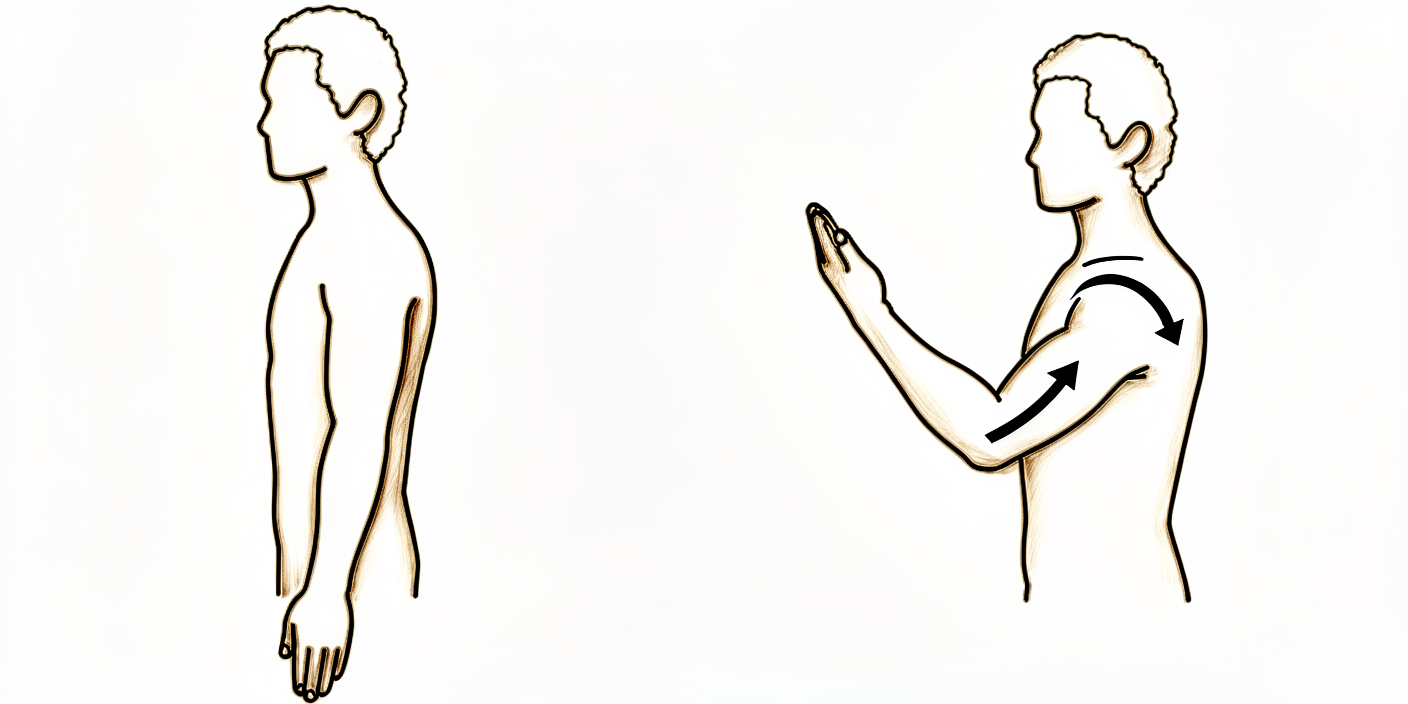
Movimiento protegido del codo (arco de 0–90°)
Una vez fuera del cabestrillo, mueva el codo con cuidado dentro de su rango seguro: puede estirarlo por completo (la extensión es libre, hasta donde resulte cómodo), pero NO lo doble más allá de un ángulo recto (90°), es decir, aproximadamente la posición de sostener el teléfono junto a la oreja. Realice el movimiento lentamente y manténgase dentro de ese arco. Doblar el codo más allá de los 90° tensa el tendón en proceso de curación, por lo que se evita durante aproximadamente las primeras seis semanas.
10 veces, 2–3 veces al día, dentro del arco de 0–90°
Kieran Hirpara 4.0
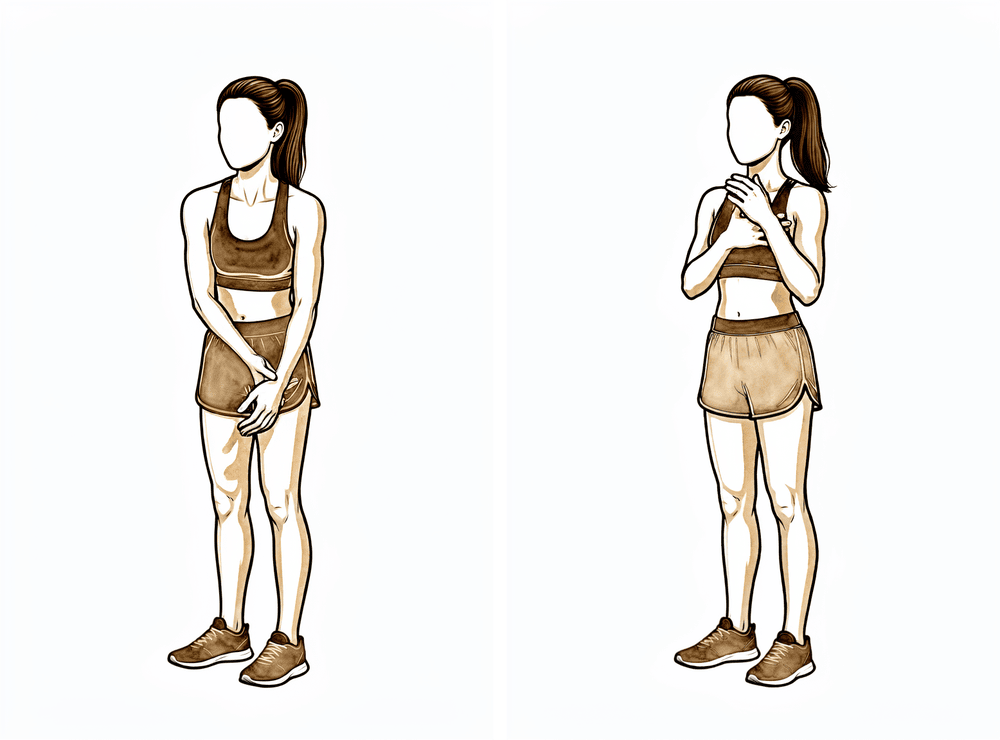
Flexión de codo asistida (pasiva)
Utilice la otra mano para doblar suavemente el codo operado hacia el hombro, manteniendo el tríceps totalmente relajado; no debe ejercer fuerza con el brazo operado. Deténgase cuando alcance su límite establecido (al principio, unos 90°). De este modo, el codo permanecerá flexible sin sobrecargar el tríceps.
10 veces, 2–3 veces al día, únicamente hasta el límite establecido.
Kieran Hirpara 4.0
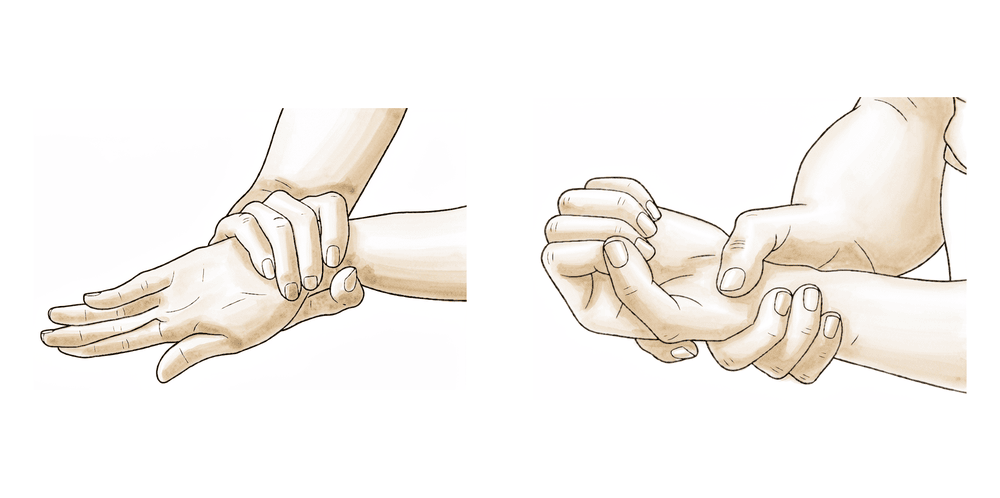
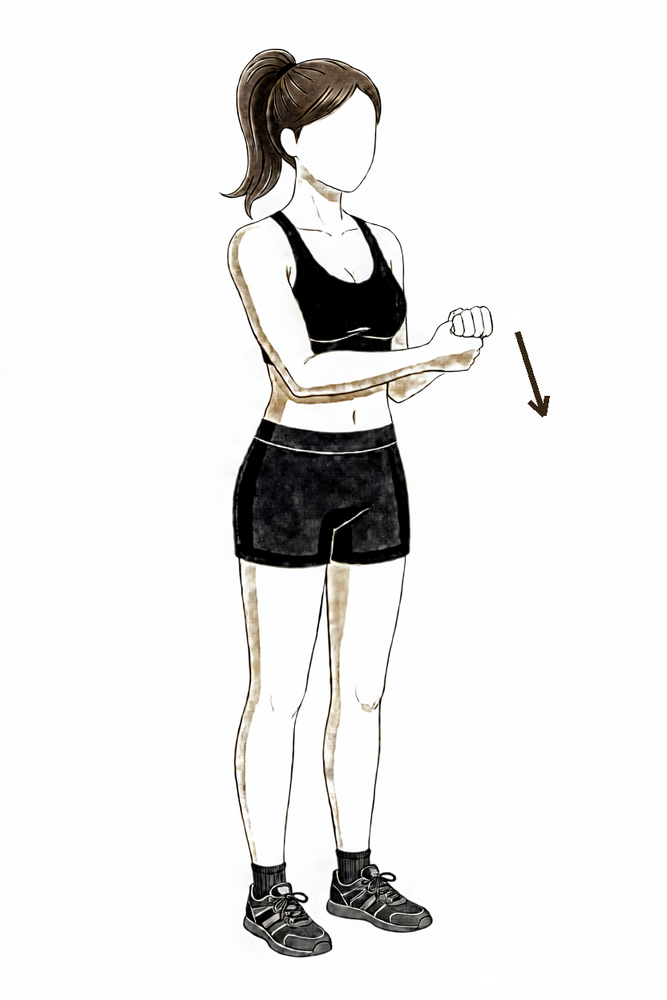
Rotación del antebrazo (palma hacia arriba / palma hacia abajo)
Con el codo pegado al costado y ligeramente flexionado, gire suavemente la palma de la mano hacia el techo y luego hacia el suelo. Hágalo de forma lenta y pausada. Esto mantiene el antebrazo flexible y no somete a tensión la zona reparada del tríceps, por lo que se puede iniciar este ejercicio desde el principio.
10 veces en cada dirección, 2–3 veces al día.
Kieran Hirpara 4.0
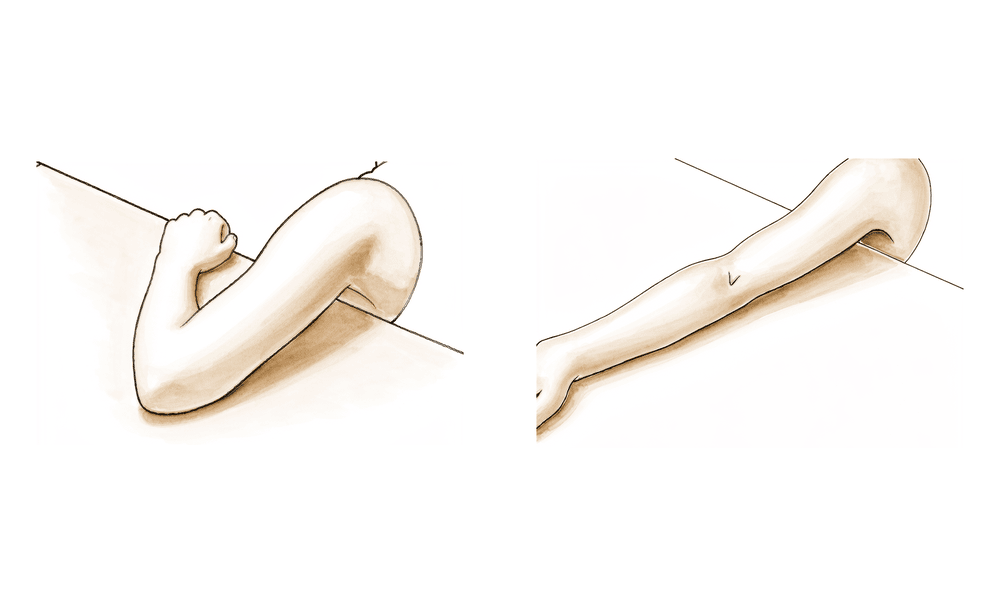
Contracción del tríceps (suave, sin movimiento)
Un ejercicio posterior: únicamente cuando su fisioterapeuta lo indique (normalmente a partir de las 8 semanas aproximadamente). Con el codo apoyado, contraiga suavemente el músculo de la PARTE POSTERIOR del brazo (el tríceps), como si fuera a enderezar el codo, pero SIN permitir que este se mueva realmente: una presión leve, manténgala y luego relájese. No realice este ejercicio durante las primeras seis semanas.
Mantenga la posición durante ~5 segundos, 5–10 veces, según las indicaciones (en una fase posterior).
Kieran Hirpara 4.0
Enderezamiento activo del codo (sin resistencia)
Un ejercicio posterior: se inicia alrededor de las 6 semanas, una vez que se autorice. Estire suavemente el codo por sus propios medios, sin cargar peso alguno en la mano; luego utilice la otra mano para ayudar a bajarlo (de modo que el tríceps no tenga que controlar aún la fase de descenso). No debe sentir dolor alguno. Durante las primeras seis semanas NO se permite ninguna extensión activa del codo.
10 veces, según las indicaciones (a partir de aproximadamente 6 semanas, sin resistencia).
Kieran Hirpara 4.0
Contracción del tríceps contra una ligera resistencia (extensión isométrica)
Un ejercicio posterior: a partir de las 8 semanas, según las indicaciones. Presione suavemente el antebrazo contra la otra mano o contra una superficie fija, como si intentara enderezar el codo; aumente la fuerza solo hasta un nivel ligero y cómodo, manteniendo la posición sin que el codo se mueva. Esto activa el tríceps antes de permitir ejercicios con resistencia.
Mantenga la posición durante ~5 segundos, 5–10 veces, según las indicaciones (en una fase posterior).
Kieran Hirpara 4.0
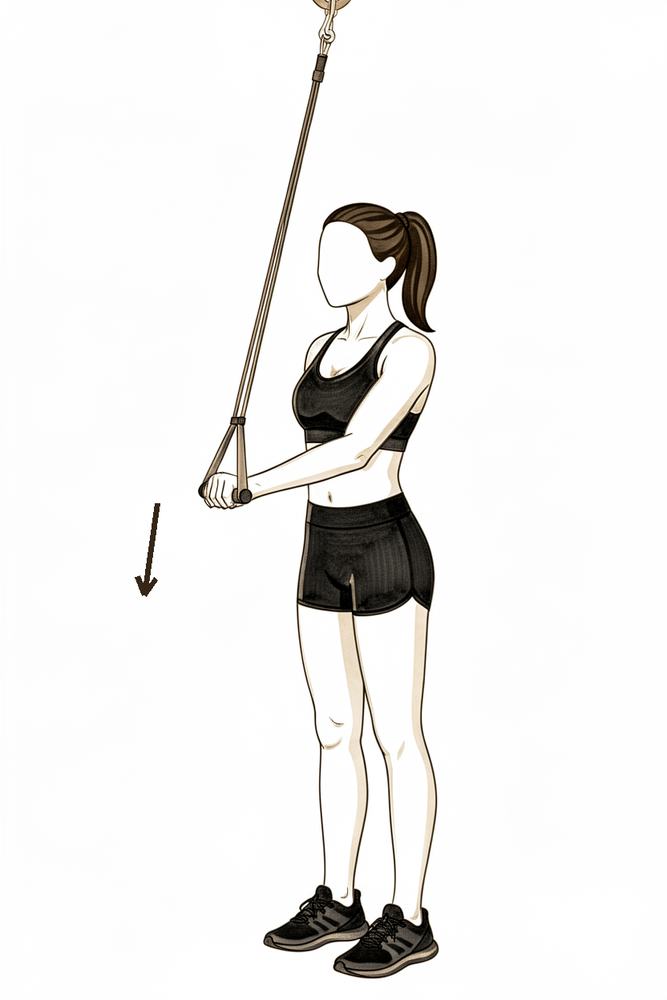
Extensión del codo contra resistencia con banda elástica (fortalecimiento avanzado)
Un ejercicio de última fase: solo se debe realizar una vez que el trabajo de resistencia esté autorizado, generalmente a partir de las 12 semanas. Estire el codo contra una banda de resistencia ligera y luego controle su movimiento de regreso de forma lenta. Aumente gradualmente la resistencia a lo largo de varias semanas. Este ejercicio somete directamente al tendón reparado a carga; por ello es el último en incorporarse al programa de rehabilitación. No lo apresure nunca, y suspenda su práctica si provoca dolor.
Según las indicaciones de su fisioterapeuta (solo a partir de las 12 semanas aproximadamente).
Estos son los ejercicios que aparecen en su folleto informativo. Comience a realizarlos únicamente bajo la guía del Dr. Hirpara y de su fisioterapeuta, respetando siempre los rangos y límites que le hayan indicado. Los ejercicios iniciales tienen como objetivo mantener en movimiento el codo y el antebrazo sin ejercer esfuerzo ni estirar la zona reparada: movimientos suaves dentro del arco de movimiento protegido de 0–90°, flexión asistida y rotación del antebrazo. Los ejercicios para fortalecer el tríceps, la extensión activa y el trabajo con bandas elásticas corresponden a fases posteriores y no deben iniciarse hasta que se le dé autorización expresa. Interrumpa cualquier ejercicio que le provoque dolor intenso en la parte posterior del codo.
Su protocolo clínico
El resto de esta página contiene el protocolo clínico por etapas para la rehabilitación tras la reparación del tendón del tríceps distal. Esta sección debe entregarse a su fisioterapeuta o terapeuta de la mano; cada fase comienza con una explicación sencilla en lenguaje coloquial sobre lo que está ocurriendo. La reparación se somete a carga mediante la flexión del codo (que la estira) y mediante la extensión activa o resistida (que hace que el tríceps se contraiga sobre ella); por ello, el protocolo protege ambas acciones mientras se restaura el rango de movimiento, luego se promueve la extensión activa y, finalmente, el fortalecimiento resistido.
Antes de iniciar el tratamiento, revise el informe quirúrgico del paciente y su historial médico previo; además, consulte con el cirujano tratante respecto al método de fijación (túneles transóseos o anclajes de sutura), la calidad del tejido y el rango de movimiento protegido. En la reparación realizada por el Dr. Hirpara, se verificó intraoperatoriamente que es segura a 90° de flexión; el brazo se mantiene en reposo mediante un cabestrillo sencillo a 90° (sin férula articulada ni posición de extensión forzada). El rango de movimiento protegido es de 0–90°; la extensión es libre siempre que no cause molestias, mientras que la flexión se limita a 90°.
Fase I — movimiento protegido en un cabestrillo a 90° (semanas 0 a 6)
Durante las primeras seis semanas, se protege la reparación quirúrgica y se evita la rigidez del codo. El brazo permanece en un cabestrillo sencillo a 90°, el cual se retira para realizar ejercicios e higiene. El codo solo puede moverse dentro del arco protegido de 0–90°: se puede estirar completamente hasta alcanzar una posición cómoda, pero no debe flexionarse más allá de un ángulo recto, y nunca bajo la acción activa del tríceps.
Para su fisioterapeuta:
Educación y precauciones - Inmovilizar el brazo mediante un cabestrillo sencillo a 90° (sin dispositivos articulados; NO mantenerlo cerca de la posición de extensión total); retirarlo para ejercicios y lavados. - Arco de movimiento protegido: solo 0–90°: extensión libre hasta alcanzar una posición cómoda; flexión no debe superar los 90°. - Prohibida toda extensión activa o con resistencia del codo (la contracción activa del tríceps ejerce carga sobre la zona reparada). - No se permite cargar peso ni empujar con el brazo operado; se autoriza un uso ligero y sin carga de la mano, siempre que sea cómodo. - Mantener movilidad pasiva del hombro de forma suave en las primeras fases (esto protege el tendón largo que atraviesa el hombro).
Manejo clínico - Herida: aplicar vendajes quirúrgicos según indicaciones; vigilar posibles signos de infección. - Edema: elevar el brazo, realizar movimientos de bombeo suaves con la mano y aplicar hielo según sea necesario. - Ejercicios: movilidad activa/pasiva del codo dentro del rango de 0–90° (extensión hasta alcanzar una posición cómoda; flexión limitada a 90°); movilidad activa de muñeca, mano y agarre; movilidad pasiva suave del hombro; rotación suave del antebrazo; prohibida toda extensión activa.
Criterios para avanzar a la siguiente fase - La herida debe haber cicatrizado; alrededor de la semana seis, el paciente debe tolerar un arco de movimiento controlado de 0–90°.
Fase II: Avance de la flexión y comienzo de la extensión activa (semanas 6 a 12)
A partir de las seis semanas, se elimita la limitación en la flexión, permitiendo que esta supere los 90° hasta alcanzar el rango completo. Se inicia la extensión activa sin resistencia, y se reactiva suavemente el tríceps mediante ejercicios isométricos. No obstante, se sigue evitando la extensión con resistencia ni el apoyo de peso con el brazo.
Para su fisioterapeuta:
Evaluaciones - Rango de movimiento activo y pasivo (la flexión ahora supera los 90°, así como la extensión); dolor e inflamación; evaluación de la herida y la cicatriz
Instrucciones y precauciones - Avanzar gradualmente la flexión más allá de los 90° hasta alcanzar el rango completo a partir de las seis semanas aproximadamente. - No realizar extensión con resistencia ni apoyar peso con el brazo hasta las 12 semanas.
Manejo - Ejercicios: a partir de la semana 6–8 comenzar con extensión concéntrica activa SIN resistencia, dentro de un rango libre de dolor (se puede ayudar en la fase excéntrica con el otro brazo); en la semana 8, ejercicios isométricos leves y submáximos para el tríceps; continuar con movilidad en todo el arco articular y rotación del antebrazo; iniciar el cuidado de la cicatriz una vez curada.
Criterios para avanzar a la siguiente fase - Rango de movimiento completo y sin dolor; extensión activa total con buen control; dolor ≤3/10.
Fase III — Fortalecimiento y reincorporación (semanas 12 a 16 y posteriormente)
Una vez que se restablece el movimiento y se autoriza el trabajo de resistencia (alrededor de las doce semanas), se inicia el fortalecimiento de forma gradual: ejercicios de resistencia para el tríceps (primero concéntricos y luego excéntricos), seguidos de carga con cadena cerrada a nivel ligero, y finalmente ejercicios de presión con rango de movimiento limitado. La reincorporación al deporte se basa en criterios específicos; en el mejor de los casos, ocurre alrededor de los cinco a seis meses.
Para su fisioterapeuta:
Evaluaciones - Fuerza del tríceps en comparación con el lado contralateral; respuesta de dolor o hinchazón ante la carga; pruebas funcionales y específicas para el deporte o el trabajo, según corresponda.
Instrucciones y precauciones - Iniciar el fortalecimiento resistido del tríceps (primero concéntrico, luego excéntrico) a partir de las 12 semanas; aumentar la carga de forma gradual. - Introducir carga con cadena cerrada a partir de las 12 semanas (empezar con carga ligera y rango de movimiento reducido); incluir ejercicios de presión ligera (flexiones, con rango limitado) a partir de las 14 semanas.
Manejo - Ejercicios: extensión del codo con resistencia progresiva (bandas elásticas → pesas ligeras); carga con cadena cerrada de intensidad gradual; ejercicios de presión con rango de movimiento limitado; continuar con cualquier ejercicio de movilidad que aún sea necesario. - Considerar dar el alta una vez que la fuerza sea casi simétrica y se haya logrado una recuperación funcional adecuada. - Evaluar la posibilidad de derivar al paciente nuevamente al médico tratante si la recuperación se estanca o el resultado no es satisfactorio.
Criterios para reincorporarse al deporte - Fuerza del tríceps de 5/5; capacidad de realizar movimientos a alta velocidad y específicos del deporte sin dolor.
Volver al trabajo y a las actividades cotidianas
Se recomienda realizar desde el principio usos ligeros de la mano en la vida diaria (comer, escribir y cuidados personales sencillos), siempre dentro de lo cómodo, siempre que no impliquen empujar, levantar objetos ni doblar el codo más allá de sus límites. Dado que no debe conducir mientras el brazo permanezca en cabestrillo o no pueda controlar el volante con seguridad, planifique contar con ayuda para el transporte durante las primeras semanas; la conducción se reanudará una vez que se retire el cabestrillo y pueda controlar el vehículo, según se confirme en su revisión médica.
Las cargas resistidas y el soporte de peso mediante el brazo (empujar, presionar, levantar y tirar) se posponen hasta aproximadamente doce semanas, momento a partir del cual se irán incrementando gradualmente. El regreso a la práctica deportiva puede ocurrir, como muy pronto, a los cinco o seis meses, siempre que se haya recuperado un rango de movimiento completo y sin dolor, así como una fuerza del tríceps adecuada y simétrica; esta evaluación la realizarán el Dr. Hirpara y su fisioterapeuta, no únicamente el calendario. El retorno a trabajos manuales más pesados seguirá el mismo criterio de progresión.
Después de seguir este protocolo
Este protocolo complementa las recomendaciones generales de recuperación de la clínica: consulte control del dolor postoperatorio, cuidado de la herida y vuelta al deporte. El plan por fases descrito anteriormente se basa en las guías de rehabilitación publicadas tras la reparación del tendón del tríceps distal; su recuperación continua será supervisada individualmente por el Dr. Hirpara y su fisioterapeuta, según la evolución de su codo.
Evidence & references
This is the clinical evidence summary written for health professionals. It is technical, and it lists the research this page was built from. You do not need to read it to understand your treatment or to make a decision about it.
Distal Triceps Tendon Repair — Post-operative Rehabilitation (Evidence Brief)
Topic scope: post-operative rehabilitation after surgical reattachment of the avulsed distal triceps tendon to the olecranon (transosseous bone tunnels or suture-anchor footprint repair; best performed within ~3 weeks of injury). The extension mechanism is loaded by elbow flexion (passive stretch of the repair) and by active/resisted extension (triceps contraction), so the rehab cadence is built around protecting both, then restoring motion, then active extension, then resisted strength.
Defining principle: the repair is loaded in flexion and by triceps contraction, so early rehab limits flexion and blocks active/resisted extension while motion is restored, then releases active extension (~6 wk) and resisted extension (~12 wk) in steps, with return to sport at ~5–6 months. Dr Hirpara's stance: the repair is checked intra-operatively to be safe at 90° of flexion, so the elbow is rested in a simple sling at 90° (a standard, comfortable position — no hinged brace, and NOT held near extension) with a protected 0–90° arc (extension free to comfort, flexion capped at 90°) for ~6 weeks. This is deliberately less restrictive on early flexion than the published near-extension / 20°-flexion-lock guidelines, while keeping the key loading rules identical (no active extension to 6 wk, no resisted extension to 12 wk).
Evidence base and corpus note
No RCT and no large prospective cohort defines the rehab cadence for distal triceps repair. The phased timeline rests on a published institutional clinical-care guideline (Ohio State Sports Medicine, 2021), which itself cites the core review literature, corroborated by several surgeon and physiotherapy phased protocols. The local RAG corpus is thin on triceps-specific phased rehab (rotator-cuff and biceps content dominates), but it does contain the key biomechanical repair-strength papers, which inform how early and how aggressively one can mobilise. The week-by-week timeline is therefore carried by the published clinical-care guideline, with the corpus supplying the repair-strength evidence that justifies the cadence.
Key principles and controversies
- Early motion vs prolonged immobilisation. Classic teaching favours protective immobilisation (splint 2–6 wk, flexion-limited brace) because the triceps insertion is loaded in flexion. A counter-trend pushes accelerated early ROM where fixation is strong — a cadaveric study comparing dynamic-tape with standard suture fixation under an intense early-rehab protocol found the novel construct biomechanically superior, i.e. fixation strength is the rate-limiter for how early one can mobilise.
- Suture-anchor vs transosseous (bone-tunnel) repair strength. Carpenter et al. (JSES 2018) found no difference in tendon displacement between transosseous cruciate tunnels and suture-anchor repair when the number of sutures is equalised; the technique by Sarokhan & Leung (Arthrosc Tech 2019) cites Clark et al. (2014) finding anatomic (knotless) footprint repair superior to transosseous cruciate repair. Stronger anatomic footprint fixation is the lever that justifies earlier/more aggressive flexion and earlier resisted extension.
- Flexion-limit progression. No consensus on the exact ramp — the OSU guideline locks at 20° then advances ~15°/5 days; others use ~10°/week or an open 0–60° arc. All converge on full passive flexion by ~6 weeks, with active extension deferred to ~6 weeks and resisted extension to ~12 weeks. KH's variant keeps the elbow at 90° in a simple sling with a free 0–90° arc — less restrictive on early flexion, same loading deferrals.
- Strength athletes / high demand. Retrospective series in strength athletes report satisfactory return to sport but underline that resisted extension and pressing loads are the highest-risk re-rupture activities, supporting the firm 12-week resisted-extension / pressing block.
Phased timeline
| Phase | Window | Sling / ROM ceiling | Exercises | Criteria to progress |
|---|---|---|---|---|
| I — Protected motion | Weeks 0–6 | Simple sling at 90° (no hinged brace, not near extension), off for exercises. Protected arc 0–90°: extension free to comfort, flexion capped at 90°. No active extension. | AAROM/PROM elbow within 0–90°; wrist/hand/grip AROM; gentle shoulder ROM; forearm rotation | Wound healed; comfortable, controlled 0–90° arc at ~6 wk |
| II — Advance flexion + active extension | Weeks 6–12 | Release flexion cap; progress flexion past 90° toward full. No resisted extension / weight-bearing. | Wk 6–8 active concentric extension no resistance (assist eccentric with other arm); wk 8 light submaximal triceps isometrics | Full painless ROM; full active extension with good control; pain ≤3/10 |
| III — Strengthening & return | Weeks 12–16+ | Resisted triceps strengthening (concentric → eccentric) from ~12 wk; CKC weight-bearing from ~12 wk (light, small range); limited-range pressing ~wk 14 | Progressive resisted extension; graded loading; sport-/work-specific progression | 5/5 triceps strength; pain-free high-velocity / sport-specific control |
| Return to sport | ~5–6 months | Criterion-based, at the earliest | — | Full pain-free ROM + symmetrical triceps strength |
Evidence strength flags
- MODERATE (protocol cadence): the phased timeline (no active extension to ~6 wk, resisted extension to ~12 wk, return to sport ~5–6 mo) — anchored to the OSU Sports Medicine clinical-care guideline and corroborating surgeon/PT protocols. No defining rehab RCT.
- MODERATE (repair-strength biomechanics): suture-anchor vs transosseous equivalence with equalised sutures (Carpenter 2018); anatomic footprint superiority (Clark, via Sarokhan & Leung); insertional footprint anatomy (Whitaker 2022) — these justify the mobilisation cadence.
- LOW–MODERATE (KH's 90°-sling / flexion-capped-at-90° variant): biomechanically sound (flexion is the repair-tensioning motion; intra-op tensioning at 90° defines the safe arc) and less restrictive on early flexion than published near-extension guidance, while preserving the key extension-loading deferrals. Consensus / expert rather than trial-derived; corpus gap — no RCT or large cohort defines this exact variant.
CITATIONS
RAG corpus (180,000+ Orthopaedic articles)
- Keener JD, Sethi PM. Distal triceps tendon injuries. Hand Clin. 2015;31(4):641–650. DOI: 10.1016/j.hcl.2015.06.012
- Carpenter SR, Stroh DA, Melvani R, et al. Distal triceps transosseous cruciate versus suture anchor repair using equal constructs: a biomechanical comparison. J Shoulder Elbow Surg. 2018;27(11):2052–2056. DOI: 10.1016/j.jse.2018.07.005
- Sarokhan AK, Leung NL. Acute triceps tendon repair: a technique utilizing 3 curved tunnels and proximal knots. Arthrosc Tech. 2019;8(11):e1325–e1330. DOI: 10.1016/j.eats.2019.07.001
- Ng T, Rush LN, Savoie FH. Arthroscopic distal triceps repair. Arthrosc Tech. 2016;5(6):e1107–e1112. DOI: 10.1016/j.eats.2016.06.011
- Whitaker JJ, Hartke J, Hawayek BJ, et al. Histologic evaluation of the triceps brachii tendon insertion: implications for triceps-sparing surgery. J Hand Surg Am. 2022. DOI: 10.1016/j.jhsa.2022.03.020
Published rehabilitation protocols & literature (URLs)
- Ohio State University Sports Medicine. Distal Triceps Repair — Clinical Care Guideline (G. Hock PT DPT OCS; rev. M. Salsbery PT DPT SCS; Dec 2021). https://medicine.osu.edu/-/media/files/medicine/departments/sports-medicine/medical-professionals/shoulder-and-elbow/distaltricepsrepair.pdf (NB: its near-extension / 20°-flexion-lock immobilisation differs from Dr Hirpara's 90°-sling approach; the loading deferrals are shared.)
- Cadaveric study of dynamic-tape vs standard suture fixation in distal triceps repair under an intense early-rehab protocol. PMC. https://www.ncbi.nlm.nih.gov/pmc/articles/PMC12423150/
- Distal triceps tendon repair in strength athletes — satisfactory return to sport (22 cases). PMC. https://www.ncbi.nlm.nih.gov/pmc/articles/PMC11355401/
Note on corpus gap: the RAG corpus lacks a dedicated distal-triceps phased rehab article; the week-by-week timeline is carried by the OSU clinical-care guideline (and corroborating surgeon protocols), with the corpus papers supplying the repair-strength evidence that justifies the cadence. Flagged accordingly.