Patients › Rehabilitation
Liberación de la contractura de Dupuytren
Rehabilitation after Dupuytren's fasciectomy — the extension splint regime and exercise program, with hand-therapist follow-up.
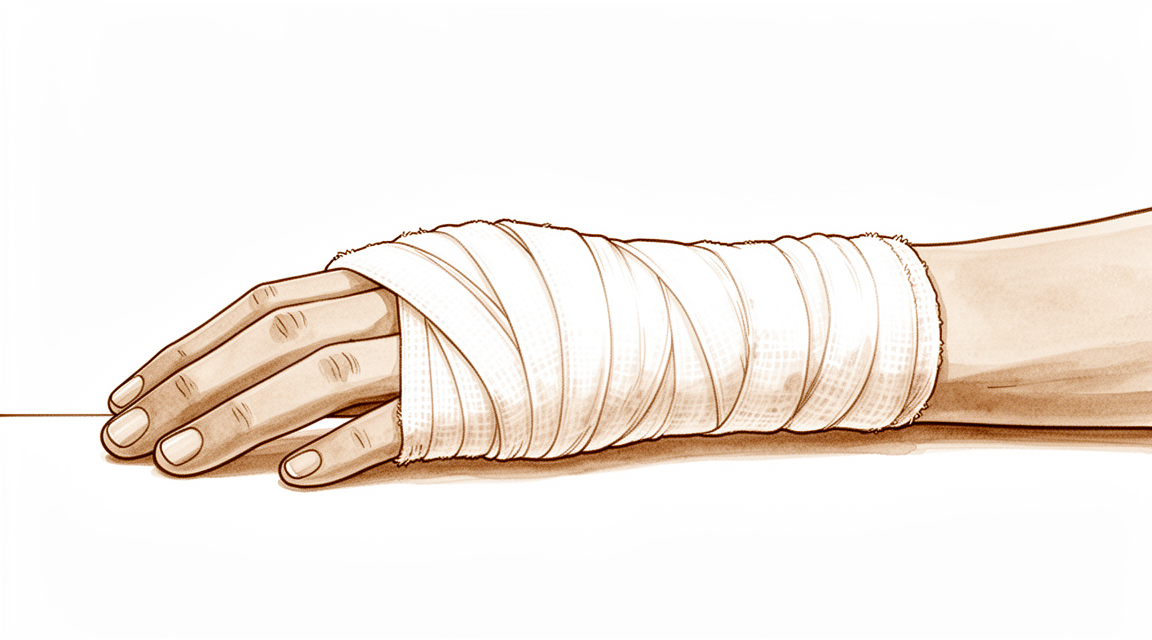
Este protocolo le servirá de guía para su recuperación tras la liberación quirúrgica de la contractura de Dupuytren (fasciectomía) realizada por el Dr. Kieran Hirpara en el Mater Private Hospital Rockhampton. Los dos pilares fundamentales para obtener un buen resultado son el splint, que mantiene los dedos estirados mientras cicatrizan, y el programa de ejercicios, que permite que sigan moviéndose. Lleve esta página o su versión en PDF a su terapeuta de mano para que la rehabilitación se realice de manera coordinada.
Si tiene alguna duda respecto a su herida después de la cirugía, comuníquese con nuestro consultorio. A menudo resulta útil tomar una fotografía de la herida y enviarla por correo electrónico para su evaluación.
Qué esperar¶
La cirugía para la enfermedad de Dupuytren consiste en extirpar las bandas de tejido enfermas que tiraban de los dedos hacia la palma, permitiendo así que estos vuelvan a enderezarse. La enfermedad en sí se explica en la página de Enfermedad de Dupuytren; no existe cura permanente, y el objetivo de la cirugía es eliminar el tejido afectado y restaurar la capacidad de extensión de los dedos.
Por lo general, se le derivará a un terapeuta de mano 2–3 días después de la cirugía. El terapeuta le confeccionará una férula de plástico a medida que mantendrá los dedos operados en posición extendida (recta), y le iniciará en el suave programa de ejercicios que se describe a continuación. La férula y los ejercicios actúan en conjunto: la férula preserva la posición recta lograda mediante la cirugía, mientras que los ejercicios mantienen los dedos doblándose para que no se vuelvan rígidos.
Mantenga la herida limpia y seca hasta que le retiren los puntos de sutura. Una vez extraídos, podrá mojar la piel, pero evite sumergir o dejar la mano en agua durante otra semana. En la página de Cuidado de la herida de nuestra consulta se detallan los apósitos, los signos de infección y el cuidado de las cicatrices. El masaje de la cicatriz es fundamental tras la cirugía de Dupuytren; su terapeuta le guiará en esta práctica una vez que la herida haya sanado.
Cuidado de la cicatriz¶
En las primeras semanas posteriores a la cirugía de Dupuytren, la cicatriz en la palma suele ser firme, elevada y sensible; con el paso de los meses se ablanda y desvanece gradualmente. El masaje de cicatrices es una práctica habitual en la terapia de la mano en Australia: en una encuesta nacional realizada a terapeutas de la mano acreditados, casi todos lo aplicaban tras una cirugía de mano (generalmente a partir del momento en que se retiran los puntos, una vez que la herida ha cicatrizado por completo) para ablandar la cicatriz, mejorar el deslizamiento de la piel sobre los tejidos subyacentes y reducir la sensibilidad de la cicatriz; por lo general se combina con gel o láminas de silicona, en lugar de usarse de forma aislada [6]. Aunque la evidencia científica al respecto aún está en desarrollo, respalda el uso del masaje de cicatrices para disminuir las molestias relacionadas con la cicatriz y mejorar la movilidad [6]. Su terapeuta le enseñará la técnica y podría recomendarle el uso de algún producto de silicona, que a menudo se utiliza por la noche junto con la férula.
Recuperación, vuelta al trabajo y perspectivas a largo plazo¶
La hinchazón y la rigidez son normales durante las primeras semanas y disminuyen a medida que se utiliza la mano; la comodidad, el rango de movimiento y la fuerza de agarre suelen mejorar progresivamente durante varios meses. Mantener la mano elevada y moverla suavemente en esas primeras semanas ayuda a reducir la hinchazón y evita que las pequeñas articulaciones se vuelvan rígidas. La rectitud lograda en la cirugía se mantiene, por lo general, durante este período. En un ensayo aleatorizado sobre rehabilitación tras la liberación de la enfermedad de Dupuytren, la mayoría de los dedos operados mantuvieron o mejoraron su extensión durante los tres primeros meses de terapia manual [2].
El tiempo necesario para volver al trabajo depende del tipo de actividad que realice. En un estudio con más de 2.500 pacientes tratados por enfermedad de Dupuytren, el tiempo mediano para reincorporarse al trabajo tras una fasciectomía abierta fue de unas dos semanas; aproximadamente el 90 % de los pacientes regresaron a sus labores dentro de un año; los trabajos físicamente exigentes requirieron más tiempo [4]. El Dr. Hirpara comentará el momento adecuado para su vuelta al trabajo en la consulta; en el caso de trabajos manuales pesados, normalmente se espera hasta que la herida haya cicatrizado por completo y el agarre sea cómodo.
Dado que la enfermedad de Dupuytren es una afección crónica, con el paso de los años puede reaparecer cierta rigidez; las tasas de recurrencia reportadas varían ampliamente entre estudios, según cómo se defina dicha recurrencia. En general, el pronóstico a largo plazo es favorable: en un seguimiento de 142 fasciectomías durante unos cuatro años, utilizando la definición consensuada actual, la verdadera recurrencia de la contractura se observó en alrededor de 3–4% de las manos; sin embargo, aproximadamente un tercio conservó cierta curvatura residual, generalmente leve y muy por debajo del grado de contractura corregido en la cirugía [5]. La férula, el cuidado de la cicatriz y el programa de ejercicios tienen como objetivo preservar el resultado quirúrgico; si en algún momento un dedo vuelve a ponerse rígido, no dude en avisarnos.
Su férula¶
- Primera semana aproximadamente: use la férula día y noche; quítela únicamente para realizar los ejercicios (y para lavarse, una vez que se lo permitan).
- Después de la primera semana: la mayoría de las personas pasan a usar la férula solo por la noche y pueden empezar a utilizar la mano para actividades ligeras durante el día.
- El uso de la férula nocturna se mantiene durante unos 3 meses (y en algunos casos hasta 6 meses) para evitar que los dedos vuelvan a acercarse a la palma mientras los tejidos maduran.
- Su terapeuta de mano y el Dr. Hirpara le indicarán específicamente el horario de uso de la férula y las actividades permitidas. Los tiempos mencionados arriba son el patrón habitual, no una regla fija.
No debe conducir mientras su mano lleve la férula. Una vez que pase a usarla solo por la noche, podrá volver a conducir durante el día siempre que se sienta cómodo y tenga un agarre seguro del volante.
Para su fisioterapeuta / terapeuta de mano:
Manejo
- Derivación 2–3 días después de la cirugía para confeccionar una férula de extensión termoplástica.
- Esquema de uso de la férula: día y noche durante aproximadamente la primera semana (quitándola para los ejercicios); luego, solo por la noche con uso funcional ligero durante el día. El uso nocturno de la férula se mantiene unos 3 meses (hasta 6 meses si es necesario), según la evaluación del cirujano y el terapeuta.
- Programa de ejercicios en casa según las tarjetas que se adjuntan: extensión activa, flexión bloqueada de la articulación DIP, flexión de las articulaciones DIP/PIP sobre un bolígrafo, flexión compuesta y tenodesis de la muñeca.
- Cuidado de la herida según las pautas de la clínica; manejo de la cicatriz una vez curada.
- El número de repeticiones y la frecuencia diaria los determinará el terapeuta tratante.
Precauciones
- Mantenga la herida limpia y seca hasta la retirada de los puntos; no la deje en remojo ni la sumerja durante una semana más después de eso.
- El cumplimiento riguroso del uso de la férula es fundamental para mantener la extensión lograda en la cirugía.
- No conduzca mientras la mano lleve la férula.
Estos son los ejercicios que aparecen en su folleto: se inician con su terapeuta de mano y luego se continúan en casa.
Sus ejercicios¶
Kieran Hirpara 4.0
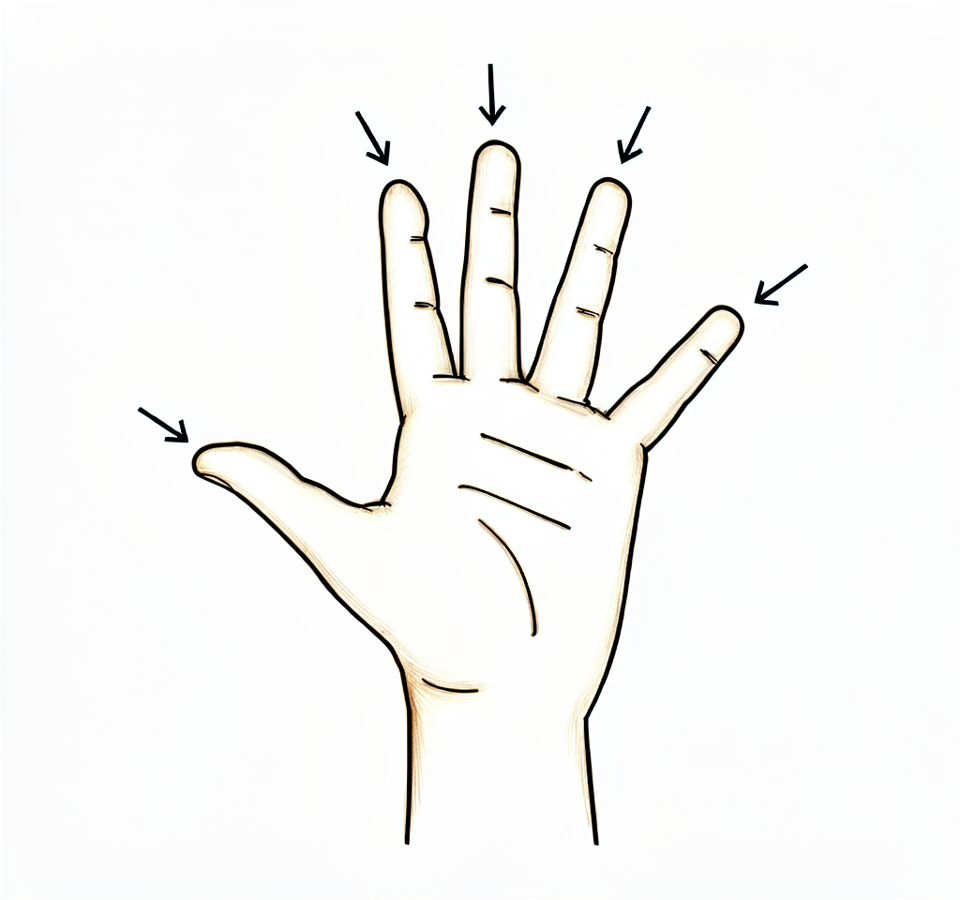
Extensión activa
Con la muñeca recta, estire y abra los dedos tanto como pueda. Puede ayudarse suavemente con la otra mano. Relájese y repita el movimiento.
Según lo indicado por su terapeuta de mano.
Kieran Hirpara 4.0
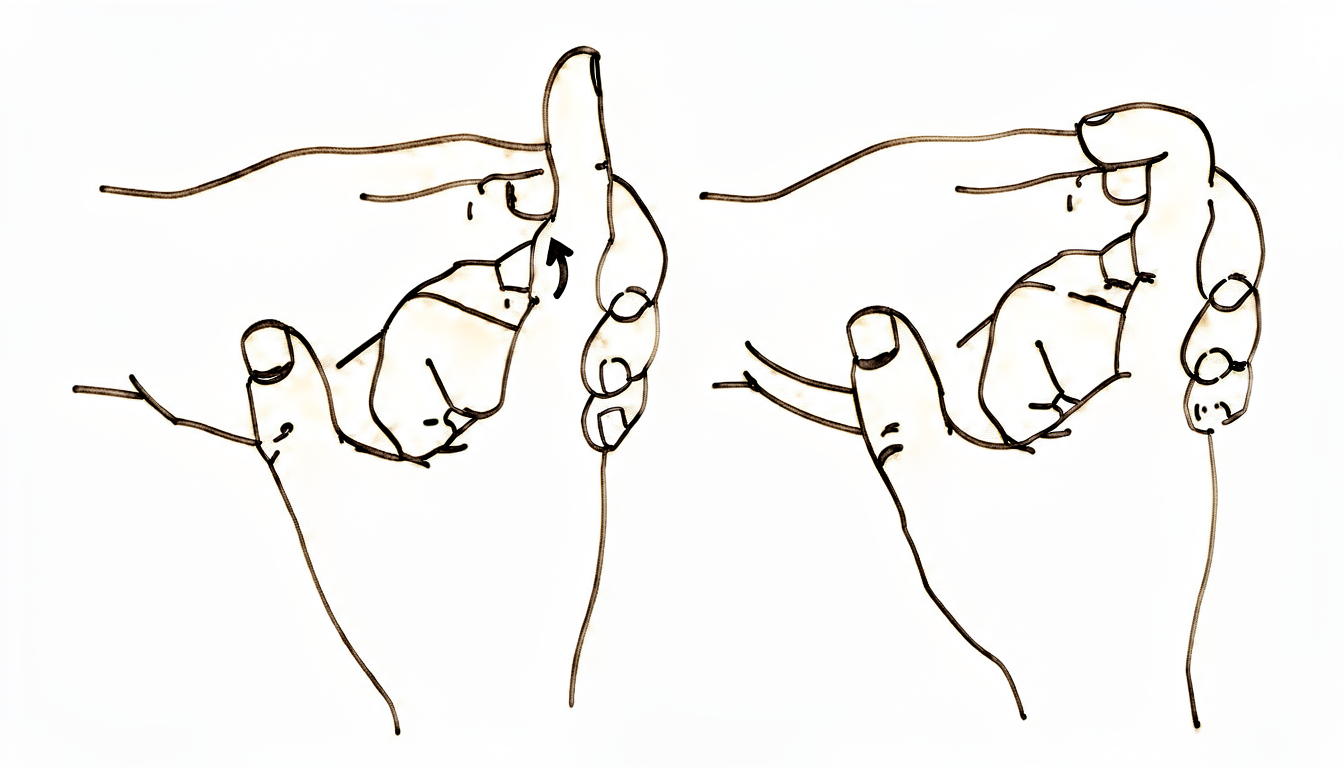
Flexión activa de la articulación DIP
Sostenga el dedo justo debajo del pliegue de la articulación distal (DIP) con la otra mano. Flexione firmemente dicha articulación y luego relájela.
Según lo indicado por su terapeuta de mano.
Kieran Hirpara 4.0
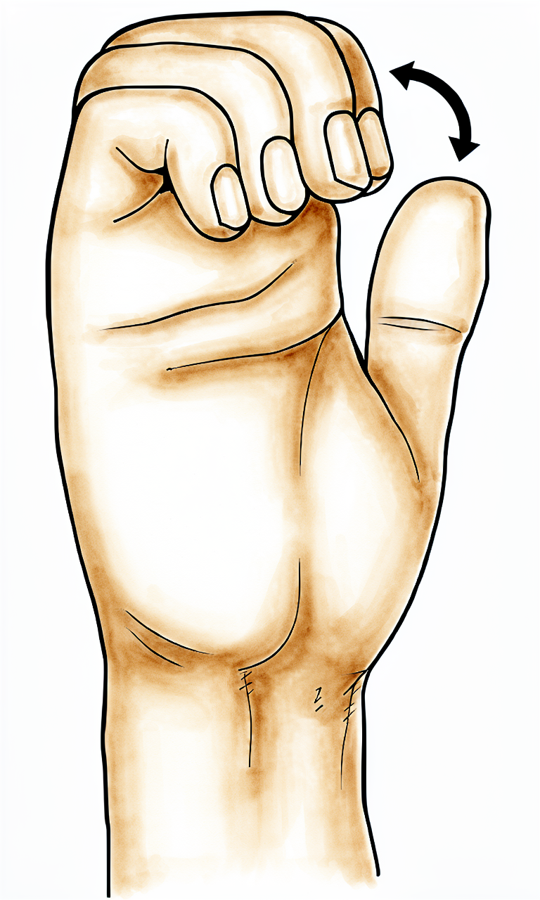
Flexión activa de las articulaciones DIP/PIP
Coloque un bolígrafo a lo largo de la base de los dedos. Curve los dedos alrededor del bolígrafo de modo que ambas articulaciones (la media y la distal) se doblen, y luego relájelos.
Según lo indicado por su terapeuta de mano.
Kieran Hirpara 4.0
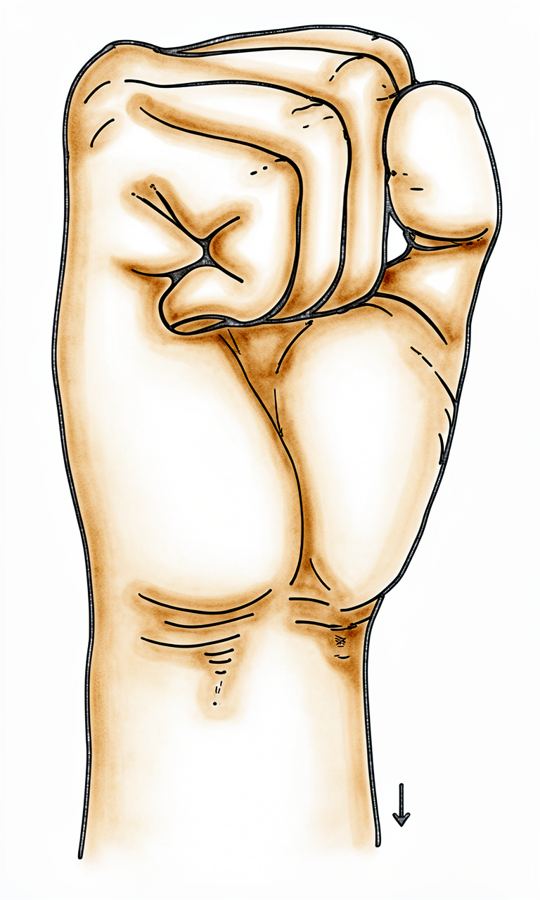
Flexión compuesta
Forme un puño suelto con cuidado; luego relájese y deje que los dedos se enderecen.
Según lo indicado por su terapeuta de mano.
Kieran Hirpara 4.0
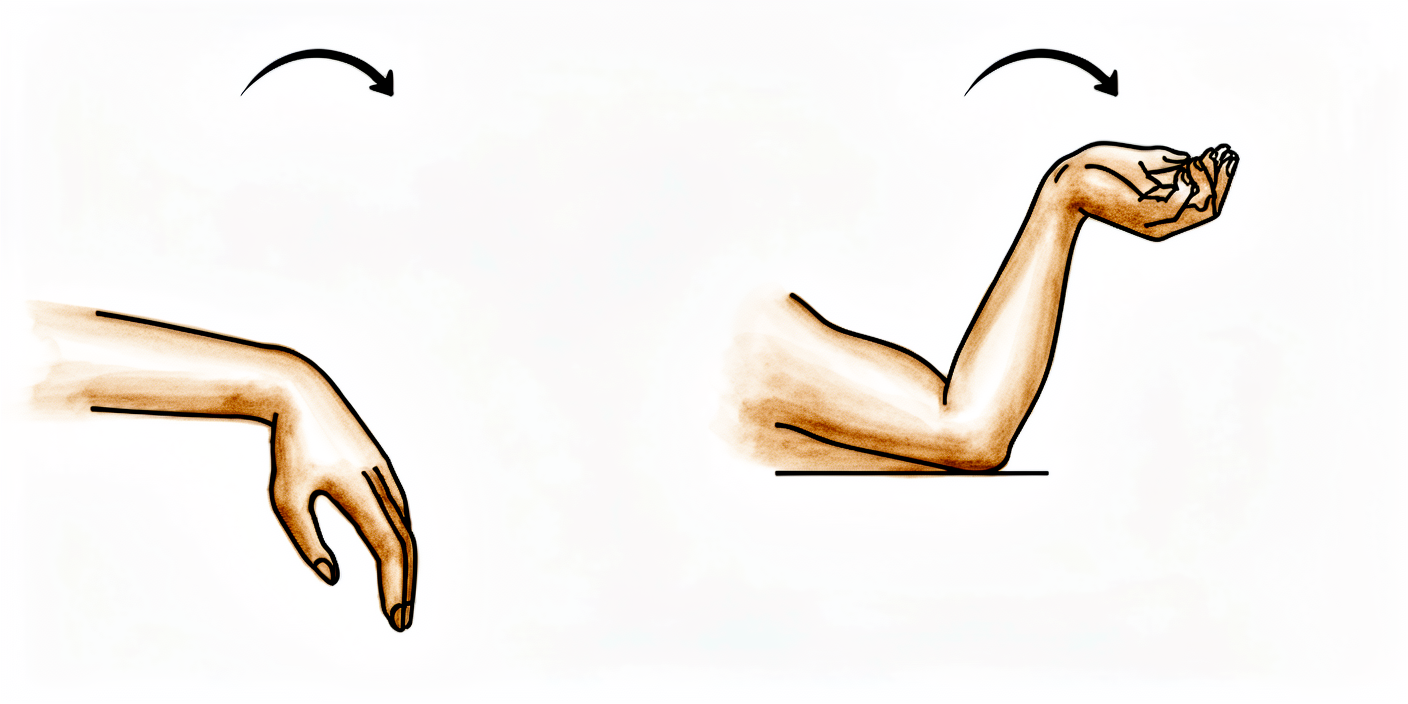
Tenodesis de muñeca
Apoye el codo en una superficie con los dedos relajados; luego flexione la muñeca hacia adelante y después hacia atrás, permitiendo que los dedos se muevan de forma natural.
Según lo indicado por su terapeuta de mano.
Comience los ejercicios que se indican a continuación únicamente bajo la guía del Dr. Hirpara y de su terapeuta especializado en mano, respetando siempre los límites y el rango de movimiento que le hayan indicado. La extensión completa es el objetivo principal de esta intervención; por eso la extensión activa es el ejercicio prioritario. Si deja los dedos sin movimiento, estos tenderán a volver a una posición flexionada; el rango de movimiento que mantenga será el que utilizará después. Los ejercicios de flexión (flexión en la falange distal, flexión distal/proximal y flexión compuesta) también son importantes, pues un dedo que solo se extiende no resulta más útil que uno que solo se flexiona. La tenodesis de la muñeca vincula ambos movimientos. Use la férula nocturna según las indicaciones. Interrumpa cualquier ejercicio que le provoque dolor intenso, y avise a su terapeuta si nota que algún dedo pierde capacidad de extensión.
Después de seguir el protocolo¶
Este protocolo se redactó en colaboración con Ruby Doolan, terapeuta de mano certificada de Extend Rehabilitation. Complementa las recomendaciones generales de recuperación de la consulta: consulte control del dolor postoperatorio, cuidado de la herida y conceptos básicos de la terapia de mano. En cuanto a la intervención quirúrgica, consulte fasciectomía de Dupuytren.
Las expectativas de recuperación, los datos sobre el regreso al trabajo y las pautas para el cuidado de las cicatrices mencionados anteriormente se basan en ensayos publicados, revisiones y encuestas sobre la rehabilitación tras la cirugía de Dupuytren, incluidos ensayos aleatorizados y una revisión sistemática sobre el uso de férulas y la terapia de mano tras la fasciectomía [1–3]. El régimen de férulas y el programa de ejercicios son propios de la consulta; fueron acordados entre el Dr. Hirpara y su terapeuta de mano, y el horario de uso de férulas se personaliza en cada revisión.
Referencias¶
[1] Jerosch-Herold C, Shepstone L, Chojnowski AJ, Larson D, Barrett E, Vaughan SP. Uso de férulas nocturnas tras fasciectomía o dermo-fasciectomía para la contractura de Dupuytren: un ensayo controlado aleatorizado, pragmático y multicéntrico. BMC Musculoskeletal Disorders. 2011;12:136. https://pmc.ncbi.nlm.nih.gov/articles/PMC3146906/ [2] Collis J, Collocott S, Hing W, Kelly E. Efecto de las órtesis de extensión nocturnas tras la liberación quirúrgica de la contractura de Dupuytren: un ensayo controlado aleatorizado en un solo centro. Journal of Hand Surgery (American). 2013;38(7):1285–1294.e2. https://doi.org/10.1016/j.jhsa.2013.04.012 [3] Karam M, Kahlar N, Abul A, Rahman S, Pinder R. Comparación entre terapia manual con y sin uso de férulas tras fasciectomía para la contractura de Dupuytren: revisión sistemática y metaanálisis. Journal of Hand and Microsurgery. 2022;14(4):308–314. https://pmc.ncbi.nlm.nih.gov/articles/PMC10042625/ [4] Blake SN, Poelstra R, Andrinopoulou ER, et al. Retorno al trabajo y costos asociados tras el tratamiento de la enfermedad de Dupuytren. Plastic and Reconstructive Surgery. 2021;148(3):580–590. https://pubmed.ncbi.nlm.nih.gov/34292887/ [5] Radhamony NG, Nair RR, Sreenivasan S, et al. Deformidad residual frente a recurrencia tras fasciectomía palmar para la enfermedad de Dupuytren: seguimiento a largo plazo de 142 casos. Annals of Medicine and Surgery. 2022;73:103224. https://pmc.ncbi.nlm.nih.gov/articles/PMC8767281/ [6] Scott HC, Robinson LS, Brown T. El masaje de cicatrices como intervención para cicatrices postquirúrgicas: encuesta práctica entre terapeutas de mano en Australia. Hand Therapy. 2024;29(1):21–29. https://pmc.ncbi.nlm.nih.gov/articles/PMC10901164/
Evidence & references
This is the clinical evidence summary written for health professionals. It is technical, and it lists the research this page was built from. You do not need to read it to understand your treatment or to make a decision about it.
Dupuytren Contracture — Surgical Release & Post-operative Hand-Therapy Rehabilitation (Open Fasciectomy)¶
Topic scope: post-operative rehabilitation after open excision of diseased palmar/digital fascia for Dupuytren contracture — limited/regional fasciectomy, extending to dermofasciectomy (fascia plus overlying involved skin, replaced with a graft) for aggressive or recurrent disease. The procedure-selection literature (fasciectomy vs needle aponeurotomy vs collagenase) is summarised only as far as it frames recurrence expectations and rehabilitation; the rehab focus is the post-fasciectomy pathway — early active and passive finger extension and flexion, oedema control, scar management, and night extension splinting.
Defining principle of this rehab: fasciectomy removes diseased tissue and restores extension that the disease had taken away — it does not cure the diathesis, and the corrected finger sits in a tissue bed that wants to contract back. So the rehab is a "regain-and-hold" pathway: early motion to keep the freed joints supple and prevent the new flexor-tendon and skin-glide planes from binding down, oedema and scar control so the soft tissues mature without tethering, and a night extension orthosis to defend the surgical correction during healing. The defining clinical question is not whether a construct needs protection (there is no construct), but how aggressively to splint — and here the evidence has shifted decisively toward selective, not routine, splinting.
A. PROCEDURE OUTCOMES & RECURRENCE (context for the rehab)¶
Open partial (limited) fasciectomy is the long-standing reference operation for Dupuytren contracture and gives the most durable correction of the three mainstream options:
- Correction is reliable and recurrence is the dominant long-term limitation. Across modern series the operation restores extension well, but Dupuytren is a lifelong diathesis and some tightening returns over years. Reported recurrence rates vary enormously because studies define recurrence differently (any palpable disease vs a threshold extension loss vs need for re-intervention). Using the modern consensus definition, true recurrence of contracture is low at medium-term follow-up, though a substantial minority retain mild residual curvature well short of the pre-operative deformity [corpus: jhsa.2012.06.032; literature: Radhamony 2022].
- Fasciectomy vs minimally invasive options. Compared with needle aponeurotomy/fasciotomy and collagenase Clostridium histolyticum, open fasciectomy has a longer recovery and higher minor complication rate but lower recurrence — the recurring trade-off in this disease. Needle and collagenase are quicker with faster return to function but recur sooner [corpus: jhsa.2021.05.022; jhsa.2011.08.004; 1753193418786947]. This trade-off is why fasciectomy is typically chosen for denser, multi-ray or PIP-predominant contractures — the same cases whose rehab is hardest and whose splinting is most likely to be justified.
- Repeat limited fasciectomy for recurrence is safe and effective, supporting fasciectomy as a durable, repeatable mainstay rather than a one-shot procedure [corpus: bjj-2020-1393.r2].
Why this matters for rehab: recovery counselling and splint expectations must be framed against a disease that cannot be cured, only corrected — the rehab protects a correction, it does not prevent the diathesis.
B. THE SPLINTING CONTROVERSY (the central rehab question)¶
Historically, every patient was issued a static night extension orthosis after fasciectomy on the assumption it preserved the correction. The best available evidence does not support routine splinting — it supports selective splinting for patients who lose extension.
- Jerosch-Herold 2011 (pragmatic multi-centre RCT, n = 154). Hand therapy alone vs hand therapy + night splinting after fasciectomy/dermofasciectomy. No between-group difference in self-reported function (DASH), finger range of motion, or satisfaction. Authors concluded routine night splinting for all patients is not recommended, reserving it for cases where extension deficits recur [literature: Jerosch-Herold 2011, BMC Musculoskelet Disord].
- Collis 2013 (single-centre RCT, n = 56). Night extension orthosis + hand therapy vs hand therapy alone after surgical release. No significant difference in total active extension or any secondary outcome at 3 months. Same conclusion: provide an orthosis selectively, when extension loss occurs, not universally [corpus: jhsa.2013.04.012; literature: Collis 2013].
- Karam 2022 (systematic review + meta-analysis, 4 RCTs, n = 295). Pooling the splint-vs-no-splint trials found no significant difference in total active flexion/extension, DASH, pain, grip or satisfaction. The collective signal is consistent and now moderately strong: adding a splint to good hand therapy does not improve the average outcome [corpus: 1055/s-0041-1725221; literature: Karam 2022].
- Earlier/smaller work (e.g., post-fasciectomy splinting pilot studies) pointed the same way — splinting is low-yield as a blanket policy [corpus: 1753193412437631].
Practical reading for this protocol. The practice's pattern — splint day-and-night for ~1 week, then night-only with a low threshold to continue (or reinstate) splinting if a finger starts to drift back into flexion — is a reasonable, evidence-aligned middle path: it defends the correction during the highest-risk early healing window and during sleep, while honouring the trial finding that indefinite routine splinting adds little. The trials measured average outcomes; they do not say splinting is useless for the individual who is losing extension, which is exactly the subgroup the authors carved out. This is a defensible selective-splinting stance, not a contradiction of the protocol.
C. HAND-THERAPY & EXERCISE EVIDENCE¶
- Early supervised hand therapy is the backbone of recovery and is where the demonstrable benefit lies (the splint trials all compared against a hand-therapy baseline, not against nothing). Active and passive extension and flexion, oedema control and scar management are standard from the first post-operative therapy visit, typically 2–3 days after surgery.
- Most operated fingers hold or improve their extension over the first three months of hand therapy — the window in which the protocol concentrates splinting and exercise [corpus: jhsa.2013.04.012, control arm; literature: Collis 2013].
- Scar management. Scar massage is near-universal in hand-therapy practice after Dupuytren surgery to soften the palmar scar, improve skin glide and settle sensitivity, generally combined with silicone gel/sheeting and begun around suture removal once the wound is healed. The supporting evidence is developing rather than definitive but favours reduced scar-related discomfort and improved movement [literature: Scott 2024, Australian hand-therapist survey].
- Return to work. In a large cohort, median return after open fasciectomy was ~2 weeks with ~90% back at work within the year; physically demanding jobs took longer [literature: Blake 2021].
- Pre-operative hand therapy has a thinner evidence base and is not a substitute for the post-operative programme [corpus: 17589983241227162].
Phased rehabilitation timeline (matching the synthesis phases)¶
| Phase | Window | Splint | Movement / use | Scar & oedema | Notes |
|---|---|---|---|---|---|
| I — Protect & mobilise | ~Days 2–7 | Custom thermoplastic extension orthosis day & night, off for exercises | Gentle active extension + active DIP/PIP and composite flexion from the first therapy visit; wrist tenodesis | Oedema control (elevation, gentle movement); wound kept clean & dry | Therapy referral 2–3 days post-op; splint defends the surgical correction during the highest-risk window |
| II — Restore motion | ~Week 1 → 6–8 | Transition to night-only; light functional day use of the hand | Progress active + passive extension and flexion; restore full composite fist and full extension | Scar massage + silicone once wound healed (around suture removal) | Most extension is held or regained through this window; daytime driving resumes once out of the splint and grip is safe |
| III — Strengthen & return | ~Week 6–8 → 3 months | Night-only continues ~3 months (up to ~6 months selectively if extension is being lost) | Grip and functional strengthening; return to heavier manual work as wound is soundly healed and grip comfortable | Ongoing scar maturation over months | Splinting beyond this window is selective, driven by extension loss — not routine (see §B) |
The phase structure and timings are protocol/consensus, agreed between the surgeon and hand therapist; the trials inform the splinting policy within them, not the exact week boundaries.
D. COMPLICATIONS (rehab-relevant)¶
- Flare reaction / early CRPS-spectrum. A proportion of patients develop a post-operative inflammatory "flare" — disproportionate swelling, stiffness, redness and pain — which can progress to complex regional pain syndrome (CRPS type 1). Early recognition, oedema control, gentle continued motion and analgesia matter; CRPS is one of the more feared rehab-derailing complications after hand surgery [corpus: jht.2024.09.002 (Dupuytren CRPS-1 case); hcl.2009.11.001 (CRPS after hand surgery)].
- Digital nerve / vessel injury. The neurovascular bundles are displaced by Dupuytren cords, especially in recurrent disease and at the PIP; injury is a recognised operative risk. New sensory change post-operatively warrants surgeon review [corpus: hansur.2017.07.002 — complications systematic review; 17531934231206317 — surgical complications/adverse events].
- Wound healing, haematoma, infection, stiffness. Open fasciectomy has a higher minor-complication rate than the minimally invasive options; meticulous wound care and early motion mitigate stiffness and tethering [corpus: hansur.2017.07.002].
- Incomplete correction / residual PIP deficit. PIP contractures correct less completely than MCP; residual deficit may persist and is the usual trigger for selective ongoing splinting.
E. KEY CONTROVERSIES / EVIDENCE QUALITY¶
- Routine vs selective splinting — the headline controversy, now reasonably settled toward selective: three RCTs and a meta-analysis show no average benefit from adding a static night orthosis to good hand therapy, with all authors carving out the extension-loss subgroup. The practice's "night-only, low threshold to continue if drifting" approach is consistent with this. Moderate (multiple RCTs + SR/MA).
- Recurrence is definition-dependent — headline recurrence figures are not comparable across studies; the consensus definition gives lower, more credible rates. Counsel against the cure expectation. Moderate.
- Procedure choice frames rehab — fasciectomy trades a longer recovery and more minor complications for lower recurrence than needle/collagenase. The fasciectomy cohort is, by selection, the harder-rehab cohort. Moderate.
- The phase timings are consensus — drawn from surgeon/therapist protocols, not a rehab RCT. The splinting policy within them is trial-informed; the week boundaries are typical, not trial-derived. Weak/consensus.
F. EVIDENCE STRENGTH FLAGS (summary)¶
- MODERATE (multiple RCTs + SR/MA): routine night splinting adds no average benefit over hand therapy alone after fasciectomy — splint selectively for extension loss (Jerosch-Herold 2011; Collis 2013; Karam 2022 meta-analysis of 4 RCTs / 295 patients).
- MODERATE (cohorts / comparative): fasciectomy gives durable correction with lower recurrence but longer recovery and more minor complications than needle aponeurotomy/collagenase; repeat fasciectomy is safe and effective; CRPS and digital-nerve injury are recognised rehab-relevant complications.
- WEAK / CONSENSUS: the post-operative phase structure and timings themselves (surgeon + hand-therapist protocol; no defining rehab RCT). Scar-massage benefit is supportive but the evidence base is still developing.
CITATIONS¶
RAG corpus (180,000+ Orthopaedic articles)¶
- Correction of contracture and recurrence rates of Dupuytren contracture following fasciectomy. J Hand Surg Am. 2012. DOI: 10.1016/j.jhsa.2012.06.032
- Repeat limited fasciectomy is a safe and effective treatment for recurrence of Dupuytren's contracture. Bone Joint J. 2021. DOI: 10.1302/0301-620X.103B5.BJJ-2020-1393.R2
- Limited fasciectomy versus collagenase Clostridium histolyticum for Dupuytren contracture. J Hand Surg Am. 2021. DOI: 10.1016/j.jhsa.2021.05.022
- The efficacy and safety of fasciectomy and fasciotomy for Dupuytren's contracture. J Hand Surg Eur. 2011. DOI: 10.1177/1753193410397971
- Cost-effectiveness of open partial fasciectomy, needle aponeurotomy, and collagenase injection for Dupuytren contracture. J Hand Surg Am. 2011. DOI: 10.1016/j.jhsa.2011.08.004
- Three-year recurrence of Dupuytren's contracture after needle fasciotomy and collagenase injection. J Hand Surg Eur. 2018. DOI: 10.1177/1753193418786947
- The effect of night extension orthoses following surgical release of Dupuytren contracture: a single-centre RCT. J Hand Surg Am. 2013. DOI: 10.1016/j.jhsa.2013.04.012
- Comparison of hand therapy with or without splinting postfasciectomy for Dupuytren's contracture: systematic review and meta-analysis. J Hand Microsurg. 2022. DOI: 10.1055/s-0041-1725221
- Does use of a night extension orthosis improve outcomes in patients with Dupuytren contracture? J Hand Surg Glob Online. 2021. DOI: 10.1016/j.jhsg.2021.05.001
- A pilot study assessing the effectiveness of postoperative splinting after limited fasciectomy. J Hand Surg Eur. 2012. DOI: 10.1177/1753193412437631
- Pre-operative hand therapy management of Dupuytren's disease: a systematic review. Hand Ther. 2024. DOI: 10.1177/17589983241227162
- Current concepts in the management of Dupuytren disease of the hand. J Am Acad Orthop Surg. 2020. DOI: 10.5435/JAAOS-D-20-00190
- Complications after treating Dupuytren's disease: a systematic literature review. Hand Surg Rehabil. 2017. DOI: 10.1016/j.hansur.2017.07.002
- Surgical complications: errors and adverse events (hand surgery). J Hand Surg Eur. 2023. DOI: 10.1177/17531934231206317
- The case of a woman with bilateral Dupuytren's contractures who developed CRPS-1. J Hand Ther. 2024. DOI: 10.1016/j.jht.2024.09.002
- Complex regional pain syndrome after hand surgery. Hand Clin. 2009. DOI: 10.1016/j.hcl.2009.11.001
Splinting & hand-therapy literature (URLs)¶
- Jerosch-Herold C, Shepstone L, Chojnowski AJ, et al. Night-time splinting after fasciectomy or dermo-fasciectomy for Dupuytren's contracture: a pragmatic, multi-centre, randomised controlled trial. BMC Musculoskelet Disord. 2011;12:136. https://pmc.ncbi.nlm.nih.gov/articles/PMC3146906/
- Collis J, Collocott S, Hing W, Kelly E. The effect of night extension orthoses following surgical release of Dupuytren contracture: a single-centre, randomised, controlled trial. J Hand Surg Am. 2013. https://pubmed.ncbi.nlm.nih.gov/23790420/
- Karam M, Kahlar N, Abul A, et al. Comparison of hand therapy with or without splinting postfasciectomy for Dupuytren's contracture: systematic review and meta-analysis. J Hand Microsurg. 2022. https://pmc.ncbi.nlm.nih.gov/articles/PMC10042625/
- Blake SN, Poelstra R, Andrinopoulou ER, et al. Return to work and associated costs after treatment for Dupuytren's disease. Plast Reconstr Surg. 2021. https://pubmed.ncbi.nlm.nih.gov/34292887/
- Radhamony NG, Nair RR, Sreenivasan S, et al. Residual deformity versus recurrence following Dupuytren's palmar fasciectomy — long-term follow-up of 142 cases. Ann Med Surg. 2022. https://pmc.ncbi.nlm.nih.gov/articles/PMC8767281/
- Scott HC, Robinson LS, Brown T. Scar massage as an intervention for post-surgical scars: a practice survey of Australian hand therapists. Hand Ther. 2024. https://pmc.ncbi.nlm.nih.gov/articles/PMC10901164/
Society guidance & published rehab protocols¶
- The British Society for Surgery of the Hand (BSSH) — Dupuytren's disease patient and professional guidance. https://www.bssh.ac.uk/patients/conditions/25/dupuytrens_disease
- BSSH — Assessing the outcome of surgery for Dupuytren's disease of the hand. https://www.bssh.ac.uk/assessing_the_outcome_of_surgery_for_dupuytrens_disease_of_the_hand.aspx