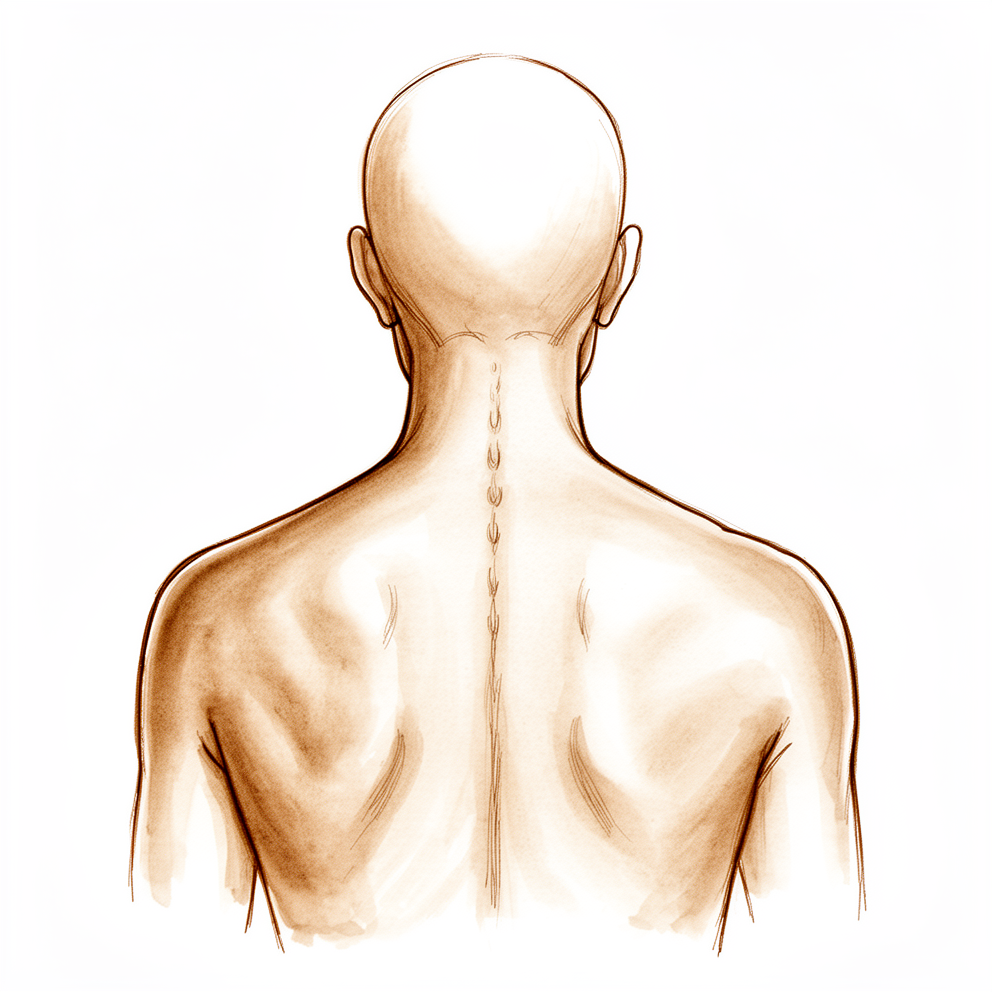
Qué está sintiendo
El dolor lumbar se refiere al dolor que se localiza entre las costillas inferiores y el pliegue glúteo. Puede permanecer en la espalda o extenderse hacia la pierna. Si dura más de 3 meses, se denomina crónico; si comenzó recientemente y ha durado menos de 6 semanas, se considera agudo.
La mayoría de los dolores de espalda son de tipo mecánico, es decir, se originan por la forma en que la espalda se mueve y soporta cargas, y no por algún daño nervioso. Es probable que lo note más al agacharse, levantar objetos o permanecer sentado durante mucho tiempo. Con frecuencia empeora tras realizar actividad física o al levantarse de la cama por la mañana. En algunas personas, este dolor interfiere con el sueño; cuanto más a menudo aparece, mayor es su impacto en el descanso.
El dolor puede dificultar las tareas cotidianas: levantarse de una silla, ponerse zapatos y calcetines, llevar bolsas de compras o permanecer de pie mientras cocina pueden volverse complicados. El trabajo, especialmente aquellos que implican levantar pesos o estar sentado largos periodos, puede resultar especialmente arduo.
Hay algunos aspectos que vale la pena conocer. Si ya ha sufrido dolor lumbar anteriormente, es más probable que vuelva a presentarse. El hecho de sentir dolor al inicio de la jornada laboral también aumenta la probabilidad de que persista. Otras afecciones médicas pueden dificultar el tratamiento del dolor de espalda; además, el dolor lumbar suele ir acompañado de molestias en otras zonas, como las caderas o el cuello.
A la mayoría de las personas que consultan al médico por dolor lumbar se les diagnostica dolor lumbar mecánico o inespecífico, lo que significa que no se ha identificado una estructura dañada ni un nervio comprimido. Este es un hallazgo frecuente y no indica que se haya pasado por alto algún problema. En ocasiones, el dolor proveniente de la articulación sacroilíaca, donde la columna vertebral se une a la pelvis, también se percibe como dolor lumbar.
Su cirujano evaluará no solo la intensidad del dolor, sino también su forma de moverse, dormir, afrontar la situación y desenvolverse en el día a día; todos estos factores son relevantes para determinar el tratamiento más adecuado.
¿Qué está ocurriendo realmente?
Su columna vertebral está formada por una serie de huesos llamados vértebras. Hay 33 en total, agrupadas en cinco secciones: el cuello, el tórax, la zona lumbar y dos secciones fusionadas en la base. El sacro y el cóccix están completamente fusionados, por lo que quedan 24 segmentos móviles. Los huesos de la zona lumbar son los más grandes, ya que soportan la mayor parte del peso.
Entre esos huesos móviles se encuentran unas almohadillas llamadas discos intervertebrales. Cada disco posee un centro blando y gelatinoso, rodeado por un anillo externo resistente compuesto de fibras superpuestas; es similar a un neumático con una pared lateral fuerte que envuelve un núcleo blando. El centro retiene agua y distribuye la presión de manera uniforme al levantar o doblarse; el anillo externo evita que el contenido se escape. Detrás de cada disco hay pequeñas articulaciones, y músculos y ligamentos fuertes envuelven toda la columna para mantenerla estable.
Los huesos soportan la mayor parte de la carga, entre el 70 % y el 90 %. Las pequeñas articulaciones posteriores asumen otro 10 % a 20 % cuando usted está de pie. La zona lumbar presenta una curvatura natural hacia adelante; los músculos que recorren la columna actúan como tensores que mantienen dicha curvatura y protegen los nervios que pasan por el centro.
Con el desgaste, los discos pierden agua y su capacidad amortiguadora disminuye. El espacio intervertebral se estrecha, los huesos quedan más próximos entre sí y las pequeñas articulaciones posteriores deben soportar una carga superior a la prevista. Este proceso de desgaste en la zona lumbar es muy frecuente: afecta a entre el 40 % y el 85 % de las personas. Es una de las razones por las que la zona lumbar suele ser un punto problemático: las articulaciones donde la columna se une a la pelvis reciben mayor demanda, y su rigidez puede sobrecargar los segmentos circundantes.
Cuando estas estructuras dejan de moverse con fluidez y de distribuir la carga de forma equitativa, los tejidos circundantes se irritan. Ese es el dolor que siente al doblarse, levantar objetos o sentarse; por eso el malestar suele intensificarse tras la actividad, en lugar de deberse a una lesión concreta.
Qué podemos hacer al respecto
En la mayoría de los casos de dolor de espalda, no se identifica una sola estructura dañada; por ello, el tratamiento busca reducir el dolor y mejorar la funcionalidad, en lugar de “reparar” una parte concreta. Normalmente iniciamos con terapias que no requieren medicación ni cirugía. Mantenerse activo y adaptar los movimientos y hábitos laborales puede aliviar los síntomas. La fisioterapia emplea ejercicios para disminuir el dolor y aumentar la capacidad funcional; existen numerosos tipos de ejercicios útiles, incluido el yoga. Otras opciones que podríamos proponer son tratamientos manuales como la osteopatía y la acupuntura, así como programas que analizan cómo el dolor afecta el sueño, el estado de ánimo, la vida cotidiana y el cuerpo del paciente. Estos programas implican la colaboración de varios profesionales de la salud junto con usted. Ponemos a prueba cada enfoque de manera justa antes de pasar al siguiente, y le explicamos cuál es el objetivo de cada uno y qué puede esperar de él.
Los analgésicos pueden ayudarle a mantenerse activo mientras los demás tratamientos hacen efecto; actúan en conjunto con el ejercicio y los cambios en las actividades, no como sustituto de estos. No ofrecemos inyecciones para esta condición.
La cirugía se considera cuando el tratamiento no quirúrgico no ha producido mejoría suficiente y existe una razón clara para que la operación sea beneficiosa. En el caso del dolor de espalda sin afectación nerviosa, la utilidad de intervenciones como la fusión vertebral o el reemplazo de disco es limitada; por ello, tomamos estas decisiones con sumo cuidado junto con usted. Cuando la cirugía es una opción viable, le explicamos en detalle en qué consiste, qué puede y qué no puede cambiar, así como cómo será su recuperación, de modo que la decisión sea tomada en colaboración entre usted y nosotros.
Qué esperar
El dolor de espalda rara vez sigue un patrón lineal. Algunas personas se recuperan en cuestión de semanas; otras experimentan dolores intermitentes, con días buenos y días malos, durante un año o más. La recuperación total en 6 meses es poco frecuente; por eso es útil planificar un progreso gradual en lugar de esperar una solución rápida.
A largo plazo, la mayoría de los casos permanecen prácticamente iguales o mejoran lentamente. Aproximadamente 4 de cada 10 personas descubren que, con el tiempo, pueden realizar notablemente más de sus actividades habituales. Unas pocas siguen sintiendo dolor molesto casi todos los días; muchas otras no experimentan dolor alguno durante semanas enteras. No existe un patrón único; cada caso es distinto.
Lo que realmente determina el curso del dolor no es lo que se observa en las imágenes médicas. Los cambios visibles en los estudios de imagen no permiten predecir quién se recuperará y quién no. Lo más importante es cómo usted percibe su espalda y hasta qué punto el dolor le impide realizar sus actividades. Preocuparse de que el movimiento cause daños, o sentirse deprimido o estresado, está relacionado con mayores dificultades cotidianas. Además, haber padecido dolor de espalda previamente aumenta la probabilidad de sufrir otro episodio, tal como ya mencionamos.
Si se deja sin tratamiento, el dolor de espalda puede persistir y limitar sus actividades. Si se gestiona adecuadamente, el pronóstico suele ser positivo. Mantenerse activo, controlar el miedo al movimiento y seguir un programa de ejercicios adaptado a sus necesidades son factores clave. Las personas que se incorporan a un programa estructurado suelen cumplirlo rigurosamente, asistiendo a casi todas las sesiones durante unas 10 semanas; esa constancia es parte esencial del éxito del tratamiento.
También conviene saber qué no hace el dolor de espalda: no provoca directamente depresión ni ansiedad, aunque ambas pueden coexistir. Asimismo, pocas personas terminan por dejar de trabajar a largo plazo o por recibir una pensión por discapacidad debido a su espalda.
En resumen: su espalda podría molestarle durante meses, pero con el plan adecuado la mayoría de las personas siguen trabajando, siguen siendo activas y siguen haciendo lo que les importa.
¿Cuándo consultar a un especialista?
La mayoría de los dolores de espalda mejoran con el tiempo y con cuidados sencillos; usted puede manejarlos con la ayuda de su médico de cabecera. Consulte a su médico de cabecera si el dolor persiste más de 6 semanas sin mejorar, si altera su sueño o si le impide trabajar o realizar sus actividades diarias. Solicite una evaluación especializada si ya ha tenido dolores de espalda anteriormente y estos siguen reapareciendo, o si se sospecha que el dolor proviene de la articulación sacroilíaca, donde la columna vertebral se une a la pelvis. Acuda a urgencias si presenta debilidad o entumecimiento nuevos en las piernas, o pérdida del control de la vejiga o los intestinos. Estos síntomas indican un problema nervioso que requiere evaluación el mismo día.
Evidence & references
This is the clinical evidence summary written for health professionals. It is technical, and it lists the research this page was built from. You do not need to read it to understand your treatment or to make a decision about it.
Anatomy & Pathophysiology
Bony Anatomy
- The bony anatomy of the spine consists of 7 cervical vertebrae, 12 thoracic vertebrae, 5 lumbar vertebrae, 5 fused sacral vertebrae, and 4 or 5 fused coccygeal vertebrae [3].
- The vertebral body consists of a fairly cylindrical mass of bone connected by pedicles to the posterior arch, which consists of the lamina and spinous process [3].
- The vertebral bodies function primarily to bear weight and transfer forces to the pelvis and hips, while the posterior elements provide protection to neural structures and function as a tension band [3].
- The thoracic spine represents two transitional zones, from the highly mobile cervical spine into the more rigid thoracic region, and then back to the more mobile lumbar spine [5].
- The thoracic spine forms a bony "cube" with the ribs and sternum, which is an inherently stable structure providing protection to the heart and lungs [5].
- The vertebral bodies of the thoracic spine are larger than those of the cervical spine but smaller than the lumbar vertebrae [5].
- The posterior arch of thoracic vertebrae encloses the spinal canal, which is narrowest in this region of the spine [5].
- The spinous processes of the midthoracic spine project sharply obliquely, overlapping the lamina and spinous processes inferiorly [5].
- The rib heads articulate with the lateral aspect of the vertebral bodies, with a shared articulation at the level of the disk space referred to as a demifacet [5].
- The first, eleventh, and twelfth vertebral bodies have only a single articulation for the same-numbered rib head [5].
- The vertebral column comprises 33 vertebrae divided into five sections: 7 cervical, 12 thoracic, 5 lumbar, 5 sacral, and 4 coccygeal [11].
- The sacral and coccygeal vertebrae are fused, which typically allows for 24 mobile segments [11].
- A typical vertebra comprises an anterior body and a posterior arch that enclose the vertebral canal [11].
- The neural arch is composed of two pedicles laterally and two laminae posteriorly that are united to form the spinous process [11].
- The articular processes articulate with adjacent vertebrae to form synovial joints, and their relative orientation accounts for the degree of flexion, extension, or rotation possible in each segment [11].
- The length of the vertebral column averages 72 cm in men and 7 to 10 cm less in women [11].
- The vertebral canal extends throughout the length of the column and provides protection for the spinal cord, conus medullaris, and cauda equina [11].
- The vertebral body is composed of an inner region of cancellous bone surrounded by a thin shell of cortical bone [8].
- The cervical spine is composed of seven vertebrae and assumes a lordotic curvature [8].
- The thoracic spine is composed of 12 vertebrae and assumes a kyphotic curvature [8].
- The lumbar spine is composed of five vertebrae and assumes a lordotic curvature [8].
- The five fused sacral vertebrae form a portion of the pelvis [8].
- Four small, fused vertebrae form the coccyx at the most caudal extent of the spinal column [8].
Intervertebral Disc Anatomy
- The intervertebral disc (IVD) separates each successive vertebral body and provides a unique combination of compressive stiffness and flexibility to support normal spine biomechanics [8].
- The IVD is composed of an inner nucleus pulposus (NP) and an outer ring termed the anulus fibrosus (AF) [8].
- The nucleus pulposus serves as an osmotic pump to attract water and generate hydraulic pressure when subjected to significant loads during activities of daily living [8].
- The anulus fibrosus encapsulates the gelatinous nucleus pulposus and provides mechanical support to contain NP pressure and constrain intervertebral rotations [8].
- The outer anulus fibrosus is integrated with the vertebral rim via a fibrocartilage enthesis that consists of a thin layer of calcified cartilage, or "tidemark" [8].
- The end plate is a bilayer of cartilage and bone that separates the disk from adjacent vertebrae [8].
- The cartilage end plate integrates with the inner anulus fibrosus to fully encapsulate the nucleus pulposus [8].
- The end plate must be strong and thick to resist significant loads but must also be permeable to favor chemical transport and disk cellular vitality [8].
Ligaments and Soft Tissue
- Each successive vertebra is connected anteriorly via the IVD and posteriorly via the facet joints [8].
- Additional soft-tissue structures providing passive support include the anterior longitudinal ligament, posterior longitudinal ligament, ligamentum flavum, facet joint capsule, interspinous ligament, and supraspinous ligaments [8].
- The spinal column is stabilized by paraspinal muscles including the erector spinae, psoas, and multifidus [8].
- The erector spinae runs longitudinally on the dorsal surface of the spinal column and functions to extend the spine [8].
- The psoas runs longitudinally on the ventrolateral surface of the spinal column and serves to flex the hip or laterally bend the trunk [8].
- The multifidus connects intersegmentally to stabilize the spine by acting like a bowstring to maintain lordosis [8].
Biomechanics and Alignment
- Normal cervical alignment is approximately 15° of lordosis [7].
- The thoracic spine generally ranges from 20° to 40° of kyphosis [7].
- The lumbar spine has approximately 40° to 50° of lordosis [7].
- Kyphotic segments (thoracic, sacral) are considered "primary" curvatures as they are present in utero and at birth [7].
- The lordotic curvatures of the cervical and lumbar spine develop secondarily later in life to allow the growing child to develop an upright posture [7].
- The center of gravity of the spinal column runs from the odontoid process proximally through the sacral promontory caudally [7].
- Changes in sagittal balance that shift the center of gravity too far ventrally can result in significant pain and disability [7].
- The basic motion segment of the spine, the "functional spinal unit," consists of two vertebrae, the disk between them, and the facet joints and their capsules [7].
- Vertebral bodies bear 70% to 90% of the static axial load of the spine [7].
- The facet joints support 10% to 20% of axial load in a standing, neutral alignment [7].
- In extension, the facet joints may bear up to 30% of the axial load [7].
- In flexion, the facet joints may be burdened with up to 50% of the anterior shear load [7].
- As compressive forces are applied to the disk, the nucleus pulposus deforms, redistributing axial forces radially [7].
- The radial pressure from the nucleus pulposus is resisted by the tensile properties of the alternating bands of fibers within the anulus fibrosus [7].
- The spinous processes and transverse processes act as lever arms, providing mechanical advantage for the muscles that insert along their surfaces [7].
Vascular Anatomy
- The thoracic and lumbar levels are supplied by paired segmental arteries which originate directly from the aorta along its posterior surface [12].
- Branches of the segmental arteries supply the vertebral body, the paraspinal musculature, and the spinal cord [12].
- The cervical spine derives its circulation primarily from the vertebral arteries [12].
- The vertebral arteries typically enter the transverse foramen at the C6 level and run proximally through the transverse foramina to C1 [12].
- The vascular supply of the spinal cord is primarily from the medullary branches of the segmental spinal arteries [12].
- The anterior spinal artery is responsible for supplying approximately 80% of the vascular supply to the spinal cord [12].
- The arteria medullaris magna (AMM), also known as the arteria radicularis magna or artery of Adamkiewicz, is the largest anterior segmental artery [12].
- The AMM typically arises on the left side anywhere between the T8 and L1 level, although right-sided origins are not uncommon [12].
Neural Anatomy
- A typical mixed spinal nerve has three distinct components: motor, sensory, and sympathetic [13].
- Motor root fibers arise from the anterior horn cells and innervate the skeletal muscles [13].
- Sensory fiber cell bodies are located within the dorsal root ganglia with axons entering the posterolateral sulcus of the cord via several rootlets [13].
- The sympathetic component of all 31 mixed spinal nerves leaves the spinal cord along only 14 motor roots [13].
- The cells of origin for the sympathetic component are in the intermediolateral cell column that extends throughout the thoracic and upper lumbar cord segments [13].
- Mixed spinal nerves, having left the intervertebral foramina, receive their sympathetic component and promptly branch into anterior and posterior primary rami [13].
- The posterior primary rami are directed posteriorly and supply the paraspinal musculature and the skin along the posterior aspect of the trunk, neck, and head [13].
- The anterior primary rami of all the cervical, the first thoracic, and all the lumbosacral nerves join in the formation of plexuses [13].
- The area of skin supplied by the fibers of a single spinal root is called a dermatome [13].
- Segmental dermatomal patterns are well preserved in the thoracic region but not in the limbs [13].
Pathophysiology of Degeneration and Stenosis
- Lumbar spondylosis is due to a degenerative cascade that has an association with intervertebral disk degeneration (IDD) [27].
- Mechanical progression and associated disk space narrowing leads to adjacent level pedicle approximation with narrowing of the superior-inferior dimensions of the intervertebral foraminal canal [27].
- Laxity of associated ligaments and vertebral column translates into altered loading mechanics and an altered pressure relationship on the vertebral bone and joint surfaces, influencing osteophyte formation and facet joint hypertrophy [27].
- IDD is a complicated multifactorial process characterized by altered biomechanics of loading, an imbalance of extracellular matrix synthesis and degradation, increased secretion of proinflammatory cytokines, and increased apoptosis and senescence in the nucleus pulposus cells [27].
- Altered biomechanics from IDD lead to further degenerative changes and osteophyte formation, which has the potential to cause lumbar central and foraminal stenosis leading to symptomatic nerve compression and radiculopathy [27].
- Degeneration of the disc occurs with disc narrowing and subsequent ligamentous redundancy, which compromises the spinal canal area [17].
- Instability resulting from disc degeneration may precipitate the formation of facet overgrowth and ligamentous hypertrophy [17].
- The ligamentum flavum may be markedly thickened into the lateral recess where it attaches to the facet capsule, causing nerve root compression [17].
- Central spinal stenosis denotes involvement of the area between the facet joints, which is occupied by the dura and its contents [17].
- Stenosis in the central region is usually caused by protrusion of a disc, bulging anulus, osteophyte formation, or buckled or thickened ligamentum flavum [17].
- Symptomatic central spinal stenosis results in neurogenic claudication with generalized leg pain [17].
- The lateral canal contains the nerve roots, and compression in this region results in radiculopathy [17].
- The lateral recess, also known as "Lee's entrance zone," begins at the medial border of the superior articular process and extends to the medial border of the pedicle [17].
- Facet arthritis most frequently causes stenosis in the lateral recess zone, along with vertebral body spurring and disc or anulus pathology [17].
- "Lee's midzone" describes the foraminal region, which lies ventral to the pars [17].
- The dorsal root ganglion and ventral motor root occupy 30% of the foraminal space [17].
- Causes of stenosis in the foraminal area include pars fracture with proliferative fibrocartilage or a lateral disc herniation [17].
- Thickening of the ligamentum flavum can extend into the foramen and be associated with a spur from the undersurface of the pars, especially if foraminal height is less than 15 mm and posterior intervertebral disc height is less than 4 mm [17].
- The exit zone is identified as the area lateral to the facet joint [17].
- The nerve root in the exit zone can be compressed by a "far lateral" disc, spondylolisthesis and associated subluxation, or facet arthritis [17].
- The most common type of spinal stenosis is caused by degenerative arthritis of the spine, including Forestier disease, characterized by hyperostosis and spinal rigidity in elderly patients [17].
- Acquired forms of spinal stenosis are most commonly localized to the facet joints and ligamentum flavum [17].
- The L4-5 level is the most commonly involved in degenerative spinal stenosis, followed by L5-S1 and L3-4 [17].
Investigations
Magnetic Resonance Imaging (MRI)
- MRI is the standard for advanced imaging of the spine and is superior to CT in most circumstances, particularly for identifying infections, tumors, and degenerative changes within the discs [23].
- MRI is superior to CT for imaging the intervertebral disc and directly imaging neural structures [23].
- MRI typically shows the entire region of the spine (cervical, thoracic, or lumbar) [23].
- MRI allows for imaging of the nerve root in the foramen, which is difficult with postmyelography CT because the subarachnoid space and contrast agent do not extend fully through the foramen [23].
- MRI is the procedure of choice for screening patients with low back or sciatic pain after routine radiography [22].
- In the lumbar and thoracic spine, MRI has supplanted CT myelography because it is noninvasive and less expensive [22].
- The combination of high soft-tissue contrast and high resolution in MRI allows ideal evaluation of the intervertebral discs, nerve roots, posterior longitudinal ligament, and intervertebral foramen [22].
- MRI provides excellent assessment of the spinal cord [22].
- A normal intervertebral disc exhibits signal hyperintensity on T2-weighted images due to its high water content [22].
- The aging process results in gradual desiccation of disc material and loss of T2-weighted signal hyperintensity [22].
- Disc herniations or extrusions appear as convex or polypoid masses extending posteriorly into the ventral epidural space, frequently maintaining a signal intensity similar to that of the disc of origin [22].
- Sagittal T2-weighted or gradient-echo images create a “myelographic” effect useful for evaluating compromise of the subarachnoid space [22].
- Sagittal T1-weighted images should be closely examined to identify narrowing of the neuroforamina [22].
- Normal T1-weighted hyperintense perineural fat in the foramina provides excellent contrast to darker displaced disc material [22].
- Far lateral disc herniations are best seen on selected axial images localized through disc levels [22].
- Free disc fragments appear discontinuous with the intervertebral disc and usually have intermediate T1-weighted signal in contrast to hypointense cerebrospinal fluid [22].
- Edema within the spinal cord is readily demonstrated as hyperintensity with T2 weighting [22].
- MRI evidence of disc degeneration has been reported in the cervical spine in 25% of patients younger than 40 years and in 60% of patients 60 years and older [23].
- Lumbar disc degeneration was found in 35% of patients aged 20 to 39 years and in 100% of patients older than 50 [23].
- MRI findings must be carefully correlated with the clinical impression because MRI shows anatomy that is abnormal but may be asymptomatic [23].
- The best way to obtain meaningful clinical information from MRI is to have a specific question derived from the patient’s history and physical examination before the study [23].
- Specific questions for MRI interpretation should be posed using the parameters of neural compression, instability, and deformity [23].
- The specific location of the abnormality should be suspected before MRI and confirmed with the study [23].
- Only abnormalities in categories of neural compression, instability, or deformity are important for operative treatment [23].
- Failure to interpret MRI in this manner leads to poor clinical choices and outcomes [23].
- Diffusion tensor imaging has been reported to demonstrate spinal cord impairment in patients with early stage cervical spondylosis before it is visible on plain MRI scans [26].
Computed Tomography (CT)
- CT has largely supplanted plain radiographs as the initial screening study of choice for spine injuries due to its combination of high sensitivity and specificity [24].
- CT of the spine should be obtained in the setting of a high-risk mechanism, acute thoracic or lumbar pain after trauma, fractures identified on plain radiographs, or other reasons to suspect spine injury such as neurologic deficit [24].
- A dedicated spine CT consists of 2- to 3-mm wide axial slices of the thoracic and lumbar spine, typically reformatted into sagittal and coronal images [24].
- CT allows for identification of subtler fractures that might have remained undiagnosed on plain radiographs [24].
- CT provides additional three-dimensional detail, including the degree of canal compromise and the amount of fracture comminution [24].
- CT is particularly useful in differentiating compression fractures from burst fractures [24].
- CT is useful in identifying subtle features of an injury such as the presence of facet widening [24].
- CT evaluation is essential in determining the stability of thoracic and lumbar spine fractures [24].
- The primary disadvantage of CT imaging compared to MRI is that it does not provide as good a visualization of the soft tissues [24].
- CT myelography is reserved for patients who have contraindications to MRI or who have equivocal MRI examinations [22].
Terminology and Classification
- A bulge is defined as a circumferential, symmetric extension of the disc beyond the interspace around the endplates [22].
- A protrusion is defined as a focal or asymmetric extension of the disc beyond the interspace, with the base against the disc of origin broader than any other dimension of the protrusion [22].
- An extrusion is defined as a more extreme extension of the disc beyond the interspace, with the base against the disc of origin narrower than the diameter of the extruding material itself or with no connection between the material and the disc of origin [22].
- A sequestration specifically refers to a disc fragment that has completely separated from the disc of origin [22].
Treatment
- Direct medical expenditure for the management of low back pain is more than $100 billion annually and is increasing [28].
- The management of thoracolumbar and lumbosacral spine-related pain differs depending on the exact etiology of the patient’s symptoms [28].
References
[3] Orthopaedic Knowledge Update 13 Ebook Without Multimedia. Spinal Anatomy > Osseous Anatomy.
[5] Orthopaedic Knowledge Update 13 Ebook Without Multimedia. Spinal Anatomy > Osseous Anatomy > Thoracic Vertebrae.
[7] Orthopaedic Knowledge Update 13 Ebook Without Multimedia. Spinal Anatomy > Biomechanics.
[8] Orthopaedic Basic Science Fifth Edition Print Ebook. Biology and Mechanics of the Skeletal Extracellular Matrix > Anatomy.
[11] Campbell S Operative Orthopaedics 4 Volume Set. RECONSTRUCTION OF THE PATELLOFEMORAL AND PATELLOTIBIAL LIGAMENTS WITH A SEMITENDINOSUS TENDON GRAFT > ANATOMY OF VERTEBRAL COLUMN.
[12] Orthopaedic Knowledge Update 13 Ebook Without Multimedia. Spinal Anatomy > Vascular Anatomy.
[13] Campbell S Operative Orthopaedics 4 Volume Set. PERIPHERAL NERVE INJURIES OF THE UPPER AND LOWER EXTREMITIES > ANATOMY OF THE SPINAL NERVES > COMPONENTS OF MIXED SPINAL NERVES.
[17] Campbell S Operative Orthopaedics 4 Volume Set. OVERVIEW OF LUMBAR AND THORACIC DISC DEGENERATION AND HERNIATION > STENOSIS OF THE THORACIC AND LUMBAR SPINE > ANATOMY.
[22] Campbell S Operative Orthopaedics 4 Volume Set. INTERVERTEBRAL DISC DISEASE.
[23] Campbell S Operative Orthopaedics 4 Volume Set. OVERVIEW OF LUMBAR AND THORACIC DISC DEGENERATION AND HERNIATION > MAGNETIC RESONANCE IMAGING.
[24] Rockwood And Green S Fractures In Adults. Imaging of Cervical Spine Fractures and Dislocations > Computed Tomography.
[26] Campbell S Operative Orthopaedics 4 Volume Set. POSTERIOR APPROACH TO THE LUMBAR SPINE, L1 TO L5 > MAGNETIC RESONANCE IMAGING.
[27] Orthopaedic Basic Science Fifth Edition Print Ebook. Lumbar Spondylosis, Degenerative Disk Disease, and Radiculopathy > Introduction.
[28] Orthopaedic Knowledge Update Sports Medicine 6. Thoracolumbar Spine > Introduction.