¿Por qué se ha recomendado esta operación?
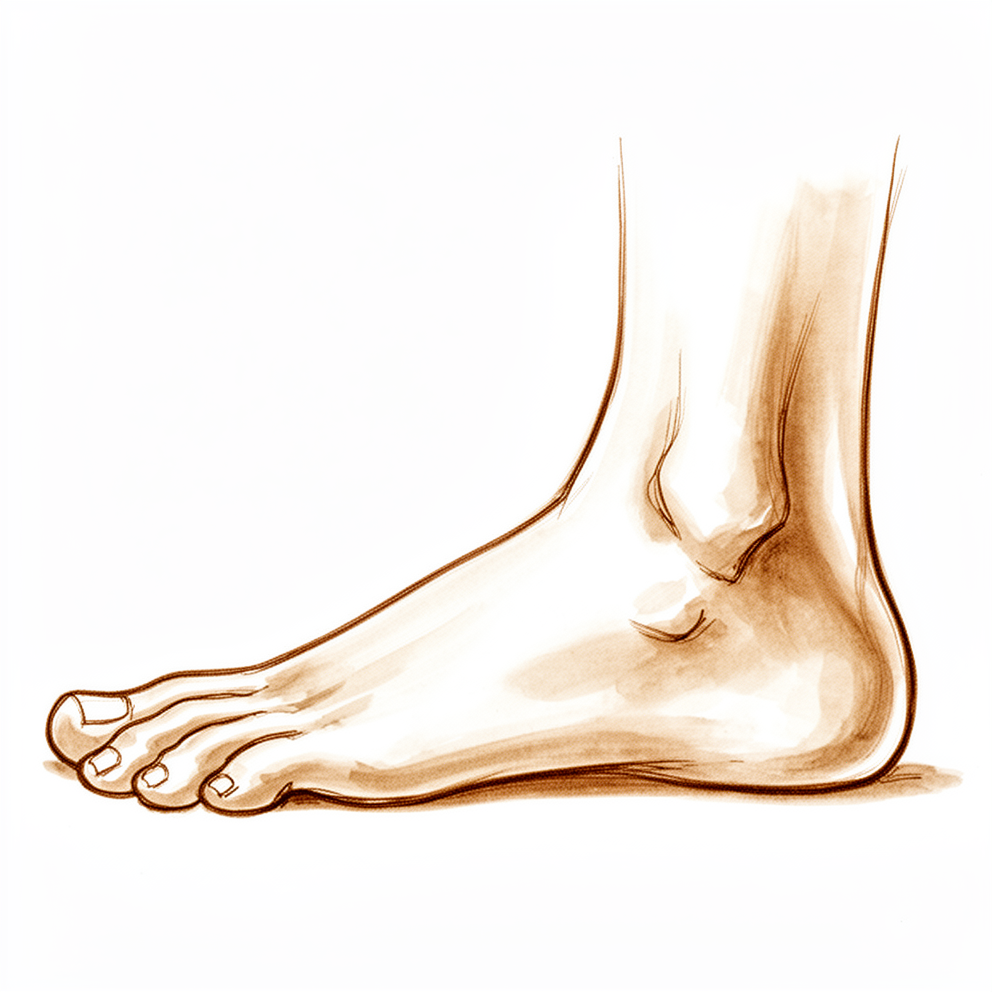
La fusión subtalar es una opción cuando la propia articulación es la causa de su dolor. La articulación subtalar se encuentra debajo del tobillo y permite que el pie se incline y gire sobre terrenos irregulares. La fusión, también denominada artrodesis, consiste en unir los huesos de dicha articulación para que dejen de rozarse entre sí. Una vez que los huesos se fusionan en una sola pieza sólida, el movimiento doloroso desaparece.
Por lo general, recomendamos esta operación en casos de artritis crónica tras una fractura del talón, en casos de pie plano doloroso causado por una articulación que no se formó correctamente, o cuando el talón se ha consolidado en una posición anómala. Dado que se trata a menudo de un problema de larga duración, iniciamos el tratamiento con medidas no quirúrgicas: modificaciones en las actividades, fisioterapia, uso de férulas o ortesis; solo consideramos la cirugía cuando estas medidas no logran la mejora esperada. El objetivo es obtener un pie estable y sin dolor, para que pueda volver a caminar y mantenerse de pie cómodamente.
Antes de la operación
Para planificar su operación, realizamos estudios de imagen de su pie. Estos pueden incluir radiografías con carga de peso, en las que usted permanece de pie mientras se toman las imágenes; a veces también una tomografía computarizada, que muestra los huesos con gran detalle, o una resonancia magnética, que permite visualizar los tejidos blandos como tendones y ligamentos. Nuestro equipo le dará instrucciones sobre el ayuno: no debe comer ni beber durante siete horas antes de la cirugía. Pedimos siete horas en lugar de seis para poder adelantar su operación si el programa quirúrgico lo permite. No deje de tomar ningún medicamento a menos que se lo indiquemos; traiga una lista por escrito de todos los fármacos que toma, incluidas las pastillas y los remedios naturales. Use ropa holgada y cómoda, y organice que alguien lo lleve a casa, ya que no podrá conducir por sí mismo. Si padece otras enfermedades, es posible que necesite análisis de sangre o una consulta con el anestesista, el médico encargado de administrarle la anestesia.
El día de la intervención
Llega usted a la unidad de admisiones quirúrgicas del hospital, donde se le registrará y preparará para el quirófano. Conocerá al anestesista, el médico encargado de administrarle la anestesia. Esta operación se realiza bajo anestesia general. En ocasiones, se añade un bloqueo nervioso regional para aliviar el dolor postoperatorio; el anestesista hablará con usted al respecto ese mismo día. A continuación, será llevado al quirófano, donde se llevará a cabo la intervención.
Despertará en la sala de recuperación, donde las enfermeras lo vigilarán mientras la anestesia va desapareciendo. Una vez que su estado sea estable, será trasladado a una sala de hospitalización o podrá volver a casa, dependiendo de la intervención y de cómo evolucione su recuperación. Algunas fusiones subtalares se realizan como cirugía ambulatoria, por lo que es posible que no necesite pasar la noche en el hospital. Nuestro equipo le informará sobre qué esperar durante su operación.
¿En qué consiste la operación?
La fusión subtalar consiste en unir los huesos de la articulación subtalar para que cicatricen formando una sola pieza sólida. Para ello, el cirujano elimina el cartílago liso restante de las superficies articulares, así como el tejido desgastado que ha estado causando dolor. Posteriormente, los huesos se mantienen unidos mediante tornillos mientras cicatrizan. En ocasiones, se coloca un injerto óseo —material óseo adicional que favorece la unión de ambas superficies— entre ellos.
Existen varias formas de acceder a la articulación. Algunas intervenciones requieren una sola incisión en la parte externa del pie; otras emplean cirugía mínimamente invasiva, en la que el cirujano opera a través de dos o tres pequeñas incisiones en lugar de una sola abertura grande. La elección del método depende de la anatomía de su pie, de los resultados de las pruebas de imagen y de si la articulación puede colocarse en una posición adecuada. Si la articulación del tobillo también está deteriorada, la operación puede ampliarse para unir el tobillo y el hueso del talón, utilizando una barra que se extiende desde el tobillo hasta el talón.
Su cirujano le explicará qué enfoque es el más adecuado para usted antes de que firme el formulario de consentimiento.
Después de la operación
Despertará en la sala de recuperación, donde las enfermeras lo vigilarán de cerca mientras el efecto de la anestesia desaparece. Su pie estará cubierto con vendajes, y le administraremos analgésicos para que se sienta cómodo. Antes de que se levante, una enfermera revisará su herida, la circulación sanguínea y cómo se siente. La mayoría de los pacientes da unos pasos con andador o muletas ese mismo día, con la ayuda de nuestro equipo. Dado que la anestesia puede causar somnolencia e inestabilidad, por favor asegúrese de que alguien permanezca con usted durante las primeras 24 horas. Su equipo le informará si podrá irse a casa ese mismo día o si deberá quedarse una noche en el hospital. Dejamos el vendaje puesto durante unos 10 días; no lo retire antes de ese plazo, a menos que se lo indiquemos. Lo cambiaremos o lo retiraremos cuando vengamos a verlo.
Recuperación
Durante los primeros días y semanas, su pie estará adolorido e hinchado. Esto es normal. El descanso, mantener el pie elevado y los analgésicos que le proporcionamos ayudarán a aliviar la molestia. La hinchazón suele disminuir gradualmente, y el dolor se atenúa a medida que los huesos comienzan a unirse.
Al principio, no podrá apoyar todo su peso en el pie. Usará muletas o un andador para desplazarse, y el pie quedará protegido mediante un yeso o una bota mientras los huesos sanan. Su fisioterapeuta le guiará en ejercicios sencillos para mantener fuerte el resto de la pierna y favorecer la circulación. Podrá moverse por la casa, preparar comidas y subir escaleras con cuidado; sin embargo, al inicio necesitará ayuda para ciertas tareas diarias. Dormir con el pie elevado sobre almohadas reduce la hinchazón y hace que las noches sean más cómodas.
El primer gran hito es cuando acuda a la consulta y veamos que sus heridas han cicatrizado. A medida que la curación avanza, pasará de usar muletas a caminar apoyándose primero en ellas y luego sin apoyo alguno. Una vez que los huesos se hayan unido formando una sola pieza sólida y su cirujano considere que la curación es satisfactoria, podrá aumentar gradualmente su actividad. Caminar distancias mayores, volver al trabajo y retomar la práctica deportiva se logran en etapas, a medida que recupera fuerza y confianza.
La recuperación varía de una persona a otra. Su cronograma personal puede diferir; su cirujano y fisioterapeuta le guiarán en cada paso del proceso.
Qué puede salir mal
La mayoría de los pacientes evolucionan bien, pero en ocasiones pueden surgir problemas. Su cirujano y el equipo lo vigilarán de cerca para detectar cualquier anomalía a tiempo.
La preocupación más común tras esta operación es la herida quirúrgica. Esté atento a cualquier enrojecimiento que se extienda desde la incisión, a la presencia de líquido o pus, o a una piel que se sienta caliente y tenga un aspecto inflamado. Un dolor profundo y palpitante que no ceda con analgésicos comunes también es un signo de alerta. Si nota alguno de estos síntomas, llame a la clínica de inmediato en lugar de esperar a su próxima cita.
En algunos casos, los huesos no se unen como estaba previsto; esto se conoce como no unión ósea. Puede notar un sonido de fricción o chasquido en el pie, o un dolor que persiste meses después de la cirugía en lugar de desaparecer. Comente esto en su cita de seguimiento para que podamos realizar estudios de imagen y decidir los pasos a seguir.
Si la operación incluyó la unión del tobillo con el hueso del talón, la varilla o los tornillos metálicos pueden, en ocasiones, provocar irritación o una fractura en el hueso circundante. Esto suele manifestarse como un dolor nuevo, un cambio en la sensación del pie al pisar, o un chasquido repentino seguido de dificultad para cargar peso sobre la pierna. En tal caso, comuníquese con la clínica sin demora.
En ciertas formas de pie y en pacientes con lesiones previas, la piel y los tejidos blandos alrededor del talón pueden ser frágiles. El cirujano elige el abordaje quirúrgico, es decir, el lugar de las incisiones, teniendo esto en cuenta para favorecer una cicatrización óptima. Si durante las primeras semanas tiene dudas sobre el aspecto de su herida, queremos que nos lo comunique.
En un número reducido de casos complejos, especialmente cuando el pie presenta una deformidad grave o una mala cicatrización, podría ser necesaria una cirugía adicional para resolver el problema. Si esto aplica a su caso, su cirujano se lo explicará con antelación.
En la tabla de complicaciones de esta página se detallan las tasas habituales; puede consultarla si desea información específica.
¿Cuándo deben llamarnos?
La mayoría de los problemas aparecen en las primeras semanas, y un tratamiento temprano facilita su solución. Llámenos si le sube la fiebre, si el enrojecimiento alrededor de la herida se extiende o si de ella sale líquido o pus. Llámenos si experimenta un dolor intenso y repentino que los analgésicos comunes no alivian. Acuda a urgencias si presenta hinchazón o dolor en la pantorrilla, o dificultad para respirar, pues pueden ser señales de un coágulo sanguíneo. Acuda a urgencias si su pie se entumece, se enfría o no puede mover los dedos. Cuando tenga dudas, llame a la clínica. Preferimos que nos cuente sobre una preocupación menor antes de que se convierta en un problema grave.
Evidence & references
This is the clinical evidence summary written for health professionals. It is technical, and it lists the research this page was built from. You do not need to read it to understand your treatment or to make a decision about it.
Anatomy & Pathophysiology
Bony Anatomy
- The ankle joint includes the tibia, talus, and fibula [2].
- The talar dome is biconcave with a central talar sulcus [2].
- The radius of curvature of the talar dome is greater laterally [2].
- The talus features an anterior calcaneal surface, a posterior calcaneal surface, and a middle calcaneal surface [7].
- The talus features an articular surface for the navicular and an articular surface for the calcaneonavicular ligament [7].
- The talus features a groove for the flexor hallucis longus tendon [7].
- The talus features a medial tubercle and a lateral tubercle [7].
- The talus features an articular surface for the medial malleolus and an articular surface for the lateral malleolus [7].
- The talus features an articular surface with the distal end of the tibia [7].
- The talus features a sulcus tali [7].
- The foot bones include the talus, navicular, cuneiform bones, cuboid, first metatarsal bone, fifth metatarsal bone, and calcaneus [10].
- The foot possesses a transverse arch [10].
Ligaments
- The deltoid ligament is composed of two layers [7].
- The superficial layer of the deltoid ligament includes the tibionavicular and tibiocalcaneal ligaments [7].
- The superficial layer of the deltoid ligament crosses both the ankle and subtalar joints [7].
- The deep layer of the deltoid ligament includes the anterior and posterior tibiotalar ligaments [7].
- The deep layer of the deltoid ligament crosses only the ankle joint [7].
- The lateral fibular ligaments include the anterior talofibular ligament (ATFL), calcaneofibular ligament (CFL), and posterior talofibular ligament (PTFL) [7].
- The ATFL is the weakest of the lateral ligaments and is intracapsular [7].
- The ATFL is most commonly injured with a lateral ankle sprain [7].
- The CFL crosses both the ankle and the subtalar joint [7].
- Plantar flexion tightens the ATFL [7].
- Inversion with neutral flexion tightens the CFL [7].
- The interosseous talocalcaneal ligament is also known as the cervical ligament [10].
- The interosseous talocalcaneal ligament attaches proximally to the talus and distally to the calcaneus [10].
- The calcaneocuboid/calcaneonavicular ligament is also known as the bifurcate ligament [10].
- The bifurcate ligament attaches proximally to the calcaneus and distally to the cuboid and navicular [10].
- The calcaneocuboid-metatarsal ligament is also known as the long plantar ligament [10].
- The long plantar ligament attaches proximally to the calcaneus and distally to the cuboid and first to fifth metatarsals [10].
- The plantar calcaneocuboid ligament is also known as the short plantar ligament [10].
- The short plantar ligament attaches proximally to the calcaneus and distally to the cuboid [10].
- The plantar calcaneonavicular ligament is also known as the spring ligament [10].
- The spring ligament attaches proximally to the sustentaculum tali and distally to the navicular [10].
- The tarsometatarsal ligament is also known as the Lisfranc ligament [10].
- The Lisfranc ligament attaches proximally to the medial cuneiform and distally to the base of the second metatarsal [10].
- The tibionavicular ligament attaches proximally to the medial malleolus and distally to the navicular tuberosity [10].
- The tibionavicular ligament limits talar external rotation [10].
- The tibiocalcaneal ligament attaches proximally to the medial malleolus and distally to the sustentaculum tali [10].
- The tibiocalcaneal ligament limits hindfoot eversion [10].
- The anterior tibiotalar ligament attaches proximally to the medial malleolus and distally to the medial surface of the talus [10].
- The anterior tibiotalar ligament limits lateral displacement of the talus and external rotation [10].
- The posterior tibiotalar ligament attaches proximally to the medial malleolus and distally to the inner side of the talus [10].
- The posterior tibiotalar ligament limits lateral displacement [10].
- The anterior talofibular ligament attaches proximally to the lateral malleolus and distally transversely to the talus anteriorly [10].
- The anterior talofibular ligament limits inversion in plantar flexion [10].
- The calcaneofibular ligament attaches proximally to the lateral malleolus and distally obliquely to the calcaneus posteriorly [10].
- The calcaneofibular ligament limits inversion in neutral or dorsiflexion [10].
- The posterior talofibular ligament attaches proximally to the lateral malleolus and distally transversely to the talus posteriorly [10].
- The posterior talofibular ligament limits posterior talus displacement and external rotation [10].
Neurovascular Anatomy
- The tarsal tunnel is a fibroosseous tunnel within the posteromedial ankle and hindfoot [3].
- The tibial nerve, posterior tibial artery, accompanying veins, posterior tibial tendon, flexor digitorum longus, and flexor hallucis longus tendons pass through the tarsal tunnel into the foot [3].
- The flexor retinaculum acts as the roof of the tarsal tunnel [3].
- The flexor retinaculum extends from the medial malleolus to the medial side of the calcaneal tuberosity [3].
- The medial distal tibia, talus, and calcaneus make up the floor of the tarsal tunnel [3].
- Septa projecting from the fibrous roof to the calcaneus separate the posterior tibial, flexor digitorum longus, and flexor hallucis longus tendons [3].
- The tibial nerve divides into three terminal branches before reaching the foot: the medial calcaneal nerve (MCN), lateral plantar nerve (LPN), and medial plantar nerve (MPN) [3].
- The tibial nerve typically branches within the tarsal tunnel just proximal and deep to the upper edge of the abductor hallucis muscle [3].
- The MCN branches first from the tibial nerve and travels posteriorly to the subcutaneous tissue [3].
- The LPN passes under the abductor hallucis, over the medial fascia of the quadratus plantae, deep to the plantar fascia, and under the heel to the flexor digitorum brevis [3].
- The LPN terminates in the fourth web space and supplies a branch to the third web space [3].
- The LPN supplies motor branches to the intrinsic muscles [3].
- The MPN innervates the abductor hallucis and continues under the abductor and plantar fascia to form common digital nerves [3].
- The common digital nerves from the MPN terminate in the first, second, and third web spaces [3].
- The MPN supplies motor branches to the interossei and lumbricals [3].
- The dorsalis pedis artery is a continuation of the anterior tibial artery that passes deep under the inferior extensor retinaculum [4].
- As the dorsalis pedis artery passes anterior to the ankle joint, it lies between the tendons of the extensor hallucis longus medially and the extensor digitorum longus laterally [4].
- The deep peroneal nerve lies immediately lateral to the dorsalis pedis artery [4].
- The dorsalis pedis artery gives off medial and lateral tarsal arteries as it passes over the tarsal bones [4].
- The arcuate artery arises from the dorsalis pedis artery in the region of the bases of the metatarsals and passes laterally [4].
- The second, third, and fourth dorsal metatarsal arteries arise from the arcuate artery [4].
- The first dorsal metatarsal artery is the continuation of the dorsalis pedis artery [4].
- The first dorsal metatarsal artery runs distally on the dorsal surface of the first dorsal interosseous muscle [4].
- The deep plantar, or communicating, artery leaves the dorsalis pedis at the base of the first metatarsal [4].
- The deep plantar artery passes toward the plantar surface of the foot between the heads of the first dorsal interosseous muscle [4].
- The deep plantar artery communicates with the lateral plantar artery to complete the plantar arterial arch [4].
- The first dorsal metatarsal artery may lie superficial to or within the substance of the first dorsal interosseous muscle in 78% to 88% of feet [4].
- The first dorsal metatarsal artery may lie plantar to the first metatarsal in 12% to 22% of feet [4].
- The diameter of the dorsalis pedis artery may range from 1.8 to 3 mm [4].
- The venous drainage from the dorsum of the toes and foot flows into the dorsal venous arches, feeding the greater and lesser saphenous systems [4].
- The dorsal surfaces of the toes and foot receive sensory innervation through branches of the superficial peroneal nerve [4].
- The first web space is innervated by the deep peroneal nerve [4].
- The plantar surface of the foot is innervated by the digital branches of the medial plantar nerve [4].
Muscular Anatomy
- The major tendons crossing the anterior ankle joint, from lateral to medial, are peroneus tertius, extensor digitorum longus (EDL), extensor hallucis longus (EHL), and tibialis anterior [10].
- The major tendons crossing the medial ankle joint are tibialis posterior, flexor digitorum longus, and flexor hallucis longus [10].
- The major tendons crossing the lateral ankle joint are the peroneal tendons, with peroneus longus superficial and peroneus brevis deep [10].
- The peroneus longus inserts on the plantar aspect of the medial cuneiform and base of the first metatarsal [10].
- The peroneus longus tendon is located posterior and lateral to the peroneus brevis tendon behind the fibula [10].
- The peroneus brevis has a low-lying muscle belly compared to the peroneus longus [10].
- The peroneus brevis inserts on the lateral aspect of the base of the fifth metatarsal [10].
- At the level of the peroneal tubercle, the peroneus brevis lies dorsal to the peroneus longus [10].
- The Achilles tendon has a maximum anteroposterior dimension of 8 mm on MRI [10].
- The extensor digitorum brevis (EDB) is the only dorsal intrinsic muscle of the foot [10].
- The EDB is innervated by the lateral terminal branch of the deep peroneal nerve [10].
- Plantar heel spurs originate in the flexor digitorum brevis [10].
- The flexor digitorum brevis is innervated by the medial plantar nerve [10].
- Lumbrical muscles are located plantar to the transverse metatarsal ligament [10].
- Interosseous tendons are located dorsal to the transverse metatarsal ligament [10].
- The tibialis anterior originates from the lateral tibia and inserts on the medial cuneiform and first metatarsal [7].
- The tibialis anterior acts to dorsiflex and invert the foot [7].
- The tibialis anterior is innervated by the deep peroneal nerve (L4) [7].
- The extensor hallucis longus originates from the midfibula and inserts on the distal phalanx of the great toe [7].
- The extensor hallucis longus acts to dorsiflex and extend the great toe [7].
- The extensor hallucis longus is innervated by the deep peroneal nerve (L5) [7].
- The extensor digitorum longus originates from the tibial condyle and fibula and inserts on the middle and distal phalanges of the toes [7].
- The extensor digitorum longus acts to dorsiflex and extend the toes [7].
- The extensor digitorum longus is innervated by the deep peroneal nerve (L5) [7].
- The peroneus tertius originates from the fibula and extensor digitorum longus tendon and inserts on the fifth metatarsal [7].
- The peroneus tertius acts to evert, dorsiflex, and abduct the foot [7].
- The peroneus tertius is innervated by the deep peroneal nerve (S1) [7].
- The peroneus longus originates from the proximal fibula and inserts on the medial cuneiform and first metatarsal [7].
- The peroneus longus acts to evert, plantar flex, and abduct the foot [7].
- The peroneus longus is innervated by the superficial peroneal nerve (S1) [7].
- The peroneus brevis originates from the distal fibula and inserts on the tuberosity of the fifth metatarsal [7].
- The peroneus brevis acts to evert the foot [7].
- The peroneus brevis is innervated by the superficial peroneal nerve (S1) [7].
- The gastrocnemius originates from the posterior medial and lateral femoral condyles and inserts on the calcaneus [7].
- The gastrocnemius acts to plantar flex the foot [7].
- The gastrocnemius is innervated by the tibial nerve (S1) [7].
- The soleus originates from the fibula and tibia and inserts on the calcaneus [7].
- The soleus acts to plantar flex the foot [7].
- The soleus is innervated by the tibial nerve (S1) [7].
- The plantaris originates from the lateral femoral condyle and inserts on the calcaneus [7].
- The plantaris acts to plantar flex the foot [7].
- The plantaris is innervated by the tibial nerve (S1) [7].
- The popliteus originates from the lateral femoral condyle and fibular head and inserts on the proximal tibia [7].
- The popliteus acts to flex and internally rotate the knee [7].
- The popliteus is innervated by the tibial nerve (L5, S1) [7].
- The flexor hallucis longus originates from the fibula and inserts on the distal phalanx of the great toe [7].
- The flexor hallucis longus acts to plantar flex the great toe [7].
- The flexor hallucis longus is innervated by the tibial nerve (S1) [7].
- The flexor digitorum longus originates from the tibia and inserts on the distal phalanges of the second to fifth toes [7].
- The flexor digitorum longus acts to plantar flex the toes and foot [7].
- The flexor digitorum longus is innervated by the tibial nerve (S1, S2) [7].
- The tibialis posterior originates from the tibia, fibula, and interosseous membrane and inserts on the navicular and medial cuneiform [7].
- The tibialis posterior acts to invert and plantar flex the foot [7].
- The tibialis posterior is innervated by the tibial nerve (L4, L5) [7].
Pathophysiology
- Cavus foot is defined as a foot with an abnormally high arch [1].
- Cavus foot frequently accompanies hindfoot varus deformity, known as cavovarus foot [1].
- Cavovarus foot may be associated with clawing of the toes and demonstrable weakness of ankle or foot muscles [1].
- Calluses beneath the metatarsal heads and heel skin are common in cavus foot [1].
- Hindfoot varus in individuals with a cavovarus deformity is nonstructural if it can be corrected with the "block test" [1].
- Anterior ankle pain is one of the most common symptoms of cavus foot [1].
- Anterior ankle pain in cavus foot is sometimes associated with toe walking [1].
- In cavus foot, the forefoot is severely plantar flexed on the hindfoot, requiring marked ankle dorsiflexion to compensate [1].
- When cavus deformity becomes too severe, ankle dorsiflexion is blocked, leading to anterior ankle impingement and pain [1].
- The inability to dorsiflex further in severe cavus foot compromises forefoot clearance, eventually allowing only the metatarsals to contact the floor [1].
- This condition can be misinterpreted as an ankle plantarflexion contracture, potentially leading to unnecessary heel cord release [1].
- The cause of cavus foot is usually muscle imbalance in a growing foot [1].
-
Cavus foot is rarely found in early childhood but is fairly frequent after 8–10 years of age [1].
Clinical Presentation
- Patients with tarsal coalitions often present with a symptomatic flatfoot [22].
- Pain associated with tarsal coalitions is typically located in the sinus tarsi or along the medial longitudinal arch [22].
- Limited subtalar motion may present as difficulty with movement on uneven ground [22].
- Limited subtalar motion may present as frequent ankle sprains [22].
Investigations
Radiographic Evaluation
- Weight-bearing radiographs are required for the evaluation of pes cavus [21].
- An increased Meary angle is defined as the long axis of the talus intersecting the long axis of the first metatarsal dorsally on the lateral view of the foot, with a normal value of 0° to 5° [21].
- An increased calcaneal pitch is defined as the intersection of a line running along the undersurface of the calcaneus and the floor, where a pitch greater than 30° indicates a calcaneocavus foot [21].
- Medial and lateral oblique projections allow better assessment of the subtalar joint [17].
- The calcaneum is usually X-rayed in axial and lateral views [17].
- Weight-bearing X-rays are helpful in showing the coronal relationship of heel to tibia in stance [17].
- Stress X-rays complement clinical tests for ankle stability and can be carried out under general anaesthesia if stress manoeuvres are painful [17].
Advanced Imaging
- Computed tomography (CT) scans are important in assessing fractures and for congenital bony coalitions [17].
- Radio-isotope scanning is excellent for localizing areas of abnormal blood flow or bone remodelling activity, which suggest the presence of covert infection [17].
- Magnetic resonance imaging (MRI) and ultrasound are used to demonstrate soft-tissue problems, such as tendon and ligament injuries [17].
- MRI and ultrasound can be used to diagnose joint effusions and bone infections [17].
- MRI of the spine is indicated with unilateral involvement in pes cavus [21].
- Diagnosis of cavus foot requires a thorough search for the underlying cause and may require neurologic consultation, spinal MRI, and electromyographic (EMG) studies [1].
Clinical Examination
- Hindfoot flexibility is assessed by placing a 1-inch block under the lateral border of the foot (Coleman block test) [21].
- A neurologic examination and a family history are essential for the evaluation of pes cavus [21].
- Unilateral involvement suggests a focal diagnosis, such as spinal cord anomaly or nerve injury [21].
- Bilateral involvement and a positive family history are common with Charcot-Marie-Tooth disease [21].
- The physical examination of the foot and lower extremity begins with the patient standing to note deformities of the toes, such as clawing, a long second ray, or swelling around joints [18].
- The plantar aspect of the foot is carefully evaluated for evidence of callus formation [18].
- The metatarsal heads are palpated individually to assess for generalized plantar fat pad atrophy, a prominent fibular condyle, synovitis, or possibly a transfer lesion beneath a metatarsal head resulting from previous forefoot surgery [18].
References
[1] A Lange Medical Book Current Diagnosis Treatment In Orthopedics Fifth Edition. 10Pediatric Orthopedic Surgery > 4. Cavus Foot.
[2] Aaos Comprehensive Orthopaedic Review 3. Anatomy and Biomechanics of the Foot and Ankle > I. Anatomy.
[3] Campbell S Operative Orthopaedics 4 Volume Set. COMBINED HAMMER TOE AND MALLET TOE DEFORMITY WITH ASSOCIATED DOUBLE CORNS > TARSAL TUNNEL SYNDROME.
[4] Campbell S Operative Orthopaedics 4 Volume Set. RESULTS OF SUTURE OF THE SCIATIC NERVE > NEUROVASCULAR ANATOMY.
[7] Miller S Review Of Orthopaedics. SECTION 16 PATELLAR TRACKING IN TOTAL KNEE ARTHROPLASTY > 2. Arthrology.
[10] Miller S Review Of Orthopaedics. SECTION 16 PATELLAR TRACKING IN TOTAL KNEE ARTHROPLASTY > 2. Arthrology > 3. Muscles.
[17] Apley And Solomon S Concise System Of Orthopaedics And Trauma. CONGENITAL ABNORMALITIES.
[18] A Lange Medical Book Current Diagnosis Treatment In Orthopedics Fifth Edition. 8Foot and Ankle Surgery > METATARSALGIA.
[21] Aaos Comprehensive Orthopaedic Review 3. Pediatric Foot Conditions > Pes Cavus.
[22] Aaos Comprehensive Orthopaedic Review 3. Pediatric Foot Conditions > Tarsal Coalition.