Patients › Rehabilitation
Liberación de codo rígido (artrólisis)
Un plan temprano y agresivo de recuperación del movimiento tras una operación para liberar un codo rígido: el cirujano logra restaurar la flexión y extensión del codo durante la intervención, y el objetivo de toda la rehabilitación es mantener ese rango de movimiento, comenzando desde el primer día sin usar cabestrillo ni fase de protección alguna.
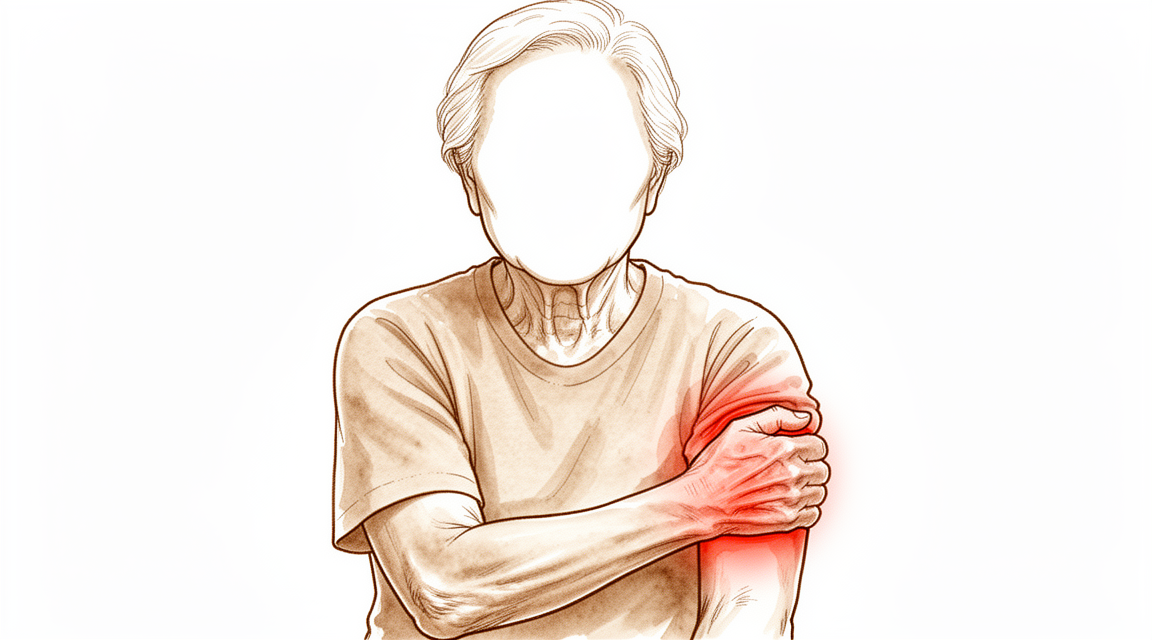
Este protocolo le servirá de guía para su recuperación tras una intervención quirúrgica destinada a liberar un codo rígido (una liberación, o artrólisis) realizada por el Dr. Kieran Hirpara en el Mater Private Hospital Rockhampton. Comienza con un programa de ejercicios para realizar en casa; a continuación, se detalla el protocolo clínico estructurado para su fisioterapeuta o terapeuta de mano. Lleve esta página o su versión en PDF a su primera sesión de terapia, a fin de garantizar una rehabilitación coordinada. Su terapeuta podrá modificar el plan según el progreso de su recuperación.
Si tiene alguna duda respecto a la herida quirúrgica, no dude en ponerse en contacto con el consultorio. A menudo resulta útil tomar una fotografía de la herida y enviarla por correo electrónico para su evaluación.
Qué esperar
La rigidez del codo tras una lesión o intervención quirúrgica previa se debe a que la membrana (cápsula) que recubre la articulación se engrosa y se tensa; a veces también se forma hueso adicional, impidiendo que el codo se flexione y extienda en toda su amplitud. Durante la intervención de liberación, realizada mediante cirugía artroscópica o una incisión abierta, el cirujano elimina dicha cápsula tensa (así como cualquier hueso extra o tejido cicatricial adherido) para que el codo vuelva a moverse libremente en la mesa de operaciones.
Lo más importante que hay que comprender es que esta recuperación es lo opuesto a una operación de reparación. No hay nada que haya sido suturado o reparado y que requiera semanas de reposo para cicatrizar. En cambio, el cirujano logra una amplitud de movimiento casi completa durante la operación, y la tarea principal de su rehabilitación consiste en mantener dicha movilidad, pues la tendencia natural del codo tras la cirugía es volver a endurecerse. Por eso no se utiliza cabestrillo ni hay fase de protección: se empieza a mover el codo desde el primer día, y se hace de forma enérgica y frecuente. El principal enemigo es la re-rigidez, no el fallo de los tejidos.
Para información sobre el cuidado de la herida, la hinchazón y la cicatrización, consulte las pautas de cuidado de heridas de nuestra consulta. La hinchazón y el dolor son los principales factores que limitan el movimiento en las primeras etapas; por ello, controlarlos mediante elevación, hielo y analgésicos es fundamental para conservar la amplitud de movimiento.
La mayor parte de la mejora se produce entre las 6 semanas y los 3 meses; normalmente el codo alcanza su mejor amplitud estable alrededor de los 4 meses. Para mantener e incluso aumentar dicha amplitud, se emplea un programa de férulas de estiramiento durante la noche y los períodos de descanso, el cual debe continuarse durante al menos 3 meses.
Precauciones y limitaciones
- Sí, empiece a mover el codo desde el primer día, y siga moviéndolo poco y a menudo a lo largo del día: esto es fundamental para su recuperación.
- Sí, empuje suavemente hasta el límite de cada estiramiento; a diferencia de una reparación, no existe ninguna estructura que proteger, por lo que el objetivo es alcanzar el rango completo de movimiento.
- Sí, controle la hinchazón y el dolor mediante elevación, hielo y los analgésicos recetados; son estos factores los que limitan su movilidad, no la cirugía en sí.
- Sí, tome cualquier medicamento antiinflamatorio (como la indometacina) exactamente según las indicaciones, si el Dr. Hirpara lo ha prescrito para prevenir la formación de hueso adicional.
- Sí, use la férula nocturna o de reposo tal como se indica, durante al menos 3 meses, para mantener y consolidar el rango de movimiento logrado.
- No deje el codo en reposo ni “tómelo con calma” para que se asiente: así es como vuelve la rigidez.
- No se alarme si siente hormigueo o entumecimiento en el dedo meñique y el anular; el nervio situado en la parte interna del codo (el nervio cubital) puede volverse más sensible a medida que mejora la flexión; por ello, informe al Dr. Hirpara o a su terapeuta para que lo evalúen.
Sus ejercicios
Kieran Hirpara 4.0
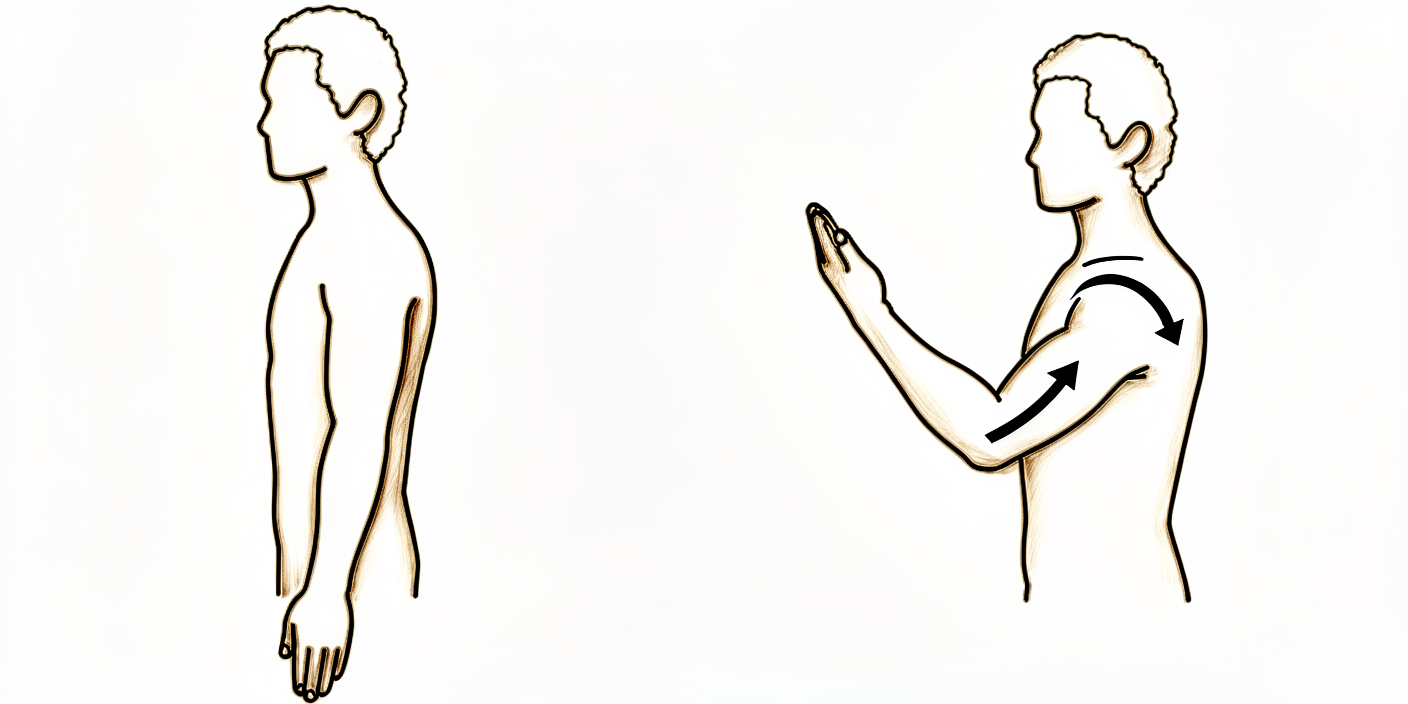
Flexiones activas del codo (flexión y extensión)
Utilizando sus propios músculos, flexione el codo tanto como pueda hacia el hombro y luego estírelo todo lo posible. Aplique una presión suave en cada extremo del movimiento e intente alcanzar el mismo rango de movilidad que el cirujano logró durante la operación. Este es el ejercicio más importante: el codo se vuelve rígido rápidamente, por lo que debe realizarse poco y a menudo a lo largo del día.
10–15 veces en cada dirección, cada 1–2 horas mientras se está despierto
Kieran Hirpara 4.0
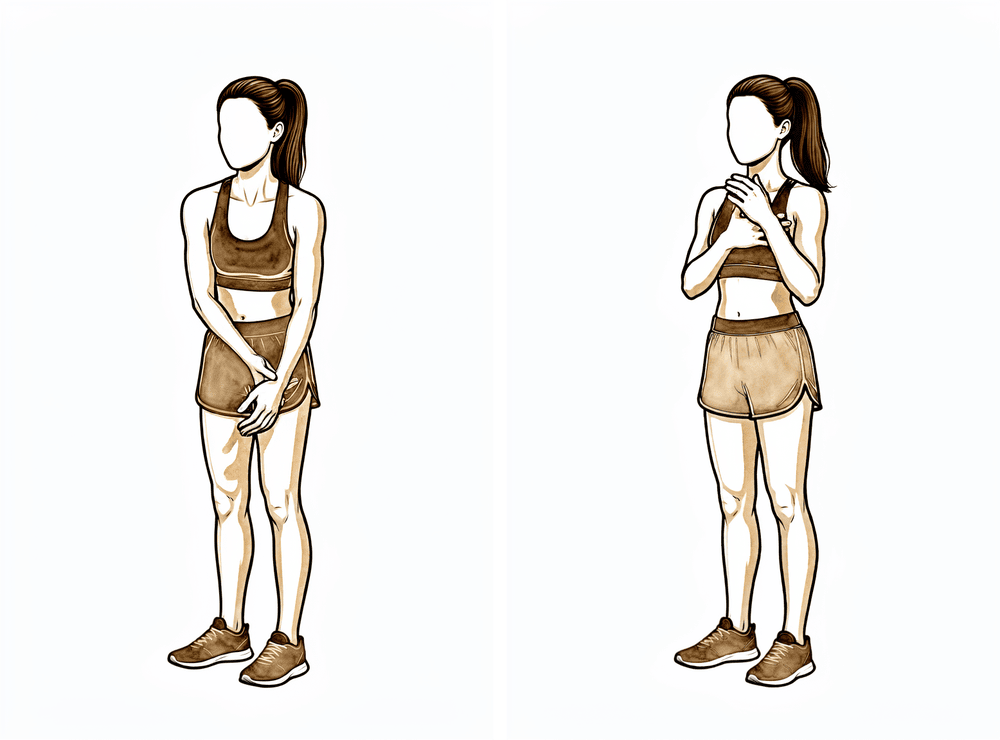
Flexión de codo asistida (pasiva)
Con el brazo operado completamente relajado, utilice la otra mano para empujar suavemente el codo y doblarlo más allá de lo que haría por sí solo, manteniéndolo en la posición en la que sienta un estiramiento firme. Como no hay ninguna reparación que proteger, se recomienda empujar con suavidad hasta sentir ese estiramiento; mantenga la posición, respire y permita que el codo ceda un poco más. Deténgase antes de sentir dolor intenso.
Mantenga cada estiramiento durante 20–30 segundos, 3–5 veces; repita varias veces al día
Kieran Hirpara 4.0
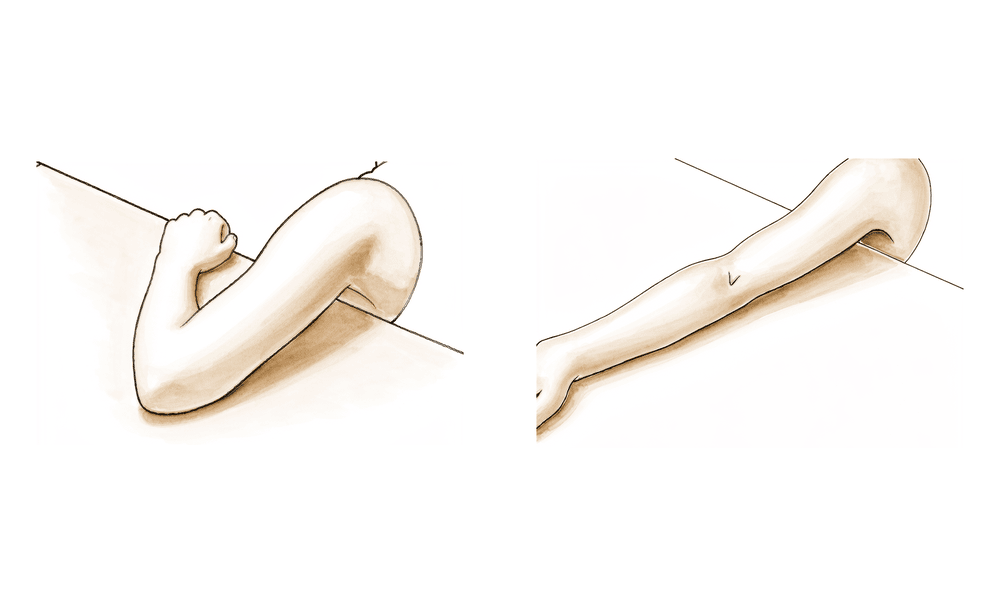
Extensión activa del codo
Esfuércese por enderezar el codo tanto como sea posible: la extensión es el movimiento que con mayor frecuencia se pierde, por lo que merece especial atención. Apoye la parte posterior del brazo en una superficie firme y permita que la gravedad, y luego una ayuda suave de la otra mano, vayan estirando el codo hasta enderezarlo por completo. Mantenga esa posición al final del estiramiento.
Mantenga la posición durante 20–30 segundos, 5 veces, varias veces al día
Kieran Hirpara 4.0
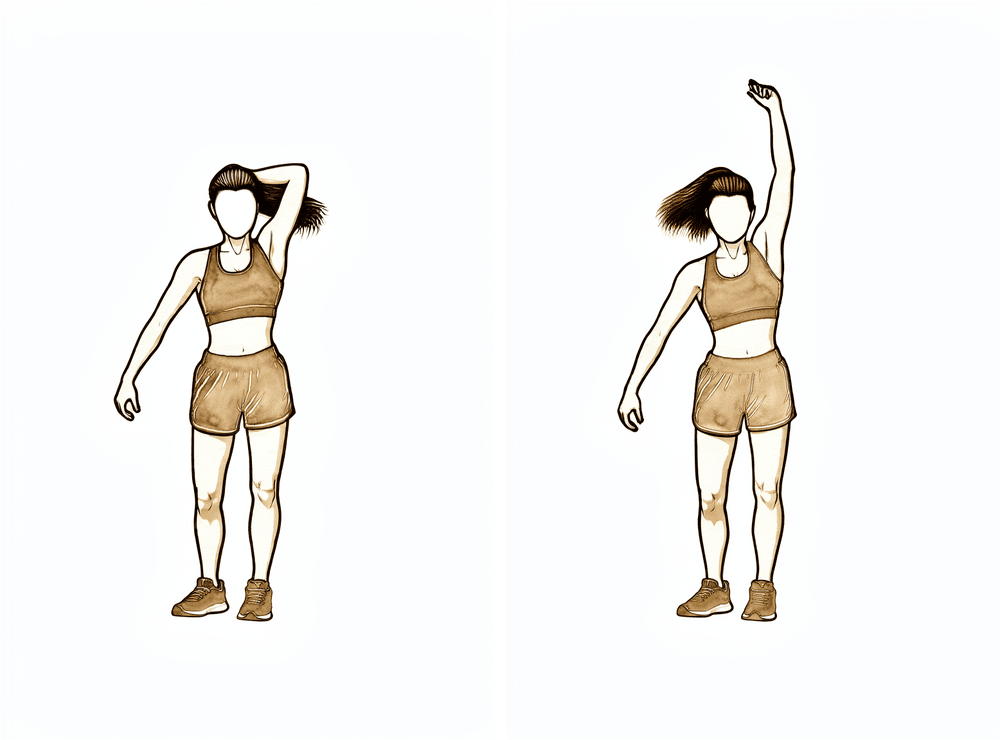
Estiramiento del tríceps por encima de la cabeza (extensión al final del rango)
Levante el brazo operado por encima de la cabeza y, con la otra mano, empuje suavemente el codo hasta estirarlo por completo, de modo que se estire la parte posterior del brazo. Se trata de un estiramiento intenso hacia la extensión, al final de la amplitud de movimiento; manténgalo estable en esa posición en lugar de hacer movimientos oscilantes.
Mantenga la posición durante 20–30 segundos, 3–5 veces, unas cuantas veces al día
Kieran Hirpara 4.0
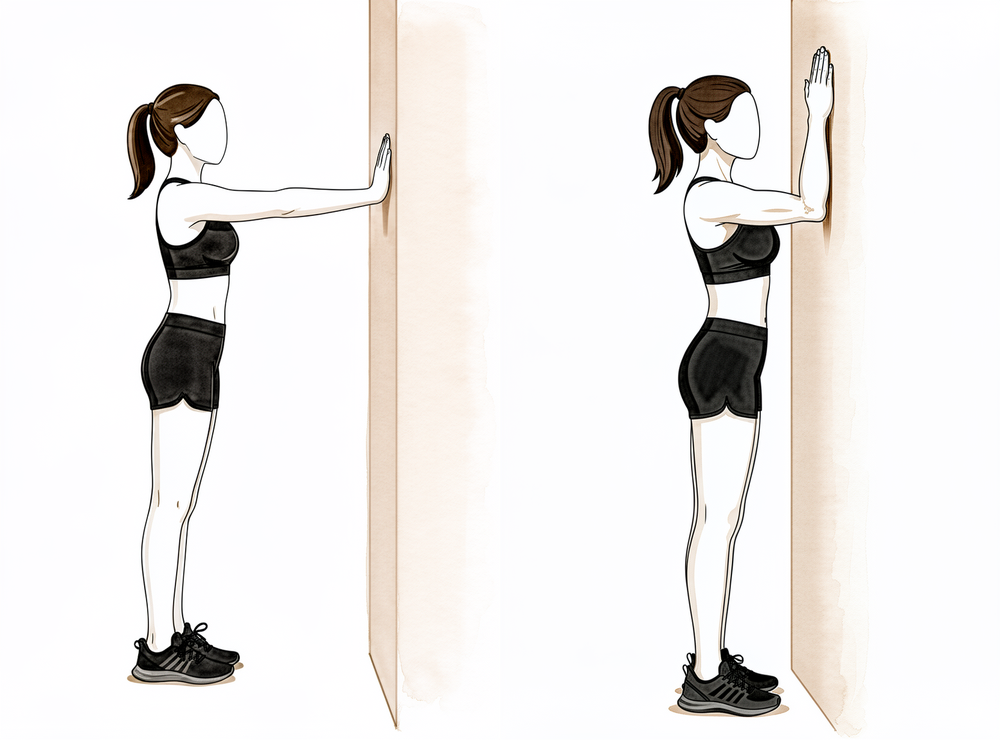
Subir los dedos por la pared hacia la flexión (flexión al final del rango)
Párese de cara a una pared y deslice los dedos hacia arriba, permitiendo que el codo se flexione más a medida que su mano asciende. Continúe subiendo hasta que sienta un estiramiento firme en lo profundo del codo; mantenga esa posición y luego suba un poco más. Esto ayuda a recuperar la última parte de la flexión del codo.
Mantenga la posición en la parte superior durante 20–30 segundos, 5 veces, unas cuantas veces al día
Kieran Hirpara 4.0
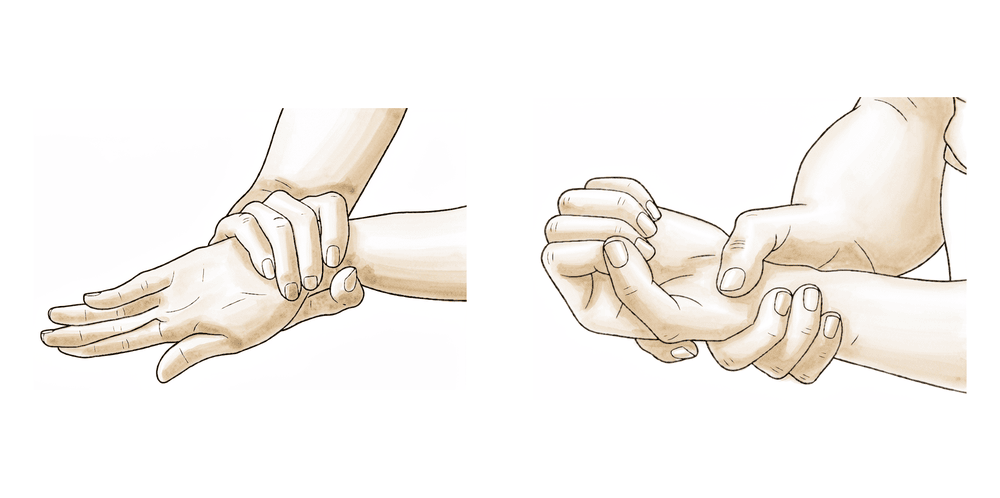
Rotación del antebrazo (palma hacia arriba / palma hacia abajo)
Con el codo pegado al costado y flexionado aproximadamente 90°, gire la palma de la mano hacia el techo y luego hacia el suelo, intentando llegar lo más lejos posible en cada dirección. Una operación de liberación suele liberar la rotación además de la flexión; por ello, mantenga la rotación en todo su rango junto con los ejercicios de flexión y extensión. Puede usar la otra mano para empujar suavemente un poco más en cada extremo del movimiento.
10–15 veces en cada dirección, varias veces al día
Kieran Hirpara 4.0
Contracción isométrica del tríceps (mantenimiento suave)
Un ejercicio de activación temprana. Con el brazo apoyado, contraiga suavemente el músculo de la parte POSTERIOR del brazo (el tríceps), como si quisiera enderezar el codo; esto ayuda a mantener y reforzar la extensión que ya ha logrado. Realice el movimiento con suavidad y siguiendo las indicaciones de su fisioterapeuta.
Mantenga la posición durante ~5 segundos, 5–10 veces, según las indicaciones
Kieran Hirpara 4.0
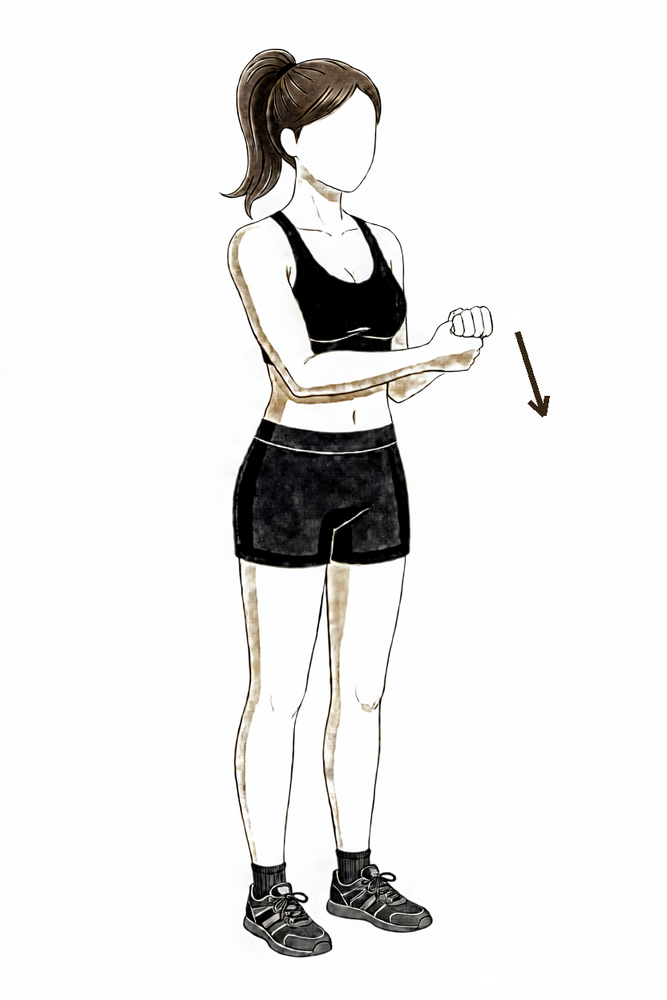
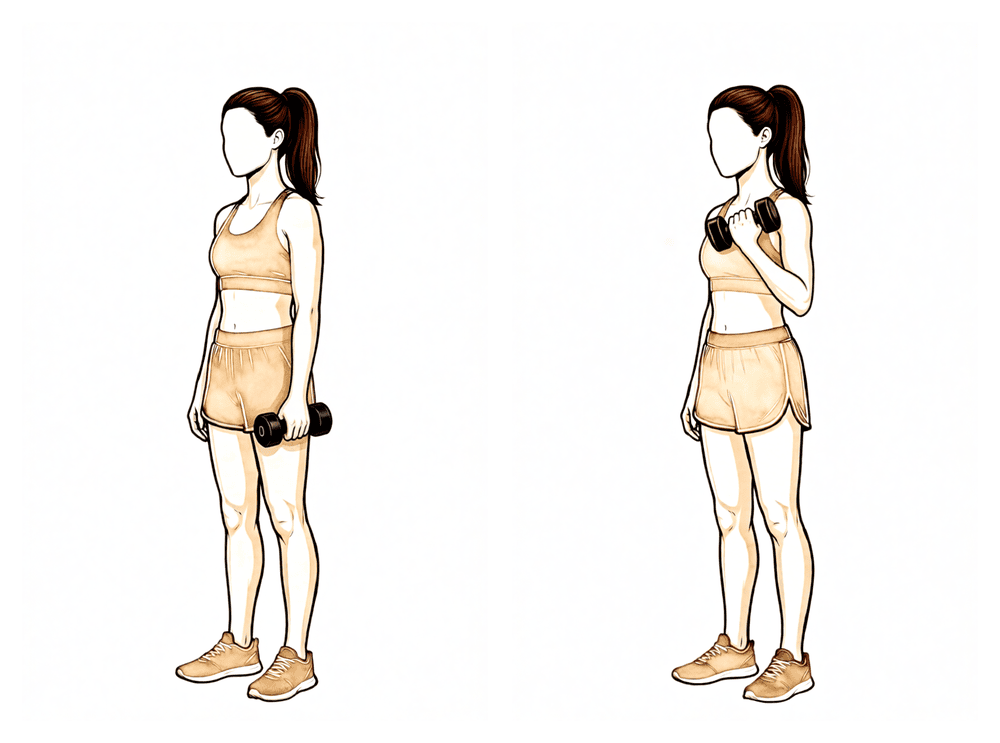
Curl de bíceps (fortalecimiento en una fase posterior)
Un ejercicio para MÁS ADELANTE: el fortalecimiento solo comienza una vez que el movimiento sea estable, generalmente a partir de las 6 semanas aproximadamente. Con la palma de la mano hacia arriba, levante un peso ligero hacia el hombro y luego bájelo lentamente de forma controlada. Aumente el peso gradualmente según las indicaciones de su fisioterapeuta.
Según las indicaciones de su fisioterapeuta (a partir de la semana 6 aproximadamente)
Estos son los ejercicios que aparecen en su folleto para recuperar y mantener la movilidad del codo y el antebrazo. Comience a realizarlos bajo la guía del Dr. Hirpara y de su terapeuta; en este protocolo, deben iniciarse de inmediato. Se deben hacer con firmeza y con frecuencia, ya que el rango de movimiento que se mantenga será el que utilice a diario mediante estos ejercicios.
Su protocolo clínico
El resto de esta página contiene el protocolo clínico para la rehabilitación posterior a la liberación quirúrgica (artrólisis) de un codo rígido. Esta sección debe entregarse a su fisioterapeuta o terapeuta de mano; cada fase comienza con una explicación sencilla en lenguaje coloquial sobre lo que está ocurriendo. El principio fundamental es que el cirujano logra un rango de movimiento casi completo en la mesa de operaciones; la función de la rehabilitación es evitar que se pierda dicho rango. No existe ningún tipo de fijación para proteger el codo, por lo que no hay fase de protección: el control del dolor y la hinchazón son los factores que limitan el ritmo de la rehabilitación, no la cicatrización de los tejidos.
Días 0 a 2 después de la operación
Durante el primer día o dos, se mantiene el codo en reposo brevemente, el brazo se mantiene elevado y la hinchazón se controla con hielo y compresión. Con frecuencia, el codo se sujeta en una posición de extensión completa, ya que este es el movimiento que con mayor frecuencia se pierde y al que se debe favorecer. Si existe preocupación por una formación ósea excesiva (por ejemplo, tras la extirpación de hueso adicional o tras una lesión de alta energía), el Dr. Hirpara podría iniciar ahora un medicamento antiinflamatorio para prevenirla.
Para su fisioterapeuta:
Antes de iniciar el tratamiento, revise las imágenes médicas del paciente, el informe quirúrgico y su historial clínico previo; además, consulte con el cirujano responsable sobre el rango de movimiento logrado durante la operación, cualquier procedimiento realizado en el nervio cubital y si se ha iniciado la profilaxis contra la osificación heterotópica.
Posición y edema
- Inmovilización breve en extensión completa mediante una férula acolchada; brazo elevado; crioterapia y compresión para controlar el edema.
- Por lo general, los drenajes se retiran al día siguiente de la operación.
Profilaxis contra la osificación heterotópica (si procede)
- Indometacina (por ejemplo, 25 mg tres veces al día, o 75–100 mg/día) durante 3–6 semanas cuando sea necesario, especialmente tras la extirpación de osificación heterotópica o tras traumatismos de alta energía; en casos seleccionados de alto riesgo, se puede añadir una dosis única de radioterapia perioperatoria (según criterio del cirujano).
A partir del día 1: movilización inmediata y enérgica
Esta es la base del protocolo. El día posterior a la cirugía se retira la férula y se inicia una movilización firme y frecuente: flexión y extensión activo-asistida y pasiva, así como rotación del antebrazo, con el objetivo de recuperar todo el rango de movimiento que el cirujano logró durante la intervención. No existe límite alguno para el rango de movimiento; el objetivo es el arco intraoperatorio completo.
Para su fisioterapeuta:
Límite del rango de movimiento
- Ninguno. Se debe recuperar el arco intraoperatorio completo. Retirar la férula el día 1 postoperatorio.
Ejercicios
- Movilización activo-asistida y pasiva en flexión, extensión, pronación y supinación; se debe enfatizar el estiramiento en la dirección más restrictiva (normalmente la extensión).
- CPM opcional: si se utiliza, iniciar en el hospital el día 1–2 postoperatorio con el rango máximo disponible (usualmente 0–145° con un cojín detrás del codo) y continuar en casa durante unas 4 semanas, además de la fisioterapia. El CPM es únicamente un complemento; no se ha demostrado que sea superior a la fisioterapia supervisada; su uso queda a criterio del cirujano.
- Frecuencia: fisioterapia supervisada a diario durante la primera semana postoperatoria, y luego 2–3 veces por semana durante aproximadamente 6 semanas.
Criterios para avanzar
- Mantenimiento del rango de movimiento logrado durante la cirugía; control del edema y del dolor.
Semanas 2 a 6: mantener el arco de movimiento e introducir el uso de férulas
Se sigue moviendo el codo con firmeza. Para mantener y ampliar el rango de movimiento, se incorpora un programa de férulas durante la noche y los períodos de descanso: se realiza un estiramiento prolongado y de baja carga en el extremo del rango de movimiento, alternando entre flexión y extensión.
Para su fisioterapeuta:
Ejercicios y uso de férulas
- Continuar con movilización enérgica activa / activo-asistida / pasiva.
- Incorporar férulas estático-progresivas (o dinámicas / estáticas seriadas / con tensor tipo turnbuckle) para realizar estiramientos prolongados de baja carga en el extremo del rango de movimiento: un programa nocturno o de descanso que alterna flexión y extensión. Las férulas estático-progresivas (inelásticas, con ajuste incremental del torque por parte del paciente) son la modalidad preferida para tratar las contracturas de flexión del codo.
- Control del edema y manejo de las cicatrices.
Criterios para avanzar
- El arco de movimiento se mantiene o se amplía; alrededor de la semana 6 el paciente estará listo para someterse a carga.
Semanas 6 a 12: fortalecimiento y continuación del uso de férulas
Una vez que el movimiento se vuelve estable, generalmente alrededor de la semana 6, se inicia el fortalecimiento mediante ejercicios de resistencia progresiva según la tolerancia del paciente. El programa de uso de férulas se mantiene.
Para su fisioterapeuta:
Ejercicios y férulas
- Iniciar el fortalecimiento con resistencia progresiva una vez que el movimiento sea estable (normalmente alrededor de la semana 6)
- Continuar el uso de férulas durante al menos ~3 meses después de la cirugía para lograr un rango de movimiento final óptimo
Alrededor de 16 semanas: meseta
Los estudios publicados indican que los pacientes alcanzan su rango máximo de movimiento en un promedio de aproximadamente 16 semanas, siendo la mayor parte de la recuperación observable entre las 6 semanas y los 3 meses. Esta expectativa debe comunicarse al paciente antes de la cirugía. Los avances obtenidos en cuanto al rango de flexión/extensión y rotación suelen mantenerse a largo plazo (con seguimientos de alrededor de 15 meses en grandes cohortes de pacientes).
Para su fisioterapeuta:
- El rango máximo de movimiento se alcanza en un promedio de ~16 semanas; se debe informar al paciente que ningún umbral de rango preoperatorio permite predecir con certeza la trayectoria de recuperación; aplique este mismo plazo de ~16 semanas a todos los pacientes.
Volver al trabajo y a las actividades cotidianas
Al no existir ningún tipo de fijación que proteja la zona, el regreso a las actividades diarias se regula según su comodidad, la hinchazón y el rango de movimiento que esté manteniendo, en lugar de esperar a que algo se cure. Desde el principio se recomienda un uso ligero del brazo para las tareas cotidianas; de hecho, utilizar el codo con normalidad durante el día forma parte del tratamiento.
El fortalecimiento muscular, así como la realización de tareas más exigentes, comienzan alrededor de las 6 semanas, una vez que su movilidad se haya estabilizado, y se incrementan gradualmente según su fuerza y rango de movimiento lo permitan. La mayoría de las personas alcanzan un rango y nivel funcional estables al cabo de unos 4 meses, y los progresos obtenidos suelen mantenerse a largo plazo. El regreso a la conducción, al trabajo y a la práctica deportiva depende de que recupere suficiente movilidad, fuerza y control para cada actividad específica; hable con el Dr. Hirpara y su terapeuta sobre el momento adecuado para su caso, ya que esto varía según su profesión y la magnitud de la cirugía. El mensaje más importante es que debe mantener el programa de ejercicios de movilidad y el uso de la férula nocturna o de reposo durante todo el proceso, pues eso es lo que protege el rango de movimiento que tanto le ha costado recuperar.
Después de seguir este protocolo
Este protocolo complementa las recomendaciones generales de recuperación que brinda la clínica: consulte manejo del dolor postoperatorio y cuidado de la herida. Para el equivalente en el hombro, en el que se libera el revestimiento de un hombro rígido, vea liberación capsular. El plan por fases descrito anteriormente se ajusta a la evidencia científica publicada sobre la rehabilitación tras la liberación de contracturas del codo; además, su proceso de recuperación será guiado individualmente por su fisioterapeuta o terapeuta de mano, según la evolución de su codo.
Evidence & references
This is the clinical evidence summary written for health professionals. It is technical, and it lists the research this page was built from. You do not need to read it to understand your treatment or to make a decision about it.
Stiff Elbow — Arthrolysis / Capsular Release (Open or Arthroscopic) — Rehabilitation Evidence
Topic scope: rehabilitation after surgical release of the post-traumatic / post-surgical stiff elbow — open or arthroscopic arthrolysis, anterior + posterior capsulectomy, ± heterotopic ossification (HO) excision, ± ulnar nerve decompression. The focus here is the post-operative rehabilitation philosophy and timeline, not the indications for or technique of the release itself.
Defining principle: the surgeon establishes a near-full arc of motion on the operating table; rehabilitation's single job is to not lose it. There is no fixation to protect, so — unlike a fracture fixation or a tendon repair — there is no protection phase. Motion starts essentially Day 1 (or even in-hospital CPM from Day 1–2), pushed firmly and often. Pain and oedema control are the rate-limiters, not tissue healing. This is the opposite philosophy to olecranon ORIF or a distal biceps repair. Dr Hirpara's stance: no sling and no immobilisation phase; immediate aggressive active-assisted and passive ROM from POD1; static-progressive (or dynamic) night/rest splinting continued for at least 3 months; HO prophylaxis where indicated; and a frank pre-operative conversation that the elbow reaches its plateau at a mean of ~16 weeks.
Consensus phased timeline (week windows)
| Phase | Window | Immobilisation / "ceiling" | Movement & adjuncts | Strengthening | Criteria to progress |
|---|---|---|---|---|---|
| Immediate | Day 0–2 | Brief splint in full extension; arm elevated, cryotherapy/compression | HO prophylaxis decision made now (see below); drains out POD1 | — | Splint off POD1 |
| Immediate aggressive ROM (core) | Day 1 onward | No ROM ceiling — recover the full intra-operative arc | Active-assisted + passive flexion / extension / pronation / supination; bias toward tightest direction (usually extension). Optional CPM 0–145° with bolster, in-hospital POD1–2, home to ~4 wk. Daily PT first week → 2–3×/wk for ~6 wk | — | On-table arc maintained; oedema/pain controlled |
| Hold the arc + splinting | Weeks 2–6 | None | Continue aggressive A/AAROM/PROM. Add static-progressive (or dynamic / serial-static / turnbuckle) splinting — low-load prolonged end-range stretch, night/rest, alternating flexion/extension | — | Arc maintained or exceeded; ready for loading ~wk 6 |
| Strengthening + continued splinting | Weeks 6–12 | None | Continue splinting | Progressive resistive strengthening once motion stable (~wk 6); continue splinting ≥3 months | Stable, strengthening motion |
| Plateau | ~16 weeks (≈4 months) | None | — | Maintain gains; long-term hold | Maximum arc reached; most recovery occurred 6 wk–3 mo |
Evidence summary by theme
Immediate aggressive motion — the agreed principle (Strong consensus)
Large, consistent retrospective case series and review articles agree that the elbow re-stiffens without immediate motion, and that rehabilitation exists to hold the intra-operative arc. Motion begins POD1; the splint (when used) is removed POD1 and active-assisted + passive ROM is started in all planes, biased toward the tightest direction (usually extension). This is strong consensus across the literature.
Which specific rehab protocol is best (Moderate — genuine equipoise)
The best specific rehab protocol is genuinely unknown. No completed RCT shows superiority of CPM vs PT vs delayed PT — the SET-Study (Stiff Elbow Trial) was designed precisely because this question is unresolved, with three real-world arms (in-hospital CPM + early PT / in-hospital early PT / outpatient PT from POD7–10). CPM is cited in protocols (home use to ~4 weeks) and one arthroscopic- release series reports very good 3-year outcomes with a 4-week CPM rail plus PT, but CPM has never been shown superior to supervised PT alone. So: strong consensus on aggressive early motion; weak/equipoise evidence on which adjunct.
Splinting modality (Moderate — no clear winner)
Static-progressive, dynamic, serial-static and turnbuckle splinting all deliver low-load prolonged end-range stretch. The Lindenhovius RCT found no difference between dynamic orthoses and static-progressive splinting (similar DASH). Static-progressive (inelastic, patient-adjusted incremental torque) is the favoured modality for elbow flexion contractures. Reviews recommend the splinting program run for at least ~3 months post-operatively for optimal final ROM. Bracing alone can rival surgery for non-osseous stiffness with far lower neurovascular risk.
HO prophylaxis (Consensus — extrapolated evidence)
Indomethacin (commonly 25 mg TID, or 75–100 mg/day, for 3–6 weeks) ± single-dose perioperative radiotherapy is widely used after release, especially with HO excision or high-energy trauma. Most HO-prophylaxis RCT evidence is extrapolated from acetabular/hip surgery, not elbow-specific. Recurrent HO / arthrofibrosis responds to repeat excision + release.
Recovery trajectory and plateau (Moderate — cohort data)
Published series report patients reach their maximum arc of motion at a mean of ~16 weeks, with most recovery occurring between 6 weeks and 3 months, and maintained gains at ~15-month follow-up in large cohorts. Growth-mixture modelling found no pre-operative ROM threshold or factor reliably predicted the recovery trajectory — so all patients are counselled on the same ~16-week timeline pre-operatively.
Ulnar nerve (Consensus)
As flexion improves post-release, the ulnar nerve sees increased stress — there should be a low threshold for review, and for concomitant ulnar nerve decompression/transposition at the time of surgery. Tobacco use predicts poorer outcomes and higher complication rates after open arthrolysis.
Evidence strength flags (summary)
- STRONG (consensus across case series/reviews): immediate aggressive active-assisted + passive motion from POD1 to hold the intra-operative arc — no protection phase.
- MODERATE (RCT/cohort, equipoise): which adjunct is best — CPM vs PT vs delayed PT (SET-Study, no completed superiority data); splinting modality (Lindenhovius RCT: no difference dynamic vs static-progressive); ~16-week plateau and maintained gains (growth-mixture-modelling and large open-release cohorts).
- CONSENSUS / EXTRAPOLATED: HO prophylaxis (indomethacin ± single-dose RT; most evidence extrapolated from acetabular/hip surgery); ≥3-month splinting program duration.
Overall topic flag: MODERATE — strong consensus on the principle (aggressive early motion + adjunct splinting + HO prophylaxis), weak/equipoise evidence on the specific adjunct.
CITATIONS
RAG corpus (180,000+ Orthopaedic articles)
- Sun Z, Wang W, Fan C. Tobacco use predicts poorer clinical outcomes and higher post-operative complication rates after open elbow arthrolysis. Arch Orthop Trauma Surg. 2019.
- Open elbow release for post-traumatic stiffness — growth-mixture-modelling cohort: maximum arc of motion at a mean of ~16 weeks, most recovery between 6 weeks and 3 months.
- 103-patient open capsular release series — significant, maintained flexion/extension and supination/pronation arc gains at a mean of 15 months.
- Papatheodorou LK, Sotereanos DG (University of Pittsburgh) — elbow contracture release techniques review.
- Lindenhovius et al. RCT — no difference between dynamic orthoses and static-progressive splinting (cited within a retrieved review).
- Retrieved technique text: indomethacin 25 mg TID for ~6 weeks for HO prophylaxis; CPM continued at home up to 4 weeks, full range 0–145° with a bolster behind the elbow.
- Northwestern series — HO excision + contracture release: ROM gains and complications.
- Arthroscopic release + 4-week CPM rail series — very good ROM, function and quality of life at a mean of 3 years.
Published protocols / reviews (URLs)
- Papadopoulos et al. Elbow contracture release. Annals of Joint (PT from POD1; flexion bias the first 2 weeks then full ROM over 2–3 months; dynamic / static-progressive splinting ≥3 months; CPM optional). https://aoj.amegroups.org/article/view/6083/html
- SET-Study (Stiff Elbow Trial) protocol — CPM vs PT vs delayed PT RCT; documents that the best rehab protocol is unknown. https://www.ncbi.nlm.nih.gov/pmc/articles/PMC5700741/
- Analysis of Long-Term Outcomes Following Surgical Contracture Release of the Elbow — immediate splint in full extension, splint off POD1, AAROM started POD1, OT/PT-guided self-directed program, no CPM. https://www.ncbi.nlm.nih.gov/pmc/articles/PMC8152451/