Patients › Rehabilitation
Excisión de la extremidad distal de la clavícula
Rehabilitation after isolated arthroscopic distal clavicle excision; combined cases follow the rotator cuff repair protocol.
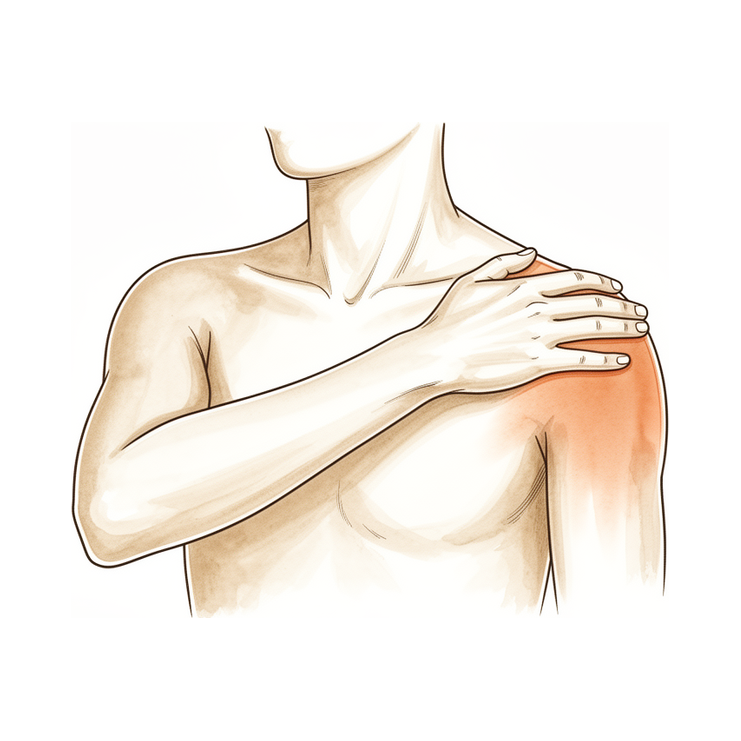
Este protocolo le servirá de guía para su recuperación tras la excisión artroscópica de la extremidad distal de la clavícula (también denominada excisión de la articulación AC o procedimiento de Mumford) realizada por el Dr. Kieran Hirpara en el Mater Private Hospital Rockhampton. Cada fase comienza con una explicación sencilla en lenguaje coloquial sobre lo más importante, seguida del protocolo estructurado destinado a su fisioterapeuta. Lleve esta página o su versión en PDF a su primera sesión de fisioterapia para garantizar una rehabilitación coordinada. Su fisioterapeuta hará avanzar cada fase según la evolución de su hombro, no en función del calendario.
Este protocolo es válido únicamente para una excisión aislada de la extremidad distal de la clavícula. Si en su intervención también se realizó una reparación del manguito rotador, deberá seguir el protocolo de reparación del manguito rotador, ya que el tendón reparado requiere un ritmo de recuperación más lento. (La excisión de la extremidad distal de la clavícula también se combina frecuentemente con una descompresión subacromial; en ese caso, el presente protocolo sigue siendo aplicable.)
Si tiene alguna duda o inquietud respecto a su herida postoperatoria, no dude en contactar con nuestra consulta. A menudo resulta útil tomar una fotografía de la herida y enviarla por correo electrónico para su evaluación.
Qué esperar
La excisión de la extremidad distal de la clavícula consiste en retirar unos pocos milímetros de hueso del extremo de la clavícula, de modo que las superficies desgastadas de la articulación acromioclavicular (la pequeña articulación situada en la parte superior del hombro) dejen de rozarse entre sí. No hay ninguna estructura que requiera protección durante la cicatrización, por lo que la rehabilitación avanza rápidamente: el cabestrillo se usa únicamente por comodidad; la mayoría de los pacientes lo dejan de usar en la primera o segunda semana. El movimiento se inicia de inmediato, y todos los protocolos publicados para esta intervención recomiendan el movimiento temprano en lugar del reposo.
Hay dos aspectos específicos de esta operación que determinan el protocolo de rehabilitación:
- Los movimientos que cruzan el cuerpo son los más lentos en recuperarse. Los movimientos de aducción horizontal comprimen la zona donde se extrajo el hueso; por ello, suelen ser los últimos en resultar cómodos. Al principio se evitan deliberadamente y luego se reintroducen gradualmente.
- Los ejercicios de presión intensa vienen al final. Los ejercicios que someten a la articulación acromioclavicular a una carga elevada (press de banca, fondos y flexiones) son los últimos en reintroducirse, generalmente tras tres o cuatro meses. La mayoría de las demás actividades se recuperan mucho antes.
Resumen del proceso de recuperación:
- Fase I — Recuperación temprana y movilización — semana 0–2
- Fase II — Restauración de la amplitud de movimiento — semana 2–6
- Fase III — Fortalecimiento y retorno a la actividad — semana 6–12
- Fase IV — Retorno a la actividad plena — a partir de la semana 12
La mayoría de los pacientes pueden utilizar el brazo para tareas cotidianas sencillas en las primeras dos semanas; vuelven a realizar la mayoría de sus actividades normales entre las cuatro y seis semanas, y retoman el deporte y trabajos más exigentes entre las ocho y doce semanas. Los atletas que practican deportes con movimientos repetitivos por encima de la cabeza (lanzamiento, natación, tenis) suelen necesitar un poco más de tiempo, aproximadamente entre dos y cuatro meses.
Fase I — Recuperación inicial y movilización (Semana 0–2)
Kieran Hirpara 4.0
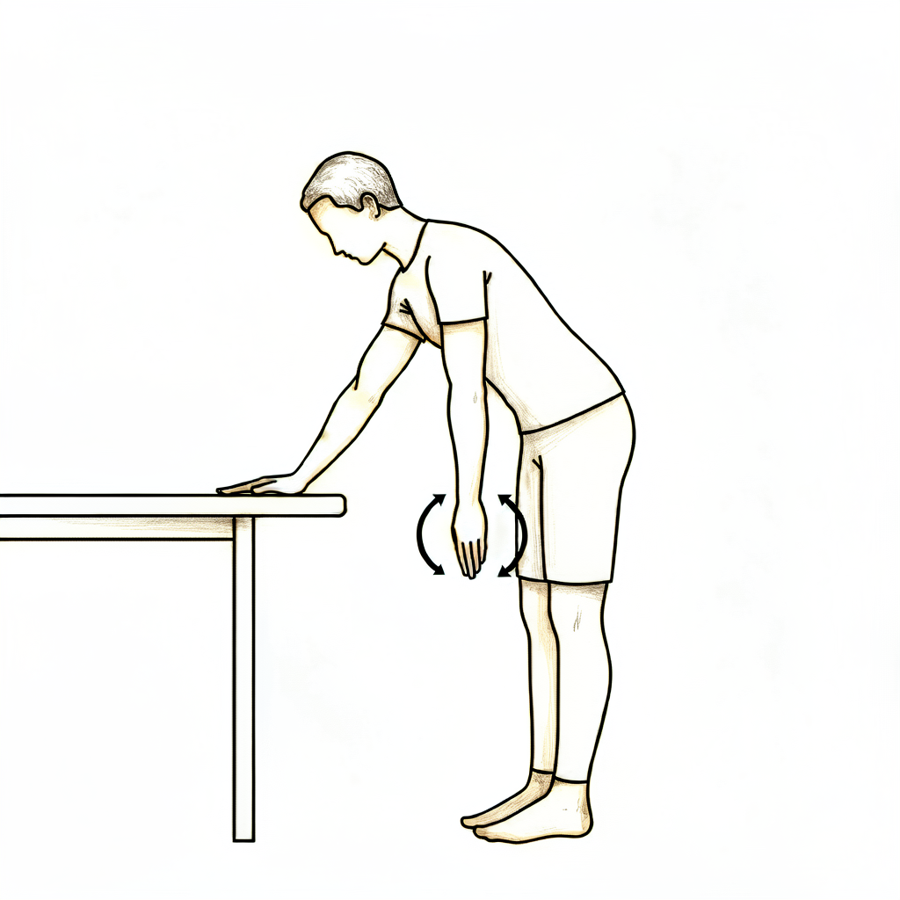
Ejercicio del péndulo
Incline el torso hacia adelante y deje que el brazo operado cuelgue suavemente lejos del cuerpo. Permita que el brazo describa círculos pequeños y relajados; el movimiento debe provenir del cuerpo, no de los músculos del hombro. Comience desde el primer día y mantenga el nivel de esfuerzo dentro de lo cómodo para usted.
Programa domiciliario 3–5 veces al día
Kieran Hirpara 4.0
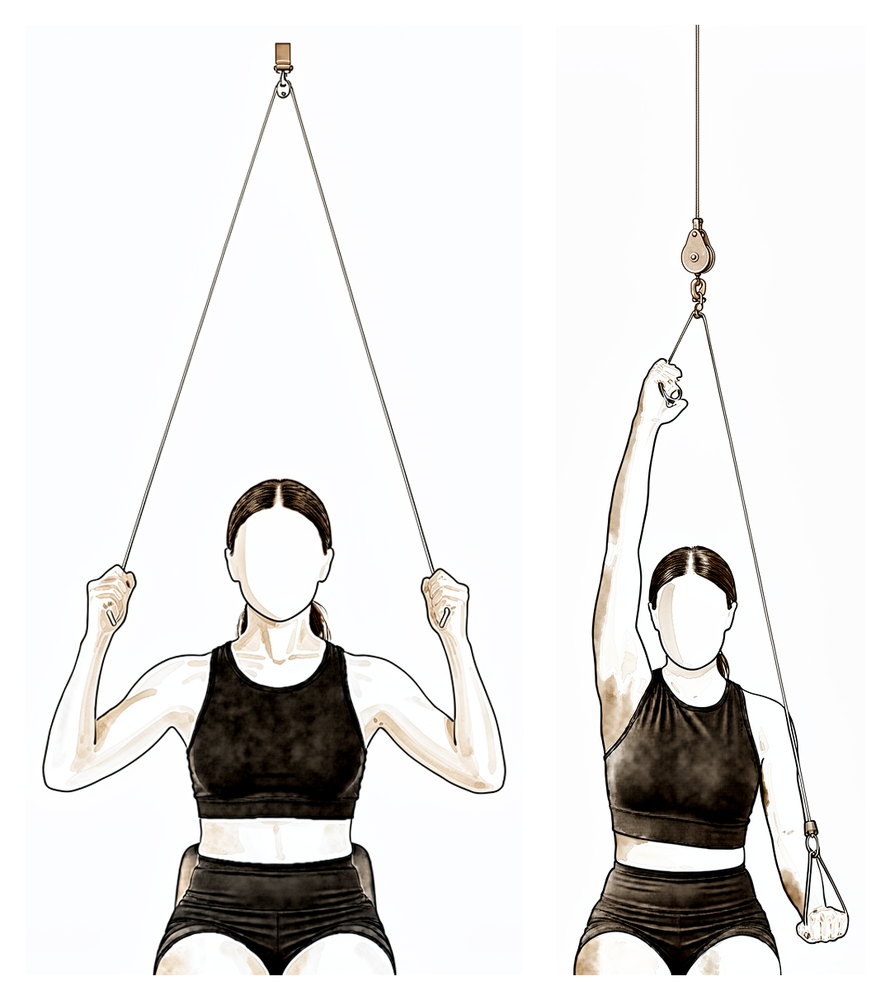
Elevación asistida mediante poleas
Siéntese debajo de una polea instalada en la puerta, sosteniendo un asidero en cada mano. Tire hacia abajo con el brazo sano para elevar el brazo operado, manteniéndolo relajado; luego bájelo de nuevo de forma controlada. Realice el ejercicio dentro de sus límites de comodidad y vaya aumentando la altura según lo tolere.
Programa domiciliario 3–5 veces al día
Kieran Hirpara 4.0
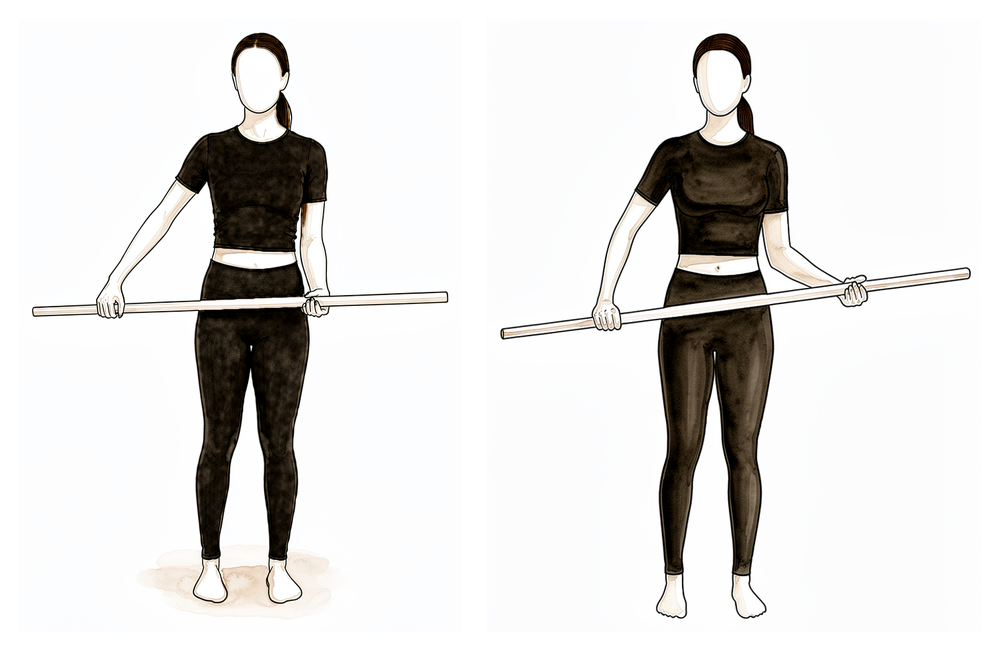
Rotación externa asistida con varilla
Acuéstese boca arriba, sosteniendo un palo o bastón con ambas manos, con los codos doblados en ángulo recto y pegados al cuerpo. Utilice el brazo sano para empujar suavemente el antebrazo operado hacia afuera, alejándolo del cuerpo, y luego regréselo a su posición original. El brazo operado debe permanecer relajado, dejando que el palo realice el movimiento.
Programa domiciliario 3–5 veces al día
Kieran Hirpara 4.0
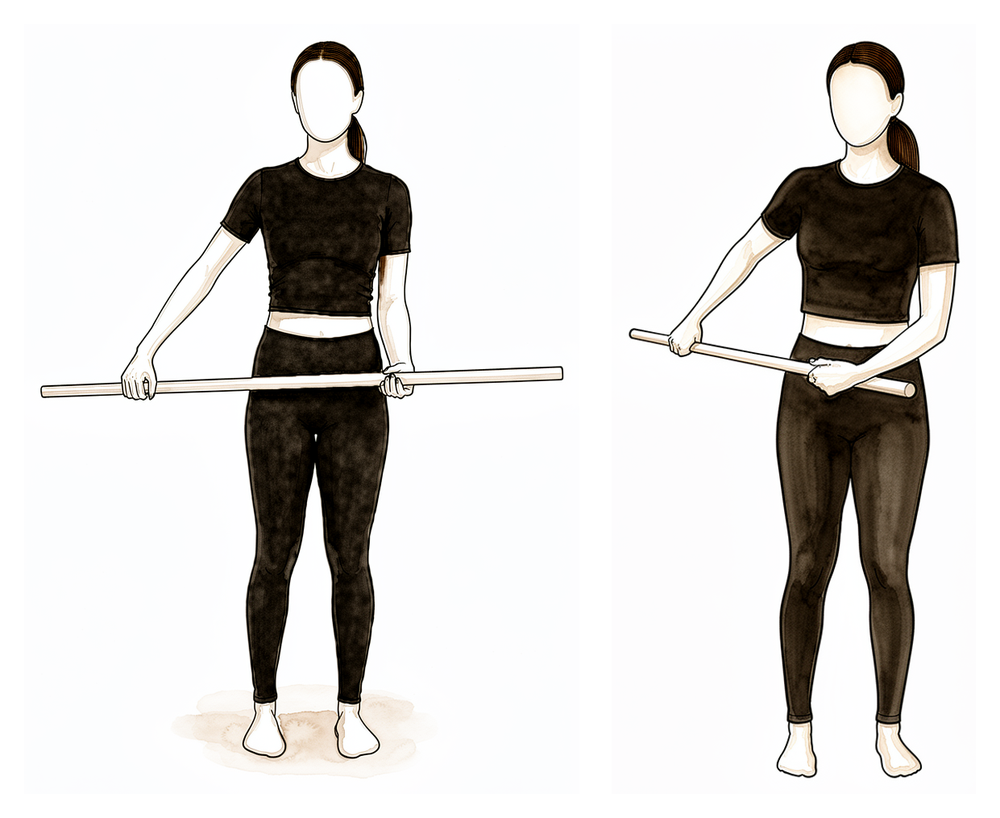
Rotación interna detrás de la espalda
Sostenga un palo o bastón detrás de la espalda, con la mano operada hacia abajo y la mano sana arriba. Utilice el brazo sano para levantar suavemente la mano operada por la espalda y luego bajarla. Realice los movimientos dentro de sus límites de comodidad; esta dirección de movimiento se recuperará gradualmente.
Programa domiciliario 3–5 veces al día
Kieran Hirpara 4.0
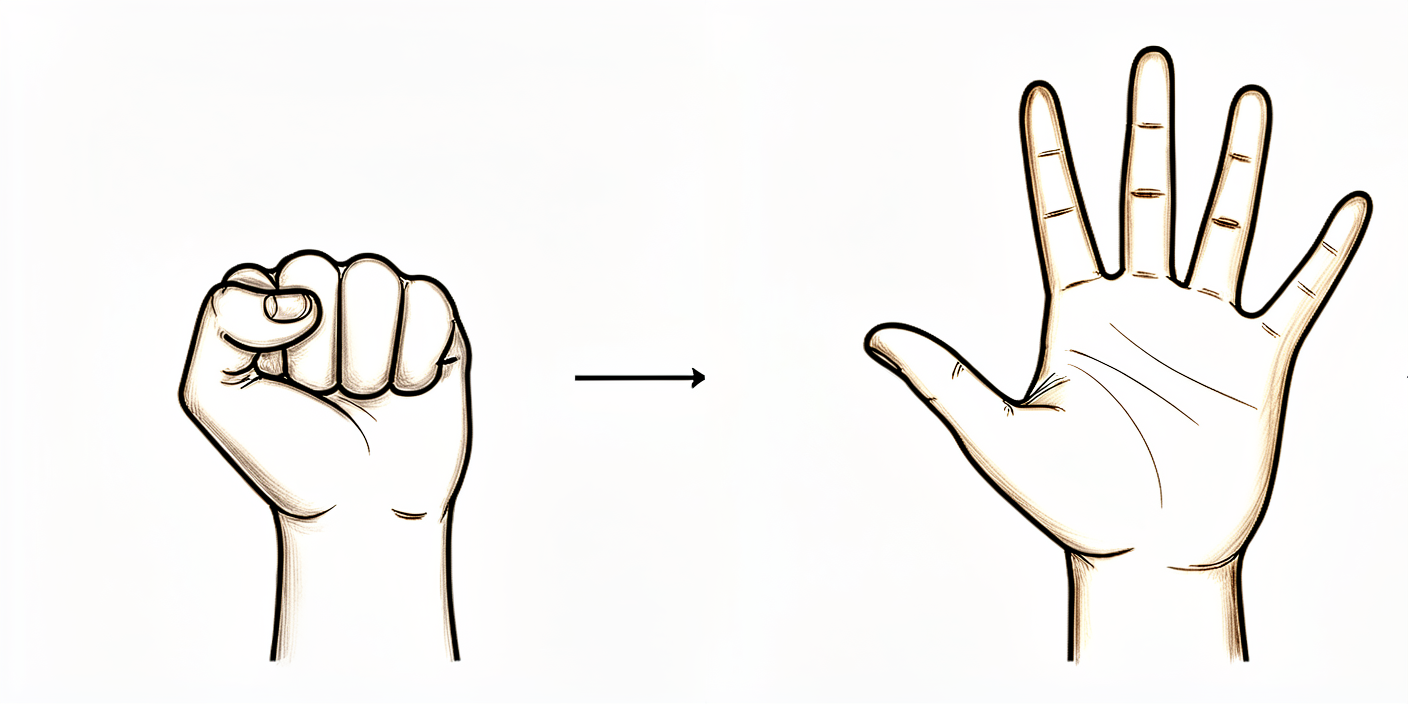
Fortalecimiento de la prensión
Cierre el puño por completo y luego estire los dedos. Puede apretar una pelota blanda o un calcetín enrollado para ejercitar la prensión. Mantenga el codo, la muñeca y la mano en movimiento desde el primer día.
Según las indicaciones de su fisioterapeuta.
Kieran Hirpara 4.0
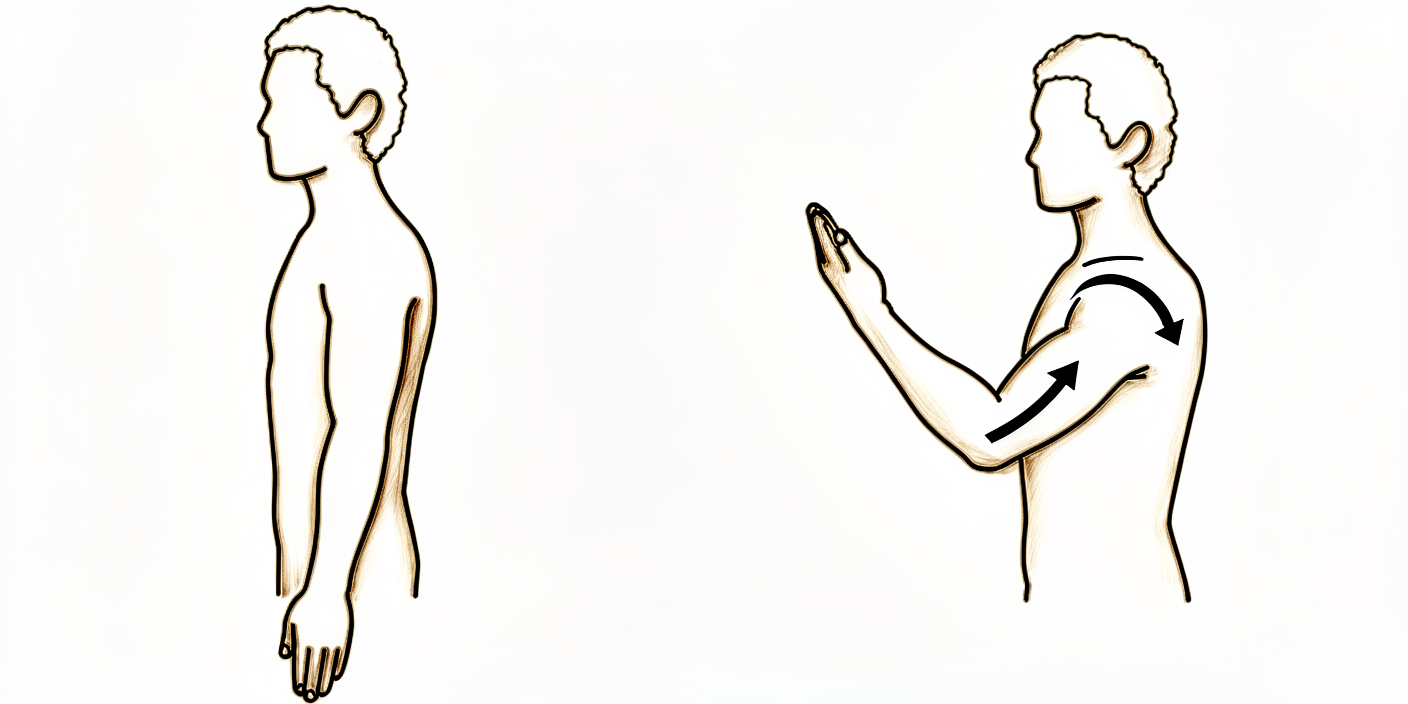
Flexión del codo
Con el brazo relajado a lo largo del cuerpo, doble el codo tanto como le resulte cómodo y luego estírelo por completo. Solo debe moverse el codo; mantenga el hombro relajado. Desde el primer día, asegúrese de mover el codo, el antebrazo, la muñeca y la mano.
Según las indicaciones de su fisioterapeuta.
Kieran Hirpara 4.0
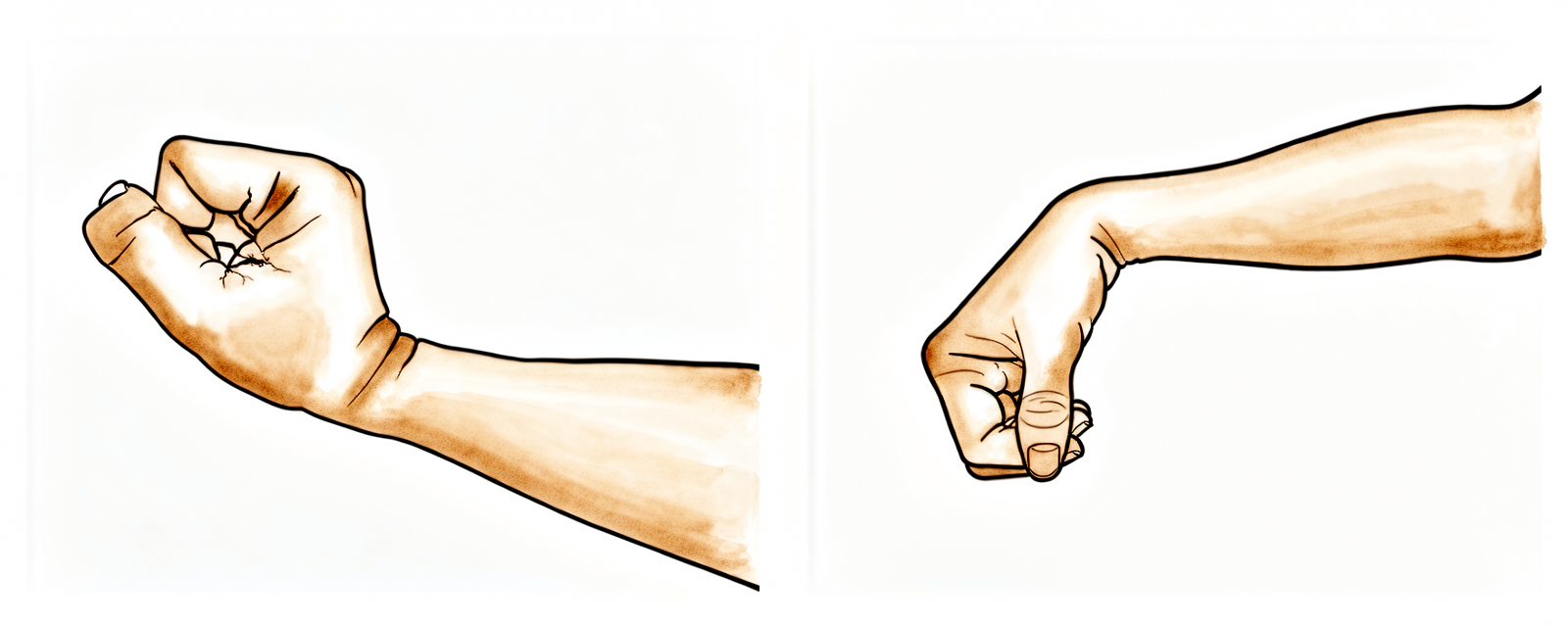
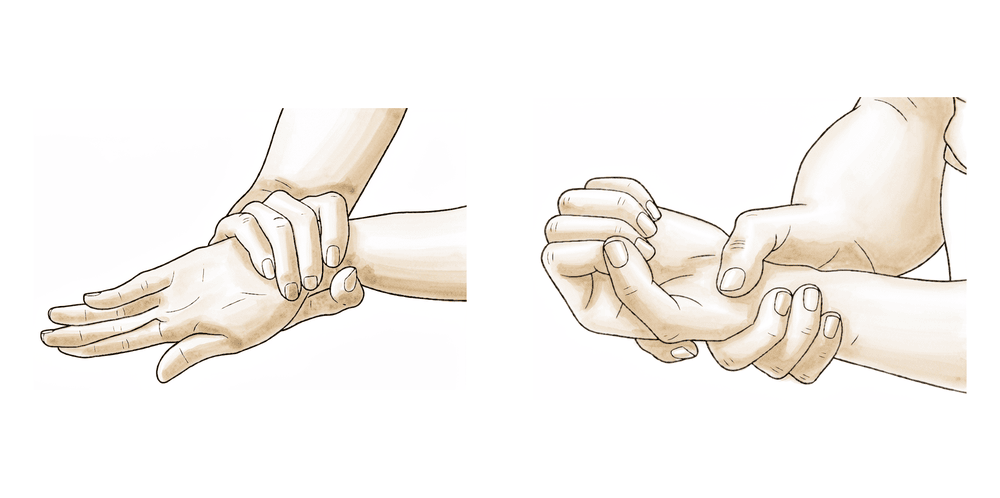
Movimiento de la muñeca
Mantenga el movimiento de la muñeca, doblándola hacia adelante, hacia atrás y de lado a lado, con el brazo fuera del cabestrillo. Mantener toda la actividad del brazo desde el primer día ayuda a que el hombro se estabilice.
Según las indicaciones de su fisioterapeuta.
Kieran Hirpara 4.0
Rotación del antebrazo
Con el codo pegado al costado y doblado en ángulo recto, gire la palma de la mano hacia el techo y luego hacia el suelo. Desde el primer día, mantenga el antebrazo en movimiento mientras el hombro permanece inmóvil.
Según las indicaciones de su fisioterapeuta.
Kieran Hirpara 4.0
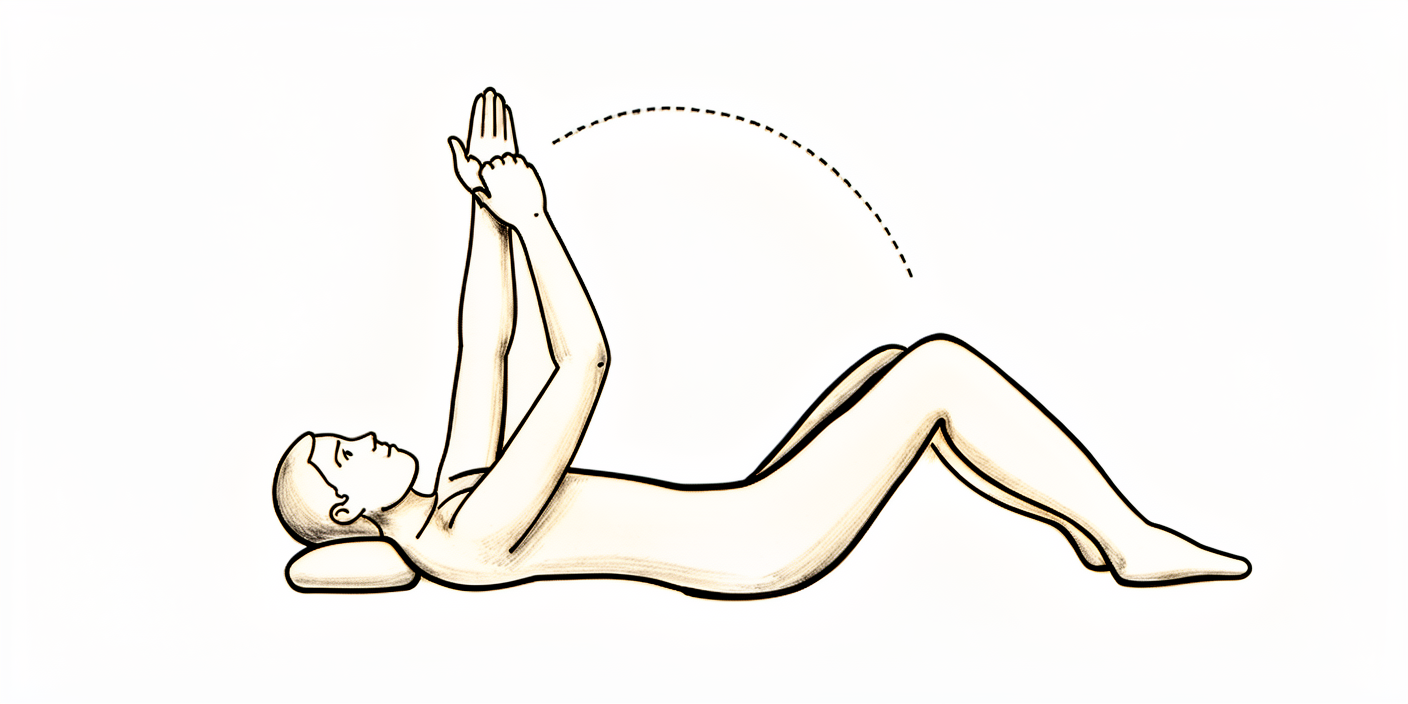
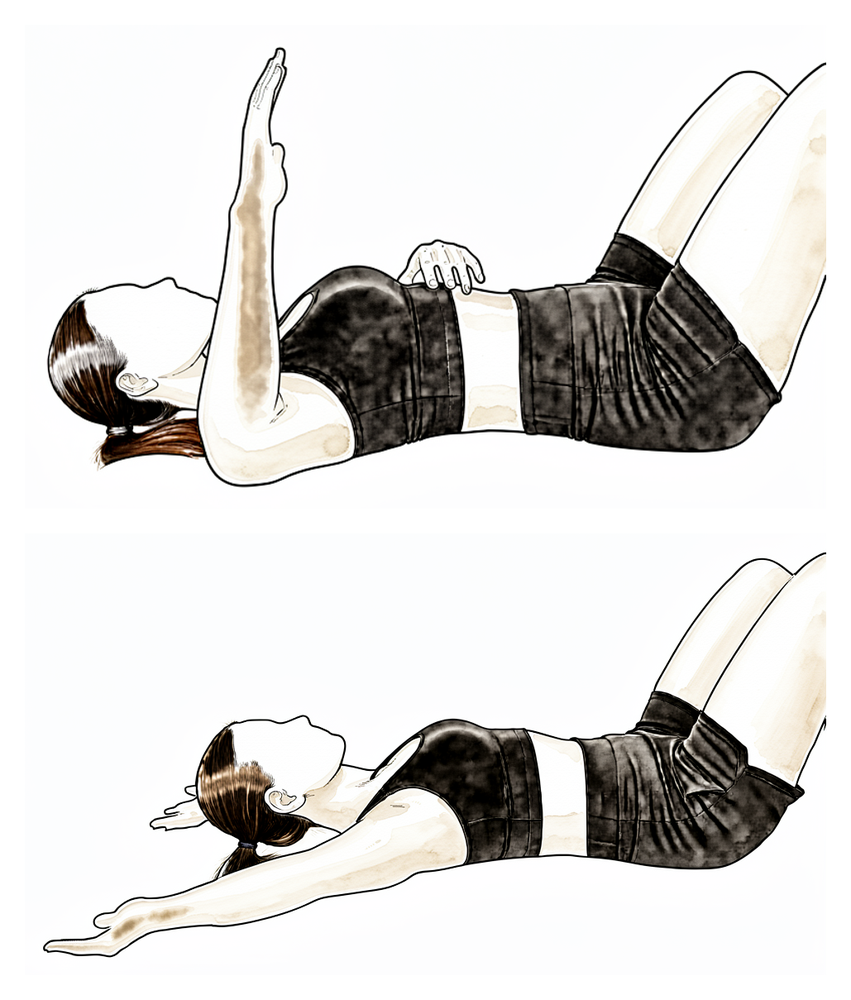
Elevación frontal asistida (en decúbito)
Acuéstese boca arriba y utilice el brazo sano para ayudar a levantar el brazo operado por encima de la cabeza, realizando un estiramiento suave; luego bájelo de nuevo, siempre con la ayuda del brazo sano. Acostarse permite que la gravedad ayude y que los músculos del hombro permanezcan relajados. Realice el ejercicio dentro de sus límites de comodidad.
Programa domiciliario 3–5 veces al día
Kieran Hirpara 4.0
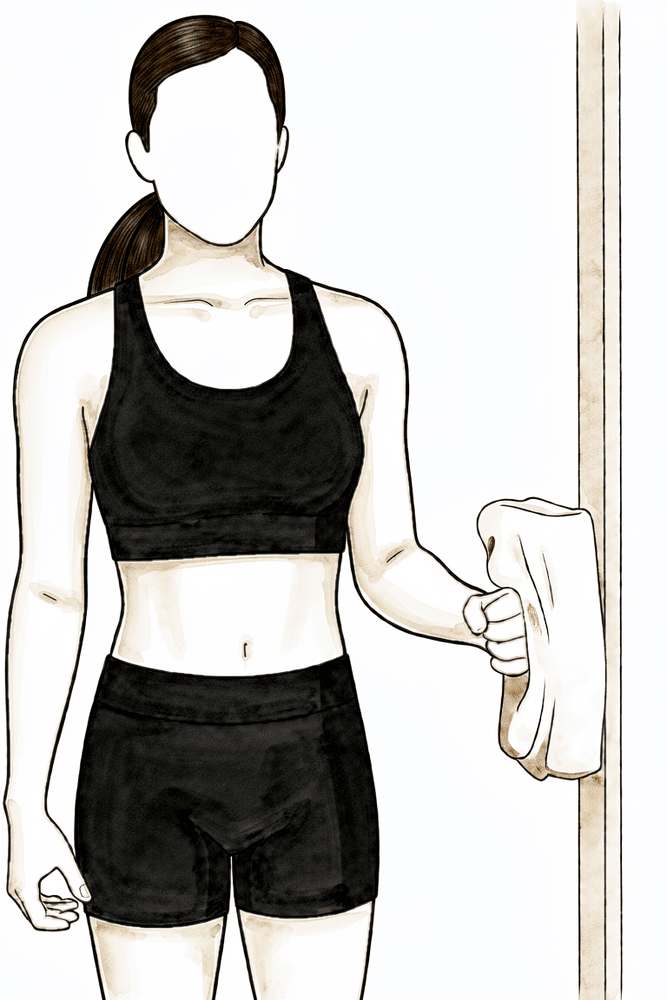
Rotación externa isométrica
Párese con el codo pegado al costado y doblado en ángulo recto; la parte posterior de la mano debe quedar contra una pared o marco de puerta. Presione suavemente hacia afuera sin mover el brazo, mantenga la posición unos segundos y luego relájese. Este es un ejercicio isométrico muy suave; no debe haber ningún movimiento ni tensión. Realice el ejercicio dentro de sus límites de comodidad.
Según las indicaciones de su fisioterapeuta.
Kieran Hirpara 4.0
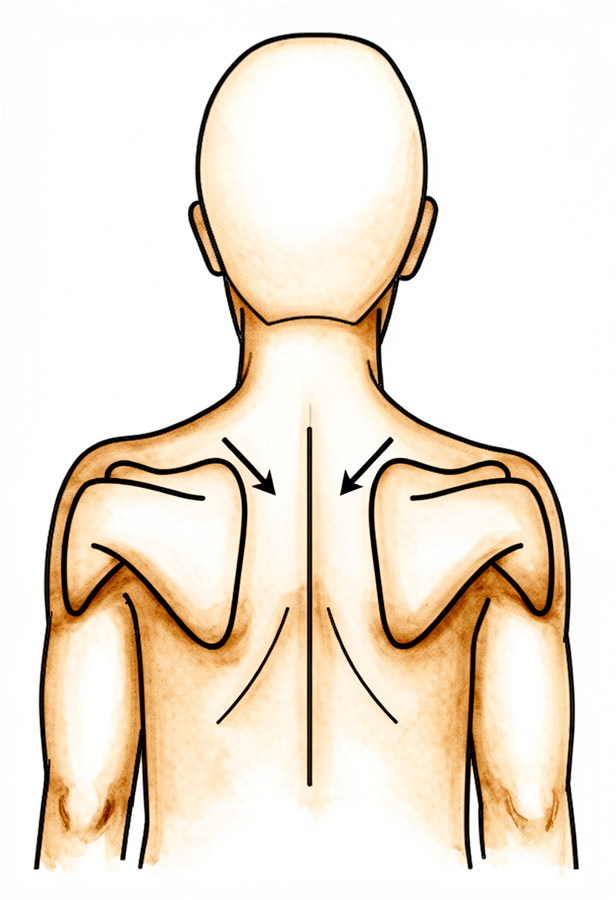
Posicionamiento escapular
Ya sea sentado o de pie, acerque suavemente los omóplatos el uno hacia el otro y hacia abajo, alejándolos de las orejas. Mantenga esa posición unos segundos y luego relájese. Un buen movimiento rítmico de los omóplatos desde el inicio permite que el resto del programa funcione mejor.
Según las indicaciones de su fisioterapeuta.
Durante las dos primeras semanas, el objetivo es controlar el dolor y la hinchazón mientras se comienza a mover el hombro. Aplique hielo con regularidad: lo habitual es hacerlo tres o cuatro veces al día durante la primera o segunda semana. El cabestrillo sirve únicamente para mayor comodidad: úselo tanto como le resulte útil, saque el brazo con frecuencia y deje de usarlo en cuanto se sienta cómodo sin él. Muchas personas lo encuentran más útil fuera de casa, para evitar que alguien golpee el brazo. No debe conducir durante al menos seis semanas después de cualquier operación de hombro, incluso una vez retirado el cabestrillo; su cirujano le autorizará para conducir, normalmente en la revisión de la semana seis.
Comience a moverse de inmediato: el codo, la muñeca y la mano deben moverse desde el primer día, junto con ejercicios pendulares suaves y movimientos asistidos del hombro (utilizando el otro brazo, un palo o un sistema de poleas para elevar y rotar el brazo operado hacia afuera). Tome los analgésicos antes de hacer los ejercicios y antes de las sesiones de fisioterapia. El único movimiento que debe evitar por ahora es estirar el brazo a través del cuerpo hacia el hombro opuesto.
Para su fisioterapeuta:
Objetivos
- Controlar el dolor y la hinchazón
- Lograr un rango de movilidad temprano: aproximadamente 140° de flexión frontal y 40° de rotación externa lateral al final de esta fase
- Lograr independencia en el programa de ejercicios en casa
Manejo
- El cabestrillo es solo para comodidad: retirarlo gradualmente durante las primeras 1–2 semanas, según la tolerancia
- Aplicar crioterapia 3–4 veces al día, especialmente después del ejercicio
- Realizar inmediatamente movimientos activos de cuello, codo, antebrazo, muñeca y mano
- Ejercicios pendulares desde el primer día
- Movilización pasiva y asistida del hombro según tolerancia: elevación frontal, rotación externa y rotación interna detrás de la espalda, usando poleas, una vara o bastón, así como posiciones supinas con asistencia de la gravedad
- Ejercicios de fijación escapular y movilidad periescapular; prestar atención al ritmo escapulohumeral desde el inicio
- Fortalecimiento de la prensión; ejercicios isométricos suaves del hombro según permita el dolor
- Administrar analgésicos antes de los ejercicios y sesiones de fisioterapia
- Realizar el programa domiciliario 3–5 veces al día
Precauciones
- Evitar la adducción horizontal a través del cuerpo
- No realizar ejercicios de resistencia en el hombro, salvo isométricos suaves
- No levantar objetos más pesados que artículos cotidianos ligeros; no soportar peso con el brazo (por ejemplo, empujarse hacia arriba desde una silla o cama)
- No conducir durante seis semanas (esto aplica a cualquier operación de hombro)
Criterios para avanzar
- Se ha abandonado el uso del cabestrillo y el dolor está disminuyendo
- Se logra una elevación asistida cómoda de aproximadamente 140° y una rotación externa de alrededor de 40°
Fase II — Restauración del rango de movimiento (Semana 2–6)
Kieran Hirpara 4.0
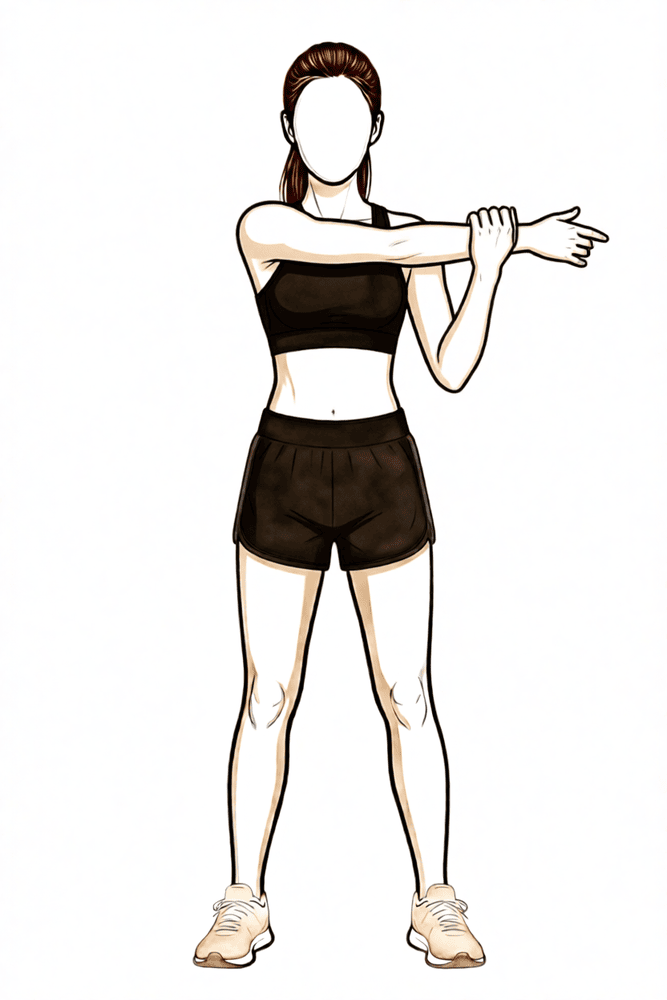
Estiramiento cruzado del cuerpo
Lleve el brazo operado cruzando el pecho y utilice la otra mano, colocada por encima del codo, para desplazarlo suavemente aún más. Vaya reintroduciendo este movimiento de forma gradual, guiándose por los síntomas; es habitual sentir cierta sensación de pinzamiento al final del movimiento después de esta operación, la cual desaparece con el tiempo.
Según las indicaciones de su fisioterapeuta.
Kieran Hirpara 4.0
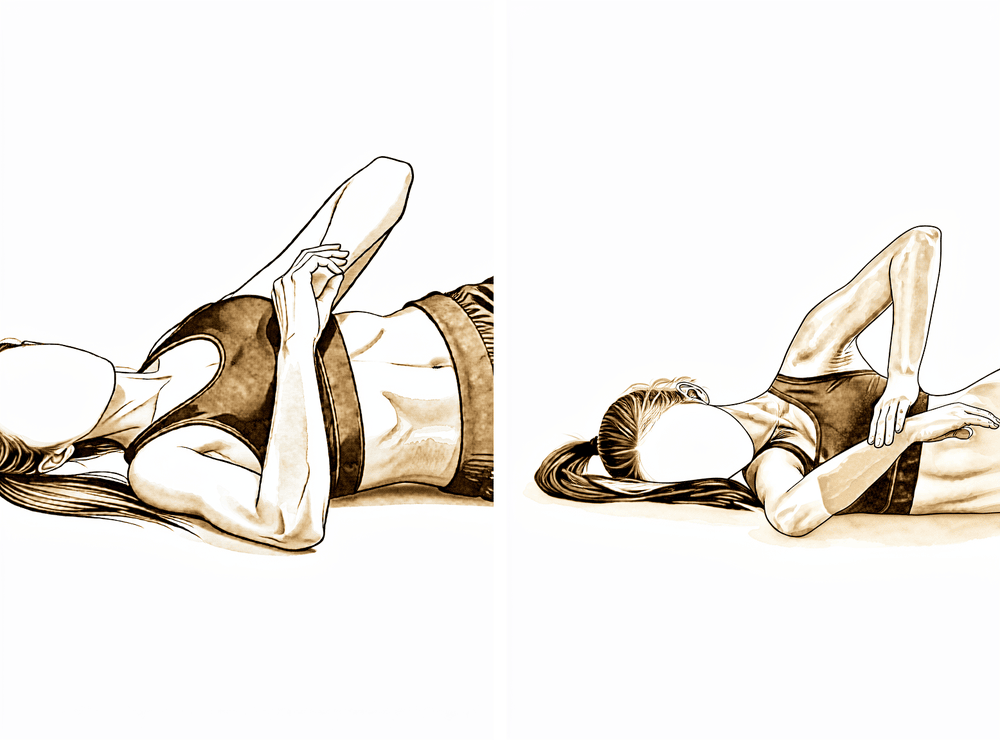
Estiramiento de “dormilón”
Acuéstese sobre el lado de la cirugía, con el brazo extendido hacia adelante y el codo doblado en ángulo recto. Con la mano sana, presione suavemente el antebrazo hacia la cama, hasta sentir un estiramiento en la parte posterior del hombro; luego relaje la presión. Este suave estiramiento posterior ayuda a recuperar la capacidad de alcanzar objetos detrás de la espalda. Estire hasta sentir una molestia firme, pero nunca dolor agudo.
Según las indicaciones de su fisioterapeuta.
Kieran Hirpara 4.0
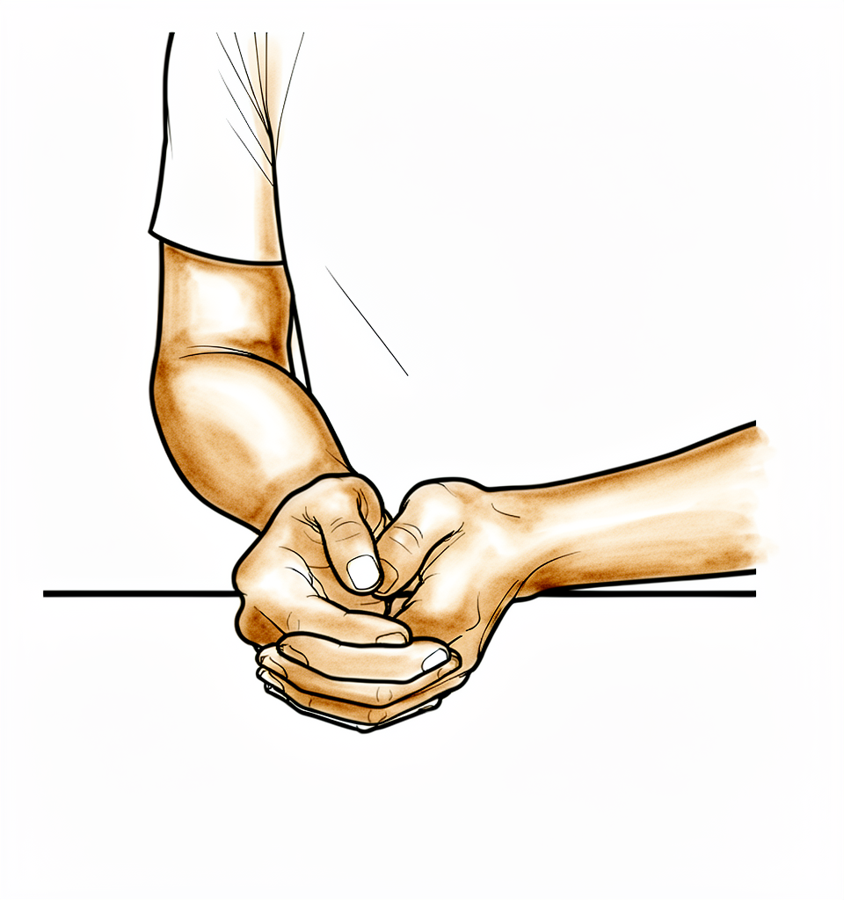
Rotación externa con banda elástica
Párese con el codo pegado al costado y doblado en ángulo recto, sosteniendo una banda elástica anclada a un lado. Manteniendo el codo junto al cuerpo, gire el antebrazo hacia afuera contra la resistencia de la banda y luego regrese lentamente a la posición inicial. Comience cuando el movimiento sea casi completo; realice muchas repeticiones con una resistencia ligera.
Muchas repeticiones, poca carga; según las indicaciones de su fisioterapeuta.
Kieran Hirpara 4.0
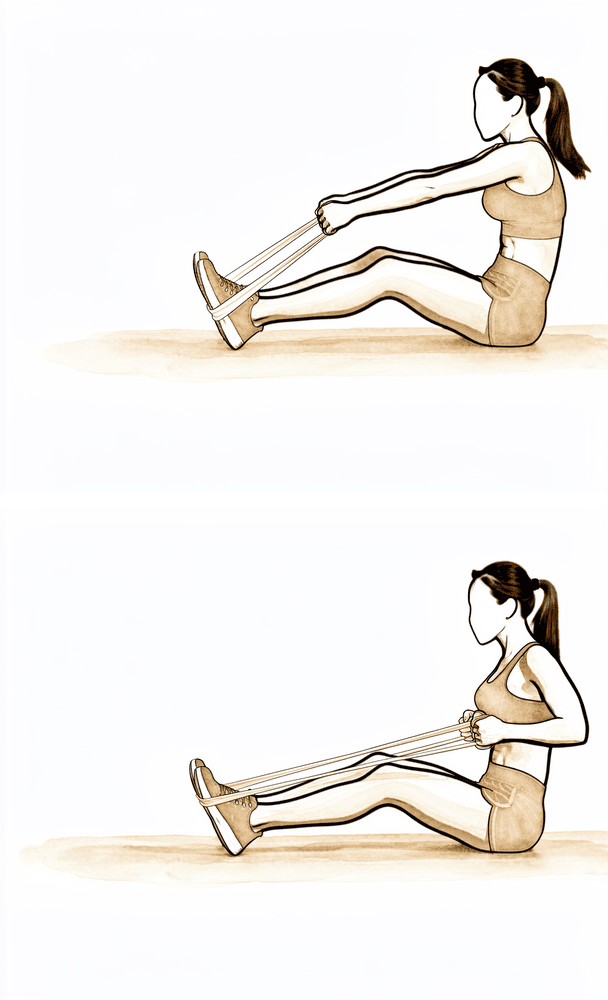
Remo bajo
Sostenga una banda elástica delante de usted, a la altura de la cintura aproximadamente. Manteniendo el brazo bastante recto, tire de él hacia atrás y hacia abajo, en dirección a la cadera, contraiendo la escápula hacia abajo y hacia atrás; luego regrese lentamente a la posición inicial. Este ejercicio fortalece los músculos de la escápula que estabilizan el hombro a medida que recupera su fuerza.
Muchas repeticiones, poca carga; según las indicaciones de su fisioterapeuta.
Kieran Hirpara 4.0
Rotación externa en posición 90/90 (acostado)
Acuéstese boca arriba con el brazo extendido hacia el costado a la altura del hombro y el codo doblado en ángulo recto, apoyado sobre una almohada. Gire lentamente el antebrazo hacia la cabeza hasta donde le resulte cómodo, y luego regrese a la posición inicial de forma controlada. Esto restaura la rotación del brazo en esa posición elevada.
10 veces, tal como le indique su fisioterapeuta.
Kieran Hirpara 4.0
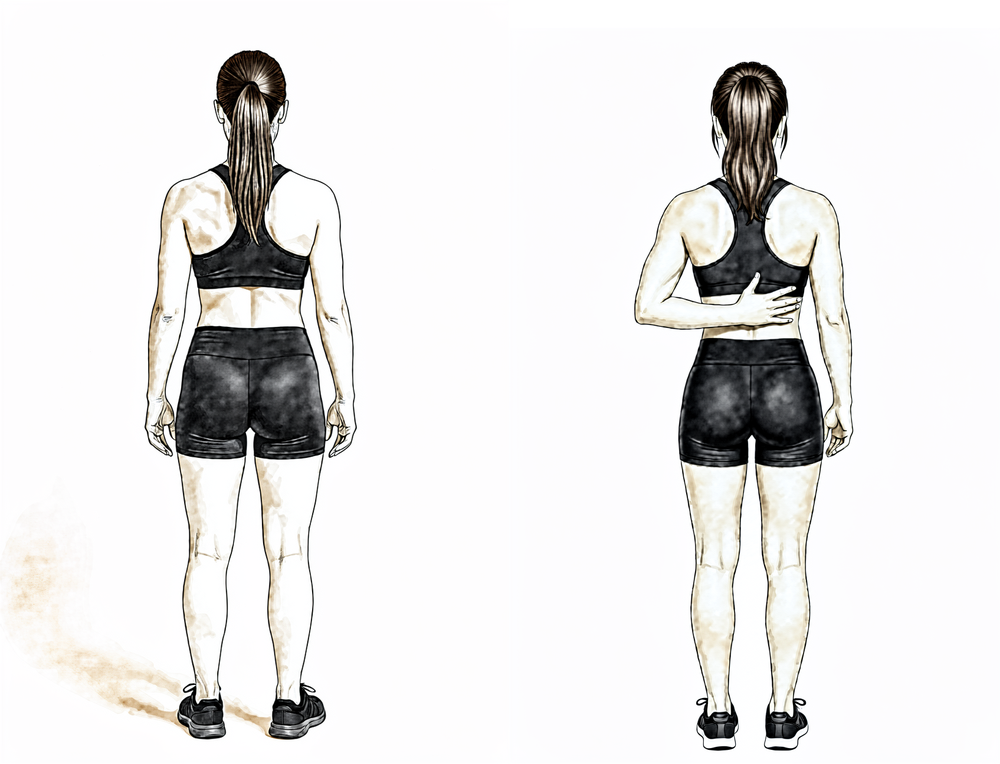
Alcance de la mano detrás de la espalda
De pie, coloque el dorso de la mano operada contra la parte baja de su espalda y deslícela suavemente hacia arriba a lo largo de la columna, hasta donde le resulte cómodo, utilizando únicamente sus propios músculos; luego bájela. Realice el movimiento únicamente dentro de un rango cómodo y nunca lo fuerce.
Según las indicaciones de su fisioterapeuta.
Ahora que ya no se usa el cabestrillo, esta fase tiene como objetivo lograr un movimiento completo del hombro en todas las direcciones: primero mediante movimientos asistidos y luego impulsados por la propia fuerza del brazo. Una vez que el rango de movimiento se acerque a lo normal, se inicia un fortalecimiento suave de los músculos del manguito rotador y de la escápula, utilizando bandas elásticas y pesos ligeros. Utilice el brazo con normalidad para las actividades diarias, pero limite las cargas a un nivel moderado (no más de 5 kg aproximadamente) y evite cualquier actividad que ejerza presión o carga excesiva sobre el brazo. El movimiento de estiramiento hacia el otro lado del cuerpo se reintroduce gradualmente según su tolerancia; es común sentir cierta molestia al final de ese movimiento, que suele desaparecer con el tiempo. Muchas personas consideran útil aplicar calor antes del estiramiento y hielo después; además, desde la semana cuatro aproximadamente se puede retomar el ejercicio físico de intensidad ligera en la parte inferior del cuerpo, como caminar, usar una bicicleta estática o trotar.
Para su fisioterapeuta:
Objetivos
- Alcanzar un rango de movimiento activo completo o casi completo en todos los planos al final de esta fase
- Normalizar la cinemática escapulohumeral
- Iniciar el fortalecimiento del manguito rotador y de los músculos periescapulares una vez que el rango de movimiento activo sea casi completo
Manejo
- Progresar desde el rango de movimiento pasivo y asistido hasta el rango activo en todos los planos: flexión y elevación en el plano escapular hasta alcanzar el máximo posible; rotación externa lateral y a 90° de abducción según tolerancia; rotación interna detrás de la espalda con un suave estiramiento capsular posterior
- Reintroducir gradualmente el rango de adducción cruzada del cuerpo, guiándose por los síntomas
- Aplicar terapia manual y movilización glenohumeral según sea necesario
- Pasar de ejercicios isométricos a fortalecimiento del manguito rotador y de los estabilizadores escapulares con bandas elásticas una vez que el rango de movimiento activo sea casi completo; realizar muchas repeticiones con carga baja
- Aplicar calor antes y hielo después de las sesiones según preferencia; administrar analgésicos antes de los ejercicios
- Retorno gradual a las actividades diarias normales; iniciar ejercicios de intensidad ligera para la parte inferior del cuerpo (caminar, bicicleta estática, trotar) a partir de la semana 4 aproximadamente
Precauciones
- Mantener las cargas ligeras: no más de 5 kg en el lado operado
- Evitar la adducción horizontal extrema bajo carga y cualquier posición que provoque pinzamiento
- No realizar ejercicios de compresión: press de banca, fondos, flexiones
- Postergar el estiramiento combinado de abducción y rotación (posición 90/90) si el hombro resulta sensible o irritable
Criterios para avanzar
- Rango de movimiento activo completo o casi completo sin molestias significativas
- Tolerancia al fortalecimiento con bandas elásticas sin reaparición del dolor
Fase III — Fortalecimiento y retorno a la actividad (Semana 6–12)
Kieran Hirpara 4.0
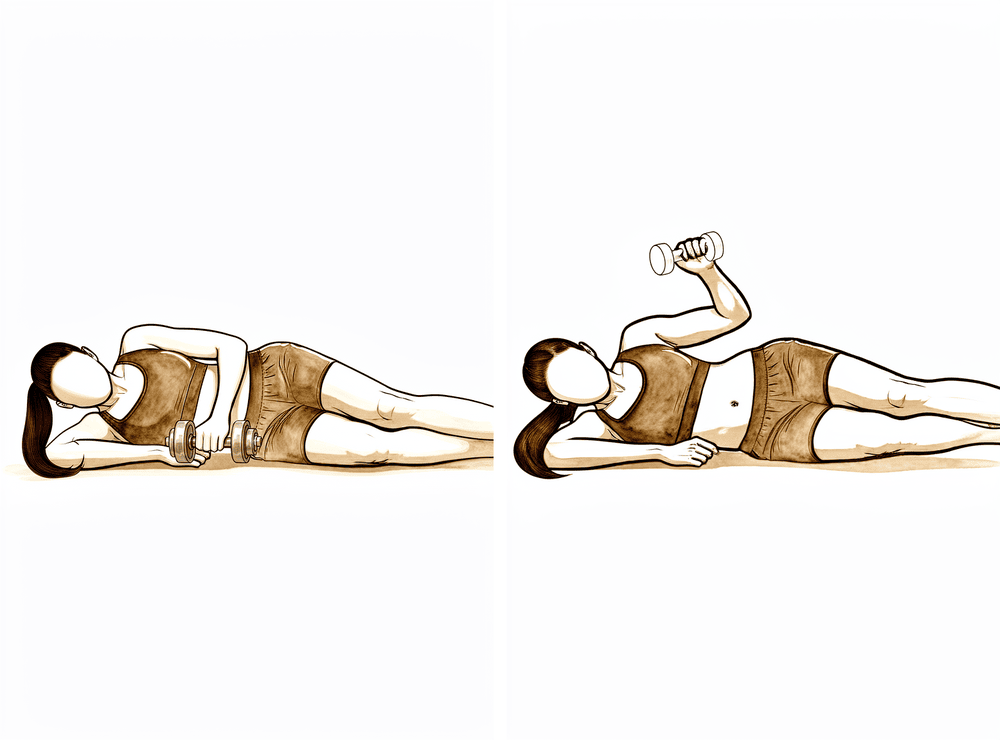
Rotación externa en decúbito lateral con carga
Acuéstese sobre el lado no operado, con el codo superior doblado en ángulo recto y pegado al cuerpo. Sosteniendo un peso ligero, gire el antebrazo hacia el techo y luego bájelo lentamente. De este modo, irá progresando en el fortalecimiento del manguito rotador, pasando de usar bandas elásticas a mancuernas.
2–3 series de 8–15 repeticiones, carga baja
Kieran Hirpara 4.0
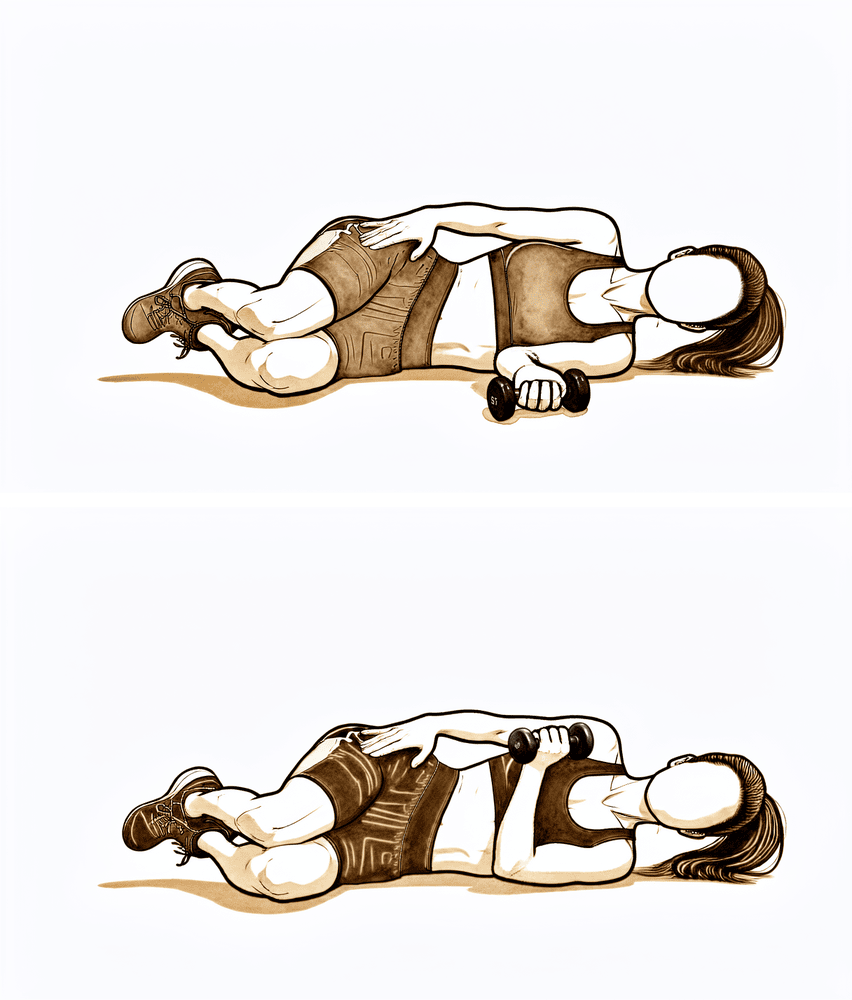
Rotación interna en decúbito lateral con carga
Acuéstese sobre el lado operado, con el codo doblado en ángulo recto y pegado al cuerpo. Sosteniendo un peso ligero, eleve el antebrazo hacia el cuerpo y luego bájelo lentamente. Esto equilibra el fortalecimiento del manguito rotador con el ejercicio de rotación externa.
2–3 series de 8–15 repeticiones, carga baja
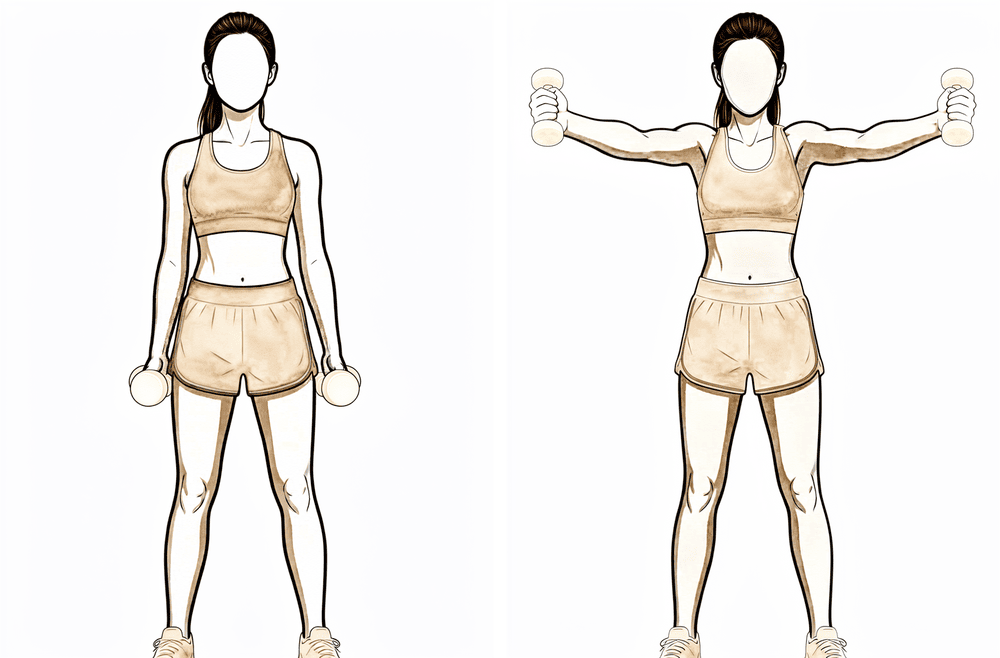
Kieran Hirpara 4.0
Elevación en el plano escapular con el pulgar hacia arriba («lata llena»)
Párese sosteniendo un peso ligero en cada mano; los brazos deben estar ligeramente extendidos hacia adelante formando un ángulo de unos 30 grados, con los pulgares apuntando hacia arriba. Eleve los brazos hasta la altura de los hombros y luego bájelos lentamente. Este ejercicio fortalece tanto el deltoides como el manguito rotador, trabajando en un rango de movimiento cómodo.
2–3 series de 8–15 repeticiones, carga baja
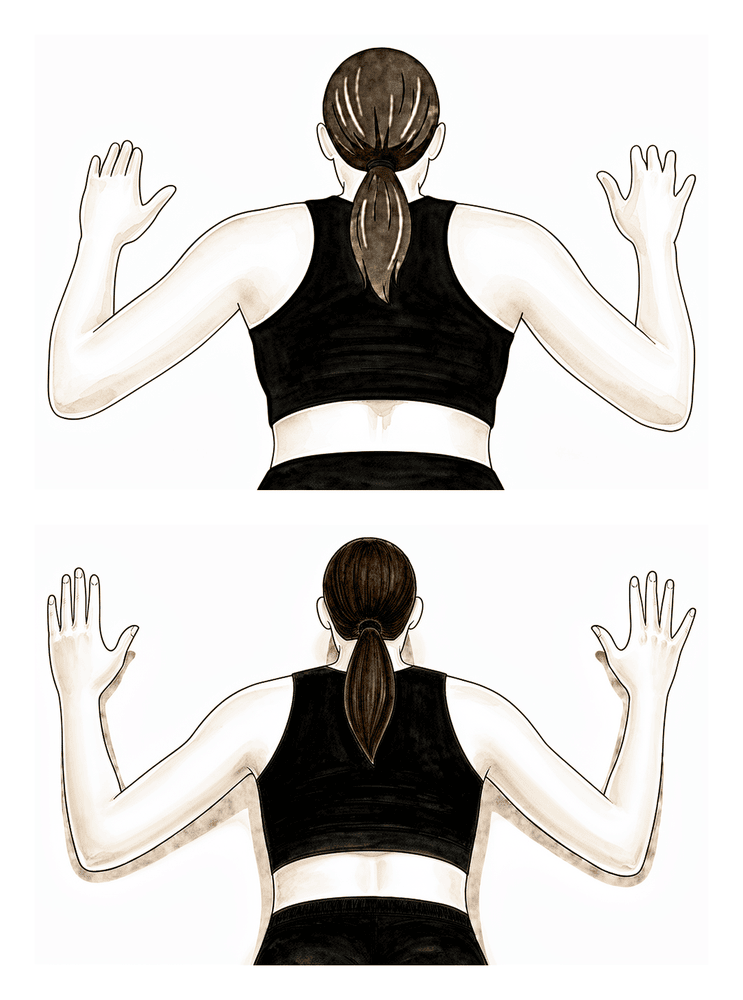
Kieran Hirpara 4.0
W en posición prona
Acuéstese boca abajo con los brazos a los costados. Retraiga los codos hacia atrás y hacia abajo, en dirección a las caderas, formando una forma de “W”, mientras contrae los omóplatos; luego baje los brazos lentamente. Este ejercicio fortalece los músculos inferiores de los omóplatos, que contribuyen a una buena mecánica del hombro.
2–3 series de 8–15 repeticiones
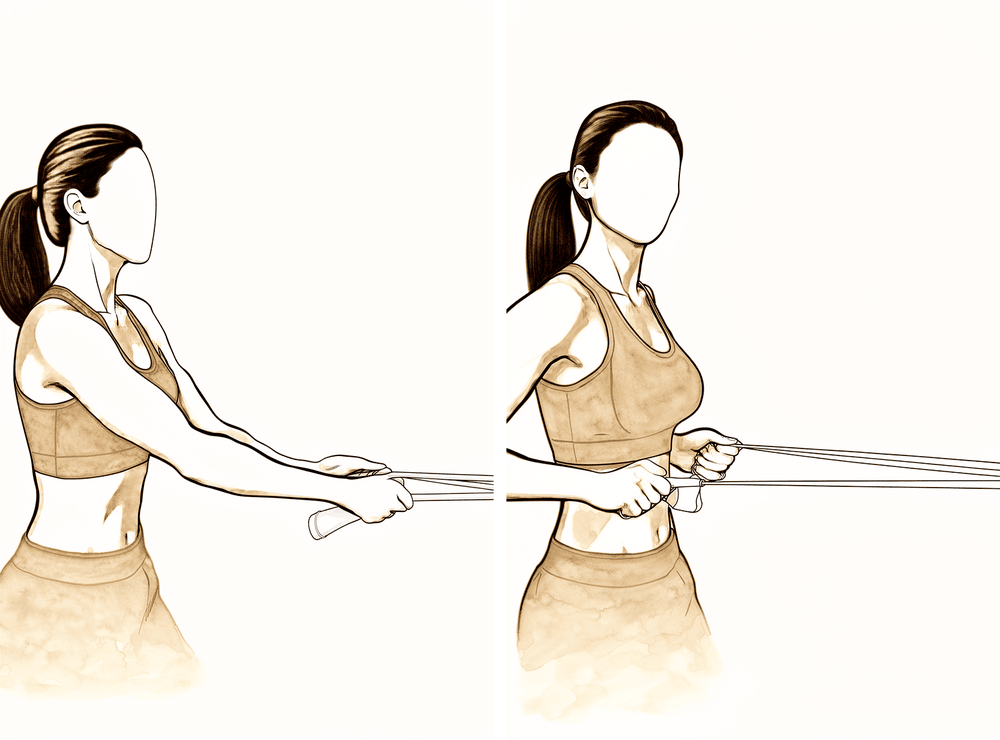
Kieran Hirpara 4.0
Remo de pie
Sostenga una banda elástica o un peso ligero frente a usted y tire de él hacia su cuerpo, llevando el codo hacia atrás y acercando los omóplatos; luego regrese lentamente a la posición inicial. Este ejercicio fortalece la zona media de la espalda y los omóplatos, elementos esenciales para sostener el hombro al volver a realizar actividades físicas.
2–3 series de 8–15 repeticiones
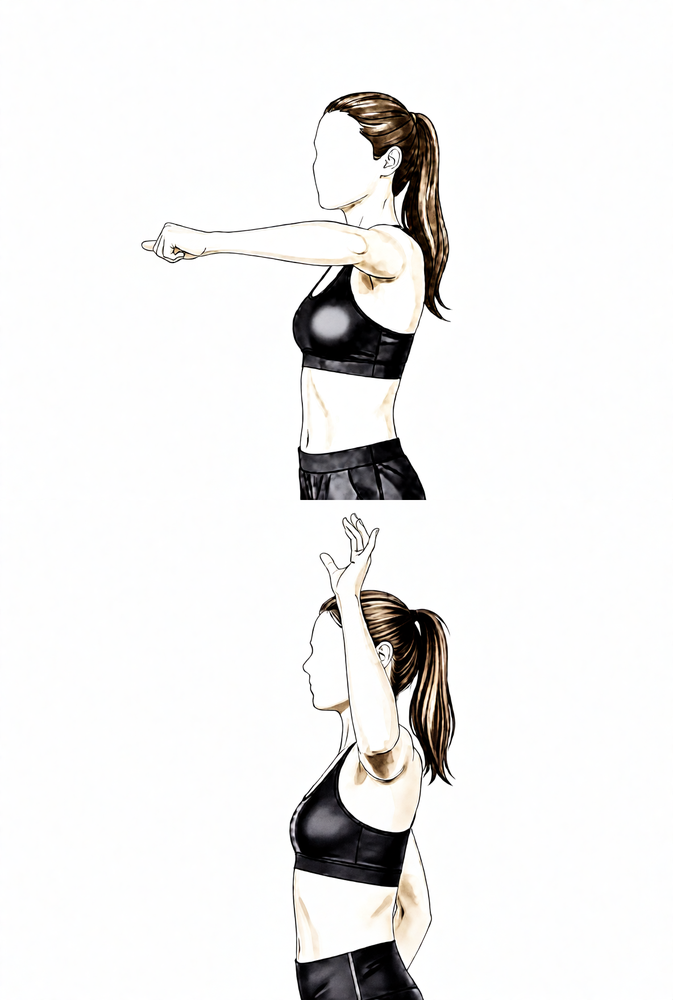
Kieran Hirpara 4.0
Rotación externa con el brazo elevado
Con el brazo extendido hacia el lateral a la altura del hombro y el codo flexionado a 90°, gire el antebrazo hacia arriba y hacia atrás, y luego regrese lentamente a la posición inicial. Mantenga el movimiento suave y dentro de un rango cómodo. Este ejercicio fortalece la rotación externa del brazo en posición elevada.
Siguiendo las indicaciones de su fisioterapeuta: de forma suave y controlada.
Una vez recuperado el rango completo de movimiento, la atención se centra en reconstruir la fuerza y permitirle volver a sus actividades habituales. El entrenamiento de resistencia avanza desde el uso de bandas elásticas hasta mancuernas, enfocándose en el manguito rotador, el deltoides y los músculos de la escápula. Los ejercicios se vuelven más funcionales: entrenamiento en gimnasio, natación, un programa progresivo de lanzamientos para atletas lanzadores, y un retorno gradual a las tareas laborales y deportivas. La mayoría de las personas retornan al deporte y a trabajos más exigentes durante esta fase, entre las ocho y doce semanas, guiados por su nivel de confort y fuerza más que por el calendario. Los ejercicios de empuje que más carga ejercen sobre la articulación acromioclavicular (press de banca, fondos y flexiones) son los últimos en reintroducirse, comenzando con cargas ligeras y amplitudes reducidas.
Para su fisioterapeuta:
Objetivos
- Restaurar la fuerza, la resistencia y el control neuromuscular del cinturón escapular
- Retorno gradual a las tareas laborales, actividades recreativas y entrenamiento deportivo específico
Manejo
- Entrenamiento de resistencia progresivo para el manguito rotador, deltoides y estabilizadores de la escápula: desde bandas elásticas hasta mancuernas ligeras; habitualmente 2–3 series de 8–15 repeticiones
- Incorporar ejercicios excéntricos, ejercicios en cadena cerrada y, hacia el final de la fase, ejercicios pliométricos según sea pertinente para el deporte del paciente
- Entrenamiento funcional y deportivo específico: natación, programa de lanzamientos progresivo para atletas lanzadores, ejercicios deportivos bajo condiciones controladas
- Retorno gradual a todas las tareas laborales y actividades deportivas, basado en criterios específicos
Precauciones
- Introducir al final los ejercicios de empuje que cargan la articulación acromioclavicular (press de banca, fondos, flexiones): comenzar con cargas ligeras y amplitudes reducidas; evitar que los codos desciendan por debajo o detrás de la línea del cuerpo
- La progresión debe guiarse por los síntomas: si la articulación acromioclavicular se vuelve sensible, se debe reducir temporalmente la carga en lugar de insistir con el esfuerzo
Criterios para avanzar
- Rango de movimiento funcional completo y sin dolor
- Ausencia de dolor o sensibilidad en la zona operada al aplicar carga
- Fuerza similar en el lado operado comparado con el lado no operado, según las pruebas realizadas
Fase IV — Retorno a la actividad plena (a partir de la semana 12)
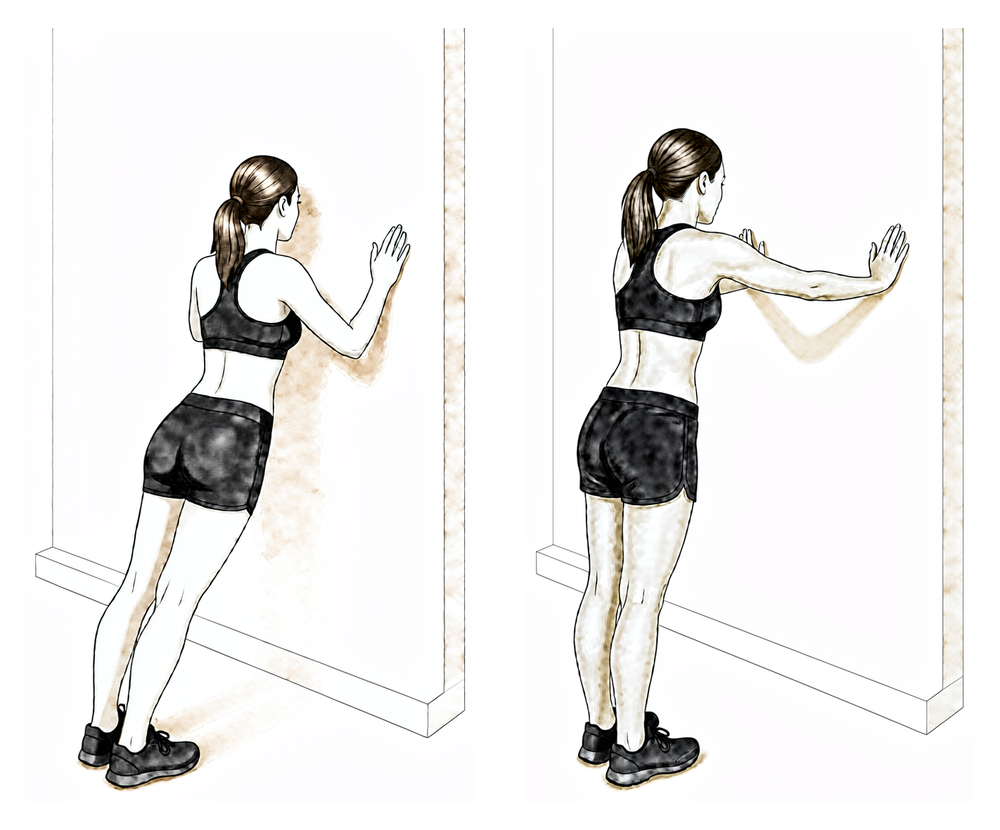
Kieran Hirpara 4.0
Flexiones «plus»
Forma parte del regreso gradual a los ejercicios de empuje, por eso se realiza al final. Comience apoyándose contra una pared o desde la posición de rodillas, con un rango de movimiento reducido, procurando que los codos no se desplacen más allá de la línea del cuerpo. En la parte superior de cada flexión, empuje un poco más para redondear la parte superior de la espalda, y luego descienda de forma controlada. Solo aumente la profundidad y la carga si la articulación acromioclavicular permanece cómoda; si vuelve a sentir dolor en esa zona, deberá reducir el esfuerzo.
Según las indicaciones de su fisioterapeuta.
La fase final consiste en el retorno a una actividad sin restricciones. La vida cotidiana y la mayoría de los deportes suelen haberse recuperado mucho antes de este punto; lo que queda es el mayor nivel de carga. La fuerza en ejercicios de presión en el gimnasio se recupera progresivamente; volver a alcanzar el rendimiento previo en el press de banca puede tardar hasta unos cuatro meses. En el caso de atletas que practican deportes con movimientos repetitivos por encima de la cabeza, el retorno a la actividad se realiza gradualmente durante un periodo de dos a cuatro meses tras la cirugía. El retorno completo al deporte y al trabajo de gran esfuerzo se confirma en su revisión de seguimiento, basándose en la amplitud de movimiento, la tolerancia a la carga y los resultados satisfactorios del examen clínico.
Para su fisioterapeuta:
Objetivos
- Retorno sin restricciones al trabajo, al gimnasio y al deporte
- Mantener a largo plazo la fuerza y la mecánica del cinturón escapular
Manejo
- Aumentar progresivamente el entrenamiento específico para el gimnasio y el deporte, según la tolerancia del paciente; esto incluye ejercicios de presión con carga, prestando atención a la técnica para minimizar la tensión en la articulación acromioclavicular (profundidad controlada, codos que no se desplacen más allá de la línea del cuerpo)
- Realizar progresivamente ejercicios de lanzamiento y actividades propias del deporte por encima de la cabeza, cuando sea pertinente
Precauciones
- La progresión debe guiarse por los síntomas: cualquier dolor recurrente en la zona de la articulación acromioclavicular durante un ejercicio determinado indica la necesidad de ajustar la carga o la técnica antes de seguir avanzando
Después de seguir el protocolo
Las fases descritas anteriormente se han adaptado de protocolos de rehabilitación publicados para la excisión de la extremidad distal de la clavícula (Departamento de Cirugía Ortopédica de la Universidad de Saint Louis, Medicina Deportiva de la Universidad de Utah, Sports Surgery New York, Palm Beach Orthopaedic Institute, OrthoVirginia y Specialty Physicians of Illinois). Los rangos de semanas indicados son valores típicos, no fijos. Su rehabilitación será guiada de forma individual por su fisioterapeuta, en colaboración con nuestra clínica, según la evolución de su hombro. Esta página complementa las indicaciones generales de recuperación de nuestra clínica; consulte control del dolor postoperatorio y cuidado de la herida. Para información sobre la intervención quirúrgica en sí, consulte excisión de la extremidad distal de la clavícula.
La evidencia clínica que sustenta esta operación y su rehabilitación (incluida la comparación entre técnicas abiertas y artroscópicas, la cantidad de hueso que se extirpa y los motivos para ello, así como los protocolos publicados en los que se basa esta página) se resume con todas las referencias correspondientes en la sección de evidencia, disponible en formato PDF en la parte superior de esta página.
Evidence & references
This is the clinical evidence summary written for health professionals. It is technical, and it lists the research this page was built from. You do not need to read it to understand your treatment or to make a decision about it.
Distal Clavicle Excision (Mumford) — Surgical Rationale & Post-operative Rehabilitation
Topic scope: the evidence underpinning distal clavicle excision (DCE) — also called distal clavicle resection, AC joint excision, or the Mumford procedure — for the two main indications (acromioclavicular [AC] joint osteoarthritis and distal clavicular osteolysis, the "weightlifter's shoulder"), and the post-operative rehabilitation that follows. Covers open vs arthroscopic technique, direct vs indirect (bursal) approach, how much bone to resect, the iatrogenic-instability risk of over-resection, and the (consensus-based) phased rehab timeline.
Defining principle of the rehab here: DCE removes a few millimetres of worn bone from the end of the collarbone and repairs nothing that needs months of protection — provided the AC ligaments and superior/posterior capsule are preserved. So (like a debridement or subacromial decompression, and unlike a cuff repair, labral repair or AC-joint stabilisation) this is an early-motion pathway: a short sling for comfort only, movement from day one, strengthening as range returns. The single important caveat runs the other way: if the surgeon resects too much bone, or the stabilising AC ligaments/capsule are violated, the joint can become iatrogenically unstable — which is why technique (resection amount, ligament preservation) matters more here than the rehab calendar. The two operation-specific quirks the rehab respects are that cross-body (horizontal adduction) movement compresses the resected area and is the slowest to settle, and heavy pressing (bench press, dips, push-ups) loads the AC joint hardest and returns last.
A. THE OPERATION & ITS INDICATIONS
DCE removes the worn or eroded outer end of the clavicle so the acromion and clavicle no longer grind at the AC joint. Two indications dominate:
- AC joint osteoarthritis — degenerative wear, often with a history of prior AC injury or simply age-related change. Surgery follows failed non-operative care (activity modification, analgesia, AC joint corticosteroid injection).
- Distal clavicular osteolysis ("weightlifter's shoulder") — atraumatic, repetitive-microtrauma resorption of the distal clavicle seen in weightlifters and overhead athletes. Activity modification and rehabilitation are first-line; injection or surgery is reserved for refractory cases or athletes unwilling to stop loading [StatPearls 2023; Charron 1998].
DCE is frequently combined with subacromial decompression (for room/co-existing impingement) and the rehab is unchanged by that addition. If a rotator cuff repair is also performed, the slower protected cuff-repair pathway takes over.
B. EVIDENCE BY THEME
1. Open vs arthroscopic — equivalent long-term outcome, faster arthroscopic recovery
A randomised, prospective trial (Robertson et al., corpus, DOI 10.1016/j.jse.2006.10.006) and a systematic review (Pensak et al., Arthroscopy 2010) found similar long-term functional outcomes for open and arthroscopic DCE, with both arthroscopic techniques exceeding 90% good/excellent results. Across measures there was a trend toward earlier or better outcomes after arthroscopic treatment — less post-operative pain and a quicker return to daily activities — without a difference in the final result [Robertson RCT; Pensak SR 2010]. A second comparative cohort reached the same conclusion (corpus, DOI 10.1177/0363546511419633). Moderate (RCT + SR + cohort).
2. Direct vs indirect (bursal) arthroscopic approach — direct is faster
Among arthroscopic techniques, the direct (superior, top-down) approach permits a quicker return to athletic activity than the indirect/bursal approach, with equivalent long-term results — one comparison reporting a mean return to sport of ~21 days (direct) vs ~42 days (indirect) [Pensak SR 2010; arthroscopic-approach comparison]. Moderate.
3. How much bone to resect — and why over-resection is dangerous
This is the central technical controversy and the reason DCE rehab cannot be reduced to a calendar:
- The stabilising superior and posterior AC ligament/capsule runs from the anterior acromion to the posterior distal clavicle, and the coracoclavicular (trapezoid) ligament inserts on the clavicle undersurface roughly 22–25 mm from the tip [Renfree; capsule/ligament-insertion cadaveric study, corpus DOI 10.1016/j.arthro.2009.04.072; clavicular-strut cadaveric study, corpus DOI 10.1016/j.jse.2013.01.004].
- Anatomic work suggests as little as ~2.3–2.6 mm of resection can begin to violate the superior AC ligament [Renfree, via PMC6930955]; biomechanical models show AC joint anteroposterior translation increases after either open or arthroscopic excision, and stability falls as the resection lengthens [Blazar; resection-length biomechanical model, corpus DOI 10.1016/j.arthro.2007.07.004; DCE-vs-symmetric-resection biomechanics, corpus DOI 10.1177/0363546512469873].
- The practical consensus is to resect enough to abolish bony contact but no more — commonly quoted as ~5 mm (sufficient to clear contact in cadaveric models) up to ~8 mm, and not beyond ~8 mm, preserving the posterior/superior capsule and AC ligaments [PMC6930955; StatPearls 2023; resection-length biomechanics, corpus DOI 10.1016/j.arthro.2007.07.004].
- Over-resection or capsular violation can produce iatrogenic AC instability — a recognised (though uncommon) cause of persistent pain after DCE that may itself require ligament reconstruction [iatrogenic-instability case, PMC6930955; Painful Conditions of the AC Joint, corpus DOI 10.5435/00124635-199905000-00004].
Moderate (cadaveric/biomechanical + anatomic + expert consensus); exact safe threshold is debated.
4. Outcomes & return to activity
DCE is a reliable, high-satisfaction operation for the right indication — arthroscopic series report >90% good/excellent results [Robertson RCT; Pensak SR 2010]. For osteolysis in weightlifters, an arthroscopic-resection series reported return to sport at a mean of ~3 days and to the preoperative weight-training program at ~9 days, remaining asymptomatic and able to progress load beyond pre-operative levels at ~19-month follow-up [Charron, Am J Sports Med 1998, PMID 9548111]. Across the literature, most everyday activity returns within weeks and heavy pressing/overhead sport over ~3–4 months, consistent with the published rehab protocols. Moderate (cohort). A noted exception: worse ("poor") results cluster in patients with pre-existing post-traumatic AC instability or Workers'-Compensation claims [Pensak SR 2010] — DCE alone does not fix an unstable joint.
C. PHASED POST-OPERATIVE TIMELINE (isolated DCE ± subacromial decompression)
Week ranges are typical, not fixed — progression is criteria-based, guided by the physiotherapist.
| Phase | Window | Sling | ROM / use | Strengthening | Operation-specific notes |
|---|---|---|---|---|---|
| I — Early recovery & movement | Week 0–2 | Comfort only; weaned/discarded within 1–2 weeks | Elbow/wrist/hand + pendulums from day 1; passive + active-assisted shoulder elevation/ER/behind-the-back IR; scapular setting | Grip; gentle isometrics as pain allows | Avoid cross-body (horizontal) adduction — it compresses the resected area. No driving in the sling; no weight-bearing through the arm |
| II — Restoring range | Week 2–6 | Off | Progress assisted → active ROM to full in all planes; reintroduce cross-body adduction gradually (end-range pinching is common, settles) | Begin cuff + scapular band work once active range near full; lifting ≤ ~5 kg | Light lower-body conditioning (walk/bike/jog) from ~wk 4 |
| III — Strengthening & return | Week 6–12 | Off | Full functional ROM | Bands → dumbbells; functional + sport-specific; most return to sport/heavier work ~8–12 wk | Reintroduce AC-loading presses (bench/dips/push-ups) last — light, shallow depth, elbows not behind the body line |
| IV — Return to full activity | Week 12+ | Off | Full | Progressive heavy pressing; return to previous bench performance can take ~4 months; overhead athletes progressed over ~2–4 months | Symptom-guided — recurrent AC ache with a lift = adjust load/technique before progressing |
The phased structure is drawn from published surgeon/physiotherapy protocols (Saint Louis University; University of Utah Sports Medicine; Sports Surgery New York; Palm Beach Orthopaedic Institute; OrthoVirginia; Specialty Physicians of Illinois — see Citations). These are consensus/expert documents; no rehab RCT defines the optimal post-DCE regimen.
D. KEY CONTROVERSIES / EVIDENCE QUALITY
- How much bone to resect is the real debate, not the rehab. Too little leaves residual bony contact; too much risks iatrogenic instability. The safe window (~5–8 mm, capsule preserved) is supported by cadaveric/biomechanical and anatomic work, not by an RCT — exact thresholds vary by source. Moderate, technique-dependent.
- Open vs arthroscopic, direct vs indirect. Long-term outcomes converge; arthroscopic (and specifically the direct approach) recovers faster. Moderate (RCT + SR).
- Patient selection matters more than approach. Pre-existing AC instability and Workers'-Compensation status predict poorer results — DCE treats a worn/eroded joint, not an unstable one. Moderate.
- The rehab protocol itself is consensus. Phase timings come from surgeon patient-guidance protocols, not a rehab trial. Weak/consensus.
E. EVIDENCE STRENGTH FLAGS (summary)
- MODERATE (RCT / SR): open vs arthroscopic equivalence with faster arthroscopic recovery (Robertson RCT; Pensak SR 2010, >90% good/excellent); direct > indirect for return speed.
- MODERATE (cadaveric / biomechanical / anatomic): resection-length vs stability relationship and the iatrogenic-instability mechanism (resection-length model, corpus DOI 10.1016/j.arthro.2007.07.004; DCE-vs-symmetric biomechanics, corpus DOI 10.1177/0363546512469873; capsule/ligament insertions, corpus DOI 10.1016/j.arthro.2009.04.072).
- MODERATE (cohort): osteolysis-in-weightlifters return-to-sport (Charron 1998); high overall satisfaction; poorer results with pre-existing instability / WorkCover.
- WEAK / CONSENSUS: the post-operative rehabilitation protocol (surgeon patient-guidance documents; no defining rehab RCT); the exact "safe" resection threshold.
CITATIONS
RAG corpus (180,000+ Orthopaedic articles)
- Robertson WJ, et al. Arthroscopic versus open distal clavicle excision: comparative results at six months and one year from a randomized, prospective clinical trial. J Shoulder Elbow Surg. 2007. DOI: 10.1016/j.jse.2006.10.006
- Arthroscopic versus open distal clavicle excision (comparative cohort). Am J Sports Med. 2011. DOI: 10.1177/0363546511419633
- The biomechanical stability of distal clavicle excision versus symmetric acromioclavicular joint resection. Am J Sports Med. 2013. DOI: 10.1177/0363546512469873
- Arthroscopic distal clavicle resection: a biomechanical analysis of resection length and joint compliance in a cadaveric model. Arthroscopy. 2007. DOI: 10.1016/j.arthro.2007.07.004
- Analysis of the capsule and ligament insertions about the acromioclavicular joint: a cadaveric study. Arthroscopy. 2009. DOI: 10.1016/j.arthro.2009.04.072
- Acromioclavicular joint ligamentous system contributing to clavicular strut function: a cadaveric study. J Shoulder Elbow Surg. 2013. DOI: 10.1016/j.jse.2013.01.004
- Painful conditions of the acromioclavicular joint. J Am Acad Orthop Surg (JAAOS). 1999. DOI: 10.5435/00124635-199905000-00004
Literature (URLs)
- Pensak M, et al. Open versus arthroscopic distal clavicle resection (systematic review; >90% good/excellent, direct > indirect return). Arthroscopy. 2010. PMID 20434670. https://pubmed.ncbi.nlm.nih.gov/20434670/
- Charron KM, et al. Arthroscopic distal clavicle resection for isolated atraumatic osteolysis in weight lifters (return to sport ~3 d, training ~9 d). Am J Sports Med. 1998. PMID 9548111. https://pubmed.ncbi.nlm.nih.gov/9548111/
- Distal clavicular osteolysis (cause, activity-modification first line, ~8 mm resection preserving AC ligaments). StatPearls. 2023. https://www.ncbi.nlm.nih.gov/books/NBK582148/
- Distal clavicular augmentation with AC and CC ligament reconstruction in iatrogenic AC instability (~5 mm safe-resection guidance; Renfree ~2.3–2.6 mm violates superior AC ligament; trapezoid 22–25 mm from tip; Blazar AP-translation increase). PMC6930955. https://pmc.ncbi.nlm.nih.gov/articles/PMC6930955/
- A sports medicine clinician's guide to the diagnosis and management of distal clavicular osteolysis. PubMed. https://pubmed.ncbi.nlm.nih.gov/37294199/
- Distal clavicular osteolysis (review). Physiopedia. https://www.physio-pedia.com/Distal_Clavicular_Osteolysis
Published rehab protocols (patient-guidance — basis for the phase structure)
- Saint Louis University Dept of Orthopaedic Surgery. Subacromial Decompression / Distal Clavicle Excision Rehab Protocol. https://www.slu.edu/medicine/orthopaedic-surgery/sports-medicine/-pdf/shoulder-subacromial-decompression-and-distal-clavicle-excision.pdf
- Burks RT. Distal Clavicle Resection/Mumford Post-Op Protocol. University of Utah Sports Medicine. https://www.robertburksmd.med.utah.edu/pdfs/distal-clavicle-resection-mumford-protocol.pdf
- Sports Surgery New York. Arthroscopic Subacromial Decompression / Distal Clavicle Excision Rehab Protocol. https://www.sportssurgerynewyork.com/pdf/arthroscopic-subacromial-decompression-distal-clavicle-excision-rehab-protocol.pdf
- Hill B. Rehabilitation Protocol: Distal Clavicle Excision. Palm Beach Orthopaedic Institute. https://www.pboi.com/pdf/hill-pt-distal-clavicle-excision.pdf
- Eastwood D. Distal Clavicle Resection Therapy Protocol. OrthoVirginia. https://www.orthovirginia.com/wp-content/uploads/2022/09/Eastwood-distal-clavicle-resection-PT-protocol.pdf
- Mahylis JM. Distal Clavicle Excision Rehabilitation Protocol. Specialty Physicians of Illinois. https://jaredmahylismd.com/pdfs/distal-clavicle-excision-rehabilitation-protocol.pdf