Patients › Rehabilitation
Liberación capsular
Rehabilitation after arthroscopic capsular release for frozen shoulder — early in-hospital program and the outpatient phases that keep the range won at surgery.
Este protocolo describe la rehabilitación posterior a una liberación capsular artroscópica realizada por el Dr. Kieran Hirpara en el Mater Private Hospital Rockhampton, tanto durante la estancia hospitalaria como en las semanas y meses siguientes. Lleve esta página o su versión en PDF a su primera sesión de fisioterapia para garantizar una rehabilitación coordinada. Su fisioterapeuta guiará su recuperación individualmente a través de las siguientes fases, según el grado de movilidad de su hombro.
Si tiene alguna duda respecto a la herida quirúrgica, comuníquese con el consultorio. A menudo resulta útil tomar una fotografía de la herida y enviarla por correo electrónico para su evaluación.
Qué esperar
La liberación capsular es una intervención quirúrgica para el hombro rígido (hombro congelado); esta operación cambia por completo el enfoque de la rehabilitación. En la mayoría de las cirugías de hombro se repara alguna estructura, como un tendón o un ligamento desgarrado; en las primeras fases postoperatorias, el objetivo es proteger esa reparación, por lo que se utiliza un cabestrillo y se limitan los movimientos. Esta operación es lo opuesto: no se ha suturado nada que requiera protección. El cirujano ha liberado la cápsula articular tensa y cicatricial, y ha movido el hombro a través de todo su rango de movimiento mientras usted estaba bajo anestesia; por eso, el resultado de la cirugía es precisamente esa movilidad. Desde el momento en que despierta, el objetivo de la rehabilitación es mantener esa movilidad antes de que el hombro vuelva a volverse rígido.
Esto significa que no existe ningún período de protección ni restricciones de movimiento. Debe empezar a mover el hombro de inmediato: tanto por sí mismo como utilizando el otro brazo para empujarlo; además, debe seguir ampliando el rango de movimiento en todas las direcciones varias veces al día.
Los ejercicios incluyen tres tipos de movimientos; su equipo médico le indicará cuáles son aplicables en su caso:
- Movimiento pasivo: el hombro permanece totalmente relajado mientras el otro brazo, un palo o un sistema de poleas realiza todo el trabajo.
- Movimiento activo asistido: usted mueve el brazo por sí mismo, pero con algo de ayuda del otro brazo o de algún objeto.
- Movimiento activo: usted mueve el brazo por su propia fuerza, sin ninguna ayuda.
¿Por qué no se usa un cabestrillo?
Después de una liberación capsular, no se necesita un cabestrillo para proteger la reparación; de hecho, mantener el hombro inmóvil va en contra del proceso de recuperación. Si se deja descansar, el hombro liberado simplemente vuelve a endurecerse. Este endurecimiento es la principal razón por la que esta intervención puede resultar insatisfactoria; sin embargo, se puede prevenir en gran medida mediante movimientos tempranos y frecuentes.
Por lo tanto, a diferencia de lo que ocurre tras una reparación, no debe dormir con cabestrillo, no debe mantener el brazo inmóvil, y no hay ningún movimiento prohibido. Se le anima a usar el brazo libremente y a ampliar su rango de movimiento en todas las direcciones, incluyendo la rotación externa del brazo, desde el primer día. El cabestrillo se proporciona únicamente para mayor comodidad a corto plazo y para evitar que el brazo sufra golpes al estar fuera de casa; no obstante, debe quitárselo siempre que sea posible y no permitir que le induzca a mantener el hombro inmóvil.
Puntos clave
- Siga moviéndose. Utilice el brazo para realizar tareas cotidianas como lavarse, vestirse y comer, desde el principio. El movimiento ayuda a mantener el rango de movilidad obtenido tras la cirugía.
- Amplíe el rango de movimiento en todas las direcciones. Estírese hasta sentir una molestia firme, pero no dolor intenso; lleve el hombro hasta sus límites en todos los planos, incluyendo la rotación externa del brazo. Tras esta operación no existen restricciones de “no superar este límite”.
- Estírese poco, pero con frecuencia. Un programa breve de estiramientos en casa, realizado varias veces al día, es más eficaz que una sola sesión larga. La rigidez vuelve a aparecer entre sesiones, por lo que la frecuencia es fundamental.
- Controle el dolor para poder moverse. Tome analgésicos antes de hacer ejercicios y antes de sus sesiones de fisioterapia. Un buen control del dolor facilita los estiramientos. Muchas personas encuentran útil aplicar calor antes de estirar y hielo después.
- Asista a fisioterapia con regularidad. Procure acudir al menos dos veces por semana durante las primeras seis semanas. Lleve esta página a su primera cita.
- No conduzca durante seis semanas. Esta norma aplica tras cualquier operación de hombro; aunque dejará el cabestrillo casi de inmediato, su cirujano le autorizará a conducir, normalmente en la revisión de la sexta semana.
Con frecuencia se inyecta un esteroide en la articulación durante la operación para calmar la inflamación y reducir la tendencia a la rigidez posterior.
En el hospital — sus primeros ejercicios
Kieran Hirpara 4.0
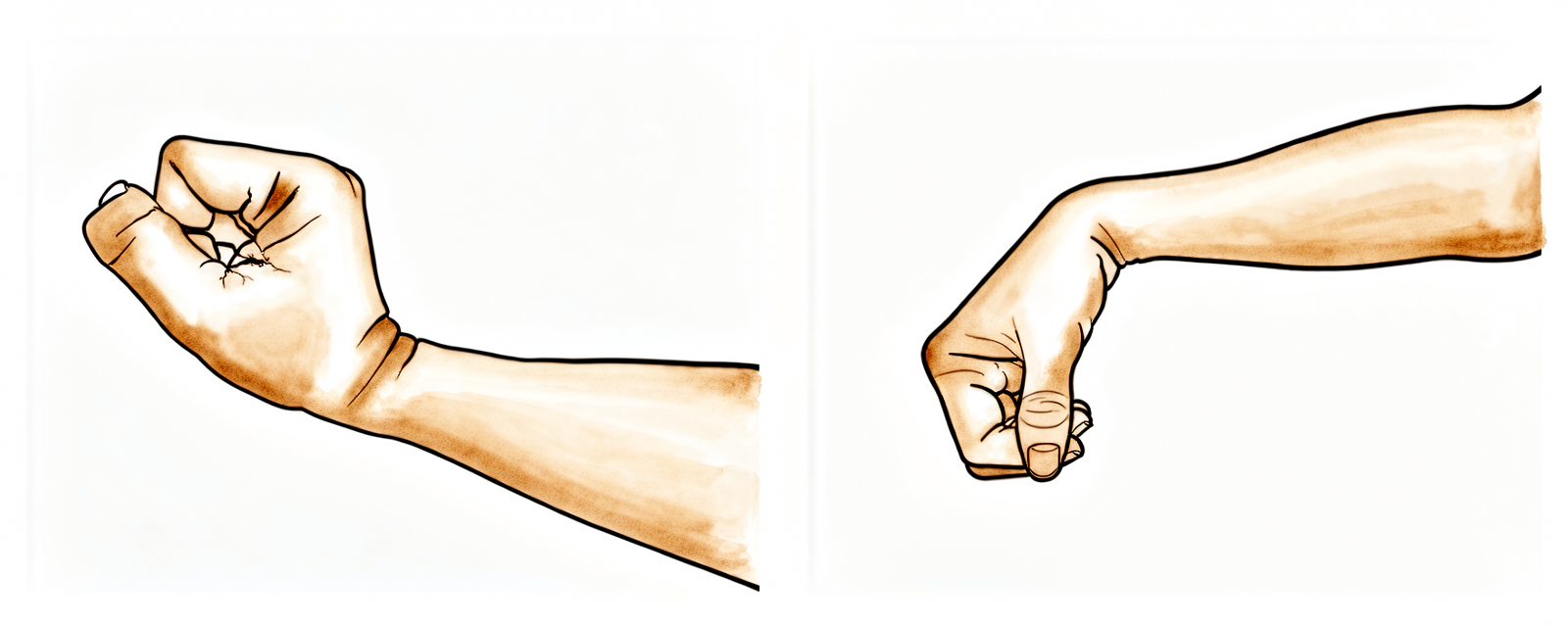
Movimiento de la muñeca
Mantenga la mano en movimiento, doblando la muñeca hacia adelante, hacia atrás y de lado a lado.
10 veces, 3 veces al día.
Kieran Hirpara 4.0
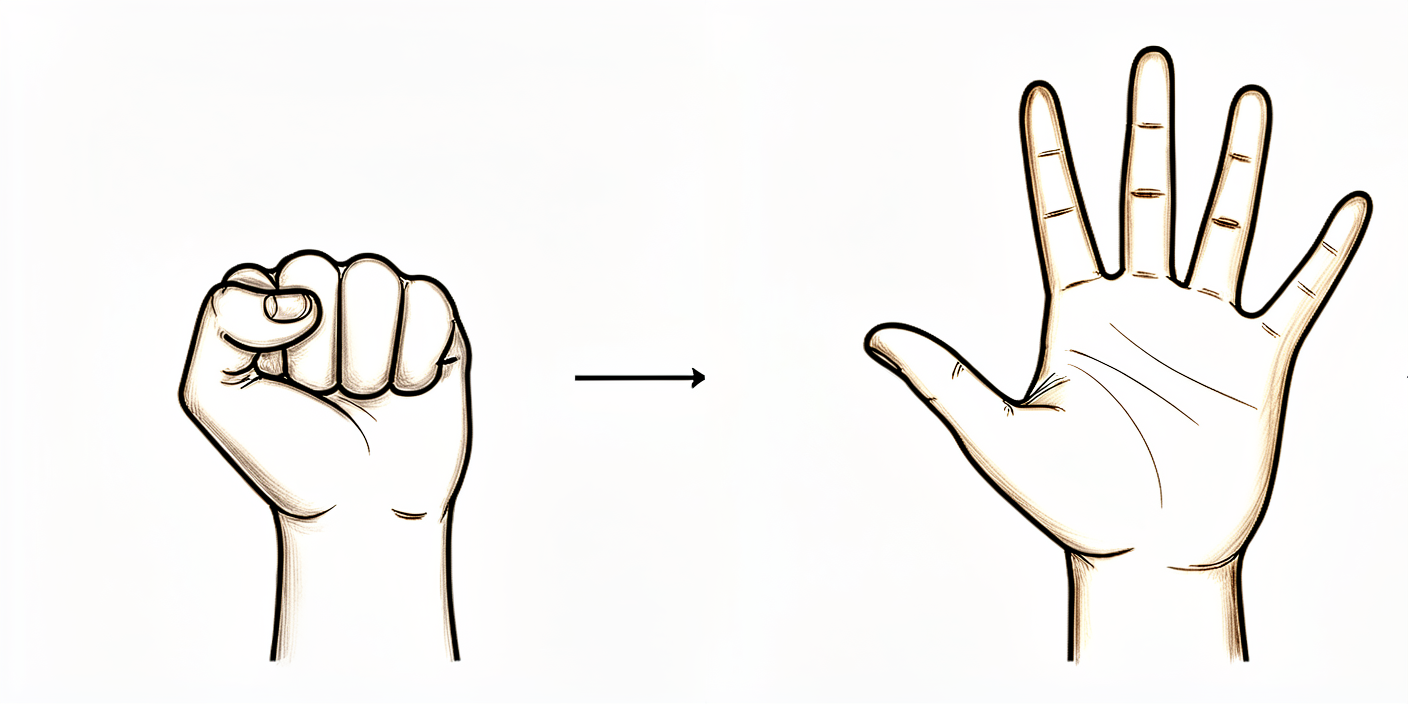
Abrir y cerrar la mano
Mantenga su mano y sus dedos en movimiento abriéndolos y cerrándolos, o apretando una pelota blanda.
10 veces, 3 veces al día.
Kieran Hirpara 4.0
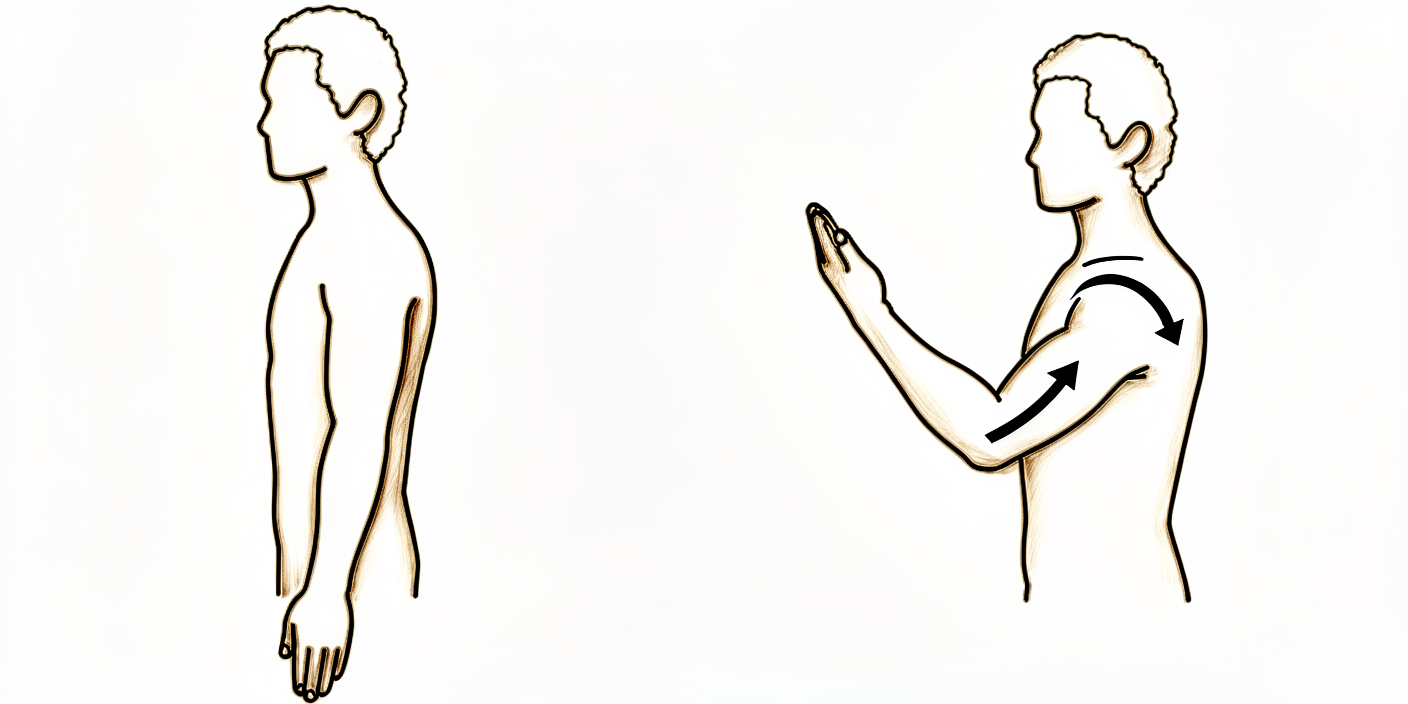
Flexión del codo
Flexione y estire el codo.
10 veces, 3 veces al día.
Kieran Hirpara 4.0
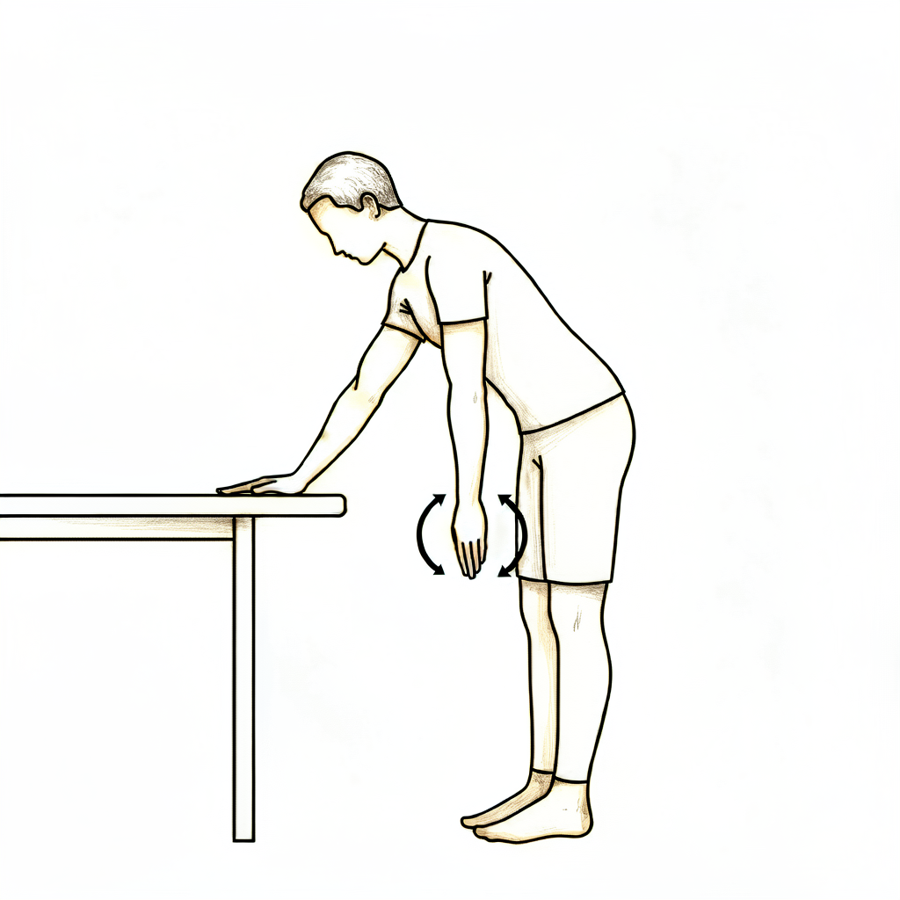
Péndulos
Se trata de un ejercicio relajado y pasivo. Incline el cuerpo hacia adelante y deje que el brazo cuelgue y se relaje. Utilice el movimiento corporal para hacer que el brazo gire suavemente en pequeños círculos, tanto en sentido horario como antihorario, y de un lado a otro. Deje que el peso del brazo haga el trabajo, manteniendo los músculos del hombro relajados.
Aproximadamente 30 segundos en cada dirección, 3 veces al día.
Kieran Hirpara 4.0
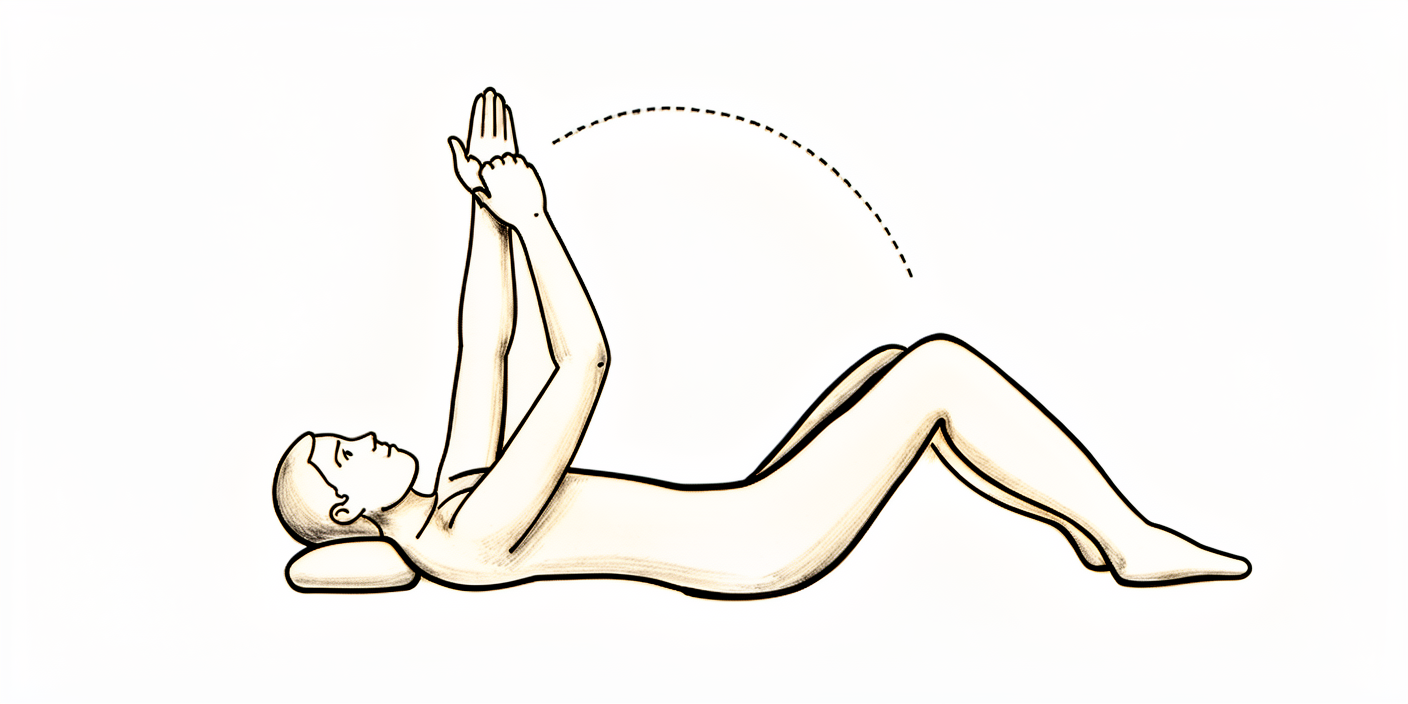
Flexión anterior asistida (en decúbito)
Si lo prefiere, acuéstese boca arriba y sujete un palo (o una toalla enrollada) con ambas manos. Use el brazo sano para empujar el brazo operado por encima de la cabeza, hasta donde le resulte cómodo, y luego bájelo lentamente. Llegue cada vez hasta un estiramiento firme.
10 veces, 3 veces al día.
Kieran Hirpara 4.0
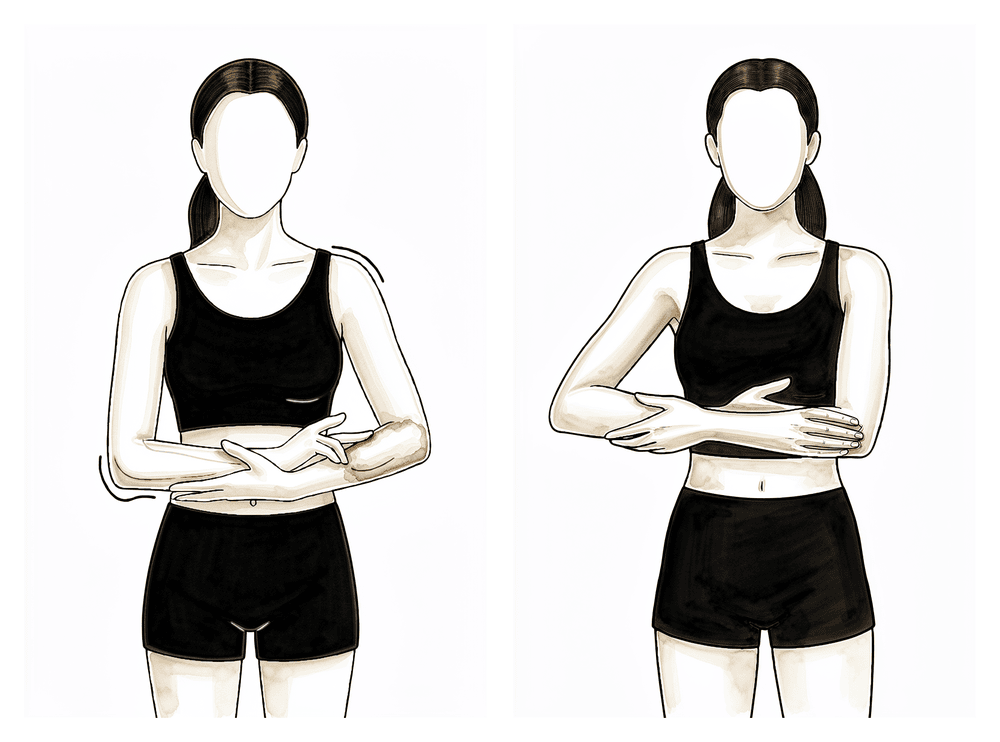
Abducción asistida (acunando el brazo)
Sostenga el brazo operado con el otro brazo, apoyándolo por debajo del codo, y muévalo suavemente hacia un lado y hacia atrás, como si meciera a un bebé. Cada vez, estírelo firmemente hacia un lado.
10 veces, 3 veces al día.
Kieran Hirpara 4.0
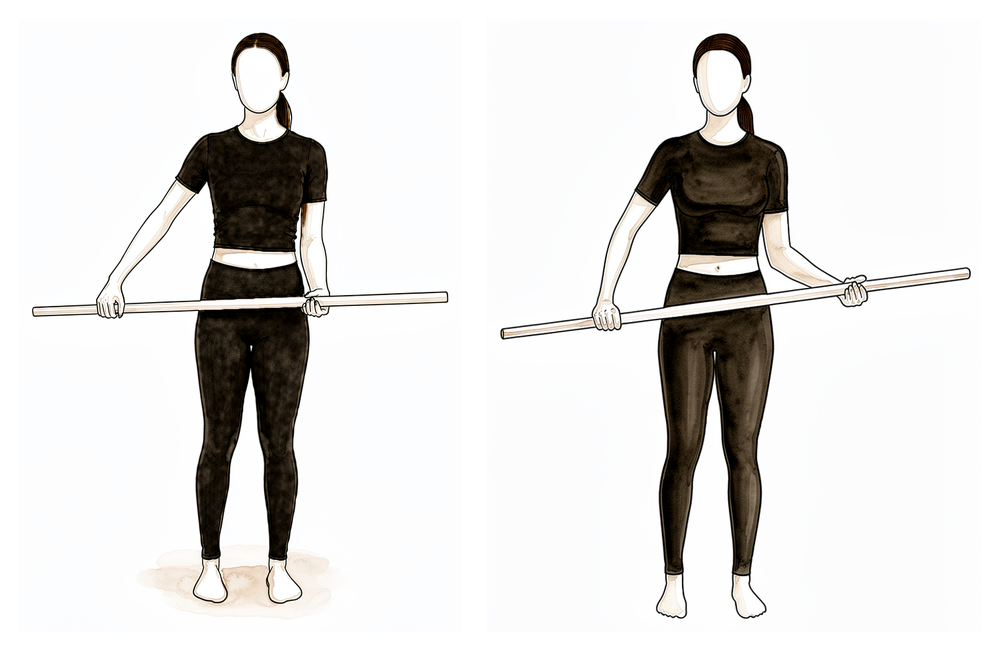
Rotación externa asistida mediante un palo
Acuéstese boca arriba con el codo pegado al costado y doblado a 90 grados. Sostenga un palo con ambas manos y utilice el brazo sano para empujar la mano del brazo operado hacia afuera, rotando el hombro. Lleve el movimiento hasta alcanzar un estiramiento firme: después de esta operación no hay límite en cuánto puede extenderse el rango de movimiento, así que siga empujando.
10 veces, 3 veces al día.
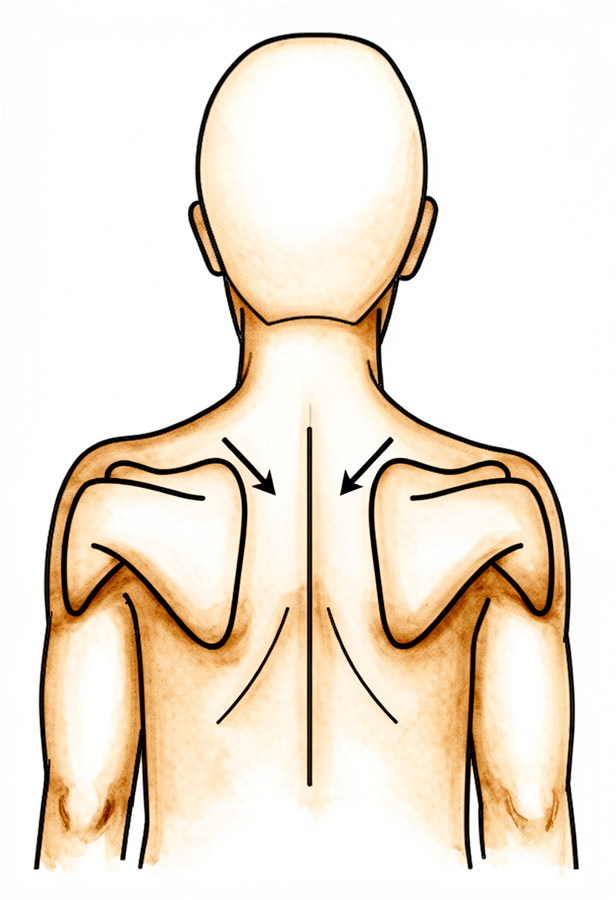
Kieran Hirpara 4.0
Activación del trapecio inferior
Apriete los omóplatos hacia abajo y hacia adentro, mantenga la posición y luego relájese.
Mantenga la posición durante 5 segundos, 5 veces; repita el proceso 3 veces al día.
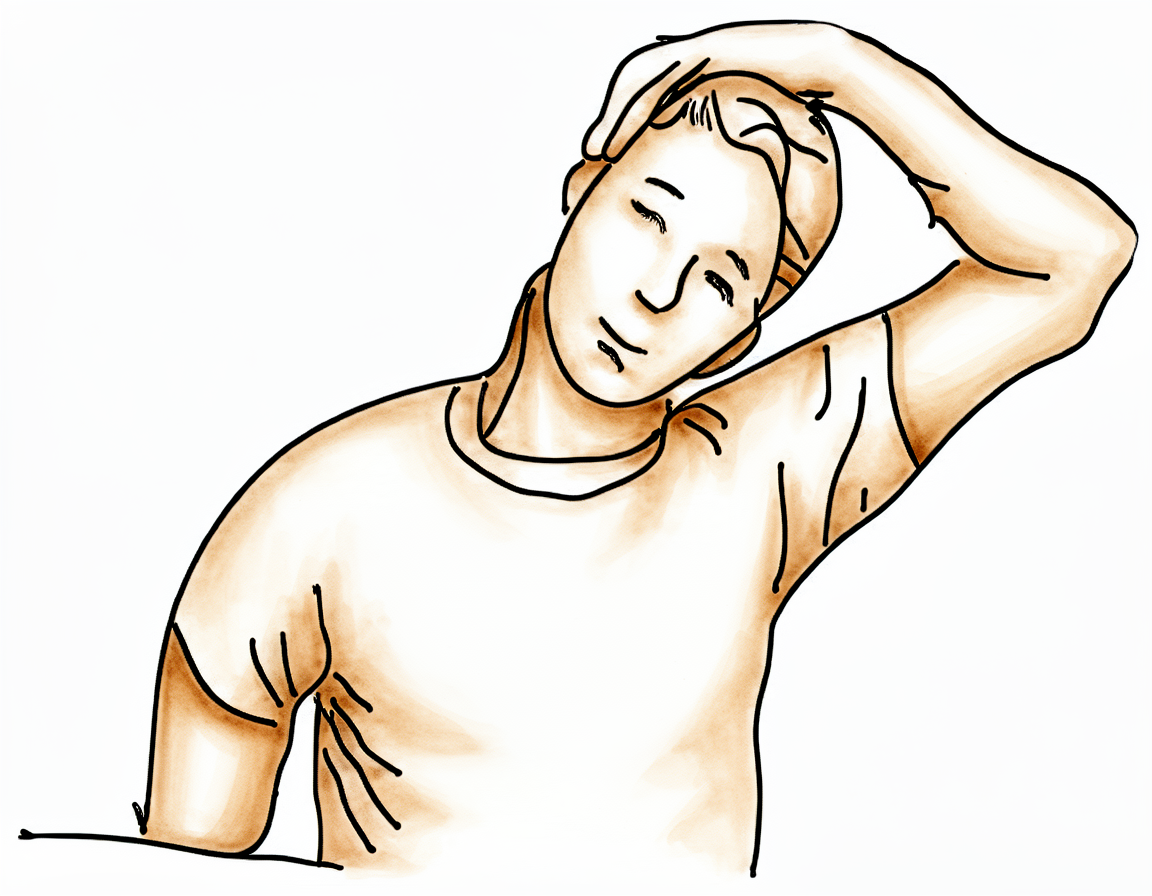
Kieran Hirpara 4.0
Estiramiento del trapecio superior
Utilice el brazo sano para acercar su oreja suavemente hacia el hombro, alejándola del lado operado, hasta que sienta un estiramiento a lo largo del cuello.
Mantenga la posición durante 10 segundos, 3 veces; repita este proceso 3 veces al día.
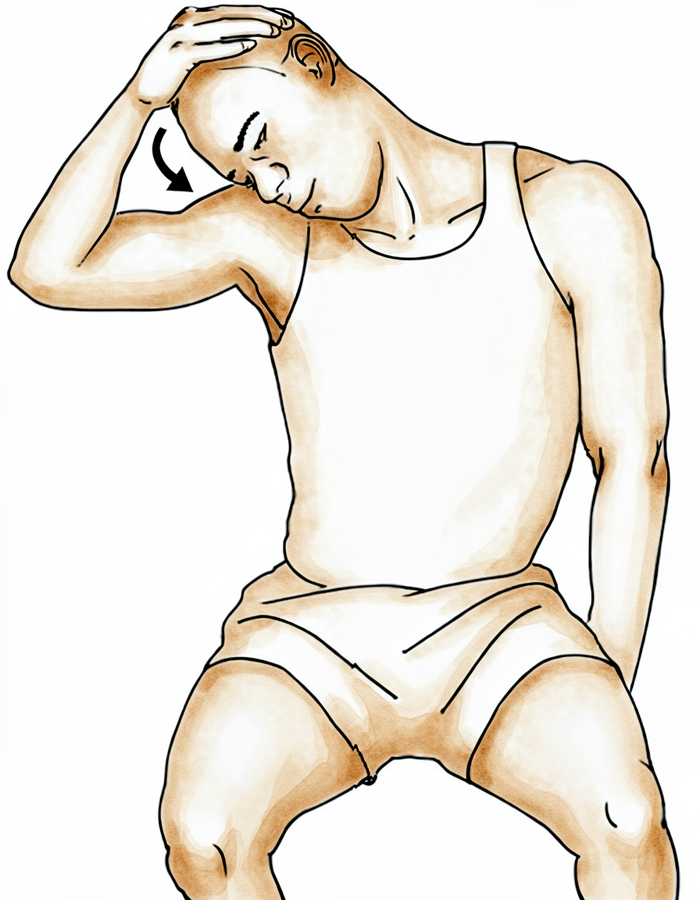
Kieran Hirpara 4.0
Estiramiento del elevador de la escápula
Utilice el brazo sano para acercar la nariz hacia la axila del lado opuesto, hasta que sienta un estiramiento en la base del cuello.
Mantenga la posición durante 10 segundos, 3 veces; repita este proceso 3 veces al día.
Un fisioterapeuta lo atenderá en el hospital y le indicará los siguientes ejercicios antes de que regrese a casa. Estos ejercicios mantienen en movimiento la mano, el codo y el hombro, y comienzan a recuperar de inmediato el rango de movimiento del hombro. Tome su analgésico previamente para poder moverse con libertad. Realice los ejercicios tal como se lo indique su equipo médico, y continúe haciéndolos en casa.
Su rehabilitación ambulatoria
Tras una liberación capsular, la rehabilitación sigue un patrón opuesto al de las intervenciones destinadas a reparar tendones: no hay nada que proteger, por lo que todo el esfuerzo se centra en mantener la movilidad. Es muy probable que el hombro vuelva a endurecerse durante las primeras semanas; por eso la fisioterapia comienza de inmediato, se mantiene con frecuencia y continúa durante varios meses hasta que su rango de movimiento se estabilice. Las fases que se describen a continuación siguen el esquema de los protocolos de rehabilitación publicados para esta operación. Los intervalos de semanas son orientativos, no fijos: su fisioterapeuta ajustará el progreso según la evolución del movimiento de su hombro, no en función del calendario.
Resumen del proceso:
- Fase I — Rehabilitación inicial: aproximadamente las primeras dos semanas
- Fase II — Mantenimiento y restauración del rango de movimiento: de la semana 2 a la 6
- Fase III — Fortalecimiento: de la semana 6 a la 12
- Fase IV — Retorno a la actividad plena: a partir de la semana 12
Alrededor de la tercera semana, el movimiento por debajo de la altura del hombro suele resultar más cómodo y la mayor parte del rango de movimiento se recupera; no obstante, levantar el brazo por encima de la cabeza suele seguir siendo incómodo. Al cabo de unos tres meses, la mayoría de los pacientes observan una notable mejora de sus síntomas; esta mejora suele persistir durante seis a nueve meses, a veces incluso hasta un año.
Fase I — Rehabilitación temprana (Semana 0–2)
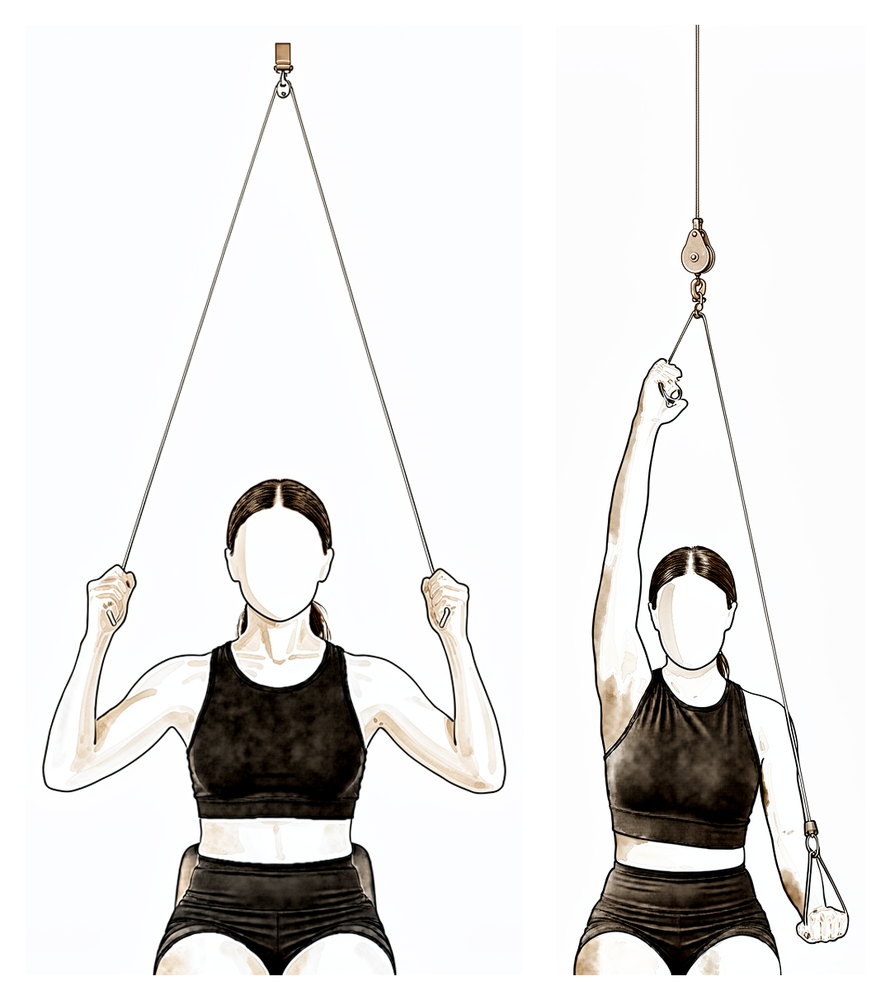
Kieran Hirpara 4.0
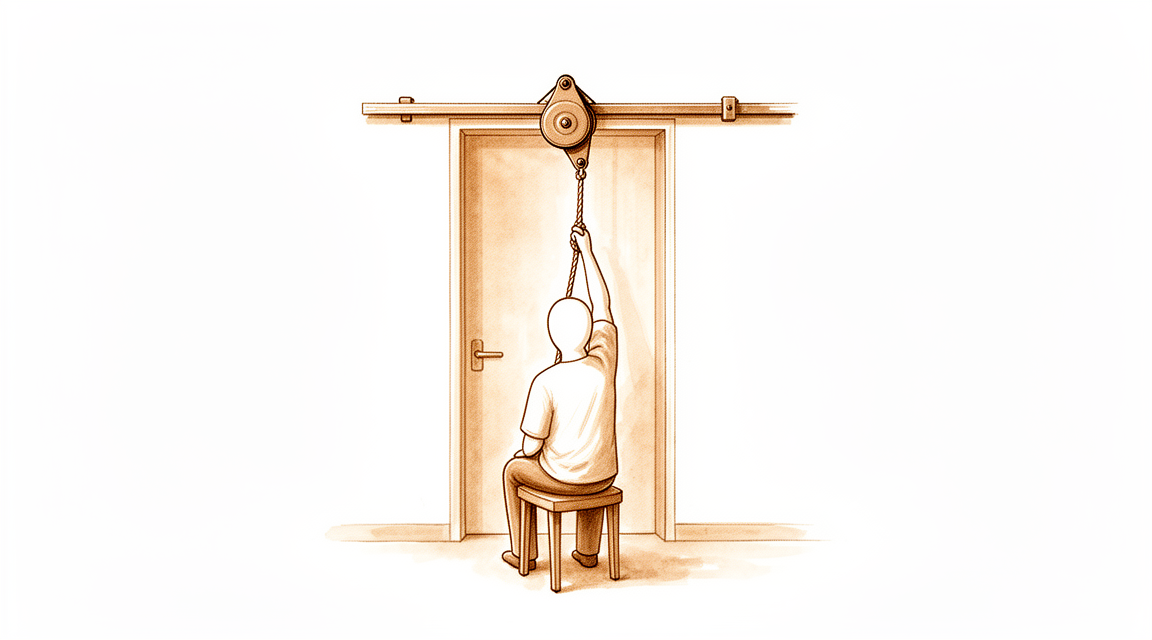
Polea de puerta
Siéntese debajo de una polea de puerta, sosteniendo un mango en cada mano. Tire hacia abajo con el brazo sano para elevar el brazo operado por encima de la cabeza hasta donde pueda llegar, y luego bájelo lentamente. Cada vez, ejerza una presión firme para estirar el brazo, pero sin provocar dolor intenso.
10 veces, de 3 a 4 veces al día.
Kieran Hirpara 4.0
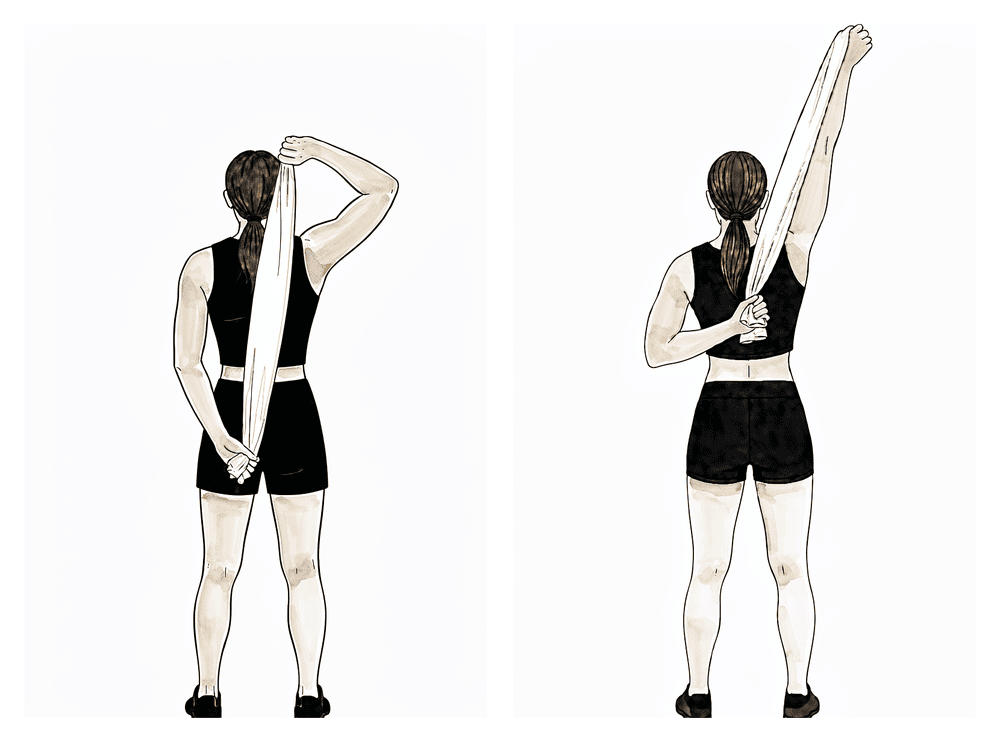
Estiramiento detrás de la espalda con una toalla
Sostenga una toalla detrás de la espalda con la mano operada hacia abajo, y use la otra mano para llevar esa mano hacia arriba, por la espalda, hasta donde pueda. Estire con firmeza y luego relájese: el estiramiento debería ceder poco después.
10 veces, de 3 a 4 veces al día.
Kieran Hirpara 4.0
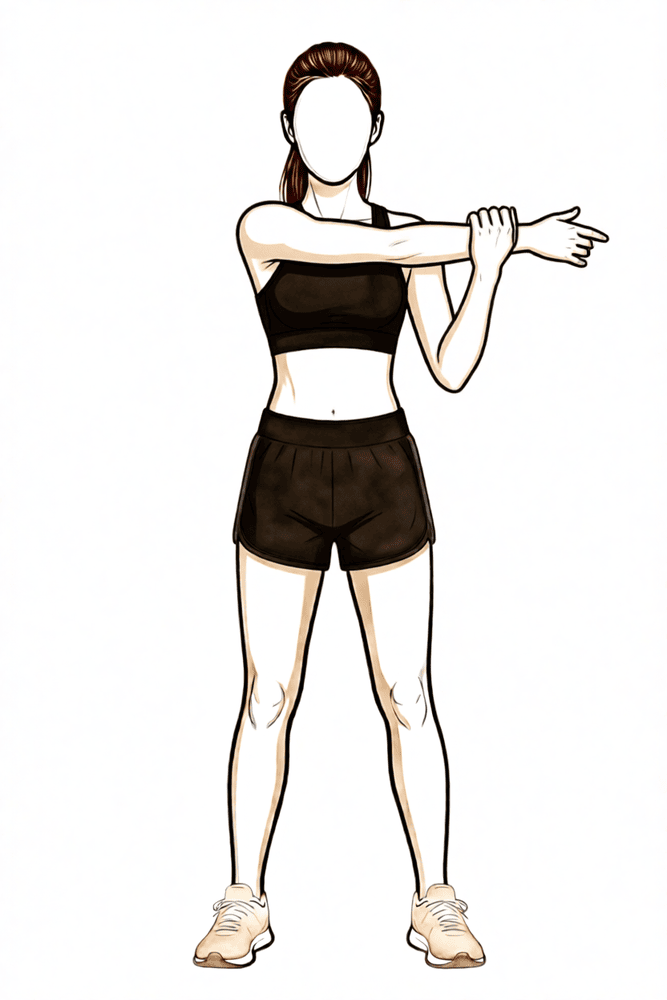
Estiramiento cruzado del cuerpo
Utilice la mano sana para llevar el brazo operado hacia el pecho hasta que sienta un estiramiento firme en la parte posterior del hombro; luego suelte.
10 veces, de 3 a 4 veces al día.
Kieran Hirpara 4.0
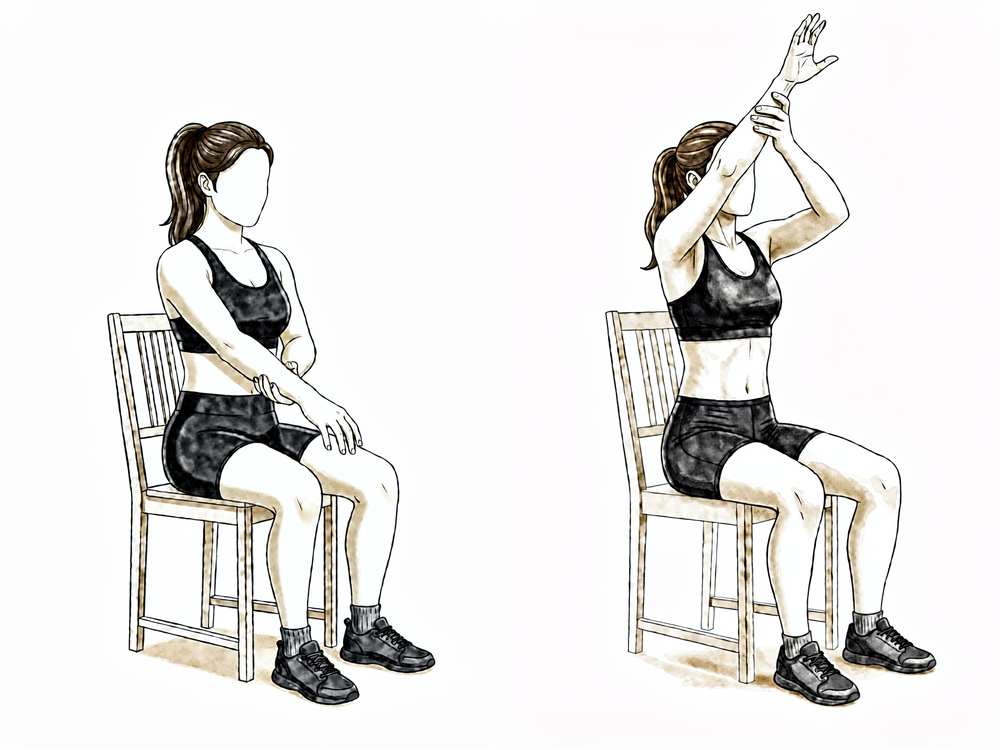
Elevación frontal asistida (en posición sentada)
Siéntese y incline el torso ligeramente hacia adelante; apoye el antebrazo operado con la mano sana y utilícela para levantar el brazo operado hacia adelante y hacia arriba, hasta donde le resulte cómodo; luego bájelo lentamente. Deje que sea el brazo sano el que realice el movimiento, de modo que el hombro operado permanezca relajado.
Según las indicaciones de su fisioterapeuta.
El objetivo de estas primeras dos semanas es sencillo: no perder el rango de movimiento que se logró en la cirugía. Debe continuar realizando en casa los ejercicios que aprendió en el hospital, varias veces al día, y añadir estiramientos que lleven el hombro hasta sus límites en todas las direcciones. Un buen control del dolor es esencial para lograrlo; por eso siga tomando analgésicos antes de los ejercicios y las sesiones de fisioterapia. Además, utilice calor antes de estirar y hielo después si le resulta útil. Use el brazo para actividades cotidianas ligeras, como lavarse, vestirse y comer. Lleve cada estiramiento hasta el punto de sentir una molestia firme, pero nunca dolor intenso; recuerde que no hay ningún movimiento que deba evitar.
Estará listo para la siguiente fase cuando… realice su programa domiciliario con confianza y de forma independiente varias veces al día, cuando el dolor esté lo suficientemente controlado para estirar hasta el rango deseado, y cuando mantenga el grado de movilidad que tenía el hombro tras la cirugía.
Fase II — Mantener y recuperar la amplitud de movimiento (Semana 2–6)
Kieran Hirpara 4.0
Rotación externa con bastón (rango completo)
Continúe con la rotación externa asistida con un palo que empezó en el hospital; ahora empuje más a medida que el rango de movimiento se libere. Con el codo pegado al costado, gire el antebrazo hacia afuera todo lo que pueda. Siga llevándolo hasta su límite máximo: forzar este rango es precisamente el objetivo de la operación.
10 veces, de 3 a 4 veces al día.
Kieran Hirpara 4.0
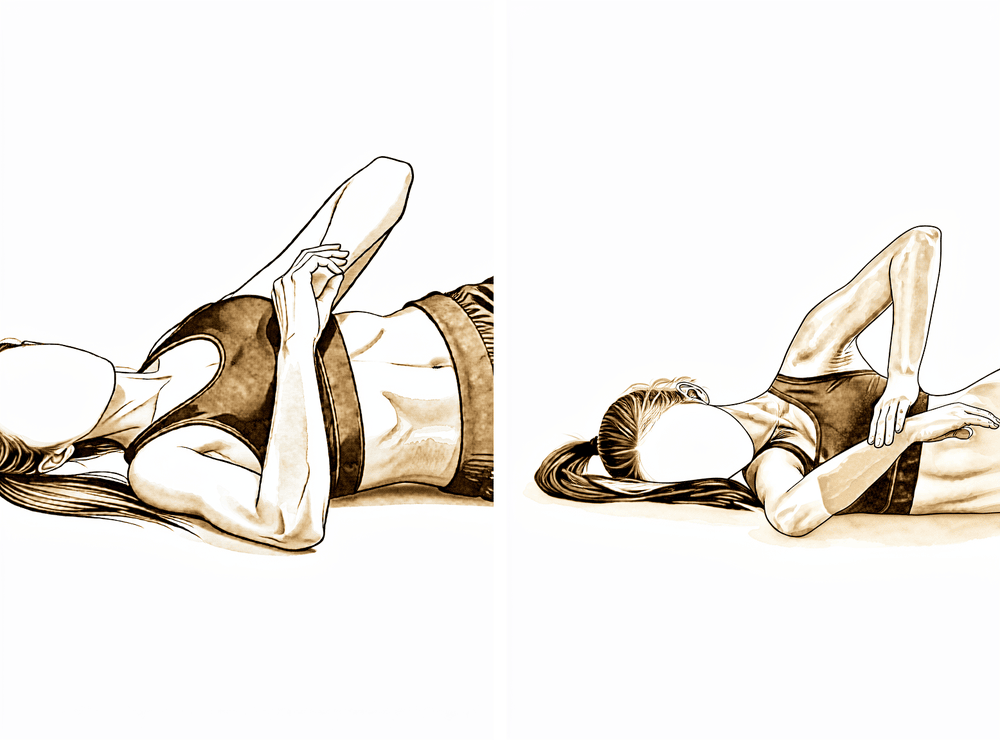
Estiramiento de “dormilón”
Acuéstese sobre el lado operado, con el brazo extendido hacia adelante y el codo flexionado. Con la mano sana, presione suavemente el antebrazo hacia la cama, hasta que sienta un estiramiento profundo en el hombro; luego relaje la presión.
Mantenga la posición durante 20 a 30 segundos, 3 veces; 3 a 4 veces al día.
En esta fase se continúa con la fisioterapia frecuente y el programa de estiramientos en casa, que se realizan varias veces al día, para que la movilidad ganada en la cirugía no se pierda y siga aumentando. Los ejercicios progresan desde movimientos asistidos hasta movimientos activos del brazo en todas las direcciones; además, el fisioterapeuta podría incorporar movilizaciones articulares manuales para ayudar. Siga esforzándose por alcanzar el límite máximo de movilidad en todos los planos, incluida la rotación externa. Utilice el brazo con normalidad para actividades cotidianas ligeras.
Estará listo para la siguiente fase cuando… la amplitud de movimiento ganada en la cirugía se mantenga o siga mejorando, los movimientos por debajo de la altura del hombro resulten cómodos, y el dolor haya disminuido lo suficiente como para iniciar ejercicios de resistencia suaves.
Fase III — Fortalecimiento (Semana 6–12)
Kieran Hirpara 4.0
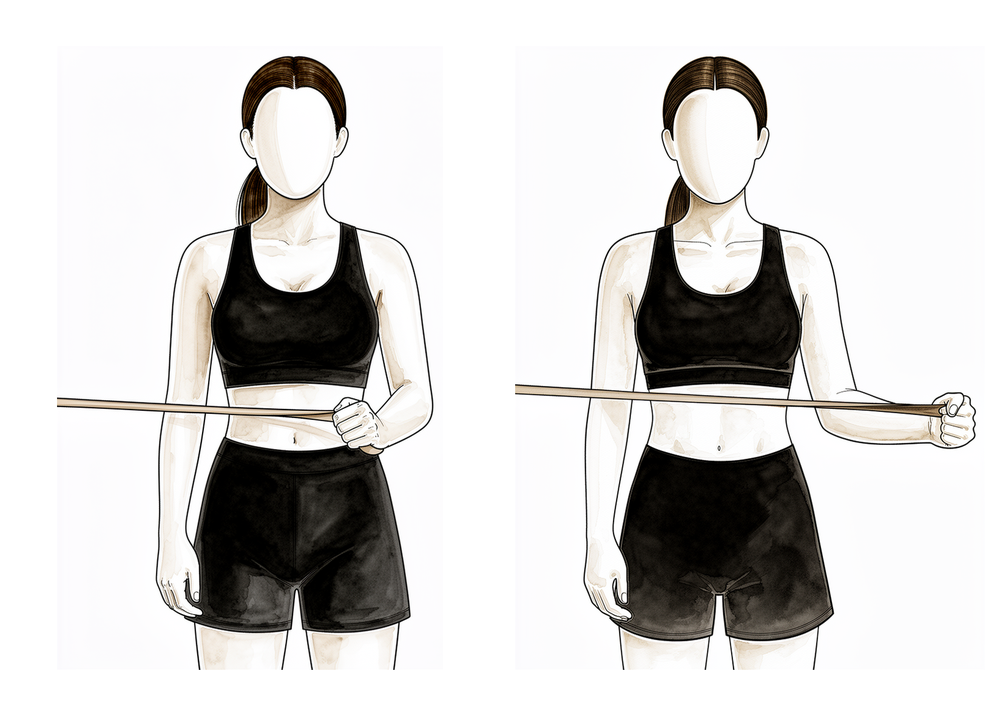
Rotación externa con banda elástica
Párese con el codo pegado al costado y doblado a 90 grados, sosteniendo una banda elástica fijada a la altura de la cintura. Manteniendo el codo junto al cuerpo, gire el antebrazo hacia afuera contra la resistencia de la banda y luego regrese lentamente a la posición inicial.
2 a 3 series de 10 a 15 repeticiones, 5 días a la semana.
Kieran Hirpara 4.0
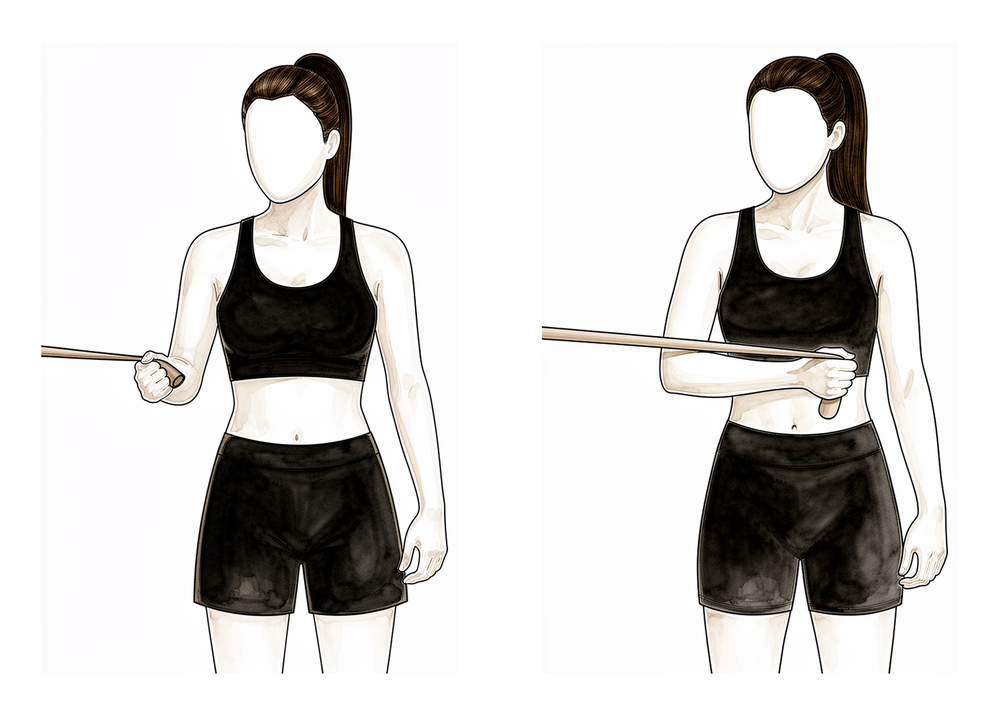
Rotación interna con banda elástica
Con el codo pegado al costado, sujete una banda fijada a un lado y gire el antebrazo hacia adentro, cruzándolo por delante del cuerpo contra la resistencia de la banda; luego regrese lentamente a la posición inicial.
2 a 3 series de 10 a 15 repeticiones, 5 días a la semana.
Kieran Hirpara 4.0
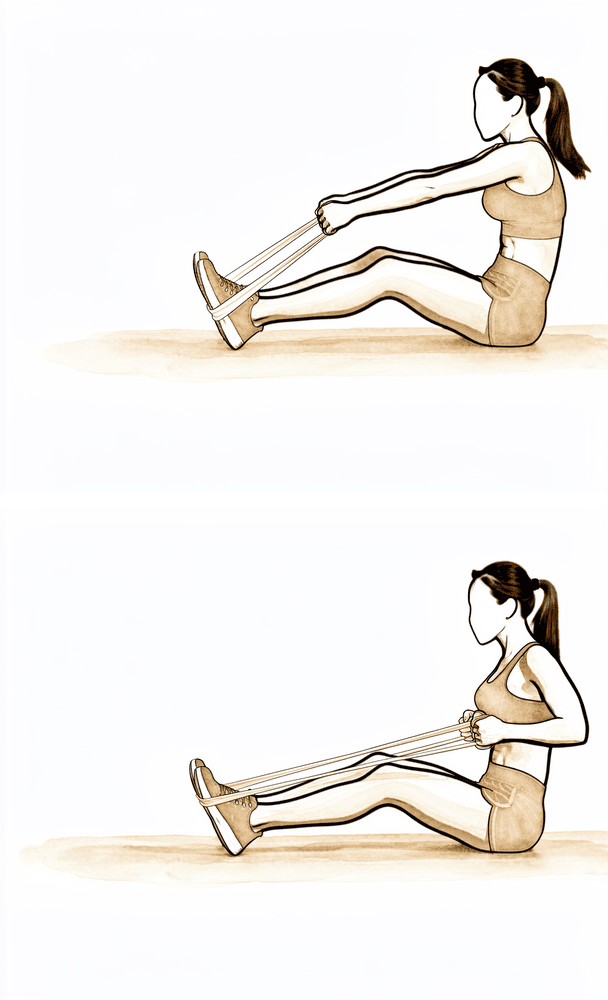
Remo bajo
Sostenga una banda anclada frente a usted, a la altura de la cintura. Manteniendo el brazo bastante recto, tire de él hacia atrás y hacia abajo, en dirección a la cadera, contraiendo el omóplato hacia abajo y hacia atrás; luego regrese lentamente a la posición inicial.
2 a 3 series de 10 a 15 repeticiones, 5 días a la semana.
Kieran Hirpara 4.0
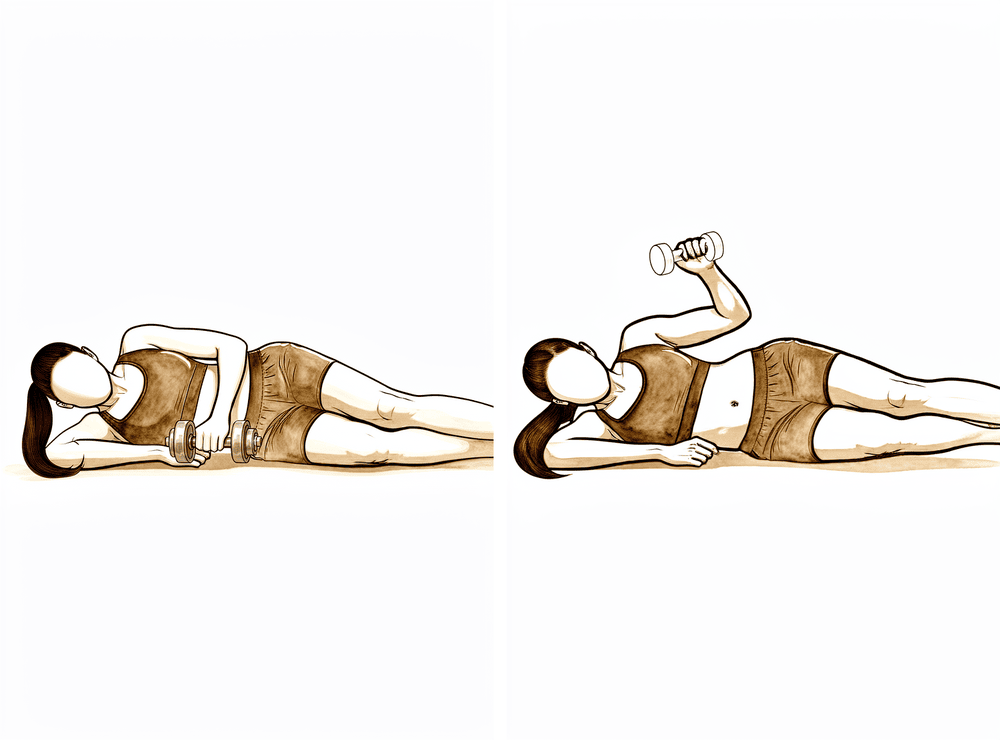
Rotación externa en decúbito lateral (peso ligero)
Acuéstese sobre el lado sano, con el codo operado doblado a 90 grados y pegado al cuerpo, sosteniendo un peso ligero (aproximadamente entre 0,5 y 1,5 kg). Gire el antebrazo hacia arriba y luego bájelo lentamente; este descenso lento es lo más importante. Mantenga el movimiento por debajo de la altura de los hombros.
2 a 3 series de 10 a 15 repeticiones, con carga baja.
Ahora que el rango de movimiento se ha estabilizado, la atención se centra en recuperar la fuerza del hombro. Durante esta fase, los estiramientos diarios continúan, ya que el fortalecimiento nunca debe comprometer el rango de movimiento que tanto esfuerzo le ha costado lograr. El entrenamiento de resistencia comienza de forma suave, utilizando bandas elásticas y pesos ligeros para los músculos del manguito rotador y de la escápula, con cargas bajas y un mayor número de repeticiones. Las actividades cotidianas normales deberían haber vuelto a la normalidad, y, bajo la orientación de su fisioterapeuta, suele reanudarse también la práctica de actividades recreativas más ligeras.
Estará listo para pasar a la siguiente fase cuando… tenga un movimiento completo, o casi completo, sin dolor en todas las direcciones, y pueda realizar los ejercicios de fortalecimiento sin que aparezca dolor ni se pierda el rango de movimiento.
Fase IV — Retorno a la actividad plena (a partir de la semana 12)
La fase final consiste en un retorno gradual a trabajos más exigentes, tareas por encima de la cabeza y actividades deportivas. La rehabilitación formal suele durar entre tres y cuatro meses en total; sin embargo, el hombro sigue mejorando mucho después de ese período: la mayoría de las personas siguen ganando comodidad y confianza durante seis a nueve meses, a veces incluso hasta un año. Vale la pena mantener una breve rutina de estiramientos hasta que el rango de movimiento se estabilice por sí solo, sin necesidad de ejercicios formales. La progresión debe guiarse por cómo se sienta el paciente; por lo tanto, si aparecen rigidez o dolor, lo adecuado es reducir la intensidad y recuperar el rango de movimiento, en lugar de dejar de mover el hombro.
Retorno a las actividades
La mayoría de las personas vuelven a sus actividades diarias normales y a muchos tipos de trabajo en un plazo de cuatro a seis semanas, ya que la recuperación en este caso depende de mantener el rango de movimiento en lugar de esperar a que los tejidos sanen. Los trabajos más pesados y físicos, así como las actividades deportivas que requieren levantar objetos por encima de la cabeza, se reanudan gradualmente durante las semanas y meses siguientes, a medida que la fuerza se recupera. Si en algún momento el hombro vuelve a ponerse rígido, considere eso como una señal para intensificar sus ejercicios de estiramiento y consultar a su fisioterapeuta, no para descansar.
Sus ejercicios
Estos son los ejercicios que aparecen en su folleto. Comience a realizarlos siguiendo las indicaciones del Dr. Hirpara y de su fisioterapeuta. Después de una liberación capsular no hay ninguna estructura que reparar, por lo que mantener el hombro inmóvil le perjudica: el hombro liberado simplemente vuelve a tensarse entre sesiones. Por eso la lista de ejercicios es extensa y por qué practicar poco pero con frecuencia es mejor que una sola sesión prolongada: los movimientos iniciales de muñeca, mano y codo, así como los movimientos pendulares, mantienen todo el brazo flexible; los estiramientos asistidos (flexión en decúbito, abducción en posición de “cuna”, rotación externa con palo) preservan el rango de movilidad obtenido tras la cirugía; posteriormente se añaden los ejercicios con banda elástica y de control escapular para mejorar la estabilidad. La frecuencia es más importante que la intensidad. Interrumpa cualquier ejercicio que provoque dolor agudo en lugar de una sensación de estiramiento.
Después de seguir su protocolo
Las fases ambulatorias descritas anteriormente se basan en protocolos de rehabilitación publicados para la liberación capsular artroscópica; los hitos de recuperación provienen de las mismas fuentes. Los intervalos de semanas indicados son típicos, no fijos; su rehabilitación continua será guiada individualmente por su fisioterapeuta, en colaboración con el consultorio, según la evolución de la movilidad de su hombro. Esta página complementa las indicaciones generales de recuperación del consultorio: consulte control del dolor postoperatorio y cuidado de la herida. Para información sobre la intervención quirúrgica y la afección que trata, consulte liberación capsular y hombro congelado.
Evidence & references
This is the clinical evidence summary written for health professionals. It is technical, and it lists the research this page was built from. You do not need to read it to understand your treatment or to make a decision about it.
Adhesive Capsulitis (Frozen Shoulder) — Non-operative Staged Management & Post-operative Rehabilitation (Capsular Release)
Topic scope: Both (A) non-operative staged management of primary/secondary adhesive capsulitis (freezing -> frozen -> thawing), including physiotherapy, intra-articular steroid and hydrodilatation; and (B) post-operative rehabilitation after arthroscopic capsular release (ACR).
Defining principle of surgical rehab here (the inversion): Unlike virtually every other shoulder operation -- where a repair (cuff, labrum, pec major, instability) must be protected with a sling and ROM is restricted to avoid disrupting healing tissue -- frozen-shoulder release rehab is the OPPOSITE: the goal is to prevent re-formation of the capsular contracture. So the protocol is immediate, aggressive ROM, usually NO sling, passive + active ROM starting the same day or day 1, with stretching to the end of the freshly gained range. Delay or immobilisation is the enemy (re-stiffening), not the protector. This is the single most important point distinguishing this protocol from the others in this audit.
A. NON-OPERATIVE STAGED MANAGEMENT
Natural history / staging (consensus, weak evidence -- descriptive, no RCT)
Frozen shoulder is self-limiting in most but typically lasts 12-18 months across 3 clinical stages (Reeves' classic model; staging boundaries overlap and are not sharply separable in practice -- flagged as weak/consensus evidence; the original Reeves model was a single prospective cohort of 49 patients, not an RCT) [Brigham SOC; Chan 2017; Reeves 1975 via Willmore 2020]:
| Stage | Name | Typical duration | Clinical picture | Management emphasis |
|---|---|---|---|---|
| 1 | Freezing (painful/inflammatory) | 2-9 months | Diffuse constant pain, worse at night; progressive ROM loss in a capsular pattern (ER > ABD > flexion > IR); loss of passive ER with arm at side is the hallmark | Pain control; intra-articular steroid; gentle ROM within pain limits -- do NOT force end-range while highly inflamed |
| 2 | Frozen (adhesive/stiff) | 4-12 months | Pain subsides to dull ache; stiffness dominant; marked functional loss | Restore motion: stretching, joint mobilisation grades III-IV, hydrodilatation; consider surgery if recalcitrant |
| 3 | Thawing | 6-9 months (Brigham) | Gradual spontaneous return of motion | Progressive ROM + strengthening; PT 2-3x/week |
(Stage durations from Brigham Standard of Care 2010 and Chan 2017: freezing 2-9 mo, frozen 4-12 mo, thawing 6-9 mo.)
Stepped non-operative interventions
- Education / "supervised neglect" + analgesia -- many resolve with reassurance, activity modification and analgesia alone (Codman; Hsu 2011 review). Weak (cohort/expert).
- Physiotherapy -- pendulum, PROM/AAROM/AROM, capsular stretching, joint mobilisation (grades I-II early for pain, III-IV later for tissue extensibility), scapular/posture work. Brigham: PT 1-2x/week in early stages (mainly HEP instruction), 2-3x/week in thawing. PT is best supported as an adjunct to mobilisation/injection/distension, not as a stand-alone cure (Itoi 2016 Current Concepts; Kelley/McClure/Leggin JOSPT 2009 guidance). Moderate; intensity/timing debated. Intensity caveat: end-range/high-intensity stretching is appropriate in the frozen/thawing phase but can be counter-productive in the acutely inflamed freezing phase -- match intensity to irritability (Kelley 2009).
- Intra-articular corticosteroid (glenohumeral) -- superior to placebo and to physiotherapy for short-term (up to 4-12 weeks) pain and function; benefit wanes after ~3 months. Strong for short term (multiple RCTs; Koh 2016 systematic review of 10 RCTs; Cochrane Buchbinder shoulder injection review). BESS pathway: GH steroid recommended for short-term symptom control; long-term (>3 mo) benefit not demonstrated (Rupani/Gwilym BESS 2025). Earlier injection (freezing phase) is the rationale -- steroid targets the inflammatory component.
- Hydrodilatation (distension arthrography) -- distends/ruptures the contracted capsule with saline +/- steroid +/- LA. A controlled, image-guided alternative to surgery. RCT/meta-analytic evidence is mixed: generally produces a transient functional/ROM gain, with no clear superiority over IA steroid alone in several network meta-analyses (Wu 2017 SR/MA of RCTs; Lin 2018 network MA). Some evidence hydrodilatation + steroid > steroid alone in refractory cases (Lee 2017 RCT). Low rate of needing later surgery after distension arthrogram (Nicholson 2020). Moderate; conflicting.
B. POST-OPERATIVE REHABILITATION (the "immediate aggressive ROM" protocols)
Surgery is reserved for cases recalcitrant to >=3-6 months of adequate non-operative care (Struyf 2024; Mullen 2025).
Arthroscopic capsular release (ACR)
- Controlled, direct-vision release of the contracted capsule (rotator interval, CHL, anterior +/- inferior +/- 360 degree capsulotomy; care re axillary nerve inferiorly). Allows graded release with a low risk of iatrogenic fracture or cuff tear (Kanbe 2018, n=255; Jerosch 2001 360 degree release). Achieves reliable gains in final forward elevation and may shorten recovery (most improved by ~4 months -- McAllister/CORR Insights 2025; Saade 2023 MA favoured ACR for AFE). A gentle, controlled manipulation is often performed as part of the arthroscopic release to confirm the gained range.
Consensus POST-OP phased timeline (applies after arthroscopic capsular release)
The hallmark is immediate motion, no protective sling, same-day/day-1 ROM to hold the range just won in theatre.
| Phase | Window | Sling | ROM | Active ROM | Strengthening | Notes |
|---|---|---|---|---|---|---|
| 0 -- Immediate | Day 0-1 (same day) | NO sling (or sling only briefly for comfort/analgesia, discarded fast) | Full passive ROM immediately; PT-assisted forward flexion + ER begun day 1; +/- continuous passive motion (CPM); pendulums; patient does HEP several times/day | AAROM/AROM started day 1 alongside PROM (no protected period) | -- | Intra-articular steroid often injected at time of release to damp post-op inflammatory re-stiffening |
| 1 -- Early | Week 0-2 | None | Aggressive PROM/AAROM to maintain gained range; stretch into end-range daily; hold ER/ABD/flexion | Active motion continued | Light scapular/rotator-cuff activation as pain allows | Pain control critical to allow the patient to move -- adequate analgesia / interscalene block / oral steroid taper |
| 2 -- Strengthening | Week 2-6 | None | Continue to full ROM | Full AROM goal | Rotator cuff + scapular strengthening begins ~week 2 (Kanbe protocol) | Most back to normal daily activity / work by 4-6 weeks |
| 3 -- Return to function | ~6 weeks-3 months | None | Maintain full ROM | Full | Progressive strengthening to full | Recurrence of stiffness is the main failure mode -> continued HEP emphasised |
Representative published protocol (Kanbe 2018, J Orthop Surg Res, n=255, ACR): "passive, assisted-active and stooping (pendulum) exercises for forward flexion and external rotation commenced 1 day after surgery... after 2 weeks of passive exercise, patients began active exercise to strengthen the rotator cuff and scapular stabilisers... after 4-6 weeks patients returned to normal work without limitation." Many ACR series add an intra-articular steroid + controlled manipulation at the index procedure (Filip Struyf 2024; PMC5137660).
Post-surgical physiotherapy is universally agreed to be essential but is under-standardised -- there is no high-level RCT defining the optimal post-release regimen; protocols are consensus/expert and vary widely (Willmore 2020 Shoulder & Elbow, "Post-surgical physiotherapy in frozen shoulder: a review"). Weak/consensus.
KEY CONTROVERSIES
- Evidence base for arthroscopic release. ACR gives a controlled, direct-vision release with a low iatrogenic fracture/cuff-tear risk and reliable gains in final elevation. Systematic reviews show consistently acceptable results, though there is no definitive RCT defining the optimal technique (Saade 2023 MA; McAllister 2025). Weak/moderate evidence (large cohorts).
- Steroid timing. Strong short-term benefit (<12 wk) but no durable >3-month benefit; debate over injecting early (freezing/inflammatory phase) vs reserving for refractory cases (Koh 2016; Rupani/Gwilym BESS 2025; Lin 2018).
- Aggressive vs gentle physiotherapy. High-intensity end-range stretching helps in the frozen/thawing phases but may worsen pain and prolong the condition if applied to the acutely inflamed freezing phase -- "intensity should match irritability" (Kelley/McClure 2009; Itoi 2016). Post-operatively, by contrast, aggressive immediate ROM is mandatory to prevent re-stiffening.
- Hydrodilatation worth it? Transient benefit only and not clearly better than IA steroid alone in pooled RCT data (Wu 2017; Lin 2018), though some refractory-case RCT support (Lee 2017) and a low rate of needing later surgery (Nicholson 2020).
- Does anything change the natural history? No intervention is proven to shorten the overall 12-18 month course in the highest-quality reviews; most accelerate symptom relief rather than alter end-point (Rookmoneea 2010 JBJS Br; Hsu 2011). Strong (negative).
EVIDENCE STRENGTH FLAGS (summary)
- STRONG (RCT / SR-MA): IA corticosteroid short-term benefit (Koh 2016 SR of 10 RCTs; Cochrane); hydrodilatation = transient, not superior to steroid (Wu 2017 SR-MA of RCTs; Lin 2018 network MA).
- MODERATE: end-range/scapular mobilisation (Yang 2012 RCT); ACR clinical outcomes (large cohorts -- Kanbe 2018 n=255; Jerosch 2001).
- WEAK / CONSENSUS ONLY: 3-stage natural-history model & stage durations (Reeves cohort, descriptive); the post-operative rehab protocol itself (no defining RCT; expert/consensus -- Willmore 2020); optimal ACR technique (published series are heterogeneous).
CITATIONS
RAG corpus (180,000+ Orthopaedic articles)
- Guyver P, Bruce D, Rees J. Frozen shoulder -- a stiff problem that requires a flexible approach. Maturitas. 2014.
- Kim J, Gahlot N, Park HB. Frozen shoulder: a narrative review of current treatment concepts and the underlying scientific evidence. Clinics in Shoulder and Elbow. 2025;28(4).
- Hsu JE, Anakwenze OA, Warrender WJ, et al. Current review of adhesive capsulitis. J Shoulder Elbow Surg. 2011;20(3):502-514.
- Koh KH. Corticosteroid injection for adhesive capsulitis in primary care: a systematic review of randomised clinical trials. Singapore Med J. 2016.
- Rupani N, Gwilym SE. British Elbow and Shoulder Society patient care pathway: Frozen shoulder. Shoulder & Elbow. 2025;17(4).
- Sheridan MA, Hannafin JA. Upper Extremity: Emphasis on Frozen Shoulder. Orthop Clin North Am. 2006.
- Chan H, Pua P, How C. Physical therapy in the management of frozen shoulder. Singapore Med J. 2017.
- Willmore EG, Millar NL, van der Windt D. Post-surgical physiotherapy in frozen shoulder: a review. Shoulder & Elbow. 2020;14(4).
- Lamplot JD, Lillegraven O, Brophy RH. Outcomes from conservative treatment of shoulder idiopathic adhesive capsulitis... Orthop J Sports Med. 2018.
- Itoi E, Arce G, Bain GI, et al. Shoulder Stiffness: Current Concepts and Concerns. Arthroscopy. 2016;32(7).
- Kanbe K. Clinical outcome of arthroscopic capsular release for frozen shoulder: essential technical points in 255 patients. J Orthop Surg Res. 2018;13(1). (post-op protocol: day-1 ROM, 4-6 wk RTW)
- Jerosch J. 360 degree arthroscopic capsular release in patients with adhesive capsulitis... Knee Surg Sports Traumatol Arthrosc. 2001;9(3).
- McAllister NB. CORR Insights: Releasing forces in adhesive capsulitis... Clin Orthop Relat Res. 2025.
- Saade F, van Rooij F, Saffarini M, et al. Management of shoulder stiffness following rotator cuff repair: a systematic review and meta-analysis. JSES Rev Rep Tech. 2023.
- Wu W, Chang K, Han D, et al. Effectiveness of glenohumeral joint dilatation for treatment of frozen shoulder: a systematic review and meta-analysis of RCTs. Sci Rep. 2017. (SR-MA of RCTs)
- Lin M, Hsiao M, Tu Y, et al. Comparative efficacy of intra-articular steroid injection and distension... a systematic review and network meta-analysis. Arch Phys Med Rehabil. 2018. (network MA)
- Lee D, Yoon S, Lee MY, et al. Capsule-preserving hydrodilatation with corticosteroid vs corticosteroid alone in refractory adhesive capsulitis: a randomized controlled trial. Arch Phys Med Rehabil. 2017. (RCT)
- Nicholson JA, Slader B, Martindale A, et al. Distension arthrogram in the treatment of adhesive capsulitis has a low rate of repeat intervention. Bone Joint J. 2020;102-B(5).
- Uppal HS. Frozen shoulder: a systematic review of therapeutic options. World J Orthop. 2015.
- Mullen JP, Hauer TM, Lau EN, et al. Adhesive capsulitis of the shoulder. Arthroscopy. 2025;41(7).
- Yang J, Jan M, Chang C, et al. Effectiveness of the end-range mobilization and scapular mobilization approach... a randomized control trial. Manual Therapy. 2012. (RCT)
- Rookmoneea M, et al. The effectiveness of interventions in the management of patients with primary frozen shoulder. J Bone Joint Surg Br. 2010;92-B(9).
- Struyf F. Frozen Shoulder. 2024 (surgical indication & post-op steroid + controlled manipulation).
Published rehab protocols (URLs)
- Brigham & Women's Hospital -- Standard of Care: Shoulder Adhesive Capsulitis (Dept of Rehabilitation Services, 2010): https://www.brighamandwomens.org/assets/BWH/patients-and-families/rehabilitation-services/pdfs/shoulder-adhesive-capsulitis.pdf (source for the 12-18 mo / 3-stage durations, capsular pattern, PT frequency 1-2x/wk early & 2-3x/wk thawing, mobilisation grades, steroid 4-6 wk short-term benefit).
- BESS (British Elbow & Shoulder Society) Frozen Shoulder patient care pathway -- Rupani & Gwilym, Shoulder & Elbow 2025 (GH steroid short-term only, no >3 mo benefit).
- Kanbe 2018 ACR open-access (post-op day-1 ROM protocol): https://pmc.ncbi.nlm.nih.gov/articles/PMC5857121/
- ChoosePT / APTA patient guide to frozen shoulder (lay phased overview): https://www.choosept.com/guide/physical-therapy-guide-frozen-shoulder-adhesive-capsulitis