Qué está sintiendo
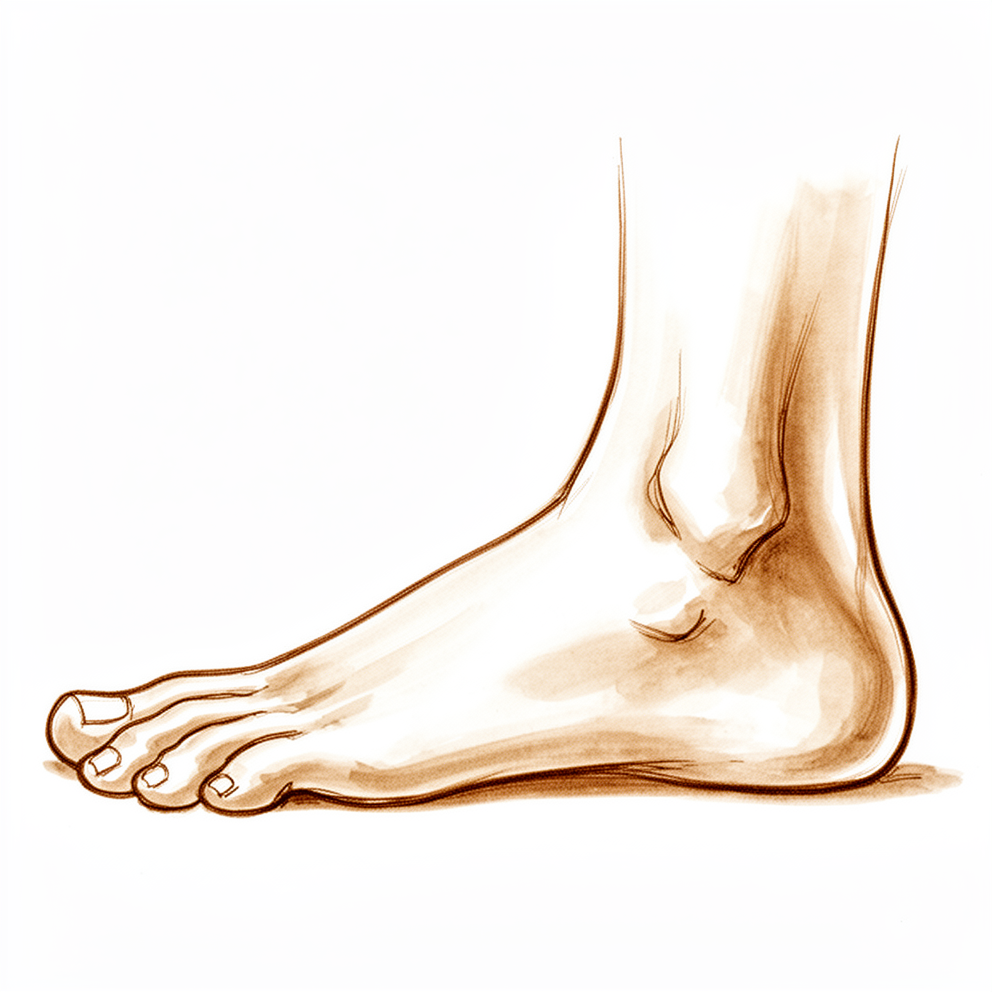
En el pie cavo, el arco plantar es muy elevado. El principal problema es que la parte delantera del pie queda inclinada hacia abajo, en dirección al suelo. Para mantener la parte externa del pie en contacto con el suelo, el talón se inclina hacia adentro. Con el tiempo, la gruesa banda de tejido que se encuentra en la planta del pie se tensa, y el talón se vuelve más rígido en esa posición inclinada.
Es posible que sienta dolor en la parte delantera del tobillo. Debido a que la parte delantera del pie apunta hacia abajo de forma muy pronunciada, el tobillo debe flexionarse hacia arriba más de lo normal para mantener el pie nivelado. Cuando ya no hay espacio suficiente, los huesos de la parte delantera del tobillo se comprimen entre sí, lo cual provoca dolor.
También podría notar zonas de piel endurecida y sensible debajo de la parte anterior del pie, bajo el dedo gordo y a lo largo del borde externo del pie. Estas callosidades se forman porque el peso corporal se concentra en pequeñas zonas en lugar de distribuirse de manera uniforme. Permanecer de pie o caminar durante largos períodos puede aumentar la molestia. Los pequeños músculos del interior del pie suelen atrofiarse, y los dedos pueden curvarse o adoptar una posición en garra hacia abajo; esta deformación hace que los zapatos rocen la piel y dificulta encontrar calzado cómodo.
Muchas personas con este tipo de pie sienten inestabilidad; el tobillo puede ceder, y es fácil torcerlo al caminar sobre terrenos irregulares o al bajar del bordillo de la acera. Las torceduras repetidas, el dolor en la parte externa del tobillo y pequeñas fisuras en los huesos del pie pueden ser consecuencia de que el peso corporal se desplace hacia el borde externo del pie.
Estos cambios suelen afectar a ambos pies, aunque uno de ellos puede verse más afectado que el otro. Dado que esta forma del pie suele ser hereditaria y puede estar relacionada con alguna condición nerviosa o muscular, su cirujano le preguntará sobre sus antecedentes familiares y examinará los nervios de sus piernas. Si solo un pie está afectado, podrían ser necesarias pruebas de imagen de la columna vertebral para determinar la causa. Las radiografías del pie y el tobillo en carga permiten evaluar la altura del arco plantar y determinar si el talón conserva su flexibilidad.
¿Qué está ocurriendo realmente?
Imagine que su pie es un trípode. Un pie sano se apoya en tres puntos: el talón, la parte anterior bajo el dedo gordo y la parte anterior bajo el dedo meñique. En el pie cavo, la parte delantera del pie se hunde demasiado, especialmente bajo el dedo gordo. Para que el exterior del pie siga en contacto con el suelo, el talón debe inclinarse hacia adentro. De este modo, el peso corporal recae sobre un solo lado del trípode en lugar de distribuirse entre los tres puntos.
Este hundimiento de la parte delantera del pie suele comenzar con los pequeños músculos del interior del pie. Cuando estos músculos se debilitan o se tensan, dejan de equilibrar a los músculos más fuertes de la pantorrilla y la pierna. La banda de tejido tenso a lo largo de la planta del pie eleva cada vez más el arco plantar, presionando los huesos largos de los dedos contra el suelo. Al perderse el equilibrio muscular, el talón se inclina hacia adentro y los dedos se curvan en garra.
Esta forma del pie rara vez aparece por sí sola; suele ser señal de alguna afección nerviosa o muscular subyacente, sobre todo la enfermedad de Charcot-Marie-Tooth, que afecta a los nervios que llegan a los músculos. Aproximadamente dos tercios de las personas con pie cavo padecen una afección de este tipo. Alrededor de una de cada diez personas presenta esta forma del pie en cierta medida, aunque la mayoría nunca experimenta síntomas. Es poco frecuente en niños pequeños, pero se vuelve bastante común a partir de los 8 a 10 años de edad.
Todos los síntomas que usted siente derivan de este desequilibrio. El hundimiento de la parte delantera del pie obliga al tobillo a doblarse hacia arriba más de lo normal, lo que provoca el dolor en la zona anterior del tobillo. El peso corporal que recae sobre la parte anterior del pie y el borde externo genera callosidades. La inclinación del talón hace que el tobillo sea inestable y propenso a torcerse. Incluso una forma leve de este pie puede provocar esguinces repetidos, desgarros en los tendones del lado externo del tobillo y pequeñas fisuras en los huesos del pie.
Qué podemos hacer al respecto
Los tratamientos más sencillos buscan relajar las zonas tensas y fortalecer las zonas débiles. El estiramiento del tendón de Aquiles, ese fuerte cordón situado en la parte posterior del tobillo, es una medida fundamental. La fisioterapia también se centra en fortalecer los músculos que levantan el pie y lo giran hacia afuera. En casos de pie leve, flexible y sin dolor, este programa puede ser todo lo que se necesite. Cambiar de calzado o usar plantillas puede distribuir el peso de forma más uniforme y aliviar los puntos de presión, aunque no corrigen el arco del pie en sí. Los zapatos de running acolchados y neutros reducen la carga bajo la planta si usted es una persona activa. Si sus dedos adoptan forma de garra, una férula sencilla que los mantenga más rectos puede mejorar su forma de caminar sin dañar la piel. En niños con alteraciones del pie de origen neurológico, estas medidas pueden retrasar la cirugía durante años; en aproximadamente la mitad de los niños seguidos hasta el final de su crecimiento, se evita por completo la intervención quirúrgica. Le recomendamos probar los tratamientos no quirúrgicos durante un tiempo razonable antes de decidir cualquier otra medida.
No utilizamos cortisona ni otros tipos de inyecciones para esta condición, por lo que no las ofrecemos. En el caso de la alteración neurológica que suele estar detrás de esta forma del pie, las inyecciones de toxina botulínica son seguras y bien toleradas, pero no frenan el cambio en la forma del arco. Los enyesados sucesivos tampoco han resultado eficaces, y la administración de altas dosis de vitamina C no modifica la condición.
La cirugía se considera cuando el pie presenta dolor, rigidez o empeora a pesar de haber seguido los tratamientos mencionados. Nuestro objetivo es mantener la movilidad articular siempre que sea posible. Esto puede implicar liberar el tejido tenso de la planta del pie, desplazar tendones para reequilibrar el pie o seccionar y remodelar huesos para reducir la altura del arco. Si el talón sigue siendo flexible, preferimos las cirugías que preservan las articulaciones. Cuando el pie es rígido y presenta deformidades graves, o cuando las articulaciones están muy desgastadas, la fusión de algunas articulaciones puede ser la única opción disponible. Analizaremos en detalle cada procedimiento y decidiremos conjuntamente cuál se adapta mejor a su pie y a sus objetivos.
Qué esperar
El pie cavo es una forma anatómica crónica, no una afección pasajera. No aparece y desaparece. Sin tratamiento, el arco plantar tiende a mantenerse elevado o a elevarse aún más con el tiempo, y el talón suele volverse rígido en su posición inclinada. Los problemas que usted experimenta ahora, como el dolor en la parte anterior del pie, los esguinces de tobillo y la deformidad en garra de los dedos, generalmente persisten o empeoran gradualmente, en lugar de mejorar por sí solos.
El tratamiento no quirúrgico puede realmente modificar este curso. Los estiramientos, el fortalecimiento muscular, el cambio de calzado y el uso de plantillas alivian la presión y mejoran el funcionamiento del pie. En niños con pie afectado por trastornos neurológicos, estas medidas pueden retrasar la cirugía durante años; en aproximadamente la mitad de los niños seguidos hasta el final de su crecimiento, se evita la cirugía por completo. Cuando finalmente se requiere cirugía, esta suele retrasarse unos 4,5 años. No obstante, esta forma del pie normalmente no desaparece. El objetivo de un buen manejo es lograr un pie cómodo, estable y capaz de cumplir con sus necesidades durante el mayor tiempo posible.
Cuando la cirugía es la opción adecuada, el pronóstico depende de cuán flexible siga siendo su pie y de la gravedad de las alteraciones. Se prefieren las intervenciones que preservan las articulaciones siempre que sea posible; estas son adecuadas para la mayoría de los pies flexibles, incluidos los afectados por la enfermedad de Charcot-Marie-Tooth. Dichos procedimientos buscan reducir la altura del arco manteniendo la movilidad articular. En casos de pies muy rígidos o con articulaciones desgastadas, puede ser necesario fusionar algunas articulaciones, aunque esto se considera una opción de último recurso. La mayoría de las personas a quienes se corrige una deformidad grave del pie pueden volver a trabajar y refieren una mejor calidad de vida posteriormente.
Es importante conocer ciertas limitaciones. La cirugía no le devolverá un pie “normal”. El objetivo de la corrección es distribuir el peso de manera más uniforme, estabilizar el tobillo y facilitar el uso de calzado. Algunos procedimientos mejoran notablemente la distancia que se puede caminar, el nivel de actividad y el uso de calzado, pero tienen menor efecto sobre el dolor. Además, dado que la condición neurológica o muscular subyacente suele persistir, la forma del pie puede volver a cambiar con el paso de los años; por eso es fundamental el seguimiento continuo.
Cuándo consultar a un especialista
Acuda a su médico de cabecera si observa que el arco del pie se vuelve cada vez más alto, si aparecen callos repetidamente bajo la parte anterior del pie o a lo largo del borde externo, si los dedos comienzan a curvarse o a adoptar forma de garra, o si sufre esguinces de tobillo con frecuencia. Solicite una evaluación especializada si le duele la parte frontal del tobillo al caminar o subir escaleras, si el tobillo se “dobla” constantemente en terrenos irregulares, o si el pie se vuelve rígido y le resulta cada vez más difícil encontrar calzado que le quede bien. Dado que esta forma del pie suele ser indicio de alguna afección nerviosa o muscular, comente si hay antecedentes familiares de pies similares, debilidad en las piernas o pérdida de sensibilidad en los pies. Acuda a urgencias si experimenta debilidad repentina, entumecimiento o pérdida del control de la vejiga o los intestinos, pues estos síntomas pueden indicar un problema de la médula espinal que requiere evaluación el mismo día.
Evidence & references
This is the clinical evidence summary written for health professionals. It is technical, and it lists the research this page was built from. You do not need to read it to understand your treatment or to make a decision about it.
Overview
- A pes cavus (cavus foot) is characterized by an elevated medial longitudinal arch secondary to forefoot plantar flexion [1].
- A pes cavus (cavus foot) may also result from excessive calcaneal dorsiflexion, though this is less frequent than forefoot plantar flexion [1].
- Two-thirds of patients with a cavus foot have an underlying neurologic disorder [1].
- Charcot-Marie-Tooth disease is the most common underlying neurologic disorder in patients with a cavus foot [1].
- The primary structural problem in cavus foot is forefoot plantar flexion [1].
- The first ray is often more markedly plantarflexed than other rays, resulting in forefoot pronation [1].
- For the lateral half of the foot to contact the ground, the hindfoot must deviate into varus [1].
- First ray plantar flexion may result from a weak tibialis anterior relative to the peroneus longus [1].
- First ray plantar flexion is more commonly caused by intrinsic weakness and contracture than by tibialis anterior weakness [1].
- Over time, the plantar fascia contracts, causing the hindfoot varus deformity to become more rigid [1].
- Patients with cavus foot may report instability, such as ankle sprains [1].
- A neurologic examination and family history are essential for evaluating cavus foot [1].
- Unilateral involvement suggests a focal diagnosis, such as a spinal cord anomaly or nerve injury [1].
- Bilateral involvement and a positive family history are common with Charcot-Marie-Tooth disease [1].
- Asymmetry may be seen in Charcot-Marie-Tooth disease despite bilateral involvement [1].
- Hindfoot flexibility is assessed by placing a 1-inch block under the lateral border of the foot (Coleman block test) [1].
- Weight-bearing radiographs are required for the evaluation of cavus foot [1].
- An increased Meary angle is defined as the long axis of the talus intersecting the long axis of the first metatarsal dorsally on the lateral view of the foot [1].
- The normal value for the Meary angle is 0° to 5° [1].
- An increased calcaneal pitch is defined as the intersection of a line running along the undersurface of the calcaneus and the floor [1].
- A calcaneal pitch greater than 30° indicates a calcaneocavus foot [1].
- MRI of the spine is indicated with unilateral involvement [1].
- Joint-sparing procedures are preferred whenever possible for the treatment of cavus foot [1].
- The flexibility of the hindfoot is a key factor in surgical decision making for cavus foot [1].
- Percutaneous plantar fascia release is insufficient to correct a cavus foot [1].
- At minimum, an open release and soft-tissue rebalancing are needed to correct a cavus foot [1].
- Achilles tendon lengthening should not be performed concomitantly with plantar fasciotomy [1].
- An intact Achilles tendon provides the resistance necessary to stretch the contracted plantar tissues and correct the cavus deformity [1].
- In a non-weight-bearing position, the long axes of the tibia and the calcaneus are parallel in a cavus foot [1].
- In a weight-bearing position, a rigid equinus forefoot deformity forces the flexible hindfoot into varus, creating a tripod effect [1].
- For mild, flexible, and painless cavus foot, treatment includes Achilles tendon stretching and an eversion/dorsiflexion strengthening program [1].
- For mild, progressive or symptomatic cavus foot, treatment includes plantar release with or without peroneus longus to brevis transfer [1].
- For varus caused by peroneal weakness, treatment includes adding tibialis anterior and/or posterior tendon transfer to the peroneal muscles [1].
- For moderate rigid medial cavus, treatment includes dorsiflexion osteotomy of either the first metatarsal or cuneiform [1].
- For rigid medial and lateral cavus, treatment includes dorsiflexion osteotomies of the cuboid and cuneiforms [1].
- For rigid hindfoot varus, treatment includes closing/sliding calcaneal osteotomy [1].
- For clawing of the hallux, treatment includes adding an EHL transfer to the first metatarsal (Jones) [1].
- Triple arthrodesis is rarely needed for severe cavus foot and should be avoided whenever possible [1].
Anatomy & Pathophysiology
Definition and Structural Components
- A pes cavus (cavus foot) is defined by an elevated medial longitudinal arch secondary to forefoot plantar flexion or, less frequently, excessive calcaneal dorsiflexion [1].
- The primary structural problem in cavus foot is forefoot plantar flexion, with the first ray often more markedly plantarflexed, resulting in forefoot pronation [1].
- A cavovarus foot represents a multisegmental deformity characterized by a plantarflexed first ray, elevated medial longitudinal arch, and hindfoot varus [5].
- Approximately 10% of skeletally mature individuals have cavovarus foot alignment, with most being asymptomatic [10].
Neuromuscular Etiology and Prevalence
- Two-thirds of patients with a cavus foot have an underlying neurologic disorder, most commonly Charcot-Marie-Tooth (CMT) disease [1].
- CMT disease is the most common neuromuscular cause of cavovarus foot deformity in children [9].
- Cavovarus foot deformities are the most common orthopaedic deformities in all types of CMT disease except type II, in which planovalgus foot deformities are most common [9].
- In a study of more than 2700 patients with CMT, 71% had foot deformities, with pes cavus and hammer toes being the most common [9].
- Patients with bilateral cavovarus feet have a 78% probability of being diagnosed with CMT, which increases to 91% with a family history of CMT [3].
- Cavus foot is rarely found in the absence of an underlying neuromuscular condition [2].
- Cavus foot is rarely found in early childhood but is fairly frequent after 8–10 years of age [2].
- Nonneurologic causes of cavovarus foot include congenital clubfoot, posttraumatic varus malunion, missed compartment syndrome, burn contractures, and idiopathic etiology [10].
Pathogenesis and Muscle Imbalance
- The cause of cavus foot is usually muscle imbalance in a growing foot [2].
- First ray plantar flexion may result from a weak tibialis anterior relative to the peroneus longus, but is more commonly caused by intrinsic weakness and contracture [1].
- Neuropathic cavovarus deformity in CMT is caused by a combination of intrinsic and extrinsic weakness, beginning with weakness of intrinsic foot muscles and the anterior tibial muscle, with normal strength of the posterior tibial and peroneus longus muscles [9].
- The triceps surae is weak and may be contracted in CMT-related cavovarus deformity [9].
- The forefoot is pulled into equinus relative to the hindfoot, and the first ray becomes plantarflexed [9].
- Long toe extensors attempt to assist the weak anterior tibial tendon in dorsiflexion but contribute to metatarsal plantarflexion, pronating the forefoot into a valgus position with mild adduction of the metatarsals [9].
- Initially, the forefoot is supple and weightbearing, but as it becomes more rigidly pronated, the hindfoot assumes a varus position [9].
- Weightbearing becomes a "tripod" mechanism, with weight borne on the heel and the first and fifth metatarsal heads [9].
- Neuromuscular imbalance between a nonfunctioning peroneus brevis muscle and its antagonist, the posterior tibialis muscle, pulls the hindfoot into varus [10].
- Forefoot-driven varus occurs when a relatively weak anterior tibialis muscle is overpowered by its antagonist, the peroneus longus muscle, plantarflexing the first ray [10].
- Atrophy and contracture of the intrinsic musculature of the foot occur because of denervation, leading to collagen replacement of the intrinsic muscles [3].
- These pathologic changes produce elevation of the longitudinal arch because of contracture of the plantar fascia [3].
- Over time, the plantar fascia contracts, and the hindfoot varus deformity becomes more rigid [1].
- Toe deformity results from nonfunctional intrinsic muscles, which normally flex the MTP joints and extend the distal and proximal interphalangeal (IP) joints [3].
- With absent intrinsic function, long toe flexors create flexion deformities of the IP joints, and toes hyperextend through the MTP joints, assuming a dorsally displaced position with metatarsal head prominence [3].
- Loss of intrinsic function, as seen in hereditary motor sensory neuropathy or diabetic neuropathy, predictably leads to claw toes [24].
Clinical Manifestations
- Patients may report instability, such as ankle sprains [1].
- One of the most common symptoms of cavus foot is anterior ankle pain, sometimes associated with toe walking [2].
- Anterior ankle pain occurs because the forefoot is severely plantar flexed on the hindfoot, requiring marked ankle dorsiflexion to compensate [2].
- When the cavus becomes too severe, ankle dorsiflexion is blocked, leading to anterior ankle impingement and pain [2].
- The inability to dorsiflex further compromises forefoot clearance, and eventually, only the metatarsals can contact the floor [2].
- This condition can be misinterpreted as ankle plantarflexion contracture, leading to unnecessary heel cord release [2].
- Calluses beneath the metatarsal heads and heel skin are common [2].
- Plantar callosities under the first and fifth metatarsal heads are common, as is plantar intrinsic wasting [5].
- The medial longitudinal arch is elevated when viewed from the side, and the heel is inverted on standing when viewed from behind [5].
- A "peek-a-boo" heel, where the medial heel pad is visible from behind, can signify hindfoot varus [5].
- When standing, the foot has a bean-shaped appearance because of combined hindfoot varus and forefoot adductus [10].
- Clawing of the hallux and lesser toes are often seen in neuromuscular cavovarus foot [10].
- In CMT, increased pressure on the metatarsal heads leads to painful callosities along the lateral border of the foot and beneath the metatarsal heads [3].
- Foot and ankle weakness caused the greatest impact on quality of life in a study of adults with CMT [3].
Radiographic Findings
- Weight-bearing radiographs are required for evaluation [1].
- Increased Meary angle is defined as the long axis of the talus intersecting the long axis of the first metatarsal dorsally on the lateral view, with a normal value of 0° to 5° [1].
- In patients with CMT, Meary angle values average 18 degrees [3].
- Increased calcaneal pitch is defined as the intersection of a line running along the undersurface of the calcaneus and the floor, with a pitch greater than 30° indicating a calcaneocavus foot [1].
- On lateral radiographs, the fibula is often located posterior to the posterior border of the distal tibia at the level of the ankle [10].
- The calcaneal pitch angle may be greater than 20° in cavovarus foot [10].
- The talar first metatarsal angle may be apex dorsally angulated because of plantar flexion of the first ray [10].
- On AP radiographs, the metatarsals are often adducted and the forefoot is rotated into supination [10].
- On AP radiographs of the ankle, the talus may tilt into varus as a result of lateral ankle ligament insufficiency [10].
- Varus is seen as parallelism of the talus and calcaneus on the lateral radiograph in CMT patients [3].
- The lack of hindfoot equinus can be documented by measurement of the calcaneal pitch, which usually reveals dorsiflexion of the calcaneus and forefoot equinus with the apex of the deformity in the midfoot [3].
- Hindfoot varus can be assessed using the AP-talocalcaneal angle, and midfoot cavus by the lateral talar–first metatarsal angle [5].
- Foot supination can be quantified by metatarsal overlap [5].
Flexibility Assessment
- If lateral foot elevation and first ray plantar flexion succeed in everting the hindfoot, the hindfoot deformity is driven by the plantarflexed first ray (forefoot-driven hindfoot varus) [5].
- If the hindfoot varus corrects with the Coleman block test, the deformity is considered forefoot-driven varus or flexible varus [10].
- If the hindfoot deformity does not correct with passive manipulation or the Coleman block test, the deformity is considered hindfoot-driven varus or fixed varus [10].
- Fixed varus indicates that the Chopart joints are locked in varus and that a hindfoot corrective osteotomy is required [10].
- With time, the varus deformity becomes fixed and does not correct when the block test is performed [3].
- The Coleman block lateral radiograph is a mediolateral weight-bearing view used to evaluate hindfoot flexibility, rotational correction in the ankle, and degree of correction of forefoot supination [3].
- Multiple clinical methods have been described to assess hindfoot flexibility, including the Coleman block test, oblique block test, and prone Price and Mubarak tests [5].
Clinical Presentation
Definition and Etiology
- A pes cavus (cavus foot) is characterized by an elevated medial longitudinal arch secondary to forefoot plantar flexion or, less frequently, excessive calcaneal dorsiflexion [1].
- Approximately two-thirds of patients with a cavus foot have an underlying neurologic disorder, most commonly Charcot-Marie-Tooth disease [1].
- Cavus foot is frequently accompanied by hindfoot varus deformity (cavovarus foot) [2].
- Cavus foot is a marker for neuromuscular disease, requiring a thorough search for the underlying cause [2].
- In patients with bilateral cavovarus feet, there is a 78% probability of being diagnosed with Charcot-Marie-Tooth disease [3].
- A family history of Charcot-Marie-Tooth disease increases the probability of diagnosis in patients with bilateral cavovarus feet to 91% [3].
Physical Examination Findings
- Anterior ankle pain in cavus foot occurs because the severely plantar flexed forefoot requires marked ankle dorsiflexion to compensate, leading to impingement when dorsiflexion is blocked [2].
- Calluses beneath the metatarsal heads and heel skin are common in cavus foot [2].
- Plantar callosities under the first and fifth metatarsal heads are common clinical findings [5].
- Plantar intrinsic wasting is a common finding on physical examination [5].
- The medial longitudinal arch is elevated when viewed from the side [5].
- The heel is inverted on standing when viewed from behind [5].
- A "peek-a-boo" heel, where the medial heel pad is visible from behind, signifies hindfoot varus [5].
- Clawing of the hallux and lesser toes is often seen in neuromuscular cavovarus foot [10].
- The foot may have a bean-shaped appearance due to combined hindfoot varus and forefoot adductus [10].
- Gait evaluation should look for subtle footdrop, compensatory toe clawing, ankle instability, and peroneal weakness [10].
- Unilateral involvement suggests a focal diagnosis such as spinal cord anomaly or nerve injury [1].
- Bilateral involvement with a positive family history is common with Charcot-Marie-Tooth disease, though asymmetry may be seen [1].
Diagnostic Testing
- A neurologic examination and family history are essential for evaluation [1].
- Electromyography and nerve conduction velocity studies are required for careful examination of the peripheral and central nervous systems [9].
- Weight-bearing radiographs are required for radiographic assessment [1].
- An increased Meary angle, where the long axis of the talus intersects the long axis of the first metatarsal dorsally, is a radiographic finding; normal value is 0° to 5° [1].
- In patients with Charcot-Marie-Tooth disease, the Meary angle averages 18 degrees [3].
- Increased calcaneal pitch, defined as the intersection of a line along the undersurface of the calcaneus and the floor, indicates a calcaneocavus foot if greater than 30° [1].
- The Coleman block test assesses hindfoot flexibility by placing a 1-inch block under the lateral border of the foot [1].
- If the hindfoot varus corrects with the Coleman block test, the deformity is considered forefoot-driven or flexible varus [10].
- If the hindfoot deformity does not correct with passive manipulation or the Coleman block test, it is considered hindfoot-driven or fixed varus [10].
- Fixed varus indicates that the Chopart joints are locked in varus and requires a hindfoot corrective osteotomy [10].
- On AP radiographs, metatarsals are often adducted and the forefoot is rotated into supination [10].
- The talus may tilt into varus on AP ankle radiographs as a result of lateral ankle ligament insufficiency [10].
Investigations
Clinical Evaluation
- A neurologic examination and family history are essential for the evaluation of cavus foot [1].
- Unilateral involvement of cavus foot suggests a focal diagnosis, such as a spinal cord anomaly or nerve injury [1].
- Asymmetry may be seen in patients with Charcot-Marie-Tooth disease despite bilateral involvement [1].
- Cavus foot is frequently accompanied by hindfoot varus deformity, clawing of the toes, and demonstrable weakness of ankle or foot muscles [2].
- Calluses beneath the metatarsal heads and heel skin are common clinical findings in cavus foot [2].
- Anterior ankle pain is one of the most common symptoms of cavus foot, sometimes associated with toe walking [2].
- The inability to dorsiflex the ankle in severe cavus foot can be misinterpreted as an ankle plantarflexion contracture [2].
Physical Examination
- Hindfoot flexibility is assessed by placing a 1-inch block under the lateral border of the foot, known as the Coleman block test [1].
- Hindfoot varus in individuals with a cavovarus deformity is considered nonstructural if it can be corrected with the block test [2].
Imaging
- MRI of the spine is indicated for patients with unilateral cavus foot involvement [1].
- Diagnosis of cavus foot may require spinal MRI and electromyographic (EMG) studies to search for the underlying neuromuscular cause [2].
- A standard series of weight-bearing radiographs of the foot includes AP, lateral, and oblique views [30].
- The hindfoot alignment view or Saltzman view is commonly obtained to evaluate the axial alignment of the hindfoot in relation to the ankle above [30].
- MRI can be useful in the diagnosis of metatarsalgia, such as distinguishing among a neuroma, cyst, bursa, or synovitis [14].
- MRI is a fundamental tool in the workup of a patient with a soft-tissue or bone tumor in the foot [35].
- MRI is a valuable imaging modality in the evaluation of patients with suspected bone or soft-tissue infection [35].
- MRI has a high false-positive rate in the diagnosis of osteomyelitis, particularly with concurrent Charcot arthropathy [33, 34].
- Labeled WBC scan or dual-image technetium/indium (Tc/In) scan is more sensitive and specific for osteomyelitis than isolated Tc scan [33, 34].
- Normal MRI marrow signal confidently excludes osteomyelitis [35].
Treatment
Non-Operative
- Conservative treatment of cavus foot includes accommodation by shoe modifications or inserts [2].
- Shoe modifications and inserts do not actually correct the condition [2].
- Initial management includes an orthotic that recesses the first ray and elevates the entire lateral foot, reserved for deformities with flexible hindfoot varus [5].
- For mild, flexible, and painless cavus foot, treatment consists of Achilles tendon stretching and an eversion/dorsiflexion strengthening program [1].
- Nonoperative treatment of the cavovarus foot, including the use of serial casting and botulinum toxin, has generally been unsuccessful [9].
- A randomized trial found that 8 weeks of botulinum toxin to prevent pes cavus progression was safe and well tolerated but did not affect the progression of the deformity [9].
- Medical treatment with high-dose ascorbic acid has been found to be ineffective in altering the natural history of Charcot-Marie-Tooth disease [9].
Operative
- Joint-sparing procedures are preferred whenever possible for cavus foot [1].
- A key to surgical decision making for cavus foot is the flexibility of the hindfoot [1].
- For mild, progressive or symptomatic cavus foot, treatment is plantar release with or without peroneus longus to brevis transfer [1].
- For varus caused by peroneal weakness, tibialis anterior and/or posterior tendon transfer to the peroneal muscles is indicated [1].
- For moderate rigid medial cavus, treatment is dorsiflexion osteotomy of either the first metatarsal or cuneiform [1].
- For rigid medial and lateral cavus, treatment is dorsiflexion osteotomies of the cuboid and cuneiforms [1].
- For rigid hindfoot varus, treatment is a closing/sliding calcaneal osteotomy [1].
- For clawing of the hallux, an EHL transfer to the first metatarsal (Jones) is added [1].
- If the patient is symptomatic, the treatment of choice is plantar release with first metatarsal osteotomy and possible tendon transfers [2].
- Severe deformity requires surgical correction by tendon transfers to restore muscle balance, midfoot wedge osteotomy to correct bony deformity, or triple arthrodesis [2].
- When done early in the disease in young patients, soft tissue surgery consisting of plantar fascia release or extensive plantar release, including capsulotomies with tendon transfer, may be sufficient to postpone or avoid triple arthrodesis [3].
- Surgical correction of the cavovarus foot in patients with CMT can be divided into deformity correction and rebalancing of deforming muscle forces [3].
- For a plantarflexed first metatarsal with mild cavovarus and a fully flexible hindfoot, treatment involves soft-tissue procedures and possible first metatarsal osteotomy [9].
- For increased plantarflexion of the first metatarsal, increased supination, and a stiffer hindfoot, treatment involves first metatarsal osteotomy, midfoot/hindfoot osteotomies, and possible triple arthrodesis [9].
- For rigid cavovarus deformity, treatment is triple arthrodesis [9].
- Surgical procedures for CMT foot deformities are classified as soft tissue for flexible deformities, osteotomy for stiffer flexible or rigid deformities, and joint stabilizing for completely rigid deformities [9].
- Early, aggressive treatment when the hindfoot is flexible and early soft-tissue releases can delay the need for triple arthrodesis [9].
- In equinocavovarus deformity, if the hindfoot is correctable into valgus, isolated soft-tissue surgeries can be used to correct the deformity [50].
- A split transfer of the tibialis anterior tendon to the lateral cuneiform can maintain active dorsiflexion while reorienting the force vector out of varus [50].
- If the tibialis anterior tendon is weak, a split tibialis posterior tendon transfer to the peroneus brevis should be used [50].
- If the hindfoot is not correctable into valgus, tendon transfer should be coupled with a calcaneal lateral closing wedge osteotomy or a slide osteotomy [50].
- Cavus can be addressed with a plantar fascia release through either a plantar or a medial incision [50].
- If both cavus and equinus are present, their correction should be staged because the surgeon cannot control the contributions of each procedure if done concurrently [50].
- When deformities are too severe to correct through reconstruction, or when reconstruction fails, triple arthrodesis is an option [50].
- The addition of a lateral column lengthening to the triple arthrodesis has been described to address severe deformity [50].
- Lateral column lengthening added to triple arthrodesis results in a stiff foot that is at higher risk for skin breakdown [50].
- Reconstruction is preferred over triple arthrodesis when possible [50].
- Several different osteotomies of the midfoot have been proposed for surgical reconstruction of a cavus foot, all involving removing a dorsally based V-shaped wedge of bone from the midfoot at or just proximal to the apex of the cavus deformity [41].
- Plantar soft tissue release is generally performed either before or in addition to an osteotomy of the midfoot [41].
- Cole described a dorsal closing wedge osteotomy of the midfoot with the proximal cut made through the navicular and cuboid bones [41].
- Jahss proposed a tarsometatarsal dorsal wedge resection osteotomy for the correction of cavus deformity [41].
- The amount of forefoot equinus that can be corrected with the Jahss osteotomy should not exceed 20 to 25 degrees [41].
- Jahss recommended triple arthrodesis for feet with severe deformities because greater correction with the Jahss osteotomy led to the development of a rocker deformity in the sole of the foot and persistent symptoms [41].
- If a callus is present on the sole of the foot preoperatively, the osteotomy must be performed proximal to the callus for successful redistribution of pressure across the foot [41].
- Japas described a V-shaped osteotomy made dorsally with the apex at the navicular and limbs extending distally to just proximal to the cuboid–fifth metatarsal joint laterally and proximal to the medial cuneiform–first metatarsal joint medially [41].
- The Japas osteotomy does not include resection of a wedge, so the foot is not shortened further by bony resection, yet the joints are all left mobile in the midfoot and hindfoot [41].
- The Japas osteotomy cannot correct severe cavus because a wedge is not resected [41].
- The Japas osteotomy cannot correct rigid hindfoot varus [41].
- Wilcox and Weiner modified the Japas osteotomy by making a dome osteotomy with bone resection through the base of the fifth metatarsal, the cuboid, and the three cuneiforms [41].
- At long-term follow-up of 139 feet, 76% of patients had satisfactory results with the Wilcox and Weiner modified Japas osteotomy [41].
- Satisfactory results with the Wilcox and Weiner modified Japas osteotomy were only obtained in 67% of children younger than 8 years old [41].
- Wicart and Serings performed plantar-based opening wedge osteotomies of the cuneiforms combined with plantar release and a calcaneal osteotomy, with satisfactory results in 64% of 36 feet [41].
- Triple arthrodesis was ultimately necessary in 33% of patients treated with plantar-based opening wedge osteotomies of the cuneiforms combined with plantar release and a calcaneal osteotomy [41].
- Correction of severe pes cavovarus or calcaneocavus has been achieved by osteotomy and gradual distraction and correction with external fixation such as the Ilizarov device [41].
- The bone correction attained with Ilizarov reconstruction is insufficient for long-term satisfactory outcomes in cavus deformity [41].
- Soft tissue balancing procedures or arthrodesis must be performed after Ilizarov reconstruction to decrease the likelihood of recurrence [41].
- Arthrodesis should be avoided in patients with myelomeningocele as insensate feet are susceptible to skin breakdown and ulceration [45].
Complications
Post-traumatic Deformity
- Pes cavus deformity is a reported adverse outcome following tarsal navicular fractures [51].
- Coulibaly et al. reported an incidence of 26% of pes cavus deformities after navicular fracture care [51].
Neuromuscular Sequelae
- In Charcot-Marie-Tooth disease, denervation leads to atrophy and contracture of the intrinsic musculature of the foot [3].
- Collagen replacement of the intrinsic muscles of the foot occurs due to denervation in Charcot-Marie-Tooth disease [3].
- Contracture of the plantar fascia in Charcot-Marie-Tooth disease increases pressure on the metatarsal heads [3].
- Increased pressure on the metatarsal heads leads to painful callosities along the lateral border of the foot and beneath the metatarsal heads in Charcot-Marie-Tooth disease [3].
- Absent intrinsic muscle function in Charcot-Marie-Tooth disease results in flexion deformities of the interphalangeal joints of the toes [3].
- Toes in Charcot-Marie-Tooth disease hyperextend through the metatarsophalangeal joints, assuming a dorsally displaced position with metatarsal head prominence on the plantar aspect of the foot [3].
- Foot and ankle weakness caused the greatest impact on quality of life in a study of adults with Charcot-Marie-Tooth disease [3].
Surgical Complications and Risks
- Unnecessary heel cord release may be performed if anterior ankle impingement in cavus foot is misinterpreted as an ankle plantarflexion contracture [2].
- Achilles tendon lengthening performed concomitantly with plantar fasciotomy is contraindicated because an intact Achilles tendon provides the resistance necessary to stretch contracted plantar tissues and correct the cavus deformity [1].
Recovery
- Dynamic pedobarography has shown that operative treatment of cavovarus foot deformity does not normalize pressure distribution even when the foot deformity is corrected [3].
- Undercorrection is the leading cause of poor outcomes in patients who undergo cavovarus reconstruction [10].
- Nonsurgical treatment for cavovarus deformity includes utilization of laterally posted custom orthotic inserts with the posting extended to the midfoot to simulate a Coleman block test [10].
- Nonsurgical treatment for cavovarus deformity includes physical therapy to optimize peroneal muscle strength and function [10].
- A custom ankle-foot orthosis (AFO) can be considered for more severe cavovarus deformities involving the hindfoot or ankle [10].
- Initial management of cavovarus foot includes an orthotic that recesses the first ray and elevates the entire lateral foot, reserved for deformities with flexible hindfoot varus [5].
- For mild, flexible, and painless cavus foot deformity, treatment consists of Achilles tendon stretching and an eversion/dorsiflexion strengthening program [1].
- For mild, progressive or symptomatic cavus foot deformity, treatment consists of plantar release with or without peroneus longus to brevis transfer [1].
- For cavus foot deformity with varus caused by peroneal weakness, treatment involves adding tibialis anterior and/or posterior tendon transfer to the peroneal muscles [1].
- For moderate rigid medial cavus deformity, treatment consists of dorsiflexion osteotomy of either the first metatarsal or cuneiform [1].
- For rigid medial and lateral cavus deformity, treatment consists of dorsiflexion osteotomies of the cuboid and cuneiforms [1].
- For rigid hindfoot varus deformity, treatment consists of a closing/sliding calcaneal osteotomy [1].
- For clawing of the hallux in cavus foot deformity, treatment involves adding an extensor hallucis longus (EHL) transfer to the first metatarsal (Jones procedure) [1].
- Triple arthrodesis is rarely needed for severe cavus foot deformity and should be avoided whenever possible [1].
- Arthrodesis should be reserved for salvage procedures or in combination with tendon transfers in patients with severe deformity in whom joint-sparing surgery would fail or has failed [10].
- Achilles tendon lengthening should not be performed concomitantly with plantar fasciotomy for cavus foot correction [1].
References
[1] Aaos Comprehensive Orthopaedic Review 3. Pediatric Foot Conditions > Pes Cavus.
[2] A Lange Medical Book Current Diagnosis Treatment In Orthopedics Fifth Edition. 10Pediatric Orthopedic Surgery > 4. Cavus Foot.
[3] Tachdjian S Pediatric Orthopaedics From The Texas Scottish Rite Hospital For Children E Book. Iliopsoas Muscle Transfer for Lateral Stability of the Hip > Orthopaedic Manifestations and Surgical Treatment > Foot.
[5] Orthopaedic Knowledge Update 13 Ebook Without Multimedia. Pediatric Lower Extremity and Foot Disorders > Cavovarus Foot.
[9] Campbell S Operative Orthopaedics 4 Volume Set. DIFFERENTIATION OF MUSCLE DISEASE FROM NERVE DISEASE > CHARCOT-MARIE-TOOTH DISEASE (PERONEAL MUSCULAR ATROPHY) > CAVOVARUS FOOT DEFORMITY.
[10] Orthopaedic Knowledge Update 13 Ebook Without Multimedia. Foot and Ankle Reconstruction > Cavovarus Foot.
[14] A Lange Medical Book Current Diagnosis Treatment In Orthopedics Fifth Edition. 8Foot and Ankle Surgery > METATARSALGIA.
[24] Miller S Review Of Orthopaedics. 2. Hindfoot and midfoot > 3. Forefoot.
[30] Orthopaedic Knowledge Update 13 Ebook Without Multimedia. Foot and Ankle Anatomy and Biomechanics > Imaging > Plain Radiographs.
[33] Miller S Review Of Orthopaedics. SECTION 16 PATELLAR TRACKING IN TOTAL KNEE ARTHROPLASTY > CLINICAL PROBLEMS > 3. Diabetic foot infections.
[34] Miller S Review Of Orthopaedics. CLINICAL PROBLEMS > 3. Diabetic foot infections.
[35] Campbell S Operative Orthopaedics 4 Volume Set. OTHER DISORDERS OF FOOT AND ANKLE.
[41] Tachdjian S Pediatric Orthopaedics From The Texas Scottish Rite Hospital For Children E Book. Plate 15.3 Kramer/Barmada Osteotomy of the Base of the Femoral Neck for Slipped Capital Femoral Epiphysis > Midfoot Osteotomies..
[45] Orthopaedic Knowledge Update 13 Ebook Without Multimedia. Neuromuscular Disorders in Children > Myelomeningocele > Foot and Ankle Deformity.
[50] Orthopaedic Knowledge Update. Cerebral Palsy > Lower Extremity Surgery in Ambulatory Children > Foot and Ankle.
[51] Rockwood And Green S Fractures In Adults. 67: Fractures and Dislocations of the Midfoot and Forefoot > Management of Adverse Outcomes and Unexpected Complications Related to Tarsal Navicular Fractures.