Patients › Rehabilitation
Reparación del pectoral mayor
Rehabilitation protocol after pectoralis major repair, with the protected safe zone and staged return to chest loading.
Este protocolo le servirá de guía para su recuperación tras la reparación del músculo pectoral mayor realizada por el Dr. Kieran Hirpara en el Mater Private Hospital Rockhampton. Cada fase comienza con una explicación sencilla en lenguaje coloquial sobre lo que está ocurriendo y qué aspectos son más importantes; a continuación, se detallan los puntos específicos que su fisioterapeuta necesita conocer. Lleve esta página o su versión en PDF a su primera sesión de fisioterapia para garantizar una rehabilitación coordinada. Su fisioterapeuta podrá modificar el plan según el progreso de su recuperación.
Si tiene alguna duda o inquietud respecto a la herida quirúrgica, comuníquese con nuestra consulta. A menudo resulta útil tomar una fotografía de la herida y enviarla por correo electrónico para su evaluación. La incisión se encuentra cerca del pliegue axilar, zona donde se acumulan el sudor y la humedad; manténgala limpia y seca, e informe de inmediato cualquier signo de enrojecimiento, secreción o fiebre.
Qué esperar
El pectoral mayor es el potente músculo del pecho que permite realizar movimientos de empuje y abrazo: el press de banca, las flexiones y llevar el brazo hacia el otro lado del cuerpo. Por lo general, se produce una rotura en hombres jóvenes y en buena forma física durante la fase de descenso del press de banca con carga pesada, cuando el músculo se estira y soporta carga al mismo tiempo. La reparación consiste en volver a unir el tendón roto; todo el programa de rehabilitación se basa en una idea sencilla: mantener el tendón reparado sin estiramiento ni carga mientras cicatriza.
El pectoral mayor tira del brazo hacia el interior del cuerpo y lo rota hacia adentro. Los dos movimientos que más estiran y tensan la zona reparada son llevar el brazo hacia el costado (abducción) y rotarlo hacia afuera (rotación externa); sobre todo si se realizan ambos a la vez, que es precisamente la posición que provoca la rotura inicial. Por eso, en las primeras fases se mantiene el brazo delante del cuerpo, con una ligera rotación interna; estos dos movimientos se limitan estrictamente y se van reintroduciendo poco a poco, en pequeños grados.
Dado que la reparación puede desprenderse del hueso si soporta demasiada carga, los ejercicios intensivos para el pecho (press de banca, elevaciones laterales, fondos, flexiones y deportes de contacto) se retrasan deliberadamente entre cuatro y seis meses. Este periodo parece más largo de lo necesario, pero es el factor más importante para proteger la reparación.
El cabestrillo se retira alrededor de las 4 a 6 semanas, sea cual sea la forma en que se reparó el tendón. El Dr. Hirpara le indicará cómo se realizó la suya. Durante todo este programa, se avanza cuando el hombro esté listo, no simplemente porque haya transcurrido cierto tiempo: cada fase describe en qué consiste estar “listo”.
El procedimiento
La reparación del pectoral mayor consiste en volver a unir el tendón desgarrado del músculo del pecho. Con frecuencia, el tendón se ha desprendido del punto donde se inserta en el hueso del brazo (el húmero), y se vuelve a fijar allí mediante suturas resistentes a través de anclajes o botones; en ocasiones, el desgarro se produce dentro del propio tendón y este se cose nuevamente. La función de la rehabilitación es proteger dicha unión mientras cicatriza, y posteriormente recuperar gradualmente la movilidad completa, la fuerza y la capacidad de realizar presiones con seguridad.
Uso del cabestrillo
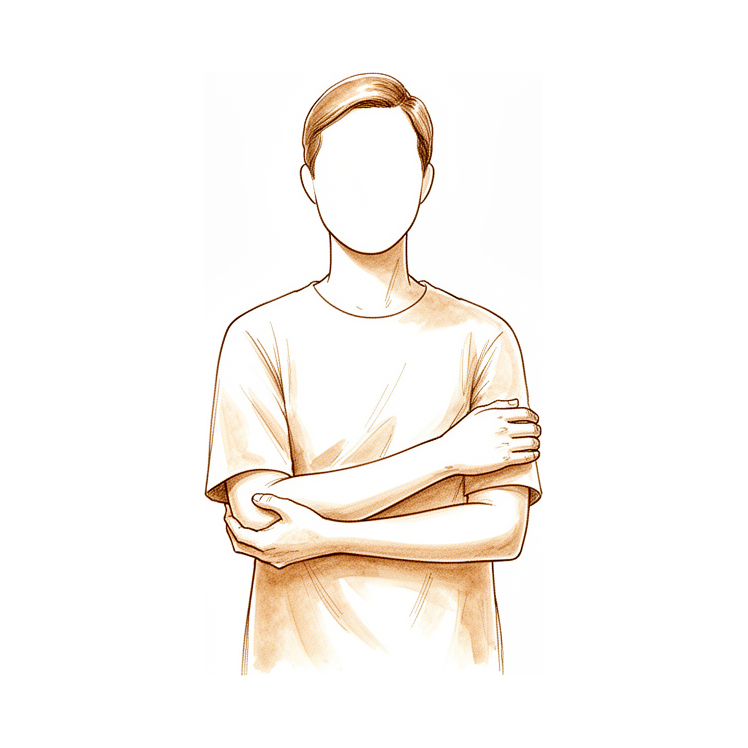
Deberá usar un cabestrillo sencillo: el Dr. Hirpara emplea un cabestrillo sencillo, no una almohada de abducción voluminosa ni un aparato ortopédico especial. El cabestrillo mantiene el brazo en la posición adecuada: delante del cuerpo y ligeramente rotado hacia adentro, de modo que el músculo torácico reparado permanezca relajado.
- Use el cabestrillo durante 4 a 6 semanas. No es necesario usarlo para dormir.
- Quíteselo únicamente para ducharse y para realizar los ejercicios, una vez que le hayan enseñado cómo hacerlos; siempre que no lo lleve, mantenga el brazo delante del cuerpo y junto al costado, nunca hacia un lado ni rotado hacia afuera.
- En casa, cuando esté descansando, puede quitárselo si actúa con precaución: apoye el brazo sobre una almohada, manteniéndolo delante de usted.
- Aplique hielo si el hombro presenta hinchazón o dolor, especialmente después de hacer ejercicio.
Mientras use el cabestrillo, preste atención a su postura. Mantenga las orejas, los hombros y las caderas alineados, evitando que los hombros se hundan; una buena postura protege la espalda y ayuda a prevenir la rigidez del hombro.
Precauciones clave — NO hacer
- NO rote el brazo hacia afuera más allá del límite semanal establecido por su fisioterapeuta. La rotación externa se inicia desde la posición recta hacia adelante (neutral, 0°) y solo se permite un aumento de unos 5° por semana, ya que la rotación externa estira la zona reparada.
- NO eleve el brazo hacia el costado más allá de la pequeña cantidad permitida cada semana; además, nunca combine este movimiento con la rotación externa, pues esa combinación es la que provoca el desgarro muscular.
- NO permita que el codo se mueva hacia atrás, por detrás de la línea del pecho (esto estira la zona reparada); evite esta posición durante mucho tiempo, incluso en el gimnasio.
- NO realice ejercicios tipo péndulo (con el brazo colgando) ni ejercicios con palos como palanca durante las primeras semanas; a diferencia de lo habitual en cirugías de hombro, dejar el brazo colgando o usar un palo como palanca ejerce tensión sobre el músculo pectoral reparado. (Los ejercicios con palo se introducen más adelante, a partir de la semana 4.)
- NO realice empujes, presiones ni cargas sobre el pecho (ni press de banca, ni ejercicios de aducción, ni fondos, ni ejercicios en máquina de pectorales, ni flexiones, ni deportes de contacto) hasta que su médico lo autorice; esto no debe hacerse antes de los 4 a 6 meses.
- NO fuerce ni estire ningún movimiento, y no trabaje directamente el músculo pectoral reparado (ni rotación interna resistida ni presiones) hasta que su equipo médico lo indique, lo cual suele ser a partir de la semana 9.
Fase I — Protección (semanas 0–3)
Las primeras semanas se centran exclusivamente en proteger el tendón reparado mientras se adhiere al hueso. Durante el día, debe usar el cabestrillo sencillo, manteniendo el brazo delante del cuerpo y ligeramente rotado hacia adentro; no es necesario usarlo para dormir, pero debe mantener el brazo en esa posición segura durante la noche. La mano, la muñeca, los dedos y el codo pueden moverse con normalidad. A partir de la semana 2 aproximadamente, su fisioterapeuta podría comenzar a moverle el hombro suavemente (movimiento pasivo) dentro de límites estrictos; sin embargo, no debe realizar ningún movimiento por sí mismo, no debe haber fuerza excesiva, y no se permiten ejercicios tipo péndulo ni con palos.
- Cabestrillo: cabestrillo sencillo; el brazo debe quedar delante del cuerpo y ligeramente rotado hacia adentro; se usa durante el día; para dormir puede quitárselo, pero manteniendo el brazo en la misma posición segura.
- Movimientos permitidos: únicamente movimientos pasivos (asistidos), a partir de la semana 2 y dentro de límites muy precisos: rotación externa solo hasta la posición neutra (0°), elevación hacia adelante solo hasta unos 45°, y extensión lateral del brazo solo hasta unos 30°. El codo, la muñeca y la mano pueden moverse libremente.
- Ejercicios: movilización de la mano, muñeca y codo; apretones suaves con la mano; ejercicios para fijar la escápula y ejercicios de remo suaves dirigidos a los músculos alrededor de la escápula (realizados a un nivel bajo, muy por debajo de la altura del hombro). Queda estrictamente prohibido cualquier ejercicio que cargue los músculos pectorales.
Estará listo para pasar a la siguiente fase cuando: el dolor esté controlado; la herida haya cicatrizado sin signos de complicaciones; los movimientos pasivos le resulten cómodos dentro de los límites indicados; y no haya indicios de que la reparación haya sufrido sobrecarga.
Fase II — Restauración del movimiento y retirada progresiva del cabestrillo (semanas 4–6)
Kieran Hirpara 4.0
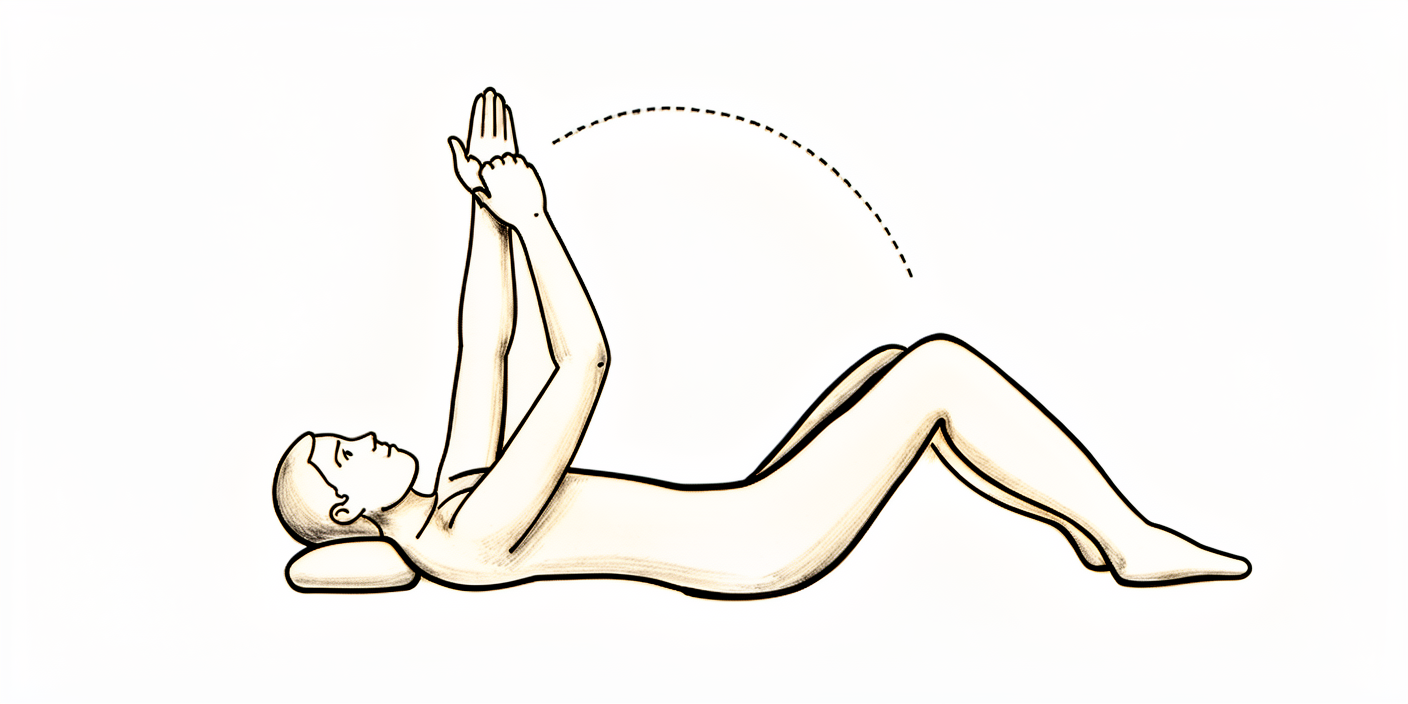
Elevación anterior asistida en decúbito
Acuéstese boca arriba. Utilice la mano sana debajo del codo del brazo operado para levantarlo hacia adelante, solo hasta la altura indicada por su fisioterapeuta, y luego bájelo lentamente. El hombro operado debe permanecer relajado; la mano sana es la que realiza el movimiento. Este ejercicio se introduce a partir de la semana 4 aproximadamente; no se practica en las primeras semanas.
Según las indicaciones de su fisioterapeuta.
Kieran Hirpara 4.0
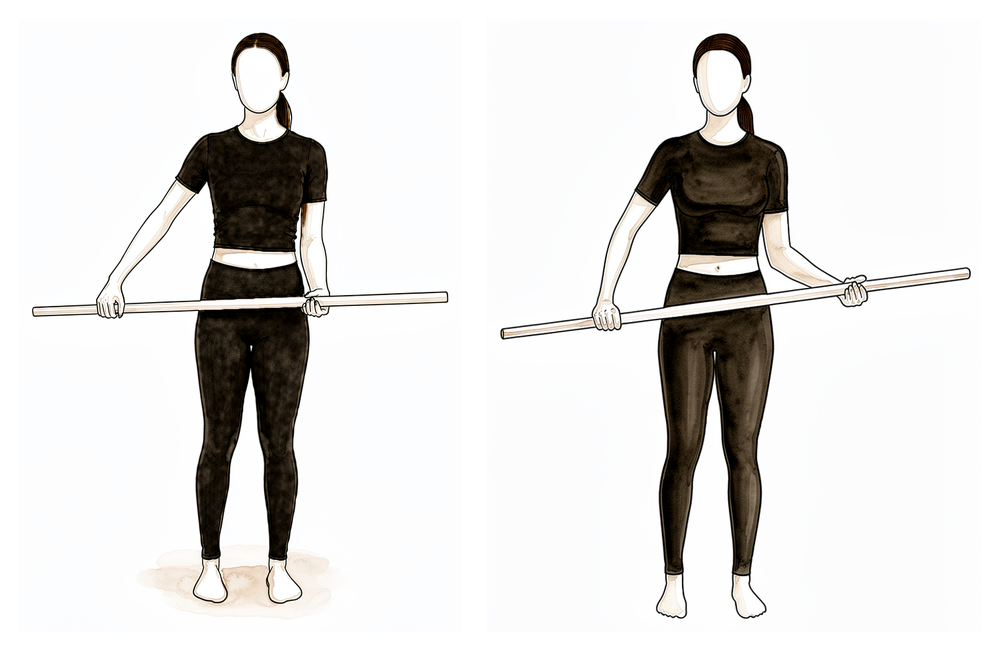
Rotación externa asistida mediante un palo
Sostenga un palo (o bastón) con ambas manos, manteniendo el codo del brazo operado pegado al costado. Utilice el brazo sano para empujar suavemente el antebrazo operado hacia afuera, pero solo hasta el límite semanal indicado por su fisioterapeuta; luego regrese a la posición inicial. Este ejercicio se introduce a partir de la semana 4 aproximadamente, no en las primeras semanas.
Según las indicaciones de su fisioterapeuta.
Kieran Hirpara 4.0
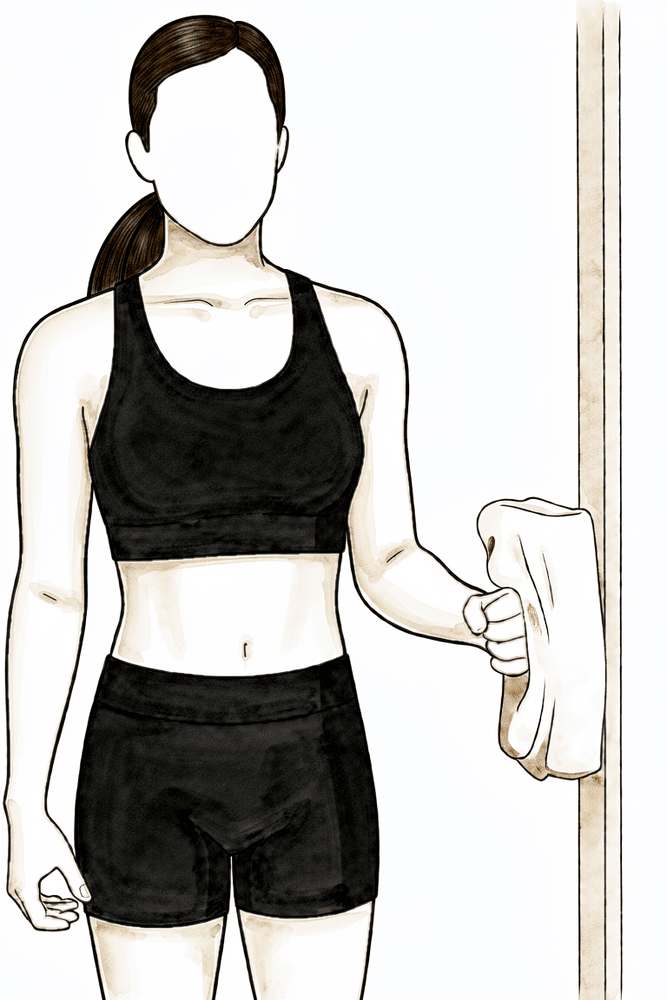
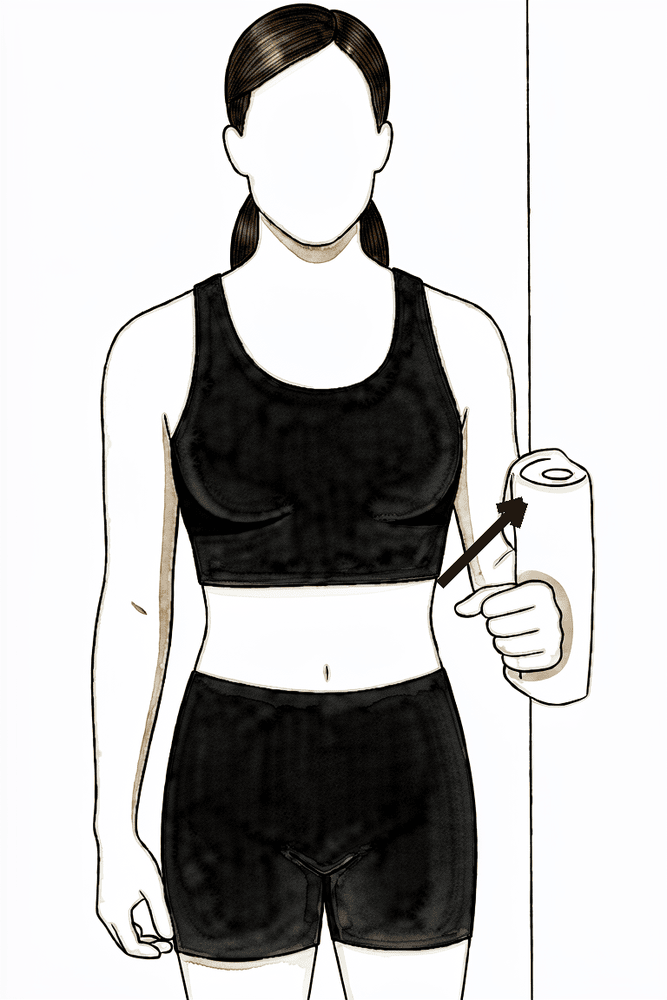
Mantener presionado para realizar rotación externa
Párese con el codo pegado al costado y doblado a 90 grados, con el dorso de la mano apoyado contra una pared o el marco de una puerta. Presione suavemente el dorso de la mano hacia afuera contra la pared, empleando aproximadamente una cuarta parte de su fuerza, sin que el brazo se mueva realmente. Mantenga esa posición unos 5 segundos y luego relájese.
10 veces, una o dos veces al día.
Kieran Hirpara 4.0
Mantenga presionado el brazo extendido hacia el costado.
Párese de perfil, con la parte externa del brazo pegada a la pared y el codo junto al cuerpo. Presione suavemente hacia afuera contra la pared, empleando aproximadamente una cuarta parte de su fuerza, sin mover el brazo. Mantenga la posición unos 5 segundos y luego relájese.
10 veces, una o dos veces al día.
Kieran Hirpara 4.0
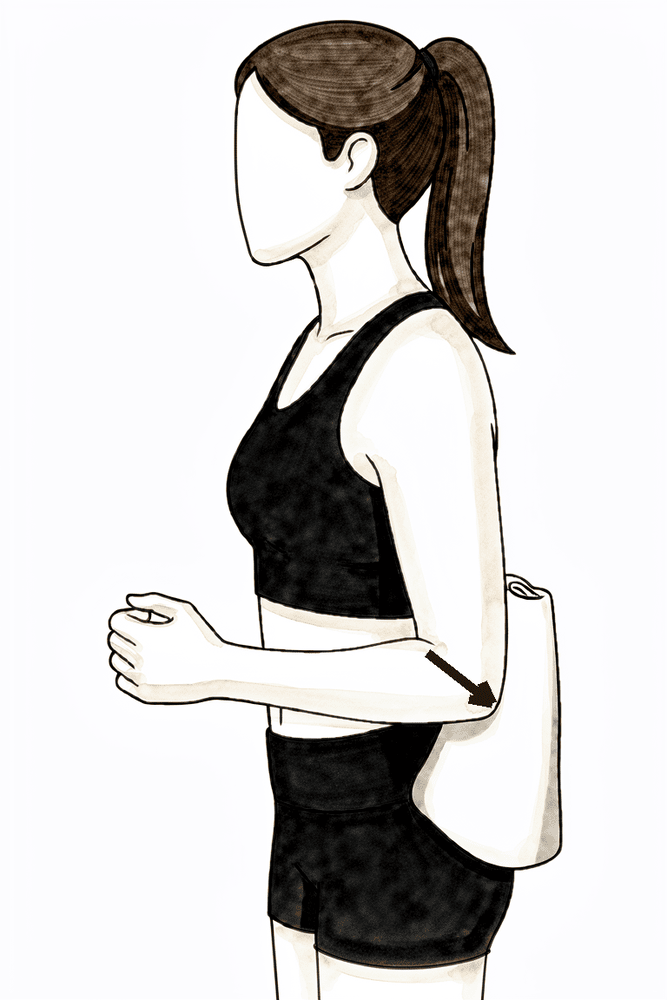
Mantenga presionado el brazo hacia atrás.
Párese con la espalda cerca de una pared, el brazo a un lado del cuerpo y el codo recto. Presione suavemente el dorso del brazo hacia atrás contra la pared, empleando aproximadamente una cuarta parte de su fuerza, sin que el brazo se mueva. Mantenga esa posición unos 5 segundos y luego relájese. Este ejercicio fortalece los músculos situados detrás del hombro. Lo utilizamos en lugar de ejercicios de presión hacia adentro en las primeras fases, ya que dicha presión ejerce carga sobre el músculo pectoral que se ha reparado.
10 veces, una o dos veces al día.
La reparación está cicatrizando y el cabestrillo se va retirando gradualmente en algún momento entre las semanas 4 y 6. El rango de movimiento controlado aumenta solo unos pocos grados cada semana; ahora se pueden iniciar ejercicios suaves asistidos (con ayuda de un palo). Se comienzan también ejercicios isométricos leves para tensar los músculos alrededor del hombro, pero no para el propio músculo pectoral ni para la rotación interna, ya que ambos ejercicios ejercen carga sobre la zona reparada.
- Cabestrillo: se va retirando progresivamente (en algún momento entre las semanas 4 y 6).
- Movimientos permitidos: movimientos pasivos y asistidos, que aumentan aproximadamente 5° cada semana: rotación externa partiendo de la posición neutra, elevación frontal hasta unos 65–85°, y abducción del brazo hasta unos 50°. Todavía no se permite mover el brazo por propia fuerza, ni superar los límites semanales establecidos.
- Ejercicios: elevación frontal asistida en posición supina; rotación externa asistida con un palo (solo hasta el límite semanal); ejercicios isométricos de contracción muscular para rotación externa, abducción y retracción del brazo, pero no para la rotación interna; ejercicios de estabilización de la escápula.
Listo para pasar a la siguiente fase cuando: ya no utilice el cabestrillo; el rango de movimiento controlado avance según lo previsto; no sienta dolor en la parte frontal del hombro al realizar la rotación externa hasta el límite establecido; y los ejercicios isométricos le resulten cómodos.
Fase III — Movimiento activo (semanas 6–8)
Kieran Hirpara 4.0
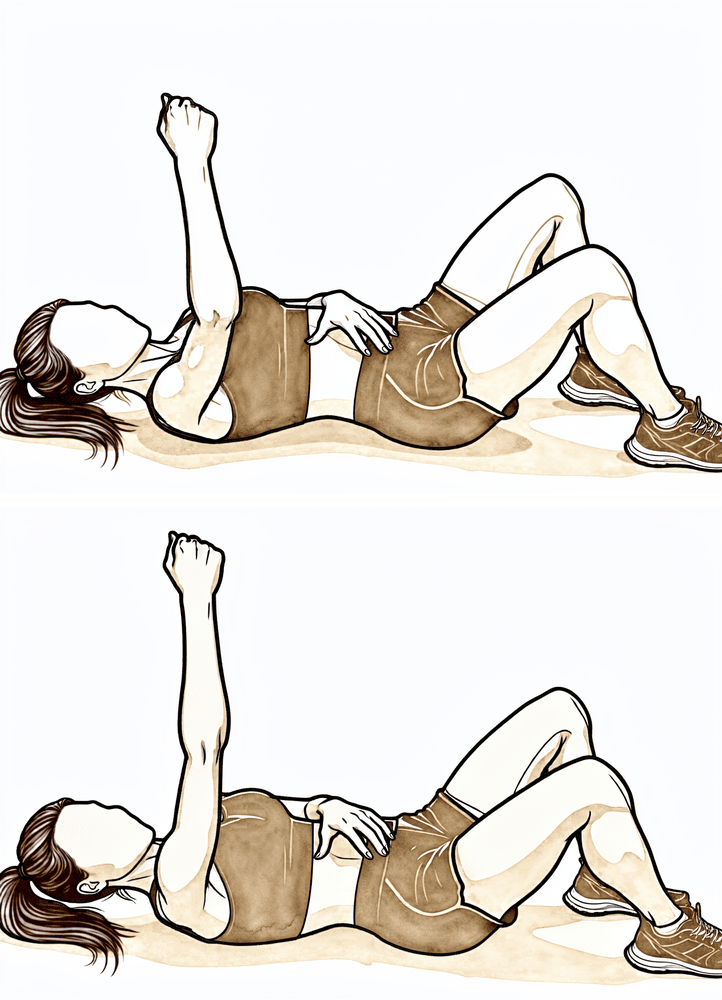
Puñetazo supino (saludo)
Acuéstese boca arriba con el brazo operado apuntando al techo. Estire la mano hacia el techo de modo que el omóplato se levante del suelo, y luego bájelo lentamente. Mantenga el movimiento suave y dentro de un rango cómodo.
10 veces, una vez al día.
Kieran Hirpara 4.0
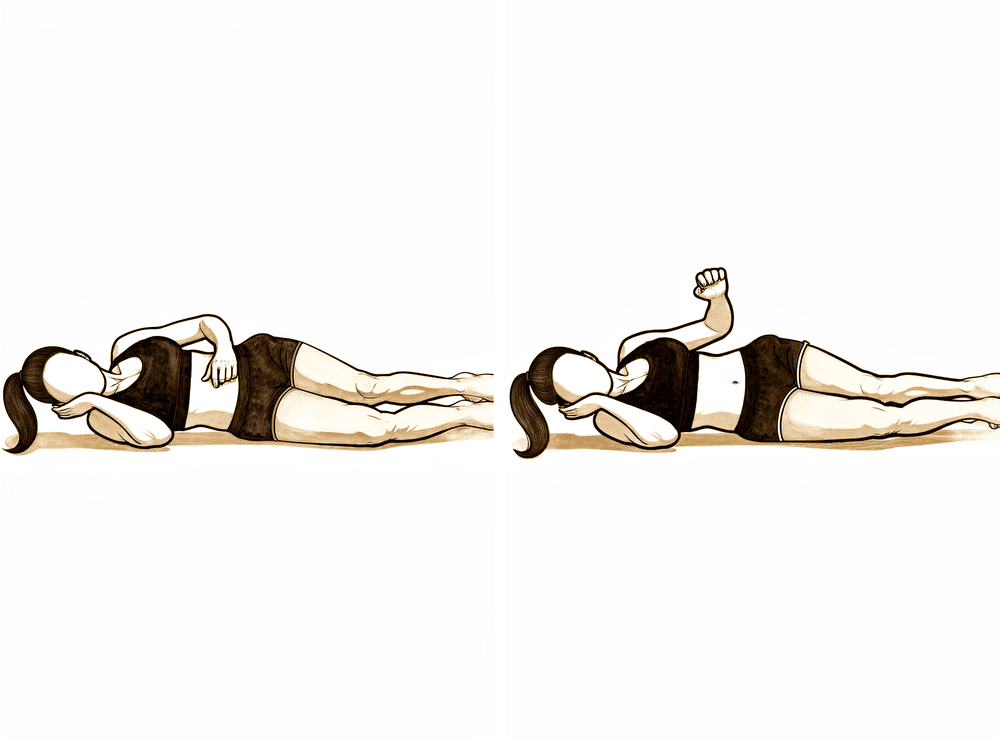
Rotación externa al acostarse de lado
Acuéstese sobre el lado sano, con el codo operado pegado a la cintura y doblado a 90 grados. Manteniendo el codo en esa posición, gire el antebrazo hacia arriba hasta donde le resulte cómodo y luego bájelo lentamente. Comience sin carga alguna.
10–15 veces, una vez al día
Kieran Hirpara 4.0
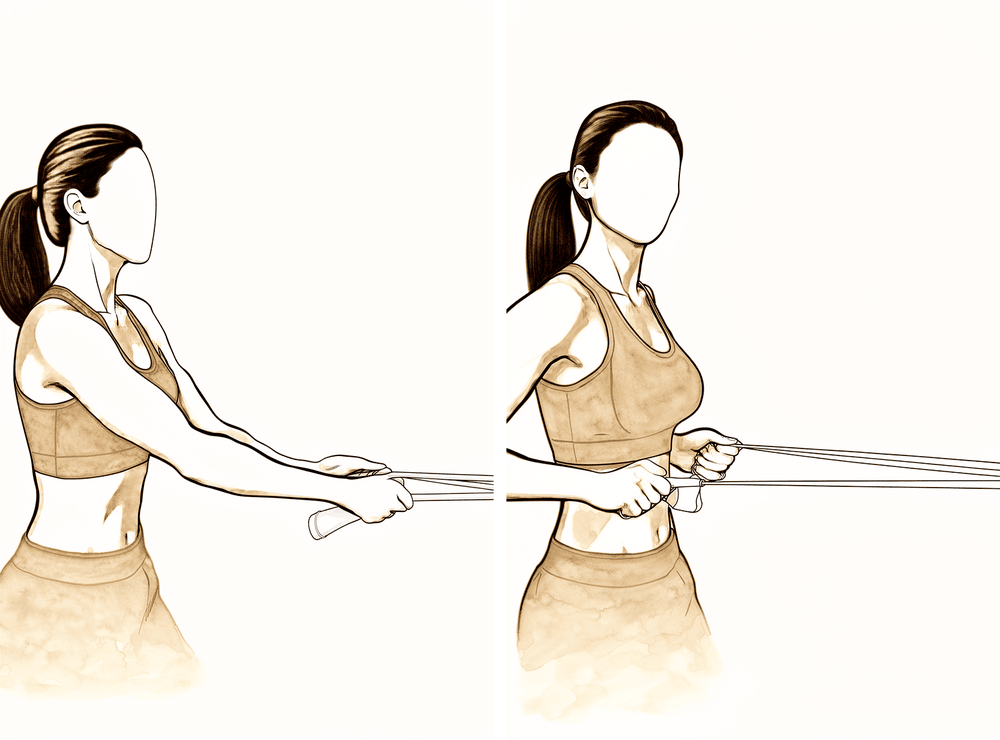
Remos con banda de resistencia
Fije una banda frente a usted a la altura de la cintura. Párese erguido, lleve los codos hacia atrás, acercándolos al cuerpo y contraiga los omóplatos; luego regrese lentamente a la posición inicial. Mantenga los codos cerca de los costados y no permita que se desplacen más allá de la línea del cuerpo.
10–15 veces, una vez al día
Kieran Hirpara 4.0
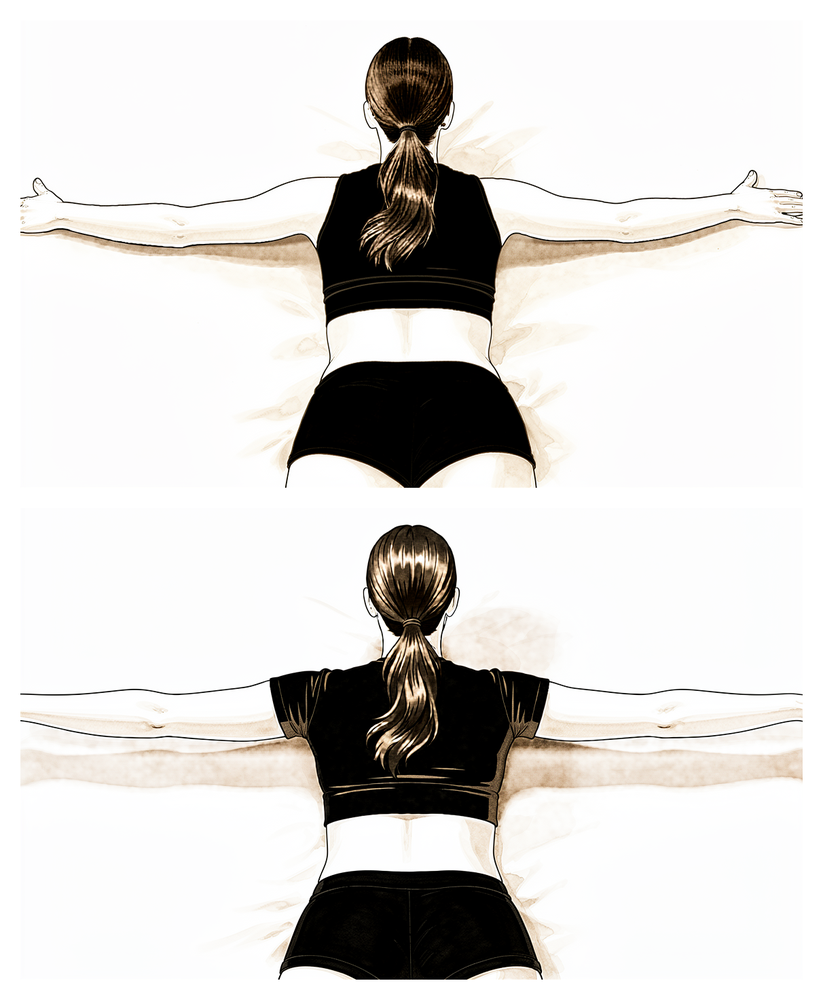
Tracción de omóplato hacia abajo (Y prono)
Acuéstese boca abajo con los brazos colgando. Eleve los brazos hacia los lados hasta la altura de los hombros, contraiendo los omóplatos, y luego bájelos lentamente. Mantenga el movimiento pequeño y controlado.
10 veces, una vez al día.
Kieran Hirpara 4.0
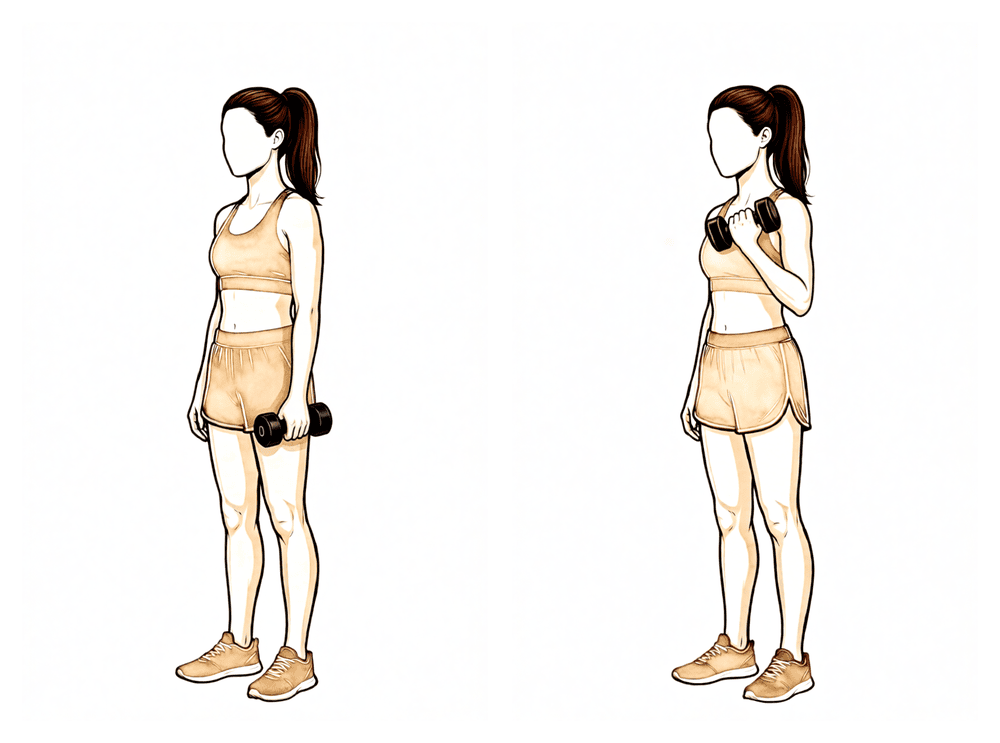
Flexión de bíceps
Con un peso ligero y el codo pegado al costado, flexione el codo para levantar el peso y luego bájelo lentamente. Mantenga el brazo inmóvil y frente al cuerpo.
10–15 veces, una vez al día
Kieran Hirpara 4.0
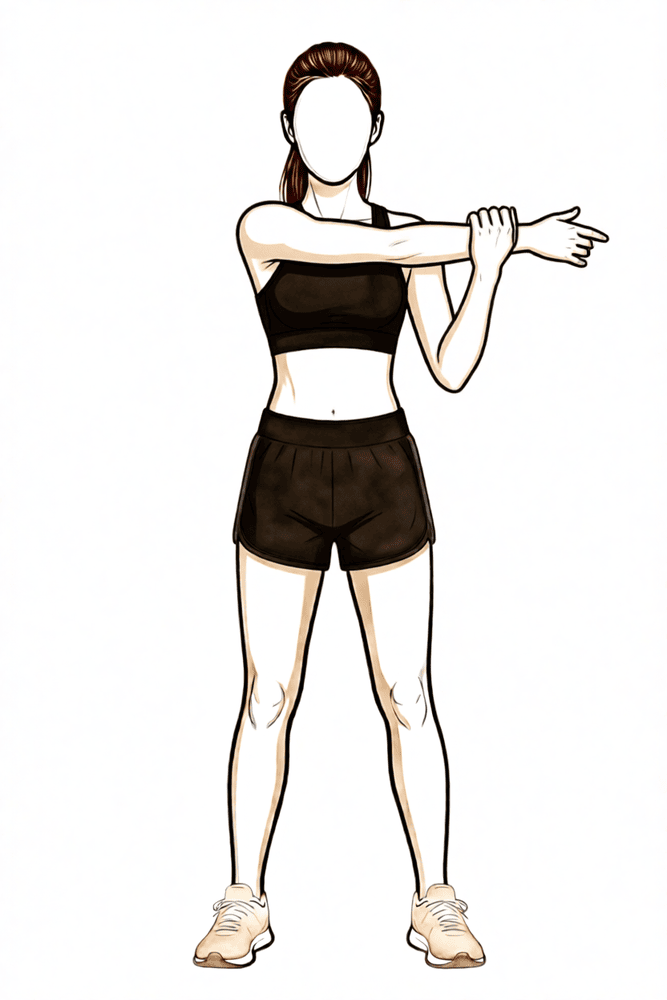
Estiramiento cruzado del cuerpo
Utilice la mano sana para llevar suavemente el brazo operado cruzándolo por delante del pecho, por debajo de la altura del hombro, hasta sentir un estiramiento suave en la parte posterior del hombro; luego suelte. No fuerce el movimiento ni lo realice hasta el punto del dolor.
Mantenga 20–30 segundos, 2–3 veces.
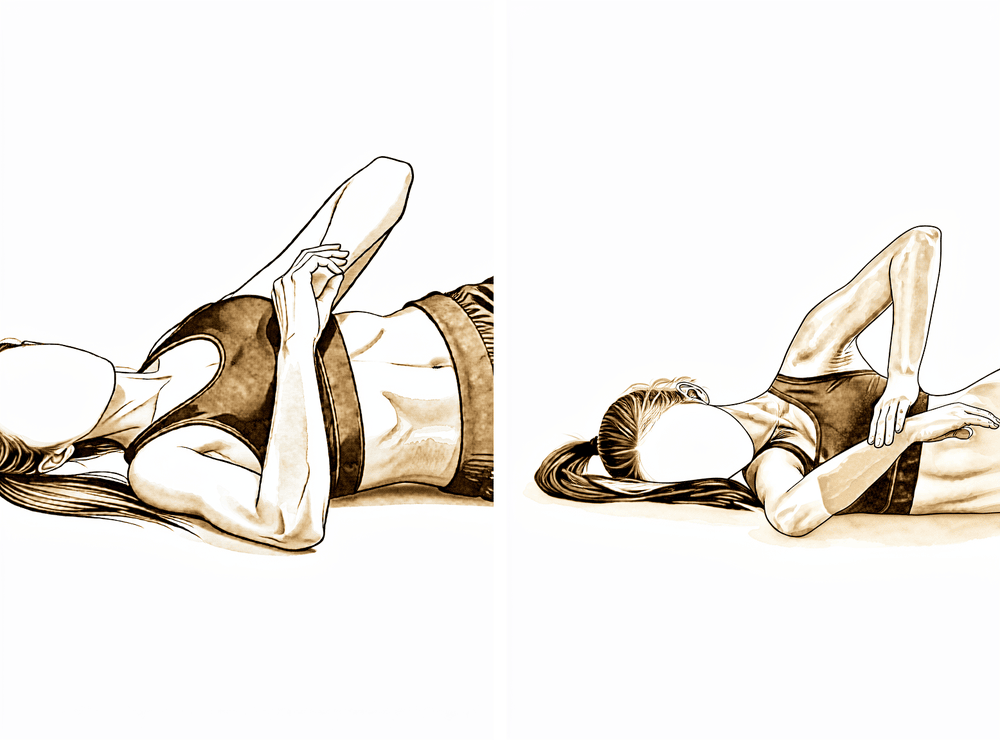
Kieran Hirpara 4.0
Estiramiento de “dormilón”
Acuéstese sobre el lado de la cirugía, con el hombro y el codo flexionados a 90 grados. Con la mano sana, presione suavemente el antebrazo hacia la cama hasta sentir un estiramiento leve en la parte posterior del hombro. No fuerce el movimiento.
Mantenga 20–30 segundos, 2–3 veces.
A partir de las seis semanas aproximadamente, se retira el cabestrillo y comienza a mover el brazo por propia voluntad, iniciando en posiciones fáciles donde la gravedad ejerce menos influencia: acostado o estirando el brazo hacia el techo. Los rangos de movimiento permitidos siguen ampliándose poco a poco, unos cuantos grados cada semana, hasta alcanzar el rango completo. Se fortalecen los músculos circundantes al hombro y se inician estiramientos suaves para la parte posterior del hombro; sin embargo, el músculo pectoral reparado sigue sin ser manipulado.
- Cabestrillo: se retira.
- Movimientos permitidos: continúa el movimiento pasivo hasta alcanzar el rango completo (aproximadamente 5° más cada semana en cada dirección), y se inicia el movimiento activo por propia voluntad. Se permite un ligero apoyo de peso a través del brazo.
- Ejercicios: puñetazos acostado (como un saludo); rotación externa acostado de lado (sin carga); ejercicios de remo con banda elástica y movilización de omóplatos; ejercicios suaves para el bíceps; estiramientos cruzados y en posición de “dormilón” para la parte posterior del hombro.
Listo para pasar a la siguiente fase cuando: el rango de movimiento sea completo o casi completo en todas las direcciones; pueda mover el brazo por propia voluntad con buen control (sin encoger los hombros ni movimientos bruscos); y no haya dolor en la parte frontal del hombro.
Fase IV — Inicio de la carga sobre el músculo pectoral (semanas 9–14)
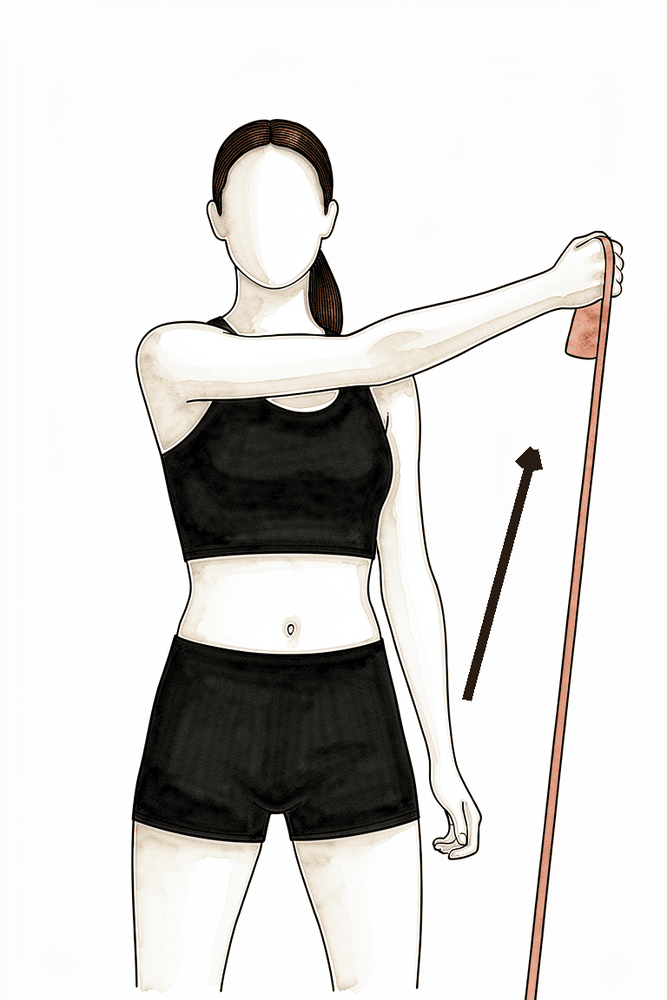
Kieran Hirpara 4.0
PNF diagonal D1 con banda elástica
Sujete una banda y mueva el brazo en un movimiento diagonal controlado: desde el frente del abdomen hacia arriba y en dirección al lado opuesto; luego invierta el movimiento suavemente. Su fisioterapeuta determinará las posiciones inicial y final. Comience únicamente cuando pueda realizar el movimiento por completo y sin dolor.
Según las indicaciones de su fisioterapeuta.
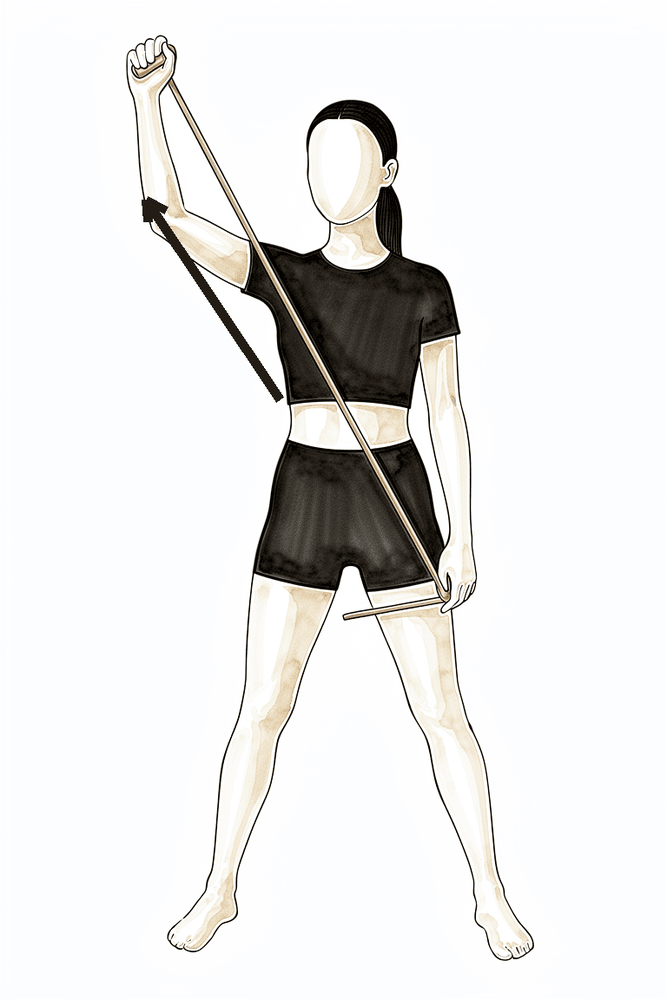
Kieran Hirpara 4.0
PNF diagonal D2 con banda elástica
Sujete una banda y mueva el brazo en un movimiento diagonal controlado: desde la cadera opuesta hacia arriba, por encima de la cabeza; luego invierta el movimiento suavemente. Su fisioterapeuta determinará el rango de movimiento. Comience únicamente cuando cuente con un movimiento completo y sin dolor.
Según las indicaciones de su fisioterapeuta.
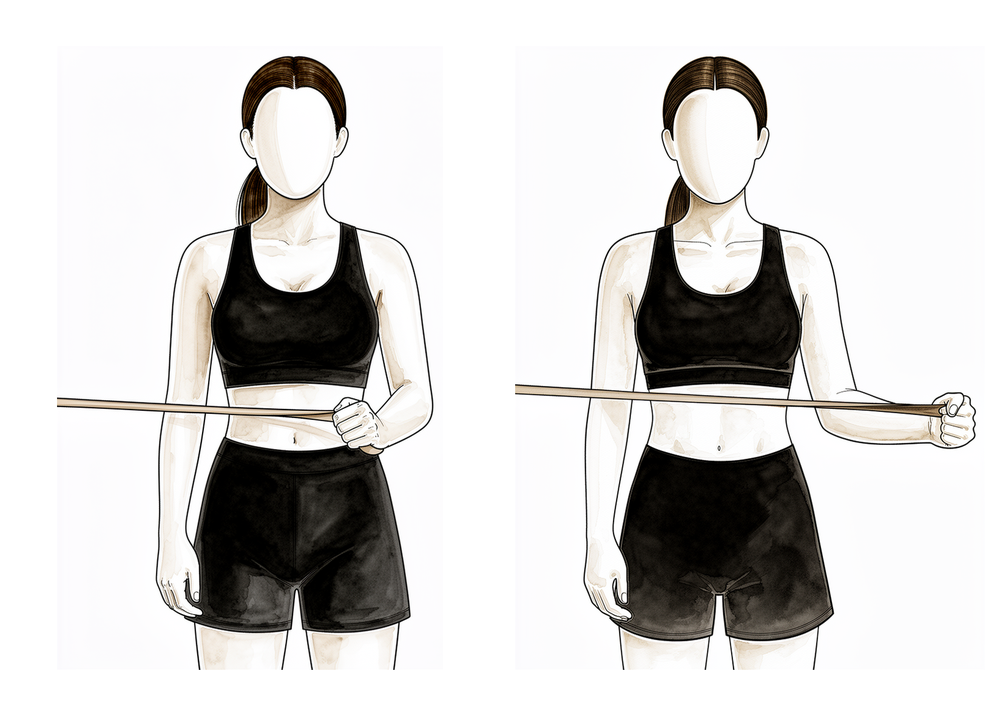
Kieran Hirpara 4.0
Rotación externa con banda elástica
Con el codo pegado al costado y doblado a 90 grados, sujete una banda elástica y gire el antebrazo hacia afuera contra la resistencia; luego regrese lentamente a la posición inicial. Mantenga el codo siempre pegado al costado.
10–15 veces, una vez al día
Kieran Hirpara 4.0
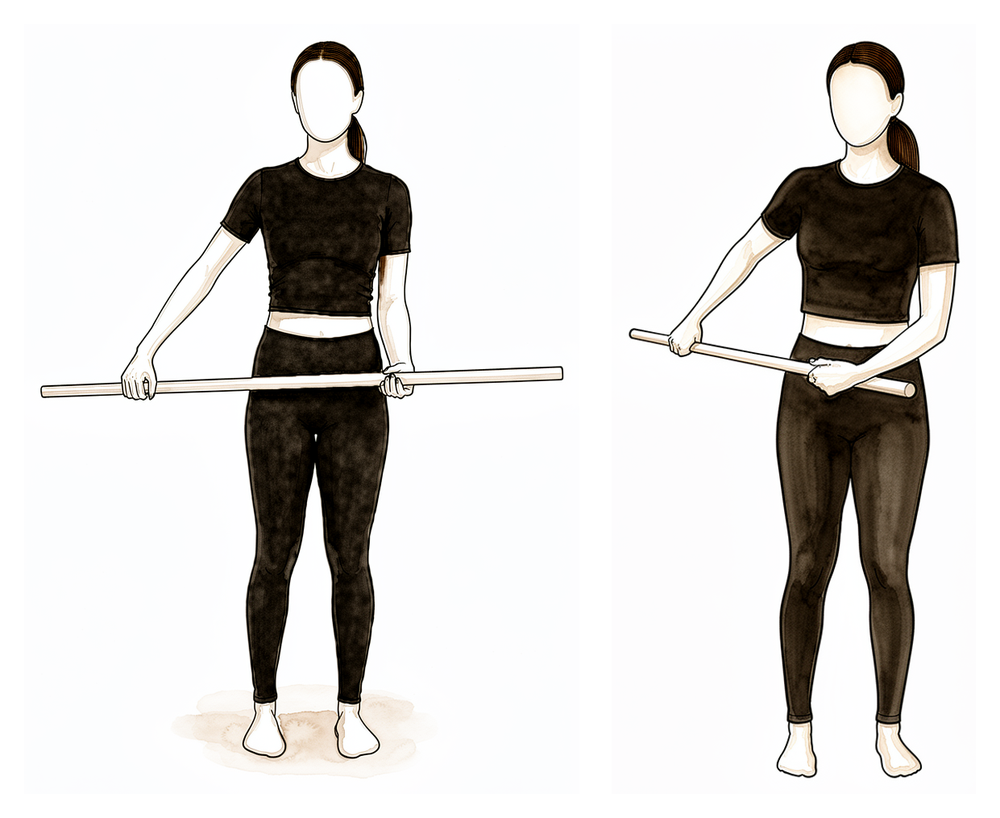
Rotación interna mediante un palo
Sostenga un palo o una toalla y guíe suavemente la mano operada hacia el interior, cruzándola sobre el abdomen o detrás de la espalda, hasta alcanzar un rango cómodo de movimiento. La rotación interna ejerce tensión sobre el músculo torácico reparado; por ello, este ejercicio se introduce recién a partir de la semana 9 y se incrementa gradualmente.
Según las indicaciones de su fisioterapeuta.
Este es el punto de inflexión: a partir de la semana 9 aproximadamente, el propio músculo pectoral reparado comienza a funcionar, de forma suave. Inicia en una posición acortada (relajada) y, a medida que va tolerando la carga, pasa a una posición más alargada. La rotación interna, acción propia del músculo pectoral que hasta ahora se ha mantenido deliberadamente bajo control, también se introduce en esta fase y se incrementa gradualmente. Los movimientos deben ser completos; el enfoque ahora es aplicar una carga ligera y controlada. Los ejercicios con mayor intensidad aún deben esperar.
- Movilidad: movilidad pasiva y activa completa o casi completa en todas las direcciones.
- Ejercicios: ejercicios suaves de rotación interna y tensado del músculo pectoral, iniciando en posición acortada; rotación interna utilizando un palo; rotación externa con banda elástica; patrones diagonales PNF con banda elástica (movimientos diagonales controlados que su fisioterapeuta le indicará).
Listo para pasar a la siguiente fase cuando: tenga una movilidad completa y sin dolor; y pueda realizar los ejercicios suaves del músculo pectoral sin sentir dolor posteriormente.
Fase V — Fortalecimiento (semanas 14–20)
Kieran Hirpara 4.0
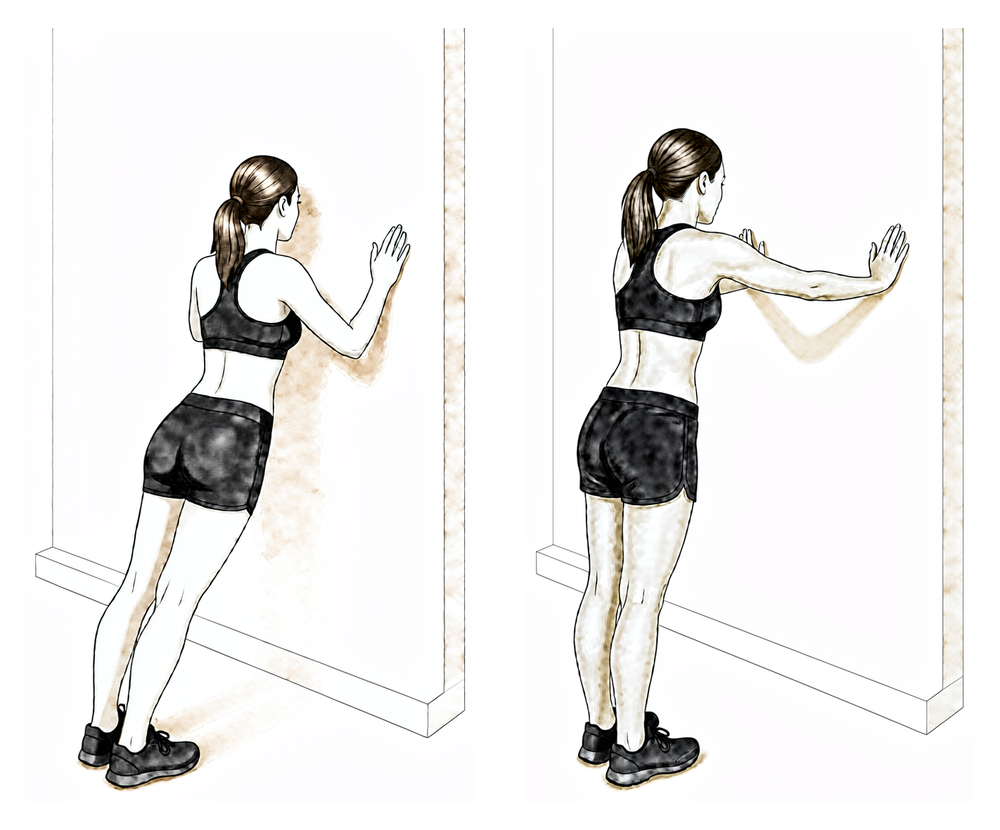
De flexiones contra la pared a flexiones en el suelo
Comience con flexiones contra una pared: inclínese hacia adelante y luego empuje hacia atrás, permitiendo que los omóplatos se separen en la posición superior. A medida que gane fuerza, pase a hacerlas sobre un banco de cocina, luego sobre las rodillas y, finalmente, en el suelo. Evite que los codos se muevan hacia atrás más allá de la línea del cuerpo; nunca permita que el pecho descienda por debajo del nivel de los codos.
Según las indicaciones de su fisioterapeuta.
Kieran Hirpara 4.0
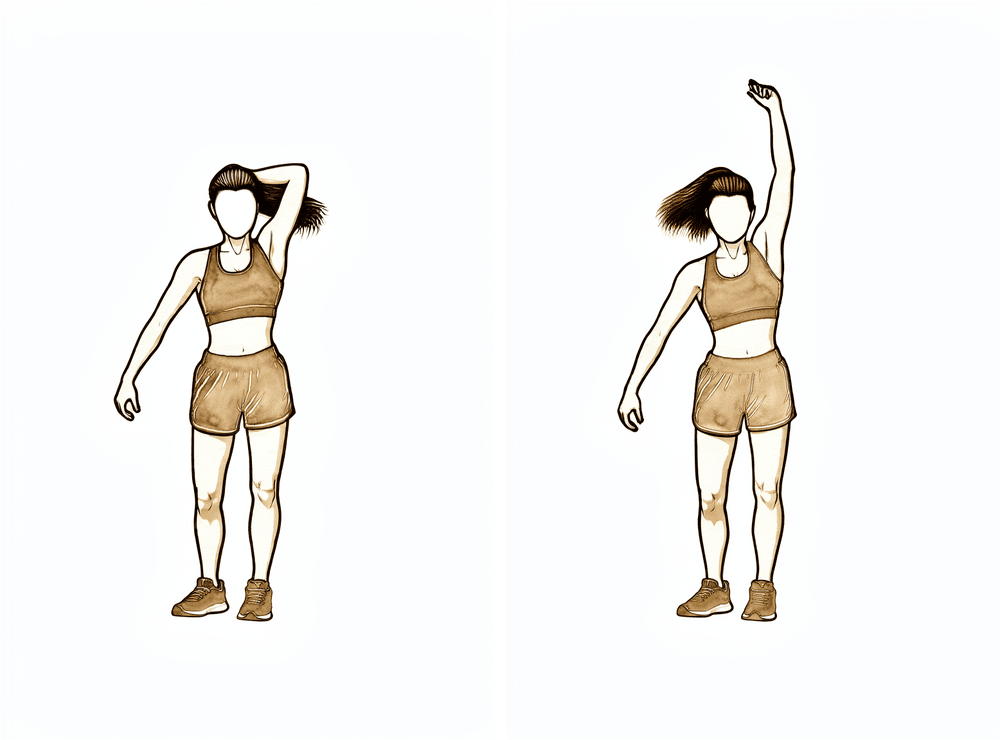
Tríceps por encima de la cabeza
Con un peso ligero sostenido por encima de la cabeza y el codo flexionado, estire el codo para levantar el peso y luego bájelo lentamente. Comience el ejercicio una vez que el movimiento por encima de la cabeza resulte completo y cómodo.
10–15 veces, una vez al día
Kieran Hirpara 4.0
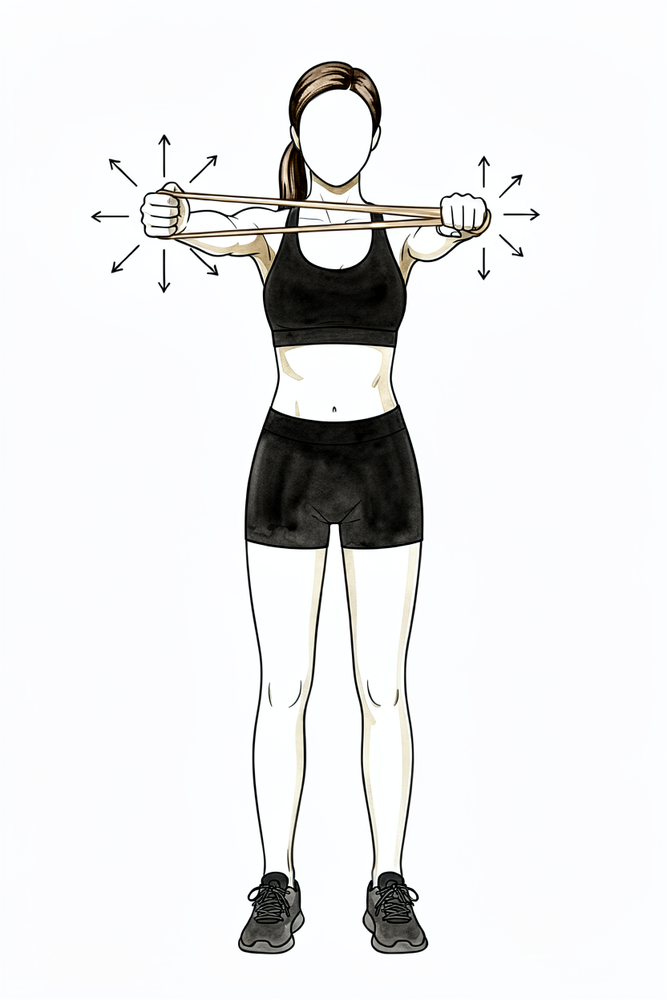
Estabilización rítmica
Con el brazo apoyado delante de usted a una altura aproximada de los hombros, pida a su fisioterapeuta (o a su mano sana) que realice pequeños empujes suaves desde distintas direcciones, mientras usted mantiene el brazo inmóvil y estable; no permita que se mueva. Esto entrena a los músculos estabilizadores del hombro para que reaccionen. Asegúrese de que todos los movimientos sean suaves.
Según las indicaciones de su fisioterapeuta.
A partir de la semana 14 aproximadamente, se inicia el fortalecimiento adecuado del pecho (con pesas ligeras y resistencia, o ejercicios isotónicos), aumentándose gradualmente y de forma simétrica con respecto al otro lado. Los ejercicios de flexiones comienzan contra una pared y solo se pasa al suelo cuando la fuerza lo permita. Ahora existen dos reglas de entrenamiento que deben respetarse durante mucho tiempo, pues imitan las condiciones que causan la rotura del tendón reparado: nunca permitas que los codos se muevan hacia atrás, más allá de la línea del cuerpo, al final de cada ejercicio de press, aperturas o ejercicios de pectorales; y evita usar pesos elevados con pocas repeticiones: es preferible emplear cargas más ligeras y realizar más repeticiones, además de calentar lentamente.
- Movilidad: completa.
- Ejercicios: flexiones contra la pared que progresan hacia el suelo; rotación interna contra una banda elástica; ejercicios de tríceps por encima de la cabeza; entrenamiento ligero y progresivo de pectorales y empujes; un suave estiramiento de pectorales en el marco de una puerta.
Listo para pasar a la siguiente fase cuando: la fuerza se esté desarrollando de manera equilibrada en comparación con el otro lado; y no sientas dolor alguno al realizar ejercicios de resistencia para el pecho.
Fase VI — Regreso temprano al deporte (5–6 meses)
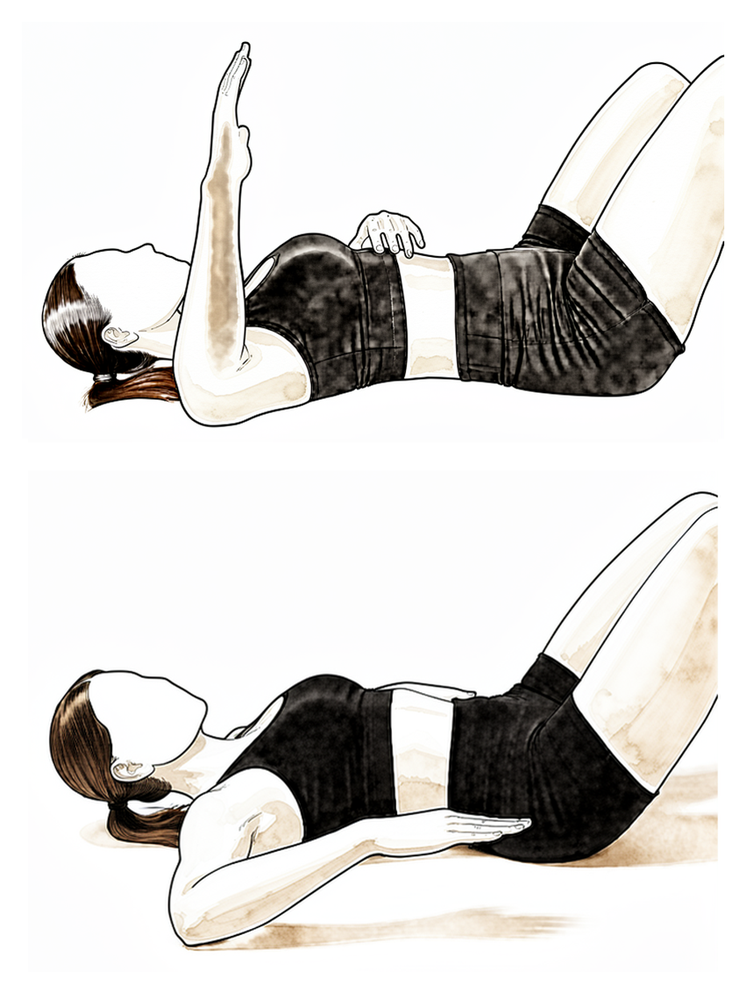
Kieran Hirpara 4.0
Rotación externa e interna 90/90
Con el brazo extendido hacia el lateral a la altura del hombro y el codo flexionado a 90 grados, gire el antebrazo hacia arriba y hacia abajo dentro de un rango controlado. Este es un ejercicio de preparación deportiva de fase avanzada; solo debe iniciarse cuando el médico lo autorice, ya que esta posición estira el músculo pectoral reparado.
Según las indicaciones de su fisioterapeuta.
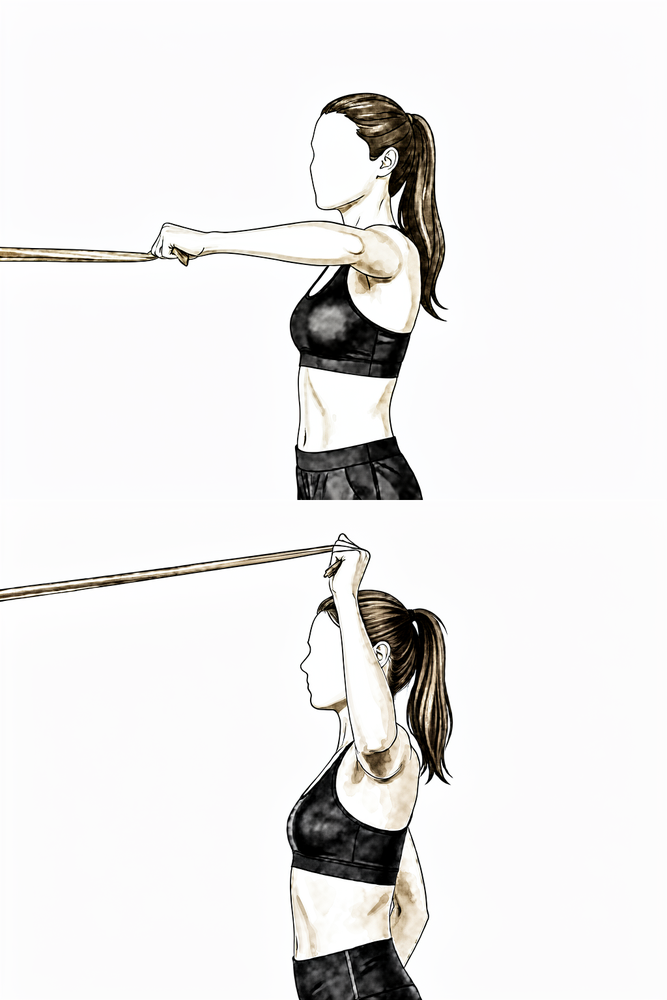
Kieran Hirpara 4.0
Rotación externa en posición 90/90 (con banda)
Con el brazo extendido hacia el lateral a la altura del hombro y el codo doblado en ángulo recto, gire el antebrazo hacia atrás y hacia arriba contra una banda elástica ligera o un peso, y luego bájelo lentamente. Este ejercicio fortalece el manguito rotador en la posición elevada (de lanzamiento).
2 a 3 series de 10 a 15 repeticiones, con baja resistencia.
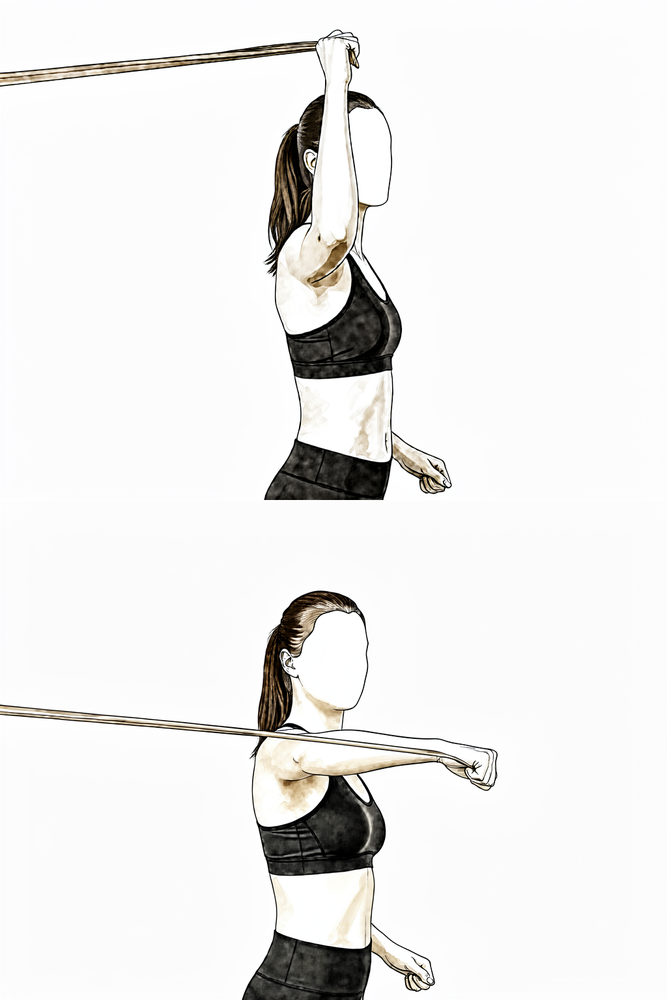
Kieran Hirpara 4.0
Rotación interna en posición 90/90 (banda)
Desde la misma posición, con el brazo extendido hacia el lateral a la altura del hombro, gire el antebrazo hacia adelante y hacia abajo, en dirección a los pies, oponiéndose a la resistencia de una banda elástica o peso ligero; luego regrese a la posición inicial de forma controlada.
2 a 3 series de 10 a 15 repeticiones, con baja resistencia.
El brazo ya es fuerte y tiene un rango de movimiento completo; ahora el entrenamiento se vuelve específico para su deporte, incluyendo ejercicios más rápidos y explosivos (pliométricos), como pases de pecho y posiciones de lanzamiento. Esto constituye una preparación para el regreso al deporte, pero aún no es autorización para realizar cargas pesadas sin restricciones.
- Movilidad: completa.
- Ejercicios: rotación externa e interna en la posición 90/90 (posición deportiva); ejercicios pliométricos de pecho y lanzamiento según las indicaciones de su fisioterapeuta.
Listo para pasar a la siguiente fase cuando: supere las pruebas de fuerza y las pruebas específicas para su deporte; y tanto el Dr. Hirpara como su fisioterapeuta den su autorización.
Fase VII — Retorno sin restricciones (a partir de los 6 meses)
A partir de los seis meses aproximadamente, y previa autorización médica, podrá volver a realizar trabajos y actividades recreativas exigentes. Se reanuda el ejercicio de press de banca a aproximadamente la mitad de su carga máxima previa, aumentándola gradualmente; los deportes de contacto no se permiten hasta pasados los seis meses. El retorno depende de que su fuerza sea al menos 85–90% en comparación con el lado sano, así como de la autorización del Dr. Hirpara; no basta con que haya transcurrido el tiempo establecido.
- Movilidad: total.
- Ejercicios: retorno completo a ejercicios de empuje y levantamiento de pesas, iniciando con cargas ligeras y aumentándolas progresivamente; también se permite el entrenamiento deportivo específico.
Condiciones para el retorno: su fuerza debe ser al menos 85–90% en comparación con el lado sano; debe contar con movilidad y resistencia totales, sin dolor alguno tras realizar esfuerzos intensos; además, tanto el Dr. Hirpara como su fisioterapeuta deben haber dado su autorización.
Regreso al deporte y al trabajo
El regreso a actividades que implican carga torácica y al deporte se basa en criterios específicos: rango de movimiento, fuerza y resistencia adecuados, ausencia de dolor, y autorización tanto del Dr. Hirpara como de su fisioterapeuta; no depende únicamente del calendario.
- Trabajo: se permite el trabajo sedentario según se tolere; el trabajo manual o de gran esfuerzo queda prohibido durante al menos 3 meses.
- Conducción: se recomienda esperar aproximadamente 6 a 8 semanas.
- Ejercicios leves de fortalecimiento torácico: pueden iniciarse a partir de la semana 14 aproximadamente.
- Press de banca, levantamiento de pesas, flexiones y deportes de contacto: no se permiten hasta pasados 4 a 6 meses, y únicamente una vez recuperada la fuerza; el press de banca se reinicia a aproximadamente la mitad de su máximo previo, aumentándose progresivamente.
En el caso de deportes que impliquen lanzamientos o contacto físico, es necesario completar un programa progresivo de entrenamiento antes de volver a practicar sin restricciones.
Sus primeros ejercicios
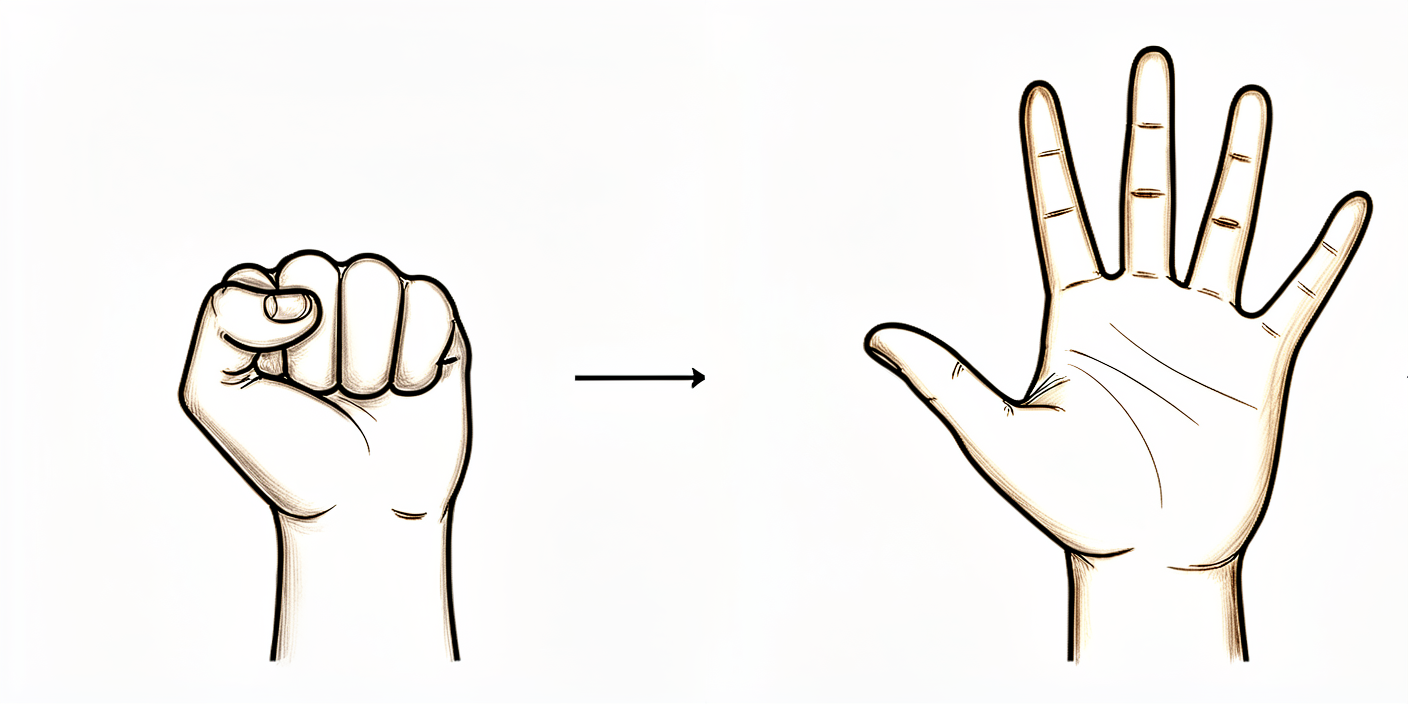
Kieran Hirpara 4.0
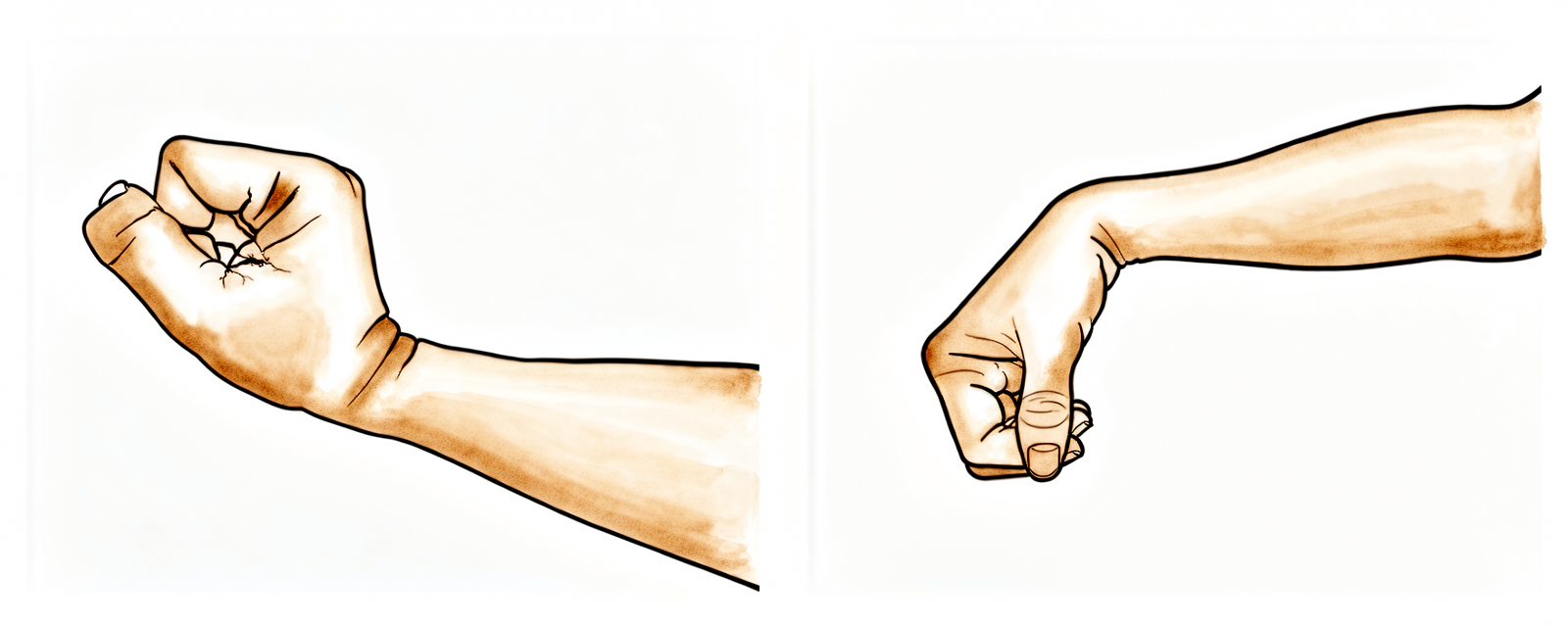
Abrir y cerrar la mano
Haga un puño cerrado, luego abra la mano y extienda los dedos por completo. Mantenga su mano, dedos y muñeca en movimiento normal durante todo el día.
10 veces por hora
Kieran Hirpara 4.0
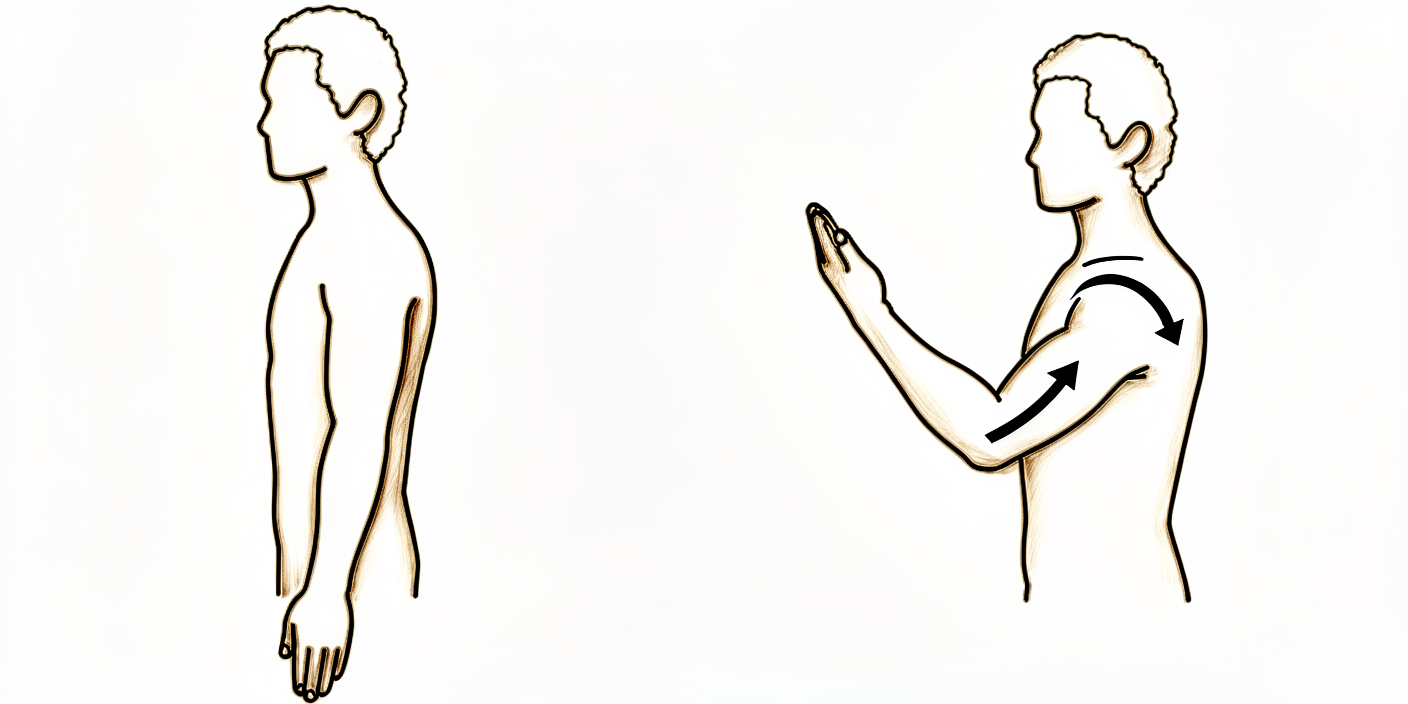
Movimiento de la muñeca
Con el antebrazo apoyado, doble la muñeca hacia adelante hasta donde le resulte cómodo, y luego hacia atrás. Mantenga el movimiento suave y regular a lo largo del día.
10–15 veces por hora
Kieran Hirpara 4.0
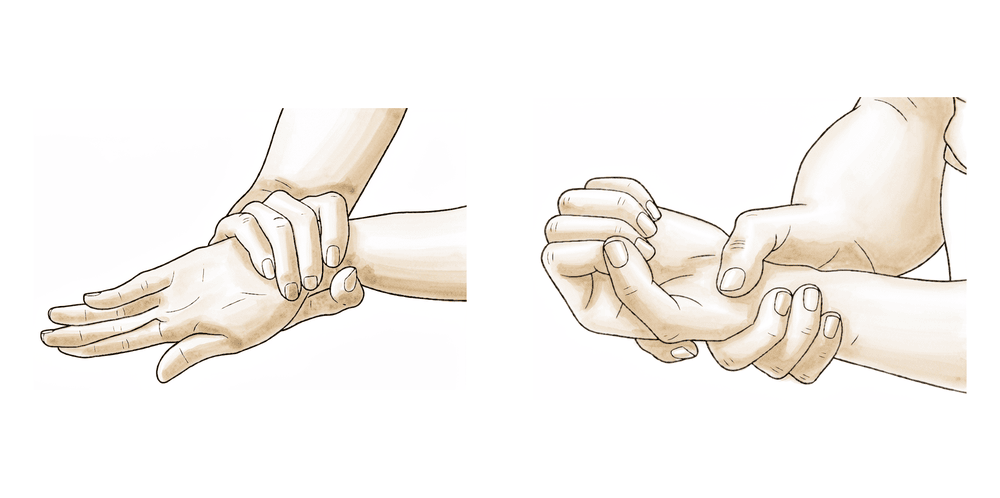
Flexiones activas de codo
Con el brazo relajado a lo largo del cuerpo y delante de él, doble el codo tanto como le resulte cómodo y luego estírelo por completo. Solo debe moverse el codo; el brazo debe permanecer inmóvil.
10–15 veces, 2–3 veces al día
Kieran Hirpara 4.0
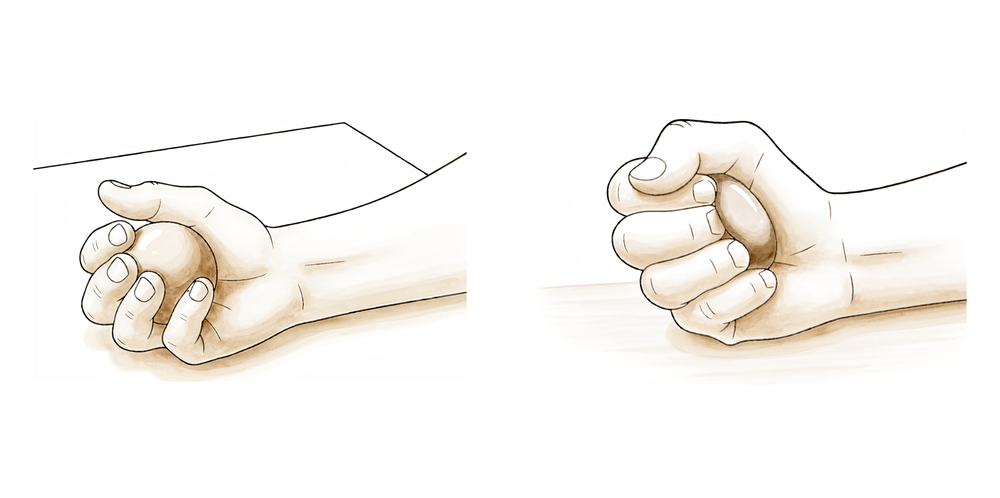
Rotación del antebrazo
Con el codo flexionado a 90 grados y pegado al costado, gire el antebrazo de modo que la palma quede hacia abajo y luego hacia arriba. Mantenga el codo pegado al cuerpo para que solo el antebrazo gire.
10 veces, 2–3 veces al día
Kieran Hirpara 4.0
Apriete de la mano
Con el brazo apoyado y delante del cuerpo, apriete suavemente una pelota blanda o un calcetín enrollado, mantenga la presión unos segundos y luego relájese. Esto mantiene el brazo activo sin ejercer tensión sobre la zona reparada.
10 veces, 2–3 veces al día
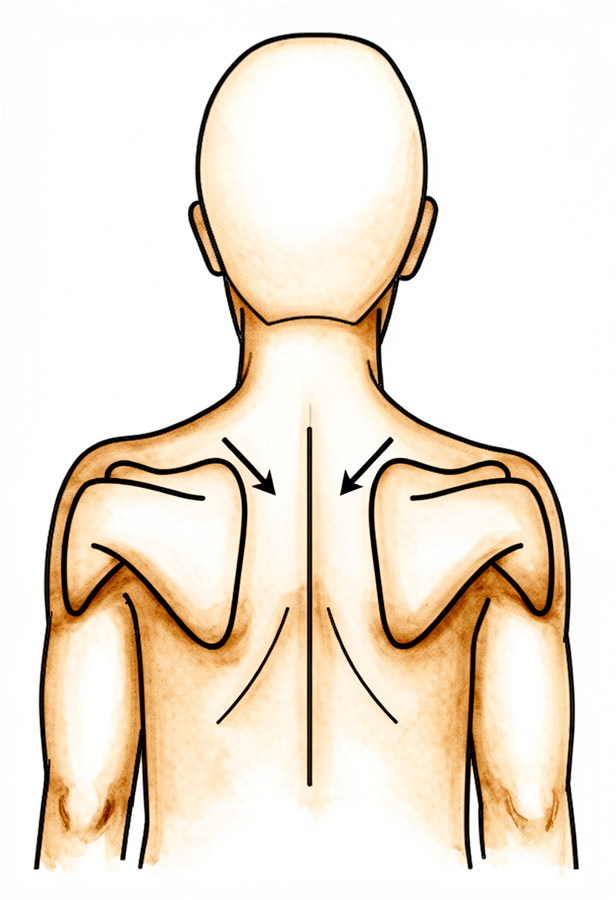
Kieran Hirpara 4.0
Posicionamiento de la escápula
Ya sea sentado o de pie, lleva suavemente los omóplatos hacia abajo y hacia atrás sin mover los brazos; mantén esa posición unos segundos y luego relájate. Procura que las orejas, los hombros y las caderas queden alineados.
10 veces, 2–3 veces al día
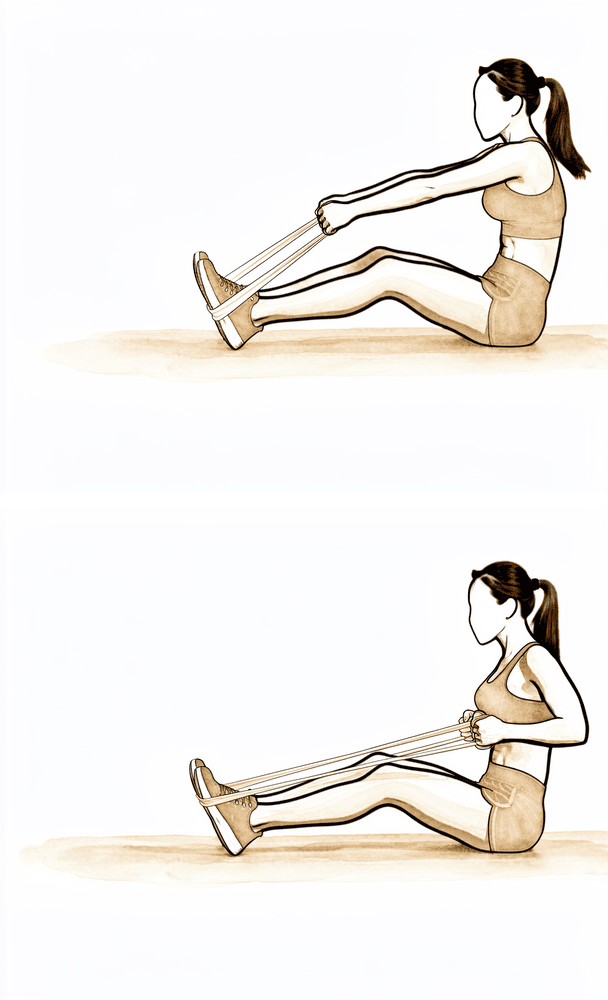
Kieran Hirpara 4.0
Remo bajo (posicionamiento de los omóplatos)
Siéntese erguido, con el brazo bajo y delante de usted; lleve suavemente el codo hacia abajo y hacia atrás para posicionar el omóplato, mantenga brevemente y luego relájese. Mantenga el brazo muy por debajo de la altura del hombro; de este modo se ejercitan los músculos alrededor del omóplato sin cargar el pecho.
10 veces, 2–3 veces al día
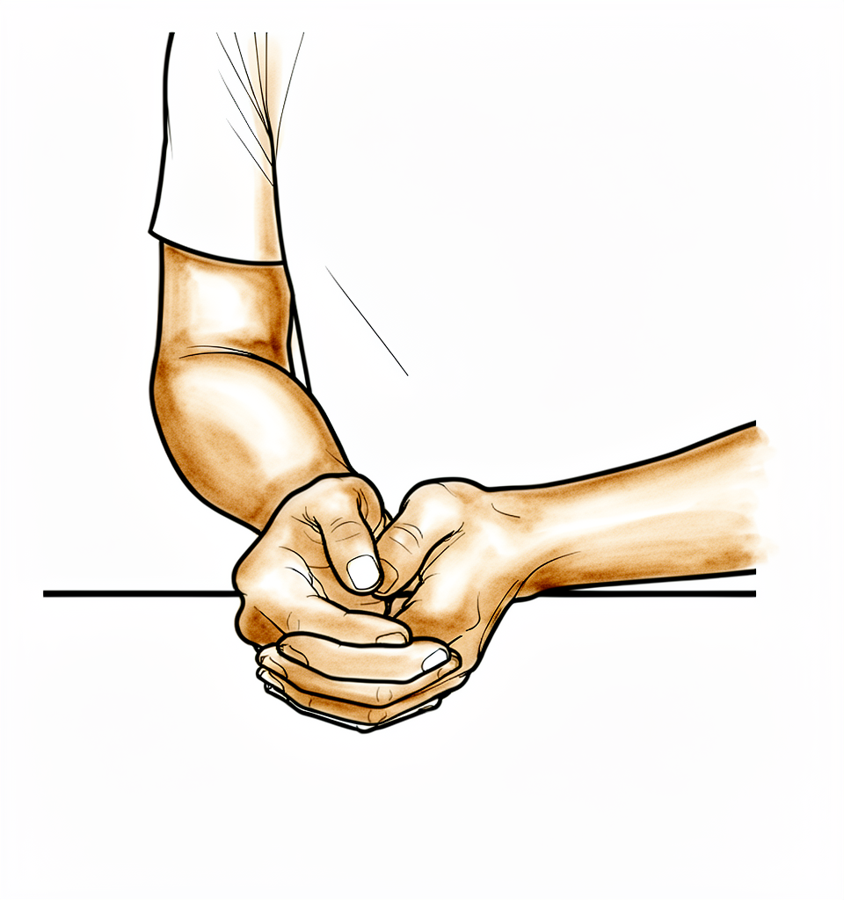
Kieran Hirpara 4.0
Rotación externa hasta la posición neutra
Con el codo doblado a 90 grados y pegado al costado, gire suavemente el antebrazo desde la posición en la que descansa sobre el abdomen hasta que quede apuntando hacia adelante (la posición neutra: 0 grados), y luego vuelva a la posición inicial. Durante las primeras semanas, deténgase en la posición neutra; solo podrá girar un poco más hacia afuera, en la medida que su fisioterapeuta indique cada semana. No lleve el brazo hacia el costado.
Según las indicaciones de su fisioterapeuta.
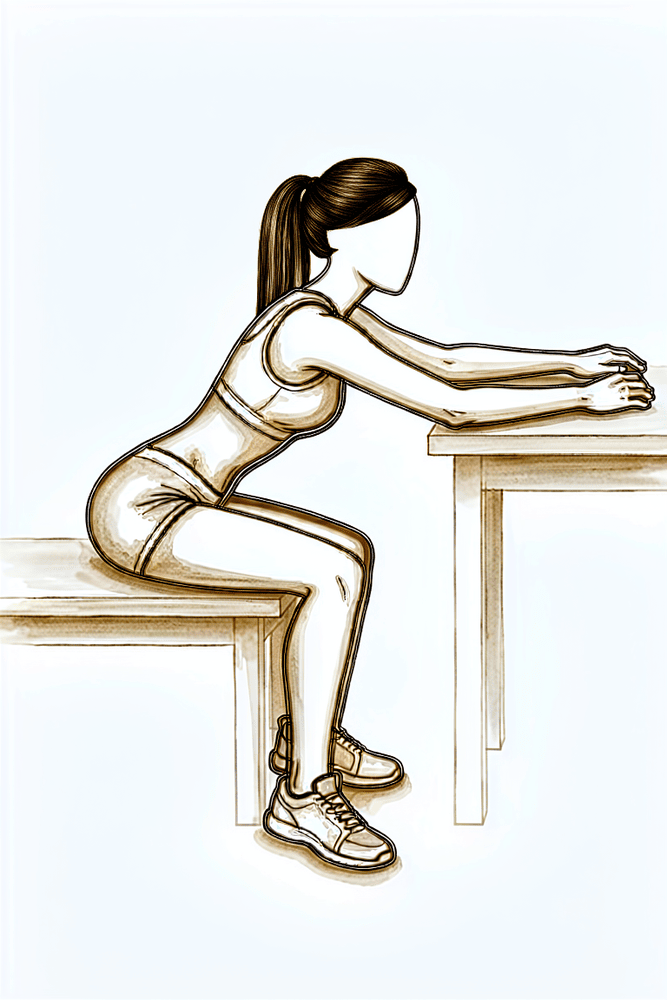
Kieran Hirpara 4.0
Flexión sobre la mesa (deslizamiento sobre la mesa)
Siéntese a una mesa con el antebrazo apoyado sobre ella. Incline el torso suavemente hacia adelante para que la mano se deslice por la mesa, permitiendo que la mesa soporte el peso del brazo; luego vuelva a sentarse erguido. Manténgase dentro del límite indicado por su fisioterapeuta: el brazo debe quedar delante del cuerpo y por debajo de la altura del hombro; no fuerce ni estire el brazo.
Según las indicaciones de su fisioterapeuta.
Estos son los ejercicios suaves para la fase inicial (de protección): se realizan primero en el hospital y luego en casa, manteniendo el brazo operado delante del cuerpo y con los músculos del hombro relajados. Comience a hacerlos siguiendo las indicaciones de su fisioterapeuta, y interrumpa cualquier ejercicio que provoque dolor agudo en el hombro. Recuerde las reglas iniciales: por ahora no se deben hacer ejercicios de péndulo ni con palo, y nunca debe llevar el brazo hacia el lateral y rotarlo hacia afuera al mismo tiempo.
Después de seguir este protocolo
Este protocolo complementa las recomendaciones generales de recuperación de la consulta: consulte cómo manejar el dolor postoperatorio y cuidado de la herida.
Evidence & references
This is the clinical evidence summary written for health professionals. It is technical, and it lists the research this page was built from. You do not need to read it to understand your treatment or to make a decision about it.
Pectoralis Major Tendon Repair -- Post-operative Rehabilitation
Topic scope: Rehabilitation after surgical repair of a pectoralis major (PM) tendon rupture/tear (typically a humeral-insertion avulsion in a 20-40 yr-old male, classically during the eccentric phase of a bench press). Covers protected positioning, the early restrictions on abduction (ABD) and external rotation (ER), ROM progression, when active ROM and strengthening start, and return to heavy lifting / bench press / sport.
Defining principle (contrast with frozen-shoulder release): PM repair rehab is a classic protect-the-repair protocol -- the OPPOSITE of frozen-shoulder release. The repaired tendon runs anteriorly to its humeral insertion; abduction and external rotation stretch/tension the repair, so both are strictly limited early and the arm is held in adduction + internal rotation in a sling/immobiliser. Progression is deliberately slow, and heavy resisted pec loading (bench press, flyes, dips, contact sport) is delayed to ~4-6 months to avoid re-rupture.
A key modifier throughout: repair type dictates the timeline. Bone-tendon repairs (suture anchors/cortical buttons into humerus) heal slower than tendon-tendon or muscle-tendon repairs and wean from the sling later (MGH protocol).
CONSENSUS PHASED TIMELINE
Synthesised from the Mass General Brigham (MGH) Sports Medicine protocol (rev. 7/2023, the most granular degree-by-degree protocol) and the University Orthopedics protocol, cross-checked against the published literature (Cordasco/HSS 2017; Manske & Prohaska 2007; Schepsis 2000; Haley/Zacchilli 2014). Both published protocols agree on the core structure; the ROM numbers below are the MGH degree targets.
| Phase | Window | Sling / position | ROM allowed + RESTRICTIONS | Active ROM | Strengthening | RTS / lifting |
|---|---|---|---|---|---|---|
| I -- Immediate | 0-3 wk (UnivOrtho: 0-2 wk) | Sling/immobiliser, arm in NEUTRAL or INTERNAL ROTATION, worn day & night | PROM only, started ~week 2. ER limited: start at 0 deg in adduction, progress ~5 deg/week. Flexion start 45 deg, +5-10 deg/wk. ABD start 30 deg, +5 deg/wk. Elbow/wrist/hand AROM free. No active shoulder motion; no ER beyond limit; no abduction/extension stretch | None at shoulder (distal joints only) | Wk 3: periscapular only (inferior glide <35 deg ABD, low row), ball squeeze. No pec loading | None |
| II -- Intermediate | 4-6 wk | Begin weaning sling: bone-tendon at 4 wk; tendon-tendon / muscle-tendon at 5-6 wk (UnivOrtho: immobiliser to 6 wk for all) | PROM continues (ER +5 deg/wk; flex +5-10 deg/wk to ~65-85 deg; ABD +5 deg/wk to ~50 deg). Begin AAROM (cane flexion, cane ER stretch, washcloth press). Still no aggressive ER/ABD past targets | AAROM introduced | Submaximal isometrics: ABD, extension, ER -- explicitly NO IR isometrics (IR/adduction tension the pec); periscapular setting | None |
| III -- Late | 6-8 wk | Sling discontinued | PROM continue to full (ER, flex, ABD each +5 deg/wk to full). Initiate AROM (supine flexion, salutes, supine punch). Can begin weight-bearing through arm | Active ROM starts ~6 wk | Sidelying ER, periscapular rows/extension, biceps/triceps; rhythmic stabilisation; sleeper/cross-body stretch | None |
| IV -- Transitional | 9-14 wk | None | Restore full PROM/AROM (full by wk 12-14 for bone-tendon) | Full | Initiate shoulder IR isometrics + pec major isometrics (~week 9) -- shortened position first, then lengthened; ER w/ band, ABD; PNF D1/D2 | None |
| V -- Advanced strengthening | 14-20 wk (~3.5-5 mo) | None | Full | Full | Pectoralis isotonics begin; IR w/ band, counter push-ups -> push-ups, lat pulldowns; doorway pec stretch gentle | Begin sport-specific prep |
| VI -- Early return to sport | 5-6 months | None | Full | Full | ER/IR at 90 deg, plyometrics (med-ball chest pass, ball drops, 90/90 throws) | Begin return-to-sport program when criteria met |
| VII -- Unrestricted RTS | 6+ months | None | Full | Full | Bench press resumed at 50% 1-RM, progress slowly with physician; full return to strenuous work, recreation, contact sport NOT before 6 months | Heavy lifting / bench press / contact sport: 6+ months, criterion-based |
Key numeric consensus points
- Sling: ~4-6 weeks (4 wk bone-tendon may wean earlier; 6 wk common; UnivOrtho keeps immobiliser a full 6 wk), arm in adduction/internal rotation.
- ER early limit: 0 deg at the side, advance ~5 deg/week -- because ER tensions the anterior repair.
- ABD/flexion early limit: ABD ~30 deg and flexion ~45 deg initially, advancing ~5-10 deg/week.
- Active ROM: ~6 weeks.
- Isometrics: scapular wk 3; submaximal shoulder (ABD/ext/ER, no IR) wk 4-6; pec/IR isometrics ~wk 9 (Phase IV).
- Pec isotonics / push-ups: ~14 weeks (Phase V).
- Bench press / heavy lifting / contact sport: deferred to ~4-6 months (MGH: 50% 1-RM bench at 6+ mo; UnivOrtho: light bench from ~4 mo with very light resistance, no contact until 6 mo).
The rationale for restricting ER and ABD is biomechanical: the PM is a strong adductor, internal rotator and flexor; abduction + external rotation is the position of maximal stretch on the anterior insertion (this is the injuring mechanism -- eccentric load in abduction/ER, e.g. bench press), so it maximally tensions the repair (Maier 2021; Schepsis 2000; Provencher 2010). Biomechanical work shows transosseous sutures, suture anchors and cortical buttons confer similar repair strength, and early activity should stay below identified failure loads until soft-tissue- to-bone healing is reliable (Sherman 2012; Edgar 2017) -- the biomechanical basis for the slow progression.
OUTCOMES / RETURN TO SPORT EVIDENCE
- Surgical > non-operative for restoring strength/function: objective strength testing shows repair recovers significantly more peak torque and work than conservative care (Hanna 2001 -- comparative cohort); literature "strongly supports early operative treatment" of complete tears in active patients/athletes (Kircher 2010 review; Schepsis 2000). Acute repair > chronic/delayed repair (Schepsis 2000).
- Return to sport in repaired athletes is generally good, with most returning by ~6 months to a year; Cordasco (HSS, 2017, n=40 acutely repaired athletes) reported high RTS and functional scores with low re-operation. Faster individual returns (5-7 mo) are reported in single cases but 6 months is the consensus floor for heavy/contact loading.
KEY CONTROVERSIES / VARIABLES
- Sling duration & wean point. 4 wk vs 6 wk; MGH ties it to repair type (bone-tendon later); UnivOrtho fixes 6 wk for all. No RCT defines the optimum. Weak/consensus.
- How fast to advance ER/ABD. ~5 deg/week is widely used but arbitrary; tissue quality, tear size and fixation method modify it -- larger tears / poor tissue / chronic repairs progress slower. Expert opinion.
- Repair construct. Cortical button vs suture anchor vs transosseous -- biomechanically similar (Sherman 2012; Edgar 2017), so construct should not, in principle, change the rehab timeline, but surgeons individualise. Strong biomechanical, weak clinical.
- RTS timing for bench press / contact sport. Range 4-6 months across protocols; no high-level evidence sets the safe threshold -- driven by re-rupture fear and biomechanical failure-load data, not RCTs. Weak/consensus.
- Acute vs chronic / augmentation. Chronic or retracted tears may need allograft or autograft (semitendinosus) augmentation and a more conservative timeline (Neumann 2018 dermal allograft: 6 wk full immobilisation then 4-phase PT from wk 6; Garofo 2025 semitendinosus technique). Weak (technique notes/small series).
- Overall evidence base. Almost entirely retrospective cohorts, technique notes and biomechanical studies -- no RCTs of one rehab protocol vs another for PM repair. The whole timeline is consensus/expert, anchored by biomechanical failure-load data. Flag: WEAK.
EVIDENCE STRENGTH FLAGS (summary)
- STRONG: biomechanical failure-load / repair-construct comparisons (Sherman 2012; Edgar 2017 -- cadaveric, controlled) -- these justify the load restrictions.
- MODERATE: surgical vs conservative superiority (Hanna 2001 comparative; Schepsis 2000; Cordasco 2017 n=40 outcome series; Campbell's / Pochini 2014 prospective 60-case series).
- WEAK / CONSENSUS ONLY: every specific rehab parameter -- sling duration, ER/ABD degree-per- week limits, AROM/strengthening start weeks, 4-6 month RTS/bench-press timing. Derived from institutional PT protocols (MGH, University Orthopedics) and narrative reviews (Manske/Prohaska 2007; Haley/Zacchilli 2014; Maier 2021), not RCTs.
CITATIONS
RAG corpus (180,000+ Orthopaedic articles)
- Cordasco FA, Mahony GT, Tsouris N, et al. Pectoralis major tendon tears: functional outcomes and return to sport in a consecutive series of 40 athletes. J Shoulder Elbow Surg. 2017;26(3):458-463.
- Kang RW, Mahony GT, Cordasco FA. Pectoralis major repair with cortical button technique. Arthroscopy Techniques. 2014.
- Haley CA, Zacchilli MA. Pectoralis major injuries. Clin Sports Med. 2014.
- Schepsis AA, Grafe MW, Jones HP, et al. Rupture of the pectoralis major muscle. Am J Sports Med. 2000;28(1):9-15.
- Sherman SL, Lin EC, Verma NN, et al. Biomechanical analysis of the pectoralis major tendon and comparison of techniques for tendo-osseous repair. Am J Sports Med. 2012.
- Hanna CM, Glenny AB, Stanley SN, et al. Pectoralis major tears: comparison of surgical and conservative treatment. Br J Sports Med. 2001.
- Kircher J. Surgical and nonsurgical treatment of total rupture of the pectoralis major muscle in athletes: update and critical appraisal. Open Access J Sports Med. 2010.
- Maier J, Oak SR, Soloff L, et al. Management of common upper extremity injuries in throwing athletes: a critical review of current outcomes. JSES Rev Rep Tech. 2021;1(4).
- Neumann JA, Klein CM, van Eck CF, et al. Outcomes after dermal allograft reconstruction of chronic or subacute pectoralis major tendon ruptures. Orthop J Sports Med. 2018. (6 wk full immobilisation; PT from wk 6, 4 phases)
- Garofo AGP, Medina G, Schor B. Acute pectoralis major tendon tear reconstruction with semitendinosus augmentation: a technique note. JSES Rev Rep Tech. 2025;5(4).
- Azar FM, Canale ST, Beaty JH. Campbell's Operative Orthopaedics (cites Pochini 2014 prospective 60-case series; Edgar 2017 repair-configuration biomechanics; ElMaraghy classification). 2020.
- (Provencher MT, Handfield K, Boniquit NT, et al. Injuries to the pectoralis major muscle: diagnosis and management. Am J Sports Med. 2010;38(8):1693-1705 -- cited within MGH protocol.)
- (Manske RC, Prohaska D. Pectoralis major tendon repair post-surgical rehabilitation. N Am J Sports Phys Ther. 2007;2(1):22-33 -- cited within MGH protocol.)
Published rehab protocols (URLs)
- Mass General Brigham (MGH) Sports Medicine -- Rehabilitation Protocol for Pectoralis Major Repair (rev. 7/2023): https://www.massgeneral.org/assets/MGH/pdf/orthopaedics/sports-medicine/physical-therapy/rehabilitation-protocol-for-pectoralis-major-repair.pdf (source for the degree-by-degree ER 0 deg +5/wk, flex 45 deg, ABD 30 deg limits; sling neutral/IR; bone-tendon vs tendon-tendon wean; pec isometrics wk 9, pec isotonics wk 14; bench 50% 1-RM at 6+ mo).
- University Orthopedics, Inc. -- Pectoralis Major Repair Rehabilitation Protocol: https://universityorthopedics.com/assets/shoulder/PECTORALIS-MAJOR-REPAIR.pdf (immobiliser x6 wk; AROM ~6 wk; phased push-up progression; light bench from ~4 mo; no contact sport until 6 mo).
- Additional concordant institutional protocols: Melbourne Orthopaedic Group https://mgorthopaedics.com.au/wp-content/uploads/2021/04/PECTORALIS-MAJOR-REPAIR-PROTOCOL.pdf ; Summit Orthopedics https://www.summitortho.com/wp-content/uploads/2022/08/6575_SURGICAL-Pect-Major-Repair-Protocol_6.22_MB.pdf