Patients › General-Health
Inyecciones de cortisona y corticosteroides
What cortisone injections do, when they help, how long the effect lasts, and the risks of repeated injections for shoulder, elbow, wrist and hand conditions.
¿Qué es?
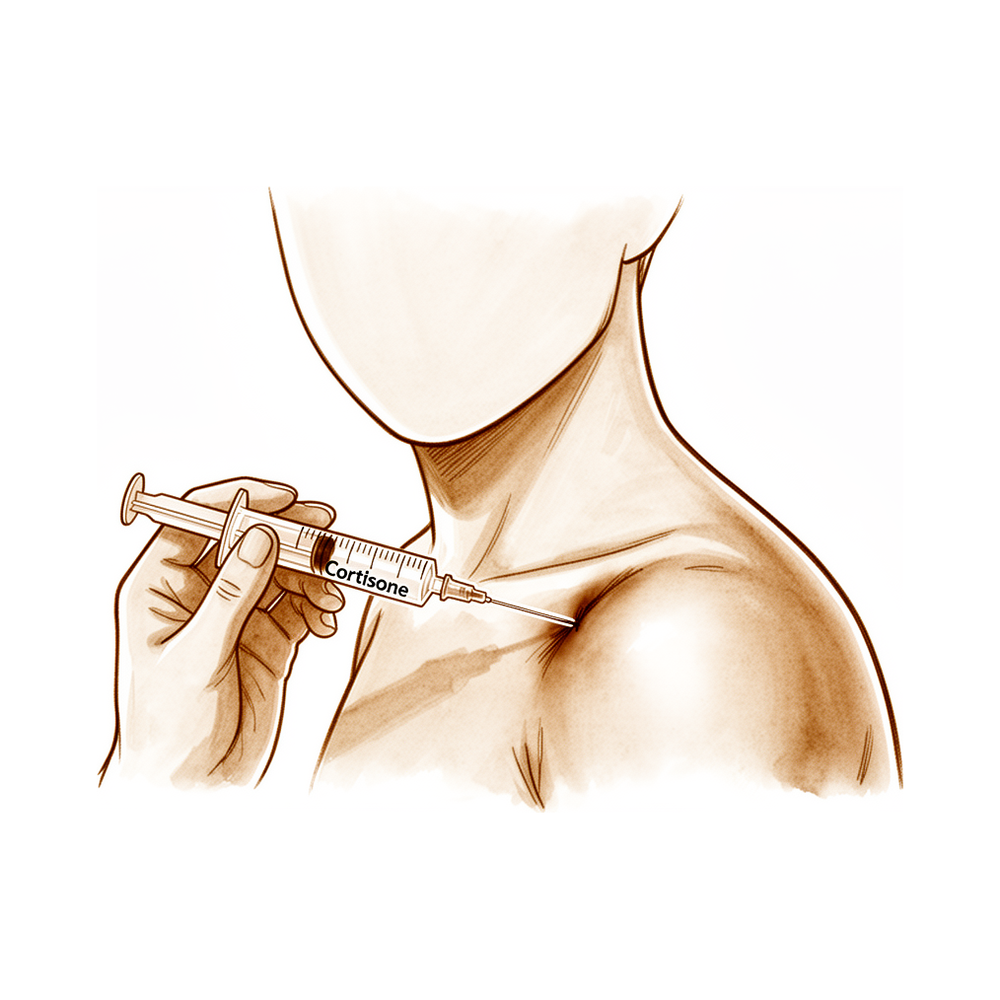
Una inyección de cortisona es una inyección de un potente medicamento antiinflamatorio, llamado corticosteroide, en una articulación o un tendón doloridos. El medicamento reduce la hinchazón y alivia el dolor en un punto concreto. No es un analgésico que se tome por la boca. Actúa en el lugar donde se coloca.
Su médico puede ofrecerle este tratamiento para varios problemas de la mano, la muñeca, el codo y el hombro. Entre ellos están el dedo en gatillo (un dedo que se engancha o se bloquea), el síndrome del túnel carpiano (presión sobre un nervio en la muñeca), el codo de tenista, la artrosis de la base del pulgar, el hombro congelado y algunos quistes ganglionares. También puede usarse después de algunas operaciones del hombro, aunque normalmente no durante el primer mes tras la cirugía [1].
La inyección no soluciona el problema de fondo. Proporciona alivio mientras su cuerpo se cura, o mientras usted hace ejercicios o lleva una férula. En el síndrome del túnel carpiano, por ejemplo, puede aliviar los síntomas durante un tiempo, pero la mayoría de las personas acaba necesitando cirugía para un control duradero [2]. En el codo de tenista, el alivio a corto plazo puede desaparecer, y los problemas suelen reaparecer más adelante [3]. Su médico hablará con usted sobre si una inyección es adecuada para su situación, o si tiene más sentido empezar por otra opción como el ejercicio, una férula o la cirugía.
¿Funciona?
La respuesta sincera es: depende de la afección que se trate.
En algunos problemas, las inyecciones funcionan bien. En el hombro congelado, una inyección de corticosteroide en la articulación alivia el dolor, mejora el funcionamiento del hombro y aumenta el rango de movimiento [4]. En la enfermedad de De Quervain (inflamación de los tendones en la base del pulgar), el dolor y los resultados clínicos mejoraron significativamente tras la inyección [5]. En la artrosis de la base del pulgar, los corticosteroides son una opción favorable porque son fáciles de administrar y funcionan bien [6], aunque el beneficio puede ser a corto plazo [7].
En otros problemas, el panorama es más variado. En el codo de tenista, las inyecciones de corticosteroides pueden aportar alivio a corto plazo, pero ese alivio a menudo se invierte pasadas seis semanas, y el problema reaparece con frecuencia [3]. La investigación indica que no deberían usarse corticosteroides en la mayoría de las personas que llevan menos de 12 meses con síntomas de codo de tenista [8]. En el síndrome del túnel carpiano, las inyecciones proporcionan un alivio seguro y eficaz durante un tiempo, pero la mayoría de las personas acaba necesitando cirugía para un control duradero [2].
Conviene conocer algunos hallazgos antes de elegir este tratamiento. En el dedo en gatillo, un tipo de corticosteroide (la betametasona) dejó de funcionar antes que otro (la triamcinolona) [9]. En la reparación del manguito rotador, no hubo señales claras de que una inyección de corticosteroide aumente el riesgo de que la reparación vuelva a fallar ni de infección [10]. Una única inyección antes de la cirugía del manguito rotador, administrada en el plazo de 1 año antes de la operación, no modificó las tasas de fallo, los resultados según los propios pacientes, el rango de movimiento ni la fuerza [11].
Las pruebas no son perfectas. Algunos de estos hallazgos proceden de ensayos pequeños o de revisiones, y hay pocas investigaciones sobre algunas afecciones. Su médico valorará las pruebas sobre su afección concreta y hablará con usted sobre si es probable que una inyección le ayude, o si tiene más sentido empezar por otra opción.
¿Cuáles son los riesgos?
La mayoría de las personas solo nota efectos a corto plazo en el lugar de la inyección. La propia inyección puede doler, y añadir un anestésico local (lidocaína) al corticosteroide cambia cuánto dolor siente durante la inyección y justo después [12]. Esa diferencia quizá no importe mucho a largo plazo, pero conviene preguntar por ella antes de la inyección.
El corticosteroide también puede afectar al tejido donde se coloca. En el codo de tenista, la investigación relaciona las inyecciones de corticosteroides con la acumulación de calcio en los tejidos blandos, y es probable que sea una complicación de la propia inyección [13]. En algunas personas tratadas por codo de tenista, una única inyección de corticosteroide dio peores resultados a largo plazo y el problema reapareció con más frecuencia 1 año después [14].
El medicamento puede llegar más allá del punto donde se inyectó. Si usted tiene diabetes tipo 2 y no usa insulina, una inyección de corticosteroide en el hombro puede elevar sus niveles de azúcar en sangre durante un tiempo corto [15]. Si tiene diabetes y recibe tratamiento para la enfermedad de De Quervain, es menos probable que una única inyección le funcione que a las personas sin diabetes, aunque las inyecciones posteriores no parecen perder su efecto [16].
Algunos riesgos que podrían preocuparle se han estudiado y no se han encontrado. Después de la reparación del manguito rotador, los estudios no encontraron pruebas claras de que una inyección de corticosteroide aumente el riesgo de que la reparación vuelva a romperse ni de infección [10]. Una inyección de corticosteroide antes de la cirugía de liberación del túnel carpiano no se relacionó con una mayor tasa de infección profunda después de la operación [17]. Las inyecciones repetidas para el síndrome del túnel carpiano resultaron seguras y no hicieron más arriesgada una cirugía posterior [18].
También importa con qué frecuencia se puede administrar una inyección. En el dedo en gatillo, un estudio no encontró complicaciones cuando se administró una inyección de 4 mg de triamcinolona con intervalos de al menos 1 mes [19]. En la enfermedad de De Quervain, una inyección dirigida a un solo compartimento tendinoso puede reducir la dosis de corticosteroide utilizada, lo que puede disminuir las complicaciones [20].
¿Es adecuado para usted?
Una inyección puede ser adecuada para usted si su dolor procede de un punto claro, como un dedo en gatillo, la artrosis de la base del pulgar o un hombro congelado. En la artrosis de la base del pulgar (artritis por desgaste en la base del pulgar), la investigación favorece las inyecciones de corticosteroides porque son fáciles de administrar y funcionan bien [6]. Si tiene síndrome del túnel carpiano y otras inyecciones no le han durado, se ha comprobado que repetir las inyecciones es seguro, y no hicieron más arriesgada una cirugía posterior [18].
Una inyección puede no ser adecuada para usted si sus síntomas de codo de tenista duran desde hace menos de 12 meses. La investigación indica que no deberían usarse corticosteroides en la mayoría de las personas en esa situación [8]. En el codo de tenista en general, el plasma rico en plaquetas (un tratamiento preparado a partir de su propia sangre) superó a las inyecciones de corticosteroides a los 6 meses, mientras que los corticosteroides funcionaron mejor durante el primer mes [21].
Es una decisión que usted toma junto con su médico. Su médico valorará su afección, sus síntomas y lo que ya ha probado. Pregunte qué se pretende conseguir con la inyección, cuánto puede durar el alivio y si los ejercicios, una férula o la cirugía serían mejores para usted. La sección de riesgos anterior explica los efectos secundarios con detalle, así que léala antes de decidir.
Conclusión
Puede merecer la pena considerar una inyección de cortisona en un problema claro y localizado en un punto, como un hombro congelado, la enfermedad de De Quervain o la artrosis de la base del pulgar. Espere un alivio que puede ser real pero a menudo de corta duración, y sepa que en algunas afecciones, como el codo de tenista o el síndrome del túnel carpiano, otros tratamientos o la cirugía pueden ser mejores para usted a largo plazo. La advertencia más importante: una inyección alivia los síntomas, pero no soluciona el problema de fondo.
Referencias
[1] Corticosteroid Injections After Rotator Cuff Repair Improve Function, Reduce Pain, and Are Safe: A Systematic Review. Arthroscopy, Sports Medicine, and Rehabilitation. 2021. DOI: 10.1016/j.asmr.2021.10.010
[2] Corticosteroid Injection for Carpal Tunnel Syndrome. The Journal of Hand Surgery. 2008. DOI: 10.1016/j.jhsa.2008.06.023
[3] Mobilisation with movement and exercise, corticosteroid injection, or wait and see for tennis elbow: randomised trial. BMJ. 2006. DOI: 10.1136/bmj.38961.584653.ae
[4] Intra-articular Steroid Injection for Frozen Shoulder: A Systematic Review and Meta-analysis of Randomized Controlled Trials With Trial Sequential Analysis. The American Journal of Sports Medicine. 2016. DOI: 10.1177/0363546516669944
[5] Prospective randomized comparison of ultrasonography-guided and blind corticosteroid injection for de Quervain's disease. Orthopaedics & Traumatology: Surgery & Research. 2020. DOI: 10.1016/j.otsr.2019.11.015
[6] Efficacy of Intra-Articular Corticosteroid Injection for Nonsurgical Management of Trapeziometacarpal Osteoarthritis: A Systematic Review and Meta-Analysis of Randomized Controlled Trials. The Journal of Hand Surgery. 2024. DOI: 10.1016/j.jhsa.2024.02.001
[7] Intra-Articular Corticosteroid Injections to Manage Trapeziometacarpal Osteoarthritis—a Systematic Review. HAND. 2015. DOI: 10.1007/s11552-015-9778-3
[8] Stop injecting corticosteroid into patients with tennis elbow, they are much more likely to get better by themselves!. Journal of Science and Medicine in Sport. 2010. DOI: 10.1016/j.jsams.2009.09.009
[9] The Effect of Corticosteroid Type on Failure Following Primary Trigger Finger Injection. The Journal of Hand Surgery. 2026. DOI: 10.1016/j.jhsa.2026.03.011
[10] Do Corticosteroid Injections Before or After Primary Rotator Cuff Repair Influence the Incidence of Adverse Events? A Subjective Synthesis. Arthroscopy. 2020. DOI: 10.1016/j.arthro.2020.01.039
[11] Timing of corticosteroid injection within 1 year prior to rotator cuff repair was not associated with increased risk of repair failure. JSES International. 2026. DOI: 10.1016/j.jseint.2026.101632
[12] Corticosteroid Injection With and Without Local Anesthetic for the Treatment of Trigger Finger: A Randomized Clinical Trial. The Journal of Hand Surgery. 2025. DOI: 10.1016/j.jhsa.2024.05.016
[13] Association of steroid injection with soft-tissue calcification in lateral epicondylitis. Journal of Shoulder and Elbow Surgery. 2019. DOI: 10.1016/j.jse.2018.10.009
[14] Effect of Corticosteroid Injection, Physiotherapy, or Both on Clinical Outcomes in Patients With Unilateral Lateral Epicondylalgia. JAMA. 2013. DOI: 10.1001/jama.2013.129
[15] The effect of steroid injection into the shoulder on glycemia in patients with type 2 diabetes. JSES International. 2022. DOI: 10.1016/j.jseint.2022.05.016
[16] Effectiveness of Corticosteroid Injections in Diabetic Patients With De Quervain Tenosynovitis. The Journal of Hand Surgery. 2022. DOI: 10.1016/j.jhsa.2022.02.018
[17] Ipsilateral Preoperative Corticosteroid Injection and Timing Not Associated With Postoperative Deep Infection After Carpal Tunnel Release. Journal of the American Academy of Orthopaedic Surgeons. 2025. DOI: 10.5435/jaaos-d-25-00317
[18] The safety and cost of repeated corticosteroid injections for carpal tunnel syndrome. Journal of Hand Surgery (European Volume). 2025. DOI: 10.1177/17531934251396629
[19] Safety and Efficacy of Low-Dose Triamcinolone Injection without Injection Frequency Limitation for Trigger Finger. Journal of Hand Surgery Global Online. 2025. DOI: 10.1016/j.jhsg.2025.01.005
[20] Is a Steroid Injection in Both Compartments More Effective than an Injection in the Extensor Pollicis Brevis Subcompartment Alone in Patients with de Quervain Disease? A Randomized, Controlled Trial. Clinical Orthopaedics & Related Research. 2021. DOI: 10.1097/corr.0000000000002018
[21] Corticosteroid injections for the treatment of lateral epicondylitis are superior to platelet-rich plasma at 1 month but platelet-rich plasma is more effective at 6 months: an updated systematic review and meta-analysis of level 1 and 2 studies. Journal of Shoulder and Elbow Surgery. 2023. DOI: 10.1016/j.jse.2023.04.018
Evidence & references
This is the clinical evidence summary written for health professionals. It is technical, and it lists the research this page was built from. You do not need to read it to understand your treatment or to make a decision about it.
Overview
General Principles and Safety
- Future studies should standardize reporting of corticosteroid exposure, including cumulative dose, peak dose, route, duration, and timing relative to symptom onset or diagnosis [1].
- The role of local steroid therapy in the hand remains controversial due to the limited number of controlled studies and the non-standardized nature of the disorders treated [22].
- Persistent atrophic change from corticosteroid injection is a likely scenario for flexor pollicis longus tendon rupture [25].
Shoulder and Rotator Cuff
- Corticosteroid injections should be administered only after the first postoperative month to minimize the potential risk for adverse events following rotator cuff repair [4].
- Corticosteroid injections provide benefit by relieving pain and improving functional outcome scores following rotator cuff repair [5].
- There were no conclusive data to suggest an increased risk of retear or infection with corticosteroid injection use based on a subjective synthesis of ranges [8].
- An interval of at least three months is recommended between corticosteroid injection and shoulder arthroplasty [34].
- Triamcinolone is supported as a more viable corticosteroid option for shoulder injection compared to methylprednisolone [6].
- When corticosteroid injection is used to treat adhesive capsulitis, both intra-articular and subacromial injection sites can be selected [18].
- Selective corticosteroid use is supported when emergency room recovery is a primary goal for frozen shoulder, while manipulation under anesthesia without corticosteroid injection remains a reasonable alternative [3].
Upper Extremity Tendons and Joints
- Betamethasone injections resulted in a significantly shorter time to failure than triamcinolone injections for primary trigger finger [2].
- Corticosteroid injections are effective in 57% of patients with trigger finger [14].
- Steroid injection is an appropriate first treatment for trigger finger and thumb in most patients [11].
- The effects of steroid injection for trigger fingers and thumbs are not considered unreliable or temporary [10].
- No complications were observed for 4 mg triamcinolone injections when administered at intervals of at least 1 month for trigger finger [15].
- It is recommended to wait for at least one month before considering another injection or alternative treatments for first presentation trigger digits [54].
- An injection targeting the extensor pollicis brevis subcompartment alone can reduce the dose of steroids used in de Quervain disease, perhaps thereby decreasing complications related to steroid injections [17].
- The positive outcome after corticosteroid injection therapy and the absence of complications justifies this invasive approach in rock climbing athletes with tenosynovitis [7].
- There is no advantage to aspiration plus steroid injection over simple aspiration for wrist ganglia [9].
- Corticosteroids are a favorable option for intra-articular injection for the management of trapeziometacarpal osteoarthritis given their affordability, ease of administration, and efficacy [21].
Lateral Epicondylitis
- Corticosteroid injections should not be used to treat most patients with tennis elbow with symptom duration of less than 12 months [12].
- The significant short-term benefits of corticosteroid injection for tennis elbow are paradoxically reversed after six weeks, with high recurrence rates, implying that this treatment should be used with caution [13].
- Ketorolac injection provides pain relief and functional outcomes comparable to triamcinolone for lateral epicondylitis, offering a safe and effective steroid-sparing alternative, particularly for patients with shorter symptom duration or contraindications to corticosteroids [20].
How It Works
Mechanism of Action and Tissue Effects
- Corticosteroids suppress the expression of MMP-1, -3, and -13 mRNA in equine cartilage [37].
- A single intraarticular injection of methylprednisolone suppresses the cartilage-specific (V + C) fibronectin isoform in both normal and inflamed joints [36].
- Triamcinolone hexacetonide exhibits chondrotoxic effects dependent on time and dosage [27].
- Histological analysis one week post-injection showed collagen attenuation, increased expression of MMP-3, and apoptotic cells in corticosteroid-treated groups [35].
- Repeated subacromial injections of triamcinolone may cause damage to the rotator cuff in rats [40].
- Intra-articular corticosteroid injection reduces joint stiffness after an experimental periarticular fracture, with a 34% increase in stiffness at three weeks compared to 133% for saline and 224% for no injection [41].
Efficacy by Condition
- Complete relief of symptoms was obtained in 76% of digits treated with repeated corticosteroid injections for stenosing tenovaginitis [31].
- Subacromial steroid injection is an effective therapy for the treatment of subacromial impingement syndrome [28].
- Local corticosteroid injection provides greater clinical improvement in symptoms one month after injection compared with placebo for carpal tunnel syndrome [23].
- Local corticosteroid injection provides significantly greater improvement than oral corticosteroid for up to 3 months for carpal tunnel syndrome [23].
- Local corticosteroid injection does not significantly improve outcomes compared with anti-inflammatory treatment, splinting, or laser treatment beyond 8 weeks for carpal tunnel syndrome [23].
- Corticosteroid injections provide benefit by relieving pain and improving functional outcome scores after rotator cuff repair [5].
- Corticosteroid injections improve function and reduce pain after rotator cuff repair [4].
- The significant short term benefits of corticosteroid injection for tennis elbow are reversed after six weeks with high recurrence rates [13].
- Combining a corticosteroid injection with exercise is not superior to exercise or no exercise for plantar fasciopathy [16].
- An injection targeting the extensor pollicis brevis subcompartment alone can reduce the dose of steroids used in de Quervain disease [17].
- Both intra-articular and subacromial injection sites can be selected when treating adhesive capsulitis with corticosteroid injection [18].
- Corticosteroid injection therapy for rock climber's tenosynovitis results in positive outcomes with the absence of complications [7].
Comparative Efficacy and Formulation
- Triamcinolone is a more viable corticosteroid option for shoulder injection compared to methylprednisolone [6].
- Negligible or intermittent pain persisted for 8 weeks in the noncortisone group and 6 weeks in the cortisone group after percutaneous release of trigger digit [26].
- There is a statistically significant difference in pain during and shortly after injection when using a steroid with lidocaine versus steroid alone for trigger finger [30].
Safety, Complications, and Contraindications
- Preoperative corticosteroid injection at all studied timepoints was not associated with an increased risk of postoperative deep infection after carpal tunnel release [19].
- Local corticosteroid injection to the shoulder can create a significant, short-term increase in systemic glucose levels in patients with type 2 diabetes not treated with insulin [39].
- Corticosteroid administration may be an additional factor in the multifactorial causes of Kienböck's disease [38].
- Serial saline solution injections are a promising, cost-effective, and low-risk treatment option for subcutaneous lipoatrophy and skin depigmentation following cortisone injection in the elbow [29].
Clinical Recommendations and Guidelines
- Steroid injection is an appropriate first treatment for trigger finger in most patients [11].
- Corticosteroid injections should be used with caution in the management of tennis elbow due to reversed short-term benefits and high recurrence rates [13].
- Selective corticosteroid use is supported when early recovery is a primary goal for frozen shoulder, while manipulation under anesthesia without corticosteroid injection remains a reasonable alternative [3].
What the Evidence Shows
Trigger Finger and Stenosing Tenovaginitis
- Steroid injection is considered an appropriate first treatment for trigger finger in most patients [11].
- There is a statistically significant difference in pain during and shortly after injection when using a steroid with lidocaine versus steroid alone for trigger finger, but that difference may not be clinically relevant [30].
Lateral Epicondylitis (Tennis Elbow)
- A single, blinded injection of corticosteroid medication was associated with poorer long-term outcomes and higher recurrence rates 1 year after receiving an injection in patients with unilateral lateral epicondylalgia [43].
- Ketorolac injection provides pain relief and functional outcomes comparable to triamcinolone for lateral epicondylitis, offering a safe and effective steroid-sparing alternative [20].
- Platelet-rich plasma has no advantage over steroid injections within the first month of treatment for lateral epicondylitis, but it is superior to steroids at both 3 and 6 months [33].
Rotator Cuff and Shoulder
- Corticosteroid injections after rotator cuff repair improve function, reduce pain, and are safe [4].
- Corticosteroid injections should be administered only after the first postoperative month following rotator cuff repair to minimize the potential risk for adverse events [4].
- Corticosteroid injections provide benefit by relieving pain and improving functional outcome scores in rotator cuff repair patients [5].
- There were no conclusive data to suggest an increased risk of retear or infection with corticosteroid injection use before or after primary rotator cuff repair based on a subjective synthesis of ranges [8].
- Timing of a single preoperative corticosteroid injection within 1 year of rotator cuff repair did not significantly affect failure rates, patient-reported outcomes, range of motion, or strength [49].
- Triamcinolone is supported as a more viable corticosteroid option for shoulder injection compared to methylprednisolone based on efficacy and steroid flare reaction rates [6].
- Corticosteroids have better efficacy in the short term, whereas platelet-rich plasma is more beneficial for long-term recovery in rotator cuff disease treatment [44].
Adhesive Capsulitis (Frozen Shoulder)
- Intra-articular steroid injection is effective and safe for frozen shoulder, relieving pain, improving functional performance, and increasing range of motion [48].
- Findings support selective corticosteroid use when emergency room recovery is a primary goal for frozen shoulder, while manipulation under anesthesia without corticosteroid injection remains a reasonable alternative [3].
Carpal Tunnel Syndrome
- Local corticosteroid injection provides greater clinical improvement in symptoms 1 month after injection compared with placebo for carpal tunnel syndrome [23].
- Corticosteroid injection is safe and effective for the temporary relief of carpal tunnel syndrome symptoms, but most patients will eventually require surgery for long-term control of their symptoms [47].
- Both platelet-rich plasma and steroid injections were more effective than splinting alone in improving symptoms and function in patients with bilateral moderate carpal tunnel syndrome [45].
Wrist and Hand Tendons
- There is no advantage to aspiration plus steroid injection over simple aspiration for the conservative management of wrist ganglia [9].
- Patients with diabetes mellitus have a decreased probability of success following a single corticosteroid injection for de Quervain tenosynovitis in comparison to nondiabetic patients [53].
- The effectiveness of each additional corticosteroid injection for de Quervain tenosynovitis does not appear to diminish in patients with diabetes mellitus [53].
- Pain, clinical outcomes, and the incidence and severity of skin hypopigmentation were not significantly different between ultrasonography-guided and blind corticosteroid injection groups for de Quervain's disease [46].
Plantar Fasciopathy
- Combining a corticosteroid injection with exercise is not superior to exercise or no exercise for patients with plantar fasciopathy [16].
Osteoarthritis
- Corticosteroids are a favorable option when considering the choice of intra-articular injection for the management of trapeziometacarpal osteoarthritis given their affordability, ease of administration, and efficacy [21].
- There is a lack of robust evidence to support the use of image guidance to improve accuracy and clinical effectiveness of steroid injection for thumb carpometacarpal joint osteoarthritis [24].
General Safety and Reporting
- Corticosteroid and hyaluronic acid injections remain a safe treatment option regarding the risk of severe adverse events requiring hospitalization [32].
Practical Considerations
Dosing and Reporting
- An injection targeting the extensor pollicis brevis subcompartment alone can reduce the dose of steroids used, perhaps thereby decreasing complications related to steroid injections [17].
Agent Selection and Formulation
- Triamcinolone hexacetonide exhibits chondrotoxic effects dependent on time and dosage, raising concerns regarding the potential risk of intra-meniscal corticosteroid injection [27].
Timing and Frequency
- Cost analysis revealed that giving up to four injections before surgery reduced overall cost for carpal tunnel syndrome [52].
Efficacy and Outcomes
- The significant short term benefits of corticosteroid injection for tennis elbow are paradoxically reversed after six weeks, with high recurrence rates [13].
- Corticosteroid injections are superior to platelet-rich plasma at 1 month for lateral epicondylitis, but platelet-rich plasma is more effective at 3 and 6 months [33].
- Corticosteroid injections are a favorable option for the management of trapeziometacarpal osteoarthritis given their affordability, ease of administration, and efficacy [21].
- A smaller cohort may have benefit for up to six months after one x-ray guided steroid injection for proximal interphalangeal joint osteoarthritis [50].
- Volar corticosteroid injection for distal interphalangeal ganglion cysts allows for ease and consistency of needle placement for intra-articular delivery while minimizing potential soft tissue and infection concerns [51].
- Positive outcomes after corticosteroid injection therapy for rock climber's tenosynovitis, with the absence of complications, justify this invasive approach in rock climbing athletes [7].
- Corticosteroid injections should be used with caution in the management of tennis elbow due to high recurrence rates after six weeks [13].
Safety and Complications
- There were no conclusive data to suggest an increased risk of retear or infection with corticosteroid injection use based on a subjective synthesis of ranges for rotator cuff repair [8].
- The significant association of steroid injections with soft-tissue calcification in lateral epicondylitis suggests that this calcification is likely to be an iatrogenic complication of steroid injection [42].
Technique and Guidance
- There is a lack of robust evidence to support use of image guidance to improve accuracy and clinical effectiveness of steroid injection for thumb carpometacarpal joint osteoarthritis [24].
- These findings support selective corticosteroid use when early recovery is a primary goal for frozen shoulder, while manipulation under anesthesia without corticosteroid injection remains a reasonable alternative [3].
Key Evidence
- [L4] Future studies should standardize reporting of corticosteroid exposure, including cumulative dose, peak dose, route, duration, and timing relative to symptom onset or diagnosis. [1] (10.1016/j.xrrt.2026.100877)
- [L3] Betamethasone injections resulted in a significantly shorter time to failure than triamcinolone injections. [2] (10.1016/j.jhsa.2026.03.011)
- [L2] These findings support selective corticosteroid use when ER recovery is a primary goal, while MUA without corticosteroid injection remains a reasonable alternative. [3] (10.1016/j.otsr.2026.104779)
- [L1] Corticosteroid injections should be administered only after the first postoperative month to minimize the potential risk for adverse events. [4] (10.1016/j.asmr.2021.10.010)
- [L4] Corticosteroid injections provide benefit by relieving pain and improving functional outcome scores. [5] (10.1016/j.arthro.2020.04.044)
- [L2] This study supports TA as a more viable corticosteroid option for shoulder injection. [6] (10.1016/j.jse.2023.05.023)
- [L4] The positive outcome after corticosteroid injection therapy and the absence of complications justifies this invasive approach in rock climbing athletes. [7] (10.1016/j.hansur.2019.07.004)
- [L3] There were no conclusive data to suggest an increased risk of retear or infection with corticosteroid injection use based on a subjective synthesis of ranges. [8] (10.1016/j.arthro.2020.01.039)
- [L1] We conclude that there is no advantage to aspiration plus steroid injection over simple aspiration. [9] (10.1016/0266-7681(94)90334-4)
- [L3] We disagree with authors who recommend an operation and who state that the effects of steroid injection are unreliable and temporary. [10] (10.1016/0363-5023(89)90199-8)
- [L1] We feel that steroid injection is an appropriate first treatment for this condition in most patients. [11] (10.1016/0266-7681(92)90014-s)
- [Paper] Corticosteroid injections should not be used to treat most patients with tennis elbow with symptom duration of less than 12 months. [12] (10.1016/j.jsams.2009.09.009)
- [L1] The significant short term benefits of corticosteroid injection are paradoxically reversed after six weeks, with high recurrence rates, implying that this treatment should be used with caution in the management of tennis elbow. [13] (10.1136/bmj.38961.584653.ae)
- [L1] Corticosteroid injections are effective in 57% of patients with trigger finger. [14] (10.5435/00124635-200703000-00006)
- [L4] No complications were observed for 4 mg triamcinolone injections when administered at intervals of at least 1 month. [15] (10.1016/j.jhsg.2025.01.005)
- [L1] The results indicate that combining a corticosteroid injection with exercise is not superior to exercise or no exercise. [16] (10.1136/bjsports-2023-106948)
- [L1] An injection targeting the EPB subcompartment alone can reduce the dose of steroids used, perhaps thereby decreasing complications related to steroid injections. [17] (10.1097/corr.0000000000002018)
- [L1] When corticosteroid injection is used to treat adhesive capsulitis, both injection sites can be selected. [18] (10.1155/2019/1274790)
- [L3] Preoperative corticosteroid injection at all studied timepoints was not associated with an increased risk of postoperative deep infection, a divergence from existing literature. [19] (10.5435/jaaos-d-25-00317)
- [L1] Ketorolac injection provides pain relief and functional outcomes comparable to triamcinolone for LE, offering a safe and effective steroid-sparing alternative, particularly for patients with shorter symptom duration or contraindications to corticosteroids. [20] (10.1016/j.jse.2025.11.012)
- [L1] Given the affordability, ease of administration, and efficacy associated with corticosteroids, they are a favorable option when considering the choice of intra-articular injection for the management of TMC OA. [21] (10.1016/j.jhsa.2024.02.001)
- [L5] The role of local steroid therapy in the hand remains controversial due to the limited number of controlled studies and the non-standardized nature of the disorders treated. [22] (10.1016/s0363-5023(84)80080-5)
- [L1] Local corticosteroid injection provides greater clinical improvement in symptoms 1 month after injection compared with placebo and significantly greater improvement than oral corticosteroid for up to 3 months, but does not significantly improve outcomes compared with anti-inflammatory treatment, splinting, or laser treatment beyond 8 weeks. [23] (10.1177/1753193413490848)
- [L4] However, there is lack of robust evidence to support use of image guidance to improve accuracy and clinical effectiveness of steroid injection for thumb CMCJ and warrants further research. [24] (10.1177/17589983261430876)
- [L5] The rupture is considered related to the steroid injection, suggesting that persistent atrophic change from the injection is a likely scenario. [25] (10.1016/s0363-5023(96)80172-9)
- [L3] Negligible or intermittent pain persisted for 8 weeks in the noncortisone group and 6 weeks in the cortisone group after percutaneous release. [26] (10.1016/s0363-5023(05)80196-0)
- [L5] The authors express concern regarding the potential risk of intra-meniscal corticosteroid injection, noting that triamcinolone hexacetonide exhibits chondrotoxic effects dependent on time and dosage. [27] (10.1016/j.otsr.2024.104049)
- [L1] We conclude that the use of subacromial steroid injection is an effective therapy for the treatment of subacromial impingement syndrome. [28] (10.1016/s1058-2746(96)80094-2)
- [L4] Serial saline solution injections are a promising, cost-effective, and low-risk treatment option for subcutaneous lipoatrophy and skin depigmentation following cortisone injection in the elbow. [29] (10.1016/j.jseint.2020.08.009)
- [L2] There is a statistically significant difference in pain during and shortly after injection when using a steroid with lidocaine versus steroid alone, but that difference may not be clinically relevant. [30] (10.1016/j.jhsa.2024.05.016)
- [L4] Complete relief of symptoms was obtained in 76% of digits treated with repeated corticosteroid injections. [31] (10.1016/0266-7681_89_90138-1)
- [L2] Corticosteroid and hyaluronic acid injections remain a safe treatment option regarding the risk of severe adverse events requiring hospitalization. [32] (10.1186/s12891-026-09752-7)
- [L1] PRP has no advantage over steroid injections within the first month of treatment, but it is superior to steroids at both 3 and 6 months. [33] (10.1016/j.jse.2023.04.018)
- [L1] Thus, an interval of at least three months is recommended between injection and arthroplasty. [34] (10.1177/17585732241261659)
- [Paper] Histological analysis, at 1-week post-injection, showed collagen attenuation, increased expression of MMP-3 and apoptotic cells in the corticosteroid groups. [35] (10.1002/jor.22681)
- [Paper] The cartilage-specific (V + C) fibronectin isoform was suppressed in both normal and inflamed joints by a single intraarticular injection of methylprednisolone. [36] (10.1016/s0736-0266(00)00060-7)
- [Paper] Treatment with corticosteroids suppressed expression of MMP-1, -3, and -13 mRNA. [37] (10.1002/jor.21001)
- [L5] This case suggests that corticosteroid administration may be an additional factor in the multifactorial causes of Kienböck's disease. [38] (10.1016/0363-5023(89)90024-5)
- [L2] Local corticosteroid injection to the shoulder can create a significant, short-term increase in systemic glucose levels in patients with type 2 diabetes not treated with insulin. [39] (10.1016/j.jseint.2022.05.016)
- [Paper] These results show that repeated subacromial injections of triamcinolone may cause damage to the rotator cuff of the rat, indicating cautious use of subacromial steroid injections in human beings. [40] (10.1016/s1058-2746(99)90141-6)
- [Paper] Three weeks after injury, joint stiffness increased 34% in ankles injected with the steroid, which was significantly less than the 133% increase in saline-injected ankles and the 224% increase in ankles treated with no injection. [41] (10.1016/s0363-5023(09)91083-8)
- [L3] The significant association of steroid injections with soft-tissue calcification in LE suggests that this calcification is likely to be an iatrogenic complication of steroid injection. [42] (10.1016/j.jse.2018.10.009)
- [L1] A single, blinded injection of corticosteroid medication was associated with poorer long-term outcomes and higher recurrence rates 1 year after receiving an injection in patients with unilateral lateral epicondylalgia. [43] (10.1001/jama.2013.129)
- [L1] Current analysis showed that corticosteroids have better efficacy in short term, whereas PRP is more beneficial for longterm recovery. [44] (10.1016/j.jse.2023.01.037)
- [L1] Both PRP and steroid injections were more effective than splinting alone in improving symptoms and function. [45] (10.1016/j.injury.2026.113018)
- [L1] Pain, clinical outcomes, and the incidence and severity of skin hypopigmentation were not significantly different between the ultrasonography-guided and blind corticosteroid injection groups. [46] (10.1016/j.otsr.2019.11.015)
- [L5] Corticosteroid injection is safe and effective for the temporary relief of carpal tunnel syndrome symptoms, but most patients will eventually require surgery for long-term control of their symptoms. [47] (10.1016/j.jhsa.2008.06.023)
- [L1] Intra-articular steroid injection is effective and safe for frozen shoulder, relieving pain, improving functional performance, and increasing range of motion. [48] (10.1177/0363546516669944)
- [L2] Timing of a single preoperative corticosteroid injection within 1 year of rotator cuff repair did not significantly affect failure rates, patient-reported outcomes, range of motion, or strength, suggesting that one injection before repair does not strongly influence outcomes. [49] (10.1016/j.jseint.2026.101632)
- [L4] A smaller cohort may have benefit for up to six months after one injection. [50] (10.1142/s0218810417500277)
- [L4] This technique allows for ease and consistency of needle placement for intra-articular corticosteroid delivery while minimizing the potential soft tissue and infection concerns described with other techniques. [51] (10.1177/1558944717744336)
- [L3] Cost analysis revealed that giving up to four injections before surgery reduced overall cost. [52] (10.1177/17531934251396629)
- [L4] Patients with diabetes mellitus have a decreased probability of success following a single corticosteroid injection for de Quervain tenosynovitis in comparison to nondiabetic patients, but the effectiveness of each additional injection does not appear to diminish. [53] (10.1016/j.jhsa.2022.02.018)
- [L3] It is recommended to wait for at least one month before considering another injection or alternative treatments. [54] (10.1142/s2424835520500253)
References
[1] Corticosteroid Dose Reporting in Atraumatic Osteonecrosis of the Humeral Head: A Scoping Review. JSES Reviews, Reports, and Techniques. 2026. DOI: 10.1016/j.xrrt.2026.100877
[2] The Effect of Corticosteroid Type on Failure Following Primary Trigger Finger Injection. The Journal of Hand Surgery. 2026. DOI: 10.1016/j.jhsa.2026.03.011
[3] Manipulation under anesthesia with vs without intra-articular corticosteroid injection for frozen shoulder: a systematic review and meta-analysis. Orthopaedics & Traumatology: Surgery & Research. 2026. DOI: 10.1016/j.otsr.2026.104779
[4] Corticosteroid Injections After Rotator Cuff Repair Improve Function, Reduce Pain, and Are Safe: A Systematic Review. Arthroscopy, Sports Medicine, and Rehabilitation. 2021. DOI: 10.1016/j.asmr.2021.10.010
[5] Corticosteroid Injections May Increase Retear and Revision Rates of Rotator Cuff Repair: A Systematic Review. Arthroscopy. 2020. DOI: 10.1016/j.arthro.2020.04.044
[6] Comparison of triamcinolone and methylprednisolone efficacy and steroid flare reaction rates after shoulder corticosteroid injection: a prospective interrupted time series study. Journal of Shoulder and Elbow Surgery. 2023. DOI: 10.1016/j.jse.2023.05.023
[7] Efficacy of corticosteroid injection in rock climber's tenosynovitis. Hand Surgery and Rehabilitation. 2019. DOI: 10.1016/j.hansur.2019.07.004
[8] Do Corticosteroid Injections Before or After Primary Rotator Cuff Repair Influence the Incidence of Adverse Events? A Subjective Synthesis. Arthroscopy. 2020. DOI: 10.1016/j.arthro.2020.01.039
[9] Conservative Management of Wrist Ganglia: Aspiration Versus Steroid Injection. Journal of Hand Surgery. 1994. DOI: 10.1016/0266-7681(94)90334-4
[10] Efficacy of cortisone injection in treatment of trigger fingers and thumbs. The Journal of Hand Surgery. 1989. DOI: 10.1016/0363-5023(89)90199-8
[11] Controlled Study of the Use of Local Steroid Injection in the Treatment of Trigger Finger and Thumb. Journal of Hand Surgery. 1992. DOI: 10.1016/0266-7681(92)90014-s
[12] Stop injecting corticosteroid into patients with tennis elbow, they are much more likely to get better by themselves!. Journal of Science and Medicine in Sport. 2010. DOI: 10.1016/j.jsams.2009.09.009
[13] Mobilisation with movement and exercise, corticosteroid injection, or wait and see for tennis elbow: randomised trial. BMJ. 2006. DOI: 10.1136/bmj.38961.584653.ae
[14] Corticosteroid Injections in the Treatment of Trigger Finger: A Level I and II Systematic Review. Journal of the American Academy of Orthopaedic Surgeons. 2007. DOI: 10.5435/00124635-200703000-00006
[15] Safety and Efficacy of Low-Dose Triamcinolone Injection without Injection Frequency Limitation for Trigger Finger. Journal of Hand Surgery Global Online. 2025. DOI: 10.1016/j.jhsg.2025.01.005
[16] Does a corticosteroid injection plus exercise or exercise alone add to the effect of patient advice and a heel cup for patients with plantar fasciopathy? A randomised clinical trial. British Journal of Sports Medicine. 2023. DOI: 10.1136/bjsports-2023-106948
[17] Is a Steroid Injection in Both Compartments More Effective than an Injection in the Extensor Pollicis Brevis Subcompartment Alone in Patients with de Quervain Disease? A Randomized, Controlled Trial. Clinical Orthopaedics & Related Research. 2021. DOI: 10.1097/corr.0000000000002018
[18] Intra-Articular versus Subacromial Corticosteroid Injection for the Treatment of Adhesive Capsulitis: A Meta-Analysis and Systematic Review. BioMed Research International. 2019. DOI: 10.1155/2019/1274790
[19] Ipsilateral Preoperative Corticosteroid Injection and Timing Not Associated With Postoperative Deep Infection After Carpal Tunnel Release. Journal of the American Academy of Orthopaedic Surgeons. 2025. DOI: 10.5435/jaaos-d-25-00317
[20] The KINDLE trial: ketorolac vs. triamcinolone injections for lateral epicondylitis- a non-inferiority randomized controlled multicentric trial. Journal of Shoulder and Elbow Surgery. 2026. DOI: 10.1016/j.jse.2025.11.012
[21] Efficacy of Intra-Articular Corticosteroid Injection for Nonsurgical Management of Trapeziometacarpal Osteoarthritis: A Systematic Review and Meta-Analysis of Randomized Controlled Trials. The Journal of Hand Surgery. 2024. DOI: 10.1016/j.jhsa.2024.02.001
[22] Local steroid therapy in the hand. The Journal of Hand Surgery. 1984. DOI: 10.1016/s0363-5023(84)80080-5
[23] Cochrane corner: local corticosteroid injection for carpal tunnel syndrome. Journal of Hand Surgery (European Volume). 2013. DOI: 10.1177/1753193413490848
[24] Guided steroid injection for thumb carpometacarpal joint (CMCJ) osteoarthritis: A scoping review. Hand Therapy. 2026. DOI: 10.1177/17589983261430876
[25] Flexor pollicis longus tendon rupture after corticosteroid injection. The Journal of Hand Surgery. 1996. DOI: 10.1016/s0363-5023(96)80172-9
[26] Percutaneous release of trigger digit with and without cortisone injection. The Journal of Hand Surgery. 1997. DOI: 10.1016/s0363-5023(05)80196-0
[27] Intra-meniscal corticosteroid injections: Easier said than done. Orthopaedics & Traumatology: Surgery & Research. 2025. DOI: 10.1016/j.otsr.2024.104049
[28] An analysis of the efficacy of corticosteroid injections for the treatment of subacromial impingement syndrome. Journal of Shoulder and Elbow Surgery. 1996. DOI: 10.1016/s1058-2746(96)80094-2
[29] Serial saline solution injections for the treatment of lipoatrophy and depigmentation after corticosteroid injection for medial epicondylitis. JSES International. 2020. DOI: 10.1016/j.jseint.2020.08.009
[30] Corticosteroid Injection With and Without Local Anesthetic for the Treatment of Trigger Finger: A Randomized Clinical Trial. The Journal of Hand Surgery. 2025. DOI: 10.1016/j.jhsa.2024.05.016
[31] A Long-Term Follow-Up of the Effect of Repeated Corticosteroid Injections for Stenosing Tenovaginitis. Journal of Hand Surgery. 1989. DOI: 10.1016/0266-7681_89_90138-1
[32] Safety of intra-articular corticosteroid and hyaluronic acid injections: a 14-year population-based cohort study of 404,797 patients. BMC Musculoskeletal Disorders. 2026. DOI: 10.1186/s12891-026-09752-7
[33] Corticosteroid injections for the treatment of lateral epicondylitis are superior to platelet-rich plasma at 1 month but platelet-rich plasma is more effective at 6 months: an updated systematic review and meta-analysis of level 1 and 2 studies. Journal of Shoulder and Elbow Surgery. 2023. DOI: 10.1016/j.jse.2023.04.018
[34] The safety of corticosteroid injection prior to shoulder arthroplasty: A systematic review. Shoulder & Elbow. 2024. DOI: 10.1177/17585732241261659
[35] Temporary inductions of matrix metalloprotease-3 (MMP-3) expression and cell apoptosis are associated with tendon degeneration or rupture after corticosteroid injection. Journal of Orthopaedic Research. 2014. DOI: 10.1002/jor.22681
[36] Corticosteroids alter the differentiated phenotype of articular chondrocytes. Journal of Orthopaedic Research. 2001. DOI: 10.1016/s0736-0266(00)00060-7
[37] MMP‐mediated collagen breakdown induced by activated protein C in equine cartilage is reduced by corticosteroids. Journal of Orthopaedic Research. 2009. DOI: 10.1002/jor.21001
[38] Kienböck's disease in a patient with Crohn's enteritis treated with corticosteroids. The Journal of Hand Surgery. 1989. DOI: 10.1016/0363-5023(89)90024-5
[39] The effect of steroid injection into the shoulder on glycemia in patients with type 2 diabetes. JSES International. 2022. DOI: 10.1016/j.jseint.2022.05.016
[40] Effect of steroid injections on the rotator cuff: An experimental study in rats. Journal of Shoulder and Elbow Surgery. 1999. DOI: 10.1016/s1058-2746(99)90141-6
[41] Intra-articular corticosteroid reduces joint stiffness after an experimental periarticular fracture. The Journal of Hand Surgery. 1992. DOI: 10.1016/s0363-5023(09)91083-8
[42] Association of steroid injection with soft-tissue calcification in lateral epicondylitis. Journal of Shoulder and Elbow Surgery. 2019. DOI: 10.1016/j.jse.2018.10.009
[43] Effect of Corticosteroid Injection, Physiotherapy, or Both on Clinical Outcomes in Patients With Unilateral Lateral Epicondylalgia. JAMA. 2013. DOI: 10.1001/jama.2013.129
[44] Comparison of the effects of platelet-rich plasma and corticosteroid injection in rotator cuff disease treatment: a systematic review and meta-analysis. Journal of Shoulder and Elbow Surgery. 2023. DOI: 10.1016/j.jse.2023.01.037
[45] Comparison of the effectiveness of platelet-rich plasma (PRP) injection and steroid injection in patients with bilateral moderate carpal tunnel syndrome: a prospective randomized controlled trial. Injury. 2026. DOI: 10.1016/j.injury.2026.113018
[46] Prospective randomized comparison of ultrasonography-guided and blind corticosteroid injection for de Quervain's disease. Orthopaedics & Traumatology: Surgery & Research. 2020. DOI: 10.1016/j.otsr.2019.11.015
[47] Corticosteroid Injection for Carpal Tunnel Syndrome. The Journal of Hand Surgery. 2008. DOI: 10.1016/j.jhsa.2008.06.023
[48] Intra-articular Steroid Injection for Frozen Shoulder: A Systematic Review and Meta-analysis of Randomized Controlled Trials With Trial Sequential Analysis. The American Journal of Sports Medicine. 2016. DOI: 10.1177/0363546516669944
[49] Timing of corticosteroid injection within 1 year prior to rotator cuff repair was not associated with increased risk of repair failure. JSES International. 2026. DOI: 10.1016/j.jseint.2026.101632
[50] X-ray Guided Steroid Injections for Proximal Interphalangeal Joint Osteoarthritis of the Fingers. The Journal of Hand Surgery (Asian-Pacific Volume). 2017. DOI: 10.1142/s0218810417500277
[51] Treatment of Distal Interphalangeal Ganglion Cysts by Volar Corticosteroid Injection. HAND. 2017. DOI: 10.1177/1558944717744336
[52] The safety and cost of repeated corticosteroid injections for carpal tunnel syndrome. Journal of Hand Surgery (European Volume). 2025. DOI: 10.1177/17531934251396629
[53] Effectiveness of Corticosteroid Injections in Diabetic Patients With De Quervain Tenosynovitis. The Journal of Hand Surgery. 2022. DOI: 10.1016/j.jhsa.2022.02.018
[54] Time to Resolution of Triggering after Steroid Injection for First Presentation Trigger Digits. The Journal of Hand Surgery (Asian-Pacific Volume). 2020. DOI: 10.1142/s2424835520500253