Patients › Rehabilitation
Reparación de tendones flexores
Un plan de recuperación mediante movilización temprana tras la reparación de un tendón flexor en el dedo, que utiliza la férula corta de Manchester para mover el tendón en proceso de cicatrización de forma suave y segura a partir de la primera semana, protegiendo al mismo tiempo la zona reparada durante seis semanas.
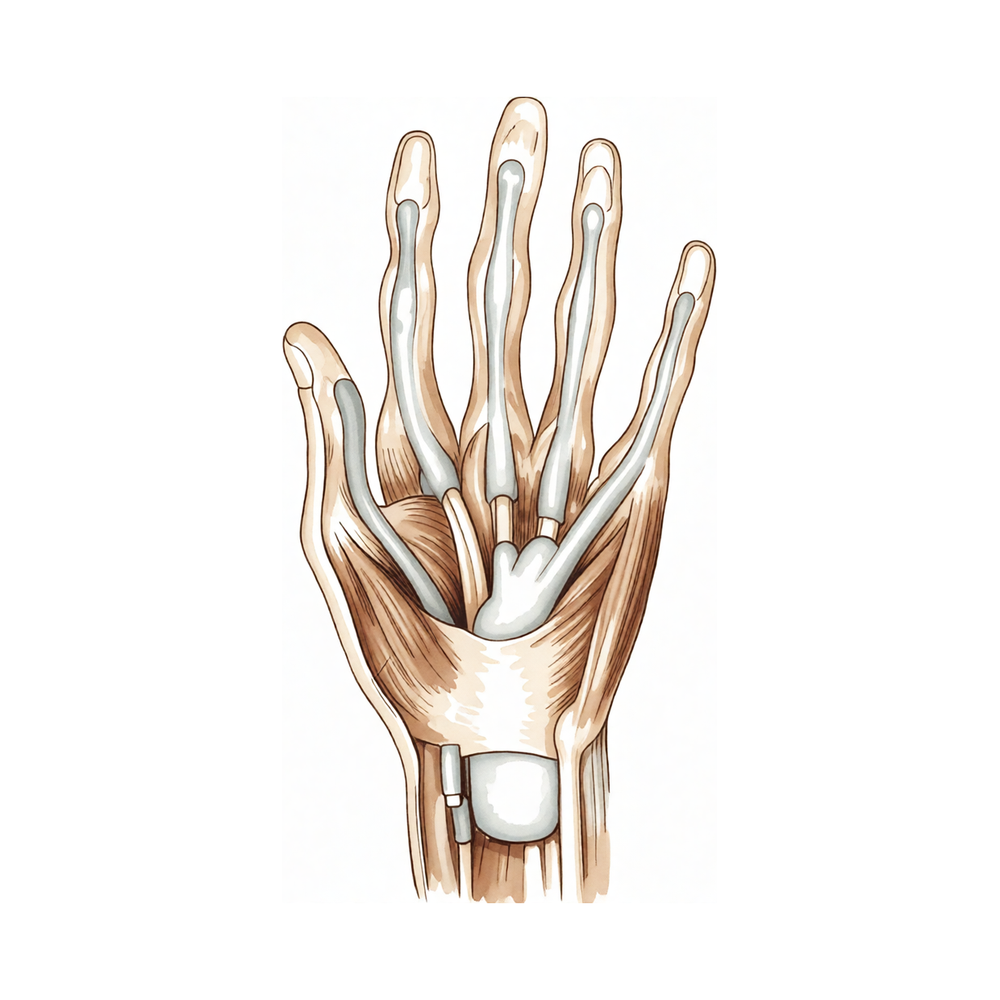
Este protocolo le servirá de guía para su recuperación tras la reparación quirúrgica de un tendón flexor en el dedo (la estructura que recorre la cara palmar del dedo y permite doblarlo hacia la palma), realizada por el Dr. Kieran Hirpara en el Mater Private Hospital Rockhampton. Comienza con un programa de ejercicios para realizar en casa; posteriormente, siga el protocolo clínico estructurado redactado para su terapeuta de mano: lleve esta página o su versión en PDF a su primera sesión de terapia para garantizar una rehabilitación coordinada. Su terapeuta podrá modificar el plan según el progreso de su recuperación.
Si tiene alguna duda respecto a su herida postoperatoria, comuníquese con nuestra consulta. A menudo resulta útil tomar una fotografía de la herida y enviarla por correo electrónico para su revisión.
Qué esperar
La reparación del tendón flexor consiste en unir nuevamente los extremos cortados del tendón para que el dedo pueda volver a doblarse. La reparación es lo suficientemente resistente como para permitir movimientos suaves desde el primer momento; sin embargo, es más débil durante las primeras semanas, mientras el tendón cicatriza. Por eso, todo el plan de rehabilitación se basa en realizar movimientos justo lo necesario para mantener el deslizamiento del tendón, sin ejercer nunca una fuerza excesiva que pueda romper los puntos de sutura.
Para ello, la mano se coloca en una férula ligera y especial llamada férula corta de Manchester. A diferencia de férulas anteriores, más voluminosas, esta es corta y termina en el pliegue de la muñeca, dejando esta última libre de movimiento. Permite que la muñeca se mueva completamente hacia adelante y hacia atrás hasta unos 45 grados; además, un pequeño bloque impide que los nudillos se estiren más allá de los 30 grados, mientras que las articulaciones de los dedos quedan libres para moverse. Debe llevarse todo el tiempo durante seis semanas, quitándola únicamente según las indicaciones para realizar ejercicios y para lavarse.
Lo más ingenioso es el modo en que se utiliza la muñeca: al doblar la muñeca hacia adelante, el dedo se estira casi por sí solo (esto se conoce como efecto tenodesis), permitiendo abrir el dedo por completo sin necesidad de forzarlo con los músculos. Cuando doblamos la muñeca hacia atrás, resulta más fácil y seguro curvar suavemente el dedo. Este tipo de movimientos mantienen el deslizamiento del tendón y, lo más importante, evitan que el dedo quede rígidamente doblado, problema muy frecuente tras este tipo de reparación.
Los primeros ejercicios (a partir del día 4–5) son suaves y específicos: primero se dobla el dedo de forma pasiva; luego se realiza un ligero movimiento de flexión activa, partiendo de la punta del dedo; finalmente se estira el dedo con la muñeca doblada. Durante seis semanas no se permite ningún agarre fuerte ni movimientos forzados. A las seis semanas se retira la férula y comienza un ligero fortalecimiento; la mayoría de los pacientes recuperan el uso total e ilimitado de la mano al cabo de diez a doce semanas.
Precauciones y limitaciones
- Use la férula corta de Manchester de forma continua durante seis semanas: quítesela únicamente para realizar los ejercicios y para lavarse, tal como se le indicó.
- NO haga un puño cerrado y apretado, y NO agarre, levante, tire ni cargue nada con la mano operada durante las primeras seis semanas: una carga excesiva podría romper la reparación.
- NO fuerce el dedo para enderezarlo ni para doblarlo; realice todos los movimientos de forma suave, dentro del rango que le hayan enseñado.
- Puede utilizar la mano para tareas muy ligeras y seguras, excluyendo el dedo lesionado, siempre que no se produzca ninguna tracción o tensión sobre él.
- Si escucha un chasquido o siente que el dedo “cede” repentinamente, perdiendo la capacidad de doblarse, es posible que el tendón se haya roto: en ese caso, comuníquese de inmediato con la consulta.
- NO conduzca mientras lleve la férula; podrá volver a conducir una vez retirada la férula (aproximadamente a las seis semanas), siempre que su agarre y control sean adecuados y cuente con autorización médica.
Para el cuidado de la herida, la hinchazón y las cicatrices, consulte las pautas de cuidado de heridas de la consulta.
Sus ejercicios
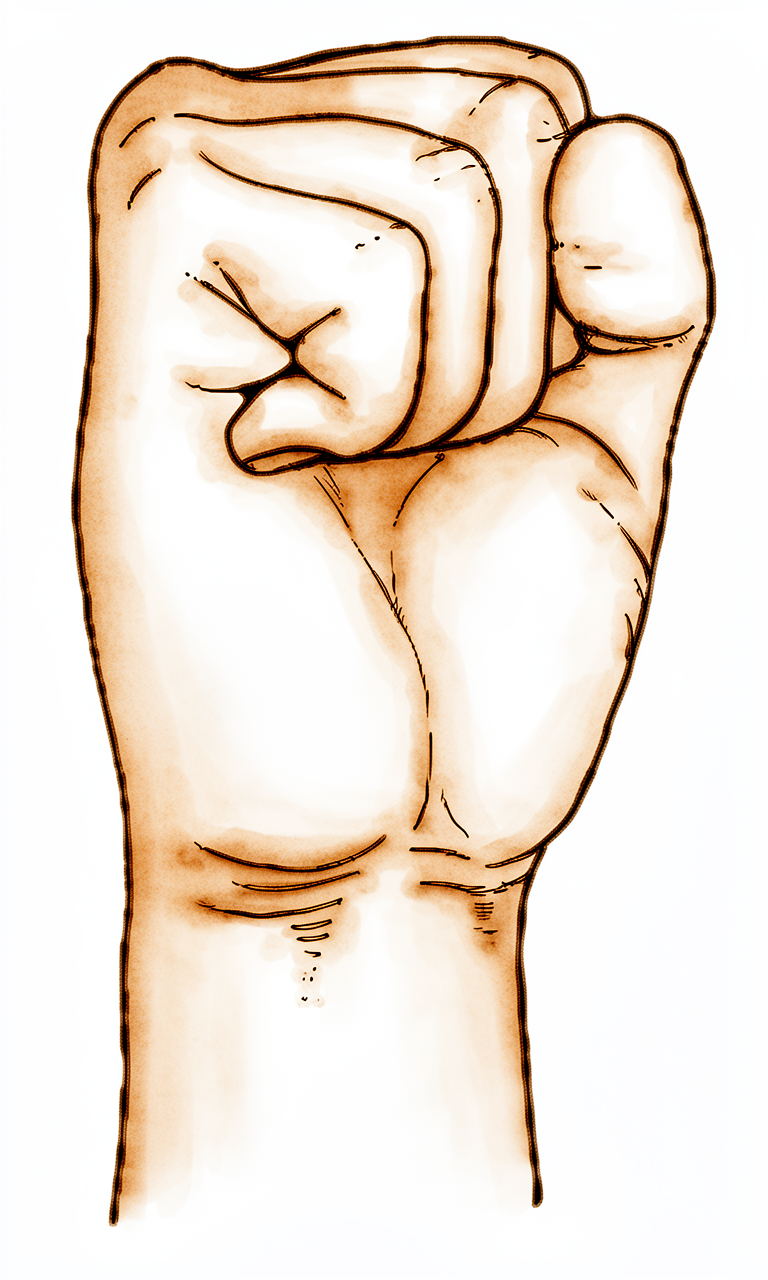
Estiramiento pasivo del puño (flexión interfalángica)
Utilice la otra mano para doblar suavemente el dedo operado hasta formar un puño, flexionando por completo todas sus articulaciones; mantenga el dedo totalmente relajado para que sea la otra mano la que realice todo el trabajo. Este ejercicio se debe hacer PRIMERO en cada sesión, con el fin de mantener las articulaciones del dedo flexibles y listas para moverse. No ejerce tensión sobre la zona reparada, ya que los músculos propios permanecen relajados. Realice el movimiento lentamente y deténgase antes de sentir dolor.
10 veces, al inicio de cada sesión; varias sesiones al día.

Puño con gancho activo desde la articulación interfalángica distal.
Con la muñeca doblada hacia atrás (en extensión), tanto dentro como fuera de la férula, doble primero la punta del dedo para formar un “gancho”: doblando la articulación distal y la intermedia, mientras mantiene recta la articulación metacarpofalángica. Manténgalo suavemente en esa posición y luego relájese. Iniciar el movimiento desde la punta del dedo ayuda a guiar al tendón en proceso de curación en la dirección correcta. Emplee solo una fuerza suave; nunca fuerce el movimiento ni forme un puño rígido y apretado.
10 veces, varias sesiones al día según las indicaciones.
Kieran Hirpara 4.0
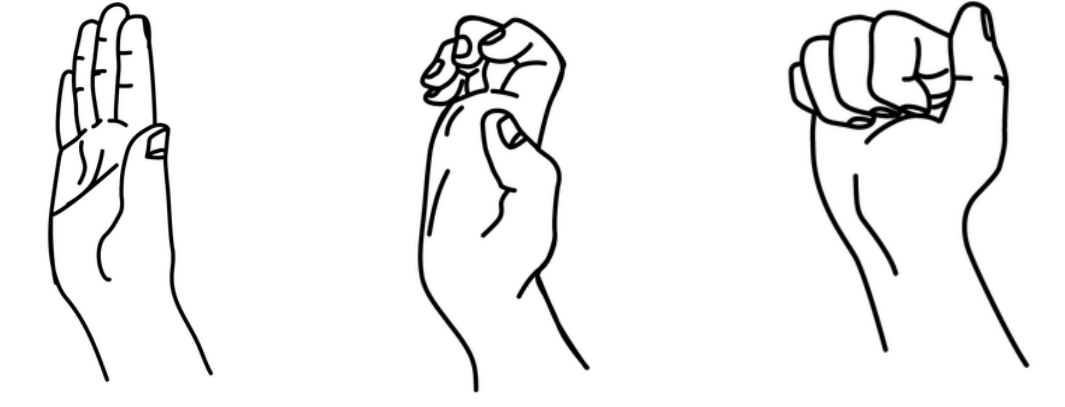
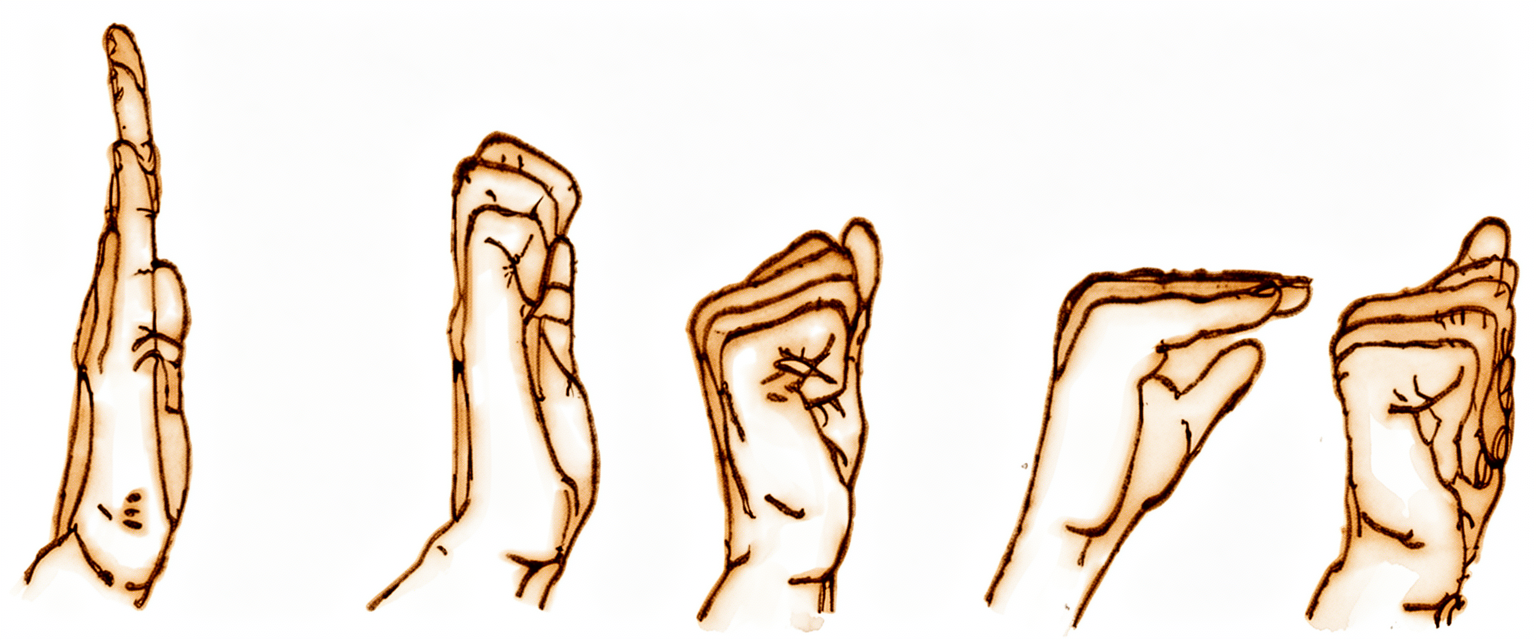
Deslizamientos tendinosos (de gancho a recto hasta puño completo)
Realice con suavidad la secuencia de deslizamiento tendinoso: primero mantenga los dedos rectos; luego forme un puño en forma de gancho (doblando las puntas de los dedos); a continuación, haga un puño completo de forma suave; y finalmente vuelva a la posición con los dedos rectos. Esto permite que ambos tendones flexores se deslicen sin problemas uno junto al otro y a través del tejido circundante, evitando así que se adhieran. Mantenga cada posición con ligereza y sin esfuerzo: se trata de movimientos de deslizamiento, no de fortalecimiento; por lo tanto, no debe haber ninguna tensión excesiva.
5 de cada posición; varias sesiones al día según las indicaciones.
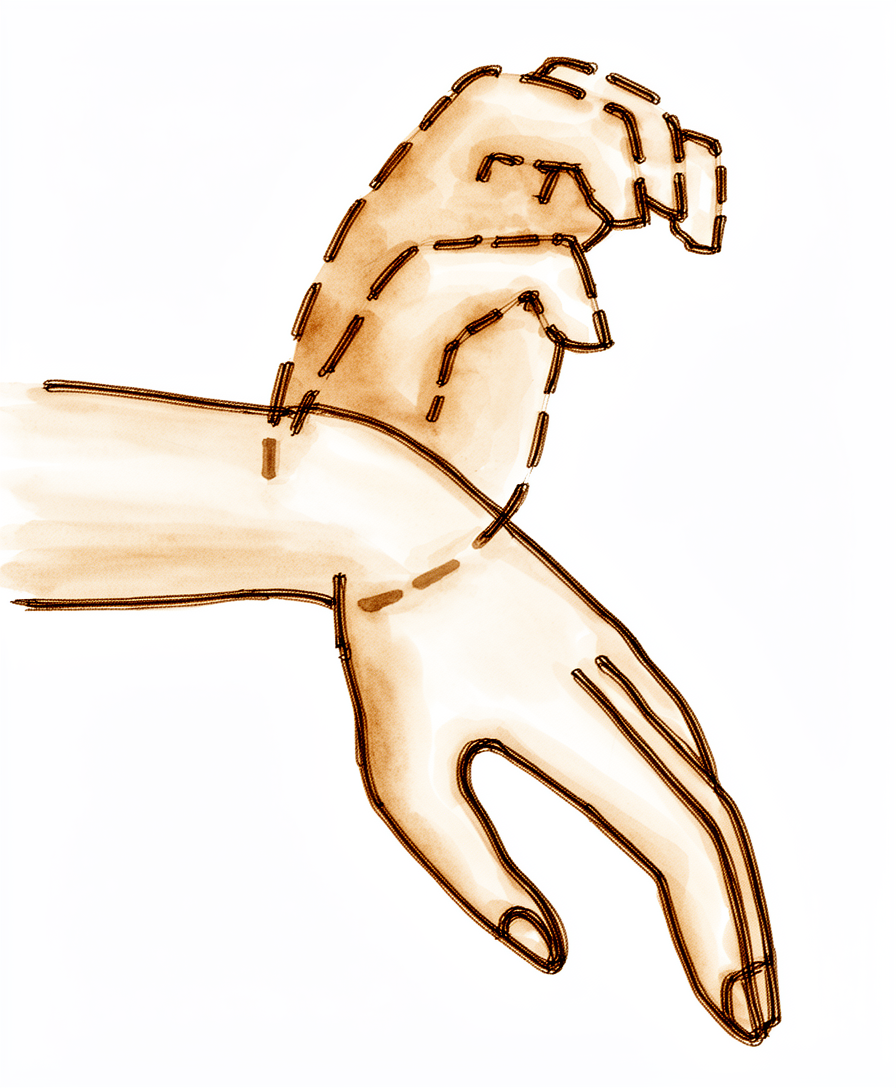
Enderezamiento de los dedos con la muñeca flexionada (sinergia)
Deje que su muñeca se doble hacia adelante (flexión) y luego estire activamente el dedo. Esta flexión de la muñeca ayuda de forma natural a enderezar el dedo, permitiendo que se extienda fácilmente sin necesidad de fuerza excesiva. Este es el movimiento clave para evitar que el dedo se quede permanentemente doblado; hágalo con diligencia. Estire el dedo solo hasta donde le resulte cómodo, con la ayuda de la muñeca; no intente enderezarlo por la fuerza.
10 veces, varias sesiones al día según las indicaciones.
Colocación y retención
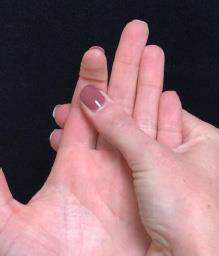
Utilice la otra mano para colocar suavemente el dedo operado en una posición de puño ligero; luego suelte y mantenga esa posición con apenas un mínimo esfuerzo muscular, lo suficiente solo para que el dedo permanezca en esa posición. Esto activa de forma segura el tendón reparado, ya que el esfuerzo principal para doblar el dedo lo realiza la otra mano, mientras que su propio músculo solo debe mantener la posición, sin ejercer tracción. Mantenga el esfuerzo mínimo; relájese por completo entre cada repetición.
Mantenga la posición unos segundos, 5–10 veces, únicamente según las indicaciones de su terapeuta de mano.
Kieran Hirpara 4.0
Bloqueo (más adelante, en caso de adherencias)
Un ejercicio posterior: únicamente si su tendón se queda “pegado” y su terapeuta de mano lo indica. Para ello, estabilice el dedo sosteniendo el hueso que se encuentra justo debajo de la articulación que desea mover; luego flexione activamente esa única articulación (por ejemplo, mantenga inmóvil la parte central del dedo y flexione únicamente la yema). De este modo se concentra el deslizamiento en una sola articulación, liberando así un tendón que ha quedado adherido. No inicie este bloqueo por su cuenta: es un ejercicio más exigente y solo se incorpora cuando su terapeuta lo considere seguro.
Según las indicaciones de su terapeuta de mano (en una fase posterior, solo si es necesario).
Estos son los ejercicios que aparecen en su folleto. Comience a realizarlos únicamente bajo la guía del Dr. Hirpara y de su terapeuta de mano, respetando siempre el rango de movimiento y las limitaciones que le hayan indicado. Cada sesión sigue el mismo orden seguro: primero doble el dedo suavemente de forma pasiva, luego realice su flexión en gancho activa y los deslizamientos tendinosos, y finalmente extienda el dedo con la muñeca flexionada para evitar que se quede rígido en posición de flexión. Todo debe hacerse con suavidad: se trata de deslizamientos, no de fortalecimiento. Las técnicas de colocación y bloqueo corresponden a fases posteriores y solo deben iniciarse cuando su terapeuta se las indique. Interrumpa cualquier ejercicio que provoque dolor intenso en la zona de la reparación, y nunca haga un puño cerrado hasta que se le dé autorización.
Su protocolo clínico
El resto de esta página describe el protocolo clínico por etapas para la rehabilitación tras la reparación de tendones flexores, utilizando el yeso corto de Manchester y un régimen de movilización temprana activa (EAM). Esta sección debe entregarse a su terapeuta de mano; cada fase comienza con una explicación sencilla en lenguaje coloquial de lo que está ocurriendo. En las primeras semanas, la reparación es más frágil y se somete a la carga de la flexión activa y resistida de los dedos (formar un puño cerrado); por ello, el protocolo protege contra una flexión excesiva mientras fomenta deliberadamente el desplazamiento del tendón y la extensión activa de las articulaciones interfalángicas para prevenir la contractura en flexión, que es la complicación más problemática.
Antes de iniciar el tratamiento, revise el informe quirúrgico del paciente y su historial médico; además, consulte con el cirujano tratante respecto a la zona de la lesión, la configuración y resistencia de las suturas utilizadas, cualquier liberación de poleas y la posible reparación concomitante de nervios digitales. Las reparaciones de tendones flexores realizadas por el Dr. Hirpara se tratan con un yeso dorsal corto de Manchester (que termina en el pliegue de la muñeca), el cual permite flexión y extensión completa de la muñeca hasta 45°; las articulaciones metacarpofalángicas quedan bloqueadas a 30° de flexión, mientras que las articulaciones interfalángicas permanecen libres. Este yeso debe usarse a tiempo completo durante seis semanas. Solo se añaden férulas de extensión nocturnas si se desarrolla una deformidad de flexión en las articulaciones interfalángicas.
Fase I — Movilización activa temprana con la férula corta de Manchester (semanas 0 a 6)
Durante las primeras seis semanas se protege la reparación del tendón mientras se mantiene el deslizamiento tendinoso y se evita que el dedo quede rígido en una contractura de flexión. La mano se mantiene todo el tiempo en la férula corta de Manchester (flexión total de muñeca, extensión hasta 45°, bloqueo de las articulaciones metacarpofalángicas a 30°, articulaciones interfalángicas libres). La movilización activa comienza alrededor del día 4–5. Cada sesión sigue un orden establecido: primero flexión pasiva de las articulaciones interfalángicas; luego formación activa del puño en gancho iniciando desde la articulación interfalángica distal con la muñeca extendida; finalmente extensión activa de los dedos con la muñeca flexionada (movimiento sinérgico y preventivo de contracturas). No se permite forzar el rango articular máximo ni realizar flexión con resistencia.
Para su terapeuta de mano:
Educación y precauciones - Usar la férula corta de Manchester todo el tiempo: flexión total de muñeca, extensión hasta 45°, bloqueo de las articulaciones metacarpofalángicas a 30°, articulaciones interfalángicas libres; retirarla únicamente para ejercicios e higiene - Iniciar la movilización activa temprana el día 4–5 - No forzar el rango articular máximo ni realizar flexión con resistencia; prohibido agarrar, levantar o tirar - Uso “seguro” y moderado de la mano, excluyendo el dedo lesionado - Utilizar la férula de extensión nocturna únicamente si comienza a desarrollarse una deformidad de flexión en las articulaciones interfalángicas
Manejo - Herida: aplicar vendajes quirúrgicos según indicaciones; vigilar signos de infección - Edema: elevar la mano, controlar suavemente el edema digital y prevenir adherencias - Secuencia de ejercicios en cada sesión: (1) primero realizar flexión pasiva completa de las articulaciones interfalángicas; (2) formar activamente el puño en gancho iniciando desde la articulación interfalángica distal con la muñeca extendida a 45°; (3) extensión activa de los dedos con la muñeca flexionada (movimiento sinérgico y preventivo de contracturas); según indicación, añadir ejercicio de colocar y mantener en una posición de puño ligero - Revisión terapéutica semanal durante esta fase
Criterios para avanzar a la siguiente fase - Cicatrización completa de la herida; integridad de la reparación tendinosa a las seis semanas; mantenimiento del deslizamiento tendinoso; ausencia de contractura significativa de flexión en las articulaciones interfalángicas
Fase II: retiro del yeso y trabajo sobre los tejidos blandos y la cicatriz (semana 6)
A las seis semanas se retira el yeso. El enfoque pasa a ser recuperar el rango de movimiento pasivo y activo completo, liberar cualquier rigidez temprana y manejar la cicatriz. Aún no se ha iniciado el fortalecimiento; el uso de un yeso de extensión nocturno solo se indica si persiste una deformidad por flexión residual.
Para su terapeuta de mano:
Evaluaciones - Rango de movimiento activo y pasivo en las articulaciones MCP/PIP/DIP; presencia de cualquier contractura por flexión en la articulación interfalángica; calidad del deslizamiento tendinoso (evaluar presencia de adherencias); revisión de la cicatriz y la herida
Educación y precauciones - El yeso se retira a las seis semanas (solo se usa el yeso de extensión nocturno si persiste una contractura por flexión en la articulación interfalángica) - Se puede iniciar un uso funcional leve; aún no se permite el agarre con resistencia ni la carga
Manejo - Estiramientos de los tejidos blandos para restaurar la flexión y extensión completas; iniciar manejo de la cicatriz una vez que esta haya sanado - Continuar con los ejercicios de deslizamiento tendinoso; introducir técnicas de bloqueo si las adherencias limitan dicho deslizamiento - Progresar hacia un uso funcional leve de la mano
Criterios para avanzar - La herida y la cicatriz están estabilizadas; el rango de movimiento pasivo es casi completo; el deslizamiento tendinoso se mantiene; listo para iniciar el fortalecimiento gradual
Fase III: Fortalecimiento y retorno a la actividad (semanas 6 a 12)
A medida que la reparación quirúrgica madura, se inician los estiramientos graduales y el fortalecimiento progresivo, aumentándose gradualmente hasta lograr un uso completamente libre de restricciones. Se espera que el retorno a la actividad plena y sin limitaciones ocurra alrededor de las diez a doce semanas, según criterios clínicos.
Para su terapeuta de mano:
Evaluaciones - Rango de movimiento compuesto y cualquier contractura residual; fuerza de agarre y de pellizco en comparación con el lado contralateral; respuesta de la zona reparada a la carga gradual
Educación y precauciones - Iniciar estiramientos graduales y fortalecimiento progresivo a partir de la semana seis aproximadamente; aumentar la carga de forma gradual - Evitar el agarre máximo repentino o la aplicación de cargas resistidas hasta que se haya recuperado la fuerza
Manejo - Fortalecimiento progresivo del agarre y el pellizco (desde plastilina hasta ejercicios con resistencia graduada); continuar con estiramientos si persiste rigidez; seguir trabajando la cicatriz según sea necesario - Avanzar hacia la actividad plena y sin restricciones a las 10–12 semanas - Considerar el alta terapéutica una vez que el rango de movimiento y la fuerza sean funcionales y se haya logrado un retorno adecuado a la actividad; derivar nuevamente al cirujano tratante si la recuperación se estanca o persiste una contractura en flexión
Criterios para el retorno a la actividad plena - Rango de movimiento funcional; fuerza de agarre y pellizco adecuada y casi simétrica respecto al lado contralateral; uso sin dolor ni restricciones, generalmente a las 10–12 semanas
Volver al trabajo y a las actividades cotidianas
Se recomienda un uso ligero y seguro de la mano (excluyendo el dedo lesionado) desde el principio, mientras se lleva la férula, siempre y cuando no se ejerzan fuerzas de tracción, agarre o tensión sobre la zona reparada. En las primeras semanas, será necesario contar con ayuda, ya que durante las primeras seis semanas no se podrá agarrar, levantar ni cargar nada con la mano operada. La férula se retira aproximadamente a las seis semanas, momento a partir del cual se inicia un ligero fortalecimiento muscular.
Dado que no se debe conducir mientras se lleva la férula dorsal, deberá organizar el transporte durante las primeras seis semanas. La conducción se reanuda después de retirar la férula (alrededor de las seis semanas), una vez que el agarre y el control de los dedos sean adecuados y tras recibir autorización en la consulta de seguimiento. Se espera que, alrededor de las diez a doce semanas, pueda volver a realizar todas las actividades sin restricciones, incluyendo el agarre firme y tareas más pesadas; este proceso se llevará a cabo de forma gradual, y será evaluado por el Dr. Hirpara y su terapeuta de mano en función del movimiento y la fuerza del dedo, no únicamente en base al tiempo transcurrido.
Después de seguir el protocolo
Este protocolo se complementa con las recomendaciones generales de recuperación que brinda la clínica; consulte también control del dolor postoperatorio, cuidado de la herida y manejo de las cicatrices. El plan por fases descrito anteriormente se basa en las guías publicadas sobre rehabilitación con movilización temprana tras la reparación de tendones flexores; su recuperación continua será guiada individualmente por el Dr. Hirpara y su terapeuta de mano, según el progreso de su dedo.
Evidence & references
This is the clinical evidence summary written for health professionals. It is technical, and it lists the research this page was built from. You do not need to read it to understand your treatment or to make a decision about it.
Flexor Tendon Repair — Procedure Outcomes & Post-operative Rehabilitation (Manchester Short-Splint Early Active Motion)
Topic scope: post-operative rehabilitation after primary surgical repair of a flexor tendon in the finger (especially zone II) with a robust multi-strand core repair, mobilised on an early-active-motion (EAM) regimen using the Manchester short splint. This is a repair of a divided structure that is at its weakest in the first weeks, so — unlike a decompression — the rehab is a carefully graded protected-but-moving pathway: enough controlled tendon excursion to prevent adhesion and flexion contracture, without the forceful flexion that ruptures the construct.
Defining principle of the rehab here: a repaired flexor tendon must glide to heal well but must not be loaded hard while it is weak. The two competing failures are rupture (from forceful or resisted flexion) and adhesion / PIP flexion contracture (from too little controlled motion). The Manchester short splint resolves this tension by leaving the wrist free: holding the wrist in 45° of extension minimises the work of flexion (Savage) so a gentle active hook fist glides the tendon at low tension, while permitting wrist flexion harnesses the extensor tenodesis effect to drive active IP extension — the single most effective lever against the PIP flexion contracture that is the characteristic nuisance complication of zone II repair. The deliberate sequence each session (passive IP flexion → active hook fist from the DIP, wrist extended → active IP extension, wrist flexed) is what makes the regimen safe and anti-contracture.
A. PROCEDURE / REPAIR OUTCOMES (early active motion vs passive mobilisation)
Flexor tendon repair is technically demanding and historically complication-prone (rupture and adhesion). Modern multi-strand core repairs combined with early active motion have shifted outcomes decisively toward better motion, with the central trade-off being a small rupture risk against markedly better range and function.
- Early active motion gives better finger motion than passive mobilisation, at a small rupture cost. A systematic review of controlled mobilisation after zone II repair found EAM regimens produced better total active motion than passive (Kleinert/Duran) protocols, with a modest increase in rupture (~5% vs ~4%) [Starr 2013]. The contemporary consensus favours active regimens with robust repairs. Moderate–strong (SR).
- The Manchester short splint specifically improves IP extension without increasing rupture. A clinical audit comparing the Manchester short splint (MSS) with a traditional full-length dorsal splint in uncomplicated zone II repairs found less PIP extension deficit (median 15° vs 28° at 6 weeks, p=0.003; 6° vs 18° at 12 weeks), a greater DIP flexion arc (59° vs 30°), and more excellent/good Strickland grades with the MSS. Rupture was not significantly different (2/45, 4.4% MSS vs 3/76, 3.9% traditional) [Peck 2014]. The headline advantage is the reduction in PIP flexion contracture. Moderate (single-centre non-randomised audit, Level III–IV).
- Forearm-based (wrist-blocking) splints constrain the very motion that prevents contracture. A comparison of splint designs found the Manchester short splint allowed greater PIP extension than forearm-based splints [Newington 2021], consistent with the mechanistic rationale that freeing the wrist enables the synergistic IP-extension move. Moderate.
- Mechanistic basis. Positioning the wrist in ~45° extension minimises the work of flexion required for active digital flexion, lowering the tension on the repair during the active hook fist [Savage 1988]; allowing wrist flexion recruits the extensor tenodesis effect to achieve full active IP extension at low cost — the anti-contracture engine of the regimen. Mechanistic.
B. REHABILITATION / THERAPY EVIDENCE
The rehab questions are (1) active vs passive early mobilisation, (2) splint design, and (3) how to structure the session to prevent both rupture and contracture. The evidence supports a robust repair mobilised with early active motion, a short wrist-free splint, and a fixed safe exercise sequence delivered through formal hand therapy.
- Early active motion is the modern default for robust repairs. Active regimens (partial-range combined passive/active, place-and-hold, true active flexion) outperform passive-only protocols on motion and are now standard where the core repair is strong enough to tolerate active glide [Tang 2021; Starr 2013]. Moderate–strong.
- A defined, low-tension active sequence is what makes EAM safe. Therapy guidance emphasises passive flexion first (preconditioning the joints), place-and-hold / active hook fist to glide the tendon at minimal tension, and synergistic wrist-flexion finger-extension to recover IP extension — the explicit structure of the Manchester regimen [Neiduski & Powell 2019; Saint John protocol]. Moderate (consensus + protocol cohorts).
- Splint design materially changes the contracture outcome. Shorter, wrist-free splinting that permits the synergistic extension move yields greater PIP extension than traditional or forearm-based dorsal splints [Peck 2014; Newington 2021]. Moderate.
- All flexor repairs are routed through formal hand therapy. The regimen is exercise-order- and tension-sensitive and is delivered with weekly hand-therapy review through the six-week splinted phase; it is not a self-directed pathway. Consensus / standard of care.
Recovery trajectory (expected, evidence-anchored)
| Phase | Window | Restraint | Hand use / therapy focus | Strength / load | Notes |
|---|---|---|---|---|---|
| I — Early active motion (in MSS) | Week 0–6 | Manchester short splint full-time (full wrist flexion, extension to 45°, MCP block 30°, IPs free) | Start day 4–5; each session: passive IP flexion → active hook fist from the DIP (wrist extended) → active IP extension (wrist flexed); place-and-hold as guided; weekly therapy | No resisted flexion, no gripping/lifting; light safe use excluding the injured finger | EAM drives glide + anti-contracture; rupture risk highest now |
| II — Splint off, soft-tissue / scar | Week 6 | Splint discontinued (night extension gutter only for residual IP flexion deformity) | Restore full passive/active ROM; scar management; tendon glides; blocking if adhesions | Still no resisted loading | PIP flexion contracture is the complication to chase down here |
| III — Strengthen / return | Week 6–12 | Restrictions progressively lifted | Graded stretching; progressive grip/pinch strengthening (putty → resistance) | Build grip/pinch gradually | Return to full / unrestricted activity 10–12 weeks, criterion-based |
(Phase windows mirror the precautions in the patient protocol; they are typical guides, not trial-derived deadlines.)
C. KEY CONTROVERSIES / EVIDENCE QUALITY
- Active vs passive early mobilisation. EAM gives better motion than passive Kleinert/Duran regimens at a small rupture-rate cost (~5% vs ~4%); it is the contemporary default for strong core repairs [Starr 2013; Tang 2021]. Moderate–strong.
- Manchester short splint vs traditional dorsal splint. The MSS audit shows clearly better IP extension and DIP flexion arc with no significant increase in rupture, but it is a single-centre, non-randomised audit (Level III–IV) — the authors themselves call for an RCT. The improvement is consistent with the mechanism (wrist-free synergistic extension), which raises confidence above the study design alone. Moderate; RCT recommended.
- The PIP flexion contracture is the outcome that discriminates protocols. Rupture rates are broadly similar across modern regimens; what separates them is residual PIP extension loss, and that is where the short, wrist-free splint and the synergistic-extension move earn their place [Peck 2014; Newington 2021]. Moderate.
- Repair strength gates the regimen. EAM is only safe with a robust multi-strand core repair; the protocol assumes that and is surgeon-confirmed per case (zone, suture configuration, pulley venting, concurrent nerve repair). Consensus.
D. EVIDENCE STRENGTH FLAGS (summary)
- MODERATE–STRONG (SR): early active motion produces better finger motion than passive mobilisation after zone II repair, at a small rupture-rate increase (~5% vs ~4%) [Starr 2013]; modern partial-range active regimens are the contemporary standard [Tang 2021].
- MODERATE: the Manchester short splint reduces PIP extension deficit (15° vs 28° at 6 wk, p=0.003) and improves DIP flexion arc without significantly increasing rupture (4.4% vs 3.9%) [Peck 2014]; greater PIP extension than forearm-based splints [Newington 2021]; defined low-tension exercise sequence [Neiduski & Powell 2019; Saint John].
- MECHANISTIC / CONSENSUS: wrist 45° extension minimises work of flexion [Savage 1988]; wrist flexion harnesses the extensor tenodesis effect for active IP extension (anti-contracture); exact phase timings are typical guides, not trial-derived; single-centre non-randomised MSS evidence — an RCT is recommended.
CITATIONS
RAG corpus (180,000+ Orthopaedic articles)
- Peck FH, et al. A comparative study of two methods of controlled mobilization of flexor tendon repairs in zone 2 (the Manchester short splint). Hand Ther. 2014. DOI: 10.1177/1758998314533306
- Starr HM, et al. Flexor tendon repair rehabilitation protocols: a systematic review. J Hand Surg Am. 2013. DOI: 10.1016/j.jhsa.2013.06.025
- Neiduski RL, Powell RK. Flexor tendon rehabilitation in the 21st century: a systematic review. J Hand Ther. 2019. DOI: 10.1016/j.jht.2018.06.001
- Tang JB. Rehabilitation after flexor tendon repair and others: a safe and efficient update. J Hand Surg Eur Vol. 2021. DOI: 10.1177/17531934211037112
- Tang JB, et al. (IFSSH flexor tendon committee report). J Hand Surg Eur Vol. 2014. DOI: 10.1177/1753193413500768
- Newington L, et al. Splinting after flexor tendon repair: comparison of the Manchester short splint with forearm-based splinting on PIP joint extension. Hand Ther. 2021. DOI: 10.1177/17589983211017584
Flexor tendon rehabilitation literature (URLs)
- Saint John flexor tendon protocol — early active motion regimen for zone II repair (protocol description and outcomes). PMC. https://www.ncbi.nlm.nih.gov/pmc/articles/PMC5142498/
- Savage R. The influence of wrist position on the minimum force required for active movement of the interphalangeal joints. J Hand Surg Br. 1988 (mechanistic basis: wrist extension minimises the work of flexion). https://doi.org/10.1016/0266-7681(88)90258-2