Patients › Rehabilitation
Reemplazo de la cabeza radial
Se trata de un plan de recuperación protegido tras el reemplazo de la cabeza del radio en el codo mediante un implante metálico. Se basa en la realización temprana de movimientos controlados del codo y el antebrazo para evitar la rigidez; el antebrazo se coloca en una posición que protege los ligamentos reparados, y el codo se mantiene en un cabestrillo sencillo para mayor comodidad.
Este protocolo le servirá de guía para su recuperación tras la reemplazo de la cabeza del radio en el codo (procedimiento mediante el cual se sustituye la cabeza del radio fracturada por un pequeño implante metálico) realizado por el Dr. Kieran Hirpara en el Mater Private Hospital Rockhampton. Comienza con un programa de ejercicios para realizar en casa, seguido del protocolo clínico estructurado destinado a su terapeuta de mano; lleve esta página o su versión en PDF a su primera sesión de terapia para garantizar la coordinación de su rehabilitación. Su terapeuta podrá modificar el plan según el progreso de su recuperación y en función de lo que exactamente se reparó durante la operación.
Si tiene alguna duda respecto a su herida postoperatoria, comuníquese con el consultorio. A menudo resulta útil tomar una fotografía de la herida y enviarla por correo electrónico para su revisión.
Qué esperar
La cabeza del radio es la parte redondeada de uno de los dos huesos del antebrazo, donde se une al codo. Cuando se fractura en demasiados fragmentos para poder repararla, se sustituye por un pequeño implante metálico que restaura la estabilidad y la alineación del codo, así como un eje de rotación del antebrazo sin fricciones. Este procedimiento suele realizarse como parte de la reparación de una lesión más compleja: una fractura-luxación conocida como “tríada terrible”, en la que la cabeza del radio, un fragmento del proceso coronoideo y los ligamentos laterales del codo resultan dañados simultáneamente.
Dado que el implante restaura la estabilidad, el objetivo principal de la rehabilitación es iniciar movimientos controlados lo antes posible para evitar la rigidez; los codos son muy propensos a volverse rígidos tras este tipo de lesiones, y la mejor forma de prevenirlo es comenzar a moverlos tempranamente. Entre los ejercicios, el codo se mantiene en un soporte simple para mayor comodidad (no se trata de una férula articulada); este soporte se retira durante los ejercicios y para lavarse.
Dos factores determinan cuándo y hasta dónde se pueden realizar los movimientos:
- Los ligamentos reparados requieren protección. Si se reparó el ligamento colateral lateral (en el lado externo del codo), al principio el antebrazo se mantiene y ejercita con la palma hacia abajo (posición de pronación); si se reparó el ligamento colateral medial (en el lado interno), se mantiene con la palma hacia arriba (supinación); si ambos ligamentos fueron reparados, se mantiene en una posición neutra intermedia. Su terapeuta le indicará cuál de estas opciones aplica en su caso.
- El codo debe protegerse de fuerzas laterales (en varo) y, al inicio, de la extensión completa, si previamente era inestable. Por ello, los movimientos se van introduciendo gradualmente en lugar de permitirse todos de una sola vez.
Los movimientos se incrementan de forma progresiva; el fortalecimiento muscular suele comenzar alrededor de la sexta semana, y la vuelta a las actividades normales ocurre aproximadamente a los tres meses. El implante y el proceso de cicatrización continúan estabilizándose durante varios meses, motivo por el cual la carga física se va reintroduciendo de manera gradual.
Precauciones y limitaciones
- Use el cabestrillo sencillo para mayor comodidad, tal como se indica; no se trata de un aparato ortopédico con bisagras, y se quita para hacer ejercicios y para lavarse.
- Mantenga el antebrazo en la posición que le indique su terapeuta durante los primeros ejercicios (palma hacia abajo si se reparó el ligamento lateral externo, palma hacia arriba si fue el interno, o en posición neutra si se repararon ambos), lo cual protege la reparación.
- NO aplique fuerzas laterales (en varo) sobre el codo; evite apoyarse en el codo ni dejar el brazo colgando sin soporte al principio.
- NO intente estirar el codo completamente si le han informado de que es inestable; estírelo únicamente dentro del rango permitido.
- NO levante, empuje, tire ni cargue peso con el brazo operado hasta que se le autorice (normalmente alrededor de seis semanas); al inicio, el uso de la mano debe ser moderado.
- Mueva el hombro, la muñeca y los dedos desde el primer momento, y NO conduzca mientras el brazo permanezca en el cabestrillo o no pueda controlar el volante de forma segura.
Para el cuidado de la herida, la hinchazón y las cicatrices, consulte las pautas de cuidado de heridas de la consulta.
Sus ejercicios
Kieran Hirpara 4.0
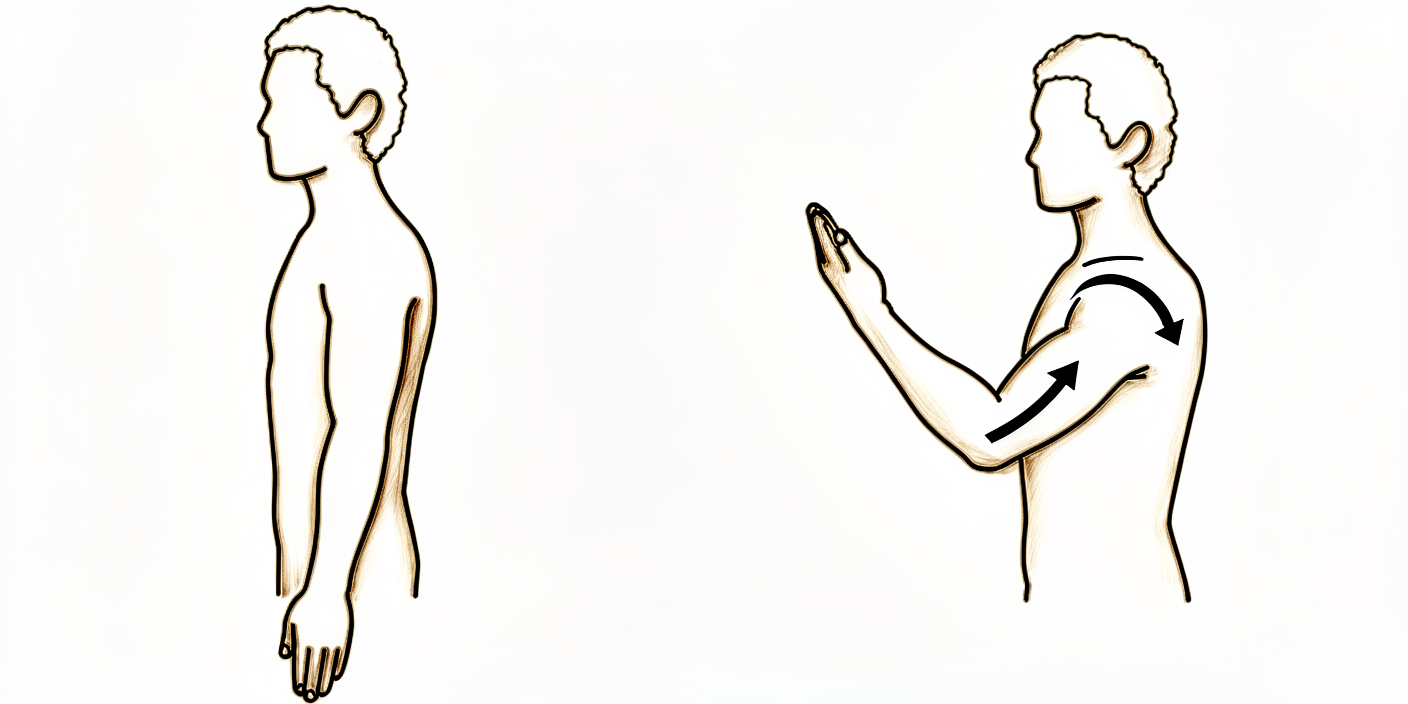
Flexión y extensión del codo (activa-asistida)
Una vez fuera del cabestrillo, doble y estire suavemente el codo operado dentro del rango que le hayan indicado, utilizando la otra mano para guiarlo de modo que el brazo no tenga que esforzarse demasiado. La movilización temprana es lo más importante en este caso: el implante metálico ha devuelto la estabilidad al codo, por lo que es seguro moverlo; además, moverlo desde el principio evita que el codo se vuelva rígido. Respete cualquier límite establecido respecto a la extensión completa del codo, si es que se le indicó alguno.
10 veces, 3–4 veces al día, dentro del rango permitido.
Kieran Hirpara 4.0
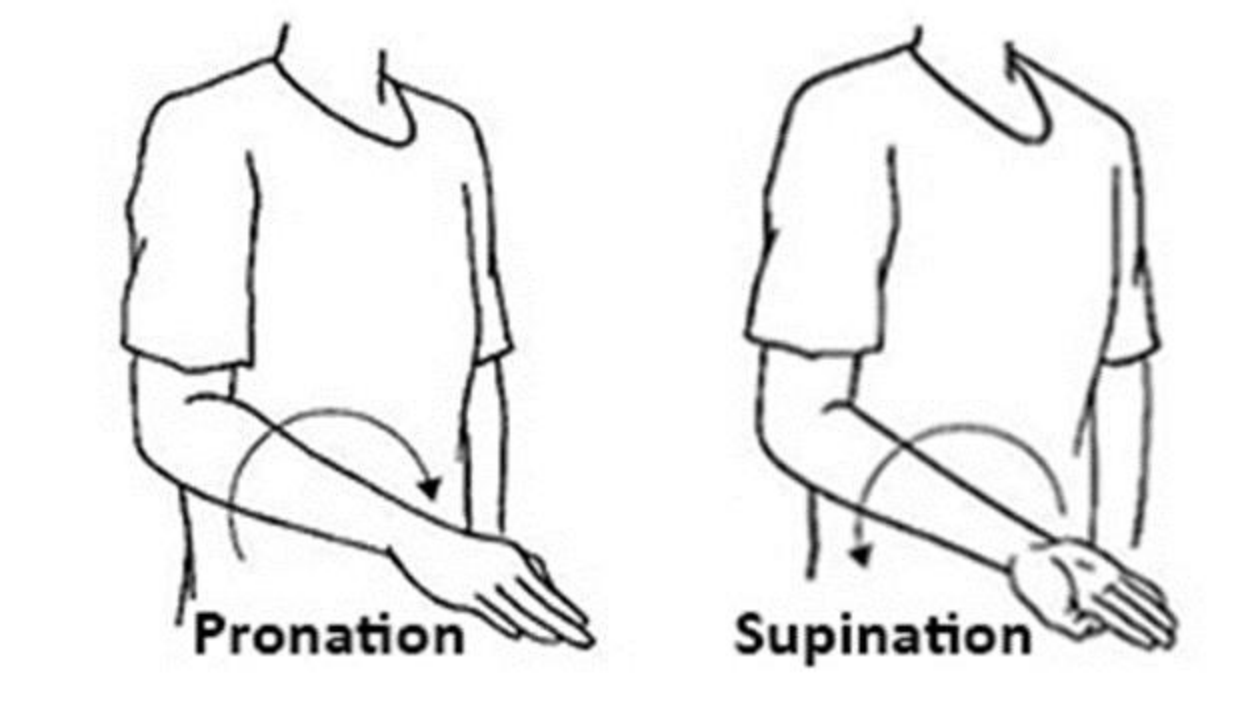
Rotación del antebrazo (palma hacia arriba / palma hacia abajo)
Con el codo pegado al costado y doblado en ángulo recto, gire suavemente la palma de la mano hacia el techo y luego hacia el suelo. Mantenga el codo inmóvil y permita que solo el antebrazo gire. Al principio, es posible que se le pida que se concentre en una sola dirección (palma hacia abajo o palma hacia arriba) para proteger un ligamento reparado; siga las indicaciones de su terapeuta. Esto mantiene el antebrazo flexible, que es uno de los primeros movimientos que tienden a volverse rígidos tras esta lesión.
10 repeticiones en cada dirección permitida, 3–4 veces al día.
Kieran Hirpara 4.0
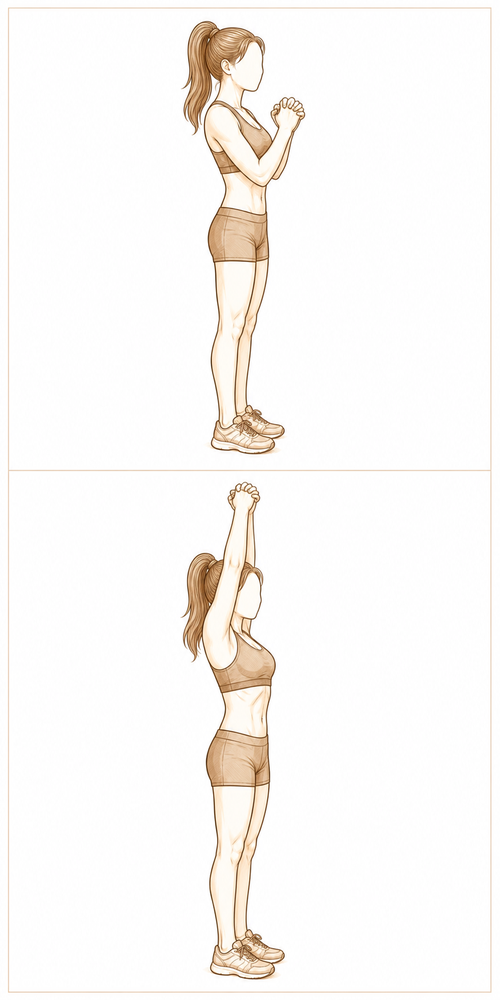
Movimiento del hombro y de la mano
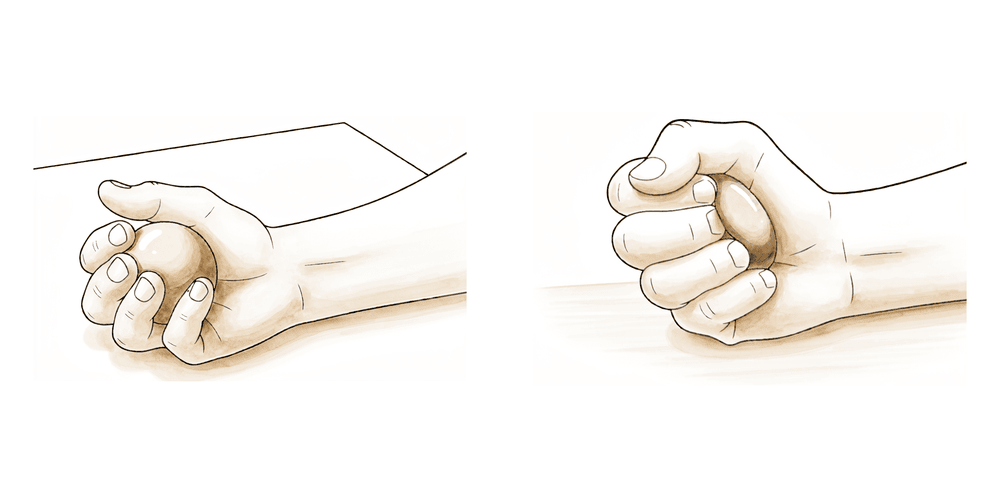
Mantenga el hombro, la muñeca y los dedos en movimiento desde el primer día para evitar que se vuelvan rígidos mientras el codo se recupera. Haga un puño completo, estire los dedos, gire la muñeca y mueva el hombro suavemente. Utilice la mano para tareas cotidianas ligeras, siempre dentro de lo que le resulte cómodo. Ninguna de estas actividades ejerce carga sobre la reparación del codo.
10 veces cada una, varias veces al día.
Kieran Hirpara 4.0
Cuidado de las cicatrices
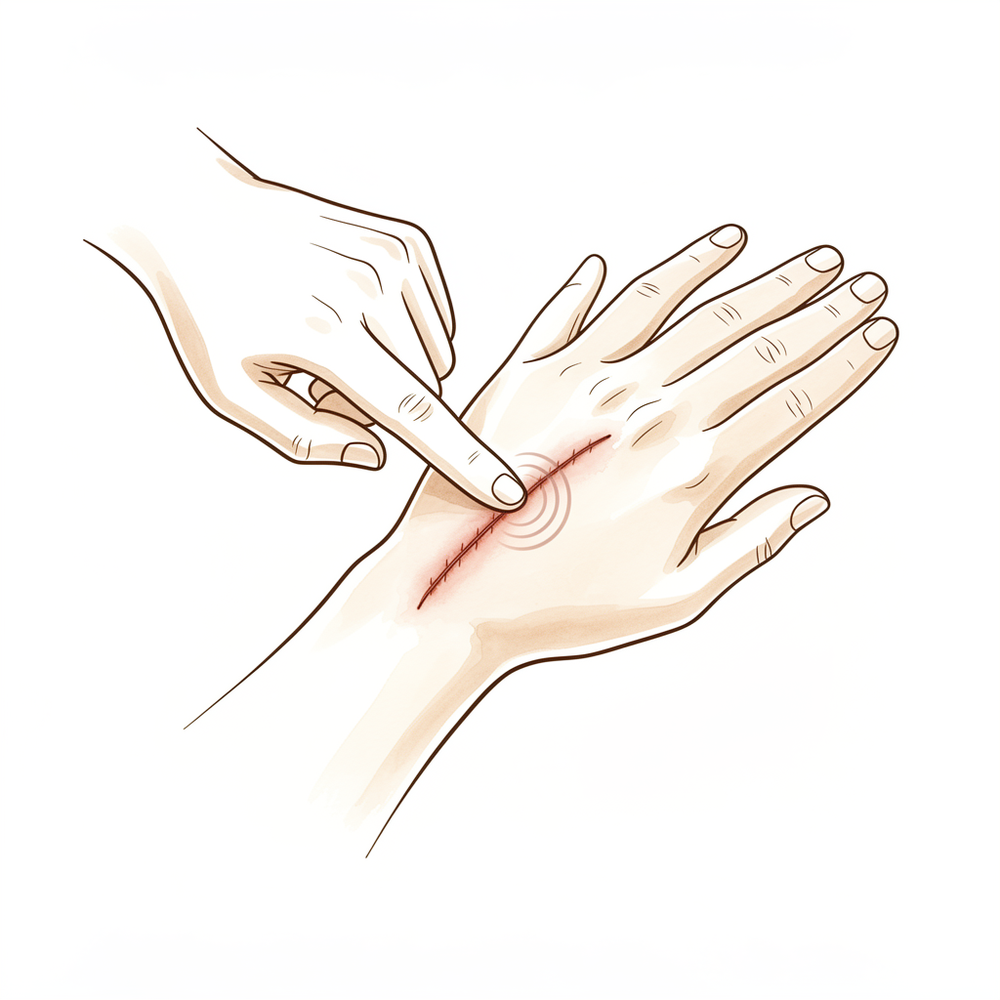
Una vez que la herida haya cicatrizado por completo y el cirujano o terapeuta lo haya autorizado, masajee la cicatriz con un poco de crema hidratante, realizando pequeños círculos durante unos minutos. Esto mantiene la cicatriz flexible y menos sensible. No comience este masaje hasta que la herida esté totalmente cerrada.
Unos minutos, 2–3 veces al día, una vez curado.
Kieran Hirpara 4.0
Fortalecimiento a partir de las 6 semanas
Un ejercicio posterior: solo se debe realizar una vez que el médico lo autorice, generalmente a partir de las seis semanas. Comience con un fortalecimiento suave del codo, el antebrazo y la fuerza de agarre; por ejemplo, apretar una pelota blanda, luego realizar flexiones y extensiones con ligera resistencia. Aumente progresivamente la intensidad durante las siguientes semanas. No apresure el aumento de carga; el codo seguirá madurando durante varios meses.
Según las indicaciones de su terapeuta de mano (solo a partir de unas 6 semanas).
Estos son los ejercicios que aparecen en su folleto. Comience a realizarlos únicamente bajo la guía del Dr. Hirpara y de su terapeuta especializado en mano, respetando siempre el rango de movimiento y la posición del antebrazo que se le hayan indicado. Los ejercicios iniciales consisten en mover el codo y el antebrazo para evitar la rigidez, sin sobrecargar ninguna zona en proceso de recuperación: flexión y extensión activa del codo con ayuda, rotación suave del antebrazo en la dirección permitida, y mantener el hombro y la mano libres de tensión. El fortalecimiento muscular y el cuidado de la cicatriz corresponden a fases posteriores y no deben iniciarse hasta que se le dé autorización expresa. Interrumpa cualquier ejercicio que provoque dolor intenso o la sensación de que el codo “cede”.
Su protocolo clínico
El resto de esta página describe el protocolo clínico por fases para la rehabilitación posterior a la prótesis de cabeza radial, procedimiento que se realiza con mayor frecuencia en casos de fractura cominutiva de la cabeza radial imposible de reconstruir, a menudo como parte de una fractura-dislocación del “terrible triad”. Esta sección debe entregarse al terapeuta de mano; cada fase comienza con una explicación sencilla en lenguaje coloquial sobre lo que ocurre. El implante restaura una articulación radiocapitelar estable y congruente; por ello, el principio rector es iniciar movimientos protegidos lo antes posible para evitar la rigidez a la que estos codos son propensos. El rango de movimiento y la rotación del antebrazo dependerán de la integridad de las reparaciones de los ligamentos colaterales y del proceso coronoideo.
Antes de iniciar el tratamiento, revise el informe quirúrgico del paciente y la evaluación de estabilidad realizada bajo anestesia; además, consulte con el cirujano responsable sobre: qué ligamentos colaterales y/o proceso coronoideo fueron reparados, el rango de movimiento estable observado intraoperatoriamente y los límites de rotación del antebrazo. El Dr. Hirpara recomienda mantener el codo en un cabestrillo sencillo para mayor comodidad (sin uso de férula articulada) y favorece un enfoque acelerado de movilización temprana siempre que la estabilidad lo permita. Regla para la posición del antebrazo: si se reparó el LCL → ejercicios/descanso en pronación; si se reparó el MCL → supinación; si se repararon ambos → posición neutra intermedia; evite aplicar estrés varo y, en casos donde el codo fuera inestable, no realice extensión completa en las primeras fases.
Fase I — movimiento protegido inicial (semanas 0 a 2)
Durante las dos primeras semanas se inicia un movimiento protegido y suave, tan pronto como la herida lo permita (a menudo en la primera semana), para prevenir la rigidez. El brazo se mantiene en un cabestrillo sencillo para mayor comodidad; este se retira para realizar ejercicios e higiene. El codo se mueve dentro de su rango seguro, manteniendo el antebrazo en la posición de rotación protectora correspondiente al ligamento reparado.
Para su terapeuta de mano:
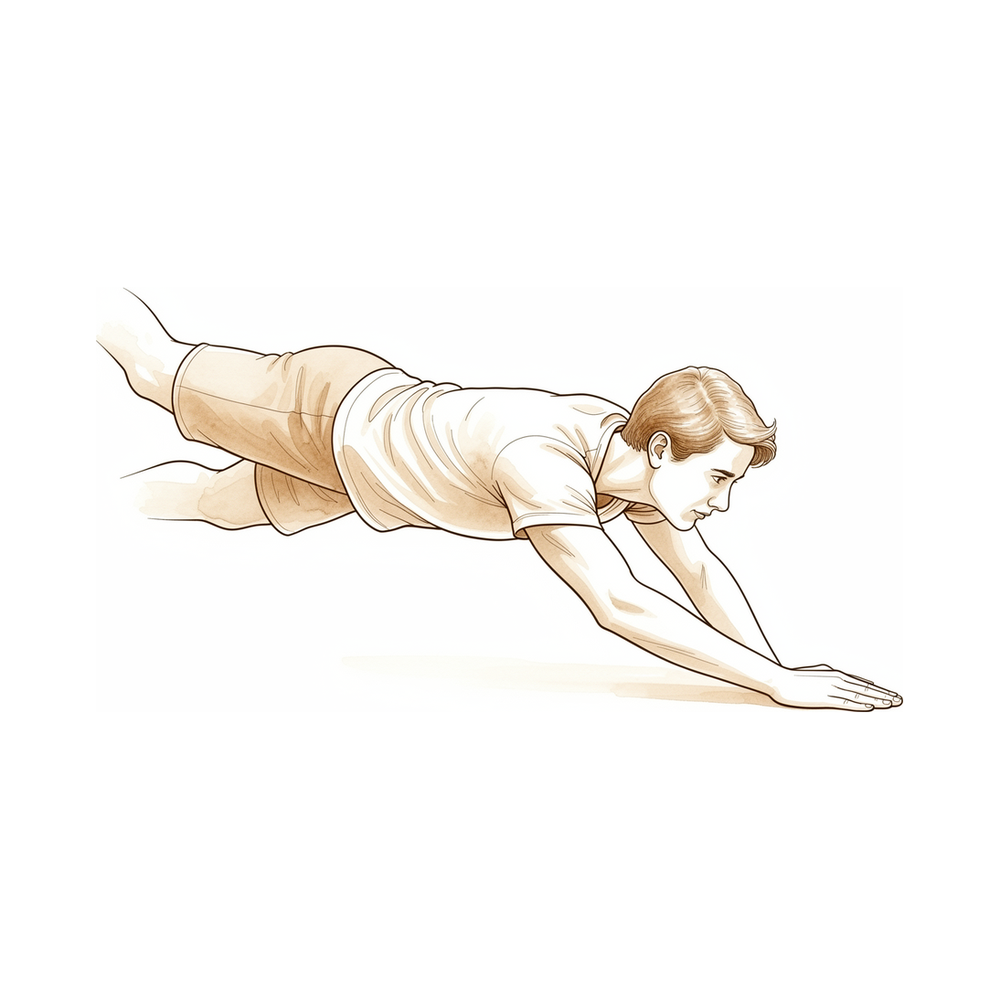
Educación y precauciones - Inmovilizar el brazo con un cabestrillo sencillo para comodidad (sin férula con bisagras); retirarlo para ejercicios y lavado - Iniciar la flexión-extensión activa asistida/activa del codo dentro del rango estable demostrado intraoperatoriamente; evitar la extensión total si el codo era inestable - Rotación del antebrazo en posición protectora: pronación si se reparó el LCL; supinación si se reparó el MCL; posición neutra intermedia si se repararon ambos - No aplicar fuerza en varo en ningún momento; realizar ejercicios por encima de la cabeza en decúbito supino cuando el codo sea inestable, para neutralizar la fuerza en varo y aprovechar la gravedad para estabilizar la articulación - Prohibido soportar peso o empujar con el brazo operado
Manejo - Herida: utilizar vendajes quirúrgicos según indicaciones; confirmar la estabilidad de la herida antes de iniciar el movimiento - Edema: elevar el brazo, realizar bombeo manual suave y aplicar hielo según sea necesario - Ejercicios: AAROM/flexión-extensión activa del codo dentro del rango estable; rotación del antebrazo en dirección protegida con el codo a 90°; movilidad activa completa del hombro, muñeca, mano y agarre
Criterios para avanzar - La herida se ha estabilizado; el paciente realiza movimientos controlados y sin molestias dentro del rango protegido
Fase II: Ampliación del arco de movimiento y rotación del antebrazo (semanas 2 a 6)
Entre las semanas 2 y 6, el arco de movimiento protegido se amplía gradualmente hasta alcanzar la extensión completa, y la rotación del antebrazo se incrementa en ambas direcciones, con el objetivo de lograr una pronación/supinación total alrededor de la semana 8. Se sigue evitando cualquier fortalecimiento o carga sobre la zona.
Para su terapeuta de mano:
Evaluaciones - Flexión-extensión activa y pasiva del codo y rotación del antebrazo; presencia de dolor e hinchazón; evaluación de la herida y la cicatriz; síntomas de inestabilidad
Educación y precauciones - Avanzar hacia la extensión completa conforme la estabilidad lo permita (eliminar gradualmente cualquier limitación temprana en la extensión) - Progresar en la rotación del antebrazo en ambas direcciones hasta alcanzar el rango completo, teniendo en cuenta el ligamento reparado durante esta fase - Continuar evitando el estrés en varo y cualquier carga sobre el brazo
Manejo - Ejercicios: ampliar el arco de flexión-extensión del codo hasta el rango completo; avanzar en pronación/supinación hasta alcanzar el rango completo (objetivo: alrededor de la semana 8); iniciar el manejo de la cicatriz una vez curada la herida; mantener el rango de movimiento del hombro, muñeca y mano - El programa de ejercicios en posición supina sigue siendo útil cuando persista cierta inestabilidad
Criterios para avanzar - Aproximación al rango completo de movimiento sin dolor; ausencia de síntomas de inestabilidad; dolor ≤3/10
Fase III — Fortalecimiento y retorno a la actividad (semanas 6 a 12 y posteriores)
Una vez que se recupera el movimiento y se considera que las reparaciones son estables (normalmente alrededor de las seis semanas), se inicia el fortalecimiento de forma gradual (primero la prensión, luego ejercicios de resistencia para el codo y el antebrazo), progresando en las semanas siguientes. El retorno a actividades más exigentes se basa en criterios específicos, generalmente alrededor de los tres meses.
Para su terapeuta de mano:
Evaluaciones - Fuerza del codo y antebrazo en comparación con el lado contralateral; respuesta de dolor o hinchazón al ejercicio; pruebas funcionales y específicas para el trabajo o el deporte, según corresponda
Educación y precauciones - Iniciar fortalecimiento con resistencia suave (prensión → flexión/extensión del codo con resistencia y pronación/supinación) a partir de las seis semanas; aumentar gradualmente la carga - Progresar hacia cargas funcionales y específicas para el trabajo según la tolerancia; evitar cargas pesadas o de impacto repentinas en las primeras fases
Manejo - Ejercicios: fortalecimiento progresivo del codo y antebrazo con resistencia (bandas elásticas → pesas ligeras); fortalecimiento de la prensión; cargas funcionales graduales; continuar con cualquier ejercicio de movilidad residual - Vigilar y reportar cualquier dolor persistente o que empeore, síntomas mecánicos o pérdida de movilidad (posible sobrellenado o aflojamiento del implante, o desgaste del capitelo); derivar al médico tratante si la recuperación se estanca o el resultado es insatisfactorio - Considerar el alta una vez que el rango de movimiento sea funcional y la fuerza sea casi simétrica
Criterios para el retorno a la actividad plena - Rango de movimiento funcional sin dolor; fuerza casi simétrica; codo estable y confiable bajo carga
Volver al trabajo y a las actividades cotidianas
Se recomienda realizar desde el principio actividades cotidianas ligeras con la mano (comer, escribir, cuidados personales sencillos), siempre que se haga dentro de los límites del confort y sin realizar empujes, levantamientos ni soportar carga a través del codo. Dado que no debe conducir mientras el brazo permanezca en cabestrillo o no pueda controlar el volante de forma segura, planifique contar con ayuda para el transporte durante las primeras semanas; la conducción se reanudará una vez que se retire el cabestrillo y pueda controlar el vehículo, según lo confirmado en su consulta de seguimiento.
El fortalecimiento muscular suele iniciarse alrededor de la sexta semana y se incrementa gradualmente. El regreso a trabajos más pesados, levantamiento de cargas y actividades deportivas suele producirse al cabo de tres meses, siempre que se haya recuperado un rango de movimiento completo y sin dolor, así como una fuerza simétrica y adecuada en el codo, según la evaluación del Dr. Hirpara y su terapeuta de mano; no se basa únicamente en el calendario. El retorno a trabajos manuales más exigentes y a deportes de contacto sigue el mismo criterio de progresión.
Después de seguir este protocolo
Este protocolo complementa las recomendaciones generales de recuperación del consultorio; consulte control del dolor postoperatorio, cuidado de la herida y manejo de las cicatrices. El plan por fases descrito anteriormente se basa en las guías de rehabilitación publicadas tras la artroplastia de la cabeza del radio y la reconstrucción del “terrible triad”; su recuperación continua será guiada individualmente por el Dr. Hirpara y su terapeuta de mano, en función de la evolución de su codo y de los elementos específicos que se hayan reparado.
Evidence & references
This is the clinical evidence summary written for health professionals. It is technical, and it lists the research this page was built from. You do not need to read it to understand your treatment or to make a decision about it.
Radial Head Replacement — Procedure Outcomes & Post-operative Rehabilitation (Radial Head Arthroplasty for Unreconstructable Fracture / Terrible Triad)
Topic scope: post-operative rehabilitation after radial head arthroplasty (RHA) — replacement of an unreconstructable comminuted radial head with a metallic implant — performed either in isolation or, more commonly, as one component of reconstructing a fracture-dislocation (the "terrible triad": radial head + coronoid + lateral collateral ligament ± medial collateral ligament). The radial head is a key secondary stabiliser of the elbow against valgus and axial (posterolateral rotatory) load, so the implant exists to restore a stable, congruent radiocapitellar articulation and forearm axis — not merely to fill a defect.
Defining principle of the rehab here: the implant restores stability, so the dominant clinical enemy is stiffness, to which these elbows are strongly predisposed. The rehab is therefore an early protected-motion pathway — start moving within days to a week — explicitly gated by the integrity of the collateral-ligament and coronoid repairs done at the same operation. The two deliberate restraints are (1) the forearm rotation position that offloads the repaired ligament (pronation protects a repaired LCL; supination protects a repaired MCL; neutral mid-range when both), and (2) avoidance of varus stress and, where the elbow was unstable, early terminal extension. A simple sling is worn for comfort — not a hinged brace. The single biggest branch point is how much residual instability was demonstrated on examination under anaesthesia, which determines how fast the arc and forearm rotation are released.
A. PROCEDURE OUTCOMES (radial head arthroplasty; repair-vs-replace context)
Metallic RHA is a reliable reconstruction for the unreconstructable radial head, and — critically for rehab — it restores enough stability to permit early motion even in the setting of associated dislocation, provided the ligaments and coronoid are addressed.
- RHA restores elbow stability and kinematics when the native head is unreconstructable, but ligament repair is required to fully restore stability. Cadaveric work shows radial head excision alters kinematics and stability, arthroplasty restores them in the ligament-intact elbow, and in the ligament-disrupted elbow arthroplasty plus LCL repair is needed to correct varus–valgus laxity [Beingessner et al., J Bone Joint Surg Am 2004, DOI 10.2106/00004623-200408000-00018]. Strong (mechanistic/biomechanical).
- RHA gives functional, durable ROM in unstable elbow injuries equivalent to stable injuries. A 15-year single-surgeon series (68 patients) found patients with unstable radial head fractures plus dislocation achieved flexion and rotational arcs similar to stable injuries, with no difference in complication rate or implant survivorship — though supination loss was ~10° greater in the unstable group [Lott et al., J Shoulder Elbow Surg 2018, DOI 10.1016/j.jse.2017.10.011]. Moderate (Level II cohort).
- Long-term monopolar implant survival is good, with stiffness/sizing the main failure modes. A 15-year follow-up of the Acumed anatomical (press-fit, monopolar) implant for Mason III–IV fractures confirms durable function and survival, with the principal complications being joint stiffness, malpositioning and improper sizing [Tarallo et al., J Shoulder Elbow Surg 2026, DOI 10.1016/j.jse.2025.05.038]. Moderate (long-term cohort).
- Implant failure/revision risk is real, especially with associated instability. In a young active (military) cohort, RHA carried higher implant-failure rates than ORIF (20% vs 2.9%), and dislocation, coronoid fracture and concomitant ligament repair each predicted complications — underscoring that the injury complex, not just the implant, drives outcome [Kusnezov et al., HAND 2017, DOI 10.1177/1558944717715136]. Moderate.
- Terrible-triad reconstruction aims explicitly to restore stability sufficient for early motion. Comprehensive reviews frame the entire surgical sequence (LCL repair, radial head fix/replace, ± coronoid, ± MCL/fixator) as a means to permit early ROM and pre-empt stiffness, posttraumatic arthrosis and instability [Fahs et al., J Am Acad Orthop Surg 2024, DOI 10.5435/jaaos-d-24-00310]. Moderate–strong (narrative review).
B. REHABILITATION / THERAPY EVIDENCE
The rehab evidence base is built on biomechanics + surgical-series protocols rather than RCTs: there is strong agreement on early protected motion and on forearm-position-based ligament protection, but the exact arc and timing are individualised to intra-operative stability.
- Early motion is the consensus priority to prevent stiffness. Across operative series and textbook protocols, formal active and active-assisted ROM is begun within the first week once wound stability is confirmed, with splinting between sessions usually discontinued by 2–3 weeks and strengthening from ~6 weeks [Monica & Mudgal, Hand Clin 2010, DOI 10.1016/j.hcl.2010.04.008; Duckworth et al., Clin Orthop Relat Res 2014, DOI 10.1007/s11999-014-3516-y]. Moderate (consensus/series).
- Motion is gated by stability, with varus stress avoided at all times. Where instability is a concern, an overhead (supine) rehabilitation protocol begun ~10–14 days post-op achieves early motion while gravity coapts the joint and neutralises varus; "a stiff stable elbow is preferred over a loose incongruous one" [Rockwood and Green's Fractures in Adults, 2019]. Moderate (textbook consensus).
- Forearm rotation is positioned to protect the repaired ligament. Published RHA protocols position and exercise the forearm in pronation when the LCL was repaired, supination when the MCL was repaired, and neutral mid-range when both were repaired, progressing to full rotation as the repair consolidates [single-centre RHA protocol & narrative review, ResearchGate 2018; UVA / Christ Hospital RHA PT protocols — see URLs]. Weak–moderate (protocol consensus).
- A coronoid fracture treated without fixation does not preclude early motion in selected triads. Where the LCL and radial head are addressed and intra-operative fluoroscopic stability is confirmed, type I–II coronoid fractures can be left unfixed and still rehabilitated with early motion to good ROM and DASH scores [Papatheodorou et al., Clin Orthop Relat Res 2014, DOI 10.1007/s11999-014-3471-7]. Moderate (Level IV series).
- Restoring radiocapitellar contact (by replacement) is what permits the early-motion pathway in the unstable elbow; conservative or excision pathways are reserved for stable patterns and depend on the same early-mobilisation principle [Charalambous et al., J Shoulder Elbow Surg 2011, DOI 10.1016/j.jse.2011.02.013]. Moderate.
Recovery trajectory (expected, evidence-anchored)
| Phase | Window | Restraint | Therapy focus | Strength / load | Notes |
|---|---|---|---|---|---|
| I — Early protected motion | Week 0–2 (often start <1 wk) | Simple sling for comfort (no hinged brace); stable-arc only; forearm in ligament-protective rotation; no varus stress | Active/active-assisted elbow flexion–extension within the intra-operative stable arc; forearm pro/sup in the protected direction; full shoulder/wrist/hand ROM; supine overhead programme if unstable | None | Wound stability confirmed before motion; "stiff-stable > loose-incongruous" |
| II — Arc & rotation progression | Week 2–6 | Release extension block / forearm rotation gradually as stability allows | Progress elbow arc to full extension; open forearm rotation both directions; scar management once healed | None | Aim full pronation/supination by ~8 weeks; supination is the slowest to recover (~10° residual loss common) |
| III — Strengthening & return | Week 6–12+ | Restrictions lifted as repairs consolidate | Grip → resisted elbow/forearm strengthening; graded functional and work-specific loading | Begin ~6 wk, build gradually | Return to heavier work/sport criterion-based ~3 months; watch for overstuffing/loosening/capitellar wear |
(Phase windows mirror the precautions in the patient protocol; they are typical, stability-gated guides, not trial-derived deadlines.)
C. KEY CONTROVERSIES / EVIDENCE QUALITY
- Repair (ORIF) vs replace (RHA) the radial head. For reconstructable heads, ORIF is generally preferred and no prosthesis equals the native head biomechanically; for unreconstructable comminution (Mason III–IV) or in the unstable/dislocated elbow, RHA is the more reliable option because fixation constructs fail under the higher stresses [Kusnezov et al. 2017; Charalambous et al. 2011; Leigh & Ball, J Shoulder Elbow Surg 2012, DOI 10.1016/j.jse.2012.03.005]. Moderate; selection-dependent.
- Terrible-triad early motion vs protected immobilisation. Modern practice favours restoring enough stability (LCL ± radial head ± coronoid ± MCL/fixator) to permit early motion and avoid stiffness; the supine/overhead protocol exists precisely to reconcile early motion with residual instability. The trade-off ("stiff-stable preferred over loose-incongruous") is consensus, not RCT-settled [Rockwood and Green 2019; Fahs et al. 2024]. Moderate (consensus).
- Monopolar vs bipolar implants. Both are used; bipolar designs were intended to self-align and tolerate sizing imperfection, while monopolar anatomical implants show good long-term survival. No clear superiority is established, and overstuffing/sizing error harms either design more than the bearing type does [Tarallo et al. 2026; Doornberg et al., J Bone Joint Surg 2007, DOI 10.2106/jbjs.e.01340]. Weak (no head-to-head superiority).
- Implant-related complications. Overstuffing the radiocapitellar joint, malsizing and stem loosening cause capitellar erosion/osteopenia, pain and stiffness; capitellar erosion is reported from metal-on-cartilage articulation, and accurate head height/diameter is the key technical guard [Van Riet et al., J Bone Joint Surg 2004, DOI 10.2106/00004623-200405000-00028; Monica & Mudgal 2010]. Rehab cannot fix a malsized implant — persistent loading pain/stiffness warrants surgical review. Moderate.
- Supination is the laggard. Across series, forearm supination is the motion most likely to remain mildly deficient (≈10° loss), partly from scarring and partly from MCL-protective early positioning; patients should be counselled accordingly [Lott et al. 2018]. Moderate natural-history.
D. EVIDENCE STRENGTH FLAGS (summary)
- STRONG (biomechanical / mechanistic): RHA restores elbow stability and kinematics only in concert with collateral-ligament repair (varus–valgus laxity corrected by RHA + LCL repair, not RHA alone).
- MODERATE: functional ROM after RHA in unstable injuries equivalent to stable injuries with good implant survivorship (Level II–IV cohorts); long-term monopolar implant survival with stiffness/sizing as main failure modes; early-motion-to-prevent-stiffness as the governing rehab principle; supine/overhead protocol for the unstable elbow; supination as the slowest-recovering arc.
- WEAK / CONSENSUS: the specific forearm-position-by-repaired-ligament rehab rule (pronation for LCL, supination for MCL, neutral for both) and the exact phase timings (protocol-derived, stability-gated, not RCT-validated); monopolar-vs-bipolar bearing choice (no proven superiority).
CITATIONS
RAG corpus (180,000+ Orthopaedic articles)
- The Effect of Radial Head Excision and Arthroplasty on Elbow Kinematics and Stability. J Bone Joint Surg Am. 2004. DOI: 10.2106/00004623-200408000-00018
- Radial Head Arthroplasty. Hand Clin. 2010. DOI: 10.1016/j.hcl.2010.04.008
- Results after radial head arthroplasty in unstable fractures. J Shoulder Elbow Surg. 2018. DOI: 10.1016/j.jse.2017.10.011
- Long-term survival of Acumed anatomical radial head implant for Mason type III-IV fractures: a 15-year follow-up. J Shoulder Elbow Surg. 2026. DOI: 10.1016/j.jse.2025.05.038
- Operative Management of Unstable Radial Head Fractures in a Young Active Population. HAND. 2017. DOI: 10.1177/1558944717715136
- Management of Elbow Terrible Triad Injuries: A Comprehensive Review and Update. J Am Acad Orthop Surg. 2024. DOI: 10.5435/jaaos-d-24-00310
- Terrible Triad Injuries of the Elbow: Does the Coronoid Always Need to Be Fixed? Clin Orthop Relat Res. 2014. DOI: 10.1007/s11999-014-3471-7
- Radial Head Replacement for Acute Complex Fractures: What Are the Rate and Risk Factors for Revision or Removal? Clin Orthop Relat Res. 2014. DOI: 10.1007/s11999-014-3516-y
- Radial head reconstruction versus replacement in the treatment of terrible triad injuries of the elbow. J Shoulder Elbow Surg. 2012. DOI: 10.1016/j.jse.2012.03.005
- Comminuted radial head fractures: aspects of current management. J Shoulder Elbow Surg. 2011. DOI: 10.1016/j.jse.2011.02.013
- Radial Head Arthroplasty with a Modular Metal Spacer to Treat Acute Traumatic Elbow Instability. J Bone Joint Surg Am. 2007. DOI: 10.2106/jbjs.e.01340
- Capitellar Erosion Caused by a Metal Radial Head Prosthesis. J Bone Joint Surg Am. 2004. DOI: 10.2106/00004623-200405000-00028
- Comparative study of radial head resection and prosthetic replacement in surgical release of stiff elbows. Int Orthop. 2014. DOI: 10.1007/s00264-014-2594-5
- Rockwood and Green's Fractures in Adults (terrible-triad surgical pitfalls; overhead/early-motion protocol; "stiff-stable preferred"). Wolters Kluwer, 2019.
Radial head replacement rehabilitation literature (URLs)
- Rehabilitation protocol after radial head arthroplasty — a single-centre experience and narrative review of the literature. ResearchGate (2018). https://www.researchgate.net/publication/326168570
- University of Virginia, Department of Orthopaedic Surgery — Radial Head Replacement Rehabilitation Guidelines (forearm-position-by-ligament; arc progression). https://med.virginia.edu/orthopaedic-surgery/wp-content/uploads/sites/242/2024/09/Radial-head-replacement.pdf
- The Christ Hospital — Radial Head Replacement Physical Therapy Protocol (Rao). https://www.thechristhospital.com/landingpages/Documents/Rao%20PT%20Protocols/Operative/Elbow/Rao%20Radial%20Head%20Replacement%20r1.pdf
- Cheshire Arm Clinic — Physiotherapy Protocol for Radial Head Replacement. https://cheshirearmclinic.co.uk/wp-content/uploads/2021/09/Radial-Head-Replacement.pdf
- Denver Shoulder — Rehabilitation Protocol: Radial Head Replacement. https://www.denvershouldersurgeon.com/pdf/radial-head-replacement-protocol.pdf