Qué está sintiendo
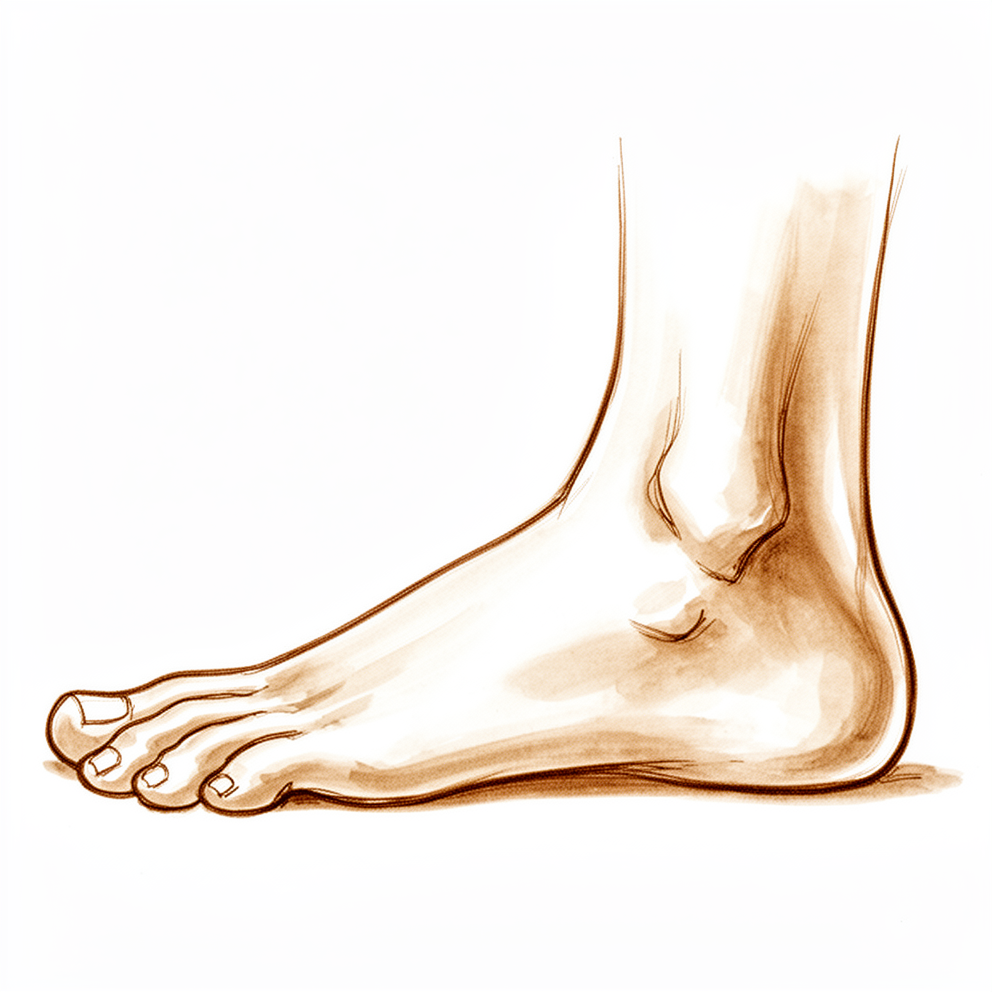
El dolor se localiza en un solo punto: la parte inferior del talón, cerca del inicio del arco plantar. Por lo general, es más intenso al dar los primeros pasos por la mañana, o al levantarse después de estar sentado o descansando un rato. Una vez que lleva un poco de tiempo de pie, el dolor suele disminuir. Sin embargo, tiende a reaparecer tras largos periodos sin estar de pie.
Esta afección se conoce como fascitis plantar. Es la causa más frecuente de dolor en el talón en adultos, y es más común entre los 40 y 60 años. Con frecuencia afecta solo a un pie, pero aproximadamente un tercio de las personas la padecen en ambos pies.
Las tareas cotidianas pueden volverse difíciles. Levantarse de la cama y caminar hasta el baño puede ser doloroso. Ponerse de pie desde una silla, caminar hasta el buzón o salir del coche después de un viaje también pueden desencadenar el dolor. Permanecer de pie durante largos periodos, como al hacer compras o en el trabajo, puede empeorarlo.
Si siente dolor en ambos talones, merece la pena comentárselo a su cirujano. El dolor en ambos talones a veces puede indicar una afección inflamatoria y no solo una fascitis plantar, y es importante verificarlo. El dolor en el talón en personas mayores, o aquel que no sigue el patrón habitual, también requiere una evaluación más detallada para descartar otras causas, como una fractura por estrés en el talón.
Probablemente note el dolor con mayor intensidad al empujar con el pie al caminar, o al subir escaleras descalzo sobre un suelo duro. Algunas personas lo describen como una sensación de moretón o de algo duro presionando bajo el talón.
Si esto coincide con lo que usted experimenta, no está solo. Cada año, alrededor de 2 millones de personas en Estados Unidos desarrollan fascitis plantar. La buena noticia es que la mayoría mejora con un tratamiento sencillo; además, existen pasos claros a seguir si el dolor persiste.
¿Qué está ocurriendo realmente?
La fascia plantar es una banda gruesa de tejido que recorre la planta del pie, desde el hueso del talón hasta los dedos. Puede imaginarla como una cuerda resistente que sostiene el arco del pie. Cuando usted empuja con el dedo gordo del pie, esa “cuerda” se tensa y eleva el arco, lo que permite que el pie funcione como un resorte.
A pesar del nombre, en realidad no se trata de un problema inflamatorio. El tejido se ha desgastado y degenerado; es similar a una cuerda vieja que se ha deshilachado tras años de soportar cargas. Las pequeñas roturas se acumulan más rápido de lo que el cuerpo puede repararlas. Ese desgaste explica por qué el tejido duele al ponerse de pie por primera vez, y por qué el dolor disminuye una vez que el tejido se calienta y se estira.
Varios factores pueden aumentar la carga sobre esta “cuerda”. Un tendón de Aquiles o los músculos de la pantorrilla demasiado tensos limitan la flexión del tobillo, lo que genera mayor tensión en la fascia. El sobrepeso y permanecer de pie durante largas horas en el trabajo también incrementan dicha carga. Asimismo, si el pie gira hacia adentro al caminar, eso también influye.
La fascia plantar apenas se estira, por lo que no puede absorber mucha deformación. Debajo del talón hay un cojín de grasa que actúa como amortiguador. Las cargas repetidas y fuertes pueden desgastar ese cojín; además, las inyecciones de esteroides en el talón pueden dañarlo con el tiempo.
Quizás haya oído hablar de los espolones calcáneos. Son pequeñas zonas de calcificación donde la fascia se une al hueso del talón; se encuentran en 10-20% de la población. Muchas personas con espolones calcáneos no sienten ningún dolor, por lo que el espolón en sí no suele ser la causa de su dolor.
Un último dato relevante: la fascia plantar está muy cerca de un nervio diminuto en la parte inferior del talón. La hinchazón o la formación de cicatrices cerca de la fascia pueden irritar ese nervio, lo que puede contribuir a las molestias que siente.
Qué podemos hacer al respecto
Las radiografías con carga de peso suelen ser el primer paso; en caso de que la imagen no sea clara, la ecografía o la resonancia magnética pueden resultar útiles.
En la mayoría de los casos, el dolor de talón se resuelve sin cirugía, por lo que solemos empezar por ahí. Algunos cambios sencillos que usted mismo puede hacer incluyen modificar sus actividades, usar calzado con buen soporte y realizar estiramientos regulares de la fascia plantar y de los gemelos. La fisioterapia trabaja en esos estiramientos, además del fortalecimiento muscular y la gestión de la carga; pueden transcurrir varias semanas o meses para notar todos los beneficios. El uso de cinta adhesiva en el arco del pie también puede aliviar el dolor al dar los primeros pasos a corto plazo. Vale la pena probar estas medidas antes de considerar otras alternativas.
Si el autocuidado no produce resultados suficientes, podemos añadir otros tratamientos. Los comprimidos antiinflamatorios o analgésicos pueden ayudarle a sentirse cómodo mientras la fascia se recupera. La terapia con ondas de choque es otra opción: un dispositivo manual emite ondas sonoras en la zona afectada, estimulando la cicatrización del tejido. Se trata de un tratamiento no invasivo, es decir, no se rompe la piel, y se emplea para el dolor de talón que no ha mejorado con métodos más sencillos. También existen inyecciones. Una inyección de corticoide (esteroide) puede aliviar el dolor a corto plazo, aunque inyecciones repetidas en el talón pueden dañar la almohadilla de grasa natural que lo protege. La inyección de PRP utiliza una muestra de su propia sangre, procesada para concentrar sus factores de curación, y luego se inyecta en la fascia.
La cirugía se plantea cuando el dolor de talón no ha mejorado tras al menos 6 meses de aplicar estas medidas conservadoras. La intervención más habitual es la liberación de la fascia plantar: se corta parte de esa banda de tejido tenso para reducir la tensión en el talón. Con frecuencia esto se realiza mediante pequeñas incisiones y el uso de una cámara (liberación endoscópica); en ocasiones se emplea una técnica basada en una aguja pequeña. En algunos casos también es necesario extirpar una pequeña cantidad de hueso o tejido dañado. Solo tras haber probado de verdad las opciones no quirúrgicas, analizaremos si la cirugía es adecuada para usted; en todo caso, la decisión final se toma de forma conjunta entre usted y nuestro equipo.
Qué esperar
En la mayoría de las personas, la fascitis plantar mejora con el tiempo y con el tratamiento adecuado. Medidas sencillas como los estiramientos, el uso de calzado de soporte y la fisioterapia suelen dar resultados en cuestión de semanas o meses; sin embargo, pueden pasar varios meses antes de notar todos los beneficios. En algunas personas, el dolor aparece y desaparece antes de desaparecer por completo.
Si el primer tratamiento no resulta suficiente, existen otras opciones. Tanto la terapia con ondas de choque como las inyecciones de cortisona pueden aliviar el dolor y mejorar el funcionamiento del pie a los 3 meses. La inyección de PRP puede producir una mayor mejoría en el dolor y la funcionalidad que la inyección de cortisona, especialmente cuando el dolor persiste desde hace mucho tiempo. Asimismo, las plantillas ortopédicas, ya sean hechas a medida o compradas en el mercado, también pueden mejorar el funcionamiento del pie a corto plazo.
Si el dolor en el talón no mejora tras 6 meses o más de aplicar estas medidas, vale la pena considerar la cirugía. En personas que no respondieron a la terapia con ondas de choque, la liberación endoscópica de la fascia plantar arrojó buenos o excelentes resultados en el 85 % de los pacientes a los 2 años. Aquellos que notaron al menos alguna mejoría tras la inyección de cortisona suelen obtener mejores resultados con esta operación que quienes no percibieron cambio alguno.
También hay que reconocer que esta afección puede ser persistente: algunas personas siguen presentando síntomas años después. El pronóstico a largo plazo suele ser peor en mujeres y en personas que padecen la enfermedad en ambos pies. Alrededor del 45,6 % de los pacientes siguen teniendo fascitis plantar unos 10 años después de la aparición de los síntomas; por eso no se debe ignorar esta condición.
Dejarla sin tratar no equivale a manejarla adecuadamente. El dolor continuo puede limitar las actividades diarias, y cuanto más tiempo persista, mayor es la probabilidad de que se mantenga. Además, existe una pequeña posibilidad de que el dolor en ambos talones sea señal de otra afección médica distinta de la fascitis plantar; por ello merece una evaluación adecuada en lugar de simplemente esperar a que desaparezca.
En resumen: la mayoría de las personas mejoran con un tratamiento constante y razonable; algunas necesitan más tiempo, y un grupo menor acaba precisando cirugía. Nosotros supervisaremos su evolución y ajustaremos el plan de tratamiento si no se observan avances.
Cuándo consultar a un especialista
La mayoría de los casos de dolor en el talón pueden esperar hasta una visita rutinaria al médico de cabecera. Acuda a su médico si el dolor persiste durante semanas sin mejorar, o si le impide dormir o trabajar. Solicite una evaluación especializada si medidas sencillas como los estiramientos y el uso de calzado de soporte no han surtido efecto tras varios meses, o si el dolor le impide realizar sus actividades habituales. Existen ciertos signos que requieren atención más inmediata. Informe a su médico si siente dolor en ambos talones, ya que esto podría indicar una afección inflamatoria y no solo una fascitis plantar. El dolor en el talón en personas mayores, o aquel que no sigue el patrón habitual, también debe ser evaluado para descartar otras causas, como una fractura por estrés en el talón.
Evidence & references
This is the clinical evidence summary written for health professionals. It is technical, and it lists the research this page was built from. You do not need to read it to understand your treatment or to make a decision about it.
Anatomy & Pathophysiology
Plantar Fascia & Heel Anatomy
- Plantar heel spurs originate in the flexor digitorum brevis [10].
- The flexor digitorum brevis is innervated by the medial plantar nerve [10].
- The plantar calcaneonavicular ligament, also known as the spring ligament, attaches proximally to the sustentaculum tali and distally to the navicular [10].
- The long plantar ligament attaches proximally to the calcaneus and distally to the cuboid and first to fifth metatarsals [10].
- The short plantar ligament attaches proximally to the calcaneus and distally to the cuboid [10].
- The medial calcaneal nerve may exit through the abductor hallucis fascia or plantar fascia at the level of a plantar fascia release [2].
Tarsal Tunnel & Neurovascular Anatomy
- The tarsal tunnel is a fibroosseous tunnel within the posteromedial ankle and hindfoot containing the tibial nerve, posterior tibial artery, accompanying veins, posterior tibial tendon, flexor digitorum longus, and flexor hallucis longus tendons [3].
- The flexor retinaculum acts as the roof of the tarsal tunnel and extends from the medial malleolus to the medial side of the calcaneal tuberosity [3].
- The floor of the tarsal tunnel is formed by the medial distal tibia, talus, and calcaneus [3].
- The tibial nerve divides into three terminal branches before reaching the foot: the medial calcaneal nerve, lateral plantar nerve, and medial plantar nerve [3].
- The medial calcaneal nerve branches first from the tibial nerve and travels posteriorly to the subcutaneous tissue [3].
- The lateral plantar nerve passes under the abductor hallucis, over the medial fascia of the quadratus plantae, deep to the plantar fascia, and under the heel to the flexor digitorum brevis [3].
- The medial plantar nerve innervates the abductor hallucis and continues under the abductor and plantar fascia to form common digital nerves terminating in the first, second, and third web spaces [3].
- The medial plantar nerve supplies motor branches to the interossei and lumbricals [3].
- The lateral plantar nerve supplies motor branches to the intrinsic muscles [3].
- Distal tarsal tunnel syndrome involves entrapment of the distal tibial nerve branches as they enter the foot [3].
- Sources of constriction beneath and adjacent to the tarsal tunnel include bone fragments, tenosynovitis, ganglia, soft-tissue encroachment in inflammatory arthritis, varicosities, neural tumors, perineural fibrosis, tarsal coalition, and calcaneal osteotomies [3].
- A fixed valgus hindfoot can predispose to chronic traction neuropathy of the posterior tibial nerve or one of its branches [3].
Foot Compartments & Musculature
- The medial compartment of the foot lies on the plantar surface of the hallux and contains the intrinsic muscles of the great toe and flexor digiti minimi [9].
- The lateral compartment of the foot lies on the plantar surface of the fifth metatarsal and contains the abductor digiti minimi [9].
- The central compartment of the foot lies on the plantar surface of the foot and is divided into a superficial layer containing flexor digitorum brevis and a deep calcaneal layer containing quadratus plantae [9].
- The interosseous compartment of the foot lies dorsal to the other compartments between the metatarsals and contains digital nerves [9].
- Manoli and Weber proposed that there are nine compartments in the foot, with each of the four interosseous muscles and adductor hallucis lying in separate compartments [9].
- The barrier between the superficial and calcaneal compartments of the foot becomes incompetent at a pressure of 10 mm Hg [9].
- The peroneus longus inserts on the plantar aspect of the medial cuneiform and base of the first metatarsal [10].
- The peroneus brevis inserts on the lateral aspect of the base of the fifth metatarsal [10].
- At the level of the peroneal tubercle, the peroneus brevis lies dorsal to the peroneus longus [10].
- The extensor digitorum brevis is the only dorsal intrinsic muscle of the foot and is innervated by the lateral terminal branch of the deep peroneal nerve [10].
- Lumbrical muscles are located plantar to the transverse metatarsal ligament, while interosseous tendons are dorsal [10].
- The tibialis posterior inserts on the navicular and medial cuneiform [10].
- The flexor hallucis longus inserts on the distal phalanx of the great toe [10].
- The flexor digitorum longus inserts on the distal phalanges of the second to fifth toes [10].
Ankle & Hindfoot Ligaments
- The deltoid ligament is composed of a superficial layer (tibionavicular and tibiocalcaneal) that crosses the ankle and subtalar joint, and a deep layer (anterior and posterior tibiotalar) that crosses the ankle joint only [10].
- The anterior talofibular ligament is the weakest lateral ankle ligament, is intracapsular, and limits inversion in plantar flexion [10].
- The calcaneofibular ligament crosses both the ankle and the subtalar joint and limits inversion in neutral or dorsiflexion [10].
- The posterior talofibular ligament limits posterior talus displacement and external rotation [10].
- The tibionavicular ligament limits talar external rotation [10].
- The tibiocalcaneal ligament limits hindfoot eversion [10].
- The anterior tibiotalar ligament limits lateral displacement of the talus and external rotation [10].
- The posterior tibiotalar ligament limits lateral displacement of the talus [10].
- The Lisfranc ligament attaches proximally to the medial cuneiform and distally to the base of the second metatarsal [10].
- The interosseous talocalcaneal ligament, also known as the cervical ligament, attaches between the talus and calcaneus [10].
- The bifurcate ligament attaches from the calcaneus to the cuboid and navicular [10].
Vascular Anatomy
- The dorsalis pedis artery is a continuation of the anterior tibial artery that passes deep under the inferior extensor retinaculum [4].
- The dorsalis pedis artery lies between the tendons of the extensor hallucis longus medially and the extensor digitorum longus laterally as it passes anterior to the ankle joint [4].
- The deep peroneal nerve lies immediately lateral to the dorsalis pedis artery [4].
- The first dorsal metatarsal artery is the continuation of the dorsalis pedis artery and runs distally on the dorsal surface of the first dorsal interosseous muscle [4].
- The deep plantar, or communicating, artery leaves the dorsalis pedis at the base of the first metatarsal and passes toward the plantar surface of the foot between the heads of the first dorsal interosseous muscle [4].
- The deep plantar artery communicates with the lateral plantar artery to complete the plantar arterial arch [4].
- The first dorsal metatarsal artery may lie superficial to or within the substance of the first dorsal interosseous muscle in 78% to 88% of feet [4].
- The first dorsal metatarsal artery may lie plantar to the first metatarsal in 12% to 22% of feet [4].
- The diameter of the dorsalis pedis artery may range from 1.8 to 3 mm [4].
- The plantar surface of the foot is innervated by the digital branches of the medial plantar nerve [4].
- The first web space is innervated by the deep peroneal nerve [4].
- The dorsal surfaces of the toes and foot receive sensory innervation through the superficial peroneal nerve branches [4].
Cavus Foot Pathophysiology
- Cavus foot is defined as a foot with an abnormally high arch [1].
- Cavus foot frequently accompanies hindfoot varus deformity, known as cavovarus foot [1].
- Clawing of the toes and demonstrable weakness of ankle or foot muscles may be present in cavus foot [1].
- Calluses beneath the metatarsal heads and heel skin are common in cavus foot [1].
- Hindfoot varus in individuals with a cavovarus deformity is nonstructural if it can be corrected with the “block test” [1].
- The cause of cavus foot is usually muscle imbalance in a growing foot [1].
- Cavus foot is rarely found in early childhood but is fairly frequent after 8–10 years of age [1].
- Intrinsic muscle weakness is a major cause of cavus foot, with weakness of the peroneal or anterior tibialis muscles also implicated [1].
- Cavus foot is rarely found in the absence of an underlying neuromuscular condition [1].
- Cavus foot is a marker for neuromuscular disease [1].
- In severe cavus foot, the forefoot is severely plantar flexed on the hindfoot, requiring marked ankle dorsiflexion to compensate [1].
- When cavus becomes too severe, ankle dorsiflexion is blocked, leading to anterior ankle impingement and pain [1].
- The inability to dorsiflex further compromises forefoot clearance, eventually allowing only the metatarsals to contact the floor [1].
- This condition can be misinterpreted as ankle plantarflexion contracture, potentially leading to unnecessary heel cord release [1].
Investigations
Imaging Modalities
- MRI is a fundamental tool in the workup of a patient with a soft-tissue or bone tumor in the foot [20].
- MRI allows detection and definition of masses in the foot due to excellent multiplanar anatomic information [20].
- Plantar fibroma or plantar fibromatosis is usually easily confirmed by MRI by the presence of a signal-poor mass arising from the plantar fascia [20].
- Interdigital or Morton neuroma is most frequently found in the distal third metatarsal interspace on MRI [20].
- Unlike most other tumors, interdigital neuroma lacks increased signal on T2-weighted MRI sequences [20].
- MRI can detect osteomyelitis quite early, well before radiographic abnormalities are visible [20].
- The sensitivity of MRI for osteomyelitis approaches 100%, but the reported specificity is less [20].
- In neuropathic patients, the specificity of MR signal abnormalities for osteomyelitis is reduced [20].
- Normal MRI marrow signal confidently excludes osteomyelitis in almost all cases of pedal osteomyelitis [20].
- MRI is the modality of choice for the evaluation of surrounding soft-tissue infection in the foot [20].
- Contrast-enhanced MRI sequences are helpful in defining nonenhancing fluid collections, abscesses, and devascularized or gangrenous tissue [20].
- MRI and ultrasound are used to demonstrate soft-tissue problems, such as tendon and ligament injuries [17].
- MRI and ultrasound can be used to diagnose joint effusions and bone infections [17].
- Computed tomography (CT) scans are important in assessing fractures and for congenital bony coalitions [17].
- Radio-isotope scanning is excellent for localizing areas of abnormal blood flow or bone remodelling activity, which suggest the presence of covert infection [17].
- Ultrasonography has been reported to be 85% accurate in diagnosing interdigital neuroma [14].
- MRI may be useful in diagnosing interdigital neuroma, and the administration of contrast medium may increase its accuracy [14].
- Weight-bearing radiographs are useful for excluding a stress fracture of the metatarsal neck in the evaluation of interdigital neuroma [14].
- Injection of the involved web space with local anesthetic that results in relief of neuritic symptoms is diagnostic of interdigital neuroma [14].
- Injections performed under ultrasound guidance for interdigital neuroma had higher short-term relief compared with blind injections [14].
- MRI can be useful in the diagnosis of metatarsalgia, such as distinguishing among a neuroma, cyst, bursa, or synovitis [18].
- The radiographic evaluation for metatarsalgia includes weight-bearing anteroposterior, lateral, and oblique views of the foot [18].
- The skyline view of the metatarsal heads is helpful to evaluate their overall alignment, particularly in cases resulting from previous surgery [18].
- MRI of the spine is indicated with unilateral involvement in pes cavus [21].
- Weight-bearing radiographs are required for the evaluation of pes cavus [21].
- An increased Meary angle, where the long axis of the talus intersects the long axis of the first metatarsal dorsally on the lateral view, is a radiographic finding in pes cavus [21].
- The normal value for the Meary angle is 0° to 5° [21].
- An increased calcaneal pitch, defined as the intersection of a line running along the undersurface of the calcaneus and the floor, is a radiographic finding in pes cavus [21].
- A calcaneal pitch greater than 30° indicates a calcaneocavus foot [21].
- Stress X-rays complement the clinical tests for ankle stability [17].
- If stress manoeuvres are painful, they can be carried out under general anaesthesia [17].
- In the adult, standard X-ray views of the ankle are AP, mortise (an AP view with the ankle internally rotated 15–20 degrees), and lateral [17].
- Medial and lateral oblique projections allow better assessment of the subtalar joint [17].
- The calcaneum is usually X-rayed in axial and lateral views [17].
- X-ray under load, weight-bearing, is helpful in showing the coronal relationship of heel to tibia in stance [17].
- The foot, toes, and intertarsal joints are well displayed in standing dorsoplantar and lateral views [17].
Clinical Examination
- The Mulder sign is elicited by squeezing the foot while palpating the web space, and a painful click is diagnostic of an interdigital neuroma [14].
- Plantar foot pain just distal to and between the metatarsal heads, often described as “burning,” is characteristic of interdigital neuroma [14].
- Patients with interdigital neuroma often feel as if they are walking on a marble [14].
- Symptoms of interdigital neuroma are typically aggravated by activity or by wearing shoes with high heels or a narrow toe box [14].
- Patients with interdigital neuroma often note that they feel better in their bare feet and get quick relief by removing their shoes [14].
- The involved ray should be evaluated for metatarsophalangeal (MTP) joint instability, especially if the second web space is symptomatic [14].
- Neuromas rarely occur in the first and fourth web spaces, so for pain that occurs in these areas, other causes of forefoot pain should be considered [14].
- Hindfoot flexibility is assessed by placing a 1-inch block under the lateral border of the foot (Coleman block test) [21].
- A neurologic examination and a family history are essential in the evaluation of pes cavus [21].
- Unilateral involvement in pes cavus suggests a focal diagnosis, such as spinal cord anomaly or nerve injury [21].
- Bilateral involvement and a positive family history are common with Charcot-Marie-Tooth disease [21].
- The physical examination of the foot and lower extremity for metatarsalgia begins with the patient standing [18].
- The plantar aspect of the foot is carefully evaluated for evidence of callus formation in metatarsalgia [18].
- The metatarsal heads are palpated individually to assess for generalized plantar fat pad atrophy, a prominent fibular condyle, synovitis, or possibly a transfer lesion beneath a metatarsal head [18].
- The patient should be evaluated for a postural problem of the foot, such as a flat foot or cavus foot, during the clinical evaluation of metatarsalgia [18].
- Diagnosis of cavus foot requires a thorough search for the underlying cause and may require neurologic consultation, spinal MRI, and electromyographic (EMG) studies [1].
- One of the most common symptoms of cavus foot is anterior ankle pain, sometimes associated with toe walking [1].
- In severe cavus foot, ankle dorsiflexion is blocked, leading to anterior ankle impingement and pain [1].
- The inability to dorsiflex further compromises forefoot clearance, and eventually, only the metatarsals can contact the floor in severe cavus foot [1].
- This condition can be misinterpreted as ankle plantarflexion contracture, leading to unnecessary (and possibly harmful) heel cord release [1].
- Patients with pes cavus may report instability, such as ankle sprains [21].
References
[1] A Lange Medical Book Current Diagnosis Treatment In Orthopedics Fifth Edition. 10Pediatric Orthopedic Surgery > 4. Cavus Foot.
[2] Aaos Comprehensive Orthopaedic Review 3. Anatomy and Biomechanics of the Foot and Ankle > I. Anatomy.
[3] Campbell S Operative Orthopaedics 4 Volume Set. COMBINED HAMMER TOE AND MALLET TOE DEFORMITY WITH ASSOCIATED DOUBLE CORNS > TARSAL TUNNEL SYNDROME.
[4] Campbell S Operative Orthopaedics 4 Volume Set. RESULTS OF SUTURE OF THE SCIATIC NERVE > NEUROVASCULAR ANATOMY.
[9] Rockwood And Green S Fractures In Adults. Effect of Blast on the Musculoskeletal System > Foot.
[10] Miller S Review Of Orthopaedics. SECTION 16 PATELLAR TRACKING IN TOTAL KNEE ARTHROPLASTY > 2. Arthrology > 3. Muscles.
[14] Aaos Comprehensive Orthopaedic Review 3. Neurologic Disorders of the Foot and Ankle > II. Interdigital Neuroma.
[17] Apley And Solomon S Concise System Of Orthopaedics And Trauma. CONGENITAL ABNORMALITIES.
[18] A Lange Medical Book Current Diagnosis Treatment In Orthopedics Fifth Edition. 8Foot and Ankle Surgery > METATARSALGIA.
[20] Campbell S Operative Orthopaedics 4 Volume Set. OTHER DISORDERS OF FOOT AND ANKLE.
[21] Aaos Comprehensive Orthopaedic Review 3. Pediatric Foot Conditions > Pes Cavus.