Patients › Rehabilitation
Liberación de De Quervain
Un plan de recuperación con movilización temprana tras la liberación quirúrgica del primer compartimento dorsal para el tratamiento de la tenosinovitis de De Quervain; incluye un breve período de alivio del dolor, movimientos suaves del pulgar y la muñeca desde el inicio para evitar la rigidez, cuidado de la cicatriz, y una recuperación gradual de la fuerza de agarre y de pinza alrededor de las cuatro a seis semanas.
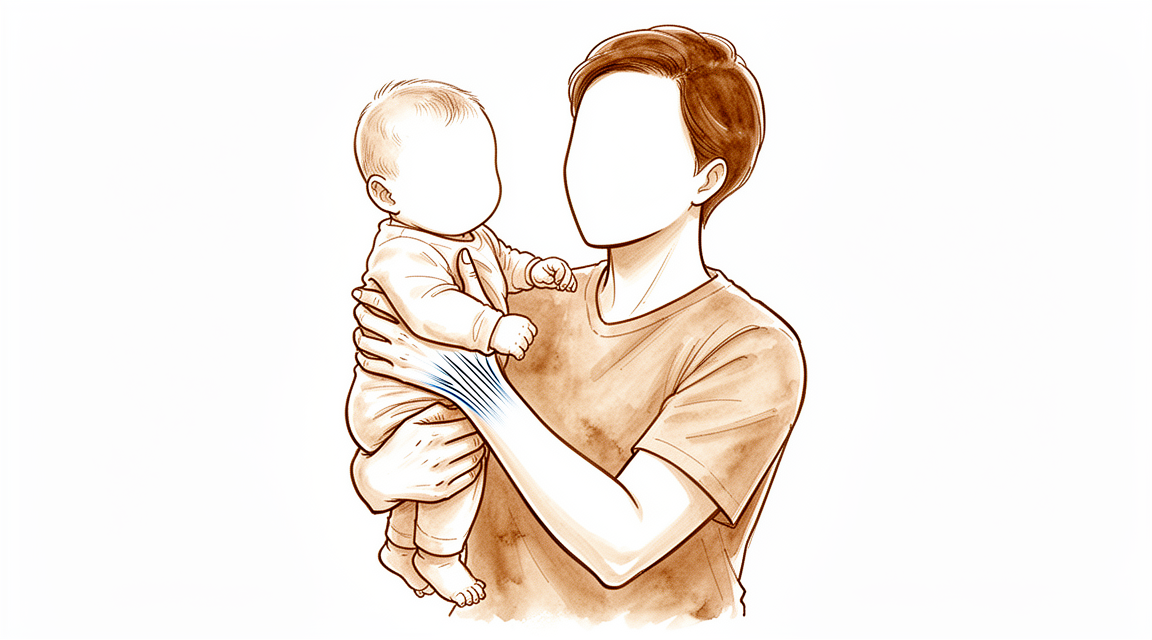
Este protocolo le servirá de guía para su recuperación tras una liberación de De Quervain, una intervención quirúrgica menor mediante la cual se abre el túnel estrecho que rodea los tendones del lado del pulgar en su muñeca; el procedimiento fue realizado por el Dr. Kieran Hirpara en el Mater Private Hospital Rockhampton. El proceso comienza con un programa de ejercicios para realizar en casa, seguido del protocolo clínico estructurado redactado para su terapeuta de mano; lleve esta página o su versión en PDF a su primera sesión de terapia para garantizar una rehabilitación coordinada. Su terapeuta de mano podrá modificar el plan según el progreso de su recuperación.
Si tiene alguna duda respecto a la herida quirúrgica, no dude en ponerse en contacto con el consultorio. A menudo resulta útil tomar una fotografía de la herida y enviarla por correo electrónico para su evaluación.
Qué esperar
La tenosinovitis de De Quervain consiste en una irritación de los dos tendones que van hacia el pulgar (el abductor largo del pulgar y el extensor corto del pulgar) en el tramo donde atraviesan un túnel estrecho (el primer compartimento dorsal) en la cara del pulgar de la muñeca. La liberación tendinosa es una intervención quirúrgica menor que consiste en abrir dicho túnel para que los tendones puedan deslizarse libremente, aliviando así el dolor y los bloqueos en el movimiento.
Como no se sutura ni se tensa nada (el túnel simplemente se abre y debe permanecer abierto), la recuperación implica un movimiento temprano, sin necesidad de un largo período de inmovilización. No existe ninguna estructura que requiera meses para cicatrizar. El objetivo principal de la rehabilitación es mantener el movimiento de los tendones a través del tejido quirúrgico en proceso de curación, para evitar que se adhieran, mientras la pequeña herida y los nervios cutáneos de esa zona se estabilizan.
El plan de recuperación es sencillo: durante los primeros días y hasta una o dos semanas se usa un vendaje suave (a veces una férula ligera para el pulgar, únicamente para mayor comodidad); luego se inician movimientos suaves del pulgar y la muñeca. Una vez cicatrizada la herida, se procede al cuidado de la cicatriz, y posteriormente se incrementa gradualmente la fuerza de agarre y de pinza. La mayoría de los pacientes vuelven a realizar sus actividades cotidianas sin problemas en un plazo de cuatro a seis semanas.
Después de esta intervención se vigilan dos aspectos en particular. El primero es un pequeño nervio cutáneo, el nervio sensitivo radial, cuyas ramas discurren justo por la zona frontal de la incisión; durante un tiempo puede provocar sensación de hormigueo o sensibilidad, y la rehabilitación temprana tiene como fin su estabilización. El segundo aspecto es la posición de los tendones: si el túnel se abre en exceso hacia la palma, en ocasiones un tendón puede desplazarse hacia adelante (subluxarse) al mover el pulgar. Ambas situaciones son poco frecuentes, y su terapeuta de mano estará atento a ellas.
Precauciones y limitaciones
- Mantenga el pulgar y la muñeca en movimiento desde el inicio: el movimiento suave es el tratamiento adecuado, no el reposo. Lo que más queremos evitar es la rigidez provocada por la falta de movimiento.
- Utilice cualquier férula de confort únicamente según las indicaciones y solo durante los primeros días o una o dos semanas: su finalidad es brindar comodidad, no protección; debe quitársela para realizar los ejercicios.
- Mantenga la herida limpia y seca hasta que cicatrice; no comience a masajear la cicatriz hasta que se hayan retirado los vendajes y la piel esté cerrada.
- Evite realizar agarres fuertes, pellizcos enérgicos, levantar objetos pesados o girar el brazo (como retorcer un paño, abrir frascos difíciles de abrir o usar herramientas pesadas) durante unas tres a cuatro semanas; después, vaya aumentando gradualmente la actividad.
- Informe a su terapeuta o al personal si nota hormigueo, entumecimiento o una sensación punzante en el dorso del pulgar y la muñeca, o si percibe que algún tendón se “traba” o se desliza al mover el pulgar.
Para información sobre el cuidado de la herida, la reducción de la hinchazón y el manejo de la cicatriz, consulte las pautas de cuidado de heridas de nuestra consulta.
Sus ejercicios
Kieran Hirpara 4.0
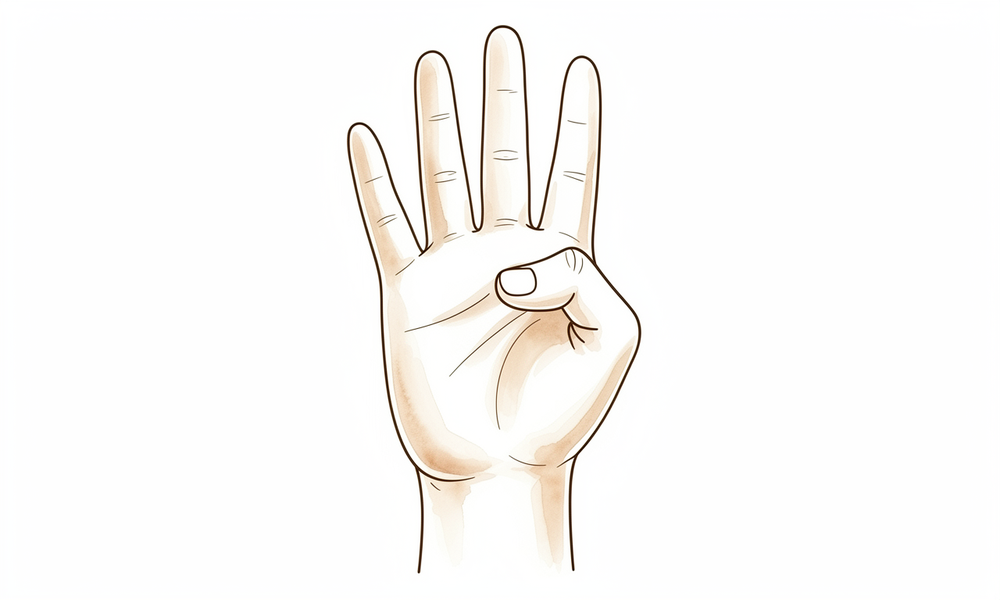
Movimiento del pulgar (flexión, extensión y alcance)
Mueva su pulgar suavemente a través de todo su rango de movimiento: doble la punta hacia la palma, estírela después, y luego mueva todo el pulgar para tocar la base del meñique y vuelva a abrirlo hacia afuera. Haga estos movimientos despacio y sin esfuerzo. El movimiento temprano del pulgar permite que los tendones liberados deslicen correctamente, evitando que se adhieran a la cicatriz en proceso de curación.
10 de cada uno, 3–4 veces al día, manteniendo la comodidad.
Kieran Hirpara 4.0
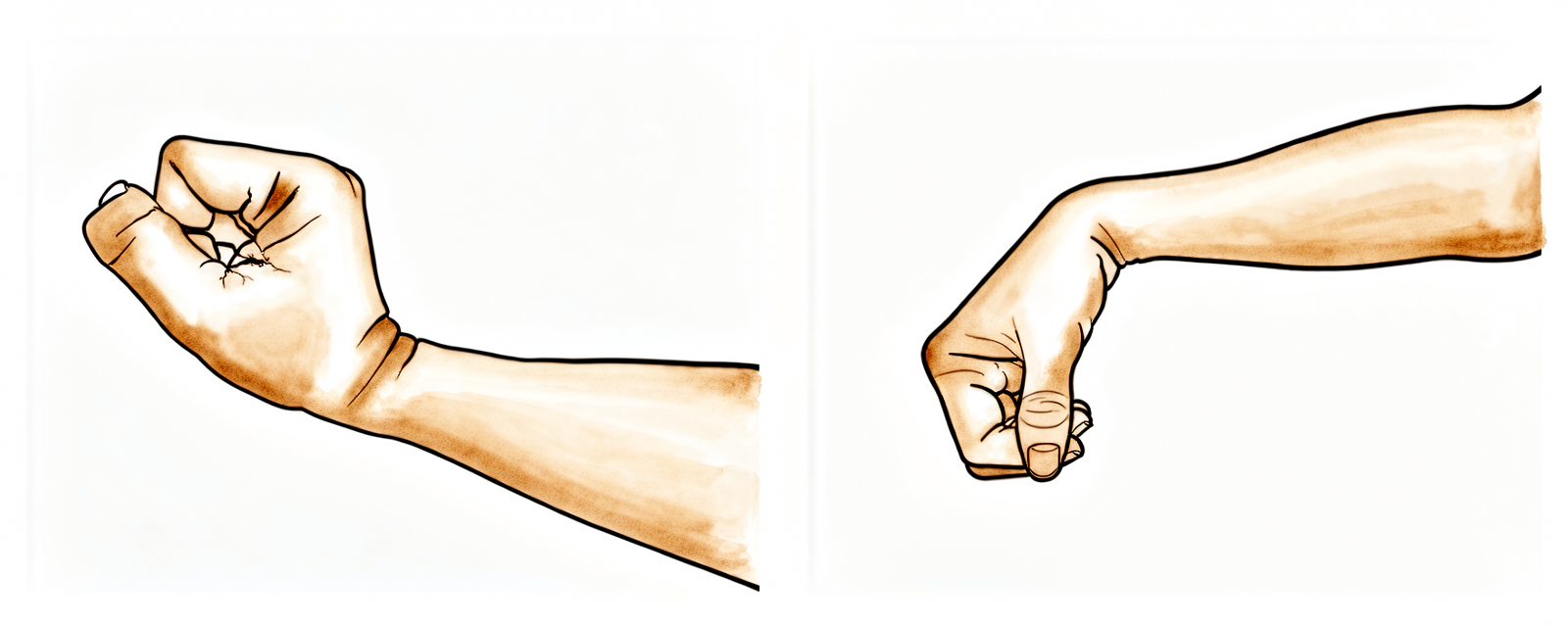
Movimiento de la muñeca (hacia arriba, hacia abajo y de lado a lado)
Con el antebrazo apoyado sobre una mesa, doble suavemente la muñeca hacia arriba y hacia abajo, y luego inclínela de lado a lado (hacia el pulgar y luego hacia el meñique). Mueva la muñeca solo hasta donde se sienta cómodo. Esto mantiene la flexibilidad de la muñeca mientras la herida cicatriza.
10 en cada dirección, 3–4 veces al día
Kieran Hirpara 4.0
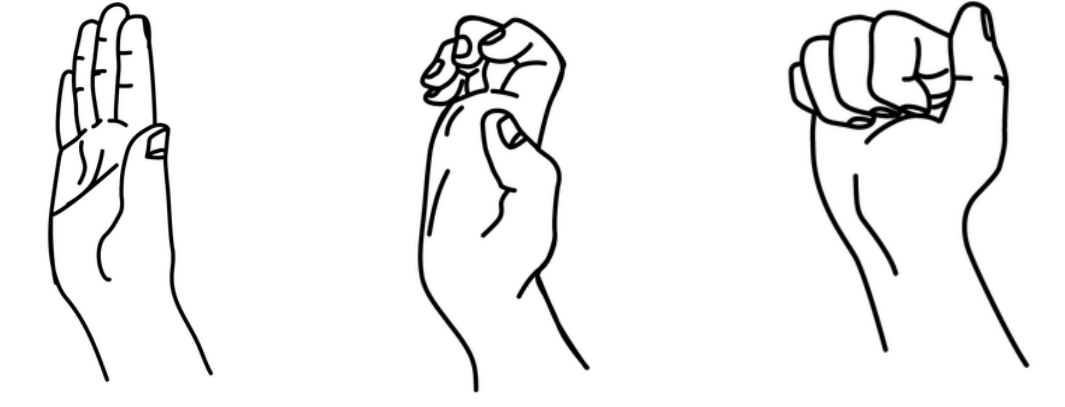
Deslizamientos tendinosos (deslizamiento del pulgar y de los dedos)
Abra la mano completamente; luego deslice el pulgar para tocar cada una de las yemas de los dedos, después forme un puño relajado y vuelva a abrir la mano. El objetivo es un deslizamiento suave, no aplicar fuerza. Mantener en movimiento los tendones a través del túnel liberado es lo más importante durante las primeras semanas para evitar la rigidez y las adherencias.
5–10 ciclos lentos, 3–4 veces al día
Kieran Hirpara 4.0
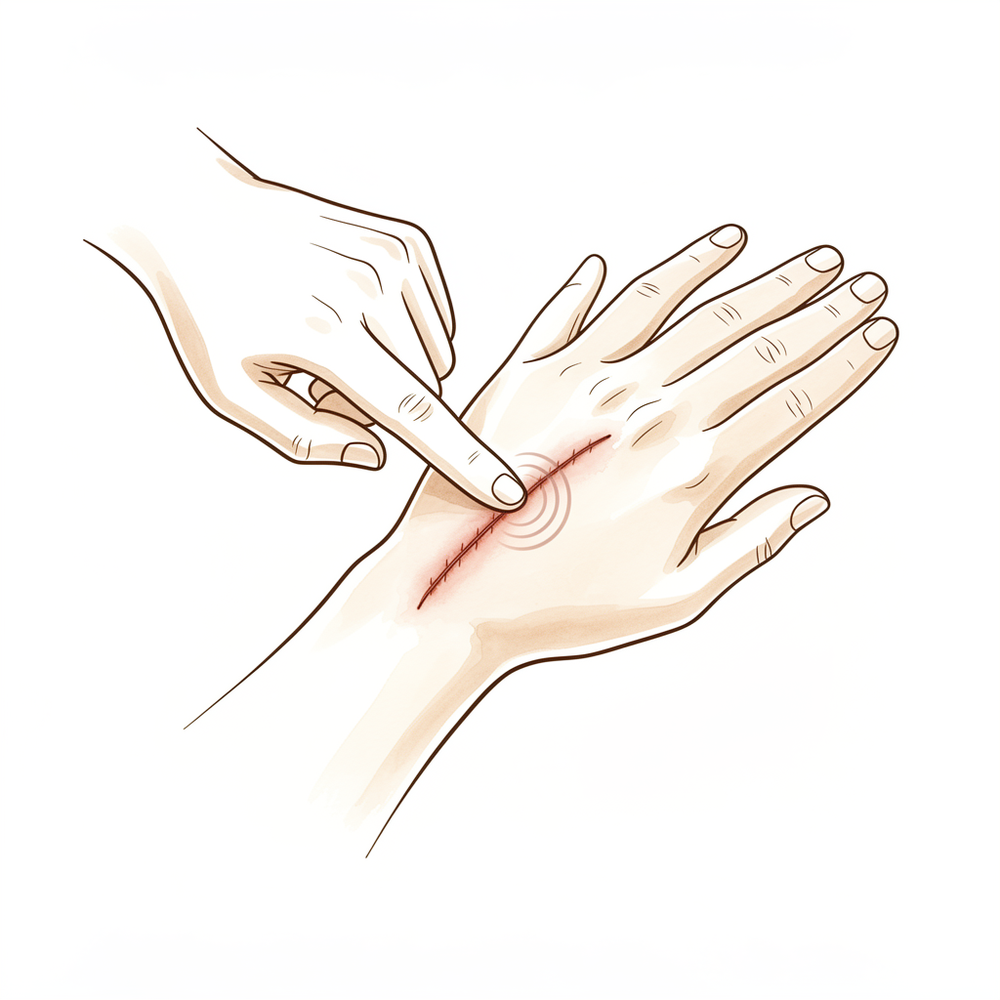
Masaje de la cicatriz
Una vez que la herida haya cicatrizado por completo y se hayan retirado los vendajes (normalmente al cabo de unas dos semanas), aplique un poco de crema hidratante sobre la cicatriz, masajeando con movimientos circulares suaves pero firmes durante un minuto o dos. Esto ablanda la cicatriz y ayuda a que la piel y las delicadas ramificaciones nerviosas que se encuentran debajo se asienten. Interrumpa el masaje si la zona sigue abierta o supurando.
1–2 minutos, 2–3 veces al día, una vez curado.
Kieran Hirpara 4.0
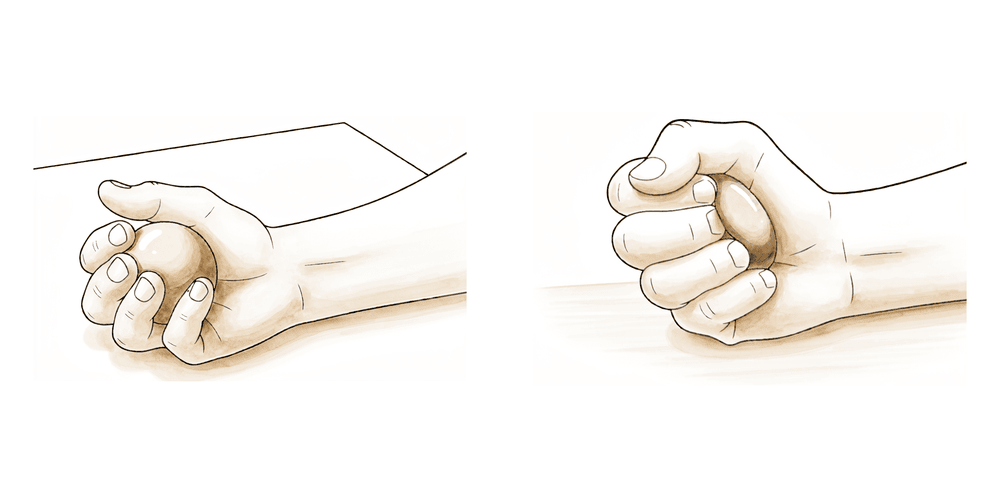
Fortalecimiento de la prensión y la pinza
Un ejercicio posterior: generalmente se realiza alrededor de tres a cuatro semanas después, una vez que la herida ha cicatrizado y el movimiento resulta cómodo. Apriete una pelota blanda o masa terapéutica para fortalecer la prensión; también puede pellizcar un pequeño trozo de masa entre el pulgar y las yemas de los dedos para trabajar la fuerza de pellizco. Vaya aumentando progresivamente la intensidad del esfuerzo. De este modo se recupera la fuerza que siempre disminuye tras la cirugía.
10–15 compresiones/pellizcos, 2–3 veces al día (a partir de unas 3–4 semanas)
Kieran Hirpara 4.0
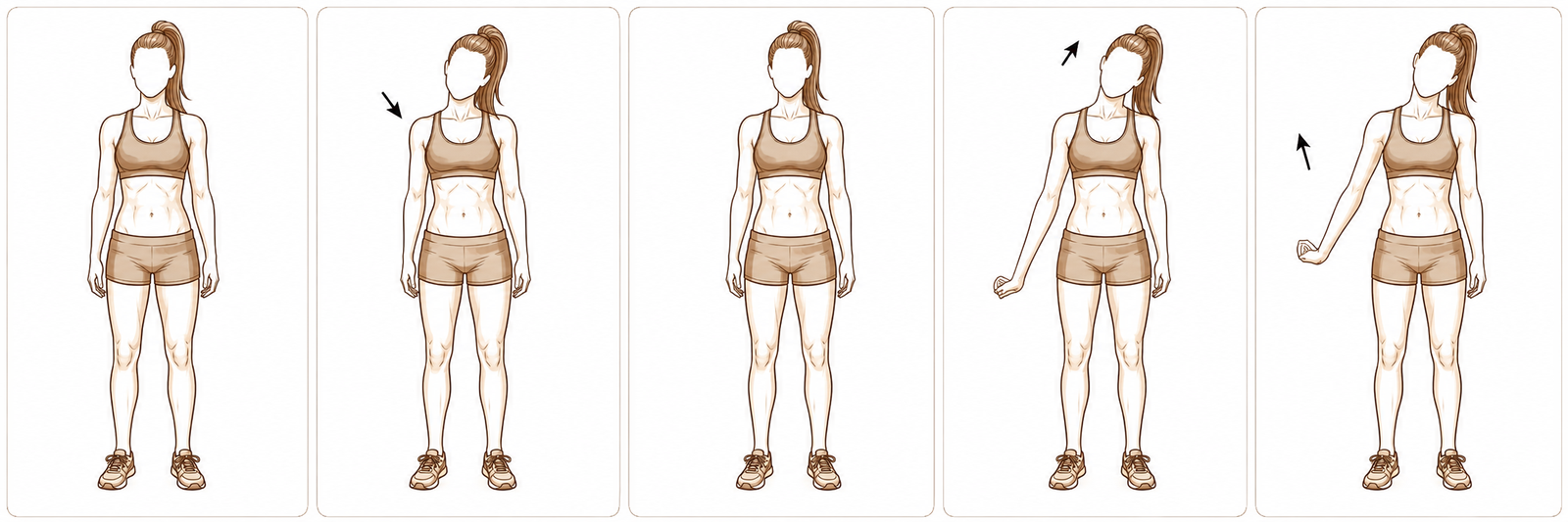
Deslizamiento del nervio radial (si la parte dorsal de la muñeca presenta hormigueo o sensibilidad al tacto)
Solo si lo indica su terapeuta de mano: en casos de hormigueo, sensibilidad o dolor en la parte dorsal del pulgar y la muñeca. Con el brazo extendido hacia adelante, baje suavemente la muñeca y el pulgar para realizar un estiramiento leve hasta sentir una ligera tensión; mantenga esa posición un instante y luego relájese. El ejercicio no debe causar dolor ni empeorar el hormigueo. Esto ayuda a calmar el pequeño nervio cutáneo que pasa justo por la zona de la cirugía.
5–10 deslizamientos lentos, 1–2 veces al día, únicamente según las indicaciones.
Estos son los ejercicios que aparecen en su folleto. Comience a realizarlos según las indicaciones del Dr. Hirpara y de su terapeuta de mano. Los ejercicios iniciales (movimiento del pulgar, movimiento de la muñeca y deslizamiento de tendones) mantienen todo en movimiento para evitar que los tendones liberados se adhieran; se inician en los primeros días, siempre dentro de los límites del confort. El masaje de la cicatriz se comienza una vez que la herida haya sanado. El fortalecimiento de la prensión y el pellizco se añade más tarde, generalmente a partir de las tres o cuatro semanas. El deslizamiento nervioso solo se incorpora si la piel sobre la muñeca presenta sensación de hormigueo o sensibilidad. Interrumpa cualquier ejercicio que provoque dolor agudo o punzante en la zona lateral del pulgar de la muñeca.
Su protocolo clínico
El resto de esta página describe el protocolo clínico por etapas para la rehabilitación tras la liberación del compartimento dorsal primero en el síndrome de De Quervain. Esta sección debe entregarse a su terapeuta de mano; cada fase comienza con una explicación sencilla en lenguaje coloquial sobre lo que se está realizando. Se trata de una descompresión, no de una reparación: el compartimento dorsal primero se divide y debe permanecer dividido; por lo tanto, no existe ninguna estructura que proteger. El programa es, por tanto, un protocolo de movilización temprana basado en el deslizamiento: se busca que los tendones APL y EPB se deslicen a través del lecho quirúrgico para prevenir adherencias, controlar el edema, gestionar la cicatrización y la situación del nervio sensitivo radial, y recuperar la fuerza de agarre y el movimiento de pinza.
Antes de iniciar el tratamiento, revise el informe operatorio del paciente y consulte con el cirujano responsable sobre la técnica de liberación empleada (incisión longitudinal/dorsal, si se identificó y liberó una subvaina o septo del tendón EPB), la posición dorsal de la incisión para evitar la subluxación de los tendones volares, y el manejo del nervio sensitivo radial. El Dr. Hirpara realiza la liberación mediante abordaje dorsal/longitudinal, protegiendo las ramas del nervio sensitivo radial y manteniendo la incisión en zona dorsal para evitar la subluxación volar; la inmovilización se emplea únicamente por comodidad (vendaje blando, posiblemente con férula de pulgar durante unos días hasta ~1–2 semanas), siendo la movilización temprana del pulgar y la muñeca la práctica recomendada.
Fase I — movilización temprana, control del edema y cuidado de la herida (semana 0 a ~2)
Durante la primera o segunda semana se protege la herida y se controla la hinchazón, mientras que la movilización comienza de inmediato. No existe ningún rango de movimiento restringido: el objetivo es lograr que los tendones liberados deslicen desde el principio. Cualquier férula se utiliza únicamente para mayor comodidad y se retira durante los ejercicios.
Para su terapeuta de mano:
Educación y precauciones - Se trata de una descompresión: no hay estructura que proteger; la movilización activa temprana es el procedimiento habitual. - Solo para apoyo y comodidad: vendaje blando, acompañado de una férula tipo “spica” para el pulgar durante los primeros días, hasta aproximadamente 1–2 semanas; se retira para realizar ejercicios y lavarse. - Mantenga la herida limpia y seca hasta que cicatrice; posponga cualquier tratamiento de la cicatriz hasta que la piel esté completamente cerrada. - En este período, evite el agarre fuerte, la pinza, levantar objetos y la torsión de la muñeca. - Evalúe la distribución del nervio sensitivo radial (región dorsal del pulgar y muñeca) en busca de parestesias, hipersensibilidad o signo de Tinel; asimismo, revise la posible subluxación de los tendones APL/EPB durante la extensión y abducción activa/resistida del pulgar.
Manejo - Herida: utilice los apósitos quirúrgicos según indicaciones; vigile posibles signos de infección. - Edema: mantenga la extremidad elevada, realice masajes retrógrados suaves y aplique hielo según sea necesario. - Ejercicios: movilidad activa del pulgar (flexión/extensión, abducción palmar y radial, oposición), movilidad activa de la muñeca, deslizamiento de los tendones APL/EPB, movilidad activa completa de los dedos; además, permita un uso funcional leve de la mano siempre que sea cómodo.
Criterios para avanzar a la siguiente fase - La herida ha cicatrizado o está en proceso de curación; el edema está controlado; la movilidad activa del pulgar y la muñeca resulta cómoda.
Fase II: Restauración del movimiento y manejo de las cicatrices (semanas ~2 a 4)
Una vez que la herida haya cicatrizado, se retira la férula de confort y el enfoque se desplaza hacia lograr un movimiento completo y cómodo, así como la desensibilización activa de la cicatriz y los nervios. Hacia el final de este período se inicia un ligero fortalecimiento.
Para su terapeuta de mano:
Evaluaciones - Amplitud de movimiento activo/pasivo del pulgar y la muñeca; calidad de la cicatriz; síntomas del nervio sensorial radial; evaluación de subluxación
Educación y precauciones - Dejar de usar cualquier férula de confort; fomentar el uso normal y ligero de la mano - Seguir evitando el agarre o la pinza fuertes/hinchados hasta aproximadamente 3–4 semanas
Manejo - Cicatriz: masaje y aplicación de silicona/hidratante una vez cicatrizada; desensibilización si hay hipersensibilidad - Nervio: ejercicios de deslizamiento y desensibilización del nervio sensorial radial si está irritado; estabilizarlo antes de aplicar carga - Ejercicios: avanzar hacia una amplitud de movimiento completa del pulgar y la muñeca; continuar con los ejercicios de deslizamiento tendinoso; iniciar el agarre/pinza ligera (masa plástica, pelota blanda) a partir de las 3–4 semanas aproximadamente
Criterios para avanzar - Amplitud de movimiento completa y sin dolor del pulgar y la muñeca; cicatriz curada y móvil; síntomas nerviosos en vía de resolución
Fase III: Fortalecimiento y retorno a la actividad (semanas ~4 a 6 y posteriores)
Una vez recuperado el movimiento y cicatrizada la herida, se incrementa la fuerza de agarre y de pinza, y el paciente vuelve a realizar todas sus actividades habituales. La mayoría alcanza un uso normal sin dificultades alrededor de las cuatro a seis semanas; para actividades manuales más exigentes se necesita un poco más de tiempo, y el retorno depende de ciertos criterios clínicos.
Para su terapeuta de mano:
Evaluaciones - Fuerza de agarre y de pinza en comparación con el lado contralateral; presencia de dolor al realizar esfuerzos; pruebas funcionales o laborales según corresponda
Educación y precauciones - Retorno gradual al agarre, pinza, levantamiento y torsión; reinicio total de actividades cuando el paciente lo tolere según su confort y fuerza - Si persiste el dolor o hormigueo en la zona dorsorradial, o si se percibe un chasquido tendinoso → derivar nuevamente al cirujano tratante (considerar posibilidad de neuroma, liberación incompleta o subluxación volar)
Manejo - Ejercicios: fortalecimiento progresivo del agarre y la pinza; cargas específicas según tareas y actividades laborales; continuar con cualquier tratamiento residual para cicatrices o nervios - Considerar el alta cuando la fuerza sea casi simétrica y la función esté restaurada - Derivar nuevamente al médico tratante si la recuperación se estanca o el resultado no es satisfactorio
Criterios para el alta o retorno a la actividad plena - Fuerza de agarre y pinza casi simétrica; uso funcional y laboral sin dolor
Volver al trabajo y a las actividades cotidianas
Se recomienda comenzar desde el principio con un uso ligero de la mano en actividades diarias (comer, escribir, vestirse, tareas sencillas), siempre dentro de los límites de la comodidad. Dado que la intervención se realizó en la muñeca y la mano debe moverse libremente y agarrar objetos de forma segura, la mayoría de las personas pueden volver a conducir en la primera o segunda semana, siempre que la herida no les cause molestias, hayan retirado cualquier férula de protección y puedan agarrar y girar el volante con confianza; esto se confirmará en su consulta de seguimiento.
El agarre fuerte, el pellizco, el levantamiento de pesos y los giros deben esperar hasta aproximadamente tres o cuatro semanas, momento en el cual se irán introduciendo gradualmente. El trabajo de oficina y las tareas ligeras suelen reanudarse en unos días o una o dos semanas; en cambio, el trabajo manual más pesado que requiere fuerza y movimientos repetitivos del pulgar y la muñeca suele retomarse alrededor de las cuatro a seis semanas, según la fuerza y comodidad recuperadas, evaluadas por el Dr. Hirpara y su terapeuta de mano, y no únicamente en función del tiempo transcurrido.
Después de seguir este protocolo
Este protocolo complementa las recomendaciones generales de recuperación de la consulta: consulte control del dolor postoperatorio, cuidado de la herida y manejo de las cicatrices. El plan por fases descrito anteriormente se basa en las guías de rehabilitación publicadas tras una liberación de De Quervain; además, el Dr. Hirpara y su terapeuta de mano supervisarán su recuperación de forma individualizada según la evolución de su mano.
Evidence & references
This is the clinical evidence summary written for health professionals. It is technical, and it lists the research this page was built from. You do not need to read it to understand your treatment or to make a decision about it.
de Quervain's Release — Procedure Outcomes & Post-operative Rehabilitation (First Dorsal Compartment Release)
Topic scope: post-operative rehabilitation after surgical release of the first dorsal compartment of the wrist (abductor pollicis longus, APL, and extensor pollicis brevis, EPB) for refractory de Quervain's tenosynovitis. This is a decompression, not a reconstruction: the fibro-osseous tunnel is opened and is meant to stay open, so the rehabilitation is an early-motion pathway built around tendon gliding, oedema and scar control, and protection of the overlying radial sensory nerve — rather than months of protected healing.
Defining principle of the rehab here: de Quervain's release relieves a tendon entrapment and does not create a construct that needs protection. The divided extensor retinaculum is meant to stay divided. So (unlike a tendon or ligament repair) immediate, gentle active thumb and wrist motion is the default, and the only deliberate restraints are brief comfort support and a short window of heavy-grip/pinch/twist avoidance while the wound heals. The therapy programme exists to keep the APL/EPB tendons gliding through the healing surgical bed so they do not adhere, to settle the radial sensory nerve branches that cross the incision, and to rebuild grip and pinch — not to immobilise. The single branch points are (1) whether a separate EPB sub-sheath/septum was present and released (its retention is a classic cause of failed release) and (2) keeping the release dorsal so the tendons do not subluxate volarly.
A. PROCEDURE OUTCOMES (open release; endoscopic and retinaculum-sparing variants)
Surgical release of the first dorsal compartment is a reliable operation for de Quervain's that has failed non-operative care: the great majority of patients obtain durable symptom relief, and the principal debates are over technique details (incision orientation, completeness of EPB sub-sheath release, whether to preserve/lengthen the retinaculum) rather than whether to decompress.
- Open release gives durable, high-quality long-term outcomes. A series of 80 cases with a mean 9.5-year follow-up reported sustained relief with a low complication profile, establishing the long-term reliability of open release [Garçon et al., Orthop Traumatol Surg Res 2018]. Moderate (long-term cohort).
- Functional recovery is good and objectively measurable. A series using DASH scores to evaluate first-extensor-compartment release for refractory disease documented good functional outcomes, and emphasised identifying and releasing a separate EPB sub-compartment (septum) when present [Lee et al., Clin Orthop Surg 2014]. DASH is a validated, widely used outcome instrument across hand and wrist conditions [Baltzer, Novak & McCabe, J Hand Surg Am 2014 — scoping review]. Moderate (cohort) + instrument SR.
- Endoscopic and open release are broadly comparable. A comparative study of endoscopic versus open release found favourable results for the endoscopic approach with attention to the radial sensory nerve, while open release remains the standard reference technique [Kang et al., Bone Joint J 2013]. Moderate (comparative).
- The retinaculum can be partly resected, simply divided, or reconstructed. Partial resection of the extensor retinaculum gives good short-term results [Altay et al., Orthop Traumatol Surg Res 2011]; simple release and Z-plasty (retinaculum-lengthening) reconstruction give comparable outcomes, with Z-plasty proposed to reduce subluxation risk at the cost of complexity [Kim, Baek & Lee, J Hand Surg Eur 2019]. A longitudinal-incision technique series likewise reports good functional outcomes [Mangukiya et al., Musculoskelet Surg 2019]. Moderate (comparative/cohort).
- Dissatisfaction does occur and is worth counselling for. A focused study of dissatisfaction after first dorsal compartment release found that a minority of patients remain dissatisfied, often linked to residual pain, nerve symptoms or incomplete relief — a reminder that outcomes are good but not universal [Rogozinski & Lourie, J Hand Surg Am 2016]. Moderate (cohort).
B. REHABILITATION / THERAPY EVIDENCE
The central rehab questions are (1) whether to immobilise the thumb/wrist afterwards and for how long, and (2) whether formal hand therapy changes the outcome. The published base specific to post-de-Quervain-release rehabilitation is thin and consensus-driven: there are no high-quality trials comparing immobilisation regimens or therapy protocols. Practice converges on brief comfort support and early motion, with hand therapy used selectively.
- Early motion is the rationalised default; prolonged immobilisation is not supported. Because the release is a decompression with no construct to protect, early active thumb and wrist motion is used to keep the APL/EPB tendons gliding and prevent adhesion. Immobilisation, where used, is a soft dressing or short thumb spica for comfort only for days to ~1–2 weeks. The supporting evidence is mechanistic/consensus, mirroring the well-established early-motion rationale after other upper-limb decompressions. Weak–moderate (mechanism strong, outcome data sparse).
- De Quervain's is not always an isolated problem — therapy assessment matters. A hand-therapy review highlights that de Quervain's syndrome may coexist with other dorsoradial/wrist pathology, so post-operative therapy should reassess rather than assume a single diagnosis — relevant when symptoms persist after release [Redvers-Chubb, Hand Therapy 2015]. Consensus (narrative/therapy review).
- Hand therapy focus is glide, scar and nerve, then strength. The programme priorities are tendon gliding (adhesion prevention), oedema control, scar management and radial sensory nerve desensitisation, and graded grip/pinch strengthening. The benefit of formal supervised therapy over a home programme is not established by trial data; selective therapy is defensible. Weak / consensus.
Recovery trajectory (expected, evidence-anchored)
| Phase | Window | Restraint | Hand use / therapy focus | Strength / load | Notes |
|---|---|---|---|---|---|
| I — Early motion, oedema & wound care | Week 0–~2 | Comfort support only (soft dressing ± short thumb spica) | Immediate active thumb + wrist motion; APL/EPB tendon glides; elevation/oedema control; screen radial sensory nerve + subluxation | Light functional use only | No construct to protect; motion is the treatment. Keep wound clean/dry |
| II — Restore motion & scar/nerve care | Week ~2–4 | Splint discarded once healed | Full thumb + wrist ROM; scar massage once wound healed; radial sensory nerve glides/desensitisation if irritable | Begin light grip/pinch (putty, ball) from ~3–4 wk | Avoid forceful grip/pinch/twist until ~3–4 wk |
| III — Strengthening & return | Week ~4–6+ | Restrictions lifted, graded | Progressive grip/pinch and task-specific loading | Return to near-symmetrical grip/pinch; full activity as strength allows | Light/desk work days–1–2 wk; manual work ~4–6 wk, criterion-based |
(Phase windows are typical clinical guides, not trial-derived deadlines. Driving resumes once the wound is comfortable, any comfort splint is off, and the patient can grip and steer confidently — commonly within 1–2 weeks.)
C. KEY CONTROVERSIES / EVIDENCE QUALITY
- The EPB sub-sheath (septum) must be sought and released. A separate EPB sub-compartment is common and, if missed, is a classic cause of persistent symptoms / failed release. Series that emphasise identifying and releasing it report good outcomes [Lee 2014]. Moderate — strong mechanistic consensus.
- Volar tendon subluxation if released too volar. Dividing the retinaculum too far towards the palmar side can let the APL/EPB tendons subluxate volarly with thumb motion. Keeping the release dorsal, and retinaculum-lengthening (Z-plasty) reconstructions, are described specifically to mitigate this [Kim 2019; Altay 2011]. Moderate (technique-comparative).
- Radial sensory nerve injury is the signature complication. The superficial radial nerve branches cross the operative field; injury or scar entrapment produces dorsoradial numbness, hypersensitivity or painful neuroma and is a leading driver of dissatisfaction [Ilyas et al., J Am Acad Orthop Surg 2007; Rogozinski 2016]. Careful exposure with nerve protection is emphasised across open and endoscopic techniques [Kang 2013]. Moderate.
- Immobilise or move early? No trial settles the optimal post-operative regimen; consensus favours brief comfort support and early motion (decompression logic) over prolonged splinting. Weak — consensus, not trial-derived.
- Outcomes are good but not universal. A measurable minority remain dissatisfied, usually from residual pain, nerve symptoms or incomplete release — worth explicit pre-operative counselling [Rogozinski 2016]. Moderate.
D. EVIDENCE STRENGTH FLAGS (summary)
- MODERATE (cohort / comparative): durable long-term relief from open release (9.5-yr cohort); good DASH-measured functional outcomes; comparability of endoscopic vs open and of simple release vs Z-plasty / partial retinaculum resection; radial sensory nerve injury as the signature complication; a real, defined dissatisfaction rate.
- WEAK / CONSENSUS: the early-motion, glide-based rehabilitation programme itself (mechanistically rationalised; no trial comparing immobilisation regimens or therapy protocols after de Quervain's release); the role of formal supervised therapy vs a home programme; exact phase timings and return-to-activity windows (typical guides, not trial-derived). Outcomes and the two signature complications (radial sensory nerve injury; volar subluxation) are better studied than the rehabilitation protocol.
CITATIONS
RAG corpus (180,000+ Orthopaedic articles)
- Garçon JJ, Charruau B, Marteau E, et al. Results of surgical treatment of De Quervain's tenosynovitis: 80 cases with a mean follow-up of 9.5 years. Orthop Traumatol Surg Res. 2018. DOI: 10.1016/j.otsr.2018.04.022 (PMID 29909297)
- Lee HJ, Kim PT, Aminata IW, et al. Surgical Release of the First Extensor Compartment for Refractory de Quervain's Tenosynovitis: Surgical Findings and Functional Evaluation Using DASH Scores. Clin Orthop Surg. 2014. DOI: 10.4055/cios.2014.6.4.405
- Ilyas AM, Ast M, Schaffer AA, et al. de Quervain Tenosynovitis of the Wrist. J Am Acad Orthop Surg. 2007. DOI: 10.5435/00124635-200712000-00009 (PMID 18063716)
- Kang HJ, Koh IH, Jang JW, et al. Endoscopic versus open release in patients with de Quervain's tenosynovitis. Bone Joint J. 2013. DOI: 10.1302/0301-620X.95B7.31486 (PMID 23814248)
- Altay M, Ertürk C, Işıkan UE. De Quervain's disease treatment using partial resection of the extensor retinaculum: A short-term results survey. Orthop Traumatol Surg Res. 2011. DOI: 10.1016/j.otsr.2011.03.015
- Kim J, Baek J, Lee J. Comparison between simple release and Z-plasty of retinaculum for de Quervain's disease: a retrospective study. J Hand Surg Eur Vol. 2019. DOI: 10.1177/1753193418818341 (PMID 30669923)
- Mangukiya HJ, Kale A, Mahajan NP, et al. Functional outcome of De Quervain's tenosynovitis with longitudinal incision in surgically treated patients. Musculoskelet Surg. 2019. DOI: 10.1007/s12306-018-0585-1
- Rogozinski B, Lourie GM. Dissatisfaction After First Dorsal Compartment Release for de Quervain Tendinopathy. J Hand Surg Am. 2016;41(1). DOI: 10.1016/j.jhsa.2015.09.020 (PMID 26481556)
- Baltzer H, Novak CB, McCabe SJ. A Scoping Review of Disabilities of the Arm, Shoulder, and Hand Scores for Hand and Wrist Conditions. J Hand Surg Am. 2014. DOI: 10.1016/j.jhsa.2014.07.050 (PMID 25227601)
- Redvers-Chubb K. De Quervain's syndrome: It may not be an isolated pathology. Hand Therapy. 2015. DOI: 10.1177/1758998315599796
de Quervain's release literature (URLs)
- Lee HJ, et al. Surgical Release of the First Extensor Compartment for Refractory de Quervain's Tenosynovitis (DASH outcomes; EPB septum). Clin Orthop Surg 2014 (open access). https://doi.org/10.4055/cios.2014.6.4.405
- Garçon JJ, et al. Results of surgical treatment of De Quervain's tenosynovitis: 80 cases, mean 9.5-year follow-up. Orthop Traumatol Surg Res 2018. https://doi.org/10.1016/j.otsr.2018.04.022
- Ilyas AM, et al. de Quervain Tenosynovitis of the Wrist (review — radial sensory nerve, surgical technique, complications). J Am Acad Orthop Surg 2007. https://doi.org/10.5435/00124635-200712000-00009
- Rogozinski B, Lourie GM. Dissatisfaction After First Dorsal Compartment Release for de Quervain Tendinopathy. J Hand Surg Am 2016. https://doi.org/10.1016/j.jhsa.2015.09.020