Skip to content

Patients › General-Health

¿Cómo funciona el cartílago? (y por qué le cuesta sanar)

PDF

Esta página se tradujo automáticamente y todavía no la ha revisado un médico. La versión en inglés es la versión oficial.

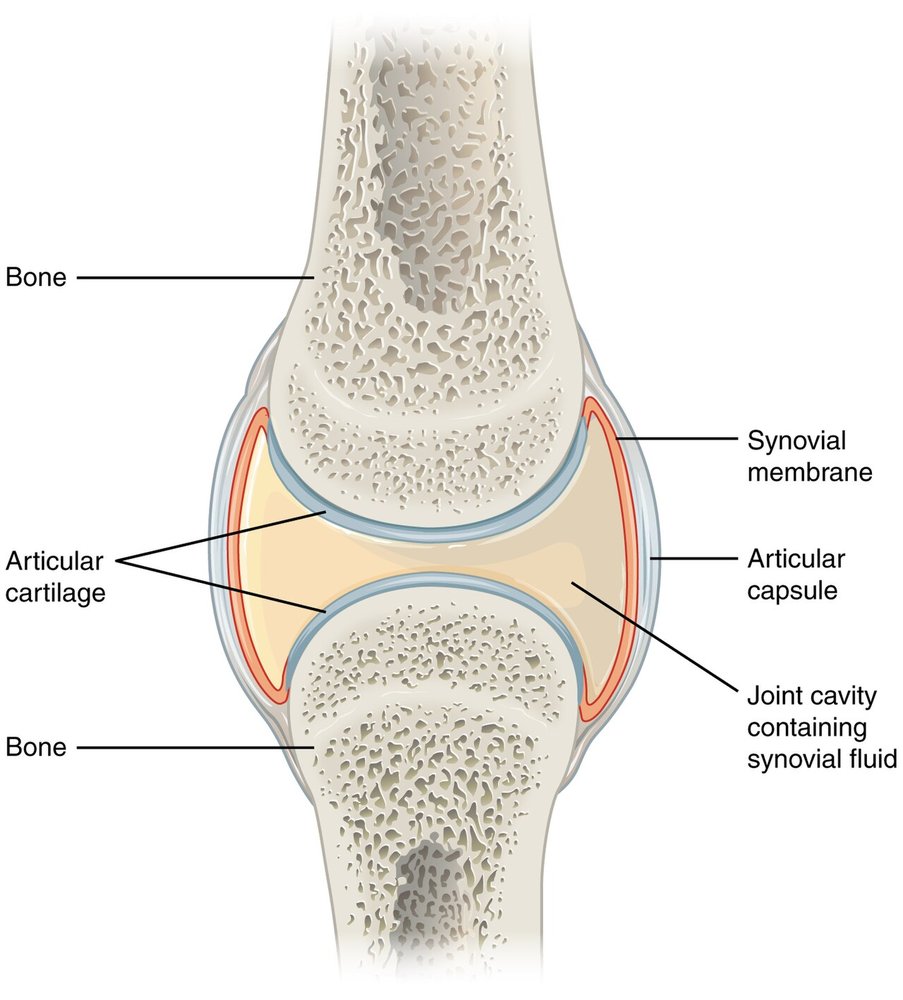
El cartílago es esa superficie lisa y brillante que recubre los extremos de los huesos dentro de una articulación. Se trata de uno de los materiales más extraordinarios del cuerpo: más resbaladizo que el hielo, capaz de amortiguar el desgaste producido por toda una vida de uso; sin embargo, a diferencia del hueso y los tendones, prácticamente no tiene capacidad de autorreparación. Este simple hecho explica por qué el daño cartilaginoso y la artrosis son problemas tan difíciles de resolver, y por qué es tan importante proteger el cartílago. En esta página se explica, en un lenguaje sencillo, qué es el cartílago y por qué se recupera tan mal; además, para quienes sientan curiosidad, se profundiza en la maravillosa estructura de este tejido y en la biología que subyace a lo que comúnmente llamamos “desgaste y deterioro”.

¿Qué es el cartílago y para qué sirve?

El cartílago al que nos referimos aquí, el cartílago articular, es la capa firme, lisa y blanca de apenas unos milímetros de grosor que recubre los extremos de los huesos donde se unen en una articulación. Cumple dos funciones de manera excelente:

  • Constituye una superficie deslizante casi libre de fricción, de modo que los huesos de una articulación se deslizan uno sobre el otro prácticamente sin resistencia.
  • Actúa como un amortiguador, distribuyendo la carga por toda la articulación y protegiendo el hueso subyacente del impacto.

El cartílago es tejido vivo, aunque de un tipo especial: no contiene vasos sanguíneos ni nervios. La ausencia de nervios explica por qué una superficie cartilaginosa desgastada en sí no duele (el dolor de la artritis proviene de otras estructuras). La falta de irrigación sanguínea es la razón principal de su gran debilidad: no puede regenerarse como lo hacen la piel o el hueso.

¿Por qué el cartílago tiene dificultades para sanar?

En casi cualquier otra parte del cuerpo, la cicatrización comienza con el sangrado: se forma un coágulo, llegan las células inflamatorias y los factores de crecimiento activan la reparación. El cartílago, en cambio, carece de irrigación sanguínea; por eso una lesión en él no recibe nada de eso. Además, sus pocas células residentes quedan atrapadas en el material circundante y no pueden desplazarse hacia la zona dañada para repararla.

El resultado es que un rasguño o fisura limitado al cartílago suele permanecer tal cual. Las lesiones más profundas (que atraviesan el cartílago e inciden en el hueso subyacente) pueden llenarse, pero formando un “fibrocartílago” similar a una cicatriz, que es más débil y menos resistente que el cartílago original. Por ello, el daño cartilaginoso suele ser permanente y progresivo; esto explica por qué la prevención y la protección son tan importantes.

Qué ayuda a proteger el cartílago

  • Manténgase activo. El cartílago se nutre mediante el líquido sinovial que entra y sale de la articulación al moverse; la actividad regular y cómoda lo nutre, mientras que largos períodos de inactividad lo privan de nutrientes.
  • Mantenga un peso saludable. Cada kilogramo adicional supone una carga adicional sobre las superficies articulares.
  • Fortalezca los músculos alrededor de la articulación. Los músculos fuertes comparten la carga y absorben los impactos, protegiendo así el cartílago.
  • Cuide las lesiones. Una articulación inestable o insegura desgasta su cartílago más rápidamente; tratar esa inestabilidad protege la superficie articular.

En profundidad

Esta sección ofrece una explicación más detallada, dirigida a estudiantes, sobre la biología del cartílago. No es necesaria para comprender un problema cartilaginoso ni su tratamiento; sin embargo, si le interesa saber por qué el cartílago es más resbaladizo que el hielo, y por qué el “desgaste natural” es en realidad una enfermedad activa, siga leyendo.

El cartílago como tejido vivo

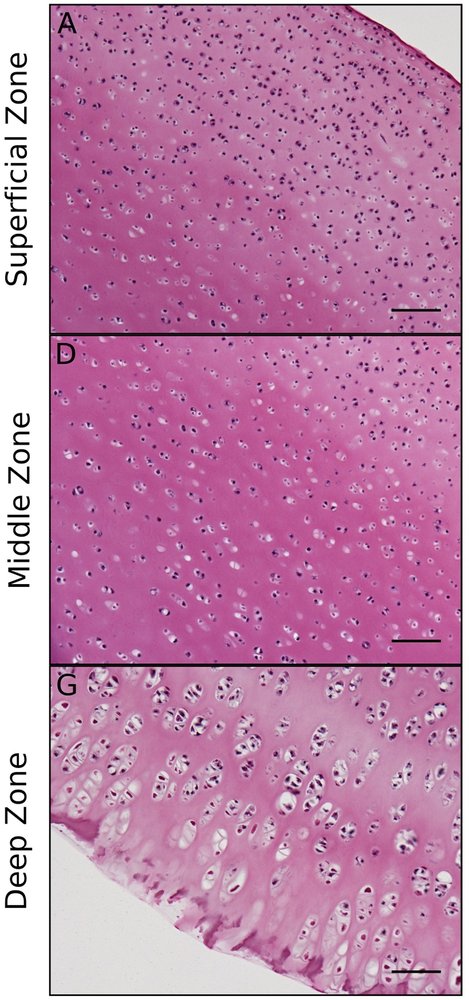
El cartílago articular pertenece al tipo denominado cartílago hialino. Está formado por una distribución dispersa de células (condrocitos) rodeadas por una cantidad enorme de matriz que dichas células producen y mantienen. La matriz es la clave de todas las funciones del cartílago. Se trata de una red de fibras de colágeno tipo II, impregnada de grandes moléculas en forma de cepillo de botella, altamente atractivas para el agua, llamadas proteoglicanos (principalmente agrecano); además contiene aproximadamente 70–80% de agua. La red de colágeno impide que el cartílago se desgarre; el agrecano absorbe agua y genera una presión de hinchazón que evita que el cartílago sea comprimido. En esencia, el cartílago es una esponja llena de agua mantenida bajo tensión dentro de una red fibrosa.

Asimismo, el cartílago está completamente aislado: no posee vasos sanguíneos, nervios ni vasos linfáticos. Los condrocitos se encuentran en pequeñas cavidades (lacunas), mantienen lentamente su porción de matriz y no pueden desplazarse.

El rodamiento casi sin fricción: cómo el cartílago soporta cargas

El cartílago es uno de los materiales más resbaladizos que se conocen: su coeficiente de fricción ronda el 0,001, un valor inferior al de el hielo deslizándose sobre hielo. Logra esto gracias a la acción conjunta de dos mecanismos.

En primer lugar, es bifásico: una matriz sólida impregnada de líquido. Cuando una articulación soporta una carga, el agua atrapada no puede escapar de inmediato; por ello, aumenta su presión y absorbe la carga, asumiendo inicialmente más del 90 % de ella. Es la presión del líquido, y no el armazón sólido, lo que soporta la fuerza, de forma similar a lo que ocurre al pisar un colchón de agua. A medida que el punto de contacto se desplaza (porque el cuerpo sigue moviéndose), el líquido se filtra hacia adelante y vuelve a ser absorbido por detrás. Esta presurización del líquido intersticial es la razón principal por la que el cartílago puede soportar cargas enormes con tan poca fricción o desgaste.

En segundo lugar, su superficie cuenta con una capa límite resbaladiza compuesta por moléculas como la lubricina (también denominada PRG4) y el ácido hialurónico proveniente del líquido sinovial; esta capa hidratada impide que ambas superficies entren en contacto directo.

Además, la matriz se organiza en zonas: en la zona superior (superficial), las fibras de colágeno discurren paralelas a la superficie, manteniendo la capa lubricante y resistiendo las fuerzas de cizallamiento; en la zona intermedia su disposición se vuelve más aleatoria; y en la zona profunda se orientan verticalmente, anclándose en una capa de cartílago calcificado (separada de la zona superficial por una línea denominada “línea de Tidemark”). Esta capa une firmemente el cartílago blando al hueso duro, resolviendo el mismo problema de ingeniería que supone unir materiales blandos y duros, tal como ocurre en las inserciones tendinosas.

¿Por qué el cartílago apenas se repara?

Si unimos todas las piezas, la escasa capacidad de reparación resulta lógica:

  • Ausencia de irrigación sanguínea: esto implica la inexistencia de coágulos, células inflamatorias y factores de crecimiento que en otros tejidos impulsan la reparación.
  • Las células no pueden hacer mucho: los condrocitos son escasos, quedan encerrados en la matriz extracelular y no migran ni se multiplican lo suficiente para llenar una brecha.
  • La profundidad del defecto determina la respuesta. Un defecto de grosor parcial limitado al cartílago no llega a alcanzar el flujo sanguíneo ni la médula ósea, por lo que prácticamente no hay respuesta reparativa. En cambio, un defecto de grosor total que penetra hasta el hueso subcondral permite la entrada de células medulares y sangre, las cuales llenan el hueco; sin embargo, se forma cartílago fibroso (rico en colágeno tipo I y pobre en proteoglicanos), que es mecánicamente inferior y se desgasta más rápido que el verdadero cartílago hialino.

Esa es la principal frustración de la cirugía cartilaginosa: podemos rellenar el hueco, pero no con el tipo de cartílago adecuado.

¿Cómo se nutre el cartílago?

Al no contar con vasos sanguíneos propios, el cartílago se nutre mediante difusión desde el líquido sinovial (de la articulación), y dicha difusión depende del movimiento y la carga. Cada vez que la articulación se carga y descarga, el líquido y los nutrientes entran y salen del cartílago (de forma similar a como el movimiento de los dedos favorece la cicatrización de un tendón flexor lesionado). Por ello, el cartílago necesita de cargas cíclicas para mantenerse sano: la inmovilización o la ausencia de carga prolongadas lo deterioran, mientras que la actividad moderada y regular lo preserva. La frase del fisioterapeuta “el movimiento es lubricación” tiene aquí una base biológica real.

Osteoartritis: cuando el cartílago se degrada

La osteoartritis (OA) suele describirse como “desgaste por uso”, pero esa descripción no le hace justicia: se trata de un proceso biológico activo, no meramente de una erosión mecánica.

Desencadenada por sobrecarga mecánica, lesiones, envejecimiento o inestabilidad articular, las condrocitos pasan a un modo destructivo. Aumentan la producción de enzimas que digieren la matriz extracelular (MMPs, como la MMP-13, y agrecanasas, como ADAMTS-4 y -5), las cuales descomponen el colágeno tipo II y el agrecano más rápido de lo que pueden ser reemplazados. La matriz pierde sus proteoglicanos encargados de retener agua, se vuelve más blanda y se desintegra. Los condrocitos también cambian de características (un proceso denominado hipertrofia); el cartílago comienza a calcificarse y permite la entrada de vasos sanguíneos; el hueso subcondral se engrosa y genera espolones óseos (osteofitos); además, el revestimiento articular (sinovio) se inflama ligeramente, liberando señales como IL-1 y TNF que alimentan el ciclo destructivo. Dado que el cartílago no puede regenerarse, este proceso es prácticamente irreversible; por ello, el tratamiento de la OA se centra en reducir la carga sobre la articulación, fortalecer los músculos y controlar el peso; y, cuando el cartílago se ha perdido por completo, se recurre al reemplazo articular.

Reparación del cartílago: ¿por qué es tan difícil?

Existen diversas intervenciones quirúrgicas destinadas a restaurar una superficie cartilaginosa dañada; la razón por la que ninguna de ellas constituye una solución perfecta radica directamente en la biología mencionada anteriormente:

  • La microfractura consiste en perforar pequeños orificios en el hueso subcondral para permitir la entrada de células medulares. Estas generan fibrocartílago, útil a corto plazo, pero que suele deteriorarse tras unos pocos años.
  • El trasplante osteocondral (OATS/mosaicplastia) implica trasladar fragmentos de cartílago y hueso desde zonas de la articulación que soportan poca carga. Se trata de verdadero cartílago hialino; sin embargo, la cantidad disponible es limitada.
  • La terapia celular (ACI/MACI) consiste en cultivar los condrocitos del propio paciente en el laboratorio para luego reimplantarlos; este método resulta prometedor, aunque técnicamente complejo y aún imperfecto.

Ninguna de estas técnicas logra reproducir fielmente el cartílago hialino original, con su arquitectura zonal precisa y sus propiedades lubricantes. Cuando el cartílago de toda una articulación se encuentra completamente desgastado, la solución definitiva sigue siendo el reemplazo articular.

Qué beneficia y qué perjudica al cartílago

  • El movimiento y la carga moderada nutren y mantienen el cartílago; la inmovilización prolongada lo daña.
  • El exceso de peso y la inestabilidad articular aceleran su degradación; los músculos fuertes alrededor de la articulación lo protegen.
  • Las lesiones, especialmente aquellas que desestabilizan la articulación o dañan su superficie, aumentan el riesgo a largo plazo de artrosis.
  • Y esta es la dura realidad que subyace en toda esta página: una vez que el cartílago se daña de forma significativa, no vuelve a crecer. En casi ningún otro tejido la prevención es tan importante.

Véase también


Creative Commons BY-NC 4.0

CC Creative Commons licence
BY Attribution — you must credit the source
NC NonCommercial — not for commercial use

Attribution-NonCommercial 4.0 International


Creative Commons Corporation ("Creative Commons") is not a law firm and does not provide legal services or legal advice. Distribution of Creative Commons public licenses does not create a lawyer-client or other relationship. Creative Commons makes its licenses and related information available on an "as-is" basis. Creative Commons gives no warranties regarding its licenses, any material licensed under their terms and conditions, or any related information. Creative Commons disclaims all liability for damages resulting from their use to the fullest extent possible.

Using Creative Commons Public Licenses

Creative Commons public licenses provide a standard set of terms and conditions that creators and other rights holders may use to share original works of authorship and other material subject to copyright and certain other rights specified in the public license below. The following considerations are for informational purposes only, are not exhaustive, and do not form part of our licenses.

Considerations for licensors: Our public licenses are intended for use by those authorized to give the public permission to use material in ways otherwise restricted by copyright and certain other rights. Our licenses are irrevocable. Licensors should read and understand the terms and conditions of the license they choose before applying it. Licensors should also secure all rights necessary before applying our licenses so that the public can reuse the material as expected. Licensors should clearly mark any material not subject to the license. This includes other CC- licensed material, or material used under an exception or limitation to copyright. More considerations for licensors: wiki.creativecommons.org/Considerations_for_licensors

Considerations for the public: By using one of our public licenses, a licensor grants the public permission to use the licensed material under specified terms and conditions. If the licensor's permission is not necessary for any reason--for example, because of any applicable exception or limitation to copyright--then that use is not regulated by the license. Our licenses grant only permissions under copyright and certain other rights that a licensor has authority to grant. Use of the licensed material may still be restricted for other reasons, including because others have copyright or other rights in the material. A licensor may make special requests, such as asking that all changes be marked or described. Although not required by our licenses, you are encouraged to respect those requests where reasonable. More considerations for the public: wiki.creativecommons.org/Considerations_for_licensees


Creative Commons Attribution-NonCommercial 4.0 International Public License

By exercising the Licensed Rights (defined below), You accept and agree to be bound by the terms and conditions of this Creative Commons Attribution-NonCommercial 4.0 International Public License ("Public License"). To the extent this Public License may be interpreted as a contract, You are granted the Licensed Rights in consideration of Your acceptance of these terms and conditions, and the Licensor grants You such rights in consideration of benefits the Licensor receives from making the Licensed Material available under these terms and conditions.

Section 1 -- Definitions.

a. Adapted Material means material subject to Copyright and Similar Rights that is derived from or based upon the Licensed Material and in which the Licensed Material is translated, altered, arranged, transformed, or otherwise modified in a manner requiring permission under the Copyright and Similar Rights held by the Licensor. For purposes of this Public License, where the Licensed Material is a musical work, performance, or sound recording, Adapted Material is always produced where the Licensed Material is synched in timed relation with a moving image.

b. Adapter's License means the license You apply to Your Copyright and Similar Rights in Your contributions to Adapted Material in accordance with the terms and conditions of this Public License.

c. Copyright and Similar Rights means copyright and/or similar rights closely related to copyright including, without limitation, performance, broadcast, sound recording, and Sui Generis Database Rights, without regard to how the rights are labeled or categorized. For purposes of this Public License, the rights specified in Section 2(b)(1)-(2) are not Copyright and Similar Rights.

d. Effective Technological Measures means those measures that, in the absence of proper authority, may not be circumvented under laws fulfilling obligations under Article 11 of the WIPO Copyright Treaty adopted on December 20, 1996, and/or similar international agreements.

e. Exceptions and Limitations means fair use, fair dealing, and/or any other exception or limitation to Copyright and Similar Rights that applies to Your use of the Licensed Material.

f. Licensed Material means the artistic or literary work, database, or other material to which the Licensor applied this Public License.

g. Licensed Rights means the rights granted to You subject to the terms and conditions of this Public License, which are limited to all Copyright and Similar Rights that apply to Your use of the Licensed Material and that the Licensor has authority to license.

h. Licensor means the individual(s) or entity(ies) granting rights under this Public License.

i. NonCommercial means not primarily intended for or directed towards commercial advantage or monetary compensation. For purposes of this Public License, the exchange of the Licensed Material for other material subject to Copyright and Similar Rights by digital file-sharing or similar means is NonCommercial provided there is no payment of monetary compensation in connection with the exchange.

j. Share means to provide material to the public by any means or process that requires permission under the Licensed Rights, such as reproduction, public display, public performance, distribution, dissemination, communication, or importation, and to make material available to the public including in ways that members of the public may access the material from a place and at a time individually chosen by them.

k. Sui Generis Database Rights means rights other than copyright resulting from Directive 96/9/EC of the European Parliament and of the Council of 11 March 1996 on the legal protection of databases, as amended and/or succeeded, as well as other essentially equivalent rights anywhere in the world.

l. You means the individual or entity exercising the Licensed Rights under this Public License. Your has a corresponding meaning.

Section 2 -- Scope.

a. License grant.

1. Subject to the terms and conditions of this Public License, the Licensor hereby grants You a worldwide, royalty-free, non-sublicensable, non-exclusive, irrevocable license to exercise the Licensed Rights in the Licensed Material to:

a. reproduce and Share the Licensed Material, in whole or in part, for NonCommercial purposes only; and

b. produce, reproduce, and Share Adapted Material for NonCommercial purposes only.

2. Exceptions and Limitations. For the avoidance of doubt, where Exceptions and Limitations apply to Your use, this Public License does not apply, and You do not need to comply with its terms and conditions.

3. Term. The term of this Public License is specified in Section 6(a).

4. Media and formats; technical modifications allowed. The Licensor authorizes You to exercise the Licensed Rights in all media and formats whether now known or hereafter created, and to make technical modifications necessary to do so. The Licensor waives and/or agrees not to assert any right or authority to forbid You from making technical modifications necessary to exercise the Licensed Rights, including technical modifications necessary to circumvent Effective Technological Measures. For purposes of this Public License, simply making modifications authorized by this Section 2(a) (4) never produces Adapted Material.

5. Downstream recipients.

a. Offer from the Licensor -- Licensed Material. Every recipient of the Licensed Material automatically receives an offer from the Licensor to exercise the Licensed Rights under the terms and conditions of this Public License.

b. No downstream restrictions. You may not offer or impose any additional or different terms or conditions on, or apply any Effective Technological Measures to, the Licensed Material if doing so restricts exercise of the Licensed Rights by any recipient of the Licensed Material.

6. No endorsement. Nothing in this Public License constitutes or may be construed as permission to assert or imply that You are, or that Your use of the Licensed Material is, connected with, or sponsored, endorsed, or granted official status by, the Licensor or others designated to receive attribution as provided in Section 3(a)(1)(A)(i).

b. Other rights.

1. Moral rights, such as the right of integrity, are not licensed under this Public License, nor are publicity, privacy, and/or other similar personality rights; however, to the extent possible, the Licensor waives and/or agrees not to assert any such rights held by the Licensor to the limited extent necessary to allow You to exercise the Licensed Rights, but not otherwise.

2. Patent and trademark rights are not licensed under this Public License.

3. To the extent possible, the Licensor waives any right to collect royalties from You for the exercise of the Licensed Rights, whether directly or through a collecting society under any voluntary or waivable statutory or compulsory licensing scheme. In all other cases the Licensor expressly reserves any right to collect such royalties, including when the Licensed Material is used other than for NonCommercial purposes.

Section 3 -- License Conditions.

Your exercise of the Licensed Rights is expressly made subject to the following conditions.

a. Attribution.

1. If You Share the Licensed Material (including in modified form), You must:

a. retain the following if it is supplied by the Licensor with the Licensed Material:

i. identification of the creator(s) of the Licensed Material and any others designated to receive attribution, in any reasonable manner requested by the Licensor (including by pseudonym if designated);

ii. a copyright notice;

iii. a notice that refers to this Public License;

iv. a notice that refers to the disclaimer of warranties;

v. a URI or hyperlink to the Licensed Material to the extent reasonably practicable;

b. indicate if You modified the Licensed Material and retain an indication of any previous modifications; and

c. indicate the Licensed Material is licensed under this Public License, and include the text of, or the URI or hyperlink to, this Public License.

2. You may satisfy the conditions in Section 3(a)(1) in any reasonable manner based on the medium, means, and context in which You Share the Licensed Material. For example, it may be reasonable to satisfy the conditions by providing a URI or hyperlink to a resource that includes the required information.

3. If requested by the Licensor, You must remove any of the information required by Section 3(a)(1)(A) to the extent reasonably practicable.

4. If You Share Adapted Material You produce, the Adapter's License You apply must not prevent recipients of the Adapted Material from complying with this Public License.

Section 4 -- Sui Generis Database Rights.

Where the Licensed Rights include Sui Generis Database Rights that apply to Your use of the Licensed Material:

a. for the avoidance of doubt, Section 2(a)(1) grants You the right to extract, reuse, reproduce, and Share all or a substantial portion of the contents of the database for NonCommercial purposes only;

b. if You include all or a substantial portion of the database contents in a database in which You have Sui Generis Database Rights, then the database in which You have Sui Generis Database Rights (but not its individual contents) is Adapted Material; and

c. You must comply with the conditions in Section 3(a) if You Share all or a substantial portion of the contents of the database.

For the avoidance of doubt, this Section 4 supplements and does not replace Your obligations under this Public License where the Licensed Rights include other Copyright and Similar Rights.

Section 5 -- Disclaimer of Warranties and Limitation of Liability.

a. UNLESS OTHERWISE SEPARATELY UNDERTAKEN BY THE LICENSOR, TO THE EXTENT POSSIBLE, THE LICENSOR OFFERS THE LICENSED MATERIAL AS-IS AND AS-AVAILABLE, AND MAKES NO REPRESENTATIONS OR WARRANTIES OF ANY KIND CONCERNING THE LICENSED MATERIAL, WHETHER EXPRESS, IMPLIED, STATUTORY, OR OTHER. THIS INCLUDES, WITHOUT LIMITATION, WARRANTIES OF TITLE, MERCHANTABILITY, FITNESS FOR A PARTICULAR PURPOSE, NON-INFRINGEMENT, ABSENCE OF LATENT OR OTHER DEFECTS, ACCURACY, OR THE PRESENCE OR ABSENCE OF ERRORS, WHETHER OR NOT KNOWN OR DISCOVERABLE. WHERE DISCLAIMERS OF WARRANTIES ARE NOT ALLOWED IN FULL OR IN PART, THIS DISCLAIMER MAY NOT APPLY TO YOU.

b. TO THE EXTENT POSSIBLE, IN NO EVENT WILL THE LICENSOR BE LIABLE TO YOU ON ANY LEGAL THEORY (INCLUDING, WITHOUT LIMITATION, NEGLIGENCE) OR OTHERWISE FOR ANY DIRECT, SPECIAL, INDIRECT, INCIDENTAL, CONSEQUENTIAL, PUNITIVE, EXEMPLARY, OR OTHER LOSSES, COSTS, EXPENSES, OR DAMAGES ARISING OUT OF THIS PUBLIC LICENSE OR USE OF THE LICENSED MATERIAL, EVEN IF THE LICENSOR HAS BEEN ADVISED OF THE POSSIBILITY OF SUCH LOSSES, COSTS, EXPENSES, OR DAMAGES. WHERE A LIMITATION OF LIABILITY IS NOT ALLOWED IN FULL OR IN PART, THIS LIMITATION MAY NOT APPLY TO YOU.

c. The disclaimer of warranties and limitation of liability provided above shall be interpreted in a manner that, to the extent possible, most closely approximates an absolute disclaimer and waiver of all liability.

Section 6 -- Term and Termination.

a. This Public License applies for the term of the Copyright and Similar Rights licensed here. However, if You fail to comply with this Public License, then Your rights under this Public License terminate automatically.

b. Where Your right to use the Licensed Material has terminated under Section 6(a), it reinstates:

1. automatically as of the date the violation is cured, provided it is cured within 30 days of Your discovery of the violation; or

2. upon express reinstatement by the Licensor.

For the avoidance of doubt, this Section 6(b) does not affect any right the Licensor may have to seek remedies for Your violations of this Public License.

c. For the avoidance of doubt, the Licensor may also offer the Licensed Material under separate terms or conditions or stop distributing the Licensed Material at any time; however, doing so will not terminate this Public License.

d. Sections 1, 5, 6, 7, and 8 survive termination of this Public License.

Section 7 -- Other Terms and Conditions.

a. The Licensor shall not be bound by any additional or different terms or conditions communicated by You unless expressly agreed.

b. Any arrangements, understandings, or agreements regarding the Licensed Material not stated herein are separate from and independent of the terms and conditions of this Public License.

Section 8 -- Interpretation.

a. For the avoidance of doubt, this Public License does not, and shall not be interpreted to, reduce, limit, restrict, or impose conditions on any use of the Licensed Material that could lawfully be made without permission under this Public License.

b. To the extent possible, if any provision of this Public License is deemed unenforceable, it shall be automatically reformed to the minimum extent necessary to make it enforceable. If the provision cannot be reformed, it shall be severed from this Public License without affecting the enforceability of the remaining terms and conditions.

c. No term or condition of this Public License will be waived and no failure to comply consented to unless expressly agreed to by the Licensor.

d. Nothing in this Public License constitutes or may be interpreted as a limitation upon, or waiver of, any privileges and immunities that apply to the Licensor or You, including from the legal processes of any jurisdiction or authority.


Creative Commons is not a party to its public licenses. Notwithstanding, Creative Commons may elect to apply one of its public licenses to material it publishes and in those instances will be considered the “Licensor.” The text of the Creative Commons public licenses is dedicated to the public domain under the CC0 Public Domain Dedication. Except for the limited purpose of indicating that material is shared under a Creative Commons public license or as otherwise permitted by the Creative Commons policies published at creativecommons.org/policies, Creative Commons does not authorize the use of the trademark "Creative Commons" or any other trademark or logo of Creative Commons without its prior written consent including, without limitation, in connection with any unauthorized modifications to any of its public licenses or any other arrangements, understandings, or agreements concerning use of licensed material. For the avoidance of doubt, this paragraph does not form part of the public licenses.

Creative Commons may be contacted at creativecommons.org.