Patients › General-Health
Los medicamentos GLP-1 (Ozempic, Wegovy) y su cirugía
If you take a GLP-1 medication (such as semaglutide — Ozempic or Wegovy) and you are having an operation: what these drugs do, why they matter for your anaesthetic (delayed stomach emptying and aspiration risk), and what you should do before surgery.
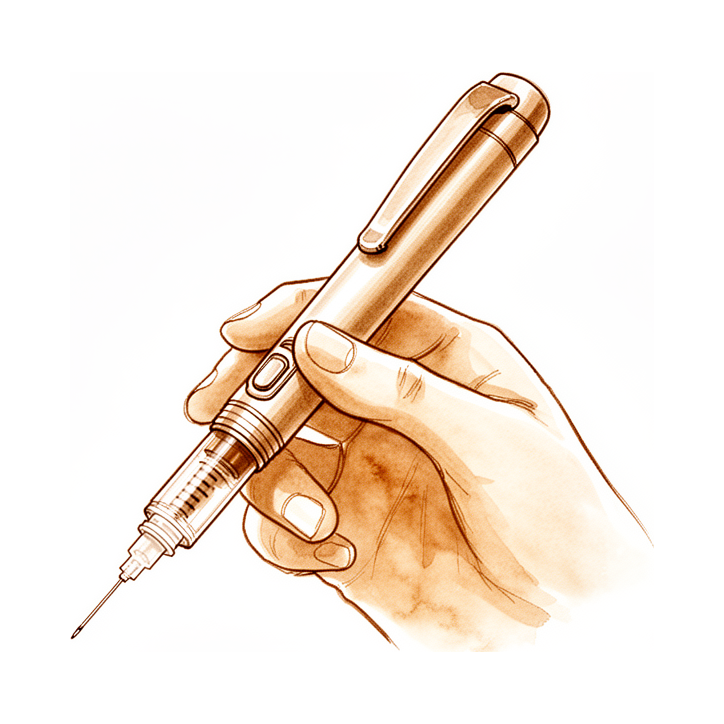
¿Qué es este medicamento?
Los medicamentos GLP-1 son un grupo de medicamentos que quizá conozca por nombres comerciales como Ozempic o Wegovy. Su nombre completo es agonistas del receptor del péptido similar al glucagón tipo 1, o agonistas del GLP-1 para abreviar. Se utilizaron primero para tratar la diabetes tipo 2, una enfermedad en la que los niveles de azúcar en sangre están demasiado altos. Hoy también se usan ampliamente para ayudar a perder peso a las personas que viven con obesidad [1].
Estos medicamentos imitan una hormona natural que su cuerpo libera después de comer. Esa hormona hace dos cosas principales. Reduce el apetito, de modo que se siente lleno antes y come menos. También hace que el estómago se vacíe más despacio, lo que mantiene la sensación de saciedad durante más tiempo [2]. El resultado para muchas personas es una pérdida de peso constante y un mejor control del azúcar en sangre [3].
Si usted toma uno de estos medicamentos y tiene prevista una cirugía, es importante para su equipo médico. Estos medicamentos son cada vez más frecuentes, y los cirujanos atienden cada vez a más pacientes que los toman [4]. La investigación sobre cómo afectan a la cirugía sigue creciendo, y algunos hallazgos todavía no coinciden entre sí [5] [6]. Lo que se sabe hasta ahora es, en términos sencillos, mayoritariamente tranquilizador: los estudios que han seguido a pacientes con prótesis articulares no han encontrado un aumento claro de los problemas a corto plazo después de la cirugía [7] [8], y algunas investigaciones relacionan estos medicamentos con una menor probabilidad de problemas en la herida o de infección [9] [10]. Las guías actuales indican que no es necesario dejar el medicamento antes de una intervención programada, porque suspenderlo puede alterar su azúcar en sangre y su progreso en la pérdida de peso [11].
El resto de esta página explica lo que esto significa para usted en torno al momento de su operación.
Cómo afecta a su cirugía y a la anestesia
Lo principal que cambian estos medicamentos en torno a la cirugía es su estómago. Como hacen que el estómago se vacíe más despacio, los alimentos y los líquidos pueden permanecer en él más tiempo del que usted o su equipo médico esperarían. La mayoría de los estudios ha encontrado que las personas que toman estos medicamentos tienen más contenido residual en el estómago de lo esperado [12]. Esto es importante porque, durante una anestesia, el contenido del estómago puede subir y pasar a los pulmones. Esto se llama aspiración. Es un riesgo conocido de cualquier anestesia, y estos medicamentos pueden aumentarlo, aunque las pruebas que los relacionan con casos reales de aspiración siguen siendo contradictorias [12].
Su anestesista lo tiene en cuenta al planificar. La recomendación australiana actual es seguir tomando el medicamento y tomar solo líquidos claros durante las 24 horas anteriores a la cirugía, de modo que el tiempo de ayuno habitual queda dentro de esas 24 horas. Algunos equipos también revisan el estómago con una ecografía antes de la operación. La investigación ha estudiado estas medidas y ha encontrado que pueden ayudar a reducir el contenido residual del estómago en algunos pacientes [13]. Su equipo decidirá cuáles se aplican en su caso.
También hay buenas noticias sobre la recuperación. Los estudios de personas operadas de prótesis de cadera o de rodilla mientras tomaban estos medicamentos no han encontrado un aumento constante de las tasas de revisión a corto plazo [8]. Algunas investigaciones los relacionan con una menor probabilidad de infección después de la operación, incluida la infección alrededor de la nueva articulación [3] [8]. En la cirugía de la mano, como la liberación del túnel carpiano, un estudio encontró una pequeña reducción de los problemas de cicatrización de la herida y ningún aumento de otras complicaciones tempranas [10].
Su equipo médico gestiona todo esto con cuidado. Cirujanos, anestesistas y especialistas en diabetes trabajan juntos para planificar el enfoque más seguro para usted [2]. Los investigadores todavía están estudiando cuál es la mejor manera de atender a las personas que toman estos medicamentos en torno a la cirugía [14]. Por ahora, el mensaje práctico es sencillo: dígale a su equipo que toma este medicamento, siga exactamente sus instrucciones de ayuno, y ellos se encargarán del resto.
Qué debe hacer
Siga tomando su medicamento GLP-1 como de costumbre antes de la operación; no lo suspenda. Durante las 24 horas anteriores a la cirugía, tome solo líquidos claros y ningún alimento sólido. Los líquidos claros son bebidas a través de las cuales se puede ver, como agua, zumo de manzana claro, o té o café solo, sin leche. El tiempo de ayuno habitual antes de una anestesia forma parte de esas 24 horas, no se añade después: hacia el final, su anestesista le dirá cuándo dejar también los líquidos claros. Esto sigue la recomendación australiana actual de anestesia (ANZCA).
Siga tomando su medicamento tal como se lo han recetado, e informe de que lo toma a todas las personas que participan en su atención. Eso incluye a su cirujano, a su anestesista y a su médico de cabecera. También incluye al médico que le recetó el medicamento, ya sea su médico de cabecera o un especialista.
No deje de tomarlo por su cuenta. Suspenderlo puede afectar a su azúcar en sangre y a su progreso en la pérdida de peso.
Antes de la intervención, su equipo le dará instrucciones claras. Siga las indicaciones sobre su medicamento y sobre el ayuno previo exactamente como están escritas. Ayunar significa no comer ni beber durante un tiempo determinado antes de la cirugía. Estas medidas ayudan a mantener el estómago vacío y reducen los riesgos de la anestesia.
Si tiene cualquier duda, pregunte. Su cirujano, su anestesista y su médico de cabecera trabajan juntos para planificar el enfoque más seguro para usted. Ninguna pregunta es demasiado pequeña cuando se trata de su medicamento y su operación.
Referencias
[1] GLP-1 Receptor Agonists in Orthopaedic Surgery: Implications for Perioperative Care and Outcomes. Journal of Bone and Joint Surgery. 2025. DOI: 10.2106/jbjs.24.01287
[2] Delayed gastric emptying induced by glucagon-like peptide-1 receptor agonists and its implications for perioperative risk during anesthesia. The Korean Journal of Internal Medicine. 2026. DOI: 10.3904/kjim.2025.277
[3] Semaglutide and Other GLP-1 Agonists: A Boon for the Arthroplasty Industry?. The Journal of Arthroplasty. 2024. DOI: 10.1016/j.arth.2023.12.014
[4] The Impact of Glucagon-Like Peptide-1 Agonists on Hip and Knee Arthroplasty and Perioperative Considerations. The Journal of Arthroplasty. 2024. DOI: 10.1016/j.arth.2023.12.002
[5] Glucagon-Like Peptide-1 Receptor Agonists: Have We Found the Holy Grail for Total Joint Arthroplasty?. The Journal of Arthroplasty. 2025. DOI: 10.1016/j.arth.2025.10.027
[6] Impact of Glucagon-Like Peptide-1 Receptor Agonists on Postoperative Outcomes in Arthroplasty: A Systematic Review. The Journal of Arthroplasty. 2025. DOI: 10.1016/j.arth.2025.07.015
[7] GLP-1 receptor agonist therapy is not associated with adverse events following shoulder surgery: a systematic review and meta-analysis. Journal of Shoulder and Elbow Surgery. 2026. DOI: 10.1016/j.jse.2025.12.005
[8] Glucagon-like peptide-1 receptor agonists in total joint arthroplasty: a comprehensive systematic review of what orthopaedic surgeons should know. Arthroplasty. 2026. DOI: 10.1186/s42836-026-00375-w
[9] The Association Between Glucagon-Like Peptide-1 Receptor Agonists and Postoperative Complications After Arthroplasty: A Systematic Review and Meta-Analysis. The Journal of Arthroplasty. 2025. DOI: 10.1016/j.arth.2025.06.083
[10] Impact of Perioperative Glucagon-Like Peptide-1 Receptor Agonists on Postoperative Outcomes Following Carpal Tunnel Release. Journal of Hand Surgery Global Online. 2025. DOI: 10.1016/j.jhsg.2025.100746
[11] Periprocedural use of GLP-1 receptor agonists: ANZCA Clinical Practice Recommendations. ANZCA. 2025.
[12] Perioperative anesthesia management of GLP-1 receptor agonists: a systematic review of potential risks. Perioperative Medicine. 2026. DOI: 10.1186/s13741-026-00662-9
[13] Peri-Procedural Fasting and Gastric Ultrasound Strategies in Glucagon-Like Peptide-1 (GLP-1) Receptor Agonist Users: A Systematic Review With Qualitative Synthesis. Cureus. 2026. DOI: 10.7759/cureus.108216
[14] GLP-1 agonists: a new hope for patients, a new challenge for anaesthetists. Anaesthesiology Intensive Therapy. 2025. DOI: 10.5114/ait/203167
Evidence & references
This is the clinical evidence summary written for health professionals. It is technical, and it lists the research this page was built from. You do not need to read it to understand your treatment or to make a decision about it.
Overview
- Glucagon-like peptide-1 receptor agonists induce delayed gastric emptying [1].
- The pharmacological mechanisms of GLP-1 RA-induced delayed gastric emptying have clinical implications for perioperative aspiration risk during anesthesia [1].
- Interdisciplinary collaboration between endocrinologists and anesthesiologists is emphasized for safe and individualized perioperative management of patients on GLP-1 RAs [1].
- GLP-1 agonists may not produce sufficient weight loss to achieve body mass index cutoffs for total joint arthroplasty depending on individual patient factors, including starting bodyweight [2].
- Further high-quality studies are called for to address the optimal perioperative care of patients on GLP-1RAs due to their increasing popularity in patients with obesity [3].
- Conflicting findings in the literature highlight the need for further research, particularly well-designed multicenter studies and randomized controlled trials, to clarify the effects of GLP-1 RAs on surgical outcomes [4].
- Arthroplasty surgeons will encounter an increasing number of patients on GLP-1 agonists [5].
- It is important for arthroplasty surgeons to understand the implications of GLP-1 agonist use in the perioperative period [5].
- GLP-1 agonist use should not be a contraindication for proceeding with total shoulder arthroplasty based on data showing no association with adverse events following shoulder surgery [6].
- Elective preprocedural cessation of GLP-1RAs and GLP-1/GIPRAs is not recommended due to insufficient data supporting cessation and risks of hyperglycaemia and compromised weight control [7].
- The variability in available studies, potential confounding factors, and severe heterogeneity of conclusions emphasize the need for more high-quality evidence-based primary research to optimize perioperative management of patients taking GLP-1 RAs [8].
- GLP-1 agonists have effects on bone health that are relevant to perioperative patients undergoing orthopedic surgery, with an emphasis on spine surgery [9].
- GLP-1RA use suggests a potential benefit for optimizing high-risk patients who have obesity or diabetes undergoing total joint arthroplasty [10].
Effects on Surgery and Recovery
Perioperative Anesthesia and Gastric Emptying
- Authors call for further high-quality studies to address the optimal perioperative care of patients on GLP-1RAs due to their increasing popularity in patients with obesity [3].
- Available observational evidence suggests that extended GLP-1 RA withholding, 24-hour clear liquid diets, and pre-procedural gastric POCUS may be associated with reduced residual gastric content in selected patient populations [14].
Arthroplasty Outcomes
- Arthroplasty surgeons will encounter an increasing number of patients on GLP-1 agonists, making it important to understand the implications of their use in the perioperative period [5].
- Conflicting findings highlight the need for further research, particularly well-designed multicenter studies and randomized controlled trials, to clarify the effects of GLP-1 RAs on surgical outcomes in arthroplasty [4].
- Findings suggest a potential benefit of GLP-1RA use for optimizing high-risk patients who have obesity or diabetes undergoing total joint arthroplasty [10].
- While GLP-1 receptor agonists show potential to reduce postoperative complications in total joint arthroplasty, findings remain inconsistent, and further research is needed to clarify their impact on outcomes and establish perioperative management guidelines [11].
- Preoperative glucagon-like peptide-1 receptor agonist use may be linked to reduced readmission risk following joint arthroplasty, without evidence of increased postoperative medical harm [12].
- Semaglutide and other GLP-1 agonists may increase the number of eligible candidates for elective total joint arthroplasty by enabling weight loss and improving diabetic control [13].
- Semaglutide and other GLP-1 agonists may potentially reduce postoperative complications such as sepsis and prosthetic joint infections [13].
- Current observational data suggest that perioperative GLP-1 RA use in patients undergoing total hip or knee arthroplasty is not associated with a consistent increase in short-term revision rates [16].
- Current observational data suggest that perioperative GLP-1 RA use in patients undergoing total hip or knee arthroplasty may be associated with a reduced risk of postoperative infection [16].
Other Orthopedic Procedures
- Based on data from a systematic review and meta-analysis, GLP-1 agonist use should not be a contraindication for proceeding with total shoulder arthroplasty [6].
- Perioperative GLP-1RA use was associated with a small yet statistically significant reduction in the odds of wound dehiscence following carpal tunnel release [15].
- Perioperative GLP-1RA use did not increase the odds of any other 90-day postoperative complications following carpal tunnel release [15].
Bone Health
- A narrative review explores the mechanisms of action of GLP-1 agonists, their effects on bone health, and the implications of their use in perioperative patients undergoing orthopedic surgery, with an emphasis on spine surgery [9].
- Exenatide is the best option agent with regard to the risk of fracture [17].
Practical Considerations
Perioperative Anesthesia and Gastric Emptying
- Delayed gastric emptying induced by GLP-1 RAs has implications for perioperative aspiration risk during anesthesia [1].
Medication Management
Arthroplasty Outcomes and Eligibility
- Conflicting findings highlight the need for further research, particularly well-designed multicenter studies and randomized controlled trials, to clarify the effects of GLP-1 RAs on surgical outcomes [4].
Shoulder Surgery
Bone Health and Spine Surgery
Key Evidence
- [L4] This review summarizes the pharmacological mechanisms and clinical implications of GLP-1 RA-induced delayed gastric emptying, evaluates current literature on perioperative aspiration risk, and emphasizes the importance of interdisciplinary collaboration between endocrinologists and anesthesiologists to ensure safe and individualized perioperative management. [1] (10.3904/kjim.2025.277)
- [Paper] While efficacious, GLP-1 agonists may not produce sufficient weight loss to achieve body mass index cutoffs for total joint arthroplasty depending on individual patient factors, including starting bodyweight. [2] (10.2106/jbjs.rvw.23.00167)
- [L4] Due to the increasing popularity of GLP-1RAs in patients with obesity, the authors call for further high-quality studies to address the optimal perioperative care of patients on GLP-1RAs. [3] (10.5114/ait/203167)
- [L4] However, conflicting findings highlight the need for further research, particularly well-designed multicenter studies and randomized controlled trials, to clarify the effects of GLP-1 RAs on surgical outcomes. [4] (10.1016/j.arth.2025.07.015)
- [L5] Arthroplasty surgeons will encounter an increasing number of patients on GLP-1 agonists, making it important to understand the implications of their use in the perioperative period. [5] (10.1016/j.arth.2023.12.002)
- [L1] Based on this data, GLP-1 agonist use should not be a contraindication for proceeding with TSA. [6] (10.1016/j.jse.2025.12.005)
- [L2] The variability in available studies, potential confounding factors, and the severe heterogeneity of conclusions all emphasize the need for more high-quality evidence-based primary research to optimize perioperative management of patients taking GLP-1 RAs. [8] (10.1186/s13741-026-00662-9)
- [L4] This narrative review explores the mechanisms of action of GLP-1 agonists, their effects on bone health, and the implications of their use in perioperative patients undergoing orthopedic surgery, with an emphasis on spine surgery. [9] (10.1177/15563316261438492)
- [L1] These findings suggest a potential benefit of GLP-1RA use for optimizing high-risk patients who have obesity or diabetes undergoing total joint arthroplasty. [10] (10.1016/j.arth.2025.09.054)
- [L5] The paper concludes that while GLP-1 receptor agonists show potential to reduce postoperative complications in total joint arthroplasty, findings remain inconsistent, and further research is needed to clarify their impact on outcomes and establish perioperative management guidelines. [11] (10.1016/j.arth.2025.10.027)
- [L1] Preoperative glucagon-like peptide-1 receptor agonist use may be linked to reduced readmission risk following joint arthroplasty, without evidence of increased postoperative medical harm. [12] (10.1016/j.arth.2025.11.036)
- [L5] Semaglutide and other GLP-1 agonists may increase the number of eligible candidates for elective total joint arthroplasty by enabling weight loss and improving diabetic control, while also potentially reducing postoperative complications such as sepsis and prosthetic joint infections. [13] (10.1016/j.arth.2023.12.014)
- [L4] Available observational evidence suggests that extended GLP-1 RA withholding, 24-hour clear liquid diets, and pre-procedural gastric POCUS may be associated with reduced residual gastric content in selected patient populations. [14] (10.7759/cureus.108216)
- [L3] Perioperative GLP-1RA use was associated with a small yet statistically significant reduction in the odds of wound dehiscence following CTR and did not increase the odds of any other 90-day postoperative complications. [15] (10.1016/j.jhsg.2025.100746)
- [L4] Current observational data suggest that perioperative GLP-1 RA use in patients undergoing total hip or knee arthroplasty is not associated with a consistent increase in short-term revision rates and may be associated with a reduced risk of postoperative infection. [16] (10.1186/s42836-026-00375-w)
- [L1] Exenatide is the best option agent with regard to the risk of fracture. [17] (10.1007/s00198-018-4649-8)
References
[1] Delayed gastric emptying induced by glucagon-like peptide-1 receptor agonists and its implications for perioperative risk during anesthesia. The Korean Journal of Internal Medicine. 2026. DOI: 10.3904/kjim.2025.277
[2] Glucagon-like Peptide-1 Agonists. JBJS Reviews. 2024. DOI: 10.2106/jbjs.rvw.23.00167
[3] GLP-1 agonists: a new hope for patients, a new challenge for anaesthetists. Anaesthesiology Intensive Therapy. 2025. DOI: 10.5114/ait/203167
[4] Impact of Glucagon-Like Peptide-1 Receptor Agonists on Postoperative Outcomes in Arthroplasty: A Systematic Review. The Journal of Arthroplasty. 2025. DOI: 10.1016/j.arth.2025.07.015
[5] The Impact of Glucagon-Like Peptide-1 Agonists on Hip and Knee Arthroplasty and Perioperative Considerations. The Journal of Arthroplasty. 2024. DOI: 10.1016/j.arth.2023.12.002
[6] GLP-1 receptor agonist therapy is not associated with adverse events following shoulder surgery: a systematic review and meta-analysis. Journal of Shoulder and Elbow Surgery. 2026. DOI: 10.1016/j.jse.2025.12.005
[7] Periprocedural use of GLP-1 receptor agonists: ANZCA Clinical Practice Recommendations. ANZCA. 2025.
[8] Perioperative anesthesia management of GLP-1 receptor agonists: a systematic review of potential risks. Perioperative Medicine. 2026. DOI: 10.1186/s13741-026-00662-9
[9] GLP-1 Agonists in Orthopedic Surgery: A Narrative Review of Bone Health and Surgical Implications. HSS Journal. 2026. DOI: 10.1177/15563316261438492
[10] The Impact of Glucagon-Like Peptide-1 Receptor Agonist Use on Clinical Outcomes After Total Hip and Knee Arthroplasty: A Systematic Review and Meta-Analysis of 346,899 Patients. The Journal of Arthroplasty. 2025. DOI: 10.1016/j.arth.2025.09.054
[11] Glucagon-Like Peptide-1 Receptor Agonists: Have We Found the Holy Grail for Total Joint Arthroplasty?. The Journal of Arthroplasty. 2025. DOI: 10.1016/j.arth.2025.10.027
[12] Glucagon-Like Peptide-1 Receptor Agonists, Readmission, and Postoperative Complications in Arthroplasty: A Systematic Review and Meta-Analysis. The Journal of Arthroplasty. 2025. DOI: 10.1016/j.arth.2025.11.036
[13] Semaglutide and Other GLP-1 Agonists: A Boon for the Arthroplasty Industry?. The Journal of Arthroplasty. 2024. DOI: 10.1016/j.arth.2023.12.014
[14] Peri-Procedural Fasting and Gastric Ultrasound Strategies in Glucagon-Like Peptide-1 (GLP-1) Receptor Agonist Users: A Systematic Review With Qualitative Synthesis. Cureus. 2026. DOI: 10.7759/cureus.108216
[15] Impact of Perioperative Glucagon-Like Peptide-1 Receptor Agonists on Postoperative Outcomes Following Carpal Tunnel Release. Journal of Hand Surgery Global Online. 2025. DOI: 10.1016/j.jhsg.2025.100746
[16] Glucagon-like peptide-1 receptor agonists in total joint arthroplasty: a comprehensive systematic review of what orthopaedic surgeons should know. Arthroplasty. 2026. DOI: 10.1186/s42836-026-00375-w
[17] Glucagon-like peptide-1 receptor agonists and fracture risk: a network meta-analysis of randomized clinical trials. Osteoporosis International. 2018. DOI: 10.1007/s00198-018-4649-8