Patients › Rehabilitation
Estabilización posterior
Rehabilitation protocol after posterior shoulder stabilisation, with posterior-specific precautions and return-to-sport criteria.
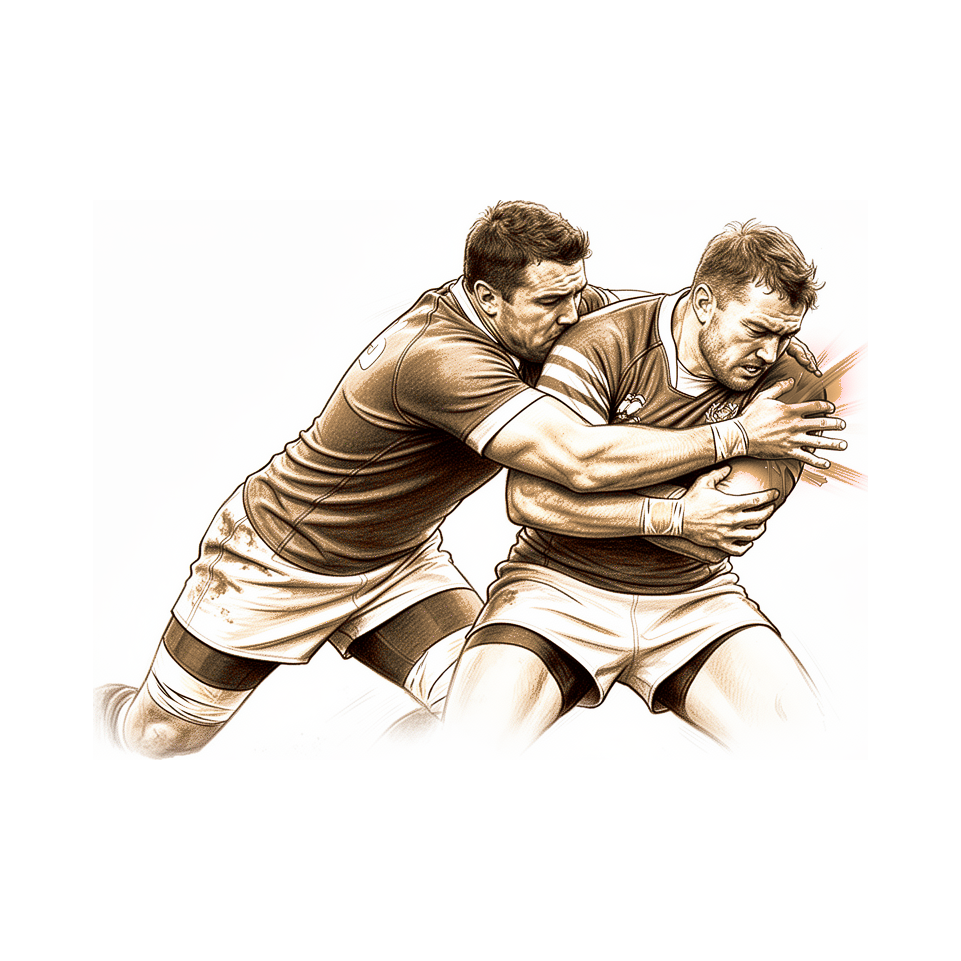
Este protocolo le servirá de guía para su recuperación tras la estabilización posterior del hombro realizada por el Dr. Kieran Hirpara en el Mater Private Hospital Rockhampton. Cada fase comienza con una explicación sencilla, en lenguaje coloquial, de lo que está ocurriendo y qué aspectos son más importantes; a continuación, se detalla el programa estructurado que podrá compartir con su fisioterapeuta. Lleve esta página o su versión en PDF a su primera sesión de fisioterapia para garantizar una rehabilitación coordinada. Su fisioterapeuta podrá modificar el plan según el progreso de su recuperación.
Si tiene alguna duda respecto a su herida postoperatoria, no dude en contactar con el consultorio. A menudo resulta útil tomar una fotografía de la herida y enviarla por correo electrónico para su evaluación.
Qué esperar
La estabilización posterior corrige la parte posterior del hombro, donde el labrum cartilaginoso y la cápsula se han desprendido de la cavidad glenoidea. Dado que la reparación se realiza en la parte posterior de la articulación, el movimiento que más carga ejerce sobre ella es estirar el brazo hacia adelante mientras lo rota hacia adentro. En las primeras fases, tres movimientos cotidianos deben evitarse, pues cada uno empuja la cabeza humeral hacia atrás, contra la zona recién reparada:
- Rotar el brazo hacia adentro (rotación interna): estirar el brazo detrás de la espalda o girar la mano hacia el abdomen;
- Estirar el brazo a través del cuerpo hacia el hombro opuesto (aducción cruzada);
- Inclinarse o empujar con el brazo operado.
Esto es lo opuesto a la estabilización anterior, donde lo que se debe evitar es rotar el brazo hacia afuera. En el caso de una reparación posterior, el movimiento seguro es rotar el brazo hacia afuera; la rotación interna es la última en recuperarse: debe hacerse con suavidad y sin alcanzar el rango completo hasta aproximadamente los tres meses. Las siguientes fases detallan exactamente cuándo se podrán realizar de nuevo cada uno de esos movimientos restringidos.
Siempre surge la tentación de iniciar los movimientos antes de tiempo, pero la evidencia clínica demuestra que cualquier ganancia adicional de amplitud de movimiento obtenida por apresurarse es temporal; además, la reparación es más frágil durante las primeras seis semanas. Un programa progresivo y gradual garantiza el retorno más seguro y predecible a la función plena. La inestabilidad posterior es poco frecuente, por lo que este cronograma se basa en principios biomecánicos y en protocolos de especialistas, no en ensayos clínicos a gran escala; el Dr. Hirpara ajustará el ritmo según sus necesidades.
Usted llevará un soporte simple, no un aparato especial de abducción ni un dispositivo tipo “gunslinger”. La protección proviene de las precauciones mencionadas (mantener el brazo al frente, evitar la rotación interna y los estiramientos cruzados), no de la forma del soporte.
Resumen del proceso:
- Fase I — Protección, semanas 0–2
- Fase II — Movilidad inicial, semanas 2–4
- Fase III — Aumento de movilidad y comienzo del fortalecimiento, semanas 4–6
- Fase IV — Avance, semanas 6–8
- Fase V — Fortalecimiento, semanas 8–12
- Fase VI — Rango completo y entrenamiento con pesas, semanas 12–14
- Retorno al deporte: a partir de la semana 12; los deportes de contacto, no antes de los 5 meses
Retorno a sus actividades cotidianas:
- Trabajo: empleos sedentarios: según tolerancia; trabajos manuales: al menos 3 meses;
- Conducción: una vez retirado el soporte y con control del brazo, generalmente alrededor de las 6 semanas;
- Levantar objetos: se pueden levantar objetos ligeros en las primeras semanas, dentro de ciertos límites; evite levantar cargas pesadas durante unos 3 meses;
- Deportes de contacto (fútbol, rugby, artes marciales, deportes de raqueta, escalada, equitación): a partir de los 5 meses como mínimo, y únicamente si se cumplen los criterios de retorno al deporte.
El procedimiento
La estabilización posterior suele realizarse mediante artroscopia (cirugía mínimamente invasiva); en ocasiones, se emplea una pequeña incisión abierta. El labrum desgarrado y la cápsula posterior del hombro se vuelven a fijar y tensar en el borde de la cavidad glenoidea (a veces denominado “reparación de Bankart inversa” o “capsulorrafia posterior”). La función de la rehabilitación es evitar que la cabeza del húmero ejerza presión sobre dicha reparación mientras cicatriza: en una fase inicial se limitan los movimientos hacia adelante, hacia adentro y a través del cuerpo; posteriormente se recupera gradualmente la amplitud de movimiento, la fuerza y la funcionalidad completas.
Uso del cabestrillo
El cabestrillo sostiene el brazo y sirve como recordatorio para mantenerlo en la posición adecuada mientras la reparación cicatriza. Las reglas son sencillas:
- Use un cabestrillo sencillo durante unas 6 semanas, especialmente cuando esté fuera de casa o en presencia de otras personas. El Dr. Hirpara no utiliza almohadas de abducción, cuñas ni férulas tipo “gunslinger”; el cabestrillo sencillo, junto con las precauciones de posición que se indican a continuación, es lo que protege la reparación posterior.
- No duerma con el cabestrillo puesto. Duerma sin él, manteniendo el brazo fuera de la posición de riesgo: colóquelo ligeramente delante de usted, sin girarlo hacia adentro ni cruzarlo sobre el cuerpo. Una almohada debajo del brazo ayuda a mantenerlo en esa posición.
- Quítese el cabestrillo para ducharse y para hacer los ejercicios (una vez que le hayan enseñado cómo hacerlos). Cada vez que no lleve el cabestrillo, mantenga el brazo relajado y delante del cuerpo; nunca permita que quede detrás de la espalda o cruzado sobre el pecho.
- Aplique hielo si el hombro está hinchado o adolorido, sobre todo después de hacer ejercicio.
Preste atención a su postura mientras usa el cabestrillo: mantenga las orejas, hombros y caderas alineados y evite encorvarse. Una buena postura protege la espalda y ayuda a prevenir la rigidez del hombro.
Su fisioterapeuta empleará tres tipos de movimientos: rango de movimiento pasivo (PROM) (el brazo permanece completamente relajado, y es el otro brazo o el fisioterapeuta quien realiza todo el movimiento); rango de movimiento activo asistido (AAROM) (el brazo sano o algún objeto ayuda al brazo operado a moverse); y rango de movimiento activo (AROM) (usted mismo mueve el brazo mediante su propia fuerza). Su equipo médico le indicará cuál de estos métodos corresponde en cada etapa.
Precauciones clave — NO hacer
Especialmente durante las primeras seis semanas, se deben evitar las siguientes acciones para proteger la reparación en la parte posterior del hombro:
- NO gire el brazo hacia adentro más allá de la posición recta hacia adelante (posición neutra): no estire el brazo hacia atrás ni gire la mano hacia el abdomen. La rotación interna es el movimiento más importante que se debe evitar al principio, y es el último en recuperarse.
- NO estire el brazo a través del cuerpo hacia el hombro opuesto (no realice movimientos cruzados).
- NO combine el estiramiento hacia adelante con la rotación interna del brazo; esta es exactamente la posición que ejerce mayor carga sobre la reparación.
- NO apoye peso sobre el brazo operado, ni lo use para levantarse de una silla o cama, ni soporte cargas con él.
- NO levante, empuje ni tire de objetos pesados con el brazo operado en las primeras etapas.
- NO fuerce ni estire el brazo en ninguna de estas direcciones; permita que el rango de movimiento se recupere gradualmente dentro de los límites indicados por su fisioterapeuta.
- Después de una reparación posterior, girar el brazo hacia afuera es una dirección segura; sin embargo, debe mantenerse dentro de los límites establecidos por su fisioterapeuta.
Sus primeros días en el hospital
Kieran Hirpara 4.0
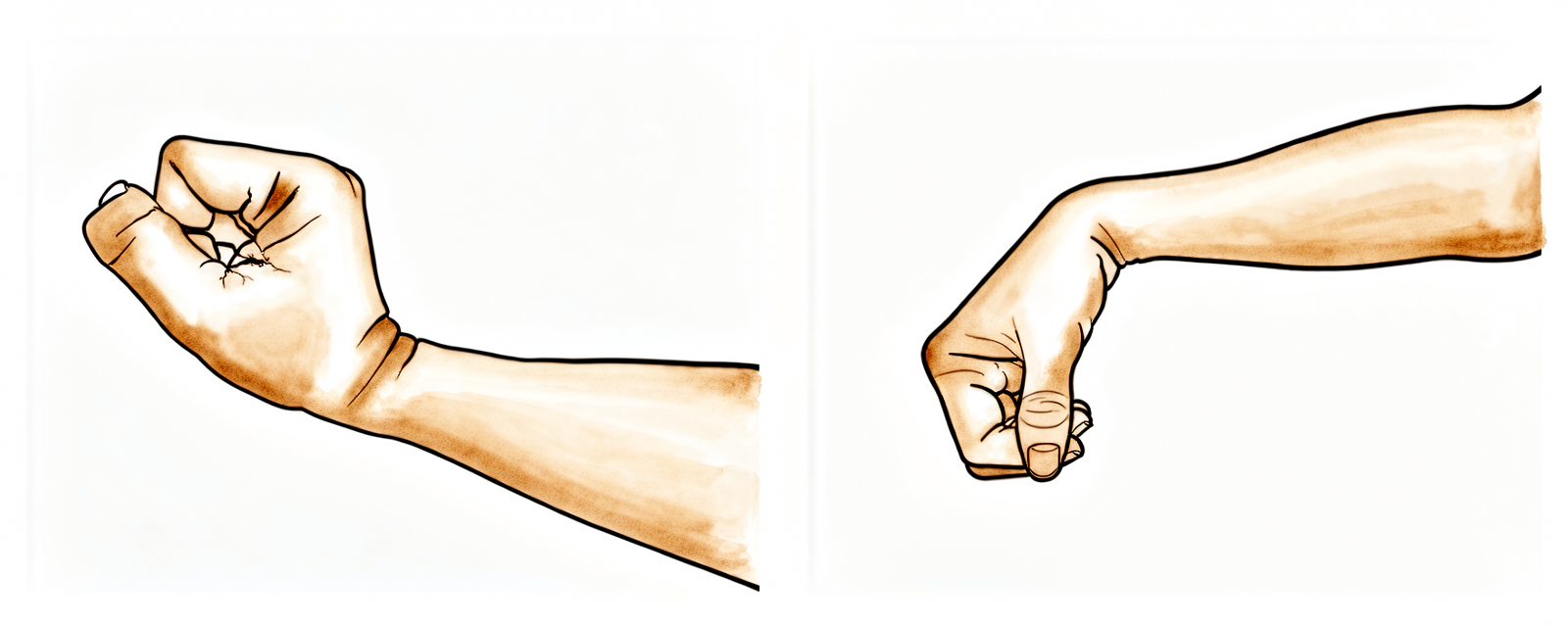
Muñeca, mano y dedos
Mantenga la mano en movimiento doblando la muñeca hacia adelante, hacia atrás y de lado a lado, así como abriendo y cerrando los dedos o apretando una pelota blanda. Esto mantiene la mano y la muñeca flexibles y ayuda a reducir la hinchazón; no ejerce carga sobre la zona reparada.
10 veces, 3 veces al día
Kieran Hirpara 4.0
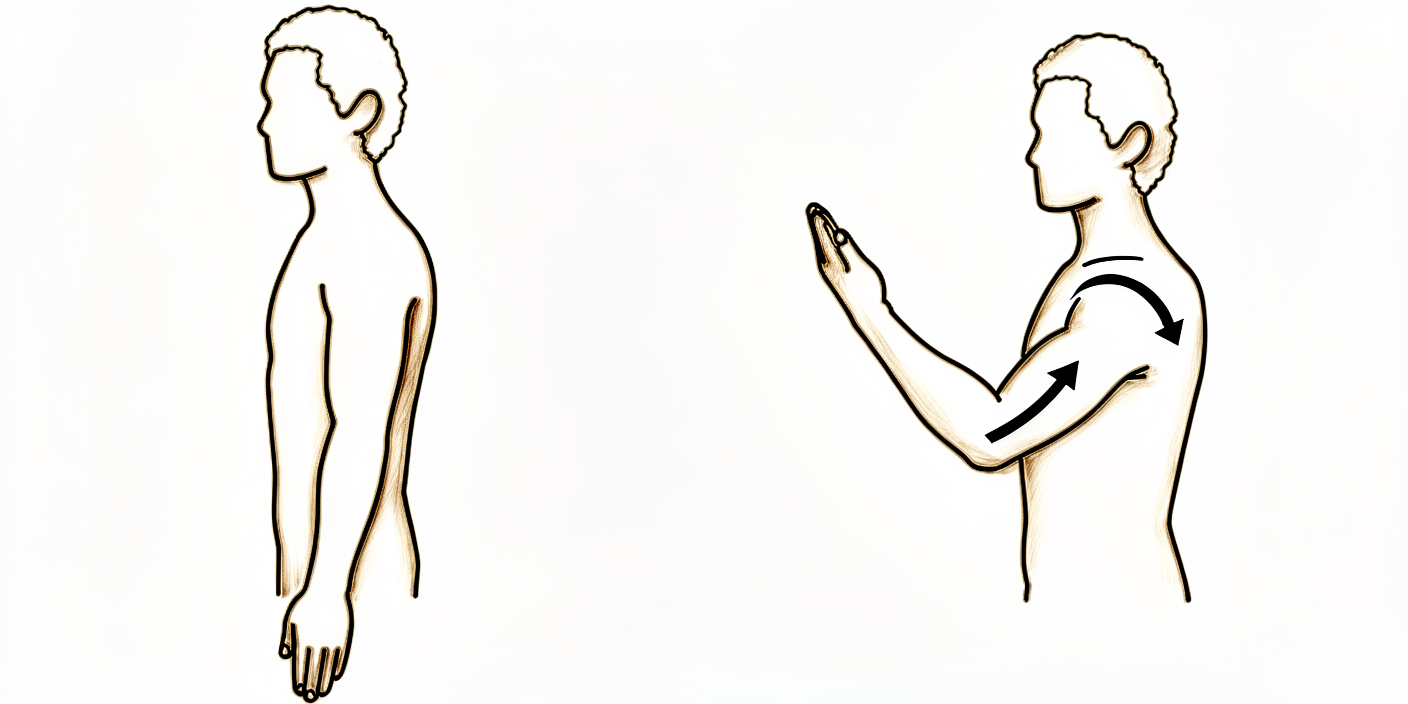
Flexión del codo
Con el brazo mantenido delante del cuerpo, doble y estire suavemente el codo. Mantenga el hombro relajado y sin moverse.
10 veces, 3 veces al día
Kieran Hirpara 4.0
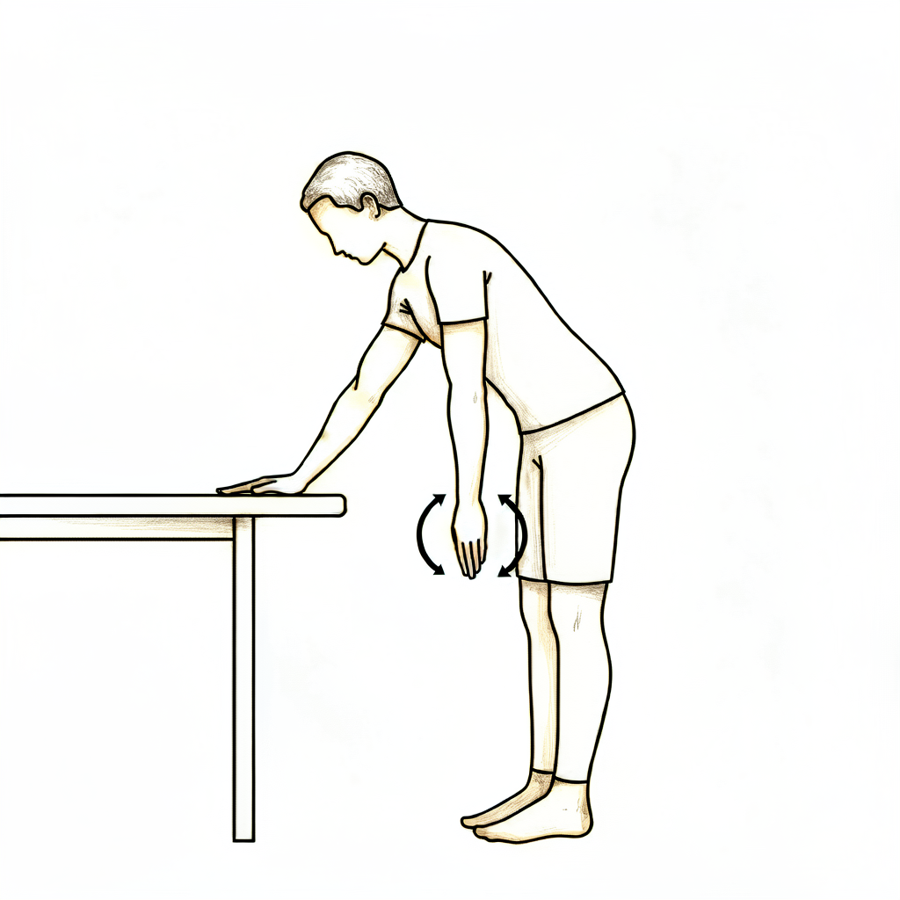
Oscilaciones del péndulo
Incline el cuerpo hacia adelante y deje que el brazo operado cuelgue, totalmente relajado. Utilice el cuerpo para mover el brazo suavemente: haga pequeños círculos en sentido horario y antihorario, así como movimientos suaves hacia adelante/atrás y de lado a lado. Los músculos del hombro no deben hacer ningún esfuerzo; es el cuerpo el que realiza el movimiento. Mantenga dichos movimientos de pequeña amplitud.
Aproximadamente 30 segundos en cada dirección, 3 veces al día.
Algunas normas para la sala de hospitalización y para sus primeros días en casa:
- Utilice hielo para aliviar el dolor, si es necesario.
- Al usar el cabestrillo, relaje el hombro y deje que el cabestrillo soporte el peso del brazo; mantenga el brazo delante del cuerpo.
- Tome los analgésicos antes de hacer los ejercicios y antes de sus sesiones de fisioterapia.
- Puede sacar el brazo del cabestrillo para hacer los ejercicios y para ducharse.
- Use el cabestrillo durante unas 6 semanas, especialmente cuando esté fuera de casa.
- A menos que haya concertado usted mismo la fisioterapia, ya se ha programado una cita para usted; dicha cita figura en su paquete de alta.
- Si tiene algún problema, comuníquese con la consulta o informe a su fisioterapeuta.
Fase I — Protección (semanas 0–2)
Kieran Hirpara 4.0
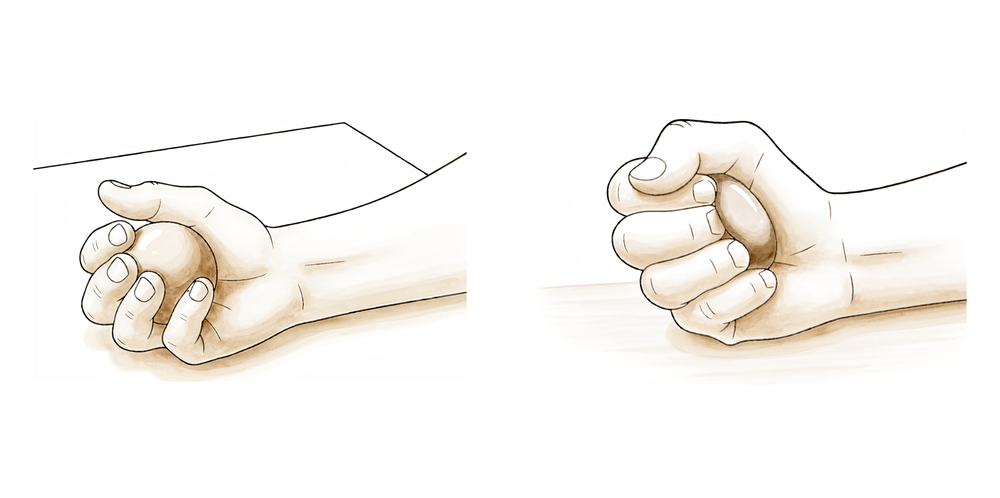
Apriete de pelota
Con el brazo descansando cómodamente frente a usted, apriete una pelota blanda o un calcetín enrollado, mantenga la presión por unos instantes y luego relájese. Esto mantiene activos el antebrazo y la fuerza de agarre sin mover el hombro.
Mantenga la posición durante 5 segundos, 10 veces, 3 veces al día.
Kieran Hirpara 4.0
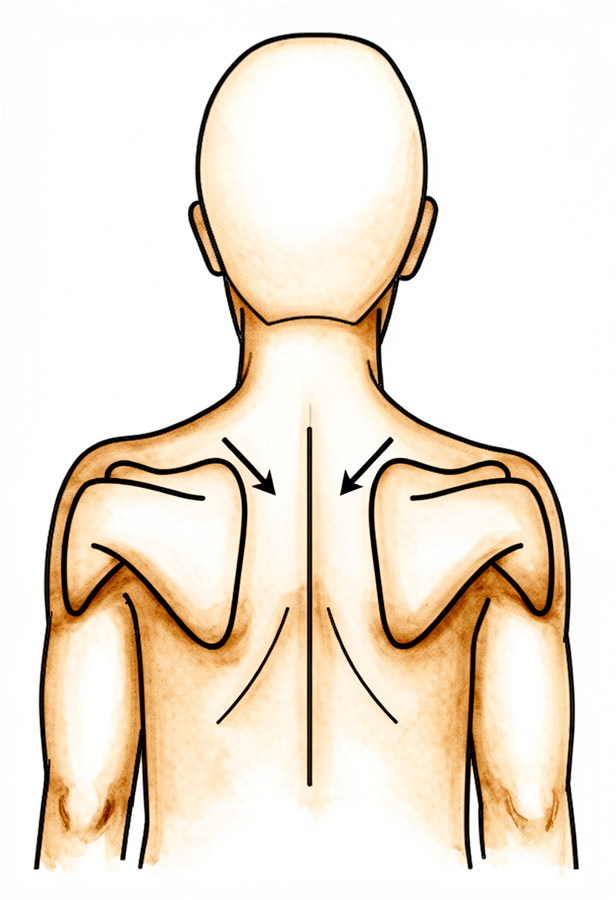
Posicionamiento de la escápula
Apriete suavemente los omóplatos hacia abajo y hacia el centro, mantenga la posición y luego relájese. El brazo no debe moverse; se trata de un ejercicio ligero de activación muscular que ayuda a estabilizar el omóplato.
Mantenga la posición durante 5 segundos, 5 veces, 3 veces al día.
Kieran Hirpara 4.0
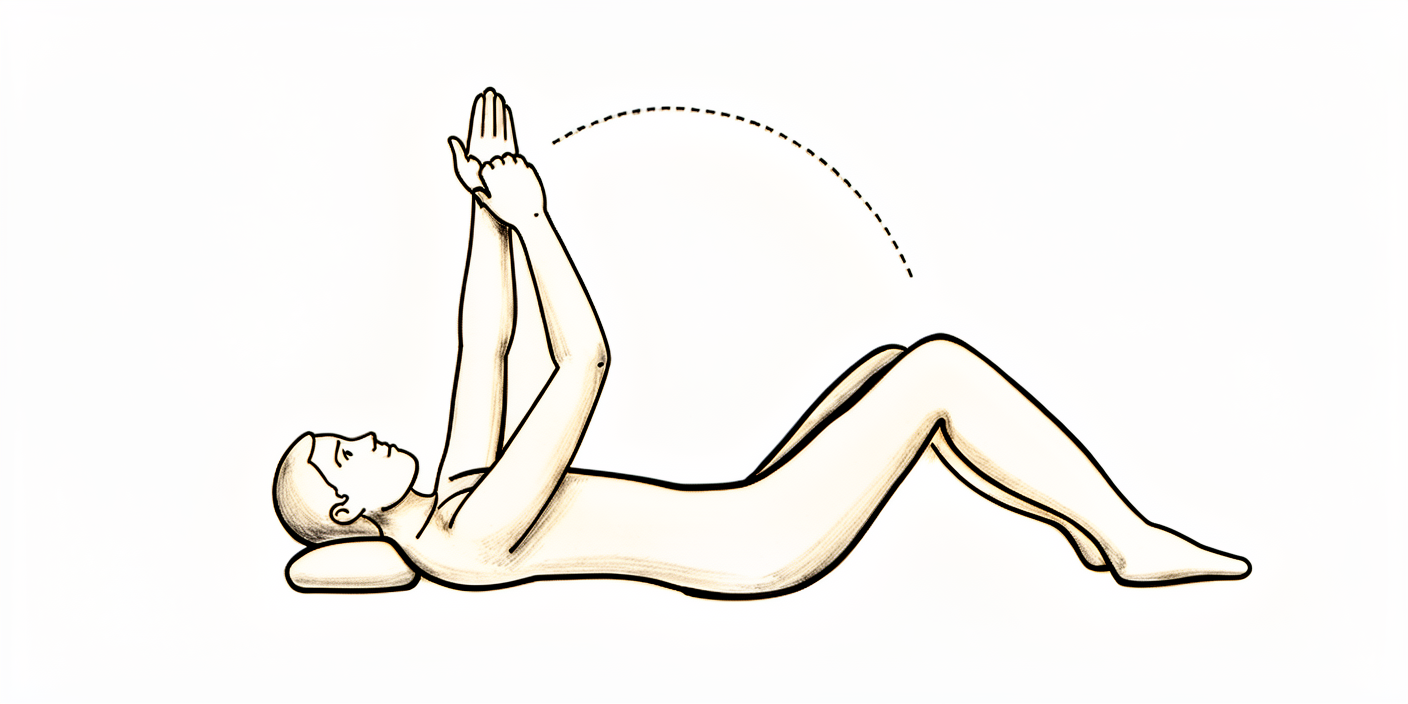
Elevación hacia adelante asistida
Siéntese y incline el torso ligeramente hacia adelante; luego, sostenga el brazo operado con el brazo sano y ayúdelo suavemente a levantarse frente a usted. En esta primera fase, NO debe levantarlo más allá de la mitad del recorrido (aproximadamente 60°). Después, bájelo de nuevo, dejando que sea el brazo sano el que realice el movimiento. Mantenga el brazo siempre frente a usted y nunca lo fuerce.
10 veces, 3 veces al día, dentro de los límites indicados por su fisioterapeuta.
Kieran Hirpara 4.0
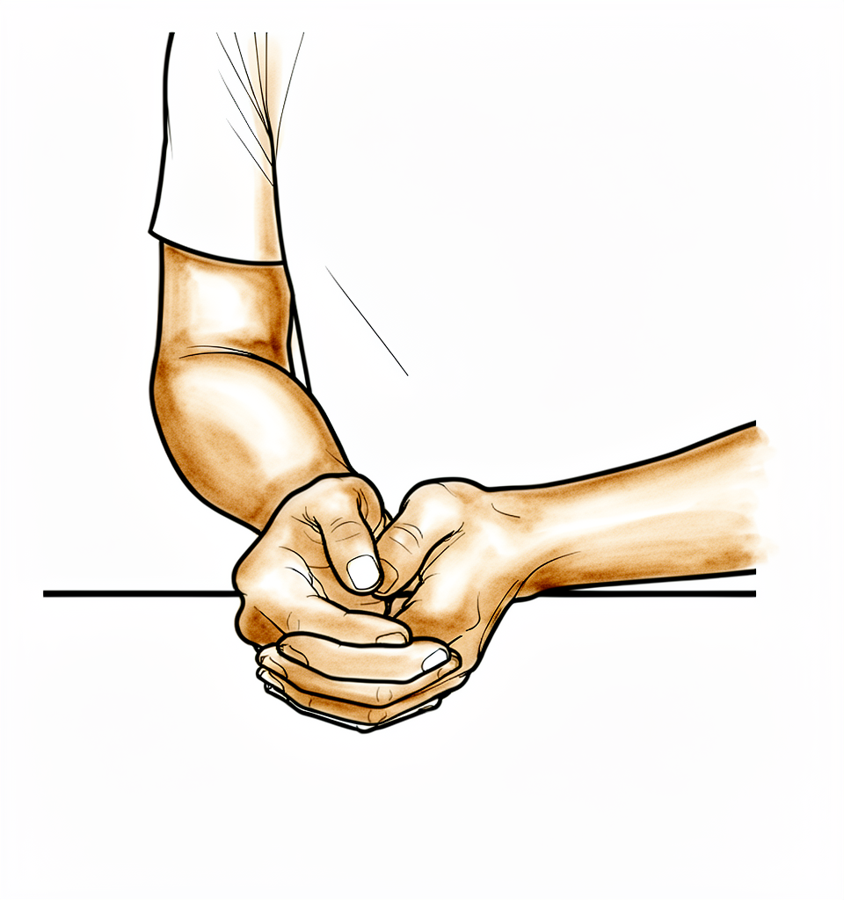
Rotación externa asistida (solo hasta la posición neutra)
Al sentarse, mantenga el codo pegado al frente y gire el antebrazo hacia afuera solo hasta quedar apuntando directamente hacia adelante. Este movimiento de rotación externa es SEGURO después de una reparación posterior; sin embargo, debe evitar la rotación interna, por lo que NO permita que la mano se desplace hacia el interior del cuerpo.
Con suavidad, 10 veces, 3 veces al día.
Las dos primeras semanas consisten en proteger la reparación quirúrgica mientras se mantiene una movilidad suave. Debe seguir usando el cabestrillo sencillo, mantener el brazo delante del cuerpo y realizar únicamente ejercicios suaves que permitan mover la mano, la muñeca y el codo, además de “posicionar” la escápula, todo ello sin ejercer carga alguna sobre la parte posterior del hombro. Dos reglas son fundamentales: mantener el brazo siempre delante del cuerpo y nunca girarlo hacia adentro; además, no se debe forzar ni estirar ninguna zona. El movimiento asistido hacia adelante debe limitarse a aproximadamente la mitad del recorrido posible, y el giro hacia afuera solo hasta la posición frontal (neutra).
- Cabestrillo: cabestrillo sencillo para uso diurno; durante el sueño se retira, pero el brazo debe permanecer delante del cuerpo, sin girar hacia adentro. Se quita para realizar ejercicios y ducharse.
- Movimientos permitidos: únicamente movimientos asistidos y pasivos. Elevación asistida hacia adelante hasta unos 60° (aproximadamente la mitad del recorrido posible); giro hacia afuera solo hasta la posición frontal (neutra); no se permite rotación interna más allá de la posición neutra, ni estirar el brazo detrás de la espalda ni cruzarlo frente al cuerpo.
- Ejercicios: oscilaciones pendulares; movimientos suaves de mano, muñeca y codo; apretar una pelota; posicionamiento de la escápula; elevación asistida hacia adelante (hasta la mitad del recorrido); rotación externa asistida hasta la posición neutra.
Listo para pasar a la siguiente fase cuando: el dolor haya disminuido y esté bien controlado; pueda mantener cómodamente el brazo en la posición protegida (delante del cuerpo, sin girar hacia adentro); la elevación asistida hacia adelante alcance sin dificultad la mitad del recorrido posible; la herida haya cicatrizado sin complicaciones; y siga con confianza todas las precauciones relacionadas con la parte posterior del hombro.
Fase II — Movilización temprana (semanas 2–4)
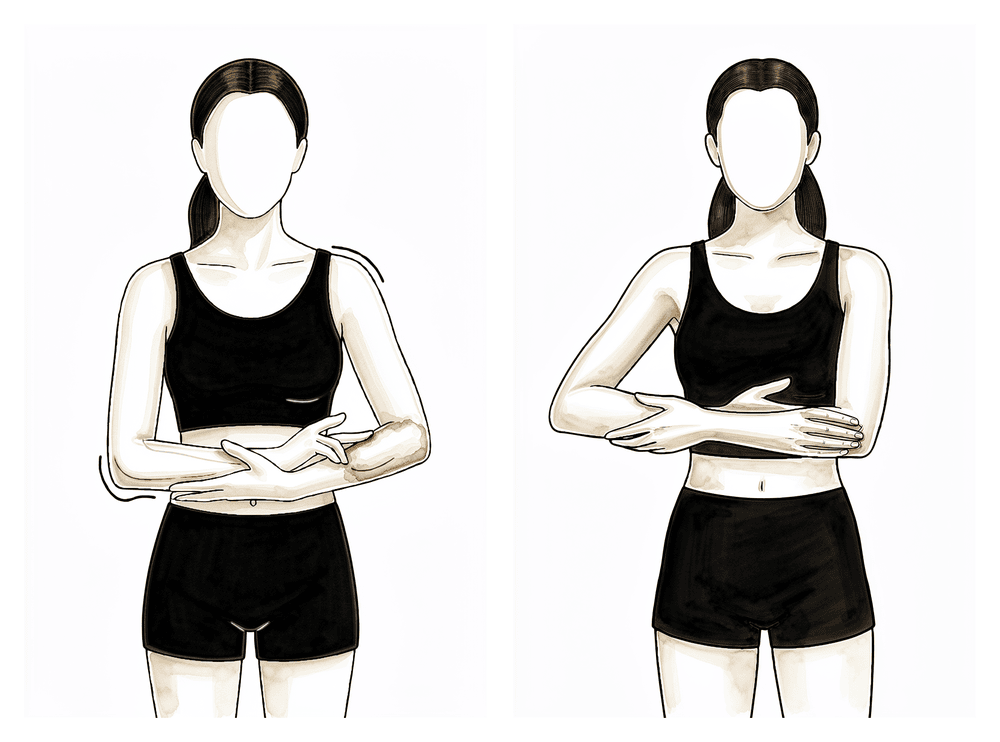
Kieran Hirpara 4.0
Movimiento asistido de brazo hacia el lateral
Sentado y ligeramente inclinado hacia adelante, sostenga el brazo operado con el brazo sano y ayúdelo a moverse hacia el costado, como si meciera suavemente a un bebé. Mantenga el movimiento dentro del rango indicado por su fisioterapeuta (aproximadamente 90°, a la altura del hombro) y mantenga el brazo delante del cuerpo, nunca detrás.
10 veces, 3 veces al día.
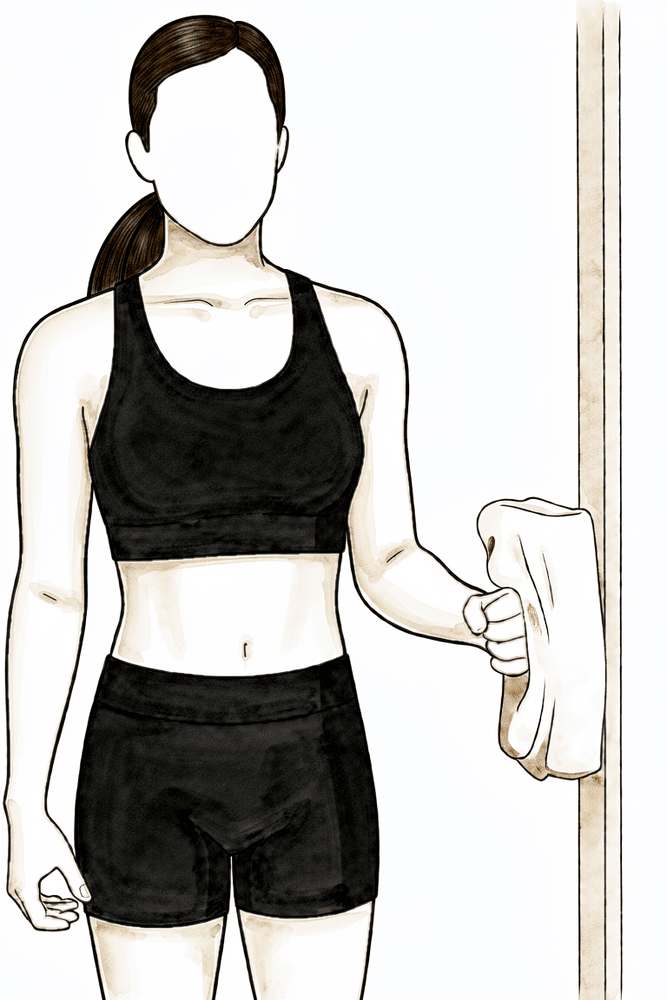
Kieran Hirpara 4.0
Rotación externa isométrica
Párese con el codo pegado delante de usted y doblado a 90°, con el dorso de la mano cerca de una pared o marco de puerta. Presione suavemente el dorso de la mano hacia afuera contra la superficie, SIN mover el brazo; un esfuerzo suave, aproximadamente una cuarta parte de su fuerza, sin dolor. Mantenga la posición y luego relájese.
Mantenga la posición durante ~5 segundos, con suavidad (~25 % de esfuerzo), 10 veces, siguiendo las indicaciones de su fisioterapeuta.
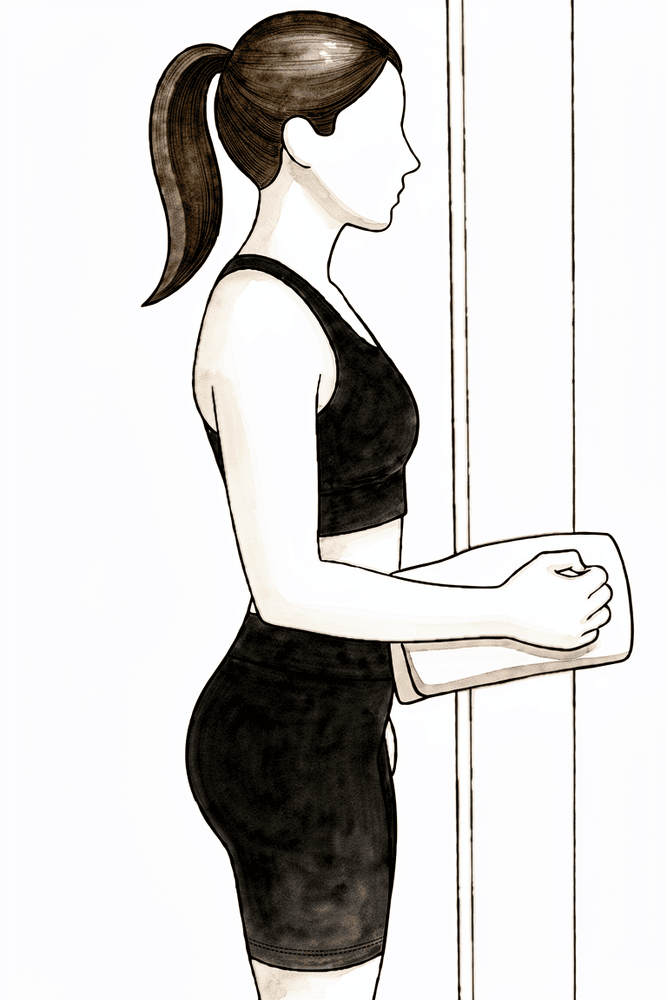
Kieran Hirpara 4.0
Rotación interna isométrica (solo en posición neutral)
Esto solo se permite cuando el brazo está a lo largo del cuerpo y la mano apunta hacia adelante (posición neutra); NO cuando la mano está girada hacia el interior, cruzando el cuerpo. Mantenga el codo pegado al cuerpo y presione suavemente la palma de la mano hacia adentro contra una pared, SIN mover el brazo; con aproximadamente una cuarta parte de su fuerza y sin dolor. Mantenga la posición y luego relájese. Deténgase antes de que la mano se acerque al abdomen.
Mantenga la posición durante ~5 segundos, con suavidad (~25% de esfuerzo), 10 veces, siguiendo las indicaciones de su fisioterapeuta.
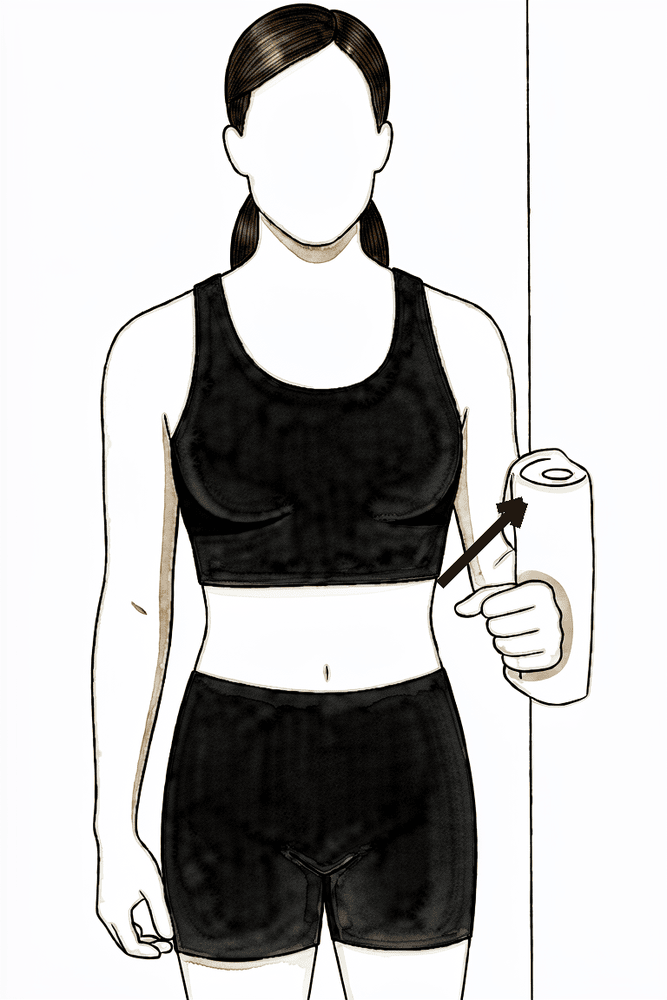
Kieran Hirpara 4.0
Isométrico: brazo extendido hacia el lateral
Párese de perfil, con la parte externa del brazo cerca de una pared y el codo pegado al cuerpo. Empuje suavemente el brazo hacia afuera contra la pared SIN permitir que se mueva; con aproximadamente una cuarta parte de su fuerza y sin dolor. Mantenga la posición y luego relájese.
Mantenga la posición durante ~5 segundos, con suavidad (~25 % de esfuerzo), 10 veces, siguiendo las indicaciones de su fisioterapeuta.
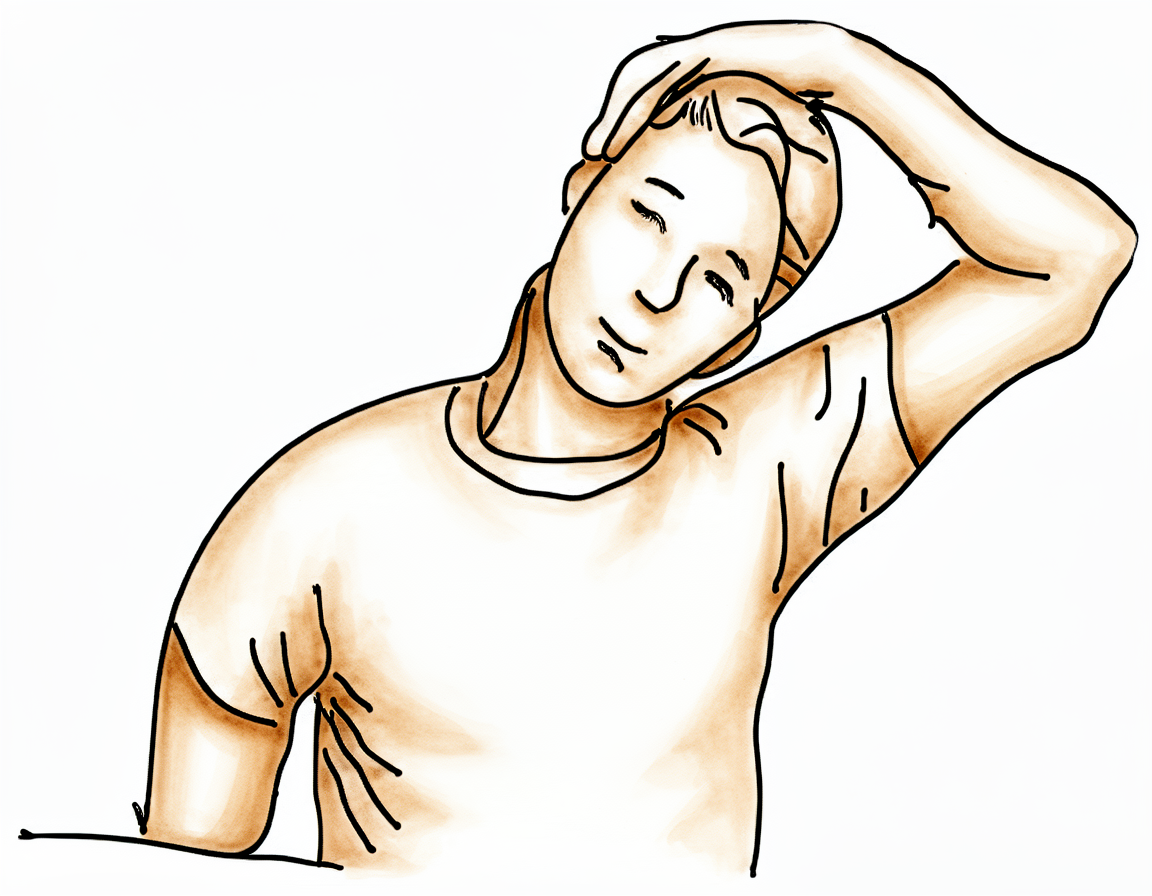
Kieran Hirpara 4.0
Estiramiento lateral del cuello
Utilice el brazo sano para acercar suavemente la oreja hacia el hombro sano, alejándola del lado operado, hasta que sienta un estiramiento cómodo en el cuello.
Mantenga la posición durante 10 segundos, 3 veces, 3 veces al día.
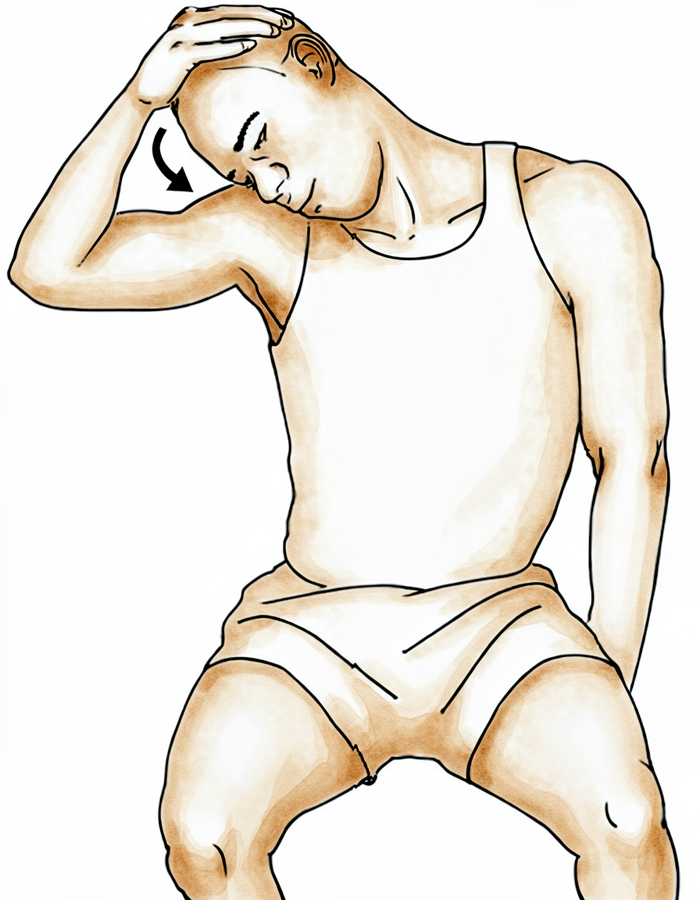
Kieran Hirpara 4.0
Estiramiento del cuello hacia la axila
Utilice el brazo sano para acercar suavemente la nariz hacia la axila, alejándola del lado operado, hasta que sienta un estiramiento cómodo.
Mantenga la posición durante 10 segundos, 3 veces, 3 veces al día.
A partir de la segunda semana, se incrementa gradualmente la movilidad, siempre dentro de los límites seguros. Su fisioterapeuta guiará la realización de movimientos pasivos y asistidos bajo supervisión, estableciendo dichos límites; usted podrá incorporar ejercicios isométricos suaves (presión mantenida) para empezar a activar los músculos, manteniendo el brazo inmóvil. El brazo debe permanecer delante del cuerpo: no se permite estirarlo hacia atrás ni cruzarlo frente al cuerpo; la rotación interna debe mantenerse en posición neutra.
- Cabestrillo: se sigue utilizando; mantenga el brazo delante del cuerpo; no estire el brazo hacia atrás.
- Movimientos permitidos (bajo supervisión del fisioterapeuta): elevación hacia adelante hasta aproximadamente 60°, rotación externa hasta unos 45°, abducción lateral hasta unos 90°; la rotación interna debe mantenerse en posición neutra (0°) al lado del cuerpo. No se usan poleas en casa.
- Ejercicios: abducción lateral asistida; ejercicios isométricos suaves de rotación externa e interna (solo en posición neutra) y abducción lateral; fortalecimiento de los músculos de la escápula; estiramientos del cuello. Interrumpa cualquier ejercicio que provoque dolor en la parte posterior del hombro.
Estará listo para pasar a la siguiente fase cuando: alcance los límites de movimiento indicados sin presentar síntomas en la parte posterior del hombro; el dolor y cualquier hinchazón estén controlados; y tenga buen control de los músculos de la escápula al realizar movimientos suaves.
Fase III — Aumentar el rango de movimiento y comenzar el fortalecimiento (semanas 4–6)
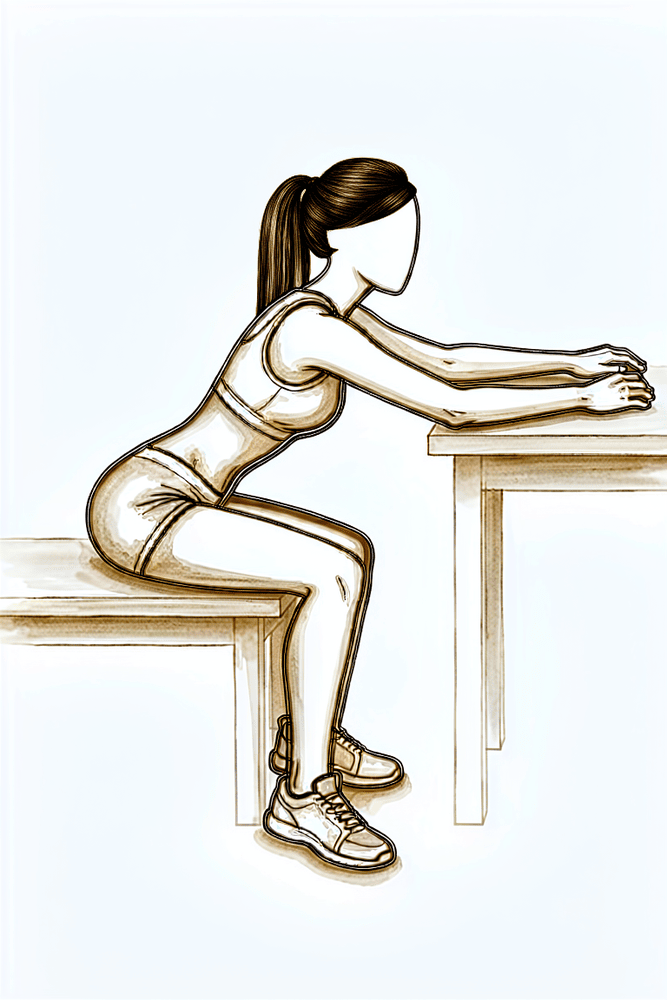
Kieran Hirpara 4.0
Ejercicios de caminar por la pared
Colóquese frente a una pared o siéntese a una mesa con la mano operada apoyada sobre ella. Deslice la mano hacia adelante y hacia arriba a lo largo de la superficie, de modo que el brazo quede delante de usted; permita que la pared o la mesa soporten el peso. Luego deslice la mano de vuelta a su posición inicial. Mantenga el brazo siempre delante de usted; no permita que se desplace a través del cuerpo. Esto desarrolla el alcance hacia adelante con el peso apoyado.
10 veces, 3 veces al día, dentro de los límites indicados por su fisioterapeuta.
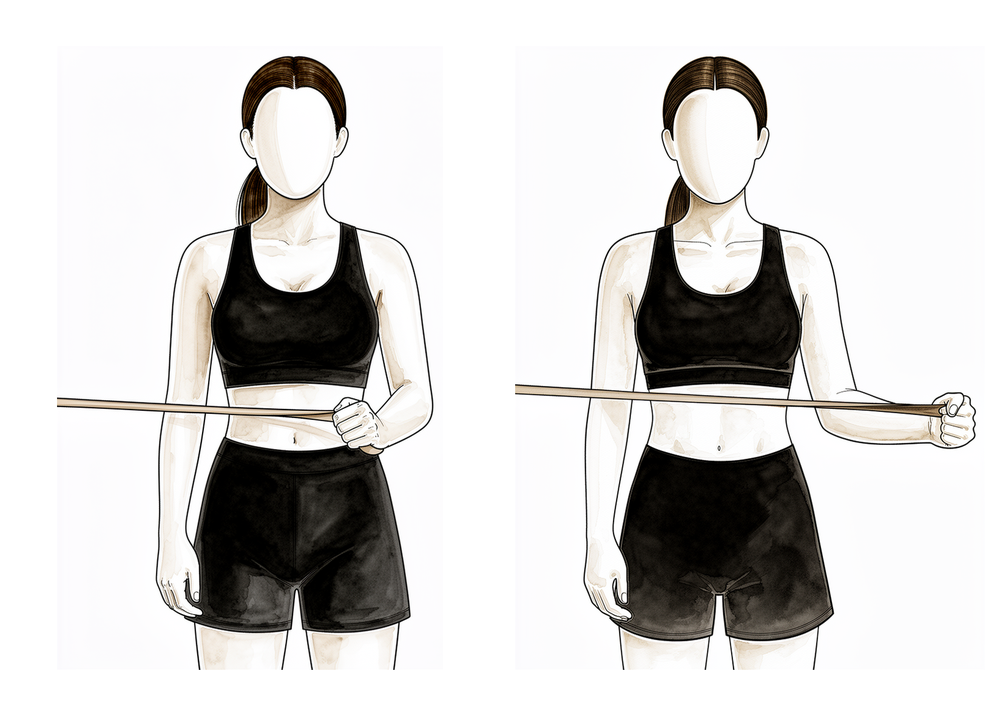
Kieran Hirpara 4.0
Rotación externa suave con banda elástica
A partir de la semana 4–6 aproximadamente, si su fisioterapeuta lo considera adecuado. Con el codo pegado al costado y flexionado a 90°, sujete una banda ligera y gire el antebrazo hacia afuera contra la resistencia de la banda; luego regrese a la posición inicial de forma controlada. La rotación externa es la dirección segura tras una reparación posterior. Utilice una banda ligera y realice numerosas repeticiones, evitando resistencias excesivas.
Según las indicaciones de su fisioterapeuta.
Kieran Hirpara 4.0
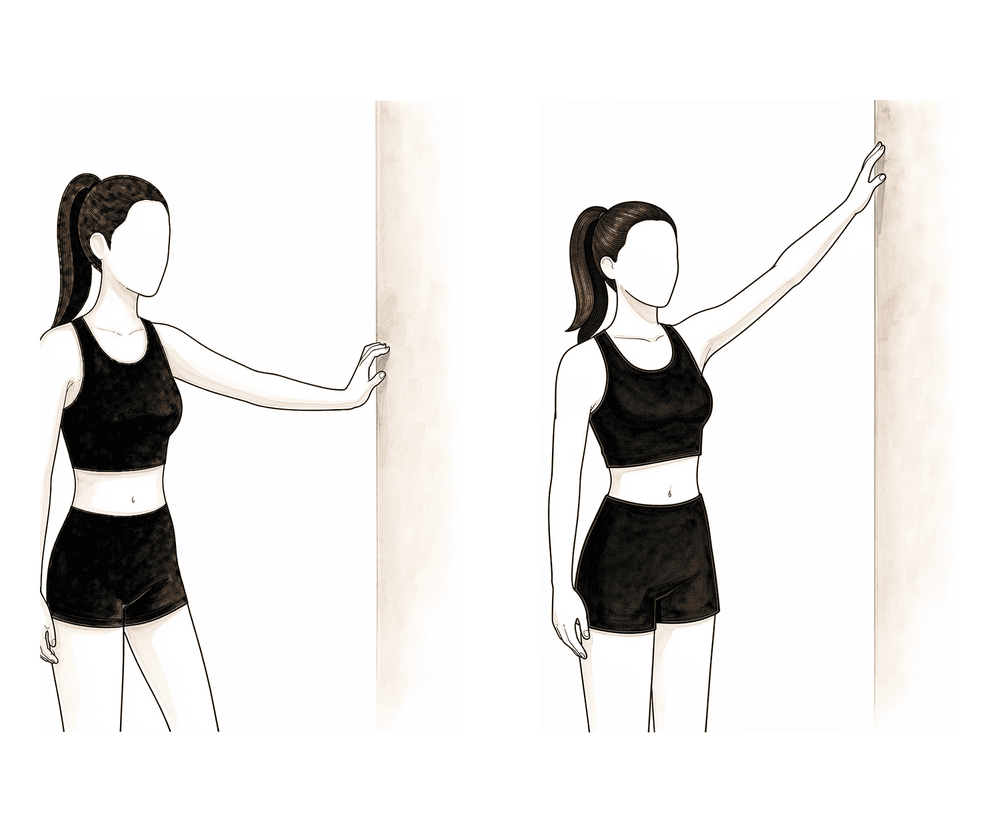
Caminar contra la pared hacia un lado
Párese de lado frente a una pared, con las yemas de los dedos apoyadas en ella. Desplace los dedos hacia arriba por la pared hacia el lateral, levantando el brazo hasta donde le resulte cómodo; luego, vuelva a bajarlos de forma controlada. La pared sirve de soporte para el brazo mientras recupera el movimiento lateral.
Según las indicaciones de su fisioterapeuta.
El rango de movimiento se amplía, y se inicia el primer fortalecimiento leve en la dirección segura de rotación externa. Comienzas a realizar movimientos de alcance con asistencia activa, como caminar contra la pared, y ejercicios suaves con bandas elásticas para los músculos rotadores externos. La rotación interna solo se permite en pequeña medida, y únicamente bajo indicación de tu fisioterapeuta; sigue siendo el movimiento más protegido. El cabestrillo se sigue utilizando durante el día hasta la sexta semana.
- Cabestrillo: se usa de forma sencilla durante el día hasta aproximadamente la semana 6. Si lo quitas por la noche, evita girar el brazo hacia adentro.
- Movimientos permitidos: elevación hacia adelante hasta unos 90°, movimientos hacia el lateral según lo permita la comodidad, rotación externa hasta unos 45° a la altura del hombro (o completa con el brazo junto al costado); la rotación interna se limita a unos 30° y solo bajo indicación de tu fisioterapeuta. Comienza a realizar movimientos de alcance con asistencia activa (caminar contra la pared). No levantes, empujes ni tires objetos que pesen más de 2 libras, y evita cualquier movimiento por encima de la cabeza.
- Ejercicios: caminar contra la pared; continuar ejercicios para la escápula y ejercicios isométricos; iniciar trabajo suave con bandas elásticas para la rotación externa en posición lateral.
Listo para pasar a la siguiente fase cuando: logres realizar movimientos con asistencia activa de manera fluida y con buen control de la escápula; el dolor esté bien controlado; y progreses dentro de los límites establecidos sin provocar molestias en la zona posterior del hombro.
Fase IV — Avance (semanas 6–8)
Kieran Hirpara 4.0
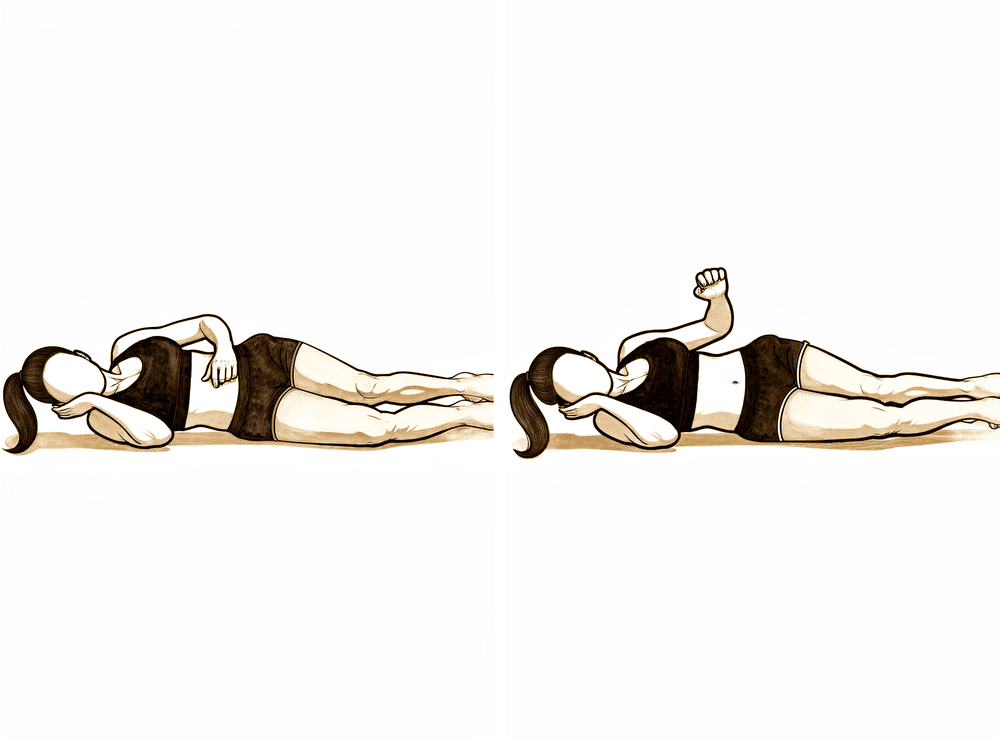
Rotación externa en decúbito lateral
Acuéstese sobre el lado sano, con el codo operado pegado a la cintura y doblado a 90°. Gire el antebrazo hacia arriba (hacia afuera) de modo que la mano se eleve hacia el techo, y luego bájelo de forma controlada. Esto fortalece los músculos del manguito rotador que realizan la rotación externa; es la dirección segura en esta etapa.
Según las indicaciones de su fisioterapeuta.
Kieran Hirpara 4.0
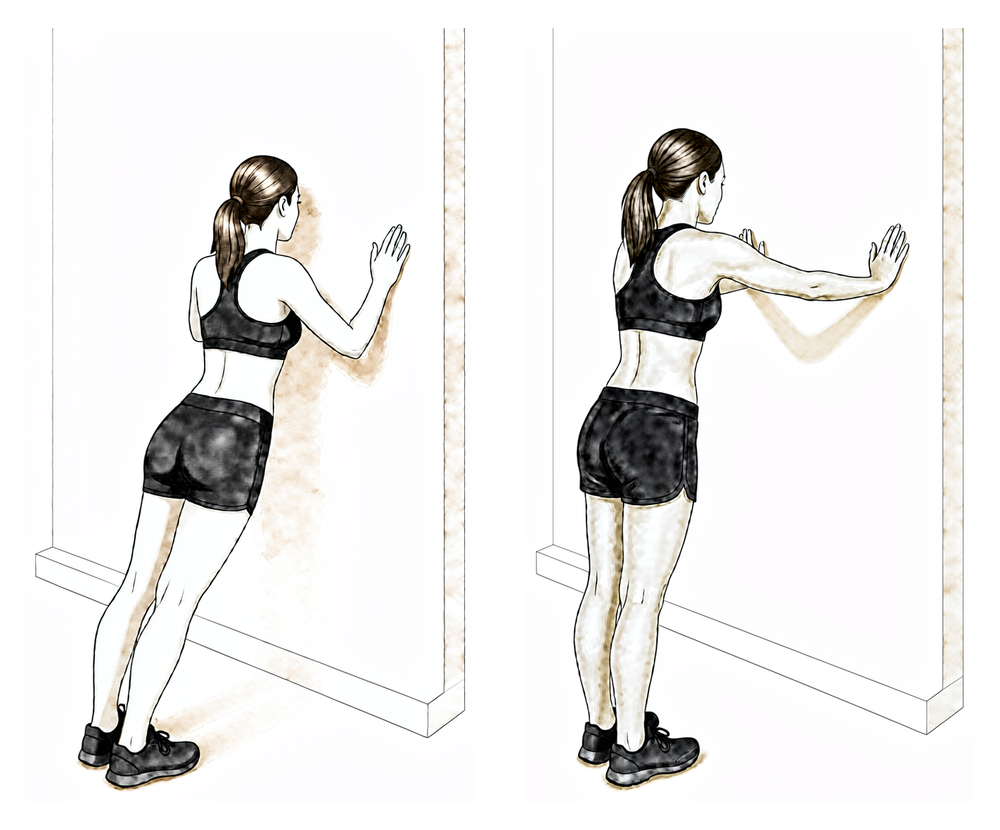
Flexión de pared
Párese con las manos planas contra una pared a la altura de los hombros y los brazos extendidos. Flexione los codos para acercar el pecho a la pared; luego empuje de nuevo hacia atrás hasta la posición inicial, separando suavemente los omóplatos en la parte superior del movimiento. Proceda de forma gradual: este ejercicio carga directamente la parte posterior del hombro, por lo que debe progresar lentamente y únicamente a partir de esta fase.
Según las indicaciones de su fisioterapeuta.
Kieran Hirpara 4.0
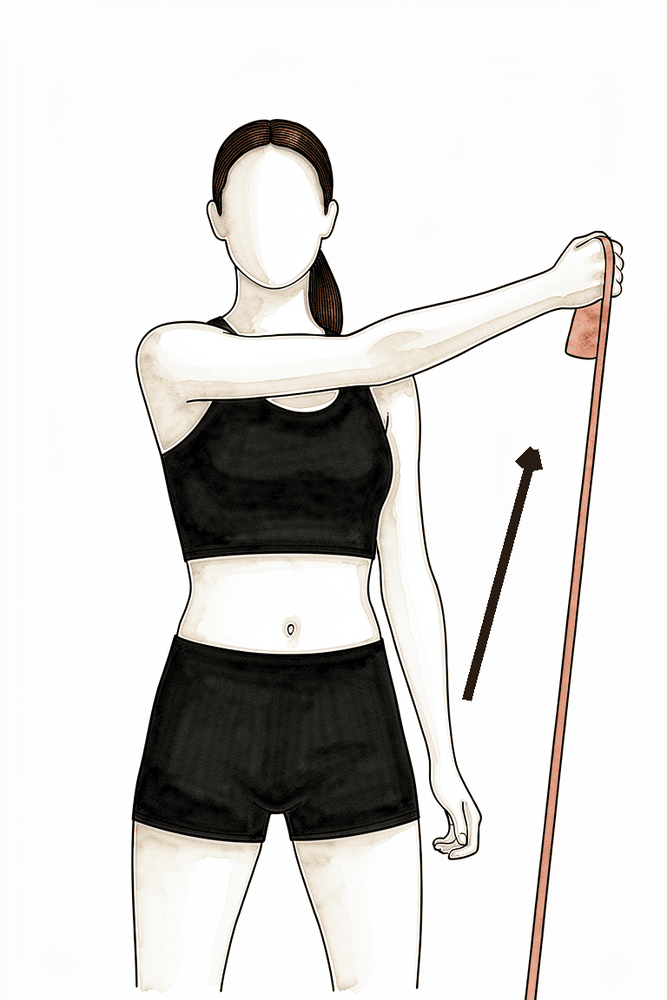
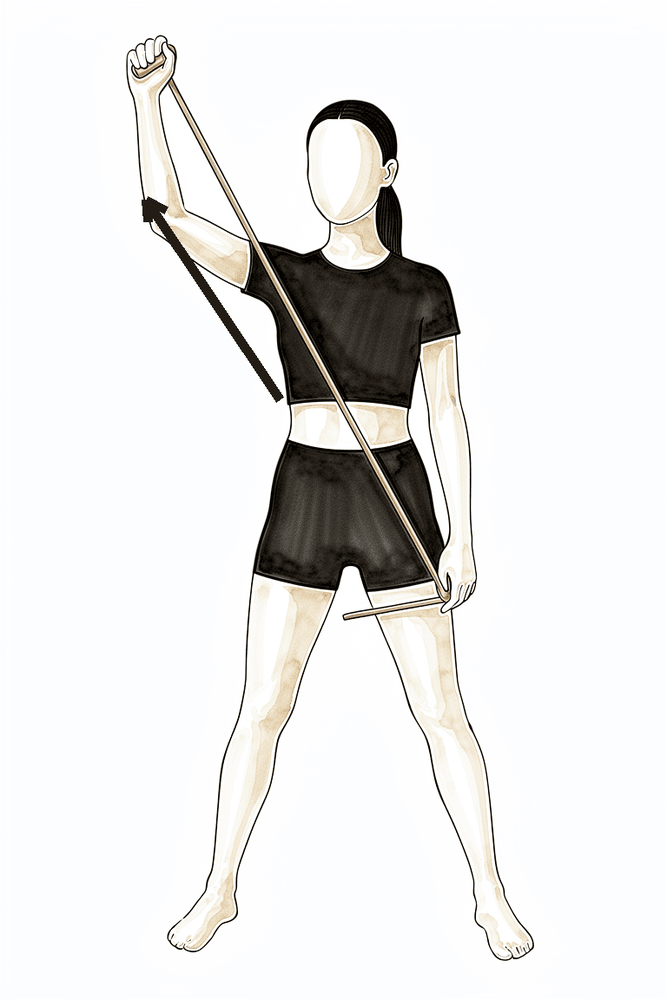
Patrón diagonal con banda (alcanzando hacia afuera y hacia arriba)
Un patrón diagonal de fortalecimiento para todo el brazo, utilizando una banda ligera: se inicia desde una posición baja, frente al cuerpo, y luego se tira hacia arriba y hacia afuera. Mantenga el movimiento fluido y dentro de un rango cómodo; su fisioterapeuta determinará el patrón exacto y la resistencia adecuada.
Según las indicaciones de su fisioterapeuta.
Kieran Hirpara 4.0
Patrón diagonal con banda (alcanzando a través del cuerpo y hacia abajo)
El patrón diagonal opuesto de todo el brazo con una banda ligera, desde arriba y afuera hasta abajo y a través del cuerpo. Ejecútelo de forma suave y controlada, dentro del rango que le indique su fisioterapeuta.
Según las indicaciones de su fisioterapeuta.
El cabestrillo se retira a las seis semanas. Se va recuperando progresivamente el movimiento activo en todas las direcciones, excepto en la rotación interna, la cual se sigue limitando deliberadamente (se mantiene en un máximo de unos 45° hasta la semana 12). El fortalecimiento muscular también aumenta: ejercicios leves para el manguito rotador y los músculos escapulares, las primeras flexiones controladas contra una pared, y movimientos diagonales de todo el brazo usando una banda elástica ligera.
- Cabestrillo: se retira a las 6 semanas.
- Movimientos permitidos: movimiento activo hasta el máximo tolerado, EXCEPTO rotación interna, la cual permanece limitada a unos 45° hasta la semana 12 (tanto al costado como a la altura del hombro). Se permite levantar cargas ligeras, hasta unos 5 libras.
- Ejercicios: rotación externa en decúbito lateral; flexiones contra la pared (que se van intensificando gradualmente; cargan directamente la parte posterior del hombro); patrones diagonales con banda elástica; continuación del fortalecimiento del manguito rotador y de los músculos escapulares.
Listo para pasar a la siguiente fase cuando: se haya recuperado el movimiento activo en todas las direcciones, excepto en la rotación interna; la fuerza muscular vaya aumentando de forma constante; y no haya dolor ni hinchazón tras realizar los nuevos ejercicios de fortalecimiento.
Fase V — Fortalecimiento (semanas 8–12)
Kieran Hirpara 4.0
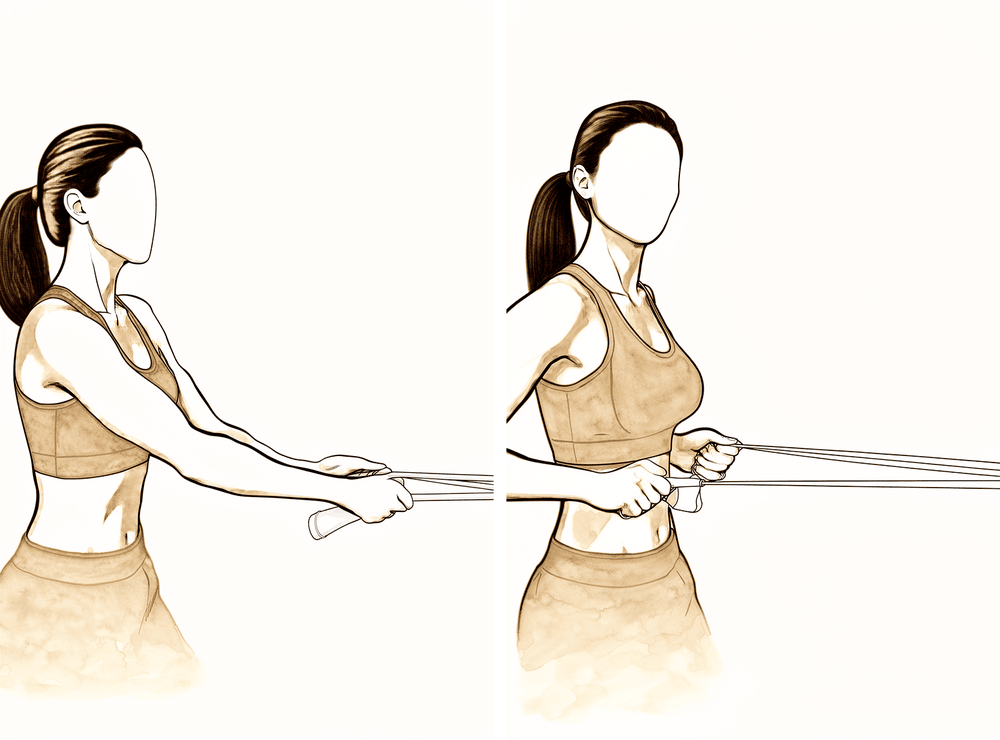
Remo con banda de resistencia
Con una banda anclada frente a usted, tire de las manijas hacia sí, llevando los codos hacia atrás y juntando los omóplatos; luego regrese a la posición inicial de forma controlada. Use una banda ligera y realice muchas repeticiones; deténgase si siente dolor en el hombro.
Según las indicaciones de su fisioterapeuta.
Kieran Hirpara 4.0
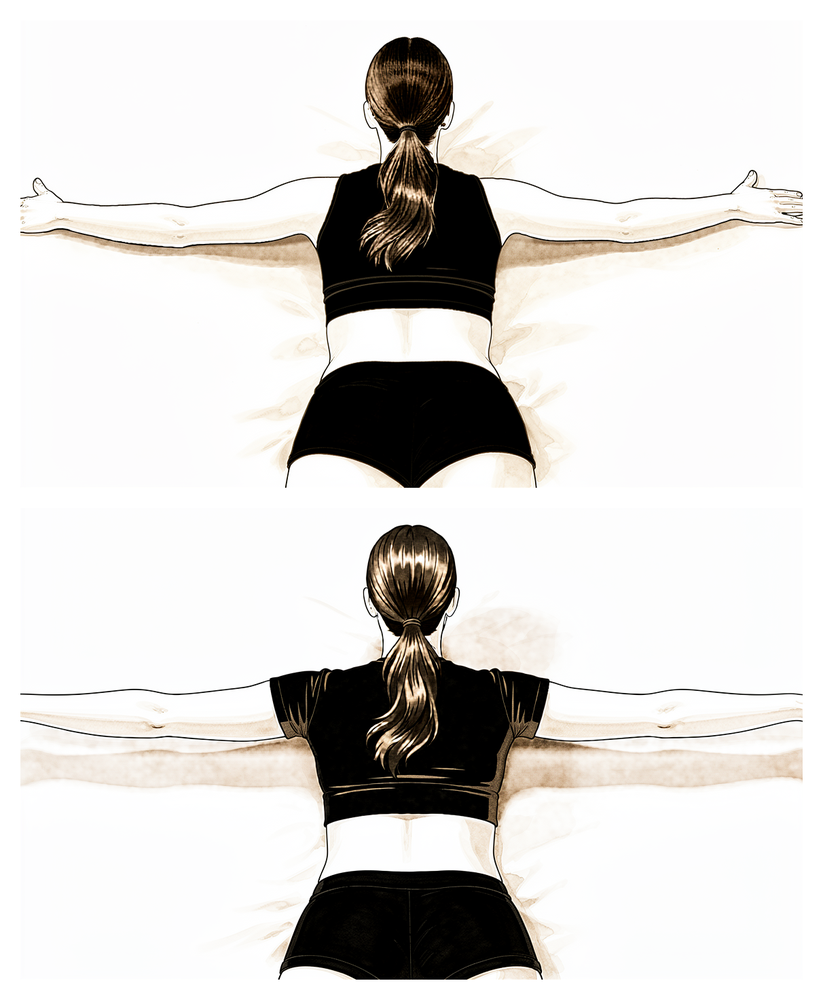
Prono T
Acuéstese boca abajo (o inclínese hacia adelante sobre una mesa); con los pulgares hacia arriba, eleve los brazos hacia los lados hasta formar una “T”, contraiga los omóplatos y luego bájelos de forma controlada. Comience sin ningún peso; solo añada un peso muy ligero si así lo indica su fisioterapeuta.
Según las indicaciones de su fisioterapeuta.
Kieran Hirpara 4.0
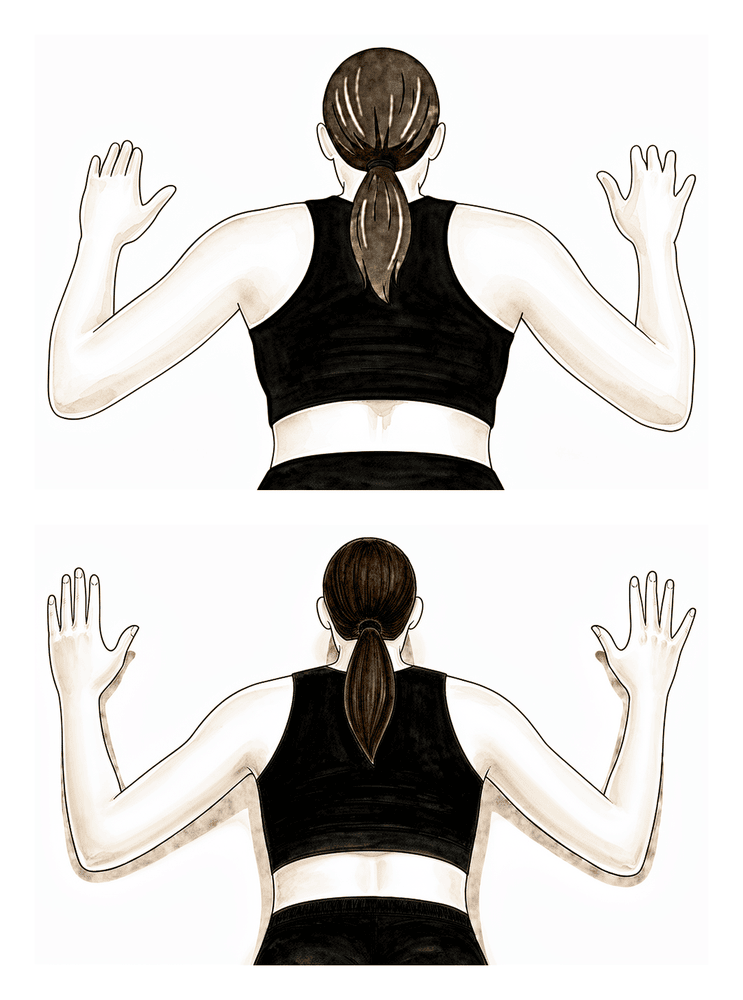
Prono W
Acostado boca abajo, lleva los codos hacia atrás y hacia abajo, en dirección a la cintura, formando una forma de “W”; simultáneamente, junta y presiona las escápulas hacia abajo, y luego relájalas de forma controlada. Este ejercicio fortalece los músculos inferiores de las escápulas.
Según las indicaciones de su fisioterapeuta.
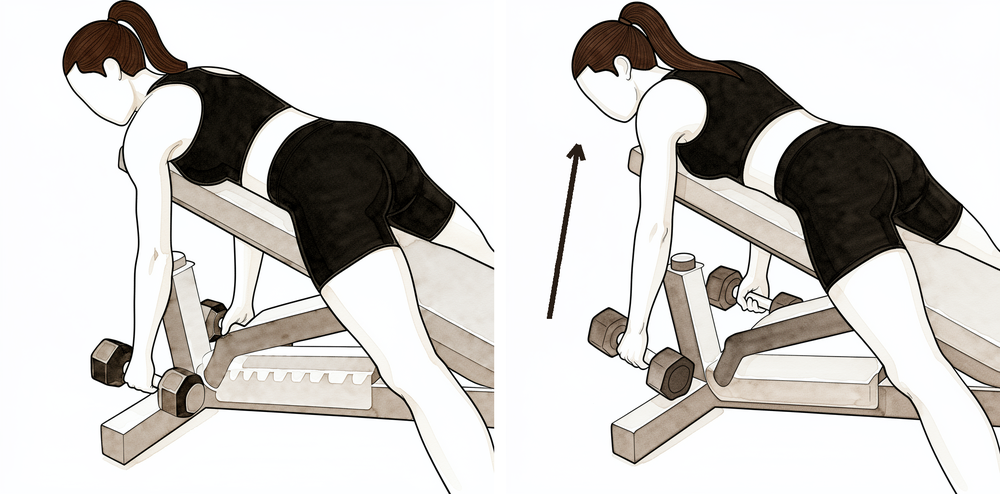
Kieran Hirpara 4.0
Ejercicio de remo para fortalecer el omóplato
Tire del omóplato hacia atrás y hacia abajo contra un peso ligero o una banda elástica, mantenga la posición brevemente y luego relájese de forma controlada. Esto forma parte de un programa de fortalecimiento más amplio (su fisioterapeuta podría llamarlo “Thrower's 10”) cuyo objetivo es fortalecer tanto el manguito rotador como los músculos del omóplato.
Según las indicaciones de su fisioterapeuta.
Esta fase tiene como objetivo desarrollar fuerza, control y resistencia para el trabajo y el deporte. La rotación interna sigue limitada a unos 45° hasta la semana 12; sin embargo, se trabajan plenamente todos los demás planos de movimiento. El programa incluye un entrenamiento más completo para el manguito rotador y los músculos de la escápula (su fisioterapeuta podría llamarlo “Thrower’s 10”), además de ejercicios de control dinámico.
- Suspensión: ninguna.
- Movimientos permitidos: completos en todos los planos, excepto la rotación interna, que permanece limitada a unos 45° hasta la semana 12.
- Ejercicios: remos con bandas de resistencia; ejercicios en posición prona en forma de “T” y “W”; fortalecimiento de la escápula; ejercicios de control dinámico y estabilización. Su fisioterapeuta podría añadir estabilización rítmica (ejercicios suaves de mantenimiento de postura en los que empuja ligeramente su brazo y usted ofrece resistencia) para reentrenar el control; se trata de una intervención manual sin diagramas ilustrativos. La carga se incrementa gradualmente hasta alcanzar aproximadamente 7–10 libras.
Estará listo para pasar a la siguiente fase cuando: su capacidad de rotación interna mejore; el fortalecimiento se realice sin dolor ni hinchazón reactiva; y su fuerza aumente de manera equilibrada en comparación con el otro lado.
Fase VI — Rango completo de movimiento y entrenamiento con pesas (semanas 12–14)
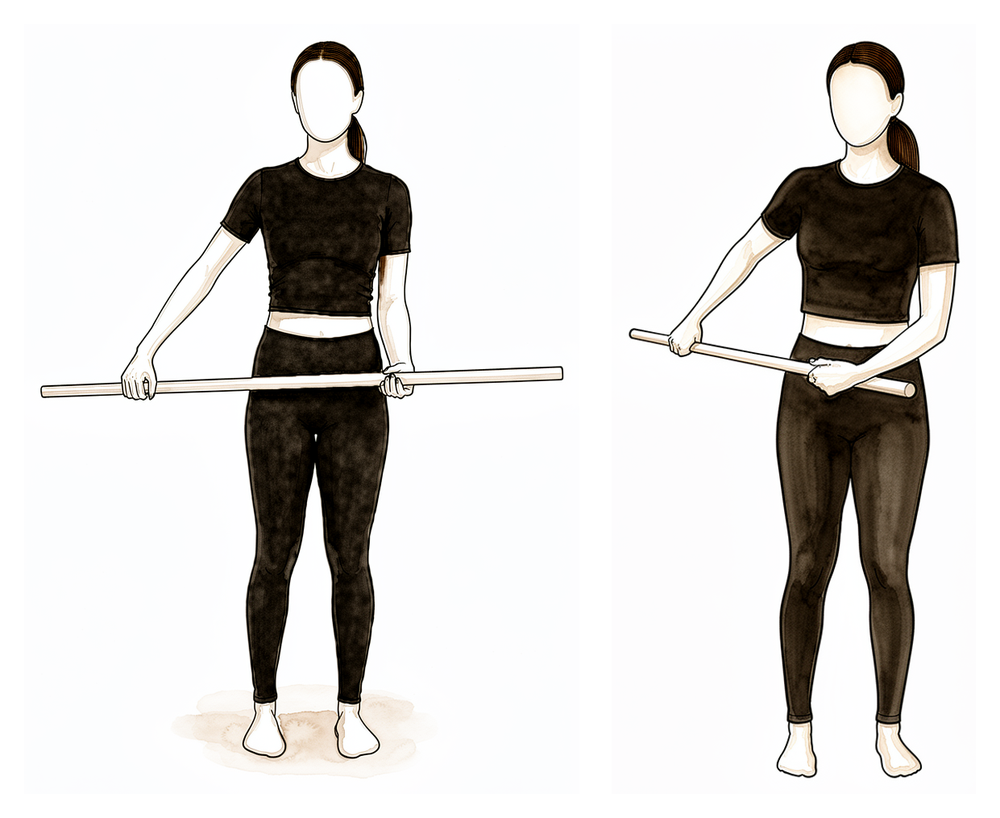
Kieran Hirpara 4.0
Rotación interna mediante un palo
A partir de la semana 12 — nunca antes. La rotación interna es el último movimiento que se recupera tras una reparación posterior; por eso, el alcanzar objetos detrás de la espalda solo puede hacerse a partir de ahora. Sostenga un palo detrás de la espalda y utilice la mano sana para llevar suavemente la mano operada hacia arriba por la espalda, y luego bájela con control. Avance gradualmente y nunca fuerce el límite del rango de movimiento.
Según las indicaciones de su fisioterapeuta.
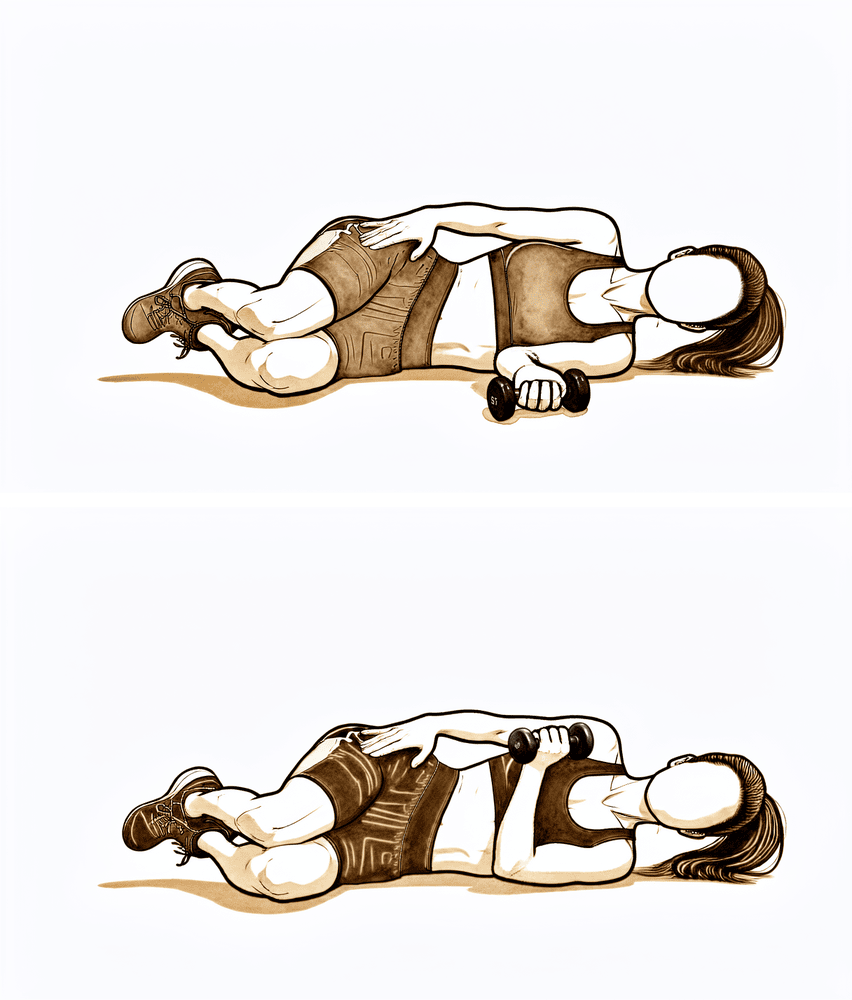
Kieran Hirpara 4.0
Rotación interna en decúbito lateral
A partir de la semana 12. Acuéstese sobre el lado operado, con el brazo extendido hacia adelante y el codo flexionado a 90°. Gire el antebrazo de modo que la mano quede orientada hacia abajo (hacia el interior) y luego regrese lentamente a la posición inicial. Comience sin carga alguna y solo añada un peso ligero si se le indica; esto fortalece los rotadores internos, que son los últimos músculos en recuperarse tras una reparación posterior.
Según las indicaciones de su fisioterapeuta.
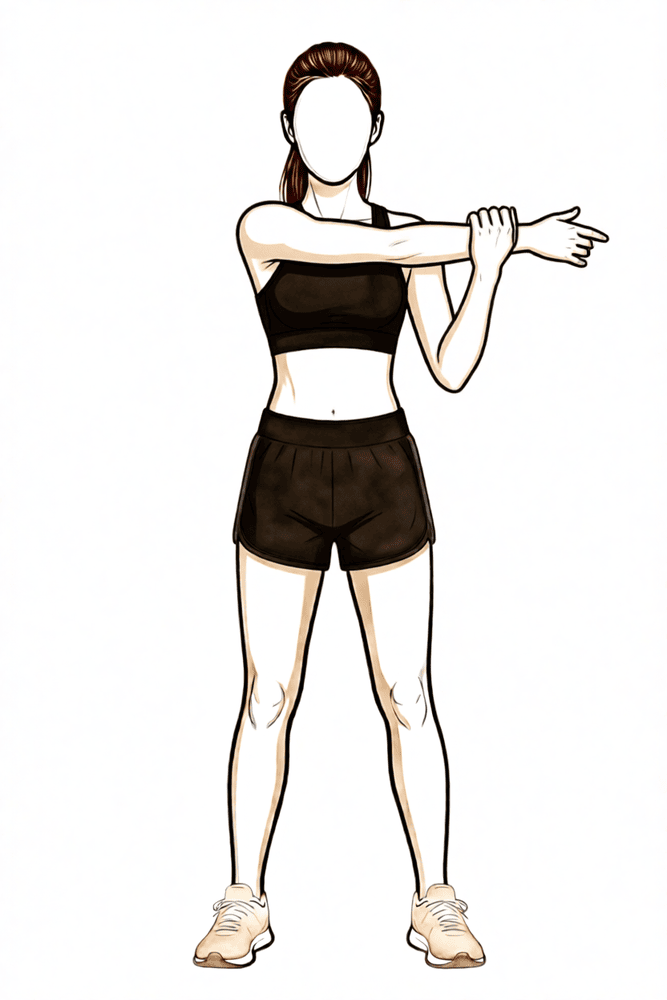
Kieran Hirpara 4.0
Estiramiento cruzado por delante del cuerpo
A partir de la semana 12 — nunca antes, ya que esto ejerce carga sobre la parte posterior del hombro y la zona reparada. Utilice la mano sana para llevar suavemente el brazo operado a través del pecho hasta sentir un estiramiento cómodo en la parte posterior del hombro. Avance de forma gradual y no fuerce el movimiento.
Según las indicaciones de su fisioterapeuta.
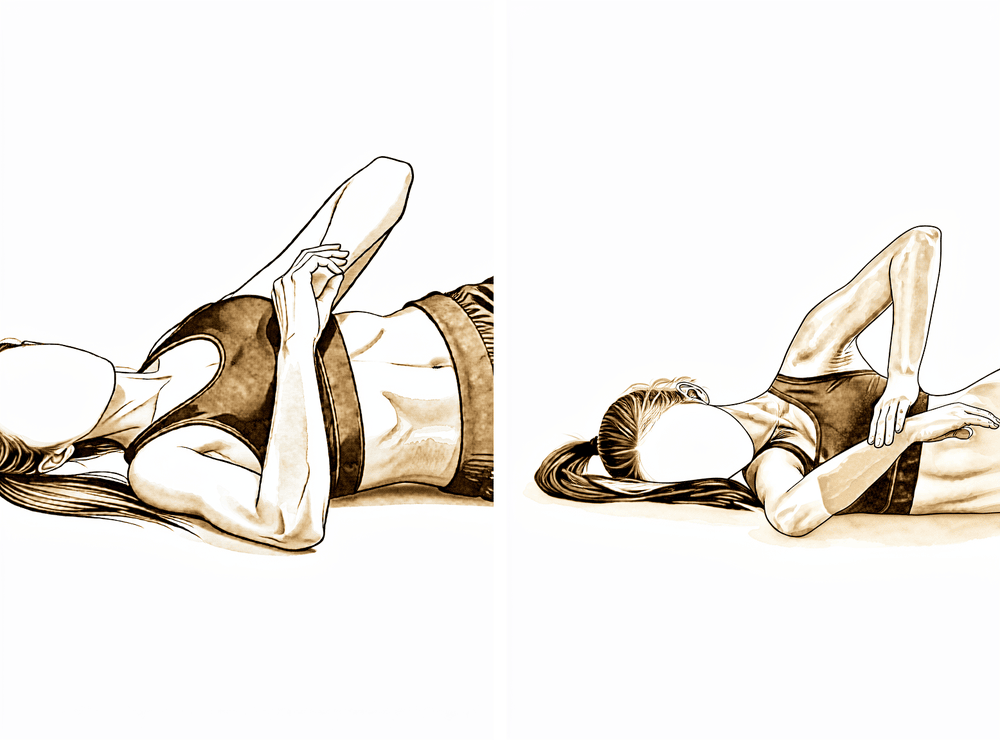
Kieran Hirpara 4.0
Estiramiento de “dormilón”
El estiramiento para la rotación interna en el extremo de rango de movimiento debe iniciarse a partir de la semana 12; nunca antes. Acuéstese sobre el lado operado, con el brazo extendido hacia adelante a la altura del hombro y el codo flexionado a 90°. Con la otra mano, presione suavemente el antebrazo hacia la cama hasta sentir un estiramiento cómodo. Avance de forma gradual y no fuerce el movimiento.
Según las indicaciones de su fisioterapeuta.
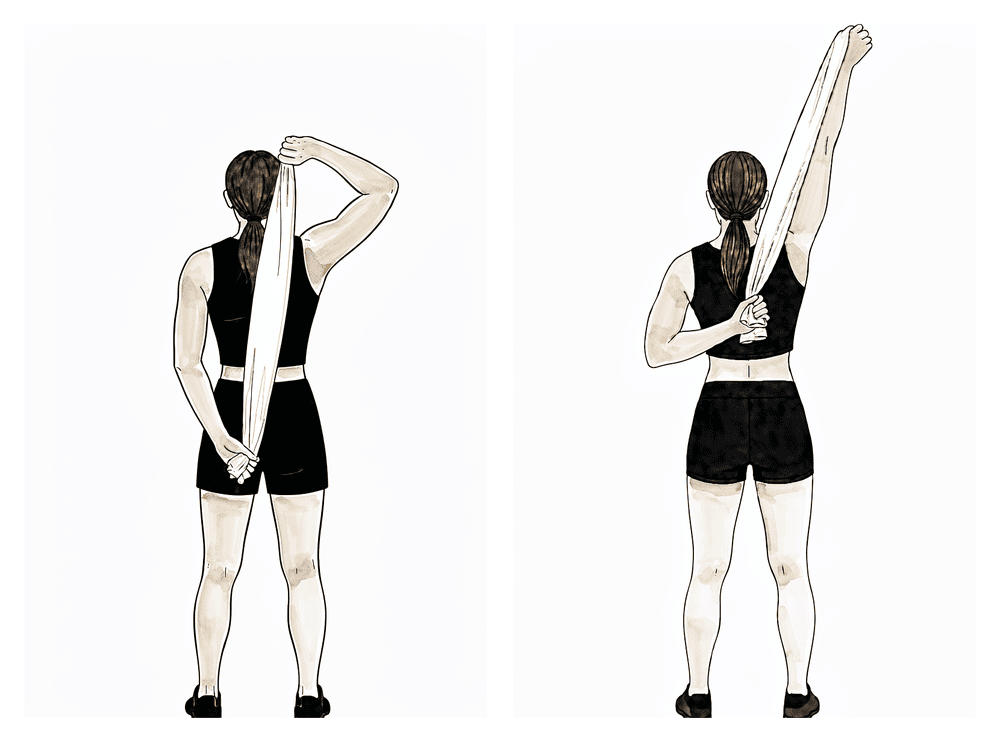
Kieran Hirpara 4.0
Estiramiento con toalla (rotación interna detrás de la espalda)
A partir de la semana 12, se debe trabajar para lograr un alcance completo detrás de la espalda. Sostenga una toalla detrás de la espalda con la mano operada abajo, y utilice la otra mano para llevar suavemente esa mano hacia arriba, a lo largo de la espalda. Avance de forma gradual y no fuerce la rotación interna hasta el límite de su rango de movimiento.
Según las indicaciones de su fisioterapeuta.
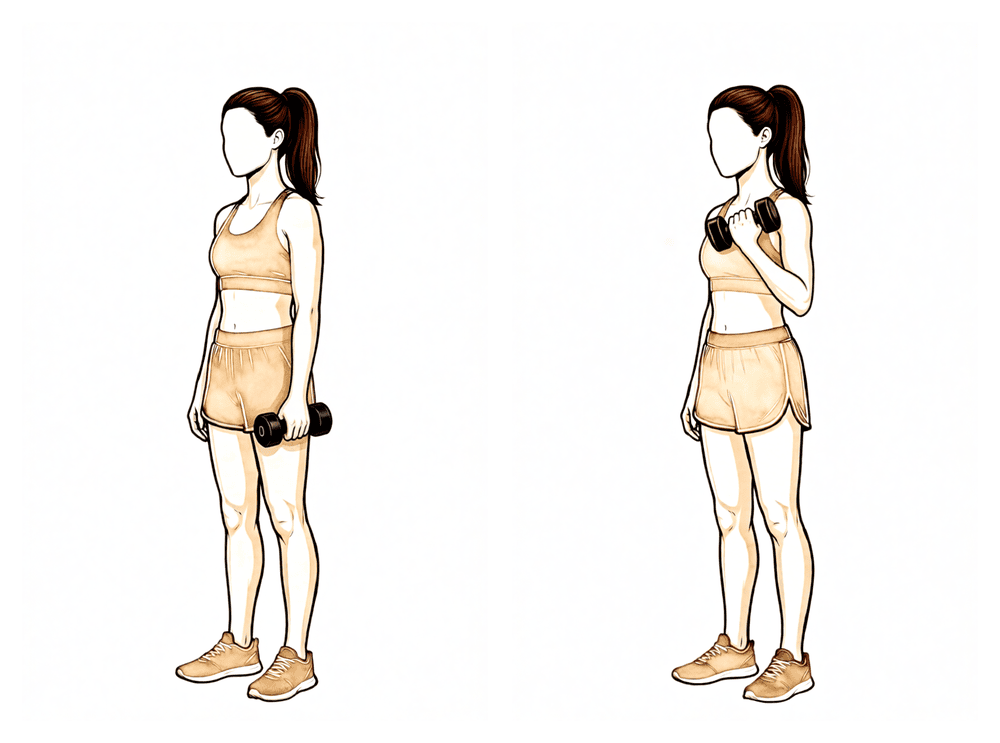
Kieran Hirpara 4.0
Flexión de bíceps
A partir de la semana 12, cuando se reanude el entrenamiento general del brazo. Con el brazo pegado al costado, levante un peso ligero doblando el codo y luego bájelo de forma controlada. Mantenga el hombro relajado e inmóvil.
Según las indicaciones de su fisioterapeuta.
A las doce semanas, la rotación interna se restaura finalmente por completo. En este momento se inician los estiramientos detrás de la espalda y a través del cuerpo, y el entrenamiento en el gimnasio pasa de las máquinas a las pesas libres. Los flexiones de brazos se van practicando desde la pared hasta el suelo. El objetivo en esta fase es lograr una rotación interna completa y simétrica, igual a la del otro lado, ya que la rotación interna es el movimiento que una reparación posterior protege durante más tiempo.
- Soporte ortopédico: ninguno.
- Movimientos permitidos: rango completo de movimiento en todas las direcciones, incluida la rotación interna, progresando gradualmente y sin forzar.
- Ejercicios: rotación interna con un palo; rotación interna en posición lateral; estiramiento a través del cuerpo; estiramiento “sleepers”; estiramiento con toalla para alcanzar detrás de la espalda; flexiones de bíceps y ejercicios de condicionamiento general. Continúe y progrese con los ejercicios de fortalecimiento del manguito rotador, de la escápula y de los músculos diagonales de la fase anterior.
Listo para pasar a actividades deportivas cuando: la rotación interna sea cada vez más simétrica con el otro lado; tenga movilidad completa y sin dolor en todas las direcciones; y su fuerza vaya aumentando hasta igualar la del otro lado, sin presentar inflamación reactiva.
Retorno al deporte y al trabajo
El retorno se basa en criterios clínicos, no únicamente en el calendario, y debe contar con la autorización tanto del Dr. Hirpara como de su fisioterapeuta.
- Deportistas que lanzan o realizan movimientos por encima de la cabeza: se inicia un programa progresivo de lanzamiento o de intervalos a partir de aproximadamente 14–16 semanas, aumentando gradualmente el volumen y la intensidad.
- Deportes de contacto y colisión (rugby, fútbol, artes marciales, deportes de raqueta, escalada, equitación): no antes de los 5 meses, y únicamente cuando se cumplan los siguientes criterios.
- Trabajo: se permite el trabajo sedentario según la tolerancia; el trabajo manual o pesado, al menos 3 meses después de la cirugía.
Estará listo para volver al deporte cuando:
- tenga rango de movimiento completo y sin dolor en todas las direcciones, incluida la rotación interna, simétrica con el lado contralateral;
- su fuerza en rotación externa e interna sea similar a la del otro lado (para su fisioterapeuta: un índice de simetría de aproximadamente 90 % o más en cuanto a fuerza de rotación interna y externa, medida mediante dinamometría isocinética o manual; en casos de reparación posterior, es fundamental asegurar una fuerza de rotación interna simétrica, ya que esta es la dirección protegida);
- haya completado cualquier programa específico para su deporte (como un programa de lanzamiento por intervalos) sin presentar dolor ni sensación de inestabilidad; y
- el Dr. Hirpara le haya dado el visto bueno en la revisión médica.
Después de seguir este protocolo
Este protocolo se utiliza en conjunto con las recomendaciones generales de recuperación del consultorio; consulte manejo del dolor postoperatorio y cuidado de la herida. En cuanto a la afección en sí, consulte inestabilidad del hombro.
El cronograma por fases, los límites de protección específicos para lesiones posteriores, el retorno gradual de la rotación interna y los criterios para volver a la práctica deportiva se elaboraron tomando como referencia los protocolos publicados sobre estabilización posterior por la Medicina Deportiva de la Universidad de Virginia y la Medicina Deportiva de la Universidad de Nuevo México (Protocolos de rehabilitación para la reparación del labrum posterior), la Medicina Deportiva de Massachusetts General Brigham (Reparación del labrum Bankart posterior), así como el artículo clínico “Rehabilitación tras la estabilización posterior del hombro” (International Journal of Sports Physical Therapy, 2021). Dicho protocolo fue adaptado al enfoque de este consultorio por el Dr. Hirpara. El programa de ejercicios original se basa en el trabajo de Leonard Funk y la Unidad de Hombro de Wrightington (shoulderdoc.co.uk).
Evidence & references
This is the clinical evidence summary written for health professionals. It is technical, and it lists the research this page was built from. You do not need to read it to understand your treatment or to make a decision about it.
Posterior Stabilisation (Posterior Labral / Capsular Repair): Rehabilitation Evidence
Topic: Arthroscopic or open posterior labral repair / posterior capsulorrhaphy (reverse Bankart) for posterior glenohumeral instability. Compiled: 2026-06-16. Sources: local RAG Orthopaedic corpus + published fellowship/PT "standard of care" protocols.
The key difference vs anterior (Bankart/Latarjet): the precaution is REVERSED
Posterior instability and the posterior repair are stressed by the OPPOSITE motions to an anterior repair. The provocative/at-risk position is flexion + adduction + internal rotation (and horizontal adduction) - exactly the position of a posterior load (Itoi/Shoulderology: recurrent posterior instability = PIGHL deficiency failing to resist posterior translation with the arm in flexion and internal rotation). Therefore: - EARLY PRECAUTION = limit flexion, internal rotation, adduction, and horizontal/cross-body adduction; protect against the posteriorly-directed load. (Anterior repairs instead limit ER + abduction.) - Sling/brace is positioned in slight ABDUCTION and NEUTRAL/slight EXTERNAL rotation - often a "gunslinger" brace or abduction pillow - to keep the humeral head off the posterior repair. The arm must be kept in front of the body; do NOT reach behind the back and avoid internal rotation early. - Posterior instability is uncommon (~3-5% of instability) so high-level evidence is sparser; protocols are consensus/biomechanically driven.
Consensus phased timeline (UVA Sports Medicine posterior labral repair standard of care)
| Phase | Week window | Sling/brace | ROM allowed & RESTRICTIONS | AROM / strengthening | RTS |
|---|---|---|---|---|---|
| I - Immediate / protect | 0-2 wk | Sling (all components) at all times incl. sleeping (gunslinger / neutral-to-slight-ER, slight abduction); off only for home ex/PT | Pendulums; elbow/wrist ROM only. No shoulder PROM into the at-risk arc. Keep arm in front of body | Grip/wrist; ball squeezes | None |
| II - Early PROM | 2-4 wk | Continue sling at all times; keep arm IN FRONT - do NOT reach behind back | PROM (PT-supervised), strictly limited: flexion to 60 deg, extension to neutral (0 deg), abduction to 90 deg, ER to 45 deg, IR to neutral (0 deg) at side. No home pulleys | Scapular strengthening; submaximal pain-free isometrics in ALL directions (in sling); cervical ROM | None |
| III - Increase PROM, begin AAROM/strengthening | 4-6 wk | Continue sling by day; may stop sling at night but AVOID internal rotation; keep arm in front | PROM: flexion to 90 deg, extension to 30 deg, abduction full as tolerated, ER 45 deg at 90 deg abd / full at side, IR limited to 30 deg at 90 deg abd. Begin AAROM (wall walks). No reaching behind back | Continue scapular + isometrics; begin light ER Theraband at side. No lift/push/pull >2 lb, no overhead | None |
| IV - Advance | 6-8 wk | Discontinue sling at 6 wk | Advance AROM to full as tolerated EXCEPT IR; limit IR to 45 deg (at side and at 90 deg abd) until 12 wk | Isotonic RC (to 6-8 lb), UBE, wall push-ups, advance scapular, begin D1/D2 PNF (<=3 lb). Lift <=5 lb | None |
| V - Strengthen | 8-12 wk | None | IR still limited to 45 deg until 12 wk; full in all other planes | Advance RC/scapular, dynamic stabilisation, isokinetics with 60 deg block; Thrower's 10 for throwers (from ~10-12 wk). Lift <=7 lb (wk 8-10) -> <=10 lb (wk 10-12) | None |
| VI - Full ROM / weight training | 12-14 wk | None | IR advanced to FULL at 12 wk. Full ROM all directions | Traditional weight training (machines -> free weights), eccentric RC, advance PNF/isokinetics. Begin overhead-work progression | Begin late-stage loading |
| Thrower progression / RTS | 14-24 wk | None | Full | Throwing program from 14-16 wk (60% velocity); isokinetic testing 16-24 wk; interval throwing once passed | No contact sport before 5 months; full RTS on criteria + surgeon clearance |
Active ROM start: AAROM ~4 wk, full AROM (except IR) by ~6-8 wk. Strengthening start: isometrics from ~2-4 wk; isotonic RC ~6 wk. RTS: throwing 14-16 wk; contact sport not before 5 months; criterion-based.
RTS criteria (UVA)
Pass isokinetic test (ER/IR unilateral >=70%, ER bilateral >=98%, IR bilateral >=105%, ER/IR peak-torque/BW ratios); completed throwing program; no pain with activity; surgeon clearance; >=5 months post-op for contact sport.
Posterior-specific precaution summary: sling in slight abduction/neutral-ER (gunslinger); keep arm in front; avoid IR, adduction, horizontal/cross-body adduction, and flexion past limits early; IR is the LAST motion restored (capped 45 deg until 12 wk, full at 12 wk). This is the exact inverse of the anterior protocols, which cap ER.
Key controversies & evidence flags
-
Brace type/position - gunslinger / neutral-to-ER vs simple sling. Biomechanical consensus favours immobilisation in neutral or slight external rotation with slight abduction to unload the posterior capsulolabral repair (reverse of the IR sling used after anterior repair). The Sheean/Kibler current-concepts review and the published PT protocols converge on this, but there is no RCT comparing posterior brace positions. Evidence: consensus / biomechanical (Level V).
-
Throwers / overhead athletes vs traumatic (collision) posterior instability. Posterior labral injury in overhead athletes is often insidious/atraumatic (Sheean 2020), demanding a slower, more conservative throwing return; traumatic posterior instability in collision athletes (Funk 2009 rugby series; Kang "batter's shoulder") may follow a more standard timeline. Savoie (Arthroscopy 2008, 136 shoulders) shows arthroscopic posterior reconstruction is effective after failed conservative care. Evidence: case-series level (Level IV); no RCTs on rehab pace.
-
Sparse high-level evidence overall. Because posterior instability is rare (~3-5%), there are no instability-position RCTs for the posterior repair and protocols are extrapolated/biomechanical. Flag everything here as CONSENSUS / Level IV-V. The "Rehabilitation Following Posterior Shoulder Stabilization" clinical commentary (PMC8168996) is the main synthesising source.
-
Contact-sport return timing. Recent series (e.g., "Favorable Outcomes After Arthroscopic Posterior Bankart Repair for Traumatic Posterior Shoulder Instability in Collision Athletes," PMC12800795) support good RTS, but timing remains criteria-based with a ~5-6 month floor for collision sport. Evidence: cohort (Level IV).
CITATIONS
Published rehabilitation protocols (URLs)
- University of Virginia Sports Medicine - Posterior Labral Repair Rehabilitation Protocol (Arthroscopic or Open): https://med.virginia.edu/orthopaedic-surgery/wp-content/uploads/sites/242/2021/06/Posterior-Labral-Repair.pdf
- St. Louis Orthopedic Specialists - Posterior Labral Repair and Capsulorrhaphy Protocol: https://www.stlorthospecialists.com/wp-content/uploads/2019/05/Posterior-Labral-Repair-and-Capsulorraphy-Rehab-Protocol.pdf
- Dr. Coyner - Posterior Labral Repair Protocol: https://www.drcoyner.com/pdf/posterior-labral-repair-protocol.pdf
- Indianapolis Sports Medicine - Posterior Labral Repair Rehab Protocol: https://www.indysportsdr.com/pdf/posterior-labral-repair-rehab-protocol.pdf
- "Rehabilitation Following Posterior Shoulder Stabilization" (clinical commentary), PMC8168996: https://pmc.ncbi.nlm.nih.gov/articles/PMC8168996/
- "Postsurgical Rehabilitation of Posterior Instability," Musculoskeletal Key: https://musculoskeletalkey.com/postsurgical-rehabilitation-of-posterior-instability/
Local RAG corpus (article / journal / year)
- Eiji Itoi. Shoulderology. 2023. (Posterior instability ~3% of instability; PIGHL deficiency; at-risk position = flexion + internal rotation - the basis for the reversed precaution.) [textbook / mechanism]
- Sheean AJ, Kibler WB, Conway J, et al. Posterior Labral Injury and Glenohumeral Instability in Overhead Athletes: Current Concepts for Diagnosis and Management. Journal of the American Academy of Orthopaedic Surgeons. 2020. [current-concepts review]
- Funk L, Badge R, Tambe A. Arthroscopic isolated posterior labral repair in rugby players. International Journal of Shoulder Surgery. 2009. [case series - traumatic posterior instability, collision athletes]
- Savoie FH, Holt MS, Field LD, Ramsey JR. Arthroscopic Management of Posterior Instability: Evolution of Technique and Results. Arthroscopy. 2008;24(4). (136 shoulders; arthroscopic posterior reconstruction after failed conservative rehab.) [large case series, Level IV]
- Kang RW, Mahony GT, Harris TC, et al. Posterior Instability Caused by Batter's Shoulder. Clinics in Sports Medicine. 2013. [technique / case series]
- Rockwood CA, Fehringer EV. Rockwood and Matsen's The Shoulder. 2016. (Posterior drawer / laxity exam in neutral rotation; diagnostic basis.) [textbook]
Overall evidence grade for the phased protocol itself: CONSENSUS / institutional standard-of-care, weaker than the anterior literature (Level IV-V; no RCTs on posterior brace position or rehab pace). The reversed precaution (limit IR/adduction/flexion; brace in abduction + neutral/ER) is biomechanically well-founded but not RCT-tested.