Skip to content

Patients › Elbow

Lesión del ligamento colateral ulnar (lesión de Tommy John)

PDF

The medial elbow ligament injury of throwers — how it presents, when rehab is enough, and what Tommy John reconstruction involves.
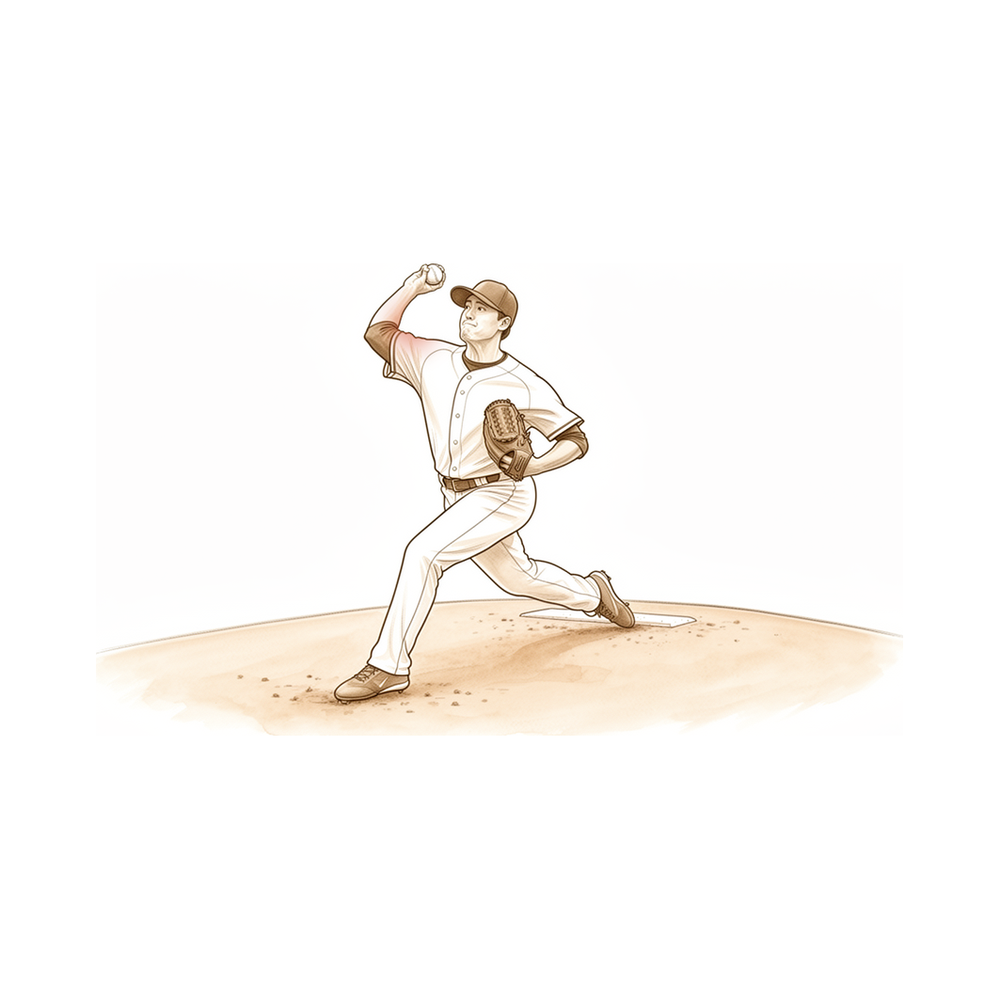
Un lanzador de béisbol en la fase final del movimiento de lanzamiento; el dolor se localiza en la parte interna del codo.
Lesión del ligamento colateral ulnar (ligamento de Tommy John): el estrés valgo repetitivo durante el lanzamiento tensa el ligamento situado en la cara interna del codo. Kieran Hirpara 4.0

Esta página se tradujo automáticamente y todavía no la ha revisado un médico. La versión en inglés es la versión oficial.

Qué está sintiendo

Si practica lanzamientos frecuentes (en béisbol, lanzamiento de jabalina o cualquier deporte que requiera lanzamientos fuertes por encima de la cabeza), es posible que note un dolor o molestia en la cara interna del codo. Este dolor suele aparecer justo en el momento de mayor esfuerzo, antes de que el brazo se mueva hacia adelante para lanzar. Muchos lanzadores lo describen como una sensación de dolor profundo y persistente justo sobre el bulto óseo situado en la parte interna del codo.

Otro indicio común es que su forma de lanzar cambia: pierde algo de velocidad, sus lanzamientos pierden la precisión o la potencia habituales, o simplemente no puede lanzar con la misma fuerza o durante tanto tiempo como antes. En ocasiones el dolor se va intensificando gradualmente a lo largo de una temporada; en otras, un solo lanzamiento provoca un dolor agudo o un “chasquido”, y el codo de repente se siente inestable o incapaz de funcionar.

Algunas personas también notan hormigueo, entumecimiento o sensación de pinchazos que se extienden hacia el dedo anular y el meñique. Esto ocurre porque un nervio pasa justo detrás de la parte interna del codo, y la inflamación o inestabilidad en esa zona puede irritarlo.

¿Qué está ocurriendo realmente?

Una fuerte banda de tejido llamada ligamento colateral ulnar (LCU) se encuentra en la cara interna del codo. Su función es impedir que el codo se abra por ese lado cuando una fuerza lo empuja en esa dirección; este movimiento se denomina valgo. Los lanzamientos ejercen una presión enorme y repetida precisamente sobre este ligamento. Cada lanzamiento fuerte lo estira un poco, y tras miles de lanzamientos el ligamento puede irse desgastando, adelgazando y debilitando progresivamente. En casos menos frecuentes, un solo lanzamiento violento puede desgarrarlo.

Cuando el LCU se daña, ya no puede mantener el codo firme; por eso, bajo la carga de los lanzamientos, la articulación queda ligeramente inestable. Esa inestabilidad es la que provoca el dolor, la pérdida de velocidad y precisión en los lanzamientos, e incluso, en ocasiones, síntomas neurológicos. Esta es la misma lesión conocida como «Tommy John», nombre que proviene del primer lanzador de béisbol al que se le realizó una reconstrucción quirúrgica y que pudo volver a lanzar.

Cabe destacar que se trata, en su gran mayoría, de una lesión propia de atletas que realizan lanzamientos repetidos. En personas que no realizan lanzamientos sobre la cabeza de forma frecuente, un LCU dañado rara vez genera problemas en la vida cotidiana, ya que las actividades habituales no someten al ligamento a la misma carga que el lanzamiento.

¿Qué podemos hacer al respecto?

En nuestra clínica, el Dr. Kieran Hirpara guía su tratamiento desde la primera derivación hasta la elaboración de un plan terapéutico personalizado. Comenzamos con una evaluación exhaustiva para comprender la gravedad de su lesión y sus objetivos. En casos crónicos, normalmente probamos primero tratamientos no quirúrgicos y solo consideramos la cirugía si estos no resultan suficientemente eficaces.

El tratamiento adecuado depende del grado de daño en el ligamento, así como de si usted necesita volver a lanzar a nivel competitivo.

Para desgarros parciales o de bajo grado, y para quienes no necesitan lanzar en competiciones, lo primero es el tratamiento no quirúrgico. Esto implica un período de reposo respecto al lanzamiento, seguido de un programa de rehabilitación estructurado que fortalece el antebrazo, el hombro y el tronco, corrige la mecánica del lanzamiento y le permite retomar gradualmente el lanzamiento mediante un “programa de lanzamiento” bien planificado. En ocasiones se administran inyecciones de sustancias como el plasma rico en plaquetas (PRP) para favorecer la cicatrización; sin embargo, la evidencia sobre su eficacia sigue siendo incierta.

La cirugía se contempla cuando el ligamento está completamente roto, o cuando una rehabilitación adecuada no ha permitido a un lanzador de alto nivel volver a competir. Existen dos procedimientos principales:

  • Reconstrucción del UCL (“cirugía Tommy John”). Se reconstruye el ligamento dañado mediante un injerto tendinoso, generalmente extraído del propio antebrazo o pierna del paciente, que se introduce a través de pequeños túneles óseos para crear un ligamento nuevo y resistente. Este es el procedimiento consolidado y comprobado para lanzadores.
  • Reparación del UCL con soporte interno. En atletas jóvenes seleccionados cuyo ligamento se ha desprendido limpiamente de un extremo del hueso (en lugar de estar desgarrado en toda su extensión), el cirujano puede suturar el ligamento y reforzarlo con una cinta resistente. Este método suele permitir una recuperación más rápida para el lanzamiento y se reserva para ciertos tipos de lesiones.

En ambos procedimientos, el cirujano también examina el nervio situado en la cara interna del codo y lo protege o desplaza si se encuentra irritado.

Qué esperar

En la mayoría de los lanzadores que se someten a cirugía, el pronóstico es realmente bueno: la gran mayoría vuelven a su nivel previo de lanzamiento, aunque ello requiere paciencia. La reconstrucción (técnica Tommy John) suele implicar una recuperación gradual durante aproximadamente un año o más antes de poder volver a lanzar a nivel competitivo; en cambio, en pacientes adecuados, la reparación con soporte interno puede acelerar este proceso. En cualquier caso, la recuperación depende de un programa de rehabilitación prolongado y estructurado, no únicamente de la operación; apresurarse a volver a la actividad es la principal causa de contratiempos.

No se puede garantizar que todos los pacientes logren una recuperación total: un pequeño número de atletas no vuelven al mismo nivel, y en ocasiones los síntomas neurológicos o el injerto requieren atención continua. No obstante, con un diagnóstico preciso, la elección adecuada del tratamiento y una rehabilitación constante, los resultados para esta lesión se encuentran entre los más satisfactorios en la cirugía deportiva.

Cuándo consultar a un especialista

  • Dolor en la parte interna del codo al lanzar, especialmente si persiste o empeora a lo largo de una temporada.
  • Una disminución en la velocidad, precisión o resistencia al lanzar que no mejora con el descanso.
  • Un "chasquido" repentino o dolor agudo en la parte interna del codo durante un lanzamiento, seguido de sensación de debilidad o inestabilidad en el brazo.
  • Entumecimiento, hormigueo o debilidad en el dedo anular y el meñique.
  • Dolor en la parte interna del codo en lanzadores jóvenes o en fase de crecimiento: el cartílago de crecimiento de un niño puede lesionarse por la misma carga del lanzamiento, por lo que requiere una evaluación inmediata.

En mayor profundidad

Esta sección profundiza más de lo necesario para que usted tome sus propias decisiones de tratamiento. La lesión del ligamento colateral cubital merece una lectura adicional, ya que la intervención quirúrgica conocida por todos: la cirugía de Tommy John — ya no es la única opción viable; la nueva alternativa exige un “precio” distinto: no el resultado clínico, sino el tiempo.

La reconstrucción es el procedimiento establecido, y sus resultados son consistentes

La reconstrucción consiste en sustituir el ligamento roto mediante un injerto tendinoso, generalmente del tendón palmar mayor extraído del antebrazo del propio paciente. En un total de 6,671 pacientes, la mayoría de los cirujanos emplearon un injerto autólogo del tendón palmar mayor dispuesto en configuración en forma de ocho, siguiendo la técnica modificada de Jobe. Asimismo, la tasa de revisiones con injerto alogénico pareció ser mayor que con el injerto autólogo; no obstante, los autores señalan que esto podría deberse a la menor cantidad de estudios publicados sobre injertos alogénicos, más que a una diferencia real [1].

En el seguimiento a mediano plazo de 1,104 pacientes, la reconstrucción arrojó buenos resultados clínicos y percibidos por los pacientes, con bajas tasas de complicaciones y revisiones. Los jugadores de béisbol reportaron altas tasas de retorno al juego a niveles previos a la lesión, así como una larga trayectoria deportiva [2]. Las tasas de retorno al juego se sitúan entre el 80% y el 90%, y la mayoría de los atletas vuelven a competir plenamente a los 12 a 18 meses [3].

La alternativa es más rápida, y ese es el único argumento a favor

Cuando el ligamento se ha desprendido por un extremo y el tejido en sí presenta buena calidad, es posible repararlo en lugar de reemplazarlo; cada vez con mayor frecuencia se utiliza un refuerzo interno para potenciar dicha reparación.

La diferencia radica en el tiempo necesario para la recuperación. La reparación reforzada permite el regreso al deporte en un promedio de 6 meses, con altas tasas de retorno a la práctica deportiva en pacientes debidamente seleccionados, frente a los 12 a 18 meses que requiere la reconstrucción [4]. Una revisión publicada en 2025 señala que la reparación está ganando popularidad, siendo considerada segura y eficaz, con bajas tasas de complicaciones y altas tasas de retorno al deporte [5].

Para un atleta de secundaria o universitario con un periodo competitivo definido, reducir a la mitad el tiempo de inactividad no es un detalle menor; puede marcar la diferencia entre perder una temporada o ver alterada su carrera deportiva. No obstante, la expresión “pacientes debidamente seleccionados” tiene gran importancia en esa frase: la reparación solo es viable cuando el patrón de desprendimiento permite contar con un ligamento sano restante; esto ocurre en una minoría de lesiones y se determina mediante estudios de imagen y hallazgos intraoperatorios, no por preferencia del paciente.

No todas las roturas requieren cirugía

El tratamiento depende del tipo de rotura. Las roturas parciales de bajo grado se tratan de forma no quirúrgica, mientras que la reconstrucción se considera el tratamiento estándar para las roturas completas [3]. El ligamento soporta la carga casi exclusivamente debido al estrés valgo que se produce al lanzar por encima de la cabeza; por eso una rotura parcial puede ser compatible con las actividades cotidianas durante mucho tiempo, manifestándose únicamente cuando se vuelve a lanzar.

La revisión no reproduce el primer resultado

Si una reconstrucción fracasa, las expectativas respecto a una segunda intervención deben ser más moderadas. La reconstrucción de revisión es un procedimiento poco frecuente cuyos resultados no son tan prometedores como en la reconstrucción primaria; en este caso, el diagnóstico, la técnica quirúrgica y la rehabilitación resultan más complejos [6].

Esa disparidad constituye el argumento más contundente para llevar a cabo correctamente la primera operación y su posterior rehabilitación, incluyendo la finalización de un programa de rehabilitación que, para un ligamento ya reemplazado, parece excesivamente prolongado. El injerto debe remodelarse hasta convertirse en un ligamento, y ese proceso obedece a ritmos biológicos, no a cómo se sienta el codo.

Referencias

[1] Hones KM, Simcox T, Hao KA, Portnoff B, Buchanan TR, Kamarajugadda S, et al. Elección del injerto y técnicas utilizadas en la reconstrucción del ligamento colateral ulnar del codo durante los últimos 20 años: una revisión sistemática. J Shoulder Elbow Surg. 2024;33(5):1185-99. https://doi.org/10.1016/j.jse.2023.10.023

[2] Davey MS, Hurley ET, Gaafar M, Galbraith JG, Mullett H, Pauzenberger L. La reconstrucción del ligamento colateral ulnar del codo, con un seguimiento promedio mínimo de 48 meses, muestra altas tasas de retorno a la actividad deportiva y bajas tasas de complicaciones. J ISAKOS. 2021;6(5):290-4. https://doi.org/10.1136/jisakos-2021-000614

[3] Carr JB, Camp CL, Dines JS. Lesiones del ligamento colateral ulnar del codo: indicaciones, tratamiento y resultados. Arthroscopy. 2020;36(5):1221-2. https://doi.org/10.1016/j.arthro.2020.02.022

[4] Spears TM, Luchinni P, Camp CL, Bowman EN. Conceptos actuales sobre el tratamiento quirúrgico de las lesiones del ligamento colateral ulnar medial del codo. J Am Acad Orthop Surg. 2024;33(13):703-10. https://doi.org/10.5435/JAAOS-D-24-00839

[5] Puga TB, Box MW, Pautler B, Perleberg T, Poffenbarger M, Riehl JT. Reparación del ligamento colateral ulnar del codo: una revisión sistemática de tendencias y resultados. JSES Rev Rep Tech. 2025;5(4):960-7. https://doi.org/10.1016/j.xrrt.2025.05.020

[6] Bruce JR, ElAttrache NS, Andrews JR. Reconstrucción del ligamento colateral ulnar en casos de cirugía de revisión. J Am Acad Orthop Surg. 2018;26(11):377-85. https://doi.org/10.5435/JAAOS-D-16-00341


Creative Commons BY-NC 4.0

CC Creative Commons licence
BY Attribution — you must credit the source
NC NonCommercial — not for commercial use

Attribution-NonCommercial 4.0 International


Creative Commons Corporation ("Creative Commons") is not a law firm and does not provide legal services or legal advice. Distribution of Creative Commons public licenses does not create a lawyer-client or other relationship. Creative Commons makes its licenses and related information available on an "as-is" basis. Creative Commons gives no warranties regarding its licenses, any material licensed under their terms and conditions, or any related information. Creative Commons disclaims all liability for damages resulting from their use to the fullest extent possible.

Using Creative Commons Public Licenses

Creative Commons public licenses provide a standard set of terms and conditions that creators and other rights holders may use to share original works of authorship and other material subject to copyright and certain other rights specified in the public license below. The following considerations are for informational purposes only, are not exhaustive, and do not form part of our licenses.

Considerations for licensors: Our public licenses are intended for use by those authorized to give the public permission to use material in ways otherwise restricted by copyright and certain other rights. Our licenses are irrevocable. Licensors should read and understand the terms and conditions of the license they choose before applying it. Licensors should also secure all rights necessary before applying our licenses so that the public can reuse the material as expected. Licensors should clearly mark any material not subject to the license. This includes other CC- licensed material, or material used under an exception or limitation to copyright. More considerations for licensors: wiki.creativecommons.org/Considerations_for_licensors

Considerations for the public: By using one of our public licenses, a licensor grants the public permission to use the licensed material under specified terms and conditions. If the licensor's permission is not necessary for any reason--for example, because of any applicable exception or limitation to copyright--then that use is not regulated by the license. Our licenses grant only permissions under copyright and certain other rights that a licensor has authority to grant. Use of the licensed material may still be restricted for other reasons, including because others have copyright or other rights in the material. A licensor may make special requests, such as asking that all changes be marked or described. Although not required by our licenses, you are encouraged to respect those requests where reasonable. More considerations for the public: wiki.creativecommons.org/Considerations_for_licensees


Creative Commons Attribution-NonCommercial 4.0 International Public License

By exercising the Licensed Rights (defined below), You accept and agree to be bound by the terms and conditions of this Creative Commons Attribution-NonCommercial 4.0 International Public License ("Public License"). To the extent this Public License may be interpreted as a contract, You are granted the Licensed Rights in consideration of Your acceptance of these terms and conditions, and the Licensor grants You such rights in consideration of benefits the Licensor receives from making the Licensed Material available under these terms and conditions.

Section 1 -- Definitions.

a. Adapted Material means material subject to Copyright and Similar Rights that is derived from or based upon the Licensed Material and in which the Licensed Material is translated, altered, arranged, transformed, or otherwise modified in a manner requiring permission under the Copyright and Similar Rights held by the Licensor. For purposes of this Public License, where the Licensed Material is a musical work, performance, or sound recording, Adapted Material is always produced where the Licensed Material is synched in timed relation with a moving image.

b. Adapter's License means the license You apply to Your Copyright and Similar Rights in Your contributions to Adapted Material in accordance with the terms and conditions of this Public License.

c. Copyright and Similar Rights means copyright and/or similar rights closely related to copyright including, without limitation, performance, broadcast, sound recording, and Sui Generis Database Rights, without regard to how the rights are labeled or categorized. For purposes of this Public License, the rights specified in Section 2(b)(1)-(2) are not Copyright and Similar Rights.

d. Effective Technological Measures means those measures that, in the absence of proper authority, may not be circumvented under laws fulfilling obligations under Article 11 of the WIPO Copyright Treaty adopted on December 20, 1996, and/or similar international agreements.

e. Exceptions and Limitations means fair use, fair dealing, and/or any other exception or limitation to Copyright and Similar Rights that applies to Your use of the Licensed Material.

f. Licensed Material means the artistic or literary work, database, or other material to which the Licensor applied this Public License.

g. Licensed Rights means the rights granted to You subject to the terms and conditions of this Public License, which are limited to all Copyright and Similar Rights that apply to Your use of the Licensed Material and that the Licensor has authority to license.

h. Licensor means the individual(s) or entity(ies) granting rights under this Public License.

i. NonCommercial means not primarily intended for or directed towards commercial advantage or monetary compensation. For purposes of this Public License, the exchange of the Licensed Material for other material subject to Copyright and Similar Rights by digital file-sharing or similar means is NonCommercial provided there is no payment of monetary compensation in connection with the exchange.

j. Share means to provide material to the public by any means or process that requires permission under the Licensed Rights, such as reproduction, public display, public performance, distribution, dissemination, communication, or importation, and to make material available to the public including in ways that members of the public may access the material from a place and at a time individually chosen by them.

k. Sui Generis Database Rights means rights other than copyright resulting from Directive 96/9/EC of the European Parliament and of the Council of 11 March 1996 on the legal protection of databases, as amended and/or succeeded, as well as other essentially equivalent rights anywhere in the world.

l. You means the individual or entity exercising the Licensed Rights under this Public License. Your has a corresponding meaning.

Section 2 -- Scope.

a. License grant.

1. Subject to the terms and conditions of this Public License, the Licensor hereby grants You a worldwide, royalty-free, non-sublicensable, non-exclusive, irrevocable license to exercise the Licensed Rights in the Licensed Material to:

a. reproduce and Share the Licensed Material, in whole or in part, for NonCommercial purposes only; and

b. produce, reproduce, and Share Adapted Material for NonCommercial purposes only.

2. Exceptions and Limitations. For the avoidance of doubt, where Exceptions and Limitations apply to Your use, this Public License does not apply, and You do not need to comply with its terms and conditions.

3. Term. The term of this Public License is specified in Section 6(a).

4. Media and formats; technical modifications allowed. The Licensor authorizes You to exercise the Licensed Rights in all media and formats whether now known or hereafter created, and to make technical modifications necessary to do so. The Licensor waives and/or agrees not to assert any right or authority to forbid You from making technical modifications necessary to exercise the Licensed Rights, including technical modifications necessary to circumvent Effective Technological Measures. For purposes of this Public License, simply making modifications authorized by this Section 2(a) (4) never produces Adapted Material.

5. Downstream recipients.

a. Offer from the Licensor -- Licensed Material. Every recipient of the Licensed Material automatically receives an offer from the Licensor to exercise the Licensed Rights under the terms and conditions of this Public License.

b. No downstream restrictions. You may not offer or impose any additional or different terms or conditions on, or apply any Effective Technological Measures to, the Licensed Material if doing so restricts exercise of the Licensed Rights by any recipient of the Licensed Material.

6. No endorsement. Nothing in this Public License constitutes or may be construed as permission to assert or imply that You are, or that Your use of the Licensed Material is, connected with, or sponsored, endorsed, or granted official status by, the Licensor or others designated to receive attribution as provided in Section 3(a)(1)(A)(i).

b. Other rights.

1. Moral rights, such as the right of integrity, are not licensed under this Public License, nor are publicity, privacy, and/or other similar personality rights; however, to the extent possible, the Licensor waives and/or agrees not to assert any such rights held by the Licensor to the limited extent necessary to allow You to exercise the Licensed Rights, but not otherwise.

2. Patent and trademark rights are not licensed under this Public License.

3. To the extent possible, the Licensor waives any right to collect royalties from You for the exercise of the Licensed Rights, whether directly or through a collecting society under any voluntary or waivable statutory or compulsory licensing scheme. In all other cases the Licensor expressly reserves any right to collect such royalties, including when the Licensed Material is used other than for NonCommercial purposes.

Section 3 -- License Conditions.

Your exercise of the Licensed Rights is expressly made subject to the following conditions.

a. Attribution.

1. If You Share the Licensed Material (including in modified form), You must:

a. retain the following if it is supplied by the Licensor with the Licensed Material:

i. identification of the creator(s) of the Licensed Material and any others designated to receive attribution, in any reasonable manner requested by the Licensor (including by pseudonym if designated);

ii. a copyright notice;

iii. a notice that refers to this Public License;

iv. a notice that refers to the disclaimer of warranties;

v. a URI or hyperlink to the Licensed Material to the extent reasonably practicable;

b. indicate if You modified the Licensed Material and retain an indication of any previous modifications; and

c. indicate the Licensed Material is licensed under this Public License, and include the text of, or the URI or hyperlink to, this Public License.

2. You may satisfy the conditions in Section 3(a)(1) in any reasonable manner based on the medium, means, and context in which You Share the Licensed Material. For example, it may be reasonable to satisfy the conditions by providing a URI or hyperlink to a resource that includes the required information.

3. If requested by the Licensor, You must remove any of the information required by Section 3(a)(1)(A) to the extent reasonably practicable.

4. If You Share Adapted Material You produce, the Adapter's License You apply must not prevent recipients of the Adapted Material from complying with this Public License.

Section 4 -- Sui Generis Database Rights.

Where the Licensed Rights include Sui Generis Database Rights that apply to Your use of the Licensed Material:

a. for the avoidance of doubt, Section 2(a)(1) grants You the right to extract, reuse, reproduce, and Share all or a substantial portion of the contents of the database for NonCommercial purposes only;

b. if You include all or a substantial portion of the database contents in a database in which You have Sui Generis Database Rights, then the database in which You have Sui Generis Database Rights (but not its individual contents) is Adapted Material; and

c. You must comply with the conditions in Section 3(a) if You Share all or a substantial portion of the contents of the database.

For the avoidance of doubt, this Section 4 supplements and does not replace Your obligations under this Public License where the Licensed Rights include other Copyright and Similar Rights.

Section 5 -- Disclaimer of Warranties and Limitation of Liability.

a. UNLESS OTHERWISE SEPARATELY UNDERTAKEN BY THE LICENSOR, TO THE EXTENT POSSIBLE, THE LICENSOR OFFERS THE LICENSED MATERIAL AS-IS AND AS-AVAILABLE, AND MAKES NO REPRESENTATIONS OR WARRANTIES OF ANY KIND CONCERNING THE LICENSED MATERIAL, WHETHER EXPRESS, IMPLIED, STATUTORY, OR OTHER. THIS INCLUDES, WITHOUT LIMITATION, WARRANTIES OF TITLE, MERCHANTABILITY, FITNESS FOR A PARTICULAR PURPOSE, NON-INFRINGEMENT, ABSENCE OF LATENT OR OTHER DEFECTS, ACCURACY, OR THE PRESENCE OR ABSENCE OF ERRORS, WHETHER OR NOT KNOWN OR DISCOVERABLE. WHERE DISCLAIMERS OF WARRANTIES ARE NOT ALLOWED IN FULL OR IN PART, THIS DISCLAIMER MAY NOT APPLY TO YOU.

b. TO THE EXTENT POSSIBLE, IN NO EVENT WILL THE LICENSOR BE LIABLE TO YOU ON ANY LEGAL THEORY (INCLUDING, WITHOUT LIMITATION, NEGLIGENCE) OR OTHERWISE FOR ANY DIRECT, SPECIAL, INDIRECT, INCIDENTAL, CONSEQUENTIAL, PUNITIVE, EXEMPLARY, OR OTHER LOSSES, COSTS, EXPENSES, OR DAMAGES ARISING OUT OF THIS PUBLIC LICENSE OR USE OF THE LICENSED MATERIAL, EVEN IF THE LICENSOR HAS BEEN ADVISED OF THE POSSIBILITY OF SUCH LOSSES, COSTS, EXPENSES, OR DAMAGES. WHERE A LIMITATION OF LIABILITY IS NOT ALLOWED IN FULL OR IN PART, THIS LIMITATION MAY NOT APPLY TO YOU.

c. The disclaimer of warranties and limitation of liability provided above shall be interpreted in a manner that, to the extent possible, most closely approximates an absolute disclaimer and waiver of all liability.

Section 6 -- Term and Termination.

a. This Public License applies for the term of the Copyright and Similar Rights licensed here. However, if You fail to comply with this Public License, then Your rights under this Public License terminate automatically.

b. Where Your right to use the Licensed Material has terminated under Section 6(a), it reinstates:

1. automatically as of the date the violation is cured, provided it is cured within 30 days of Your discovery of the violation; or

2. upon express reinstatement by the Licensor.

For the avoidance of doubt, this Section 6(b) does not affect any right the Licensor may have to seek remedies for Your violations of this Public License.

c. For the avoidance of doubt, the Licensor may also offer the Licensed Material under separate terms or conditions or stop distributing the Licensed Material at any time; however, doing so will not terminate this Public License.

d. Sections 1, 5, 6, 7, and 8 survive termination of this Public License.

Section 7 -- Other Terms and Conditions.

a. The Licensor shall not be bound by any additional or different terms or conditions communicated by You unless expressly agreed.

b. Any arrangements, understandings, or agreements regarding the Licensed Material not stated herein are separate from and independent of the terms and conditions of this Public License.

Section 8 -- Interpretation.

a. For the avoidance of doubt, this Public License does not, and shall not be interpreted to, reduce, limit, restrict, or impose conditions on any use of the Licensed Material that could lawfully be made without permission under this Public License.

b. To the extent possible, if any provision of this Public License is deemed unenforceable, it shall be automatically reformed to the minimum extent necessary to make it enforceable. If the provision cannot be reformed, it shall be severed from this Public License without affecting the enforceability of the remaining terms and conditions.

c. No term or condition of this Public License will be waived and no failure to comply consented to unless expressly agreed to by the Licensor.

d. Nothing in this Public License constitutes or may be interpreted as a limitation upon, or waiver of, any privileges and immunities that apply to the Licensor or You, including from the legal processes of any jurisdiction or authority.


Creative Commons is not a party to its public licenses. Notwithstanding, Creative Commons may elect to apply one of its public licenses to material it publishes and in those instances will be considered the “Licensor.” The text of the Creative Commons public licenses is dedicated to the public domain under the CC0 Public Domain Dedication. Except for the limited purpose of indicating that material is shared under a Creative Commons public license or as otherwise permitted by the Creative Commons policies published at creativecommons.org/policies, Creative Commons does not authorize the use of the trademark "Creative Commons" or any other trademark or logo of Creative Commons without its prior written consent including, without limitation, in connection with any unauthorized modifications to any of its public licenses or any other arrangements, understandings, or agreements concerning use of licensed material. For the avoidance of doubt, this paragraph does not form part of the public licenses.

Creative Commons may be contacted at creativecommons.org.