Skip to content

Patients › Recovery

Su bloqueo nervioso del hombro

El bloqueo nervioso que utilizamos para la cirugía del hombro: cómo adormece el brazo, por qué controla el dolor tan eficazmente y qué se puede esperar cuando el efecto comienza a desaparecer.
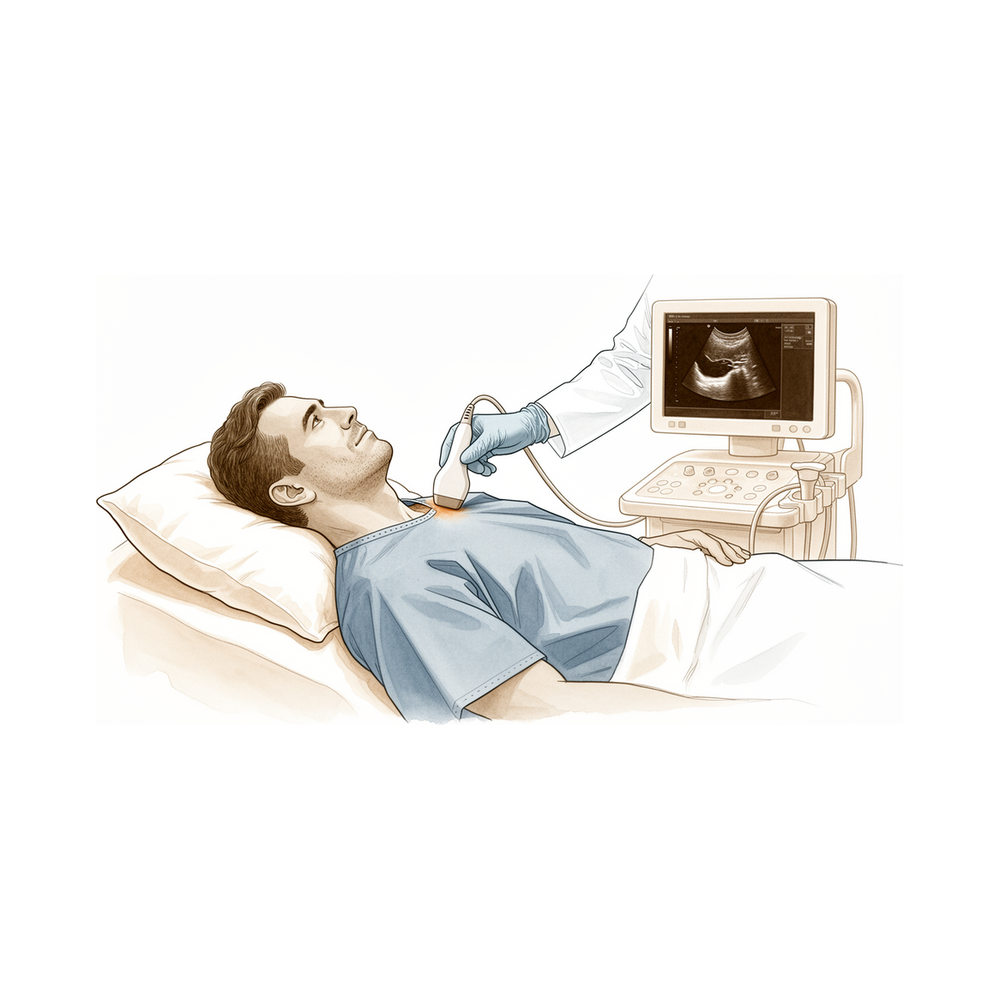
Ilustración de un anestesista utilizando una sonda de ultrasonido junto al cuello relajado del paciente, justo por encima de la clavícula, para realizar un bloqueo nervioso.
Un bloqueo guiado por ultrasonido: se administra anestésico local alrededor de los nervios situados justo por encima de la clavícula, lo que adormece todo el brazo durante varias horas. Kieran Hirpara 4.0

Esta página se tradujo automáticamente y todavía no la ha revisado un médico. La versión en inglés es la versión oficial.

Casi todas las intervenciones quirúrgicas en el hombro se realizan con un bloqueo nervioso, además de una anestesia general leve. Este bloqueo es el método más eficaz que tenemos para garantizar su comodidad después de la cirugía; por ello, merece la pena comprender qué se va a hacer para que nada le resulte sorprendente.

¿Qué es un bloqueo nervioso?

Todos los nervios que inervan el brazo pasan por un grupo compacto justo por encima de la clavícula. Mediante el uso de un ecógrafo para localizar con precisión su posición, el anestesista aplica una pequeña cantidad de anestésico local alrededor de dicho grupo nervioso. Esto se conoce como bloqueo supraclavicular. Este procedimiento interrumpe las señales de dolor provenientes de todo el brazo durante varias horas, tiempo suficiente para cubrir la duración de la operación y la primera fase de la recuperación, cuando el dolor suele ser más intenso.

Usted no estará despierto durante la intervención. Por lo general, se administra un anestésico general de acción leve además del bloqueo, de modo que usted duerma durante toda la cirugía. El bloqueo nervioso se encarga de aliviar el dolor, mientras que el anestésico general le permite permanecer dormido cómodamente.

¿Por qué lo utilizamos para su hombro?

Un buen bloqueo nervioso aporta muchos más beneficios que simplemente adormecer la zona con una aguja:

  • Controla el dolor mejor que los comprimidos o que la anestesia general por sí sola.
    En estudio tras estudio, los pacientes sometidos a un bloqueo del plexo braquial presentan puntuaciones de dolor más bajas en las primeras horas tras la cirugía de hombro y necesitan mucha menos cantidad de analgésicos potentes. Una revisión que agrupó 36 ensayos independientes y más de 3.000 pacientes sometidos a cirugía artroscópica de hombro concluyó que este tipo de bloqueos del plexo braquial reducen tanto las puntuaciones de dolor como la cantidad de opioides potentes que se requieren posteriormente.
  • Nos permite administrar una anestesia general más ligera.
    Dado que el bloqueo nervioso se encarga de controlar el dolor, usted suele despertar con mayor claridad mental, con menos somnolencia y menos náuseas.
  • Disminuye la cantidad de opioides (analgésicos potentes) que necesita.
    Esto implica menos efectos secundarios (menos estreñimiento, somnolencia y náuseas) y una recuperación inicial más fluida.
  • Le permite sentirse cómodo, moverse y volver a casa antes.

Qué se siente

Unos 20–30 minutos después de la inyección, el brazo se vuelve pesado, cálido, entumecido y débil. No podrá levantarlo ni sentir gran cosa en él; es posible que tampoco pueda mover los dedos. Esto es exactamente lo que se pretende lograr. El entumecimiento suele durar entre 8 y 18 horas; en ocasiones, hasta un día. Es completamente temporal: la sensibilidad y la movilidad siempre vuelven.

¿Por qué se usa un cabestrillo?

Mientras el bloqueo nervioso actúa, el brazo queda entumecido y carece de fuerza propia. El cabestrillo sirve para sostenerlo y protegerlo, evitando que se balancee, cuelgue o sufra golpes; además, impide que usted se apoye o se vuelque sobre un brazo del cual no siente nada. Mantenga el brazo bien sujeto en el cabestrillo, manténgalo abrigado y no permita que cuelgue. Considérelo como el cuidado que se le brinda a una extremidad que aún no puede cuidarse por sí misma.

Cosas que podría notar (son normales)

Dado que los nervios que adormecemos se encuentran cerca de otros nervios en el cuello, es posible que note algunos efectos temporales y benignos en ese lado:

  • un párpado caído o pesado; a veces, el ojo queda ligeramente inyectado en sangre
  • voz un poco ronca o sensación de congestión nasal
  • la impresión de no poder respirar profundamente (el bloqueo puede silenciar brevemente el nervio que controla el músculo situado bajo el pulmón de ese lado)

El método supraclavicular que empleamos se elige, en parte, porque suele provocar estos efectos con menos frecuencia que los bloqueos realizados más arriba en el cuello. Todos estos síntomas desaparecen a medida que el efecto del bloqueo se disipa, y no requieren tratamiento alguno.

Cuando el efecto del bloqueo anestésico desaparezca: tome sus pastillas con anticipación

Esta es la parte más importante que debe hacerse correctamente.

El bloqueo anestésico funciona de maravilla durante las primeras 8–18 horas; después, la sensibilidad vuelve, a menudo durante la noche. En ese momento, el dolor puede aparecer de forma repentina. Esto se conoce como dolor de rebote, y suele tomar por sorpresa a los pacientes, ya que antes se sentían muy cómodos.

El truco es sencillo: no espere a que aparezca el dolor. Tome los analgésicos recetados antes de que el brazo recupere por completo la sensibilidad. Le indicaremos aproximadamente cuándo ocurrirá eso, y deberá seguir tomando las pastillas regularmente durante los primeros días, incluso mientras el brazo siga adormecido. Los pacientes que actúan con anticipación disfrutan de una primera noche mucho más tranquila. En cambio, quienes esperan a que el dolor aparezca pasan unas horas muy incómodas intentando controlarlo.

Llámenos o busque ayuda si:

  • le resulta realmente difícil respirar o si la dificultad aumenta (es normal sentir ligeramente que los pulmones no se llenan por completo; pero si la respiración se vuelve realmente trabajosa, debe ser evaluado)
  • su brazo permanece totalmente entumecido y flácido después de aproximadamente 24–30 horas
  • sus dedos se vuelven blancos, fríos o azulados, o si experimenta dolor torácico

En caso de dolor transitorio normal a medida que el efecto del bloqueo anestésico disminuye, tome sus medicamentos y mantenga el dolor bajo control; este suele desaparecer en uno o dos días.


Evidence & references

This is the clinical evidence summary written for health professionals. It is technical, and it lists the research this page was built from. You do not need to read it to understand your treatment or to make a decision about it.

Key Evidence

Brachial plexus blocks reduce pain and opioid use after shoulder surgery. Regional anaesthesia is the cornerstone of modern shoulder-surgery analgesia. A current review of regional techniques for shoulder surgery describes the supraclavicular brachial plexus block as an effective approach that provides dense analgesia of the arm while producing fewer of the unwanted neck-related effects (hoarseness, Horner's syndrome, diaphragm involvement) seen with higher interscalene blocks [1]. Across the broader literature, peripheral nerve blocks consistently lower early post-operative pain scores and reduce opioid consumption compared with general anaesthesia or local infiltration alone [2,3,5].

The benefit is largest in the first hours and translates into better recovery quality. A systematic review and meta-analysis in Anesthesiology found brachial plexus and suprascapular blocks deliver clinically meaningful analgesia for shoulder surgery, supporting their routine use [2]. A focused review of regional blocks for arthroscopic rotator cuff repair reached the same conclusion: blocks improve early pain control and reduce rescue-opioid requirements [3]. Longer-acting block formulations further extend the pain-free window after shoulder replacement [4].

Rebound pain is real and is best managed by pre-emptive oral analgesia. Because a single-shot block wears off after roughly 8–18 hours, patients can experience a sharp surge of pain as sensation returns — usually overnight. A two-centre randomised controlled trial and the wider rebound-pain literature emphasise that patient education and starting regular analgesia before the block resolves are central to a smooth recovery [6]. This is why patients are advised to begin their prescribed pain tablets early rather than waiting for pain to arrive.

References

  1. Zhang LL, Sinha SK, Murthi AM. Current Strategies in Regional Anesthesia for Shoulder Surgery. J Am Acad Orthop Surg. 2025;33(14):761-9. doi:10.5435/JAAOS-D-24-00738
  2. Hussain N, Goldar G, Ragina N, et al. Suprascapular and Interscalene Nerve Block for Shoulder Surgery: A Systematic Review and Meta-analysis. Anesthesiology. 2017;127(6):998-1013. doi:10.1097/ALN.0000000000001894
  3. Kim TY, Hwang JT. Regional nerve blocks for relieving postoperative pain in arthroscopic rotator cuff repair. Clin Shoulder Elb. 2022;25(4):339-46. doi:10.5397/cise.2022.01263
  4. Finkel KJ, Walker A, Maffeo-Mitchell CL, et al. Liposomal bupivacaine provides superior pain control compared to bupivacaine with adjuvants in interscalene block for total shoulder replacement: a prospective double-blinded, randomized controlled trial. J Shoulder Elbow Surg. 2024;33(7):1512-20. doi:10.1016/j.jse.2023.12.014
  5. Liu Z, Li YB, Wang JH, et al. Efficacy and adverse effects of peripheral nerve blocks and local infiltration anesthesia after arthroscopic shoulder surgery: A Bayesian network meta-analysis. Front Med (Lausanne). 2022;9:1032253. doi:10.3389/fmed.2022.1032253
  6. Uppal V, Barry G, Ke JXC, et al. Reducing rebound pain severity after arthroscopic shoulder surgery under general anesthesia and interscalene block: a two-centre randomized controlled trial of pre-emptive opioid treatment compared with placebo. Can J Anaesth. 2024;71(6):773-83. doi:10.1007/s12630-023-02594-0

Creative Commons BY-NC 4.0

CC Creative Commons licence
BY Attribution — you must credit the source
NC NonCommercial — not for commercial use

Attribution-NonCommercial 4.0 International


Creative Commons Corporation ("Creative Commons") is not a law firm and does not provide legal services or legal advice. Distribution of Creative Commons public licenses does not create a lawyer-client or other relationship. Creative Commons makes its licenses and related information available on an "as-is" basis. Creative Commons gives no warranties regarding its licenses, any material licensed under their terms and conditions, or any related information. Creative Commons disclaims all liability for damages resulting from their use to the fullest extent possible.

Using Creative Commons Public Licenses

Creative Commons public licenses provide a standard set of terms and conditions that creators and other rights holders may use to share original works of authorship and other material subject to copyright and certain other rights specified in the public license below. The following considerations are for informational purposes only, are not exhaustive, and do not form part of our licenses.

Considerations for licensors: Our public licenses are intended for use by those authorized to give the public permission to use material in ways otherwise restricted by copyright and certain other rights. Our licenses are irrevocable. Licensors should read and understand the terms and conditions of the license they choose before applying it. Licensors should also secure all rights necessary before applying our licenses so that the public can reuse the material as expected. Licensors should clearly mark any material not subject to the license. This includes other CC- licensed material, or material used under an exception or limitation to copyright. More considerations for licensors: wiki.creativecommons.org/Considerations_for_licensors

Considerations for the public: By using one of our public licenses, a licensor grants the public permission to use the licensed material under specified terms and conditions. If the licensor's permission is not necessary for any reason--for example, because of any applicable exception or limitation to copyright--then that use is not regulated by the license. Our licenses grant only permissions under copyright and certain other rights that a licensor has authority to grant. Use of the licensed material may still be restricted for other reasons, including because others have copyright or other rights in the material. A licensor may make special requests, such as asking that all changes be marked or described. Although not required by our licenses, you are encouraged to respect those requests where reasonable. More considerations for the public: wiki.creativecommons.org/Considerations_for_licensees


Creative Commons Attribution-NonCommercial 4.0 International Public License

By exercising the Licensed Rights (defined below), You accept and agree to be bound by the terms and conditions of this Creative Commons Attribution-NonCommercial 4.0 International Public License ("Public License"). To the extent this Public License may be interpreted as a contract, You are granted the Licensed Rights in consideration of Your acceptance of these terms and conditions, and the Licensor grants You such rights in consideration of benefits the Licensor receives from making the Licensed Material available under these terms and conditions.

Section 1 -- Definitions.

a. Adapted Material means material subject to Copyright and Similar Rights that is derived from or based upon the Licensed Material and in which the Licensed Material is translated, altered, arranged, transformed, or otherwise modified in a manner requiring permission under the Copyright and Similar Rights held by the Licensor. For purposes of this Public License, where the Licensed Material is a musical work, performance, or sound recording, Adapted Material is always produced where the Licensed Material is synched in timed relation with a moving image.

b. Adapter's License means the license You apply to Your Copyright and Similar Rights in Your contributions to Adapted Material in accordance with the terms and conditions of this Public License.

c. Copyright and Similar Rights means copyright and/or similar rights closely related to copyright including, without limitation, performance, broadcast, sound recording, and Sui Generis Database Rights, without regard to how the rights are labeled or categorized. For purposes of this Public License, the rights specified in Section 2(b)(1)-(2) are not Copyright and Similar Rights.

d. Effective Technological Measures means those measures that, in the absence of proper authority, may not be circumvented under laws fulfilling obligations under Article 11 of the WIPO Copyright Treaty adopted on December 20, 1996, and/or similar international agreements.

e. Exceptions and Limitations means fair use, fair dealing, and/or any other exception or limitation to Copyright and Similar Rights that applies to Your use of the Licensed Material.

f. Licensed Material means the artistic or literary work, database, or other material to which the Licensor applied this Public License.

g. Licensed Rights means the rights granted to You subject to the terms and conditions of this Public License, which are limited to all Copyright and Similar Rights that apply to Your use of the Licensed Material and that the Licensor has authority to license.

h. Licensor means the individual(s) or entity(ies) granting rights under this Public License.

i. NonCommercial means not primarily intended for or directed towards commercial advantage or monetary compensation. For purposes of this Public License, the exchange of the Licensed Material for other material subject to Copyright and Similar Rights by digital file-sharing or similar means is NonCommercial provided there is no payment of monetary compensation in connection with the exchange.

j. Share means to provide material to the public by any means or process that requires permission under the Licensed Rights, such as reproduction, public display, public performance, distribution, dissemination, communication, or importation, and to make material available to the public including in ways that members of the public may access the material from a place and at a time individually chosen by them.

k. Sui Generis Database Rights means rights other than copyright resulting from Directive 96/9/EC of the European Parliament and of the Council of 11 March 1996 on the legal protection of databases, as amended and/or succeeded, as well as other essentially equivalent rights anywhere in the world.

l. You means the individual or entity exercising the Licensed Rights under this Public License. Your has a corresponding meaning.

Section 2 -- Scope.

a. License grant.

1. Subject to the terms and conditions of this Public License, the Licensor hereby grants You a worldwide, royalty-free, non-sublicensable, non-exclusive, irrevocable license to exercise the Licensed Rights in the Licensed Material to:

a. reproduce and Share the Licensed Material, in whole or in part, for NonCommercial purposes only; and

b. produce, reproduce, and Share Adapted Material for NonCommercial purposes only.

2. Exceptions and Limitations. For the avoidance of doubt, where Exceptions and Limitations apply to Your use, this Public License does not apply, and You do not need to comply with its terms and conditions.

3. Term. The term of this Public License is specified in Section 6(a).

4. Media and formats; technical modifications allowed. The Licensor authorizes You to exercise the Licensed Rights in all media and formats whether now known or hereafter created, and to make technical modifications necessary to do so. The Licensor waives and/or agrees not to assert any right or authority to forbid You from making technical modifications necessary to exercise the Licensed Rights, including technical modifications necessary to circumvent Effective Technological Measures. For purposes of this Public License, simply making modifications authorized by this Section 2(a) (4) never produces Adapted Material.

5. Downstream recipients.

a. Offer from the Licensor -- Licensed Material. Every recipient of the Licensed Material automatically receives an offer from the Licensor to exercise the Licensed Rights under the terms and conditions of this Public License.

b. No downstream restrictions. You may not offer or impose any additional or different terms or conditions on, or apply any Effective Technological Measures to, the Licensed Material if doing so restricts exercise of the Licensed Rights by any recipient of the Licensed Material.

6. No endorsement. Nothing in this Public License constitutes or may be construed as permission to assert or imply that You are, or that Your use of the Licensed Material is, connected with, or sponsored, endorsed, or granted official status by, the Licensor or others designated to receive attribution as provided in Section 3(a)(1)(A)(i).

b. Other rights.

1. Moral rights, such as the right of integrity, are not licensed under this Public License, nor are publicity, privacy, and/or other similar personality rights; however, to the extent possible, the Licensor waives and/or agrees not to assert any such rights held by the Licensor to the limited extent necessary to allow You to exercise the Licensed Rights, but not otherwise.

2. Patent and trademark rights are not licensed under this Public License.

3. To the extent possible, the Licensor waives any right to collect royalties from You for the exercise of the Licensed Rights, whether directly or through a collecting society under any voluntary or waivable statutory or compulsory licensing scheme. In all other cases the Licensor expressly reserves any right to collect such royalties, including when the Licensed Material is used other than for NonCommercial purposes.

Section 3 -- License Conditions.

Your exercise of the Licensed Rights is expressly made subject to the following conditions.

a. Attribution.

1. If You Share the Licensed Material (including in modified form), You must:

a. retain the following if it is supplied by the Licensor with the Licensed Material:

i. identification of the creator(s) of the Licensed Material and any others designated to receive attribution, in any reasonable manner requested by the Licensor (including by pseudonym if designated);

ii. a copyright notice;

iii. a notice that refers to this Public License;

iv. a notice that refers to the disclaimer of warranties;

v. a URI or hyperlink to the Licensed Material to the extent reasonably practicable;

b. indicate if You modified the Licensed Material and retain an indication of any previous modifications; and

c. indicate the Licensed Material is licensed under this Public License, and include the text of, or the URI or hyperlink to, this Public License.

2. You may satisfy the conditions in Section 3(a)(1) in any reasonable manner based on the medium, means, and context in which You Share the Licensed Material. For example, it may be reasonable to satisfy the conditions by providing a URI or hyperlink to a resource that includes the required information.

3. If requested by the Licensor, You must remove any of the information required by Section 3(a)(1)(A) to the extent reasonably practicable.

4. If You Share Adapted Material You produce, the Adapter's License You apply must not prevent recipients of the Adapted Material from complying with this Public License.

Section 4 -- Sui Generis Database Rights.

Where the Licensed Rights include Sui Generis Database Rights that apply to Your use of the Licensed Material:

a. for the avoidance of doubt, Section 2(a)(1) grants You the right to extract, reuse, reproduce, and Share all or a substantial portion of the contents of the database for NonCommercial purposes only;

b. if You include all or a substantial portion of the database contents in a database in which You have Sui Generis Database Rights, then the database in which You have Sui Generis Database Rights (but not its individual contents) is Adapted Material; and

c. You must comply with the conditions in Section 3(a) if You Share all or a substantial portion of the contents of the database.

For the avoidance of doubt, this Section 4 supplements and does not replace Your obligations under this Public License where the Licensed Rights include other Copyright and Similar Rights.

Section 5 -- Disclaimer of Warranties and Limitation of Liability.

a. UNLESS OTHERWISE SEPARATELY UNDERTAKEN BY THE LICENSOR, TO THE EXTENT POSSIBLE, THE LICENSOR OFFERS THE LICENSED MATERIAL AS-IS AND AS-AVAILABLE, AND MAKES NO REPRESENTATIONS OR WARRANTIES OF ANY KIND CONCERNING THE LICENSED MATERIAL, WHETHER EXPRESS, IMPLIED, STATUTORY, OR OTHER. THIS INCLUDES, WITHOUT LIMITATION, WARRANTIES OF TITLE, MERCHANTABILITY, FITNESS FOR A PARTICULAR PURPOSE, NON-INFRINGEMENT, ABSENCE OF LATENT OR OTHER DEFECTS, ACCURACY, OR THE PRESENCE OR ABSENCE OF ERRORS, WHETHER OR NOT KNOWN OR DISCOVERABLE. WHERE DISCLAIMERS OF WARRANTIES ARE NOT ALLOWED IN FULL OR IN PART, THIS DISCLAIMER MAY NOT APPLY TO YOU.

b. TO THE EXTENT POSSIBLE, IN NO EVENT WILL THE LICENSOR BE LIABLE TO YOU ON ANY LEGAL THEORY (INCLUDING, WITHOUT LIMITATION, NEGLIGENCE) OR OTHERWISE FOR ANY DIRECT, SPECIAL, INDIRECT, INCIDENTAL, CONSEQUENTIAL, PUNITIVE, EXEMPLARY, OR OTHER LOSSES, COSTS, EXPENSES, OR DAMAGES ARISING OUT OF THIS PUBLIC LICENSE OR USE OF THE LICENSED MATERIAL, EVEN IF THE LICENSOR HAS BEEN ADVISED OF THE POSSIBILITY OF SUCH LOSSES, COSTS, EXPENSES, OR DAMAGES. WHERE A LIMITATION OF LIABILITY IS NOT ALLOWED IN FULL OR IN PART, THIS LIMITATION MAY NOT APPLY TO YOU.

c. The disclaimer of warranties and limitation of liability provided above shall be interpreted in a manner that, to the extent possible, most closely approximates an absolute disclaimer and waiver of all liability.

Section 6 -- Term and Termination.

a. This Public License applies for the term of the Copyright and Similar Rights licensed here. However, if You fail to comply with this Public License, then Your rights under this Public License terminate automatically.

b. Where Your right to use the Licensed Material has terminated under Section 6(a), it reinstates:

1. automatically as of the date the violation is cured, provided it is cured within 30 days of Your discovery of the violation; or

2. upon express reinstatement by the Licensor.

For the avoidance of doubt, this Section 6(b) does not affect any right the Licensor may have to seek remedies for Your violations of this Public License.

c. For the avoidance of doubt, the Licensor may also offer the Licensed Material under separate terms or conditions or stop distributing the Licensed Material at any time; however, doing so will not terminate this Public License.

d. Sections 1, 5, 6, 7, and 8 survive termination of this Public License.

Section 7 -- Other Terms and Conditions.

a. The Licensor shall not be bound by any additional or different terms or conditions communicated by You unless expressly agreed.

b. Any arrangements, understandings, or agreements regarding the Licensed Material not stated herein are separate from and independent of the terms and conditions of this Public License.

Section 8 -- Interpretation.

a. For the avoidance of doubt, this Public License does not, and shall not be interpreted to, reduce, limit, restrict, or impose conditions on any use of the Licensed Material that could lawfully be made without permission under this Public License.

b. To the extent possible, if any provision of this Public License is deemed unenforceable, it shall be automatically reformed to the minimum extent necessary to make it enforceable. If the provision cannot be reformed, it shall be severed from this Public License without affecting the enforceability of the remaining terms and conditions.

c. No term or condition of this Public License will be waived and no failure to comply consented to unless expressly agreed to by the Licensor.

d. Nothing in this Public License constitutes or may be interpreted as a limitation upon, or waiver of, any privileges and immunities that apply to the Licensor or You, including from the legal processes of any jurisdiction or authority.


Creative Commons is not a party to its public licenses. Notwithstanding, Creative Commons may elect to apply one of its public licenses to material it publishes and in those instances will be considered the “Licensor.” The text of the Creative Commons public licenses is dedicated to the public domain under the CC0 Public Domain Dedication. Except for the limited purpose of indicating that material is shared under a Creative Commons public license or as otherwise permitted by the Creative Commons policies published at creativecommons.org/policies, Creative Commons does not authorize the use of the trademark "Creative Commons" or any other trademark or logo of Creative Commons without its prior written consent including, without limitation, in connection with any unauthorized modifications to any of its public licenses or any other arrangements, understandings, or agreements concerning use of licensed material. For the avoidance of doubt, this paragraph does not form part of the public licenses.

Creative Commons may be contacted at creativecommons.org.