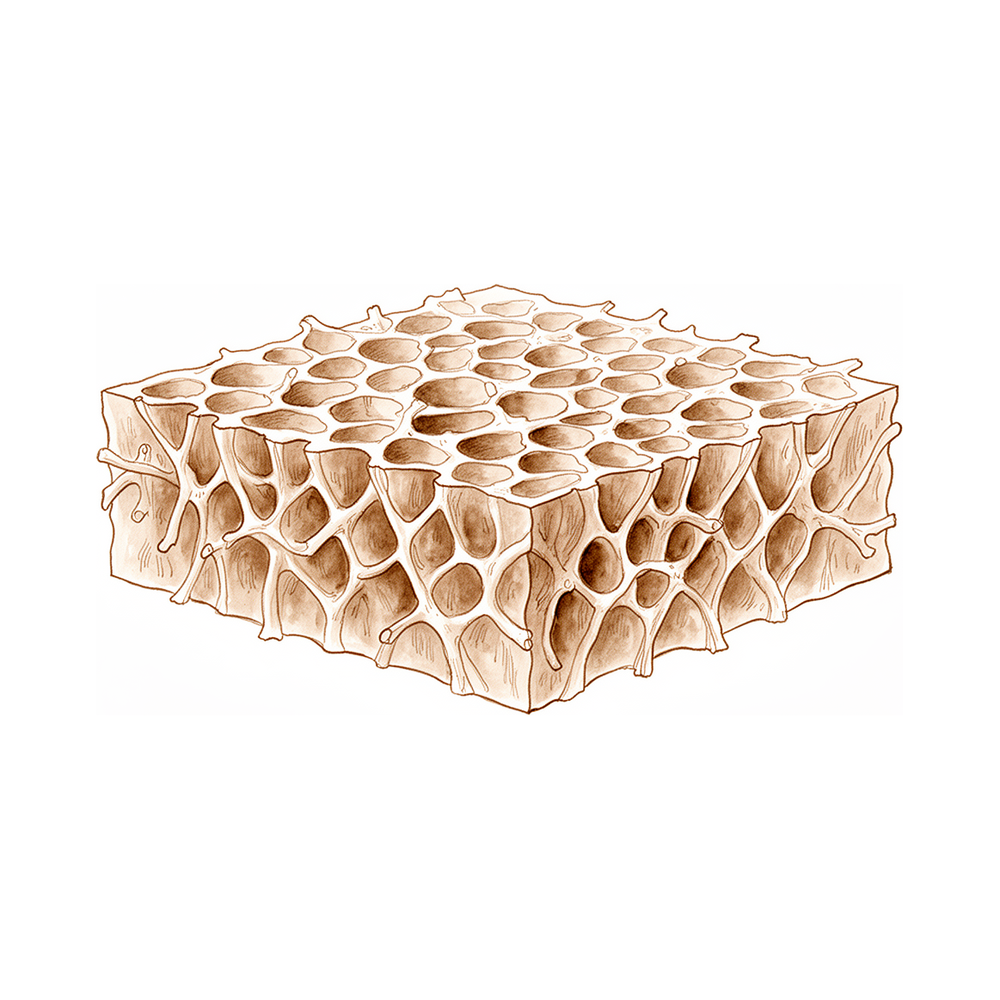
El hueso parece sólido y permanente, pero en realidad es tejido vivo, repleto de células y vasos sanguíneos; día tras día, se descompone y se reconstruye. Precisamente por eso, un hueso fracturado puede volver a unirse hasta recuperar su resistencia original. El proceso de curación sigue una secuencia predecible y dura más tiempo de lo que la mayoría de las personas imaginan; por ello, conocer dicha secuencia ayuda a reducir la ansiedad durante la espera. En esta página se explica, en un lenguaje sencillo, qué es el hueso y cómo se repara; además, para quienes sientan curiosidad, se profundiza en su biología: cómo se remodela continuamente y qué ocurre cuando este mecanismo actúa en contra del hueso.
¿Qué es el hueso y para qué sirve?
El hueso desempeña varias funciones simultáneamente. Es el andamiaje del cuerpo: la estructura que nos sostiene y a la que se aferran los músculos para permitir el movimiento. También actúa como armadura, protegiendo el cerebro, el corazón y los pulmones. Además, es un almacén de minerales, especialmente calcio, del cual el resto del cuerpo se nutre constantemente.
Para cumplir todas estas funciones, el hueso es un material compuesto, similar al hormigón armado. Una red flexible de proteínas (principalmente colágeno) le confiere la resistencia necesaria para doblarse ligeramente sin romperse; mientras que los minerales duros (cristales de fosfato de calcio) incrustados en dicha red le otorgan rigidez y resistencia a la compresión. Si se eliminan los minerales, el hueso se vuelve elástico; si se elimina el colágeno, se vuelve frágil como la tiza. Ambos componentes son imprescindibles.
Sin embargo, el hueso no es inerte: está repleto de células vivas y atravesado por vasos sanguíneos. Por eso sangra al fracturarse, por qué una buena irrigación sanguínea es crucial para su curación, y por qué el hueso, a diferencia de una mesa rayada, puede regenerarse por sí solo.
Cómo se cura un hueso roto
Cuando un hueso se rompe, se cura mediante etapas sucesivas que transforman la brecha en hueso sólido nuevamente.
- El coágulo (primeros días). La fractura rompe los vasos sanguíneos dentro y alrededor del hueso; la sangre forma entonces un coágulo en el lugar de la fractura. Este no es simplemente un tapón: constituye el andamiaje y el centro de señalización que atrae a las células reparadoras. Por eso, al principio la zona se hincha, presenta hematomas y duele.
- El callo blando (primeras semanas). Las células reparadoras se desplazan hasta el lugar y generan un puente blando y elástico de cartílago y tejido inmaduro que cruza la brecha. En este punto el hueso ya está unido, aunque de forma débil; por eso una fractura reciente requiere protección mediante escayola, férula o cirugía mientras ese puente sigue siendo frágil.
- El callo duro (de semanas a un par de meses). El puente blando se reemplaza gradualmente por hueso mineralizado y duro, formando un grueso anillo (el callo) alrededor de la fractura. Al final de esta etapa, el hueso suele ser lo suficientemente sólido para ser utilizado con normalidad.
- La remodelación (de meses a años). El callo irregular se va tallando y reconfigurando siguiendo las líneas de tensión, hasta que el hueso vuelve a tener el aspecto y la función que tenía antes. En los niños esta remodelación es tan eficaz que una fractura ligeramente torcida puede enderezarse con el tiempo.
La curación es realmente lenta, y eso es normal. Como referencia aproximada, muchas fracturas en adultos tardan alrededor de seis a doce semanas en consolidarse, y aún más en recuperar toda su resistencia; la remodelación final puede prolongarse durante un año o más. El tiempo exacto depende del hueso, de la persona y de la lesión; por ello, considere estos plazos como guías, no como promesas.
Qué favorece la curación
Hay varios factores que marcan una gran diferencia, y la mayoría están bajo su control:
- Aprovisionamiento sanguíneo y estabilidad de la fractura. El hueso cicatriza mejor cuando los extremos fracturados cuentan con un buen aporte sanguíneo y permanecen razonablemente inmóviles; ese es precisamente el propósito de la escayola o la cirugía. El exceso de movimiento o un aporte sanguíneo deficiente son las causas más frecuentes de que una fractura tarde en unirse.
- No fumar. El tabaquismo y la nicotina estrechan los vasos sanguíneos y ralentizan significativamente la curación ósea. Dejar de fumar, incluso en torno al momento de la lesión o la intervención quirúrgica, resulta beneficioso.
- Nutrición. El hueso se forma a partir de proteínas y minerales; por ello, una ingesta adecuada de proteínas, calcio y vitamina D favorece la curación. La mayoría de las personas no necesitan dosis masivas; basta con evitar deficiencias.
- Carga física moderada. El hueso responde al uso. Seguir las indicaciones relativas al apoyo de peso y al ejercicio, ni en exceso ni insuficientemente, ayuda al hueso en proceso de curación a reconstruirse en los lugares correctos.
- Tiempo y seguimiento. La mayoría de las fracturas sanan según su propio ritmo. Si una fractura que debería estar mejorando no muestra avances, merece ser evaluada; en algunos casos es necesaria una intervención quirúrgica para ayudar.
En mayor profundidad
Advanced reading: the deeper science (optional)
Esta sección ofrece una explicación más detallada, dirigida a estudiantes, sobre la biología que subyace a todo lo expuesto anteriormente. No es necesaria para comprender una fractura ni su tratamiento; sin embargo, si le interesa saber cómo funciona realmente el hueso, y cómo el mismo mecanismo que permite la curación de una fractura también puede utilizarse en contra del esqueleto, siga leyendo.
El hueso como tejido vivo
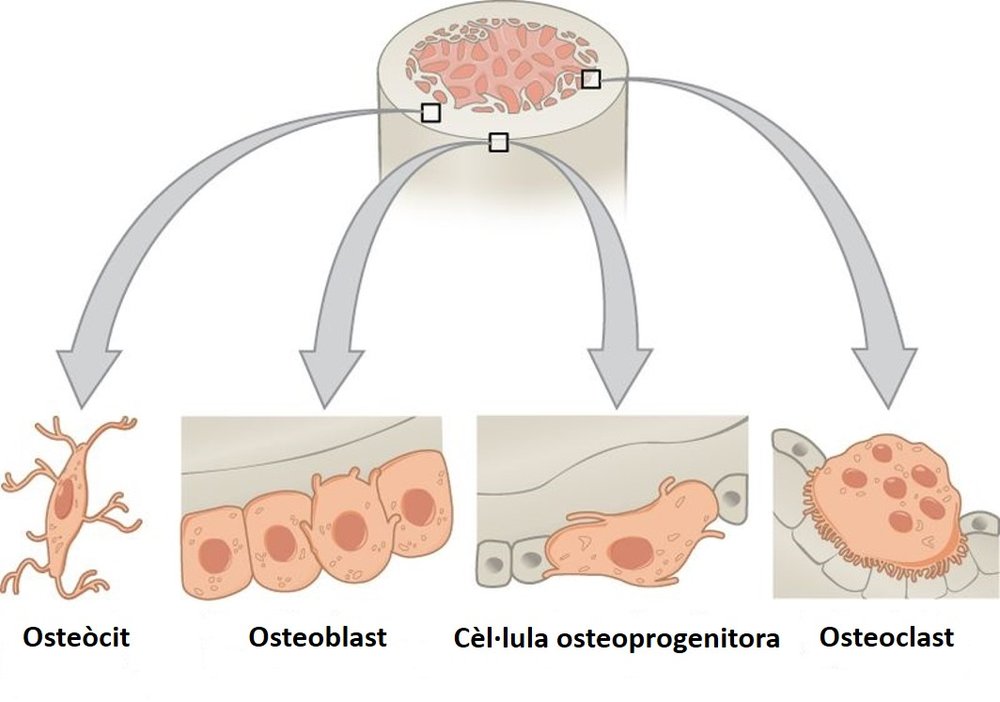
El hueso se forma y mantiene gracias a tres tipos principales de células; es útil conocer sus nombres, pues casi todo lo que sigue describe el equilibrio entre ellas:
- Osteoblastos: son los constructores. Generan nuevo hueso: primero forman un marco blando de colágeno (osteoide), que posteriormente mineralizan hasta convertirlo en hueso duro.
- Osteoclastos: son el equipo de demolición. Son células grandes y multinucleadas que disuelven el hueso; lo hacen mediante ácido que ataca los minerales y enzimas que digieren el colágeno.
- Osteocitos: son osteoblastos que quedaron atrapados en el hueso que ellos mismos crearon. Se encuentran en diminutas cámaras conectadas mediante una vasta red de canales; actúan como una red de sensores distribuida por todo el hueso. Como veremos, son las células que perciben la carga mecánica y guían a las otras dos.
La matriz dura en la que viven estas células está compuesta por colágeno tipo I, endurecido por cristales de hidroxiapatita (un mineral de calcio y fósforo). Existen dos tipos de estructura ósea: el hueso cortical (compacto) y denso, presente en los cuerpos de los huesos largos; y el hueso trabecular (esponjoso), de estructura reticular abierta, que se halla en los extremos de los huesos y en el interior de la columna vertebral.
La cascada de curación
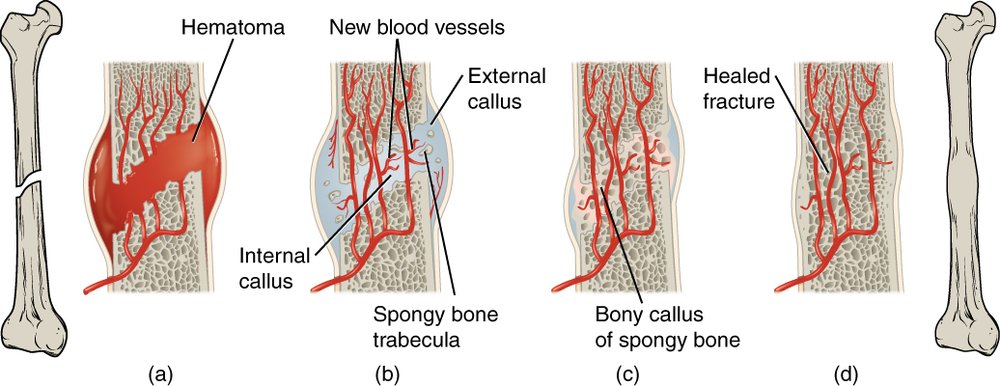
Las cuatro etapas descritas anteriormente, expresadas en lenguaje sencillo, corresponden a una secuencia biológica precisa. El hematoma (coágulo) que se forma tras la fractura libera una gran cantidad de señales inflamatorias y factores de crecimiento que atraen a las células madre. Estas células forman primero un callo blando (de cartílago): el hueso se genera sobre una plantilla cartilaginosa mediante un proceso llamado osificación endocondral, el mismo por el cual gran parte del esqueleto se desarrolla durante la infancia. Posteriormente, los vasos sanguíneos invaden ese cartílago y lo sustituyen por hueso entrecruzado, formando el callo duro, que finalmente se remodela hasta convertirse en hueso laminar maduro y organizado.
Este es el proceso de curación secundaria (indirecta) (curación mediante la formación de callo), y ocurre cuando la fractura presenta cierto grado de movimiento, como en el caso de una férula. También existe la curación primaria (directa), que solo se da cuando los extremos óseos quedan fijados de manera rígida, sin espacios ni movimientos entre ellos (por ejemplo, al ser comprimidos bajo una placa metálica). En este caso, no se forma callo alguno: el hueso simplemente se remodela directamente a través de la zona de la fractura. Ninguno de los dos procesos es “mejor” que el otro; representan dos formas distintas en que el hueso responde a diferentes condiciones mecánicas, razón por la cual los cirujanos eligen el método de fijación más adecuado según cada fractura.
Remodelación y cono de corte
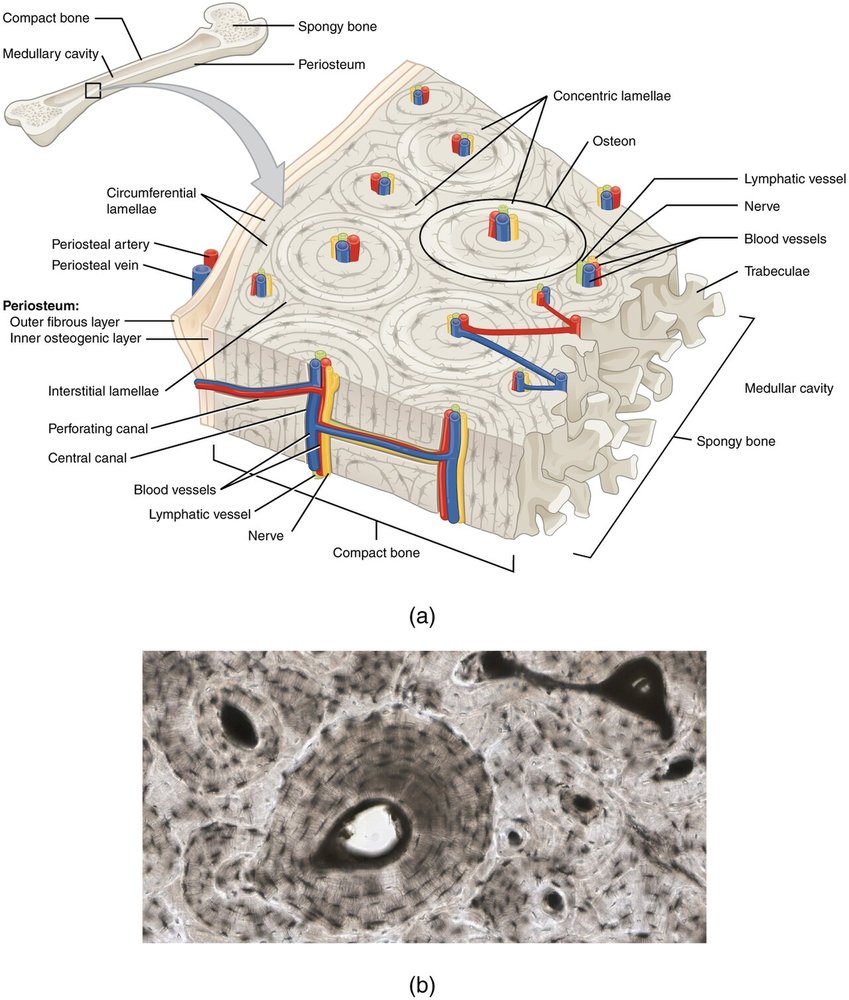
Incluso el hueso intacto se reconstruye continuamente: aproximadamente una décima parte de nuestro esqueleto se renueva cada año. Esta renovación continua a lo largo de la vida se denomina remodelación, y es llevada a cabo por grupos de células conocidos como Unidades Multicelulares Básicas (UMB).
En el hueso cortical denso, se puede observar a una UMB en acción, actuando como una especie de máquina de perforación microscópica. En su extremo delantero, un grupo de osteoclastos abre un túnel directamente a través del hueso, disolviéndolo a medida que avanzan; este extremo resorbente se conoce como el cono de corte. Inmediatamente detrás, en el llamado cono de cierre, los osteoblastos recubren el nuevo túnel y lo rellenan desde las paredes hacia el interior, formando anillos concéntricos de hueso nuevo alrededor de un canal central que contiene un vaso sanguíneo. El cilindro resultante, formado por anillos óseos alrededor de un canal central, se denomina osteón, que es la unidad estructural básica del hueso compacto. Por tanto, la remodelación no es un proceso aleatorio: se trata de una secuencia coordinada de demolición y reconstrucción, mediante la cual se genera hueso nuevo y bien alineado sobre el hueso viejo.
Esta es también la razón por la cual el hueso sano requiere que ambos tipos de células trabajen en sincronía. Los osteoclastos que forman el cono de corte son precisamente las mismas células que, cuando su actividad se desregula, provocan las enfermedades de pérdida ósea que se describen a continuación.
El interruptor de acoplamiento: RANK, RANKL y OPG
¿Cómo controlan los “constructores” al “equipo de demolición”? Mediante un interruptor molecular que merece ser conocido, pues es el mecanismo que regula tanto la remodelación ósea normal como diversas enfermedades (y varios fármacos).
Las células de linaje osteoblástico producen una señal denominada RANKL. Cuando RANKL se une a su receptor, RANK, en la superficie de los precursores de osteoclastos, les indica que maduren y se conviertan en osteoclastos activos encargados de disolver el hueso. En otras palabras, los “constructores” tienen el control remoto del “equipo de demolición”. Para frenar este proceso, los mismos osteoblastos secretan una sustancia llamada OPG (osteoprotegerina), que actúa como señuelo y absorbe el RANKL antes de que pueda alcanzar a RANK. Por consiguiente, la relación entre RANKL y OPG determina el ritmo de la reabsorción ósea: un nivel elevado de RANKL favorece la pérdida ósea, mientras que un nivel alto de OPG favorece su preservación.
Prácticamente toda señal que afecta al hueso (hormonas, inflamación, fármacos) termina actuando sobre este mecanismo. Por ejemplo, es precisamente aquí donde actúa el fármaco para la osteoporosis denosumab: se trata de un anticuerpo sintético que funciona como OPG, absorbiendo el RANKL para inhibir a los osteoclastos. Tenga presente este interruptor; en las dos secciones siguientes se describirán casos en los que el RANKL se activa de forma inadecuada.
Mecanotransducción y la ley de Wolff
El hueso se adapta, como es bien sabido, a las cargas que se ejercen sobre él. “El hueso se deposita donde se necesita y se reabsorbe donde no se necesita” es la ley de Wolff; esta explica por qué el brazo con el que un tenista sostiene la raqueta tiene hueso más denso, por qué los astronautas y los pacientes postrados en cama pierden masa ósea, y por qué una carga adecuada favorece la reparación de una fractura en los lugares correctos.
Las células que perciben dicha carga son los osteocitos, incrustados en el hueso. Cuando el hueso se somete a carga, el líquido se ve forzado a circular por los diminutos canales que los rodean; los osteocitos detectan ese flujo, proceso conocido como mecanotransducción (conversión de una señal mecánica en una señal biológica). Los osteocitos sometidos a carga reducen la producción de una molécula inhibidora llamada esclerostina, lo que permite que los osteoblastos actúen y construyan hueso; en cambio, en el hueso sin carga ocurre lo contrario, favoreciéndose su reabsorción. Por eso el dicho “usa el hueso o lo perderás” no es solo una frase hecha: refleja la forma en que los osteocitos ajustan el equilibrio entre RANKL y OPG según las actividades que realice el individuo.
Cuando la remodelación ósea sale mal: osteólisis y sonic hedgehog
La osteólisis simplemente significa disolución del hueso: los osteoclastos actúan sin control, generalmente porque algo mantiene el interruptor RANKL en posición “encendido”. Es lo que permite que un tumor destruya el hueso, lo que hace que un implante se afloje (ver sección siguiente), y lo que provoca la pérdida de masa ósea en ciertas enfermedades inflamatorias.
Uno de los reguladores más sorprendentes en este proceso es el sonic hedgehog (Shh), una molécula señalizadora conocida sobre todo por moldear el plan corporal del embrión (ayuda a formar extremidades y dedos). Esta misma vía de señalización se sigue utilizando en el esqueleto adulto, y sus efectos pueden ser tanto positivos como negativos. En la cicatrización de una fractura, la señalización por Shh resulta beneficiosa: favorece a los osteoblastos y la formación ósea. Sin embargo, en la osteólisis ocurre lo contrario: el Shh, actuando a través de su mensajero downstream Gli, induce a las células estromales a producir más RANKL; más RANKL implica más osteoclastos y, por consiguiente, mayor disolución ósea. Cabe destacar que el Shh por sí solo no provoca la reabsorción ósea; su efecto se debe a la amplificación de la vía RANKL, razón por la cual actúa como factor agravante en afecciones como la destrucción ósea asociada al cáncer. Este es un buen ejemplo del patrón general descrito en esta página: la mayoría de las enfermedades óseas se deben a que el mecanismo normal de remodelación ósea (el “cono de corte”, el interruptor RANKL) se descontrola en una dirección u otra.
Desgaste del polietileno y aflojamiento del implante
Aquí es donde la biología adquiere un carácter muy práctico, pues explica por qué los prótesis articulares terminan fallando. Una prótesis de cadera o rodilla cuenta con una superficie de deslizamiento lisa; típicamente, una esfera rígida o componente metálico que se mueve contra un revestimiento de polietileno (plástico de grado médico). Con el paso de los años, la fricción genera una cantidad increíblemente grande de partículas de desgaste de polietileno, tan diminutas que resultan invisibles; se generan miles de millones de ellas.
El organismo percibe estas partículas como elementos extraños. Las células inmunitarias fagocíticas (macrófagos) situadas alrededor del implante intentan absorberlas, pero el plástico es indigerible; por ello, los macrófagos frustrados liberan señales inflamatorias. Estas señales, como era de esperar, elevan los niveles de RANKL, atrayendo a los osteoclastos que reabsorben el hueso alrededor del implante. Esta osteólisis inducida por partículas (o por desgaste) va minando gradualmente el anclaje óseo, hasta que finalmente el implante se afloja; este es uno de los principales motivos por los que las prótesis articulares se deterioran y requieren una cirugía de revisión, a menudo más de una década después de la intervención. Se trata del mismo mecanismo final que se describe anteriormente: un estímulo externo que, a través de RANKL, conduce a la disolución ósea por parte de los osteoclastos. Comprender este proceso explica por qué se invierte tanto esfuerzo en el desarrollo de materiales de deslizamiento más avanzados (como el polietileno reticulado) que generen menos partículas y de menor impacto biológico.
Qué favorece y qué perjudica la cicatrización
Por último, los factores prácticos, ahora respaldados por la biología que los explica:
- El riego sanguíneo transporta las células, el oxígeno y las señales necesarias para la cicatrización; un envoltorio de tejido blando desgarrado o aplastado, o una fractura en un hueso con escaso riego sanguíneo, cicatrizan lentamente. Este es el factor más importante de todos.
- La estabilidad permite que el callo óseo madure; el movimiento excesivo rompe continuamente este puente óseo frágil en sus inicios, siendo una causa frecuente de no unión ósea (una fractura que no logra cicatrizar).
- El tabaquismo y la nicotina provocan la constricción de los vasos sanguíneos e impiden el trabajo de las células reparadoras: constituyen un factor que claramente ralentiza la cicatrización ósea.
- La diabetes y ciertos medicamentos (tratamientos prolongados con esteroides y algunos antiinflamatorios administrados alrededor del momento de una fractura reciente) pueden retrasar la cicatrización.
- La nutrición (proteínas, calcio y vitamina D en cantidades adecuadas) proporciona los materiales básicos para la cicatrización; lo que hay que evitar es la deficiencia, no el exceso.
- La edad ralentiza el proceso celular, pero el hueso conserva una capacidad notable para cicatrizar a lo largo de toda la vida.
Véase también
- Salud ósea y osteoporosis — cuando el equilibrio entre remodelación ósea y pérdida ósea se inclina hacia esta última en todo el esqueleto
- El tabaquismo y la cicatrización musculoesquelética — por qué el tabaquismo ralentiza el proceso de curación descrito aquí
- La vitamina D y la salud musculoesquelética — el papel de los minerales en la formación ósea