Skip to content

Patients › Hand

Enfermedades que afectan la mano

PDF

How whole-body conditions — diabetes, thyroid, inflammatory arthritis, kidney disease and more — show up in the hand.
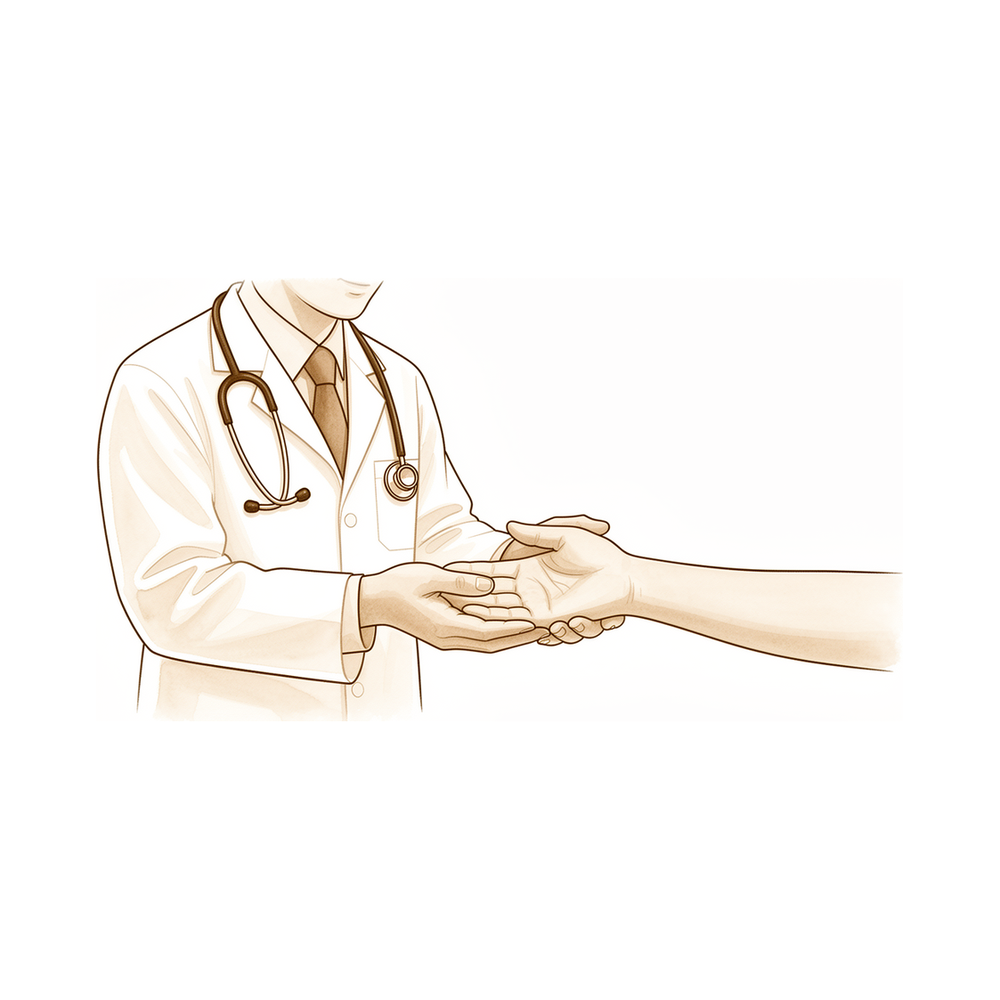
Un médico examina la mano de un paciente.
La mano puede ser un indicador del estado de salud general: muchas afecciones que afectan a todo el cuerpo se manifiestan allí, a veces como primer síntoma. Kieran Hirpara 4.0

Esta página se tradujo automáticamente y todavía no la ha revisado un médico. La versión en inglés es la versión oficial.

La mano es una de las mejores “ventanas” que tiene el cuerpo para evaluar la salud general.
Al contener numerosas articulaciones pequeñas, nervios, tendones, vasos sanguíneos finos,
piel y uñas (todos ellos muy cercanos a la superficie y fáciles de examinar), muchas
enfermedades que afectan a todo el organismo dejan allí sus primeros indicios.
A veces, un problema en la mano resulta ser un asunto puramente local; sin embargo,
en otras ocasiones el mismo síntoma (rigidez, hormigueo, cambio de color, uña con aspecto distinto)
es la primera señal visible de algo que está ocurriendo en otras partes del cuerpo,
información valiosa que, con frecuencia, permite un tratamiento eficaz.

Esta página ofrece una explicación sencilla en lenguaje cotidiano de las principales
afecciones médicas que pueden manifestarse en la mano. No se trata de una lista para que
usted mismo haga un diagnóstico; la mayoría de los dolores y rigideces en los dedos son
consecuencia del desgaste normal. No obstante, aquí se explica por qué su cirujano podría
preguntarle sobre su salud general, examinar detenidamente sus uñas y piel, o incluso
recomendarle un análisis de sangre o una derivación, aun cuando usted haya acudido por un
problema en la mano.

La diabetes: el gran “impostor” en la mano

La diabetes afecta a la mano más que casi cualquier otra enfermedad. El nivel elevado de glucosa en sangre, con el paso del tiempo, hace que los tejidos blandos (tendones, su revestimiento y ligamentos) se vuelvan rígidos; por eso las personas con diabetes padecen varios problemas comunes de la mano con mucha mayor frecuencia que el resto de la población:

  • Dedo en gatillo (un dedo que se atasca, hace clic o se bloquea): es varias veces más frecuente en diabéticos que en la población general.
  • Síndrome del túnel carpiano (entumecimiento y hormigueo en el pulgar, índice y dedo medio; suele empeorar por la noche).
  • Enfermedad de Dupuytren (formación de cordones y nódulos en la palma que, con el tiempo, doblan los dedos hacia abajo).
  • Mano rígida y “cerosa” (a veces denominada quiroartropatía diabética o “movilidad articular limitada”): los dedos no se estiran por completo y las palmas no se juntan con facilidad.
  • Hombro congelado, que es notablemente más frecuente en personas con diabetes.

Ninguno de estos síntomas demuestra por sí solo que se padece diabetes; sin embargo, presentar más de uno o desarrollarlos a una edad temprana constituye un motivo válido para realizarse un examen. Hemos abordado este tema con mayor profundidad en nuestra página Diabetes y afecciones de la extremidad superior.

Enfermedades tiroideas: hiperactividad o hipoactividad

La glándula tiroides regula el ritmo metabólico del cuerpo; cuando funciona demasiado rápido o demasiado lento, puede manifestarse en la mano. La hipotiroidismo es un factor clásico que contribuye al síndrome del túnel carpiano y al dedo en gatillo, en parte debido a la retención de líquidos y a los cambios tisulares alrededor de los tendones y nervios. Tanto el hipertiroidismo como el hipotiroidismo también se relacionan con el hombro congelado. El hipertiroidismo, además, puede provocar temblores finos, palmas sudorosas y alteraciones en las uñas, como el desprendimiento de la uña de su lecho. La aparición de síndrome del túnel carpiano sin una causa evidente es una de las razones por las que, en ocasiones, se solicita un análisis de sangre para evaluar la función tiroidea.

Artritis inflamatoria: cuando el sistema inmunitario ataca las articulaciones

Existe toda una familia de enfermedades que hacen que el sistema inmunitario provoque inflamación en las articulaciones; con frecuencia, las manos son la primera zona afectada, y cada una presenta su propio patrón clínico:

  • La artritis reumatoide suele afectar los nudillos y las articulaciones medias de los dedos, generalmente de forma simétrica en ambas manos, y se caracteriza por rigidez matutina y articulaciones hinchadas y blandas. Consulte nuestra página sobre artritis inflamatoria y reumatoide.
  • La artritis psoriásica puede afectar la articulación más cercana a la uña, provocar que todo un dedo se hinche como una salchicha, y suele ir acompañada de pitting en las uñas o manchas cutáneas. Consulte nuestra página sobre artritis psoriásica.
  • La gota genera ataques repentinos, extremadamente dolorosos, con enrojecimiento y calor en la zona afectada; típicamente afecta el dedo gordo del pie, pero también puede afectar los dedos y las articulaciones de la muñeca, a veces dejando depósitos calcáreos con el tiempo. Consulte nuestra página sobre gota.

Es fundamental distinguir estas afecciones de la osteoartritis común, ya que la artritis inflamatoria es impulsada por el sistema inmunitario y responde a medicamentos específicos capaces de proteger las articulaciones del daño; por eso, un diagnóstico temprano marca una gran diferencia en el pronóstico.

Enfermedad renal

La enfermedad renal crónica, especialmente en personas que llevan muchos años en diálisis, puede provocar síndrome del túnel carpiano debido a la acumulación de una proteína llamada amiloide alrededor de los tendones de la muñeca. Los problemas renales también alteran el metabolismo del calcio, el fosfato y los huesos, lo que puede debilitar los huesos y, en ocasiones, manifestarse como dolor o cambios visibles en las radiografías de la mano. Por estas razones, el cirujano podría tener en cuenta su historial renal.

Embarazo

El embarazo es una causa frecuente y tranquilizadora de síntomas en la mano. El exceso de líquido que el cuerpo retiene en los últimos meses aumenta la presión dentro del túnel carpiano; por ello, el síndrome del túnel carpiano (pinsamiento y entumecimiento de los dedos, a menudo más intenso por la noche) es muy común durante el embarazo. La buena noticia es que, en la mayoría de los casos, estos síntomas desaparecen por sí solos unas semanas después del parto; por lo tanto, el tratamiento de primera línea suele consistir en medidas sencillas, como el uso de una férula nocturna, en lugar de cirugía.

Circulación y enfermedades del tejido conectivo

Algunas afecciones afectan los vasos sanguíneos pequeños y el tejido conectivo; los dedos son la primera zona donde se manifiestan:

  • Fenómeno de Raynaud: en frío o ante situaciones de estrés, los dedos se vuelven blancos, luego azules y finalmente rojos, debido a la contracción de los vasos sanguíneos pequeños. Por sí solo suele ser inofensivo, pero también puede ser el primer signo de una enfermedad del tejido conectivo. Tratamos este tema en profundidad en nuestra página sobre Fenómeno de Raynaud.
  • Esclerodermia (esclerosis sistémica): hace que la piel de los dedos se vuelva más tensa y gruesa; puede provocar el fenómeno de Raynaud, úlceras dolorosas en las puntas de los dedos y rigidez en las articulaciones pequeñas.
  • Lupus (lupus eritematoso sistémico): puede causar dolor articular, fenómeno de Raynaud y cambios en la piel y en los pliegues ungueales.

Un indicio que buscamos específicamente son los vasos sanguíneos anormales en la base de la uña (el pliegue ungueal): la presencia de bucles retorcidos y dilatados en esa zona puede ser señal de esclerodermia o lupus; por eso su cirujano podría examinar sus uñas detenidamente con una lupa.

Otros indicios: uñas, piel y yemas de los dedos

Las yemas de los dedos, las uñas y la piel pueden revelar afecciones que van más allá de la mano:

  • Dedos en palillo de tambor: las yemas de los dedos se ensanchan y las uñas se curvan sobre sus extremos; esto se asocia con ciertas enfermedades pulmonares, cardíacas e intestinales.
  • Las uñas en cuchara pueden indicar deficiencia de hierro, mientras que el color pálido de la base de las uñas puede sugerir anemia.
  • La picadura, el levantamiento o los cambios de color de las uñas pueden acompañar a la psoriasis, enfermedades tiroideas u otras patologías.
  • Las uñas amarillas, engrosadas y quebradizas son frecuentes en personas con diabetes y algunos problemas circulatorios.
  • Cambios en la piel y en su color: la piel amarillenta, la facilidad para formar hematomas o un enrojecimiento inusual de las palmas pueden, en ocasiones, reflejar afecciones hepáticas.

Por separado, estos signos suelen ser leves y muy comunes. Adquieren mayor relevancia cuando aparecen varios a la vez, cuando afectan a todas las uñas simultáneamente o cuando van acompañados de malestar general.

¿Por qué su cirujano le pregunta sobre su salud general?

Cuando acude por algún problema en la mano o la muñeca, quizás le sorprenda que le pregunten por sus niveles de azúcar, su función tiroidea, los medicamentos que toma, cambios de peso o cómo se siente en general, y que le examinen las uñas, la piel y el pulso. Esto no es un mero trámite. Ocurre porque la mano suele reflejar el estado del resto del cuerpo; identificar este panorama general puede modificar el tratamiento de su problema en la mano y, en ocasiones, revelar alguna afección tratable en otra parte del organismo. Cuando parece probable la presencia de una enfermedad sistémica, el siguiente paso suele ser un análisis de sangre sencillo o una derivación a su médico de cabecera o a un especialista, no una intervención quirúrgica.

Cuándo consultar a un especialista

Acuda a su médico de cabecera o vuelva a vernos, sin esperar, si:

  • Un síntoma en la mano aparece junto con malestar general: fiebre, pérdida de peso, fatiga o sensación de no encontrarse bien.
  • El dolor articular, la hinchazón o la rigidez afectan a ambas manos al mismo tiempo, o van acompañados de rigidez matutina que tarda en desaparecer.
  • Observa cambios de color en los dedos (blanco/azul/rojo), úlceras dolorosas en las puntas de los dedos o un nuevo endurecimiento de la piel de los dedos.
  • Las uñas de varios dedos cambian simultáneamente: presentan picaduras, se levantan, adoptan forma de cuchara, se engrosan o cambian de color.
  • Los síntomas del síndrome del túnel carpiano o los dedos en gatillo aparecen en varios dedos, en ambas manos, o a una edad más temprana de lo esperado.

La mayoría de las veces, un problema en la mano es simplemente eso: un problema en la mano. Pero dado que la mano es un indicador muy fiable del estado general de salud, siempre vale la pena mencionar el cuadro clínico completo. A veces, la mano es la primera en dar señales de alerta.

En profundidad

Esta sección va más allá de lo necesario para que usted tome sus propias decisiones terapéuticas. Vale la pena leerla, ya que varias afecciones de la mano constituyen, en la práctica, signos visibles tempranos de una enfermedad sistémica; la mano suele ser el primer indicador del problema, incluso antes de que aparezcan otros síntomas.

La diabetes modifica la mano de varias maneras distintas

La diabetes es la enfermedad sistémica más asociada de forma consistente a problemas en la mano; el mecanismo es el mismo en todos los casos: la glucosa se une de forma irreversible al colágeno, provocando su reticulación y haciendo que el tejido conectivo se vuelva más rígido y grueso. Todas las estructuras de la mano que dependen del deslizamiento de los tejidos se ven afectadas.

El resultado es un conjunto reconocido de afecciones: síndrome del túnel carpiano, dedo en gatillo, enfermedad de Dupuytren y limitación de la movilidad articular, caracterizada por la imposibilidad de juntar las palmas de las manos. El hombro congelado pertenece al mismo grupo.

Existe una consecuencia específica e importante durante el embarazo: la diabetes gestacional constituye un factor de riesgo significativo tanto para el síndrome del túnel carpiano como para la tenosinovitis de De Quervain, según un conjunto de datos que incluye 715,337 pacientes [1]. El hecho de que este efecto se manifieste durante los meses de embarazo, en lugar de transcurridos años con diabetes establecida, indica que dichos cambios tisulares se desarrollan más rápidamente de lo que se supone habitualmente.

Lo importante desde el punto de vista práctico no es que los problemas de mano en pacientes diabéticos sean intratables; de hecho responden a los mismos tratamientos. Más bien, estos problemas tienden a agruparse, por lo que debe prestarse atención a los demás; además, el control glucémico forma parte integral del tratamiento, no es un aspecto separado.

Algunos hallazgos en la mano deben motivar una investigación en otros lugares

Existen varias manifestaciones que merecen ser reconocidas, ya que la mano es la manifestación visible de procesos sistémicos.

Presencia de múltiples dedos en atrapamiento en un niño. La existencia de dedos en atrapamiento bilaterales o múltiples, o la coexistencia de síndrome del túnel carpiano, debe hacer sospechar de alguna patología subyacente atípica, como la mucopolisacaridosis [2]. Este es el ejemplo más claro en este sitio de un signo en la mano cuyas implicaciones trascienden ampliamente el ámbito de la mano misma.

Fenómeno de Raynaud con características preocupantes. El inicio del fenómeno de Raynaud a partir de los 30 años, la asimetría entre ambas manos, la presencia de úlceras en las yemas de los dedos o cicatrices de tipo “pitting”, así como los capilares anormales en los pliegues ungueales, sugieren una causa secundaria: generalmente una enfermedad autoinmune del tejido conectivo, y no la forma primaria y benigna del trastorno.

Debilidad dolorosa repentina sin signos de compresión nerviosa. La parálisis del nervio interóseo anterior se considera cada vez más como una neuritis que a menudo se resuelve espontáneamente** [3]; el dolor intenso previo a la aparición de la debilidad apunta a una amiotrofia neuralgica: una afección inflamatoria de los nervios para la cual la descompresión quirúrgica no resulta útil.

La artritis inflamatoria se comporta de manera distinta al desgaste articular

La artritis reumatoide y otras artritis inflamatorias afectan la mano siguiendo un patrón diferente al de la osteoartritis: afectan los nudillos y las articulaciones medias, no las articulaciones de las puntas de los dedos; de forma simétrica; con rigidez matutina prolongada y hinchazón blanda y flácida, en lugar de un engrosamiento óseo duro.

Esta diferencia es relevante tanto desde el punto de vista médico como quirúrgico. Las reconstrucciones que dependen de los tejidos blandos para mantener la corrección tienden a distenderse en manos con sinovitis activa; por ello, el control de la enfermedad suele ser previo a la reconstrucción, y por qué la misma intervención tiene un pronóstico distinto en ambos casos.

¿Por qué la mano revela problemas en una etapa temprana?

La mano está formada por una gran cantidad de articulaciones pequeñas, tendones largos en vainas estrechas, nervios que discurren por conductos de tamaño fijo, y la circulación sanguínea más distal del cuerpo; todo ello cubierto por una piel delgada que permite observar cualquier cambio. Un proceso que pasaría desapercibido en una estructura de mayor tamaño genera síntomas rápidamente en la mano; asimismo, cualquier alteración del flujo sanguíneo en vasos pequeños se manifiesta primero aquí.

Esta gran sensibilidad es la razón por la cual es importante mencionar cualquier hallazgo en la mano al médico de cabecera, incluso si parecen insignificantes en comparación con el resto de la salud del paciente. También explica por qué los cirujanos de mano suelen derivar a los pacientes a otros médicos en lugar de tratar directamente el problema que tienen ante sí.

Referencias

[1] Smith GB, Young B, Titan AL, Kenney DE, Ladd AL. Incidencia y factores de riesgo de afecciones de los tejidos blandos de la mano y la muñeca durante el embarazo. J Hand Surg Glob Online. 2025;7(5):100778. https://doi.org/10.1016/j.jhsg.2025.100778

[2] Wong AL, Wong MJ, Parker R, Wheelock ME. Presentación y etiología del dedo en gatillo pediátrico: una revisión sistemática. J Hand Surg Eur Vol. 2021;47(2):192-6. https://doi.org/10.1177/17531934211035642

[3] Rodner CM, Tinsley BA, O'Malley MP. Síndrome del pronador y síndrome del nervio interóseo anterior. J Am Acad Orthop Surg. 2013;21(5):268-75. https://doi.org/10.5435/JAAOS-21-05-268


Creative Commons BY-NC 4.0

CC Creative Commons licence
BY Attribution — you must credit the source
NC NonCommercial — not for commercial use

Attribution-NonCommercial 4.0 International


Creative Commons Corporation ("Creative Commons") is not a law firm and does not provide legal services or legal advice. Distribution of Creative Commons public licenses does not create a lawyer-client or other relationship. Creative Commons makes its licenses and related information available on an "as-is" basis. Creative Commons gives no warranties regarding its licenses, any material licensed under their terms and conditions, or any related information. Creative Commons disclaims all liability for damages resulting from their use to the fullest extent possible.

Using Creative Commons Public Licenses

Creative Commons public licenses provide a standard set of terms and conditions that creators and other rights holders may use to share original works of authorship and other material subject to copyright and certain other rights specified in the public license below. The following considerations are for informational purposes only, are not exhaustive, and do not form part of our licenses.

Considerations for licensors: Our public licenses are intended for use by those authorized to give the public permission to use material in ways otherwise restricted by copyright and certain other rights. Our licenses are irrevocable. Licensors should read and understand the terms and conditions of the license they choose before applying it. Licensors should also secure all rights necessary before applying our licenses so that the public can reuse the material as expected. Licensors should clearly mark any material not subject to the license. This includes other CC- licensed material, or material used under an exception or limitation to copyright. More considerations for licensors: wiki.creativecommons.org/Considerations_for_licensors

Considerations for the public: By using one of our public licenses, a licensor grants the public permission to use the licensed material under specified terms and conditions. If the licensor's permission is not necessary for any reason--for example, because of any applicable exception or limitation to copyright--then that use is not regulated by the license. Our licenses grant only permissions under copyright and certain other rights that a licensor has authority to grant. Use of the licensed material may still be restricted for other reasons, including because others have copyright or other rights in the material. A licensor may make special requests, such as asking that all changes be marked or described. Although not required by our licenses, you are encouraged to respect those requests where reasonable. More considerations for the public: wiki.creativecommons.org/Considerations_for_licensees


Creative Commons Attribution-NonCommercial 4.0 International Public License

By exercising the Licensed Rights (defined below), You accept and agree to be bound by the terms and conditions of this Creative Commons Attribution-NonCommercial 4.0 International Public License ("Public License"). To the extent this Public License may be interpreted as a contract, You are granted the Licensed Rights in consideration of Your acceptance of these terms and conditions, and the Licensor grants You such rights in consideration of benefits the Licensor receives from making the Licensed Material available under these terms and conditions.

Section 1 -- Definitions.

a. Adapted Material means material subject to Copyright and Similar Rights that is derived from or based upon the Licensed Material and in which the Licensed Material is translated, altered, arranged, transformed, or otherwise modified in a manner requiring permission under the Copyright and Similar Rights held by the Licensor. For purposes of this Public License, where the Licensed Material is a musical work, performance, or sound recording, Adapted Material is always produced where the Licensed Material is synched in timed relation with a moving image.

b. Adapter's License means the license You apply to Your Copyright and Similar Rights in Your contributions to Adapted Material in accordance with the terms and conditions of this Public License.

c. Copyright and Similar Rights means copyright and/or similar rights closely related to copyright including, without limitation, performance, broadcast, sound recording, and Sui Generis Database Rights, without regard to how the rights are labeled or categorized. For purposes of this Public License, the rights specified in Section 2(b)(1)-(2) are not Copyright and Similar Rights.

d. Effective Technological Measures means those measures that, in the absence of proper authority, may not be circumvented under laws fulfilling obligations under Article 11 of the WIPO Copyright Treaty adopted on December 20, 1996, and/or similar international agreements.

e. Exceptions and Limitations means fair use, fair dealing, and/or any other exception or limitation to Copyright and Similar Rights that applies to Your use of the Licensed Material.

f. Licensed Material means the artistic or literary work, database, or other material to which the Licensor applied this Public License.

g. Licensed Rights means the rights granted to You subject to the terms and conditions of this Public License, which are limited to all Copyright and Similar Rights that apply to Your use of the Licensed Material and that the Licensor has authority to license.

h. Licensor means the individual(s) or entity(ies) granting rights under this Public License.

i. NonCommercial means not primarily intended for or directed towards commercial advantage or monetary compensation. For purposes of this Public License, the exchange of the Licensed Material for other material subject to Copyright and Similar Rights by digital file-sharing or similar means is NonCommercial provided there is no payment of monetary compensation in connection with the exchange.

j. Share means to provide material to the public by any means or process that requires permission under the Licensed Rights, such as reproduction, public display, public performance, distribution, dissemination, communication, or importation, and to make material available to the public including in ways that members of the public may access the material from a place and at a time individually chosen by them.

k. Sui Generis Database Rights means rights other than copyright resulting from Directive 96/9/EC of the European Parliament and of the Council of 11 March 1996 on the legal protection of databases, as amended and/or succeeded, as well as other essentially equivalent rights anywhere in the world.

l. You means the individual or entity exercising the Licensed Rights under this Public License. Your has a corresponding meaning.

Section 2 -- Scope.

a. License grant.

1. Subject to the terms and conditions of this Public License, the Licensor hereby grants You a worldwide, royalty-free, non-sublicensable, non-exclusive, irrevocable license to exercise the Licensed Rights in the Licensed Material to:

a. reproduce and Share the Licensed Material, in whole or in part, for NonCommercial purposes only; and

b. produce, reproduce, and Share Adapted Material for NonCommercial purposes only.

2. Exceptions and Limitations. For the avoidance of doubt, where Exceptions and Limitations apply to Your use, this Public License does not apply, and You do not need to comply with its terms and conditions.

3. Term. The term of this Public License is specified in Section 6(a).

4. Media and formats; technical modifications allowed. The Licensor authorizes You to exercise the Licensed Rights in all media and formats whether now known or hereafter created, and to make technical modifications necessary to do so. The Licensor waives and/or agrees not to assert any right or authority to forbid You from making technical modifications necessary to exercise the Licensed Rights, including technical modifications necessary to circumvent Effective Technological Measures. For purposes of this Public License, simply making modifications authorized by this Section 2(a) (4) never produces Adapted Material.

5. Downstream recipients.

a. Offer from the Licensor -- Licensed Material. Every recipient of the Licensed Material automatically receives an offer from the Licensor to exercise the Licensed Rights under the terms and conditions of this Public License.

b. No downstream restrictions. You may not offer or impose any additional or different terms or conditions on, or apply any Effective Technological Measures to, the Licensed Material if doing so restricts exercise of the Licensed Rights by any recipient of the Licensed Material.

6. No endorsement. Nothing in this Public License constitutes or may be construed as permission to assert or imply that You are, or that Your use of the Licensed Material is, connected with, or sponsored, endorsed, or granted official status by, the Licensor or others designated to receive attribution as provided in Section 3(a)(1)(A)(i).

b. Other rights.

1. Moral rights, such as the right of integrity, are not licensed under this Public License, nor are publicity, privacy, and/or other similar personality rights; however, to the extent possible, the Licensor waives and/or agrees not to assert any such rights held by the Licensor to the limited extent necessary to allow You to exercise the Licensed Rights, but not otherwise.

2. Patent and trademark rights are not licensed under this Public License.

3. To the extent possible, the Licensor waives any right to collect royalties from You for the exercise of the Licensed Rights, whether directly or through a collecting society under any voluntary or waivable statutory or compulsory licensing scheme. In all other cases the Licensor expressly reserves any right to collect such royalties, including when the Licensed Material is used other than for NonCommercial purposes.

Section 3 -- License Conditions.

Your exercise of the Licensed Rights is expressly made subject to the following conditions.

a. Attribution.

1. If You Share the Licensed Material (including in modified form), You must:

a. retain the following if it is supplied by the Licensor with the Licensed Material:

i. identification of the creator(s) of the Licensed Material and any others designated to receive attribution, in any reasonable manner requested by the Licensor (including by pseudonym if designated);

ii. a copyright notice;

iii. a notice that refers to this Public License;

iv. a notice that refers to the disclaimer of warranties;

v. a URI or hyperlink to the Licensed Material to the extent reasonably practicable;

b. indicate if You modified the Licensed Material and retain an indication of any previous modifications; and

c. indicate the Licensed Material is licensed under this Public License, and include the text of, or the URI or hyperlink to, this Public License.

2. You may satisfy the conditions in Section 3(a)(1) in any reasonable manner based on the medium, means, and context in which You Share the Licensed Material. For example, it may be reasonable to satisfy the conditions by providing a URI or hyperlink to a resource that includes the required information.

3. If requested by the Licensor, You must remove any of the information required by Section 3(a)(1)(A) to the extent reasonably practicable.

4. If You Share Adapted Material You produce, the Adapter's License You apply must not prevent recipients of the Adapted Material from complying with this Public License.

Section 4 -- Sui Generis Database Rights.

Where the Licensed Rights include Sui Generis Database Rights that apply to Your use of the Licensed Material:

a. for the avoidance of doubt, Section 2(a)(1) grants You the right to extract, reuse, reproduce, and Share all or a substantial portion of the contents of the database for NonCommercial purposes only;

b. if You include all or a substantial portion of the database contents in a database in which You have Sui Generis Database Rights, then the database in which You have Sui Generis Database Rights (but not its individual contents) is Adapted Material; and

c. You must comply with the conditions in Section 3(a) if You Share all or a substantial portion of the contents of the database.

For the avoidance of doubt, this Section 4 supplements and does not replace Your obligations under this Public License where the Licensed Rights include other Copyright and Similar Rights.

Section 5 -- Disclaimer of Warranties and Limitation of Liability.

a. UNLESS OTHERWISE SEPARATELY UNDERTAKEN BY THE LICENSOR, TO THE EXTENT POSSIBLE, THE LICENSOR OFFERS THE LICENSED MATERIAL AS-IS AND AS-AVAILABLE, AND MAKES NO REPRESENTATIONS OR WARRANTIES OF ANY KIND CONCERNING THE LICENSED MATERIAL, WHETHER EXPRESS, IMPLIED, STATUTORY, OR OTHER. THIS INCLUDES, WITHOUT LIMITATION, WARRANTIES OF TITLE, MERCHANTABILITY, FITNESS FOR A PARTICULAR PURPOSE, NON-INFRINGEMENT, ABSENCE OF LATENT OR OTHER DEFECTS, ACCURACY, OR THE PRESENCE OR ABSENCE OF ERRORS, WHETHER OR NOT KNOWN OR DISCOVERABLE. WHERE DISCLAIMERS OF WARRANTIES ARE NOT ALLOWED IN FULL OR IN PART, THIS DISCLAIMER MAY NOT APPLY TO YOU.

b. TO THE EXTENT POSSIBLE, IN NO EVENT WILL THE LICENSOR BE LIABLE TO YOU ON ANY LEGAL THEORY (INCLUDING, WITHOUT LIMITATION, NEGLIGENCE) OR OTHERWISE FOR ANY DIRECT, SPECIAL, INDIRECT, INCIDENTAL, CONSEQUENTIAL, PUNITIVE, EXEMPLARY, OR OTHER LOSSES, COSTS, EXPENSES, OR DAMAGES ARISING OUT OF THIS PUBLIC LICENSE OR USE OF THE LICENSED MATERIAL, EVEN IF THE LICENSOR HAS BEEN ADVISED OF THE POSSIBILITY OF SUCH LOSSES, COSTS, EXPENSES, OR DAMAGES. WHERE A LIMITATION OF LIABILITY IS NOT ALLOWED IN FULL OR IN PART, THIS LIMITATION MAY NOT APPLY TO YOU.

c. The disclaimer of warranties and limitation of liability provided above shall be interpreted in a manner that, to the extent possible, most closely approximates an absolute disclaimer and waiver of all liability.

Section 6 -- Term and Termination.

a. This Public License applies for the term of the Copyright and Similar Rights licensed here. However, if You fail to comply with this Public License, then Your rights under this Public License terminate automatically.

b. Where Your right to use the Licensed Material has terminated under Section 6(a), it reinstates:

1. automatically as of the date the violation is cured, provided it is cured within 30 days of Your discovery of the violation; or

2. upon express reinstatement by the Licensor.

For the avoidance of doubt, this Section 6(b) does not affect any right the Licensor may have to seek remedies for Your violations of this Public License.

c. For the avoidance of doubt, the Licensor may also offer the Licensed Material under separate terms or conditions or stop distributing the Licensed Material at any time; however, doing so will not terminate this Public License.

d. Sections 1, 5, 6, 7, and 8 survive termination of this Public License.

Section 7 -- Other Terms and Conditions.

a. The Licensor shall not be bound by any additional or different terms or conditions communicated by You unless expressly agreed.

b. Any arrangements, understandings, or agreements regarding the Licensed Material not stated herein are separate from and independent of the terms and conditions of this Public License.

Section 8 -- Interpretation.

a. For the avoidance of doubt, this Public License does not, and shall not be interpreted to, reduce, limit, restrict, or impose conditions on any use of the Licensed Material that could lawfully be made without permission under this Public License.

b. To the extent possible, if any provision of this Public License is deemed unenforceable, it shall be automatically reformed to the minimum extent necessary to make it enforceable. If the provision cannot be reformed, it shall be severed from this Public License without affecting the enforceability of the remaining terms and conditions.

c. No term or condition of this Public License will be waived and no failure to comply consented to unless expressly agreed to by the Licensor.

d. Nothing in this Public License constitutes or may be interpreted as a limitation upon, or waiver of, any privileges and immunities that apply to the Licensor or You, including from the legal processes of any jurisdiction or authority.


Creative Commons is not a party to its public licenses. Notwithstanding, Creative Commons may elect to apply one of its public licenses to material it publishes and in those instances will be considered the “Licensor.” The text of the Creative Commons public licenses is dedicated to the public domain under the CC0 Public Domain Dedication. Except for the limited purpose of indicating that material is shared under a Creative Commons public license or as otherwise permitted by the Creative Commons policies published at creativecommons.org/policies, Creative Commons does not authorize the use of the trademark "Creative Commons" or any other trademark or logo of Creative Commons without its prior written consent including, without limitation, in connection with any unauthorized modifications to any of its public licenses or any other arrangements, understandings, or agreements concerning use of licensed material. For the avoidance of doubt, this paragraph does not form part of the public licenses.

Creative Commons may be contacted at creativecommons.org.