Skip to content

Patients › Wrist

Lesión del ligamento escafo-lunar

PDF

A tear of the key ligament linking two wrist bones — how it is diagnosed, why it matters, and the repair or reconstruction options.
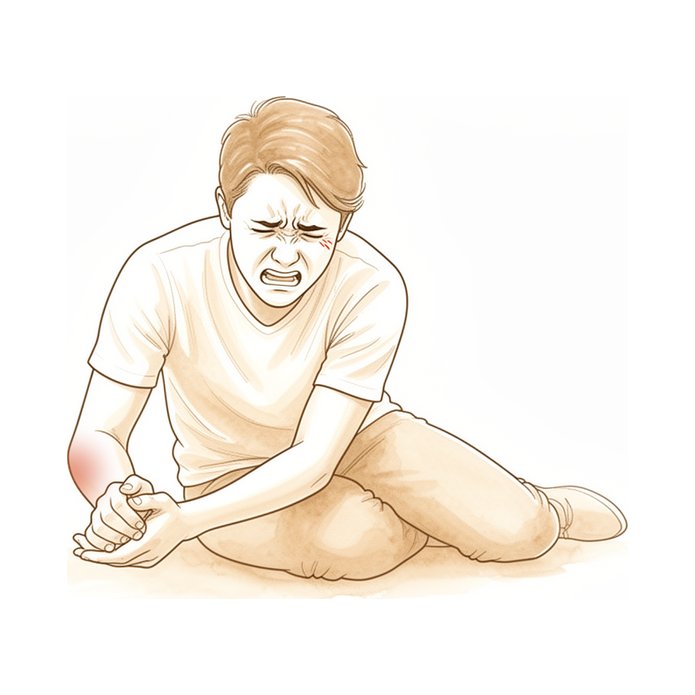
Una persona que se ha caído apoyándose en la mano extendida, agarrándose la parte posterior de la muñeca por el dolor.
La lesión del ligamento escafo-lunar suele producirse tras una caída sobre la mano extendida; el dolor se siente en la parte dorsal de la muñeca. Kieran Hirpara 4.0

Esta página se tradujo automáticamente y todavía no la ha revisado un médico. La versión en inglés es la versión oficial.

Qué está sintiendo

La mayoría de las personas notan esto por primera vez después de una caída sobre la mano extendida; esa caída típica en la que uno intenta amortiguar el impacto y, al mismo tiempo, se fractura la muñeca. Se siente dolor en la parte posterior de la muñeca, generalmente un poco hacia el lado del pulgar; este dolor suele intensificarse al empujar, agarrar objetos o soportar peso con la mano: al hacer flexiones, al levantarse de una silla, al abrir una puerta pesada o al levantar una olla.

La muñeca a menudo se siente débil e inestable. Algunas personas describen una sensación de “clic”, “chasquido” o atrapamiento al moverla de cierta manera, como si algo en su interior se desplazara. Puede haber algo de hinchazón, y el punto exacto en la parte posterior de la muñeca, entre dos de los pequeños huesos de la muñeca, suele ser sensible al tacto. En las primeras fases, es fácil atribuirlo a un esguince que “no termina de curarse”; esa es precisamente la trampa: el ligamento afectado no sana por sí solo.

¿Qué está ocurriendo realmente?

La muñeca está formada por ocho pequeños huesos que se mantienen en una alineación precisa gracias a ligamentos cortos y resistentes. Uno de los más importantes es el ligamento escafo-lunar, que une dos de esos huesos (el escafoides y el lunado) en el centro de la muñeca. Funciona como la piedra angular que permite que todo el carpo se mueva como una unidad coordinada.

Cuando ese ligamento se desgarra, ambos huesos pierden su conexión. El escafoides se inclina hacia adelante y los huesos comienzan a salirse de su alineación normal. Al principio, esto puede manifestarse únicamente cuando la muñeca se somete a cierta tensión (un problema “dinámico”); con el tiempo, esa separación puede volverse permanente (un problema “estático”). La razón por la que tomamos esto en serio, incluso cuando el dolor es leve, es a largo plazo: una muñeca cuyos huesos ya no están alineados sufre un desgaste irregular; con el paso de los años, esa carga anormal puede desgastar el cartílago y provocar un patrón específico de artritis de muñeca. Tratar el ligamento a tiempo consiste precisamente en prevenir todo esto.

¿Qué podemos hacer al respecto?

El Dr. Kieran Hirpara es cirujano de extremidades superiores en el Mater Private Hospital Rockhampton; él orienta la forma en que manejamos esta afección en nuestra clínica. Por lo general, los pacientes son derivados a nuestra clínica por su médico de cabecera; si un fisioterapeuta le ha sugerido consultarnos, igualmente necesitará una derivación de su médico de cabecera para poder acceder al reembolso de Medicare. Esto nos permite iniciar con una evaluación exhaustiva de su historial clínico, un examen físico y estudios por imágenes. En casos crónicos, normalmente probamos primero tratamientos no quirúrgicos y solo consideramos la cirugía cuando estos no resultan suficientemente efectivos.

El tratamiento adecuado depende en gran medida de cuándo ocurrió la lesión y de si los huesos aún están alineados, razón por la cual es fundamental obtener un diagnóstico preciso. Por lo general combinamos el examen físico con radiografías (en ocasiones se toman vistas especiales “de estrés” mientras el paciente cierra el puño) y, con frecuencia, con resonancia magnética. La forma más fiable de visualizar directamente el ligamento es mediante una artroscopia de muñeca (cirugía con cámara endoscópica), que sirve tanto para el diagnóstico definitivo como, en muchos casos, para el tratamiento.

  • En lesiones recientes donde aún es posible reparar el ligamento, este se sutura nuevamente (cada vez más mediante técnicas mínimamente invasivas); a veces se refuerza con tejido cercano, y los huesos se mantienen en posición con alambres temporales mientras cicatriza.
  • En lesiones más antiguas donde ya no se puede reparar el ligamento de forma sencilla, pero aún es posible volver a alinear los huesos, el tratamiento habitual consiste en reconstruir el ligamento. Los cirujanos utilizan una tira de uno de los propios tendones del paciente, o tejido cercano, que se teje en su lugar para restablecer la conexión y volver a colocar el escafoides en su posición correcta.
  • En lesiones crónicas donde los huesos permanecen rígidos en una posición anómala o ya se ha desarrollado artritis, ya no es posible reparar ni reconstruir el ligamento. En estos casos optamos por operaciones de rescate cuyo objetivo es proporcionar una muñeca más fuerte y mucho menos dolorosa, mediante la fusión o extirpación de ciertos huesos pequeños; esto implica aceptar cierta pérdida de movilidad a cambio de una mayor comodidad a largo plazo.

En casos leves y casuales que no causan molestias, a veces basta con un seguimiento clínico, acompañado de terapia de manos para fortalecer los músculos que ayudan a estabilizar la muñeca.

Qué esperar

Se trata de una lesión de muñeca que se beneficia enormemente de un diagnóstico y tratamiento tempranos. Cuando se repara un desgarro reciente o se reconstruye uno que aún es reducible, el objetivo es lograr una muñeca estable y cómoda que le permita volver a realizar la mayoría de sus actividades. No obstante, es normal perder un poco de la amplitud extrema de movimiento, y la recuperación se mide en meses, no en semanas. Tras la cirugía, deberá llevar un yeso o férula durante un tiempo mientras la reparación cicatriza; posteriormente se iniciará un programa estructurado de terapia de la mano para recuperar el movimiento y la fuerza. Los alambres, si se utilizan, suelen retirarse en la consulta unas semanas después.

La verdad: ninguna intervención quirúrgica devuelve la muñeca a su estado original, y los resultados suelen ser mejores cuanto antes se trate la lesión. Si ya ha llegado a la fase de “salvamento”, el compromiso es real pero vale la pena: se reduce considerablemente el dolor y obtiene una muñeca en la que puede confiar, aunque con cierta rigidez como contrapartida. Lo más importante es elegir la intervención adecuada para su lesión específica; para ello, es fundamental mantener una conversación detallada al respecto.

Cuándo consultar a un especialista

  • Una muñeca que permanece dolorida, débil o “hace clic” durante más de unas pocas semanas después de una caída; en particular, dolor en el dorso de la muñeca al empujar o agarrar algo. No asuma que un “esguince” persistente es inofensivo.
  • Ha fracturado la muñeca (fractura del radio distal) y la muñeca sigue adolorida o inestable después de que el hueso haya sanado. Estas lesiones ligamentosas suelen ocurrir conjuntamente y a veces pasan desapercibidas.
  • Una sensación constante de clic, traba o de que la muñeca “cede”.
  • Lesión conocida del escafoides y semilunar, con dolor nuevo o en aumento, o hinchazón que no desaparece: merece una reevaluación antes de que empeore.

En mayor profundidad

Esta sección va más allá de lo necesario para que usted tome sus propias decisiones de tratamiento. La lesión del ligamento escafo-lunar merece una lectura adicional, pues es la lesión de muñeca en la que mayor es la diferencia entre la gravedad del problema y la eficacia de las soluciones disponibles; la literatura médica lo afirma claramente.

¿Por qué un ligamento tan pequeño es tan importante?

El escafoides y el lunato se encuentran uno al lado del otro en la primera fila de los huesos carpianos, unidos por un ligamento interóseo corto. Su forma hace que tiendan a rotar en direcciones opuestas bajo carga: el escafoides se flexiona, mientras que el lunato se extiende; el ligamento es lo que los mantiene unidos a pesar de esa tendencia.

Cuando este ligamento falla, los dos huesos se separan y giran uno lejos del otro. Dado que todo el carpo se mueve como un sistema interconectado, esto altera la forma en que la carga se distribuye en la muñeca; el cambio en el contacto entre los huesos provoca, progresivamente, el desgaste articular siguiendo una secuencia bien definida: el patrón de colapso avanzado escafolunado.

Este es el punto clave para el paciente: un desgarro completo sin tratamiento no es una situación estable que pueda mejorar por sí sola. Es la primera etapa de un proceso artrítico predecible; eso justifica la necesidad de atender una lesión que, al principio, puede no ser especialmente dolorosa.

Las reconstrucciones no se han diferenciado aún

En el caso de lesiones crónicas, existen numerosas técnicas quirúrgicas, lo cual ya resulta informativo por sí solo. Al comparar distintas técnicas para la ruptura crónica del ligamento interóseo escafolunar en 978 pacientes, la tenodesis logró mejorar significativamente el espacio y el ángulo escafolunarar en comparación con la capsulodesis, según mediciones radiográficas; los datos disponibles también indican ciertos beneficios de la tenodesis [1].

No obstante, la mejora radiográfica no equivale a superioridad clínica; la revisión más amplia al respecto resulta poco concluyente. En el caso de la disociación escafolunar no artrítica crónica en 342 pacientes, la heterogeneidad en la recopilación de datos, la escasez de estudios comparativos y el seguimiento a corto plazo impidieron llegar a cualquier conclusión sobre la superioridad de alguna técnica en particular. Los autores abogan por la realización de estudios comparativos a largo plazo y estudios sobre la evolución natural de la enfermedad [2].

La falta de estudios sobre la evolución natural es el verdadero vacío

Esa última solicitud resulta inusual y merece ser analizada con detenimiento. Pedir estudios sobre la evolución natural de las lesiones implica que el campo médico no sabe con certeza qué ocurre con una lesión escafo-lunar no tratada: cuántos pacientes desarrollan artritis, en qué plazo de tiempo y cuáles son los casos afectados.

Sin esa información, no es posible cuantificar los beneficios de un tratamiento. Sabemos que la secuencia degenerativa que lleva a la artritis efectivamente ocurre; sin embargo, desconocemos qué proporción de pacientes la experimenta ni con qué rapidez. Por consiguiente, cualquier afirmación de que la reconstrucción “previene la artritis” no es más que una extrapolación basada en mecanismos fisiológicos, no un resultado clínicamente demostrado.

De ello se derivan dos conclusiones. En primer lugar, el momento del tratamiento es crucial: reparar un ligamento cuando el tejido aún es reparable y los huesos aún pueden reducirse no es lo mismo que realizar una reconstrucción años después. En segundo lugar, cualquier recomendación terapéutica debe basarse más en los hallazgos individuales del paciente que en evidencia proveniente de ensayos clínicos, puesto que dicha evidencia aún no existe.

Etapas en las que el proceso ya ha avanzado

Una vez que se desarrolla la artritis, la cuestión reconstructiva deja de ser relevante y surge la necesidad de optar por un tratamiento de rescate; habitualmente, esto implica decidir entre extirpar la fila proximal de los huesos carpianos o fusionar cuatro de ellos. Estas opciones, así como las evidencias que las comparan, se describen en la página sobre el síndrome SLAC/SNAC de la muñeca, no aquí.

Referencias

[1] Daly LT, Daly MC, Mohamadi A, Chen N. Trastorno crónico del ligamento interóseo escafolunar: revisión sistemática y metaanálisis de los tratamientos quirúrgicos. Hand (N Y). 2018;15(1):27-34. https://doi.org/10.1177/1558944718787289

[2] Naqui Z, Khor WS, Mishra A, Lees V, Muir L. Manejo de la disociación escafolunar crónica no artrítica: una revisión sistemática. J Hand Surg Eur Vol. 2017;43(4):394-401. https://doi.org/10.1177/1753193417734990


Creative Commons BY-NC 4.0

CC Creative Commons licence
BY Attribution — you must credit the source
NC NonCommercial — not for commercial use

Attribution-NonCommercial 4.0 International


Creative Commons Corporation ("Creative Commons") is not a law firm and does not provide legal services or legal advice. Distribution of Creative Commons public licenses does not create a lawyer-client or other relationship. Creative Commons makes its licenses and related information available on an "as-is" basis. Creative Commons gives no warranties regarding its licenses, any material licensed under their terms and conditions, or any related information. Creative Commons disclaims all liability for damages resulting from their use to the fullest extent possible.

Using Creative Commons Public Licenses

Creative Commons public licenses provide a standard set of terms and conditions that creators and other rights holders may use to share original works of authorship and other material subject to copyright and certain other rights specified in the public license below. The following considerations are for informational purposes only, are not exhaustive, and do not form part of our licenses.

Considerations for licensors: Our public licenses are intended for use by those authorized to give the public permission to use material in ways otherwise restricted by copyright and certain other rights. Our licenses are irrevocable. Licensors should read and understand the terms and conditions of the license they choose before applying it. Licensors should also secure all rights necessary before applying our licenses so that the public can reuse the material as expected. Licensors should clearly mark any material not subject to the license. This includes other CC- licensed material, or material used under an exception or limitation to copyright. More considerations for licensors: wiki.creativecommons.org/Considerations_for_licensors

Considerations for the public: By using one of our public licenses, a licensor grants the public permission to use the licensed material under specified terms and conditions. If the licensor's permission is not necessary for any reason--for example, because of any applicable exception or limitation to copyright--then that use is not regulated by the license. Our licenses grant only permissions under copyright and certain other rights that a licensor has authority to grant. Use of the licensed material may still be restricted for other reasons, including because others have copyright or other rights in the material. A licensor may make special requests, such as asking that all changes be marked or described. Although not required by our licenses, you are encouraged to respect those requests where reasonable. More considerations for the public: wiki.creativecommons.org/Considerations_for_licensees


Creative Commons Attribution-NonCommercial 4.0 International Public License

By exercising the Licensed Rights (defined below), You accept and agree to be bound by the terms and conditions of this Creative Commons Attribution-NonCommercial 4.0 International Public License ("Public License"). To the extent this Public License may be interpreted as a contract, You are granted the Licensed Rights in consideration of Your acceptance of these terms and conditions, and the Licensor grants You such rights in consideration of benefits the Licensor receives from making the Licensed Material available under these terms and conditions.

Section 1 -- Definitions.

a. Adapted Material means material subject to Copyright and Similar Rights that is derived from or based upon the Licensed Material and in which the Licensed Material is translated, altered, arranged, transformed, or otherwise modified in a manner requiring permission under the Copyright and Similar Rights held by the Licensor. For purposes of this Public License, where the Licensed Material is a musical work, performance, or sound recording, Adapted Material is always produced where the Licensed Material is synched in timed relation with a moving image.

b. Adapter's License means the license You apply to Your Copyright and Similar Rights in Your contributions to Adapted Material in accordance with the terms and conditions of this Public License.

c. Copyright and Similar Rights means copyright and/or similar rights closely related to copyright including, without limitation, performance, broadcast, sound recording, and Sui Generis Database Rights, without regard to how the rights are labeled or categorized. For purposes of this Public License, the rights specified in Section 2(b)(1)-(2) are not Copyright and Similar Rights.

d. Effective Technological Measures means those measures that, in the absence of proper authority, may not be circumvented under laws fulfilling obligations under Article 11 of the WIPO Copyright Treaty adopted on December 20, 1996, and/or similar international agreements.

e. Exceptions and Limitations means fair use, fair dealing, and/or any other exception or limitation to Copyright and Similar Rights that applies to Your use of the Licensed Material.

f. Licensed Material means the artistic or literary work, database, or other material to which the Licensor applied this Public License.

g. Licensed Rights means the rights granted to You subject to the terms and conditions of this Public License, which are limited to all Copyright and Similar Rights that apply to Your use of the Licensed Material and that the Licensor has authority to license.

h. Licensor means the individual(s) or entity(ies) granting rights under this Public License.

i. NonCommercial means not primarily intended for or directed towards commercial advantage or monetary compensation. For purposes of this Public License, the exchange of the Licensed Material for other material subject to Copyright and Similar Rights by digital file-sharing or similar means is NonCommercial provided there is no payment of monetary compensation in connection with the exchange.

j. Share means to provide material to the public by any means or process that requires permission under the Licensed Rights, such as reproduction, public display, public performance, distribution, dissemination, communication, or importation, and to make material available to the public including in ways that members of the public may access the material from a place and at a time individually chosen by them.

k. Sui Generis Database Rights means rights other than copyright resulting from Directive 96/9/EC of the European Parliament and of the Council of 11 March 1996 on the legal protection of databases, as amended and/or succeeded, as well as other essentially equivalent rights anywhere in the world.

l. You means the individual or entity exercising the Licensed Rights under this Public License. Your has a corresponding meaning.

Section 2 -- Scope.

a. License grant.

1. Subject to the terms and conditions of this Public License, the Licensor hereby grants You a worldwide, royalty-free, non-sublicensable, non-exclusive, irrevocable license to exercise the Licensed Rights in the Licensed Material to:

a. reproduce and Share the Licensed Material, in whole or in part, for NonCommercial purposes only; and

b. produce, reproduce, and Share Adapted Material for NonCommercial purposes only.

2. Exceptions and Limitations. For the avoidance of doubt, where Exceptions and Limitations apply to Your use, this Public License does not apply, and You do not need to comply with its terms and conditions.

3. Term. The term of this Public License is specified in Section 6(a).

4. Media and formats; technical modifications allowed. The Licensor authorizes You to exercise the Licensed Rights in all media and formats whether now known or hereafter created, and to make technical modifications necessary to do so. The Licensor waives and/or agrees not to assert any right or authority to forbid You from making technical modifications necessary to exercise the Licensed Rights, including technical modifications necessary to circumvent Effective Technological Measures. For purposes of this Public License, simply making modifications authorized by this Section 2(a) (4) never produces Adapted Material.

5. Downstream recipients.

a. Offer from the Licensor -- Licensed Material. Every recipient of the Licensed Material automatically receives an offer from the Licensor to exercise the Licensed Rights under the terms and conditions of this Public License.

b. No downstream restrictions. You may not offer or impose any additional or different terms or conditions on, or apply any Effective Technological Measures to, the Licensed Material if doing so restricts exercise of the Licensed Rights by any recipient of the Licensed Material.

6. No endorsement. Nothing in this Public License constitutes or may be construed as permission to assert or imply that You are, or that Your use of the Licensed Material is, connected with, or sponsored, endorsed, or granted official status by, the Licensor or others designated to receive attribution as provided in Section 3(a)(1)(A)(i).

b. Other rights.

1. Moral rights, such as the right of integrity, are not licensed under this Public License, nor are publicity, privacy, and/or other similar personality rights; however, to the extent possible, the Licensor waives and/or agrees not to assert any such rights held by the Licensor to the limited extent necessary to allow You to exercise the Licensed Rights, but not otherwise.

2. Patent and trademark rights are not licensed under this Public License.

3. To the extent possible, the Licensor waives any right to collect royalties from You for the exercise of the Licensed Rights, whether directly or through a collecting society under any voluntary or waivable statutory or compulsory licensing scheme. In all other cases the Licensor expressly reserves any right to collect such royalties, including when the Licensed Material is used other than for NonCommercial purposes.

Section 3 -- License Conditions.

Your exercise of the Licensed Rights is expressly made subject to the following conditions.

a. Attribution.

1. If You Share the Licensed Material (including in modified form), You must:

a. retain the following if it is supplied by the Licensor with the Licensed Material:

i. identification of the creator(s) of the Licensed Material and any others designated to receive attribution, in any reasonable manner requested by the Licensor (including by pseudonym if designated);

ii. a copyright notice;

iii. a notice that refers to this Public License;

iv. a notice that refers to the disclaimer of warranties;

v. a URI or hyperlink to the Licensed Material to the extent reasonably practicable;

b. indicate if You modified the Licensed Material and retain an indication of any previous modifications; and

c. indicate the Licensed Material is licensed under this Public License, and include the text of, or the URI or hyperlink to, this Public License.

2. You may satisfy the conditions in Section 3(a)(1) in any reasonable manner based on the medium, means, and context in which You Share the Licensed Material. For example, it may be reasonable to satisfy the conditions by providing a URI or hyperlink to a resource that includes the required information.

3. If requested by the Licensor, You must remove any of the information required by Section 3(a)(1)(A) to the extent reasonably practicable.

4. If You Share Adapted Material You produce, the Adapter's License You apply must not prevent recipients of the Adapted Material from complying with this Public License.

Section 4 -- Sui Generis Database Rights.

Where the Licensed Rights include Sui Generis Database Rights that apply to Your use of the Licensed Material:

a. for the avoidance of doubt, Section 2(a)(1) grants You the right to extract, reuse, reproduce, and Share all or a substantial portion of the contents of the database for NonCommercial purposes only;

b. if You include all or a substantial portion of the database contents in a database in which You have Sui Generis Database Rights, then the database in which You have Sui Generis Database Rights (but not its individual contents) is Adapted Material; and

c. You must comply with the conditions in Section 3(a) if You Share all or a substantial portion of the contents of the database.

For the avoidance of doubt, this Section 4 supplements and does not replace Your obligations under this Public License where the Licensed Rights include other Copyright and Similar Rights.

Section 5 -- Disclaimer of Warranties and Limitation of Liability.

a. UNLESS OTHERWISE SEPARATELY UNDERTAKEN BY THE LICENSOR, TO THE EXTENT POSSIBLE, THE LICENSOR OFFERS THE LICENSED MATERIAL AS-IS AND AS-AVAILABLE, AND MAKES NO REPRESENTATIONS OR WARRANTIES OF ANY KIND CONCERNING THE LICENSED MATERIAL, WHETHER EXPRESS, IMPLIED, STATUTORY, OR OTHER. THIS INCLUDES, WITHOUT LIMITATION, WARRANTIES OF TITLE, MERCHANTABILITY, FITNESS FOR A PARTICULAR PURPOSE, NON-INFRINGEMENT, ABSENCE OF LATENT OR OTHER DEFECTS, ACCURACY, OR THE PRESENCE OR ABSENCE OF ERRORS, WHETHER OR NOT KNOWN OR DISCOVERABLE. WHERE DISCLAIMERS OF WARRANTIES ARE NOT ALLOWED IN FULL OR IN PART, THIS DISCLAIMER MAY NOT APPLY TO YOU.

b. TO THE EXTENT POSSIBLE, IN NO EVENT WILL THE LICENSOR BE LIABLE TO YOU ON ANY LEGAL THEORY (INCLUDING, WITHOUT LIMITATION, NEGLIGENCE) OR OTHERWISE FOR ANY DIRECT, SPECIAL, INDIRECT, INCIDENTAL, CONSEQUENTIAL, PUNITIVE, EXEMPLARY, OR OTHER LOSSES, COSTS, EXPENSES, OR DAMAGES ARISING OUT OF THIS PUBLIC LICENSE OR USE OF THE LICENSED MATERIAL, EVEN IF THE LICENSOR HAS BEEN ADVISED OF THE POSSIBILITY OF SUCH LOSSES, COSTS, EXPENSES, OR DAMAGES. WHERE A LIMITATION OF LIABILITY IS NOT ALLOWED IN FULL OR IN PART, THIS LIMITATION MAY NOT APPLY TO YOU.

c. The disclaimer of warranties and limitation of liability provided above shall be interpreted in a manner that, to the extent possible, most closely approximates an absolute disclaimer and waiver of all liability.

Section 6 -- Term and Termination.

a. This Public License applies for the term of the Copyright and Similar Rights licensed here. However, if You fail to comply with this Public License, then Your rights under this Public License terminate automatically.

b. Where Your right to use the Licensed Material has terminated under Section 6(a), it reinstates:

1. automatically as of the date the violation is cured, provided it is cured within 30 days of Your discovery of the violation; or

2. upon express reinstatement by the Licensor.

For the avoidance of doubt, this Section 6(b) does not affect any right the Licensor may have to seek remedies for Your violations of this Public License.

c. For the avoidance of doubt, the Licensor may also offer the Licensed Material under separate terms or conditions or stop distributing the Licensed Material at any time; however, doing so will not terminate this Public License.

d. Sections 1, 5, 6, 7, and 8 survive termination of this Public License.

Section 7 -- Other Terms and Conditions.

a. The Licensor shall not be bound by any additional or different terms or conditions communicated by You unless expressly agreed.

b. Any arrangements, understandings, or agreements regarding the Licensed Material not stated herein are separate from and independent of the terms and conditions of this Public License.

Section 8 -- Interpretation.

a. For the avoidance of doubt, this Public License does not, and shall not be interpreted to, reduce, limit, restrict, or impose conditions on any use of the Licensed Material that could lawfully be made without permission under this Public License.

b. To the extent possible, if any provision of this Public License is deemed unenforceable, it shall be automatically reformed to the minimum extent necessary to make it enforceable. If the provision cannot be reformed, it shall be severed from this Public License without affecting the enforceability of the remaining terms and conditions.

c. No term or condition of this Public License will be waived and no failure to comply consented to unless expressly agreed to by the Licensor.

d. Nothing in this Public License constitutes or may be interpreted as a limitation upon, or waiver of, any privileges and immunities that apply to the Licensor or You, including from the legal processes of any jurisdiction or authority.


Creative Commons is not a party to its public licenses. Notwithstanding, Creative Commons may elect to apply one of its public licenses to material it publishes and in those instances will be considered the “Licensor.” The text of the Creative Commons public licenses is dedicated to the public domain under the CC0 Public Domain Dedication. Except for the limited purpose of indicating that material is shared under a Creative Commons public license or as otherwise permitted by the Creative Commons policies published at creativecommons.org/policies, Creative Commons does not authorize the use of the trademark "Creative Commons" or any other trademark or logo of Creative Commons without its prior written consent including, without limitation, in connection with any unauthorized modifications to any of its public licenses or any other arrangements, understandings, or agreements concerning use of licensed material. For the avoidance of doubt, this paragraph does not form part of the public licenses.

Creative Commons may be contacted at creativecommons.org.