Qué está sintiendo
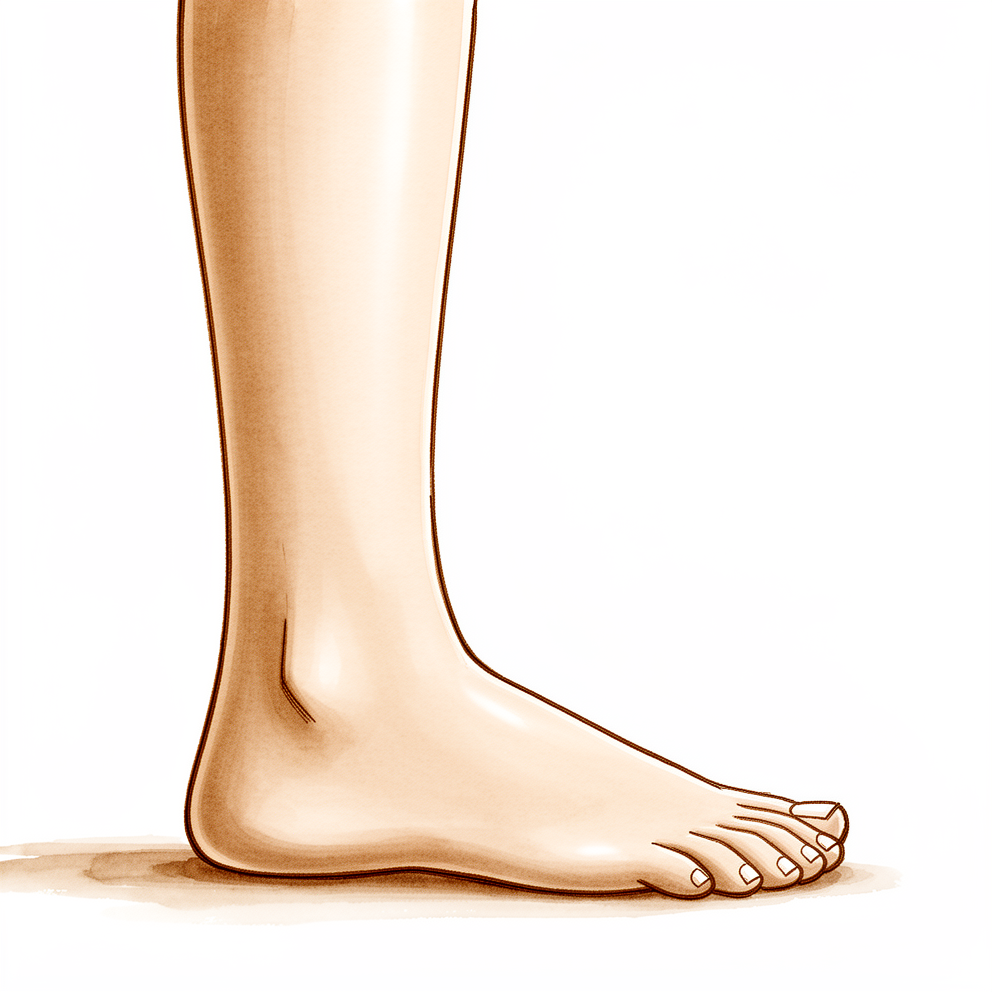
Una lesión sindesmótica afecta a los ligamentos que unen los dos huesos de la parte inferior de la pierna, justo por encima del tobillo. El dolor suele distribuirse alrededor del tobillo en lugar de concentrarse en un solo punto; con frecuencia se localiza en la parte frontal y lateral, justo por encima de los ligamentos externos del tobillo. También puede haber sensibilidad al tacto en la zona interna del tobillo.
Ciertos movimientos empeoran el dolor: subir pendientes, girar o torcer el pie, y ponerse de puntillas sobre un solo pie son acciones que suelen provocar molestias. Girar el pie hacia afuera o flexionarlo hacia la espinilla también pueden desencadenar el dolor. La hinchazón y los hematomas son comunes; estos últimos pueden extenderse bastante hacia arriba por la pierna o por la zona interna del tobillo. Si el tobillo es inestable, soportar peso suele resultar muy doloroso.
Algunos patrones de aparición de síntomas indican esta lesión en lugar de un simple esguince. El hecho de que el dolor persista a pesar del reposo es una señal típica. En cambio, si un esguince mejora por completo entre un episodio y otro, probablemente se trate de otro problema en los ligamentos externos del tobillo. La hinchazón y la rigidez que perduran, la debilidad al empujar con el pie, y la sensación de que el tobillo podría “ceder” pueden mantenerse mucho tiempo después de la lesión inicial, incluso cuando los exámenes habituales parecen normales.
Las tareas cotidianas pueden volverse difíciles: subir escaleras o pendientes, levantarse de una silla, o pararse sobre una sola pierna para vestirse pueden resultar dolorosos. Es posible que no logre empujar adecuadamente al caminar, por lo que tiende a apoyarse más en la otra pierna.
Existen algunos signos de alerta temprana: si no puede soportar ningún peso, si la hinchazón aparece rápidamente y es intensa, o si hay hematomas extensos en la parte interna o superior de la pierna, es más probable que se trate de una lesión sindesmótica. Estas lesiones son fáciles de pasar por alto y, al principio, a veces se confunden con un simple esguince. Si algo de esto coincide con su situación, merece la pena hacerse una evaluación adecuada en lugar de esperar a que mejore por sí solo.
¿Qué está ocurriendo realmente?
La parte inferior de su pierna cuenta con dos huesos: la tibia y el peroné, que se encuentran uno al lado del otro justo por encima del tobillo. Ambos huesos se mantienen unidos por un conjunto de ligamentos fuertes denominados sindesmosis. Puede imaginarlo como una correa resistente que impide que los dos huesos se separen al caminar; además, ayuda a transmitir el peso corporal a lo largo de la pierna, por lo que desempeña una función esencial cada vez que usted se para.
La lesión se produce cuando el pie se dobla hacia arriba, en dirección a la espinilla, y al mismo tiempo se tuerce hacia afuera. Esta fuerza de torsión puede separar los dos huesos y desgarrar dicha “correa”. Si la lesión es grave, también pueden dañarse otras estructuras, como el ligamento situado en la cara interna del tobillo o el propio hueso peroné. Para que los huesos realmente se separen, deben desgarrarse varios ligamentos fuertes y una membrana resistente que los une.
Cuando esta “correa” se daña, la articulación del tobillo pierde parte de su estabilidad. El hueso pequeño situado bajo el tobillo, el astrágalo, puede desplazarse ligeramente al moverse; ese desplazamiento es lo que genera el dolor, la hinchazón y esa sensación de inestabilidad mencionada anteriormente. El ligamento desgarrado también puede inflamarse y cicatrizar, lo cual puede comprimir tejidos en la parte frontal del tobillo y mantener el dolor activo.
Si los huesos permanecen separados y no se trata la lesión, con el tiempo la articulación se desgasta de forma desigual, pudiendo desarrollarse artritis por desgaste. Por eso es crucial obtener un diagnóstico correcto. Algunas lesiones son estables: la “correa” está distendida pero sigue manteniendo los huesos en su sitio; normalmente se resuelven sin cirugía, con una carga de peso controlada. Otras son inestables: los huesos pueden separarse, y en estos casos se requiere una operación para unirlos mientras cicatrizan. Es fundamental actuar a tiempo, pues los retrasos superiores a seis meses se asocian con un peor funcionamiento de la articulación posteriormente.
¿Qué podemos hacer al respecto?
Dado que esta lesión puede pasar desapercibida, a veces utilizamos estudios de imagen que muestran claramente los ligamentos antes de decidir el tratamiento adecuado.
Si su lesión es estable, es decir, si los ligamentos están distendidos pero aún mantienen los huesos en su posición, no es necesario recurrir a la cirugía. Protegemos el tobillo mientras cicatriza y le permitimos cargar peso sobre él de forma gradual. La fisioterapia le ayuda a recuperar el movimiento, la fuerza y la confianza en el tobillo. Algunas personas consideran que un vendaje blando brinda suficiente soporte al inicio, mientras que otras necesitan un yeso durante hasta tres semanas. La cantidad adecuada de reposo sin carga varía según cada caso, y nosotros le guiaremos en este proceso.
Si la lesión es inestable, lo que significa que los huesos pueden separarse, normalmente se recomienda la cirugía. Esperar más de seis meses empeora el resultado, por lo que procuramos intervenir lo antes posible. La operación consiste en unir los dos huesos mientras los ligamentos sanan. Esto puede lograrse mediante un tornillo, una sutura resistente y un pequeño botón, o reparando directamente los ligamentos desgarrados. Analizaremos juntos cuál de estas opciones se adapta mejor a su lesión y acordaremos un plan de tratamiento.
Tras la cirugía, la fisioterapia acelera su recuperación. La mayoría de los pacientes vuelven a sus actividades habituales, incluyendo el deporte, alrededor de cuatro meses después de la operación.
Qué esperar
El pronóstico depende de si la lesión es estable o inestable. Una lesión estable, en la que la “correa” de ligamentos aún mantiene los huesos en su lugar, normalmente se resuelve sin cirugía. Se protege el tobillo, se va cargando peso sobre él gradualmente y se recupera la fuerza mediante fisioterapia. Las personas tratadas de esta forma reportan una buena funcionalidad a largo plazo; pocas vuelven a sufrir lesiones en el tobillo.
En una lesión inestable, es necesaria una operación para unir los huesos mientras los ligamentos sanan. Cuando esta intervención se realiza correctamente, alineando los huesos con precisión y fijándolos firmemente, la mayoría de los pacientes vuelven a sus actividades habituales. Unos cuatro meses después de la cirugía, la mayoría retoman sus actividades cotidianas, incluso el deporte. Muchas personas conservan una buena funcionalidad del tobillo durante décadas, aunque los estudios por imagen a veces revelan signos de artritis degenerativa en la articulación. En un estudio a largo plazo, todas las personas a quienes se repararon los ligamentos directamente afirmaron que volverían a someterse al mismo procedimiento si fuera necesario.
La recuperación rara vez sigue un camino lineal. Al principio, soportar peso con el pie resulta difícil, y volver a mover el tobillo requiere esfuerzo constante mediante fisioterapia. Iniciar tempranamente la carga de peso y el movimiento ayuda a que el tobillo funcione mejor en las primeras semanas, aunque no garantiza un regreso más rápido al trabajo. El tiempo que cada persona tarda en volver a sus actividades varía mucho; por eso, intente no compararse con otros.
Si una lesión inestable no se trata, los problemas suelen persistir en lugar de mejorar. Los huesos pueden desplazarse, la articulación se desgasta de forma desigual, y la inestabilidad crónica provoca dolor continuo y debilidad en el tobillo. Demorar la cirugía más de seis meses se asocia con peor funcionalidad posterior, motivo por el cual es fundamental una evaluación temprana. A veces, incluso tras el tratamiento, los ligamentos sanan de forma laxa; una articulación inestable o poco firme conlleva resultados menos favorables.
Algunas lesiones también implican daño dentro de la propia articulación del tobillo. Esto ocurre en hasta la mitad de las lesiones inestables, y requiere tratamiento adicional en aproximadamente uno de cada cinco casos. Su cirujano lo evaluará al planificar su tratamiento.
¿Cuándo consultar a un especialista?
Acuda a un profesional para que evalúe su tobillo sin demora si no puede soportar ningún peso sobre él, si la hinchazón aparece de forma rápida y pronunciada, o si hay un gran hematoma en la parte interna o superior de la pierna. Estos son los signos tempranos de que la lesión va más allá de un simple esguince. Solicite una valoración especializada si el dolor persiste a pesar del reposo, si el tobillo se siente inestable o “cede” al apoyarse, o si la hinchazón y la rigidez perduran mucho tiempo después de la lesión. Esta lesión es fácil de pasar por alto y, al principio, a veces se confunde con un esguince común. Si no se trata a tiempo, esperar más de seis meses antes de operar se asocia con un peor resultado funcional posteriormente. Si ya le han diagnosticado un esguince pero su tobillo no mejora, vale la pena preguntar si se ha examinado la sindesmosis.
Evidence & references
This is the clinical evidence summary written for health professionals. It is technical, and it lists the research this page was built from. You do not need to read it to understand your treatment or to make a decision about it.
Anatomy & Pathophysiology
Ligamentous Anatomy
- The ankle syndesmosis is composed of the anterior-inferior tibiofibular ligament, the posteroinferior tibiofibular ligament, and the interosseous membrane [2].
- A separate anterior-inferior tibiofibular ligament fascicle, known as the Bassett ligament, may be present and contribute to syndesmotic impingement [2].
- Approximately 20% of the syndesmotic ligament is intra-articular [2].
- The interosseous membrane is important in weight transmission through the fibula [3].
Pathomechanics
- Syndesmotic injuries result from a combination of dorsiflexion and external rotation forces [1].
- Syndesmotic rupture can occur as a result of a torsional movement of the talus that forces the tibia and fibula apart [3].
- Syndesmotic rupture can occur as a result of a severe abduction force [3].
- Severe syndesmotic injuries are associated with deltoid ligament disruption and fibula fracture [1].
- Syndesmotic instability results in lateral and rotatory displacement of the talus [1].
Radiographic Anatomy & Measurements
- Normal tibiofibular clear space is less than 6 mm on either the AP or mortise ankle view [1].
- Normal tibiofibular overlap is greater than 6 mm on the AP view and greater than 1 mm on the mortise view [1].
- A tibiofibular clear space of greater than 5 mm on the AP view has been suggested to correlate with syndesmotic rupture [3].
- A tibiofibular overlap of less than 5 mm on the AP view or less than 1 mm on the mortise view has been suggested to correlate with syndesmotic rupture [3].
- The mean tibiofibular clear space in the normal population is 3.8 mm in females and 4.6 mm in males [3].
- Some normal individuals have a shallow incisura resulting in no radiographic tibiofibular overlap [3].
- CT studies show wide variation in the shape of the syndesmosis, including deep concave incisurae and limited curves [3].
Pathophysiological Consequences
- Injury to the ankle syndesmosis can result in persistent pain and dysfunction secondary to syndesmotic impingement [2].
- Syndesmotic impingement most often involves the anterior tibiofibular ligament, with resulting synovitis and scarring [2].
- Untreated syndesmotic diastasis may result in persisting instability, pain, and progressive osteoarthritis [3].
- Patients with radiographic evidence of syndesmosis widening demonstrated a poorer overall outcome at 5 years in a study of ankle fracture outcomes [3].
Clinical Presentation
History and Physical Examination
- Acute syndesmotic injuries are typically associated with a twisting mechanism [1].
- Patients with syndesmotic instability usually cannot bear weight [1].
- Physical examination findings include tenderness near the syndesmosis and the deltoid ligament [1].
- Pain is elicited by external rotation of the ankle [1].
- A positive squeeze test is defined as pain at the syndesmosis when compressing the tibia and fibula at midcalf [1].
- Swelling and ecchymosis are present in acute syndesmotic injuries [1].
- Patients with syndesmotic impingement exhibit localized tenderness along the anterior syndesmosis [2].
- Dorsiflexion and external rotation of the ankle increase symptoms in patients with syndesmotic impingement [2].
- Tenderness during the squeeze test may be present in patients with syndesmotic impingement [2].
Imaging
- The AP view of plain radiography shows decreased tibiofibular overlap in syndesmotic injury [1].
- The mortise view of plain radiography shows increased tibiofibular clear space in syndesmotic injury [1].
- Tibial radiographs should be obtained to rule out a proximal fibula fracture (Maisonneuve fracture) [1].
- In subtle cases, the diagnosis is confirmed by weight-bearing radiographs and stress radiographs in eversion and external rotation, with comparison to the opposite side [1].
- CT may help evaluate the syndesmotic space, especially in chronic cases [1].
- MRI may show subtle syndesmotic ligament injury [1].
Investigations
Clinical Evaluation
- Tenderness near the syndesmosis and deltoid ligament is a clinical sign of syndesmotic injury [1].
- Pain with external rotation is a clinical sign of syndesmotic injury [1].
Plain Radiography
- A tibiofibular clear space greater than 5 mm on the AP view has been suggested to correlate with syndesmotic rupture [3].
- A tibiofibular overlap less than 5 mm on the AP view has been suggested to correlate with syndesmotic rupture [3].
- A tibiofibular overlap less than 1 mm on the mortise view has been suggested to correlate with syndesmotic rupture [3].
- The tibiofibular clear space is the most reliable parameter among plain radiographic measurements for syndesmotic rupture [3].
- Cadaveric models have shown that no predictable increase in measurements on plain radiography can be found on sectioning of the syndesmotic ligaments [3].
- An increase in the tibiofibular clear space in comparison to the contralateral ankle may be more accurate than absolute values [3].
Advanced Imaging
- Axial imaging has been shown to demonstrate disruptions not evident on plain radiographs [3].
- CT studies have shown wide variation in the shape of the syndesmosis, including a deep concave incisura in some and a limited curve in others [3].
- MRI provides a more accurate assessment of syndesmotic injury than plain radiography [3].
- MRI assessment of syndesmotic injury correlates well with direct arthroscopic assessment [3].
- MR arthrography may add further accuracy to the assessment of syndesmotic injury [3].
- The integrity of syndesmotic ligaments is rarely visualized on MRI and is surmised from radiographic diastasis [3].
Treatment
- Anatomic ligament repairs are a described surgical technique for syndesmotic injuries [4].
- An evidence-based approach to the treatment of acute traumatic syndesmosis (high ankle) sprains has been outlined [4].
- Syndesmotic fixation and management is a current practice among orthopedic surgeons for ankle fractures [4].
- Deltoid ligament repair is an alternative to syndesmotic fixation in bimalleolar equivalent ankle fractures [4].
- Repair of acute superficial deltoid complex avulsion is performed during ankle fracture fixation in National Football League players [4].
- Magnetic resonance imaging has been compared to physical examination for the diagnosis of syndesmotic injury after lateral ankle sprain [4].
References
[1] Aaos Comprehensive Orthopaedic Review 3. Acute and Chronic Injuries of the Ankle > IV. Syndesmotic Instability.
[2] Aaos Comprehensive Orthopaedic Review 3. Arthroscopy of the Ankle > IV. Syndesmotic Impingement.
[3] Rockwood And Green S Fractures In Adults. 59: Patellar Fractures and Dislocations and Extensor Mechanism Injuries > Syndesmotic Injuries.
[4] Campbell S Operative Orthopaedics 4 Volume Set. REPAIR OF ACUTE RUPTURE OF LATERAL LIGAMENTS > ACUTE ANKLE LIGAMENT INJURIES, CHRONIC ANKLE INSTABILITY.