Skip to content

Patients › Hand

Embarazo y afecciones de la mano

PDF

Carpal tunnel in pregnancy and de Quervains "mummy thumb" — why they happen, what is safe, and when they settle.
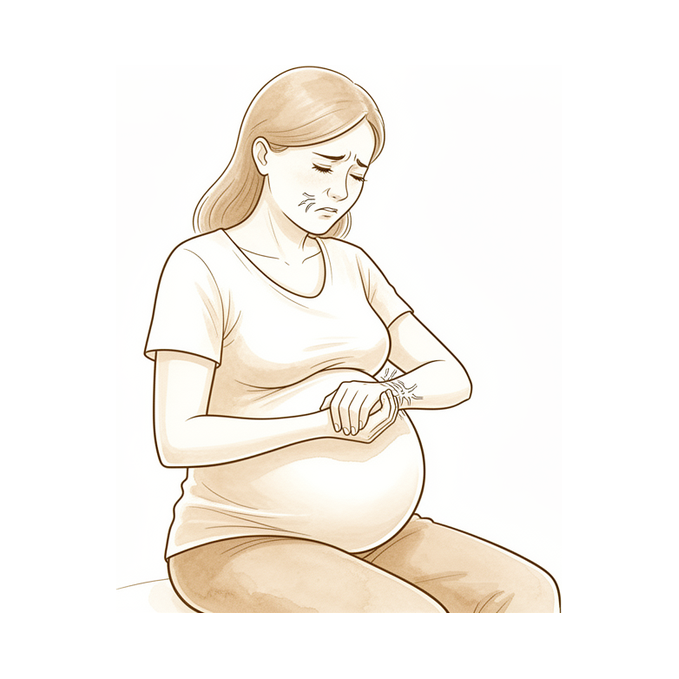
Una mujer embarazada sosteniendo su muñeca.
El síndrome del túnel carpiano y la tenosinovitis de De Quervain son frecuentes durante el embarazo y después del parto; por lo general, mejoran con medidas sencillas. Kieran Hirpara 4.0

Esta página se tradujo automáticamente y todavía no la ha revisado un médico. La versión en inglés es la versión oficial.

Los dolores, la sensación de hormigueo y el dolor en el pulgar son muy frecuentes durante el embarazo y en los primeros meses de cuidado del recién nacido. Pueden resultar muy molestos en un momento en el que las manos están más ocupadas que nunca; sin embargo, la buena noticia es que casi todos estos problemas son temporales, derivados de los cambios propios del embarazo y de la maternidad temprana. La gran mayoría se resuelven por sí solos con medidas sencillas y con el paso del tiempo. Rara vez es necesaria la cirugía.

En esta página se describen las dos afecciones que observamos con mayor frecuencia, así como los remedios sencillos que pueden ayudar. Es un complemento a nuestras páginas sobre síndrome del túnel carpiano y compresión nerviosa, tenosinovitis de De Quervain y entumecimiento y hormigueo en la mano y el brazo; aquí nos centramos en las particularidades que surgen cuando estos problemas aparecen durante el embarazo y el cuidado del bebé.

¿Por qué duelen las manos durante el embarazo?

El embarazo provoca cambios en el cuerpo que afectan especialmente a las estructuras pequeñas de la muñeca. Se acumula más líquido en los tejidos, y los cambios hormonales ablandan e inflaman las membranas que rodean los tendones y los nervios. La muñeca es una zona muy congestionada (allí pasan nervios y tendones por conductos estrechos), por lo que incluso una leve hinchazón puede presionar algo que antes no causaba molestia alguna. Si a eso le sumamos la nueva y constante actividad de levantar y alimentar al bebé, resulta fácil comprender por qué las manos y muñecas se resentirán.

Lo más importante a recordar es que la causa suele ser temporal: a medida que los cambios en el equilibrio de líquidos y hormonas se normalizan tras el parto, y a medida que el cuerpo se recupera, la presión disminuye y los síntomas tienden a desaparecer.

Síndrome del túnel carpiano durante el embarazo

El túnel carpiano es un canal estrecho en la parte frontal de la muñeca por donde pasa el nervio mediano hacia la mano. Durante el embarazo, la retención de líquidos hace que los tejidos dentro de dicho túnel se hinchen y compriman el nervio. El resultado es entumecimiento y hormigueo en el pulgar, el índice y el dedo medio (así como en la mitad del dedo anular); estos síntomas suelen describirse como sensación de “pins y needles” y, típicamente, empeoran por la noche, llegando a despertar a la mujer para agitar la mano. Algunas mujeres notan estos síntomas sobre todo en los últimos meses del embarazo.

Lo alentador es cómo evolucionan los síntomas tras el parto: en la mayoría de las mujeres, los síntomas disminuyen en cuestión de semanas después del nacimiento, una vez que el exceso de líquido se elimina. Por ello, el tratamiento durante el embarazo suele ser sencillo y tiene como objetivo proporcionar alivio mientras el cuerpo sigue su curso natural:

  • Férulas nocturnas para la muñeca son el tratamiento principal. Una férula que mantiene la muñeca recta ayuda a mantener el túnel carpiano lo más abierto posible durante el sueño; con frecuencia es la medida más útil.
  • Ajustes en las actividades: reducir el tiempo en posiciones o tareas que obliguen a doblar la muñeca durante largos periodos, y tomar pausas.
  • Terapia de la mano: para recibir orientación sobre el uso de férulas, postura y técnicas suaves.
  • En ocasiones se aplica una inyección de esteroides dentro del túnel carpiano cuando los síntomas son severos y no mejoran; esto busca aliviar la molestia hasta después del parto.

La cirugía rara vez es necesaria durante el embarazo, precisamente porque el problema suele resolverse una vez que nace el bebé.

Tenosinovitis de De Quervain (“pulgar de momia”)

La tenosinovitis de De Quervain consiste en una hinchazón dolorosa de los tendones ubicados en el lado del pulgar de la muñeca, donde atraviesan un túnel estrecho cerca del hueso de la muñeca. El dolor se localiza en dicha zona y se intensifica al agarrar objetos, levantar peso o girar la muñeca; con frecuencia se irradia hacia el pulgar y el antebrazo.

Recibe el apodo de “pulgar de momia” porque está estrechamente relacionada con los movimientos repetitivos de levantar y sostener al bebé, que someten a las muñecas a una carga constante —decenas de veces al día—, muchas veces en posiciones incómodas, al coger, cargar y alimentar al recién nacido. Los cambios hormonales durante el embarazo y la lactancia también influyen. A diferencia del síndrome del túnel carpiano, cuyos síntomas suelen manifestarse antes del parto, la tenosinovitis de De Quervain aparece o empeora tras el nacimiento, durante los meses de cuidado del bebé.

Por lo general, la afección mejora con el tiempo; su tratamiento es, en gran medida, sencillo:

  • Férula para el pulgar (tipo espica) que sostiene el pulgar y la muñeca dejando libre la punta del pulgar: esta férula permite el reposo de los tendones irritados y constituye la base del tratamiento.
  • Modificar la forma de levantar al bebé: sostenerlo por debajo manteniendo la muñeca recta y dejando que los antebrazos realicen el esfuerzo, en lugar de agarrarlo con el pulgar y la muñeca extendidos. Un terapeuta de la mano puede enseñarle cambios técnicos sencillos que marcan una gran diferencia.
  • Cuando el dolor persiste, una inyección de corticoides en el túnel tendinoso afectado resulta muy eficaz y, con frecuencia, cura la afección.

Muchos casos mejoran a medida que disminuyen las exigencias físicas de los primeros meses; en las madres que amamantan, la condición suele desaparecer una vez finalizada la lactancia.

Otros dolores que pueden aparecer y desaparecer

En esta etapa pueden surgir algunos otros pequeños problemas en la mano y la muñeca; todos son comunes y suelen ser temporales:

  • Dolor e hinchazón generalizados en la muñeca y la mano, causados por la misma retención de líquidos; suelen empeorar al final del día y mejoran después del parto.
  • Dedo en gatillo: un dedo o pulgar que se atasca, “clic” al doblarse o queda bloqueado debido a la hinchazón alrededor de un tendón. Puede aparecer durante el embarazo o en los meses posteriores al parto, y con frecuencia mejora mediante el uso de una férula, terapia de la mano o, si es necesario, una inyección de esteroides.

Qué es seguro durante el embarazo y la lactancia

Una preocupación frecuente es si se puede hacer algo de forma segura mientras se está embarazada o durante la lactancia. La buena noticia es que los tratamientos de primera línea son también los más seguros:

  • Férulas, terapia de la mano y cambios en las actividades no suponen ningún riesgo para usted ni para su bebé; por eso casi siempre los empleamos como punto de partida. Con frecuencia, son todo lo que se necesita.
  • Las inyecciones de esteroides y la cirugía se reservan para la minoría de casos que no mejoran, y se discuten con usted individualmente, sopesando el momento adecuado en relación con su embarazo o lactancia, de modo que cualquier decisión se tome con toda la información necesaria y sea la más adecuada para su situación.

Dado que muchas de estas afecciones se resuelven por sí solas después del parto, el plan habitual consiste en mantenerla cómoda mediante medidas suaves y dejar que el tiempo haga el resto.

¿Cuándo consultar a un especialista?

Póngase en contacto con nosotros o consulte a su médico de cabecera, matrona o a nuestro equipo si:

  • El entumecimiento o hormigueo se vuelve intenso o constante, en lugar de aparecer y desaparecer por las noches.
  • Observa debilidad en la mano, dificultad para agarrar objetos o atrofia (adelgazamiento) del músculo en la base del pulgar: estos pueden ser signos de que un nervio requiere atención.
  • Los síntomas no mejoran en los meses posteriores al nacimiento del bebé, cuando cabría esperar que se redujeran.
  • El dolor o la debilidad afectan su capacidad para cuidar al bebé (alimentarlo, levantarlo o cargarlo), y las medidas sencillas no resultan suficientes.

Acudir a nosotros a tiempo nos permite colocarle un correcto entablillado, organizar terapia de la mano y, si fuera necesario, explicarle las pocas opciones terapéuticas disponibles, de modo que un problema común y generalmente transitorio no impida que disfrute de su nuevo bebé.

En mayor profundidad

Esta sección profundiza más de lo necesario para que usted tome sus propias decisiones de tratamiento. Las afecciones de la mano durante el embarazo merecen una lectura adicional, ya que la relación entre ambos es real y ahora ha sido cuantificada con cifras muy elevadas; además, existe un factor modificable que incrementa el riesgo de desarrollar ambos problemas frecuentes.

El embarazo es un verdadero factor de riesgo, no una mera coincidencia temporal

El síndrome del túnel carpiano y la tenosinovitis de De Quervain aparecen con mayor frecuencia durante el embarazo y en los meses posteriores; muchas veces esto se atribuye a las exigencias de cuidar a un recién nacido. Sin embargo, un estudio realizado con 715,337 pacientes lo confirma de manera más contundente: el embarazo constituye un factor de riesgo significativo para padecimientos de la mano, asociado a un aumento en la probabilidad de desarrollar tenosinovitis de De Quervain [1].

Esta magnitud estadística es crucial, pues permite distinguir entre una mera impresión y una verdadera asociación causal. La retención de líquidos y los cambios hormonales propios del embarazo probablemente incrementen la presión dentro del túnel carpiano y provoquen hinchazón de las vainas tendinosas; además, levantar a un bebé en crecimiento implica una carga repetida sobre el pulgar. Los datos respaldan este patrón, sin necesidad de precisar aún el mecanismo exacto.

La diabetes gestacional aumenta el riesgo de ambas afecciones

El mismo conjunto de datos identifica a la diabetes gestacional como un factor de riesgo significativo tanto para el síndrome del túnel carpiano como para la tenosinovitis de De Quervain [1].

Este es el dato más útil aquí, ya que relaciona un problema de la mano con algo que ya se monitorea durante el embarazo. También concuerda con lo que se sabe fuera del contexto del embarazo: la diabetes es un factor de riesgo bien establecido para ambas afecciones, y los cambios en el tejido conectivo que los provocan parecen ocurrir en un plazo más breve de lo esperado.

¿Qué embarazos conllevan un mayor riesgo de desarrollar tenosinovitis de De Quervain?

En cuanto a la aparición de la tenosinovitis de De Quervain después del parto, los factores de riesgo gestacional identificados fueron el primer embarazo y un embarazo prolongado de más de 40 semanas. Cabe destacar que ni el peso del bebé al nacer ni el número de hijos nacidos no demostraron aumentar el riesgo [2].

Estos dos resultados negativos son tan informativos como los positivos. Un bebé de mayor peso no constituye un factor predictivo, al igual que el hecho de tener gemelos; esto contradice la explicación simplista de “el levantar objetos con frecuencia provoca la enfermedad” y apunta hacia el entorno hormonal como causa principal. El primer embarazo podría deberse a la falta de familiaridad con las técnicas adecuadas de levantamiento, o simplemente a que, una vez que la condición aparece, modifica la forma en que la persona levanta objetos en el futuro.

Lo que la evidencia aún no aporta

En cuanto a las pautas de tratamiento, la literatura científica es considerablemente escasa. Una revisión sobre el síndrome del túnel carpiano en el embarazo reveló que la prevalencia reportada varía mucho según los criterios diagnósticos y el diseño del estudio; además, existe una gran falta de evidencia de alta calidad que indique cuáles son las estrategias de tratamiento óptimas durante y después del embarazo. Los autores de dicha revisión abogan por la realización de ensayos bien diseñados [3].

Por tanto, el riesgo asociado está bien documentado, pero las vías de tratamiento no. En la práctica clínica, esto justifica adoptar un enfoque conservador durante el embarazo y los primeros meses posparto, ya que muchos casos mejoran a medida que se revierten los cambios fisiológicos; no obstante, este criterio se basa en la evolución natural de la enfermedad y no en datos provenientes de ensayos clínicos.

De esto se derivan dos consecuencias prácticas. En primer lugar, los síntomas que persisten mucho después de los meses posparto tienen pocas probabilidades de resolverse por sí solos, por lo que merecen una reevaluación en lugar de seguir esperando su desaparición. En segundo lugar, dado que estas afecciones son frecuentes, reales y, en la mayoría de las personas, de duración limitada, vale la pena mencionarlas durante las revisiones prenatales o posnatales habituales, en lugar de aceptarlas pasivamente como parte inevitable de la nueva etapa parental.

Referencias

[1] Smith GB, Young B, Titan AL, Kenney DE, Ladd AL. Incidencia y factores de riesgo de afecciones de los tejidos blandos de la mano y la muñeca durante el embarazo. J Hand Surg Glob Online. 2025;7(5):100778. https://doi.org/10.1016/j.jhsg.2025.100778

[2] Daglan E, Morgan S, Yechezkel M, Rutenberg TF, Shemesh S, Iordache SD, et al. Factores de riesgo asociados a la tenosinovitis de De Quervain en mujeres posparto. Hand (N Y). 2023;19(4):643-7. https://doi.org/10.1177/15589447221150524

[3] Alitaleshi H, Baroutkoub M, Safaei H, Soleymani M. Prevalencia del síndrome del túnel carpiano durante el embarazo en Irán: una revisión sistemática. J Hand Surg Glob Online. 2026;8(4):101025. https://doi.org/10.1016/j.jhsg.2026.101025


Creative Commons BY-NC 4.0

CC Creative Commons licence
BY Attribution — you must credit the source
NC NonCommercial — not for commercial use

Attribution-NonCommercial 4.0 International


Creative Commons Corporation ("Creative Commons") is not a law firm and does not provide legal services or legal advice. Distribution of Creative Commons public licenses does not create a lawyer-client or other relationship. Creative Commons makes its licenses and related information available on an "as-is" basis. Creative Commons gives no warranties regarding its licenses, any material licensed under their terms and conditions, or any related information. Creative Commons disclaims all liability for damages resulting from their use to the fullest extent possible.

Using Creative Commons Public Licenses

Creative Commons public licenses provide a standard set of terms and conditions that creators and other rights holders may use to share original works of authorship and other material subject to copyright and certain other rights specified in the public license below. The following considerations are for informational purposes only, are not exhaustive, and do not form part of our licenses.

Considerations for licensors: Our public licenses are intended for use by those authorized to give the public permission to use material in ways otherwise restricted by copyright and certain other rights. Our licenses are irrevocable. Licensors should read and understand the terms and conditions of the license they choose before applying it. Licensors should also secure all rights necessary before applying our licenses so that the public can reuse the material as expected. Licensors should clearly mark any material not subject to the license. This includes other CC- licensed material, or material used under an exception or limitation to copyright. More considerations for licensors: wiki.creativecommons.org/Considerations_for_licensors

Considerations for the public: By using one of our public licenses, a licensor grants the public permission to use the licensed material under specified terms and conditions. If the licensor's permission is not necessary for any reason--for example, because of any applicable exception or limitation to copyright--then that use is not regulated by the license. Our licenses grant only permissions under copyright and certain other rights that a licensor has authority to grant. Use of the licensed material may still be restricted for other reasons, including because others have copyright or other rights in the material. A licensor may make special requests, such as asking that all changes be marked or described. Although not required by our licenses, you are encouraged to respect those requests where reasonable. More considerations for the public: wiki.creativecommons.org/Considerations_for_licensees


Creative Commons Attribution-NonCommercial 4.0 International Public License

By exercising the Licensed Rights (defined below), You accept and agree to be bound by the terms and conditions of this Creative Commons Attribution-NonCommercial 4.0 International Public License ("Public License"). To the extent this Public License may be interpreted as a contract, You are granted the Licensed Rights in consideration of Your acceptance of these terms and conditions, and the Licensor grants You such rights in consideration of benefits the Licensor receives from making the Licensed Material available under these terms and conditions.

Section 1 -- Definitions.

a. Adapted Material means material subject to Copyright and Similar Rights that is derived from or based upon the Licensed Material and in which the Licensed Material is translated, altered, arranged, transformed, or otherwise modified in a manner requiring permission under the Copyright and Similar Rights held by the Licensor. For purposes of this Public License, where the Licensed Material is a musical work, performance, or sound recording, Adapted Material is always produced where the Licensed Material is synched in timed relation with a moving image.

b. Adapter's License means the license You apply to Your Copyright and Similar Rights in Your contributions to Adapted Material in accordance with the terms and conditions of this Public License.

c. Copyright and Similar Rights means copyright and/or similar rights closely related to copyright including, without limitation, performance, broadcast, sound recording, and Sui Generis Database Rights, without regard to how the rights are labeled or categorized. For purposes of this Public License, the rights specified in Section 2(b)(1)-(2) are not Copyright and Similar Rights.

d. Effective Technological Measures means those measures that, in the absence of proper authority, may not be circumvented under laws fulfilling obligations under Article 11 of the WIPO Copyright Treaty adopted on December 20, 1996, and/or similar international agreements.

e. Exceptions and Limitations means fair use, fair dealing, and/or any other exception or limitation to Copyright and Similar Rights that applies to Your use of the Licensed Material.

f. Licensed Material means the artistic or literary work, database, or other material to which the Licensor applied this Public License.

g. Licensed Rights means the rights granted to You subject to the terms and conditions of this Public License, which are limited to all Copyright and Similar Rights that apply to Your use of the Licensed Material and that the Licensor has authority to license.

h. Licensor means the individual(s) or entity(ies) granting rights under this Public License.

i. NonCommercial means not primarily intended for or directed towards commercial advantage or monetary compensation. For purposes of this Public License, the exchange of the Licensed Material for other material subject to Copyright and Similar Rights by digital file-sharing or similar means is NonCommercial provided there is no payment of monetary compensation in connection with the exchange.

j. Share means to provide material to the public by any means or process that requires permission under the Licensed Rights, such as reproduction, public display, public performance, distribution, dissemination, communication, or importation, and to make material available to the public including in ways that members of the public may access the material from a place and at a time individually chosen by them.

k. Sui Generis Database Rights means rights other than copyright resulting from Directive 96/9/EC of the European Parliament and of the Council of 11 March 1996 on the legal protection of databases, as amended and/or succeeded, as well as other essentially equivalent rights anywhere in the world.

l. You means the individual or entity exercising the Licensed Rights under this Public License. Your has a corresponding meaning.

Section 2 -- Scope.

a. License grant.

1. Subject to the terms and conditions of this Public License, the Licensor hereby grants You a worldwide, royalty-free, non-sublicensable, non-exclusive, irrevocable license to exercise the Licensed Rights in the Licensed Material to:

a. reproduce and Share the Licensed Material, in whole or in part, for NonCommercial purposes only; and

b. produce, reproduce, and Share Adapted Material for NonCommercial purposes only.

2. Exceptions and Limitations. For the avoidance of doubt, where Exceptions and Limitations apply to Your use, this Public License does not apply, and You do not need to comply with its terms and conditions.

3. Term. The term of this Public License is specified in Section 6(a).

4. Media and formats; technical modifications allowed. The Licensor authorizes You to exercise the Licensed Rights in all media and formats whether now known or hereafter created, and to make technical modifications necessary to do so. The Licensor waives and/or agrees not to assert any right or authority to forbid You from making technical modifications necessary to exercise the Licensed Rights, including technical modifications necessary to circumvent Effective Technological Measures. For purposes of this Public License, simply making modifications authorized by this Section 2(a) (4) never produces Adapted Material.

5. Downstream recipients.

a. Offer from the Licensor -- Licensed Material. Every recipient of the Licensed Material automatically receives an offer from the Licensor to exercise the Licensed Rights under the terms and conditions of this Public License.

b. No downstream restrictions. You may not offer or impose any additional or different terms or conditions on, or apply any Effective Technological Measures to, the Licensed Material if doing so restricts exercise of the Licensed Rights by any recipient of the Licensed Material.

6. No endorsement. Nothing in this Public License constitutes or may be construed as permission to assert or imply that You are, or that Your use of the Licensed Material is, connected with, or sponsored, endorsed, or granted official status by, the Licensor or others designated to receive attribution as provided in Section 3(a)(1)(A)(i).

b. Other rights.

1. Moral rights, such as the right of integrity, are not licensed under this Public License, nor are publicity, privacy, and/or other similar personality rights; however, to the extent possible, the Licensor waives and/or agrees not to assert any such rights held by the Licensor to the limited extent necessary to allow You to exercise the Licensed Rights, but not otherwise.

2. Patent and trademark rights are not licensed under this Public License.

3. To the extent possible, the Licensor waives any right to collect royalties from You for the exercise of the Licensed Rights, whether directly or through a collecting society under any voluntary or waivable statutory or compulsory licensing scheme. In all other cases the Licensor expressly reserves any right to collect such royalties, including when the Licensed Material is used other than for NonCommercial purposes.

Section 3 -- License Conditions.

Your exercise of the Licensed Rights is expressly made subject to the following conditions.

a. Attribution.

1. If You Share the Licensed Material (including in modified form), You must:

a. retain the following if it is supplied by the Licensor with the Licensed Material:

i. identification of the creator(s) of the Licensed Material and any others designated to receive attribution, in any reasonable manner requested by the Licensor (including by pseudonym if designated);

ii. a copyright notice;

iii. a notice that refers to this Public License;

iv. a notice that refers to the disclaimer of warranties;

v. a URI or hyperlink to the Licensed Material to the extent reasonably practicable;

b. indicate if You modified the Licensed Material and retain an indication of any previous modifications; and

c. indicate the Licensed Material is licensed under this Public License, and include the text of, or the URI or hyperlink to, this Public License.

2. You may satisfy the conditions in Section 3(a)(1) in any reasonable manner based on the medium, means, and context in which You Share the Licensed Material. For example, it may be reasonable to satisfy the conditions by providing a URI or hyperlink to a resource that includes the required information.

3. If requested by the Licensor, You must remove any of the information required by Section 3(a)(1)(A) to the extent reasonably practicable.

4. If You Share Adapted Material You produce, the Adapter's License You apply must not prevent recipients of the Adapted Material from complying with this Public License.

Section 4 -- Sui Generis Database Rights.

Where the Licensed Rights include Sui Generis Database Rights that apply to Your use of the Licensed Material:

a. for the avoidance of doubt, Section 2(a)(1) grants You the right to extract, reuse, reproduce, and Share all or a substantial portion of the contents of the database for NonCommercial purposes only;

b. if You include all or a substantial portion of the database contents in a database in which You have Sui Generis Database Rights, then the database in which You have Sui Generis Database Rights (but not its individual contents) is Adapted Material; and

c. You must comply with the conditions in Section 3(a) if You Share all or a substantial portion of the contents of the database.

For the avoidance of doubt, this Section 4 supplements and does not replace Your obligations under this Public License where the Licensed Rights include other Copyright and Similar Rights.

Section 5 -- Disclaimer of Warranties and Limitation of Liability.

a. UNLESS OTHERWISE SEPARATELY UNDERTAKEN BY THE LICENSOR, TO THE EXTENT POSSIBLE, THE LICENSOR OFFERS THE LICENSED MATERIAL AS-IS AND AS-AVAILABLE, AND MAKES NO REPRESENTATIONS OR WARRANTIES OF ANY KIND CONCERNING THE LICENSED MATERIAL, WHETHER EXPRESS, IMPLIED, STATUTORY, OR OTHER. THIS INCLUDES, WITHOUT LIMITATION, WARRANTIES OF TITLE, MERCHANTABILITY, FITNESS FOR A PARTICULAR PURPOSE, NON-INFRINGEMENT, ABSENCE OF LATENT OR OTHER DEFECTS, ACCURACY, OR THE PRESENCE OR ABSENCE OF ERRORS, WHETHER OR NOT KNOWN OR DISCOVERABLE. WHERE DISCLAIMERS OF WARRANTIES ARE NOT ALLOWED IN FULL OR IN PART, THIS DISCLAIMER MAY NOT APPLY TO YOU.

b. TO THE EXTENT POSSIBLE, IN NO EVENT WILL THE LICENSOR BE LIABLE TO YOU ON ANY LEGAL THEORY (INCLUDING, WITHOUT LIMITATION, NEGLIGENCE) OR OTHERWISE FOR ANY DIRECT, SPECIAL, INDIRECT, INCIDENTAL, CONSEQUENTIAL, PUNITIVE, EXEMPLARY, OR OTHER LOSSES, COSTS, EXPENSES, OR DAMAGES ARISING OUT OF THIS PUBLIC LICENSE OR USE OF THE LICENSED MATERIAL, EVEN IF THE LICENSOR HAS BEEN ADVISED OF THE POSSIBILITY OF SUCH LOSSES, COSTS, EXPENSES, OR DAMAGES. WHERE A LIMITATION OF LIABILITY IS NOT ALLOWED IN FULL OR IN PART, THIS LIMITATION MAY NOT APPLY TO YOU.

c. The disclaimer of warranties and limitation of liability provided above shall be interpreted in a manner that, to the extent possible, most closely approximates an absolute disclaimer and waiver of all liability.

Section 6 -- Term and Termination.

a. This Public License applies for the term of the Copyright and Similar Rights licensed here. However, if You fail to comply with this Public License, then Your rights under this Public License terminate automatically.

b. Where Your right to use the Licensed Material has terminated under Section 6(a), it reinstates:

1. automatically as of the date the violation is cured, provided it is cured within 30 days of Your discovery of the violation; or

2. upon express reinstatement by the Licensor.

For the avoidance of doubt, this Section 6(b) does not affect any right the Licensor may have to seek remedies for Your violations of this Public License.

c. For the avoidance of doubt, the Licensor may also offer the Licensed Material under separate terms or conditions or stop distributing the Licensed Material at any time; however, doing so will not terminate this Public License.

d. Sections 1, 5, 6, 7, and 8 survive termination of this Public License.

Section 7 -- Other Terms and Conditions.

a. The Licensor shall not be bound by any additional or different terms or conditions communicated by You unless expressly agreed.

b. Any arrangements, understandings, or agreements regarding the Licensed Material not stated herein are separate from and independent of the terms and conditions of this Public License.

Section 8 -- Interpretation.

a. For the avoidance of doubt, this Public License does not, and shall not be interpreted to, reduce, limit, restrict, or impose conditions on any use of the Licensed Material that could lawfully be made without permission under this Public License.

b. To the extent possible, if any provision of this Public License is deemed unenforceable, it shall be automatically reformed to the minimum extent necessary to make it enforceable. If the provision cannot be reformed, it shall be severed from this Public License without affecting the enforceability of the remaining terms and conditions.

c. No term or condition of this Public License will be waived and no failure to comply consented to unless expressly agreed to by the Licensor.

d. Nothing in this Public License constitutes or may be interpreted as a limitation upon, or waiver of, any privileges and immunities that apply to the Licensor or You, including from the legal processes of any jurisdiction or authority.


Creative Commons is not a party to its public licenses. Notwithstanding, Creative Commons may elect to apply one of its public licenses to material it publishes and in those instances will be considered the “Licensor.” The text of the Creative Commons public licenses is dedicated to the public domain under the CC0 Public Domain Dedication. Except for the limited purpose of indicating that material is shared under a Creative Commons public license or as otherwise permitted by the Creative Commons policies published at creativecommons.org/policies, Creative Commons does not authorize the use of the trademark "Creative Commons" or any other trademark or logo of Creative Commons without its prior written consent including, without limitation, in connection with any unauthorized modifications to any of its public licenses or any other arrangements, understandings, or agreements concerning use of licensed material. For the avoidance of doubt, this paragraph does not form part of the public licenses.

Creative Commons may be contacted at creativecommons.org.