Patients › Rehabilitation
Reparación del tendón extensor
Un plan de recuperación tras la reparación de un tendón extensor en el dorso del dedo o de la mano (zonas IV a VII): se utiliza una férula de movimiento relativo (tipo “yoke”) que permite usar la mano de inmediato mientras se protege la zona reparada; posteriormente se va retirando la férula y se fortalece la mano en etapas cuidadosamente planificadas.
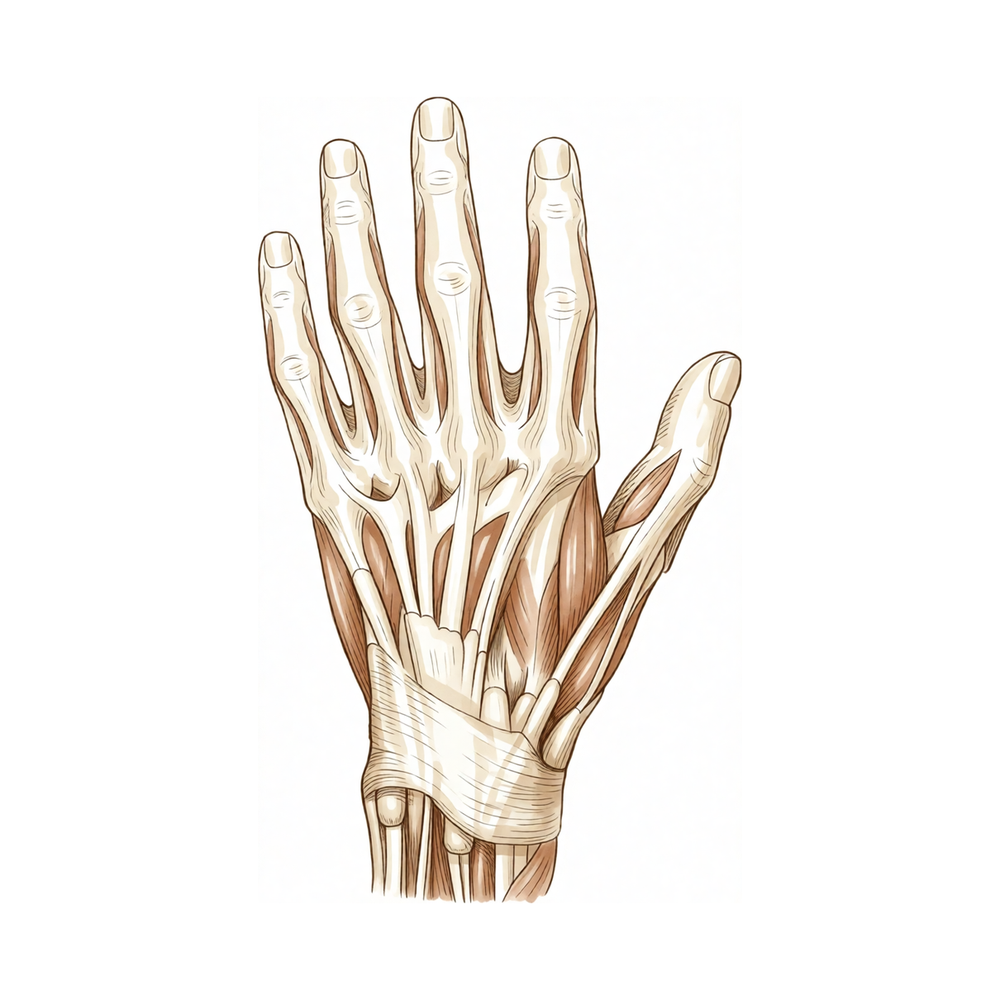
Este protocolo le servirá de guía para su recuperación tras la reparación quirúrgica de un tendón extensor (uno de los tendones en el dorso del dedo o de la mano que permite enderezarlo) realizada por el Dr. Kieran Hirpara en el Mater Private Hospital Rockhampton. Abarca las reparaciones efectuadas en el dorso del dedo, la mano y la muñeca (las zonas que los cirujanos denominan IV a VII). No incluye la reparación de un dedo en martillo (que se realiza justo en la punta del dedo) ni la reparación del tendón central o de la articulación interfalángica; para esos casos se aplican planes distintos. El protocolo comienza con un programa de ejercicios para realizar en casa, seguido del protocolo clínico estructurado destinado a su terapeuta de mano. Lleve esta página o su versión en PDF a su primera sesión de terapia para garantizar una rehabilitación coordinada. Su terapeuta podrá modificar el plan según el progreso de su recuperación.
Si tiene alguna duda respecto a su herida después de la cirugía, comuníquese con el consultorio. A menudo resulta útil tomar una fotografía de la herida y enviarla por correo electrónico para su revisión.
Qué esperar
La reparación del tendón extensor consiste en unir nuevamente el tendón roto en la parte dorsal del dedo o de la mano. Antiguamente, para proteger esa reparación se mantenía la mano inmovilizada con un yeso durante varias semanas; sin embargo, esto solía provocar rigidez en los dedos y una recuperación lenta. En la actualidad, se emplea un método moderno y eficaz llamado rehabilitación de movimiento relativo (método Merritt).
El elemento clave es un pequeño dispositivo ortopédico llamado yugo, que se coloca en la parte dorsal de la mano. Este yugo mantiene la articulación del dedo reparado aproximadamente 15 a 20 grados más extendida que las articulaciones de los dedos adyacentes. Esta ligera diferencia alivia la tensión sobre el tendón en proceso de cicatrización, permitiéndole empezar a usar la mano de inmediato, de forma suave y cómoda, en lugar de permanecer inmovilizada durante semanas. El movimiento temprano, bajo esta protección, favorece el deslizamiento normal del tendón y evita que se adhiera, mientras que el desfase angular evita su sobrecarga.
En la mayoría de las reparaciones (en las zonas habituales de la parte dorsal del dedo y la mano), el yugo por sí solo es suficiente. No obstante, en ciertos casos (reparaciones cercanas a la muñeca, reparaciones más débiles o cuando se considera necesaria mayor protección), también se utiliza un yeso de muñeca durante las primeras semanas. Su terapeuta de mano le indicará si también necesita llevar un yeso de muñeca.
El plan de recuperación se desarrolla en etapas cuidadosamente planificadas: el yugo se usa a tiempo completo durante unas seis semanas, reduciendo su uso a partir de la semana cinco; en las semanas intermedias se incorporan movimientos combinados de muñeca y dedos; el fortalecimiento muscular comienza alrededor de la semana ocho; y la vuelta a todas las actividades se produce entre las semanas diez y doce, una vez que la reparación esté completamente consolidada.
Precauciones y limitaciones
- Use la férula de yugo todo el tiempo durante las primeras seis semanas aproximadamente, incluso durante los ejercicios y las actividades cotidianas; solo deberá quitársela o reducir su uso según las indicaciones de su terapeuta de mano. Su terapeuta de mano le informará si también necesita una férula de muñeca.
- Desde el principio, haga un uso ligero de la mano dentro de la férula, siempre dentro de sus límites de comodidad. NO realice levantamientos, agarres forzados ni actividades que requieran resistencia durante las primeras semanas.
- NO comience ejercicios de fortalecimiento de agarre o pinza hasta que su terapeuta se lo autorice, generalmente alrededor de la octava semana.
- NO forme un puño cerrado con fuerza ni fuerce los dedos en las primeras etapas; limítese a moverlos dentro de los rangos suaves y controlados que le hayan enseñado.
- Mantenga en movimiento las articulaciones más pequeñas de los dedos para evitar que se vuelvan rígidas; la extensión pasiva y suave resulta útil para ello.
Para el cuidado de la herida, la reducción de la hinchazón y la gestión de las cicatrices, consulte las pautas de cuidado de heridas de nuestra consulta.
Sus ejercicios
Kieran Hirpara 4.0
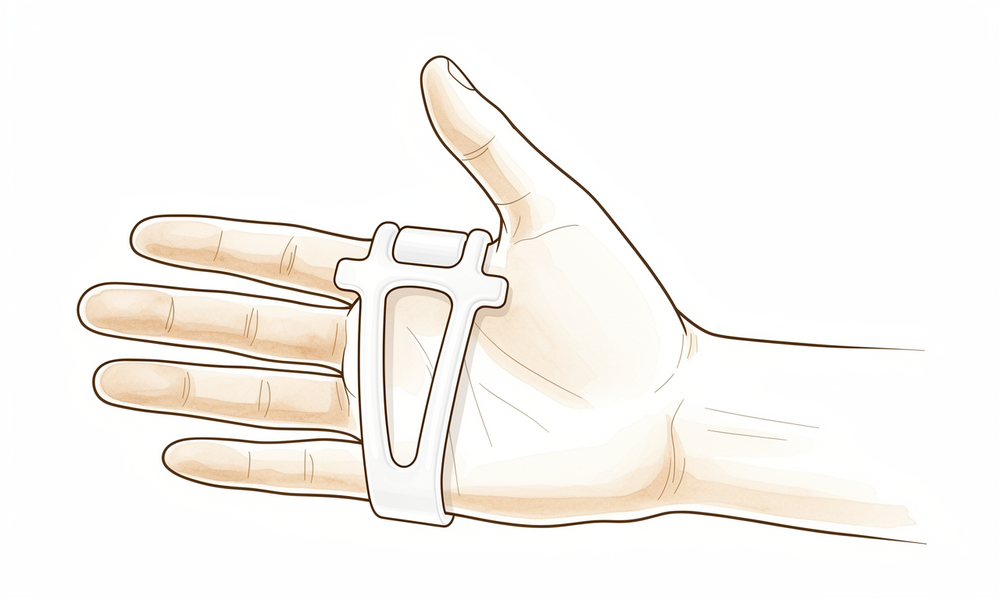
Uso de la férula de movimiento relativo (tipo yugo)
El dedo operado se sujeta mediante una pequeña férula llamada “yoke” (o férula de movimiento relativo). Esta férula mantiene la articulación metacarpofalángica del dedo operado, es decir, el nudillo principal donde el dedo se une a la mano, unos 15 a 20 grados más estirada que los dedos adyacentes. Esta pequeña diferencia alivia la tensión sobre el tendón en proceso de curación, lo que le permite utilizar la mano de inmediato. Debe llevarla todo el tiempo durante unas seis semanas, incluso durante los ejercicios y las actividades cotidianas; solo debe quitársela siguiendo las indicaciones de su terapeuta de mano. Su terapeuta le informará si también necesita usar una férula para la muñeca.
Se usa de forma continua durante unas 6 semanas; a partir de la semana 5 aproximadamente se va retirando gradualmente, según las indicaciones.
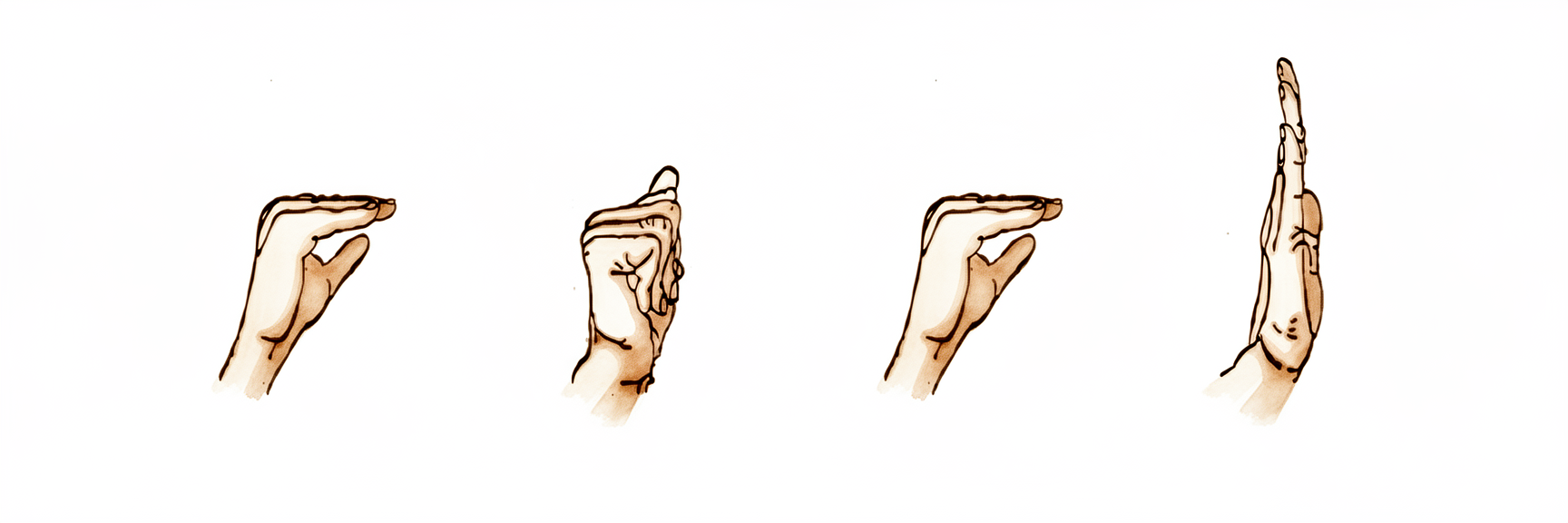
Flexión de nudillos, dedos extendidos (tipo “intrínseco-plus”)
Manteniendo la férula puesta, doble los nudillos principales (el punto donde los dedos se unen a la mano) mientras mantiene el resto de cada dedo recto; de este modo formará una superficie plana similar a una “mesa” o “estante”. Luego vuelva a estirar los dedos. Realice el movimiento de forma suave y dentro de sus límites de comodidad. Esto permite que el tendón reparado se desplace una distancia segura y controlada, evitando que se adhiera o se atasque, sin someterlo a excesiva tensión.
10 veces, cada par de horas durante el día.
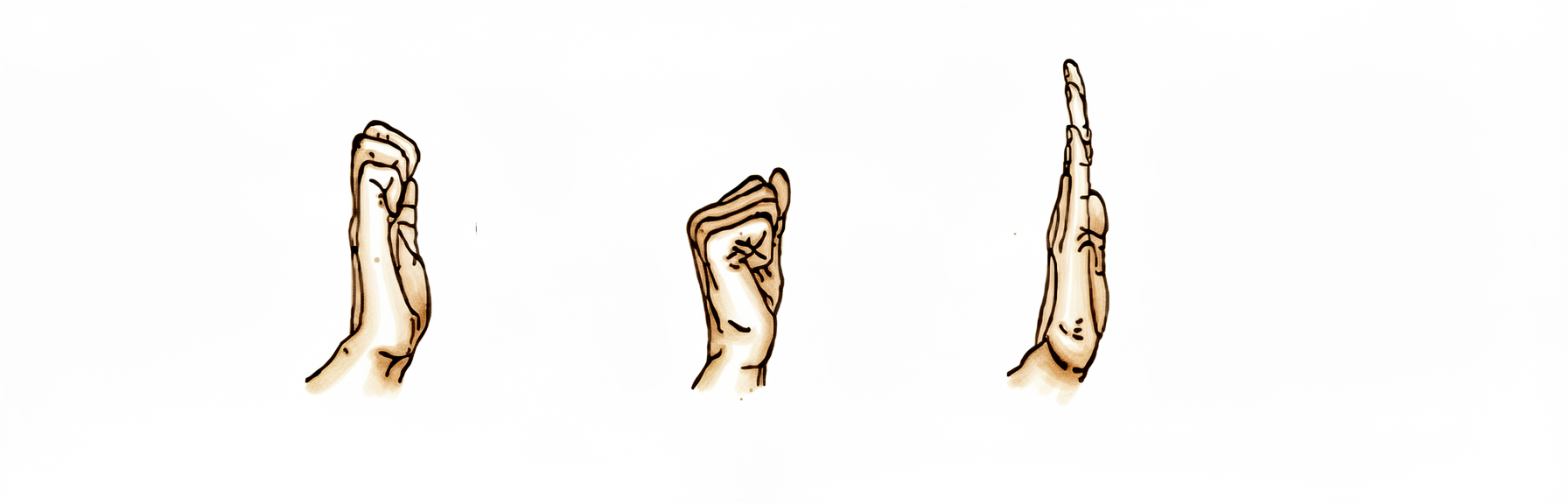
Nudillos rectos, dedos flexionados (intrínseco-minus / gancho)
Mientras lleva puesta la férula, mantenga rectos los nudillos grandes y doble únicamente las articulaciones más pequeñas de los dedos, formando una forma de gancho (garra); luego vuelva a estirarlos. De este modo, el tendón reparado se mueve dentro de su rango de movimiento, siempre de manera segura y controlada. Haga el ejercicio dentro de sus límites de comodidad; no fuerce el movimiento.
10 veces, cada par de horas durante el día.
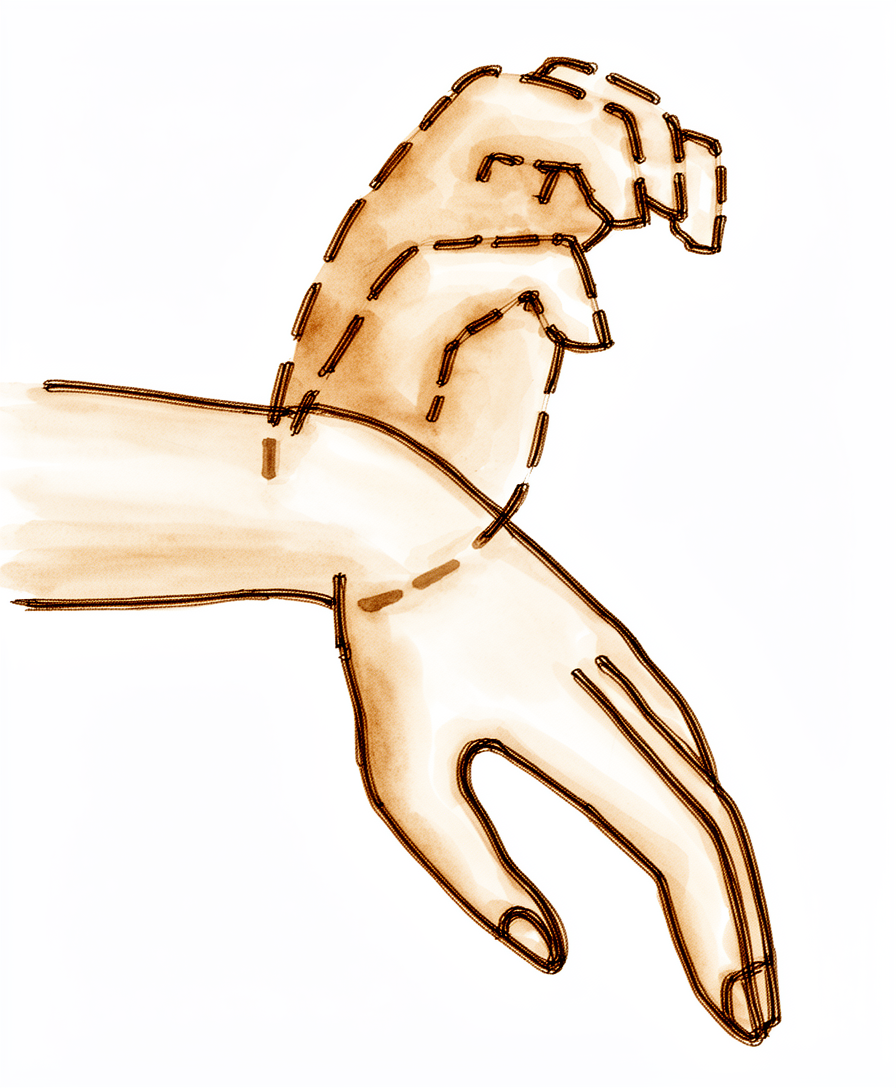
Movimiento conjunto de la muñeca y los dedos (tenodesis)
Un ejercicio posterior: lo añade su terapeuta de mano entre las tres y las seis semanas posteriores. Incline suavemente la muñeca hacia atrás y permita que los dedos se relajen y se abran; luego deje que la muñeca se incline hacia adelante mientras los dedos se cierran lentamente. La muñeca y los dedos se mueven en conjunto. Esto hace que los tendones extensores se deslicen de forma natural y segura; este ejercicio se inicia una vez que la reparación está lo suficientemente consolidada.
10 veces, 2 a 3 veces al día (a partir de las 3 a 6 semanas aproximadamente, según indicaciones).
Kieran Hirpara 4.0
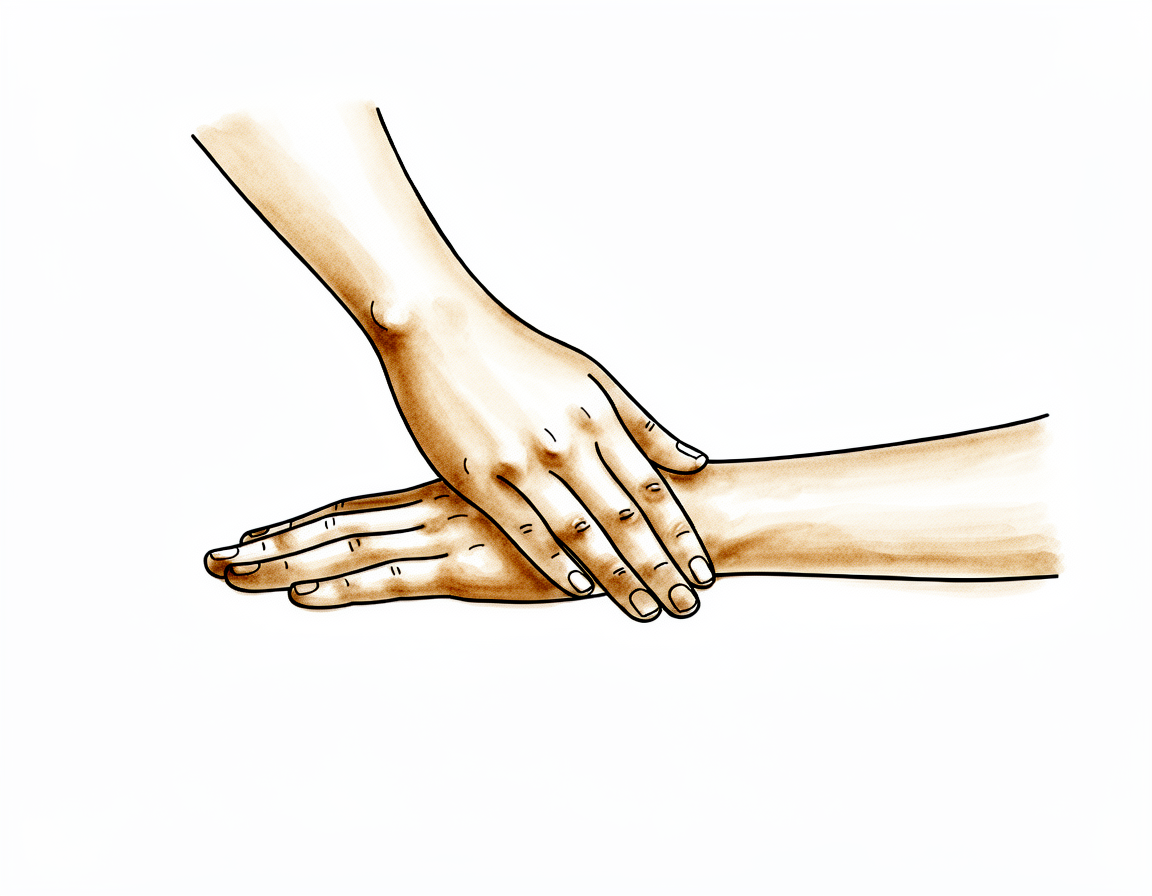
Enderezamiento pasivo de los dedos
Utilice su otra mano con suavidad para sostener y enderezar las articulaciones más pequeñas del dedo operado, ayudándolo a quedar completamente recto sin ejercer fuerza. Esto evita que el dedo se vuelva rígido en una posición doblada mientras el tendón cicatriza. Actúe con delicadeza y sin causar dolor; haga esto únicamente bajo la guía de su terapeuta de mano.
Mantenga la posición unos segundos, 5 a 10 veces al día, según las indicaciones.
Kieran Hirpara 4.0
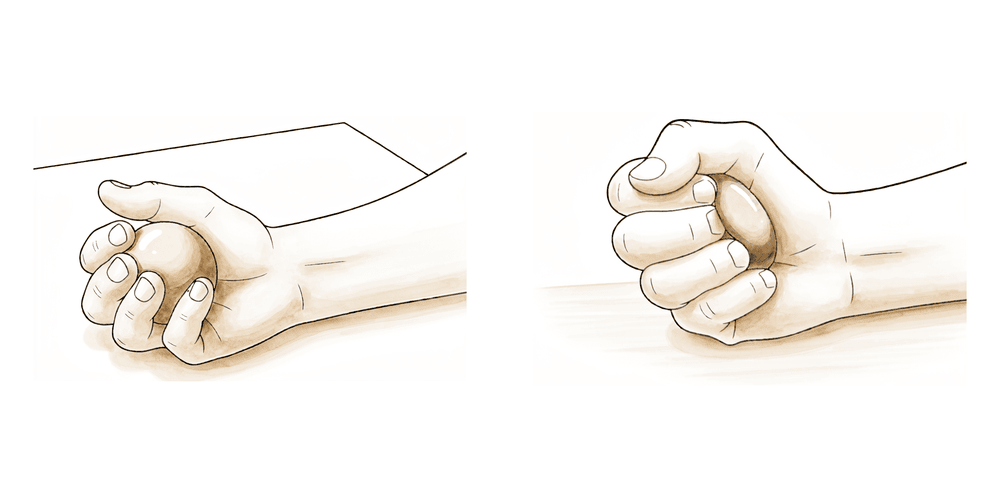
Fortalecimiento de la prensión y el pellizco (a partir de la semana 8)
Un ejercicio posterior: solo a partir de las ocho semanas, una vez que el terapeuta de mano autorice el fortalecimiento. Apriete una pelota blanda o plastilina con toda la mano, y pellizque dicho material entre el pulgar y los dedos, aumentando gradualmente la intensidad durante varias semanas. Esto restablece la fuerza de agarre y de pellizco una vez que la reparación esté consolidada. No inicie ejercicios de agarre resistido antes de obtener la autorización correspondiente.
De 10 a 15 compresiones, 2 a 3 veces al día (solo a partir de las 8 semanas aproximadamente).
Estos son los ejercicios que aparecen en su folleto informativo. Comience a realizarlos únicamente bajo la guía del Dr. Hirpara y de su terapeuta especializado en mano, respetando siempre los rangos y limitaciones que le hayan indicado. Los primeros ejercicios se realizan con la férula tipo yugo puesta: suaves flexiones de nudillos y movimientos de flexión de dedos que permiten deslizar el tendón reparado de forma segura y controlada, sin sobrecargarlo. Los movimientos combinados de muñeca y dedos, así como el fortalecimiento de la prensión y el pellizco, corresponden a fases posteriores y no deben iniciarse hasta que se le autorice expresamente. Interrumpa cualquier ejercicio que provoque dolor intenso en el dorso de los dedos o de la mano.
Su protocolo clínico
El resto de esta página describe el protocolo clínico por fases para la rehabilitación tras la reparación de tendones extensores (zonas IV a VII), utilizando la extensión por movimiento relativo (RME, por sus siglas en inglés). Esta sección debe entregarse a su terapeuta de mano; cada fase comienza con una explicación sencilla en lenguaje coloquial de lo que ocurre. La reparación se protege mediante una férula tipo yugo, que mantiene la articulación metacarpofalángica del dedo reparado entre 15 y 20 grados más extendida que los dedos adyacentes, reduciendo así la tensión sobre el tendón extensor gracias al efecto “quadriga” y a las juncturae tendineae; por ello, el movimiento activo inmediato es seguro.
Antes de iniciar el tratamiento, revise el informe operatorio del paciente y su historial médico, y consulte con el cirujano responsable sobre las zonas reparadas, los tendones afectados, la solidez de la reparación y si es necesario utilizar una órtesis de muñeca complementaria. La opción predeterminada del Dr. Hirpara para las zonas V y VI es la férula tipo yugo sola (férula de extensión por movimiento relativo, manteniendo la MCP reparada 15–20° más extendida que las demás). Para la zona VII, reparaciones menos resistentes o pacientes poco colaborativos, se añade una órteis de muñeca (~20–25° de extensión, durante las primeras 3 semanas aproximadamente). Este protocolo es válido únicamente para reparaciones de tendones extensores dorsales en las zonas IV–VII; NO aplica para lesiones tipo “mallet” (zonas I–II) ni para lesiones de la banda central / en ojal (boutonnière) (zona III).
Fase I — yugo (férula de muñeca ±), uso activo inmediato (semanas 0 a 3)
Durante las primeras tres semanas, el yugo protege la reparación mientras el paciente utiliza la mano de forma activa desde el principio. El desplazamiento de extensión relativo de 15–20° alivia la carga sobre la zona reparada, por lo que se fomenta el deslizamiento activo controlado desde el inicio. Se permite un uso funcional leve con la férula; no se deben realizar levantamientos ni ejercicios de agarre resistido.
Para su terapeuta de mano:
Educación y precauciones - Coloque el yugo / férula de extensión con movimiento relativo: la articulación MCP del dedo reparado debe quedar 15–20° más extendida que las articulaciones de los dedos adyacentes; la férula se usa todo el tiempo - Añada una ortesis de muñeca (~20–25° de extensión) únicamente durante las primeras 3 semanas en casos de zona VII, reparaciones más débiles o pacientes poco colaborativos (el yugo por sí solo es el tratamiento estándar para las zonas V–VI) - Se recomienda un uso leve de la mano con la férula; NO se permiten levantamientos, agarres forzados ni ejercicios resistidos - Evite los movimientos de puño compuestos forzados; mantenga los rangos de movimiento bajo control
Manejo - Herida: coloque los apósitos quirúrgicos según indicaciones; vigile posibles signos de infección - Edema: mantenga la extremidad elevada, realice masajes digitales suaves y aplique hielo según sea necesario - Ejercicios (dentro de la férula, cada ~2 h): movimientos activos intrínseco-plus (flexión de la MCP con las articulaciones IP extendidas) y intrínseco-minus/gancho (extensión de la MCP con flexión de las articulaciones IP); realice extensión pasiva de las articulaciones IP diariamente para prevenir rigidez - Inicie el tratamiento cicatricial una vez que la herida haya cicatrizado
Criterios para avanzar - La herida se está cerrando; no aparece retraso en la extensión; el paciente logra movimientos activos controlados con la férula a las ~3 semanas
Fase II — Se retira el splint de muñeca; se mantiene el yugo; movimiento acoplado (semanas 3 a 6)
A partir de la tercera semana, se suspende cualquier splint suplementario para la muñeca (el yugo se sigue utilizando todo el tiempo). Se incorporan el movimiento acoplado de muñeca y dedos (tenodesis) así como la flexión/extensión activa compuesta, lo cual incrementa el desplazamiento tendinoso de forma controlada y segura para la cicatrización.
Para su terapeuta de mano:
Evaluaciones - Amplitud de movimiento activa y pasiva (articulaciones MCP e IP), retraso en la extensión, dolor e hinchazón; revisión de la herida y la cicatriz
Educación y precauciones - Retirar el splint suplementario de muñeca (si se utilizó); mantener el yugo en uso todo el tiempo - Progresar con los movimientos de forma gradual; SIN ejercicios de agarre resistido ni fortalecimiento
Manejo - Ejercicios: incorporar el movimiento acoplado de muñeca y dedos (tenodesis) y la flexión/extensión activa compuesta; continuar con los deslizamientos intrínsecos y la extensión pasiva de las articulaciones IP; uso funcional ligero mientras se lleva el yugo - Continuar con el masaje de la cicatriz una vez curada
Criterios para avanzar - La amplitud de movimiento activa compuesta mejora progresivamente (el movimiento compuesto completo suele lograrse alrededor de las 6 a 8 semanas); sin retraso en la extensión; el dolor disminuye
Fase III: retirada del yugo, fortalecimiento y retorno a la actividad (semanas 6 a 12)
A partir de la semana cinco o seis se comienza a retirar el yugo. El fortalecimiento progresivo de la prensión y la pinza se inicia alrededor de la semana ocho, una vez que la reparación está consolidada, y se intensifica gradualmente hasta alcanzar la actividad completa entre las semanas diez y doce.
Para su terapeuta de mano:
Evaluaciones - Rango completo de movimiento activo y pasivo, retraso en la extensión, fuerza de prensión/pinza en comparación con el lado contralateral; pruebas funcionales y específicas según el tipo de trabajo, según sea necesario.
Instrucciones y precauciones - Retirar el yugo a partir de la semana 5, completamente alrededor de la semana 6, cuando el movimiento y el control lo permitan. - Iniciar el fortalecimiento progresivo de la prensión y la pinza a partir de la semana 8 (nunca antes). - Aumentar gradualmente la resistencia hasta alcanzar la actividad plena entre las semanas 10 y 12.
Manejo - Ejercicios: fortalecimiento gradual de la prensión y la pinza (apretar pelotas o plastilina, ejercicios de pinza) a partir de la semana 8; aumentar progresivamente la resistencia; continuar con ejercicios para mantener la movilidad residual y la extensión de las articulaciones interfalángicas. - Considerar el alta terapéutica cuando el rango de movimiento y la fuerza sean casi simétricos y el paciente haya recuperado su funcionalidad. - Derivar nuevamente al médico tratante si persiste el retraso en la extensión, si el progreso del movimiento se estanca o si el resultado clínico es insatisfactorio.
Criterios para retorno a la actividad completa - Rango de movimiento completo y sin dolor, sin retraso significativo en la extensión; fuerza de prensión/pinza casi simétrica; alrededor de 10 a 12 semanas.
Retorno al trabajo y a las actividades cotidianas
Se recomienda el uso ligero y cotidiano de la mano con la férula en Y (comer, escribir, vestirse, cuidados personales básicos) desde el inicio, siempre dentro de los límites de la comodidad, siempre que no implique levantar pesos, agarre forzado ni actividades que requieran resistencia. El fortalecimiento muscular comienza alrededor de la octava semana, y la vuelta a todas las actividades sin restricciones ocurre entre las diez y doce semanas, una vez que la reparación está consolidada y se han recuperado el movimiento y la fuerza, según la evaluación del Dr. Hirpara y de su terapeuta de mano, no únicamente en función del tiempo transcurrido.
Conducción: el uso ligero de la mano con la férula en Y es aceptable, por lo que no se prohíbe conducir; sin embargo, debe ser capaz de agarrar el volante y controlar el vehículo de forma segura, incluso en situaciones de emergencia. Para la mayoría de las personas, esto significa retomar la conducción al retirarse progresivamente la férula (alrededor de la sexta semana); puede ser antes si logra controlar el coche cómodamente y su cirujano confirma que es seguro para usted.
Después de seguir este protocolo
Este protocolo complementa las recomendaciones generales de recuperación de la clínica: consulte control del dolor postoperatorio, cuidado de la herida y cuidado de las cicatrices. El plan por fases descrito anteriormente se basa en las guías de rehabilitación publicadas tras la reparación de tendones extensores mediante la técnica de extensión con movimiento relativo; su recuperación continua será supervisada individualmente por el Dr. Hirpara y su terapeuta de mano, según la evolución de su mano.
Evidence & references
This is the clinical evidence summary written for health professionals. It is technical, and it lists the research this page was built from. You do not need to read it to understand your treatment or to make a decision about it.
Extensor Tendon Repair — Procedure Outcomes & Post-operative Rehabilitation (Relative-Motion Extension, Zones IV–VII)
Topic scope: post-operative rehabilitation after primary repair of an extensor tendon on the dorsum of the finger, hand or wrist — zones IV to VII — managed by relative-motion extension (RME / Merritt yoke splint, the ICAM family of regimens). This is a tendon repair (a construct that must heal under controlled load), but the relative-motion approach lets that load be applied immediately and actively rather than after weeks of immobilisation. This page does not cover mallet finger (zones I–II) or central-slip / boutonnière repair (zone III), which follow different regimens.
Defining principle of the rehab here: a yoke (relative-motion) splint holds the repaired digit's MCP joint 15–20° more extended than its neighbours. By the quadriga effect and the juncturae tendineae, this small relative offset offloads the repaired tendon — it reduces the active extensor excursion demanded of the healing repair (from roughly 12 mm of excursion in normal active extension to about 6 mm within the splint). That residual ~6 mm is enough to keep the tendon gliding and prevent adhesions, but too little to rupture the repair — which is why immediate active motion is safe. The single common branch point is whether a supplementary wrist orthosis (~20–25° extension, first ~3 weeks) is added for zone VII, weaker repairs, or non-compliant patients; the yoke alone is the default for zones V–VI.
A. PROCEDURE / REPAIR OUTCOMES (relative-motion vs immobilisation)
Extensor tendon repair on the back of the hand is reliable; the principal modern question is how to rehabilitate it — protected immobilisation versus an early-active programme such as relative-motion extension — not whether repair works.
- The mechanism that makes immediate active motion safe is well established. The 15–20° relative MCP-extension offset offloads the repair via the quadriga effect and the juncturae tendineae, cutting active extensor excursion from ~12 mm (normal) to ~6 mm within the splint — enough to prevent adhesions, too little to rupture. Cadaveric and mechanistic work underpins this rationale [Merritt, Wong & Lalonde 2020]. Strong (mechanistic + cadaveric).
- Relative-motion regimens match or improve on traditional early-active and immobilisation pathways. A randomised controlled trial in zones V–VI found relative-motion extension delivered earlier return of hand function and higher patient satisfaction with equivalent total active motion (TAM) versus the comparator early-active programme [Collocott RCT 2020]. A systematic review reported earlier return to work with equivalent range of motion and complication rates [Collocott review 2017]. Moderate–strong (1 RCT + SR; RME studies of generally lower methodological quality).
- Yoke-alone (no wrist splint) is supported for the common zones. Case series of relative-motion extension without a supplementary wrist orthosis for zones IV–VI report no ruptures, supporting yoke-alone as the default for these zones with the wrist orthosis reserved for zone VII / weaker / non-compliant repairs [Hirth 2021; Howell ICAM]. Moderate.
- The functional gain over immobilisation is large and practical. Early-active relative-motion programmes report return to work at roughly 17–25 days, versus the 3–4 months typical of immobilisation regimens — the headline advantage that has driven adoption [Collocott review 2017; Howell ICAM]. Moderate.
B. REHABILITATION / THERAPY EVIDENCE
The central rehab questions are (1) immobilise or move early, (2) is a wrist splint needed in addition to the yoke, and (3) how long must the splint stay on. The evidence favours early relative motion, supports yoke-alone for zones V–VI, and suggests splint duration can be shorter than the traditional six weeks without penalty.
- Early active motion via relative-motion extension is the modern default. The original technique description [Merritt 2014] and the clinical scheduling / yoke construction work [Lutz 2015] established a reproducible programme: immediate active intrinsic-plus and intrinsic-minus motion in the yoke, progressing to coupled (tenodesis) motion, weaning, then strengthening. Moderate (technique + cohort).
- A supplementary wrist splint is optional, not mandatory. Yoke-alone case series for zones IV–VI report no ruptures; the wrist orthosis (~20–25° extension, first ~3 weeks) is added selectively for zone VII, weaker repairs, or poor compliance [Hirth 2021; Howell ICAM]. Moderate (selective use).
- Splint duration may be shortened. A comparison of 4-week versus 6-week splinting found no difference in outcome, suggesting the traditional six-week full-time period can be safely abbreviated in selected patients [Svens 2015]. This page keeps full-time wear ~6 weeks (weaned from ~wk 5) as the conservative default while acknowledging the shorter option. Moderate (1 comparative study).
- The field is moving toward wider use of relative motion. A recent international consensus endorses broader application of relative-motion rehabilitation, including beyond its original zone V–VI indication [Tang consensus 2025]. Consensus.
Recovery trajectory (expected, evidence-anchored)
| Phase | Window | Splint / restraint | Hand use / therapy focus | Strength / load | Notes |
|---|---|---|---|---|---|
| I — Yoke (± wrist splint), immediate active use | Week 0–3 | Yoke full-time (repaired MCP 15–20° more extended); wrist orthosis ~20–25° ext only for zone VII / weak / non-compliant | Active intrinsic-plus (MCP flex, IPs straight) and intrinsic-minus / hook every ~2 h; passive IP extension daily; light use in the splint | Light functional use only; no lifting / resisted grip | Relative offset offloads repair (~12 mm → ~6 mm excursion); active motion is safe from day one |
| II — Wrist splint off, yoke continues | Week 3–6 | Discontinue any wrist splint; yoke continues full-time | Add coupled wrist-and-finger (tenodesis) motion + composite active flexion/extension; light functional use; scar massage once healed | Still no resisted grip | Composite active ROM building; watch for extensor lag |
| III — Wean yoke, strengthen, return | Week 6–12 | Yoke weaned from ~wk 5, off ~wk 6 | Progress full active motion; commence grip/pinch strengthening from week 8 | Graded strengthening from wk 8 → full activity ~10–12 wk | Return to work as early as ~17–25 days reported; full unrestricted activity ~10–12 wk |
(Phase windows mirror the precautions and recovery structure in the patient protocol; they are typical guides, not trial-derived deadlines. Splint duration may be safely shortened toward 4 weeks in selected patients.)
C. KEY CONTROVERSIES / EVIDENCE QUALITY
- Relative motion vs traditional immobilisation / other early-active regimens. One RCT (zones V–VI) and a systematic review favour relative-motion extension for earlier hand function, earlier return to work, higher satisfaction, with equivalent TAM and complications — though RME studies are generally of lower methodological quality, so the effect size is moderately rather than strongly certain. Moderate–strong.
- Wrist splint: needed or not? Yoke-alone gives good results with no ruptures in zone IV–VI series; the supplementary wrist orthosis is selective (zone VII / weaker / non-compliant). The defensible default is yoke-alone for the common zones — hence the page wording that the hand therapist will advise if a wrist splint also applies. Moderate.
- How long to splint. Traditional full-time wear is ~6 weeks; a 4-vs-6-week comparison showed no difference, so duration can be individualised and potentially shortened. Moderate.
- The 15–20° offset itself. The specific relative-extension increment is consensus-derived (it must offload enough to protect but leave enough excursion to glide); it rests on sound mechanism rather than a dose-finding trial. Consensus.
- Extending relative motion beyond zones V–VI (e.g. to sagittal-band injury and selected boutonnière/central-slip cases). The 2025 consensus endorses wider use, but evidence outside the core zones is weak–moderate, which is why this page deliberately scopes to zones IV–VII and excludes zone III. Weak–moderate.
D. EVIDENCE STRENGTH FLAGS (summary)
- STRONG: the mechanism — relative 15–20° MCP-extension offset offloads the repair (quadriga + juncturae tendineae; ~12 mm → ~6 mm active excursion) making immediate active motion safe (mechanistic + cadaveric).
- MODERATE–STRONG: relative-motion extension is at least as good as other early-active-motion regimens (1 RCT zones V–VI: earlier hand function, higher satisfaction, equal TAM; SR: earlier return to work, equal ROM/complications) — tempered by the lower methodological quality of RME studies.
- MODERATE: wrist-splint-optional (yoke-alone, no ruptures in zone IV–VI series); 4-vs-6-week splint duration (no difference); return to work ~17–25 days vs 3–4 months for immobilisation.
- CONSENSUS: the specific 15–20° offset increment; broader application of relative motion (Tang 2025).
- WEAK–MODERATE: extension of the technique to sagittal-band / boutonnière (central-slip) injuries outside the core zones.
CITATIONS
RAG corpus (180,000+ Orthopaedic articles)
- Merritt WH. Relative motion splint: active motion after extensor tendon injury and repair. J Hand Surg Am. 2014. DOI: 10.1016/j.jhsa.2014.03.015
- Merritt WH, Wong AL, Lalonde DH. Recent developments are changing extensor tendon management (relative motion / quadriga mechanism). Plast Reconstr Surg. 2020. DOI: 10.1097/prs.0000000000006556
- Lutz K, et al. Relative motion extension splinting for extensor tendon repair — clinical schedule and yoke. Hand Clin. 2015. DOI: 10.1016/j.hcl.2014.12.006
- Collocott SJF, et al. Relative motion flexion versus relative motion extension / early active motion after extensor tendon repair (zones V–VI): a randomized controlled trial. J Hand Ther. 2020. DOI: 10.1016/j.jht.2018.10.003
- Collocott SJF, Kelly E, Ellis RG. A systematic review of relative-motion orthoses for the management of extensor tendon repairs. Hand Ther. 2017. DOI: 10.1177/1758998317729713
- Svens B, et al. Four-week versus six-week immobilisation comparison after extensor tendon repair. J Hand Ther. 2015. DOI: 10.1016/j.jht.2014.07.006
- Hirth MJ, et al. Relative-motion approaches in extensor tendon rehabilitation. J Hand Ther. 2021. DOI: 10.1016/j.jht.2019.12.016
- Tang JB, et al. International consensus on relative-motion rehabilitation and extensor tendon management. J Hand Surg (Eur Vol). 2025. DOI: 10.1177/17531934251363138
Extensor tendon rehabilitation literature (URLs)
- Howell JW, Merritt WH, Robinson SJ. Immediate Controlled Active Motion (ICAM) following zone 4–7 extensor tendon repair. J Hand Ther / PMC. https://www.ncbi.nlm.nih.gov/pmc/articles/PMC3574475/