Qué está sintiendo
La mayoría de las lesiones de los ligamentos del tobillo ocurren en la parte externa, cuando el pie se gira hacia adentro bajo el cuerpo. Esto se conoce como lesión por inversión. El ligamento situado en la parte delantera del tobillo externo, llamado ligamento talofibular anterior o ATFL, suele ser el primero en lesionarse. Si la lesión es más grave, el ligamento situado debajo de éste, el ligamento calcaneofibular, también puede desgarrarse.
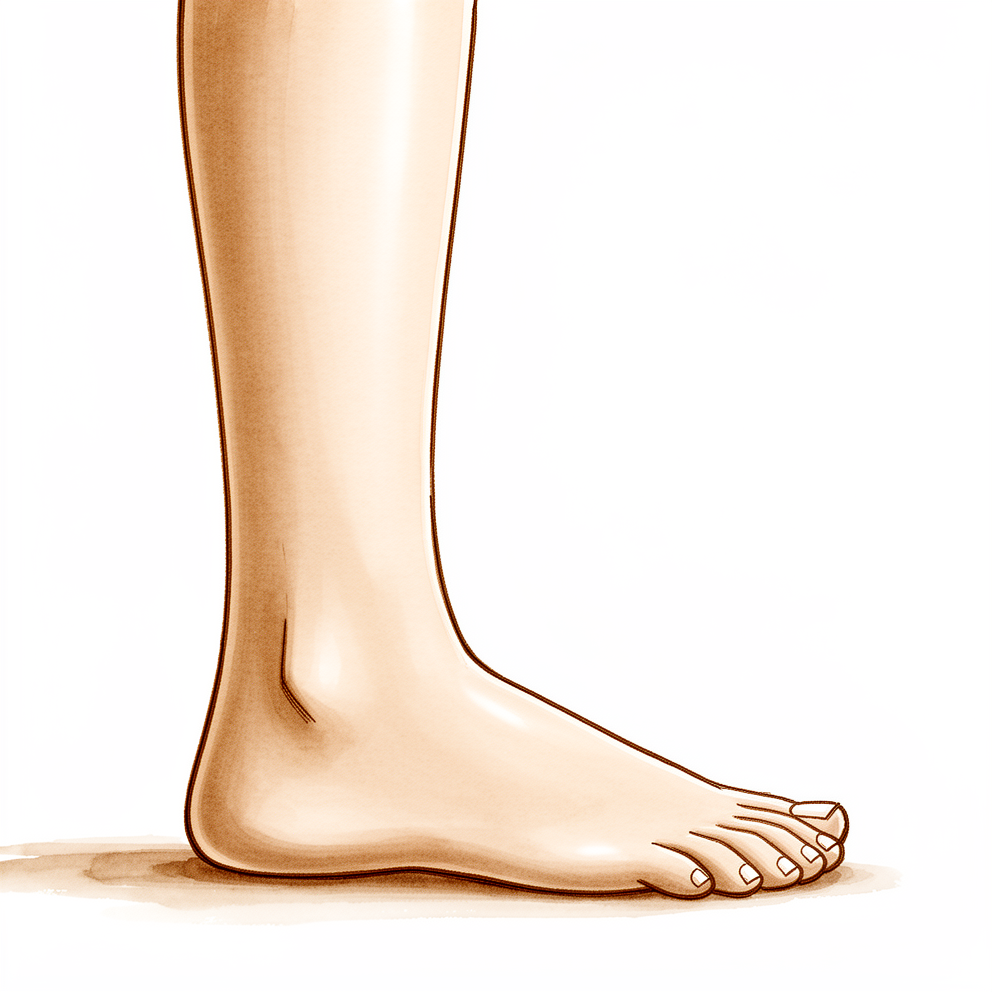
Por lo general, recordará un momento en que el tobillo se torsione, seguido de dolor, hematomas e hinchazón en la parte externa del tobillo. La hinchazón puede ser considerable. Ponerse de pie o apoyar peso sobre el pie resulta doloroso; incluso el más leve intento de girar el tobillo hacia adentro provoca un dolor intenso. El punto doloroso suele estar justo debajo y ligeramente por delante del hueso que sobresale en la parte externa del tobillo.
Las actividades cotidianas que implican carga sobre el tobillo externo se vuelven difíciles: caminar por una habitación, permanecer de pie mientras cocina, subir escaleras o impulsarse para caminar rápidamente pueden resultar dolorosas. Los terrenos irregulares, como un bordillo o un césped, son desencadenantes frecuentes. El dolor suele intensificarse tras la actividad y, en los primeros días, puede palpitar por la noche.
Existen ciertos factores relacionados con su tobillo que aumentan la probabilidad de sufrir esta lesión. Si su pie adopta naturalmente una posición con arco elevado y girado hacia afuera, es más fácil que el tobillo ruede sobre su borde externo. Si ya ha sufrido un esguince en este tobillo, es más probable que vuelva a ocurrir.
Es importante saber que un tobillo torcido no siempre es simplemente un esguince: la misma lesión a veces implica una pequeña fractura o daño en los tendones que discurren por la parte externa del tobillo. Por eso su cirujano examina toda la pierna y el pie, no solo el punto doloroso, y puede solicitar radiografías para descartar una fractura.
Si el dolor, la hinchazón o la sensación de que el tobillo “cede” persisten seis semanas o más, podrían ser necesarias pruebas adicionales como una resonancia magnética para determinar si hay otras lesiones.
¿Qué está ocurriendo realmente?
El tobillo es una articulación de tipo bisagra formada por huesos y por bandas de tejido resistente llamadas ligamentos. Los tres ligamentos situados en la parte externa del tobillo funcionan como cuerdas de sujeción en una tienda de campaña; evitan que el pie se incline hacia adentro al caminar, correr o aterrizar.
Cuando el pie se gira bruscamente, esas “cuerdas” se estiran en exceso o se desgarran. Más del 75 % de las lesiones ligamentosas del tobillo ocurren precisamente en este lado externo. El ligamento anterior, el ATFL mencionado anteriormente, es el más débil de los tres, por lo que es el primero en sufrir daños. Si la torsión es mayor, el ligamento inferior también se desgarra; en lesiones graves, los tres ligamentos ceden.
Los médicos clasifican estas lesiones en grados: un esguince de grado I significa que el ligamento está estirado pero no roto; un grado II indica un desgarro parcial; un grado III implica que el ligamento está completamente roto. La mayoría de estas lesiones, incluso las roturas totales, sanan sin necesidad de cirugía.
En algunos casos, el tobillo sigue sintiéndose inestable tras la curación inicial; esto se denomina inestabilidad crónica. El ligamento puede cicatrizar en una posición estirada, como una goma elástica que ha perdido su elasticidad. Además, el tobillo depende de nervios que indican su posición en el espacio; estos pueden verse afectados tras varios esguinces. El resultado es esa sensación de que el tobillo “cede” al caminar sobre terreno irregular o durante la práctica deportiva, tal como se describió antes.
La forma de la articulación del tobillo también influye: el hueso peroneo, situado en la parte externa, encaja en una ranura del hueso de la espinilla. En algunas personas, dicha ranura sujeta el peroneo con menos firmeza, lo que puede facilitar la inestabilidad de la articulación cuando los ligamentos resultan dañados.
Si el tobillo sigue cediendo a pesar de una rehabilitación adecuada, la cirugía puede tensar o reconstruir los ligamentos externos para restaurar esa función de sujeción.
Qué podemos hacer al respecto
La mayoría de los esguinces de tobillo se resuelven sin cirugía. En los primeros días, le indicamos reposo, hielo, compresión y elevación, conocidos como el método RICE; además, se limita la carga de peso si ponerse de pie o caminar le resulta muy doloroso. A medida que los síntomas lo permiten, pasa a una carga de peso protegida y progresiva. Posteriormente, la fisioterapia se enfoca en el equilibrio, en la percepción espacial del pie y en el fortalecimiento de los músculos situados en la parte externa del tobillo. Este entrenamiento disminuye la probabilidad de que vuelva a sufrir un esguince. El uso de una ortesis funcional, junto con dicho entrenamiento, reduce aún más el riesgo de recurrencia. Por lo general, aplicamos este enfoque durante unas seis semanas para evaluar sus resultados.
En esta fase, el alivio del dolor es sencillo. Los analgésicos y antiinflamatorios habituales, tomados según las indicaciones de su médico de cabecera o farmacéutico, le permiten mantener la movilidad mientras los ligamentos se recuperan.
La cirugía se considera cuando el tobillo sigue cediendo pese a haber seguido un programa de rehabilitación adecuado, o cuando un ligamento muy estirado no ha recuperado su fuerza original. La intervención consiste en tensar o reconstruir los ligamentos externos del tobillo para restablecer su función de soporte; se opta por ella una vez que el tratamiento no quirúrgico no ha producido mejoría suficiente. En algunos atletas de alto nivel con un desgarro completo reciente, puede proponerse una reparación temprana en lugar de probar primero con fisioterapia. Decidir si la cirugía es adecuada para usted es una decisión que tomamos en conjunto, ponderando tanto las necesidades de su tobillo como sus propias preferencias.
Qué esperar
En la mayoría de las personas, el esguince de tobillo mejora por sí solo. La mayor parte de estas lesiones, incluso las roturas completas, se curan sin necesidad de cirugía. Durante las primeras semanas, el dolor y la hinchazón disminuyen, y la marcha vuelve a ser más normal a medida que el ligamento se repara.
Sin embargo, algunos tobillos no mejoran de forma tan sencilla. Aproximadamente una de cada tres personas sigue presentando síntomas después de un esguince agudo; además, en muchas de ellas se observan cambios en la propia articulación. Si su tobillo sigue cediendo, o si el dolor e hinchazón persisten seis semanas o más, eso indica que se trata de algo más que un simple esguince. Estudios por imagen como la resonancia magnética pueden revelar qué más está ocurriendo.
El progreso durante las primeras semanas es crucial. Si no puede saltar y aterrizar en las dos semanas siguientes a un primer esguince, o si a los seis meses sigue presentando mal equilibrio y una función baja según su propia valoración, es más probable que el tobillo se vuelva inestable a largo plazo. Por eso la rehabilitación temprana y los ejercicios de equilibrio mencionados anteriormente son tan importantes.
Si el tobillo permanece inestable y sigue “dándose vuelta”, esa inestabilidad repetida puede desgastar la superficie articular con el tiempo. La mayoría de los casos de artritis de tobillo derivados de lesiones comienzan con daño ligamentario; por ello, un tobillo persistentemente inestable merece ser tratado en lugar de ignorarse.
Cuando el tratamiento no quirúrgico no resulta suficiente, la cirugía para tensar o reconstruir los ligamentos externos puede restablecer la estabilidad. La mayoría de las personas sometidas a una intervención sencilla para corregir la inestabilidad del tobillo afirman posteriormente que el tobillo se siente estable; al cabo de un año, las radiografías suelen mostrar un tobillo estable y con movilidad completa.
La cirugía no garantiza volver exactamente al estado previo. Entre niños y adolescentes sometidos al procedimiento modificado de Broström, aproximadamente uno de cada cuatro volvió a sufrir un esguince entre cinco y diez años después; casi la mitad no logró recuperar su nivel deportivo anterior. Esto se observó sobre todo en atletas y en quienes también presentaban lesión del ligamento calcaneofibular.
Sea cual sea el curso que siga su tobillo, la realidad es la siguiente: la mayoría de los tobillos mejoran con una atención temprana adecuada; algunos necesitan cirugía para mantenerse estables, y un pequeño número conservará ciertos síntomas a largo plazo.
¿Cuándo consultar a un especialista?
La mayoría de los esguinces de tobillo mejoran con cuidados sencillos; sin embargo, ciertos síntomas indican que su tobillo requiere una evaluación más detallada. Consulte a su médico de cabecera si no puede soportar ningún peso con el pie, si la zona ósea en la parte externa o interna del tobillo le duele al presionarla, o si el borde externo del pie o la base del dedo meñique le causan dolor. Estas zonas pueden ser indicio de una fractura en lugar de un simple esguince, por lo que podrían ser necesarias radiografías. Solicite la valoración de un especialista si el dolor, la hinchazón o la sensación de que el tobillo “cede” persisten durante seis semanas o más; si el tobillo sigue torciéndose durante la práctica deportiva o al caminar sobre terreno irregular; o si presenta bloqueos, atrapamientos o chasquidos. El entumecimiento en la parte superior del pie tras la lesión también merece ser evaluado.
Evidence & references
This is the clinical evidence summary written for health professionals. It is technical, and it lists the research this page was built from. You do not need to read it to understand your treatment or to make a decision about it.
Overview
- A sudden twist of the ankle that tenses structures around the joint may result in a sprained ankle or ligament rupture [2].
- Partial ligament tears are likely to heal and restore full function to the joint [2].
- Complete ligament tears may result in persistent joint instability [2].
- More than 75% of ankle ligament injuries involve the lateral ligament complex [2].
- The lateral ligament complex injuries particularly involve the anterior talofibular ligament (ATFL) and calcaneofibular ligament (CFL) [2].
- Medial ligament injuries are usually seen in association with a fracture or joint injury [2].
- A history of a twisting injury followed by pain, bruising, and swelling is typical for ankle ligament injuries [2].
- In an ATFL sprain, tenderness is maximal just distal and slightly anterior to the lateral malleolus [2].
- The slightest attempt at passive inversion of the ankle is extremely painful in an ATFL sprain [2].
- Stability assessment is not possible in the acute phase of an ankle ligament injury [2].
- Undisplaced fractures of the ankle, proximal fibula, tarsal bones, and peroneal tendon sheath are easily missed if the entire leg and foot are not examined [2].
- The need for X-ray imaging is guided by the Ottawa ankle rules [2].
- Anteroposterior, lateral, and mortise views of the ankle should be obtained for X-ray imaging [2].
- Weight-bearing views are useful in helping determine stability [2].
- Computed tomography (CT) and magnetic resonance imaging (MRI) may be needed to fully characterize an injury [2].
- CT and MRI may be needed in patients with persistent pain, swelling, instability, and impaired function over 6 weeks or longer [2].
Anatomy & Pathophysiology
Bony Anatomy
- The ankle mortise is formed by the tibial plafond, medial malleolus, and lateral malleolus [13].
- The ankle mortise articulates with the dome of the talar body [13].
- The talar dome is wider anteriorly and narrower posteriorly [13].
- The ankle mortise widens 1 to 1.5 mm during motion from plantar flexion to dorsiflexion [13].
- Medial and superior clear spaces appear wider with the foot in plantar flexion [13].
- The ankle joint is responsible for 23 to 48 degrees of plantar flexion and 10 to 23 degrees of dorsiflexion [13].
- The distal fibula has a convex medial surface that articulates with the concave incisura fibularis of the distal lateral tibia [13].
- The fibula rotates approximately 2 degrees within the incisura during ankle motion and ambulation [13].
- Ankle dorsiflexion results in external rotation and proximal translation of the fibula [13].
Lateral Ligament Complex
- The lateral ankle ligaments function as restraints to varus and inversion forces at the ankle [13].
- The anterior talofibular ligament (ATFL) originates from the anteroinferior aspect of the lateral malleolus, 1 cm proximal to its tip, and extends to the lateral aspect of the talar neck [13].
- The calcaneofibular ligament (CFL) extends from the tip of the lateral malleolus to the lateral aspect of the calcaneus [13].
- The posterior talofibular ligament (PTFL) extends from the posterior lateral malleolus to the posterolateral talus [13].
- The ATFL is the weakest ankle ligament [13].
- The PTFL is the strongest ankle ligament [13].
- More than 75% of ankle ligament injuries involve the lateral ligament complex, particularly the ATFL and CFL [2].
- The ATFL is most commonly involved in isolation, followed by a combined injury to the ATFL and CFL [8].
- Excessive inversion of the plantarflexed foot leads to injury to the ATFL [9].
- Excessive inversion of the dorsiflexed foot causes injury to the CFL and, less commonly, the PTFL [9].
- The distal tibiofibular joint and fibula provide stability against lateral talar translation [13].
Medial Ligament Complex
- The deltoid ligament complex is the primary ankle stabilizer during stance [13].
- The deep deltoid ligament extends from the apex of the medial malleolus to the medial talar body and functions primarily to resist lateral talar translation and external rotation [13].
- The posterior deep deltoid is the most important component of the deep deltoid ligament [13].
- The superficial deltoid ligament extends from the distal medial malleolus to the navicular bone, sustentaculum tali of calcaneus, medial talus, and spring ligament [13].
- The superficial deltoid ligament functions primarily to resist valgus and eversion ankle forces [13].
- The deep deltoid ligament has the highest load to failure at 713.8 N ± 69.3 compared with the lateral collateral ligaments [16].
- The dominant mode of failure for the deep deltoid ligament is an intrasubstance rupture near its talar insertion [16].
- The failure of the superficial deltoid ligament is most commonly at its insertion on the anterior malleolus [16].
- Valgus tilting of the talus within the mortise requires complete rupture of both the superficial and deep deltoid ligaments [16].
Syndesmosis
- The distal tibiofibular syndesmosis is a complex arrangement of ligaments that maintains the relationship between the distal tibia and fibula [35].
- The syndesmotic ligamentous complex primarily acts to control translational and rotational forces while allowing small amounts of physiologic motion [35].
- The anterior-inferior tibiofibular ligament originates from the anterior distal tibia (Chaput tubercle) and inserts into the anterior aspect of the distal fibula (Wagstaffe tubercle) [35].
- The posterior-inferior tibiofibular ligament originates from the posterior distal tibia (Volkmann tubercle) and inserts into the posterior aspect of the lateral malleolus [35].
- The posterior-inferior tibiofibular ligament is the strongest component of the syndesmosis [35].
- The interosseous ligament represents a distal thickening of the interosseous membrane, transversely connecting the tibia and the fibula [35].
- The deltoid ligament contributes to syndesmotic stability by preventing lateral translation of the talus [35].
Pathophysiology of Injury
- A sudden twist of the ankle momentarily tenses the structures around the joint, which may result in a sprain or ligament rupture [2].
- Partial tears of ankle ligaments are likely to heal and restore full function to the joint [2].
- Complete tears of ankle ligaments may result in persistent joint instability [2].
- Lateral ankle sprains occur with an inversion force to the ankle and result in partial or complete tearing of the lateral ankle ligaments [8].
- High ankle sprains are invariably rotational injuries, usually caused by external rotation of the foot relative to the leg [35].
- Excessive external rotation in high ankle sprains causes the talus to drive the distal tibia and fibula apart, leading to failure of the syndesmotic ligaments [35].
- An increased propensity for lateral inversion injuries occurs in conjunction with obvious or subtle cavovarus foot deformity [9].
- The development of chronic lateral ankle instability is multifactorial and can involve abnormal neuromuscular response, proprioception, gait mechanics, global ligamentous laxity, increased body weight, and anatomic features such as cavus alignment and hindfoot stiffness [8].
- Injury to the ankle syndesmosis can result in persistent pain and dysfunction secondary to syndesmotic impingement [37].
- Syndesmotic impingement most often involves the anterior tibiofibular ligament, with resulting synovitis and scarring [37].
- The presence of a separate anterior-inferior tibiofibular ligament fascicle, known as the Bassett ligament, may contribute to syndesmotic impingement [37].
Classification
- A sudden twist of the ankle that tenses structures around the joint may result in a sprained ankle [2].
- If more severe force is applied to the ankle, ligaments may be strained to the point of rupture [2].
- With partial tears of ankle ligaments, healing is likely to restore full function to the joint [2].
- With complete tears of ankle ligaments, joint instability may persist [2].
- Stability assessment in the acute phase of ankle ligament injury is not possible [2].
- The commonest injury is a partial tear of one or other component of the lateral ligament [2].
- The lateral collateral ligament consists of three components: posterior talofibular, anterior talofibular, and calcaneofibular [2].
Clinical Presentation
History and Mechanism
- More than 75% of ankle ligament injuries involve the lateral ligament complex, particularly the anterior talofibular ligament (ATFL) and calcaneofibular ligament (CFL) [2].
- The classic low ankle sprain is defined as an injury to the lateral ligamentous structures of the ankle occurring below the level of the distal tibiofibular syndesmosis [9].
- Low ankle sprains are typically inversion injuries, where the position of the foot during inversion determines the location of the lateral ankle ligamentous injury [9].
- Excessive inversion of the plantarflexed foot leads to injury to the anterior talofibular ligament (ATFL) [9].
- Excessive inversion of the dorsiflexed foot causes injury to the calcaneofibular ligament and, less commonly, the posterior talofibular ligament [9].
- An increased propensity for inversion injuries occurs in conjunction with obvious or subtle cavovarus foot deformity [9].
- Patients often recall a twisting mechanism, typically inversion, which can lead to injury to branches of the superficial peroneal nerve and cause numbness over the dorsal midfoot [11].
- Direct trauma to the area may cause injury, herniation, and subsequent entrapment of the superficial peroneal nerve [11].
- Ankle sprains represent the most common reason for missed athletic participation in adolescent athletes [9].
Physical Examination
- Stability assessment in the acute phase of injury is not possible [2].
- It is essential to examine the entire leg and foot because undisplaced fractures of the ankle, proximal fibula, tarsal bones, and peroneal tendon sheath are easily missed [2].
- Acute low ankle sprains typically manifest by a large amount of lateral ankle swelling, pain with weight bearing, and pain in the lateral ankle [9].
- Physical examination characteristically shows focal tenderness to palpation over the involved lateral ankle ligamentous structures [9].
- Pain with resisted eversion of the foot is a sign of peroneal tendon injury during the inversion episode [9].
- The anterior drawer test involves anterior translation of the slightly plantarflexed foot, where excessive anterior translation represents chronic laxity of the injured ATFL [9].
- Inversion stress testing of the neutral foot may demonstrate increased laxity, such as in the setting of an attritional calcaneofibular ligament [9].
- Assessment for recurrent instability requires evaluation for hindfoot varus [11].
- Patients should be questioned about symptoms of a loose body or osteochondral injury, such as mechanical symptoms like locking or catching [11].
- Swelling, ecchymosis, and pain with weight bearing are common findings in ankle sprains [11].
Imaging
- The need for X-ray is guided by the Ottawa ankle rules [2].
- Anteroposterior, lateral, and 'mortise' (15–20 degrees internally rotated) views of the ankle should be obtained [2].
- The Ottawa Ankle Rules indicate a fracture is suspected when there is difficulty with weight bearing, tenderness to palpation over the medial or lateral malleolus, tenderness over the navicular, or tenderness over the base of the fifth metatarsal [9].
- A lower threshold for obtaining radiographs exists after a patient referral in the outpatient setting because referrals are often made in situations of more severe injury or chronic symptoms [9].
- Varus stress views can be used to evaluate for excessive talar tilt in the setting of ATFL laxity [9].
- External rotation stress views should be obtained to rule out a syndesmotic injury, which is characteristic of a high ankle sprain [9].
- Foot x-rays should be obtained for any pain on examination, especially at the base of the fifth metatarsal or anterior process of calcaneus, to rule out fracture [11].
- Radiographs should be evaluated for lateral process of the talus fracture, anterior process fracture, osteochondral defects, and mortise or syndesmosis instability [11].
- CT scanning is considered for evaluation of a suspected or identified lateral process fracture [11].
- MRI is rarely warranted except in the setting of prolonged pain or instability [9].
- MRI may be performed to evaluate for associated injuries such as peroneal tendon pathology, talar osteochondral lesions, fractures of the anterior calcaneal process, or fractures of the lateral talar process [9].
- MRI may demonstrate attenuation or tear of the lateral ligamentous structures [11].
- Bone bruising is common in severe sprains and may result in a longer time to pain-free activity and return to sports [11].
- Computed tomography (CT) and magnetic resonance imaging (MRI) may be needed to fully characterize an injury or in those who have persistent pain, swelling, instability, and impaired function over 6 weeks or longer [2].
- A 2016 study demonstrated that as many as 42% of lateral process talar fractures are initially misdiagnosed as ankle sprains [9].
- Talar body and neck fractures can occasionally be overlooked in low-energy trauma patients thought to have minor ankle injuries [9].
- The Ottawa Ankle Rules demonstrated 100% sensitivity in the pediatric emergency department setting [6].
- The Low Risk Ankle Rules are not sensitive enough for use in the emergency department setting [6].
Investigations
Radiography
- The need for X-ray in acute ankle ligament injuries is guided by the Ottawa ankle rules [2].
- Standard radiographic views for the ankle include anteroposterior, lateral, and 'mortise' (15–20 degrees internally rotated) views [2].
- Weight-bearing radiographic views are useful in helping determine stability of the ankle [2].
- AP, mortise, and lateral weight-bearing radiographs of the ankle are performed in the evaluation of chronic lateral ankle instability [8].
- Stress radiographs can be used to confirm instability in chronic lateral ankle instability [8].
- A lateral stress radiograph is obtained while performing the anterior drawer test to evaluate ATFL competency [8].
- A mortise stress radiograph is obtained while performing the talar tilt test to evaluate CFL competency [8].
- Lateral radiographs may not show osteophytes in anterior ankle impingement, and an anteromedial view is often helpful [24].
Magnetic Resonance Imaging (MRI)
- MRI may be needed to fully characterize an injury or in patients with persistent pain, swelling, instability, and impaired function over 6 weeks or longer [2].
- MRI is useful in evaluating for associated pathology to the peroneal tendons or talar articular surface in chronic lateral ankle instability [8].
- MRI will confirm the abnormal appearance of affected ligaments, which may be thickened or indistinct, but does not help determine functional instability [8].
- MRI can show osteophytes in anterior ankle impingement but is not very sensitive for soft-tissue impingement [24].
- MR arthrography or contrast-enhanced, fat-suppressed, three-dimensional (3D), fast-gradient recalled acquisition in the steady state with radiofrequency spoiling (CE 3D-FSPGR) MRI is more sensitive and specific for soft-tissue impingement than standard MRI but is less practical [24].
- In one study of anterior ankle impingement, 58% of patients had an associated diagnosis on MRI, which changed the surgical plan in 33% [24].
Computed Tomography (CT)
- Computed tomography (CT) may be needed to fully characterize an injury or in patients with persistent pain, swelling, instability, and impaired function over 6 weeks or longer [2].
Clinical Examination
- Stability assessment in the acute phase of an ankle ligament injury is not possible [2].
- Anterior drawer testing is performed to evaluate competency of the anterior talofibular ligament (ATFL) [8].
- Talar tilt stress is performed to evaluate competency of the calcaneofibular ligament (CFL) [8].
- Patients with chronic lateral ankle instability should be assessed for evidence of global ligamentous laxity and weight-bearing hindfoot alignment [8].
- Careful physical examination and diagnostic injection can help to pinpoint the diagnosis of anterior ankle impingement [24].
Treatment
Non-Operative Management
- All patients with acute lateral ankle ligament injury are started on a rest, ice, compression, and elevation (RICE) protocol [11].
- Limited weight bearing is initiated for patients with marked ankle joint-line tenderness or pain with weight-bearing activity [11].
- Progressive and protected weight bearing is initiated as symptoms allow [11].
- Physical therapy focusing on balance, proprioception, and peroneal strengthening is associated with a decreased rate of reinjury [11].
- Neuromuscular (proprioceptive) training paired with functional bracing reduces the risk of recurrence of low ankle sprains more than neuromuscular training alone [11].
- Additional physical therapy is considered if there is no evidence of peroneal tendon injury on examination or if the patient has not completed an adequate amount of rehabilitation [11].
- MRI is typically reserved for patients with continued pain despite weeks of conservative treatment (immobilization, elevation, ice, NSAIDs) or concern about a loose body or osteochondral defect [11].
Operative Management
- Operative treatment is reserved for patients with recurrent and symptomatic instability characterized by excessive and asymmetric talar tilt and a positive anterior drawer test [11].
- Operative treatment is indicated for symptomatic osteochondral defects [11].
- Instability can occur without ligamentous issues, such as peroneal tendinopathy, osteochondral defects, fracture nonunion, or anterior ankle impingement [11].
- Synthetic suture is now commonly utilized to decrease the rate of recurrent instability [11].
- Nonanatomic procedures, including peroneal tendon procedures (Evans procedure, Chrisman-Snook) or allograft procedures, are reserved for recurrent instability after initial operative treatment [11].
- The modified Broström procedure in patients with chronic ankle instability is superior to conservative treatment in terms of muscle endurance and postural stability [1].
- Repair of only the anterior talofibular ligament resulted in similar outcomes to those of repair of both the anterior talofibular and calcaneofibular ligaments [1].
- Simultaneous ossicle resection and lateral ligament repair give excellent clinical results with an early return to physical activity in pediatric and adolescent patients with chronic lateral ankle instability and os subfibulare [1].
- The effect of ossicle resection in the lateral ligament repair for treatment of chronic lateral ankle instability has been studied [1].
- A randomized comparison between lateral ligaments augmentation using suture-tape and modified Broström repair was conducted in young female patients with chronic ankle instability [1].
- The effect of lateral ligament augmentation using suture-tape on functional instability has been evaluated [1].
- Anatomic reconstruction of the anterior talofibular and calcaneofibular ligaments using a semitendinosus tendon allograft and interference screws has been described [1].
- Combined medial and lateral anatomic ligament reconstruction is used for chronic rotational instability of the ankle [1].
- The role of calcaneofibular ligament injury in ankle instability has implications for surgical management [1].
- Predictors of peroneal pathology in Broström-Gould ankle ligament reconstruction for lateral ankle instability have been identified [1].
- Outcome following a modified Broström procedure with arthroscopic debridement of medial gutter osteoarthritis combined with chronic ankle instability has been reported [1].
- Twenty-six-year results after the Broström procedure for chronic lateral ankle instability have been published [1].
- Arthroscopic Broström technique has been described [1].
- Operative management of ankle instability includes reconstruction with open and percutaneous methods [1].
- Qualitative and quantitative anatomic investigation of the lateral ankle ligaments has been performed for surgical reconstruction procedures [1].
- Deltoid ligament abnormalities are present in chronic lateral ankle instability [1].
- Acute and chronic lateral ankle instability in the athlete has been reviewed [1].
- The effect of intra-articular lesions on clinical outcome in chronic lateral ankle instability has been studied [5].
- Arthroscopic treatment of anterolateral impingement of the ankle with and without chondral lesions has been reported [5].
- Arthroscopic anterior ankle decompression is successful in National Football League Players [5].
- Arthroscopic treatment for anterior ankle impingement has been systematically reviewed [5].
- Surgical treatment for posterior ankle impingement has been systematically reviewed [5].
- Arthroscopic treatment of ankle anterior impingement has long-term clinical outcomes [5].
- Arthroscopic treatment of posterior impingement of the ankle has been reported [5].
- Endoscopic treatment of the posterior ankle impingement syndrome on amateur and professional athletes has been described [5].
- Endoscopic versus open excision of os trigonum for the treatment of posterior ankle impingement syndrome in an athletic population was compared in a randomized controlled study with 5-year follow-up [5].
- Endoscopic repair of posterior ankle impingement syndrome due to os trigonum in soccer players has been described [5].
- Endoscopic excision of symptomatic os trigonum in professional dancers has been reported [5].
- Arthroscopic excision of posterior ankle bony impingement for early return to the field has short-term results [5].
- Benefits of arthroscopic tuberculo-plasty in posterior ankle impingement syndrome have been described [5].
- Outcome of posterior ankle arthroscopy for hindfoot impingement has been reported [5].
- Hindfoot arthroscopic surgery for posterior ankle impingement involves a systematic surgical approach and case series [5].
- Combined anterior and dual posterolateral approaches for ankle arthroscopy for posterior and anterior ankle impingement syndrome have been described [5].
- Combined posterior and anterior ankle arthroscopy for posterior and anterior ankle impingement syndrome in a switching position has been reported [5].
- Simultaneous ankle arthroscopy and hindfoot endoscopy for combined anterior and posterior ankle impingement syndrome in professional athletes has been described [5].
- Hindfoot endoscopy for posterior ankle impingement syndrome and flexor hallucis longus tendon transfers has been reported [5].
- Anteromedial impingement in the ankle joint has outcomes following arthroscopy [5].
- Clinical outcome of the arthroscopic management of sports-related “anterior ankle pain” has been studied prospectively [5].
- Arthroscopic treatment and prognostic classification of anterior soft tissue impingement of the ankle has been described [5].
- Return to training and playing after posterior ankle arthroscopy for posterior impingement in elite professional soccer has been reported [5].
- Technique and results of arthroscopic treatment of posterior ankle impingement have been described [5].
- MRI evaluation of anterolateral soft tissue impingement of the ankle has been performed [5].
Syndesmosis and Associated Injuries
- When managing an ankle fracture, the syndesmosis must be evaluated, and reduction and stabilization should be performed when instability exists [28].
- True instability at the distal tibiofibular joint should be distinguished from isolated medial clear space widening, which can occur with an untreated deltoid ligament injury [28].
- When evaluating syndesmotic instability, it is critical to assess for sagittal (anterior-to-posterior) instability and/or a sagittal plane malreduction of the syndesmosis [28].
- If the tibiofibular clear space widens compared with the normal ankle, there is likely some degree of syndesmosis injury [28].
- If only the medial clear space widens, the deltoid ligament is injured [28].
- In the setting of a medial malleolar fracture, an isolated deltoid ligament injury is rare [28].
- Syndesmosis malreduction was associated with a poorer clinical outcome in a study of 87 patients that used comparison postoperative CT scans to measure reduction quality [28].
- Isolated assessment of the injured ankle using fluoroscopy is unreliable for determining whether a syndesmosis reduction is accurate [28].
- Radiographic comparison of the contralateral extremity, intraoperative or postoperative CT scan, or direct visualization of the confluence of the distal tibia, fibula, and talus are potentially more reliable options for assessing syndesmosis reduction accuracy [28].
- If a clamp is chosen to achieve the syndesmosis reduction, tine position is critical [28].
- Off-axis clamping may lead to malreduction [28].
- The clamp tine on the medial tibia should be placed relatively anteriorly [28].
- A posteriorly placed tine was significantly more likely to lead to malreduction in a 2017 study [28].
- Small and large fragment screws engaging three or four cortices are accepted methods of syndesmosis fixation [28].
- Screw trajectory should be carefully planned to avoid malreduction [28].
- Bioabsorbable screws have higher rates of complications than metal screws, particularly foreign body reactions [28].
- Planned screw removal has not been shown to be advantageous compared with retention [28].
- Removal of syndesmotic screws may lead to complications, including superficial and deep infection, screw breakage, and recurrent diastasis [28].
- Suture button fixation is a flexible type of fixation meant to guide the fibula into an appropriate position within the incisura, allowing some settling rather than forcing a potential rigid malreduction with a clamp and/or screw [28].
- Suture button devices allow more physiologic motion and reduce the need for screw removal [28].
- In a study of 97 patients, there was a lower rate of malreduction in the suture button group and less pain at 2-year follow-up compared to screw fixation [28].
- In a second study, the screw fixation group had more than twice as many malreductions compared with those of the suture button group (39% versus 15%) and a higher rate of implant removal [28].
- Complications with suture button devices have been reported, removal is sometimes still required, the implants can be expensive, and it is unclear if suture button fixation itself is advantageous compared with an accurately reduced syndesmosis managed with screws [28].
- Repair of the PITFL and deltoid ligament has been focused on to reduce the need for trans syndesmotic fixation [28].
- Dynamic stabilization of syndesmosis injuries reduces complications and reoperations as compared with screw fixation [6].
- Dynamic fixation of syndesmosis injuries was superior to static screw fixation at 2-year follow-up, with outcomes especially superior for dynamic fixation with regard to malreduction, clinical instability, and revision surgery [6].
- Bracing is superior to neuromuscular training for the prevention of self-reported recurrent ankle sprains [6].
- Effect of unsupervised home based proprioceptive training on recurrences of ankle sprain has been studied in a randomised controlled trial [6].
- Management of acute and chronic ankle instability has been reviewed [6].
- Outcomes of the modified Brostrom procedure using suture anchors for chronic lateral ankle instability were compared between single and double suture anchors in a prospective, randomized study [6].
- Short- to medium-term outcomes after a modified Broström repair for lateral ankle instability with immediate postoperative weightbearing have been reported [6].
- Early and late repair of lateral ligament of the ankle has been described [6].
- Surgical treatment of “chronic” ligament ruptures was described by Broström in 1966 [6].
- Correlating MRI findings with disability in syndesmotic sprains of NFL players has been studied [6].
- Acute distal tibiofibular syndesmosis injury: A systematic review of suture-button versus syndesmotic screw repair has been published [6].
- Complications of syndesmotic screw removal have been reported [6].
- Fixation of ankle syndesmotic injuries: Comparison of tightrope fixation and syndesmotic screw fixation for accuracy of syndesmotic reduction has been studied [6].
- Idiopathic cavovarus and lateral ankle instability: Recognition and treatment implications relating to ankle arthritis have been discussed [6].
- Validation of the Ottawa Ankle Rules for acute foot and ankle injuries resulted in no missed fractures but overestimated the need for radiographs in a review of 124 consecutive high school and college athletes [6].
- Validation of the Ottawa Ankle Rules in children with ankle injuries has been performed [6].
- Retrospective comparison of the low risk ankle rules and the Ottawa Ankle Rules in a pediatric population determined that Low Risk Ankle Rules are not sensitive enough for use in the emergency department setting, while the Ottawa Ankle Rules demonstrated 100% sensitivity [6].
- Fracture of the lateral process of the talus in children is a kind of ankle injury with frequently missed diagnosis [6].
- A review of 12 consecutive children who had treatment for a lateral process talus fracture at one institution demonstrated that five fractures (42%) were missed at the initial visit to the emergency department [6].
- Outcomes were good or excellent in 11 of the 12 patients with lateral process talus fractures [6].
- Misdiagnosis of talar body or neck fractures as ankle sprains in low energy traumas has been reported [6].
- A retrospective review of seven patients with three talar neck fractures and four talar body fractures found all injuries were sustained during low-energy trauma episodes [6].
- Authors recommend including talar fractures in the differential diagnosis of patients with ankle pain after a seemingly minor ankle injury [6].
- Incidence of occult fracture in children with acute ankle injuries has been studied [6].
- Ultrasound examination of ankle injuries in children has been described [6].
- Radiographic diagnosis of occult distal fibular avulsion fracture in children with acute lateral ankle sprain has been reported [6].
- Fracture of the lateral portion of the distal tibial epiphysis has been described [6].
- The community orthopaedic surgeon taking trauma call: Pediatric ankle fracture pearls and pitfalls emphasizes the use of CT and a physeal-respecting approach [6].
Diagnostic Considerations for Treatment Planning
- Stability assessment in the acute phase is not possible [2].
- It is essential to examine the entire leg and foot because undisplaced fractures of the ankle, the more proximal fibula, tarsal bones, and the peroneal tendon sheath are easily missed [2].
- The need for X-ray is guided by the Ottawa ankle rules for when to X-ray [2].
- Physical exam is the most important tool for diagnosis [11].
- Swelling, ecchymosis, and pain with weight bearing are common findings on physical exam [11].
- Questioning the patient about symptoms of a loose body or osteochondral injury (mechanical symptom such as locking or catching) is required [11].
- AP, mortise, and lateral x-rays of the ankle are obtained, with weight-bearing x-ray preferable if the patient can tolerate it [11].
- Foot x-rays should be obtained for any pain on examination—especially at base of fifth metatarsal or anterior process of calcaneus—to rule out fracture [11].
- Injuries and disorders of the foot and ankle are common among athletes and active individuals [4].
- Clinicians must be vigilant and perform a thorough history and physical examination [4].
- The use of advanced imaging is often helpful in diagnosis when combined with a thorough clinical examination [4].
- Many of these conditions can be managed nonsurgically, although surgical treatment is sometimes indicated [4].
- With the appropriate treatments, good outcomes can be achieved [4].
- Ankle sprains represent one of the most common athletic injuries [4].
- Good evidence from high-level studies is available to guide management and treatment decision making for ankle sprains [4].
- Osteochondral lesions of the ankle respond poorly to nonsurgical treatment, and surgical treatment continues to evolve [4].
- The causes and locations of ankle impingement are numerous, and both open and arthroscopic procedures are used [4].
- Plantar fasciitis can be mimicked by calcaneal stress fracture or tarsal tunnel syndrome [4].
- Anatomic reduction is the most important factor in achieving a good outcome after a Lisfranc injury [4].
- A high index of suspicion should be maintained to diagnose a high-risk stress fracture of the foot or ankle [4].
- A prolonged recovery and delayed union or nonunion are common after high-risk stress fractures of the foot or ankle [4].
-
In clinical practice, it is not always straightforward to distinguish between a stable, isolated, lateral malleolar fracture and a lateral malleolar fracture in combination with a medial deltoid ligament rupture if the mortise is anatomically enlocated on presentation radiographs [10].
Complications
Arthroscopic Procedures
- Neurologic complications occurred in 10% of patients undergoing arthroscopic ligament repair or reconstruction for chronic ankle instability [31].
- Cutaneous complications and infection occurred in 4.2% of patients undergoing arthroscopic ligament repair or reconstruction for chronic ankle instability [31].
- The rate of cutaneous complications in arthroscopic ligament repair or reconstruction was at least half that of open surgery [31].
- Complication rates for arthroscopic repair or reconstruction of the talofibular ligament ranged between 11.5% and 18% [31].
- Two-stage arthroscopy was associated with significantly higher complication rates compared with single-stage arthroscopy [31].
- Suture anchor fixation was associated with a 29% complication rate compared with 9% for suture fixation in arthroscopic ligament repair [31].
- A systematic review of level IV studies reported a 17% complication rate for arthroscopic Broström techniques [31].
- Entrapment of the peroneus tertius, extensor tendons, and the superficial peroneal nerve can occur when tying sutures for the anterior talofibular ligament during arthroscopic repair [31].
- Ankle arthroscopy performed with lateral ligament reconstruction was associated with a lower rate of ankle arthrodesis as a second procedure compared to reconstruction without arthroscopy [31].
- Ankle arthroscopy performed with lateral ligament reconstruction was associated with lower complications compared to reconstruction without arthroscopy [31].
- Ankle arthroscopy did not decrease the rate of reoperations required after ankle ligament reconstruction [31].
Recovery
- An acute lateral ankle sprain significantly decreases physical activity across the lifespan [1].
References
[1] Campbell S Operative Orthopaedics 4 Volume Set. REPAIR OF ACUTE RUPTURE OF LATERAL LIGAMENTS > ACUTE ANKLE LIGAMENT INJURIES, CHRONIC ANKLE INSTABILITY.
[2] Apley And Solomon S Concise System Of Orthopaedics And Trauma. INJURIES OF THE ANKLE.
[4] Orthopaedic Knowledge Update Sports Medicine 6. Ankle and Foot Injuries and Other Disorders > Summary.
[5] Campbell S Operative Orthopaedics 4 Volume Set. ARTHROSCOPIC EXAMINATION AND DEBRIDEMENT OF THE ANKLE JOINT > IMPINGEMENT.
[6] Orthopaedic Knowledge Update. Ankle Injuries* > Annotated References.
[8] Orthopaedic Knowledge Update 13 Ebook Without Multimedia. Foot and Ankle Reconstruction > Chronic Ankle Instability.
[9] Orthopaedic Knowledge Update. Ankle Injuries* > Low Ankle Sprain.
[10] Rockwood And Green S Fractures In Adults. 59: Patellar Fractures and Dislocations and Extensor Mechanism Injuries > Lateral Malleolar Fracture with Occult Ankle Instability.
[11] Miller S Review Of Orthopaedics. ANKLE SPRAINS.
[13] Miller S Review Of Orthopaedics. BIOMECHANICS OF THE FOOT AND ANKLE.
[16] Orthopaedic Knowledge Update Sports Medicine 6. Ankle and Foot Injuries and Other Disorders > Ankle Sprains > Medial Ankle Injury.
[24] Campbell S Operative Orthopaedics 4 Volume Set. ARTHROSCOPIC EXAMINATION AND DEBRIDEMENT OF THE ANKLE JOINT > ANKLE IMPINGEMENT SYNDROMES.
[28] Orthopaedic Knowledge Update Trauma. Ankle Fractures > Syndesmosis Injury.
[31] Campbell S Operative Orthopaedics 4 Volume Set. ARTHROSCOPIC EXAMINATION AND DEBRIDEMENT OF THE ANKLE JOINT > ANKLE INSTABILITY.
[35] Orthopaedic Knowledge Update. Ankle Injuries* > High Ankle Sprain.
[37] Aaos Comprehensive Orthopaedic Review 3. Arthroscopy of the Ankle > IV. Syndesmotic Impingement.