Patients › Rehabilitation
Liberación del túnel cubital
Recuperación tras la descompresión quirúrgica del nervio ulnar en el codo, tanto en la liberación in situ (simple) como en la transposición anterior.
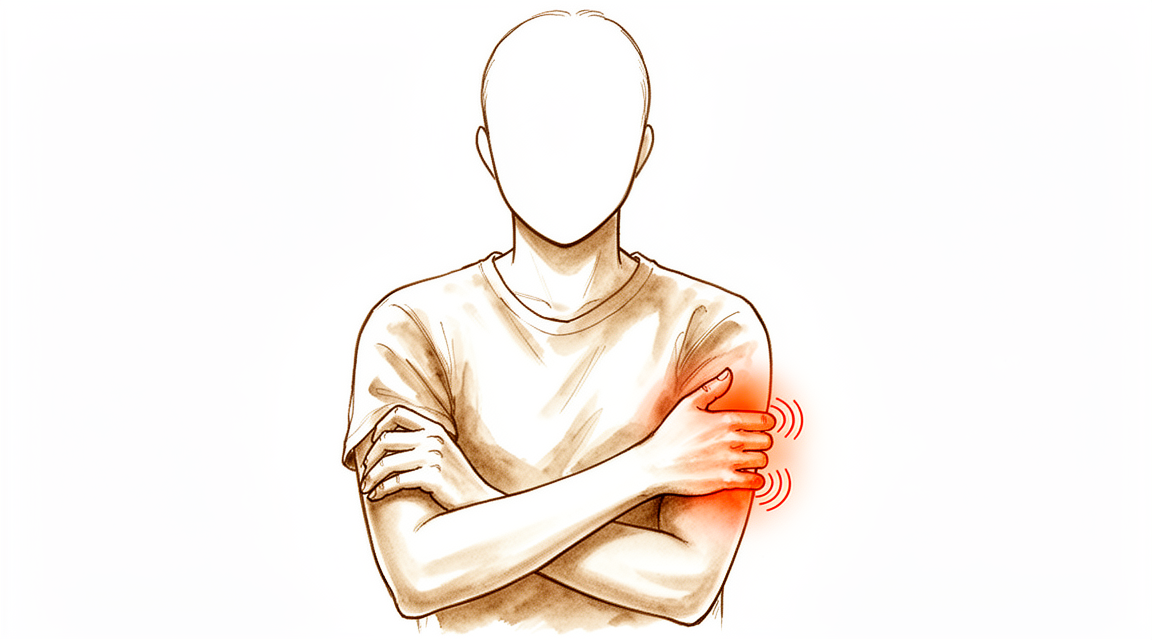
Este protocolo le servirá de guía durante su recuperación tras la liberación quirúrgica del nervio cubital en el codo (liberación del túnel cubital) realizada por el Dr. Kieran Hirpara en el Mater Private Hospital Rockhampton. Explica qué esperar, las precauciones a tomar durante las primeras semanas y los ejercicios que favorecen el deslizamiento libre del nervio mientras todo se asienta. Lleve esta página o su versión en PDF a su fisioterapeuta o terapeuta de mano para garantizar una rehabilitación coordinada. Su terapeuta podrá ajustar el plan según el progreso de su recuperación.
Si tiene alguna duda respecto a la herida quirúrgica, no dude en contactar con el consultorio. A menudo resulta útil tomar una fotografía de la herida y enviarla por correo electrónico para su evaluación.
Dos tipos de operación, dos procesos de recuperación ligeramente distintos. Existen dos formas principales de liberar el nervio cubital; el tipo de intervención que haya recibido determinará las precauciones iniciales:
- Descompresión in situ (simple): el nervio se libera en su posición original, sin moverlo. Esta es la técnica estándar que aplica el Dr. Hirpara, y la recuperación es rápida: se permite un movimiento completo y suave del codo desde el principio. No se utiliza ningún dispositivo ortopédico rígido.
- Transposición anterior (submuscular): el nervio se desplaza y vuelve a colocar en una posición más protegida, delante del codo. Esta técnica se emplea únicamente en casos poco frecuentes en que el nervio sufre subluxación o dislocación sobre el epicóndilo medial al flexionar el codo. En este caso, se requiere una fase inicial más cuidadosa: durante las primeras semanas se debe evitar la flexión y extensión máxima del codo mientras el nervio y los tejidos blandos se asientan en su nueva posición. Para mayor comodidad, se puede usar un cabestrillo sencillo.
Siga las indicaciones que se detallan a continuación según el tipo de operación que haya tenido: descompresión in situ en la mayoría de los casos, y transposición cuando el nervio presentaba inestabilidad.
Qué esperar
Para el manejo de heridas, hinchazón y cicatrices, consulte la guía de cuidado de heridas del consultorio.
El objetivo de la cirugía es aliviar la presión sobre el nervio cubital (el nervio que proporciona sensibilidad a los dedos meñique y anular, y que controla muchos de los pequeños músculos de la mano). Una vez que se elimina dicha presión, el nervio comienza a recuperarse; sin embargo, la regeneración nerviosa es un proceso lento.
La rapidez con la que mejoran sus síntomas depende en gran medida de cuánto tiempo estuvo el nervio comprimido y cuán irritado se encontraba antes de la cirugía. Las sensaciones de hormigueo o cosquilleo suelen desaparecer primero, a veces en cuestión de días o semanas. La entumecimiento y la fuerza de la mano tardan más en mejorar (con frecuencia meses), y el resultado final puede seguir mejorando hasta un año o más después de la operación. En casos donde el nervio estuvo muy irritado durante mucho tiempo, es posible que parte de la entumecimiento o debilidad no se recupere por completo; en tales situaciones, el objetivo de la cirugía es impedir que la situación empeore y brindar al nervio la mayor oportunidad de recuperación.
Al comparar ambas técnicas quirúrgicas, revisiones exhaustivas de los ensayos publicados han demostrado que la descompresión simple in situ y la transposición anterior arrojan resultados globales similares; no obstante, la descompresión simple tiende a presentar menos complicaciones en la herida y en los tejidos blandos [1][2]. Su cirujano decidirá cuál de las dos opciones es la más adecuada según el estado de su nervio y de su codo.
Precauciones y limitaciones
Se recomienda un uso funcional moderado de la mano para tareas cotidianas como el aseo personal, la alimentación, vestirse, escribir y teclear, desde el principio y siempre dentro de lo que resulte cómodo.
Las limitaciones iniciales dependen del tipo de operación que haya tenido:
- Tras una descompresión in situ (operación habitual): se recomienda realizar movimientos suaves y completos del codo, antebrazo, muñeca y mano desde el inicio, para favorecer el deslizamiento del nervio. No se utiliza ningún dispositivo ortopédico. Durante las primeras seis semanas, se debe limitar el levantamiento de pesos, el agarre y la carga de peso con el brazo; posteriormente se irá aumentando gradualmente.
- Tras una transposición anterior (solo si el nervio era inestable): durante las primeras semanas se protege el codo; se debe evitar forzarlo hasta quedar completamente flexionado o extendido, así como mantenerlo flexionado durante largos periodos, mientras el nervio se asienta en su nueva posición. Se puede usar un cabestrillo sencillo únicamente para mayor comodidad. Los ejercicios de deslizamiento nervioso comienzan un poco más tarde que tras una descompresión simple (generalmente a las dos o tres semanas). Al igual que tras una descompresión in situ, se mantienen el levantamiento de pesos y la resistencia a niveles bajos durante las primeras seis semanas, para luego aumentarlos gradualmente.
Como guía general, el levantamiento de pesos y los ejercicios de fortalecimiento con resistencia deben mantenerse a niveles bajos hasta aproximadamente la sexta semana, momento a partir del cual se irán incrementando gradualmente [3][4].
Apoyarse en el codo (dejar que el codo repose sobre una superficie dura) ejerce presión directamente sobre el nervio, por lo que debe evitarse mientras este se recupera.
Una vez cicatrizada la herida, el masaje de la cicatriz ayuda a mantener la piel y los tejidos flexibles sobre el nervio. En la página de cuidado de la herida encontrará más información sobre el manejo de cicatrices.
Estos son los ejercicios que aparecen en su folleto; deben realizarse tal como se describe en cada ficha. Comience bajo la orientación del Dr. Hirpara y su terapeuta: la fecha de inicio de los ejercicios de deslizamiento nervioso y cualquier límite en el rango de movimiento del codo dependen del tipo de operación que haya tenido.
Sus ejercicios
Kieran Hirpara 4.0
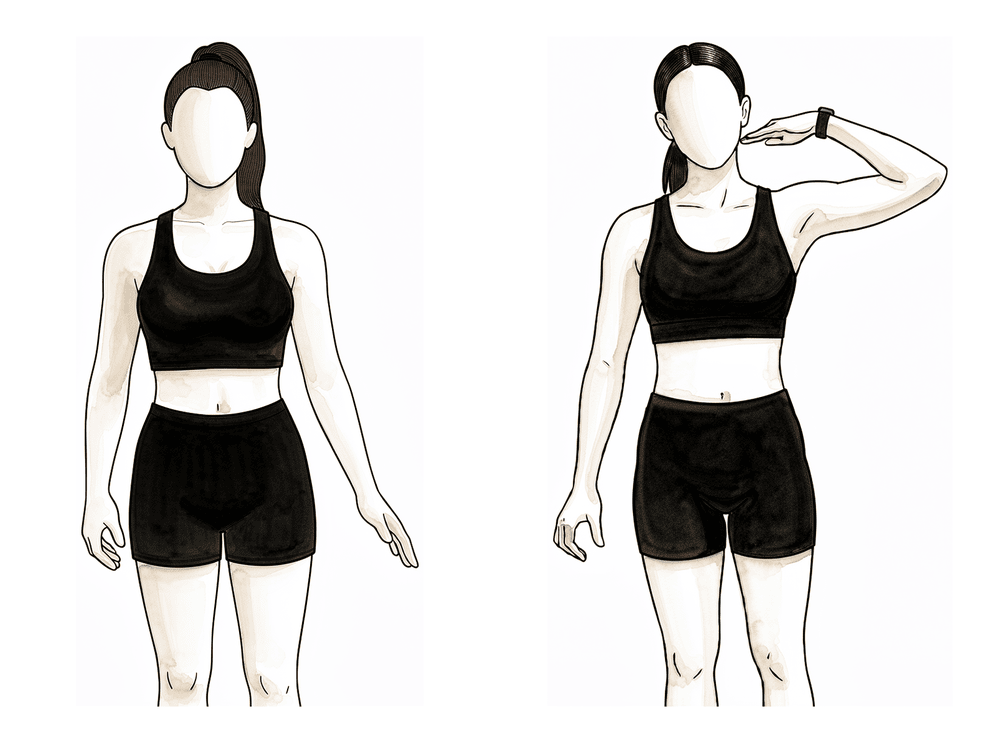
Deslizamientos del nervio cubital
Estos movimientos suaves permiten que el nervio ulnar se deslice libremente, evitando así que quede adherido al tejido en proceso de cicatrización. Realice cada movimiento con suavidad, hasta donde le resulte cómodo: es normal sentir una ligera tensión o cosquilleo, pero debe detenerse antes de experimentar hormigueo intenso o dolor agudo. Jamás fuerce el estiramiento. Comience únicamente cuando su cirujano o terapeuta se lo indique (generalmente, más tarde si se ha realizado una transposición del nervio; consulte las precauciones a continuación).
5 repeticiones lentas, 2–3 veces al día
Kieran Hirpara 4.0
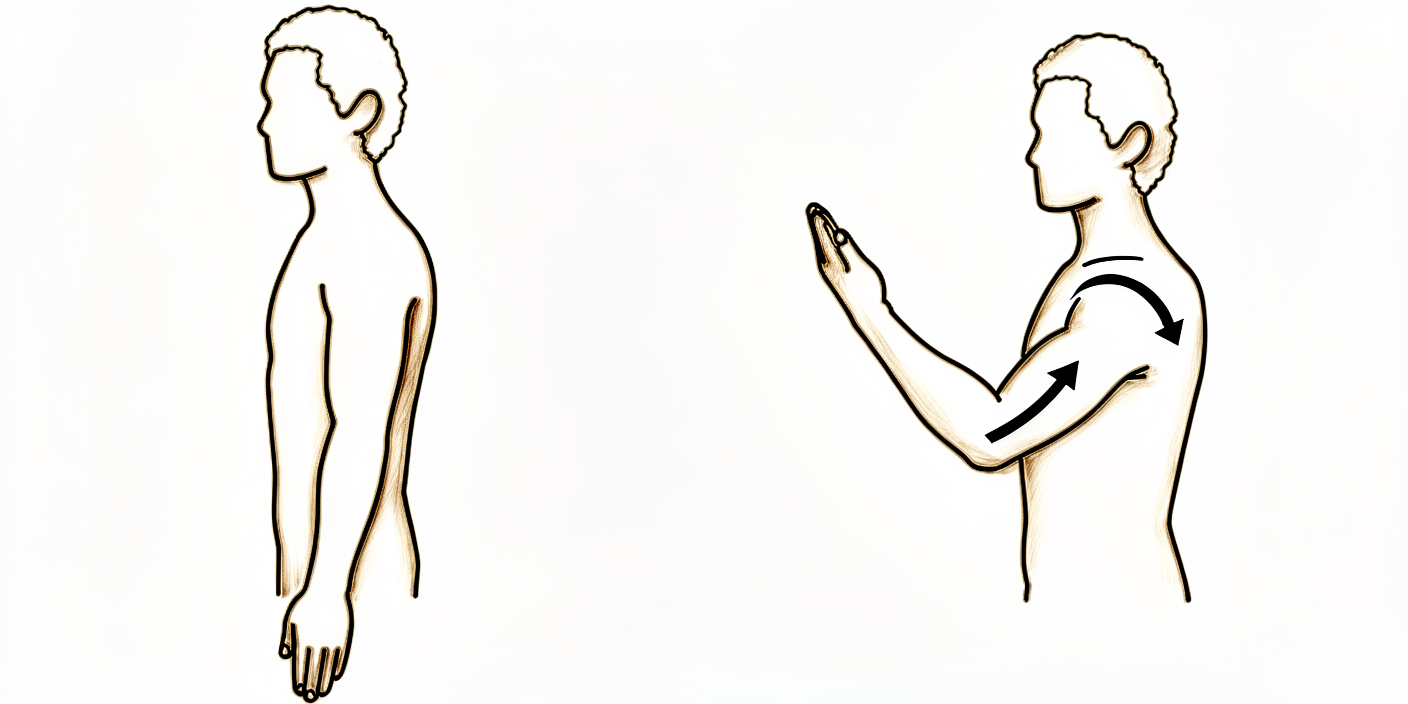
Flexión del codo
Con el brazo apoyado, doble suavemente el codo para acercar la mano al hombro y luego bájela de nuevo. Realice el movimiento dentro de un rango cómodo. Si se ha sometido a una transposición, es posible que su cirujano le pida que evite doblar el codo por completo durante las primeras semanas; en ese caso, respete el límite que le haya indicado.
10 repeticiones, 3–4 veces al día, dentro del rango permitido.
Kieran Hirpara 4.0
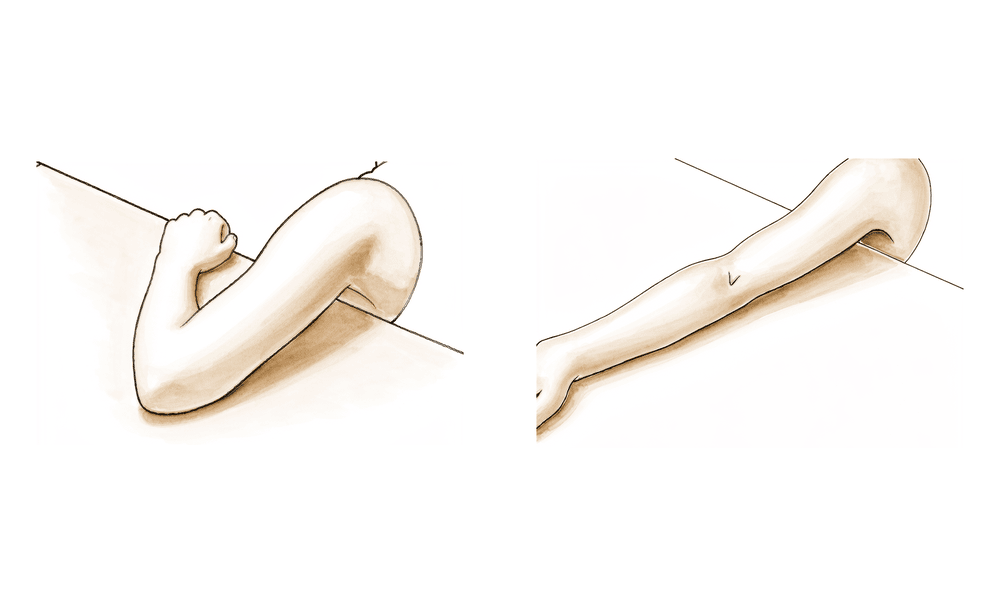
Enderezamiento del codo (extensión)
Partiendo de una posición flexionada, estire suavemente el codo hasta donde le resulte cómodo, y luego vuelva a la posición inicial. Si se le ha realizado una transposición, evite estirar el codo por completo en las primeras semanas, si así se lo ha indicado su cirujano; limítese al rango de movimiento que su médico haya determinado como adecuado para usted.
10 repeticiones, 3–4 veces al día, dentro del rango permitido.
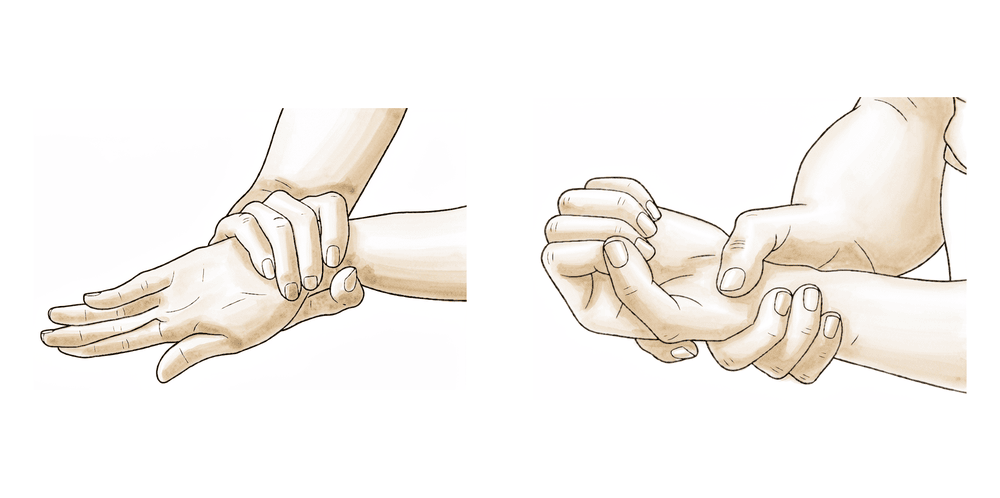
Kieran Hirpara 4.0
Rotación del antebrazo
Con el codo pegado al costado y doblado en un ángulo recto, gire lentamente la palma de la mano hacia el techo y luego hacia el suelo. Mantenga el codo siempre pegado al cuerpo.
10 veces en cada dirección, 3–4 veces al día.
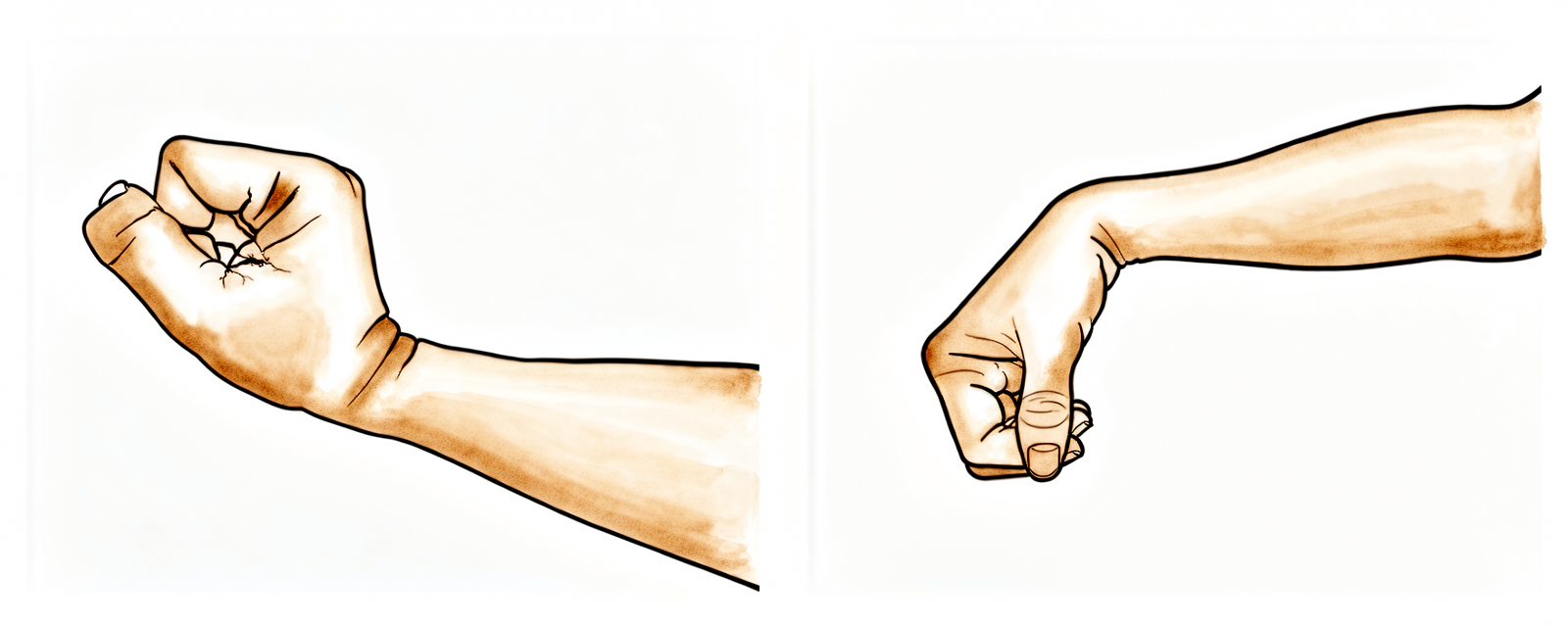
Kieran Hirpara 4.0
Movimiento de la muñeca y los dedos
Doble su muñeca suavemente hacia arriba y hacia abajo, y abra y cierre los dedos por completo: haga un puño relajado y luego extienda los dedos. Esto mantiene en movimiento toda la extremidad y ayuda a reducir la hinchazón y la rigidez mientras el codo se recupera.
10 de cada uno, varias veces al día.
Comience los ejercicios que se indican a continuación únicamente bajo la guía del Dr. Hirpara y de su terapeuta especializado, respetando siempre los rangos y límites que se le hayan indicado. Los deslizamientos del nervio cubital son especialmente importantes: permiten que el nervio se desplace en su nueva posición en lugar de formar cicatrices; estos ejercicios deben iniciarse desde el principio. El flexión, extensión del codo y la rotación del antebrazo evitan la rigidez del codo; los movimientos de muñeca y dedos, por su parte, mantienen el resto de la función motora. Evite permanecer mucho tiempo con el codo completamente flexionado, ya que esto es lo que, en primer lugar, irrita el nervio. Interrumpa cualquier ejercicio que provoque dolor agudo o como descargas eléctricas a lo largo del antebrazo, hacia el dedo meñique y el anular.
Volver al trabajo y a las actividades cotidianas
La mayoría de las personas regresan a trabajos de oficina o actividades ligeras en el transcurso de una o dos semanas; en cambio, para trabajos más pesados, repetitivos o manuales suele ser necesario esperar entre cuatro y ocho semanas. Estará listo para realizar una tarea específica cuando la herida soporte el contacto y la presión que esta implica, y cuando pueda ejecutarla cómodamente respetando las precauciones mencionadas. Si su trabajo es físicamente exigente, implica apoyarse en el codo o el uso de herramientas vibratorias, hágalo saber en su revisión postoperatoria para que se elabore un plan adecuado (incluyendo posibles modificaciones en sus tareas).
Por lo general, se puede volver a conducir al cabo de dos o tres semanas, una vez que se haya retirado el cabestrillo y pueda controlar el vehículo y reaccionar ante emergencias sin sentir dolor. El regreso a deportes y actividades que requieran levantar los brazos suele ocurrir alrededor de las seis a doce semanas.
La recuperación del nervio sigue su propio cronograma, más lento. El hormigueo suele desaparecer primero, en cuestión de días o semanas; en cambio, la entumecimiento y la fuerza continúan mejorando durante varios meses, pudiendo seguir progresando hasta aproximadamente un año. En casos donde el nervio estuvo muy comprimido durante mucho tiempo, es posible que parte de la entumecimiento o debilidad no se recupere por completo; en tales situaciones, la cirugía tiene como objetivo impedir que la situación empeore.
Después de seguir este protocolo
Este protocolo complementa las recomendaciones generales de recuperación de la consulta: consulte manejo del dolor postoperatorio, cuidado de la herida y conceptos básicos de la terapia de la mano. El plan por fases descrito anteriormente se ajusta a la evidencia científica publicada sobre la descompresión del nervio cubital en el codo; su recuperación continua será guiada individualmente por su fisioterapeuta o terapeuta de la mano, según la evolución de su nervio y de su codo.
Referencias
[1] Said J, Van Nest D, Foltz C, et al. Descompresión in situ del nervio ulnar versus transposición para el síndrome idiopático del túnel cubital: un metaanálisis actualizado. J Hand Microsurg. 2019;11(1):18–27. https://pmc.ncbi.nlm.nih.gov/articles/PMC6431285/ [2] Macadam SA, Gandhi R, Bezuhly M, Lefaivre KA. Descompresión simple versus transposición subcutánea anterior y submuscular del nervio ulnar para el síndrome del túnel cubital: un metaanálisis. J Hand Surg Am. 2008;33(8):1314.e1–12. https://pubmed.ncbi.nlm.nih.gov/18929194/ [3] Caliandro P, La Torre G, Padua R, Giannini F, Padua L. Tratamiento de la neuropatía ulnar en el codo. Cochrane Database Syst Rev. 2016;11:CD006839. https://www.cochranelibrary.com/cdsr/doi/10.1002/14651858.CD006839.pub4/full [4] Andrews K, Rowland A, Pranjal A, Ebraheim N. Síndrome del túnel cubital: anatomía, presentación clínica y tratamiento. J Orthop. 2018;15(3):832–836. https://pmc.ncbi.nlm.nih.gov/articles/PMC6082832/
Evidence & references
This is the clinical evidence summary written for health professionals. It is technical, and it lists the research this page was built from. You do not need to read it to understand your treatment or to make a decision about it.
Cubital Tunnel Release — Post-operative Rehabilitation (In-situ Decompression vs Anterior Transposition)
Topic scope: post-operative rehabilitation after surgical decompression of the ulnar nerve at the elbow. The single defining branch point is the operative technique: (A) in-situ (simple) decompression — an early-full-motion pathway; versus (B) anterior transposition (subcutaneous or submuscular) — a protected early phase that avoids end-range elbow flexion/extension for the first few weeks to protect the transposed nerve and its soft-tissue bed.
Defining principle of the rehab here: decompression relieves pressure on a nerve; it does not, by itself, create a load-bearing repair that needs months of protection. So the rehab is fundamentally an early-motion, nerve-glide pathway aimed at preventing perineural adhesion while the nerve recovers on its own (slow) biological timeline. The one variable that changes the early phase is whether the nerve was transposed — a transposed nerve sits in a new bed and end-range elbow excursion is restricted briefly to protect it, so nerve glides start later and elbow ROM is capped for a few weeks. Phase timings below are typical of published surgeon protocols and institutional consensus rather than trial-derived.
A. PROCEDURE CHOICE & OUTCOME EQUIVALENCE
- In-situ decompression and anterior transposition give equivalent clinical outcomes. Multiple meta-analyses of RCTs and comparative series find no significant difference in motor nerve conduction velocity or clinical outcome scores between simple decompression and transposition for idiopathic cubital tunnel syndrome. Strong (multiple SR/meta-analyses).
- Simple decompression carries a lower complication burden (wound, soft-tissue, devascularisation risk), and is often preferred where the nerve is stable and does not subluxate. Moderate–strong.
- Transposition is selected for nerve instability/subluxation, prior failed in-situ release, bony deformity, or a hostile cubital tunnel floor — surgeon's intra-operative judgement. Consensus.
- Endoscopic vs open in-situ decompression show comparable outcomes; choice does not change the rehab pathway (both early-motion). Moderate (SR).
B. POST-OPERATIVE REHABILITATION
Common principles (both pathways)
- Early digital, wrist and shoulder motion from day 1 to prevent stiffness and oedema.
- Ulnar nerve gliding to prevent perineural adhesion — timing differs by pathway (see below).
- No elbow leaning / direct pressure over the nerve during recovery.
- Wound: suture removal ~10–14 days; scar massage and desensitisation once healed.
- Nerve recovery is slow and graded: paraesthesia often improves first (days–weeks); numbness and intrinsic strength lag (months); final outcome continues to ~12 months. DASH, clinical findings and NCV improve postoperatively, with significant early gains by ~1 month in cohort data. Pre-operative severity/chronicity is the dominant predictor of incomplete recovery.
Phased timeline (typical of published surgeon protocols)
| Phase | In-situ (simple) decompression | Anterior transposition (SC / submuscular) |
|---|---|---|
| Week 0–2 | Soft dressing; early active full elbow ROM + digit/wrist/shoulder ROM; light ADLs | Splint/sling for comfort/protection (often elbow ~semi-flexed early); avoid end-range flexion AND extension, and avoid sustained/prolonged elbow flexion; digit/wrist/shoulder ROM |
| Week 2–6 | Progress to full unrestricted active ROM; scar massage + desensitisation once healed; nerve glides as tolerated | Suture out ~10–14d; gradually restore elbow ROM within set limits; scar/desensitisation; introduce nerve glides — typically deferred to this window |
| Week ~6+ | Strengthening / lifting built up as tolerated; return to full activity | Restrictions usually lifted ~6 wk; resistance strengthening from ~6 wk; build up gradually |
Dr Hirpara's practice parameters:
- Default operation = in-situ (simple) decompression; anterior submuscular transposition is reserved for a nerve that subluxates over the medial epicondyle. No rigid brace is used.
- Early elbow ROM: full active elbow motion from day 1 after in-situ decompression. After a transposition the elbow is protected from end-range flexion/extension for the first few weeks (a simple sling for comfort only — no rigid brace).
- Nerve glides: start early/as-tolerated after in-situ; start around 2–3 weeks after a transposition.
- Lifting: kept light (around ≤2 kg) for the first ~6 weeks, then resistance strengthening is built up gradually.
- Nerve recovery: paraesthesia settles first (days–weeks); numbness and intrinsic strength recover over months and can keep improving to ~12 months. Pre-operative severity/chronicity is the dominant predictor — long-standing severe compression may not fully recover, and surgery then aims to halt progression.
C. KEY CONTROVERSIES / EVIDENCE QUALITY
- Procedure equivalence is well supported (multiple meta-analyses); the complication-profile advantage of simple decompression drives the "in-situ first unless unstable" stance. Strong.
- The post-op rehab protocol itself is consensus/expert — drawn from surgeon patient-guidance protocols, not a rehab RCT. Phase timings are typical, not trial-derived. Weak/consensus.
- Nerve-glide evidence is stronger as a non-operative and adhesion-prevention measure than as a proven post-operative outcome-changer; biomechanical and clinical work supports gliding to reduce excursion-related symptoms. Moderate.
D. EVIDENCE STRENGTH FLAGS (summary)
- STRONG (SR / meta-analysis): clinical-outcome equivalence of in-situ decompression vs anterior transposition; lower complication rate with simple decompression.
- MODERATE (cohorts / SR): endoscopic vs open in-situ equivalence; post-op DASH/NCV improvement with early gains by ~1 month; nerve-gliding rationale.
- WEAK / CONSENSUS: the post-operative rehabilitation protocol (surgeon patient-guidance documents; no defining rehab RCT) — including the transposition early-ROM cap, nerve-glide start date, and the ~6-week lifting/strengthening threshold.
CITATIONS
RAG corpus (180,000+ Orthopaedic articles)
- Open vs retractor-endoscopic in-situ decompression of the ulnar nerve in cubital tunnel syndrome. Neurosurgery. DOI: 10.1227/neu.0b013e3182846dbd
- Randomized, prospective study comparing ulnar neurolysis in situ with submuscular transposition. Neurosurgery. DOI: 10.1227/01.neu.0000194847.04143.a1
- Open versus endoscopic in situ decompression in cubital tunnel syndrome: a systematic review. Int J Surg. 2016. DOI: 10.1016/j.ijsu.2016.09.012
- Simple decompression vs. subcutaneous anterior transposition of the ulnar nerve (2025). J Hand Surg Glob Online / XRRT. DOI: 10.1016/j.xrrt.2025.100630
- Cubital tunnel syndrome: current concepts. Curr Rev Musculoskelet Med. 2020. DOI: 10.1007/s12178-020-09650-y
- Predictors of surgical revision after in situ decompression of the ulnar nerve. J Shoulder Elbow Surg. 2015. DOI: 10.1016/j.jse.2014.12.015
- Clinical outcomes of ulnar nerve gliding exercise in the nonoperative treatment of cubital tunnel syndrome. JSES Int. 2025. DOI: 10.1016/j.jseint.2025.02.001
- Biomechanical analysis of ulnar nerve gliding and elongation. Clin Shoulder Elbow. 2024. DOI: 10.5397/cise.2024.00934
- Postoperative improvement in DASH score, clinical findings and nerve conduction velocity in cubital tunnel syndrome. Sci Rep. 2016. DOI: 10.1038/srep27497
Comparative-effectiveness literature (URLs)
- Said J, et al. Ulnar nerve in situ decompression versus transposition for idiopathic cubital tunnel syndrome: an updated meta-analysis. J Hand Microsurg. 2019. https://pmc.ncbi.nlm.nih.gov/articles/PMC6431285/
- Macadam SA, et al. Simple decompression versus anterior subcutaneous and submuscular transposition of the ulnar nerve: a meta-analysis. J Hand Surg Am. 2008. https://pubmed.ncbi.nlm.nih.gov/18929194/
- Caliandro P, et al. Treatment for ulnar neuropathy at the elbow. Cochrane Database Syst Rev. 2016;CD006839. https://www.cochranelibrary.com/cdsr/doi/10.1002/14651858.CD006839.pub4/full
- Andrews K, et al. Cubital tunnel syndrome: anatomy, clinical presentation, and management. J Orthop. 2018. https://pmc.ncbi.nlm.nih.gov/articles/PMC6082832/
Published rehab protocols (patient-guidance — basis for the phase structure)
- University of Virginia Orthopaedics — Cubital Tunnel Release, In-situ Rehabilitation Guidelines. https://med.virginia.edu/orthopaedic-surgery/wp-content/uploads/sites/242/2024/09/Cubital-tunnel-release-in-situ.pdf
- University of Virginia Orthopaedics — Cubital Tunnel Release, Anterior Subcutaneous Transposition. https://med.virginia.edu/orthopaedic-surgery/wp-content/uploads/sites/242/2024/09/Cubital-tunnel-release-anterior-subcutaneous-transposition.pdf
- AAOS OrthoInfo — Cubital Tunnel Release (patient recovery expectations). https://orthoinfo.aaos.org/en/treatment/cubital-tunnel-release/