Skip to content

Patients › General-Health

Hipermovilidad articular y síndrome de Ehlers-Danlos

PDF

Bendy joints that can slip or ache — the spectrum from benign hypermobility to hEDS, and why strengthening is the mainstay.
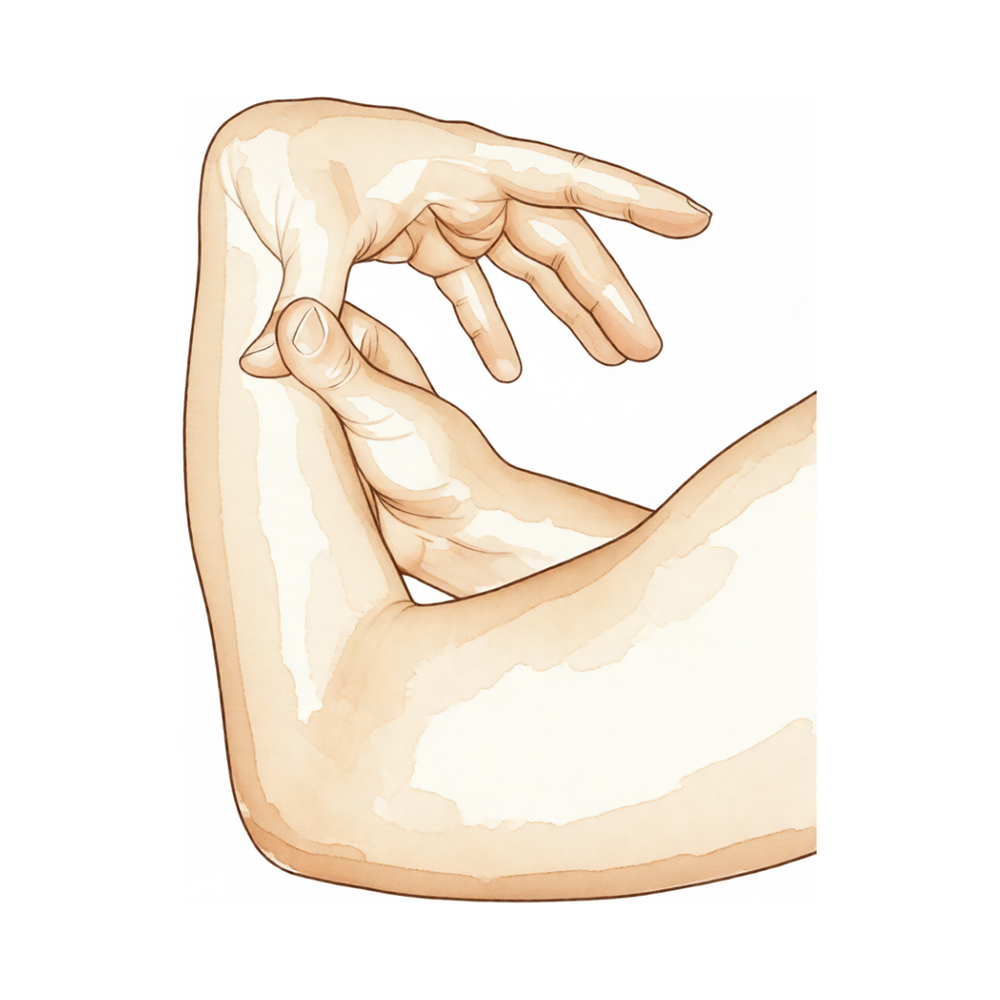
Un pulgar doblado hacia atrás, en dirección al antebrazo, que evidencia hipermovilidad articular.
La señal clásica de hipermovilidad articular: un pulgar que puede doblarse hacia atrás, en dirección al antebrazo. Dagger9977 / Wikimedia Commons, CC BY-SA 3.0

Esta página se tradujo automáticamente y todavía no la ha revisado un médico. La versión en inglés es la versión oficial.

Qué está sintiendo

Es posible que siempre haya sido la persona “con articulaciones elásticas”, capaz de doblar el pulgar hacia el antebrazo, de hiperextender los codos o de adoptar posturas que hacen estremecer a los demás. Para muchas personas, esa flexibilidad es simplemente una peculiaridad inofensiva que no genera ningún problema.

Sin embargo, para otras, conlleva ciertas consecuencias. Las articulaciones que se mueven más allá del rango normal pueden doler, especialmente después de hacer ejercicio o al final del día. Es posible que note que algunas articulaciones hacen “clic”, emitan ruidos extraños o se sientan inestables, como si pudieran salirse de su sitio; a veces, efectivamente lo hacen. En las extremidades superiores, los lugares más afectados suelen ser el hombro, las articulaciones de los dedos y la base del pulgar: un hombro que se desplaza parcialmente (subluxación) o se disloca por completo, dedos que se doblan en dirección incorrecta, o una articulación del pulgar que cede al intentar pellizcar o agarrar algo. Las lesiones parecen tardar más en curarse de lo esperado, y la misma articulación puede seguir fallando una y otra vez.

La hipermovilidad suele ir acompañada de otros síntomas. Algunas personas tienen la piel blanda o elástica y se magullan con facilidad. Muchos describen una fatiga desproporcionada respecto a la actividad realizada, mareos o taquicardia al ponerse de pie, así como síntomas digestivos como hinchazón o reflujo. No todo el mundo presenta todos estos signos, pero si varios de ellos coinciden con la laxitud articular que usted experimenta, es posible que estén relacionados.

¿Qué está ocurriendo realmente?

Las articulaciones se mantienen unidas y estabilizadas gracias al tejido conectivo (ligamentos, tendones y la cápsula que rodea cada articulación); un componente clave de dicho tejido es una proteína llamada colágeno. En personas con hipermovilidad, el colágeno y el tejido conectivo son un poco más elásticos y flexibles de lo habitual. Como resultado, las estructuras de soporte ceden un poco más, permitiendo que las articulaciones se muevan más allá del rango normal.

Esto se enmarca dentro de un espectro. En un extremo se encuentra la simple hipermovilidad articular que nunca genera problemas. Cuando las articulaciones inestables comienzan a causar dolor, inestabilidad o lesiones recurrentes, los médicos lo denominan trastorno del espectro de hipermovilidad. En el otro extremo está el síndrome de Ehlers-Danlos hipermóvil (hEDS), en el cual el tejido conectivo elástico es aún más pronunciado y suele ir acompañado de múltiples manifestaciones en todo el cuerpo (problemas cutáneos, hematomas, fatiga, trastornos gastrointestinales y síntomas autonómicos como mareos). Los límites entre estos estados no son nítidos, y la posición de cada persona dentro del espectro puede variar con el tiempo. Para evaluar esto, los médicos suelen emplear una serie de pruebas de flexión llamadas puntuación de Beighton, junto con el historial clínico completo del paciente.

Todo esto es importante para sus articulaciones por una razón fundamental: si los soportes pasivos (ligamentos y cápsula) sujetan la articulación con menos firmeza, esta depende mucho más de los músculos circundantes para mantenerse estable. Cuando esos músculos son fuertes y están bien coordinados, la articulación permanece en su lugar; en cambio, si se cansan o no están entrenados para esa función, la articulación puede desplazarse, doler, y con el paso de los años desgastarse un poco más de lo normal.

Existe un patrón específico que vale la pena conocer respecto al hombro: mientras que una lesión aislada puede desplazar un hombro normal en una sola dirección, un hombro hipermóvil suele sentirse inestable en varias direcciones a la vez, deslizándose hacia adelante, atrás o hacia abajo. Los médicos denominan esto inestabilidad multidireccional. Esto implica también que estos hombros tienden a desplazarse parcialmente y volver a su posición por sí solos (subluxarse) con mayor frecuencia que a dislocarse por completo. Este hecho es relevante, pues es precisamente este tipo de inestabilidad el que responde mejor al fortalecimiento del control muscular, y el que menos beneficia de una intervención quirúrgica por sí sola.

Qué podemos hacer al respecto

El mensaje más importante es este: la hipermovilidad y el SEDh no tienen cura, pero se pueden controlar muy bien, y la base del tratamiento no es un comprimido ni una operación. Consiste en fortalecer los músculos que estabilizan las articulaciones.

La fisioterapia y el fortalecimiento específico son el pilar del tratamiento. Un fisioterapeuta que conozca la hipermovilidad trabajará con usted para mejorar el control y la fuerza alrededor de las articulaciones que más le causan problemas. En el caso de la extremidad superior, esto suele implicar los músculos de la escápula y el manguito rotador, así como los pequeños músculos que controlan el pulgar y los dedos. El objetivo es entrenar a los músculos para que realicen la función estabilizadora que los ligamentos ya no pueden cumplir con eficacia. Se trata de un programa gradual y continuo, no de una solución rápida; sin embargo, es lo que marca la diferencia para la mayoría de las personas.

Además de esto, hay varias medidas complementarias que resultan útiles:

  • Modulación de la actividad y protección articular: distribuir la actividad a lo largo del día, evitar posiciones extremas que sobrecarguen articulaciones inestables, y adaptar la forma en que se realizan tareas exigentes o repetitivas.
  • Órtesis y cintas adhesivas: se utilizan de forma selectiva para apoyar una articulación mientras se gana fuerza o durante un brote de síntomas, pero no como soporte permanente.
  • Control del dolor: estrategias sencillas, a veces medicación, además de cuidar el sueño, combatir la fatiga y atender otros síntomas generales, pues todos ellos influyen directamente en la sensación de las articulaciones.

La cirugía se aborda con mucha precaución. Para un cirujano de extremidad superior, este es un punto verdaderamente importante. Cuando una articulación (muy a menudo el hombro) se disloca repetidamente a pesar de una buena rehabilitación, puede considerarse una operación para estabilizarla. No obstante, el mismo tejido elástico que provocó la inestabilidad articular también hace que las reparaciones quirúrgicas sean menos fiables y que la cicatrización sea distinta; por eso, las intervenciones estándar de estabilización presentan mayor riesgo de perder eficacia con el tiempo. Por esta razón, la cirugía se reserva para casos muy seleccionados, planificados teniendo en cuenta la hipermovilidad, y siempre acompañados de un programa de fortalecimiento previo y posterior. La rehabilitación es lo que garantiza el éxito del resultado.

Qué esperar

La hipermovilidad forma parte de la estructura corporal, por lo que no desaparece; sin embargo, su impacto puede variar enormemente con un manejo adecuado. Muchas personas que se comprometen con un programa de fortalecimiento observan que sus articulaciones se vuelven mucho más estables, el dolor disminuye y los deslizamientos y dislocaciones son mucho menos frecuentes. El progreso suele ser gradual, no repentino, y se mide a lo largo de meses; para mantener los beneficios, lo ideal es seguir entrenando los músculos a largo plazo, en lugar de interrumpir el programa una vez que se observan mejoras.

Es útil considerar esto como una colaboración a largo plazo con el propio cuerpo, en lugar de un problema que se soluciona de una sola vez. Aún pueden producirse episodios agudos, especialmente tras una enfermedad, un pico de crecimiento o un periodo de menor actividad; con el tiempo, se aprende a reconocer los primeros signos y a prevenirlos. Cuando coexisten otros síntomas (fatiga, mareos, molestias gastrointestinales), cuidar también de ellos, además de de las articulaciones, suele facilitar el control general de la situación. Con un plan razonable, la mayoría de las personas mantienen su actividad y realizan las cosas que les importan.

¿Cuándo consultar a un especialista?

  • Una articulación que se disloca o se sale parcialmente en repetidas ocasiones, especialmente el hombro, o una primera dislocación que no se corrige.
  • Dolor incapacitante o que empeora progresivamente a pesar del reposo y de las medidas habituales que usted toma.
  • Inestabilidad que interfiere con la vida diaria: dificultad para agarrar, levantar objetos, trabajar o dormir debido a que la articulación no mantiene su posición.
  • Un problema articular nuevo o que empeora rápidamente, o entumecimiento, hormigueo o debilidad en el brazo o la mano.
  • Si sospecha que padece un trastorno del espectro de hipermovilidad o hEDS y desea que se le evalúe adecuadamente (sobre todo cuando la laxitud articular se acompaña de problemas cutáneos, hematomas, fatiga, mareos o síntomas gastrointestinales), merece la pena solicitar una evaluación minuciosa para establecer el plan de tratamiento adecuado.

En profundidad

Esta sección va más allá de lo que necesita saber para tomar decisiones sobre su propio tratamiento. Vale la pena leer más sobre la hipermovilidad, pues la narrativa que afirma que las articulaciones sueltas se deben a un problema genético relacionado con el colágeno, y que una articulación laxa puede simplemente corregirse mediante cirugía, no resiste el contraste con la evidencia científica en ninguno de los dos aspectos.

El tipo más común no tiene causa genética conocida

La clasificación internacional de 2017 reconoce 13 tipos de síndrome de Ehlers-Danlos. Doce de ellos son causados por variantes en 20 genes identificados; para estos doce tipos, un diagnóstico definitivo requiere confirmación molecular [1].

El decimotercer tipo es el SED hipermóvil, de lejos el más frecuente; sin embargo, su base molecular permanece desconocida [1]. No existe ninguna prueba genética para este tipo. Es el único tipo que se diagnostica únicamente mediante criterios clínicos, motivo por el cual el diagnóstico puede resultar subjetivo y frustrante en comparación con otras enfermedades que sí cuentan con resultados de laboratorio.

Esto es relevante a la hora de explicar la enfermedad. Afirmar que la hipermovilidad “se debe a diferencias hereditarias en los genes del colágeno” es correcto para el SED clásico y vascular, donde se conocen las variantes causantes. En el caso del SED hipermóvil, se trata de una suposición razonable más que de un hecho demostrado. La postura honesta es que podemos describir fielmente el comportamiento de los tejidos, pero aún no podemos identificar la causa molecular.

La puntuación de Beighton es más fiable de lo que se cree

La puntuación de Beighton, que consta de nueve puntos, suele considerarse un método rudimentario y dependiente del evaluador. Sin embargo, esta crítica carece de fundamento. Una revisión sistemática realizada con 1,333 participantes demostró que dicha puntuación presenta una fiabilidad substancial a excelente tanto entre distintos evaluadores como para un mismo evaluador, y esto se mantuvo independientemente del nivel de formación y experiencia de los evaluadores [2].

Por lo tanto, este método de medición es válido. La verdadera limitación radica en otro aspecto: la puntuación evalúa los meñiques, pulgares, codos, rodillas y columna vertebral; un buen resultado indica una laxitud generalizada del sistema musculoesquelético, pero nunca fue concebida para valorar la estabilidad de un hombro concreto.

¿Qué predice realmente la hipermovilidad en el miembro superior?

Esta es la cifra que realmente importa en una clínica de hombro. Una revisión sistemática y metaanálisis de 2,335 atletas reveló que la hipermovilidad articular se asociaba con una probabilidad tres veces mayor de sufrir lesiones en el hombro [3]. Los autores muestran la debida cautela respecto a la calidad de las evidencias en las que se basan, pero la tendencia y magnitud del efecto son difíciles de pasar por alto.

Ese riesgo no se limita al miembro superior. La laxitud articular generalizada se relaciona con un mayor índice de fallo del injerto y peores resultados tras la reconstrucción del ligamento cruzado anterior [4]; el mismo tejido se comporta de manera similar en otra articulación.

La cirugía tiene menos efectividad, y las cifras lo demuestran

Esta es la parte de la literatura científica menos cómoda de abordar, pero también la más útil.

Una revisión sistemática y metaanálisis realizada con 1,769 pacientes reveló que las personas con síndrome de Ehlers-Danlos sometidas a artroplastia total presentaban un riesgo significativamente mayor de reintervención por cualquier causa, inestabilidad, aflojamiento aséptico y complicaciones de la herida [5]. Otra revisión independiente sobre los resultados quirúrgicos ortopédicos en pacientes con síndromes de Ehlers-Danlos llegó a la misma conclusión: los resultados son peores que en la población general, y las complicaciones se producen con mayor frecuencia [6].

Nada de esto implica que la cirugía sea inadecuada. Simplemente indica que el beneficio esperado es menor y la tasa de complicaciones superior a las cifras reportadas para la población general; por ello, el umbral para indicar una intervención quirúrgica debería ajustarse en consecuencia. Si usted padece tejidos hipermóviles, los índices de éxito publicados para ciertas operaciones en realidad no se midieron en personas como usted.

En el caso de un hombro inestable, la rehabilitación no es una solución secundaria

La inestabilidad multidireccional —es decir, un hombro que se mueve con exceso en varias direcciones, en lugar de dislocarse únicamente en una— constituye el problema clásico de hipermovilidad del hombro, y es el ejemplo más claro de lo mencionado anteriormente.

Cuando la cirugía resulta necesaria tras un fracaso real de la rehabilitación, tanto la plicatura capsular artroscópica como el desplazamiento capsular abierto arrojan tasas comparables de inestabilidad recurrente, retorno a la práctica deportiva y complicaciones [7][8]; además, el abordaje artroscópico genera menos rigidez postoperatoria [9]. Por su parte, una técnica histórica denominada contracción térmica de la cápsula tuvo resultados tan deficientes que el metaanálisis desaconseja su uso [9].

El orden de los pasos es fundamental. Todos esos estudios presentan la cirugía como una medida posterior al fracaso de la rehabilitación, y no como una alternativa a ella; esto se debe a que el estrechamiento de la cápsula no modifica el tejido que la compone, y los músculos siguen siendo la única parte del sistema que puede fortalecerse.

Referencias

[1] Malfait F, Francomano C, Byers P, Belmont J, Berglund B, Black J, et al. La clasificación internacional de los síndromes de Ehlers-Danlos de 2017. Am J Med Genet C Semin Med Genet. 2017;175(1):8-26. https://doi.org/10.1002/ajmg.c.31552

[2] Bockhorn LN, Vera AM, Dong D, Delgado DA, Varner KE, Harris JD. Fiabilidad interobservador e intraobservador de la escala de Beighton: una revisión sistemática. Orthop J Sports Med. 2021;9(1). https://doi.org/10.1177/2325967120968099

[3] Liaghat B, Pedersen JR, Young JJ, Thorlund JB, Juul-Kristensen B, Juhl CB. La hipermovilidad articular en atletas se asocia con lesiones del hombro: una revisión sistemática y metaanálisis. BMC Musculoskelet Disord. 2021;22(1). https://doi.org/10.1186/s12891-021-04249-x

[4] Krebs NM, Barber-Westin S, Noyes FR. La laxitud articular generalizada se asocia con tasas de fracaso más elevadas en las reconstrucciones primarias del ligamento cruzado anterior: una revisión sistemática. Arthroscopy. 2021;37(7):2337-47. https://doi.org/10.1016/j.arthro.2021.02.021

[5] Subramanian T, Uzzo RN, Lama J, Mazzucco M, Ortiz S, Gausden EB. Resultados de la artroplastia total en pacientes con síndrome de Ehlers-Danlos: una revisión sistemática y metaanálisis. J Arthroplasty. 2025;40(8):2186-95.e1. https://doi.org/10.1016/j.arth.2025.01.018

[6] Yonko EA, LoTurco HM, Carter EM, Raggio CL. Consideraciones ortopédicas y resultados quirúrgicos en los síndromes de Ehlers-Danlos. Am J Med Genet C Semin Med Genet. 2021;187(4):458-65. https://doi.org/10.1002/ajmg.c.31958

[7] Longo UG, Rizzello G, Loppini M, Locher J, Buchmann S, Maffulli N, et al. Inestabilidad multidireccional del hombro: una revisión sistemática. Arthroscopy. 2015;31(12):2431-43. https://doi.org/10.1016/j.arthro.2015.06.006

[8] Jacobson ME, Riggenbach M, Wooldridge AN, Bishop JY. Desplazamiento capsular abierto y plicatura capsular artroscópica para el tratamiento de la inestabilidad multidireccional. Arthroscopy. 2012;28(7):1010-17. https://doi.org/10.1016/j.arthro.2011.12.006

[9] Chen D, Goldberg J, Herald J, Critchley I, Barmare A. Efectos del tratamiento quirúrgico en la inestabilidad multidireccional del hombro: un metaanálisis. Knee Surg Sports Traumatol Arthrosc. 2015;24(2):630-9. https://doi.org/10.1007/s00167-015-3901-4


Creative Commons BY-NC 4.0

CC Creative Commons licence
BY Attribution — you must credit the source
NC NonCommercial — not for commercial use

Attribution-NonCommercial 4.0 International


Creative Commons Corporation ("Creative Commons") is not a law firm and does not provide legal services or legal advice. Distribution of Creative Commons public licenses does not create a lawyer-client or other relationship. Creative Commons makes its licenses and related information available on an "as-is" basis. Creative Commons gives no warranties regarding its licenses, any material licensed under their terms and conditions, or any related information. Creative Commons disclaims all liability for damages resulting from their use to the fullest extent possible.

Using Creative Commons Public Licenses

Creative Commons public licenses provide a standard set of terms and conditions that creators and other rights holders may use to share original works of authorship and other material subject to copyright and certain other rights specified in the public license below. The following considerations are for informational purposes only, are not exhaustive, and do not form part of our licenses.

Considerations for licensors: Our public licenses are intended for use by those authorized to give the public permission to use material in ways otherwise restricted by copyright and certain other rights. Our licenses are irrevocable. Licensors should read and understand the terms and conditions of the license they choose before applying it. Licensors should also secure all rights necessary before applying our licenses so that the public can reuse the material as expected. Licensors should clearly mark any material not subject to the license. This includes other CC- licensed material, or material used under an exception or limitation to copyright. More considerations for licensors: wiki.creativecommons.org/Considerations_for_licensors

Considerations for the public: By using one of our public licenses, a licensor grants the public permission to use the licensed material under specified terms and conditions. If the licensor's permission is not necessary for any reason--for example, because of any applicable exception or limitation to copyright--then that use is not regulated by the license. Our licenses grant only permissions under copyright and certain other rights that a licensor has authority to grant. Use of the licensed material may still be restricted for other reasons, including because others have copyright or other rights in the material. A licensor may make special requests, such as asking that all changes be marked or described. Although not required by our licenses, you are encouraged to respect those requests where reasonable. More considerations for the public: wiki.creativecommons.org/Considerations_for_licensees


Creative Commons Attribution-NonCommercial 4.0 International Public License

By exercising the Licensed Rights (defined below), You accept and agree to be bound by the terms and conditions of this Creative Commons Attribution-NonCommercial 4.0 International Public License ("Public License"). To the extent this Public License may be interpreted as a contract, You are granted the Licensed Rights in consideration of Your acceptance of these terms and conditions, and the Licensor grants You such rights in consideration of benefits the Licensor receives from making the Licensed Material available under these terms and conditions.

Section 1 -- Definitions.

a. Adapted Material means material subject to Copyright and Similar Rights that is derived from or based upon the Licensed Material and in which the Licensed Material is translated, altered, arranged, transformed, or otherwise modified in a manner requiring permission under the Copyright and Similar Rights held by the Licensor. For purposes of this Public License, where the Licensed Material is a musical work, performance, or sound recording, Adapted Material is always produced where the Licensed Material is synched in timed relation with a moving image.

b. Adapter's License means the license You apply to Your Copyright and Similar Rights in Your contributions to Adapted Material in accordance with the terms and conditions of this Public License.

c. Copyright and Similar Rights means copyright and/or similar rights closely related to copyright including, without limitation, performance, broadcast, sound recording, and Sui Generis Database Rights, without regard to how the rights are labeled or categorized. For purposes of this Public License, the rights specified in Section 2(b)(1)-(2) are not Copyright and Similar Rights.

d. Effective Technological Measures means those measures that, in the absence of proper authority, may not be circumvented under laws fulfilling obligations under Article 11 of the WIPO Copyright Treaty adopted on December 20, 1996, and/or similar international agreements.

e. Exceptions and Limitations means fair use, fair dealing, and/or any other exception or limitation to Copyright and Similar Rights that applies to Your use of the Licensed Material.

f. Licensed Material means the artistic or literary work, database, or other material to which the Licensor applied this Public License.

g. Licensed Rights means the rights granted to You subject to the terms and conditions of this Public License, which are limited to all Copyright and Similar Rights that apply to Your use of the Licensed Material and that the Licensor has authority to license.

h. Licensor means the individual(s) or entity(ies) granting rights under this Public License.

i. NonCommercial means not primarily intended for or directed towards commercial advantage or monetary compensation. For purposes of this Public License, the exchange of the Licensed Material for other material subject to Copyright and Similar Rights by digital file-sharing or similar means is NonCommercial provided there is no payment of monetary compensation in connection with the exchange.

j. Share means to provide material to the public by any means or process that requires permission under the Licensed Rights, such as reproduction, public display, public performance, distribution, dissemination, communication, or importation, and to make material available to the public including in ways that members of the public may access the material from a place and at a time individually chosen by them.

k. Sui Generis Database Rights means rights other than copyright resulting from Directive 96/9/EC of the European Parliament and of the Council of 11 March 1996 on the legal protection of databases, as amended and/or succeeded, as well as other essentially equivalent rights anywhere in the world.

l. You means the individual or entity exercising the Licensed Rights under this Public License. Your has a corresponding meaning.

Section 2 -- Scope.

a. License grant.

1. Subject to the terms and conditions of this Public License, the Licensor hereby grants You a worldwide, royalty-free, non-sublicensable, non-exclusive, irrevocable license to exercise the Licensed Rights in the Licensed Material to:

a. reproduce and Share the Licensed Material, in whole or in part, for NonCommercial purposes only; and

b. produce, reproduce, and Share Adapted Material for NonCommercial purposes only.

2. Exceptions and Limitations. For the avoidance of doubt, where Exceptions and Limitations apply to Your use, this Public License does not apply, and You do not need to comply with its terms and conditions.

3. Term. The term of this Public License is specified in Section 6(a).

4. Media and formats; technical modifications allowed. The Licensor authorizes You to exercise the Licensed Rights in all media and formats whether now known or hereafter created, and to make technical modifications necessary to do so. The Licensor waives and/or agrees not to assert any right or authority to forbid You from making technical modifications necessary to exercise the Licensed Rights, including technical modifications necessary to circumvent Effective Technological Measures. For purposes of this Public License, simply making modifications authorized by this Section 2(a) (4) never produces Adapted Material.

5. Downstream recipients.

a. Offer from the Licensor -- Licensed Material. Every recipient of the Licensed Material automatically receives an offer from the Licensor to exercise the Licensed Rights under the terms and conditions of this Public License.

b. No downstream restrictions. You may not offer or impose any additional or different terms or conditions on, or apply any Effective Technological Measures to, the Licensed Material if doing so restricts exercise of the Licensed Rights by any recipient of the Licensed Material.

6. No endorsement. Nothing in this Public License constitutes or may be construed as permission to assert or imply that You are, or that Your use of the Licensed Material is, connected with, or sponsored, endorsed, or granted official status by, the Licensor or others designated to receive attribution as provided in Section 3(a)(1)(A)(i).

b. Other rights.

1. Moral rights, such as the right of integrity, are not licensed under this Public License, nor are publicity, privacy, and/or other similar personality rights; however, to the extent possible, the Licensor waives and/or agrees not to assert any such rights held by the Licensor to the limited extent necessary to allow You to exercise the Licensed Rights, but not otherwise.

2. Patent and trademark rights are not licensed under this Public License.

3. To the extent possible, the Licensor waives any right to collect royalties from You for the exercise of the Licensed Rights, whether directly or through a collecting society under any voluntary or waivable statutory or compulsory licensing scheme. In all other cases the Licensor expressly reserves any right to collect such royalties, including when the Licensed Material is used other than for NonCommercial purposes.

Section 3 -- License Conditions.

Your exercise of the Licensed Rights is expressly made subject to the following conditions.

a. Attribution.

1. If You Share the Licensed Material (including in modified form), You must:

a. retain the following if it is supplied by the Licensor with the Licensed Material:

i. identification of the creator(s) of the Licensed Material and any others designated to receive attribution, in any reasonable manner requested by the Licensor (including by pseudonym if designated);

ii. a copyright notice;

iii. a notice that refers to this Public License;

iv. a notice that refers to the disclaimer of warranties;

v. a URI or hyperlink to the Licensed Material to the extent reasonably practicable;

b. indicate if You modified the Licensed Material and retain an indication of any previous modifications; and

c. indicate the Licensed Material is licensed under this Public License, and include the text of, or the URI or hyperlink to, this Public License.

2. You may satisfy the conditions in Section 3(a)(1) in any reasonable manner based on the medium, means, and context in which You Share the Licensed Material. For example, it may be reasonable to satisfy the conditions by providing a URI or hyperlink to a resource that includes the required information.

3. If requested by the Licensor, You must remove any of the information required by Section 3(a)(1)(A) to the extent reasonably practicable.

4. If You Share Adapted Material You produce, the Adapter's License You apply must not prevent recipients of the Adapted Material from complying with this Public License.

Section 4 -- Sui Generis Database Rights.

Where the Licensed Rights include Sui Generis Database Rights that apply to Your use of the Licensed Material:

a. for the avoidance of doubt, Section 2(a)(1) grants You the right to extract, reuse, reproduce, and Share all or a substantial portion of the contents of the database for NonCommercial purposes only;

b. if You include all or a substantial portion of the database contents in a database in which You have Sui Generis Database Rights, then the database in which You have Sui Generis Database Rights (but not its individual contents) is Adapted Material; and

c. You must comply with the conditions in Section 3(a) if You Share all or a substantial portion of the contents of the database.

For the avoidance of doubt, this Section 4 supplements and does not replace Your obligations under this Public License where the Licensed Rights include other Copyright and Similar Rights.

Section 5 -- Disclaimer of Warranties and Limitation of Liability.

a. UNLESS OTHERWISE SEPARATELY UNDERTAKEN BY THE LICENSOR, TO THE EXTENT POSSIBLE, THE LICENSOR OFFERS THE LICENSED MATERIAL AS-IS AND AS-AVAILABLE, AND MAKES NO REPRESENTATIONS OR WARRANTIES OF ANY KIND CONCERNING THE LICENSED MATERIAL, WHETHER EXPRESS, IMPLIED, STATUTORY, OR OTHER. THIS INCLUDES, WITHOUT LIMITATION, WARRANTIES OF TITLE, MERCHANTABILITY, FITNESS FOR A PARTICULAR PURPOSE, NON-INFRINGEMENT, ABSENCE OF LATENT OR OTHER DEFECTS, ACCURACY, OR THE PRESENCE OR ABSENCE OF ERRORS, WHETHER OR NOT KNOWN OR DISCOVERABLE. WHERE DISCLAIMERS OF WARRANTIES ARE NOT ALLOWED IN FULL OR IN PART, THIS DISCLAIMER MAY NOT APPLY TO YOU.

b. TO THE EXTENT POSSIBLE, IN NO EVENT WILL THE LICENSOR BE LIABLE TO YOU ON ANY LEGAL THEORY (INCLUDING, WITHOUT LIMITATION, NEGLIGENCE) OR OTHERWISE FOR ANY DIRECT, SPECIAL, INDIRECT, INCIDENTAL, CONSEQUENTIAL, PUNITIVE, EXEMPLARY, OR OTHER LOSSES, COSTS, EXPENSES, OR DAMAGES ARISING OUT OF THIS PUBLIC LICENSE OR USE OF THE LICENSED MATERIAL, EVEN IF THE LICENSOR HAS BEEN ADVISED OF THE POSSIBILITY OF SUCH LOSSES, COSTS, EXPENSES, OR DAMAGES. WHERE A LIMITATION OF LIABILITY IS NOT ALLOWED IN FULL OR IN PART, THIS LIMITATION MAY NOT APPLY TO YOU.

c. The disclaimer of warranties and limitation of liability provided above shall be interpreted in a manner that, to the extent possible, most closely approximates an absolute disclaimer and waiver of all liability.

Section 6 -- Term and Termination.

a. This Public License applies for the term of the Copyright and Similar Rights licensed here. However, if You fail to comply with this Public License, then Your rights under this Public License terminate automatically.

b. Where Your right to use the Licensed Material has terminated under Section 6(a), it reinstates:

1. automatically as of the date the violation is cured, provided it is cured within 30 days of Your discovery of the violation; or

2. upon express reinstatement by the Licensor.

For the avoidance of doubt, this Section 6(b) does not affect any right the Licensor may have to seek remedies for Your violations of this Public License.

c. For the avoidance of doubt, the Licensor may also offer the Licensed Material under separate terms or conditions or stop distributing the Licensed Material at any time; however, doing so will not terminate this Public License.

d. Sections 1, 5, 6, 7, and 8 survive termination of this Public License.

Section 7 -- Other Terms and Conditions.

a. The Licensor shall not be bound by any additional or different terms or conditions communicated by You unless expressly agreed.

b. Any arrangements, understandings, or agreements regarding the Licensed Material not stated herein are separate from and independent of the terms and conditions of this Public License.

Section 8 -- Interpretation.

a. For the avoidance of doubt, this Public License does not, and shall not be interpreted to, reduce, limit, restrict, or impose conditions on any use of the Licensed Material that could lawfully be made without permission under this Public License.

b. To the extent possible, if any provision of this Public License is deemed unenforceable, it shall be automatically reformed to the minimum extent necessary to make it enforceable. If the provision cannot be reformed, it shall be severed from this Public License without affecting the enforceability of the remaining terms and conditions.

c. No term or condition of this Public License will be waived and no failure to comply consented to unless expressly agreed to by the Licensor.

d. Nothing in this Public License constitutes or may be interpreted as a limitation upon, or waiver of, any privileges and immunities that apply to the Licensor or You, including from the legal processes of any jurisdiction or authority.


Creative Commons is not a party to its public licenses. Notwithstanding, Creative Commons may elect to apply one of its public licenses to material it publishes and in those instances will be considered the “Licensor.” The text of the Creative Commons public licenses is dedicated to the public domain under the CC0 Public Domain Dedication. Except for the limited purpose of indicating that material is shared under a Creative Commons public license or as otherwise permitted by the Creative Commons policies published at creativecommons.org/policies, Creative Commons does not authorize the use of the trademark "Creative Commons" or any other trademark or logo of Creative Commons without its prior written consent including, without limitation, in connection with any unauthorized modifications to any of its public licenses or any other arrangements, understandings, or agreements concerning use of licensed material. For the avoidance of doubt, this paragraph does not form part of the public licenses.

Creative Commons may be contacted at creativecommons.org.