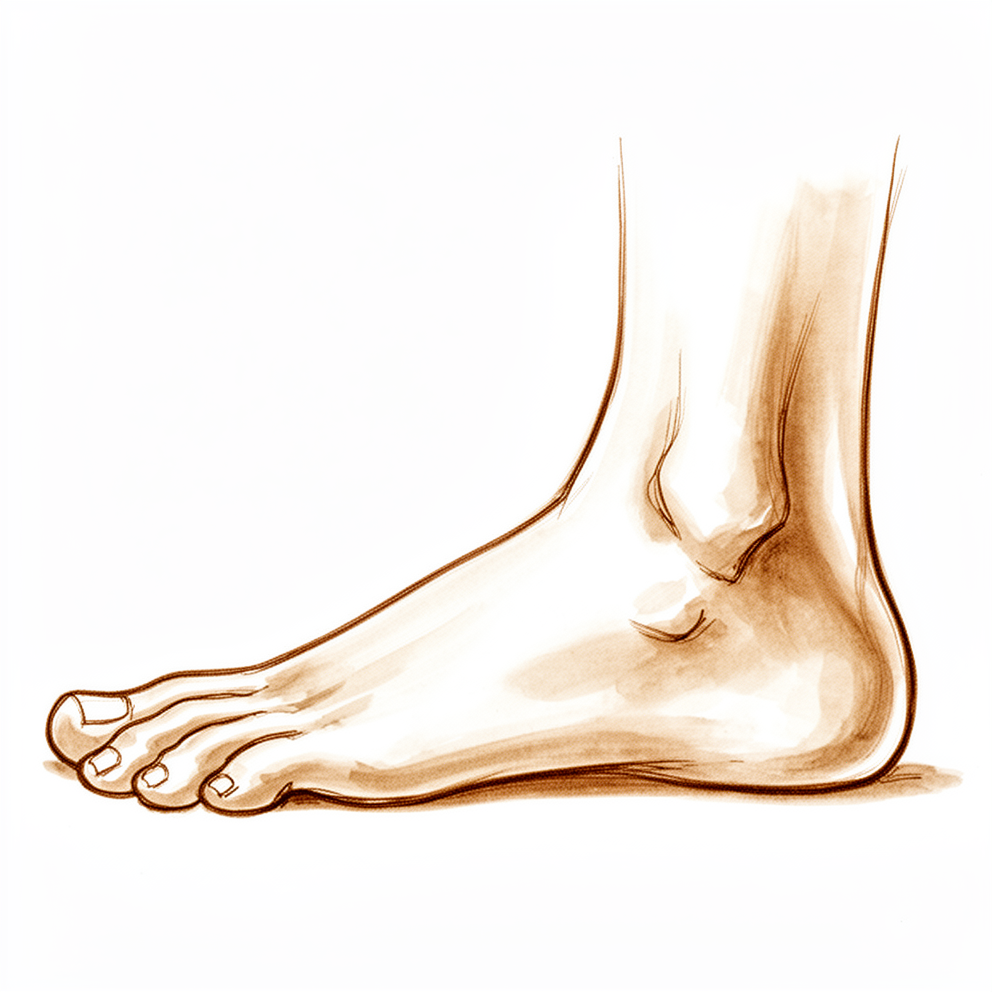
Qué está sintiendo
El dolor se localiza en la parte anterior del pie, generalmente en el espacio entre el tercer y cuarto dedo. Aparece cuando un nervio en esa zona se engrosa e irrita. Este nervio tiene una estructura distinta a los nervios que se encuentran entre los demás dedos: es más grueso y está sujeto con mayor firmeza, lo que hace que se comprima y se estire al caminar.
El dolor se siente en la parte inferior del pie, en la base de los dedos. Puede describirse como un dolor ardiente o como una sensación de algo afilado en la parte anterior del pie. Al estar de pie o caminar, se ejerce presión sobre esa zona sensible, por lo que los síntomas suelen intensificarse a lo largo del día. Empujar contra el suelo al dar un paso puede empeorar el dolor; en cambio, al quitar el peso del pie, este suele aliviarse.
Algunas personas notan el dolor principalmente cuando están en movimiento, y no por la noche ni al despertar. Los episodios de dolor suelen aparecer tras realizar actividad física, cuando el nervio ha sido comprimido repetidamente.
En el día a día, esa zona sensible se hace notar de diversas formas: caminar por el supermercado, estar de pie junto a la encimera de la cocina o subir escaleras pueden ejercer presión sobre el nervio. Los zapatos también influyen: el calzado estrecho o ajustado comprime los huesos de la parte anterior del pie y presiona ese nervio; por eso muchas personas terminan aflojando los cordones o quitándose los zapatos debajo del escritorio. Algunas sienten la necesidad de detenerse a mitad de camino, sentarse y quitarse el zapato para masajear la zona dolorida.
Si esto describe lo que le ocurre en el pie, existen maneras de aliviarlo. En primer lugar se intentan tratamientos sencillos y no quirúrgicos; la cirugía solo se considera si estos no dan resultados.
¿Qué está ocurriendo realmente?
Entre los huesos de los dedos del pie, en lo profundo de la parte anterior del pie, discurre un pequeño nervio. El que se encuentra entre el tercer y cuarto dedo es distinto de los demás: es más grueso y está sujeto con mayor firmeza en su lugar. Dos ramas nerviosas se unen justo allí antes de extenderse hacia los dedos. Ese punto de unión se sitúa justo debajo de una fuerte banda de tejido que mantiene unidos los huesos del pie.
Al caminar, el peso del cuerpo comprime los huesos de la parte anterior del pie. El nervio queda atrapado entre ellos una y otra vez. Como está bien sujeto y no puede desplazarse, es él quien soporta la presión en lugar de moverse libremente. Imagínese una manguera de jardín atrapada bajo un felpudo pesado: cada paso la aplasta, y con el tiempo la manguera misma se altera. El nervio reacciona de la misma manera: se engrosa y se irrita; ese nervio engrosado es el punto doloroso que usted siente.
Los síntomas descritos anteriormente son consecuencia directa de esto. La presión sobre el nervio provoca el dolor ardiente en la parte anterior del pie. El apretón causado por zapatos ajustados comprime aún más los huesos, motivo por el cual el calzado estrecho empeora los síntomas. Al quitar el peso del pie, se libera la compresión; por eso el dolor disminuye al sentarse o al quitarse el zapato.
No existe ningún sistema de gradación para esta afección, ni prueba alguna que permita clasificarla como leve o grave. Lo importante es hasta qué punto interfiere con su vida cotidiana. En primer lugar se aplican tratamientos sencillos y no quirúrgicos, que resultan eficaces para muchas personas. La cirugía se contempla cuando dichos tratamientos no logran mejorar la situación. La operación habitual consiste en extirpar el propio nervio engrosado. La mayoría de quienes necesitan una segunda intervención porque el dolor reaparece obtienen un alivio real; el 67 % logra una resolución completa o una mejora notable.
Qué podemos hacer al respecto
Las radiografías con carga pueden descartar otras causas de dolor en la zona anterior del pie, como una fractura por estrés. La ecografía es otra opción, y la resonancia magnética ayuda a diferenciar un neuroma de otras causas de dolor en la parte anterior del pie, como un quiste o una sinovitis.
Lo primero que probamos son medidas que usted mismo puede aplicar. Colocar una almohadilla blanda bajo la parte anterior del pie reduce la presión sobre la zona dolorida y alivia los síntomas. Optar por calzado más amplio y limitar los días en que permanece de pie durante largos periodos también ayuda, por la misma razón. La fisioterapia tiene como objetivo calmar la irritación y distribuir la carga de forma más uniforme a través del pie. Por lo general, le pedimos que pruebe estas medidas sencillas antes de considerar otras alternativas.
Si el autocuidado no logra mejorar la situación, podemos ofrecerle una inyección. El uso de ecografía para guiar la aguja garantiza que la cortisona se administre exactamente donde se encuentra el nervio. La cortisona es un potente antiinflamatorio que reduce la irritación alrededor del nervio. Las inyecciones de cortisona realizadas de esta manera han demostrado obtener mejores resultados en cuanto al alivio del dolor y la funcionalidad que las inyecciones de ácido hialurónico, sustancia lubricante que a veces se emplea para problemas del pie. Algunas personas experimentan un alivio duradero, mientras que otras ven cómo el dolor vuelve con el tiempo.
La cirugía se considera cuando estos tratamientos no han producido mejoría suficiente. La intervención habitual consiste en extirpar el nervio engrosado mediante una pequeña incisión en la parte superior del pie. Otra opción es remodelar los huesos de la zona anterior del pie para distribuir mejor la presión al caminar; este procedimiento también se realiza mediante incisiones pequeñas y presenta un bajo índice de complicaciones. Analizaremos juntos qué opción se adapta mejor a su pie y a sus objetivos, y decidiremos cuál es el siguiente paso a seguir.
Qué esperar
El neuroma de Morton rara vez desaparece por sí solo, pero no tiene por qué dominar su vida. En la mayoría de las personas, el cuadro clínico se caracteriza por episodios de exacerbación y remisión: el dolor aumenta a lo largo del día cuando se está de pie, y disminuye al sentarse o al quitarse los zapatos. Si no se trata, tiende a reaparecer, especialmente si el calzado y las actividades que ejercen presión sobre el nervio permanecen iguales.
En primer lugar se prueban tratamientos simples y no quirúrgicos; muchas personas obtienen buenos resultados con ellos. Cambiar de calzado, usar una almohadilla bajo la parte anterior del pie, reducir el tiempo que se pasa de pie durante el día y la fisioterapia buscan disminuir la presión sobre el nervio. Si estos métodos no logran mejorar los síntomas, una inyección de cortisona puede reducir la irritación. Algunas personas experimentan alivio duradero, mientras que otras ven cómo el dolor vuelve con el tiempo. No existe un plazo fijo para la duración de los síntomas; lo importante es hasta qué punto esa zona dolorida afecta su calidad de vida.
La cirugía se considera cuando estos tratamientos no han producido mejoría suficiente. La intervención habitual consiste en extirpar el nervio engrosado; la mayoría de los pacientes que necesitan una segunda operación por la reaparición del dolor obtienen un alivio real. Los resultados reportados por los pacientes tras la extirpación de un neuroma sintomático son aceptables, aunque no siempre tan positivos como indicaban informes previos; por ello, es razonable tener expectativas realistas en lugar de esperar una solución perfecta.
Hay algunos aspectos que vale la pena conocer antes de decidirse. La extirpación del nervio puede dejar una zona insensible entre los dedos afectados; en algunas personas se forma un punto sensible en el lugar donde se cortó el nervio. Las intervenciones que modifican la forma de los huesos de la parte anterior del pie pueden desplazar parte de la carga sobre los dedos vecinos, provocando dolor en ellos. Por estas razones, el cirujano procurará adaptar la operación a su pie en particular, y la cirugía se reserva para cuando los tratamientos menos invasivos hayan sido probados adecuadamente.
¿Cuándo consultar a un especialista?
Acuda a su médico de cabecera si experimenta un dolor ardiente en la parte anterior del pie que se repite con frecuencia, especialmente si empeora tras caminar o estar de pie y mejora al sentarse o al quitarse los zapatos. Solicite una evaluación especializada si medidas sencillas como usar calzado más amplio, colocar una almohadilla bajo la parte anterior del pie o recibir fisioterapia no han dado resultados tras un período razonable; o si el dolor le impide realizar su trabajo habitual o sus actividades diarias. Esta afección no es peligrosa ni constituye una emergencia. No obstante, cuanto antes se reduzca la presión sobre el nervio, mayores serán sus posibilidades de evitar una cirugía en el futuro.
Evidence & references
This is the clinical evidence summary written for health professionals. It is technical, and it lists the research this page was built from. You do not need to read it to understand your treatment or to make a decision about it.
Anatomy & Pathophysiology
Plantar Nerve Anatomy
- The tibial nerve divides into three terminal branches before reaching the foot: the medial calcaneal nerve, lateral plantar nerve, and medial plantar nerve [3].
- The medial plantar nerve innervates the abductor hallucis and continues under the abductor and plantar fascia to form common digital nerves terminating in the first, second, and third web spaces [3].
- The medial plantar nerve provides motor branches to the interossei and lumbricals [3].
- The lateral plantar nerve passes deep to the abductor fascia and plantar fascia, over the quadratus plantae, and continues distally under the flexor digitorum brevis [3].
- The lateral plantar nerve terminates in the fourth web space and supplies a branch to the third web space [3].
- The lateral plantar nerve supplies motor branches to the intrinsic muscles of the foot [3].
- The medial calcaneal nerve branches first from the tibial nerve and travels posteriorly to the subcutaneous tissue [3].
- The plantar surface of the foot is innervated by the digital branches of the medial plantar nerve [4].
Forefoot Neurovascular Anatomy
- The dorsalis pedis artery is a continuation of the anterior tibial artery that passes deep under the inferior extensor retinaculum [4].
- The dorsalis pedis artery lies between the tendons of the extensor hallucis longus medially and the extensor digitorum longus laterally as it passes anterior to the ankle joint [4].
- The deep peroneal nerve lies immediately lateral to the dorsalis pedis artery [4].
- The arcuate artery arises in the region of the bases of the metatarsals and passes laterally [4].
- The second, third, and fourth dorsal metatarsal arteries arise from the arcuate artery and descend to the dorsal surfaces of the respective dorsal interosseous muscles [4].
- The first dorsal metatarsal artery is the continuation of the dorsalis pedis artery and runs distally on the dorsal surface of the first dorsal interosseous muscle [4].
- The first dorsal metatarsal artery supplies branches to the dorsal skin, the first and second metatarsals, and the interosseous muscles [4].
- The deep plantar artery leaves the dorsalis pedis at the base of the first metatarsal and passes toward the plantar surface of the foot between the heads of the first dorsal interosseous muscle [4].
- The deep plantar artery communicates with the lateral plantar artery to complete the plantar arterial arch [4].
- The first plantar metatarsal artery is the continuation of the deep plantar artery and passes distally in the first interosseous space [4].
- The first dorsal metatarsal artery may lie superficial to or within the substance of the first dorsal interosseous muscle in 78% to 88% of feet [4].
- The first dorsal metatarsal artery may lie plantar to the first metatarsal in 12% to 22% of feet [4].
- The dorsal surfaces of the toes and foot receive sensory innervation through the superficial peroneal nerve branches [4].
- The first web space is innervated by the deep peroneal nerve [4].
Foot Compartments
- The interosseous compartment of the foot lies dorsal to the medial, lateral, and central compartments between the metatarsals [9].
- The interosseous compartment contains digital nerves [9].
- Manoli and Weber demonstrated that each of the four interosseous muscles and the adductor hallucis lies in separate compartments [9].
- The barrier between the superficial and calcaneal compartments of the foot becomes incompetent at a pressure of 10 mm Hg [9].
Tarsal Tunnel Anatomy
- The tarsal tunnel is a fibroosseous tunnel within the posteromedial ankle and hindfoot [3].
- The tibial nerve, posterior tibial artery, accompanying veins, posterior tibial tendon, flexor digitorum longus, and flexor hallucis longus tendons pass through the tarsal tunnel into the foot [3].
- The flexor retinaculum acts as the roof of the tarsal tunnel and extends from the medial malleolus to the medial side of the calcaneal tuberosity [3].
- The medial distal tibia, talus, and calcaneus make up the floor of the tarsal tunnel [3].
- Septa projecting from the fibrous roof to the calcaneus separate the posterior tibial, flexor digitorum longus, and flexor hallucis longus tendons [3].
- The tibial nerve, posterior tibial artery, and accompanying veins pass between the flexor digitorum longus and flexor hallucis longus tendons to enter the foot [3].
- The tibial nerve typically branches within the tarsal tunnel just proximal and deep to the upper edge of the abductor hallucis muscle [3].
Investigations
Clinical Examination
- The diagnosis of interdigital neuroma is usually made by conducting a careful history and physical examination [14].
- Plantar foot pain just distal to and between the metatarsal heads, often described as “burning,” is characteristic of interdigital neuroma [14].
- Patients with interdigital neuroma often feel as if they are walking on a marble [14].
- Symptoms of interdigital neuroma are typically aggravated by activity or by wearing shoes with high heels or a narrow toe box [14].
- Patients with interdigital neuroma often note that they feel better in their bare feet and get quick relief by removing their shoes [14].
- The Mulder sign is elicited by squeezing the foot while palpating the web space [14].
- A painful click during the Mulder sign is diagnostic of an interdigital neuroma [14].
- Neuromas rarely occur in the first and fourth web spaces, so for pain that occurs in these areas, other causes of forefoot pain should be considered [14].
- The involved ray should be evaluated for metatarsophalangeal (MTP) joint instability, especially if the second web space is symptomatic [14].
Imaging
- Weight-bearing radiographs are useful for excluding a stress fracture of the metatarsal neck in the evaluation of interdigital neuroma [14].
- Ultrasonography has been reported to be 85% accurate in diagnosing interdigital neuroma [14].
- MRI may be useful in the diagnosis of interdigital neuroma, and the administration of contrast medium may increase its accuracy [14].
- Interdigital or Morton neuroma is most frequently found in the distal third metatarsal interspace [20].
- Unlike most other tumors, interdigital or Morton neuroma lacks increased signal on T2-weighted MRI sequences [20].
- MRI can be useful in the diagnosis of metatarsalgia, such as distinguishing among a neuroma, cyst, bursa, or synovitis [18].
Diagnostic Injection
- Injection of the involved web space with local anesthetic that results in relief of the neuritic symptoms is diagnostic of interdigital neuroma [14].
- Injections performed under ultrasound guidance had higher short-term relief compared with blind injections for interdigital neuroma [14].
References
[3] Campbell S Operative Orthopaedics 4 Volume Set. COMBINED HAMMER TOE AND MALLET TOE DEFORMITY WITH ASSOCIATED DOUBLE CORNS > TARSAL TUNNEL SYNDROME.
[4] Campbell S Operative Orthopaedics 4 Volume Set. RESULTS OF SUTURE OF THE SCIATIC NERVE > NEUROVASCULAR ANATOMY.
[9] Rockwood And Green S Fractures In Adults. Effect of Blast on the Musculoskeletal System > Foot.
[14] Aaos Comprehensive Orthopaedic Review 3. Neurologic Disorders of the Foot and Ankle > II. Interdigital Neuroma.
[18] A Lange Medical Book Current Diagnosis Treatment In Orthopedics Fifth Edition. 8Foot and Ankle Surgery > METATARSALGIA.
[20] Campbell S Operative Orthopaedics 4 Volume Set. OTHER DISORDERS OF FOOT AND ANKLE.