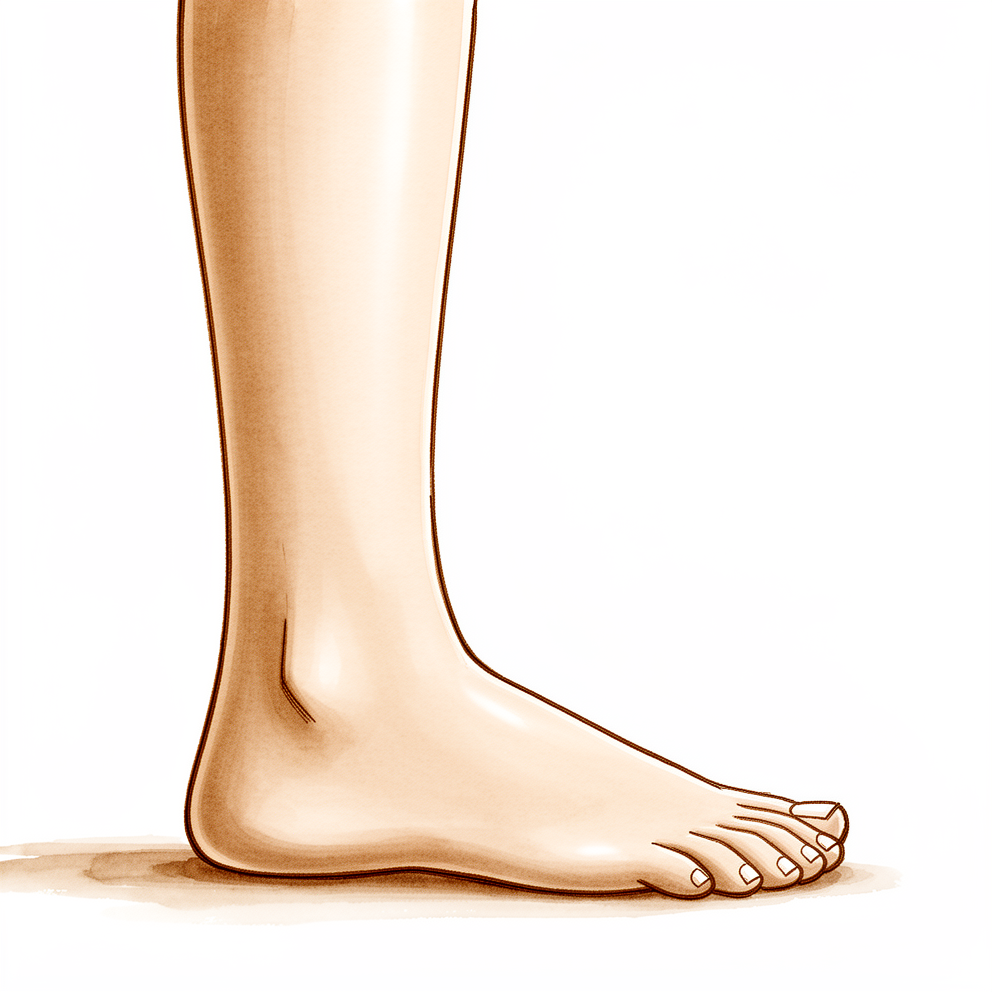
What you're feeling
Ankle arthritis usually starts after an old injury. A bad sprain, a broken ankle, or a dislocation can damage the smooth surface inside the joint. Years later, that damage turns into wear-and-tear arthritis. Sports injuries, especially soccer injuries, are a common starting point. So are ankle fractures, where arthritis can show up on X-rays many years later.
The pain sits deep in the ankle joint, often at the front or on the outer side. It gets worse when you walk, stand for long stretches, or push off that foot. Swelling and bruising around the bony bump on the outside of your ankle are common after a sprain, and the same area can stay tender as arthritis develops. Some people feel a catching or locking sensation, which happens when a loose fragment of cartilage moves around inside the joint.
Stiffness tends to be worst on waking or after sitting still. The first few steps in the morning can be slow and careful. After activity, the ankle may ache well into the evening and throb at night. Walking on uneven ground, such as gravel or a sloping lawn, takes more effort because the joint no longer moves smoothly.
Everyday tasks feel different. You might favour the good leg on stairs, avoid squatting to pick things up, or shorten your walk to the letterbox. Standing at the kitchen bench or waiting in a queue can become uncomfortable. Because the ankle does less of the work, your other muscles compensate, so walking can feel tiring even over short distances.
If your ankle gives way or feels unstable, that points back to the ligaments injured long ago. Repeated sprains over the years can speed up the wear inside the joint. Numbness across the top of the foot can follow the same kind of twisting injury, when a small nerve near the ankle is stretched.
Tell your surgeon where it hurts, what time of day it's worst, and which activities you've stopped. That picture helps guide what happens next.
What's actually happening
Your ankle is a deep socket formed by three bones: the shin bone, and the two thin bones either side of it, the inner and outer ankle knobs. A small bone called the talus sits inside this socket like a peg in a mortise joint in carpentry. The whole thing works because the parts fit snugly and glide together.
Covering every surface is a smooth, slippery layer of cartilage. Think of it as the joint's shock absorber and gasket combined: it cushions the load and lets the surfaces slide without friction. When an old injury, repeated sprains or a badly healed fracture have damaged that layer, the cushion thins and wears away. Bone then grinds on bone, and the joint responds with swelling, bony spurs at the front of the ankle, and stiffness. That grinding is what you feel as pain across the front of the ankle, especially those first steps after rest.
The ligaments matter too. These are strong straps that hold the bones in line. The strap on the inner side, called the deltoid ligament, is the main stabiliser when you stand. The straps on the outer side stop the ankle rolling. When those outer straps are stretched or torn from old sprains, the talus can shift and rock inside the socket as you walk, loading one edge of the joint far more than the other. That uneven load wears out the cartilage faster, which is why most ankle arthritis traces back to an injury rather than simple ageing.
Because the ankle can no longer move smoothly, your body compensates. You may turn your foot outward as you walk to make up for lost motion, and your other muscles work harder to control each step. That extra effort is why walking feels tiring, and why the joints further along your foot do not pick up the slack.
What we can do about it
Weight-bearing X-rays, taken while you stand, show how much joint space is left and how the ankle lines up. Sometimes an MRI or CT scan helps us see the cartilage, tendons and bone in more detail.
For most people with a long-standing problem like this, we try non-operative care first. Simple changes go a long way: a walking stick takes some of the load off the joint, and losing excess weight reduces the force through your ankle with every step. Physiotherapy aims to keep the ankle moving, settle flare-ups, and build the strength in the muscles that support and steady the joint. We usually ask you to give these measures a fair trial over several months before we talk about anything further.
Pain relief and anti-inflammatory medicine, taken as your GP directs, help with painful flare-ups. Injections into the ankle joint are another option we can discuss. Hyaluronic acid injections, given at 3-weekly intervals, can improve pain, balance and day-to-day function, and reduce the need for anti-inflammatory tablets, with the benefit measured at 6 months after injection. Platelet-rich plasma, made from a sample of your own blood, has shown improvement in pain and function out to 24 weeks in some ankles, particularly younger patients with early-stage disease. Cortisone injections are not part of the routine pathway we follow for this condition, so we will tell you plainly if we do not think they will help you.
Surgery comes into the conversation when these measures have not given you enough relief and the arthritis is limiting what you can do. What we recommend depends on the stage of the arthritis and how your ankle lines up. In earlier stages, joint-preserving operations can realign the ankle, remove bony spurs at the front, or take pressure off the joint so it can recover some function. In advanced stages, the two main operations are ankle fusion, where the worn surfaces are joined so they no longer grind, and ankle replacement, where the worn surfaces are resurfaced. Each has its own page with more detail. We will talk through which option fits your ankle, your age and your goals, and decide together.
What to expect
Ankle arthritis from an old injury does not usually settle on its own. The wear inside the joint builds slowly over years, and the pain tends to persist or gradually worsen rather than come and go. Some people have quieter stretches between flare-ups, but the underlying damage stays. Left alone, stiffness often increases, walking gets harder, and the joints further along your foot can start to wear as they take up the slack.
The good news is that much can be done at every stage. Early on, simple measures such as a walking stick, weight loss and physiotherapy can settle flare-ups and keep you moving. If your ankle lines up unevenly, an operation to realign it can shift load back onto the healthier part of the joint. That kind of joint-preserving surgery can delay the need for bigger operations, sometimes for years, in younger patients.
Once the arthritis is advanced, the two main options are ankle fusion and ankle replacement. Both can produce satisfactory function when they are matched to the right patient. Walking generally improves after either operation. Some people walk with a more normal pattern after a replacement, and find uneven ground easier, while others do just as well with a fusion. A fusion removes motion from the ankle itself, which puts more work on nearby foot joints, and those joints can show further wear over time. A replacement keeps some motion but carries its own risks: in one large comparison, reoperations and major complications were more frequent after replacement than after fusion, and results can fade over longer timeframes.
Whichever path you take, recovery is gradual. Expect steady improvement over weeks to months rather than an overnight fix, and set your goals around what matters to you, whether that is walking the dog or returning to work. Careful selection matters: the right operation for your ankle, your age and your aims gives you the best chance of a lasting result. Your surgeon will talk through the options with you and help you weigh them up.
When to see someone
See your GP if a twisted ankle is still painful and swollen after six weeks, or if you cannot put weight on it at all soon after the injury. Those signs mean an X-ray is needed to check for a broken bone. Ask for a specialist review if pain keeps coming back, if the ankle feels loose or keeps giving way, or if it locks or catches when you move it. Numbness across the top of the foot after a twisting injury is also worth having checked. If you already know you have ankle arthritis and the pain is stopping you sleeping, working or walking to the letterbox, ask your GP about a referral. Ankle arthritis builds slowly, so the earlier it is assessed, the more options you have.
Evidence & references
This is the clinical evidence summary written for health professionals. It is technical, and it lists the research this page was built from. You do not need to read it to understand your treatment or to make a decision about it.
Overview
- Ankle arthrodesis is a mainstay of treatment for ankle arthritis [2].
- Ankle arthrodesis is not an optimal treatment for all patients due to the loss of joint motion [2].
- Ankle arthrodesis carries the risk of possible development of degenerative adjacent joint arthritis [2].
- Operative alternatives to ankle arthrodesis include open or arthroscopic debridement [2].
- Operative alternatives to ankle arthrodesis include realignment osteotomies [2].
- Operative alternatives to ankle arthrodesis include distraction arthroplasty [2].
- Operative alternatives to ankle arthrodesis include allograft replacement [2].
- Operative alternatives to ankle arthrodesis include total ankle arthroplasty [2].
- Alternative procedures should be considered and discussed before ankle arthrodesis is chosen by a patient [2].
- Arthroscopic or open debridement of the arthritic ankle can be effective in the overall management plan [2].
- Debridement must be used judiciously and with realistic expectations of the outcome [2].
- Efficacy has been shown for the removal of anterior impingement osteophytes from the tibia and/or talus [2].
- Patients with mechanical locking of the ankle from a demonstrable loose body may benefit from arthroscopic management [2].
- Debridement of more advanced arthritic ankles likely provides only short-term relief [2].
- Debridement of more advanced arthritic ankles is not recommended in most cases [2].
- Increased motion following removal of impinging osteophytes in a joint with irregular arthritic surfaces may lead to different or increased pain postoperatively [2].
- Aggressive removal of osteophytes may lead to anterior extrusion of the talus postoperatively [2].
- Arthroscopic or open debridement can be done in combination with other procedures such as osteotomy and distraction arthroplasty [2].
- Periarticular osteotomies of the tibia, fibula, or hindfoot are reasonable approaches to the management of localized arthritis of the ankle [2].
- The goal of realignment osteotomies is to unload the more arthritic portion of the joint [2].
- The goal of realignment osteotomies is to provide a more anatomic mechanical axis to the ankle to redistribute joint contact forces and loads [2].
- Realignment surgery can delay the need for arthrodesis or arthroplasty in younger patients [2].
- Chondral loss primarily in the medial or lateral gutter of the ankle with minimal involvement of the superior surface of the talus is best suited for realignment osteotomy [2].
- Supramalleolar deformity is a factor that makes chondral loss best suited for realignment osteotomy [2].
- The type of osteotomy is determined by the specific deformity, the condition of the surrounding soft tissues, the status of the articular surface, and leg-length considerations [2].
- Opening wedge osteotomy of the tibia for varus deformity and medial joint arthrosis is particularly effective as an alternative to more invasive treatment [2].
- Ahn et al. reported improvements in American Orthopaedic Foot and Ankle Society (AOFAS) scores, visual analogue scale (VAS) scores, and medial-distal tibial angle in 18 patients with medial ankle osteoarthritis and mortise widening after opening wedge distal osteotomy without fibular osteotomy [2].
- Talar tilt was not corrected by opening wedge distal osteotomy without fibular osteotomy [2].
- Excellent clinical results were obtained in ankles with more than 7 degrees of talar tilt after opening wedge distal osteotomy without fibular osteotomy [2].
- Good results were obtained in an ankle with 11 degrees of tilt after opening wedge distal osteotomy without fibular osteotomy [2].
- Before surgery, correction is planned by measuring the tibial-ankle surface angle and talar tilt on a weight-bearing anteroposterior radiograph [2].
- Before surgery, correction is planned by measuring the tibial-lateral surface angle on a lateral weight-bearing radiograph [2].
- Nonunion rates after ankle arthrodesis vary widely in the literature [4].
- Nonunion rates are largely dependent on technique, underlying diagnosis, and patient selection [4].
- Arthroscopic or mini-incision technique improves results of ankle arthrodesis [4].
- The use of more than two screws or an adjunct plate (or fibular strut) improves results of ankle arthrodesis [4].
- A diagnosis of primary osteoarthritis improves results of ankle arthrodesis compared to inflammatory, postinfectious, or posttraumatic arthritis [4].
- Fusion rates of better than 90% should be expected in standard, uncomplicated ankle arthrodesis with modern techniques, attention to detail, and management of concurrent medical conditions [4].
- Thevendran et al. determined a number of risk factors for nonunion after ankle arthrodesis [4].
- Clinical evidence is insufficient for most risk factors to be definitely implicated in the development of nonunion [4].
- There is fair evidence (grade B) to advocate the use of internal fixation for ankle arthrodesis [4].
- There is evolving grade B evidence suggesting that minimally invasive techniques may be equivalent to open procedures in selected patients [4].
- Physical findings of persistent swelling, pain at the fusion site, and difficulty with weight bearing should lead to careful scrutiny of the plain radiographs [4].
- Bridging callus across the fusion site on more than one view usually confirms successful fusion [4].
- CT is necessary in some cases to establish that fusion has occurred or to evaluate the nonunion [4].
- Tricortical block of iliac crest wedged between tibia and talus is a type of bone graft used in ankle arthrodesis [4].
- Sliding graft impacted into tunnel in talar neck or head is a type of bone graft used in ankle arthrodesis [4].
- Central bone graft inserted in hole bored across ankle is a type of bone graft used in ankle arthrodesis [4].
- The medial and lateral malleoli can be used as local bone grafts or placed as onlay grafts [4].
- Free vascularized autogenous bone grafts can be used for reconstruction of ankles with segmental bone loss caused by osteomyelitis, tumor, or trauma [4].
- There are no randomized level 1 studies that compare autograft to any commercially available product for use in ankle arthrodesis [4].
- Fourman et al. compared fusion rates with and without rhBMP-2 in 82 patients with comorbidities who required complex ankle arthrodesis [4].
- More patients with rhBMP-2 had fusion (93%) than did those without rhBMP-2 (53%) in the study by Fourman et al. [4].
- Assessment of a patient with a delayed union or nonunion begins with an overall assessment for the medical issues [4].
- Routine laboratory workup for delayed union or nonunion includes 25-hydroxyvitamin D levels, albumin, prealbumin, parathyroid hormone, thyroid stimulating hormone, calcium, C-reactive protein, erythrocyte sedimentation rate, and hemoglobin A1c levels [4].
- Satisfactory immobilization of a delayed union in a protected weight-bearing boot or cast is necessary [4].
- The US Food and Drug Administration has approved pulsed electronic magnetic field devices for stimulation of bone growth after failed arthrodesis [4].
- Saltzman et al. reported that the use of pulsed electronic magnetic field devices with immobilization and limited weight bearing was successful in only five of 19 delayed unions of foot and ankle arthrodeses [4].
- Better results have been reported with revision arthrodesis, with 75% to 94% successful fusion [4].
- Some patients with delayed union or nonunion will require reoperation with bone grafting and more stable fixation [4].
- Ankle arthrodesis has long been the gold standard for the surgical treatment of moderate to severe ankle arthritis [8].
- The patient satisfaction rate after ankle arthroplasty is fairly high [8].
- Arthrodesis might be the best procedure for patients with preexisting subtalar or other hindfoot arthritis [8].
- Arthrodesis might be the best procedure for patients with contralateral hindfoot or ankle arthritis [8].
- Arthrodesis might be the best procedure for patients with hip or knee impairment such that motion through the ankle joint may be beneficial to the overall limb and patient function [8].
- No level I studies have directly compared total ankle arthroplasty and ankle arthrodesis [8].
- Reports in the literature regarding the comparison of total ankle arthroplasty and ankle arthrodesis are contradictory [8].
- The most recent reports seem to favor total ankle arthroplasty with the latest-generation implants over arthrodesis [8].
- The most recent reports cite better functional outcomes for total ankle arthroplasty with the latest-generation implants over arthrodesis [8].
- The most recent reports cite fewer complications for total ankle arthroplasty with the latest-generation implants over arthrodesis [8].
- The most recent reports cite better patient satisfaction for total ankle arthroplasty with the latest-generation implants over arthrodesis [8].
- Some gait studies have noted no difference in gait patterns after arthroplasty and arthrodesis [8].
- Some gait studies report more nearly normal gait after arthroplasty [8].
- Some gait studies report better walking on uneven surfaces after arthroplasty [8].
- Gait appears to be improved by either procedure [8].
- Daniels et al. compared intermediate outcomes (mean 5.5-year follow-up) of arthrodesis (107 patients) and arthroplasty (281 patients) in a diverse cohort of patients [8].
- Daniels et al. found comparable clinical outcomes between arthrodesis and arthroplasty [8].
- Rates of reoperation were higher after ankle arthroplasty in the study by Daniels et al. [8].
- Rates of major complications were higher after ankle arthroplasty in the study by Daniels et al. [8].
- Norvell et al. found that ankle-specific adverse events were infrequent [8].
- Norvell et al. found that ankle-specific adverse events were only weakly associated with operative procedure [8].
- Careful patient selection is mandatory for the success of either total ankle arthroplasty or ankle arthrodesis in the treatment of ankle arthritis [8].
Anatomy & Pathophysiology
Bony Anatomy
- The ankle mortise is formed by the tibial plafond, medial malleolus, and lateral malleolus [20].
- The ankle mortise articulates with the dome of the talar body [20].
- The talar dome is wider anteriorly and narrower posteriorly [20].
- The ankle mortise widens 1 to 1.5 mm during motion from plantar flexion to dorsiflexion [20].
- Medial and superior clear spaces appear wider with the foot in plantar flexion [20].
- The distal fibula has a convex medial surface that articulates with the concave incisura fibularis of the distal lateral tibia [20].
- The fibula rotates approximately 2 degrees within the incisura during ankle motion and ambulation [20].
- Ankle dorsiflexion results in external rotation and proximal translation of the fibula [20].
- The talocrural angle is approximately 83 degrees and should be symmetrical with the contralateral ankle [30].
- The medial clear space should be less than 5 mm and no more than 2 mm greater than the tibiotalar clear space [26].
- The tibiofibular clear space, measured 10 mm above the joint line, is relatively constant with rotation and has an accepted normal parameter of >5 mm [26].
- The tibiofibular overlap, measured 10 mm above the joint line, is highly variable dependent on rotation, with accepted normal parameters of <5 mm on AP view and <1 mm on the mortise view [26].
- The "ball sign" is a visual cue on the AP view where an unbroken curve connects the recess in the distal tip of the fibula and the lateral process of the talus when the fibula is out to length [26].
- Shortening of the fibula results in lateral and valgus subluxation of the talus [26].
Ligamentous Anatomy
- The lateral ankle ligaments function as restraints to varus and inversion forces at the ankle [20].
- The anterior talofibular ligament (ATFL) originates from the anteroinferior aspect of the lateral malleolus, 1 cm proximal to its tip, and extends to the lateral aspect of the talar neck [20].
- The calcaneofibular ligament (CFL) extends from the tip of the lateral malleolus to the lateral aspect of the calcaneus [20].
- The posterior talofibular ligament (PTFL) extends from the posterior lateral malleolus to the posterolateral talus [20].
- The ATFL is the weakest ankle ligament, while the PTFL is the strongest [20].
- The distal tibiofibular joint and fibula provide stability against lateral talar translation [20].
- The deltoid ligament complex is the primary ankle stabilizer during stance [20].
- The deep deltoid ligament extends from the apex of the medial malleolus to the medial talar body and functions primarily to resist lateral talar translation and external rotation [20].
- The posterior deep deltoid is the most important component of the deep deltoid ligament [20].
- The superficial deltoid ligament extends from the distal medial malleolus to the navicular bone, sustentaculum tali of calcaneus, medial talus, and spring ligament [20].
- The superficial deltoid ligament functions primarily to resist valgus and eversion ankle forces [20].
- The deltoid ligament consists of superficial and deep layers, with the deep portion organized into two short, thick, discrete bands: the anterior and posterior deep tibiotalar ligaments [23].
- The deep posterior tibiotalar ligament is the strongest component of the entire deltoid complex [23].
- The deep deltoid ligament has the highest load to failure at 713.8 N ± 69.3 compared with the lateral collateral ligaments [23].
- The dominant mode of failure for the deep deltoid ligament is an intrasubstance rupture near its talar insertion [23].
- The dominant mode of failure for the superficial deltoid ligament is at its insertion on the anterior malleolus [23].
- Valgus tilting of the talus within the mortise requires complete rupture of both the superficial and deep deltoid ligaments [23].
Biomechanics & Kinematics
- The ankle joint is responsible for most sagittal plane motion of the foot and ankle [20].
- Normal ankle range of motion includes 23 to 48 degrees of plantar flexion [20].
- Normal ankle range of motion includes 10 to 23 degrees of dorsiflexion [20].
- The ankle joint also contributes to inversion, eversion, and rotation [20].
- A simplified model of the ankle joint has a horizontal axis from anteromedial to posterolateral [20].
- A simplified model of the ankle joint has a coronal axis from superomedial directed distally and laterally to the tip of the fibula [20].
Pathophysiology
- Ankle osteoarthritis is almost always secondary to an underlying disorder such as malunited fracture, recurrent instability, osteochondritis dissecans of the talus, avascular necrosis of the talus, or repeated bleeding with haemophilia [19].
- Ankle osteoarthritis can also occur in the context of generalized osteoarthritis and crystal arthropathy [19].
- Clinical features of ankle osteoarthritis include pain, stiffness, and an antalgic gait, particularly when first standing up from rest [19].
- Patients with ankle osteoarthritis often indicate the site of pain as being transversely across the front of the ankle [19].
- The ankle in osteoarthritis is usually swollen, with palpable anterior osteophytes and tenderness along the anterior joint line [19].
- The foot may be turned outwards in the stance phase to compensate for the loss of ankle movement in osteoarthritis [19].
- Radiographic features of ankle osteoarthritis include joint space narrowing, subchondral sclerosis, and osteophyte formation [19].
- Arthrodesis is a mainstay of treatment for ankle arthritis but is not optimal for all patients due to the loss of joint motion and possible development of degenerative adjacent joint arthritis [2].
- The ankle joint synovial lining can become inflamed, resulting in generalized hypertrophic synovitis [40].
- Diffuse ankle swelling and pain can result from inflammatory arthropathies including rheumatoid arthritis, psoriatic arthritis, infection, and gout [40].
- Pigmented villonodular synovitis and synovial chondromatosis are processes that result in complex diffuse synovitis [40].
- Overuse and trauma can cause generalized inflammation of the ankle joint synovium [40].
Clinical Presentation
History and Mechanism
- A history of a twisting injury followed by pain, bruising, and swelling is typical for ankle ligament injuries [12].
- The classic low ankle sprain is defined as an injury to the lateral ligamentous structures of the ankle occurring below the level of the distal tibiofibular syndesmosis [37].
- Low ankle sprains are typically inversion injuries [37].
- Excessive inversion of the plantarflexed foot leads to injury to the anterior talofibular ligament (ATFL) [37].
- Excessive inversion of the dorsiflexed foot causes injury to the calcaneofibular ligament and, less commonly, the posterior talofibular ligament [37].
- An increased propensity for inversion injuries occurs in conjunction with obvious or subtle cavovarus foot deformity [37].
- Patients often recall a twisting mechanism, typically inversion, for ankle sprains [42].
- An appreciation of the energy transfer involved in an ankle fracture is important, as high-energy mechanisms indicate the likelihood of additional soft tissue complications, compartment syndrome, complex pilon fractures, or other associated injuries [36].
- Diabetes indicates an increased likelihood of wound complications owing to immunologic and vascular impairment in ankle fracture patients [36].
- Poorly controlled diabetics are at risk of peripheral neuropathy, which may influence postoperative weight-bearing decisions [36].
- A history of smoking, alcohol abuse, and psychiatric illness increases the likelihood of complications in ankle fracture patients [36].
Physical Examination
- In an ATFL sprain, tenderness is maximal just distal and slightly anterior to the lateral malleolus [12].
- The slightest attempt at passive inversion of the ankle is extremely painful in an ATFL sprain [12].
- Stability assessment in the acute phase of an ankle ligament injury is not possible [12].
- It is essential to examine the entire leg and foot because undisplaced fractures of the ankle, proximal fibula, tarsal bones, and peroneal tendon sheath are easily missed [12].
- Acute low ankle sprains typically manifest by a large amount of lateral ankle swelling, pain with weight bearing, and pain in the lateral ankle [37].
- Physical examination for low ankle sprains characteristically shows focal tenderness to palpation over the involved lateral ankle ligamentous structures [37].
- Pain with resisted eversion of the foot is a sign of peroneal tendon injury during the inversion episode [37].
- The anterior drawer test may be positive in patients with a history of numerous ankle sprains, where excessive anterior translation represents chronic laxity of the injured ATFL [37].
- Inversion stress testing of the neutral foot may demonstrate increased laxity in the setting of an attritional calcaneofibular ligament [37].
- Clinical examination for ankle fractures begins with inspection for deformity, bruising, blistering, skin integrity, and color [36].
- Palpation of the limb starts at the fibular head and progresses sequentially down the lateral aspect of the leg to the lateral malleolus and adjacent soft tissues before moving medially across the ankle joint to the medial malleolus [36].
- Palpation of the skeleton of the foot excludes commonly associated or missed injuries such as fractures of the metatarsals, lateral talar process, or disruption of the midtarsal (Lisfranc) articulation [36].
- Palpation of the Achilles tendon and the Simmonds or Thompson's test exclude rupture of this structure [36].
- A distal neurovascular assessment includes assessment of temperature and capillary refill [36].
- Skin marking of palpable dorsalis pedis and posterior tibial arterial pulsations at presentation is helpful in later assessment if the condition of the limb deteriorates [36].
- Swelling, ecchymosis, and pain with weight bearing are common findings in ankle sprains [42].
- Assessment for recurrent instability requires evaluation for hindfoot varus [42].
- Patients should be questioned about symptoms of a loose body or osteochondral injury, such as mechanical symptoms like locking or catching [42].
- Injury to branches of the superficial peroneal nerve can cause numbness over the dorsal midfoot following an inversion injury [42].
- Direct trauma to the ankle area may cause injury, herniation, and subsequent entrapment of the superficial peroneal nerve [42].
- Patients may develop complex regional pain syndrome characterized by dysfunction in motor, sensory, and autonomic nerve systems [42].
- Pain out of proportion to findings on exam is a feature of complex regional pain syndrome, which most commonly develops after trauma or elective surgery in the lower extremity [42].
Imaging
- The need for X-ray in ankle ligament injuries is guided by the Ottawa ankle rules [12].
- Anteroposterior, lateral, and 'mortise' (15–20 degrees internally rotated) views of the ankle should be obtained for ankle ligament injuries [12].
- Weight-bearing views are useful in helping determine stability in ankle ligament injuries [12].
- Computed tomography (CT) and magnetic resonance imaging (MRI) may be needed to fully characterize an injury or in those with persistent pain, swelling, instability, and impaired function over 6 weeks or longer [12].
- The Ottawa Ankle Rules have been proven as a reliable tool for determining when radiography is necessary in the evaluation of an acute ankle sprain [37].
- A fracture is suspected under the Ottawa Ankle Rules when there is difficulty with weight bearing, tenderness to palpation over the medial or lateral malleolus, tenderness over the navicular, or tenderness over the base of the fifth metatarsal [37].
- A lower threshold for obtaining radiographs exists after a patient referral in the outpatient setting because referrals are often made in situations of more severe injury or chronic symptoms [37].
- The Low Risk Ankle Rules consider ankle radiographs unnecessary if there is tenderness and swelling isolated to the distal fibula and/or adjacent lateral ligaments distal to the tibial anterior joint line [37].
- A 2017 retrospective comparison found that the Ottawa Ankle Rules demonstrated 100% sensitivity in the pediatric emergency department [37].
- When radiographs are necessary for ankle sprains, weight-bearing AP, lateral, and mortise views are recommended [37].
- Varus stress views can be used to evaluate for excessive talar tilt in the setting of ATFL laxity [37].
- External rotation stress views should be obtained to rule out a syndesmotic injury, which is characteristic of a high ankle sprain [37].
- MRI is rarely warranted for ankle sprains except in the setting of prolonged pain or instability [37].
- MRI is performed to evaluate for associated injuries such as peroneal tendon pathology, talar osteochondral lesions, fractures of the anterior calcaneal process, or fractures of the lateral talar process [37].
- As many as 42% of lateral process talar fractures are initially misdiagnosed as ankle sprains [37].
- Talar body and neck fractures can occasionally be overlooked in low-energy trauma patients thought to have minor ankle injuries [37].
- AP, mortise, and lateral x-rays of the ankle are obtained for ankle sprains, with weight-bearing x-ray preferable if the patient can tolerate it [42].
- Foot x-rays should be obtained for any pain on examination, especially at the base of the fifth metatarsal or anterior process of calcaneus, to rule out fracture [42].
- Radiographs should be evaluated for lateral process of the talus fracture, anterior process fracture, osteochondral defects, and mortise or syndesmosis instability [42].
- CT scanning is considered for evaluation of a suspected or identified lateral process fracture [42].
- MRI is typically reserved for patients with continued pain despite weeks of conservative treatment or concern about a loose body or osteochondral defect [42].
- MRI may demonstrate attenuation or tear of the lateral ligamentous structures [42].
- Bone bruising is common in severe sprains and may result in a longer time to pain-free activity and return to sports [42].
- The Ottawa Ankle Rules provide assistance in determining the need for x-ray in ankle fractures, offering a highly sensitive and cost-effective method of identifying patients most likely to have sustained a fracture [36].
- Other authors have reported difficulties in disseminating the Ottawa Ankle Rules, and their applicability in certain patient groups such as diabetics has been questioned [36].
Investigations
Radiography
- Weight-bearing AP, oblique, and lateral radiographs of the ankle should be obtained to assess joint space narrowing and alignment of the ankle [41].
- Standard weight-bearing radiographs of the foot should be considered to assess foot alignment [41].
- Lateral radiographs may not show osteophytes in anterior ankle impingement, but an anteromedial view is often helpful [14].
- AP, mortise, and lateral weight-bearing radiographs of the ankle are performed for the evaluation of chronic lateral ankle instability [29].
- Stress radiographs can be used to confirm instability in chronic lateral ankle instability, including a lateral radiograph obtained while performing the anterior drawer test and a mortise radiograph while performing the talar tilt test [29].
- Varus tilt of the talus within the ankle mortise is seen on AP radiographs in patients with chronic ankle instability and resultant end-stage posttraumatic osteoarthritis [41].
- Anterior tibial osteophytes are visible on lateral radiographs in patients with arthritic anterior ankle impingement [41].
Magnetic Resonance Imaging (MRI)
- MRI is useful in evaluating for associated pathology to the peroneal tendons or talar articular surface in chronic lateral ankle instability [29].
- MRI confirms the abnormal appearance of affected ligaments, which may be thickened or indistinct, but does not help determine functional instability in chronic lateral ankle instability [29].
- MRI can show osteophytes in anterior ankle impingement but is not very sensitive for soft-tissue impingement [14].
- MR arthrography or contrast-enhanced, fat-suppressed, three-dimensional (3D), fast-gradient recalled acquisition in the steady state with radiofrequency spoiling (CE 3D-FSPGR) MRI is more sensitive and specific than standard MRI for soft-tissue impingement but is less practical [14].
- In one study, 58% of patients with anterior ankle impingement had an associated diagnosis on MRI, which changed the surgical plan in 33% [14].
- MRI evaluation is used for anterolateral soft tissue impingement of the ankle [9].
- MRI features are described for osteochondral lesions of the talus [9].
- MRI is used for the pre-operative evaluation of the anterior talofibular ligament in chronic ankle instability [9].
- MRI and stress radiography are used in the evaluation of chronic lateral ankle instability [9].
- MRI findings are associated with symptoms in patients with chronic ankle sprain [9].
- MRI is used for the evaluation of posterior tibial tendon dysfunction with relevance to clinical staging [9].
- MRI is used for the diagnosis of plantar plate injury with reference to intraoperative findings [9].
- MRI is used for the imaging evaluation of traumatic ligamentous injuries of the ankle and foot [9].
- MRI is used for the imaging evaluation of sports injuries involving the ankle [9].
- MRI is used for the evaluation of chronic Achilles tendon ruptures [9].
- MRI is used for the musculotendinous imaging of the ankle [9].
- CT and MR imaging are used for the postoperative ankle and foot [9].
- Technical considerations and best practices exist for MR imaging of the foot and ankle [9].
- MRI is used for the diagnostic characteristics of standard radiographs and magnetic resonance imaging of ruptures of the tibialis posterior tendon [9].
- MRI is used for the accuracy of diagnosis of ligamentous and chondral pathology in the ankle [9].
- MRI is used for the evaluation of tibiofibular syndesmotic ligaments with anatomic correlation [9].
- MRI is used for the return-to-play outcomes in professional baseball after medial ulnar collateral ligament injuries based on magnetic resonance imaging findings [9].
- MRI is used for the radiographic identification of the primary lateral ankle structures [10].
- MRI is compared to physical examination for syndesmotic injury after lateral ankle sprain [10].
- MRI is used for the anatomic investigation of the lateral ankle ligaments for surgical reconstruction procedures [10].
- MRI is used for the morphological characteristics of os subfibulare related to failure of conservative treatment of chronic lateral ankle instability [10].
- MRI is used for the repair of only anterior talofibular ligament compared to repair of both anterior talofibular and calcaneofibular ligaments [10].
- MRI is used for the anatomic reconstruction of the anterior talofibular and calcaneofibular ligaments using a semitendinosus tendon allograft and interference screws [10].
- MRI is used for the role of calcaneofibular ligament injury in ankle instability [10].
- MRI is used for the predictors of peroneal pathology in Broström-Gould ankle ligament reconstruction for lateral ankle instability [10].
- MRI is used for the effect of lateral ligament augmentation using suture-tape on functional instability [10].
- MRI is used for the randomized comparison between lateral ligaments augmentation using suture-tape and modified Broström repair in young female patients with chronic ankle instability [10].
- MRI is used for the outcome following a modified Broström procedure with arthroscopic debridement of medial gutter osteoarthritis combined with chronic ankle instability [10].
- MRI is used for the effect of ossicle resection in the lateral ligament repair for treatment of chronic lateral ankle instability [10].
- MRI is used for the simultaneous ossicle resection and lateral ligament repair in pediatric and adolescent patients with chronic lateral ankle instability and os subfibulare [10].
- MRI is used for the modified Broström procedure in patients with chronic ankle instability compared to conservative treatment in terms of muscle endurance and postural stability [10].
- MRI is used for the critical evaluation of outcome scales assessment of lateral ankle ligament reconstruction [10].
- MRI is used for the twenty-six-year results after Broström procedure for chronic lateral ankle instability [10].
- MRI is used for the combined medial and lateral anatomic ligament reconstruction for chronic rotational instability of the ankle [10].
- MRI is used for the subtalar instability diagnosis and treatment [10].
- MRI is used for the deltoid ligament abnormalities in chronic lateral ankle instability [10].
- MRI is used for the repair of acute superficial deltoid complex avulsion during ankle fracture fixation in National Football League players [10].
- MRI is used for the deltoid ligament repair versus syndesmotic fixation in bimalleolar equivalent ankle fractures [10].
- MRI is used for the anatomic ligament repairs of syndesmotic injuries [10].
- MRI is used for the evidence-based approach to treatment of acute traumatic syndesmosis (high ankle) sprains [10].
- MRI is used for the ankle instability evaluation [10].
- MRI is used for the gravity stress radiographs and the effect of ankle position on deltoid ligament integrity and medial clear space measurements [10].
- MRI is used for the subtalar instability evaluation [10].
- MRI is used for the ankle fracture syndesmosis fixation and management [10].
- MRI is used for the acute and chronic lateral ankle instability in the athlete [10].
- MRI is used for the interventions for treating chronic ankle instability [10].
- MRI is used for the open mosaicplasty in osteochondral lesions of the talus [10].
- MRI is used for the operative management of ankle instability: reconstruction with open and percutaneous methods [10].
- MRI is used for the acute lateral ankle sprain significantly decreases physical activity across the lifespan [10].
- MRI is used for the anatomic investigation of the lateral ankle ligaments [10].
- MRI is used for the athletic injuries to the soft tissues of the foot and ankle [10].
- MRI is used for the medial ankle instability: the deltoid dilemma [10].
Computed Tomography (CT)
- Normal tibiofibular relationships at the syndesmosis are evaluated on axial CT imaging [28].
- Preoperative computed tomography scans are used in operative planning for malleolar ankle fractures [28].
- Coronal and sagittal metal-suppression CT scans are used to confirm progression to fusion in patients with ankle arthritis and osteonecrosis limited to the talar dome [41].
Ultrasound
- Ultrasonographic examination is used for the deltoid ligament in bimalleolar equivalent fractures [28].
Arthroscopy
- Arthroscopy is used for the diagnosis of full-thickness talar cartilage lesions in the setting of acute ankle fractures [31].
- Arthroscopy is used for the quantification of syndesmotic instability in a cadaveric model [31].
- Arthroscopy is used for the diagnosis of anterolateral ankle impingement compared between magnetic resonance imaging and clinical examination [31].
- Arthroscopy is used for the comparison of radiologic and arthroscopic diagnoses of distal tibiofibular syndesmosis disruption in acute ankle fracture [31].
- Arthroscopy is used for the effect of sequential sectioning of ligaments on syndesmotic instability in the coronal plane [31].
- Arthroscopy is used for the synovial impingement in the ankle as a new physical sign [31].
- Arthroscopy is used for the postoperative complications of posterior ankle and hindfoot arthroscopy [31].
- Arthroscopy is used for the technique and complications of ankle arthroscopy [31].
- Arthroscopy is used for the anterior ankle impingement syndrome: diagnostic value of oblique radiographs [31].
- Arthroscopy is used for the complications of ankle arthroscopy utilizing a contemporary noninvasive distraction technique [31].
- Arthroscopy is used for the outcome in 79 consecutive patients [32].
- Arthroscopy is used for the complications of ankle arthroscopy [32].
- Arthroscopy is used for thermal-assisted capsular modification for functional ankle instability [32].
- Arthroscopy is used for peripheral talar fractures [32].
- Arthroscopy is used for the analysis of results and indications on a series of 75 cases [32].
- Arthroscopy is used for arthroscopic arthrodesis of the ankle joint [32].
- Arthroscopy is used for the technique and clinical evaluation of arthroscopic ankle arthrodesis [32].
- Arthroscopy is used for complications following arthroscopic ankle arthrodesis [32].
- Arthroscopy is used for the treatment of posttraumatic adhesive capsulitis of the ankle [32].
- Arthroscopy is used for anterolateral impingement of the ankle: effectiveness of MR imaging [32].
- Arthroscopy is used for progress in ankle arthroscopy [32].
- Arthroscopy is used for neurological complications of ankle arthroscopy [32].
- Arthroscopy is used for long-term results of arthroscopic ankle arthrodesis [32].
- Arthroscopy is used for ankle arthrodesis using an arthroscopic method: long-term follow-up of 34 cases [32].
- Arthroscopy is used for arthroscopic visualization of the tibial plafond during posterior malleolar fracture fixation [32].
- Arthroscopy is used for arthroscopy-assisted reduction and percutaneous fixation of triplane fracture of the distal tibia [32].
- Arthroscopy is used for arthroscopically assisted arthrodesis of the ankle joint [32].
- Arthroscopy is used for arthroscopic findings in ankle ligament reconstruction [32].
- Arthroscopy is used for arthroscopic findings associated with the unstable ankle [32].
- Arthroscopy is used for arthroscopically assisted reconstruction and percutaneous screw fixation of a pilon tibial fracture [32].
- Arthroscopy is used for soft tissue impingement syndrome of the ankle: diagnostic efficacy of MRI and clinical results after arthroscopic treatment [32].
- Arthroscopy is used for arthroscopically assisted reduction and fixation of a juvenile Tillaux fracture [32].
- Arthroscopy is used for arthroscopic assessment of occult intra-articular injury in acute ankle fractures [32].
- Arthroscopy is used for comparison of radiologic and arthroscopic diagnoses of distal tibiofibular syndesmosis disruption in acute ankle fracture [32].
- Arthroscopy is used for diagnosis of anterolateral ankle impingement: comparison between magnetic resonance imaging and clinical examination [32].
- Arthroscopy is used for the use of arthroscopic thermal shrinkage to treat chronic lateral ankle instability in young athletes [32].
- Arthroscopy is used for ankle arthrodesis: a comparison of an arthroscopic and an open method of treatment [32].
- Arthroscopy is used for open versus arthroscopic ankle arthrodesis: a comparative study [32].
- Arthroscopy is used for disruption of the ankle syndesmosis: diagnosis and treatment by arthroscopic surgery [32].
- Arthroscopy is used for arthroscopic findings in chronic lateral ankle instability: do focal chondral lesions influence the results of ligament reconstruction? [32].
- Arthroscopy is used for arthroscopically assisted treatment of ankle fractures: arthroscopic findings and surgical outcomes [32].
- Arthroscopy is used for arthroscopy of the subtalar joint: an experimental approach [32].
- Arthroscopy is used for anterolateral ankle impingement: MR arthrographic assessment of the anterolateral recess [32].
- Arthroscopy is used for treatment of displaced talus fractures: an arthroscopically assisted approach [32].
- Arthroscopy is used for arthroscopic management of septic arthritis: stages of infection and results [32].
- Arthroscopy is used for arthroscopically assisted internal fixation of a talus body fracture [32].
- Arthroscopy is used for articular lesions in ankles with lateral ligament injury: an arthroscopic study [32].
- Arthroscopy is used for diagnosis of a tear of the tibiofibular syndesmosis: the role of arthroscopy of the ankle [32].
- Arthroscopy is used for diagnosis and treatment of combined intra-articular disorders in acute distal fibular fractures [32].
- Arthroscopy is used for the role of ankle arthroscopy on the surgical management of ankle fractures [32].
- Arthroscopy is used for etiology of the anterior ankle impingement syndrome: a descriptive anatomical study [32].
- Arthroscopy is used for arthroscopic treatment of anterior impingement in the ankle [32].
- Arthroscopy is used for the efficacy of arthroscopic treatment for resolving infection in septic arthritis of native joints [33].
- Arthroscopy is used for complications after ankle and hindfoot arthroscopy [33].
- Arthroscopy is used for complications associated with foot and ankle arthroscopy [33].
- Arthroscopy is used for the incidence of and risk factors for venous thromboembolism after foot and ankle surgery [33].
- Arthroscopy is used for leg anterior compartment syndrome following ankle arthroscopy after Maisonneuve fracture [33].
- Arthroscopy is used for pseudoaneurysm of the anterior tibial artery after ankle arthroscopy treated with ultrasound-guided compression therapy [33].
- Arthroscopy is used for pseudoaneurysm of the dorsalis pedis artery after ankle arthroscopy [33].
- Arthroscopy is used for postoperative complications of posterior ankle and hindfoot arthroscopy [33].
- Arthroscopy is used for iatrogenic articular cartilage injuries during ankle arthroscopy [33].
- Arthroscopy is used for the risk of infection after intra-articular steroid injection at the time of ankle arthroscopy in a Medicare population [33].
- Arthroscopy is used for pseudoaneurysm following ankle arthroscopy: a systematic review of case series [33].
- Arthroscopy is used for complications of ankle arthroscopy utilizing a contemporary noninvasive distraction technique [33].
- Arthroscopy is used for complications in ankle arthroscopy [33].
Clinical Examination and Diagnostic Injections
- Careful physical examination and diagnostic injection can help to pinpoint the diagnosis of anterior ankle impingement [14].
- The use of intraarticular injections has been questioned because of the potential cytotoxicity to chondrocytes, although these are all in-vitro studies and there are no studies substantiating the effects in the clinical setting [14].
- Selective (fluoroscopically guided) joint anesthetic/corticosteroid injections can be both diagnostic and therapeutic for ankle arthritis [41].
- Patients typically report pain in the anterior ankle with weight bearing and push-off in ankle arthritis [41].
- Pain may accompany ankle range of motion during physical examination in ankle arthritis [41].
- The tibiotalar motion arc is typically reduced when compared with that of the unaffected ankle in ankle arthritis [41].
- The ankle and lower limb should be evaluated with the patient standing to allow the examiner to assess alignment of the ankle and hindfoot [41].
- Anterior drawer testing and talar tilt stress are performed to evaluate competency of the ATFL and CFL, respectively, in chronic lateral ankle instability [29].
- Patients should be assessed for evidence of global ligamentous laxity and weight-bearing hindfoot alignment in chronic lateral ankle instability [29].
- An ankle effusion may be present because of chronic instability and synovitis or from an associated osteochondral lesion or loose body in chronic lateral ankle instability [29].
- Patients present with the sensation of instability, often with recurrent and frequent inversion injuries, in chronic lateral ankle instability [29].
Treatment
Non-Operative Management
- Ankle arthritis causes patients to take fewer total steps per day, fewer high-intensity steps, and walk at a slower speed compared to patients without ankle arthritis [38].
- Nonsurgical management for ankle arthritis can include bracing treatment and injections [38].
- Intra-articular injection of hyaluronate at 3-weekly intervals in patients with moderate to severe unilateral ankle arthritis provided significant improvement in patient outcome and balance and reduced NSAID use at 6 months [38].
- A single hyaluronic acid injection for ankle arthritis showed no difference in pain and patient outcomes compared with saline injection control patients [38].
- Three injections of platelet-rich plasma (PRP) at 2-week intervals in patients with varus ankle osteoarthritis resulted in significant improvement in pain and patient-reported outcomes out to 24 weeks without adverse side effects [38].
- There is no evidence that any treatment other than surgery changes the course of ankle arthritis [38].
- Painful exacerbations of ankle osteoarthritis can be managed with analgesics or NSAIDs [19].
- Offloading the ankle joint can be achieved with the use of a walking stick, and weight loss helps manage symptoms [19].
Operative Management: Joint Preservation and Debridement
- Arthroscopic or open debridement of the arthritic ankle is effective for the removal of anterior impingement osteophytes from the tibia and/or talus [2].
- Debridement of more advanced arthritic ankles provides only short-term relief and is not recommended in most cases [2].
- Arthroscopic debridement for anterior ankle impingement has reported success rates ranging from 73% to 96% in level II to IV studies [14].
- A 2015 systematic review found patient satisfaction was good or excellent in 74% to 100% of cases following arthroscopic debridement for ankle impingement, with a complication rate of 5.1% [14].
- There is a grade B recommendation (fair evidence) to support the use of ankle arthroscopy for ankle impingement [14].
- Patients with a poorer prognosis for arthroscopic debridement include those without a clear diagnosis and those with higher grades of arthritic changes [14].
Operative Management: Realignment Osteotomies
- The goal of realignment osteotomies is to unload the more arthritic portion of the joint and provide a more anatomic mechanical axis to redistribute joint contact forces [2].
- Chondral loss primarily in the medial or lateral gutter of the ankle with minimal involvement of the superior surface of the talus, especially with supramalleolar deformity, is best suited for realignment osteotomy [2].
- Ahn et al. reported improvements in AOFAS scores, VAS scores, and medial-distal tibial angle in 18 patients with medial ankle osteoarthritis and mortise widening after opening wedge distal osteotomy without fibular osteotomy [2].
- Excellent clinical results were obtained in ankles with more than 7 degrees of talar tilt and good results in an ankle with 11 degrees of tilt following opening wedge distal osteotomy [2].
Operative Management: Distraction Arthroplasty
- Joint distraction arthroplasty is based on the concept that mechanical unloading of the joint and intermittent flow of intraarticular synovial fluid encourage cartilage healing [16].
- Tellisi et al. reported that 21 (98%) of 23 patients reported decreased pain after distraction arthroplasty [16].
- Other series have reported good results in approximately 75% of patients undergoing distraction arthroplasty [16].
- In a randomized controlled trial, Saltzman et al. found that patients with motion distraction had earlier and consistently better outcomes than those with fixed distraction [16].
- Adverse events in the Saltzman et al. trial included 43 pin-track infections and eight neurapraxias [16].
- The beneficial effects of distraction arthroplasty are not immediate and tend to occur over a period ranging from 6 months to 2 years [16].
- The ideal candidate for distraction arthroplasty is a young motivated patient whose symptoms are not relieved with conservative measures and who is unwilling to have an arthrodesis [16].
- Contraindications for distraction arthroplasty include active infection, advanced coronal plane deformity, significant loss of bone stock, and patients who are poor frame candidates [16].
- Uncontrolled diabetes, tobacco use, chronic edema of the lower limb, severe ankle deformity, and severe ankle ankylosis are relative contraindications for distraction arthroplasty [16].
- Herrera-Perez et al. showed similar functional outcomes and quality of life with debridement and a hinged distraction compared to debridement alone, although the rate of post-operative revision surgery was higher if distraction was not used [16].
- Smith et al. concluded that there is not enough high-level evidence to support ankle joint distraction for generally accepted indications [16].
- Hinges for distraction arthroplasty should be placed along the axis of the ankle joint (Inman axis) to prevent uneven joint distraction and preserve joint motion [16].
- No more than 5 to 6 mm of acute distraction should be applied in the operating room for distraction arthroplasty [16].
- A circular fixator is superior to monolateral fixation for distraction arthroplasty because a monolateral frame delivers uneven distraction through cantilever mechanics [16].
Operative Management: Ankle Arthrodesis
- Ankle arthrodesis is indicated for patients with painful limited motion of the ankle in whom conservative measures have failed [6].
- Indications for ankle arthrodesis include posttraumatic arthritis, osteoarthritis, arthritis from chronic instability, rheumatoid or autoimmune inflammatory arthritis, gout, postinfectious arthritis, Charcot neuroarthropathy, osteonecrosis of the talus, failure of total ankle arthroplasty, and instability from neuromuscular disorders [6].
- Absolute contraindications to ankle fusion include vascular impairment of the limb and infection of the skin through which the approach is planned [6].
- Relative contraindications to ankle fusion include preexisting moderate-to-severe ipsilateral hindfoot arthritis and contralateral ankle arthritis likely to require surgical treatment in the foreseeable future [6].
- Houdek et al. reported that 31 patients with bilateral ankle arthrodesis rated their function as normal or nearly normal [6].
- Maenohara et al. reported that patients with bilateral arthrodesis showed lower social functioning, but otherwise their outcomes did not appear inferior to those of patients with unilateral arthrodesis [6].
- With modern techniques, attention to detail, and management of concurrent medical conditions, fusion rates of better than 90% should be expected in standard, uncomplicated ankle arthrodesis [4].
- Factors that improve results in ankle arthrodesis include arthroscopic or mini-incision technique, the use of more than two screws or an adjunct plate (or fibular strut), and a diagnosis of primary osteoarthritis [4].
- Thevendran et al. noted fair evidence (grade B) to advocate the use of internal fixation for ankle arthrodesis [4].
- Thevendran et al. noted evolving grade B evidence suggesting that minimally invasive techniques may be equivalent to open procedures in selected patients for ankle arthrodesis [4].
- Bridging callus across the fusion site on more than one view usually confirms successful ankle fusion [4].
- CT is necessary in some cases to establish that ankle fusion has occurred or to evaluate nonunion [4].
- Fourman et al. reported that 93% of patients with rhBMP-2 achieved fusion compared to 53% of those without rhBMP-2 in complex ankle arthrodesis [4].
- Satisfactory immobilization of a delayed union in a protected weight-bearing boot or cast is necessary for management [4].
- Revision arthrodesis for nonunion has reported successful fusion rates of 75% to 94% [4].
- Jones et al. reported that 94% of ankles achieved fusion following arthroscopic ankle arthrodesis [7].
- Jones et al. reported that 75% of patients had "good/excellent" results according to the AOS scoring system after arthroscopic ankle arthrodesis [7].
- Jones et al. reported that 85% of ankles had no changes in the talonavicular joint and 69% had no changes in the subtalar joint regarding progression of arthritis at a mean follow-up of 86 months after arthroscopic ankle arthrodesis [7].
- Kim et al. found no difference between anterior approach and transfibular approach for ankle arthrodesis, with both showing comparably good clinical results [7].
- Mitchell et al. found no statistically significant difference in nonunion rate or revision rate between ankle arthrodesis with screw only construct and screw plus anterior plate augmentation [7].
- Mitchell et al. noted a trend toward higher numbers of deep wound infection with anterior plate use, although this was not statistically supported [7].
Operative Management: Total Ankle Arthroplasty
- The share of ankle replacement performed compared to arthrodesis increased from 14% in 2007 to 45% in 2013 according to the Nationwide Inpatient Sample database [18].
- Arthrodesis has the advantage of predictable pain relief and the disadvantage of limited motion [18].
- Arthroplasty has the advantage of motion preservation and the disadvantage of more frequent complications [18].
- A study involving 114 ankle arthroplasties and 47 ankle arthrodeses reported no significant difference in mean improvement in pain and function between the two groups at a minimum of 2 years postoperatively [18].
- In the same study, complication rates were 54% after arthroplasty and 26% after arthrodesis [18].
- Haddad et al. identified revision rates of less than 10% and infection rates of less than 5% after both ankle arthrodesis and arthroplasty in a systematic review [18].
- Daniels et al. reported that intermediate-term clinical outcomes of total ankle replacement and ankle arthrodesis were comparable, although reoperation and major complications were more frequent after ankle replacement [18].
- Norvell et al. found no statistically significant difference in adverse events at 1 year after either arthrodesis or arthroplasty in a multisite prospective cohort study of 517 patients [18].
- Glazebrook et al. found that failure rates for total ankle arthroplasty ranged from 1% to 32%, with an overall mean failure rate of 12% [18].
- Total ankle arthroplasty was determined to be a cost-effective alternative to ankle arthrodesis in a 60-year-old cohort with end-stage ankle arthritis [18].
- Patients with total ankle replacement have higher expectations before surgery than do patients with arthrodesis and are more likely to have their expectations met [18].
- Jasiter et al. found that patients with total ankle replacement had higher scores than ankle arthrodesis patients in walking on uneven surfaces, upstairs, downstairs, and uphill [18].
- A study comparing 59 patients with total ankle arthroplasty to 46 with arthrodesis found that functional results were significantly better in those with arthroplasty, but there was no difference in terms of quality of life [18].
- Gait analysis has shown that patients with total ankle replacement have a more normal gait pattern than those with arthrodesis [18].
- Sports participation has been reported to be similar after both arthroplasty and arthrodesis, with approximately 76% in both groups active in sports after surgery [18].
- Dekker et al. reported a moderate radiographic increase in adjacent subtalar and talonavicular arthritis at a minimum of 5 years after arthrodesis [18].
- In 140 ankles averaging 6.5 years' follow-up, 40% of adjacent subtalar joints and 34% of talonavicular joints showed progression of arthritic changes after arthrodesis [18].
- Dekker et al. demonstrated that 30% of the clinical motion observed after ankle arthroplasty occurs through the subtalar and talonavicular joints [18].
- Sealey et al. reported 9.3 degrees of compensatory subtalar motion and 16.4 degrees of midfoot motion after ankle arthrodesis [18].
- Dekker et al. reported 6.7 degrees of compensatory subtalar motion and 16.5 degrees of midfoot motion after ankle arthroplasty [18].
- Pinsker et al. reported that only 15% of patients with arthroplasty or arthrodesis experienced resolution of all symptoms and limitations [18].
- The most recent reports seem to favor total ankle arthroplasty with the latest-generation implants over arthrodesis, citing better functional outcomes, fewer complications, and better patient satisfaction [8].
- Some gait studies have noted no difference in gait patterns after arthroplasty and arthrodesis, whereas others report more nearly normal gait and better walking on uneven surfaces after arthroplasty [8].
- Arthrodesis might be the best procedure for patients with preexisting subtalar or other hindfoot arthritis, contralateral hindfoot or ankle arthritis, and hip or knee impairment [8].
Operative Management: Complications and Risk Factors
- Osteoarthritis of the ankle is most commonly caused by trauma, with 39% of cases in a recent series found to be secondary to ankle fracture [15].
- AO/OTA type C fracture patterns, high BMI, dislocation, and increased age are risk factors for the development of post-traumatic ankle osteoarthritis [15].
- Cartilage damage was a predictor of posttraumatic osteoarthritis at a mean of almost 13 years follow-up in a study by Stufkens et al. [15].
- Worse outcomes for posttraumatic osteoarthritis were found with deeper cartilage lesions and those located on the anterior or lateral talus or the medial malleolus [15].
- The most common site of articular cartilage damage following ankle fracture is the talus, followed by the distal tibia and fibula, and finally the medial malleolus [15].
- Horisberger found a mean time from ankle fracture to end-stage osteoarthritis of 21 years [15].
- Postoperative complications have been shown to result in significantly worse patient-reported outcomes after ankle fracture [15].
- Horisberger demonstrated a correlation between complications and development of osteoarthritis after ankle fracture [15].
- Wound infection rates following ankle fracture range from 1% to 10% [15].
- Loss of reduction occurs in 0% to 2% of cases following ankle fracture [15].
- Deep vein thrombosis occurs in 3% and pulmonary embolism in 0.3% of cases following ankle fracture [15].
- Removal of symptomatic hardware is effective in 50% of patients following ankle fracture [15].
- Osteoarthritis following ankle fracture is rare in low-energy fractures but occurs in up to 30% of unstable patterns [15].
Complications
Ankle Arthrodesis
- Nonunion rates after ankle arthrodesis vary widely in the literature, dependent on technique, underlying diagnosis, and patient selection [4].
- Thevendran et al. determined a number of risk factors for nonunion after ankle arthrodesis, but clinical evidence is insufficient for most of these factors to be definitely implicated in the development of nonunion [4].
- There is evolving grade B evidence suggesting that minimally invasive techniques may be equivalent to open procedures in selected patients for ankle arthrodesis [4].
- Physical findings of persistent swelling, pain at the fusion site, and difficulty with weight bearing should lead to careful scrutiny of plain radiographs to establish union [4].
- Fourman et al. reported that more patients with rhBMP-2 had fusion (93%) than did those without rhBMP-2 (53%) in 82 patients with comorbidities who required complex ankle arthrodesis [4].
- Satisfactory immobilization of a delayed union in a protected weight-bearing boot or cast is necessary for treatment [4].
- Revision arthrodesis has reported successful fusion rates of 75% to 94% [4].
- Wound infection/dehiscence is a common adverse outcome following ankle fractures, with rates of 1%–10% [15].
- Loss of reduction occurs in 0%–2% of ankle fractures, most commonly in conservatively treated, unstable fractures [15].
- Deep vein thrombosis occurs in 3% and pulmonary embolism in 0.3% of ankle fracture cases [15].
- Symptomatic hardware is a late complication of ankle fractures, with removal effective in 50% of cases [15].
- Osteoarthritis is rare in low-energy ankle fractures but occurs in up to 30% of unstable patterns [15].
- Nonunion is most commonly encountered after nonoperative treatment of ankle fractures and is often asymptomatic [15].
- Compartment syndrome is a rare complication associated with high-energy ankle fractures [15].
- Neuroma is a complication where the superficial peroneal, sural, and saphenous nerves are at risk in the subcutaneous layer [15].
- Postoperative complications have been shown to result in significantly worse patient-reported outcomes in ankle fracture patients [15].
- Removal of metalwork results in an improvement in patient-reported outcomes in only 50% of patients [15].
- A retrospective cohort study comparing 26 ankles with screw-only constructs to 39 ankles with screw and plate constructs found no statistically significant difference in nonunion rate or revision rate, though numbers trended toward improvement with anterior plate augmentation [7].
- There was a trend toward higher numbers of deep wound infection with anterior plate use in ankle arthrodesis, but this was not supported statistically [7].
- In a retrospective case series of 101 ankles undergoing arthroscopic ankle arthrodesis, 94% achieved fusion and no cases of deep infection or serious adverse events were reported [7].
Total Ankle Arthroplasty
- Arthroplasty has the disadvantage of more frequent complications compared to arthrodesis [18].
- A study involving 114 ankle arthroplasties and 47 ankle arthrodeses reported complication rates of 54% after arthroplasty and 26% after arthrodesis [18].
- Daniels et al. reported that reoperation and major complications were more frequent after ankle replacement than arthrodesis in a multicenter study [18].
- Norvell et al. found no statistically significant difference in adverse events at 1 year after either ankle arthrodesis or arthroplasty in a multisite prospective cohort study of 517 patients [18].
- Stavrakis and SooHoo found that total ankle replacement patients had lower rates of readmission and periprosthetic joint infection/wound infections compared to ankle arthrodesis patients [7].
- Adverse events in distraction arthroplasty included 43 pin-track infections and eight neurapraxias [16].
- Blood transfusion during total ankle arthroplasty is associated with increased in-hospital complications and cost [34].
- Cigarette use is associated with complication rates and outcomes following total ankle arthroplasty [34].
- Heterotopic ossification is a reported complication after total ankle arthroplasty [34].
- Periprosthetic joint infection is a complication of total ankle arthroplasty, with patient-related risk factors analyzed in studies of 6977 cases [34].
- Acute hematogenous periprosthetic joint infection in total ankle arthroplasty can be treated with irrigation, debridement, and polyethylene exchange [34].
- Soft tissue reconstruction may be required after total ankle arthroplasty [34].
- Bone cysts after total ankle arthroplasty may require bone grafting [34].
- Secondary arthrodesis is a salvage procedure after failed total ankle arthroplasty [34].
- Supramalleolar osteotomy can be used for tibial component malposition in total ankle replacement [34].
- Anterior heterotopic ossification at the talar neck is a complication after total ankle arthroplasty [34].
- Delayed onset medial malleolar pain is a complication following total ankle arthroplasty [34].
- Periprosthetic fractures are a complication in total ankle replacement [34].
- Association of short-term complications with procedures through separate incisions during total ankle replacement has been studied [34].
- Operative wound complications following total ankle arthroplasty have been evaluated [34].
- Low incidence of symptomatic thromboembolic events has been reported after total ankle arthroplasty without routine use of chemoprophylaxis [34].
- Risk factors for symptomatic deep-vein thrombosis in patients after total ankle replacement who received routine chemical thromboprophylaxis have been identified [34].
- Inconsistency in the reporting of adverse events in total ankle arthroplasty has been noted in a systematic review [1].
Joint Debridement and Distraction Arthroplasty
- The rate of post-operative revision surgery was higher if distraction was not used compared to debridement and a hinged distraction [16].
Adjacent Joint Pathology
- In 140 ankles averaging 6.5 years’ follow-up after arthrodesis, 40% of adjacent subtalar joints and 34% of talonavicular joints showed progression of arthritic changes [18].
- Hindfoot arthritis progression and arthrodesis risk after total ankle replacement have been studied [34].
Recovery
- Postoperative range of motion trends have been reported following total ankle arthroplasty [1].
- Outcomes of total ankle arthroplasty have been compared between post-traumatic and primary osteoarthritis [1].
- Changes in pain, function, and gait mechanics two years following total ankle arthroplasty performed with two modern fixed-bearing prostheses have been reported [1].
References
[1] Campbell S Operative Orthopaedics 4 Volume Set. Reported Outcomes of Ankle Arthroplasty Compared With Ankle Arthrodesis > REFERENCES.
[2] Campbell S Operative Orthopaedics 4 Volume Set. Reported Outcomes of Ankle Arthroplasty Compared With Ankle Arthrodesis > OPERATIVE TREATMENT.
[4] Campbell S Operative Orthopaedics 4 Volume Set. Reported Outcomes of Ankle Arthroplasty Compared With Ankle Arthrodesis > COMPLICATIONS.
[6] Campbell S Operative Orthopaedics 4 Volume Set. Reported Outcomes of Ankle Arthroplasty Compared With Ankle Arthrodesis > INDICATIONS FOR ANKLE ARTHRODESIS.
[7] Orthopaedic Knowledge Update 13 Ebook Without Multimedia. Degenerative Conditions and Osteonecrosis of the Foot and Ankle > Annotated References.
[8] Campbell S Operative Orthopaedics 4 Volume Set. RECONSTRUCTIVE PROCEDURES OF THE ANKLE IN ADULTS > TOTAL ANKLE ARTHROPLASTY OR ANKLE ARTHRODESIS FOR ANKLE ARTHRITIS.
[9] Campbell S Operative Orthopaedics 4 Volume Set. REFERENCES > FOOT AND ANKLE.
[10] Campbell S Operative Orthopaedics 4 Volume Set. REPAIR OF ACUTE RUPTURE OF LATERAL LIGAMENTS > ACUTE ANKLE LIGAMENT INJURIES, CHRONIC ANKLE INSTABILITY.
[12] Apley And Solomon S Concise System Of Orthopaedics And Trauma. INJURIES OF THE ANKLE.
[14] Campbell S Operative Orthopaedics 4 Volume Set. ARTHROSCOPIC EXAMINATION AND DEBRIDEMENT OF THE ANKLE JOINT > ANKLE IMPINGEMENT SYNDROMES.
[15] Rockwood And Green S Fractures In Adults. 59: Patellar Fractures and Dislocations and Extensor Mechanism Injuries > Management of Adverse Outcomes and Unexpected Complications in Ankle Fractures.
[16] Campbell S Operative Orthopaedics 4 Volume Set. Reported Outcomes of Ankle Arthroplasty Compared With Ankle Arthrodesis > OPENING WEDGE OSTEOTOMY OF THE TIBIA FOR VARUS DEFORMITY AND MEDIAL JOINT ARTHROSIS > DISTRACTION ARTHROPLASTY.
[18] Campbell S Operative Orthopaedics 4 Volume Set. Reported Outcomes of Ankle Arthroplasty Compared With Ankle Arthrodesis > TOTAL ANKLE ARTHROPLASTY.
[19] Apley And Solomon S Concise System Of Orthopaedics And Trauma. ANKLE OSTEOARTHRITIS.
[20] Miller S Review Of Orthopaedics. BIOMECHANICS OF THE FOOT AND ANKLE.
[23] Orthopaedic Knowledge Update Sports Medicine 6. Ankle and Foot Injuries and Other Disorders > Ankle Sprains > Medial Ankle Injury.
[26] Rockwood And Green S Fractures In Adults. 59: Patellar Fractures and Dislocations and Extensor Mechanism Injuries > Imaging and Other Diagnostic Studies for Ankle Fractures > Radiography.
[28] Orthopaedic Knowledge Update Trauma. Ankle Fractures > Annotated References.
[29] Orthopaedic Knowledge Update 13 Ebook Without Multimedia. Foot and Ankle Reconstruction > Chronic Ankle Instability.
[30] Aaos Comprehensive Orthopaedic Review 3. Fractures of the Ankle and Tibial Plafond > I. Rotational Fractures of the Ankle.
[31] Aaos Comprehensive Orthopaedic Review 3. Arthroscopy of the Ankle > VII. Acute Traumatic Ankle Injuries > Bibliography.
[32] Campbell S Operative Orthopaedics 4 Volume Set. ARTHROSCOPIC EXAMINATION AND DEBRIDEMENT OF THE ANKLE JOINT > ANKLE ARTHROSCOPY.
[33] Campbell S Operative Orthopaedics 4 Volume Set. ARTHROSCOPIC EXAMINATION AND DEBRIDEMENT OF THE ANKLE JOINT > COMPLICATIONS.
[34] Campbell S Operative Orthopaedics 4 Volume Set. Reported Outcomes of Ankle Arthroplasty Compared With Ankle Arthrodesis > COMPLICATIONS AND REVISION.
[36] Rockwood And Green S Fractures In Adults. 59: Patellar Fractures and Dislocations and Extensor Mechanism Injuries > Clinical Assessment of Ankle Fractures.
[37] Orthopaedic Knowledge Update. Ankle Injuries* > Low Ankle Sprain.
[38] Orthopaedic Knowledge Update 13 Ebook Without Multimedia. Degenerative Conditions and Osteonecrosis of the Foot and Ankle > Ankle.
[40] Aaos Comprehensive Orthopaedic Review 3. Arthroscopy of the Ankle > II. Synovitis.
[41] Aaos Comprehensive Orthopaedic Review 3. Arthritides of the Foot and Ankle > I. Arthritides of the Ankle.
[42] Miller S Review Of Orthopaedics. ANKLE SPRAINS.