Clinicians › Elbow
Osteochondritis Dissecans of the Capitellum
Capitellar OCD: Panner vs OCD, stable/unstable lesions, imaging for stability, and the ladder from rest to debridement/microfracture, fixation and osteochondral autograft.
For patients: a plain-language version of this topic is available. See the patient guide.
Overview
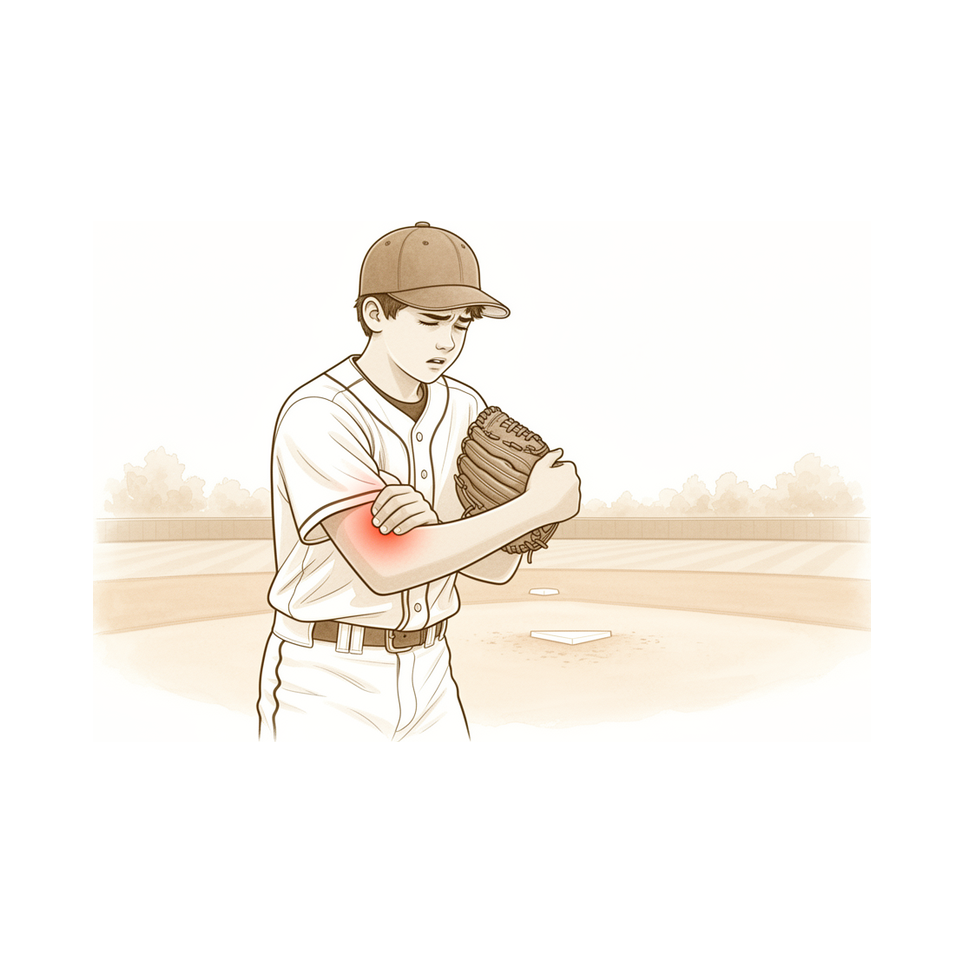
Osteochondritis dissecans of the capitellum is a debilitating injury in young athletes, often precipitated by repetitive throwing in the adolescent population [2, 17]. The true cause, natural history, and optimal treatment of this condition remain unknown [1]. Diagnosis is aided by MRI or CT due to the low accuracy of conventional radiographs, which detected the condition during initial interpretations in only seven of 15 patients [2, 4]. Clinicians should exercise caution when assigning grades using magnetic resonance classifications for capitellar osteochondritis dissecans [15].
Lesions are classified as stable or unstable [10]. Stable lesions with an open growth plate and good motion heal with rest [10]. Unstable lesions with a closed growth plate, fragmentation, or restricted motion require surgery [10]. Biomechanical data indicate that osteochondritis dissecans lesions of the capitellum, both small and large, did not alter ulnohumeral kinematics and stability with intact collateral ligaments [8].
Despite appropriate and aggressive treatment, the prognosis remains guarded [5]. Long-term results demonstrate continued elbow symptoms and degenerative joint disease in approximately 50% of patients [5]. It may be wise to counsel symptomatic pitchers and catchers with osteochondritis dissecans of the capitellum to consider switching to another position or sport until outcomes improve [17].
Anatomy & Pathophysiology
Bony Anatomy
The elbow is a trocho-ginglymoid joint comprising medial and lateral articulations that provide bony stability [54]. The ulnohumeral joint forms where the trochlea articulates with the ulna within the greater sigmoid notch, while the radiocapitellar joint forms between the capitellum and the radial head [54]. The radial head is a concave elliptical structure covered by articular cartilage along the radiocapitellar joint and approximately 270° of the articular margin [54]. The distal humeral articulation is angled 30° from the longitudinal axis of the humerus [54], with the articular surface angled 30 degrees anterior to the humeral shaft axis [66]. The axis of rotation of the distal humerus is angulated 5° to 7° in the coronal plane relative to the epicondylar axis, positioning the medial side more distal than the lateral side [54].
The distal humerus consists of medial and lateral columns [66]. The medial column diverges from the humeral shaft at a 45-degree angle, whereas the lateral column diverges at a 20-degree angle [68]. The trochlea and capitellum comprise the articular component of the distal humerus [69]. The articular surface of the capitellum begins at the most distal aspect of the lateral column and encompasses an arc of approximately 180 degrees in the sagittal plane [71]. The trochlea is covered by articular cartilage anteriorly, inferiorly, and posteriorly, creating an arc of almost 270 degrees [71]. The olecranon fossa and coronoid fossa are separated by a thin bony septum [71]. In full extension, 60% of axial load is transmitted through the radiocapitellar joint [66].
Surgical exposure of the lateral aspect of the distal lateral column should not extend past the equator of the capitellum to avoid injury to the LCL complex [71]. The posterior aspect of the lateral column is relatively flat and wide, well suited for application of a posterolateral plate [71]. On radiographic views, the radial head should line up with the capitellum at all arm positions [55]. Tensile forces are present at the medial elbow, while compressive forces are present at the lateral elbow [55].
Ligamentous Anatomy
The medial ulnar collateral ligament (MUCL) is the primary restraint to valgus stress within functional elbow range of motion [66]. It originates on the posterior medial epicondyle and inserts on the sublime tubercle of the medial coronoid process [66]. The posterior bundle of the MUCL serves as the primary restraint to valgus stress with the elbow in maximal flexion [66]. The lateral ulnar collateral ligament (LUCL) complex functions as an important restraint to varus and posterolateral rotatory instability [71]. The LUCL arises from an isometric point on the lateral epicondyle and attaches to the crista supinatoris of the proximal ulna [71]. The radial collateral ligament originates from an isometric point on the lateral epicondyle and fans out to attach to the annular ligament [71]. The annular ligament attaches to the anterior and posterior margins of the lesser sigmoid notch [71]. The contribution of concavity-compression stability across the radiocapitellar joint to overall elbow stability is clearly demonstrated [124].
Pathophysiology & Etiology
Osteochondritis dissecans (OCD) of the capitellum is an uncommon disorder seen primarily in the adolescent overhead athlete [38]. It is a common cause of lateral elbow pain in children and adolescents that characteristically presents between 11 and 16 years of age [145]. OCD is multifactorial and likely results from microtrauma in the setting of cartilage mismatch and vascular susceptibility [38]. Various theories have been proposed to explain the pathogenesis, including trauma, ischemia, constitution, and genetic predisposition [28]. Little is known about the early changes in osteochondritis dissecans, and clarifying pathogenesis requires studying early changes over time [28]. The natural history of OCD is poorly understood, and degenerative joint disease may develop over time [38].
OCD is more frequently seen in athletes who sustain repetitive trauma through valgus stress and lateral compression across the elbow, such as baseball players and gymnasts [145]. Elbow valgus torque increases contact pressure in the radiocapitellar joint [96]. Increasing elbow flexion places the medial elbow in a position to carry a greater amount of load, which may be exacerbated during the final moments of the pitching motion [91]. The late cocking phase is the critical point in the pitching motion where higher levels of torque at the shoulder and elbow can result in increased risk of injury [103]. Throwing alone does not appear to change the morphology of the lateral elbow outside of an injured elbow [86]. Over mid- to long-term follow-up, the entire elbow joint undergoes cylindrical-like morphological changes, leading to restricted motion in surgically treated cases of capitellar OCD [87].
Panner's disease is defined as a focal lesion of the capitellar subchondral bone and its overlying articular cartilage, characterized by a disorder of the capitellar ossification center [145]. It characteristically occurs in children younger than 10 years old and involves a benign, self-limited process with eventual restoration of normal capitellar size, contour, and appearance [145]. True collapse of the subchondral bone and persistent deformity are rare in Panner's disease [145]. The etiology of Panner's disease has not been determined, but a proposed mechanism involves alteration in the vascularity of the developing capitellum [145].
Classification
General Principles
Panner's disease and osteochondritis dissecans likely represent a continuum of disordered endochondral ossification, with presentation and prognosis dependent primarily on age at onset [26]. Osteochondritis dissecans of the capitellum has only a slight tendency to heal, and instability can cause failure of the lesion to heal [16]. Stable lesions are generally treated conservatively while unstable lesions require surgical management [21]. Osteochondrosis of the humeral capitellum can be successfully treated conservatively if treatment is begun in an early stage of the disease [20].
Radiographic Classification
Minami: The Minami classification describes the appearance of the capitellum on plain radiographs [44]. In Minami type 1 OCD lesions, there is flattening of the capitellum or cystic changes in the capitellum [44]. In Minami type 2 OCD lesions, there is clear subchondral detachment or fragment splitting in the capitellum [44]. The Minami Classification was the most reliable for classifying different stages of OCD of the humeral capitellum [113].
A 45-degree flexion anterior-posterior radiograph may provide a clear profile of the capitellum [44]. Comparison radiographs of the contralateral elbow are helpful to distinguish subtle changes from normal anatomic variants of the maturing epiphyseal ossification centers of the distal humerus [44]. Osteochondritis dissecans of the capitellum was detected during the initial interpretations of the radiographic examinations of the elbow in seven of 15 patients [4]. Osteochondral lesions in the posterolateral capitellum were associated with an advanced stage [22].
Magnetic Resonance Imaging (MRI) Classification
Diagnosis of osteochondritis dissecans of the capitellum is aided by MRI due to low accuracy of conventional radiographs [2]. In cases with suspicious radiographic changes, magnetic resonance imaging (MRI) is critical to confirm the diagnosis as well as to characterize the extent and stability of the lesion [44].
Modified MRI Staging: A modified MRI staging system for capitellar osteochondritis dissecans classifies lesions into 5 stages based on T2-weighted MRI findings [101]. Stage 1 is defined as a normally shaped capitellum with several spotted areas of high signal intensity that is lower than that of cartilage [101]. Stage 2 is defined as a normally shaped capitellum with several spotted areas of higher intensity than that of cartilage [101]. Stage 3 is defined as discontinuity and noncircularity of the chondral surface signal of the capitellum with no high signal interface apparent between the lesion and the floor [101]. Stage 4 is defined as a lesion separated by a high intensity line in comparison with cartilage [101]. Stage 5 is defined as a capitellar lesion displaced from the floor or defect of the capitellar lesion noted [101].
Arthroscopic Classification
ICRS: Cartilage defects are graded during arthroscopy according to the International Cartilage Repair Society (ICRS) classification [115]. ICRS grade 3 is defined as complete discontinuity [115]. ICRS grade 4 is defined as an empty defect [115]. Arthroscopy is useful for evaluating the stability of the lesion in cases of osteochondritis dissecans of the capitellum [13].
Clinical Presentation
Osteochondritis dissecans of the capitellum is an uncommon disorder that primarily affects adolescent overhead athletes [38]. It is a painful condition often seen in young throwing athletes [37] and represents a critical elbow injury in this demographic [136]. The natural history of the condition is poorly understood, with degenerative joint disease potentially developing over time [38]. Long-term results demonstrate continued elbow symptoms and degenerative joint disease in approximately 50% of patients [5]. Until outcomes improve, it may be wise to counsel symptomatic pitchers and catchers to consider switching to another position or sport [17].
Stability and Kinematics
Osteochondritis dissecans lesions of the capitellum, both small and large, do not alter ulnohumeral kinematics and stability when collateral ligaments are intact [8]. An osseous defect of the posterolateral corner of the capitellum is an uncommon finding that in each instance was associated with chronic posterolateral rotatory instability of the elbow [132].
Investigations
Plain radiography: Conventional radiographs remain the hallmark and best screening test for elbow evaluation [41]. However, they have low accuracy for diagnosing osteochondritis dissecans of the capitellum [2]. Osteochondral fractures of the capitellum may be easily missed on conventional radiographs if not suspected [141]. While radiographic evaluations are essential when diagnosing an osteochondritis dissecans lesion of the elbow, important aspects may be better seen with MRI [78]. The presence of an osteochondral fragment undetected on radiography may adversely affect the result [135].
MRI: MRI aids in the diagnosis of osteochondritis dissecans of the capitellum [2]. It can be used to evaluate ligaments and tendons, though it is rarely indicated for elbow stiffness evaluation [75]. Osteochondral lesions in the posterolateral capitellum were associated with an advanced stage based on MRI analysis [22].
CT: CT is the imaging modality of choice for diagnosing and staging osteochondritis dissecans of the capitellum in adolescents at risk with lateral elbow joint pain [133]. CT also aids in the diagnosis of osteochondritis dissecans of the capitellum [2]. It is helpful when assessing for malunion architecture and the location and pattern of osteophytes or loose bodies [75]. Radiological imaging including CT scans cannot reliably detect interposed capitellar cartilage fragments, which become apparent only during surgery [142].
Physical Examination: Physical examination findings in capitellum osteochondritis dissecans include lateral elbow tenderness, crepitus, and often a 15° to 20° flexion contracture [77]. The physical exam is directed by history and the location of the patient's pain in the anterior, posterior, medial, or lateral aspect of the elbow [41]. Range of motion should be assessed using active and passive flexion, extension, supination, and pronation with a goniometer for accurate measurement [75]. Pain should be assessed during the mid-arc or at the terminal ends of motion, with mid-arc range of motion pain being more common with intrinsic disease [75]. The ulnar nerve is of utmost importance in the physical examination due to its anatomic proximity to the elbow [75]. An assessment for ulnar nerve subluxation should be performed, as subluxation is a relative contraindication for an arthroscopic procedure [75]. Electromyography and nerve conduction velocity studies should be performed if there is any question about neurologic dysfunction [75].
Arthroscopic Evaluation: Arthroscopy is useful for evaluating the stability of the lesion and performing debridement in cases of osteochondritis dissecans of the capitellum [13]. Use of dual direct lateral portals is safe and practical for arthroscopic treatment of capitellar osteochondritis dissecans [30].
Other Considerations: Assessing the potential instability of an osteochondritis dissecans lesion is key to early treatment [78].
Treatment
Non-Operative
Conservative management is successful when initiated in the early stages of the disease [20]. Given that repetitive throwing in adolescent athletes often leads to long-term problems, clinicians may counsel symptomatic pitchers and catchers to consider switching to another position or sport until outcomes for capitellar osteochondritis dissecans improve [17].
Operative
Indications: Arthroscopy is indicated for evaluating lesion stability and performing debridement, thereby avoiding more extensive open procedures associated with complications [13]. Microfracture is specifically indicated for stage II or III lesions less than 1 cm in diameter that exhibit an intact lateral buttress of capitellar cartilage [51]. Internal fixation is a proposed option for unstable in situ lesions [62]. Osteochondral autograft transplantation (OAT) is indicated for large, unstable lesions in adolescent athletes [3, 42, 49].
Surgical Approach / Technique: Arthroscopic debridement and microfracture produce good to excellent outcomes in the majority of patients, with low incidence of progressive radiographic changes and high short-term return-to-sport rates [12]. In adolescent baseball players, arthroscopic surgery provides excellent rating scores at intermediate follow-up, though it does not assure return to baseball [11]. For large, unstable lesions, treatment allows reliable return to high-level sports with excellent long-term clinical outcomes [3]. Osteochondral autograft transplantation demonstrates excellent clinical and radiographic outcomes with minimal short-term donor site morbidity and a high level of return to sport [6]. Surgical osteochondral allograft transplantation is a viable option for large lesions (>10 mm), offering minimal morbidity and good functional return [9]. Costal osteochondral autografts yield satisfactory results for advanced lesions affecting the lateral wall [14], and autologous osteochondral mosaicplasty provides satisfactory clinical and radiographic results for advanced lesions [19]. OAT remains a superior treatment for symptomatic chondral and osteochondral pathology, with excellent outcomes and return-to-play rates for high-level athletes [23]. Both arthroscopic debridement and autologous osteochondral grafting have shown generally good clinical outcomes [24]. Current evidence suggests OAT may lead to better and more consistent outcomes than previously described methods for large lesions [37]. Clinicians can counsel youth baseball players that lesions indicated for autologous osteochondral transplantation have similar or better return-to-sport outcomes than those indicated for fixation or debridement plus microfracture [29]. Closed-wedge osteotomy of the lateral humeral condyle provides good long-term clinical and radiographic results across all lesion types [7].
Implant Selection: Harvesting osteochondral grafts did not exert adverse effects on donor knee function in young athletes at two years post-transplantation [18].
Prognosis and Outcomes: Despite appropriate and aggressive treatment, the prognosis remains guarded, with long-term results demonstrating continued elbow symptoms and degenerative joint disease in approximately 50% of patients [5].
Postoperative Rehabilitation: For arthroscopic debridement or microfracture, immobilization is not routinely used [60]. The general goal is full range of motion by 6–8 weeks postoperatively [60]. Return to sport-specific training typically begins as soon as symptoms permit, usually around 1–3 months for simple debridement and microfracture [60]. Patients are not allowed to return to contact sports or throwing for a minimum of 6 months after surgery [51].
Complications
Degenerative Joint Disease: The prognosis for osteochondritis dissecans of the capitellum remains guarded, with long-term results demonstrating continued elbow symptoms and degenerative joint disease in approximately 50% of patients despite appropriate and aggressive treatment [5]. Bauer et al. observed a high incidence of elbow degeneration in 31 patients with previous osteochondritis dissecans at a mean follow-up of 23 years, with 42% complaining of pain and/or reduced range of motion and one-third having radiographic degenerative changes [107].
Donor-Site Morbidity: Donor-site morbidity after osteochondral autologous transplantation (OATS) for capitellar osteochondritis dissecans was reported in a considerable group of patients [48]. Conversely, osteochondral autograft transplantation for capitellar osteochondritis dissecans demonstrates minimal short-term donor site morbidity [6].
Functional Limitations: Arthroscopic surgery for symptomatic osteochondritis dissecans of the capitellum in adolescent baseball players does not assure return to baseball [11].
Other Considerations: In patients treated for Panner's disease, some irregularity and flattening of the capitellum, or sclerosis in the capitellum, was still visible on radiographs [137]. A 20° flexion contracture was observed in one patient and a loss of the terminal 5° of both flexion and extension was observed in one patient following treatment for Panner's disease [137].
Recovery
Prognosis and Long-term Outcomes: Treatment of large, unstable osteochondritis dissecans lesions of the capitellum in adolescent athletes yields excellent long-term clinical outcomes [3] and good clinical outcomes at both short-term [49] and long-term follow-up [42]. Arthroscopic surgery for symptomatic osteochondritis dissecans of the capitellum in adolescent baseball players provides excellent rating scores with intermediate follow-up [11]. Osteochondral autograft transplantation demonstrates excellent clinical and radiographic outcomes [6], while surgical osteochondral allograft transplantation results in good return of function [9]. Arthroscopic debridement and microfracture produce good to excellent outcomes in the majority of patients [12]. Closed-wedge osteotomy for osteochondritis dissecans of the capitellum resulted in minimal osteoarthritic changes [32].
Return to Sport: Treatment of large, unstable osteochondritis dissecans lesions of the capitellum in adolescent athletes allows reliable return to high level of sports [3], a high rate of return to sport [42], and reliable return to play [49]. Osteochondral autograft transplantation demonstrates a high level of return to the sport [6] and remains a superior surgical treatment for symptomatic chondral and osteochondral pathology of the capitulum, with excellent reported rates of return to play for high-level athletes [23]. Arthroscopic debridement and microfracture produce high rates of return to sport in the short-term [12]. Six of seven patients returned to full athletic activity after closed-wedge osteotomy for osteochondritis dissecans of the capitellum [32].
Donor Site and Biomechanical Considerations: Osteochondral autograft transplantation for osteochondritis dissecans of the capitellum has minimal short-term donor site morbidity [6].
Other Considerations: Arthroscopic debridement and microfracture result in a low incidence of progressive radiographic changes for osteochondritic lesions of the capitellum [12].
Key Evidence
- [L5] The true cause, natural history, and optimal treatment of osteochondritis dissecans of the capitellum remain unknown. [1] (10.1177/0363546509354969)
- [L5] Osteochondritis dissecans of the capitellum is a debilitating injury in young athletes, with diagnosis aided by MRI or CT due to low accuracy of conventional radiographs. [2] (10.1177/17585732231190011)
- [L4] Treatment of large, unstable osteochondritis dissecans lesions of the capitellum in adolescent athletes allows reliable return to high level of sports, is safe and has excellent long-term clinical outcomes. [3] (10.1177/2325967114s00036)
- [L4] Osteochondritis dissecans of the capitellum was detected during the initial interpretations of the radiographic examinations of the elbow in seven of 15 patients. [4] (10.1007/s00256-005-0899-6)
- [L5] Despite appropriate and aggressive treatment, the prognosis for osteochondritis dissecans of the capitellum remains guarded, with long-term results demonstrating continued elbow symptoms and degenerative joint disease in approximately 50% of patients. [5] (10.1016/j.jse.2009.11.058)
- [L4] In the treatment of osteochondritis dissecans of the capitellum, osteochondral autograft transplantation demonstrates excellent clinical and radiographic outcomes, with minimal short-term donor site morbidity and a high level of return to the sport. [6] (10.1016/j.jhsa.2021.02.024)
- [L4] Closed-wedge osteotomy of the lateral humeral condyle provides good long-term clinical and radiographic results for osteochondritis dissecans of the capitellum across all lesion types. [7] (10.1016/j.jse.2019.05.016)
- [L5] Osteochondritis dissecans lesions of the capitellum, both small and large, did not alter the ulnohumeral kinematics and stability with intact collateral ligaments. [8] (10.1016/j.jhsa.2010.09.037)
- [L5] Surgical osteochondral allograft transplantation of the capitellum is a viable option for even large lesions (>10 mm), with minimal morbidity and good return of function. [9] (10.1016/j.eats.2024.102997)
- [L2] Osteochondritis dissecans of the capitellum can be classified as stable or unstable; stable lesions with an open growth plate and good motion heal with rest, while unstable lesions with a closed growth plate, fragmentation, or restricted motion require surgery. [10] (10.2106/jbjs.f.00622)
- [L4] Arthroscopic surgery for symptomatic osteochondritis dissecans of the capitellum in adolescent baseball players can provide excellent rating scores with intermediate follow-up but does not assure return to baseball. [11] (10.1177/03635465020300040401)
- [L4] Arthroscopic debridement and microfracture can produce good to excellent outcomes in the majority of patients with osteochondritic lesions of the capitellum, with a low incidence of progressive radiographic changes and high rates of return to sport in the short-term. [12] (10.1016/j.arthro.2010.04.034)
- [L4] Arthroscopy is useful for evaluating the stability of the lesion and performing debridement in cases of osteochondritis dissecans of the capitellum, thereby eliminating the need for a more extensive open procedure associated with complications. [13] (10.2152/jmi.61.233)
- [L4] Costal osteochondral autograft gave satisfactory results for advanced osteochondritis dissecans of the humeral capitellum with extensive lesions affecting the lateral wall. [14] (10.1016/j.jse.2014.06.047)
- [L4] One should be cautious when assigning grades using magnetic resonance classifications for capitellar osteochondritis dissecans. [15] (10.1177/1758573218821151)
- [L3] Osteochondritis dissecans of the capitellum has only a slight tendency to heal, and instability can cause failure of the lesion to heal. [16] (10.1177/03635465990270060701)
- [L5] Repetitive throwing in the adolescent athlete often leads to long-term problems, and until outcomes for osteochondritis dissecans of the capitellum improve, it may be wise to counsel symptomatic pitchers and catchers to consider switching to another position or sport. [17] (10.1016/j.arthro.2020.02.029)
- [L4] Harvesting osteochondral grafts did not exert adverse effects on donor knee function in young athletes at 2 years after undergoing osteochondral autograft transplantation for capitellar osteochondritis dissecans. [18] (10.1177/0363546510388386)
- [L4] Autologous osteochondral mosaicplasty for advanced lesions of capitellar osteochondritis dissecans can provide satisfactory clinical and radiographic results. [19] (10.1016/j.jse.2010.09.001)
- [L3] Osteochondrosis of the humeral capitellum can be successfully treated conservatively if treatment is begun in an early stage of the disease. [20] (10.1177/0363546507312168)
- [L5] The article explores osteochondritis dissecans of the elbow regarding aetiology, clinical presentation, diagnostics, surgical techniques, complications, clinical outcomes, and future directions, noting that stable lesions are generally treated conservatively while unstable lesions require surgical management. [21] (10.1136/jisakos-2015-000008)
- [L3] Osteochondral lesions in the posterolateral capitellum were associated with an advanced stage. [22] (10.1177/2325967120946269)
- [Paper] OAT remains a superior surgical treatment for symptomatic chondral and osteochondral pathology of the capitulum, with excellent reported outcomes and rates of return to play for high-level athletes. [23] (10.1016/j.eats.2020.07.022)
- [L4] Both patients had generally good clinical outcomes with arthroscopic débridement and autologous osteochondral graft to the capitellum. [24] (10.1016/j.jses.2018.02.005)
- [L5] Panner's disease and osteochondritis dissecans likely represent a continuum of disordered endochondral ossification with presentation and prognosis dependent primarily on age at onset. [26] (10.5435/00124635-200407000-00005)
- [L4] [28] (10.2106/00004623-199806000-00014)
- [L4] Clinicians can counsel injured youth baseball players that capitellar osteochondritis dissecans lesions indicated for autologous osteochondral transplantation can have similar or better return-to-sport outcomes than osteochondritis dissecans lesions indicated for fixation or debridement + microfracture. [29] (10.1177/03635465261443986)
- [L5] Use of dual direct lateral portals is safe and practical for arthroscopic treatment of capitellar osteochondritis dissecans. [30] (10.1016/j.arthro.2007.01.029)
- [L4] The procedure is useful for osteochondritis dissecans of the capitellum in young baseball players, as the bone revascularized and remodeled within 6 months, minimal osteoarthritic changes were observed, and six of seven patients returned to full athletic activity. [32] (10.1177/03635465000280041401)
- [L4] [37] (10.1177/1558944716643293)
- [L5] [38] (10.5435/00124635-201009000-00007)
- [L4] Treatment of large, unstable OCD lesions of the capitellum in adolescent athletes is safe, allows for a high rate of return to sport, and has good clinical outcomes with long-term follow-up. [42] (10.1016/j.jseint.2026.101680)
- [Paper] [44] (10.1177/1941738112444707)
- [L1] Donor-site morbidity after OATS for capitellar osteochondritis dissecans was reported in a considerable group of patients. [48] (10.1007/s00167-017-4516-8)
- [L4] Treatment of large, unstable OCD lesions of the capitellum in adolescent athletes allows reliable return to play, is safe, and has good clinical outcomes at short-term follow-up. [49] (10.1016/j.jse.2015.03.014)
- [Paper] [51] (10.1016/j.eats.2016.01.030)
- [L4] [60] (10.1007/s12178-019-09528-8)
- [L4] [62] (10.1016/s0363-5023(12)60060-4)
- [L2] Throwing alone does not appear to change the morphology of the lateral elbow outside of an injured elbow. [86] (10.1097/corr.0000000000001468)
- [L3] Over mid- to long-term follow-up, the entire elbow joint underwent cylindrical-like morphological changes, leading to restricted motion. [87] (10.1177/23259671251339180)
- [L4] Increasing elbow flexion has been shown to place the medial elbow in a position to carry a greater amount of load, which may be exacerbated during the final moments of the pitching motion. [91] (10.1177/03635465211072223)
- [L5] Elbow valgus torque increases contact pressure in the radiocapitellar joint. [96] (10.1177/0363546513490652)
- [L2] [101] (10.1177/0363546514532604)
- [L3] The late cocking phase appears to be the critical point in the pitching motion, where higher levels of torque at the shoulder and elbow can result in increased risk of injury. [103] (10.1177/0363546510363402)
- [L5] [107] (10.1007/s00167-015-3518-7)
- [L4] The Minami Classification was the most reliable for classifying different stages of OCD of the humeral capitellum. [113] (10.1016/j.jse.2015.03.029)
- [L4] [115] (10.1177/03635465221137894)
- [L4] The contribution of concavity-compression stability across the radiocapitellar joint to overall elbow stability is clearly demonstrated. [124] (10.1177/1758573216673527)
- [L4] An osseous defect of the posterolateral corner of the capitellum is an uncommon finding that in each instance was associated with chronic posterolateral rotatory instability of the elbow. [132] (10.2214/ajr.07.3739)
- [L3] In an adolescent considered at risk for OCD with lateral elbow joint pain, CT is the imaging modality of choice for diagnosing and staging OCD of the capitellum. [133] (10.1177/03635465221129598)
- [L5] The presence of an osteochondral fragment undetected on radiography may adversely affect the result. [135] (10.1016/0020-1383(75)90118-7)
- [L5] Osteochondritis dissecans (OCD) of the humeral capitellum is a critical elbow injury in adolescent overhead throwing athletes. [136] (10.1016/j.jos.2017.11.013)
- [L4] [137] (10.1007/s11832-015-0635-2)
- [L4] Capitellum fractures may be easily missed on conventional radiographs, if not suspected. [141] (10.1097/bpo.0000000000001208)
- [L4] Radiological imaging including CT scans cannot reliably detect interposed capitellar cartilage fragments, which become apparent only during surgery. [142] (10.1007/s00402-021-03895-z)
- [L5] [145] (10.1016/j.csm.2004.05.001)
References
[1] Osteochondritis Dissecans of the Capitellum. The American Journal of Sports Medicine. 2010. DOI: 10.1177/0363546509354969
[2] Update in diagnosis, treatment, and prevention of osteochondritis dissecans of the capitellum. Shoulder & Elbow. 2023. DOI: 10.1177/17585732231190011
[3] Osteochondral Autograft Plug Transfer for Treatment of Osteochondritis Dissecans of the Capitellum in Adolescent Athletes. Orthopaedic Journal of Sports Medicine. 2014. DOI: 10.1177/2325967114s00036
[4] Radiography of the elbow for evaluation of patients with osteochondritis dissecans of the capitellum. Skeletal Radiology. 2005. DOI: 10.1007/s00256-005-0899-6
[5] Osteochondritis dissecans of the capitellum. Journal of Shoulder and Elbow Surgery. 2010. DOI: 10.1016/j.jse.2009.11.058
[6] Outcomes of Osteochondral Autograft Transplantation in Pediatric Patients With Osteochondritis Dissecans of the Capitellum. The Journal of Hand Surgery. 2021. DOI: 10.1016/j.jhsa.2021.02.024
[7] Long-term results of closed-wedge osteotomy of the lateral humeral condyle for osteochondritis dissecans of the capitellum. Journal of Shoulder and Elbow Surgery. 2019. DOI: 10.1016/j.jse.2019.05.016
[8] Osteochondral Lesions of the Capitellum Do Not Affect Elbow Kinematics and Stability With Intact Collateral Ligaments: An In Vitro Biomechanical Study. The Journal of Hand Surgery. 2011. DOI: 10.1016/j.jhsa.2010.09.037
[9] Osteochondral Allograft Transplantation to the Capitellum: Technical Considerations of a Mega Osteochondritis Dissecans Technique. Arthroscopy Techniques. 2024. DOI: 10.1016/j.eats.2024.102997
[10] Classification, Treatment, and Outcome of Osteochondritis Dissecans of the Humeral Capitellum. The Journal of Bone & Joint Surgery. 2007. DOI: 10.2106/jbjs.f.00622
[11] Arthroscopic Surgery for Isolated Capitellar Osteochondritis Dissecans in Adolescent Baseball Players: Minimum Three-Year Follow-Up. The American Journal of Sports Medicine. 2002. DOI: 10.1177/03635465020300040401
[12] Arthroscopic Debridement and Microfracture of Capitellar Osteochondritis Dissecans of the Elbow (SS‐24). Arthroscopy. 2010. DOI: 10.1016/j.arthro.2010.04.034
[13] State of the Art: Elbow Arthroscopy: Review of the Literature and Application for Osteochondritis Dissecans of the Capitellum. The Journal of Medical Investigation. 2014. DOI: 10.2152/jmi.61.233
[14] Costal osteochondral autograft for reconstruction of advanced-stage osteochondritis dissecans of the capitellum. Journal of Shoulder and Elbow Surgery. 2014. DOI: 10.1016/j.jse.2014.06.047
[15] Interobserver reliability of the classification of capitellar osteochondritis dissecans using magnetic resonance imaging. Shoulder & Elbow. 2019. DOI: 10.1177/1758573218821151
[16] Nonoperative Treatment of Osteochondritis Dissecans of the Humeral Capitellum. The American Journal of Sports Medicine. 1999. DOI: 10.1177/03635465990270060701
[17] Editorial Commentary: Should We Consider Early Retirement for Adolescent Pitchers and Catchers With Osteochonditis Dissecans of the Capitellum?. Arthroscopy. 2020. DOI: 10.1016/j.arthro.2020.02.029
[18] Functional Recovery of the Donor Knee After Autologous Osteochondral Transplantation for Capitellar Osteochondritis Dissecans. The American Journal of Sports Medicine. 2010. DOI: 10.1177/0363546510388386
[19] The clinical outcomes of mosaicplasty in the treatment of osteochondritis dissecans of the distal humeral capitellum of young athletes. Journal of Shoulder and Elbow Surgery. 2011. DOI: 10.1016/j.jse.2010.09.001
[20] Conservative Treatment for Osteochondrosis of the Humeral Capitellum. The American Journal of Sports Medicine. 2008. DOI: 10.1177/0363546507312168
[21] Osteochondritis dissecans of the elbow: state of the art. Journal of ISAKOS. 2017. DOI: 10.1136/jisakos-2015-000008
[22] Distribution of Osteochondral Lesions in Patients With Simple Elbow Dislocations Based on MRI Analysis. Orthopaedic Journal of Sports Medicine. 2020. DOI: 10.1177/2325967120946269
[23] Osteochondral Autograft Transfer for Capitellar Chondral and Osteochondral Defects. Arthroscopy Techniques. 2020. DOI: 10.1016/j.eats.2020.07.022
[24] Osteochondritis dissecans of the capitellum secondary to fishtail deformity treated with osteochondral autograft. JSES Open Access. 2018. DOI: 10.1016/j.jses.2018.02.005
[26] Lateral Compression Injuries in the Pediatric Elbow: Pannerʼs Disease and Osteochondritis Dissecans of the Capitellum. Journal of the American Academy of Orthopaedic Surgeons. 2004. DOI: 10.5435/00124635-200407000-00005
[28] Early Detection of Osteochondritis Dissecans of the Capitellum in Young Baseball Players. Report of Three Cases. The Journal of Bone & Joint Surgery*. 1998. DOI: 10.2106/00004623-199806000-00014
[29] Return to Sport After Surgical Treatment of Capitellar Osteochondritis Dissecans Lesions in Baseball Players: A Systematic Review and Meta-analysis. The American Journal of Sports Medicine. 2026. DOI: 10.1177/03635465261443986
[30] Dual Direct Lateral Portals for Treatment of Osteochondritis Dissecans of the Capitellum: An Anatomic Study. Arthroscopy. 2007. DOI: 10.1016/j.arthro.2007.01.029
[32] Closed-Wedge Osteotomy for Osteochondritis Dissecans of the Capitellum: A 7- to 12-Year Follow-up. The American Journal of Sports Medicine. 2000. DOI: 10.1177/03635465000280041401
[37] Current Concepts. HAND. 2016. DOI: 10.1177/1558944716643293
[38] Osteochondritis Dissecans of the Capitellum: Current Concepts. Journal of the American Academy of Orthopaedic Surgeons. 2010. DOI: 10.5435/00124635-201009000-00007
[41] Orthopaedic Knowledge Update 13 Ebook Without Multimedia. Anatomy, Biomechanics, Physical Examination, and Imaging of the Elbow > Summary and Conclusions.
[42] Osteochondral autograft transfer for capitellar osteochondritis dissecans in high-level adolescent athletes. JSES International. 2026. DOI: 10.1016/j.jseint.2026.101680
[44] Surgical Treatment for Osteochondritis Dissecans of the Capitellum. Sports Health: A Multidisciplinary Approach. 2012. DOI: 10.1177/1941738112444707
[48] Donor-site morbidity after osteochondral autologous transplantation for osteochondritis dissecans of the capitellum: a systematic review and meta-analysis. Knee Surgery, Sports Traumatology, Arthroscopy. 2017. DOI: 10.1007/s00167-017-4516-8
[49] Osteochondral autograft plug transfer for treatment of osteochondritis dissecans of the capitellum in adolescent athletes. Journal of Shoulder and Elbow Surgery. 2015. DOI: 10.1016/j.jse.2015.03.014
[51] Arthroscopic Microfracture for Osteochondritis Dissecans Lesions of the Capitellum. Arthroscopy Techniques. 2016. DOI: 10.1016/j.eats.2016.01.030
[54] Orthopaedic Knowledge Update 13 Ebook Without Multimedia. Anatomy, Biomechanics, Physical Examination, and Imaging of the Elbow > Anatomy > Bony Anatomy.
[55] Miller S Review Of Orthopaedics. SECTION 16 PATELLAR TRACKING IN TOTAL KNEE ARTHROPLASTY > TABLE 2.3 Shoulder Spaces.
[60] Osteochondritis dissecans lesions of the capitellum in overhead athletes: a review of current evidence and proposed treatment algorithm. Current Reviews in Musculoskeletal Medicine. 2019. DOI: 10.1007/s12178-019-09528-8
[62] Internal Fixation of Unstable In Situ Osteochondritis Dissecans Lesions of the Capitellum. The Journal of Hand Surgery. 2012. DOI: 10.1016/s0363-5023(12)60060-4
[66] Miller S Review Of Orthopaedics. ELBOW.
[68] A Lange Medical Book Current Diagnosis Treatment In Orthopedics Fifth Edition. 2Musculoskeletal Trauma Surgery > INJURIES AROUND THE ELBOW.
[69] Orthopaedic Knowledge Update Trauma. Distal Humerus Fracture > Anatomy.
[71] Rockwood And Green S Fractures In Adults. 29: Principles of Nonunion and Bone Defect Treatment > Pathoanatomy and Applied Anatomy Related to Distal Humerus Fractures.
[75] Aaos Comprehensive Orthopaedic Review 3. Elbow Stiffness* > IV. Evaluation.
[77] Aaos Comprehensive Orthopaedic Review 3. Elbow Injuries in the Athlete* > III. Valgus Extension Overload Syndrome and Posterior Impingement.
[78] Orthopaedic Knowledge Update. Osteochondritis Dissecans of the Knee and Elbow* > Summary.
[86] Does Youth Baseball Result in Morphologic Changes of the Lateral Elbow? A Prospective MRI Study. Clinical Orthopaedics & Related Research. 2021. DOI: 10.1097/corr.0000000000001468
[87] Comprehensive Elbow Joint Morphology Changes in Surgically Treated Osteochondritis Dissecans of the Capitellum: Clinical Implications. Orthopaedic Journal of Sports Medicine. 2025. DOI: 10.1177/23259671251339180
[91] Increased Elbow and Olecranon Injury History in Professional Pitchers With Increased Elbow Flexion at Ball Release. The American Journal of Sports Medicine. 2022. DOI: 10.1177/03635465211072223
[96] Biomechanical Characteristics of Osteochondral Defects of the Humeral Capitellum. The American Journal of Sports Medicine. 2013. DOI: 10.1177/0363546513490652
[101] Magnetic Resonance Imaging Staging to Evaluate the Stability of Capitellar Osteochondritis Dissecans Lesions. The American Journal of Sports Medicine. 2014. DOI: 10.1177/0363546514532604
[103] Correlation of Torque and Elbow Injury in Professional Baseball Pitchers. The American Journal of Sports Medicine. 2010. DOI: 10.1177/0363546510363402
[107] Biomechanical considerations in the pathogenesis of osteoarthritis of the elbow. Knee Surgery, Sports Traumatology, Arthroscopy. 2015. DOI: 10.1007/s00167-015-3518-7
[113] Osteochondritis dissecans of the humeral capitellum: reliability of four classification systems using radiographs and computed tomography. Journal of Shoulder and Elbow Surgery. 2015. DOI: 10.1016/j.jse.2015.03.029
[115] Long-Term Patient-Reported Outcomes After Arthroscopic Debridement of Grade 3 or 4 Capitellar Osteochondritis Dissecans Lesions. The American Journal of Sports Medicine. 2022. DOI: 10.1177/03635465221137894
[124] Ulnohumeral dislocation despite intact radiocapitellar joint: a rare Monteggia variant. Shoulder & Elbow. 2016. DOI: 10.1177/1758573216673527
[132] Osborne-Cotterill Lesion: An Osseous Defect of the Capitellum Associated with Instability of the Elbow. American Journal of Roentgenology. 2008. DOI: 10.2214/ajr.07.3739
[133] Advantages of CT Versus MRI for Preoperative Assessment of Osteochondritis Dissecans of the Capitellum. The American Journal of Sports Medicine. 2022. DOI: 10.1177/03635465221129598
[135] Osteochondral fracture of the trochlea associated with fracture-dislocation of the elbow. Injury. 1975. DOI: 10.1016/0020-1383(75)90118-7
[136] Diagnosis and treatment of osteochondritis dissecans of the humeral capitellum. Journal of Orthopaedic Science. 2018. DOI: 10.1016/j.jos.2017.11.013
[137] Panner's disease: Literature review and treatment recommendations. Journal of Children's Orthopaedics. 2015. DOI: 10.1007/s11832-015-0635-2
[141] Mid-term and Long-term Functional and Radiographic Results of 13 Surgically Treated Adolescent Capitellum Fractures. Journal of Pediatric Orthopaedics. 2018. DOI: 10.1097/bpo.0000000000001208
[142] Radial head fractures with interposed capitellar cartilage fragment–hindrance to bone healing–a case series. Archives of Orthopaedic and Trauma Surgery. 2021. DOI: 10.1007/s00402-021-03895-z
[145] Juvenile and adolescent elbow injuries in sports. Clinics in Sports Medicine. 2004. DOI: 10.1016/j.csm.2004.05.001