Clinicians › Hand
Remplir Nerve Wrap
For patients: a plain-language version of this topic is available. See the patient guide.
Overview
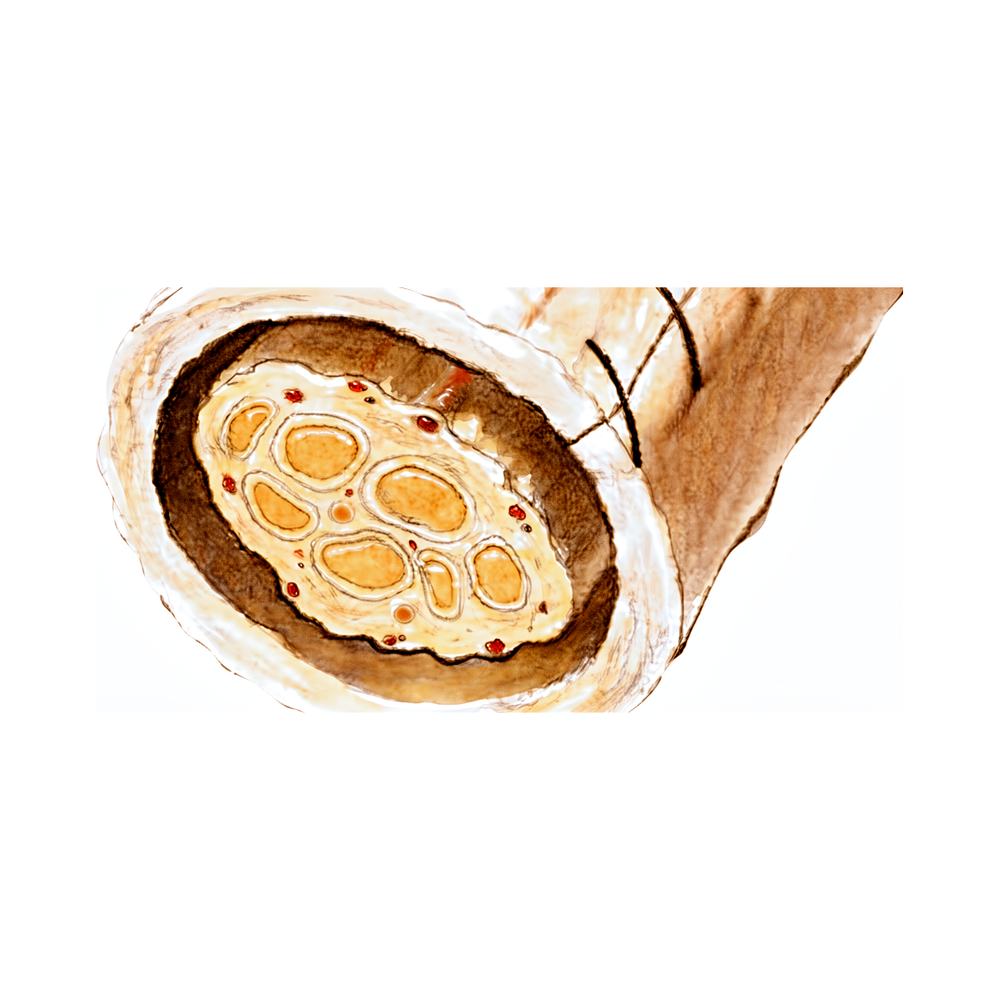
Remplir is a sterile, resorbable collagen membrane designed for the repair of peripheral nerve injuries [1]. As a collagen-based nerve wrap, it provides protection to the injured nerve during the healing process [2]. The device is intended for use in peripheral nerve repair to protect the injured nerve following repair [3, 17]. By shielding the site, Remplir creates a favorable environment for nerve regeneration to occur [1, 17].
The membrane is engineered to dissolve within 3 to 6 months [2]. This resorbable characteristic allows the device to support the initial phase of healing without requiring secondary removal. The intended use, principles of operation, and technological characteristics of Remplir are substantially equivalent to the predicate device NeuraWrap [9].
Anatomy & Pathophysiology
Peripheral Nerve Structure and Injury
The peripheral nerve comprises axons, Schwann cells, and connective tissue sheaths including the epineurium, perineurium, and endoneurium [38]. Injuries are classified into three types based on the severity of structural damage [38]. Loss of a 2 cm segment of nerve limits the potential regeneration of the nerve regardless of the type of nerve repair used [10]. Poor motor recovery following repair of transection injuries may be related to poor specificity of reinnervation [20]. Individual fascicular suture may avoid distortion of the central connections of peripheral units, a difference that is statistically significant compared to epineurial suture [19]. The epineurial method of nerve repair appears preferable to other methods because it is technically less cumbersome and the surgical procedure is not as tedious [16].
Nerve Wrap and Conduit Pathophysiology
Remplir is a sterile, resorbable collagen membrane intended for the repair of peripheral nerve injuries to protect the injured nerve and provide a favorable environment for regeneration [1, 3]. As a collagen-based nerve wrap, it provides protection to the injured nerve during healing and dissolves within 3 to 6 months [2]. Nerve wraps reduced collagen deposition within the coaptation, but no differences were observed in axonal regeneration, neuromuscular junction reinnervation, or functional recovery [6]. Use of nerve conduits is preferable over suture repair and nerve grafting, as functional recovery rates are above 80% [7]. Nerve conduits are indicated primarily for bridging digital sensory nerve gaps of 3 cm or less, avoiding donor site morbidity associated with nerve autografts [13]. Nerve conduits may be used to bridge digital sensory nerve gaps of ≤3 cm when direct tensionless repair is not possible, with nerve autograft remaining the benchmark for larger, longer, mixed, or motor nerve defects [21]. Nerve repair using autograft provided superior motor nerve recovery over two collagen conduits for a 10-mm nerve gap in a murine acute transection injury model [15]. Functionalized neurotubes showed significantly better functional results than after end-to-end nerve suture [18]. Therapeutic observations of 75 peripheral nerve repairs using the NeuraGen collagen nerve conduit yielded no conduit rejection and only 2 cases of scar sensitivity [5]. Secondary decompression combined with porcine extracellular matrix nerve wrapping was an effective and safe treatment for patients with recurrent cubital tunnel syndrome [23]. SRN entrapment neuropathy was safely and effectively treated with neurolysis and amnion nerve wrapping in a small series [8]. Purified type 1 bovine collagen conduits are a practical and efficacious method for the repair of median nerves in the distal forearm [24]. Collagen nerve tubes might offer a clinically effective option for restoration of sensory function, with initial results comparing favorably to existing literature for various types of nerve repair and reconstruction [11]. Nerve conduits and processed nerve allografts offer equally effective means of reconstructing sensation of a digital nerve gap less than 3 cm after 12 months of follow-up, although allograft reconstruction showed earlier improved outcomes at 6 months [14]. An epineurial-like collagen device restored functional motor recovery in the upper extremities in patients with peripheral nerve or spinal cord injuries [25]. Data suggest that promoting the M2 response is associated with a remodeling response, whereas collagen conduits exhibited an encapsulation-like appearance [47].
Hand and Wrist Anatomy
The skeleton of the hand and wrist consists of 27 bones, of which 19 are long bones [28]. The skeleton is divided into five rays, each ray making up a polyarticulated chain comprising the metacarpals and phalanges [28]. The wrist has three axes of movement, permitting the hand to be positioned in any spatial configuration and allowing it to be placed as needed for grasping [28]. The thumb metacarpal is the shortest, and the index metacarpal is by far the longest [28]. The proximal and middle phalanges of the long and ring fingers are longer than those of the index finger [28]. The trapezium is clearly angled out in front of the carpal plane so that the first metacarpal makes an angle of about 45 degrees with the second metacarpal in the sagittal plane [28]. The transverse axis of the palm forms an acute angle of approximately 75 degrees with the longitudinal axis [28]. The epiphyseal plates are located at the proximal ends of the phalanges and the first metacarpal, whereas they are located at the distal ends of the other metacarpals [28].
Control of digital posture requires a complex balance of extrinsic and intrinsic muscle forces [27]. Extrinsic muscles have their origin outside of the hand and their insertion on the hand or carpus, whereas intrinsic muscles have both origin and insertion within the hand [27]. The extrinsic extensors run through six different fibroosseous retinacular compartments at the wrist level [27]. The first extensor compartment contains the abductor pollicis longus and the extensor pollicis brevis [27]. The second extensor compartment contains the extensor carpi radialis longus and the extensor carpi radialis brevis [27]. The third compartment contains the extensor pollicis longus, which runs longitudinally down the forearm through the third compartment and turns abruptly radialward about Lister tubercle [27]. The fourth extensor compartment contains the extensor indicis proprius lying deep to the four tendons of the extensor digitorum communis [27]. The fifth compartment contains the extensor digiti quinti [27]. The extensor carpi ulnaris tendon runs through the sixth compartment and inserts at the base of the little finger metacarpal [27]. The digital extensor tendons are stabilized over the mid-line of the metacarpophalangeal joint by their attachment to sagittal band fibers [27]. With rupture or attenuation of the sagittal band fibers, the extrinsic extensor tendon can sublux to the ulnar side of the metacarpal head causing ulnar deviation of the finger [27].
The extrinsic finger flexors are the flexor digitorum profundus and the flexor digitorum superficialis [27]. The flexor digitorum profundus inserts on the proximal volar aspect of the distal phalanx, flexing the distal interphalangeal joint as well as the proximal interphalangeal and metacarpophalangeal joints [27]. There are seven interosseous muscles, four dorsal and three volar [32]. The dorsal interossei are abductors and lie to the radial side of the index and middle fingers and the ulnar side of the middle and ring fingers [32]. The volar interossei are adductors and lie to the ulnar side of the index finger and the radial side of the ring and little fingers [32]. The middle finger has two dorsal interossei (abductors) and no volar interossei (adductors) because the central axis of the hand lies within it [32]. The superficial head of each dorsal interosseous muscle abducts and weakly flexes the proximal phalanx [32]. The deep head of each dorsal interosseous muscle flexes and weakly abducts the proximal phalanx while extending the middle and distal phalanges [32]. The volar interossei form the ulnar lateral band of the index finger and the radial lateral band of the ring and little fingers [32]. The abductor digiti quinti and flexor digiti quinti brevis are similar in both structure and function to the superficial and deep heads of the dorsal interossei, respectively [32]. The opponens digiti quinti arises from the pisohamate ligament and the hook of the hamate and inserts onto the ulnar side of the diaphysis of the fifth metacarpal, which it flexes and supinates [32].
The flexor digitorum profundus originates from the proximal ulna and the interosseous membrane [39]. The flexor digitorum superficialis has two heads: the radial head originates from the proximal shaft of the radius, and the humeral ulnar head originates from the medial humeral epicondyle and coronoid process of the ulna [39]. The flexor pollicis longus originates from two heads: the radial head takes origin from the proximal radius and interosseous membrane, and an accessory head originates from the coronoid process of the ulna and from the medial epicondyle of the humerus [39]. The fibroosseous tunnel, or digital flexor sheath, consists of annular pulleys which provide mechanical stability, and cruciate pulleys which provide flexibility [39]. The A2 and A4 pulleys are the most essential in maintaining the mechanical advantage of the flexor tendons [39]. The tenosynovium that lines the fibroosseous tunnel supplies both nutrition and lubrication to the poorly vascularized flexor tendons [39].
The vessels and nerves adapt themselves to differences in length and are surrounded by loose fibroadipose connective tissue [40]. The dorsal skin owes its suppleness and mobility to its histological structure, with relative thinness making it more stretchable and loose connections with deeper planes allowing free gliding [41]. Flexion of the fingers produces a significant lengthening of the dorsal skin, with an average increase of 3 cm in the middle finger as it goes from extension to full flexion [41]. The dorsal and palmar areas of skin are independent because of a system of adhesions that anchors their common boundary to the underlying plane [41]. The superficial palmar fascia lies in a coronal plane beneath the palmar subcutaneous tissue and covers a triangular area of the central palm [42]. The digital neurovascular structures are surrounded by a diffuse network of thin transverse oblique fibers, with fibers dorsal to the bundle called Cleland ligament and those palmar to the bundle called Grayson ligament [42].
The metacarpal arch is endowed with a great deal of adaptability because of the mobility of the peripheral metacarpals [35]. The index metacarpal is the most firmly fixed, while the fifth metacarpal is semi-independent with a range of flexion–extension of approximately 20 degrees [35]. The keystones of the longitudinal arches are the metacarpophalangeal articulations, whose thick anterior glenoid capsules, the volar plates, prevent hyperextension [35]. The hand is both an organ designed to obtain information and an organ of execution [30]. The open hand, with fingers extended and in contact, forms a balanced graceful oval in its longitudinal axis [30]. The posterior or dorsal aspect of the hand is convex, and the anterior, palmar or volar aspect is concave [30]. The digits are divided into the thumb and four fingers, with the thumb having a more proximal and lateral position allowing movement inward and outward from the palm [30]. When the fingers are extended and separated, the tips of the fingers lie on the circumference of a circle whose center is the head of the third metacarpal [30]. The hand consists of 19 bones, 17 articulations, and 19 muscles situated entirely within the hand, and about the same number of tendons activated by the forearm muscles [30].
Classification
Device Type: Remplir is a sterile, resorbable collagen membrane intended for use in peripheral nerve repair [3]. It is designed to protect the injured nerve and provide a favourable environment for regeneration [3]. Following repair, the membrane serves to protect the injured nerve and provide a favourable environment for nerve regeneration to occur [17].
Clinical Presentation
Remplir is a sterile, resorbable collagen membrane intended for use in peripheral nerve repair to protect the injured nerve following repair [17].
Investigations
Clinical Evaluation: Clinical evaluation of the injured or dysfunctional hand and wrist requires combining patient history with a careful physical examination to pinpoint or narrow the scope of possible pathologic processes [26]. A careful physical examination is essential to direct care and future testing if indicated [26]. Diagnostic tests such as imaging and serum laboratory studies are useful in determining pathology but can be expensive, time consuming, and often nonspecific [26].
Doppler Assessment: An 8-MHz Doppler tone assessment may be used to identify superficially displaced neurovascular bundles when Dupuytren cords lie beneath soft fleshy prominences [45]. False-negatives are possible with 8-MHz Doppler tone assessment for identifying neurovascular bundles [45]. Doppler imaging is a promising improvement over tone assessment but higher resolution imaging technology is needed [45].
MRI: MR assessment of Dupuytren’s disease is hindered by the resolution of current equipment, orientation issues due to multiplanar deformities of the fingers, and lack of intraoperative availability [45]. MRI is probably most useful in identifying additional pathology such as flexor tendon bowstringing [45]. MRI may be helpful in providing a quantitative noninvasive measure of cellularity of affected areas, which is an index of biologic activity [45].
Treatment
Operative
Surgical Approach / Technique: The epineurial method of nerve repair is preferable because it is technically less cumbersome and the surgical procedure is not as tedious [16]. Connector-Assisted Coaptation is suggested as an important tool in the nerve repair and reconstruction armamentarium based on clinical experience and current evidence [12].
Implant Selection: Therapeutic observations of 75 peripheral nerve repairs using the NeuraGen collagen nerve conduit have yielded no conduit rejection and only 2 cases of scar sensitivity [5]. Initial results for collagen nerve tubes in digital nerve repair compare favorably with those reported in existing literature for various types of nerve repair and reconstruction, suggesting that collagen nerve tubes might offer a clinically effective option for restoration of sensory function [11]. Use of nerve conduits is preferable over suture repair and nerve grafting, as the functional recovery rates are above 80% [7]. In a murine acute transection injury model, nerve repair using autograft provided superior motor nerve recovery over two conduits for a 10-mm nerve gap [15].
Adjuncts: Nerve wraps reduced collagen deposition within the coaptation; however, no differences were observed in axonal regeneration, neuromuscular junction reinnervation, or functional recovery [6].
Other Considerations: Perhaps loss of a 2 cm segment of nerve limited the potential regeneration of the nerve regardless of the type of nerve repair used [10]. The poor motor recovery following repair of transection injuries may be related to poor specificity of reinnervation [20].
Complications
Wound complications: Therapeutic observations of 75 peripheral nerve repairs using the NeuraGen collagen nerve conduit yielded no conduit rejection [5]. In the same series, only 2 cases of scar sensitivity were reported [5].
Other Considerations: Nerve wraps reduced collagen deposition within the coaptation [6]. No differences were observed in axonal regeneration between groups with and without nerve wraps [6]. Similarly, no differences were observed in neuromuscular junction reinnervation between groups with and without nerve wraps [6]. Finally, no differences were observed in functional recovery between groups with and without nerve wraps [6].
Recovery
Rehabilitation protocol: Therapy evaluation and treatment protocols for patients with peripheral nerve repairs with nerve conduits are detailed [4].
Other Considerations: No differences were observed in axonal regeneration, neuromuscular junction reinnervation, or functional recovery when using nerve wraps [6]. Loss of a 2 cm segment of nerve limited the potential regeneration of the nerve regardless of the type of nerve repair used [10]. Initial results for collagen nerve tubes in digital nerve repair compare favorably with those reported in existing literature for various types of nerve repair and reconstruction [11]. Collagen nerve tubes might offer a clinically effective option for restoration of sensory function [11]. Connector-Assisted Coaptation is suggested as an important tool in nerve repair and reconstruction armamentarium based on clinical experience and current evidence [12]. Nerve conduits are indicated primarily for bridging digital sensory nerve gaps of 3 cm or less [13]. Nerve conduits avoid donor site morbidity associated with nerve autografts [13]. Nerve conduits and processed nerve allografts offer equally effective means of reconstructing sensation of a digital nerve gap less than 3 cm after 12 months of follow-up [14]. Allograft reconstruction showed earlier improved outcomes at 6 months compared to nerve conduits [14]. Nerve repair using autograft provided superior motor nerve recovery over two collagen nerve conduits for a 10-mm nerve gap in a murine acute transection injury model [15]. Individual fascicular suture may avoid distortion of the central connections of peripheral units [19]. Histologic analysis and nerve axon counting of the recipient peroneal nerve showed significantly more regenerative nerves on the left than on the right in a comparison of end-to-side repair techniques [22].
Key Evidence
- [L4] Therapy evaluation and treatment protocols for patients with peripheral nerve repairs with nerve conduits are detailed. [4] (10.1197/j.jht.2005.02.012)
- [L4] Therapeutic observations of the aforementioned 75 peripheral nerve repairs using the NeuraGen collagen nerve conduit have yielded no conduit rejection and only 2 cases of scar sensitivity. [5] (10.1097/bth.0b013e31815e6334)
- [L5] Nerve wraps reduced collagen deposition within the coaptation; however, no differences were observed in axonal regeneration, neuromuscular junction reinnervation, or functional recovery. [6] (10.1016/j.jhsa.2020.11.023)
- [L1] Despite major methodological limitations in the studies, we can conclude that use of nerve conduits is preferable over suture repair and nerve grafting, as the functional recovery rates are above 80%. [7] (10.1016/j.hansur.2016.10.212)
- [L4] SRN entrapment neuropathy was safely and effectively treated with neurolysis and amnion nerve wrapping in this small series. [8] (10.1142/s0218810417200015)
- [Paper] Perhaps loss of a 2 cm segment of nerve limited the potential regeneration of the nerve regardless of the type of nerve repair used. [10] (10.1016/s0363-5023(80)80178-x)
- [L4] Although the patients in this study are still within the early follow-up period, our initial results compare favorably with those reported in the existing literature for various types of nerve repair and reconstruction, suggesting that collagen nerve tubes might offer a clinically effective option for restoration of sensory function. [11] (10.1016/j.jhsa.2008.03.015)
- [L5] Authors suggest Connector-Assisted Coaptation as an important tool in nerve repair and reconstruction armamentarium based on clinical experience and current evidence. [12] (10.1002/micr.30151)
- [L5] Nerve conduits are indicated primarily for bridging digital sensory nerve gaps of 3 cm or less, avoiding donor site morbidity associated with nerve autografts. [13] (10.1016/j.jhsa.2013.02.034)
- [L4] Nerve conduits and processed nerve allografts offer equally effective means of reconstructing sensation of a digital nerve gap less than 3 cm after 12 months of follow-up, although allograft reconstruction showed earlier improved outcomes at 6 months. [14] (10.1016/j.jhsa.2018.06.040)
- [L5] Nerve repair using autograft provided superior motor nerve recovery over the 2 conduits for a 10-mm nerve gap in a murine acute transection injury model. [15] (10.1016/j.jhsa.2018.10.008)
- [L3] The epineurial method of nerve repair appears preferable because technically it is less cumbersome to perform and the surgical procedure is not as tedious. [16] (10.1016/s0363-5023(76)80006-8)
- [L5] Functionalized neurotubes showed significantly better functional results than after end-to-end nerve suture. [18] (10.1016/j.hansur.2020.05.007)
- [L3] These differences are statistically significant, supporting the hypothesis that individual fascicular suture may avoid distortion of the central connections of peripheral units. [19] (10.1016/s0363-5023(83)80152-x)
- [L3] The poor motor recovery following repair of transection injuries may be related to poor specificity of reinnervation. [20] (10.1002/jor.1100150506)
- [L5] Nerve conduits may be used to bridge digital sensory nerve gaps of ≤3 cm when direct tensionless repair is not possible, with nerve autograft remaining the benchmark for larger, longer, mixed, or motor nerve defects. [21] (10.5435/jaaos-20-02-063)
- [L3] Histologic analysis and nerve axon counting of the recipient peroneal nerve showed significantly more regenerative nerves on the left than on the right. [22] (10.1053/jhsu.2002.32953)
- [L4] This study found that secondary decompression combined with porcine extracellular matrix nerve wrapping was an effective and safe treatment for patients with recurrent cubital tunnel syndrome. [23] (10.1016/j.jhsa.2015.02.031)
- [L4] This study indicates that purified type 1 bovine collagen conduits are a practical and efficacious method for the repair of median nerves in the distal forearm. [24] (10.1016/j.jhsa.2013.03.028)
- [L4] The device restored functional motor recovery in the upper extremities in patients with peripheral nerve or spinal cord injuries. [25] (10.1055/s-0044-1785213)
- [L5] Data suggest that promoting the M2 response is associated with a remodeling response, whereas Col conduits exhibited an encapsulation-like appearance. [47] (10.1016/j.jhsg.2021.06.006)
See Also
References
[1] Remplir Nerve Wrap IFU (Singapore). n.d..
[2] Remplir Patient Information Leaflet (AUS). 2024.
[3] Remplir Instructions for Use. n.d..
[4] Nerve Conduits. Journal of Hand Therapy. 2005. DOI: 10.1197/j.jht.2005.02.012
[5] Repair of Lacerated Peripheral Nerves With Nerve Conduits. Techniques in Hand & Upper Extremity Surgery. 2008. DOI: 10.1097/bth.0b013e31815e6334
[6] The Effects of a Porcine Extracellular Matrix Nerve Wrap as an Adjunct to Primary Epineurial Repair. The Journal of Hand Surgery. 2021. DOI: 10.1016/j.jhsa.2020.11.023
[7] Nerve conduits for treating peripheral nerve injuries: A systematic literature review. Hand Surgery and Rehabilitation. 2017. DOI: 10.1016/j.hansur.2016.10.212
[8] Neurolysis with Amniotic Membrane Nerve Wrapping for Treatment of Secondary Wartenberg Syndrome: A Preliminary Report. The Journal of Hand Surgery (Asian-Pacific Volume). 2017. DOI: 10.1142/s0218810417200015
[9] FDA 510(k) K243889 — Remplir Nerve Wrap Clearance. 2024.
[10] Neurorrhaphy after loss of a nerve segment: Comparison of epineurial suture under tension versus multiple nerve grafts. The Journal of Hand Surgery. 1980. DOI: 10.1016/s0363-5023(80)80178-x
[11] Early Clinical Experience With Collagen Nerve Tubes in Digital Nerve Repair. The Journal of Hand Surgery. 2008. DOI: 10.1016/j.jhsa.2008.03.015
[12] Refinements of nerve repair with connector-assisted coaptation. Microsurgery. 2017. DOI: 10.1002/micr.30151
[13] Nerve Conduits: An Update on Tubular Nerve Repair and Reconstruction. The Journal of Hand Surgery. 2013. DOI: 10.1016/j.jhsa.2013.02.034
[14] A Retrospective Comparison of Collagen Nerve Conduits and Processed Nerve Allografts for the Reconstruction of Digital Nerve Gaps. The Journal of Hand Surgery. 2018. DOI: 10.1016/j.jhsa.2018.06.040
[15] A Comparison Between Two Collagen Nerve Conduits and Nerve Autograft: A Rat Model of Motor Nerve Regeneration. The Journal of Hand Surgery. 2019. DOI: 10.1016/j.jhsa.2018.10.008
[16] Epineurial and perineurial fascicular nerve repairs: A critical comparison. The Journal of Hand Surgery. 1976. DOI: 10.1016/s0363-5023(76)80006-8
[17] ARTG Entry 385752 — Remplir Nerve Guide Public Summary. 2022.
[18] Functionalized nerve conduits for peripheral nerve regeneration: A literature review. Hand Surgery and Rehabilitation. 2020. DOI: 10.1016/j.hansur.2020.05.007
[19] Specificity of muscle reinnervation after epineurial and individual fascicular suture of the rat sciatic nerve. The Journal of Hand Surgery. 1983. DOI: 10.1016/s0363-5023(83)80152-x
[20] Functional recovery following neurorrhaphy of the rat sciatic nerve by epineurial repair compared with tubulization. Journal of Orthopaedic Research. 1997. DOI: 10.1002/jor.1100150506
[21] Nerve Conduits for Nerve Repair or Reconstruction. Journal of the American Academy of Orthopaedic Surgeons. 2012. DOI: 10.5435/jaaos-20-02-063
[22] A modified end-to-side method for peripheral nerve repair: Large epineurial window helicoid technique versus small epineurial window standard end-to-side technique. The Journal of Hand Surgery. 2002. DOI: 10.1053/jhsu.2002.32953
[23] Preliminary Results of Recurrent Cubital Tunnel Syndrome Treated With Neurolysis and Porcine Extracellular Matrix Nerve Wrap. The Journal of Hand Surgery. 2015. DOI: 10.1016/j.jhsa.2015.02.031
[24] Type I Collagen Nerve Conduits for Median Nerve Repairs in the Forearm. The Journal of Hand Surgery. 2013. DOI: 10.1016/j.jhsa.2013.03.028
[25] Reconstruction of Upper Extremity Peripheral Nerve Injuries Using an Epineurial-Like Collagen Device — A Prospective Clinical Study. J Reconstr Microsurg Open. 2024. DOI: 10.1055/s-0044-1785213
[26] Orthopaedic Knowledge Update 13 Ebook Without Multimedia. Anatomy, Evaluation, Clinical Examination, and Imaging > Evaluation and Clinical Examination: Current Concepts.
[27] A Lange Medical Book Current Diagnosis Treatment In Orthopedics Fifth Edition. 9Hand Surgery > Image DISORDERS OF THE MUSCULATURE OF THE HAND.
[28] Exam Of The Hand Wrist 2Ed. 1.1 SKELETON OF THE HAND > The osseous skeleton.
[30] Exam Of The Hand Wrist 2Ed. INTRODUCTION.
[32] Green S Operative Hand Surgery. Interosseous and Hypothenar Muscles.
[35] Exam Of The Hand Wrist 2Ed. The arches of the hand > The metacarpal arch.
[38] Orthopaedic Basic Science Fifth Edition Print Ebook. Biology and Mechanics of the Skeletal Extracellular Matrix > References.
[39] A Lange Medical Book Current Diagnosis Treatment In Orthopedics Fifth Edition. 9Hand Surgery > FLEXOR TENDON INJURY.
[40] Exam Of The Hand Wrist 2Ed. 1.3 MOVEMENTS OF THE HAND AND WRIST > Gliding mechanisms.
[41] Exam Of The Hand Wrist 2Ed. The dorsal skin.
[42] Green S Operative Hand Surgery. PERTINENT ANATOMY.
[45] Dupuytren S Disease And Related Hyperproliferative Disorders. 54. The Future of Dupuytren’s Research and Treatment > 54.4 Mechanical Measurements and Procedures > 54.4.4 Imaging.
[47] A Comparative Study of Porcine Small Intestine Submucosa and Cross-Linked Bovine Type I Collagen as a Nerve Conduit. Journal of Hand Surgery Global Online. 2021. DOI: 10.1016/j.jhsg.2021.06.006