Clinicians › Wrist
Internal Fixation and Implants
Internal fixation of the wrist, focusing on volar locking plates for distal radius fractures and the management of associated complications.
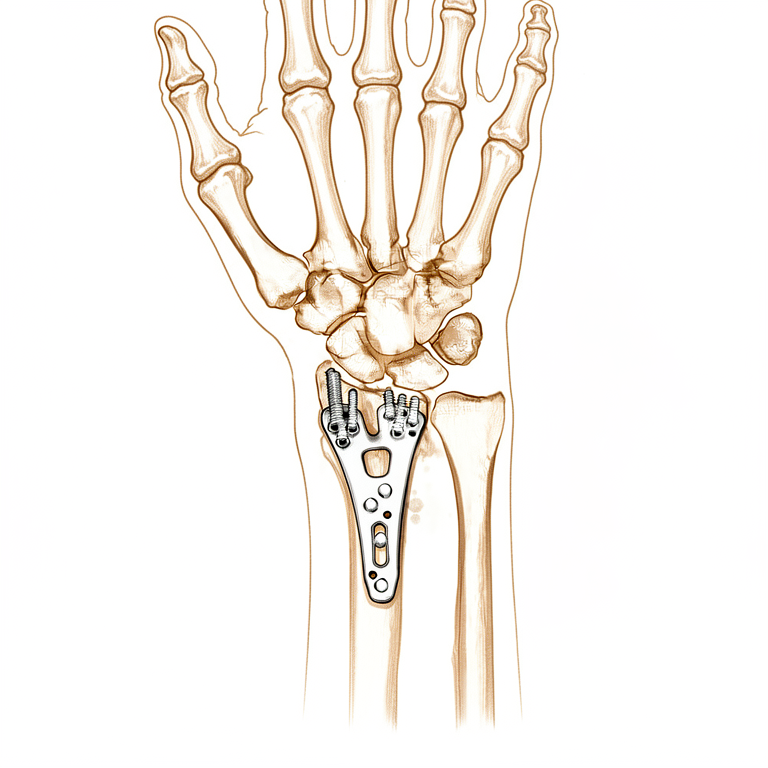
Overview
Internal fixation relies on devices constructed from tissue-compatible materials that provide sufficient strength, ease of insertion, and long-term function without deleterious effects [34]. The locked internal fixator technique aims for simple and safe handling while optimizing biological conditions for soft and hard tissues [5]. The Locking Compression Plate (LCP) represents a new implant requiring adapted surgical techniques and new thinking about interventional fixation concepts to avoid failures [7]. While closed treatment remains the method of choice for most fractures, acceptable results can be achieved with internal fixation, even for difficult fractures, provided correct principles are carefully followed [188]. Internal fixation remains an effective option in select clinical circumstances, with successful healing and avoidance of complications largely determined by surgical technique [4].
Indications for implant removal include wire or pin fixation when substantial growth remains and infection [1]. Specific applications demonstrate varied outcomes; for instance, a novel technique for posterior internal fixation of acetabular fractures offers superior outcomes and fewer complications compared to similar techniques [2]. Intrafocal pin plate fixation of distal ulna fractures associated with distal radius fractures resulted in all fractures uniting at a minimum of 1 year, with no symptoms related to the implant or need for additional surgery [8]. Stable internal fixation with standard techniques allowed an early return to functional activities in long-term outcomes of step-cut ulnar shortening osteotomy for ulnar impaction syndrome [14]. Internal fixation of displaced distal radial fractures with implants featuring locking screw fixation can result in good-to-excellent outcomes with a limited number of complications [19].
Failure of locking plate fixation is a new phenomenon often brought on by inadequate planning, incorrect reduction, or inappropriate implant selection, leading to malunion, implant failure, or compromised healing [16]. Locking plate fixation has yet to prove clinical superiority in any anatomic site for which good-quality comparative analyses are available [28]. The intended advantages of increased fixation accuracy and versatility have been realised with the extended use of the k wire and the orthopaedic screw [21]. Although alternative fixation methods for the volar lunate facet fracture of the distal radius have demonstrated promising outcomes with high rates of union and few complications, existing studies have small sample sizes [35]. The routine use of locking screws in the shaft portion of volar plates does not appear justified [54]. Locking-plate fixation presented an incremental cost effectiveness ratio of £89,322 per QALY within the first 12 months of treatment compared to percutaneous Kirschner wires for adult patients with a dorsally displaced fracture of the distal radius [55]. Submuscular internal fixation might be an interesting alternative to external fixation in clinical practice because of better biomechanical properties as well as several advantages in clinical use for osteoporotic pelvic fractures [171]. Although internal fixator devices are placed close to the bone and should therefore maintain greater stiffness, data did not support the hypothesis of superior stability for the anterior subcutaneous pelvic ring fixator [187]. In all cases of autogenous bone grafting, transplantation of autogenous bone is today the elective procedure and is usually carried out in combination with stable internal fixation [9]. External fixation and VLP are both good options for distal radius fractures, and treatment preference should often follow the patient's choice [3]. Long-term results of prospective studies with larger numbers of patients are needed to show definitively whether percutaneous plate-insertion techniques are an improvement on current biologic plating methods [6].
Anatomy & Pathophysiology
Bony Anatomy
The wrist constitutes the anatomic region between the forearm and the hand, encompassing the distal radioulnar, radiocarpal, and ulnocarpal joints along with eight carpal bones [67]. These bones are organized into a proximal row comprising the scaphoid, lunate, triquetrum, and pisiform, and a distal row consisting of the trapezium, trapezoid, capitate, and hamate [67]. The distal radius features a concave elliptical articular surface oriented in the sagittal plane with an average volar tilt of 11 degrees and a frontal plane radial inclination of 23 degrees [71]. This surface includes two concave facets for the scaphoid and lunate, separated by the scapholunate ridge, while the sigmoid notch along the ulnar border provides a shallow concavity for the articulating ulnar head [74]. Radial length, measured from the radial styloid tip to the ulnar articular surface, averages 13 mm [71]. The radius possesses a lateral bow essential for maintaining full pronation and supination [71].
The distal ulna is covered with hyaline cartilage on its dorsal, lateral, palmar, and distal surfaces [74]. The ulnar styloid projects distally, with the fovea at its base serving as the insertion site for the triangular fibrocartilaginous complex [74]. The distal ulnar convexity articulates at the lesser sigmoid notch of the distal radius, accommodating the ulnar head through two-thirds of its arc, with an approximate 20-degree inclination of the distal ulna at its articulation with the radius [67]. The interosseous membrane connects the radial and ulnar shafts, featuring a thickened central portion critical for force transmission between the bones [71].
Vascular anatomy is critical for carpal survival. The scaphoid’s primary blood supply enters via a branch of the radial artery at the dorsal ridge, with smaller vessels supplying the distal 30% through the palmar tubercle [74]. In 80% of wrists, the lunate receives both dorsal and palmar vascular supplies, whereas in 20%, only a palmar supply is present [74]. The capitate head often relies on a retrograde vascular supply [74]. The hamate consists of a body and a hook (hamulus), which serves as an attachment for the transverse carpal ligament and origins for the flexor digiti minimi and opponens digiti minimi [74]. The pisiform acts as a sesamoid bone within the flexor carpi ulnaris tendon and serves as the origin for the abductor digiti minimi [74].
The distal concave articular surfaces of the proximal carpal row form midcarpal articulations with the distal row [67]. The distal row articulates with the metacarpals, providing mobility in the thumb, stability in the index and long finger metacarpals, and increased mobility in the ring and little finger metacarpals [67].
Ligaments and Soft Tissue
The triangular fibrocartilage complex (TFCC) comprises the ulnar collateral ligament, dorsal and volar radioulnar ligaments, articular disc, meniscal homologue, extensor carpi ulnaris sheath, and ulnolunate and ulnotriquetral ligaments [67]. Specifically, the TFCC is formed by the central meniscus homolog, dorsal and volar radioulnar ligaments, the floor of the extensor carpi ulnaris tendon sheath, and volar ulnocarpal ligaments [74]. It arises from the radial border of the distal radius and inserts into the base of the ulnar styloid and distal ulna through the ligamentum subcruentum [74]. The dorsal and volar radioulnar ligaments serve as the primary stabilizers of the distal radioulnar joint [74]. Only the peripheral 10% to 40% of the volar, ulnar, and dorsal TFCC possesses a vascular supply [74]. The triangular fibrocartilage separates the hyaline cartilage–covered ulnar head from the styloid [67].
Intrinsic ligaments connect the proximal carpal row, including the scapholunate and lunotriquetral interosseous ligaments [67]. The scapholunate interosseous ligament is the major stabilizer of the wrist and the most commonly injured wrist ligament [72]. It is C-shaped in the sagittal plane, consisting of dorsal, palmar, and interosseous portions, with the dorsal portion being the strongest and thickest [72, 74]. This ligament provides a flexion force on the lunate given its attachment to the scaphoid [72]. The lunotriquetral interosseous ligament is also C-shaped, with the volar portion being the thickest and strongest [72, 74]. It provides an extension moment on the lunate given its attachment to the triquetrum [72].
Extrinsic or crossing ligaments connect the radius or ulna to the carpus, with volar ligaments generally stronger than dorsal ligaments [72]. The radial collateral ligament originates from the radius 0 mm from the radial styloid and inserts on the scaphoid waist and distal palmar trapezium [74]. The ulnar collateral ligament extends from the base of the ulnar styloid to the pisiform [67]. The radioscaphocapitate ligament originates from the radius 4 mm from the radial styloid and inserts on the scaphoid waist and midpalmar capitate, limiting ulnar translation of the carpus [72, 74]. The long radiolunate ligament helps limit ulnar translocation of the carpus [72]. The short radiolunate ligament originates from the volar-ulnar margin of the radius and inserts on the lunate, helping control lunate position [72, 74]. The radioscapholunate ligament is a vascular conduit known as the ligament of Testut rather than a true ligament [72].
The volar extrinsic ligaments include the radioscapocapitate, radiolunotriquetral, and radioscapolunate ligaments on the radial side [67]. The radiolunatotriquetral ligament originates from the radius 10 mm from the radial styloid and inserts on the lunate ± triquetrum [74]. The ulnotriquetral ligament originates from the volar radioulnar ligament and inserts on the triquetrum [74]. The ulnolunate ligament originates from the volar radioulnar ligament and inserts on the lunate [74]. The ulnocapitate ligament attaches to the ulnar head and is the most superficial or palmar ulnocarpal ligament, originating from the volar margin of the ulnar head and inserting on the capitate [72, 74].
The dorsal radiocarpal ligament has a trapezoidal shape, originating at the dorsal lip of the distal radius adjacent to the Lister tubercle and traversing the radiocarpal joint obliquely to insert into the lunate and triquetrum [67, 72, 74]. It attaches along the dorsal radial articular margin of the lunate fossa, from the Lister tubercle to the lesser sigmoid notch [67]. The dorsal intercarpal ligament arises from the dorsal tubercle of the triquetrum and passes across the midcarpal joint to attach to the dorsal surfaces of the scaphoid waist, trapezoid, and capitate [67, 72, 74]. It reinforces the elastic dorsal wrist capsule and helps stabilize the scapholunate articulation with a contribution to the dorsal scapholunate interosseous ligament from its deep fibers [72]. The capitohamate ligament is a thick ligament, 5 × 5 mm in cross section, with extensions to the third or fourth metacarpals [72].
The space of Poirier is a relatively thin area on the palmar side of the carpus between the radiolunotriquetral ligament and the radioscapocapitate ligament, overlying the palmar surface of the lunate [67]. It is also described as an area adjacent to the proximal capitate without ligamentous attachment, situated ulnar to the radioscaphocapitate ligament and radial to the long radiolunate ligament [72]. During a perilunate dislocation, the distal carpal row separates from the lunate through this space [72]. The volar wrist ligaments insert quite near the distal end of the pronator quadratus [118].
Vascular supply to the carpus is provided by terminal branches of the radial, ulnar, and anterior interosseous arteries through three dorsal and three palmar transverse arterial arches [77]. The dorsal intercarpal arch is the largest of the dorsal arches and supplies the distal carpal row and, through anastomoses, the lunate and triquetrum [77]. The palmar intercarpal arch is the most variable and does not contribute to nutrient vessels in the carpus [77]. The deep palmar arch at the level of the metacarpal bases is consistent and communicates with the dorsal basal metacarpal arch and palmar metacarpal arteries [77].
Soft tissue landmarks include extensor tendons accessible to visual inspection and palpation owing to the thin dorsal skin on the hand [79]. The abductor pollicis longus and extensor pollicis brevis can be seen between the radial styloid proximally and the base of the first metacarpal distally [79]. The extensor pollicis longus runs from the radial styloid to the ulnar side of the base of the first metacarpal [79]. The extensor communis and proprius tendons of the fingers lie in the axis of each metacarpal to the level of the proximal phalanx [79]. The extensor carpi radialis tendons are only palpable for a short distance proximal to the bases of the second and third metacarpals with the wrist [79].
Biomechanics and Kinematics
The eight carpal bones represent the most complex articular system in the human body, capable of moving in different degrees or directions dependent on hand position and force generation [68]. The wrist functions as a two-joint system linking the hand to the forearm around the highly mobile bones of the proximal carpal row [75]. The two principle articulations are the radiocarpal and midcarpal joints, situated proximal and distal to the mobile proximal carpal row [75]. The proximal row forms an intercalated segment between the distal carpal row and the distal radius, bound into a functional unit by the scapholunate and lunotriquetral interosseous ligaments [72]. This row has no muscular or tendinous attachments [74]. The distal row is rigid with little motion between its bones due to stout intercarpal ligaments, acting as a functional unit with the scaphoid bridging both rows [72].
The carpus functions as an oval ring formed by four interdependent elements (distal row, scaphoid, lunate, and triquetrum) connected to adjacent segments by ligamentous links [75]. The lunate, capitate, hamate, trapezium, and trapezoid function collectively as the "stable central column," controlled by the scaphoid in a two-gear, four-bar linkage system [75]. In most individuals, the proximal carpal row rotates predominantly around the flexion-extension axis during radioulnar deviation [75]. Division of either of the proximal row's interosseous ligaments in isolation does not result in a postural deformity of the lunate [75]. Similar "collapse" deformities of proximal row alignment (VISI or DISI) can occur with or without disruption of an interosseous ligament [75].
During wrist flexion from neutral, the distal row flexes and ulnarly deviates slightly while the scaphoid pronates [72]. The proximal row flexes differentially with more rotation through the scaphoid, followed by the triquetrum and lunate, and translates dorsally [72]. During wrist extension from neutral, the distal row extends and radially deviates slightly while the scaphoid supinates [72]. The proximal row extends differentially with more motion in the scaphoid, followed by the triquetrum and lunate, and translates palmarly [72]. With ulnar deviation, the proximal row extends relative to the forearm/distal row, while with radial deviation, the proximal row flexes relative to the forearm/distal row [74].
Approximately 62° of wrist extension occurs through the radiocarpal joint and 62% of wrist flexion occurs through the midcarpal joint [72]. With wrist flexion, 60% of the motion is midcarpal and 40% is radiocarpal [74]. With wrist extension, 33% of the motion is midcarpal and 66% is radiocarpal [74]. Wrist flexion and extension are two-thirds radiocarpal and one-third intercarpal [81]. The midcarpal joint is mostly responsible for 20° and 40° of radial and ulnar deviation, respectively [72]. Radial deviation is primarily an intercarpal movement, while ulnar deviation relies on radiocarpal and intercarpal motion [81]. The midcarpal joint is responsible for the "dart thrower's motion," which involves moving from radial extension into ulnar flexion positioning of the wrist [72]. This dart-thrower's path defines the transition between flexion and extension of the scaphoid and lunate and occurs almost exclusively through the midcarpal joint [75].
The radius bears 80% of the axial load transmitted through the radiocarpal joint, while the ulna bears 20% in neutral ulnar variance [72]. With axial loading through the neutral wrist, approximately 80% of forces are transmitted through the distal radius (60% scaphoid facet, 40% lunate facet) and 20% through the distal ulna [74]. The ulna transmits 17% of the axial load [81]. The distal radius normally bears about 80% of distal radioulnar joint load, while the distal ulna bears 20% [81]. Ulnar load bearing increases with ulnar lengthening and decreases with ulnar shortening [81].
Normal wrist range of motion is 65 degrees flexion, 55 degrees extension, 15 degrees radial deviation, and 35 degrees ulnar deviation [81]. Functional wrist range of motion is 10 degrees flexion, 35 degrees extension, 10 degrees radial deviation, and 15 degrees ulnar deviation [81]. The instant center of wrist motion is usually the head of the capitate, but it varies [81]. The wrist joint’s motion planes include flexion, extension, radial deviation, ulnar deviation, and circumduction, with minimal carpal motion with pronosupination [72].
Classification
General Principles: Contemporary classification systems for distal radius fractures have not achieved impressive interobserver agreement and should not be overly relied upon in dictating treatment plans [162]. The Mason classification and fracture complexity should guide treatment selection for fractures of the radial head and neck [172]. The authors suggest a more organised approach to classify the use of poller screws due to current confusion in the field [65].
AO/ASIF: The AO/ASIF classification and the "IDEAL" classification are utilized for classifying reducible unstable fractures of the distal radius [211]. The fracture pattern in open tibial fractures is classified according to the AO classification [63]. The AO classification is used to classify subtrochanteric femoral fractures [167].
IDEAL: The "IDEAL" classification consists of Type I Fracture (0–1 point), Type II Fracture (2–3 points), and Type III Fracture (4–5 points) [211].
Gustilo: The soft tissue wound in open tibial fractures is graded according to Gustilo et al. [63].
Modified Filan and Herbert: The modified Filan and Herbert classification is used to classify scaphoid fractures [200]. Type B fractures in the modified Filan and Herbert classification are defined as acute fractures of 6 weeks [200].
AO/OTA: The AO/OTA fracture classification is used to record the type of initial trauma in aseptic subtrochanteric nonunion [41].
Melone: The Melone classification system is not suitable for characterizing all C3 fractures [177].
Prosthetic Joint Infection: The authors propose introducing a topographic principle into prosthetic joint infection classification, suggesting that identifying the exact location of bacterial colonization can guide treatment strategy [157]. Identifying the exact location of bacterial colonization, such as the joint space versus the bone-prosthetic interface, can potentially allow implant retention in cases where the interface is not invaded and necessitate radical intervention otherwise [157].
Other Considerations: There is a 55% lack of consensus on the definition of fracture non-union between clinicians, which hinders the interpretation of existing evidence regarding the subgroup of infected non-unions [22]. A pragmatic characterisation of a non-union is that of a symptomatic fracture that is not healed and/or has no potential to heal without further intervention [22]. The definition of an infected non-union refers to a non-healing fracture and the simultaneous presence of pathogens to the site of the nonunion after a period of at least 6-8 months [22]. A classification scheme proposed in 2005 groups infected non-unions as those with a quiescent or active infection, with or without a bone gap of at least 4 cm, with or without implant failure or loosening [22]. Atypical femoral fracture is diagnosed using initial plain radiographs according to the American Society of Bone and Mineral Research criteria [41]. There are three types of non-union: atrophic, oligotrophic, and hypertrophic [203].
Outcome Definitions: Delayed union is defined as lack of bridging callus at 5 months [63]. Unsatisfactory fracture alignment, reduction, or malunion is defined as an abnormal varus valgus or angle over 5°, antero-posterior angle over 10°, shortening of more than 1.5 cm, or more than a 0.5 cm gap at the fracture site [63]. 'Superficial' infection is defined as reddening of the wound which resolves with the administration of antibiotics [63]. 'Deep' infection is defined by the presence of a positive culture and the need for surgical debridement [63]. Severe pin track infection is defined by the presence of drainage, reddening around the pins, a positive culture, treatment with antibiotics, or the need for revision surgery [63].
Clinical Presentation
Distal radius fractures are among the most common injuries presenting to the emergency department [27]. Patients of advanced age with osteoporosis face an increased fracture risk during low-energy falls [27]. Fracture patterns vary depending on the mechanism of injury [27]. The goals of all treatment for distal radius fractures are to optimize comfort and function [27].
Surgical treatment indications for distal radius fractures relate to infirmity, functional demands, tolerance of deformity, and personal preferences [27]. Specific characteristics merit discussion of surgical treatment, including: Loss of reduction: ulnar variance 5 mm or more positive [27]. Dorsal articular tilt: ≥15° (volar apex angulation) [27]. Radial inclination: loss >10° [27]. Articular incongruity: gap or step of 2 mm or more [27]. Unstable patterns: volar extra-articular fractures (Smith fracture) [27]. Associated injuries: neurovascular injuries or intercarpal ligament injuries [27].
Multiple trauma, such as bilateral distal radius fractures or the need to use crutches for a leg injury, is a relative indication for surgical treatment [27]. Most open fractures and volar shearing fractures of the distal radius are best treated operatively [27].
Delayed surgical fixation of distal radius fractures beyond 2 weeks correlates significantly with increased finger and thumb stiffness [53]. However, this delay does not affect wrist stiffness or functional scores [53].
The focus of internal fixation is shifting from mechanics to biology, where the real determinant of outcome is the biology of the bone itself [11]. Open operation may create conditions that delay or even prevent completion of healing [17]. The effect of all variables determines the extent of the host's biological tolerance of the implant [17].
Failure of locking plate fixation is a new phenomenon often brought on by inadequate planning, incorrect reduction, or inappropriate implant selection [16]. This failure can lead to malunion, implant failure, or compromised healing [16]. The clinical performance of locked plates generally has been good, but several unique complications have been noted [45].
Complications arose as a result of implant retention in 7.5% of patients following internal fixation of the symphysis pubis [50]. Infection was the most common complication resulting from implant retention following internal fixation of the symphysis pubis [50]. Significant difficulties may be encountered if removal or revision of the LISS implant is required [97]. Indications for implant removal after pediatric trauma include wire/pin fixation when substantial growth remains and infection [1].
The pattern of the external ossific mass represents the most economical structure serving as a rigid line of transmission for stresses until osseous continuity is restored [48]. Patterns of the external ossific mass are characteristic and vary only with fragment displacement in cases where internal fixation is efficient [48].
Investigations
Plain radiography: Initial wrist imaging requires four standard views: posteroanterior with the wrist in ulnar deviation, lateral, semi-pronated oblique, and semi-supinated oblique [86]. An anteroposterior view with the fist clenched is added when scapholunate injury is suspected [86]. On the lateral view, the axes of the radius, lunate, capitate, and third metacarpal are co-linear, while the scaphoid projects at an angle of approximately 45 degrees to this line [86]. Dorsal intercalated segmental instability (DISI) is identified by the lunate tilting backwards and the axes of the capitate and metacarpals lying dorsal to the radius [86]. Conversely, volar intercalated segment instability (VISI) presents with the lunate and scaphoid tilting volarwards and the capitate and metacarpals lying anterior to the radius [86]. If initial X-rays are normal, the clinical diagnosis should be treated and the wrist immobilized, as 10–15% of scaphoid fractures are not visible on initial X-rays [86]. If MRI is unavailable, repeated X-rays are required two weeks later to detect undisplaced cracks, as bone shifting and resorption at the fracture line can make the fracture more apparent [86]. Xerograms can confirm the diagnosis of a fracture of a silastic radial-head prosthesis and help localize fragment positions within the joint [186].
MRI: MRI is the modality of choice for imaging radiographically occult fractures of the hand and wrist [73]. Its primary advantages over CT and radiography are improved tissue characterization, particularly of soft tissues such as wrist ligamentous structures and hand synovium, and the lack of ionizing radiation [73]. Early MRI reduces uncertainty and streamlines care for suspected scaphoid fractures [86]. Modern MRI for hand and wrist imaging is generally performed at 1.5T or 3T, with 3T preferred for imaging small fields of view [73]. A static magnetic field strength of at least 1.5 T using a dedicated wrist coil is recommended for analyzing interosseous, intrinsic, and extrinsic ligament insertions [82]. The volar extrinsic, scapholunate interosseous, dorsal intercarpal, and lunotriquetral ligaments are best visualized using 1 mm slices with no interslice gap in the coronal plane [82].
CT: CT scanning enables the 3D analysis of carpal dysfunction [82]. Preoperative CT scans may improve surgical planning by identifying secondary fracture lines poorly visualized on radiographs [202]. Dual-energy CT can be used to decrease metal artifact in areas of previous internal fixation, facilitating recognition of pathology such as giant cell tumor [166]. The diagnosis of volar plate impingement based on CT scans is common after volar locked plating and occurs along a spectrum of findings ranging from minimal bony change to articular wear or block to motion [208].
Ultrasound: Ultrasound imaging may be useful in cases where intra-articular and/or comminuted fractures require distal plate placement and engagement of screws in the dorsal cortex [175].
Arthroscopy: Arthroscopy is considered by many to be the diagnostic intervention of choice for determining the degree of injury to the wrist and can assess the condition of the cartilage, ability to reduce the carpus, and any other associated injuries [82]. Geissler grade II scapholunate interosseous ligament injuries tend to be isolated, whereas grade IV injuries often involve complete dorsal extrinsic ligament disruption [82].
Other Considerations: Dynamic fluoroscopy shows abnormal motion between the scaphoid and lunate and changes in the kinematics of the midcarpal joint [82]. Advanced intraoperative imaging helps to identify screws which have penetrated the dorsal compartments of the wrist [206]. Printed image intensifier images have limited sensitivity for the diagnosis of dorsal cortical penetration of a volarly inserted screw, particularly among less experienced observers and for the evaluation of the most ulnar screw positions [217]. The technique for determining exact screw length is applicable to any situation where the exact screw length is of critical importance [196]. The presence of residual radiolucency is an important contraindication to removing the plate [197].
Treatment
General Principles and Biomechanics
Operative fracture fixation relies on three primary constructs: plates, intramedullary nails, and external fixators [88]. These constructs function by either splinting the fracture to provide relative stability or compressing fragments to achieve absolute stability [88]. Absolute stability is typically obtained using compression plates and lag screws [88]. When sufficient compression between fragments is maintained throughout healing, direct bone healing without callus formation is expected [88]. It is important to note that ordinary surgical fixation and replacement devices have in all instances been far weaker than the structure of normal bone [15]. The clinical success of minimally invasive internal fixation has resulted in early and reliable solid union, while the severity of complications diminished as there was a shift from biological complications due to necrosis towards possible but infrequent and rather harmless mechanical complications [20]. Furthermore, the intended advantages of increased fixation accuracy and versatility from the extended use of the K-wire and the orthopaedic screw have been realised [21].
Distal Radius Fractures
Indications: Surgical treatment is indicated for unstable volar extra-articular fractures (Smith fractures), distal radius fractures with associated neurovascular injuries, and those with associated intercarpal ligament injuries [27, 89]. Current best evidence suggests that initial displacement determines the final alignment of distal radius fractures regardless of the time of immobilization [27, 89]. Intra-articular displacement (or diastasis) greater than 2 mm in radial styloid fractures is an indication for surgery [89]. Conversely, the presence of a displaced fracture at the base of the ulnar styloid is not in itself an indication for surgical fixation [89].
Surgical Approach / Technique: Displaced distal radius fractures are immobilized for 4 to 6 weeks after acceptable closed reduction [89]. Volar locking plates make it possible to stabilize dorsally displaced distal radius fractures from through the volar Henry approach [89]. Volarly displaced extra-articular fractures (Smith fractures) can be treated with reduction and casting if no comminution is present and a good reduction is obtained; however, they are usually treated surgically with a volar plate and screws [89]. Dorsal plates or constructs are now preferred for dorsal shearing fractures and complex articular fractures in combination with volar plates [89]. Distraction (or bridge) plate fixation is increasingly utilized for complex articular fractures, particularly those with complex metaphyseal or diaphyseal fragmentation [89]. A distraction plate is applied between the index or long finger metacarpal and the shaft of the radius, applied with distraction, and removed about 3 months after injury [89]. Application of the bridge/distraction plate should not be a substitute for accurate ORIF [89]. Compression screw fixation with partially threaded 3.5- or 4.0-mm cancellous screws can effectively compress the fragments and maintain the reduction in radial styloid fractures [89]. Treatment of distal radius fractures with intrafocal (Kapandji) pinning and supplemental skeletal stabilization involves using an internal radiocarpal joint-spanning bridge plate or a 2.4-mm mandibular locking plate, which is left in for 3 months before removal [152]. NORIAN SRS cement treatment for distal radial fractures involved closed reduction under image intensification followed by injection of SRS cement into the metaphyseal bone defect, with supplemental Kirschner-wire fixation permitted in specific instances for displaced articular fractures that remained unstable following reduction [164].
Implant Selection: Potential pitfalls of volar locking plate fixation include intra-articular screw placement and application to inappropriate fracture patterns with prominent implant placement which may lead to tendon rupture [89]. The most common tendon to rupture following application of a volar plate is the flexor pollicis longus, due to volar extension of the plate beyond the so-called watershed line [89]. Dorsal tendons such as the extensor pollicis longus and extensor digitorum communis can fray and rupture from prominent screw tips following volar insertion [89].
Other Considerations: Nondisplaced distal radius fractures are associated with occasional extensor pollicis longus rupture, usually about 4 to 6 weeks after injury [89]. The primary aim of the UK DRAFFT trial is to determine if there is a difference in the Patient-Reported Wrist Evaluation one year following K-wire fixation versus locking-plate fixation [49]. Locking-plate fixation presented an incremental cost effectiveness ratio of £89,322 per QALY within the first 12 months of treatment for dorsally displaced distal radius fractures [55]. Surgeons should retain a flexible approach to treatment choice and master non-operative management, as well as both external and internal skeletal fixation techniques, due to the complexity of distal radial fractures [160]. Percutaneous fixation with K-wires was often sufficient and associated with better aesthetic outcome than open reduction and internal fixation for proximal phalanx fractures [148].
Forearm and Elbow
Indications: There are very few contraindications to performing percutaneous or open reduction and internal fixation in the properly selected patient for lateral condyle of the humerus fractures [135]. The nondisplaced, stable fracture of the lateral condyle of the humerus does not require surgical treatment; cast immobilization is sufficient [135]. When an underlying medical condition prevents surgery or an anesthetic risk, either nonsurgical treatment is required or the medical condition must be managed before undertaking a surgical procedure for lateral condyle of the humerus fractures [135]. Indications for operative treatment of proximal humerus fractures include a varus displacement of > 20°, a valgus displacement of > 40°, an increased reclination > 30°, a lateral displacement of > ½ diaphyseal diameter, and displacement of the major and/or minor tubercle of > 5-10 mm [156].
Surgical Approach / Technique: Plate and screw fixation for adult diaphyseal forearm fractures maintains alignment and allows immediate mobilization but carries risks of hardware symptoms and refracture after removal [10]. Invasive primary treatment for children's both-bone diaphyseal forearm fractures seemed to prevent re-displacement and the need for re-operation of severe fractures was less common than in the non-invasive treatment group [149]. The procedure of interlocking nailing of humeral shaft fractures should be used with caution when managing acute non-pathological fractures as there is a high incidence of non-union [116]. The transcondylar rod in the treatment of supracondylar fractures of the adult humerus has given consistently good results proving to be both reliable and versatile, with no iatrogenic nerve injuries or major post operative complications in the reported series [62]. Three implants were removed in the transcondylar rod series, one for loosening and two for discomfort [62].
Non-Operative: Non-operative treatment is considered by many surgeons to be the gold standard for the management of humeral shaft fractures [141]. The functional brace introduced by Sarmiento in 1977 uses incompressible fluids of soft tissue around the fracture site to create a rigid envelope around the fragments, preventing angular and rotational deforming forces [141]. With muscles contracting inside the rigid plastic valve of a functional brace, the bony alignment usually improves [141]. Shortening is more dependent on the type of fracture and cannot be corrected fully using functional bracing [141]. Conservative treatment for humeral shaft fractures is a stepwise process beginning with immobilization in an above-elbow hanging cast or U-shaped coaptation splint for a duration of 1–2 weeks [141]. Further treatment proceeds with immobilization in a prefabricated functional brace consisting of a part around the arm, possibly over the shoulder and straps to tighten on a daily basis [141]. The patient is asked to mobilize their shoulder and elbow to help align the fractures further during functional bracing [141]. Plain radiographs (AP and lateral) should be obtained one week after brace application to make sure the alignment is correct or even improving [141]. Subsequent radiographs should be obtained every two to six weeks, depending on the fracture evolution [141].
Other Considerations: An algorithm of management of the humeral shaft non-unions following a rational approach is suggested [140]. Postoperatively, patients treated with MIPO Philos plating for proximal humerus fractures were allowed immediate active-assisted mobilization without sling immobilization, though abduction of more than 90° was not allowed in the first six weeks [156]. The authors question the use of percutaneous fixation in humeral shaft fractures and suggest that complications could have been potentially avoidable with conventional debridement, lavage, and stabilisation with methods such as external fixation [56].
Tibia and Lower Extremity
Indications: Treatment protocols for proximal tibial fractures aimed at addressing issues of accurate reduction, proximal fragment stabilization, and soft tissue protection have included closed treatment, external fixation, intramedullary nailing, and plating [153]. Aseptic nonunion is a relatively common complication in the management of tibial fractures [158].
Surgical Approach / Technique: Percutaneous plating of low energy unstable tibial plateau fractures has the obvious advantages to the traditional open reduction and internal fixation and the non-operative management by plaster immobilisation [120]. Interlocking intramedullary nailing with reaming offers clear advantages in patients with aseptic tibial nonunion, providing stable fixation, good rotational control, adequate alignment, early weight-bearing and a high rate of union [158]. Reamed intramedullary nailing results in a 100% rate of union within a period of 6 months for aseptic tibial nonunion [158]. Bone grafting from the iliac crest combined with static locking is recommended to promote union in cases of aseptic tibial nonunion where there is bone loss at the nonunion site with bony contact less than 50% [158]. Change from static to dynamic nailing (dynamization) is not needed in all patients with aseptic tibial nonunion but only in those with delay in callus formation [158]. Fibular osteotomy should be performed routinely to facilitate anatomical alignment and transferring loads from the fibula to tibia in the treatment of aseptic tibial nonunion [158]. The fibula was osteotomized in 66% of the cases in the study of reamed intramedullary nailing for aseptic tibial nonunion [158]. Intramedullary nailing has a role in the management of established non-union [130].
Pelvis and Acetabulum
Surgical Approach / Technique: External fixation facilitates safe and accurate reduction without major surgical complications and may offer surgeons an additional option for the treatment of unstable pelvic fractures [33]. Fixation of the pubic symphysis diastasis with two screws and a tension band wire was performed in a case of Malgaigne fracture to allow pain-free, early mobilization [163]. External fixation with a Wagner apparatus was applied four weeks after injury in a case of Malgaigne fracture when internal fixation at the symphysis did not appear to stabilize the pelvic ring [163]. The pin tracks remained clean without drainage, and there was no loosening of the pins in the reported case of external fixation for Malgaigne fracture [163].
Clavicle and Shoulder
Surgical Approach / Technique: Open reduction and internal fixation with intramedullary devices is a simple method that provides excellent results in terms of healing and function without undue risk of non-union or postoperative infection when indicated for clavicular fractures [138]. Both fixation groups in the study of open distal tibial allograft with screw fixation versus button fixation for distal tibial allograft glenoid reconstruction show improvement in outcomes with an excellent union rate [145].
Implant Selection: The indications for use of the Silastic radial-head prosthesis after fracture are extremely limited, and its routine use cannot be justified [142].
Non-Union and Infection Management
Indications: A comprehensive assessment of any infected non-union case should include the overall condition of the host, the anatomical location of the non-union especially in relation to adjacent joints, the quality of blood supply and soft tissue cover of the affected site, as well as the integrity or not of the existing fixation [22]. There is a general consensus in the literature that before applying any treatment scheme for femoral diaphyseal aseptic non-unions, it is important to determine whether a certain non-union is symptomatic or not [137]. Investigations should be carried out to determine whether the un-united femoral fracture is also infected [137]. Instability of the un-united non-union is an indication for surgical treatment [137]. The stable, well-aligned non-union may be treated non-operatively, if the patient has co-morbid conditions precluding surgery and the impact on the patient's life and function is tolerable [137].
Surgical Approach / Technique: Antibiotic artificial bone implantation and external fixation is an effective method for the treatment of infection after intramedullary nail fixation [146]. The study presents an alternative method for treating symptomatic ulnar styloid non-unions that provides stable fixation with low risk of implant removal [144].
Other Considerations: Among all infected and removed orthopaedic implants, plates were associated with slightly lower remission rates, while the overall treatment success exceeded 90% [150].
Complications
Implant-Related Complications: Complications arising from implant retention after internal fixation of the symphysis pubis occurred in 7.5% of patients, with infection being the most common issue [50]. In adult diaphyseal forearm fractures treated with plate and screw fixation, risks include hardware symptoms and refracture following removal [10]. A review of 175 patients undergoing compression plating of the radius and/or ulna found that the overall complication rate was significantly higher in patients who had plates removed compared to those with retained devices (P < 0.008) [194]. Specifically, refracture occurred in 11% of patients after instrumentation removal for forearm fractures [194]. For ulnar styloid fractures, implant-related complications requiring secondary removal surgery were more frequent in the tension band wire group than in the anchor suture group [169]. Clinical outcomes for surface replacement trapeziometacarpal joint prostheses deteriorated clearly in cases of implant loosening [25], while both implants in a randomized controlled trial of total wrist arthroplasty were associated with a high complication rate [52]. In 418 tibial shaft fractures treated with dynamic compression plates, the complication rate was higher for open fractures than for closed fractures [60]. Two implant failures (12.5%) occurred in supracondylar femur fractures treated with indirect reduction and bridge plating due to premature full weight bearing before union [23]. One patient with an isolated radius fracture required revision of plate and screw fixation two months post-operatively for delayed union associated with implant loosening [210]. The Locking Compression Plate (LCP) requires adapted surgical techniques and new thinking about commonly used concepts of interventional fixation to avoid failures and complications [7]. Conversion from external fixation to plating for open distal radius fractures may lead to increased soft tissue scarring and complications [18], whereas a comparison of volar locking plates with external fixation and K-wires for distal radial fractures showed a greater number of complications in the external fixator and K-wire treated patients [44]. Minimally invasive internal fixation resulted in a shift from biological complications due to necrosis towards possible but infrequent and rather harmless mechanical complications [20]. Conversely, no patient developed symptoms related to the implant or required additional surgery at a minimum of 1 year after intrafocal pin plate fixation for distal ulna fractures [8], and no case of implant failure occurred in a series of percutaneous plating for complex long bone fractures despite long unsupported plate segments [61]. In compression plating for delayed and non-union of humeral shaft fractures, the plate and screws did not require removal in any case [26].
Infection: Pin site infection is one of the most common local complications after procedures using the Ilizarov fine wire fixator, with an incidence reported to range from 10% to 100% [205]. In tibial shaft fractures treated with the AO method, the infection rate for the open fracture group was 14%, although only 7% fell into the major infection category and in only 1 case was it severe enough to warrant removal of the plate [189]. Factors influencing infection in 418 tibial shaft fractures treated with dynamic compression plates include primary skin damage, initial bacterial invasion, type and location of fracture, operative handling of tissues, quality and rigidity of internal fixation, and surgeon's experience [60]. In a case series of supracondylar humeral non-union treatment, one patient experienced plate infection and removal of internal implants as a complication following index treatment [151].
Non-Union and Delayed Union: Failure of fractures to unite can be traced to factors including inadequate initial reduction, distraction of fragments due to improperly applied traction or internal fixation devices, loss of bone, improper operative interference, improper immobilization, impairment of blood supply, infection, metabolic disturbances, and local pathological conditions [185]. In 142 fresh tibial shaft fractures treated with internal fixation, the principal factor determining whether non-union would ensue appeared to be the presence of comminution [189]. The incidence of non-union was 11% in patients with closed comminuted tibial shaft fractures, compared with 23% for patients with open comminuted fractures [189]. Prolonged delay in the fracture-healing process is most common in long-bone fractures associated with severe soft-tissue damage due to the original injury, treatment program, or infection or tumor at the fracture site [198]. Three secondary autografts were performed in patients with supracondylar femur fractures treated with indirect reduction and bridge plating who experienced implant failure or delayed union, as the risk of implant failure is high in these cases [23]. The average time of union in 14 cases of compression plating for delayed and non-union of humeral shaft fractures was 8.5 weeks [26].
Biological and Mechanical Factors: Successful fixation requires devices made of tissue-compatible materials with sufficient strength, ease of insertion, and long-term function without deleterious effects [34]. Open operation for internal fixation may create conditions that delay or even prevent completion of healing [17]. In 418 tibial shaft fractures treated with dynamic compression plates, the decisive factors for healing in complicated cases were the rigidity of the plate fixation and the blood supply of the injured tissue [60]. Early active motion appears imperative for a good functional result in tibial shaft fractures treated with dynamic compression plates [60]. Severely comminuted fractures which are difficult to stabilize, as well as open fractures with badly damaged soft tissues, often present many more complications than a simple closed spiral fracture [60]. The presence of a metal implant does not in itself lead to infection [189]. Provided that fixation is rigid, infection is not a serious difficulty [189].
Recovery
Light activity (weeks): Plate fixation for distal radius fractures in elderly patients allows patients to resume activities of daily living four weeks earlier than K-wire fixation [213]. Stable internal fixation with standard techniques for step-cut ulnar shortening osteotomy allowed an early return to functional activities [14].
Full activity (months): Volar locking plate (VLP) fixation for intra-articular distal radial fractures resulted in faster recovery of function compared with external fixation (EF), but no functional advantage was demonstrated at 2 years [201].
Other Considerations: Indications for implant removal after pediatric trauma include wire or pin fixation when substantial growth remains and infection [1]. For distal radius fractures, external fixation and volar locking plates (VLP) are both good options, and treatment preference should often follow the patient's choice [3]. In select clinical circumstances, internal fixation remains an effective option with successful healing and avoidance of complications largely determined by surgical technique [4]. Long-term results of prospective studies with larger numbers of patients are needed to definitively show whether percutaneous plate-insertion techniques are an improvement on current biologic plating methods [6]. At a minimum of 1 year after surgery for distal ulna fractures treated with intrafocal pin plate fixation, all fractures united and no patient developed symptoms related to the implant or required additional surgery [8]. In children's fractures treated with the Fixclip system, union occurred in all instances, with the implant enabling small fragments of bone to be captured and the epiphysis secured to the metaphysis without transgression of the physis in growth plate injuries [12]. A prospective randomized trial comparing non-operative treatment with both static and dynamic external fixation is necessary to draw definite conclusions about the value of this treatment modality for severe distal radial fractures [13]. Minimally invasive internal fixation resulted in early and reliable solid union, while the severity of complications diminished as there was a shift from biological complications due to necrosis towards possible but infrequent and rather harmless mechanical complications [20]. Good and excellent clinical results in the majority of patients following radiolunate fusion do not depend on the fixation device [24]. Clinical outcomes for surface replacement trapeziometacarpal joint prosthesis improved significantly in the short-term and remained excellent in the long-term in patients with a stable implant, but deteriorated clearly in case of loosening [25]. With rigid internal fixation under compression for humeral shaft non-unions, the average time of union in 14 cases was 8.5 weeks [26]. Callus did not form in any of the 14 cases treated with compression plating without bone grafts for humeral shaft non-unions [26]. In the 2 cases where cancellous bone grafts were used for humeral shaft non-unions, a shell of new bone formed where the grafts were placed and direct cortical union also occurred [26]. In the case where fibrous union and callus were not excised and a compression plate was applied directly, the callus showed rapid remodelling and the gap at the fracture was progressively filled in by cortical bone within 6 weeks [26]. The plate and screws did not require removal in any of the 14 cases treated with compression plating for humeral shaft non-unions [26]. Initial clinical experience with the augmented small AO external fixator for distal radial fractures is encouraging and further experiments are underway [32]. Both modern total wrist arthroplasty implants provided matched function and were stable at short-term follow-up, but with a high complication rate [52]. Compression bone-plating history distinguishes between early devices that merely coapted fragments and true compression plates that apply continuous force to accelerate healing [57]. Experience with bridge plating for unstable distal radial fractures was similar to that previously reported in earlier publications [58]. Functional results for percutaneous plating of complex long bone fractures were satisfactory and there was no case of implant failure in spite of the long unsupported segment of plate [61]. In open tibial fractures, the soft tissue injuries were more severe in the intramedullary nailing group while the fractures were more severe in the external fixation group [63]. The clinical success of any non-cemented or biologically stabilized implant must be judged in comparison with the results obtained using the most contemporary cementing techniques, not with the results of procedures performed using cementing techniques from the early 1970s [64]. Long-term follow-up evaluation is necessary to validate the technique of open reduction and internal fixation for coronal fractures of the capitellum [173]. A four-year follow-up of an open ulna fracture treated by bone transport shows good overall function reflecting the durability of the reconstruction [176]. Clinical studies report successful outcomes for individualized megaimplants in acetabular revision arthroplasty, including increased implant survivorship, lower re-revision rates, and improved functional outcomes [179]. While prosthetic replacement for radial head fractures restores stability, the long-term consequences of metal-on-cartilage articulation remain incompletely defined [180]. The previously reported short-term results with the Herbert prosthesis for salvage of failed resection arthroplasties of the distal radioulnar joint did not deteriorate in the long term [207]. K-wire fixation remains an effective, minimally invasive alternative for distal radius fractures in elderly patients [213]. Outcomes for four-corner arthrodesis with a dorsal locking plate appear not remarkably different from those reported using other fixation methods other than an apparent earlier return to activities [219]. Persistent fracture lines after scaphoid fracture fixation may represent fibrous unions, but their long-term natural history regarding arthritis is uncertain [220]. Tenderness with screw loosening and lack of bridging trabeculae on CT at 6 months is diagnostic for nonunion requiring surgery in scaphoid fractures [220].
Key Evidence
- [L5] Indications for implant removal include wire/pin fixation when substantial growth remains and infection. [1] (10.5435/jaaosglobal-d-22-00050)
- [L4] Compared to similar internal fixation techniques, it offers superior outcomes and fewer complications. [2] (10.1186/s13018-025-06049-8)
- [L5] External fixation and VLP are both good options, and treatment preference should often follow the patient's choice. [3] (10.1016/j.jhsa.2013.11.039)
- [L5] Internal fixation remains an effective option in select clinical circumstances, with successful healing and avoidance of complications largely determined by surgical technique. [4] (10.5435/jaaos-d-23-01256)
- [Paper] The locked internal fixator technique aims at simple and safe handling, optimizing biological conditions for soft and hard tissues, and being universally applicable. [5] (10.1016/s0020-1383(01)00120-6)
- [L4] Long-term results of prospective studies with larger numbers of patients are needed to show definitively whether percutaneous plate-insertion techniques are an improvement on current biologic plating methods. [6] (10.5435/00124635-200007000-00001)
- [L5] The Locking Compression Plate (LCP) is a new implant revolutionizing internal fixation that requires adapted surgical techniques and new thinking about commonly used concepts of interventional fixation to avoid failures and complications. [7] (10.1016/j.injury.2003.09.026)
- [L4] At a minimum of 1 year after surgery, all fractures united, and no patient developed any symptoms related to the implant or required additional surgery. [8] (10.1016/j.jhsa.2011.11.013)
- [Paper] In all such cases, transplantation of autogenous bone is today the elective procedure and is usually carried out in combination with stable internal fixation. [9] (10.1016/0020-1383(94)90254-2)
- [L4] Plate and screw fixation maintains alignment and allows immediate mobilization but carries risks of hardware symptoms and refracture after removal. [10] (10.1016/j.jhsa.2011.03.020)
- [L5] The focus of internal fixation is shifting from mechanics to biology, where the real determinant of outcome is the biology of the bone itself. [11] (10.1016/s0020-1383(99)90001-3)
- [L4] Union occurred in all instances, with the implant enabling small fragments of bone to be captured and the epiphysis secured to the metaphysis without transgression of the physis in growth plate injuries. [12] (10.1016/s0020-1383(00)00184-4)
- [L3] A prospective randomized trial comparing non-operative with both static and dynamic external fixation is necessary to draw definite conclusions about the value of this treatment modality. [13] (10.1016/0020-1383(95)00151-4)
- [L4] Stable internal fixation with standard techniques allowed an early return to functional activities. [14] (10.2106/jbjs.15.01111)
- [L5] Ordinary surgical fixation and replacement devices have in all instances been far weaker than the structure of normal bone. [15] (10.2106/00004623-195638040-00011)
- [L5] Failure of locking plate fixation is a new phenomenon often brought on by inadequate planning, incorrect reduction, or inappropriate implant selection, leading to malunion, implant failure, or compromised healing. [16] (10.1016/j.otsr.2018.04.031)
- [L4] Conversion from external fixation to plating may lead to more soft tissue scarring and complications. [18] (10.1016/j.jhsa.2010.06.008)
- [L4] Internal fixation of displaced distal radial fractures with implants featuring locking screw fixation can result in good-to-excellent outcomes with a limited number of complications. [19] (10.2106/jbjs.i.01340)
- [Paper] The clinical success of this treatment resulted in early and reliable solid union, while the severity of complications diminished as there was a shift from biological complications due to necrosis towards possible but infrequent and rather harmless mechanical complications. [20] (10.1016/s0020-1383(01)00055-9)
- [L4] The intended advantages of increased fixation accuracy and versatility have been realised. [21] (10.1016/s0020-1383(00)00055-3)
- [Paper] [22] (10.1016/j.injury.2015.08.009)
- [L4] [23] (10.1016/s0020-1383(02)00213-9)
- [L4] Good and excellent clinical results in the majority of the patients following radiolunate fusion do not depend on the fixation device. [24] (10.1177/1753193409342054)
- [L4] However, clinical outcomes improved significantly in the short-term and remained excellent in the long-term in those patients with a stable implant, but deteriorated clearly in case of loosening. [25] (10.1186/s12891-021-03957-8)
- [L4] [26] (10.1016/s0020-1383(73)80253-0)
- [L4] Locking plate fixation has yet to prove clinical superiority in any anatomic site for which good-quality comparative analyses are available. [28] (10.1016/j.otsr.2016.11.006)
- [L5] Initial clinical experience (one patient) with the augmented small AO external fixator is encouraging and further experiments are underway. [32] (10.1016/0020-1383(95)90135-3)
- [L4] External fixation facilitates safe and accurate reduction without major surgical complications and may offer surgeons an additional option for the treatment of such fractures. [33] (10.1016/j.otsr.2021.103008)
- [L4] Although alternative fixation methods have demonstrated promising outcomes with high rates of union and few complications, the existing studies have small sample sizes. [35] (10.1016/j.jhsg.2025.100738)
- [L3] [41] (10.1186/s12891-021-04016-y)
- [L2] There was a greater number of complications in the external fixator and K-wire treated patients. [44] (10.1177/1753193419879567)
- [L5] The clinical performance of locked plates generally has been good, but several unique complications have been noted. [45] (10.5435/00124635-200806000-00007)
- [L1] The primary aim is to determine if there is a difference in the Patient-Reported Wrist Evaluation one year following K-wire fixation versus locking-plate fixation. [49] (10.1186/1471-2474-12-201)
- [L4] Complications arose as a result of implant retention in 7.5% of patients, with infection the most common complication. [50] (10.1016/j.injury.2004.11.012)
- [L1] Both implants provided matched function and were stable at short-term follow-up, but with a high complication rate. [52] (10.1302/0301-620x.104b10.bjj-2022-0201.r2)
- [L4] Delayed surgical fixation beyond 2 weeks correlates significantly with increased finger and thumb stiffness, though it does not affect wrist stiffness or functional scores. [53] (10.1177/1753193420936591)
- [L4] The routine use of locking screws in the shaft portion of volar plates does not appear justified. [54] (10.1007/s11552-014-9722-y)
- [L1] Locking-plate fixation presented an incremental cost effectiveness ratio of £89,322 per QALY within the first 12 months of treatment. [55] (10.1302/0301-620x.97b8.35234)
- [L4] The authors question the use of percutaneous fixation in these types of fractures and suggest that complications could have been potentially avoidable with conventional debridement, lavage, and stabilisation with methods such as external fixation. [56] (10.1016/j.injury.2004.11.013)
- [L3] Our experience with bridge plating was similar to that previously reported in the earlier publications. [58] (10.1186/s12891-018-2046-2)
- [L4] [60] (10.1016/s0020-1383(75)80002-7)
- [L4] The functional results were satisfactory and there was no case of implant failure in spite of the long unsupported segment of plate. [61] (10.1016/0020-1383(96)86885-9)
- [L4] [62] (10.1016/0020-1383(96)86870-7)
- [L3] [63] (10.1016/s0020-1383(99)00143-6)
- [L5] The clinical success of any non-cemented or biologically stabilized implant must be judged in comparison with the results that are obtained using the most contemporary cementing techniques, not with the results of procedures that were performed using the cementing techniques of the early 1970's. [64] (10.2106/00004623-198769090-00026)
- [L5] The authors suggest a more organised approach to classify the use of poller screws due to current confusion in the field. [65] (10.1530/eor-23-0183)
- [L5] Significant difficulties may be encountered if removal or revision of the LISS implant is required. [97] (10.1016/s0020-1383(03)00097-4)
- [L4] The procedure should be used with caution when managing acute non-pathological fractures as there is a high incidence of non-union. [116] (10.1016/0020-1383(96)00056-3)
- [L5] The volar wrist ligaments insert quite near the distal end of the pronator quadratus. [118] (10.1177/1558944720906496)
- [L4] This minimally invasive surgery has the obvious advantages to the traditional open reduction and internal fixation and the non-operative management by plaster immobilisation. [120] (10.1016/s0020-1383(00)00118-2)
- [L4] Intramedullary nailing has a role in the management of established non-union. [130] (10.1016/0020-1383(94)90216-x)
- [L4] [135] (10.5435/00124635-200601000-00010)
- [L5] [137] (10.1016/s0020-1383(07)80010-6)
- [L4] The authors conclude that open reduction and internal fixation with intramedullary devices is a simple method that provides excellent results in terms of healing and function without undue risk of non-union or postoperative infection when indicated. [138] (10.2106/00004623-198163010-00019)
- [L4] An algorithm of management of the humeral shaft non-unions following a rational approach is suggested. [140] (10.1016/s0020-1383(07)80008-8)
- [L4] [141] (10.1302/2058-5241.6.200033)
- [L4] The indications for use of the Silastic radial-head prosthesis after fracture are extremely limited, and its routine use cannot be justified. [142] (10.2106/00004623-198163030-00021)
- [L4] The study presents an alternative method for treating symptomatic ulnar styloid non-unions that provides stable fixation with low risk of implant removal. [144] (10.1177/1753193416638483)
- [L5] Both fixation groups show improvement in outcomes with an excellent union rate. [145] (10.1016/j.arthro.2025.05.013)
- [L4] Antibiotic artificial bone implantation and external fixation is an effective method for the treatment of infection after intramedullary nail fixation. [146] (10.1186/s12891-022-05161-8)
- [L4] Percutaneous fixation with K-wires was often sufficient and associated with better aesthetic outcome than open reduction and internal fixation. [148] (10.1016/j.jhsa.2019.08.010)
- [L3] Invasive primary treatment seemed to prevent re-displacement and the need for re-operation of severe fractures was less common in the invasive treatment group than in the non-invasive treatment group. [149] (10.1016/j.injury.2012.08.032)
- [L3] Among all infected and removed orthopaedic implants, plates were associated with slightly lower remission rates, while the overall treatment success exceeded 90%. [150] (10.1007/s00264-013-2092-1)
- [L4] [151] (10.1016/j.otsr.2019.11.014)
- [Paper] [152] (10.1016/j.hcl.2005.01.006)
- [Paper] Treatment protocols aimed at addressing issues of accurate reduction, proximal fragment stabilization, and soft tissue protection have included closed treatment, external fixation, intramedullary nailing, and plating. [153] (10.1016/s0020-1383(03)00252-3)
- [Paper] [156] (10.1007/s00402-018-3063-1)
- [L5] The authors propose introducing a topographic principle into PJI classification, suggesting that identifying the exact location of bacterial colonization (e.g., joint space vs. bone-prosthetic interface) can guide treatment strategy, potentially allowing implant retention in cases where the interface is not invaded and necessitating radical intervention otherwise. [157] (10.1007/s00402-018-3058-y)
- [L4] [158] (10.1016/s0020-1383(00)00181-9)
- [L5] Surgeons should retain a flexible approach to treatment choice and master non-operative management, as well as both external and internal skeletal fixation techniques, due to the complexity of distal radial fractures. [160] (10.1054/jhsb.2000.0516)
- [L5] Contemporary classification systems for distal radius fractures have not achieved impressive interobserver agreement and should not be overly relied upon in dictating treatment plans. [162] (10.1016/j.hcl.2007.03.003)
- [L1] [164] (10.2106/00004623-200311000-00010)
- [L5] Metal artifact in an area of previous internal fixation can make recognition challenging, but dual-energy CT can be used to decrease this artifact. [166] (10.5435/jaaosglobal-d-17-00043)
- [L4] [167] (10.1016/s0020-1383(96)00123-4)
- [L3] Implant-related complication with secondary removal surgery is more common in tension band wire group. [169] (10.1186/s13018-020-01795-3)
- [L2] Submuscular internal fixation might be an interesting alternative to external fixation in clinical practice because of better biomechanical properties as well as several advantages in clinical use. [171] (10.1016/j.injury.2020.08.017)
- [L5] The Mason classification and fracture complexity should guide treatment selection, and proper surgical technique is critical for achieving optimal long-term function. [172] (10.5435/00124635-200707000-00003)
- [L4] Long-term follow-up evaluation is necessary to validate this technique. [173] (10.1016/j.jhsa.2007.08.015)
- [L4] Ultrasound imaging may be useful in cases where intra-articular and/or comminuted fractures require distal plate placement and engagement of screws in the dorsal cortex. [175] (10.1177/1753193410392869)
- [L5] A four year follow-up is provided and the patient has good overall function reflecting the durability of the reconstruction. [176] (10.1016/s0020-1383(99)00098-4)
- [L4] The Melone classification system is not suitable for characterizing all C3 fractures. [177] (10.1186/s13018-020-01739-x)
- [L5] Clinical studies report successful outcomes including increased implant survivorship, lower re-revision rates, and improved functional outcomes. [179] (10.1530/eor-24-0064)
- [L4] While prosthetic replacement restores stability, the long-term consequences of metal-on-cartilage articulation remain incompletely defined. [180] (10.1016/j.jse.2010.11.011)
- [L5] [185] (10.2106/00004623-196446030-00023)
- [L5] Although internal fixator devices are placed close to the bone and should therefore maintain greater stiffness, our data did not support the hypothesis of superior stability. [187] (10.2106/jbjs.18.01363)
- [L4] While closed treatment remains the method of choice for most fractures, acceptable results can be achieved with internal fixation, even for difficult fractures, provided the correct principles of fixation are carefully followed. [188] (10.2106/00004623-198668030-00018)
- [L2] [189] (10.1016/s0020-1383(79)80070-4)
- [L4] [194] (10.5435/jaaos-22-07-437)
- [L5] The technique described is applicable to any situation where the exact screw length is of critical importance. [196] (10.1016/0020-1383(96)00024-1)
- [L4] The presence of residual radiolucency is an important contraindication to removing the plate. [197] (10.2106/00004623-199072010-00028)
- [L5] [198] (10.2106/00004623-196547010-00014)
- [L3] [200] (10.1016/s0020-1383(01)00018-3)
- [L1] VLP fixation resulted in faster recovery of function compared with EF, but no functional advantage was demonstrated at 2 years. [201] (10.2106/jbjs.18.00014)
- [L5] Preoperative CT scans may improve surgical planning by identifying secondary fracture lines poorly visualized on radiographs. [202] (10.2106/jbjs.20.01478)
- [L5] [203] (10.1007/s00402-014-2073-x)
- [L3] [205] (10.1016/j.injury.2013.07.001)
- [L3] Advanced intraoperative imaging helps to identify screws which have penetrated the dorsal compartments of the wrist. [206] (10.1302/0301-620x.102b7.bjj-2019-1489.r1)
- [L4] The previously reported short-term results with the Herbert prosthesis did not deteriorate in the long term. [207] (10.1016/j.jhsa.2012.04.028)
- [L4] The diagnosis of VPI based on CT scans is common after volar locked plating and occurs along a spectrum of findings ranging from minimal bony change to articular wear/block to motion. [208] (10.1016/j.jhsa.2025.04.017)
- [L4] [210] (10.1016/j.jhsa.2011.11.008)
- [L2] [211] (10.1186/1471-2474-15-65)
- [L1] Plate fixation allows patients to resume activities of daily living four weeks earlier, while K-wire fixation remains an effective, minimally invasive alternative. [213] (10.1177/1753193413489057)
- [L4] Printed image intensifier images have limited sensitivity for the diagnosis of dorsal cortical penetration of a volarly inserted screw, particularly among less experienced observers and for the evaluation of the most ulnar screw positions. [217] (10.1016/j.jhsa.2008.10.002)
- [L4] The outcomes appear not remarkably different from those reported using other fixation methods other than an apparent earlier return to activities. [219] (10.1177/1753193420930587)
- [L4] Persistent fracture lines may represent fibrous unions, but their long-term natural history regarding arthritis is uncertain; however, the authors conclude that tenderness with screw loosening and lack of bridging trabeculae on CT at 6 months is diagnostic for nonunion requiring surgery. [220] (10.1016/j.jhsa.2014.08.030)
See Also
References
[1] Indications for and Risks Associated With Implant Removal After Pediatric Trauma. JAAOS: Global Research and Reviews. 2022. DOI: 10.5435/jaaosglobal-d-22-00050
[2] A novel technique for posterior internal fixation of acetabular fractures. Journal of Orthopaedic Surgery and Research. 2025. DOI: 10.1186/s13018-025-06049-8
[3] Distal Radius Fractures: Percutaneous Treatment Versus Open Reduction With Internal Fixation. The Journal of Hand Surgery. 2014. DOI: 10.1016/j.jhsa.2013.11.039
[4] External Fixation Before Planned Conversion to Internal Fixation in Orthopaedic Trauma: Controversies and Current Trends. Journal of the American Academy of Orthopaedic Surgeons. 2024. DOI: 10.5435/jaaos-d-23-01256
[5] Evolution and rationale of locked internal fixator technology. Injury. 2001. DOI: 10.1016/s0020-1383(01)00120-6
[6] Percutaneous Plating in the Lower Extremity. Journal of the American Academy of Orthopaedic Surgeons. 2000. DOI: 10.5435/00124635-200007000-00001
[7] Guidelines for the clinical application of the LCP. Injury. 2003. DOI: 10.1016/j.injury.2003.09.026
[8] Intrafocal Pin Plate Fixation of Distal Ulna Fractures Associated With Distal Radius Fractures. The Journal of Hand Surgery. 2012. DOI: 10.1016/j.jhsa.2011.11.013
[9] 1. The history of autogenous bone grafting. Injury. 1994. DOI: 10.1016/0020-1383(94)90254-2
[10] Adult Diaphyseal Forearm Fractures: Intramedullary Nail Versus Plate Fixation. The Journal of Hand Surgery. 2011. DOI: 10.1016/j.jhsa.2011.03.020
[11] Editorial: Trends in internal fixation potential, limits and requirements. Injury. 1999. DOI: 10.1016/s0020-1383(99)90001-3
[12] Internal fixation of children's fractures using the Fixclip system. Injury. 2001. DOI: 10.1016/s0020-1383(00)00184-4
[13] Dynamic external fixation versus non-operative treatment of severe distal radial fractures. Injury. 1996. DOI: 10.1016/0020-1383(95)00151-4
[14] Long-Term Outcome of Step-Cut Ulnar Shortening Osteotomy for Ulnar Impaction Syndrome. Journal of Bone and Joint Surgery. 2016. DOI: 10.2106/jbjs.15.01111
[15] Stress Tolerance of Bone and Metal. The Journal of Bone & Joint Surgery. 1956. DOI: 10.2106/00004623-195638040-00011
[16] Pitfalls and limits of locking plates. Orthopaedics & Traumatology: Surgery & Research. 2019. DOI: 10.1016/j.otsr.2018.04.031
[17] Metallic Surgical Implants: PRINCIPLES AND MECHANICAL FACTORS.. The Journal of Bone and Joint Surgery. American Volume. 1964.
[18] Open Fractures of the Distal Radius. The Journal of Hand Surgery. 2010. DOI: 10.1016/j.jhsa.2010.06.008
[19] Operative Management of Distal Radial Fractures with 2.4-Millimeter Locking Plates: A Multicenter Prospective Case Series. Journal of Bone and Joint Surgery. 2010. DOI: 10.2106/jbjs.i.01340
[20] Minimally invasive internal fixation. Injury. 2001. DOI: 10.1016/s0020-1383(01)00055-9
[21] Extended use of the k wire and the orthopaedic screw:. Injury. 2000. DOI: 10.1016/s0020-1383(00)00055-3
[22] Surgical management of infected non-unions: An update. Injury. 2015. DOI: 10.1016/j.injury.2015.08.009
[23] Indirect reduction and bridge plating of supracondylar fractures of the femur. Injury. 2003. DOI: 10.1016/s0020-1383(02)00213-9
[24] Radiolunate fusion in the rheumatoid wrist with Shapiro staples: clinical and radiological results of 22 cases. Journal of Hand Surgery (European Volume). 2009. DOI: 10.1177/1753193409342054
[25] A radiostereometric and clinical long-term follow-up study of the surface replacement trapeziometacarpal joint prosthesis. BMC Musculoskeletal Disorders. 2021. DOI: 10.1186/s12891-021-03957-8
[26] Compression plating without bone grafts for delayed and non-union of humeral shaft fractures. Injury. 1973. DOI: 10.1016/s0020-1383(73)80253-0
[27] Chapter 96 Wrist Fractures and Dislocations, Carpal Dissociation, and Distal Radius Fractures. 2019.
[28] Limits of internal fixation in long-bone fracture. Orthopaedics & Traumatology: Surgery & Research. 2017. DOI: 10.1016/j.otsr.2016.11.006
[32] Three-dimensional dynamic AO external fixation of distal radial fractures — A preliminary report. Injury. 1994. DOI: 10.1016/0020-1383(95)90135-3
[33] Spinopelvic fixation with retention of external fixation in a lateral position for unstable pelvic fracture. Orthopaedics & Traumatology: Surgery & Research. 2021. DOI: 10.1016/j.otsr.2021.103008
[34] WICKSTROM, JACK. The Journal of Bone and Joint Surgery. American Volume. 1964.
[35] What Else Can We Use? Alternative Fixation Methods of the Volar Lunate Facet Fracture of the Distal Radius. Journal of Hand Surgery Global Online. 2025. DOI: 10.1016/j.jhsg.2025.100738
[41] Is open bone graft always necessary when treating aseptic subtrochanteric nonunion with a reamed intramedullary nail?. BMC Musculoskeletal Disorders. 2021. DOI: 10.1186/s12891-021-04016-y
[44] Comparison of volar locking plates with external fixation and K-wires in arthroscopically assisted intra-articular distal radial fracture fixation. Journal of Hand Surgery (European Volume). 2019. DOI: 10.1177/1753193419879567
[45] Locked Plating in Orthopaedic Trauma: A Clinical Update. Journal of the American Academy of Orthopaedic Surgeons. 2008. DOI: 10.5435/00124635-200806000-00007
[48] STRUCTURAL PATTERNS OF CALLUS IN FRACTURES OF THE LONG BONES: I. With Reference to Healing after Internal Fixation.. The Journal of Bone and Joint Surgery. American Volume. 1948.
[49] UK DRAFFT - A randomised controlled trial of percutaneous fixation with kirschner wires versus volar locking-plate fixation in the treatment of adult patients with a dorsally displaced fracture of the distal radius. BMC Musculoskeletal Disorders. 2011. DOI: 10.1186/1471-2474-12-201
[50] Implant retention and removal after internal fixation of the symphysis pubis. Injury. 2005. DOI: 10.1016/j.injury.2004.11.012
[52] A randomized controlled trial comparing two modern total wrist arthroplasties. The Bone & Joint Journal. 2022. DOI: 10.1302/0301-620x.104b10.bjj-2022-0201.r2
[53] Surgical fixation of fractures of the distal radius within 2 weeks reduces postoperative finger stiffness. Journal of Hand Surgery (European Volume). 2020. DOI: 10.1177/1753193420936591
[54] Routine use of Locking Shaft Screws is not Necessary in Volar Plate Fixation of Distal Radius Fractures. HAND. 2015. DOI: 10.1007/s11552-014-9722-y
[55] Cost effectiveness of treatment with percutaneous Kirschner wiresversusvolar locking plate for adult patients with a dorsally displaced fracture of the distal radius. The Bone & Joint Journal. 2015. DOI: 10.1302/0301-620x.97b8.35234
[56] Bridge plate osteosynthesis of humeral shaft fractures. Injury. 2005. DOI: 10.1016/j.injury.2004.11.013
[57] Compression bone-plating: historical considerations.. The Journal of Bone and Joint Surgery. American Volume. 1977.
[58] Biologic plating of unstable distal radial fractures. BMC Musculoskeletal Disorders. 2018. DOI: 10.1186/s12891-018-2046-2
[60] Experience with the dynamic compression plate (DCP) in 418 recent fractures of the tibial shaft. Injury. 1975. DOI: 10.1016/s0020-1383(75)80002-7
[61] Percutaneous plating technique: a new method of biological fixation for complex fractures of long bones. Injury. 1996. DOI: 10.1016/0020-1383(96)86885-9
[62] The transcondylar rod in the treatment of supracondylar frctures of the adult humerus. Injury. 1996. DOI: 10.1016/0020-1383(96)86870-7
[63] Open tibial fractures: faster union after unreamed nailing than external fixation. Injury. 1999. DOI: 10.1016/s0020-1383(99)00143-6
[64] Biological fixation of porous-coated implants. The Journal of Bone & Joint Surgery. 1987. DOI: 10.2106/00004623-198769090-00026
[65] The evolution of poller screws. EFORT Open Reviews. 2024. DOI: 10.1530/eor-23-0183
[67] Campbell S Operative Orthopaedics 4 Volume Set. NERVE INJURIES AT THE LEVEL OF THE HAND AND WRIST > ANATOMY.
[68] Green S Operative Hand Surgery. INTRODUCTION.
[71] A Lange Medical Book Current Diagnosis Treatment In Orthopedics Fifth Edition. 2Musculoskeletal Trauma Surgery > FRACTURES AND DISLOCATIONS OF THE DISTAL AND MID-FOREARM.
[72] Aaos Comprehensive Orthopaedic Review 3. Carpal Instability* > II. Anatomy and Biomechanics (See Chapter 92).
[73] Orthopaedic Knowledge Update 13 Ebook Without Multimedia. Anatomy, Evaluation, Clinical Examination, and Imaging > Imaging: Advances in Imaging of the Hand and Upper Extremity > Magnetic Resonance Imaging.
[74] Aaos Comprehensive Orthopaedic Review 3. Anatomy of the Hand and Wrist > VII. The Wrist.
[75] Green S Operative Hand Surgery. WRIST BIOMECHANICS > Carpal Kinematics.
[77] Campbell S Operative Orthopaedics 4 Volume Set. NERVE INJURIES AT THE LEVEL OF THE HAND AND WRIST > CIRCULATION.
[79] Exam Of The Hand Wrist 2Ed. 2.3 EXAMINATION OF THE MUSCULOTENDINOUS APPARATUS.
[81] Miller S Review Of Orthopaedics. Genetics of musculoskeletal conditions and abnormalities are summarized in Table 1.27 > Elbow biomechanics > Arthrodesis.
[82] Green S Operative Hand Surgery. Advanced Imaging.
[86] Apley And Solomon S Concise System Of Orthopaedics And Trauma. FRACTURES OF THE DISTAL RADIUS IN CHILDREN > Imaging.
[88] Rockwood And Green S Fractures In Adults. 1: Biomechanics of Fractures and Fracture Fixation > Fixation Constructs.
[89] Aaos Comprehensive Orthopaedic Review 3. Wrist Fractures and Dislocations, Carpal Dissociation, and Distal Radius Fractures > III. Fractures of the Distal Radius.
[97] Technical difficulty of metal removal after LISS plating. Injury. 2004. DOI: 10.1016/s0020-1383(03)00097-4
[116] Interlocking nailing of humeral shaft fractures: the Oxford experience 1991 to 1994. Injury. 1996. DOI: 10.1016/0020-1383(96)00056-3
[118] How Close Are the Volar Wrist Ligaments to the Distal Edge of the Pronator Quadratus? An Anatomical Study. HAND. 2020. DOI: 10.1177/1558944720906496
[120] Percutaneous plating of the low energy unstable tibial plateau fractures: a new technique. Injury. 2001. DOI: 10.1016/s0020-1383(00)00118-2
[130] Established non-unions treated with intramedullary nails. Injury. 1994. DOI: 10.1016/0020-1383(94)90216-x
[135] Fractures of the Lateral Condyle of the Humerus. Journal of the American Academy of Orthopaedic Surgeons. 2006. DOI: 10.5435/00124635-200601000-00010
[137] Femoral diaphyseal aseptic non-unions: Is there an ideal method of treatment?. Injury. 2007. DOI: 10.1016/s0020-1383(07)80010-6
[138] Open reduction and internal fixation of clavicular fractures.. The Journal of Bone & Joint Surgery. 1981. DOI: 10.2106/00004623-198163010-00019
[140] Humeral diaphyseal aseptic non-unions: An algorithm of management. Injury. 2007. DOI: 10.1016/s0020-1383(07)80008-8
[141] Humeral shaft fractures. EFORT Open Reviews. 2021. DOI: 10.1302/2058-5241.6.200033
[142] Silastic prosthetic replacement for the radial head.. The Journal of Bone & Joint Surgery. 1981. DOI: 10.2106/00004623-198163030-00021
[144] Treatment of symptomatic non-unions of the base of the ulnar styloid with plate osteosynthesis. Journal of Hand Surgery (European Volume). 2016. DOI: 10.1177/1753193416638483
[145] Editorial Commentary : Open Distal Tibial Allograft With Screw Fixation for Distal Tibial Allograft Glenoid Reconstruction in Patients With Shoulder Instability May Result in Lower Recurrence Rates Than Button Fixation. Arthroscopy. 2025. DOI: 10.1016/j.arthro.2025.05.013
[146] Antibiotic artificial bone implantation and external fixation for the treatment of infection after intramedullary nail fixation: a retrospective study of 33 cases. BMC Musculoskeletal Disorders. 2022. DOI: 10.1186/s12891-022-05161-8
[148] Patient-Reported Outcomes and Complications After Surgical Fixation of 143 Proximal Phalanx Fractures. The Journal of Hand Surgery. 2020. DOI: 10.1016/j.jhsa.2019.08.010
[149] Complications and radiographic outcome of children's both-bone diaphyseal forearm fractures after invasive and non-invasive treatment. Injury. 2013. DOI: 10.1016/j.injury.2012.08.032
[150] Remission rate of implant-related infections following revision surgery after fractures. International Orthopaedics. 2013. DOI: 10.1007/s00264-013-2092-1
[151] Treatment of supracondylar humeral non-union by bone autograft and Hoffmann II external fixation. Orthopaedics & Traumatology: Surgery & Research. 2020. DOI: 10.1016/j.otsr.2019.11.014
[152] Treatment of Distal Radius Fractures with Intrafocal (Kapandji) Pinning and Supplemental Skeletal Stabilization. Hand Clinics. 2005. DOI: 10.1016/j.hcl.2005.01.006
[153] Proximal tibial fractures: Current treatment, results, and problems. Injury. 2003. DOI: 10.1016/s0020-1383(03)00252-3
[156] Long-term follow-up after MIPO Philos plating for proximal humerus fractures. Archives of Orthopaedic and Trauma Surgery. 2018. DOI: 10.1007/s00402-018-3063-1
[157] A new perspective on current prosthetic joint infection classifications: introducing topography as a key factor affecting treatment strategy. Archives of Orthopaedic and Trauma Surgery. 2018. DOI: 10.1007/s00402-018-3058-y
[158] Intramedullary nailing in the treatment of aseptic tibial nonunion. Injury. 2001. DOI: 10.1016/s0020-1383(00)00181-9
[160] Should Anatomic Reduction be Pursued in Distal Radial Fractures?. Journal of Hand Surgery. 2000. DOI: 10.1054/jhsb.2000.0516
[162] Contemporary Evaluation and Treatment of Distal Radius Fractures. Hand Clinics. 2007. DOI: 10.1016/j.hcl.2007.03.003
[163] Malgaigne fracture of the pelvis: treatment with percutaneous pin fixation. Report of two cases.. The Journal of Bone and Joint Surgery. American Volume. 1978.
[164] NORIAN SRS CEMENT COMPARED WITH CONVENTIONAL FIXATION IN DISTAL RADIAL FRACTURES. The Journal of Bone and Joint Surgery-American Volume. 2003. DOI: 10.2106/00004623-200311000-00010
[166] Giant Cell Tumor of Distal Radius After Open Reduction Internal Fixation for Distal Radius Fracture. JAAOS: Global Research and Reviews. 2017. DOI: 10.5435/jaaosglobal-d-17-00043
[167] Condylar plate fixation of subtrochanteric femoral fractures. Injury. 1996. DOI: 10.1016/s0020-1383(96)00123-4
[169] Surgical management of ulnar styloid fractures: comparison of fixation with anchor suture and tension band wire. Journal of Orthopaedic Surgery and Research. 2020. DOI: 10.1186/s13018-020-01795-3
[171] Stability of internal versus external fixation in osteoporotic pelvic fractures – a biomechanical analysis. Injury. 2020. DOI: 10.1016/j.injury.2020.08.017
[172] Fractures of the Radial Head and Neck: Current Concepts in Management. Journal of the American Academy of Orthopaedic Surgeons. 2007. DOI: 10.5435/00124635-200707000-00003
[173] Open Reduction and Internal Fixation of Coronal Fractures of the Capitellum. The Journal of Hand Surgery. 2007. DOI: 10.1016/j.jhsa.2007.08.015
[175] Screw prominences related to palmar locking plating of distal radius. Journal of Hand Surgery (European Volume). 2011. DOI: 10.1177/1753193410392869
[176] An open fracture of the ulna with bone loss, treated by bone transport. Injury. 1999. DOI: 10.1016/s0020-1383(99)00098-4
[177] Melone’s concept revisited in comminuted distal radius fractures: the three-dimensional CT mapping. Journal of Orthopaedic Surgery and Research. 2020. DOI: 10.1186/s13018-020-01739-x
[179] Individualized megaimplants in acetabular revision arthroplasty: what have we learned in the last 15 years?. EFORT Open Reviews. 2024. DOI: 10.1530/eor-24-0064
[180] Radial head fracture: open reduction–internal fixation or prosthetic replacement. Journal of Shoulder and Elbow Surgery. 2011. DOI: 10.1016/j.jse.2010.11.011
[185] Delayed Union and Non-Union of Fractures. The Journal of Bone & Joint Surgery. 1964. DOI: 10.2106/00004623-196446030-00023
[186] Fracture of a silastic radial-head prosthesis: diagnosis and localization of fragments by xerography. A case report.. The Journal of Bone and Joint Surgery. American Volume. 1981.
[187] The Anterior Subcutaneous Pelvic Ring Fixator. Journal of Bone and Joint Surgery. 2019. DOI: 10.2106/jbjs.18.01363
[188] Open reduction and internal fixation of humeral shaft fractures. Results using AO plating techniques.. The Journal of Bone & Joint Surgery. 1986. DOI: 10.2106/00004623-198668030-00018
[189] Experience with the AO method in the treatment of 142 cases of fresh fracture of the tibial shaft treated in the UK. Injury. 1979. DOI: 10.1016/s0020-1383(79)80070-4
[194] Management of Adult Diaphyseal Both-bone Forearm Fractures. Journal of the American Academy of Orthopaedic Surgeons. 2014. DOI: 10.5435/jaaos-22-07-437
[196] How to avoid overlong screws. Injury. 1996. DOI: 10.1016/0020-1383(96)00024-1
[197] Refracture of bones of the forearm after the removal of compression plates.. The Journal of Bone & Joint Surgery. 1990. DOI: 10.2106/00004623-199072010-00028
[198] Factors in the Pathogenesis of Non-Union. The Journal of Bone & Joint Surgery. 1965. DOI: 10.2106/00004623-196547010-00014
[200] Internal fixation of scaphoid non-union: a comparative study of three methods. Injury. 2001. DOI: 10.1016/s0020-1383(01)00018-3
[201] Volar Locking Plates Versus Augmented External Fixation of Intra-Articular Distal Radial Fractures. Journal of Bone and Joint Surgery. 2019. DOI: 10.2106/jbjs.18.00014
[202] Patellar Fractures. Journal of Bone and Joint Surgery. 2021. DOI: 10.2106/jbjs.20.01478
[203] Re: Treatment of non-union of humerus diaphyseal fractures. Archives of Orthopaedic and Trauma Surgery. 2014. DOI: 10.1007/s00402-014-2073-x
[205] Ilizarov fixator pin site care: The role of crusts in the prevention of infection. Injury. 2013. DOI: 10.1016/j.injury.2013.07.001
[206] Diagnosis of dorsal screw penetration after volar plating of a distal radial fracture. The Bone & Joint Journal. 2020. DOI: 10.1302/0301-620x.102b7.bjj-2019-1489.r1
[207] Salvage of Failed Resection Arthroplasties of the Distal Radioulnar Joint Using an Ulnar Head Prosthesis: Long-term Results. The Journal of Hand Surgery. 2012. DOI: 10.1016/j.jhsa.2012.04.028
[208] Volar Plate Impingement Following Scaphoid Fracture Nonunion Surgery Using a Volar Locking Plate: A Retrospective Case Series. The Journal of Hand Surgery. 2026. DOI: 10.1016/j.jhsa.2025.04.017
[210] Long-Term Outcome of Isolated Diaphyseal Radius Fractures With and Without Dislocation of the Distal Radioulnar Joint. The Journal of Hand Surgery. 2012. DOI: 10.1016/j.jhsa.2011.11.008
[211] Treatment of reducible unstable fractures of the distal radius: randomized clinical study comparing the locked volar plate and external fixator methods: study protocol. BMC Musculoskeletal Disorders. 2014. DOI: 10.1186/1471-2474-15-65
[213] Comparison of palmar fixed-angle plate fixation with K-wire fixation of distal radius fractures (AO A2, A3, C1) in elderly patients. Journal of Hand Surgery (European Volume). 2013. DOI: 10.1177/1753193413489057
[217] Use of Fluoroscopy in Determining Screw Overshoot in the Dorsal Distal Radius: A Cadaveric Study. The Journal of Hand Surgery. 2009. DOI: 10.1016/j.jhsa.2008.10.002
[219] Four-corner arthrodesis with a dorsal locking plate: 4–9-year follow-up. Journal of Hand Surgery (European Volume). 2020. DOI: 10.1177/1753193420930587
[220] Persistent Fracture Line After Scaphoid Fracture Fixation. The Journal of Hand Surgery. 2014. DOI: 10.1016/j.jhsa.2014.08.030